

Experimental, human-centered architectural design demands broad, coordinated thinking rather than narrow specialization. Our focus lies in achieving lasting quality over fleeting trends. Following the acclaimed “China’s Most Beautiful Kindergarten” projects—the Lollipop Kindergarten and Paper Airplane Kindergarten—the “DIKA Kindergarten Design” in Nanchong, Sichuan, continues to shape a visionary future.

Interpreting the City:
What kind of kindergarten does Nanchong need?
Deca’s ongoing research and practice revolve around exploring the significance of architecture and education. DIKA aims to move beyond monotonous, uniform campus designs by focusing on the “people” and unlocking limitless learning possibilities. As a public facility, the campus embodies the city’s educational philosophy and humanistic values. But what type of kindergarten suits Nanchong, the birthplace of the Three Kingdoms culture?
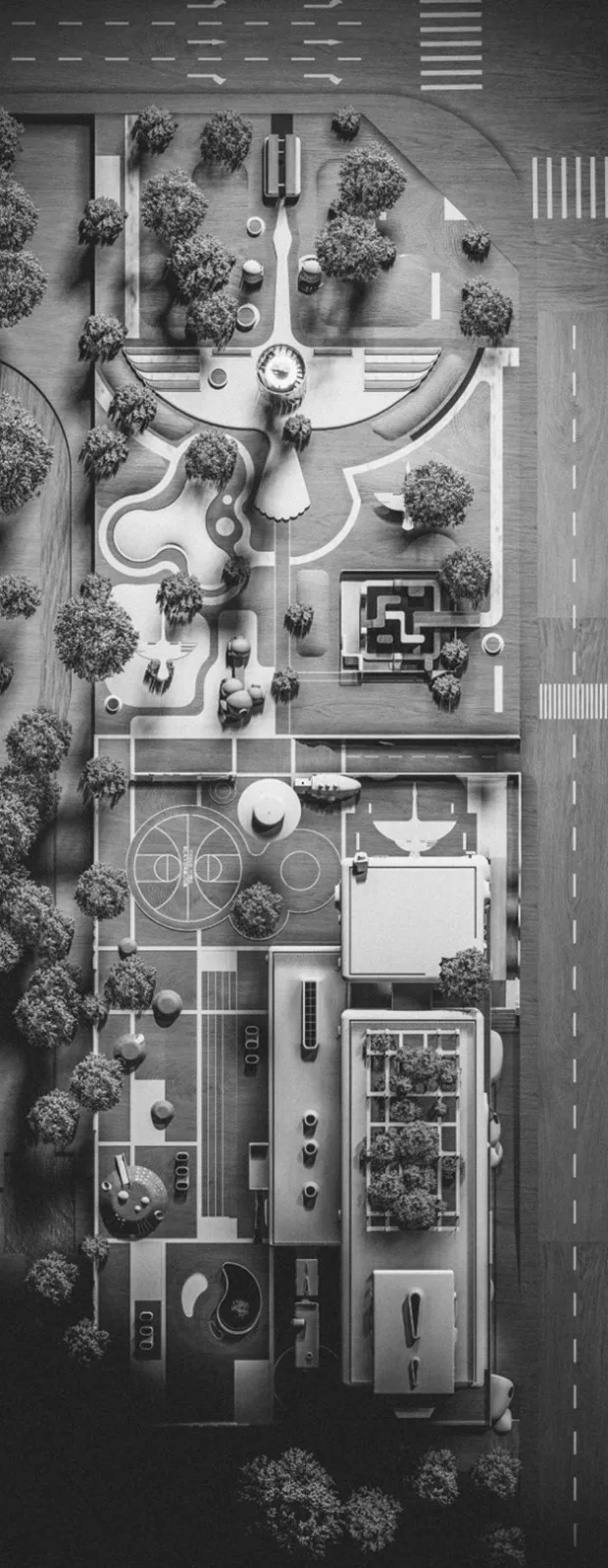
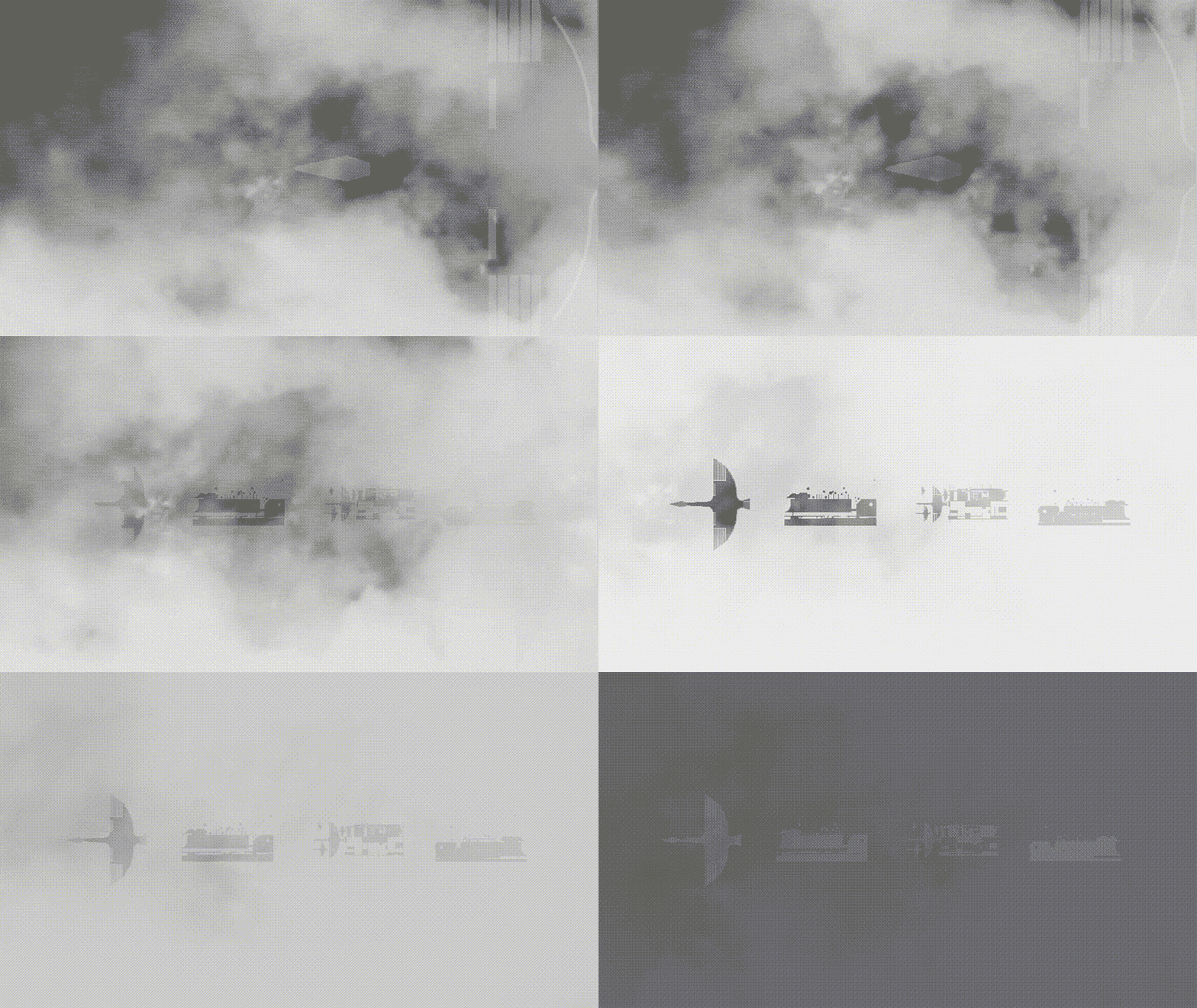
DIKA consistently embraces a design philosophy that balances innovation with respect for culture and locality. Nanchong’s warm, humid climate conjures ever-shifting floating clouds, inspiring an educational and enlightening space that bridges heaven and earth. The design evokes a majestic swan descending from the sky—representing lofty aspirations, serene beauty, and boundless potential—earning the name “Futurist.”


Research reveals Nanchong as a central city in the Chengdu-Chongqing economic circle and a hub for science, education, and culture in northeastern Sichuan. Its rich historical and cultural heritage inspires exploration centered on cultural carriers. The city’s character embodies the essence of “chong”: ambitious yet composed, calm but energetic. We strive to capture this intangible urban philosophy through architecture, solidifying it within the environment.

The building’s overall form draws from the cultural metaphor “the swallows recognize the swan’s ambition.” A flock of agile geese flies in from the east, symbolizing the future and harmonizing humbly with the terrain and environment. The teaching building and green spaces behind the geese form the school’s spiritual core—evoking the image of “a thousand sails passing, yet the swan remains”—a container full of rationality and imagination.
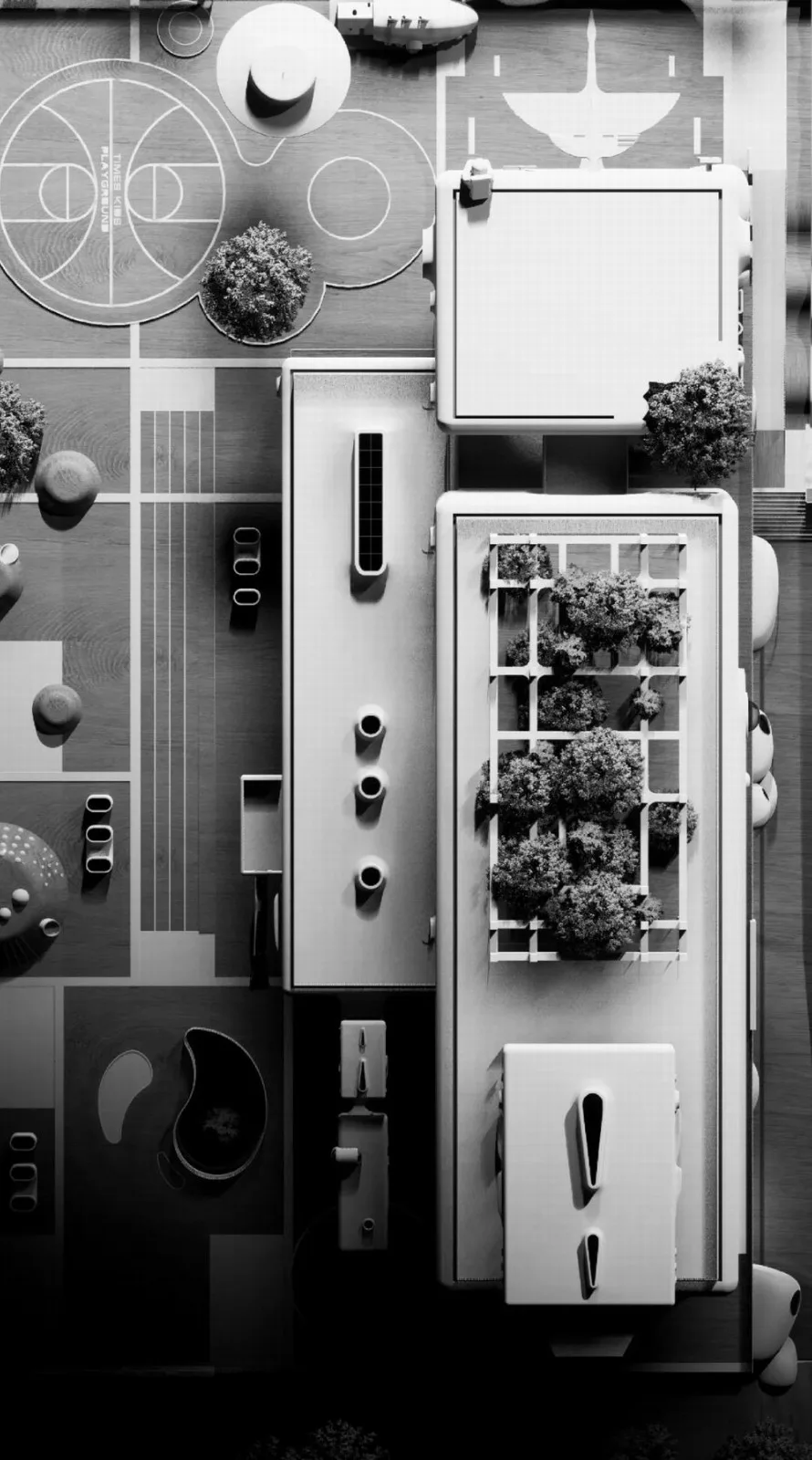
Everything Follows the Law:
Constructing Artistic Beauty Through Proportion
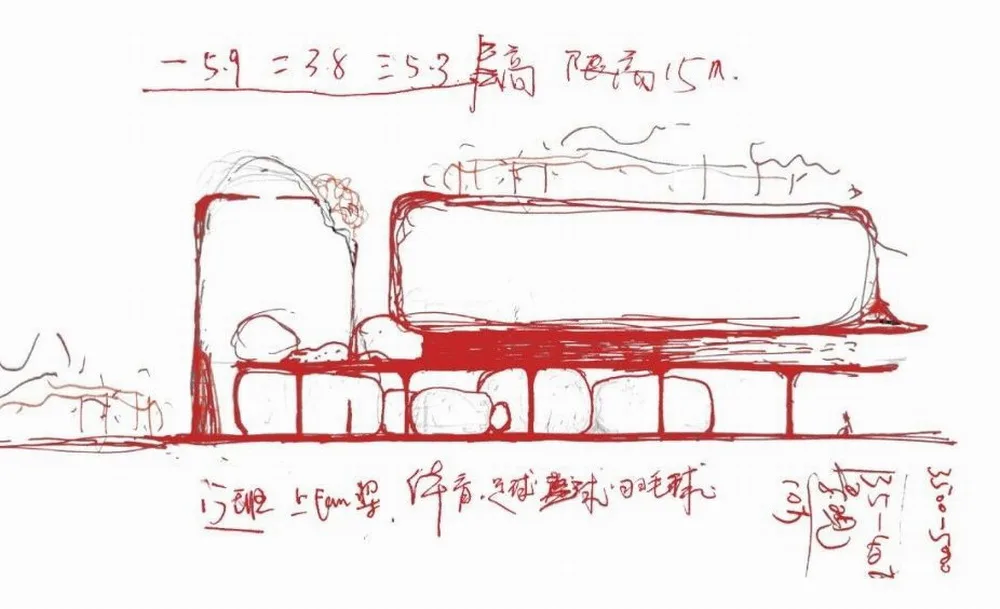
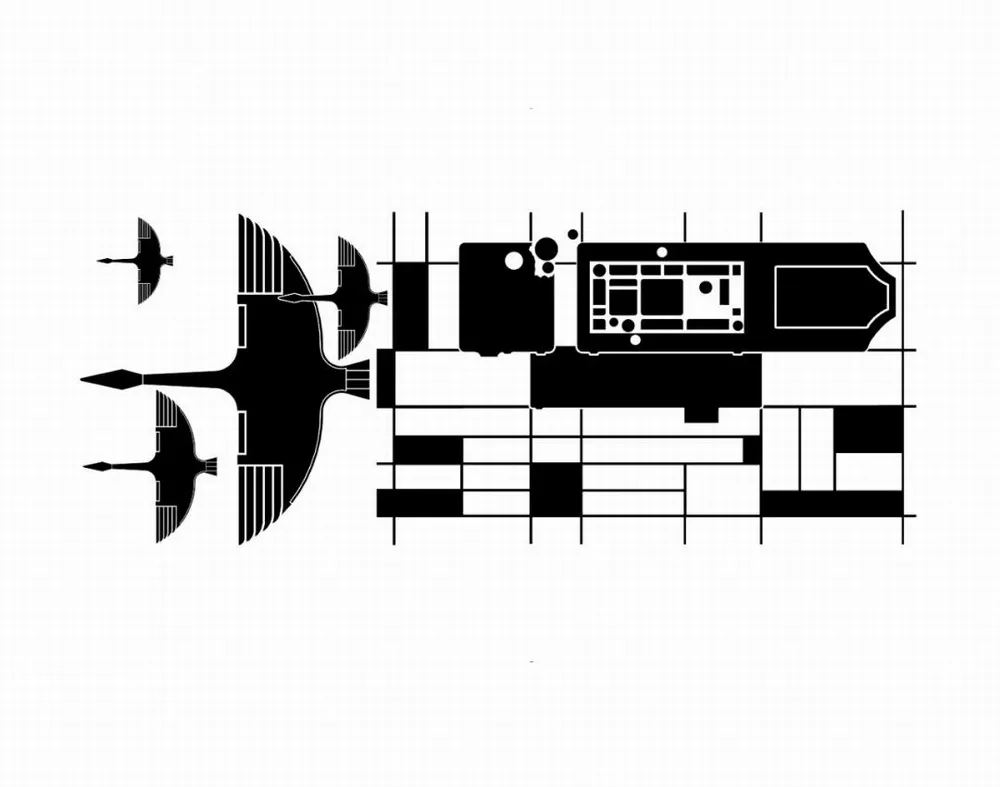
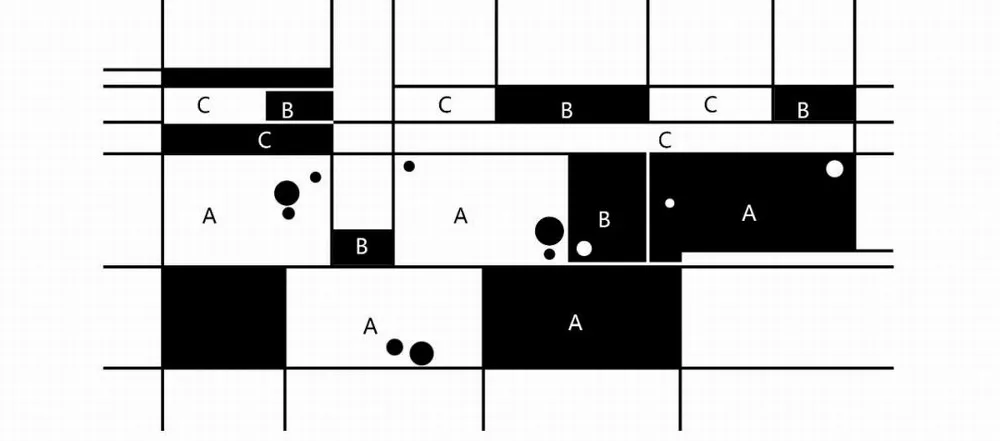
To meet the project’s multifunctional needs, we explore new approaches blending digital techniques and art. Moving beyond traditional layouts, we refine simple geometric shapes using the Fibonacci sequence to apply the timeless beauty of proportion throughout the design.
The project’s layout is driven by proportional logic. Capturing the rhythm of segmented proportions, the architectural forms of different functional zones create a dynamic and lively rhythm. This energy field allows children to perceive proportion and lines, crystallizing a fresh design language.
△ Graphic Logic Analysis
Spanning 4,861 square meters, the “Futurist” kindergarten under construction will realize the artistic beauty of rational proportion, introducing an internationally styled kindergarten with local characteristics to Nanchong, Sichuan.
Impressions of the Site:
Spiritual Harmony Between Nature, Art, and the Future
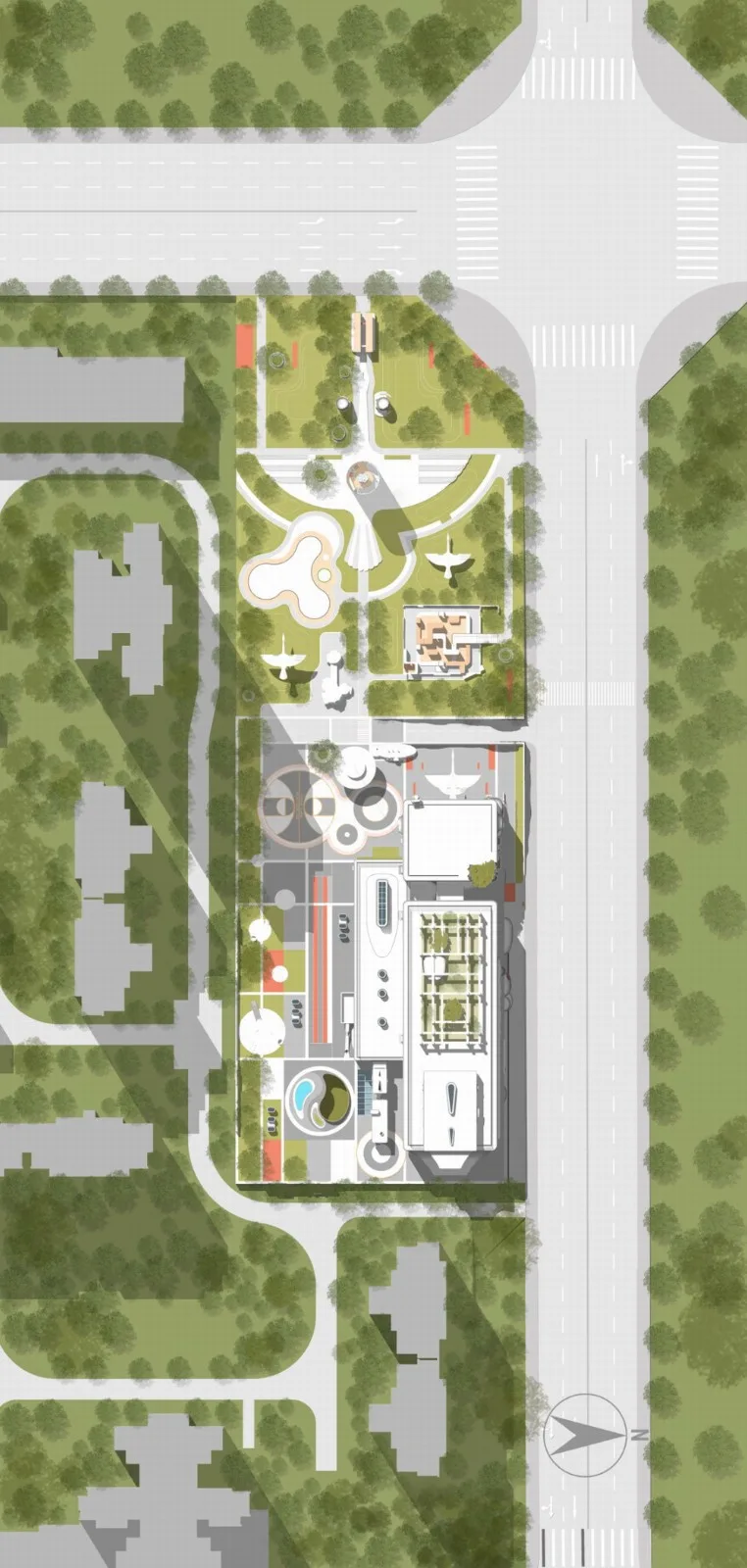
When planning new construction, the relationship between buildings and their surroundings is crucial. Surrounded by diverse residential buildings, institutions, and skyscrapers, the project must harmonize with the nearby streets. We aim for a safe, joyful school journey that ignites children’s curiosity and spirit of exploration. Thus, the buildings respond humbly to the environment, while their unique shapes foster a creative and expressive cultural atmosphere.
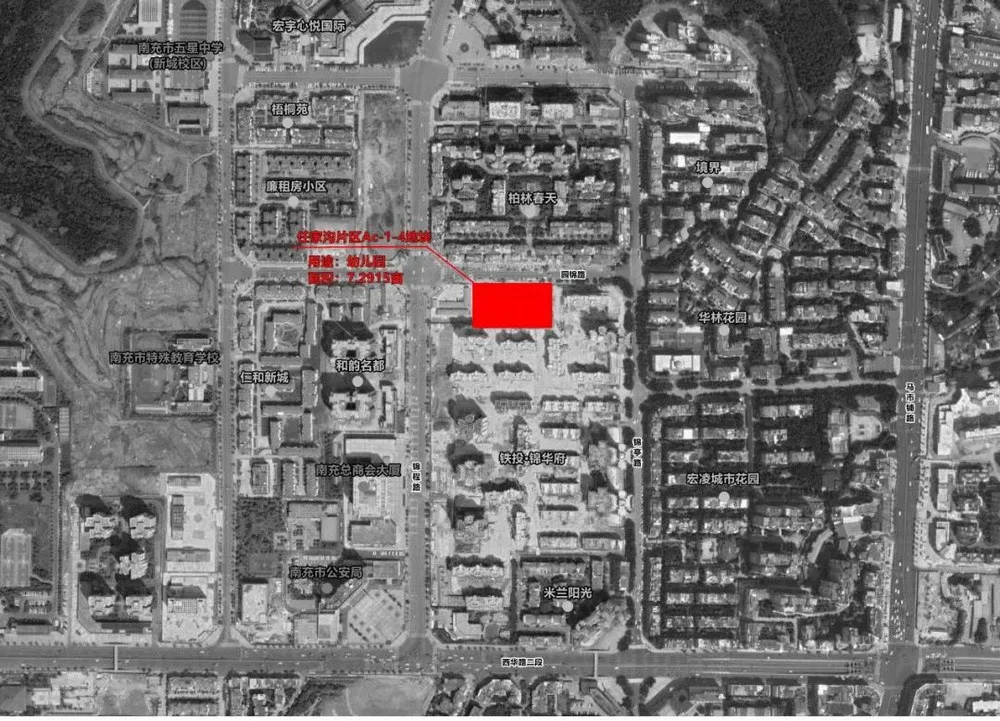
△ Project Status Analysis
DEC A aims to express a strong connection to nature, art, and the future through architecture, continuing to explore education beyond narrow perspectives. The goal is for architecture to actively support education and enhance its effectiveness, while inspiring children to embrace free imagination and courageous exploration.
Behind the Scenes:
Fresh Bubbles Inspire Childlike Imagination
Architectural inspiration grows gradually from everyday observations. Each project offers opportunities for new breakthroughs in form selection and setting, yielding refreshing results through experimental practice.
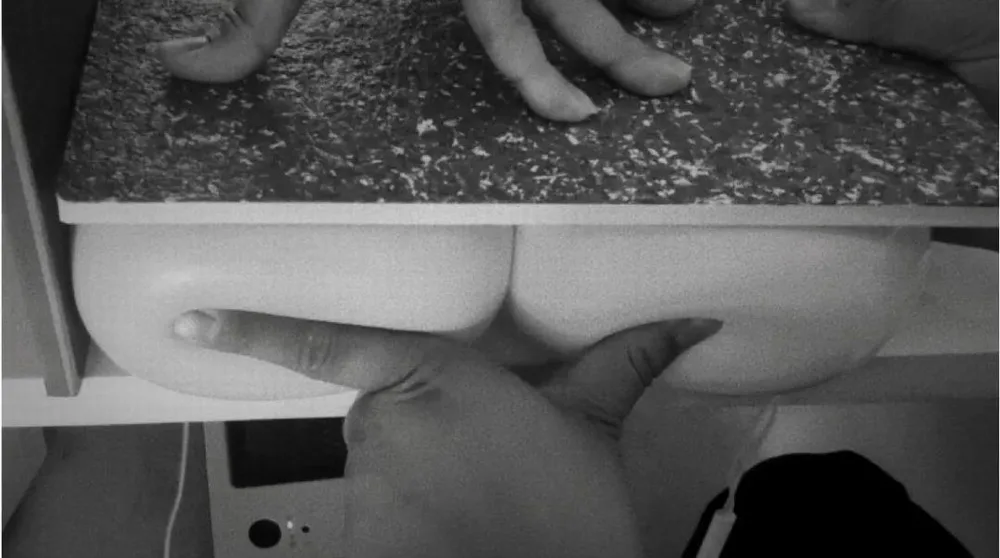
This innovation is embodied in the “new bubbles” concept, which pursues natural architectural flow.
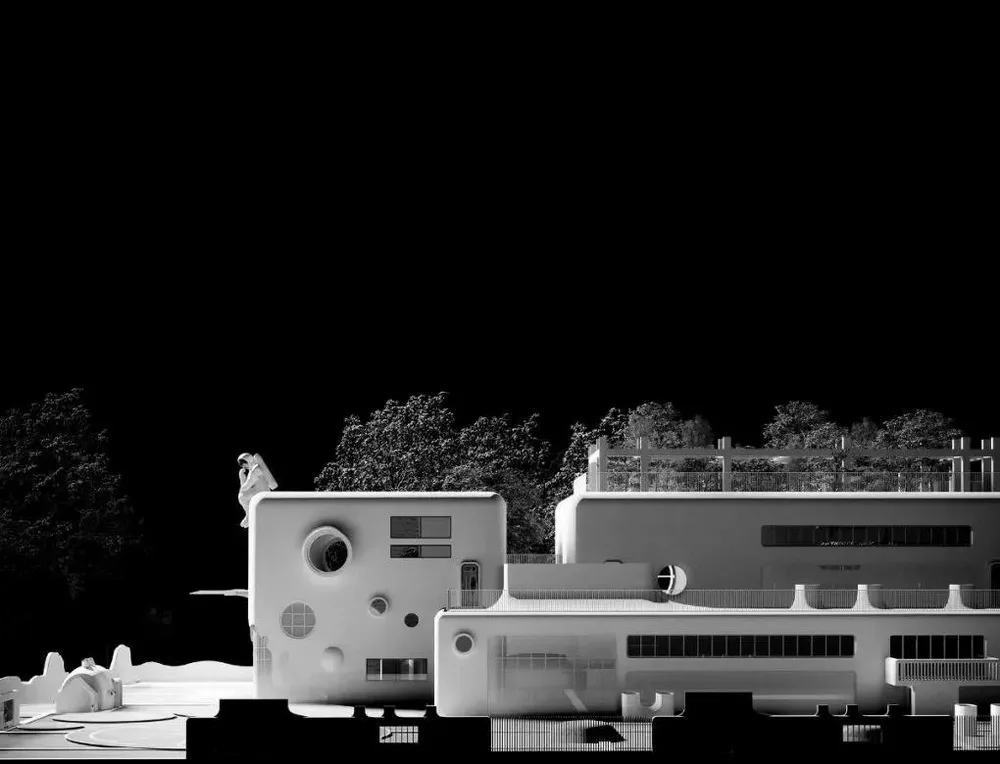
The naturally formed circular shapes resonate with children’s pure instincts. The lightness of bubble forms evokes a sense of spacewalking, aligning with themes of cosmic exploration. Functionally versatile and experientially engaging, these spaces encourage children’s curiosity and knowledge-seeking.
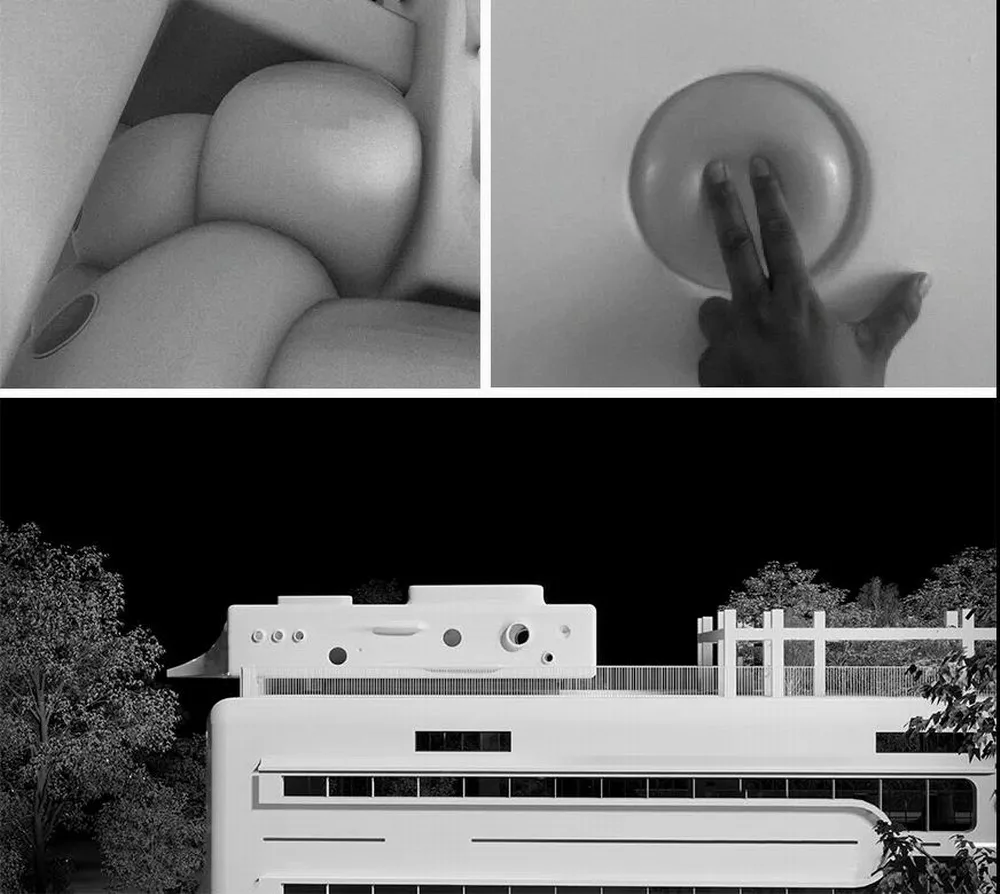
The first-floor walking space within the main teaching building transforms into a structurally diverse “game bubble house,” satisfying children’s curiosity and adventurous spirit while enlivening the campus atmosphere. This playful “bubble” concept extends beyond game rooms to the entire architectural design, from curved walls to variously sized “flat bubbles” on the facade, crafting an interactive, imaginative environment.
Design Thinking:
Unfolding Endless Imagination Within Limited Space
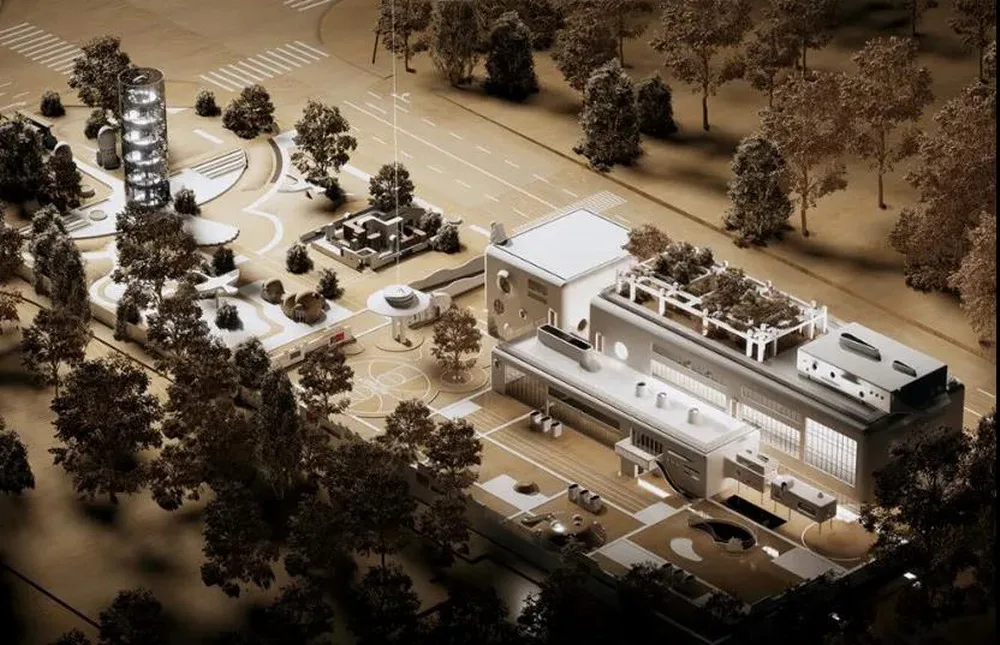
DIKA divides the site into three functional zones: a public municipal square shaped like a flock of geese, a main teaching body housing flying cabins and bubble houses, and a landscaped area featuring “flying saucers” and various activity spaces.
Book Tower Children’s Park: A Sanctuary for the Soul, Drawn by Geese
The project’s western-facing area is designed as a municipal square turned children’s park, inspired by the infinite imagination of the knowledge universe.
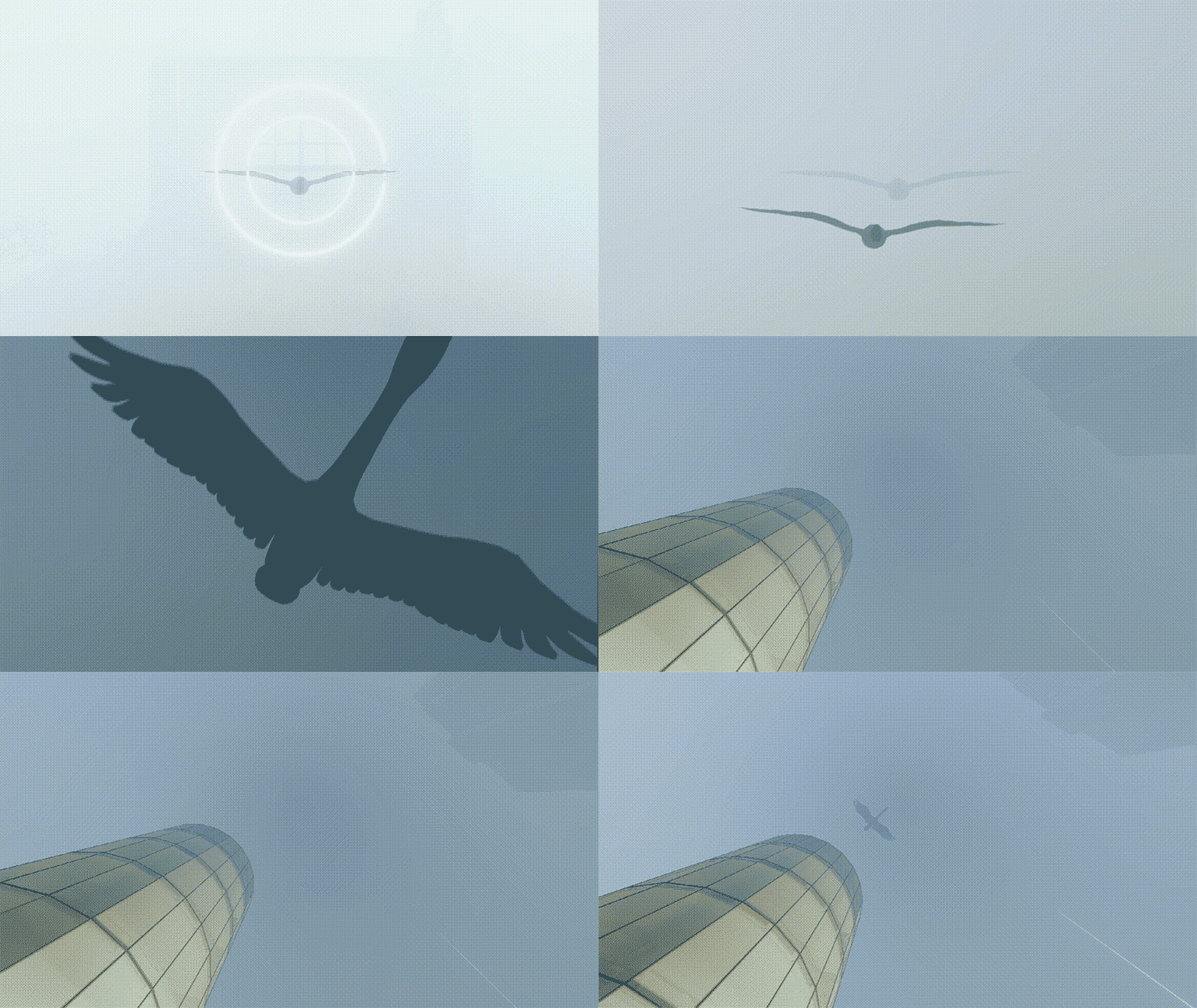
The architecture draws cosmic inspiration, akin to planets orbiting the sun. The composition revolves around three goose groups of varying sizes. Entering the heart of the geese cluster leads to Honghu Square, occupying the central position.
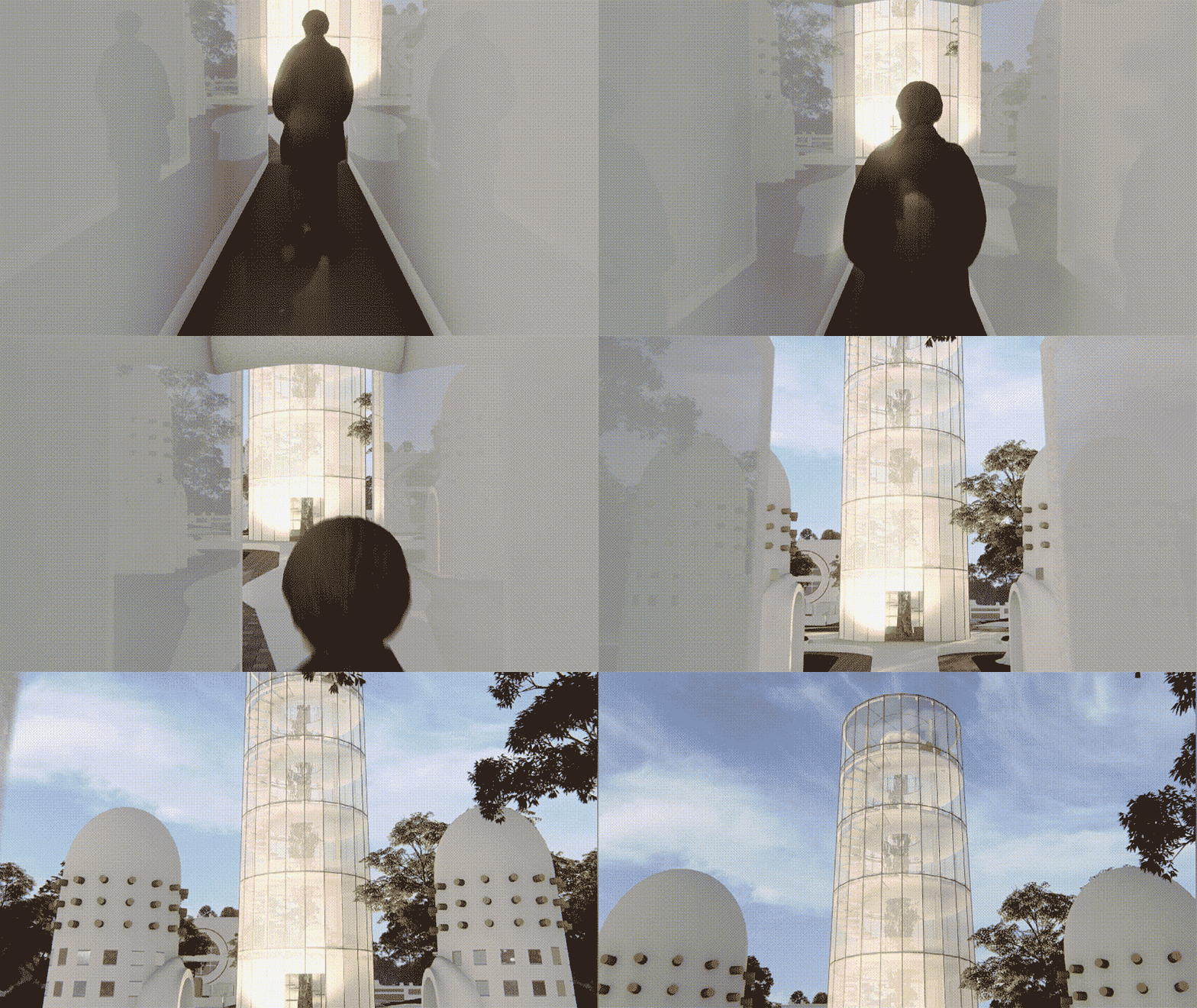
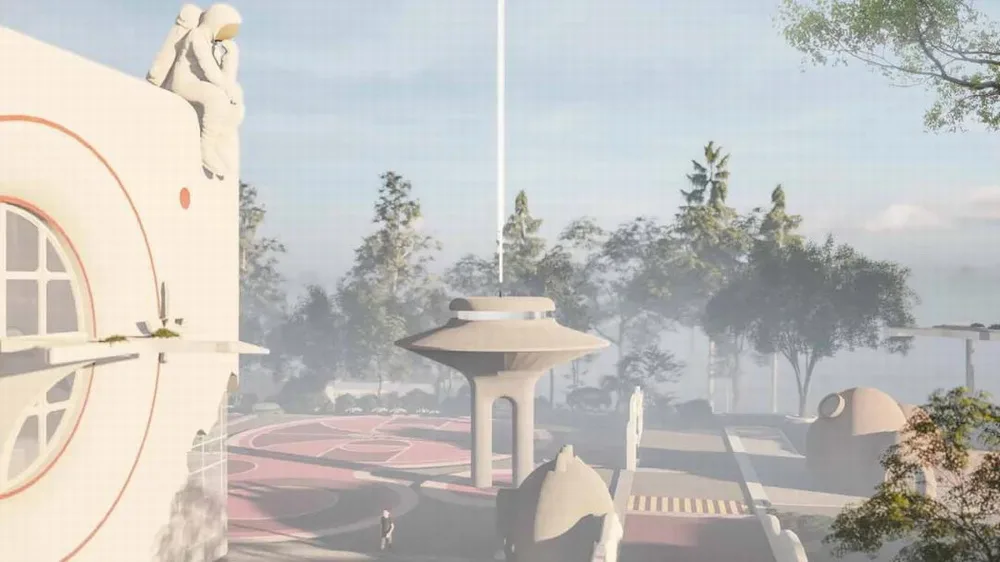
The Book Tower at Honghu Square serves as a “secret base” where children connect with the sky. This seven-story tower symbolizes an infinite yearning to explore the universe of knowledge from a lofty vantage point.
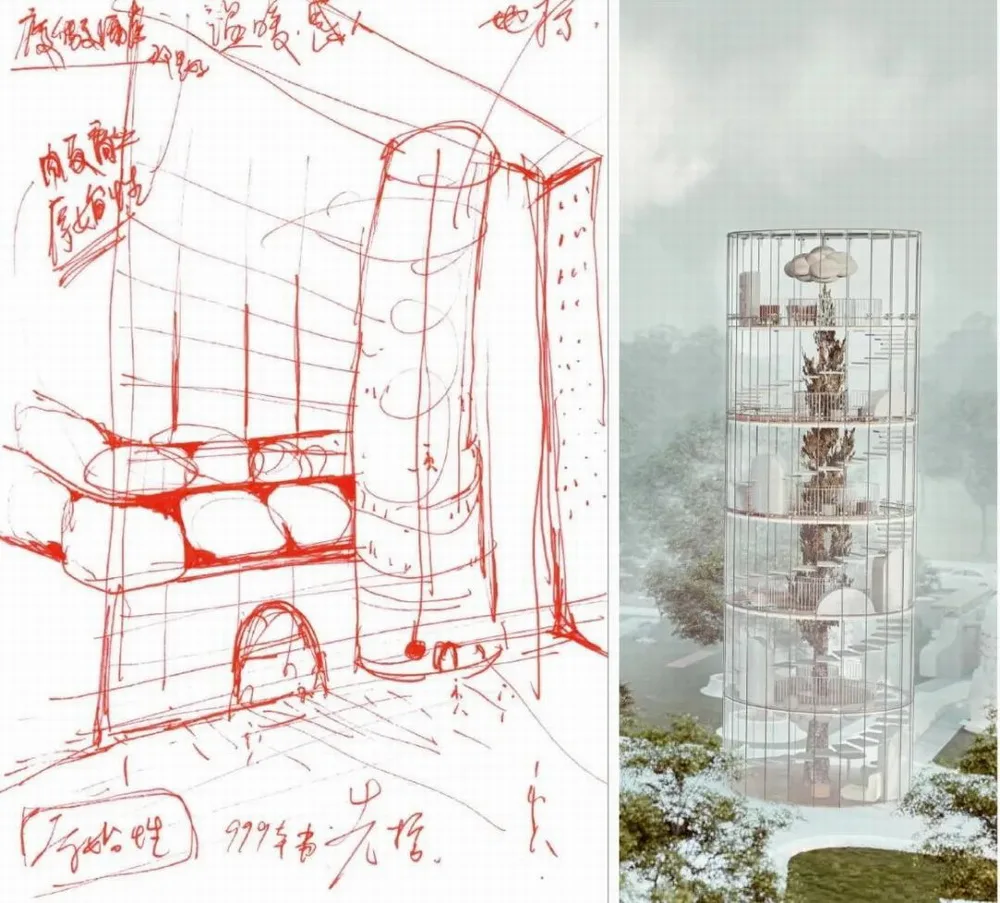
At the dome’s apex, unfiltered light draws gazes upward, influencing children’s experiences and memories. Nature, landscape, sunlight, and expansive views encourage children to observe and interpret their surroundings from new perspectives, fostering simple, independent, and boundless imagination around this central point.
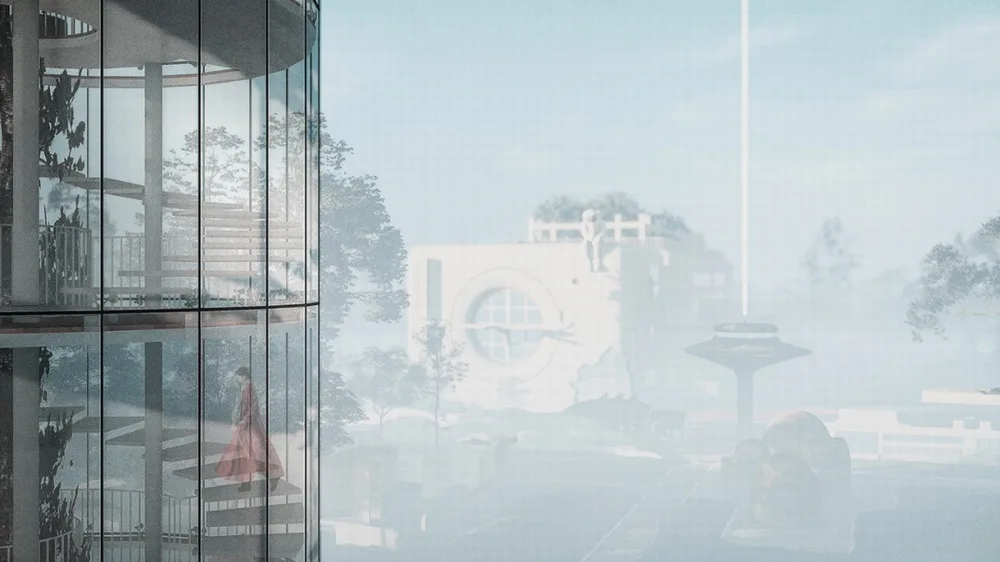
This limitless imagination represents a world filled with countless children. The sense of confinement dissipates upon entering the “inverted dome” of the main teaching building, transforming the secret sky base into a sanctuary for dialogue with nature and oneself—a spiritual home for children.
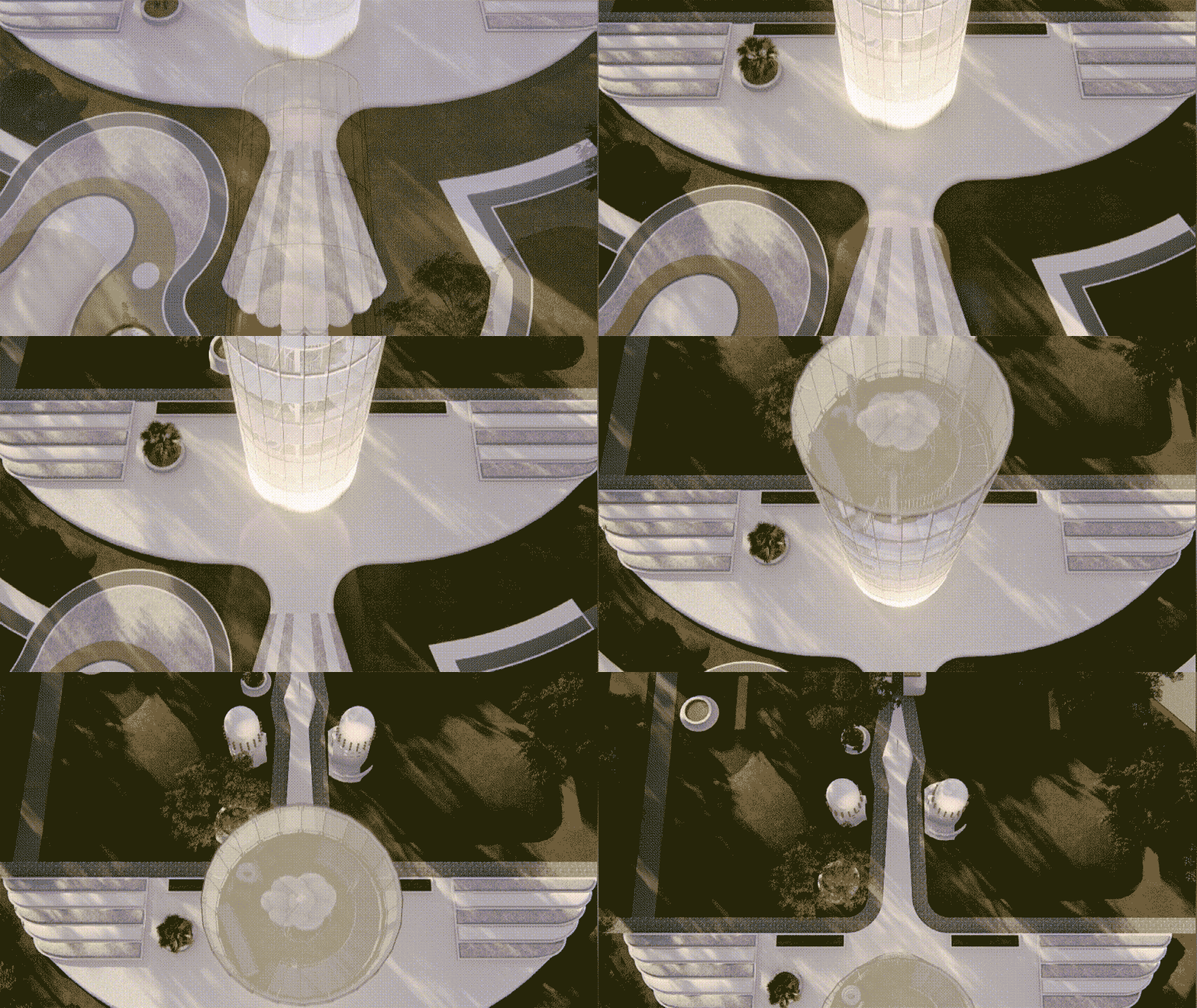
As a child-centered public space, the giant maze, bouncing clouds, and rammed earth castle surround the book tower sequentially. The Giant Maze, situated in the northeast corner, blends technology with simplicity, echoing themes of childhood exploration found in the main building’s design.
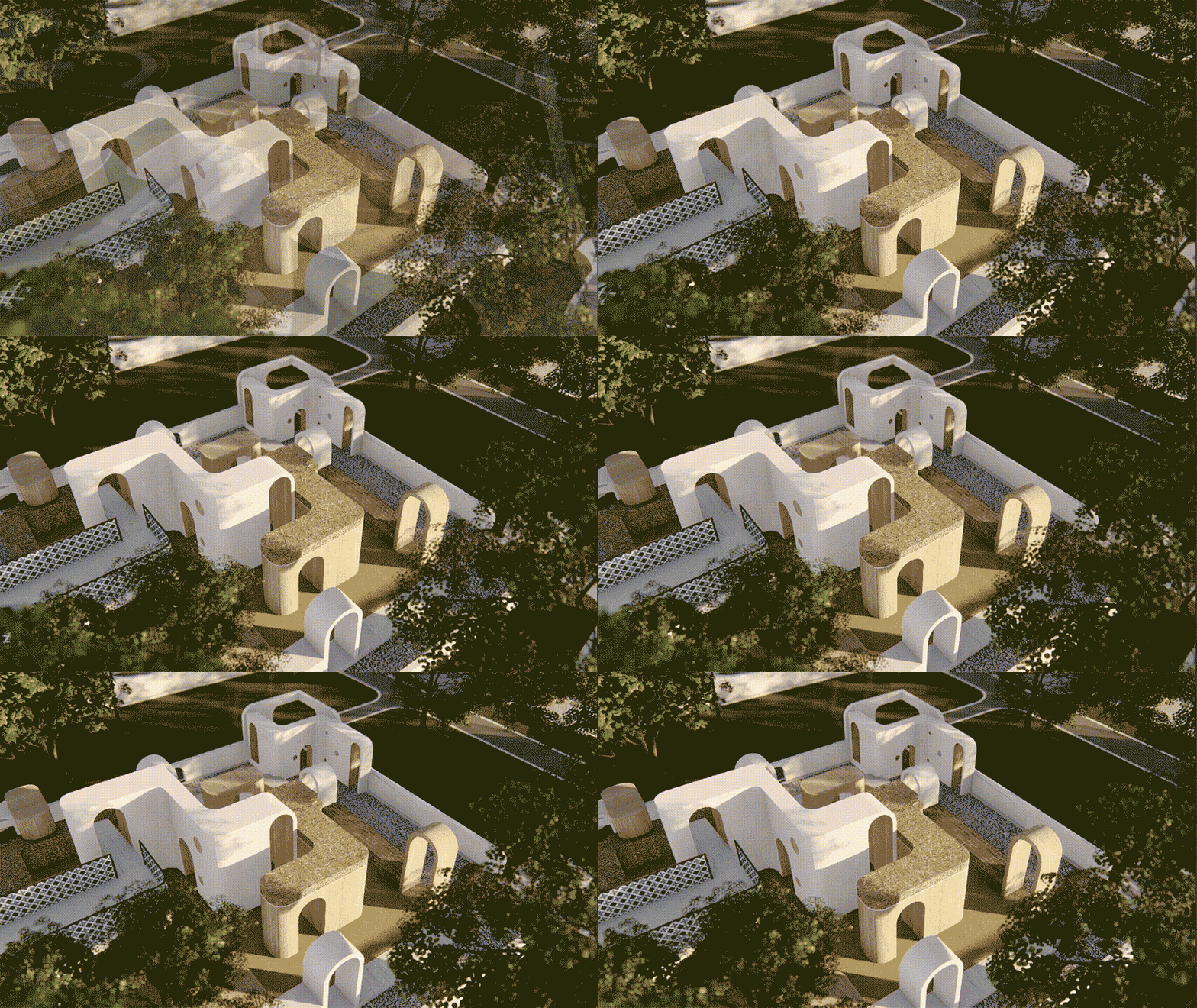
Spaceship Kindergarten: From Finite Time and Space to Infinite Universe
Each design challenges conventional form selection to deliver greater meaning through experimentation, sparking expansive imagination. Embracing this “adventure,” why not design a “spaceship” to represent the knowledge universe?
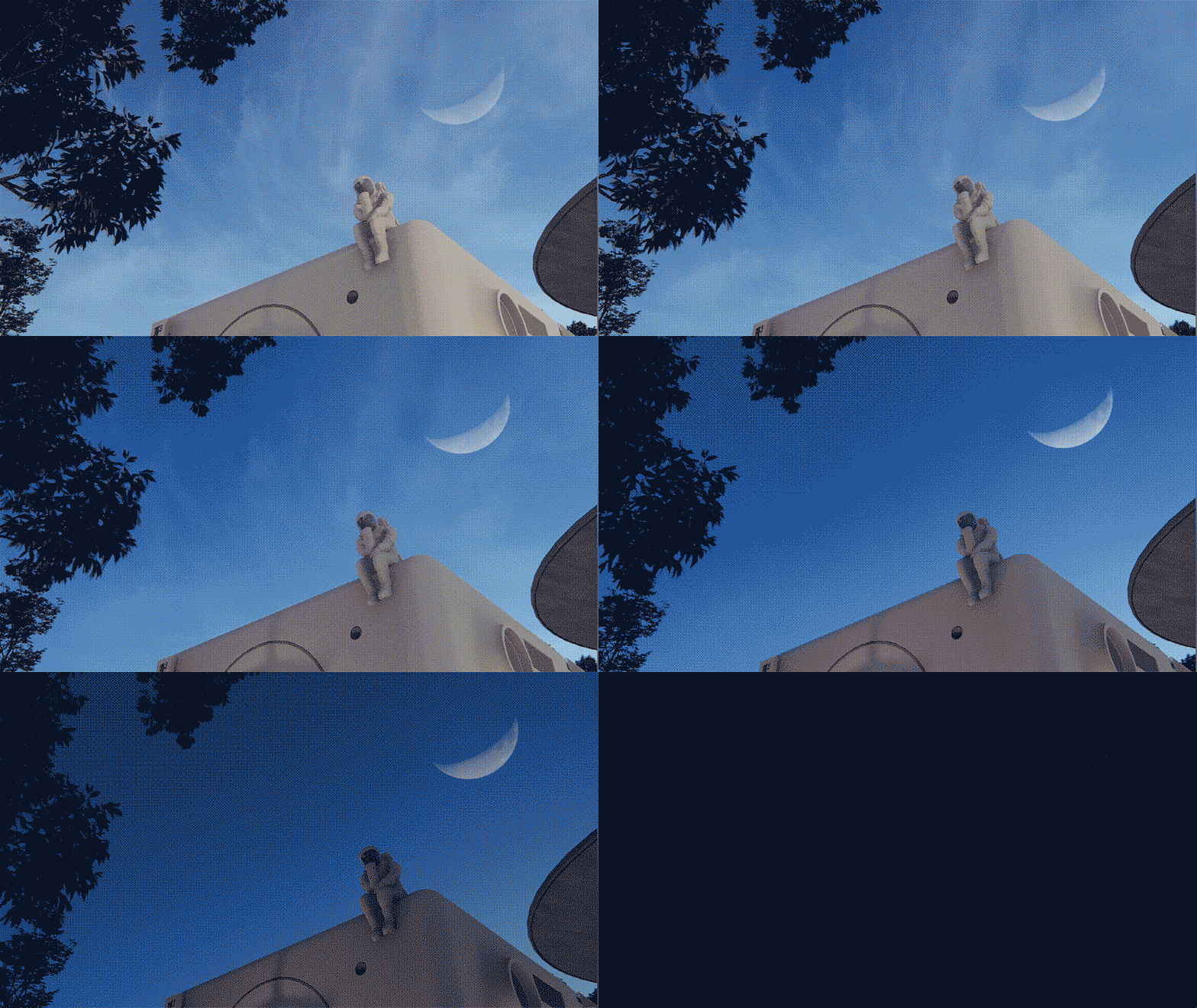
DIKA’s main teaching building takes inspiration from the cosmos, aiming to stimulate children’s creativity through imaginative architectural forms.
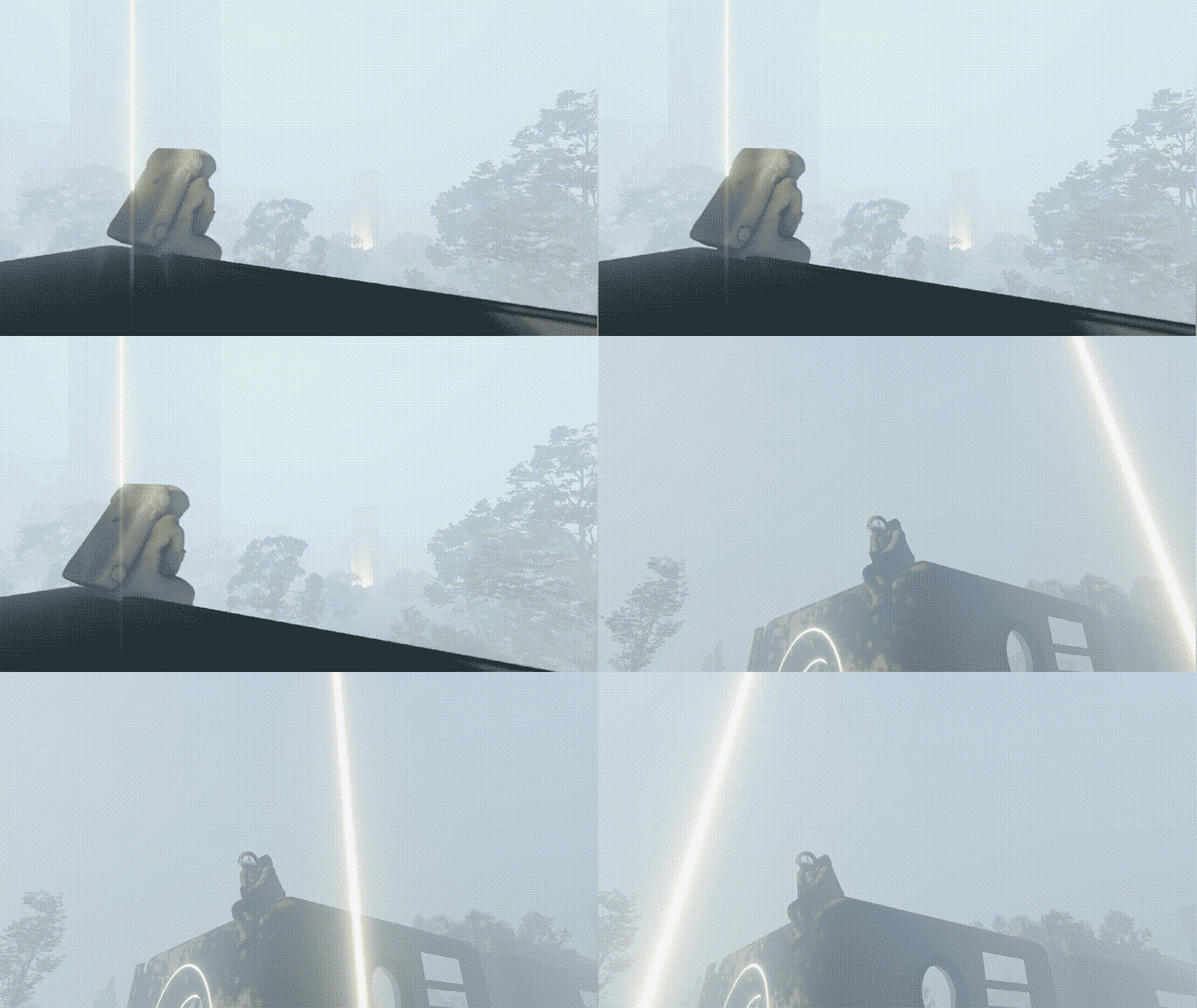
The building’s overall form transitions from a closed world to an infinite universe. Its spacecraft-like shape converges towards the center from all directions, symbolizing boundless travel to new worlds. The architecture blends rigidity and flexibility with abstraction and volume.
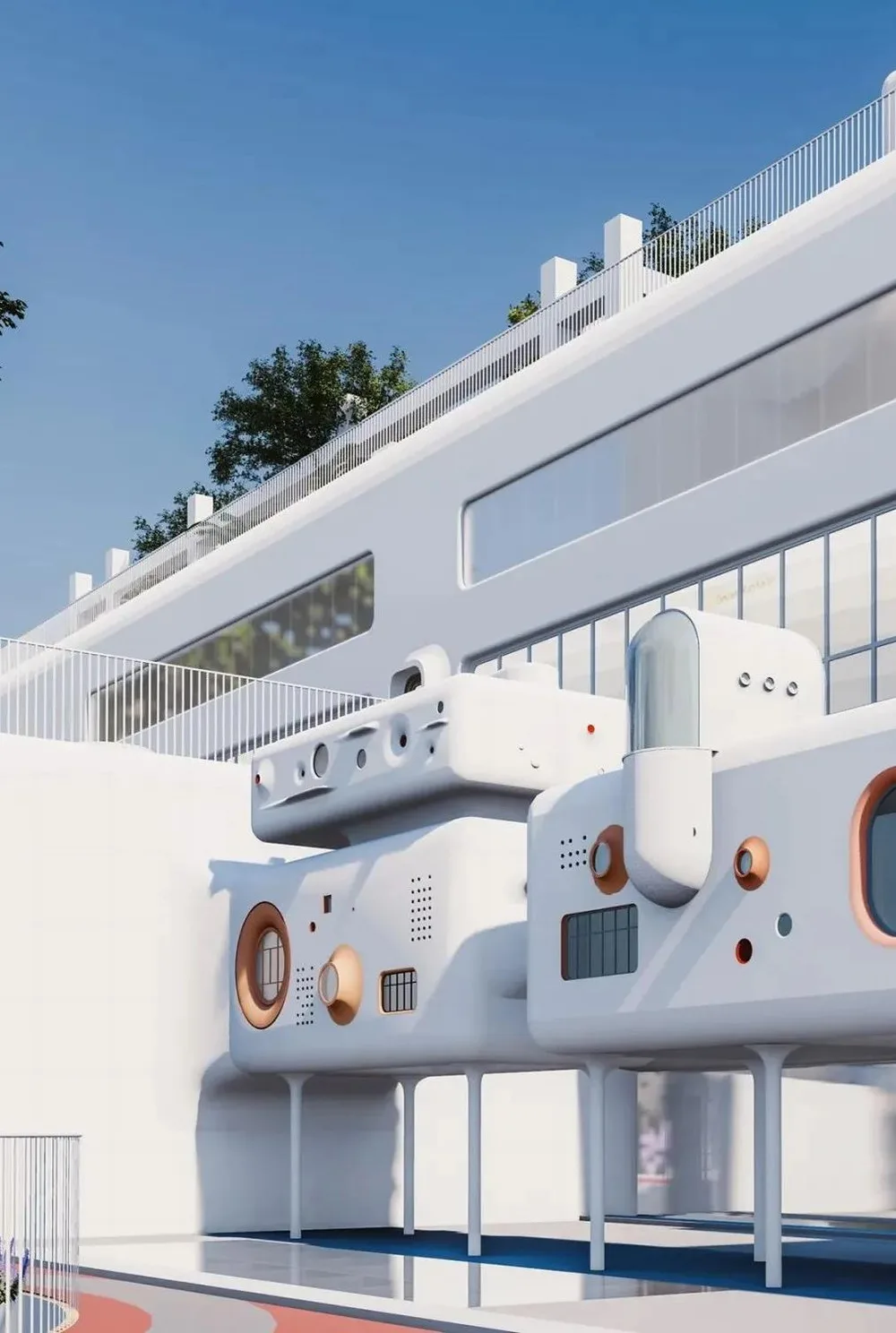
The natural elements of the universe, sun, light, and wind are transformed into architectural symbols that gently connect with children’s growth and perception.
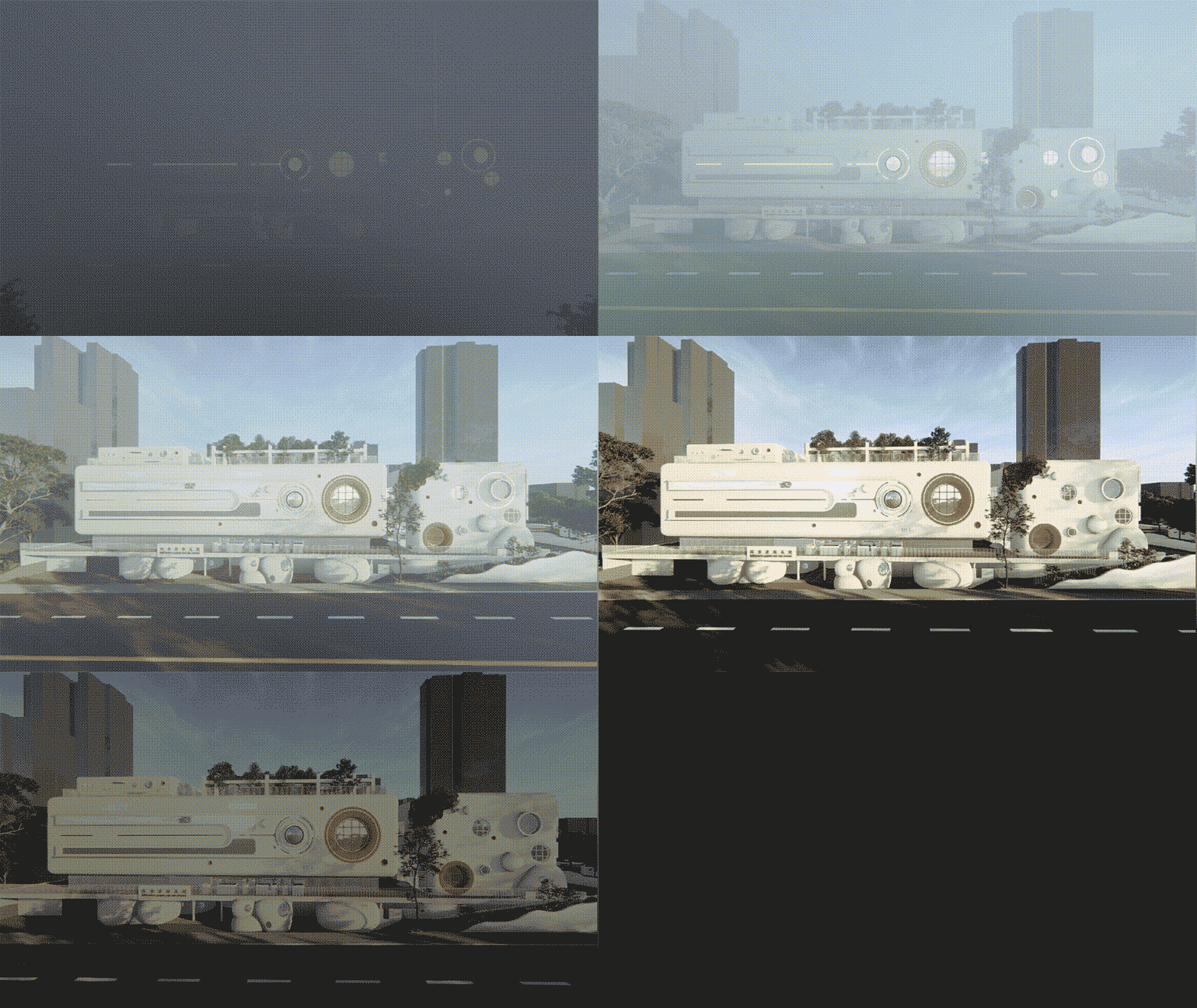
The building’s interior flow achieves spatial continuity with refined dynamism, offering diverse experiences. Seasonal and temporal changes bring different sensations, where space and nature empower each other, fostering a healing atmosphere.
On Campus: The ‘Photosynthesis’ of Natural Forces and Vitality
The teaching building’s facade emphasizes the Earth and its orbit. Walking along the rotating pathway feels like sailing around a space orbit, while the facade’s openings resemble portals to the universe’s origin. Observing others’ movements creates framed subconscious images that, along with the interior’s dynamic flow, generate a constantly evolving experience. The abstract imagery resonates deeply with children’s inner worlds and imaginations.
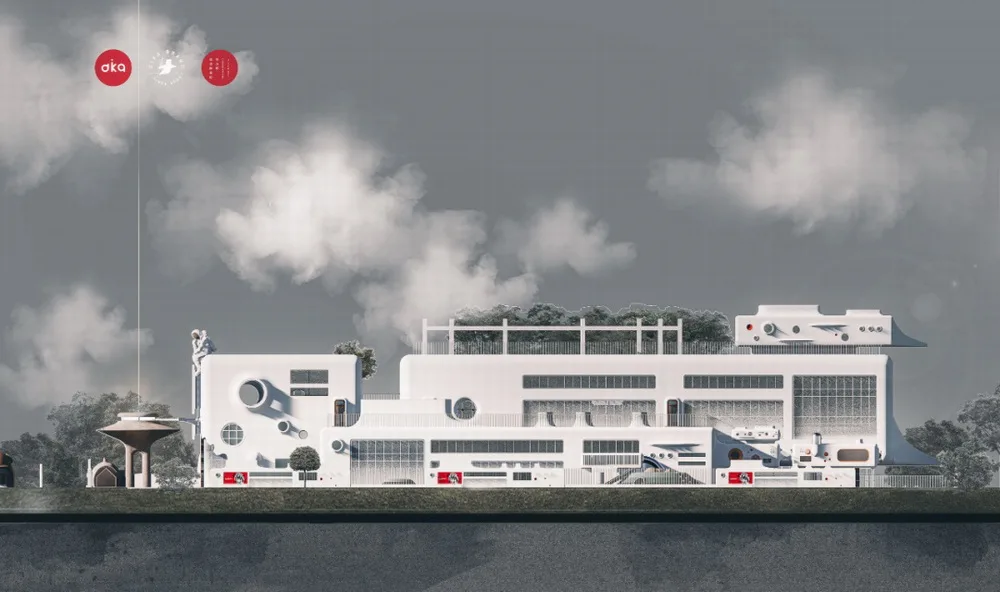
△ North Side Facade
Each facade extends and disperses children’s imaginative ideas. The north facade, serving as the main entrance, offers a panoramic view of the spaceship form, while the south facade features expansive French windows.
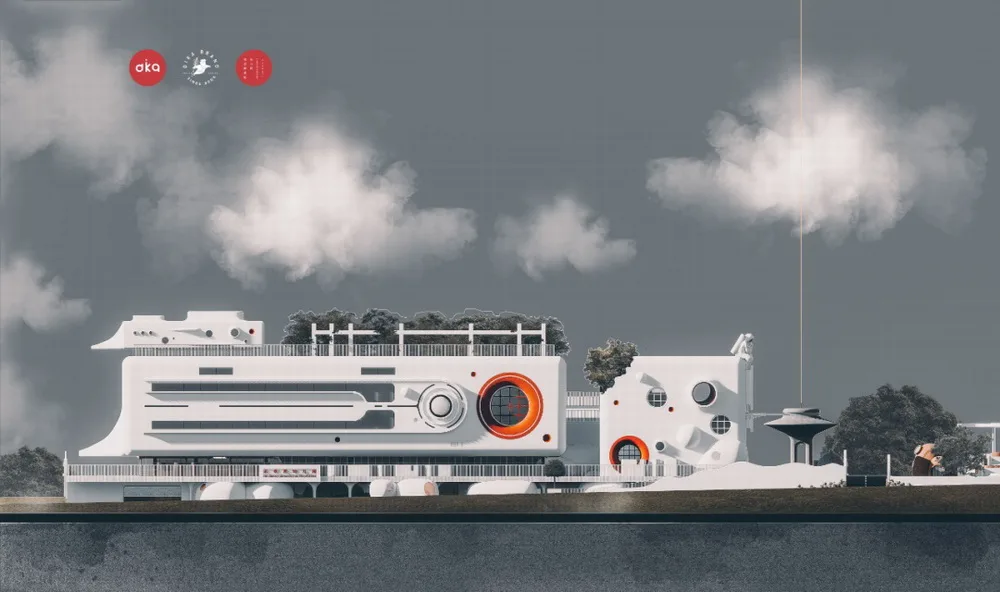
△ South Facade
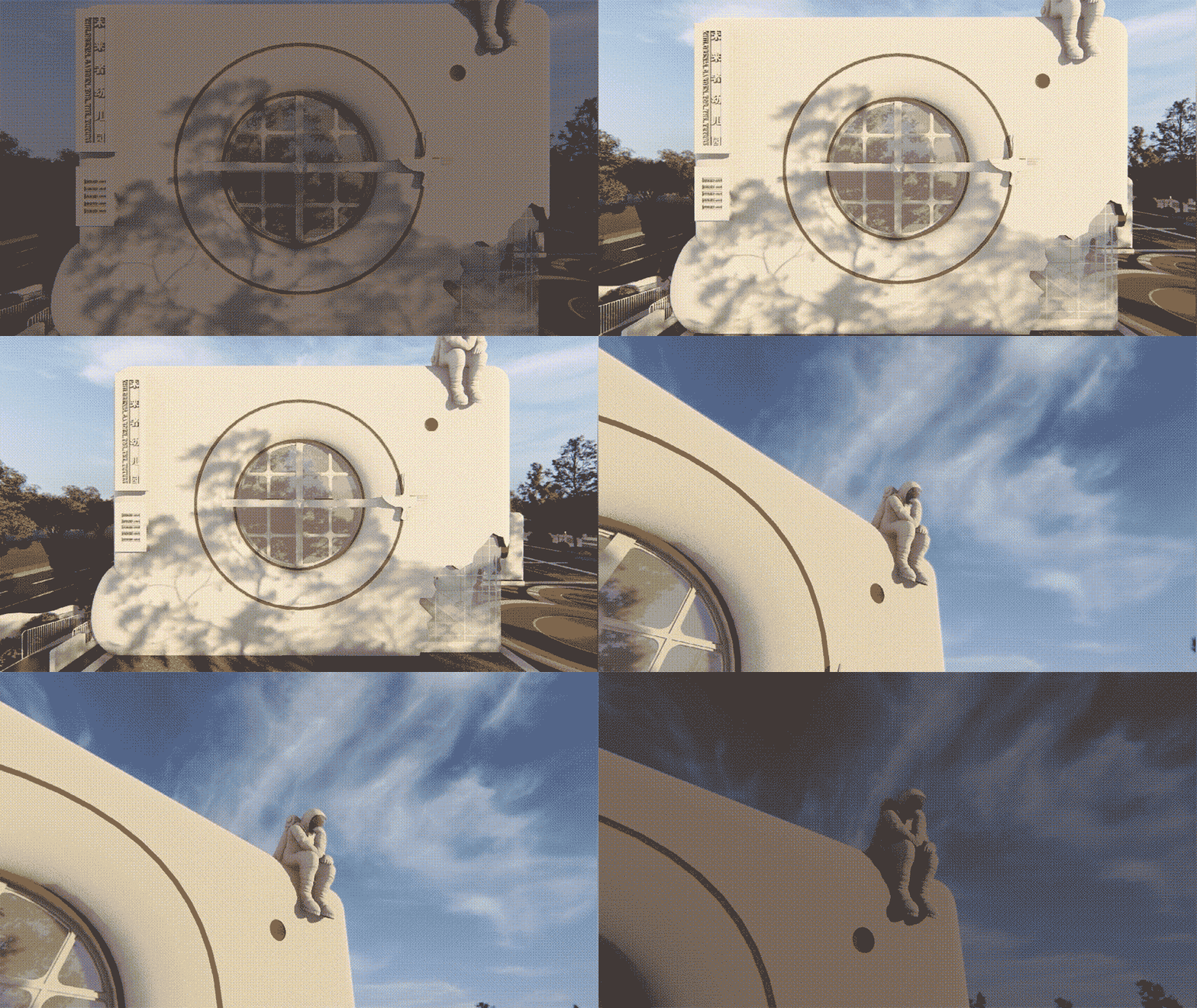
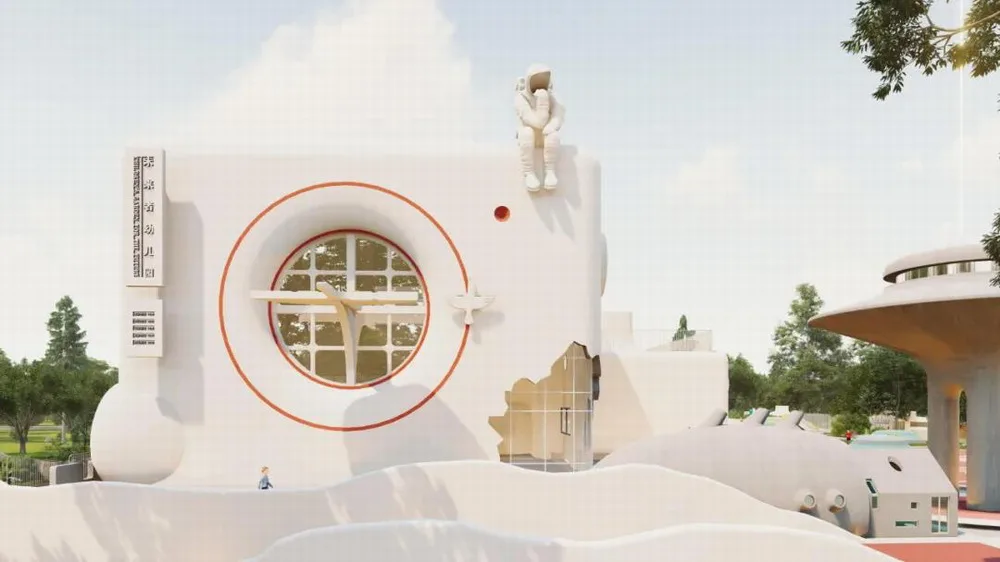
The western facade, smallest in volume, embodies the Futurist’s free imagination and fearless spirit. Using spacecraft cabin windows instead of conventional windows, it features contemplative astronauts and the nearby Book Tower, evoking a rocket poised for launch. This corner encourages children to expand their imagination, break mental boundaries, and think freely.
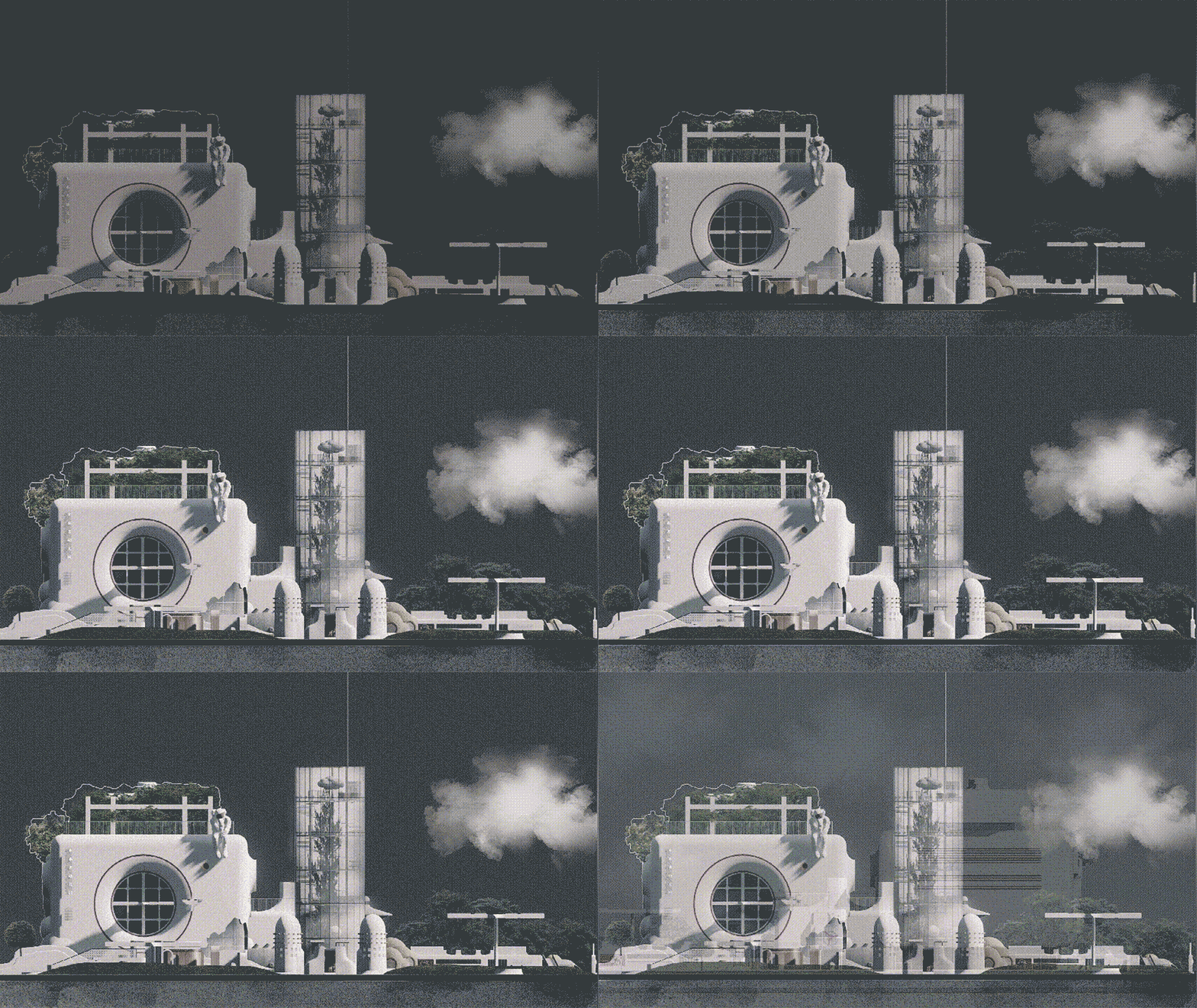
△ West Side Facade
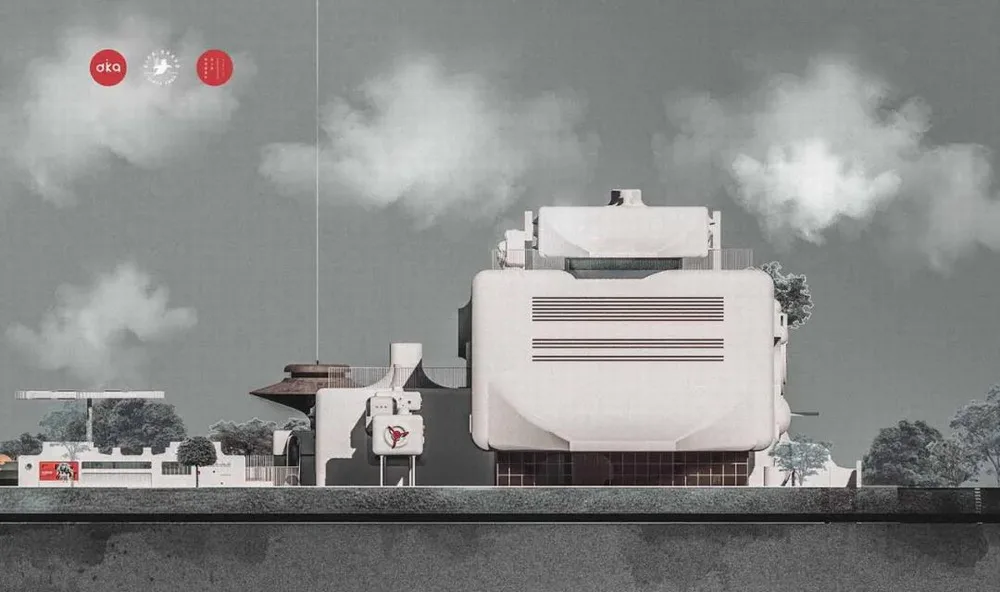
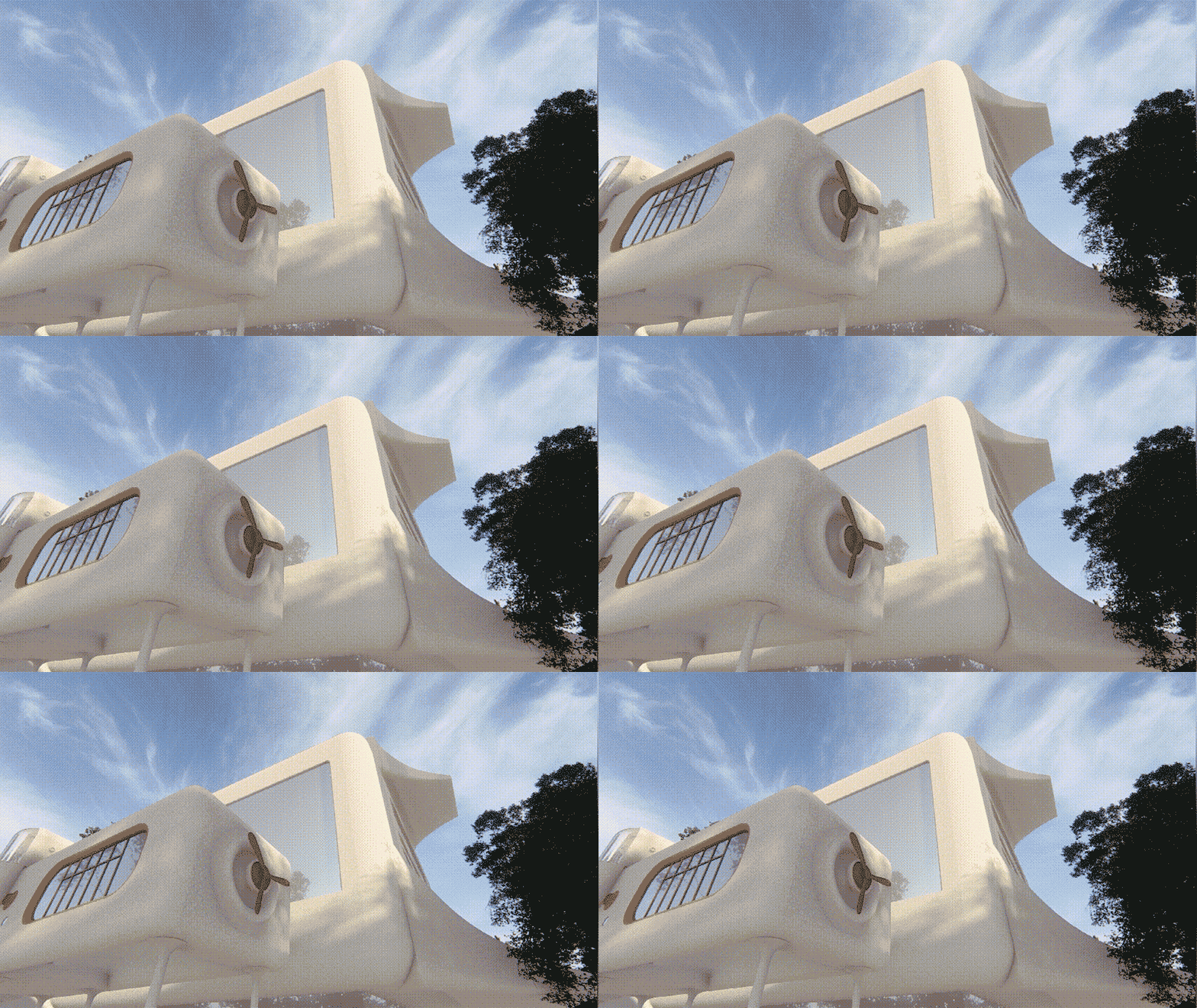
The small propeller on the east facade acts as the “engine” of this spaceship kindergarten, dynamically opening a dreamlike space for children.
Bubble House: The Gentle Intersection of Strength and Childlike Innocence
Emerging from the building’s interior, the bubble house on the first floor balances strength with tenderness.
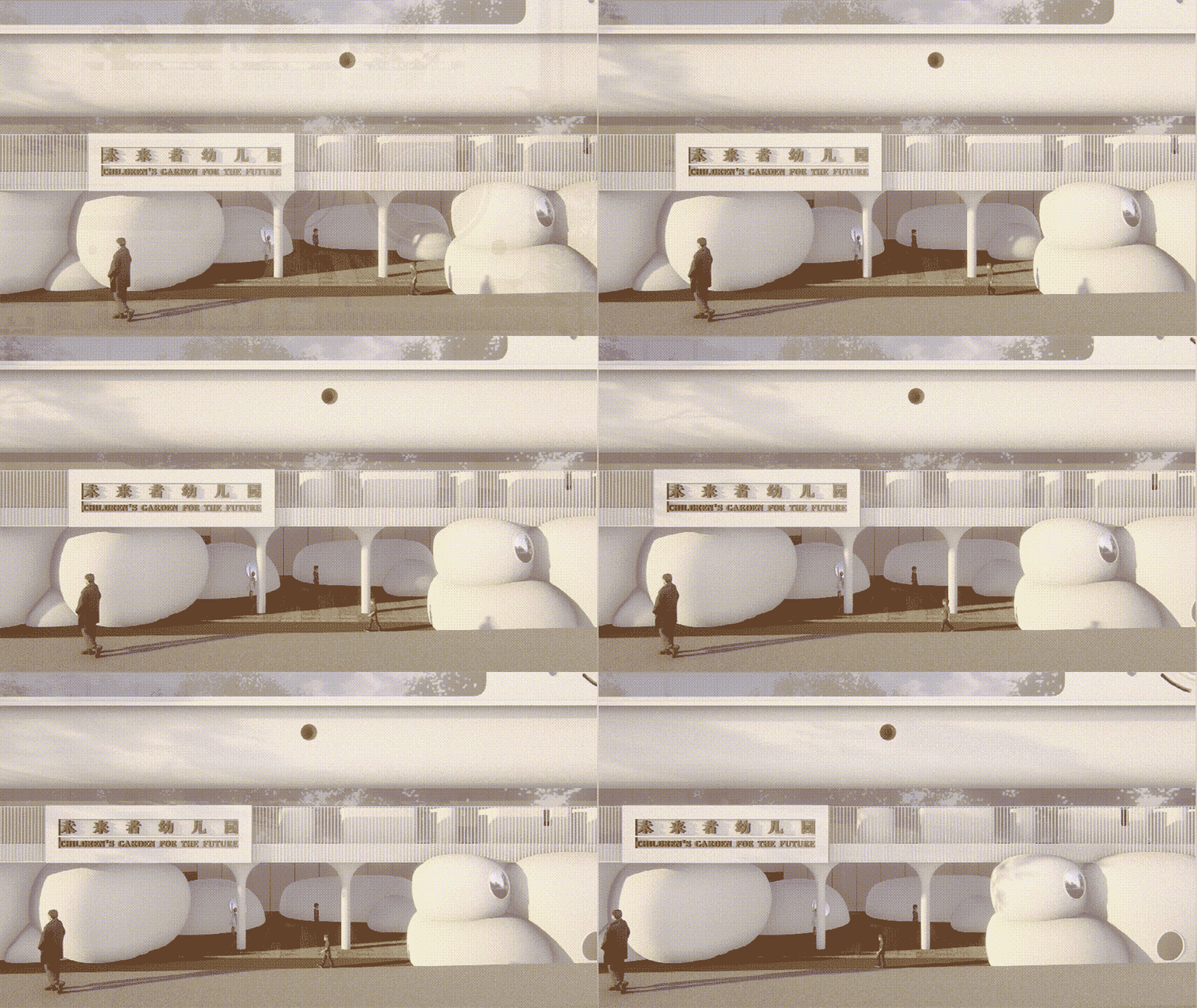
Inspired by “extraterrestrial objects,” this space preserves outdoor activity areas while supplementing indoor functionality. On rainy days, children can still enjoy joyful play here. The lightweight bubble house serves as an ecological, natural, three-dimensional, and flexible teaching space.
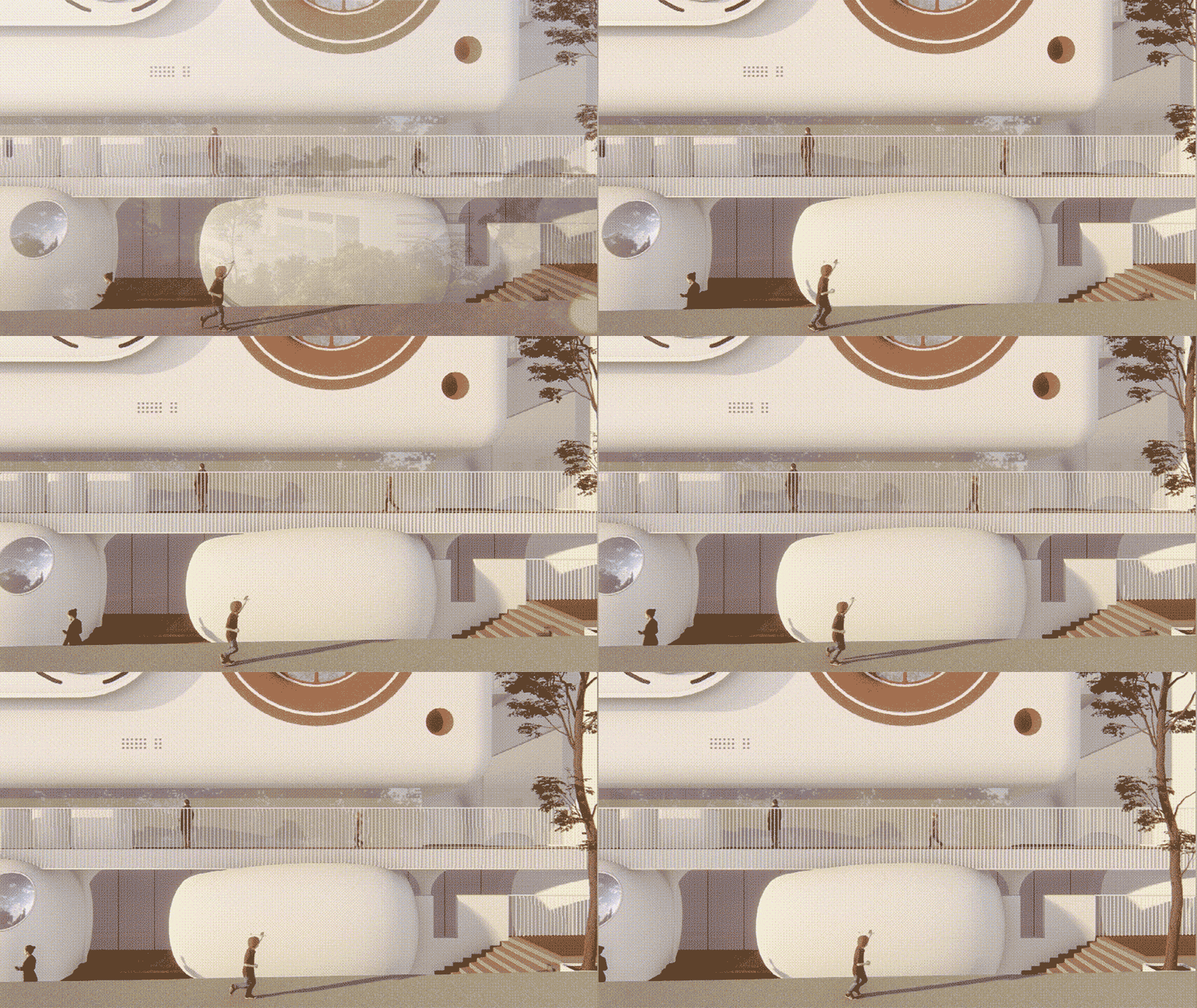
The building’s ivory-white palette is accented with scattered bright colors, emphasizing relationships while maintaining a simple, healthy atmosphere. Streamlined interior and exterior line combinations create a dynamic experience and connect functional zones. The propeller resembles light from the Milky Way, unfolding a canvas for cosmic exploration.
This spatial connectivity rejects fixed perspectives, nurturing natural curiosity with an open, unrestricted attitude.
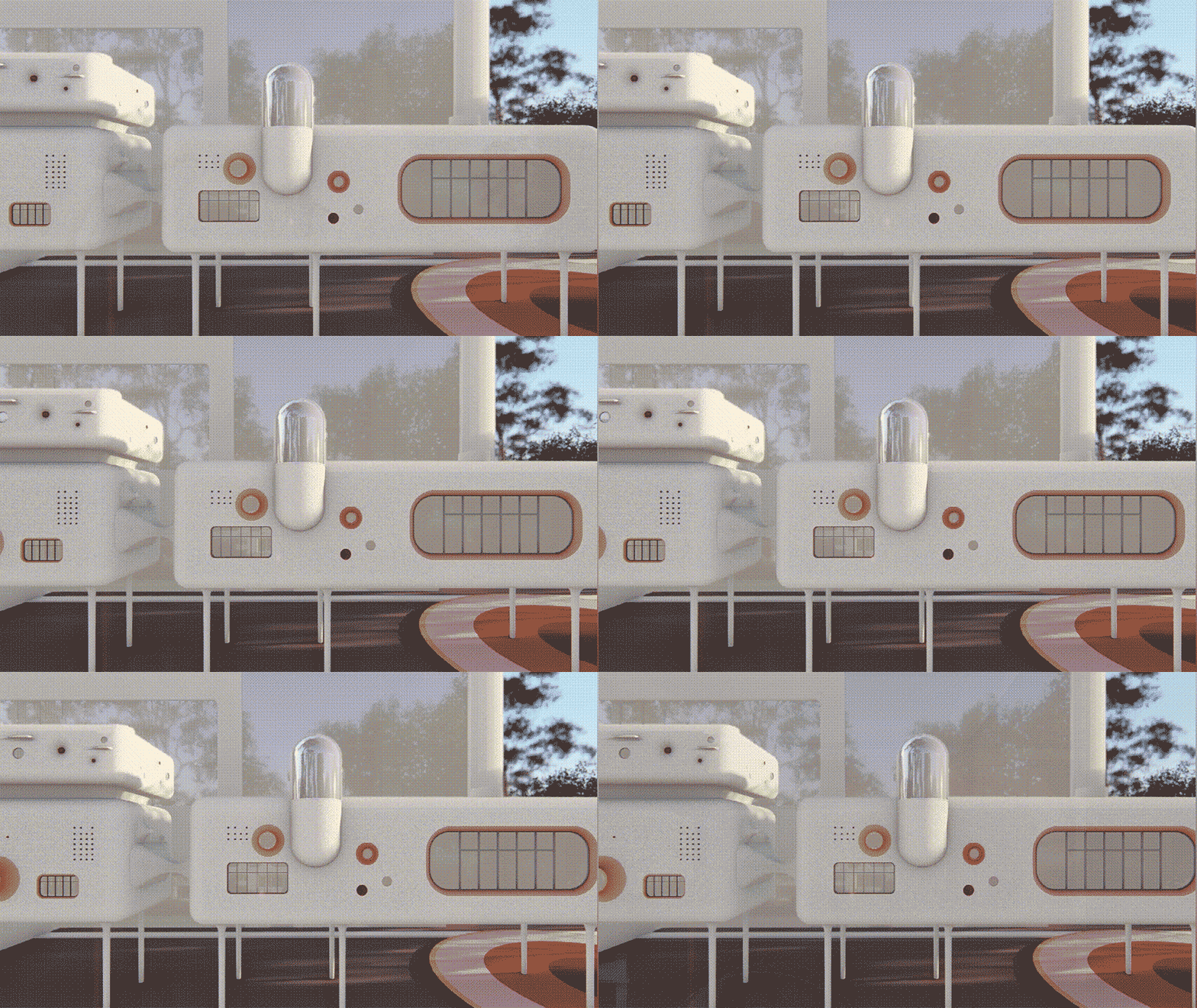
One Step Closer: Finding Optimal Solutions to Potential Challenges
Kindergartens hold the cherished memories of childhood; architecture influences this mental space, offering infinite possibilities beyond time. It is an attribute that exists independently of eras.
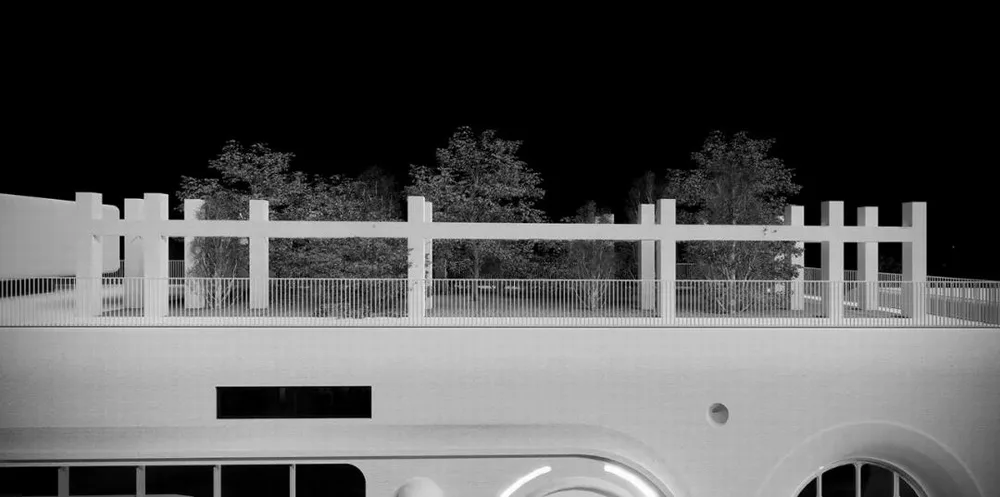
Beyond functionality, we identify potential issues and needs. The “fifth facade” considers nature, landscape, sunlight, and expansive views by introducing two natural forms: forest and farmland, creating another space where students connect with nature.
Located adjacent to the south of the themed teaching building, this area is planned as a scenic zone with diverse functional spaces including terrain play areas, sand pits, running tracks, and planting zones. In the future, this space will become a children’s center and park, featuring a small forest for children.
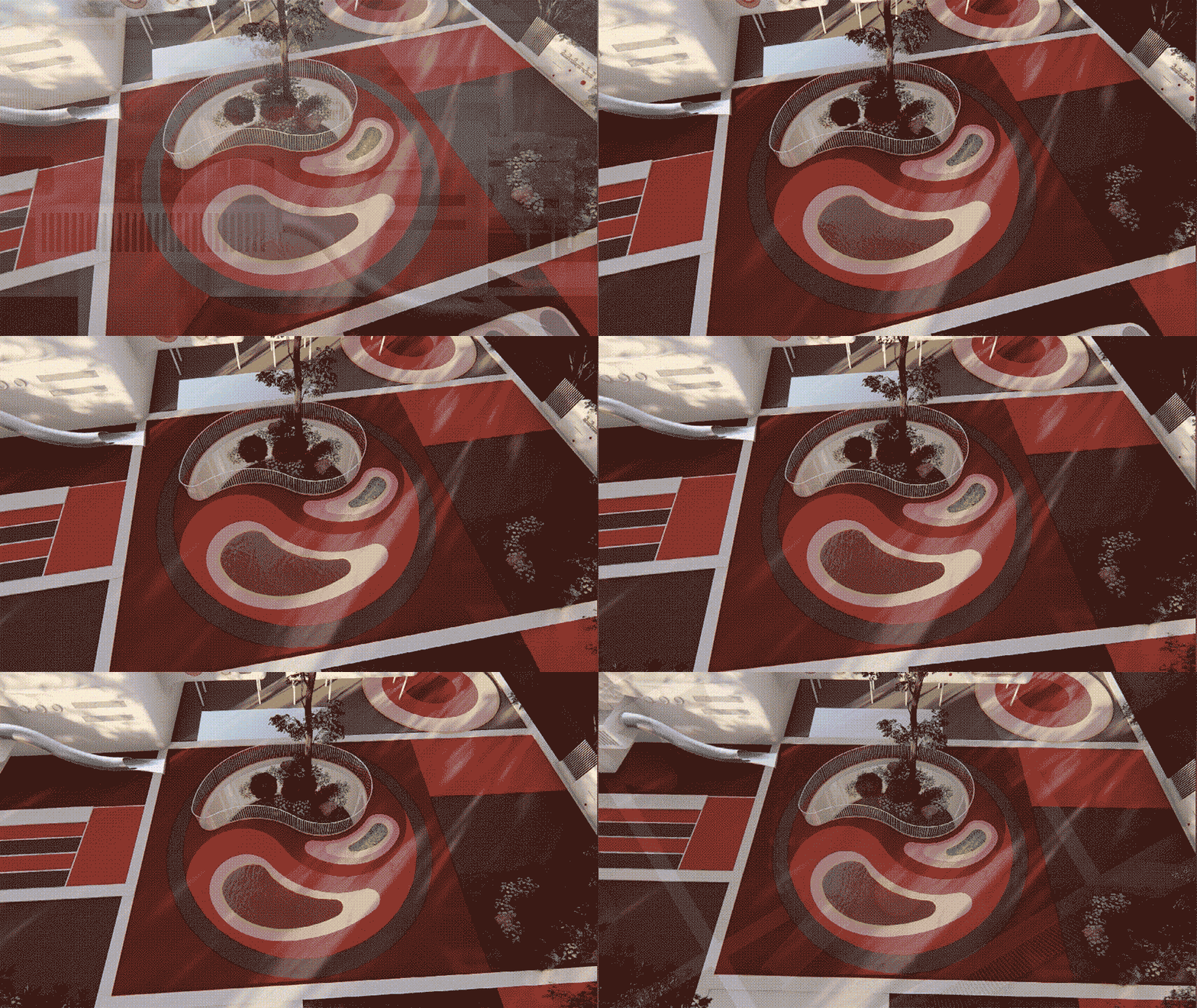
Soft interior corners complement the architectural blend of rigidity and softness. The elegant white palette maintains a warm, refined ambiance. While children may not consciously recognize this, Deca aims to preserve a hint of dreamy freedom—a new function that this building aspires to provide.

Educational Architecture:
Planting the Seeds of the Future, Brick by Brick
In educational architecture, embodying the true meaning of education—breaking from rigid conventions, ensuring practicality, and fostering forward-thinking, user-friendly functions—remains Deca’s ongoing pursuit. This cannot be achieved through a single project but requires continuous refinement and accumulation.
From the outset, Deca envisions the relationship between architecture and education as immersive, surrounding users inside and out, enabling multi-dimensional experience and engagement. The “Futurist” kindergarten transcends mere concept, embedding vibrant cultural narratives and creating a small world where spirited, mythical creatures seem to inhabit every brick and tile, inviting children to explore the infinite mysteries of knowledge.
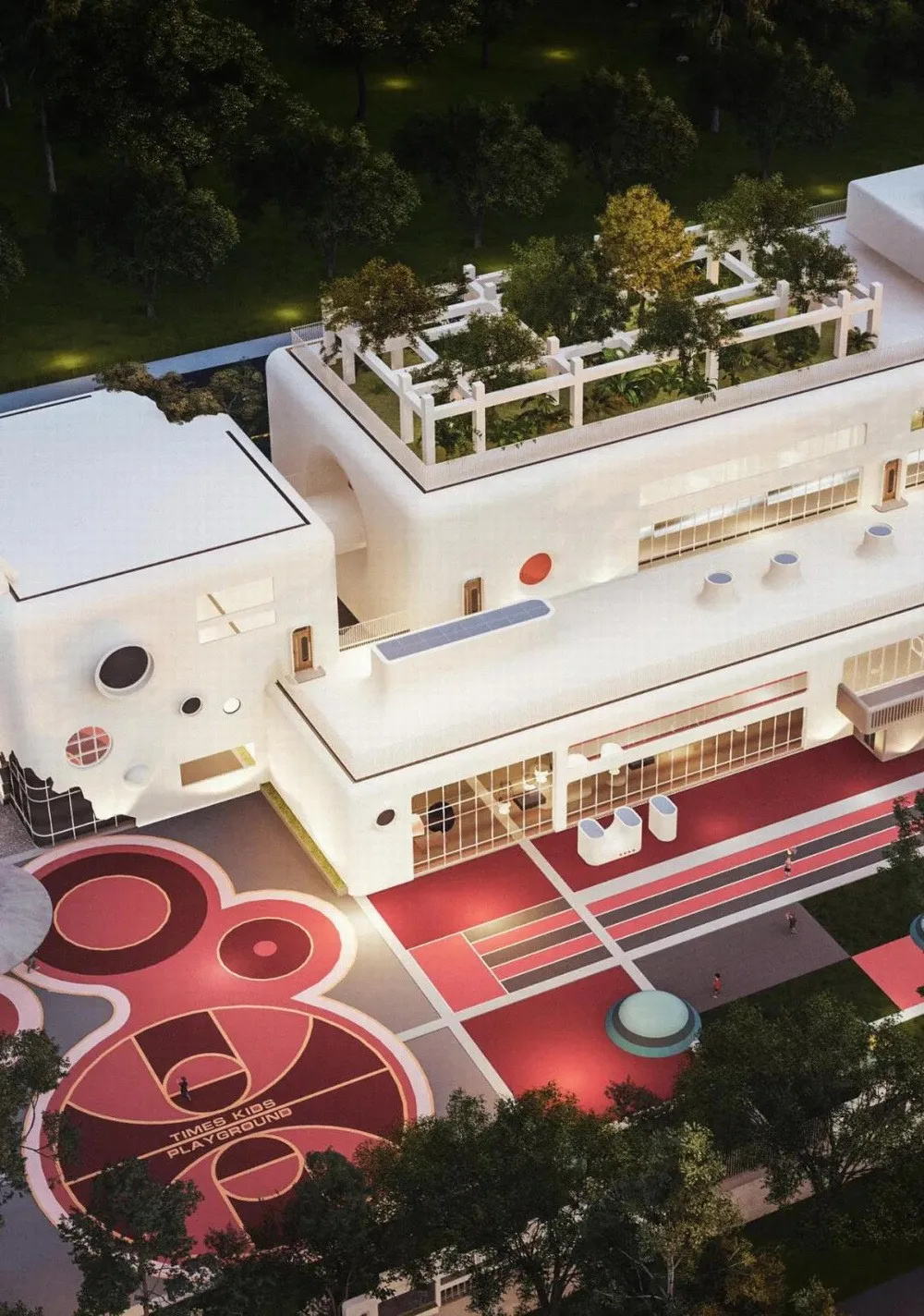

DIKA continuously motivates itself to explore curiosity in the spirit of the times, forging new paths rather than following trends. This, in DIKA’s view, is the key to enduring design.
Project Information
Project Type: Kindergarten Architectural Design
Location: Nanchong, Sichuan
Status: Under Construction
Building Area: 4,861 square meters
Design Year: 2021
Design Firm: Deca Architectural Design Co., Ltd. / Deca Kindergarten Design Center
Lead Architect: Wang Junbao
Office Website: __AI_ST_URL_0__














Must log in before commenting!
Sign Up