
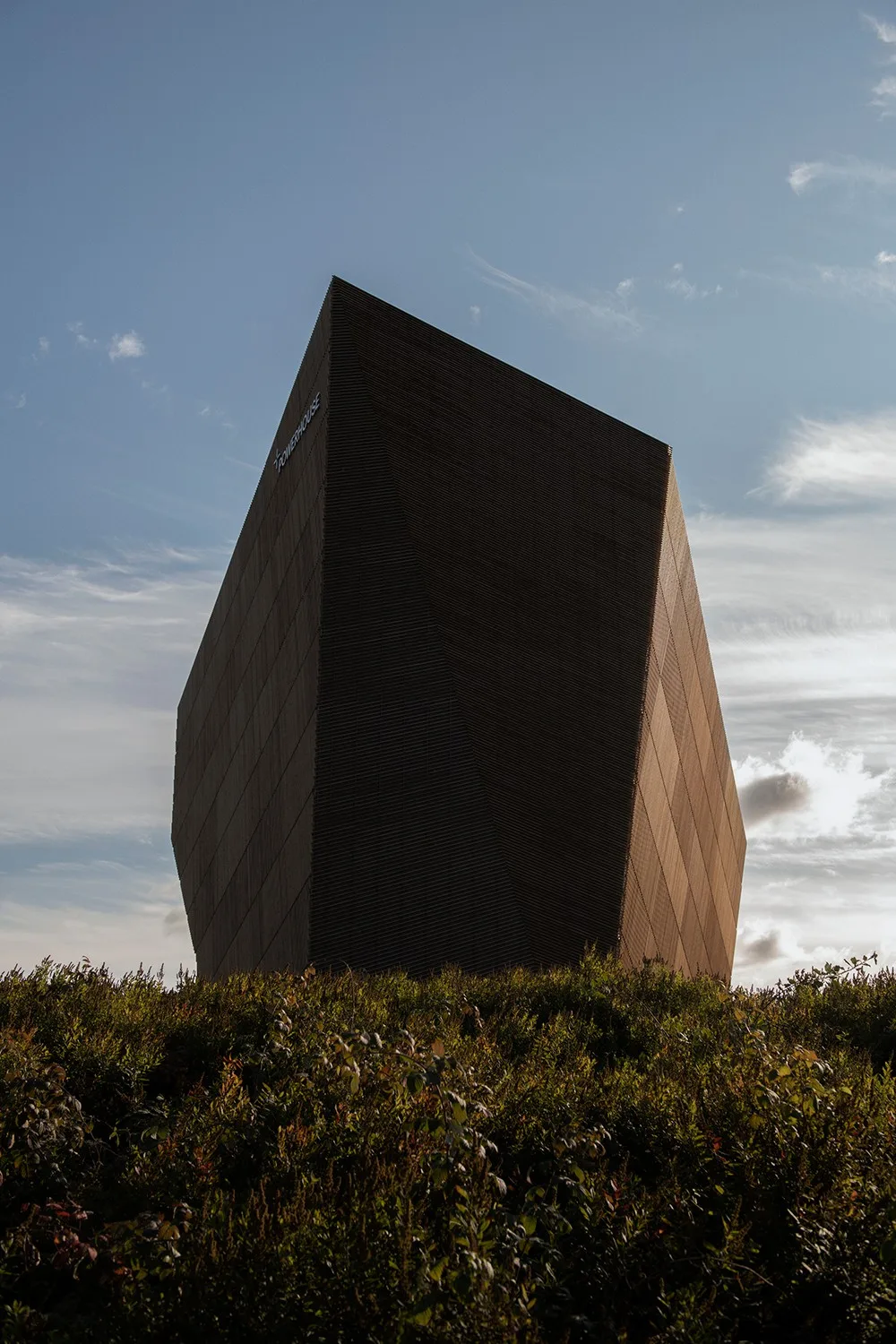
Currently, over 40% of global industrial heat emissions are generated by the construction industry. With the ongoing population growth and the escalating climate crisis, architects now face greater challenges and responsibilities in designing and constructing sustainable projects.
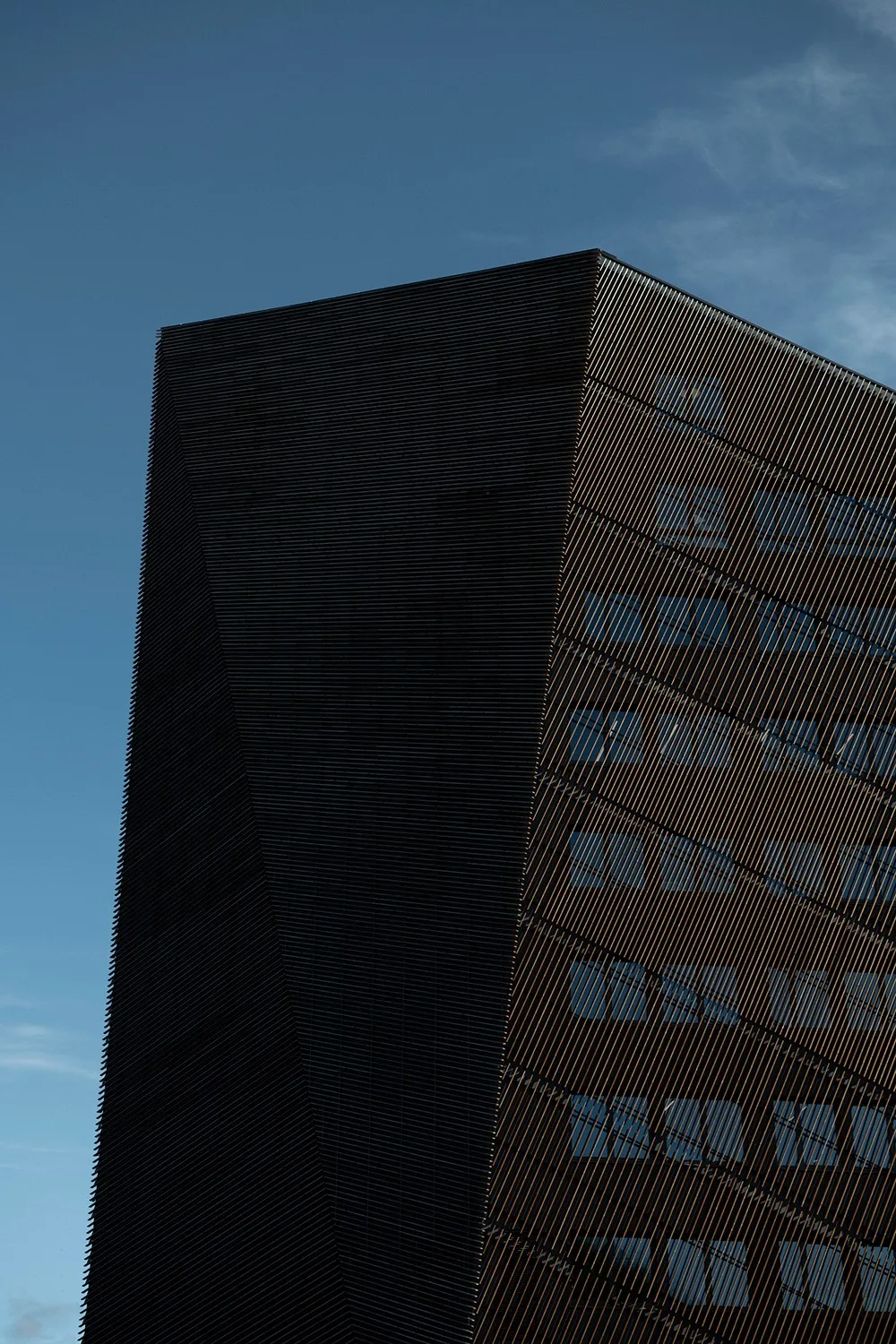
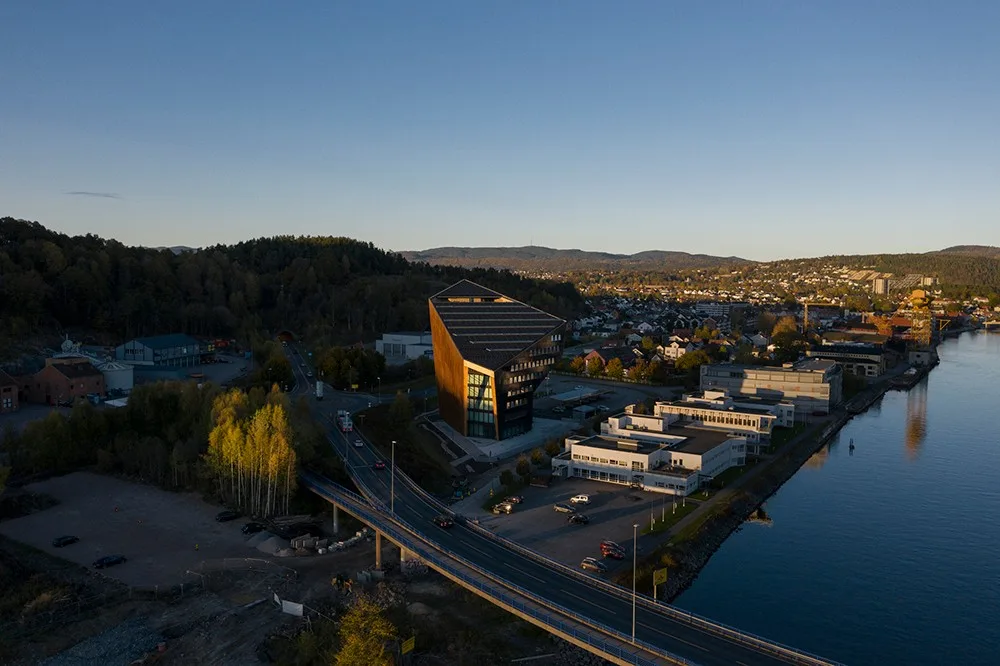
Located in Vestfold og Telemark, Porsgrunn, Norway, this 11-story building continues the legacy of the area’s largest hydroelectric power plant dating back to the 19th century. The newly completed Taylor Mack County Energy Plant showcases sustained investment in green energy and leads local efforts in decarbonization. Its southeast-facing facade and roof generate 256,000 kilowatt-hours annually—twenty times the average household energy consumption in Norway. Surplus energy is stored within the local energy network.
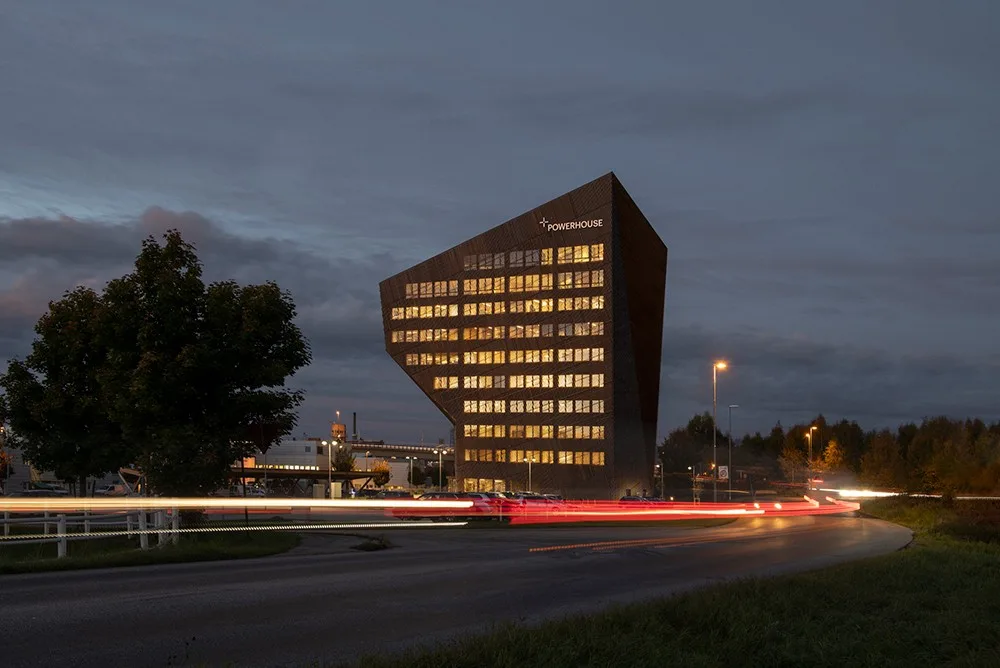
The building features a sloping, slightly conical exterior with a distinctive 45-degree inclined notch on the east facade. This design gives the energy plant a prominent presence within the Herøya Industrial Park. The facility includes a reception area, office spaces, a two-story co-working area, a shared staff canteen, a conference room on the top floor, and a rooftop terrace. Two broad staircases connect the ground and roof levels, linking the reception to the canteen and the conference room. The wooden stairs on the ninth floor seamlessly connect the canteen and conference room, providing access to the rooftop terrace.
This project aims to achieve BREEAM Outstanding certification, reflecting its ambitious sustainable development goals. It not only serves the local community but also sets a benchmark for sustainable architectural design globally.
A standout feature is the gently sloping roof at a 24-degree angle, designed to maximize surface area for solar energy collection. Besides the photovoltaic canopy, the south facade is also clad with PV cells to enhance energy generation.
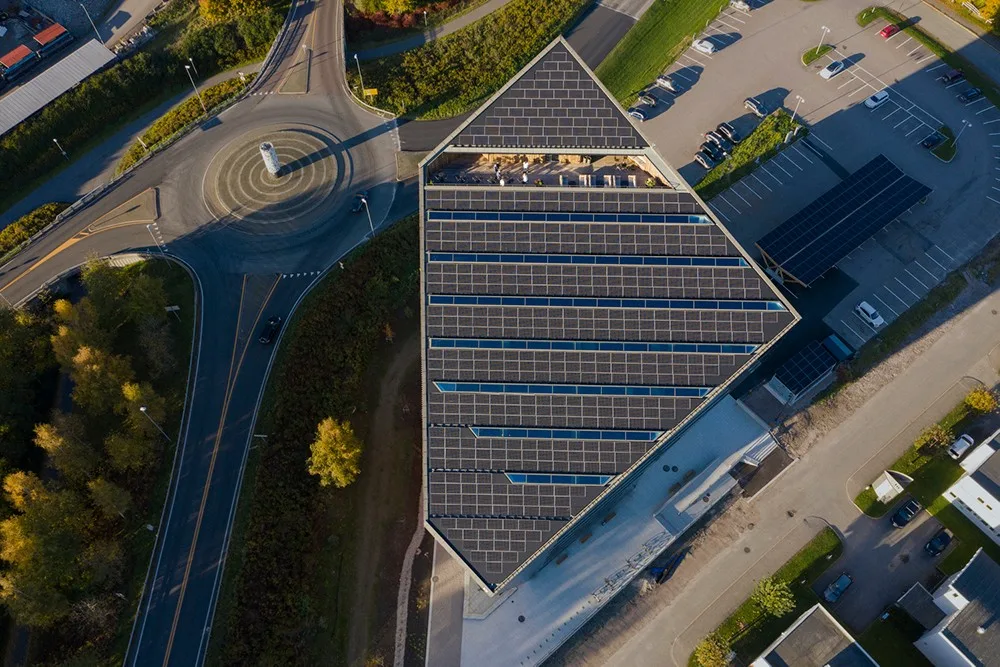
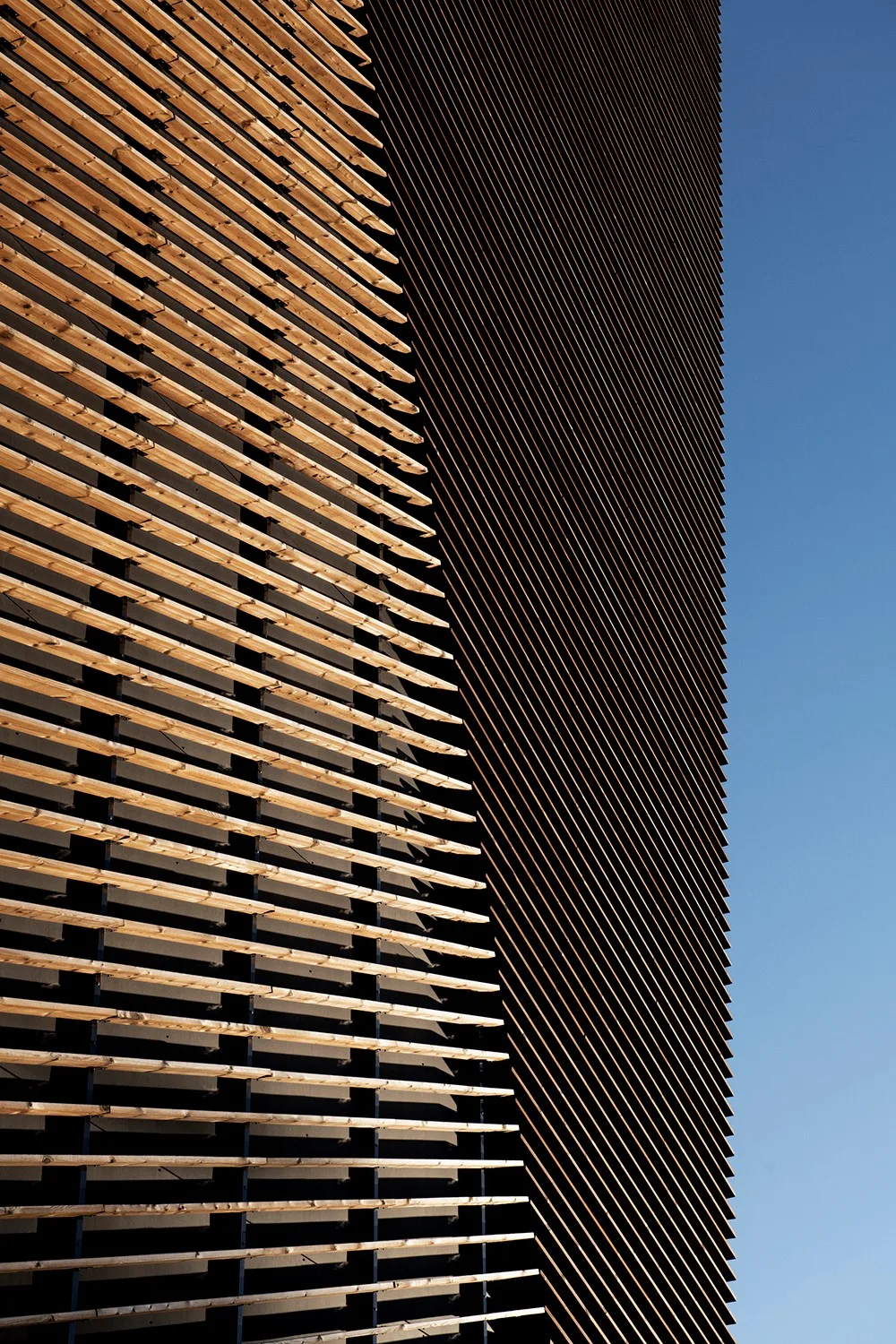
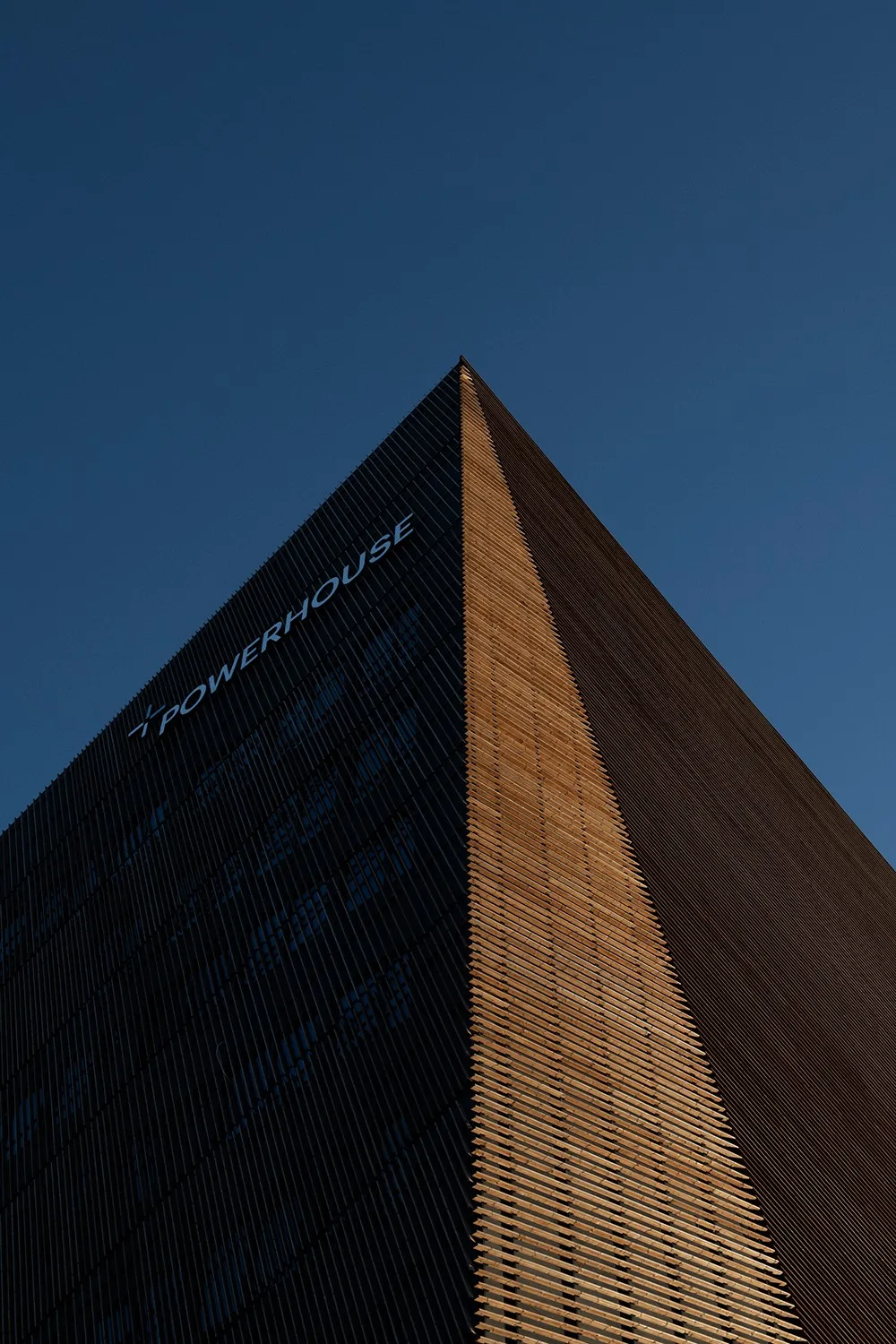
The west, northwest, and northeast facades incorporate wooden railings, which create dynamic shadows when exposed to sunlight. The second floor features Cembrit facade panels to provide a cohesive appearance across the building. Designed as a passive house, the structure uses triple-glazed windows to ensure superior insulation. Concrete panels aid in rapid heat absorption during the day and minimize heat loss at night. Additionally, a water circulation system on each floor efficiently manages the building’s heating and cooling.
The interior design focuses on functionality and minimizing waste. Floor slabs, glass walls, office partitions, kitchen elements, lighting, and bathrooms all share consistent design elements, colors, and materials. The flexible layout and double-layered co-working spaces allow occupants and future tenants to easily customize and reconfigure the interior.
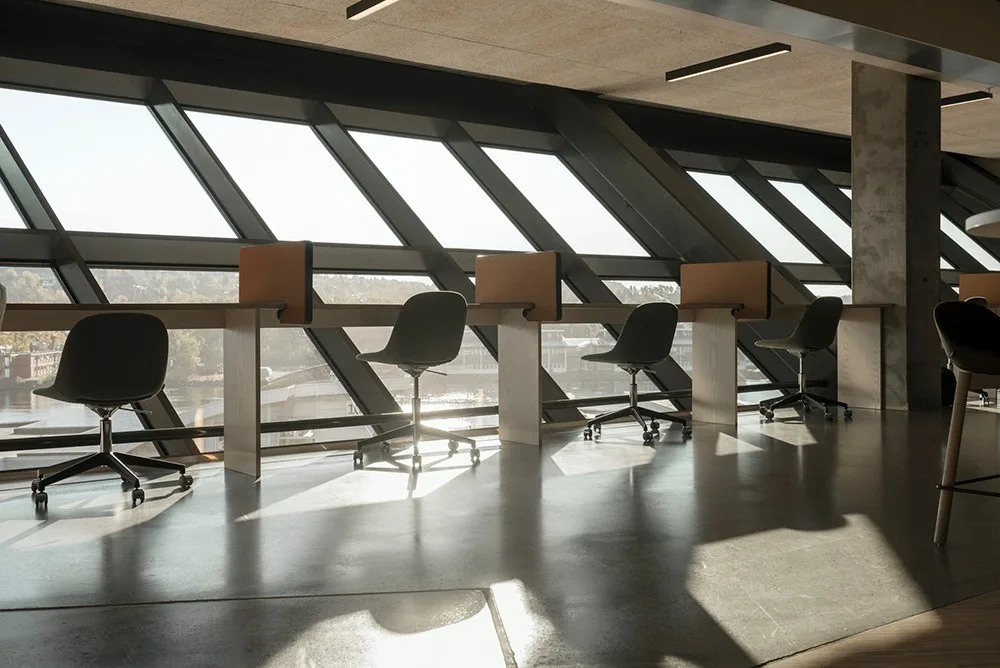
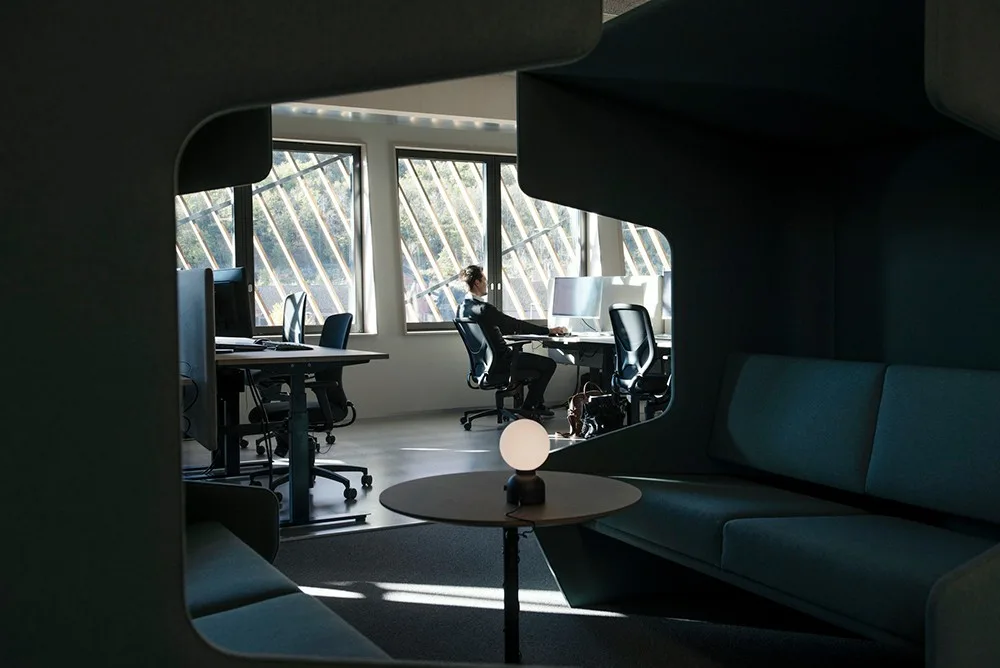
Environmental sustainability is a priority in material selection, focusing on durability and energy efficiency. The project mainly utilizes locally sourced wood, gypsum, and eco-friendly concrete without additional treatments or decorations. From kitchen materials to carpet tiles and furniture, every element emphasizes quality and longevity. Notably, 70% of the carpet tiles are made from recycled fishing nets, while the wooden flooring is crafted from wood chips regenerated from industrial cigarette ash. A customized blade guidance system supports diverse office layouts and reduces material waste.
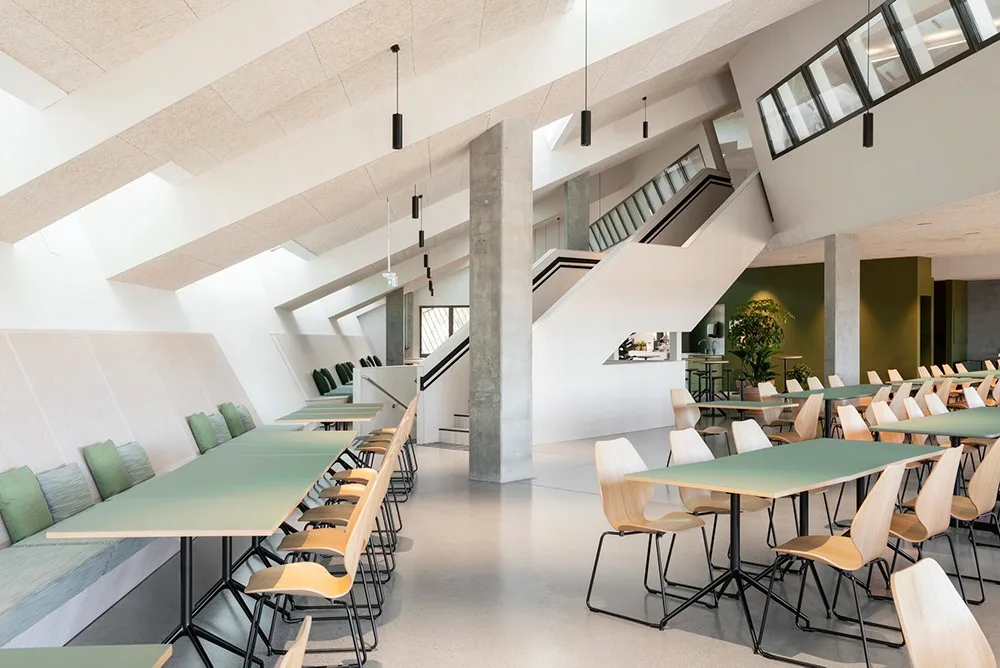
The architect implemented a traditional yet efficient lighting system to minimize energy consumption for artificial lighting. The roof’s unique angle allows sunlight to penetrate the top three floors naturally, while bright-colored furniture enhances indoor light reflection.
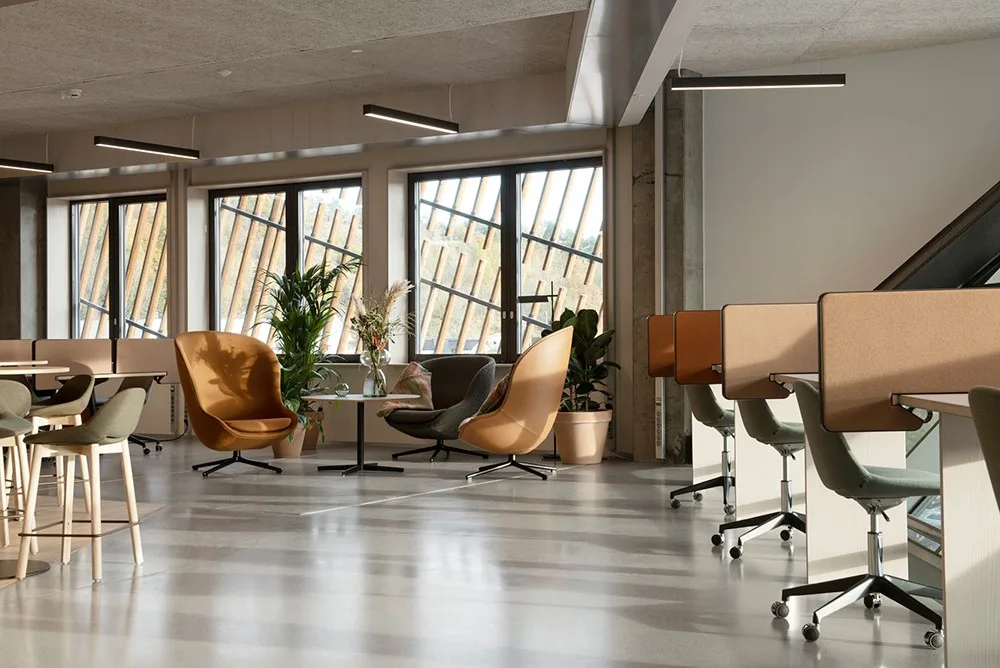
This project, along with sister developments such as Kjørbo, Montessori, and Brattørkaia Energy Plants, provides a model for environmentally conscious and sustainable buildings. These projects also effectively address evolving office space requirements in response to the COVID-19 pandemic.
Technical Drawings
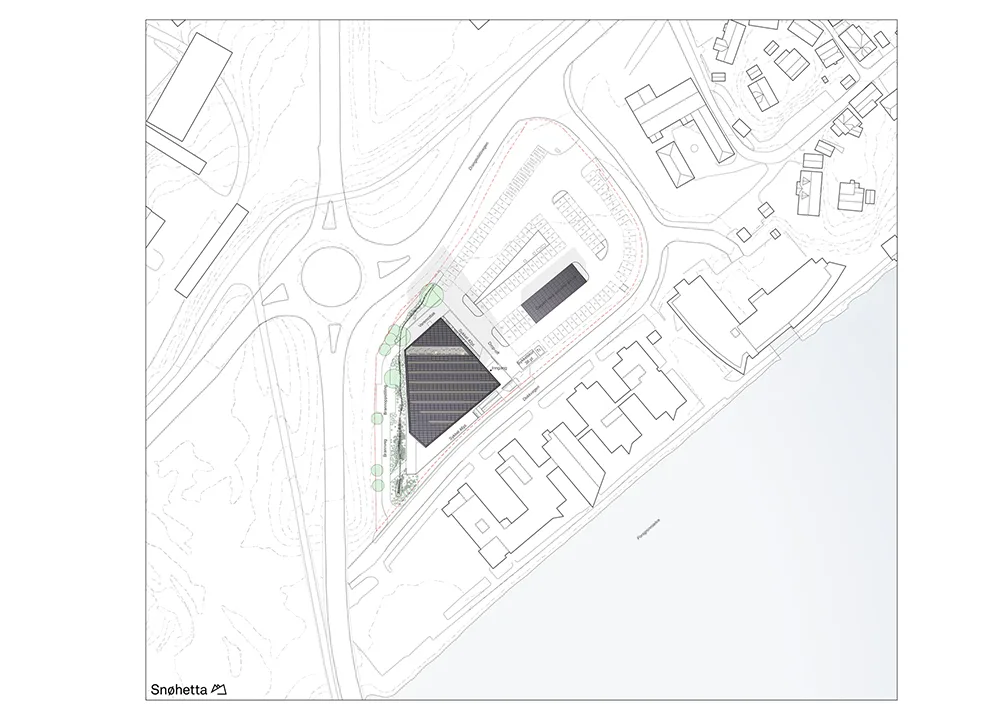
△ General Layout Plan
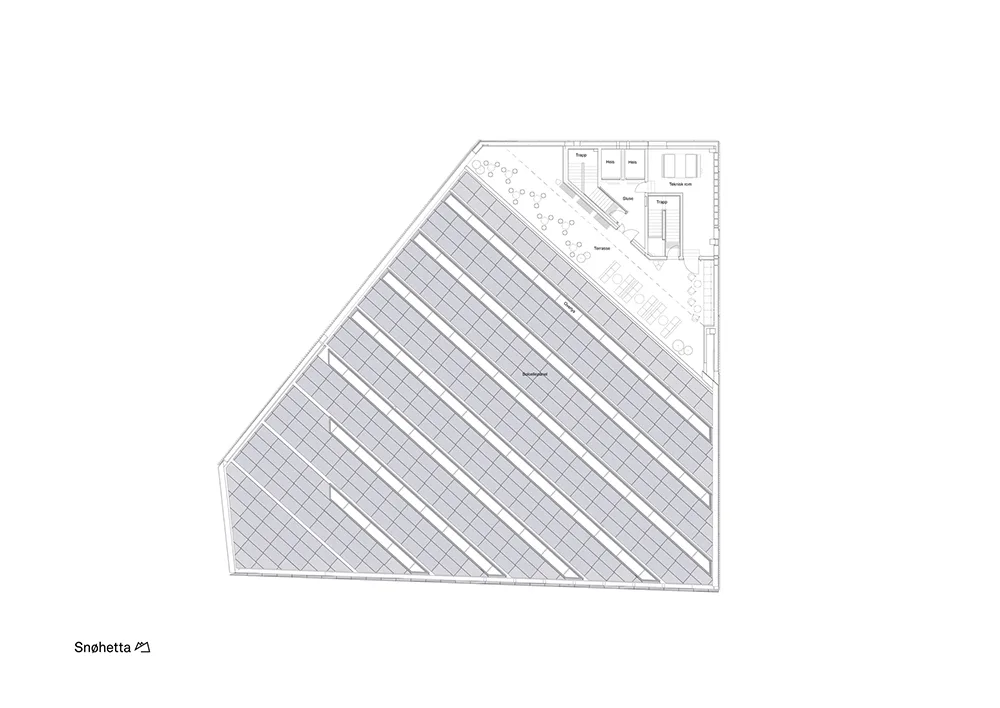
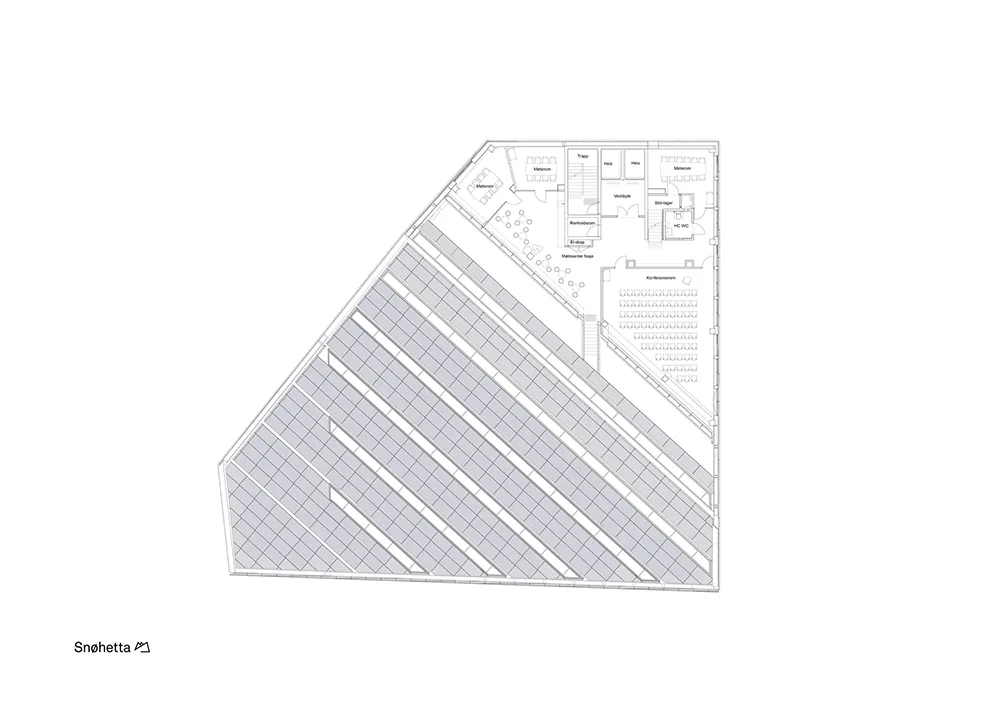
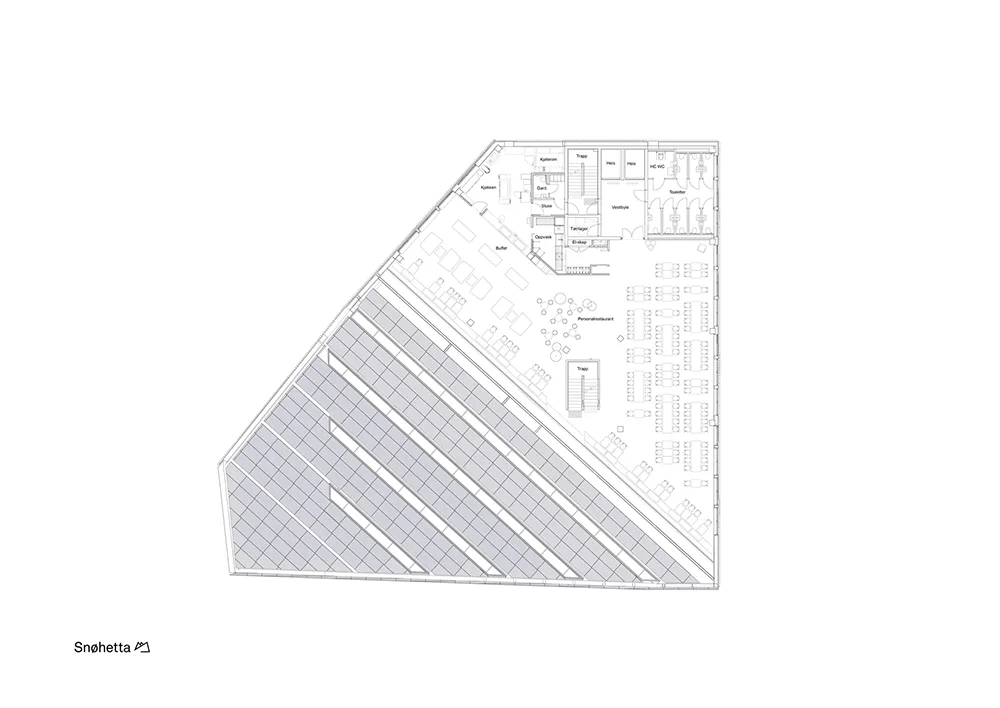
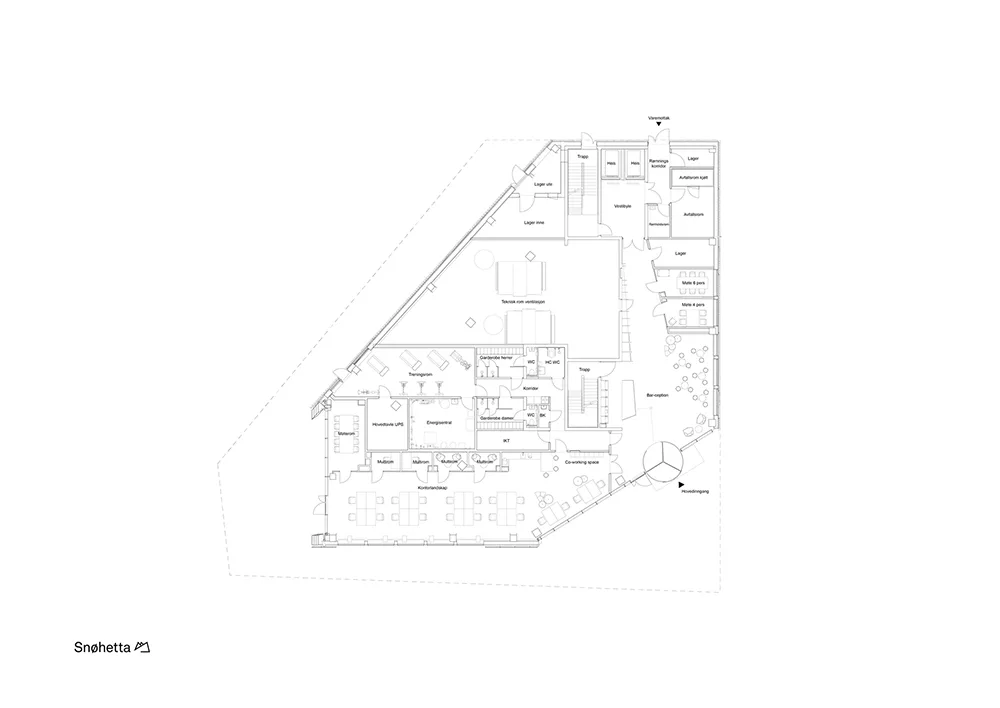
△ Plan View
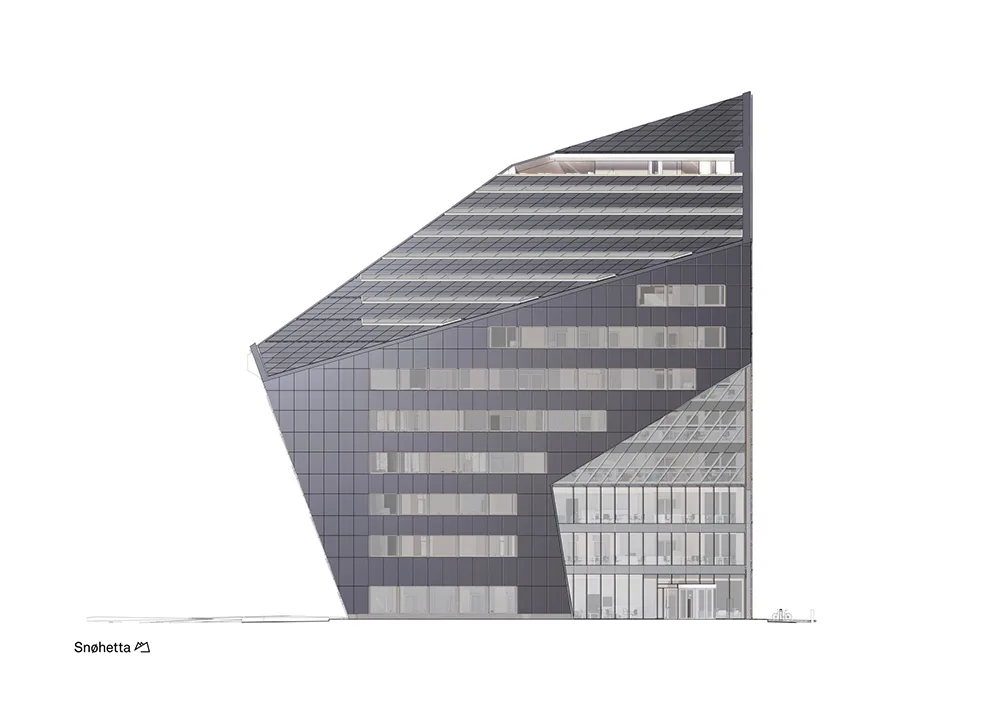
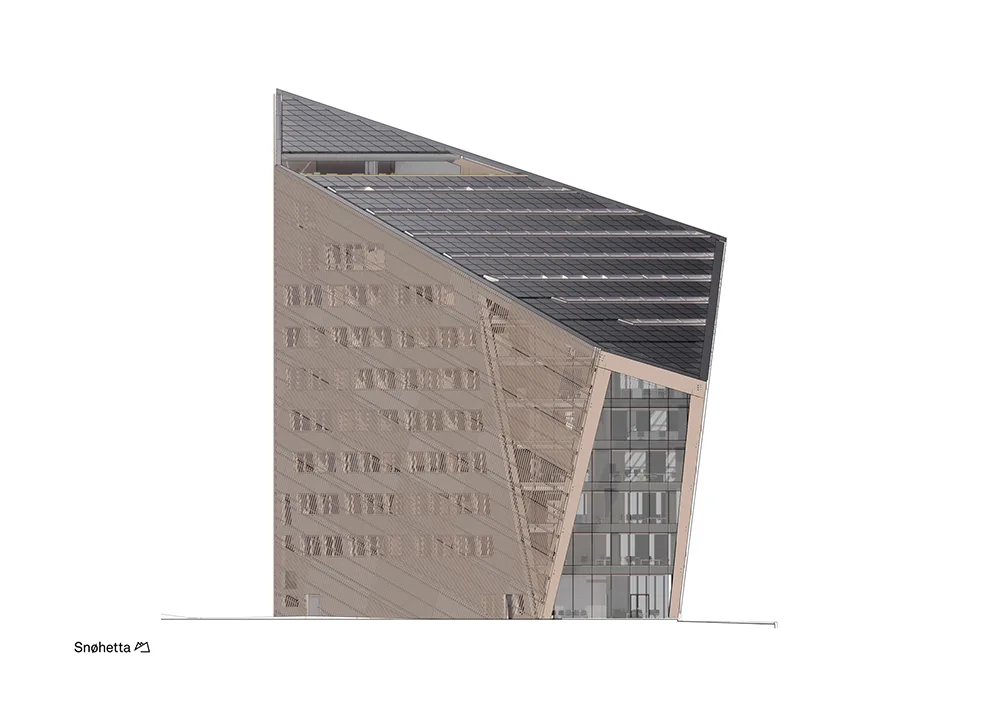
△ Elevation Drawing
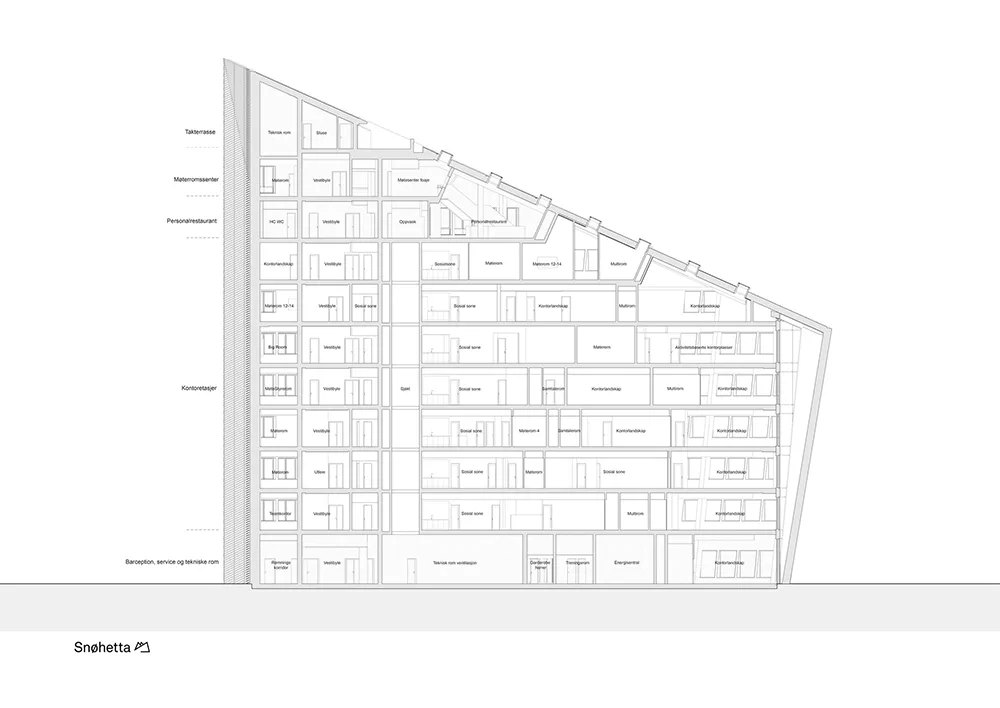
△ Section Diagram
Project Information
Architect: Snøhetta
Area: 7,931 m²
Project Year: 2020
Photographer: Ivar Kvaal
Manufacturer: STENI
Technical Contractor: Skanska
Technical Design: Skanska Teknikk, Asplan Viak
Country: Norway












Must log in before commenting!
Sign Up