
She jumped up,
“Go chase that rabbit,”
Just in time to see him enter a large rabbit hole.
— Alice’s Adventures in Wonderland
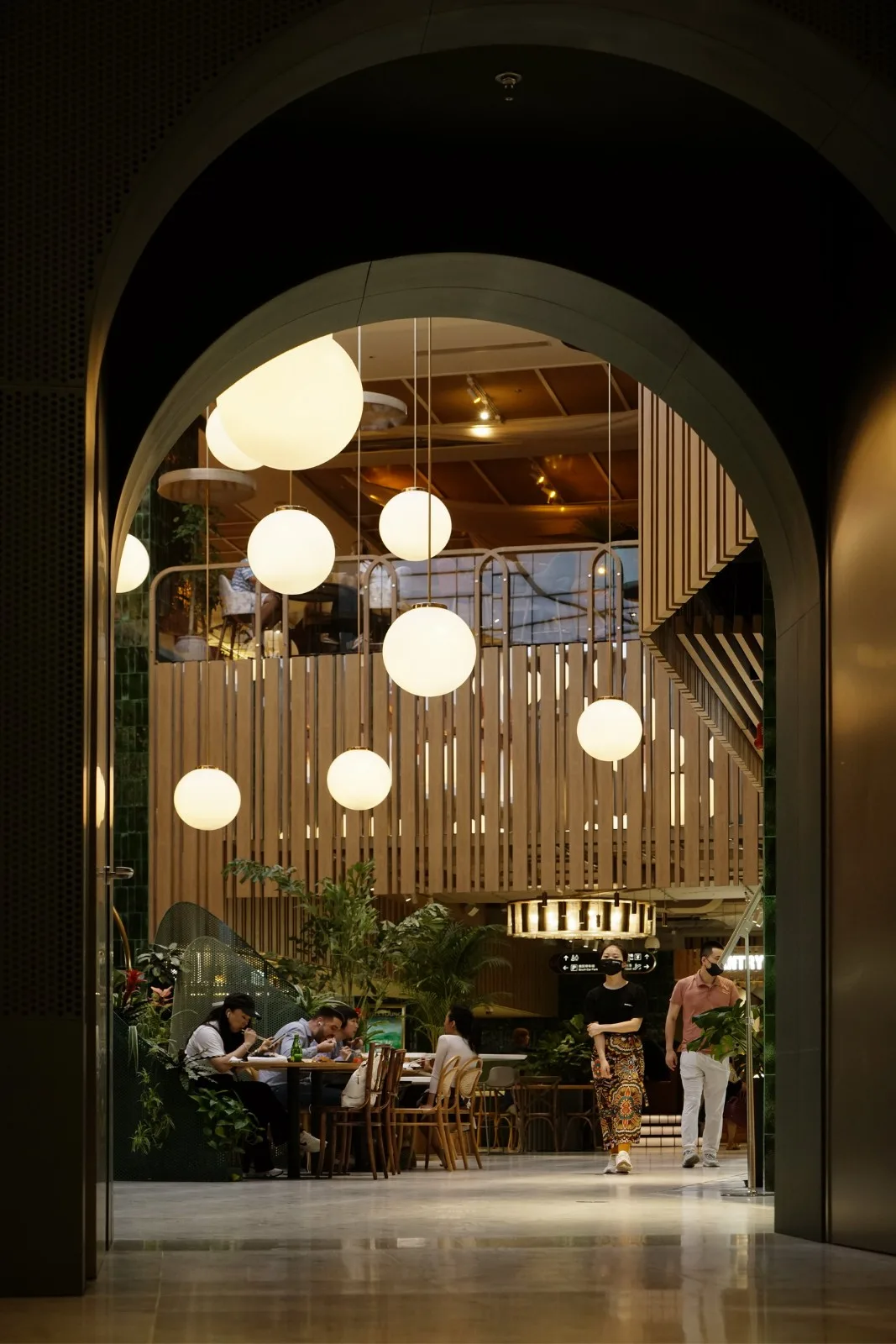
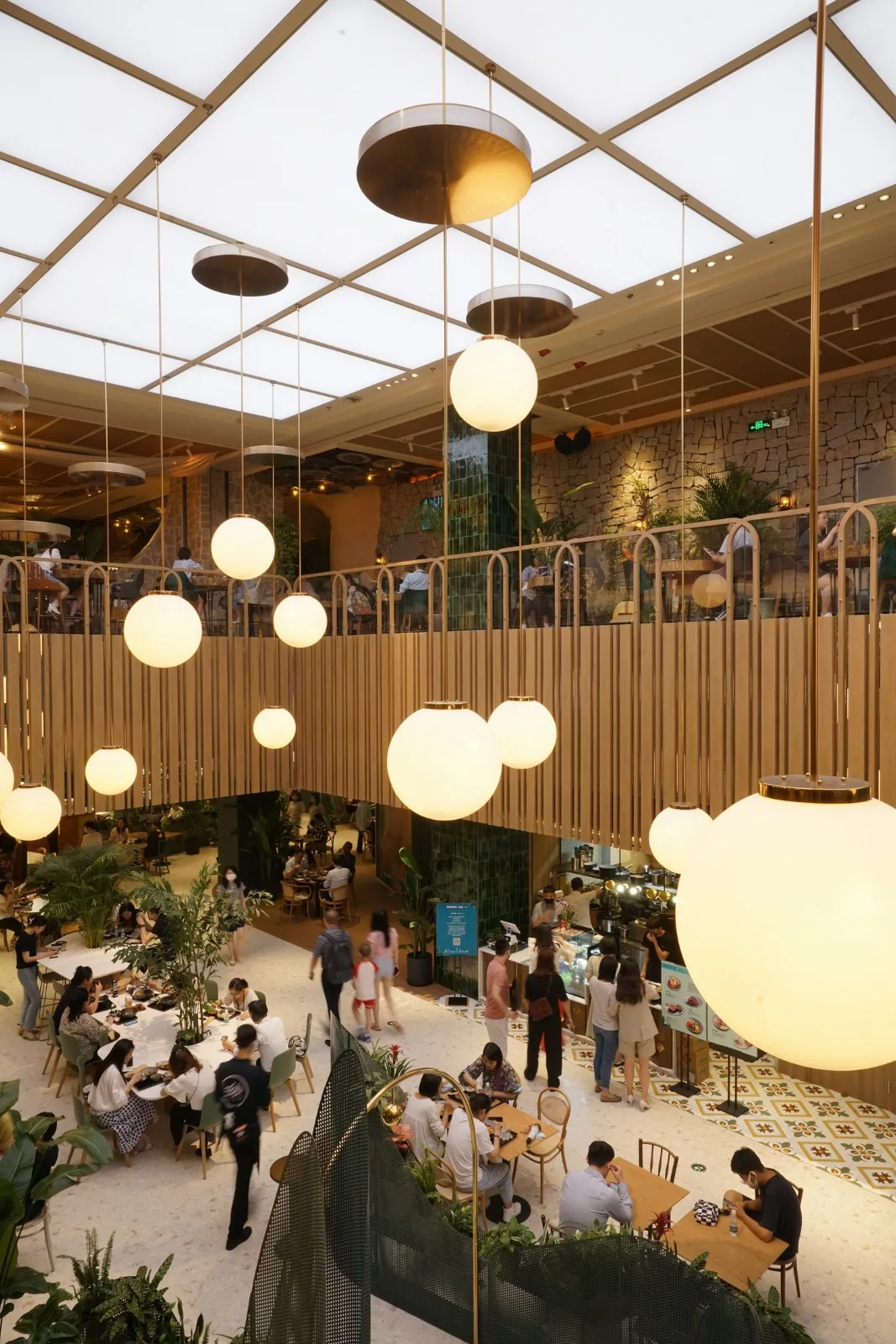
W-Mills by Wutopia Lab was commissioned by Kerry Group to design Underground Park – Xiangshili, a multifunctional dining and social space focused on the concept of Social Eating. Located on B2 of the South Mall at Jing’an Kerry Center, it offers a unique gathering place for dining and social interaction.
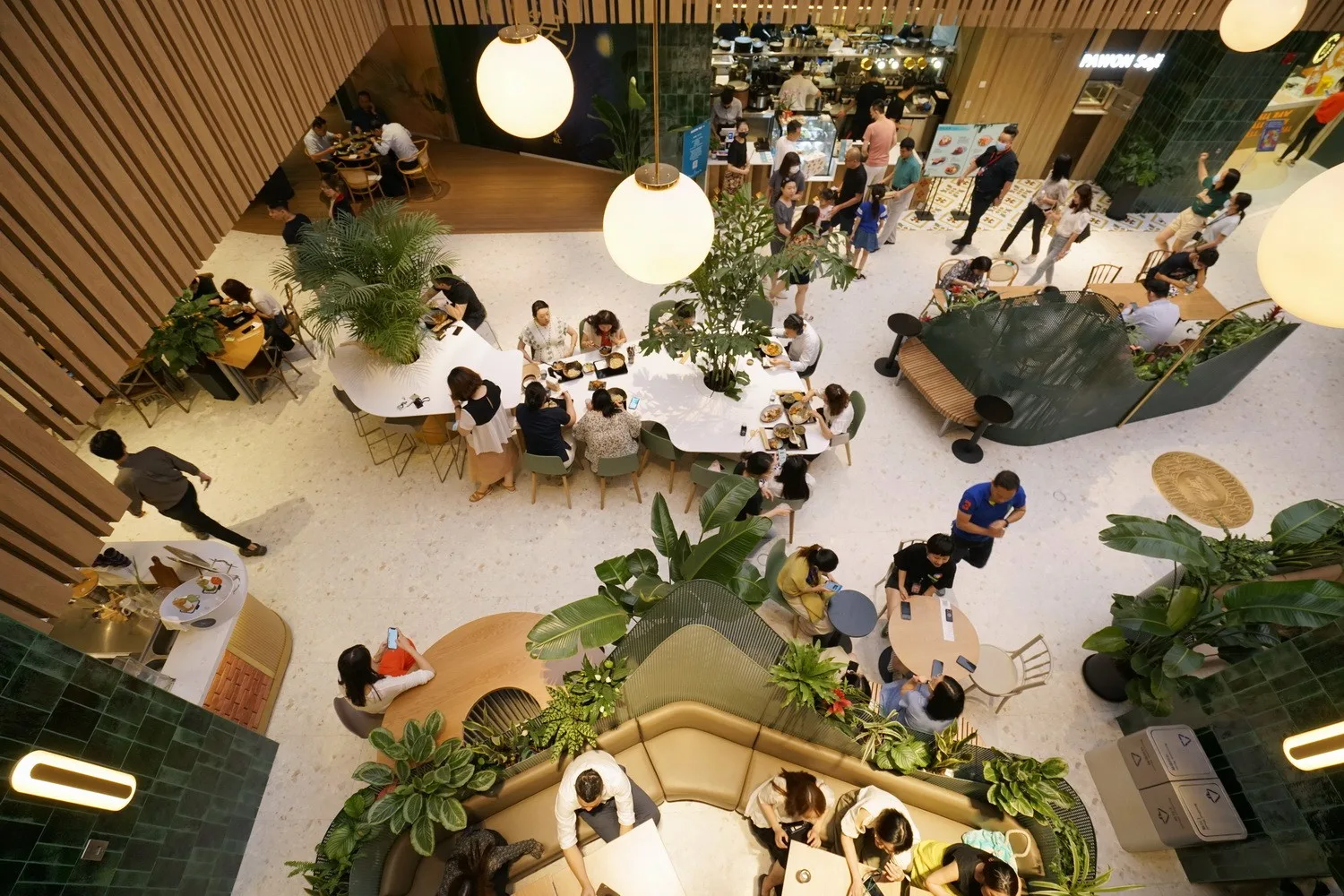
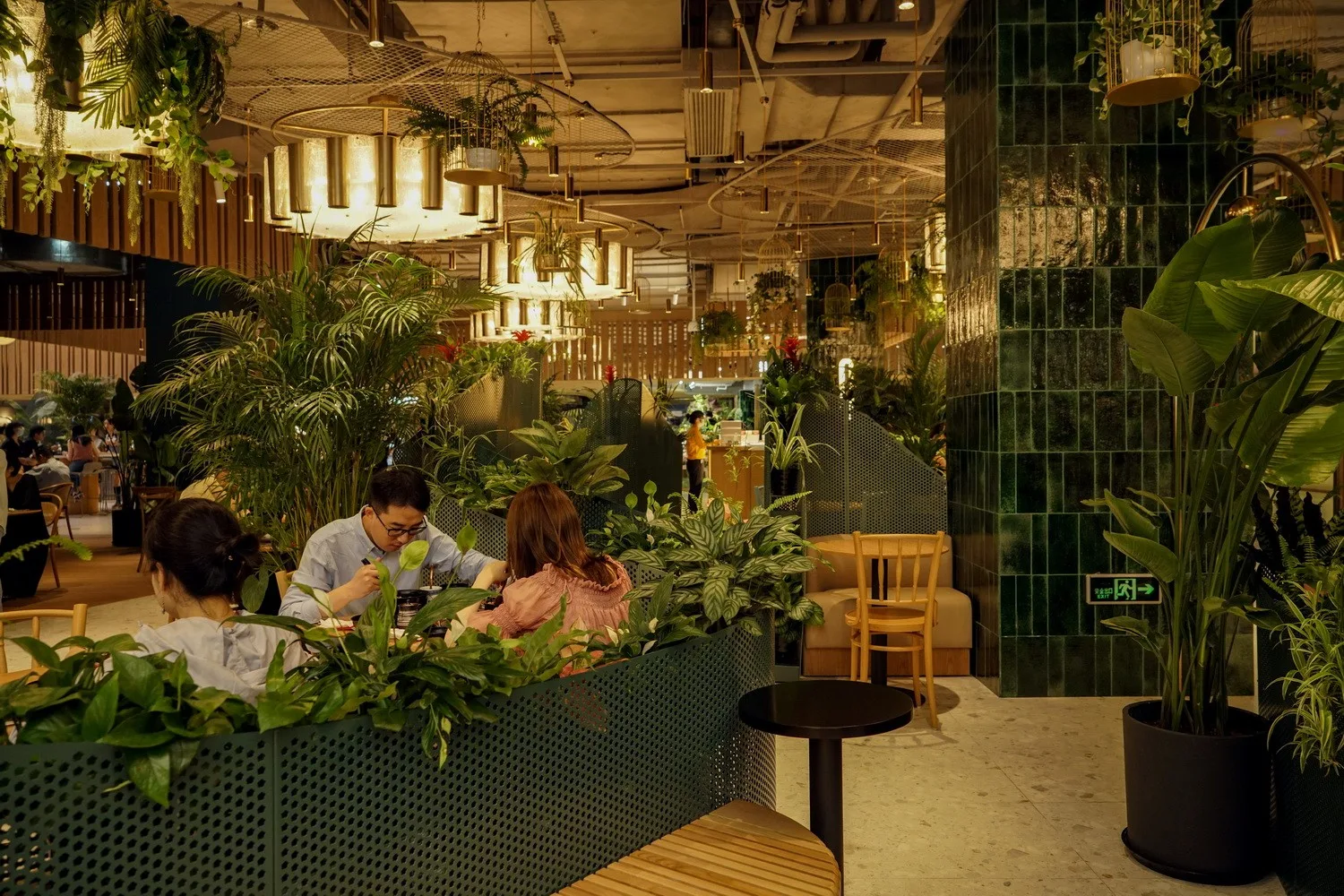
Before Wutopia Lab joined, the overall design was completed by the Spanish firm LRV (Lázaro Rosa Violán studio). Construction had already started, and most materials had been ordered. While LRV’s design was solid in a traditional sense, the space felt trapped within conventional typologies. Due to COVID-19, the team was unable to visit Shanghai or experience the intense retail competition there, which differs greatly from Europe. Although the original design showcased sophistication, it lacked innovative social dining concepts tailored to Shanghai’s unique market.
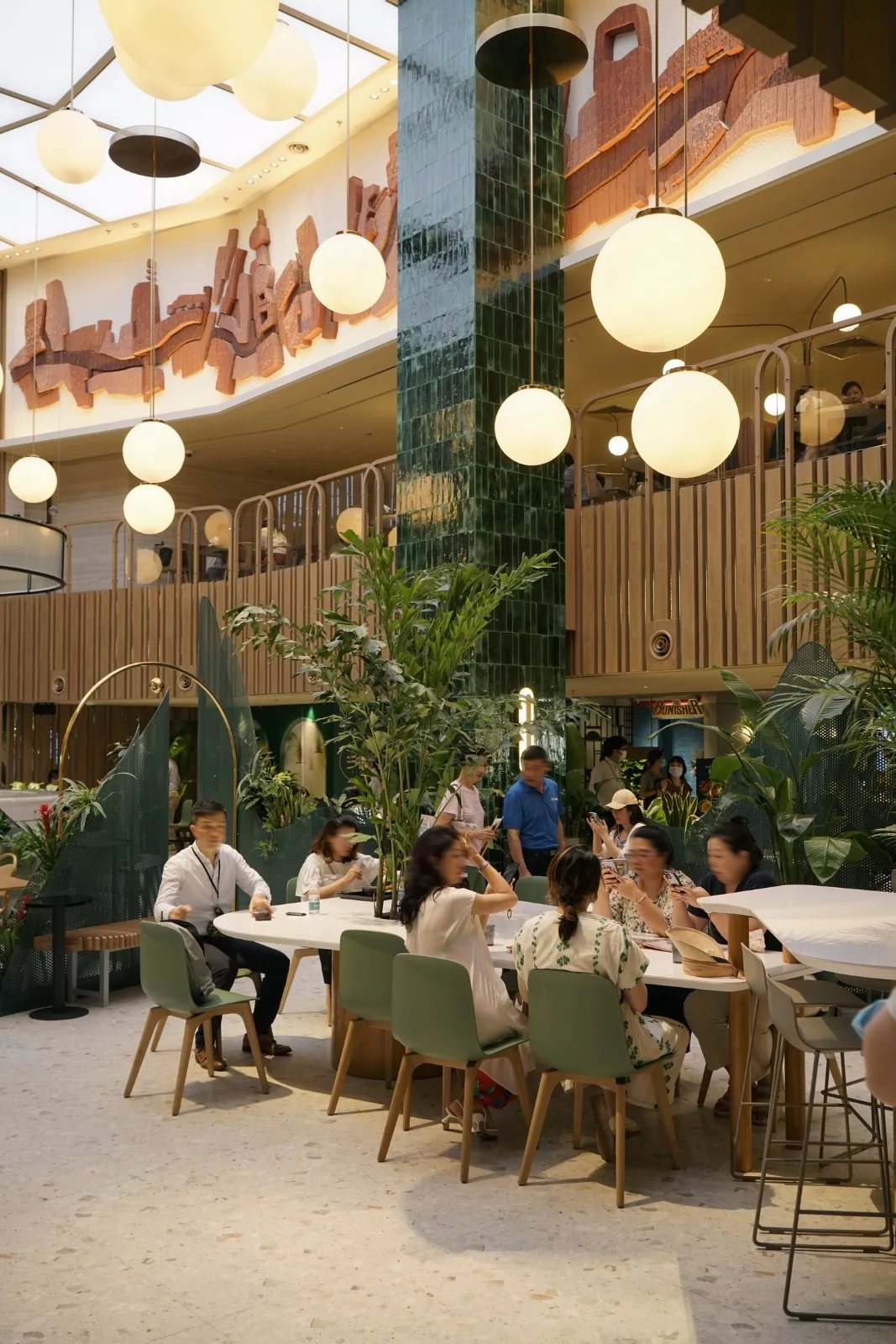
In China, many scenario-based businesses, such as Wenheyou and Shanghai North Bund Raffles City, have emerged to avoid direct commercial competition. Our preliminary research indicated that if Xiangshi became a typical tourist attraction, the influx of visitors would disrupt the intimate social atmosphere essential for Social Eating. This posed a challenge: how could Wutopia Lab create a space that fosters social dining while managing commercial pressures?
01
Another Possibility: Underground Park
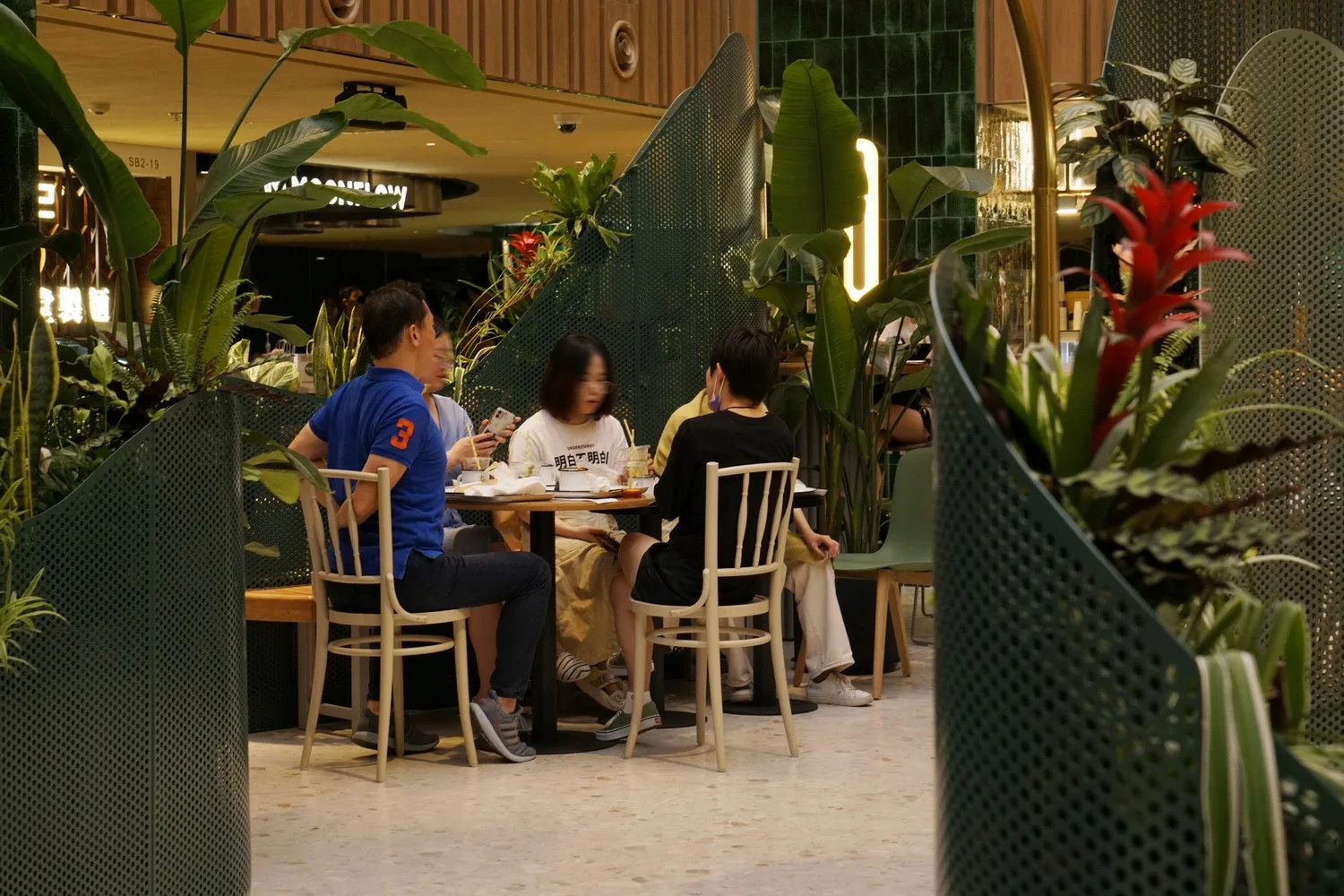
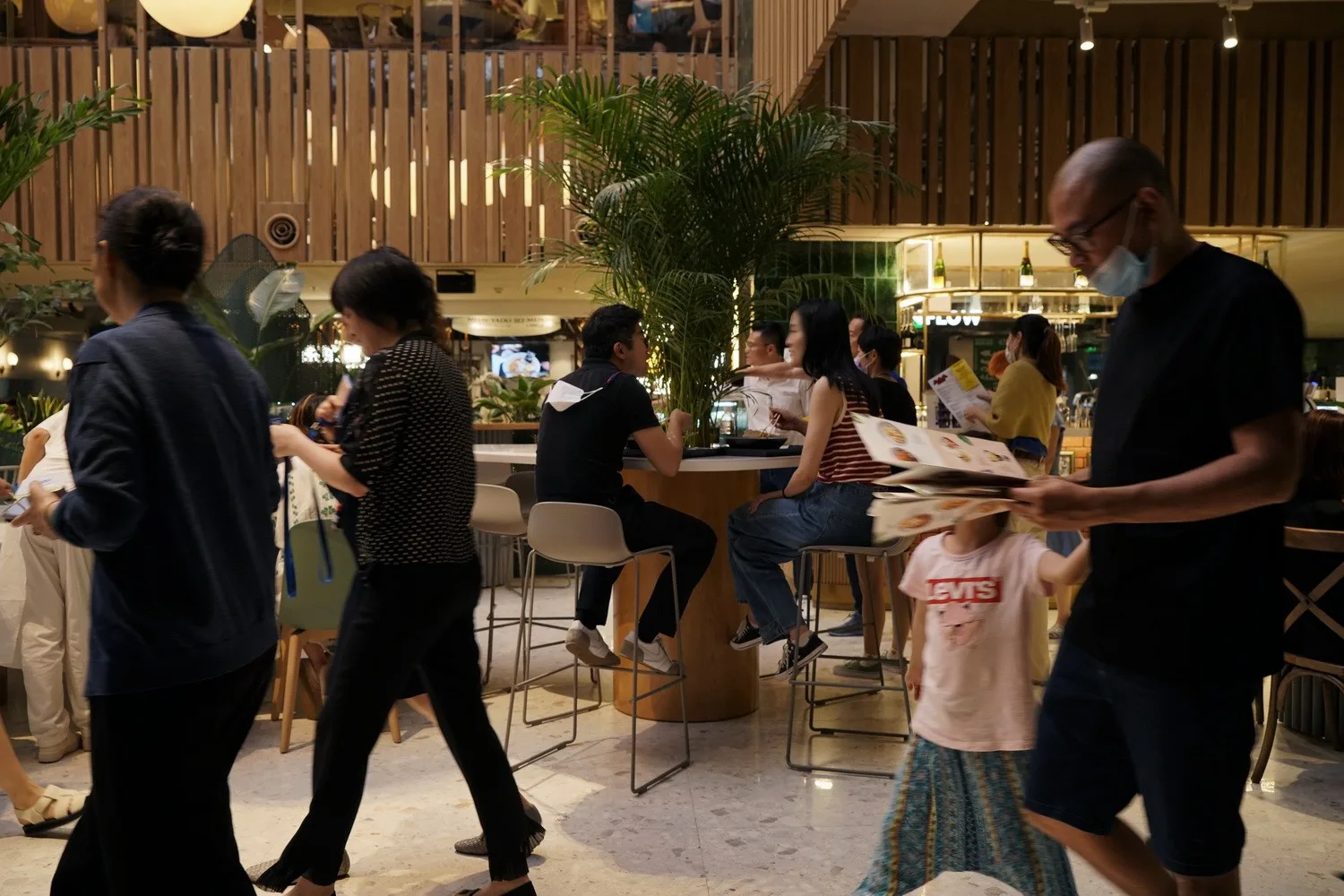
Given the significant material orders already placed for LRV’s plan, Wutopia Lab opted not to overhaul the design. Instead, they integrated their new vision by treating LRV’s work as a backdrop, transforming the center into a social square or garden. This garden embedding approach avoided wasting materials and prevented construction delays, turning the refined original design into the vibrant streetscape of Underground Park.
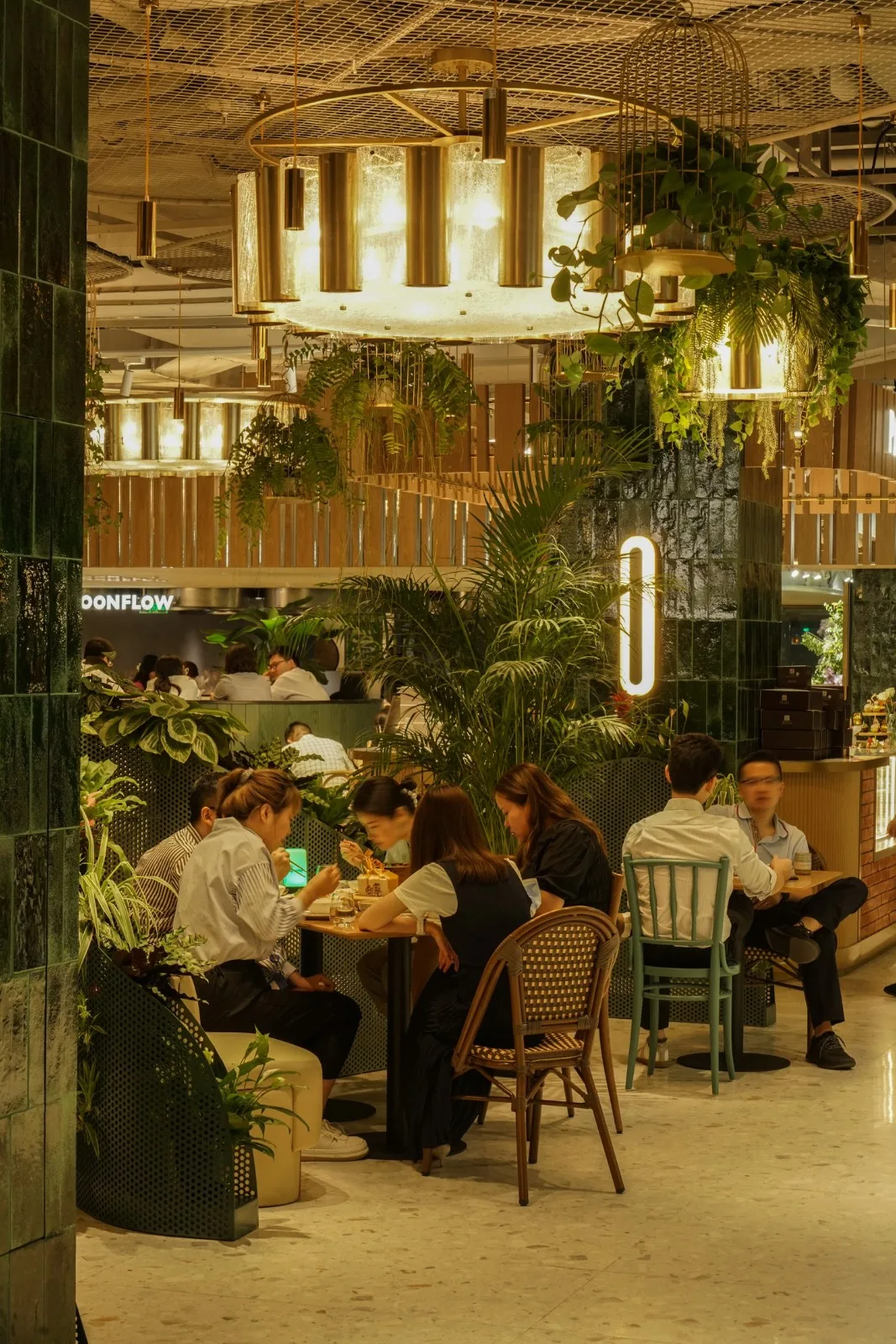
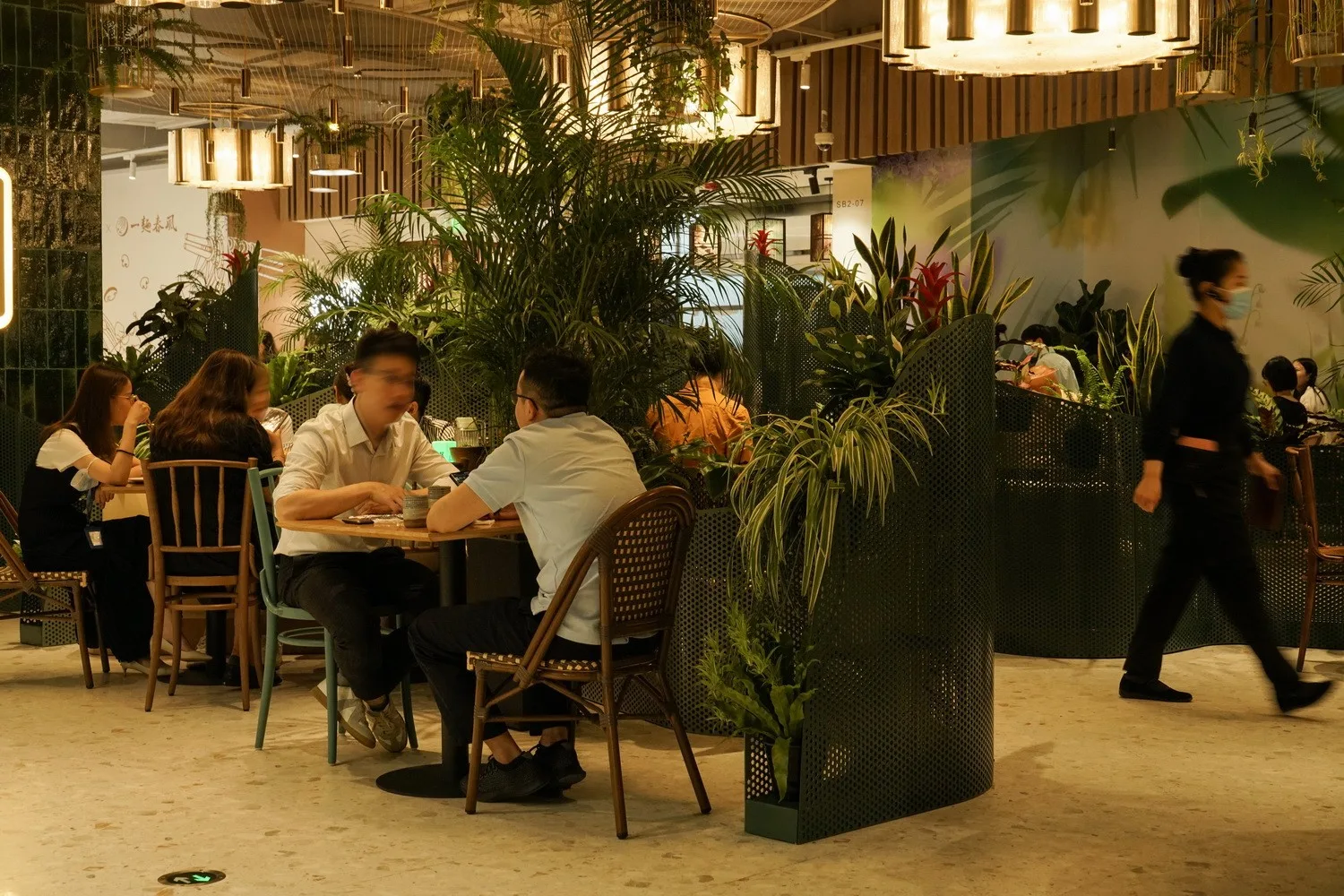
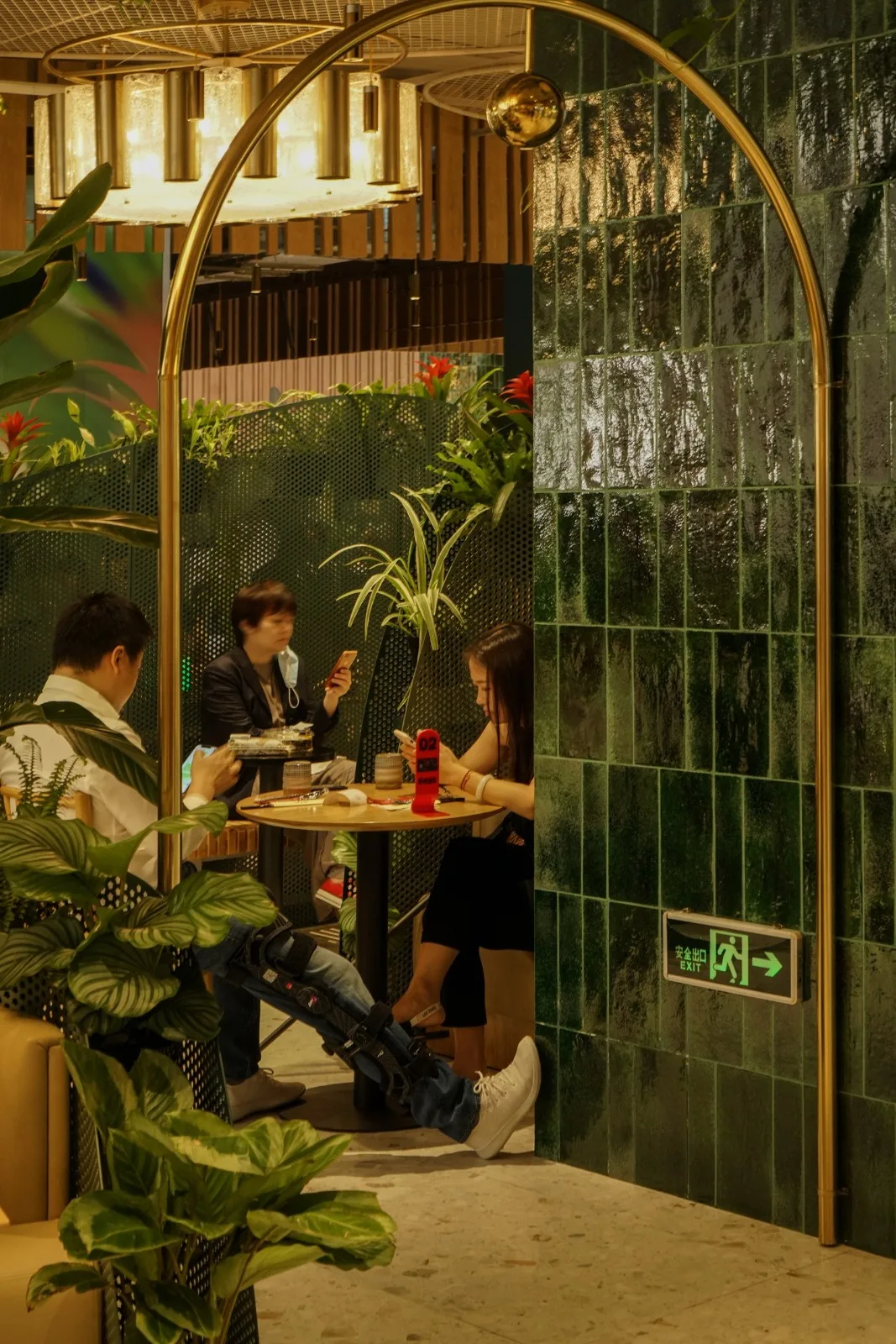
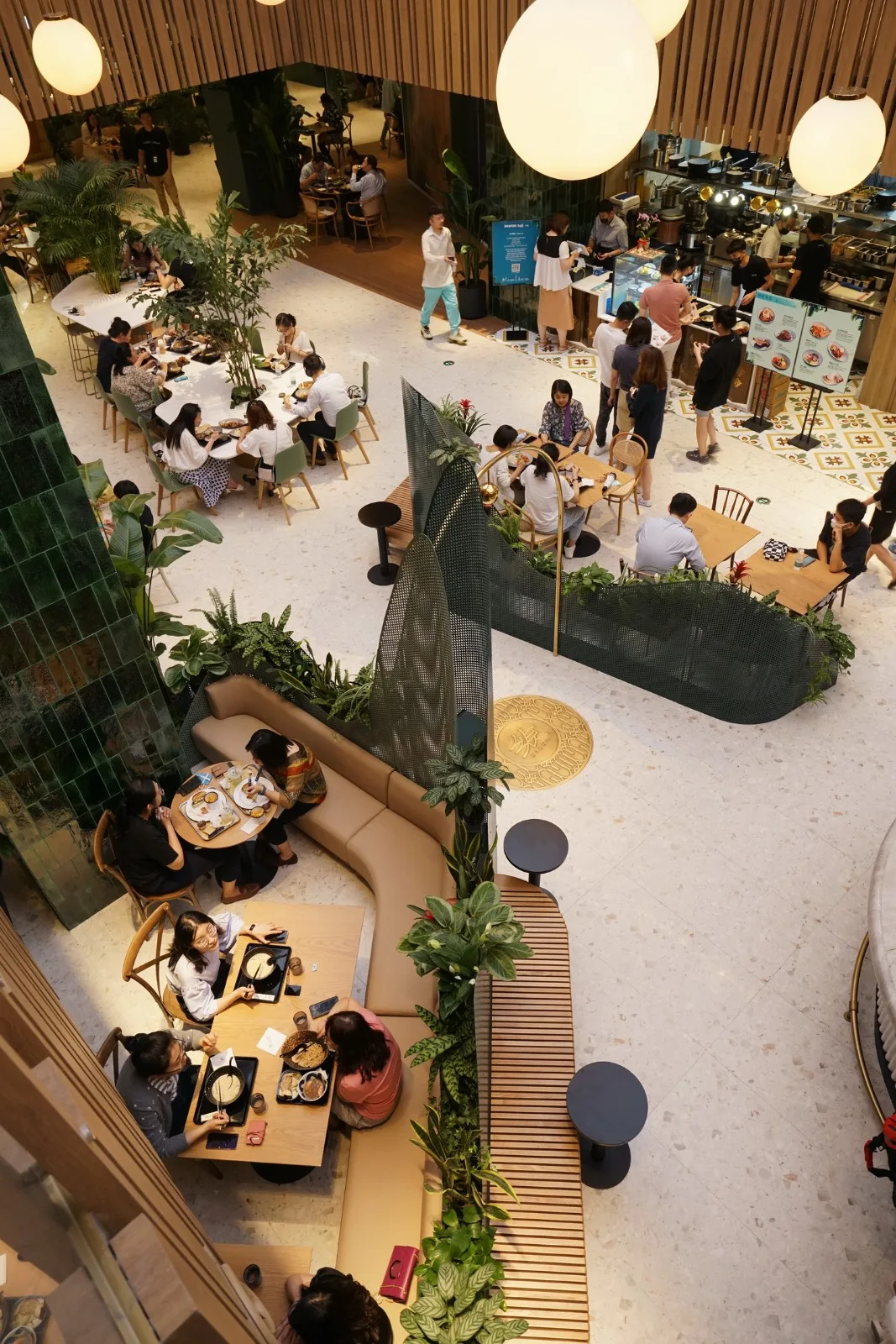
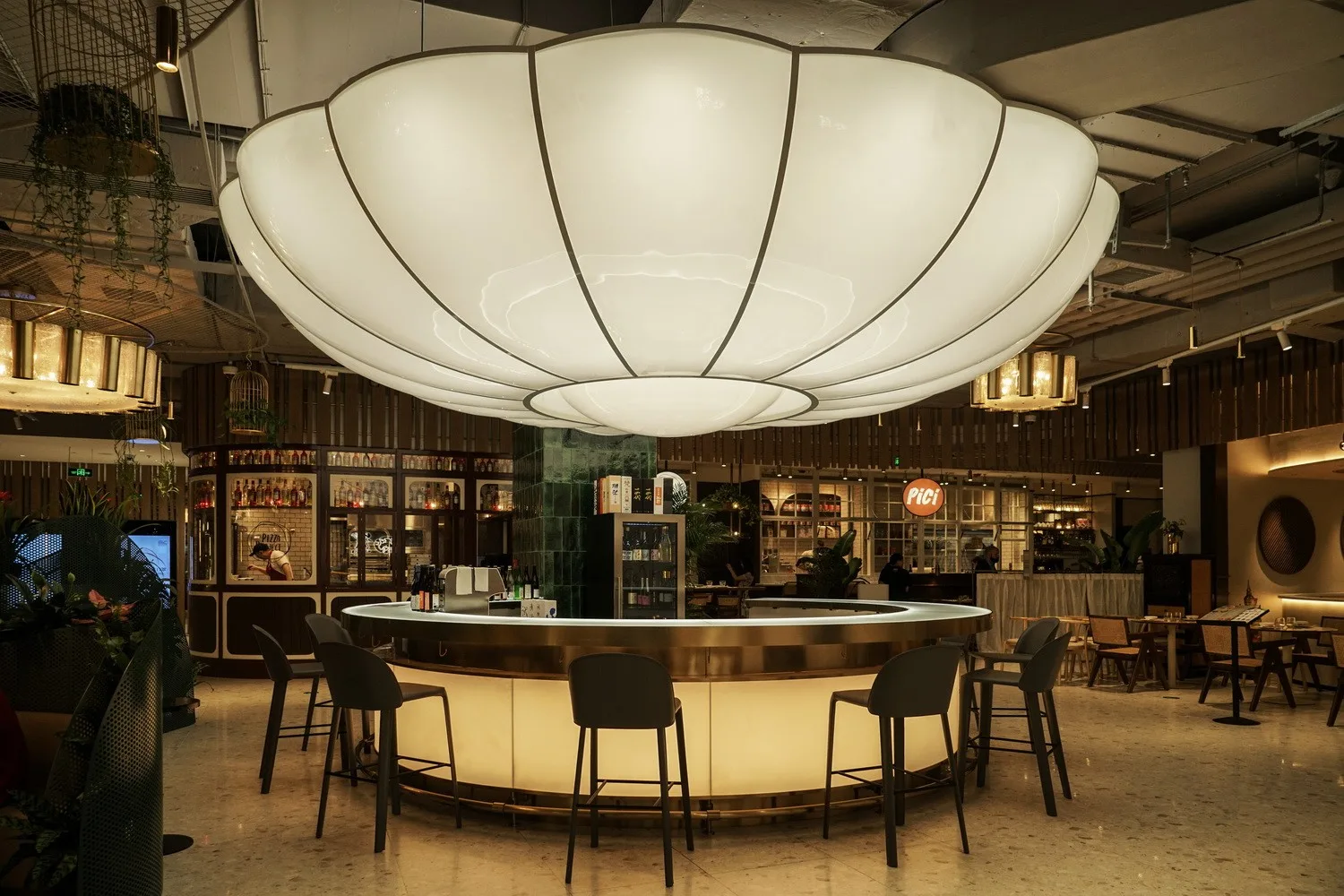
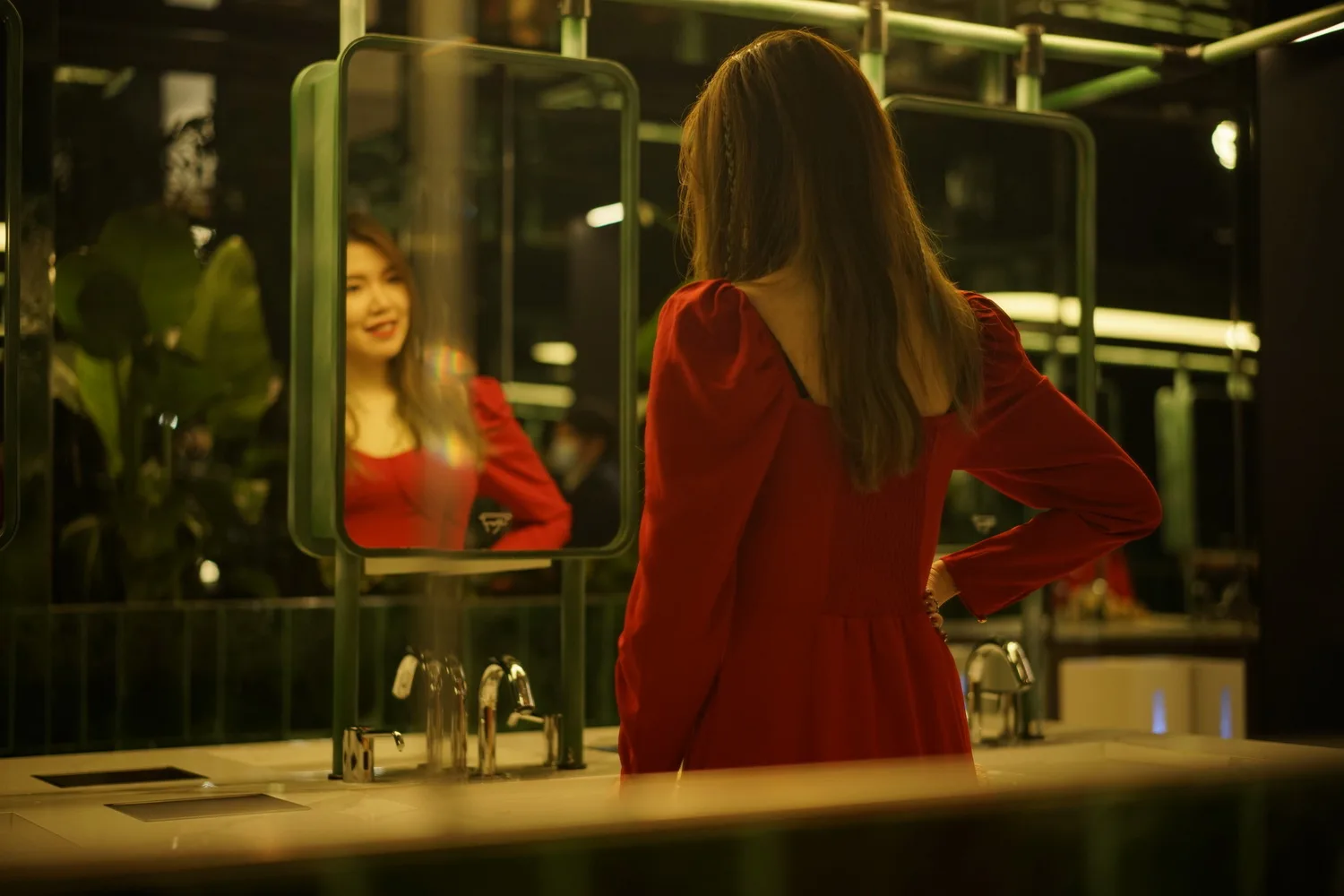
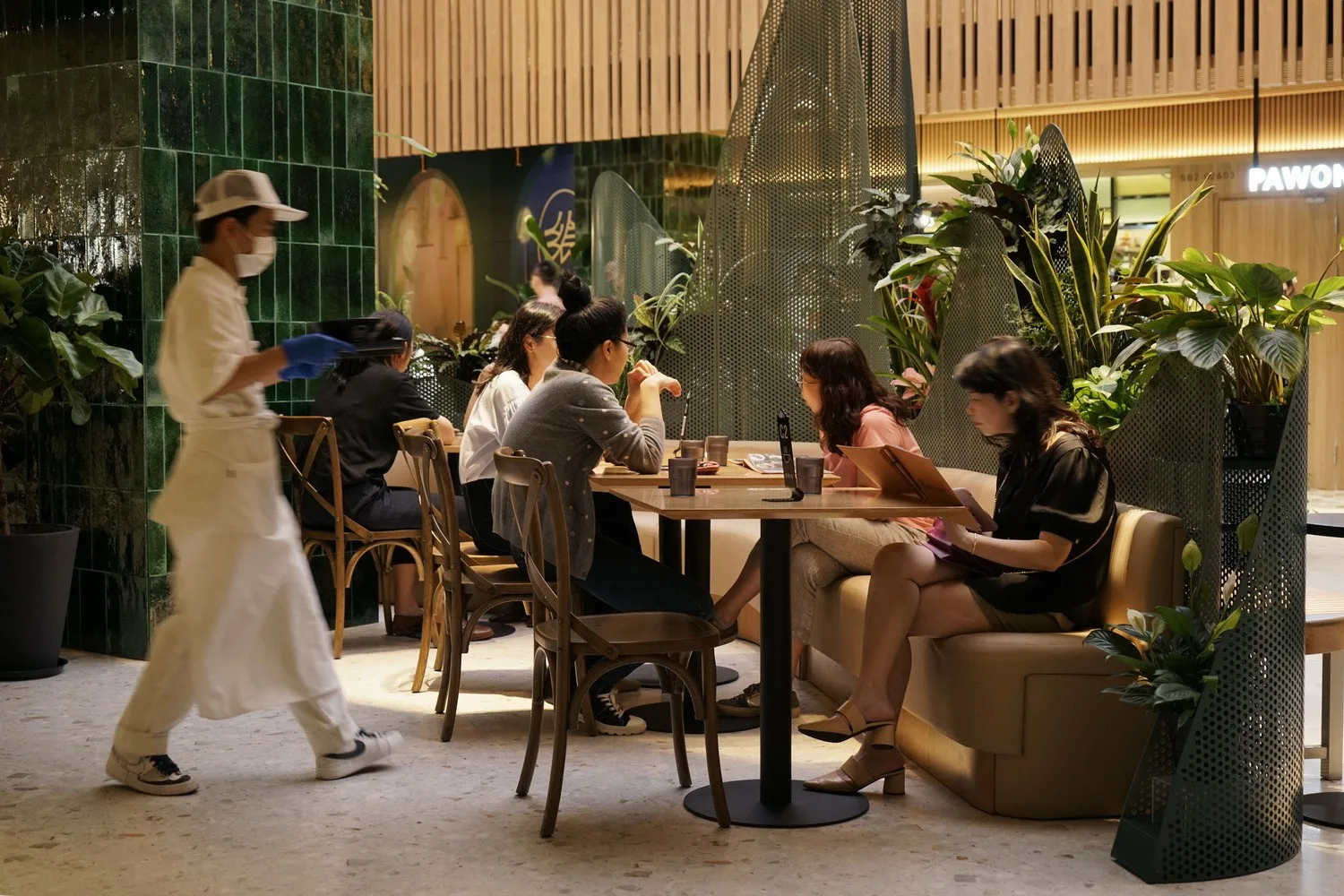
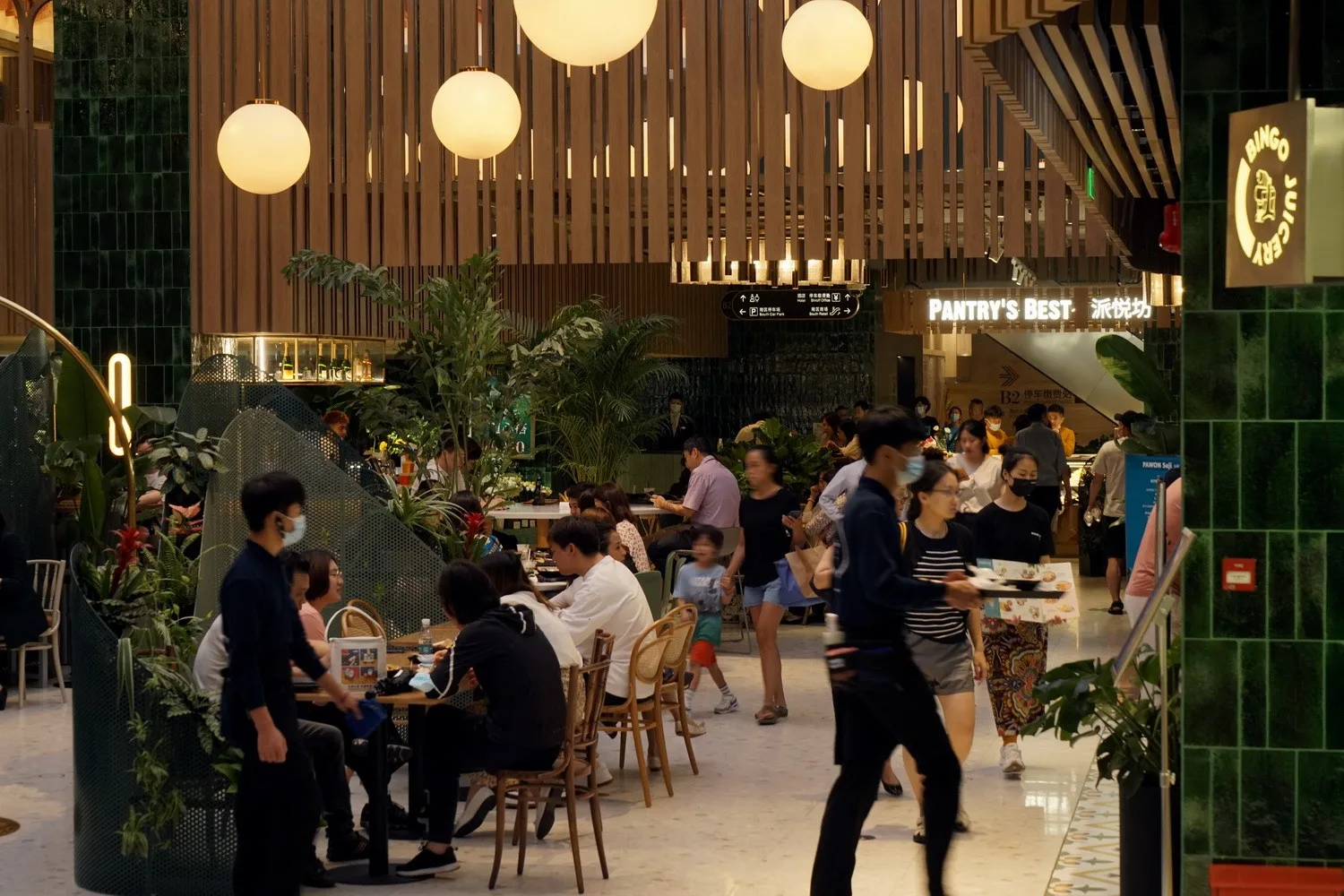
Underground Park is more than just a dining space. Wutopia Lab designed it as a unique Social Eating environment inspired by the concept of a park. It features elements like flower rooms, pavilions, outdoor bar counters, shared dining zones, and multiple pathways leading to surrounding restaurants. The entire space is transparent and interconnected.
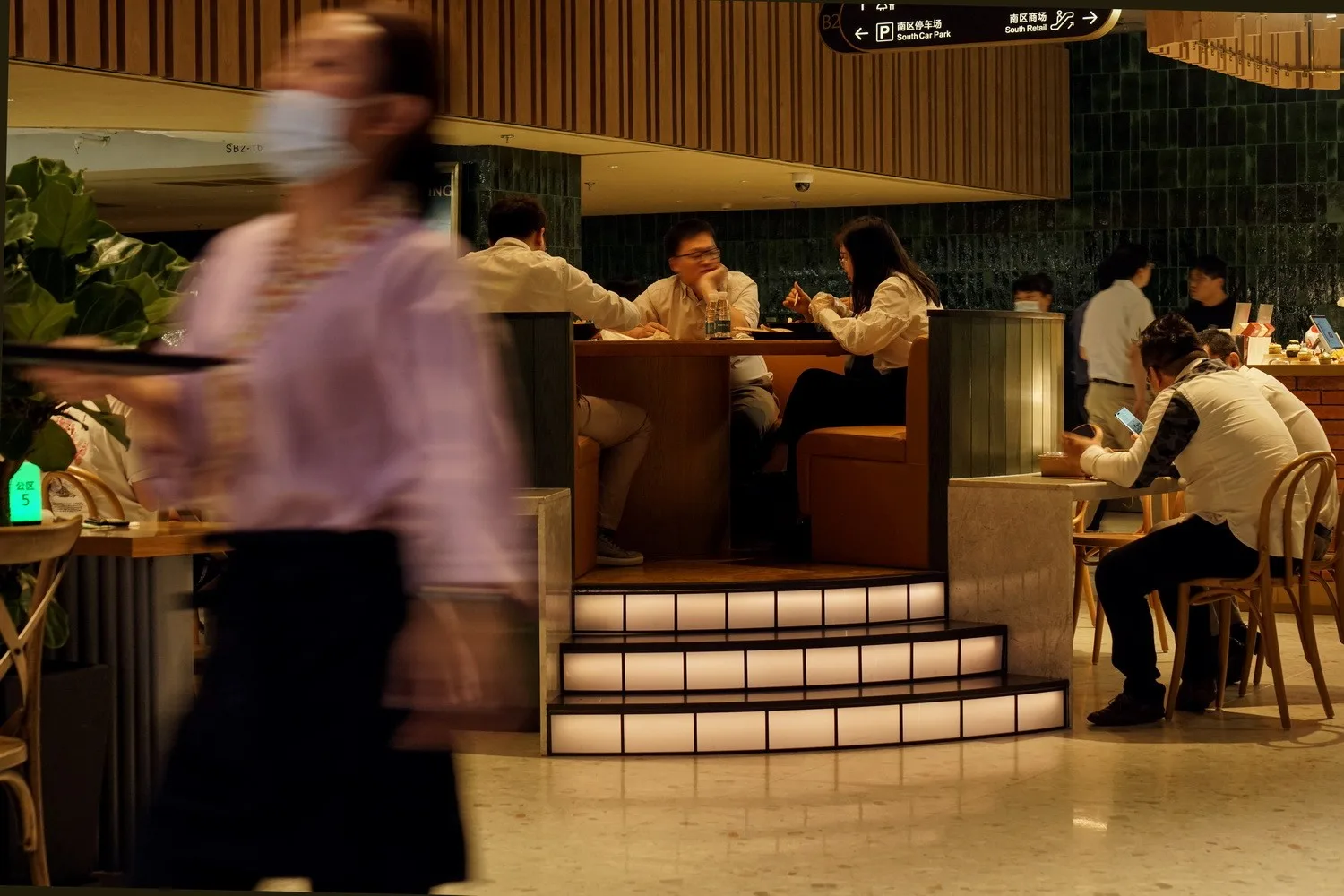
There are continuous cushioned seats alongside cozy wooden benches, a small central stage encircled by flowers and fine wine, a large dining table, and a cake house illuminated by a striking petal-shaped lamp. This park-like setting encourages relaxed enjoyment of food, wine, flowers, music, and conversation.
02
Arches and Swaying Tree Shadows
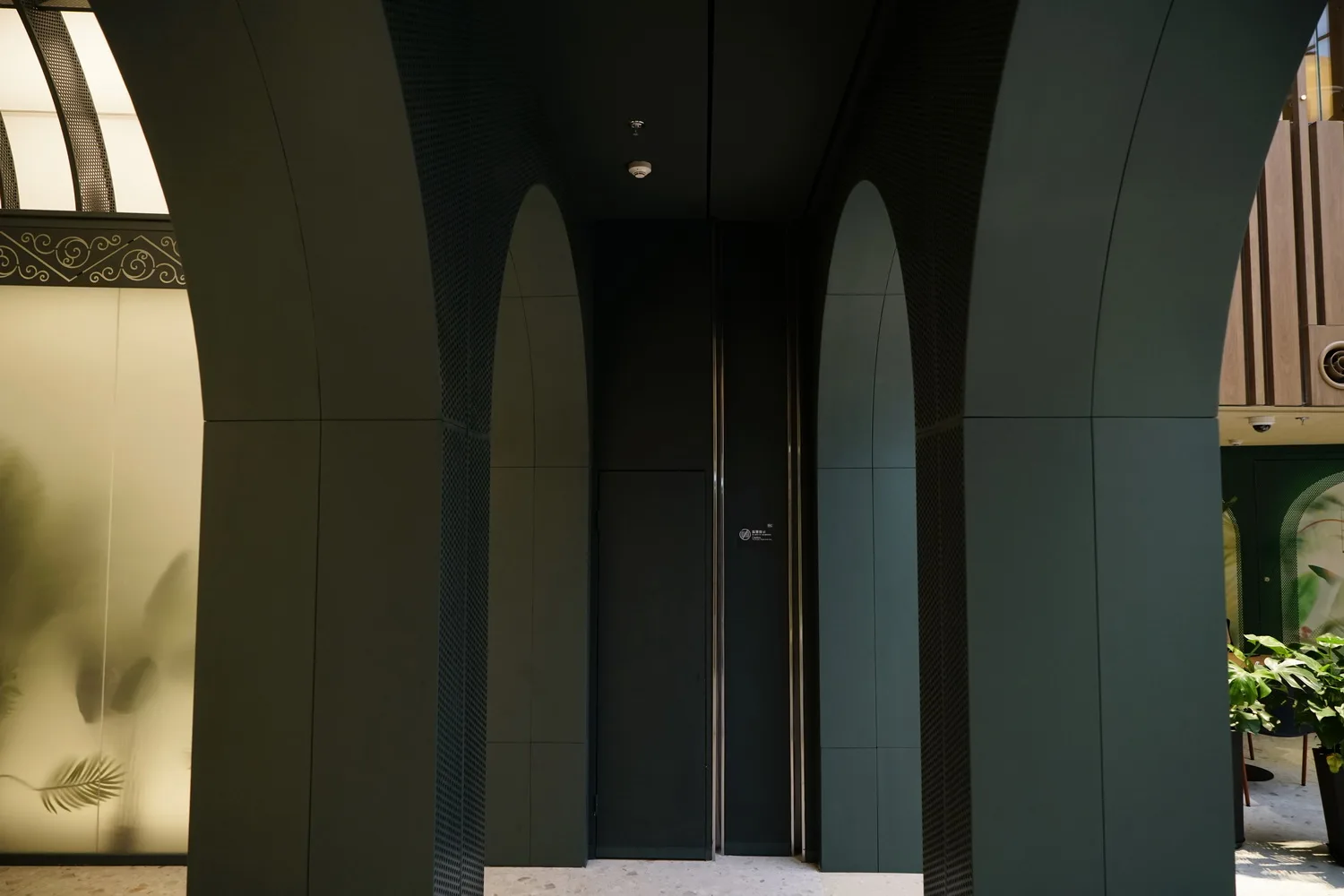
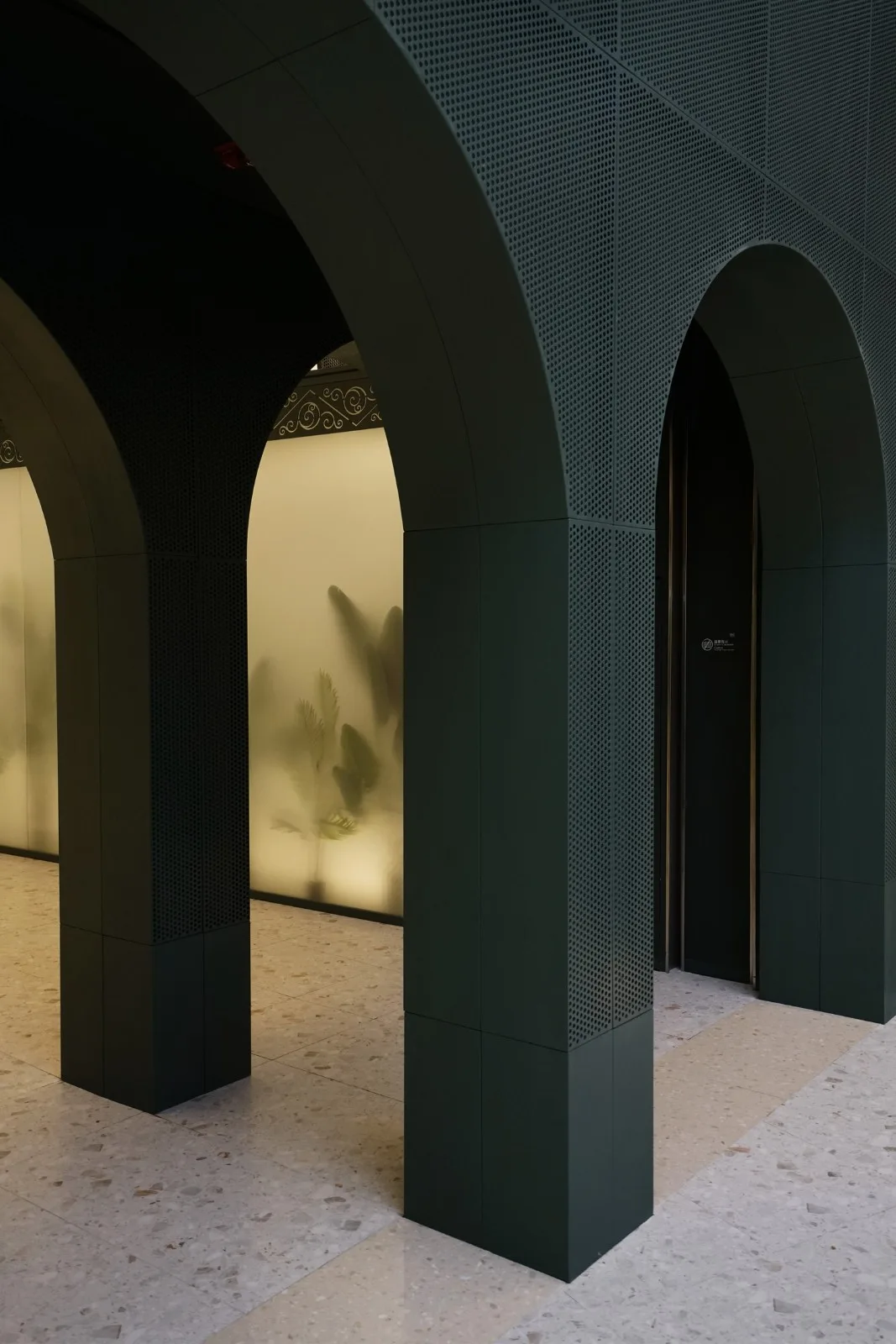
The first scene visitors encounter is the arcade, which Wutopia Lab designed as a transitional space connecting two worlds. By using LRV’s design as a backdrop, Underground Park’s atmosphere differs significantly from the rest of Jing’an Kerry Center. Thus, the arcade serves as a buffer, easing visitors into this unique environment.
As you walk through the 20-meter-long passage, the design evokes the feel of a European arcade market, abstracted and transformed into a passageway, filter, or gateway. This psychological “rehearsal” prepares visitors to discover the spectacular Underground Park beyond, building anticipation and excitement.
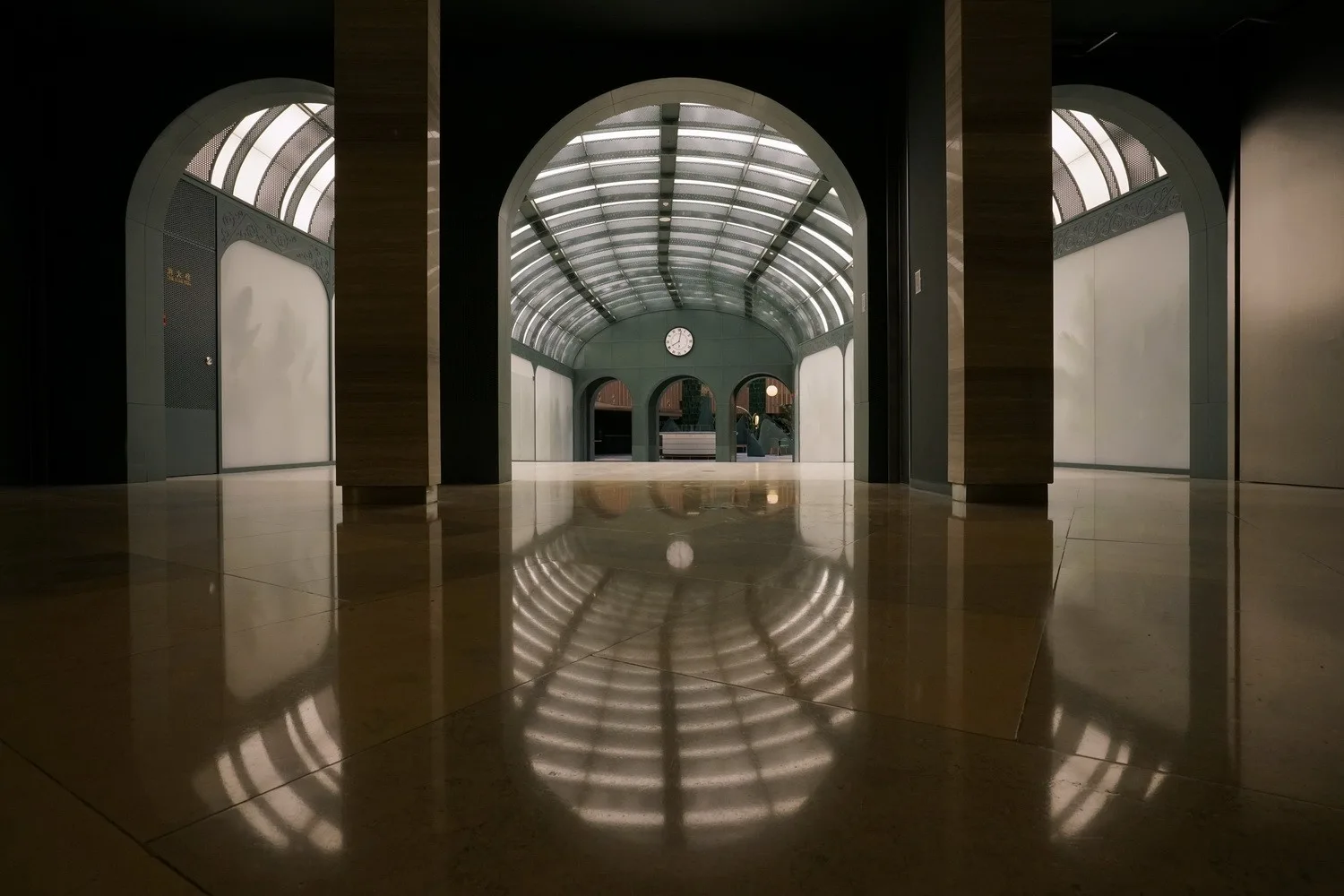
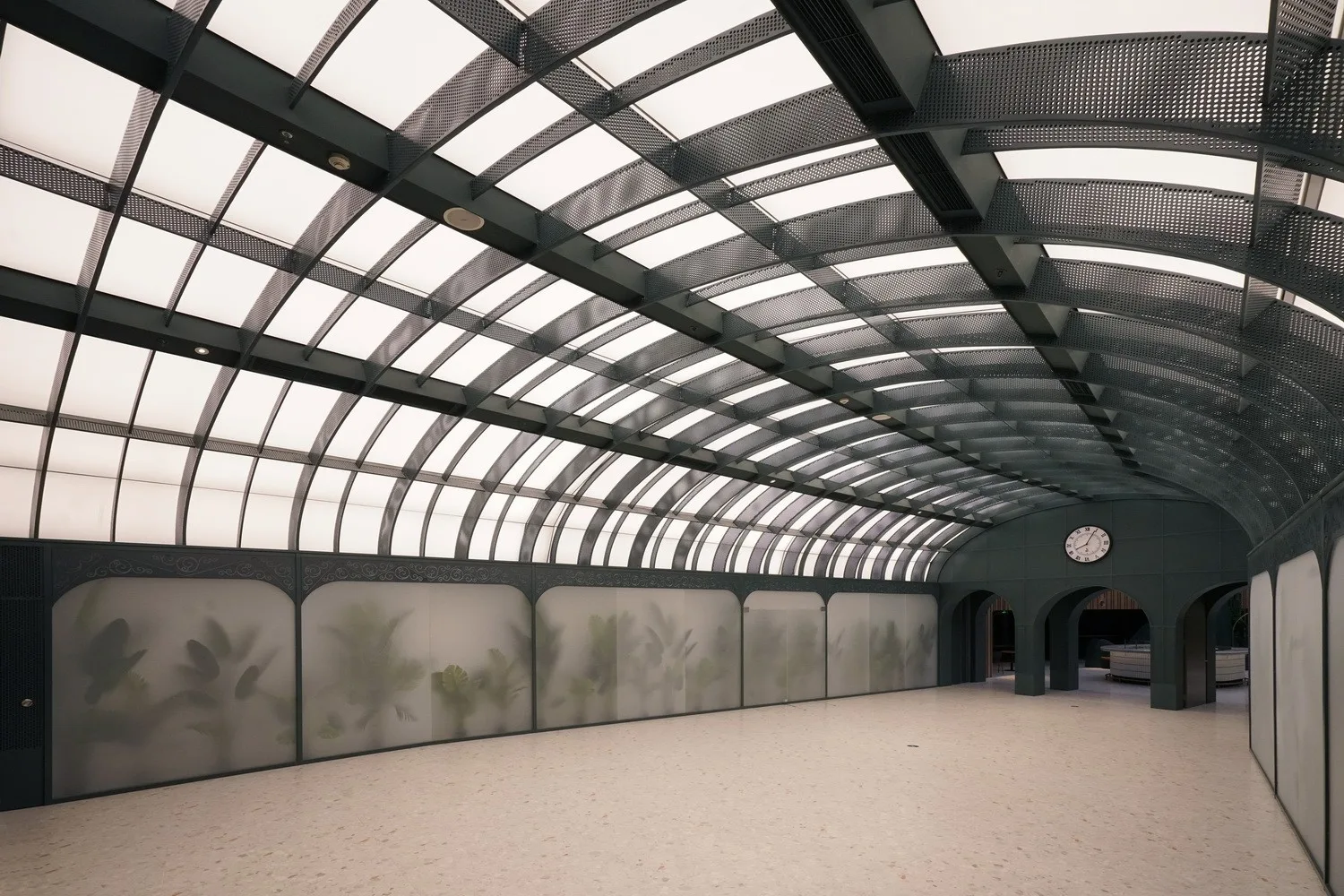
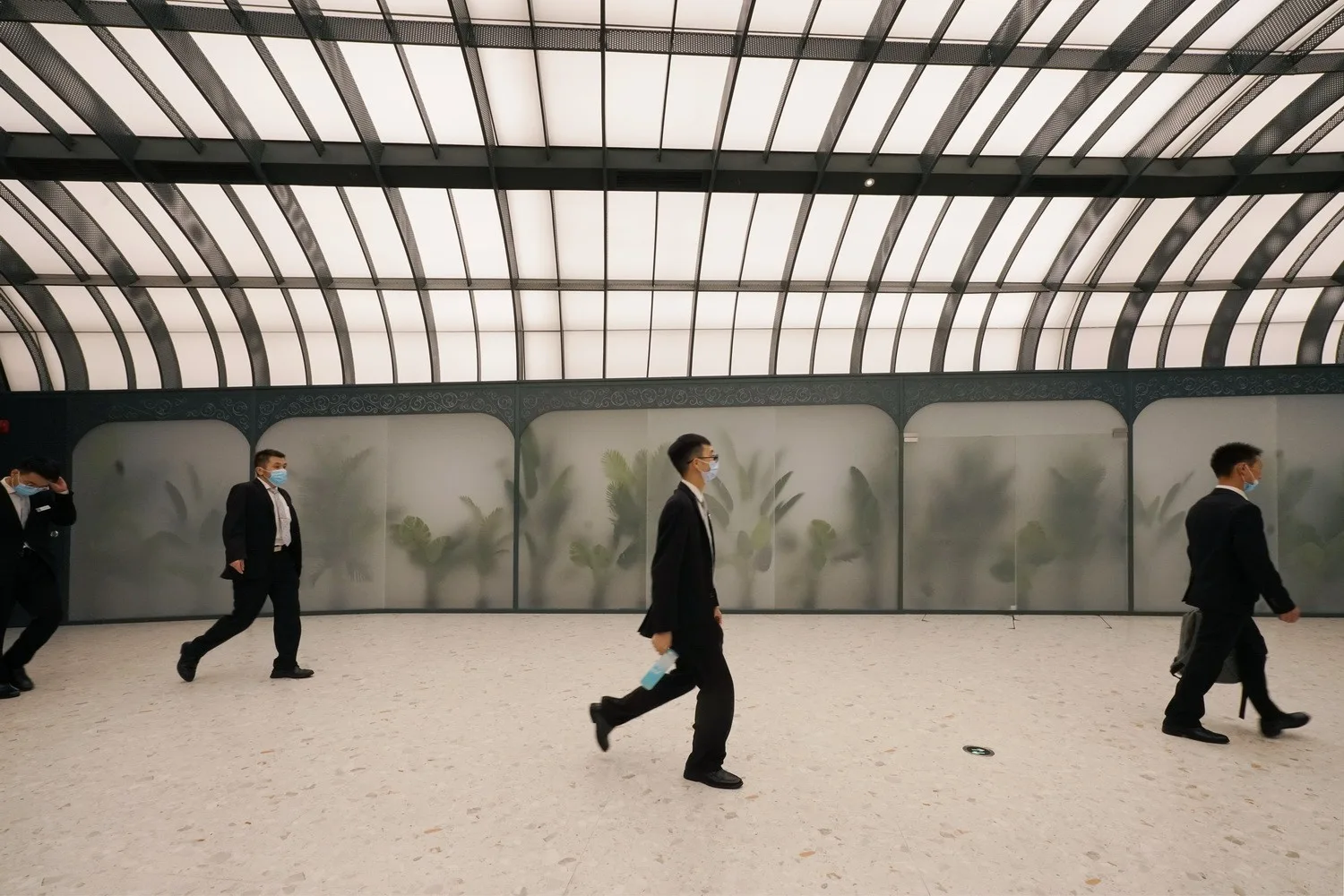
Though technically a public passage without direct commercial functions, the arcade carries the capacity to support any future purpose, acting as the opening chapter to the entire experience. Its layout twists into a trumpet shape, with 36 main frames made from perforated aluminum plates to control costs. The ceiling features a luminous film simulating sunlight, with adjustable brightness and modes throughout the day.
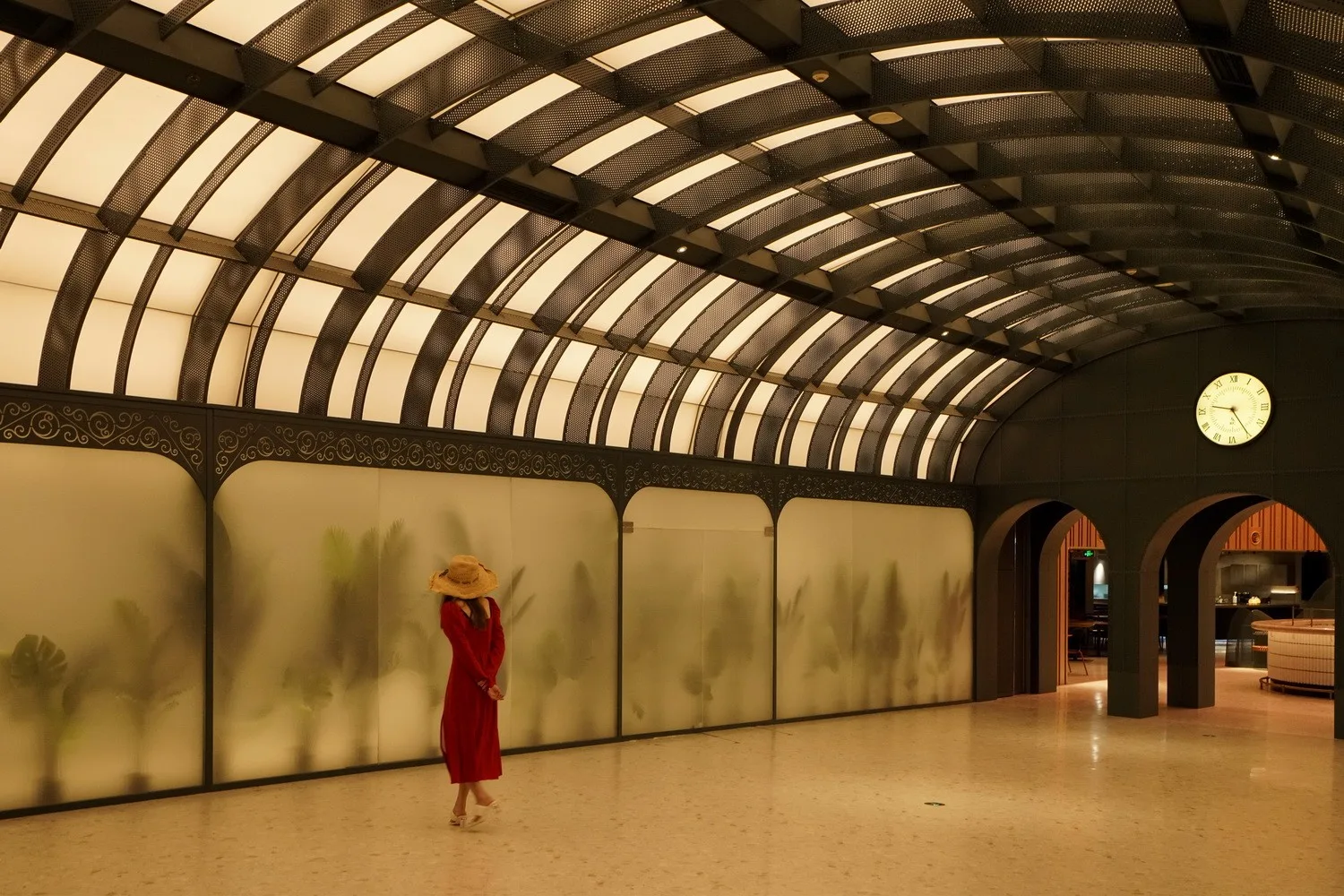
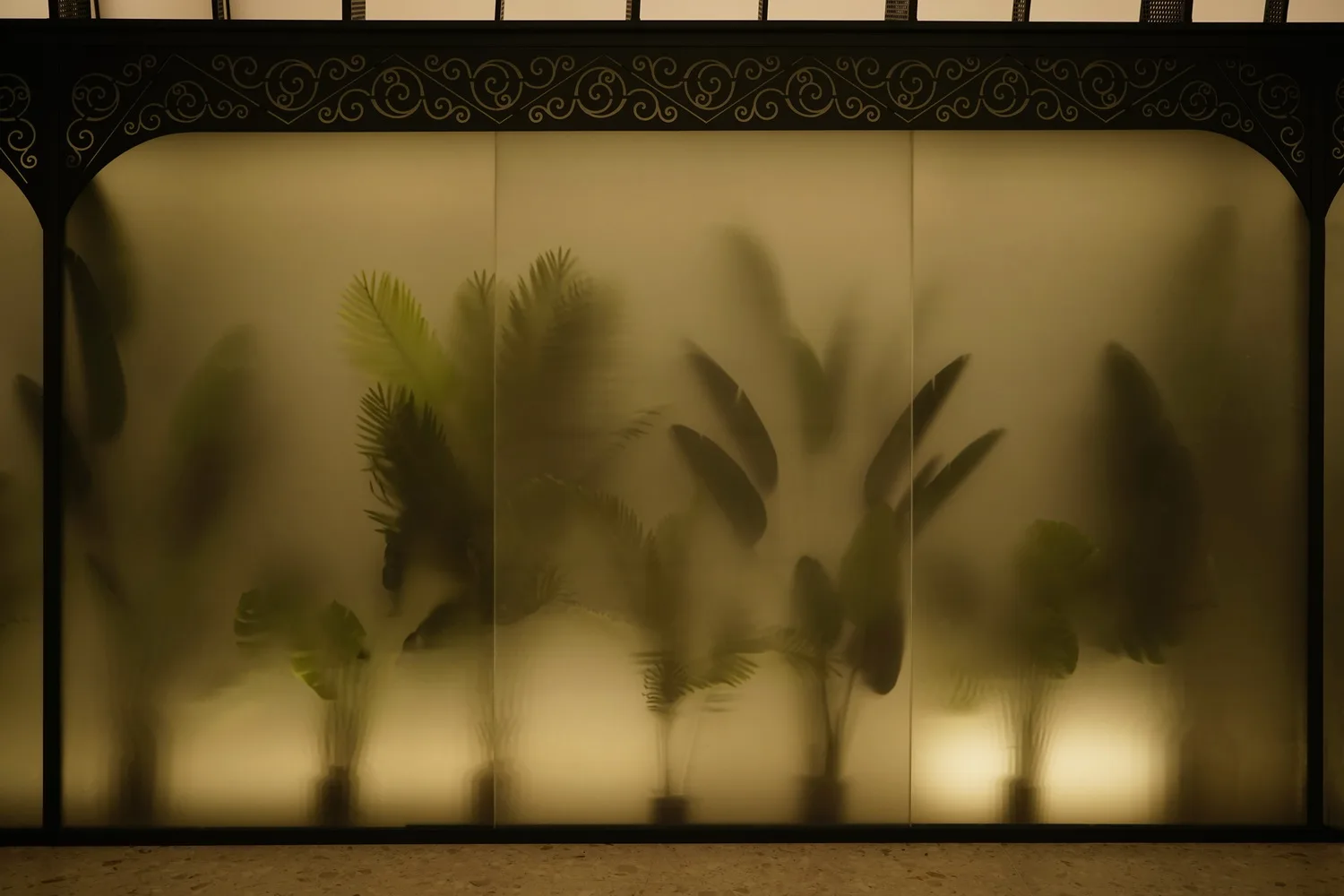
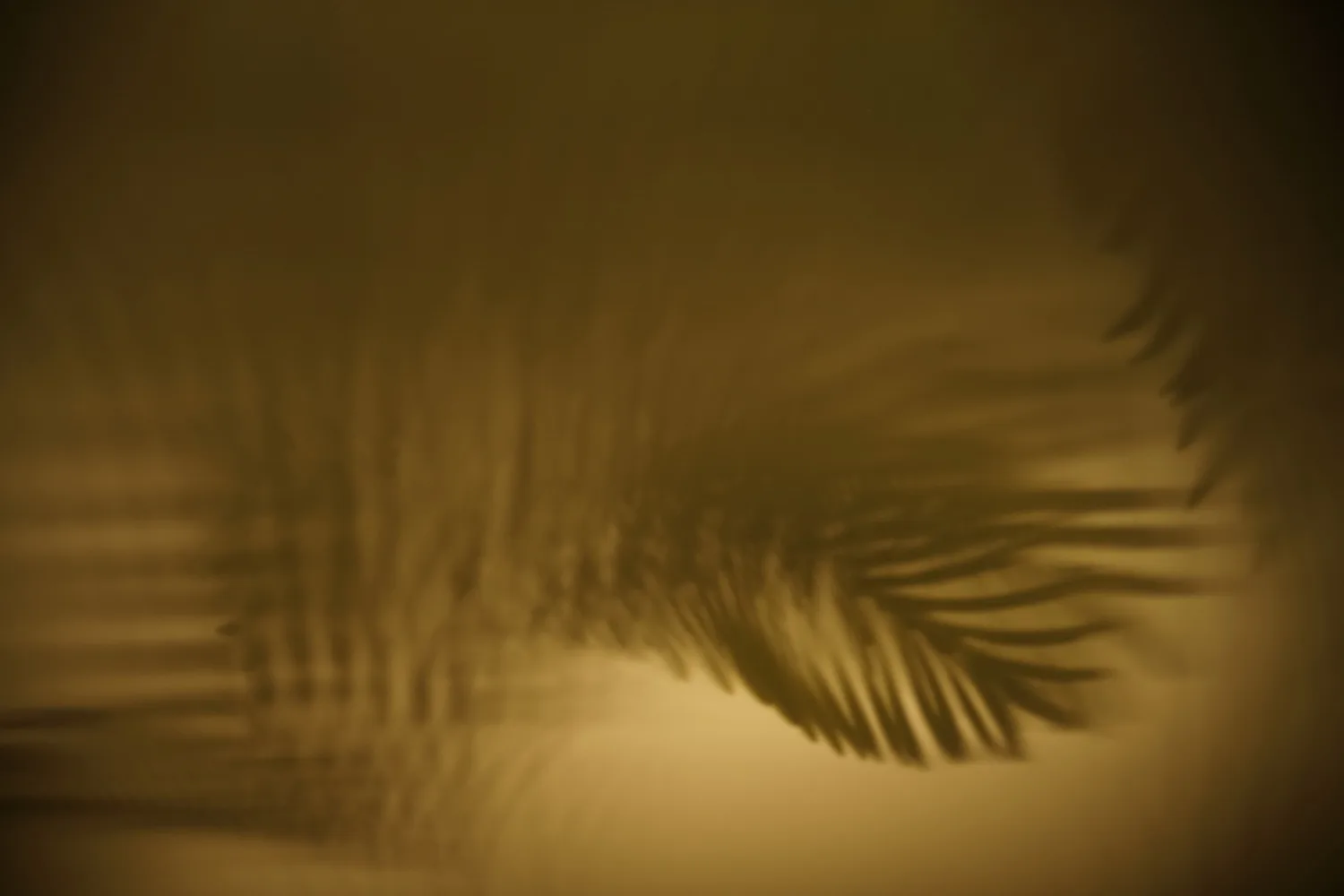
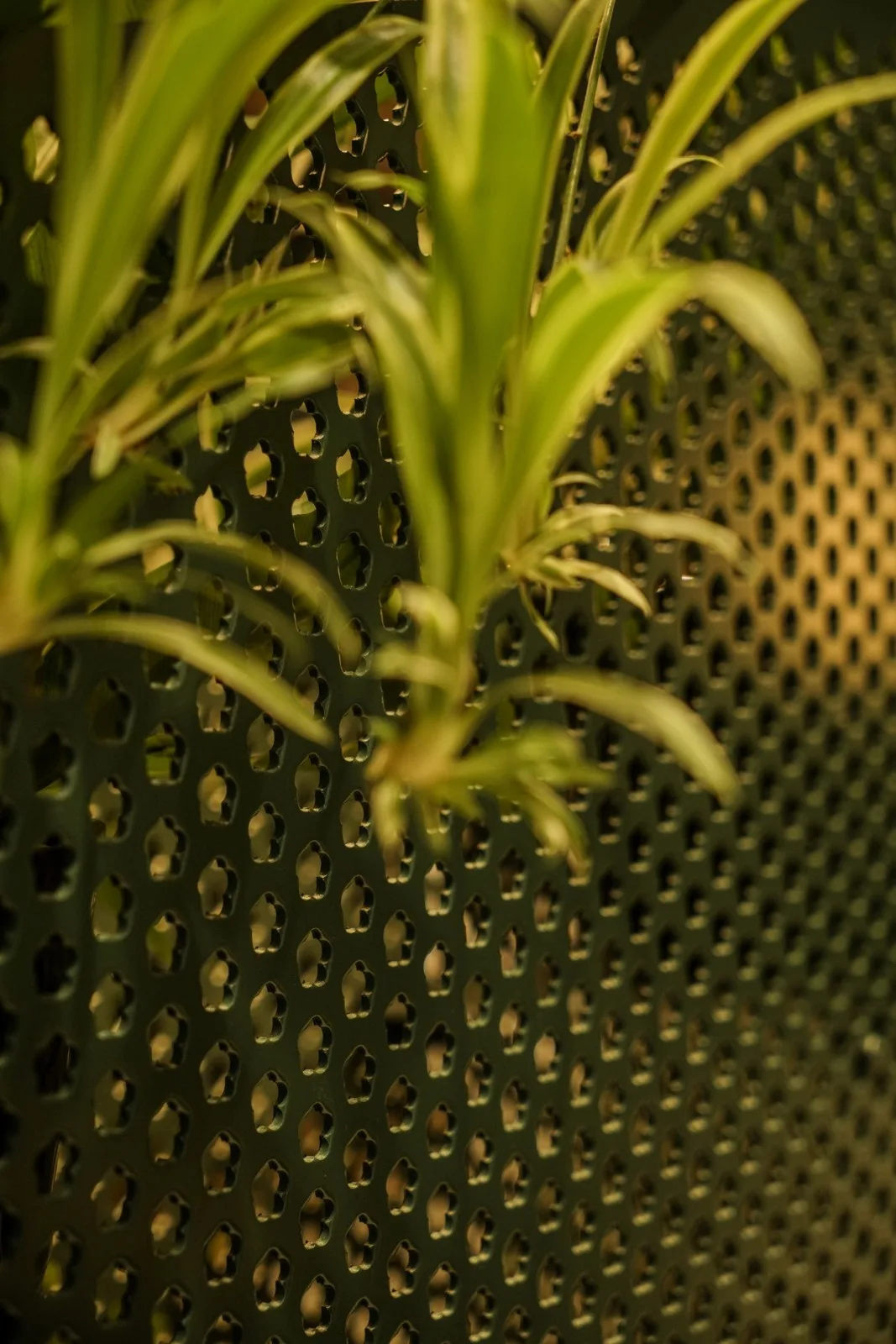
The arcade’s sides are divided into six frosted glass display windows framed by columns. Inside the mezzanine cavity are embedded leaf-shaped simulated plants with background lighting, evoking the impression of a dense jungle surrounding the arcade. This hints at the lush greenery beyond, accompanied by gentle music and subtle floral scents that invite visitors to pause and appreciate.
03
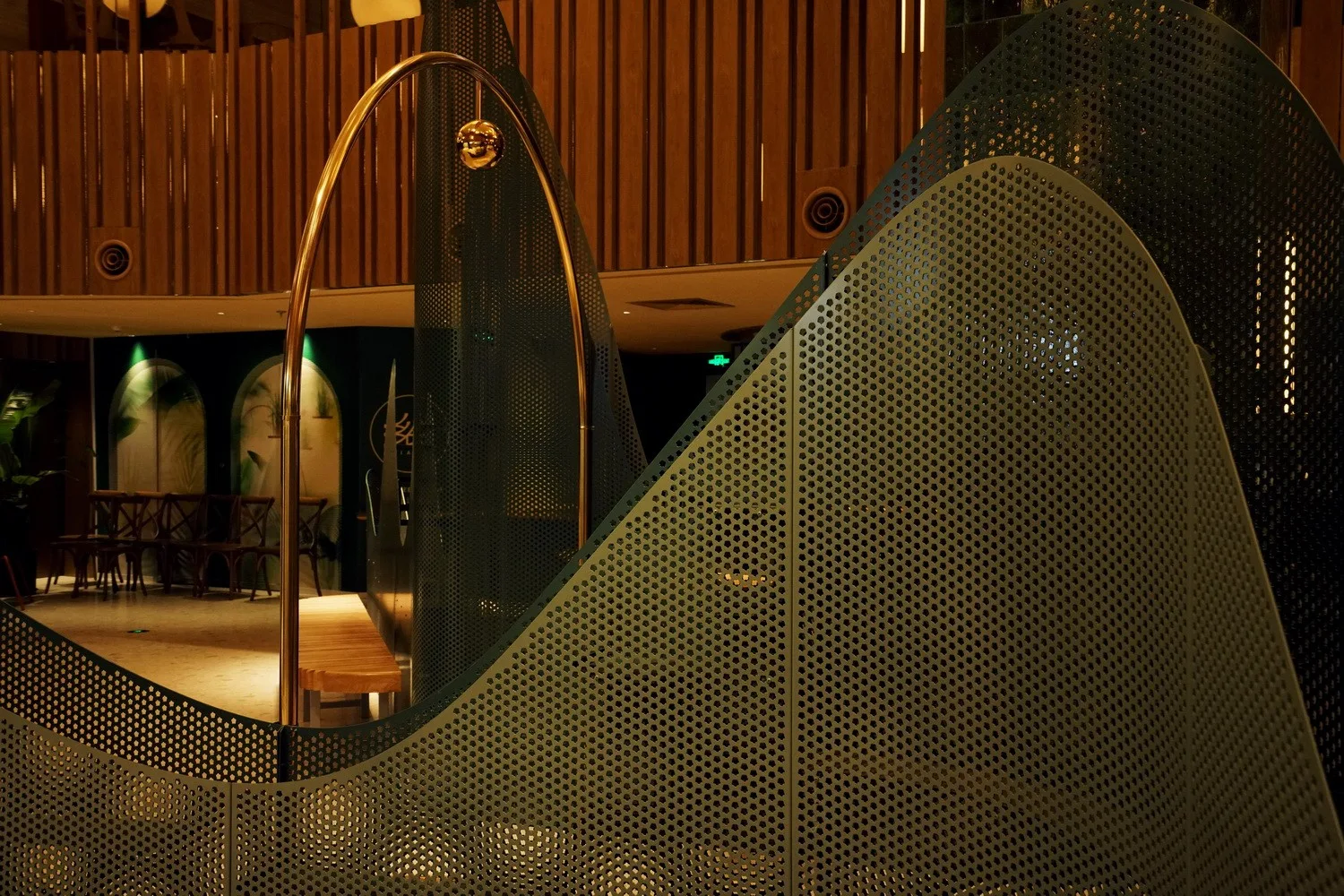
Blue-Green Landscape Painting
Wutopia Lab offers an innovative perspective on commercial space design. They view the constant demolition and reconstruction cycle in the interior design industry as wasteful. Instead, they advocate for detachable designs that reduce waste and contribute positively to environmental sustainability.
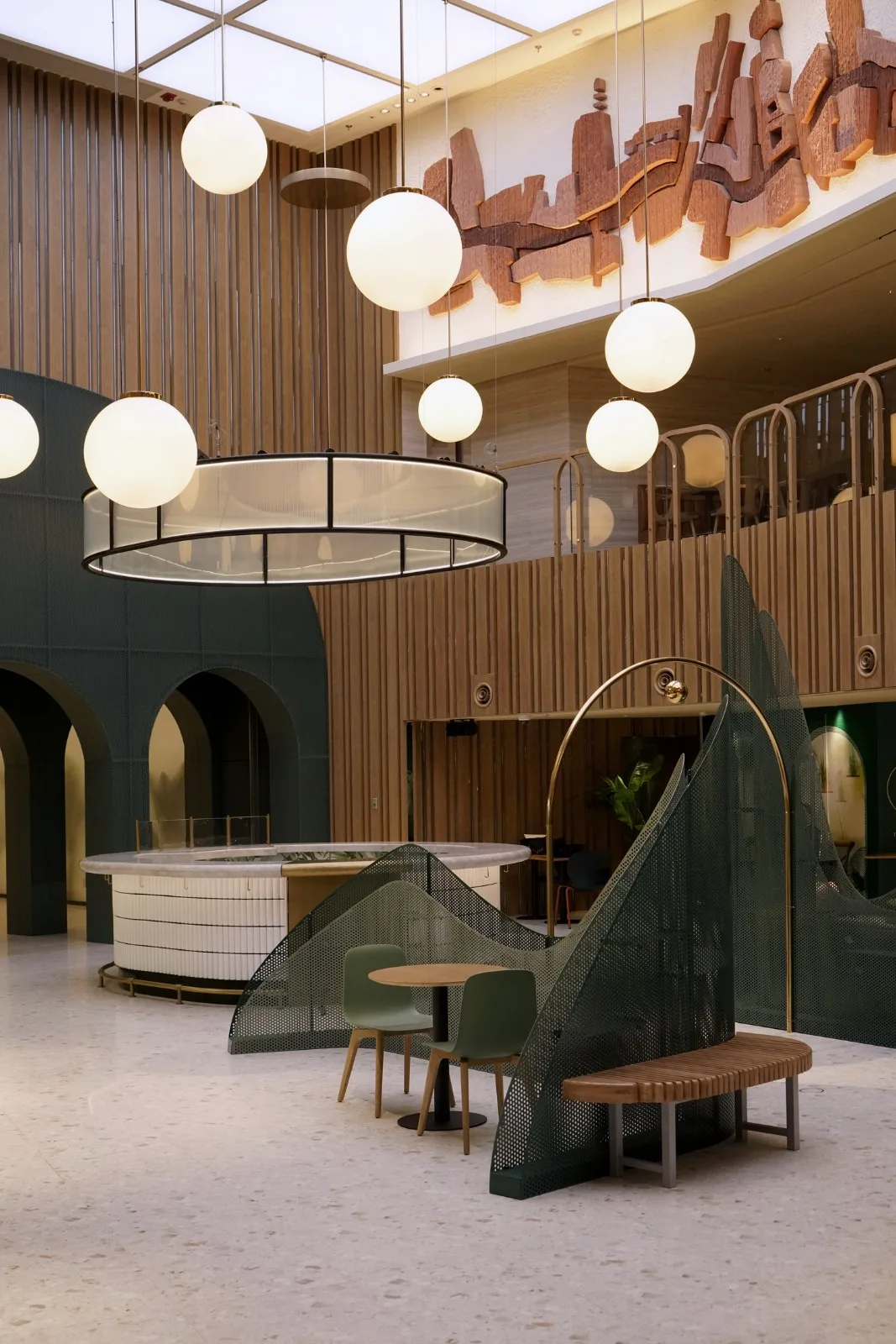
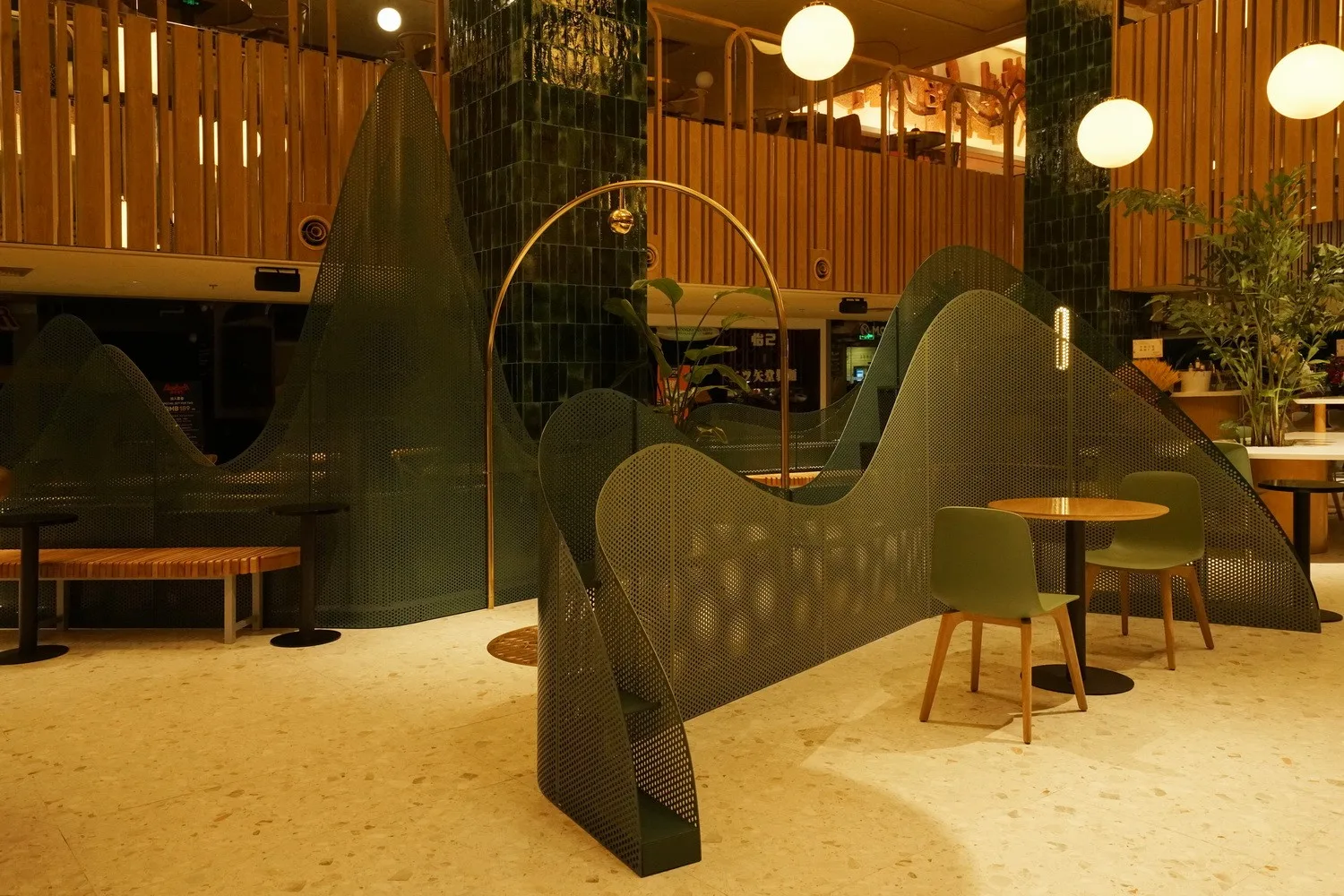
At Underground Park, they implemented a fully detachable and movable design. Partitions, booths, tables, chairs, and benches are designed to be adjustable, enhancing the space’s adaptability to changing market needs and increasing its potential uses.
This flexibility allows the venue to host various events—flash mobs, afternoon teas, product launches, fashion shows—transforming the space beyond fixed commercial functions. This concept has already been realized at Jing’an Kerry Center with the “Green Landscape under the Red Clouds.”
04
Unbuilt Pavilions and Greenhouses
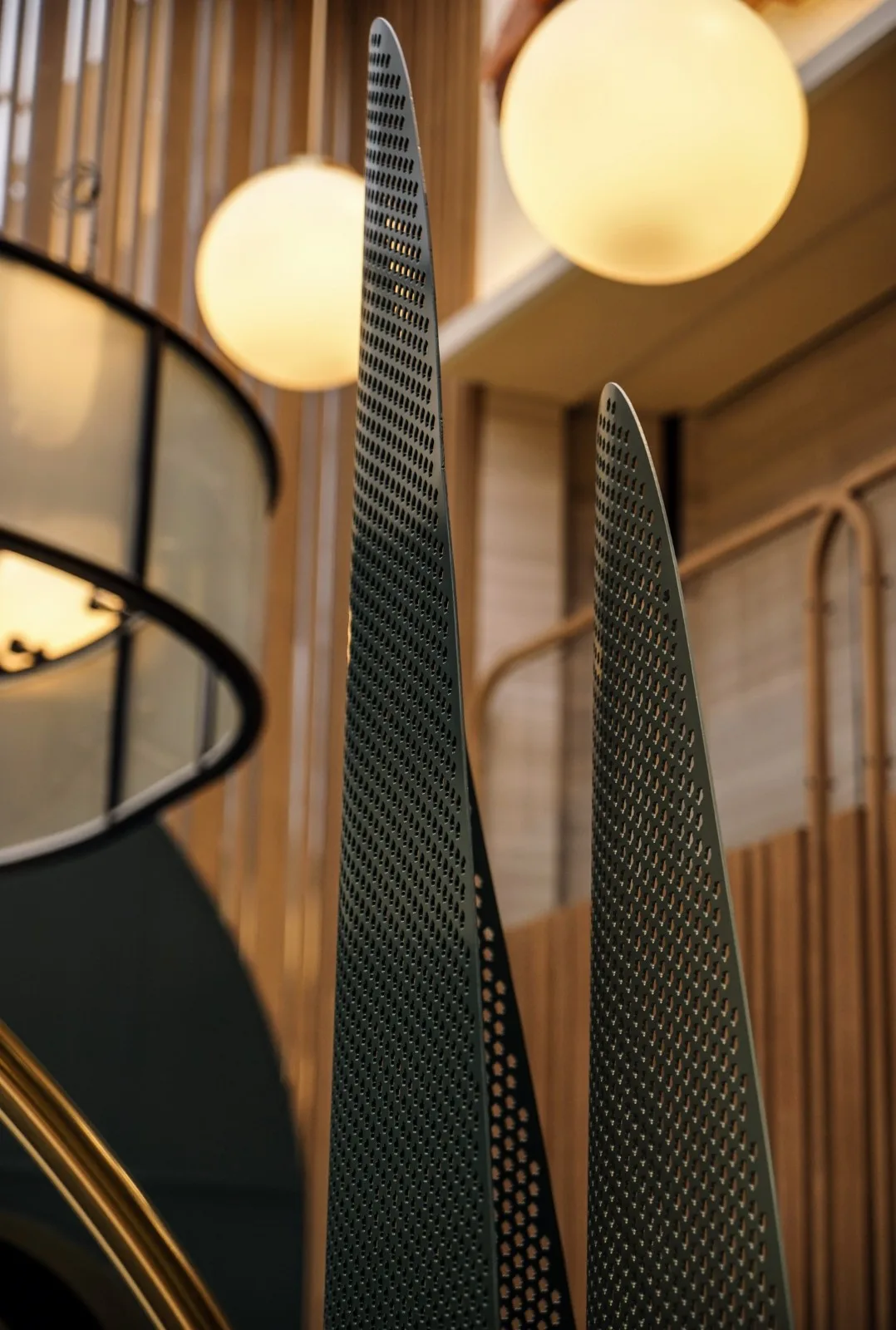
Due to a limited budget of just 1 million RMB, Wutopia Lab was unable to build two key structures: the central pavilion and greenhouse. While their absence does not severely impact the current space, their future addition would diversify the spatial order and emotional experience.
Seeing Underground Park as a flexible and renewable scene, these structures are intentionally left unbuilt for now. If added later, the pavilion would serve as a high-altitude visual landmark, and the greenhouse would become a uniquely designed shop. This approach embodies Wutopia Lab’s belief that commercial spaces should be renewable and capable of growth.
05
The Next World Awaits You
The design process for Jing’an Kerry Center Pavilion faced numerous challenges, but the team overcame them to meet promotional and operational goals. During trial operations, observations revealed that some merchants did not fully embrace the concept of activating public areas for shared use. However, an Indonesian restaurant’s behavior aligned perfectly with the design intentions.
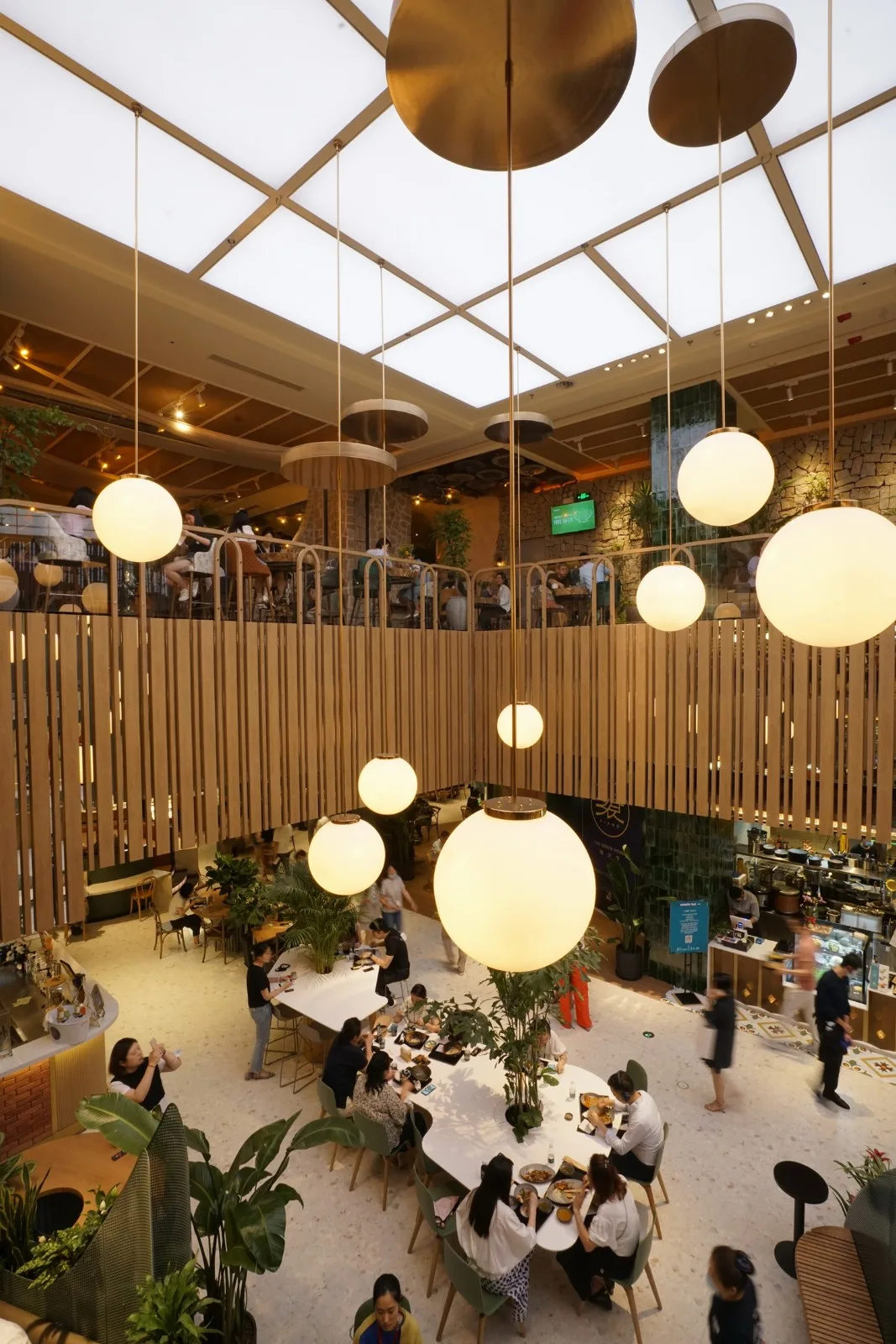
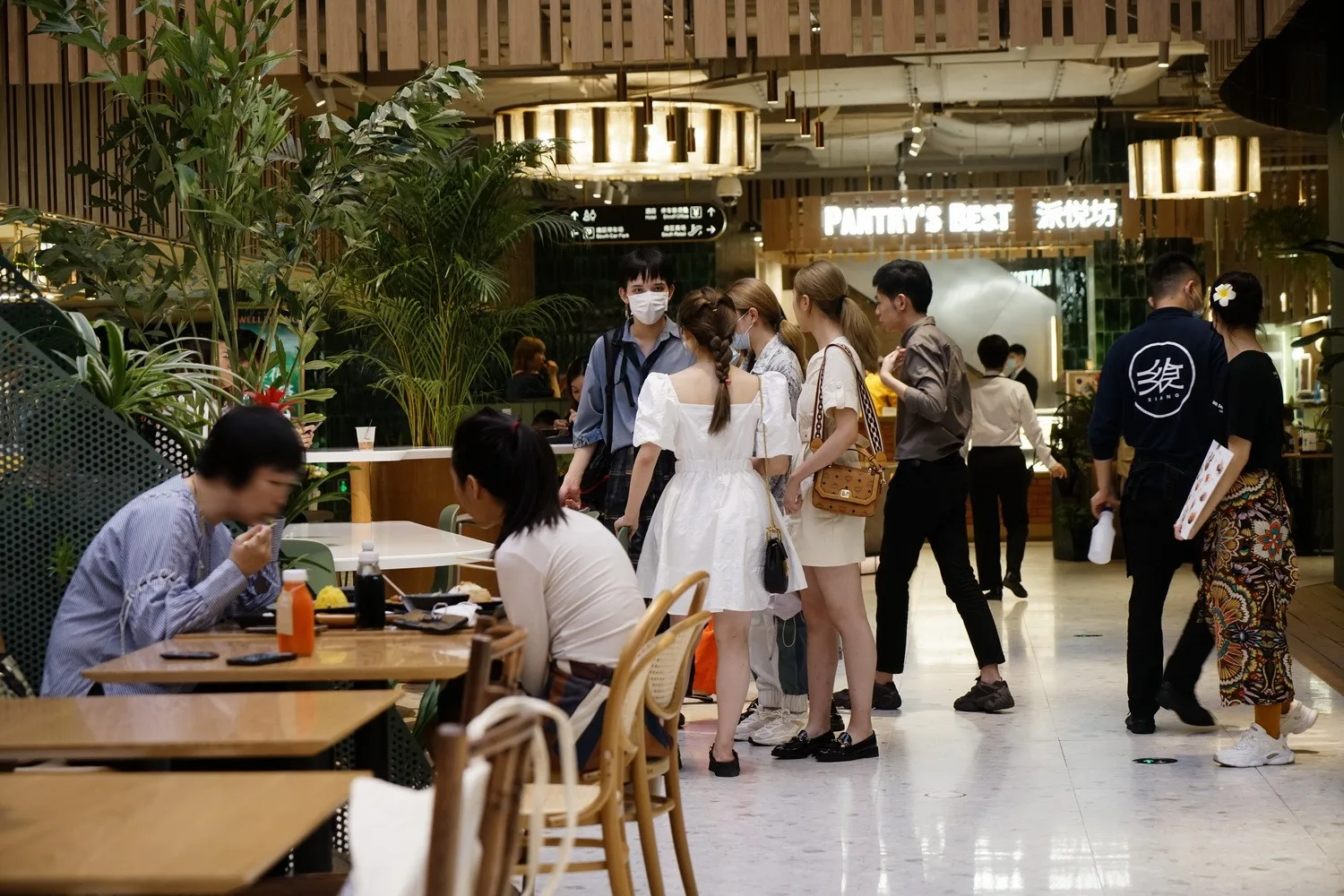
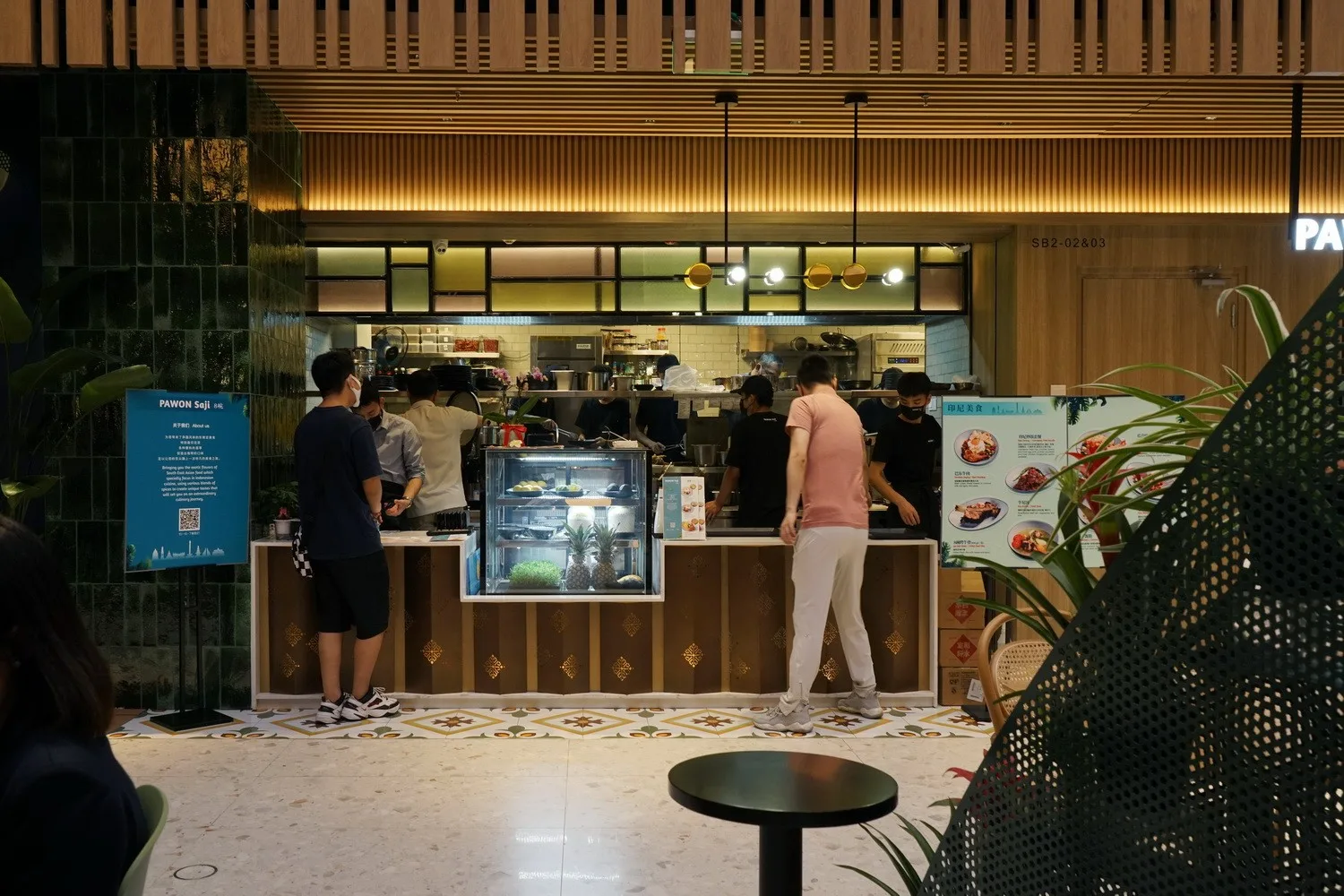
Wutopia Lab hopes that other businesses will follow suit by harmonizing their restaurant decor with public areas, designing menus in similar styles, inviting guests to use shared spaces, and actively participating in the communal story. This collaborative spirit maximizes public resources, adds vitality to the entire area, and creates value for individual businesses—just as the Indonesian restaurant PAWSON Saji has done.
While it’s encouraging that some merchants have embraced this vision, others have not, which remains a challenge for future development. Wutopia Lab is committed to advancing this concept in upcoming projects. Welcome to the Underground Park hidden inside Jing’an Kerry Center—your haven to savor leisure and community.
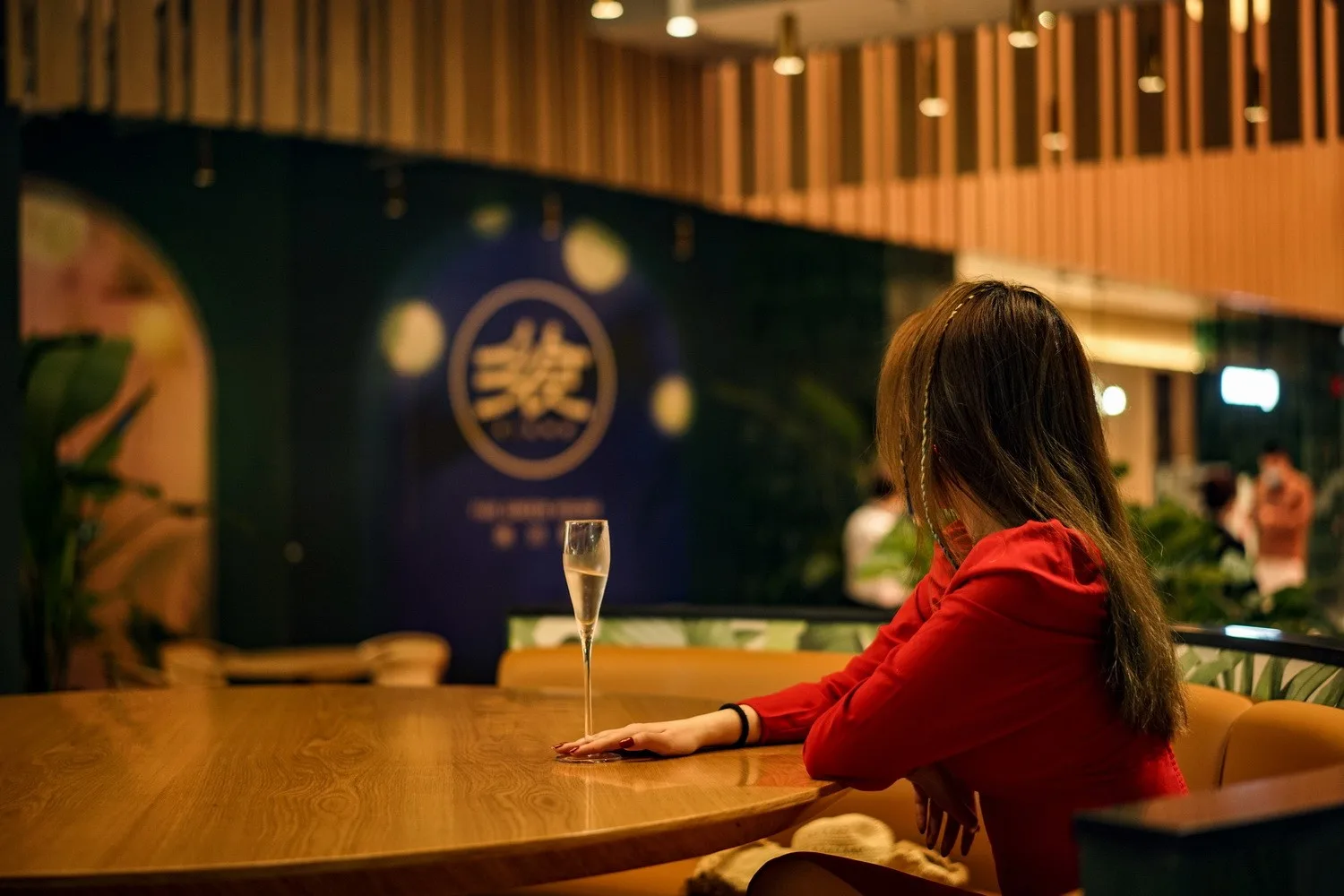
Easter Egg
Recommended restaurants by gourmet Yu Ting and his wife:
- Pici
- Sheng Eel Home
- Itami Mitsuya do
- PAWSON saji
- Warm Wine in the Human World
Yu Ting and his leader Min Dong especially enjoy sitting randomly in this garden, sipping Indonesian oxtail soup, savoring eel rice from Sheng’e, or ordering Lamian noodles from Yiji · Sanyaitang. They treat their daughter to sea salt caramel ice cream and slowly enjoy two cups of sake at Warm Wine in the Human World. At this moment, all these restaurants feel like their own. Before leaving, they always greet Pici’s general manager—what a wonderful day.
Project Drawings
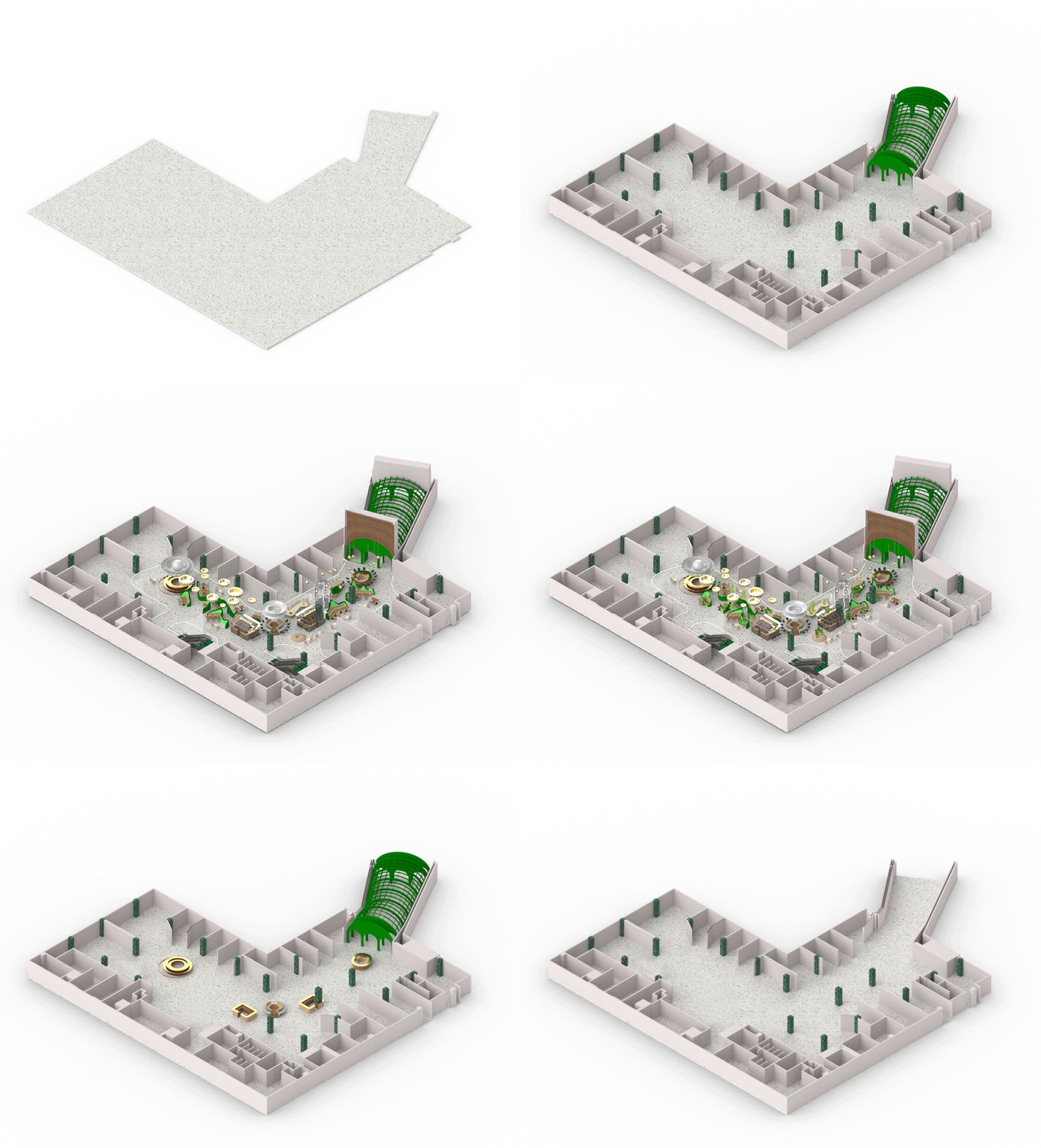
△ Space generation
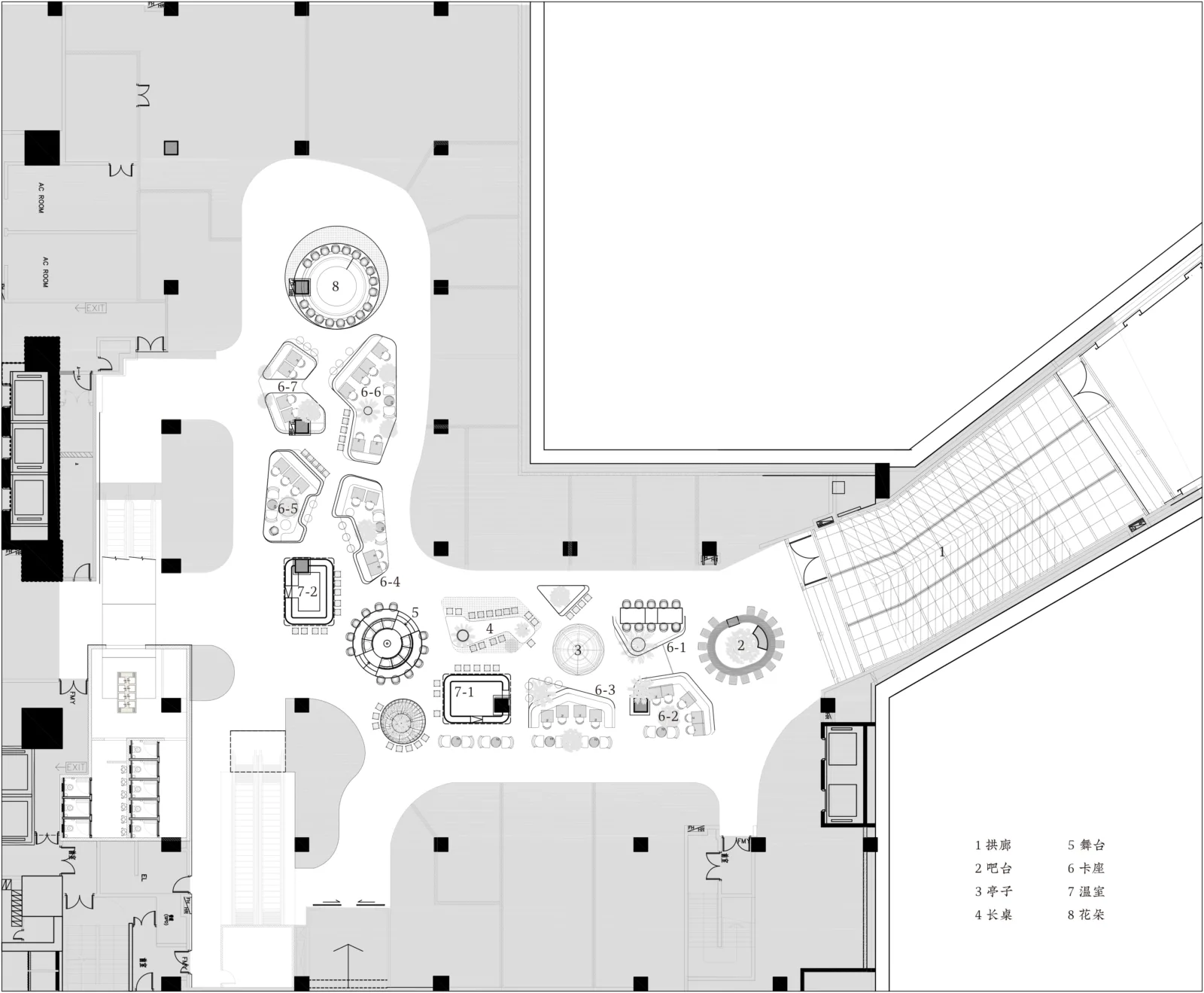
△ Plan view
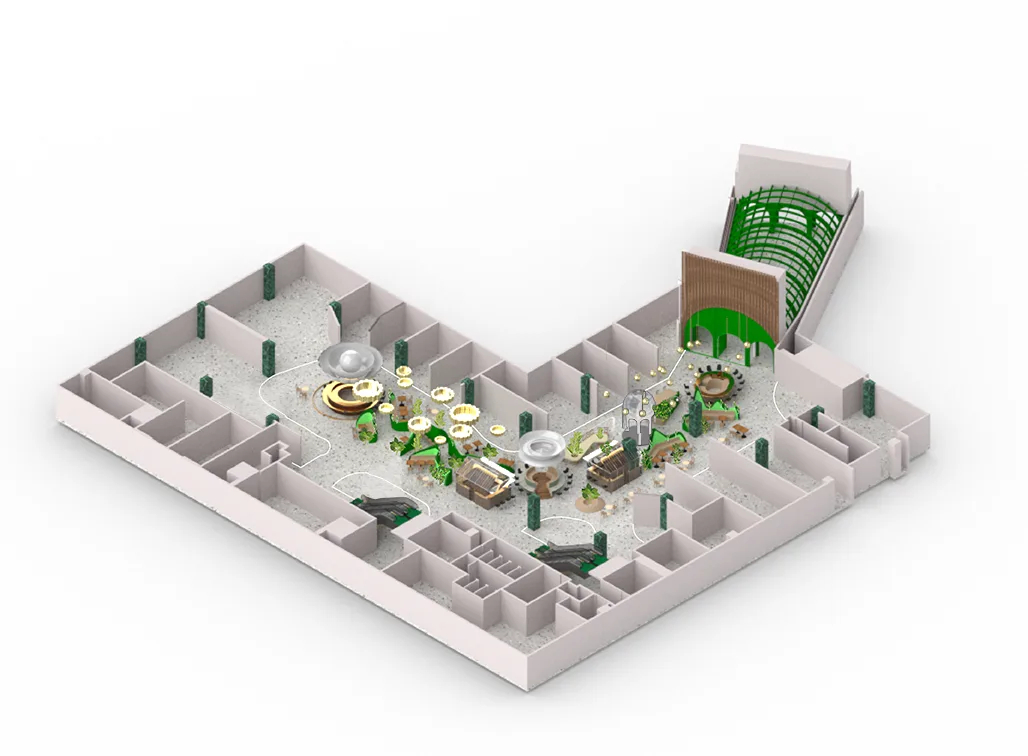
△ Axonometric diagram
Project Information
- Project Name: Xiangshili – Jing’an Kerry Center
- Design Company: W-Mills by Wutopia Lab
- Original Design Company: Lázaro Rosa Violán studio
- Lead Architect: Yu Ting
- Responsible Architect: Li Hao
- Project Manager: Sun Liran
- Design Team: Li Ziheng, Xu Nan, Kuang Zhou, Pan Dali, Xiong Jiaxing (intern)
- Lighting Consultant: Relux & Relux
- Architectural Photography: Wu Shiliu
- Construction Drawing Consultation: Shanghai Chengyu Space Design Co., Ltd.
- Construction Unit: Beijing Shidali Building Decoration Engineering Co., Ltd.
- Owner: Kerry Properties
- Project Address: B2, Kerry Center South Area, 1515 Nanjing West Road, Jing’an District, Shanghai
- Building Area: 460 square meters
- Design Completed: December 2020
- Construction Completed: June 2021












Must log in before commenting!
Sign Up