
Summary: The world of technology is deeply intertwined with humanity.
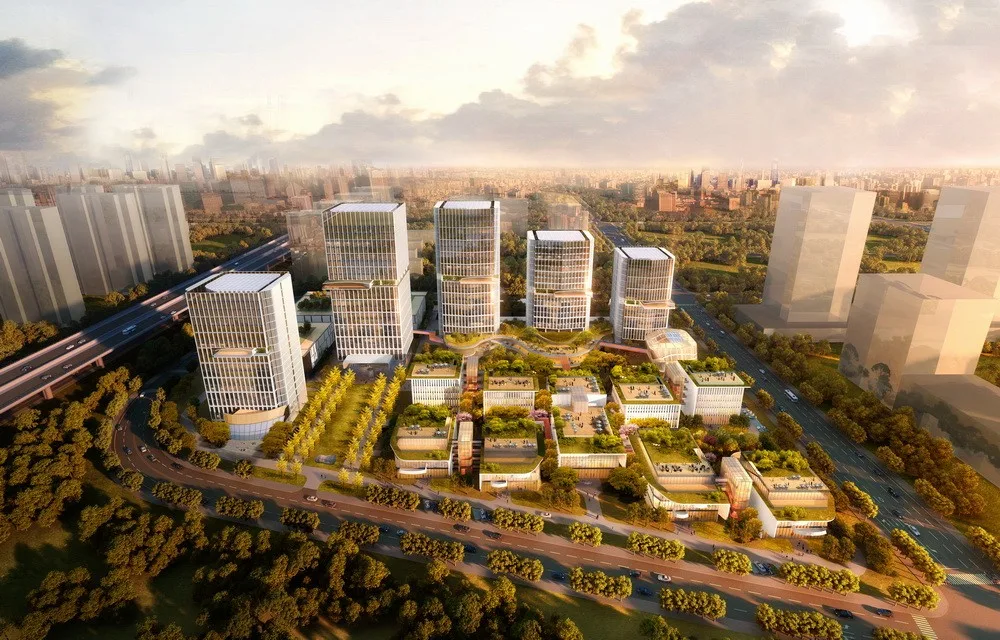
The concept of nanotechnology was inspired by a 1959 speech titled “There’s Plenty of Room at the Bottom” by the late physicist Richard Feynman. Since then, scientists worldwide have recognized nanotechnology’s critical role in advancing technology. Nations have invested heavily to develop this field, aiming to secure a strategic advantage. This case study focuses on the National University Science and Technology Park project in Suzhou, China, which is dedicated to nanotechnology research and development.
The Principle of “Habitat”
Habitat refers to the combined physical and biological environmental factors—such as light, humidity, and nesting sites—that create a special place suitable for animal habitation. A habitat provides food and protection from predators. Animals select their habitats based on preferred environmental conditions.
In this project, we adopt “habitat” as the core design principle. Our goal is to create a technology-centered environment focused on nanotechnology, serving as an innovative hub that offers comfort, growth opportunities, and a rich culture for high-tech enterprises and talent.
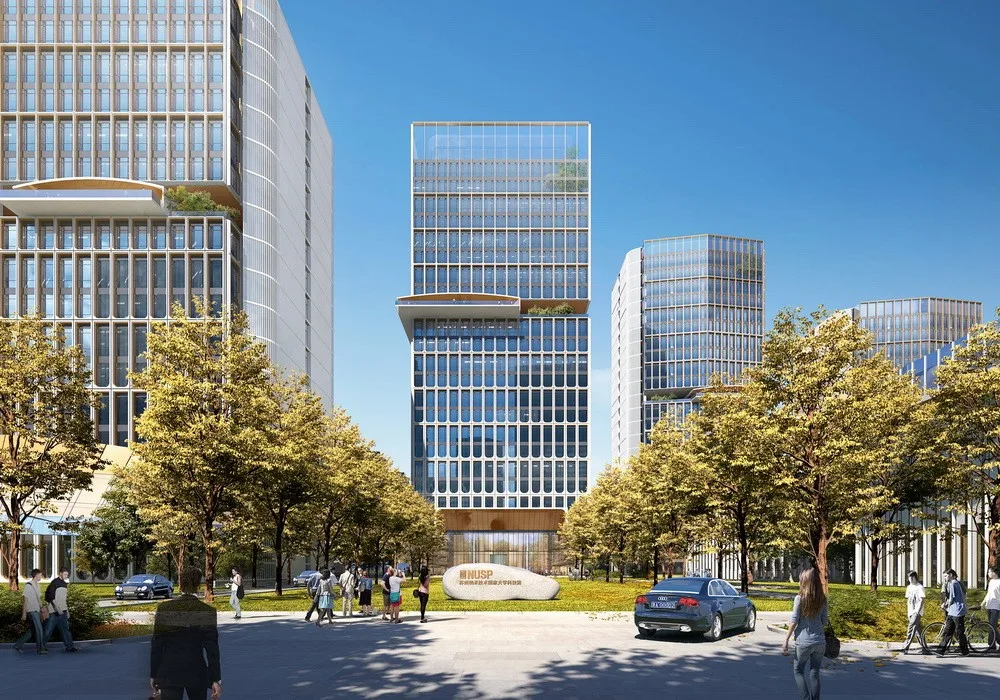
A Habitat for Nurturing Future High-Tech Enterprises and Talent
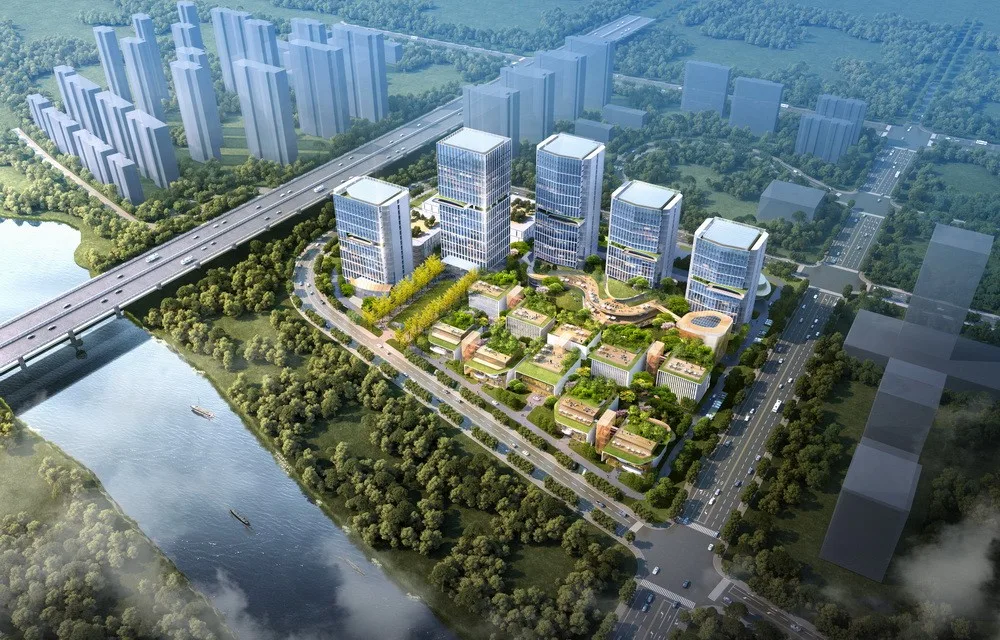
To establish a beautiful and inviting “habitat environment,” this project takes a geographical approach. It leverages the ample urban public green spaces and the Wusong River to the south of the site, encouraging a natural gradient with taller buildings in the north and lower structures to the south. The north tower offers panoramic views of the cityscape, while the southern podium overlooks nearby natural scenery. The landscape strategy, described as “one core, two axes, three belts, and multiple courtyards,” includes various garden-style courtyards enclosed by buildings that showcase seasonal forest belts.
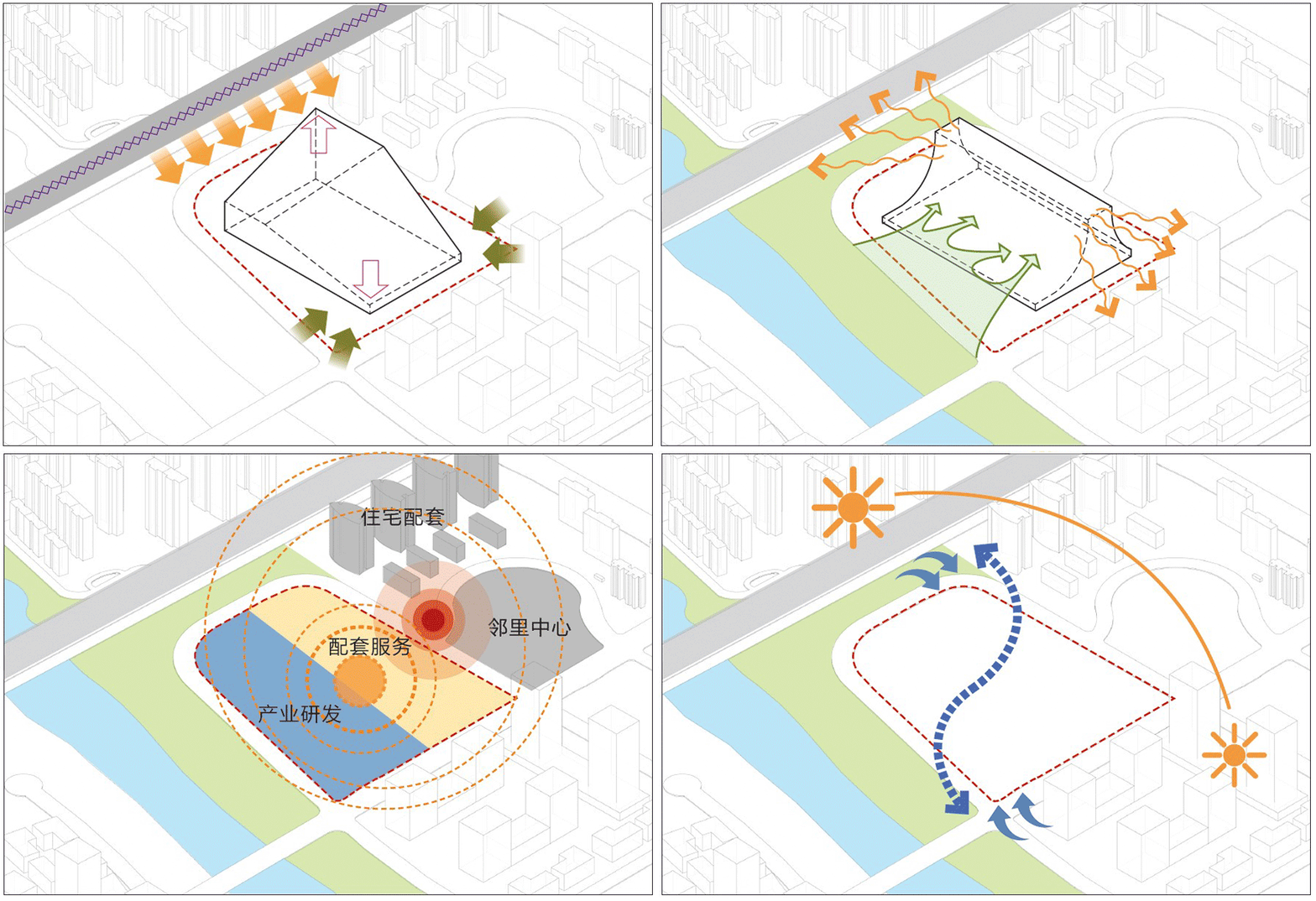
△ Scheme generation
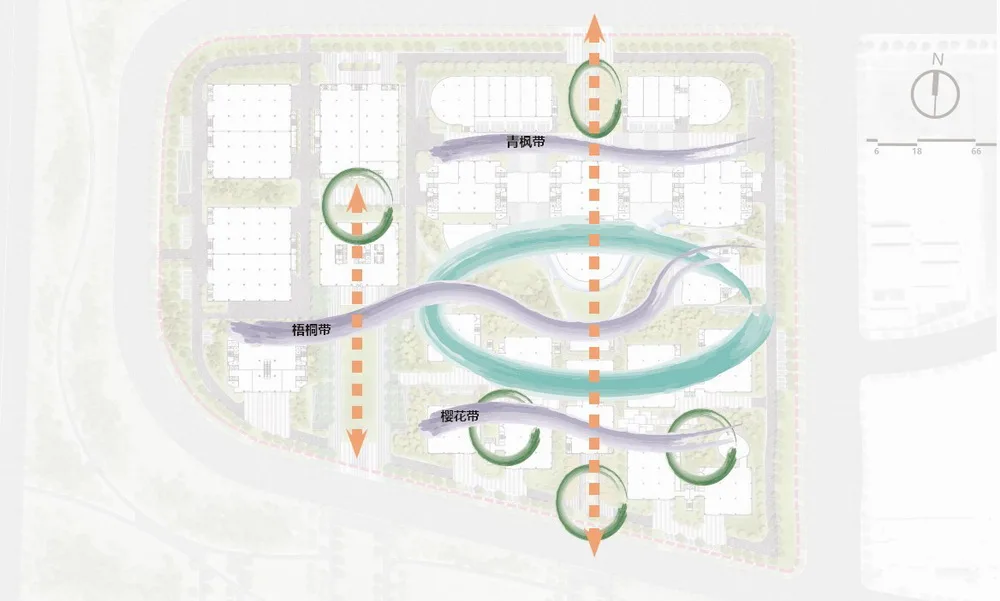
△ “One core, two axes, three belts, and multiple courtyards”
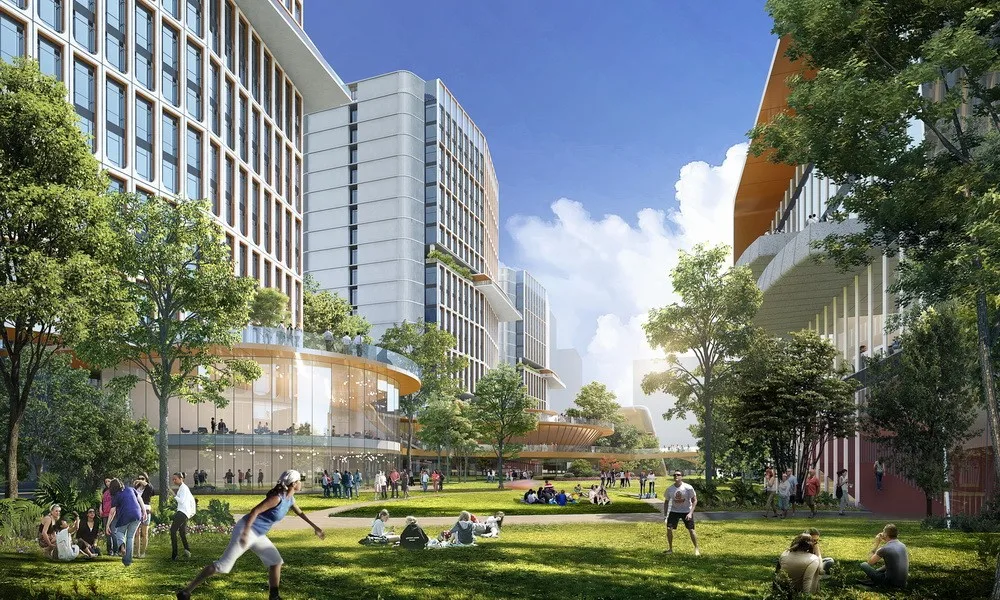
△ Garden-style courtyard clusters
Careful consideration of the relationship between building massing and urban road layout results in a triple-tiered skyline visible at human, street, and city scales. This design approach balances users’ appreciation for architectural beauty with a connection to nature.
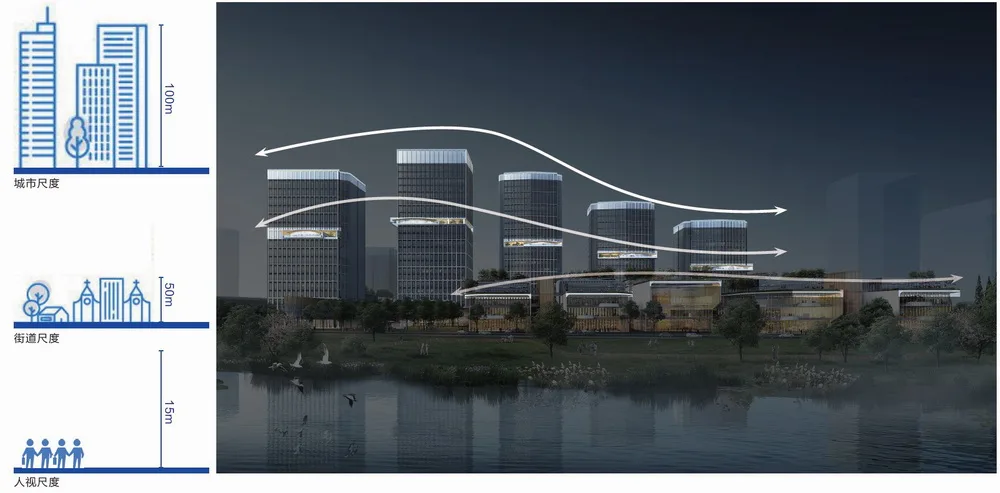
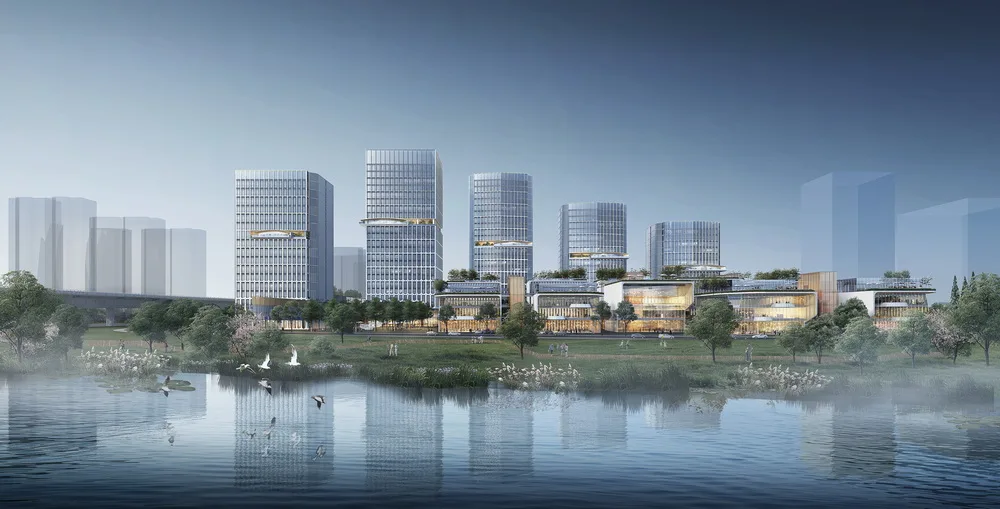
Triple skyline visible from human, street, and urban scales
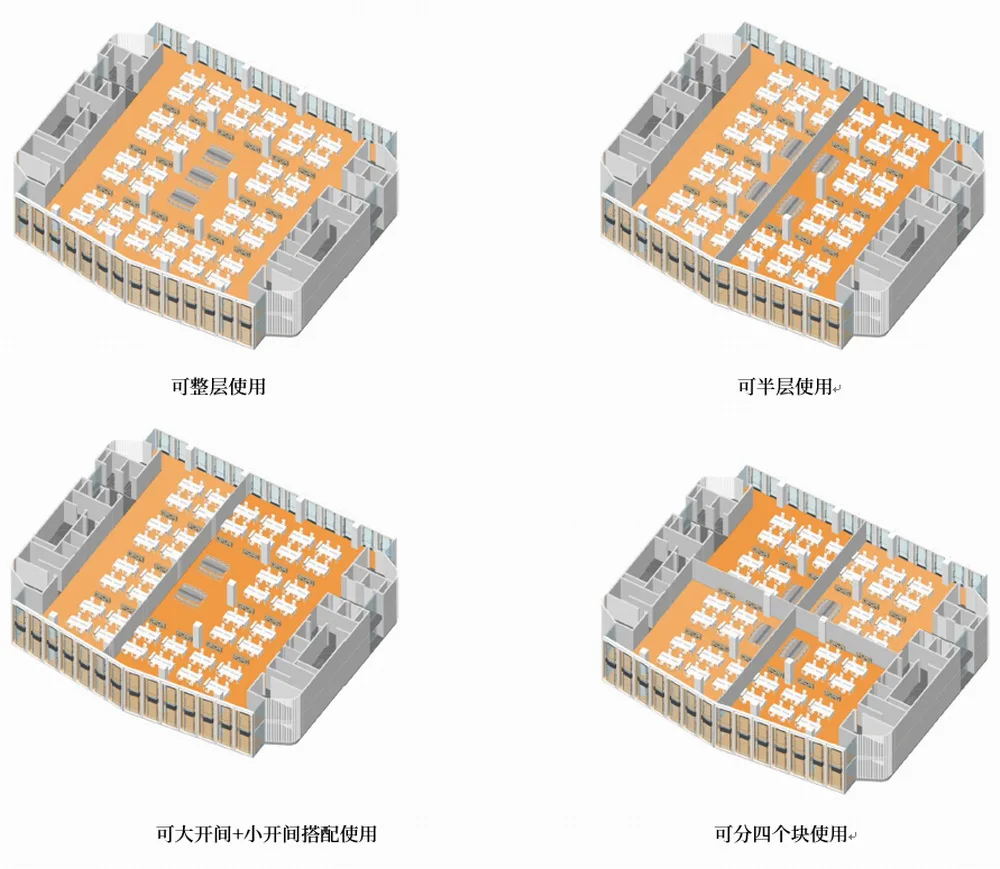
Regarding space utilization, the design embraces the “nano” characteristic of freely combining molecules. High-rise core tubes and equipment rooms are evenly distributed along the building’s sides and corners, leaving a spacious central area that can be flexibly partitioned. This creates sustainable office spaces capable of adapting to current and future user needs.
The development of a 24-hour vibrant industrial and urban living circle balances enterprise functions, industry exhibitions, and headquarters offices. It also offers essential commercial and service amenities for high-tech professionals within the park. Together, these elements foster a sustainable, circular, and socially cohesive future.
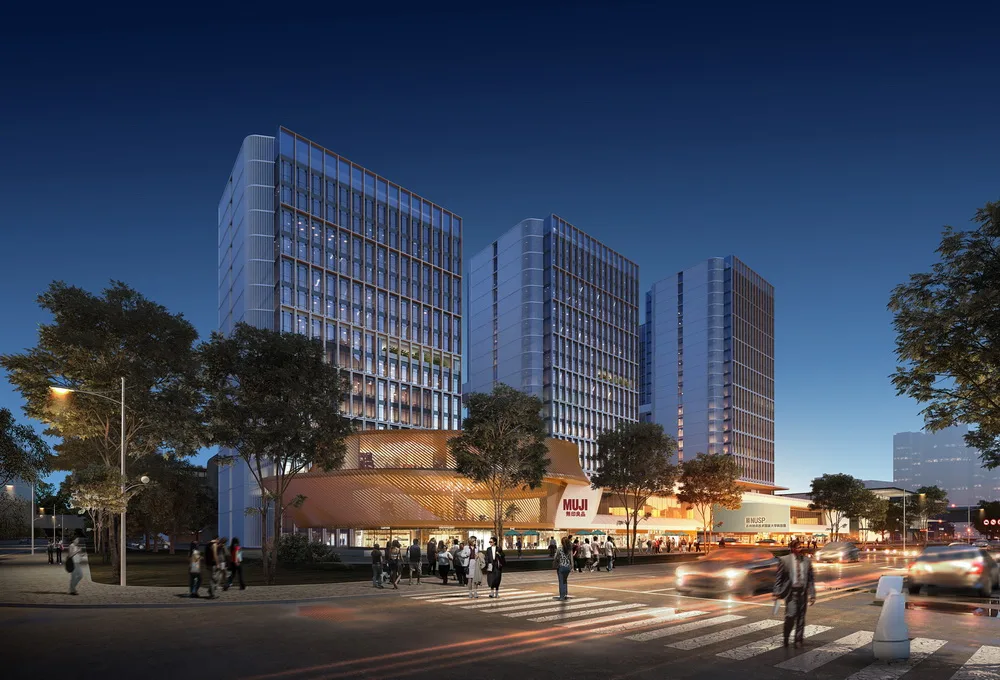
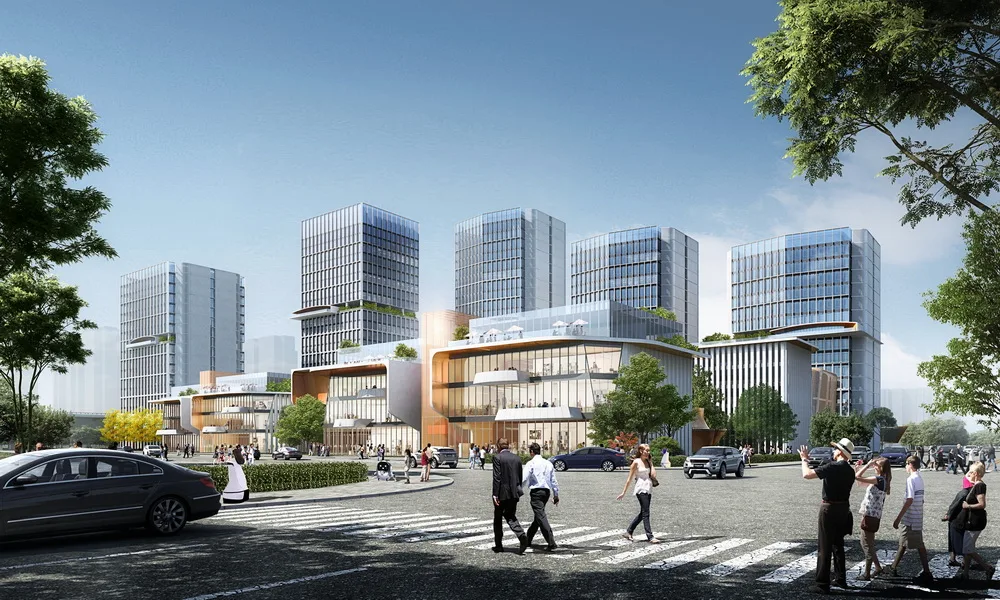
24-hour Industrial and Urban Living Circle
Folding Garden
“Folding” here is not a physical form but a conceptual space that accommodates human behavior as an art form. It guides spatial circulation as a “refraction” of this virtual state.
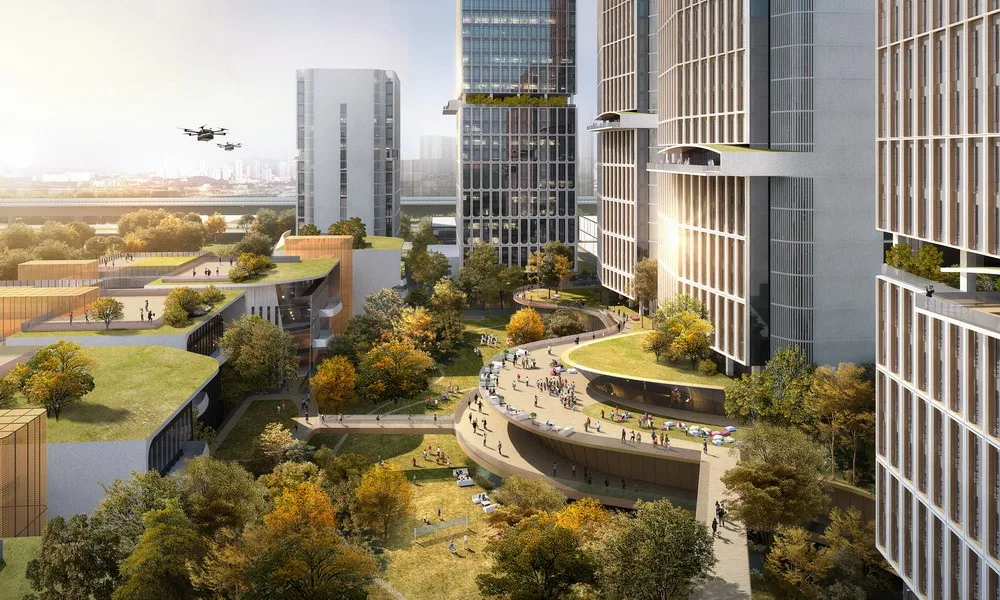
This approach enriches the existing landscape and broadens spatial experience.
Etiquette and Banquet Areas
The science and technology park’s image represents the whole, while the garden’s artistic conception is found within the project. Just as the East Mansion of Wangshi Garden symbolizes the southern gate and ceremonial entrance, this project’s entrance forms a ceremonial short-axis pattern with multiple layered progressions and interconnected flow.
Similarly, the West Garden of Wangshi Garden serves as a flexible “banquet area.” In contrast to the bustling yet serene landscape office area here, the design avoids congestion despite numerous buildings. Even though the mountains and ponds are modest in size, the space never feels cramped.
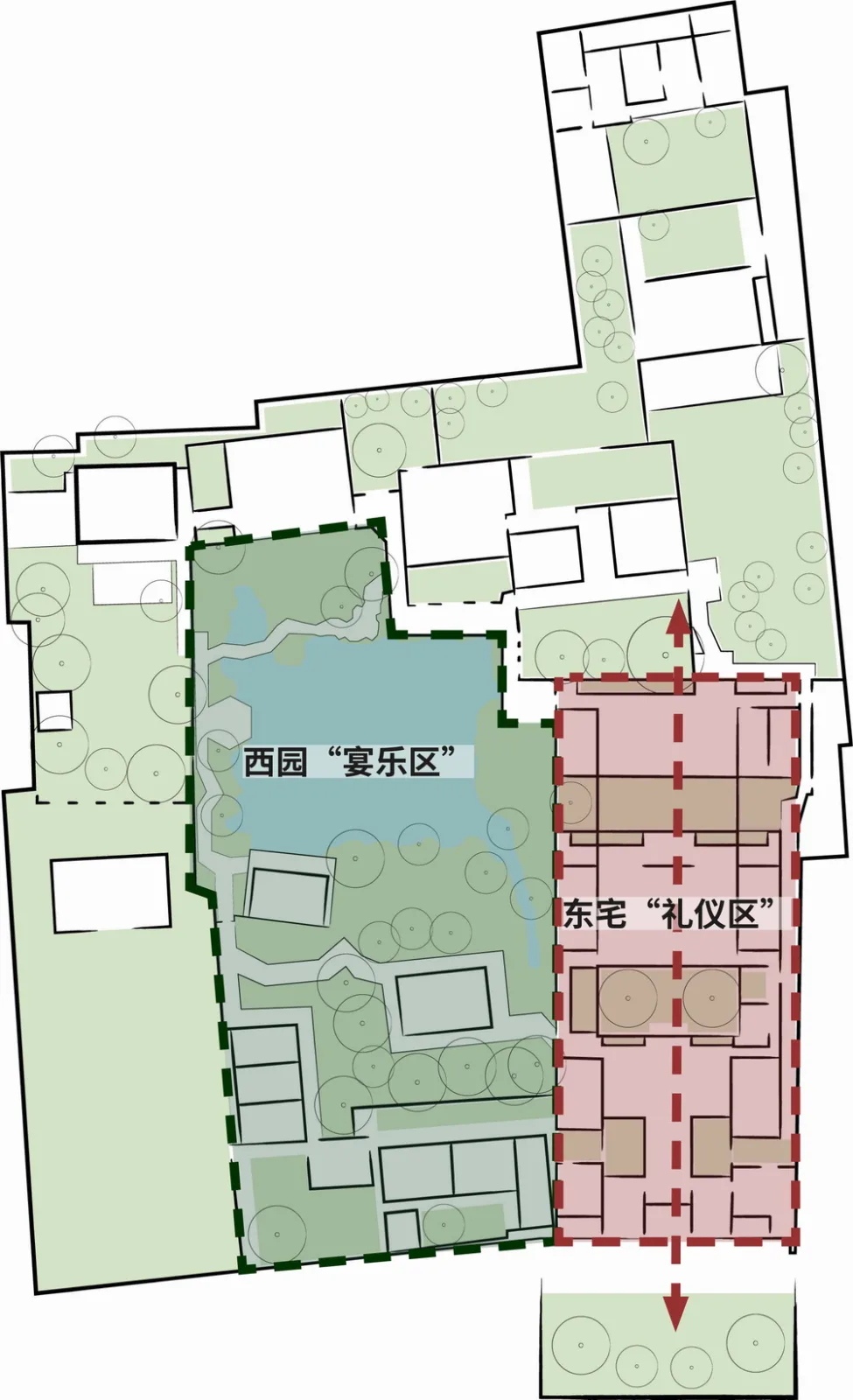
Layout of the “Etiquette Area” and “Banquet Area” inspired by the Webmaster Garden
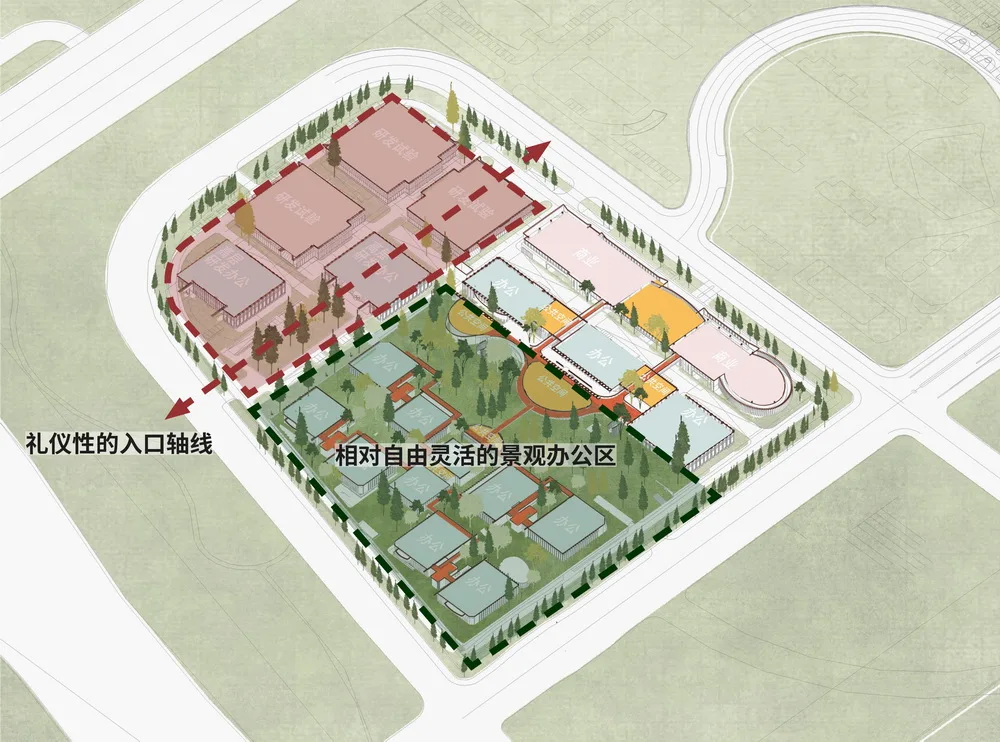
△ Inspired by the entrance axis and landscape office area of the Webmaster Park
Folding
The landscape office area’s layout draws inspiration from the small garden of Wangshi Garden. It uses buildings of varying heights, partitions, and enclosures to create a dynamic garden landscape within a compact site. As the saying goes, “The land is only a few acres, yet the journey is endless.”
Through orderly spatial divisions, techniques like garden corridors, trees, and building shadows guide and transform the space. This enriches the original landscape and expands spatial experience. Conventional architectural and landscape forms are artistically differentiated into refractive imagery, creating an ever-changing scenery and unique pockets of space.
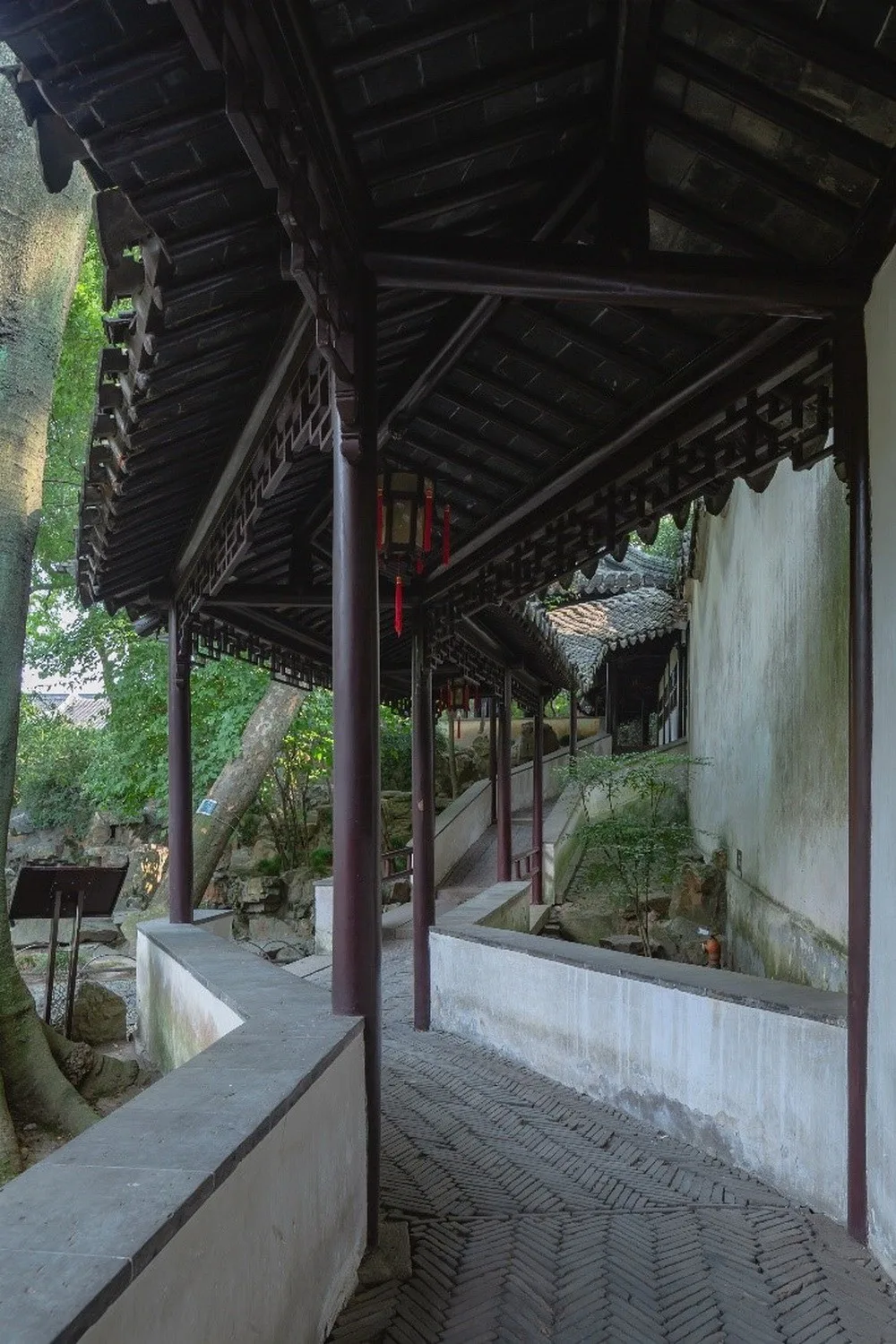
△ Serene Garden Corridor
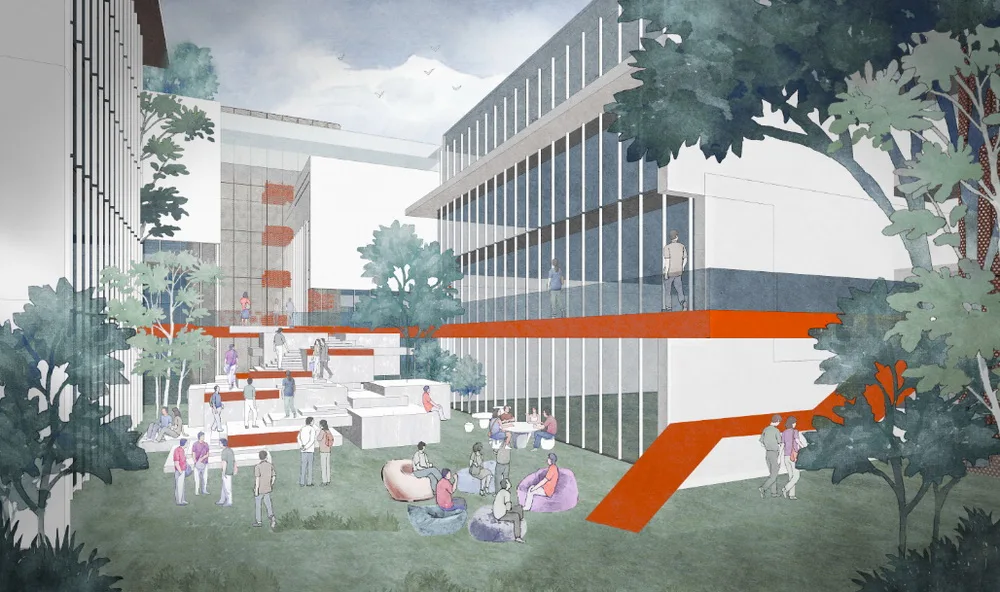
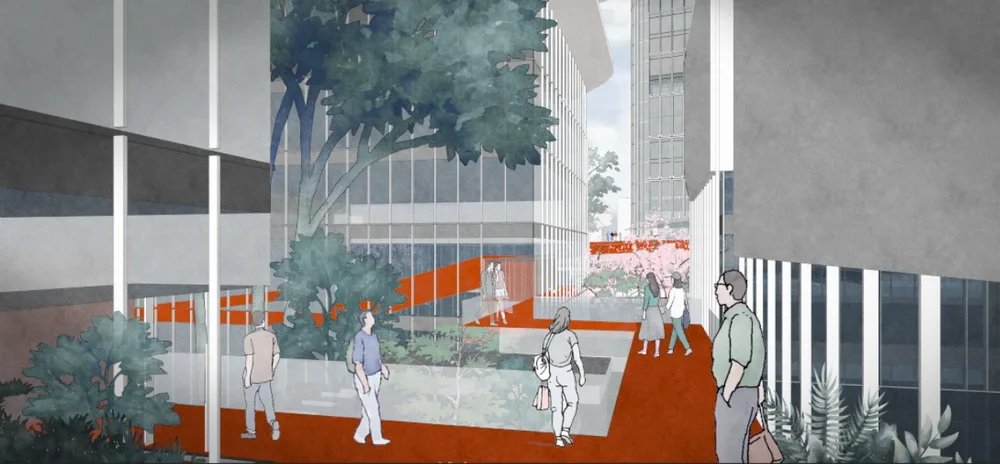
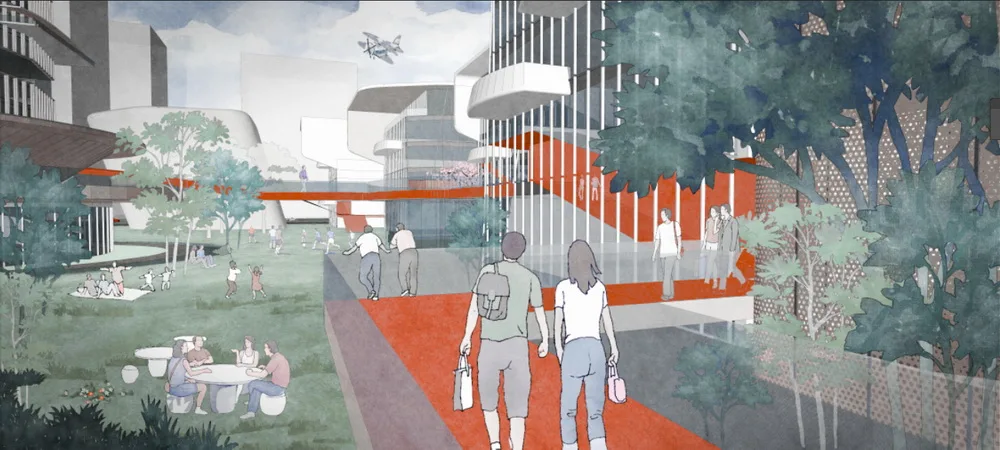
△ Spaces shaped and curved by corridors, trees, and building shadows
Folding Again
The path design introduces “multiple levels,” utilizing the openness and accessibility of the ground floor throughout upper levels via garden-style corridors. This approach breaks the originally closed internal circulation within the building, using water as a metaphor for pathways and roads as social gathering points.
This transforms traditional vertical movement from bottom to top into a natural, undulating flow that enhances community interaction. The refractive nature of these vertical planes disrupts the static and uniform space, fostering dynamic and interactive possibilities.
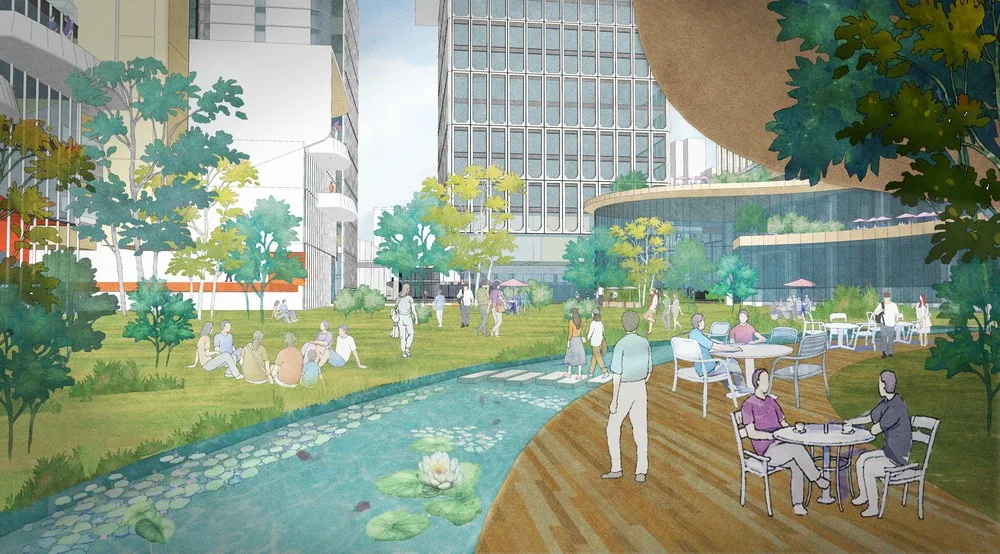
Using water as a metaphor for paths and roads as gathering spaces
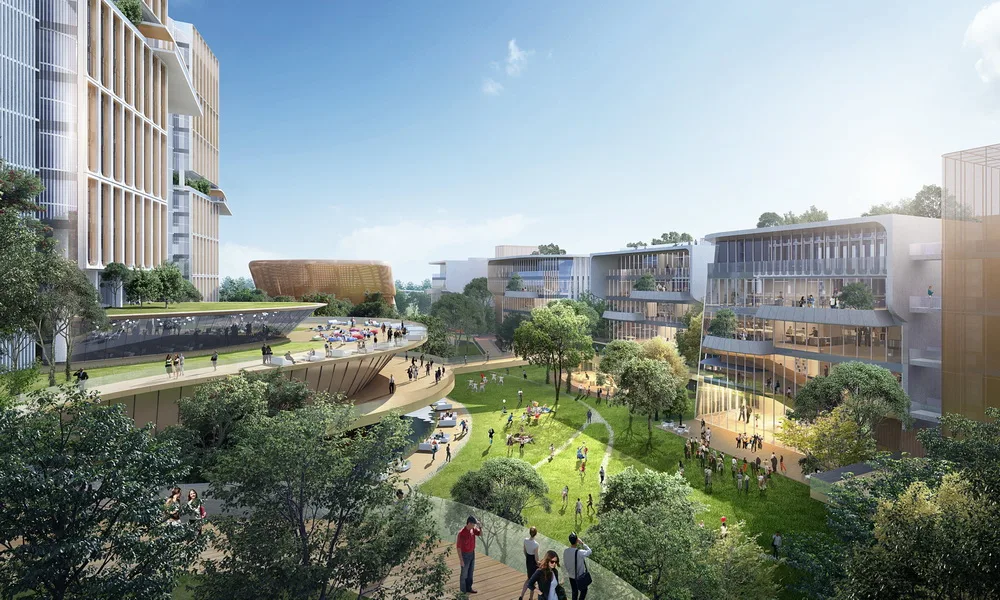
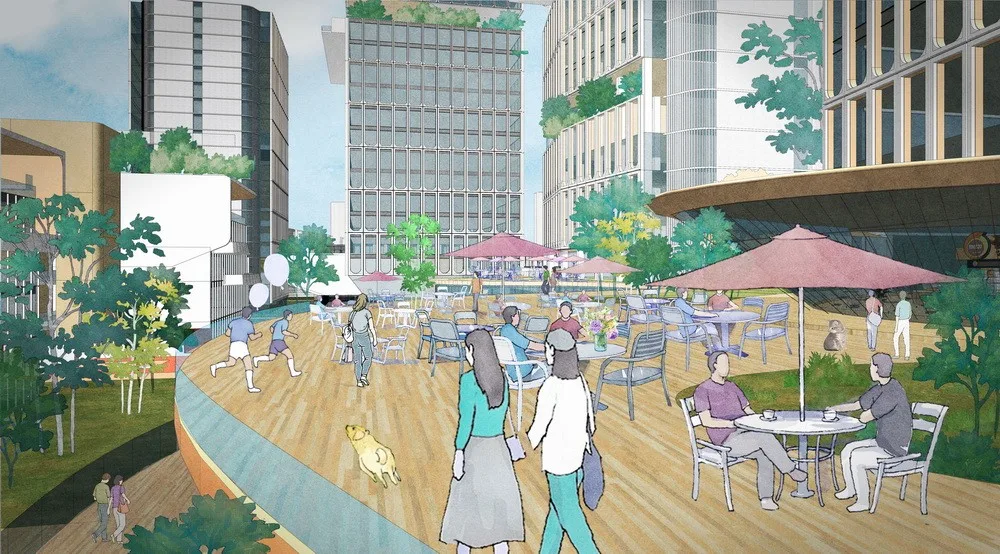
“Multiple levels” concept
Technical drawing
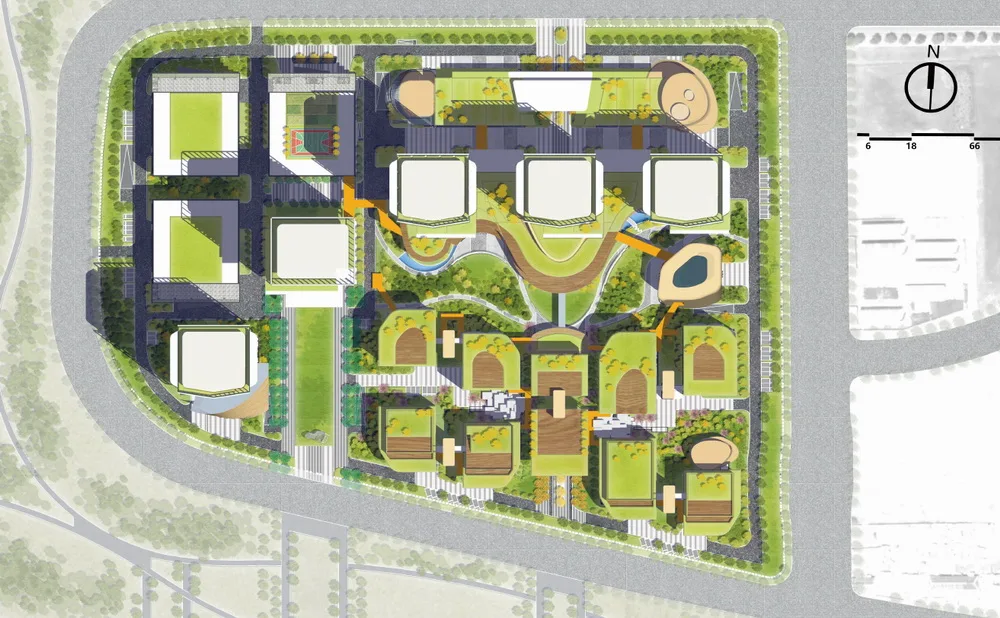
△ General layout plan
Project Information
Project Name: Suzhou Nanotechnology National University Science Park Phase II
Architectural Firm: Zhongheng Design Group Co., Ltd
Website: __AI_ST_URL_0__
Contact Email: tanglanke@artsgroup.cn
Location: Zhongheng Design Building, No. 111 Bada Street, Industrial Park, Suzhou City, Jiangsu Province
Project Type: Proposal (Winning project, not yet started)
Design Date: October 2020
Building Area: 356,881.88 square meters
Project Address: Suzhou Industrial Park
Lead Architects: Feng Zhenggong, Huang Lin
Principal Architect Email: huanglin@artsgroup.cn
Rendering Company: Zhongheng Design Group Co., Ltd.
Client: Suzhou Industrial Park Education Investment Co., Ltd
Architectural Design Team: Huang Lin, Ge Songyun, Du Lianghui, Jiang Wenbei, et al.
Photography: Qin Wei
Author: Tang Lanke















Must log in before commenting!
Sign Up