
Design Background
The design drawings for the Central Art Museum were completed in 2008, but construction only began ten years later, with the project finishing in late July 2019. Mr. Yu Zhuyun, CEO of Zhonghuan Group, is not only a real estate developer but also an art enthusiast with a strong sense of responsibility. Over a decade ago, after visiting folk artists’ studios in Anhui, he realized that many exceptional artworks were confined to cramped spaces and lacked exposure to the wider world. Motivated by this, he envisioned creating a platform to showcase these works.
When he approached us, he expressed his hope that this low-density, small-scale art museum park would serve as a vibrant meeting place where art and artists connect with the public. He aimed for it to radiate unique energy throughout the surrounding area and become a must-visit destination for tourists. Notably, this plot was adjacent to what was then a flat area destined to become a dense cluster of high-rise buildings. Achieving this simple yet challenging vision was a core question guiding the design.
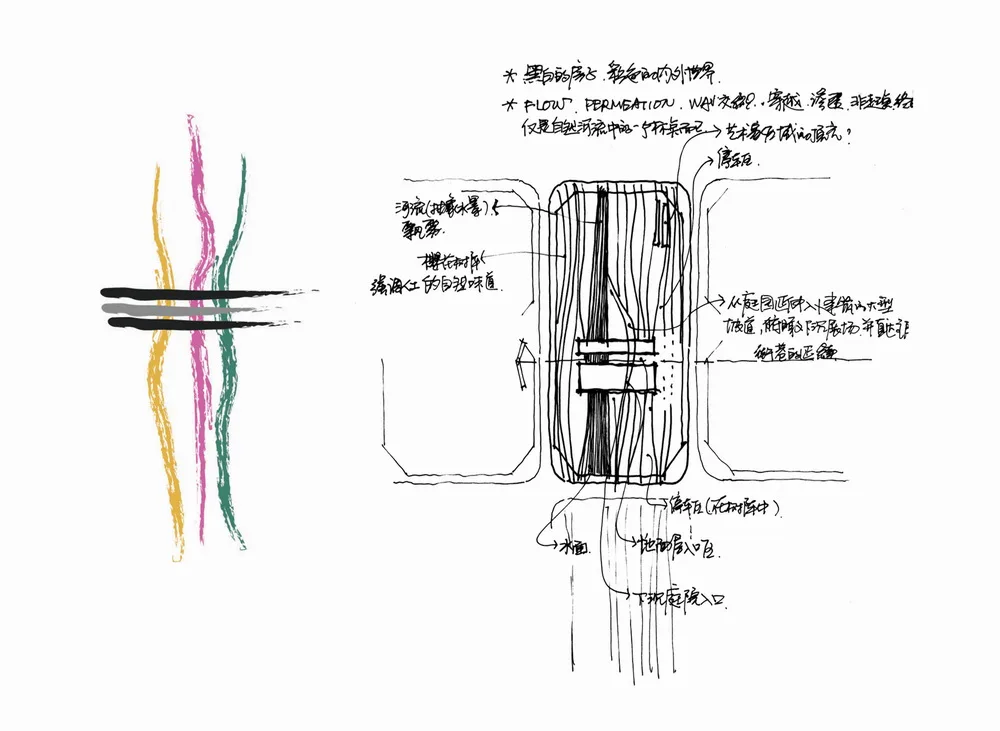
△ Design Sketch
Design Concept
After carefully analyzing the site, we quickly decided to introduce an artificial “nature” element into this modern urban area, which is characterized by high-density buildings and wide motorways. The key feature is blooming trees that create a microclimate blending art and nature. Our intention was for the art museum to be a space characterized by openness, social engagement, and the capacity to enrich and positively influence daily life.
The guiding principle was clear: prioritize the landscape, integrating architecture as a component of the larger environmental context.
Landscape-First Principle
“Art is a harmonious world parallel to nature.” — Paul Cézanne
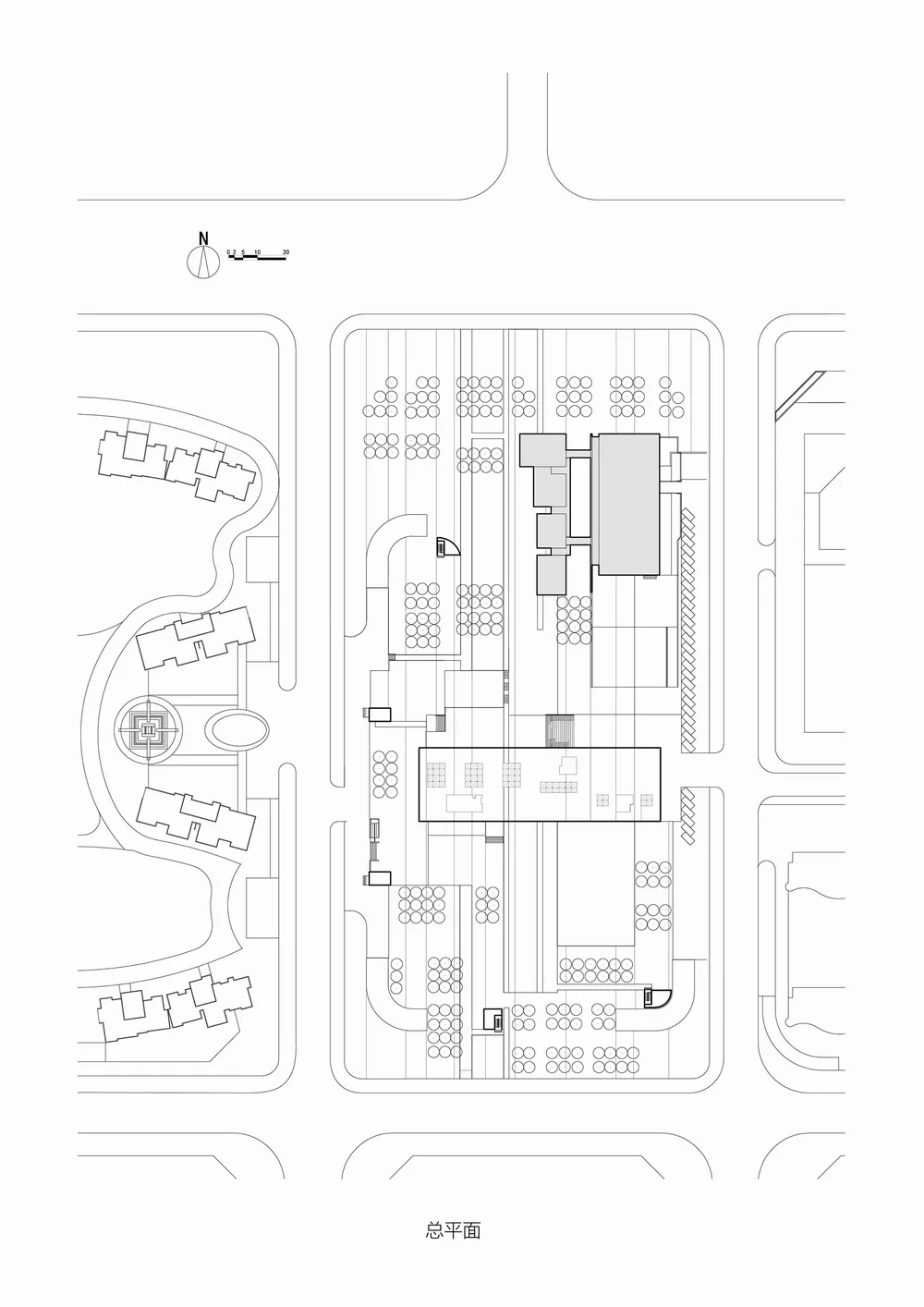
For this project, landscape design preceded architectural planning. We began by laying out a series of simple parallel lines along the site’s long axis, establishing an initial structural framework or MATRIX to organize the ever-changing natural elements. This parallel line pattern emphasizes the artificial quality of the landscape while supporting a thoughtful color scheme for future planting.
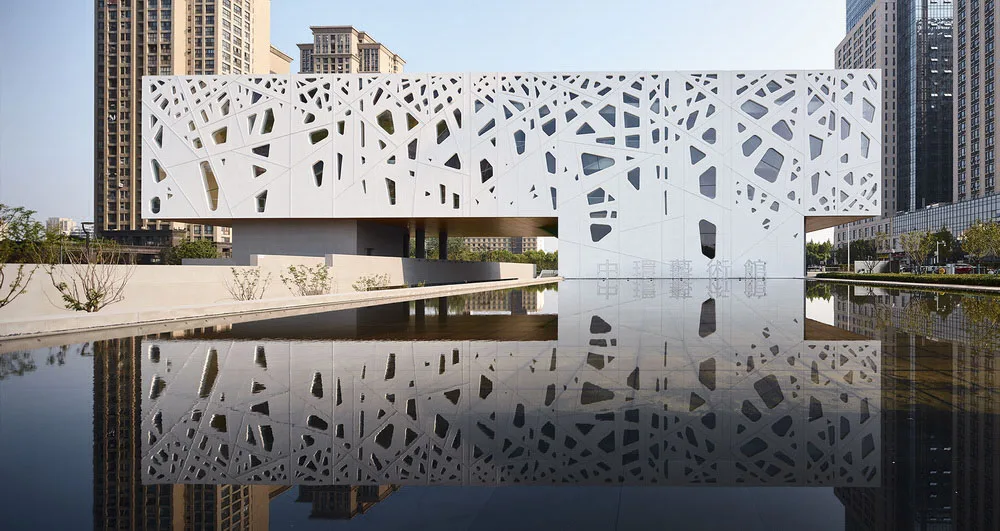
As the landscape design developed, the spaces within these parallel lines evolved into a stepped grandstand overlooking a sunken square, a shallow reflecting pool, a large ramp, and a variety of outdoor and semi-outdoor platforms. Clusters of cherry blossom trees and colorful shrubs—such as red-flowering poplars, red-leaved heather, golden privet, camellia, and cuckoo—were planted. Reserved areas were also set aside for seasonal rapeseed cultivation, providing vibrant spring blooms.
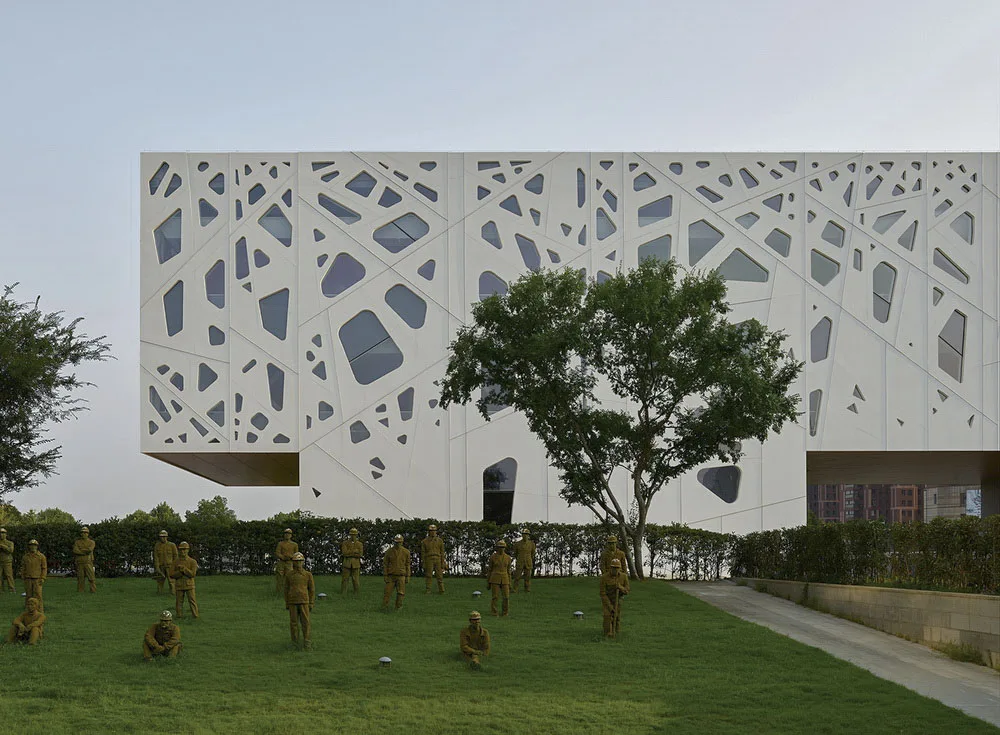
In this overall vision, the Central Art Salon was completed and opened as the project’s first phase back in 2009. On the green slope behind it stands a human-scale sculpture honoring the construction workers who contributed to the project. Placed against the backdrop of the newly completed art museum, this artwork pays tribute to ordinary workers through artistic expression.
Architecture and Interior Space
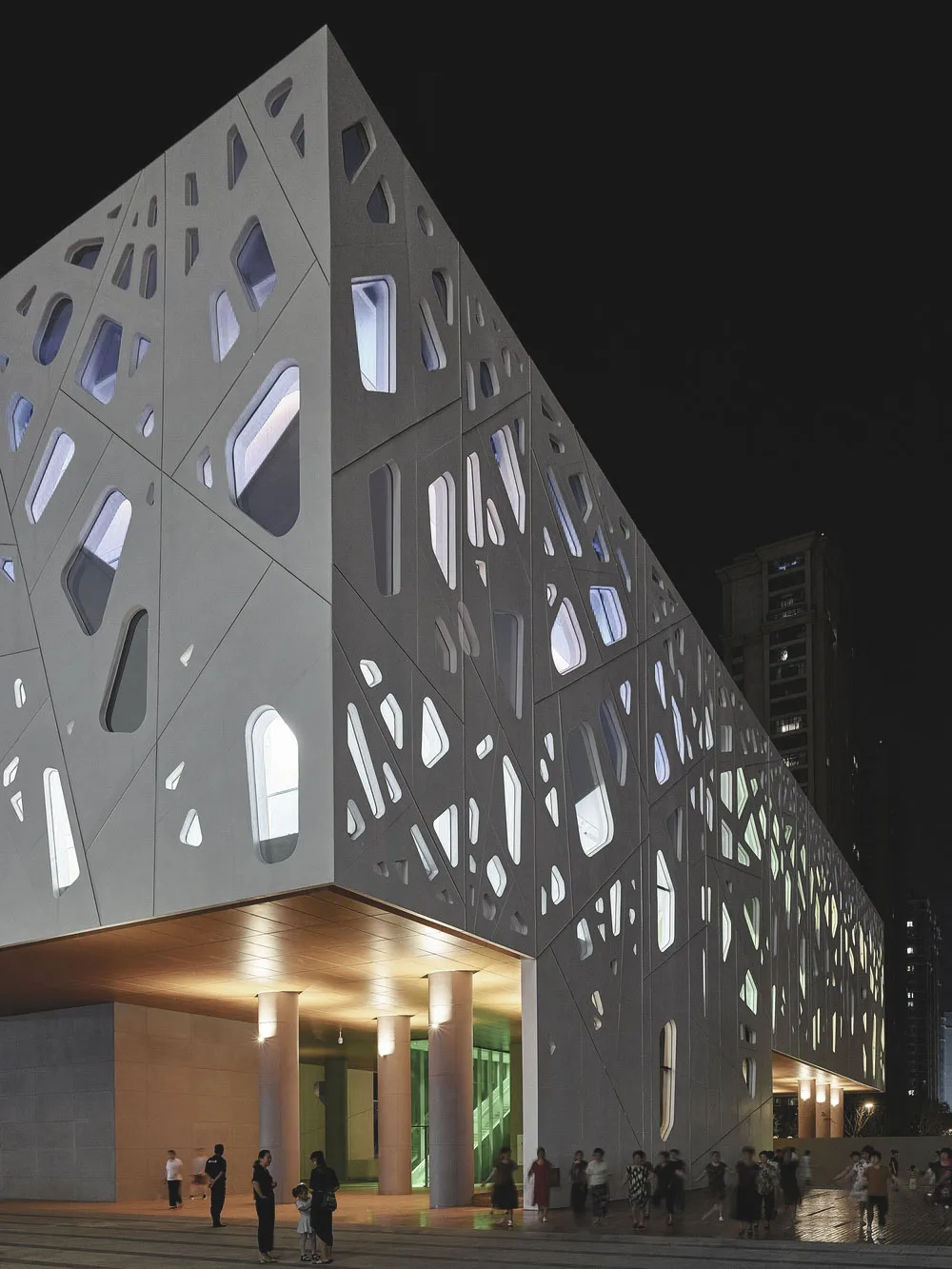
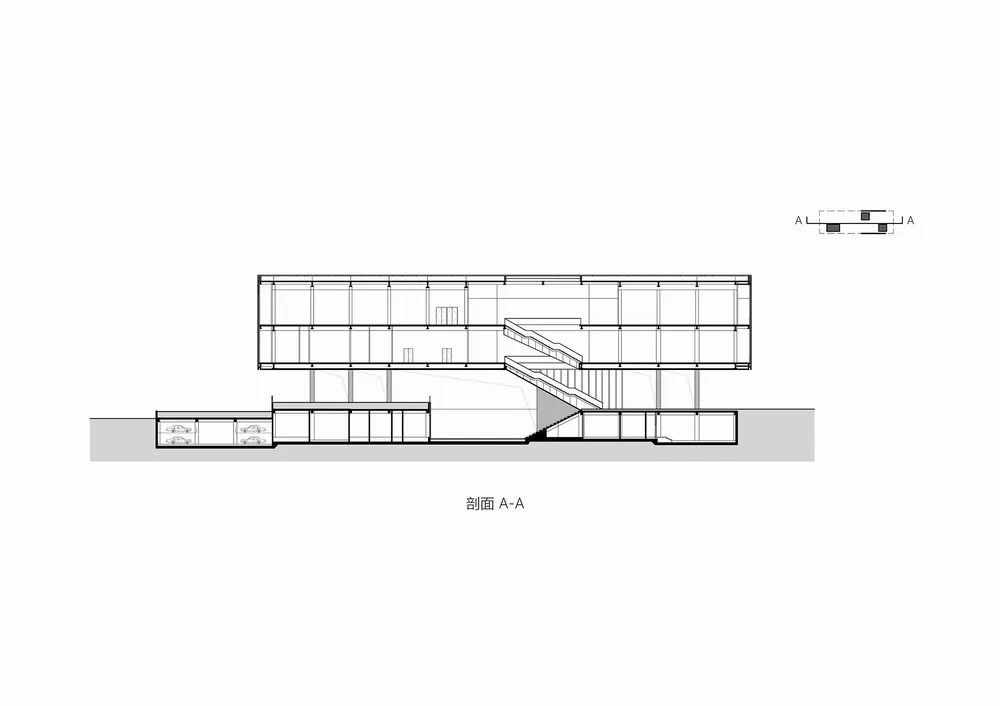
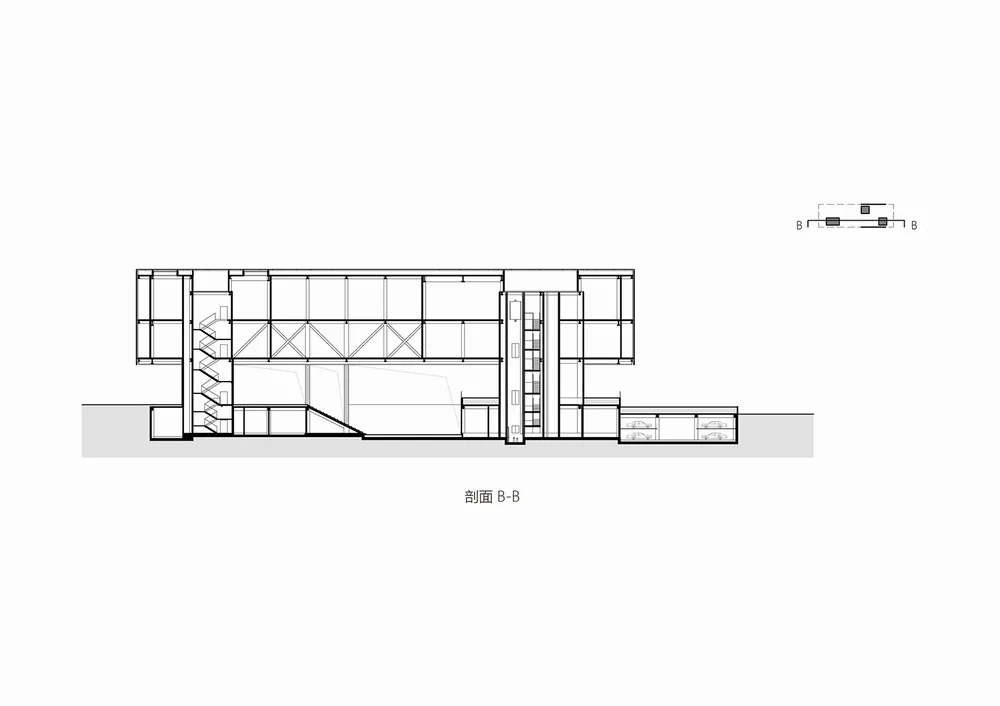
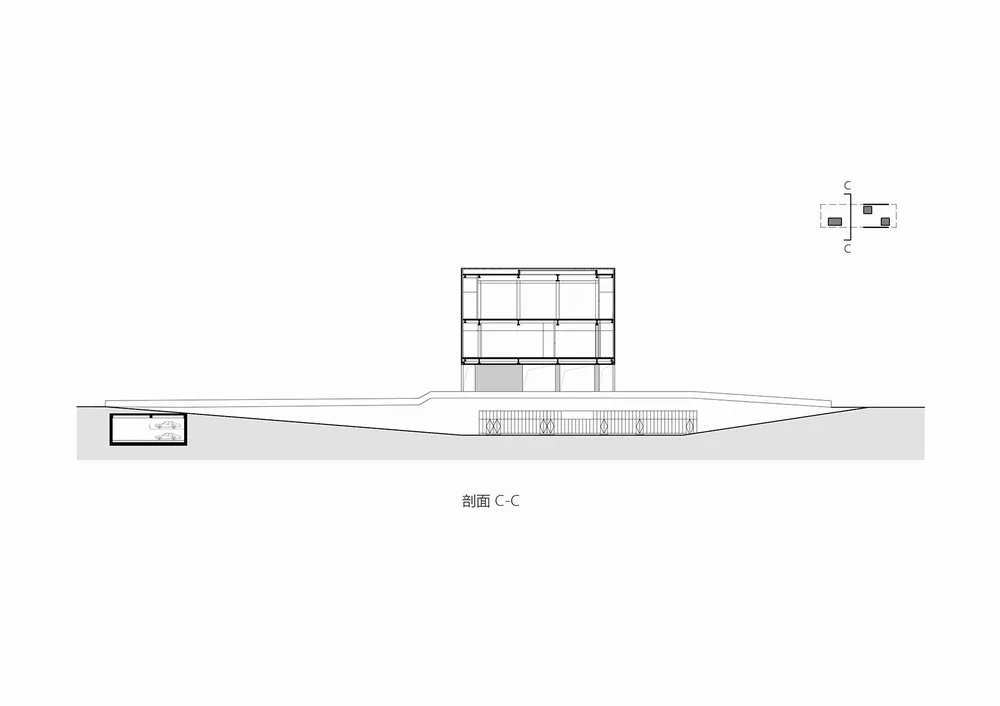
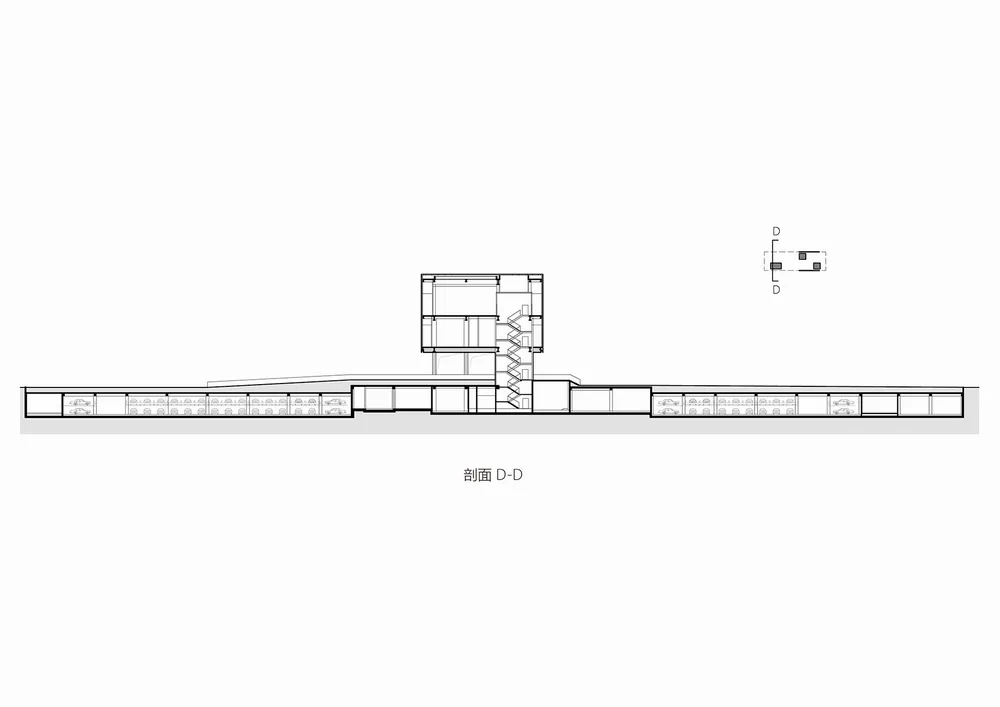
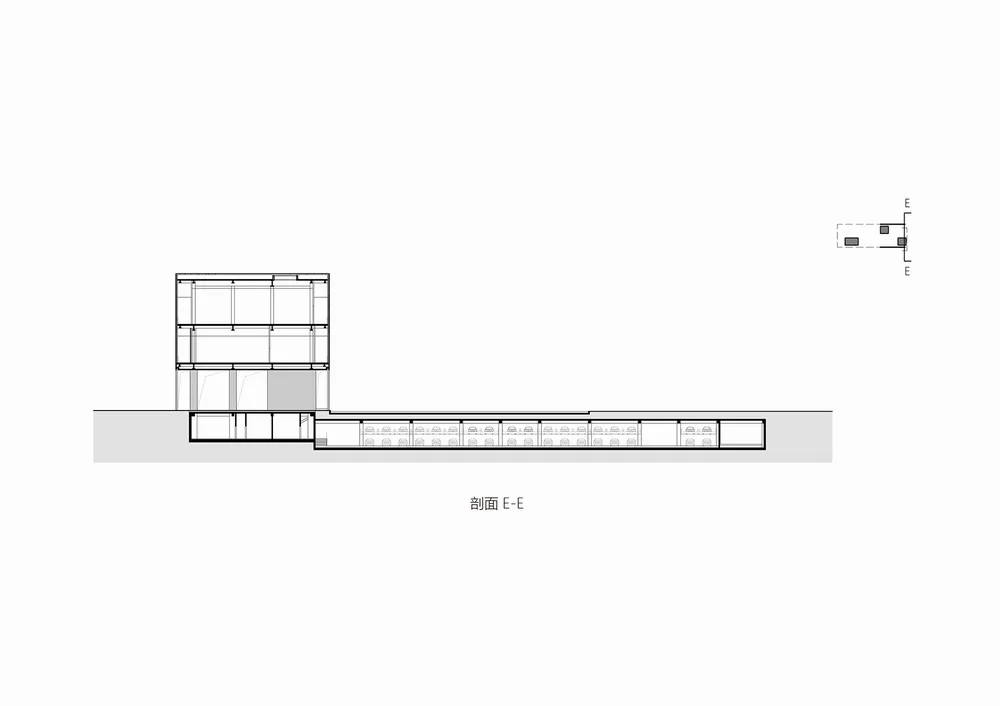
To maintain a unified and continuous landscape, the building was designed to appear as if floating, allowing the landscape to flow beneath it. The art museum stretches along the site’s short axis, perpendicular to the landscape’s parallel lines, facing the pedestrian commercial street on the east side. Visitors are invited to enter and embark on an art-inspired journey.
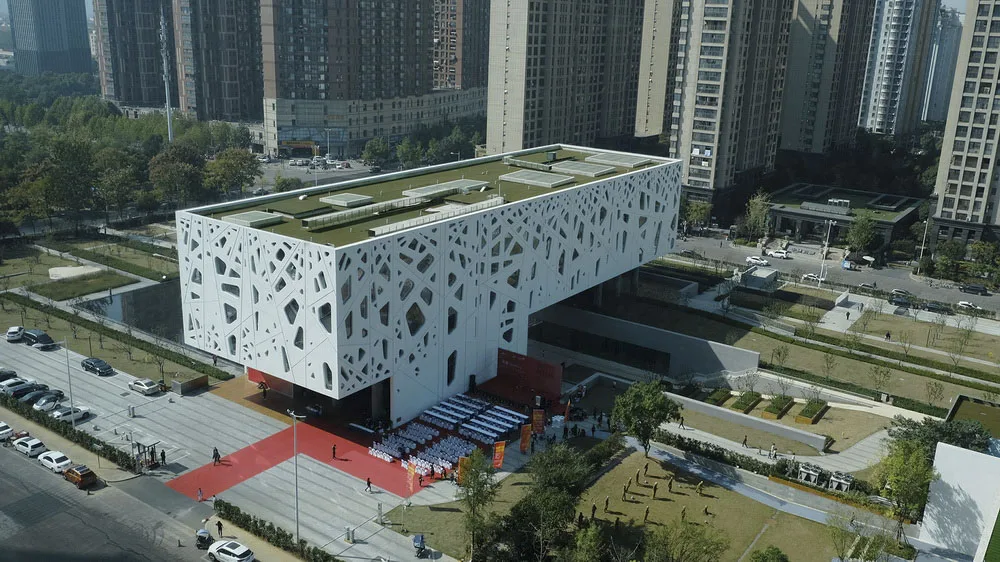
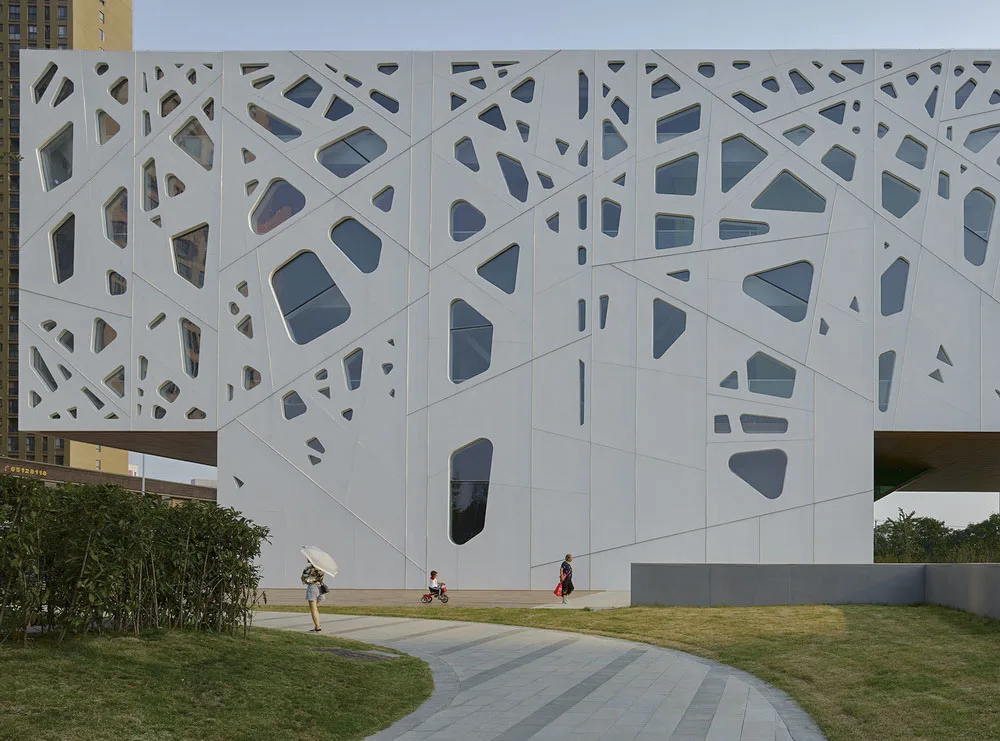
We envisioned the building itself as a floating landscape, inspired by fragments of lush forest branches that shape its exterior image. This floating design creates a series of outdoor and semi-outdoor spaces between the building and the ground to support diverse activities. These include the entrance plaza, a grand staircase leading to a sunken courtyard, a west platform facing the plaza across the courtyard, and a large ramp connecting these areas.
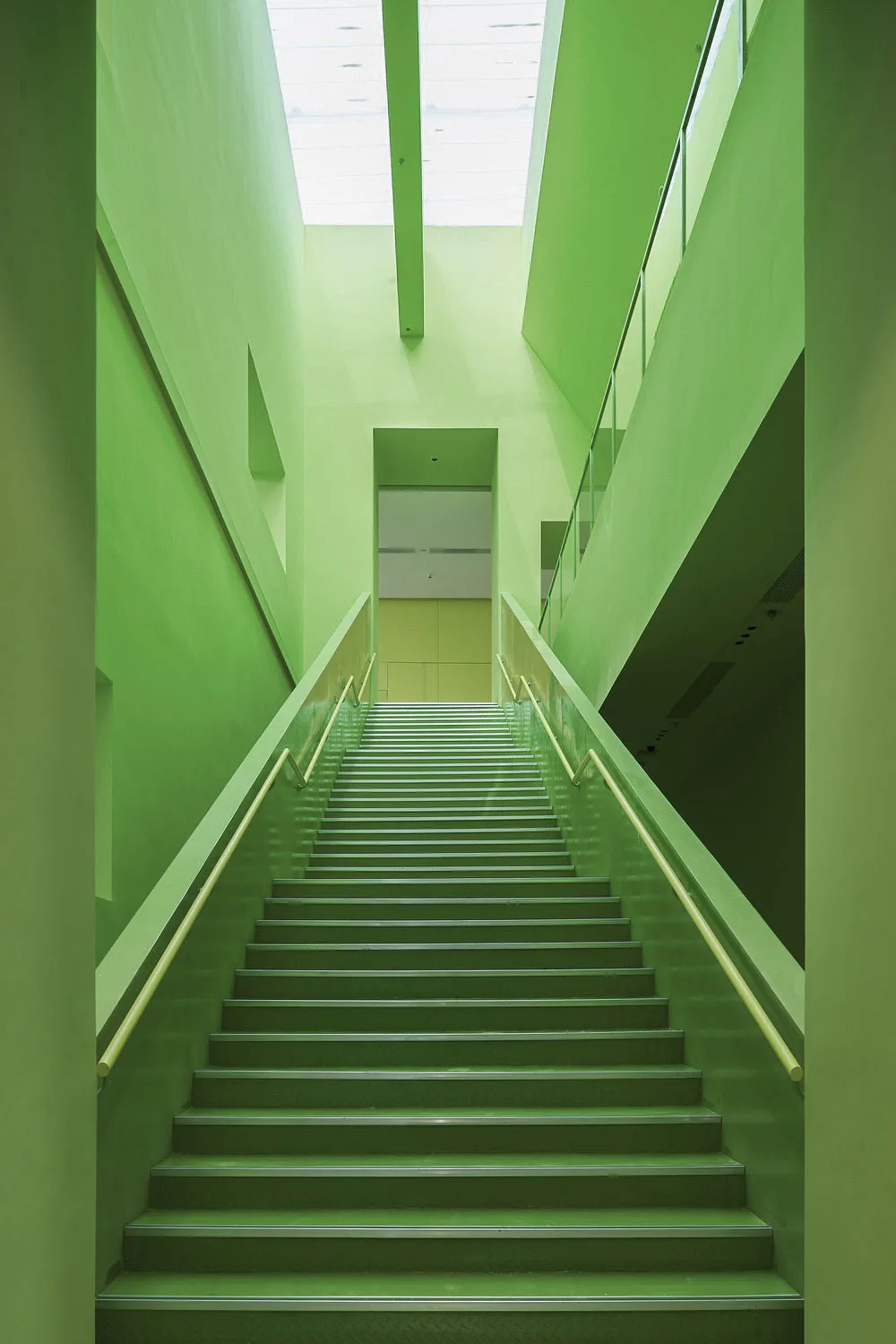
Because of this floating concept, the entrance hall is elevated to the second floor, where visitors begin their artistic strolls inside the building, descending a grand staircase designed with theatrical and stage-like effects.
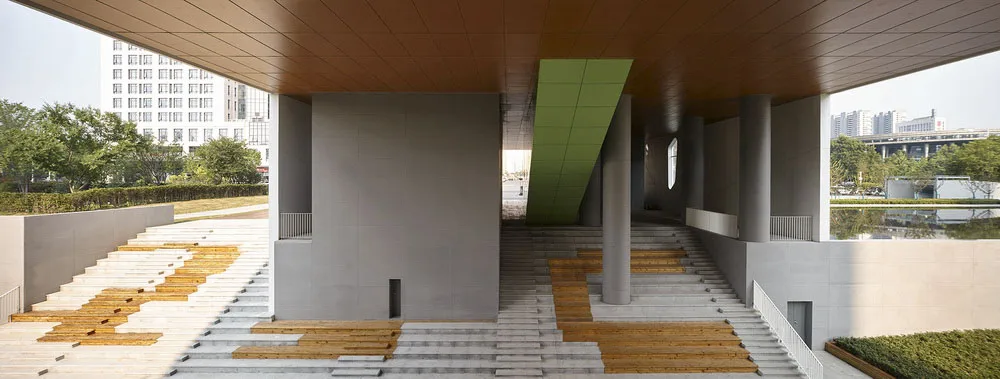
The grand staircase leads directly into the second-floor reception area and an open multifunctional hall. Adjacent to the hall are the VIP lounge and conference room. Together with a circular corridor, these spaces form a flexible, flowing level suitable for hosting events and small exhibitions accessible to the general public.
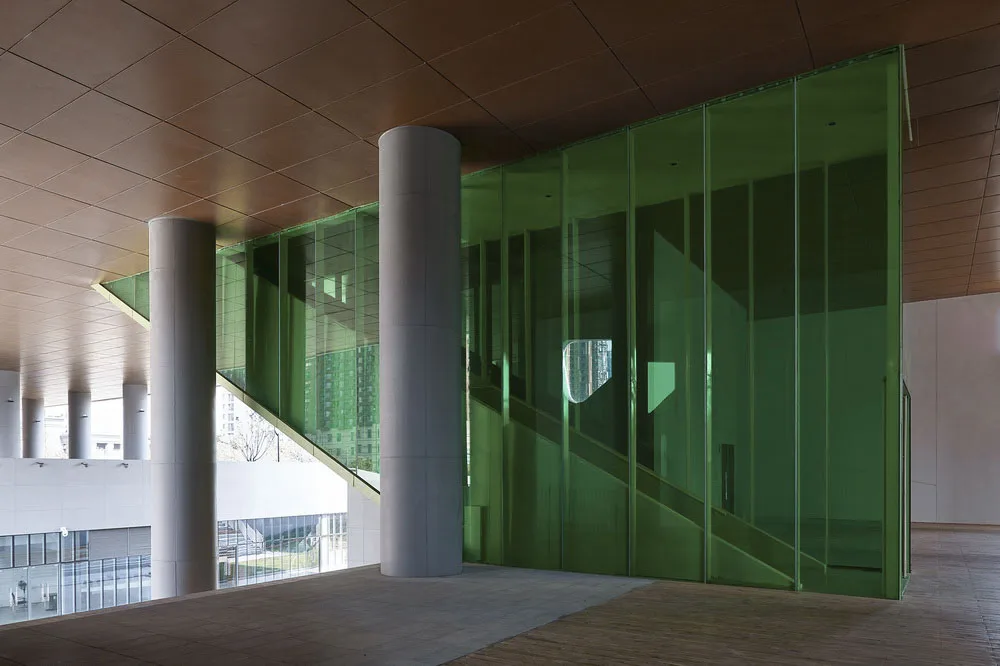
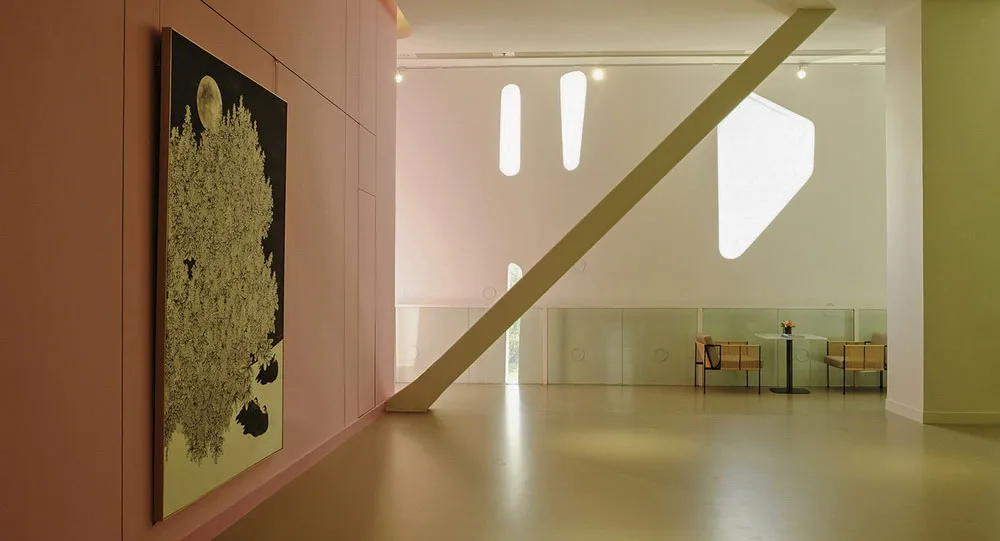
The main exhibition halls occupy the third floor, forming the “core” of the building with two inward-facing galleries of different sizes. These halls feature partially open roofs, allowing natural light and air to enter. The areas surrounding this core are fully opened up and enveloped by a unique building envelope. This envelope functions as a highly permeable interface between indoor and outdoor spaces, inviting visitors to enjoy the juxtaposition of natural views outside the windows and artworks inside—blurring the boundary between reality and art.
Light and Color
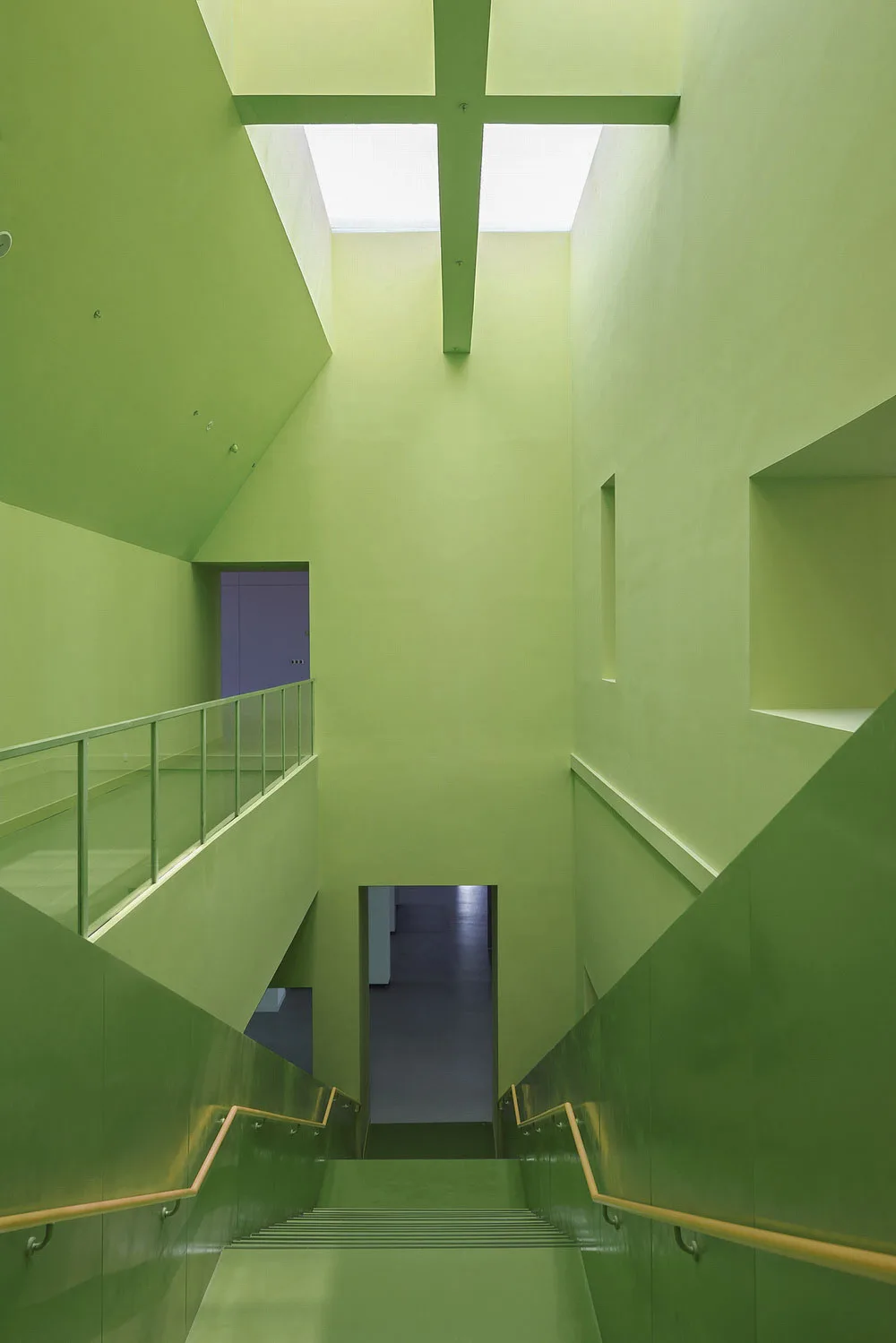
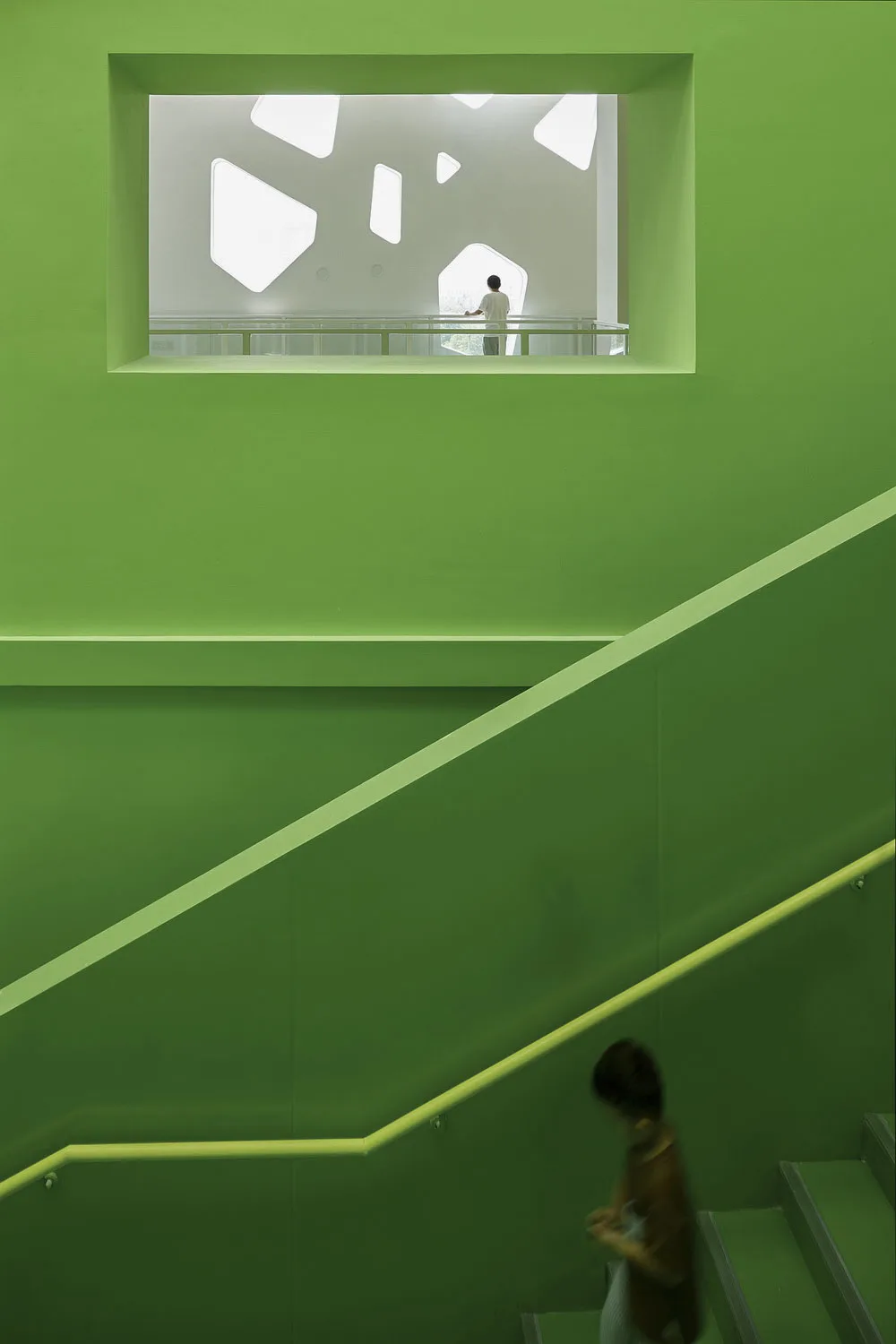
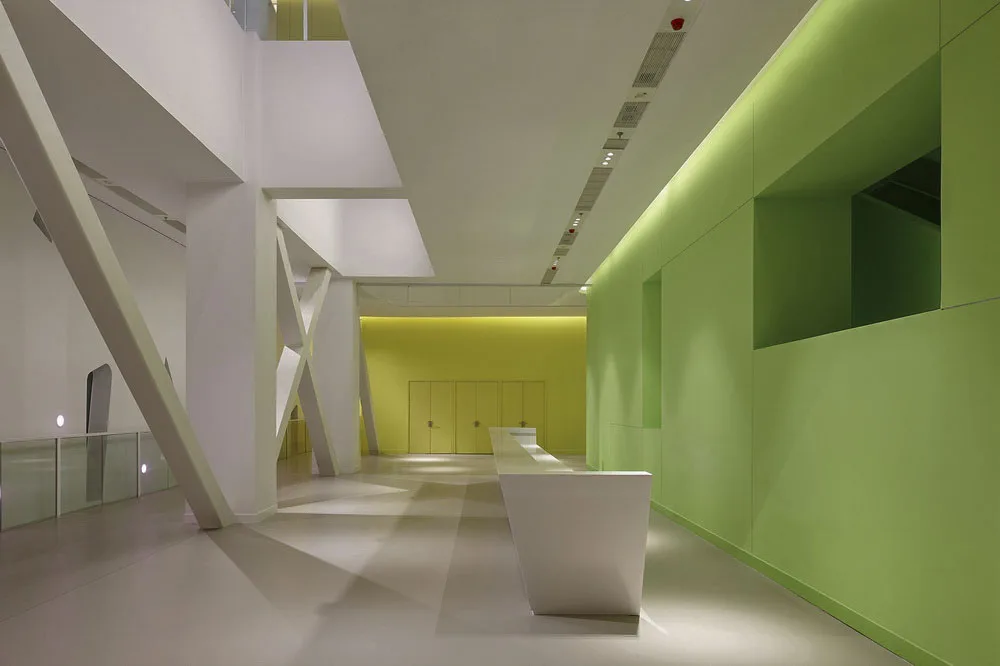
The building’s interior spaces fall into two categories: exhibition halls, which receive natural light vertically from skylights in the roof, and the surrounding spaces outside the galleries, where natural light enters horizontally through side windows. A large vertical staircase connects these areas, illuminated mainly by a roof skylight and supplemented by side window openings. These provide indirect lighting and views into adjacent spaces, enhancing the sense of openness.
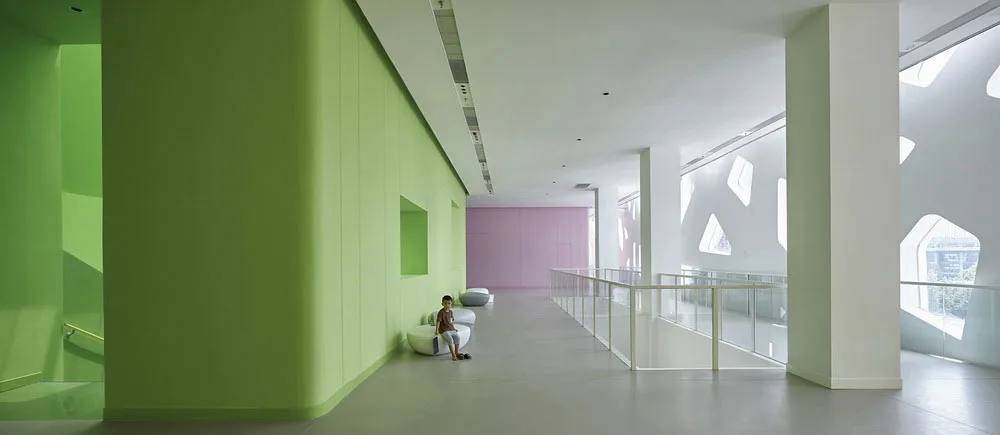
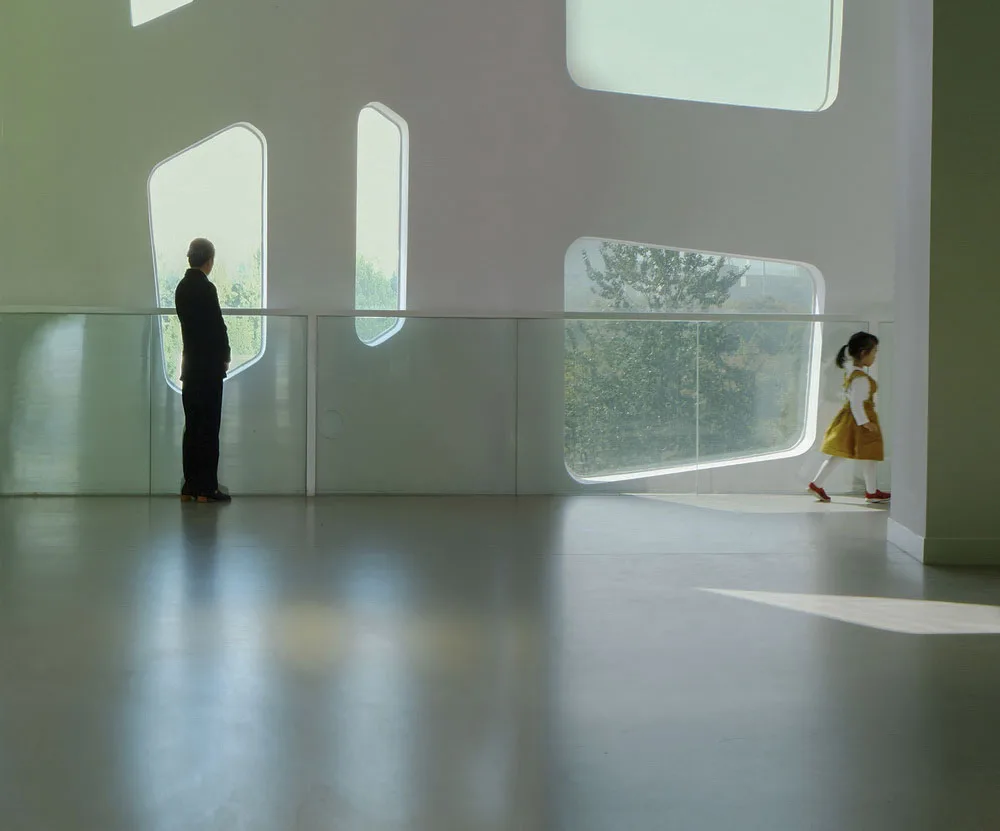
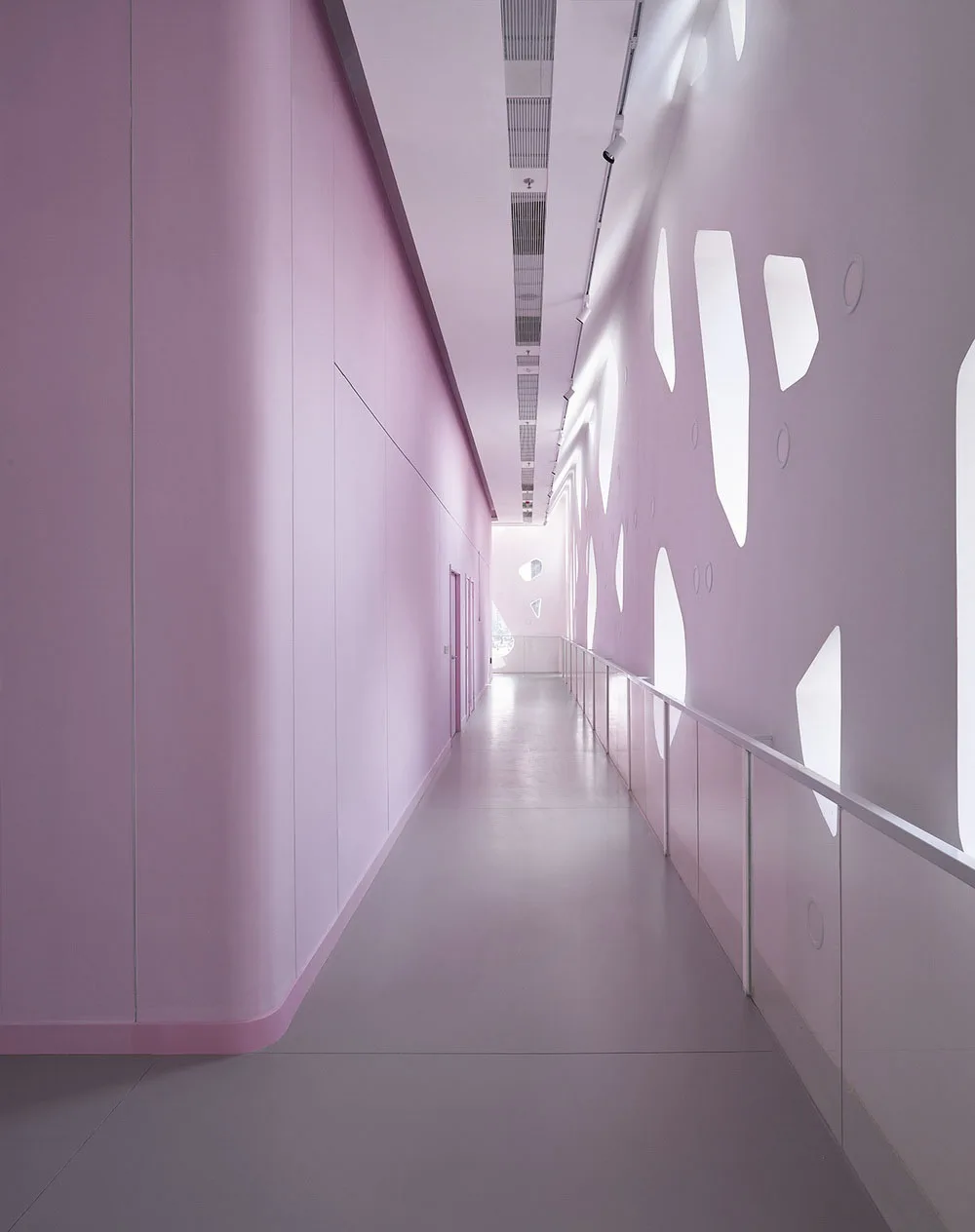
The exterior color palette of the building draws inspiration from the black and white tones typical of Huizhou residential architecture. The “core” housing the main and auxiliary halls features a colorful outer skin, with pink and yellow hues derived from local spring flora—peach and plum blossoms, and rapeseed flowers, respectively. Its interior walls are pure white to best showcase vibrant artworks.
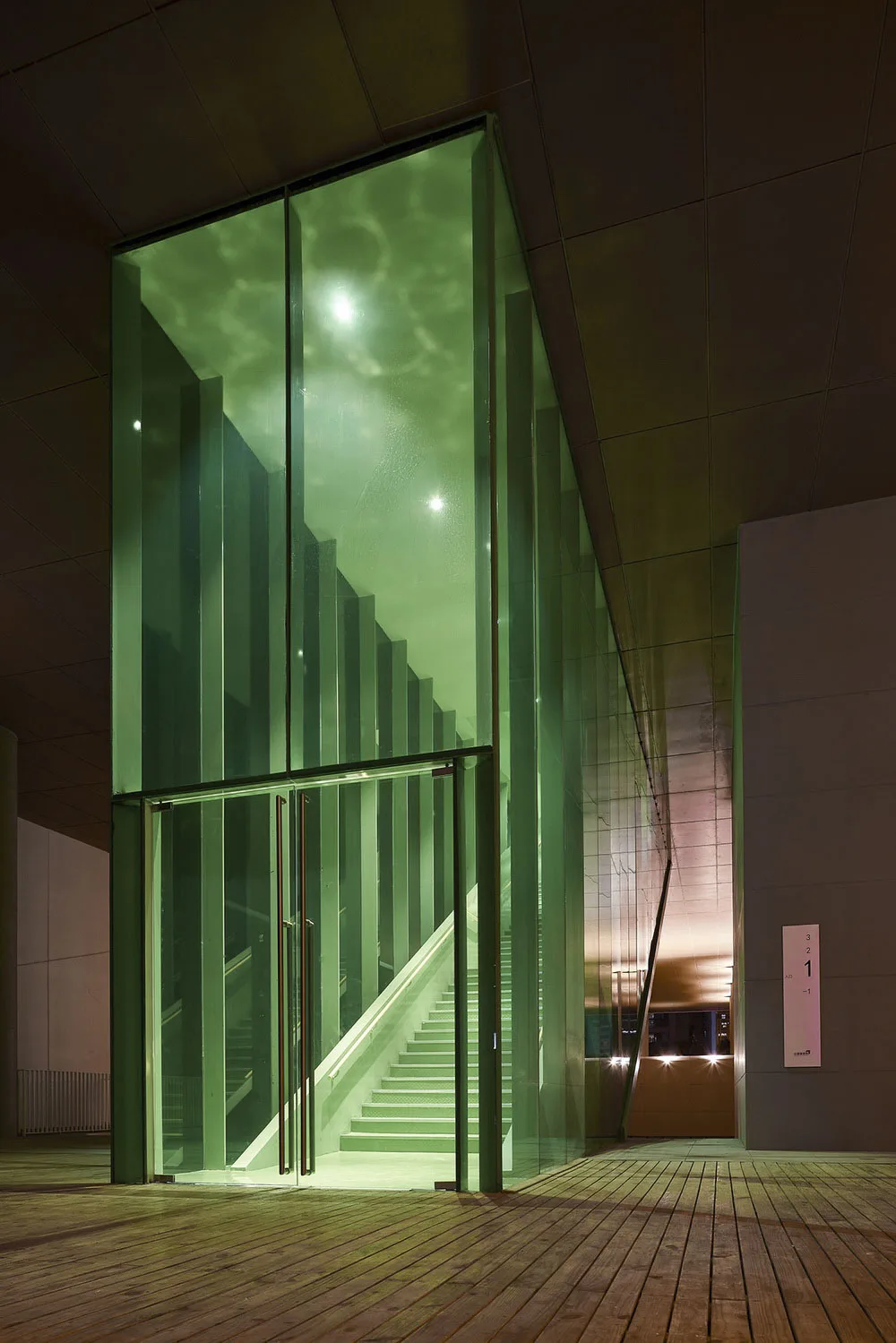
The vertical circulation core’s inner and outer skins are painted fresh new leaf green, creating a bright and lively atmosphere. Visitors moving through these spaces feel immersed in a living painting, becoming the protagonists on this artistic “stage.”
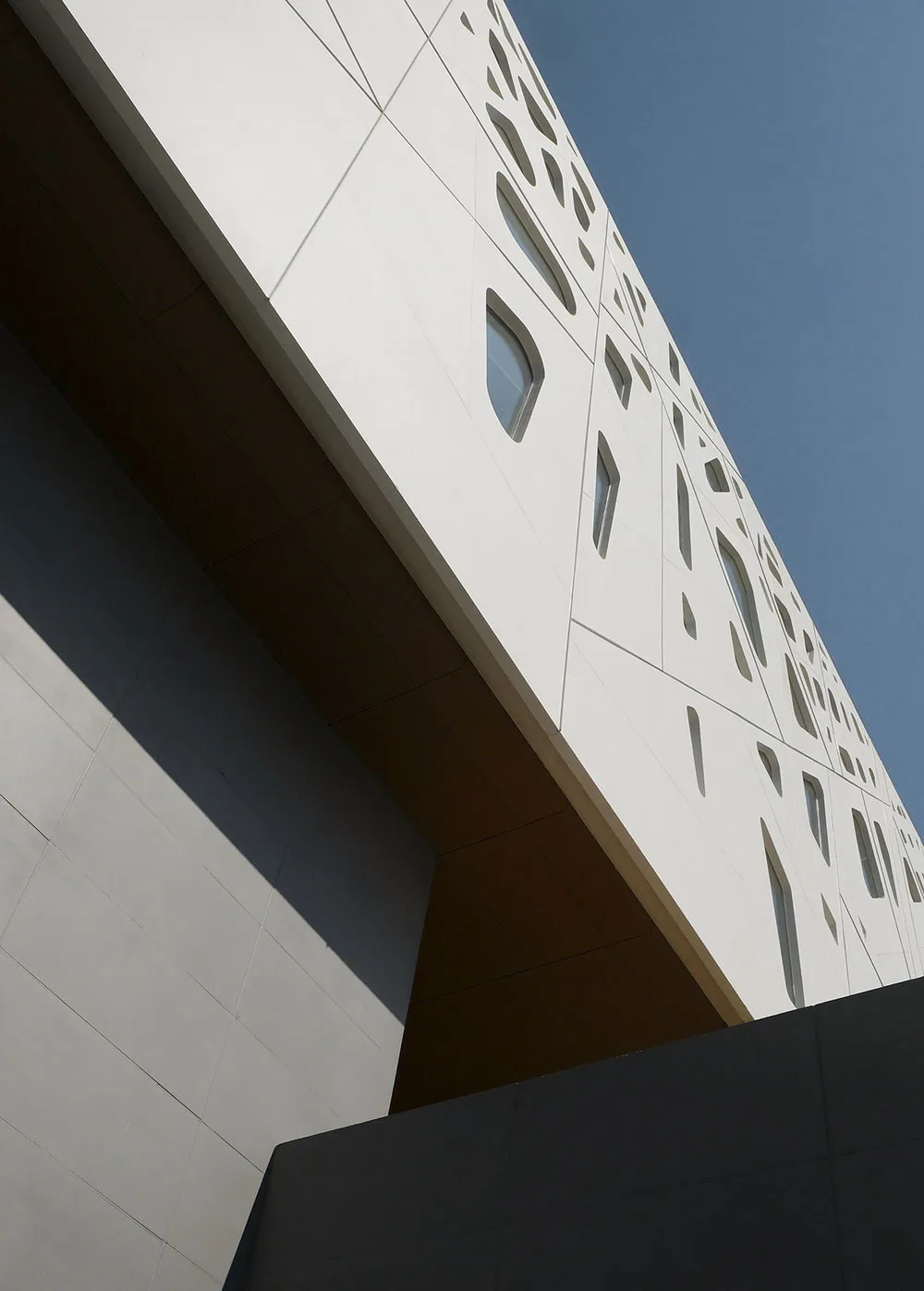
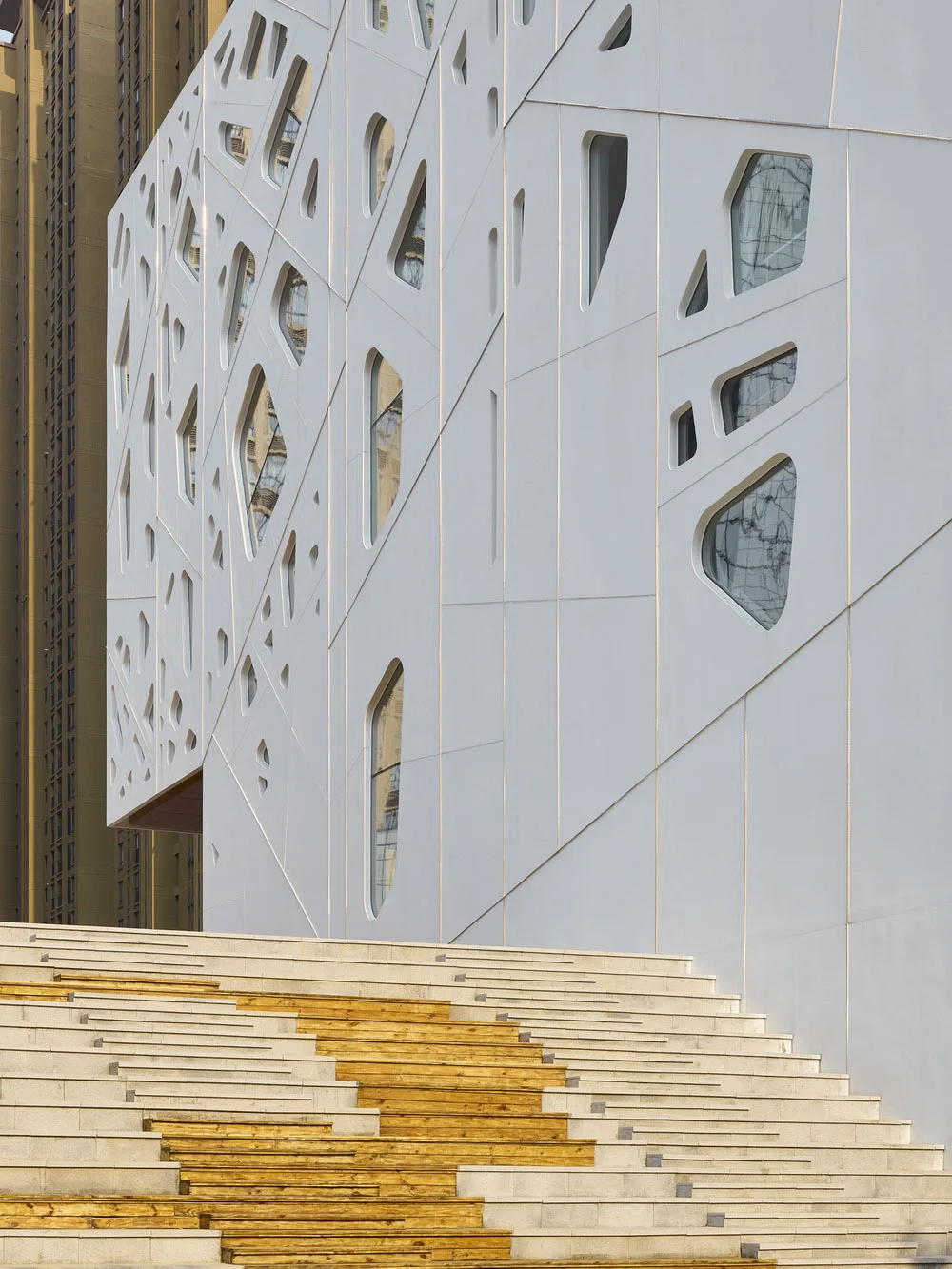
During day and night, the colors from inside subtly radiate through the white perforated exterior walls, adding a soft and mysterious glow to the building’s façade.
Technical Drawings
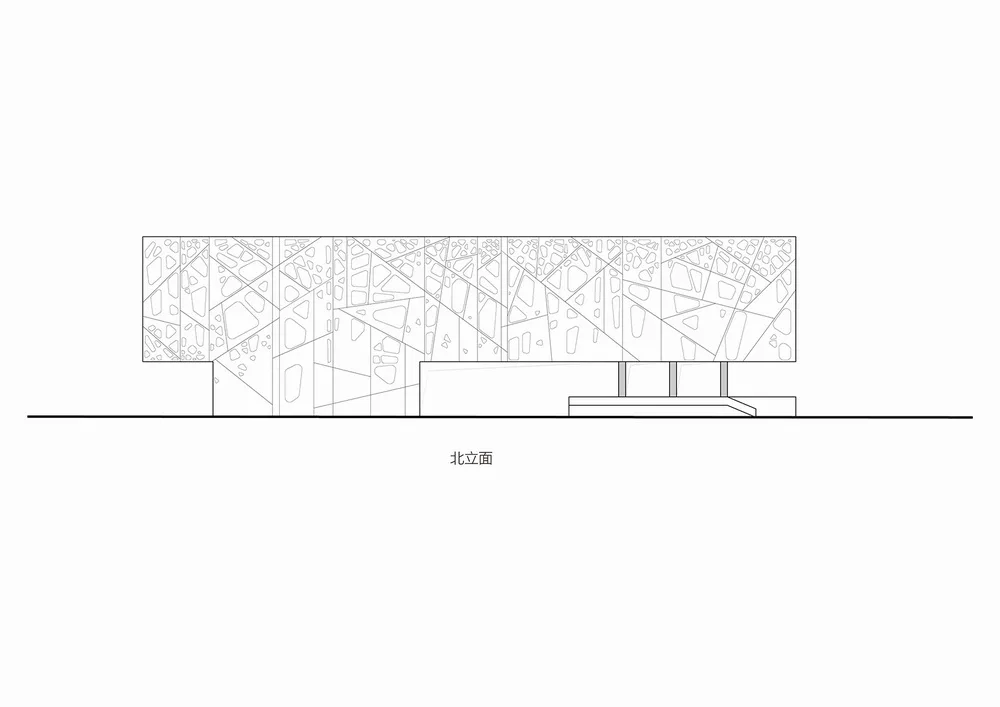
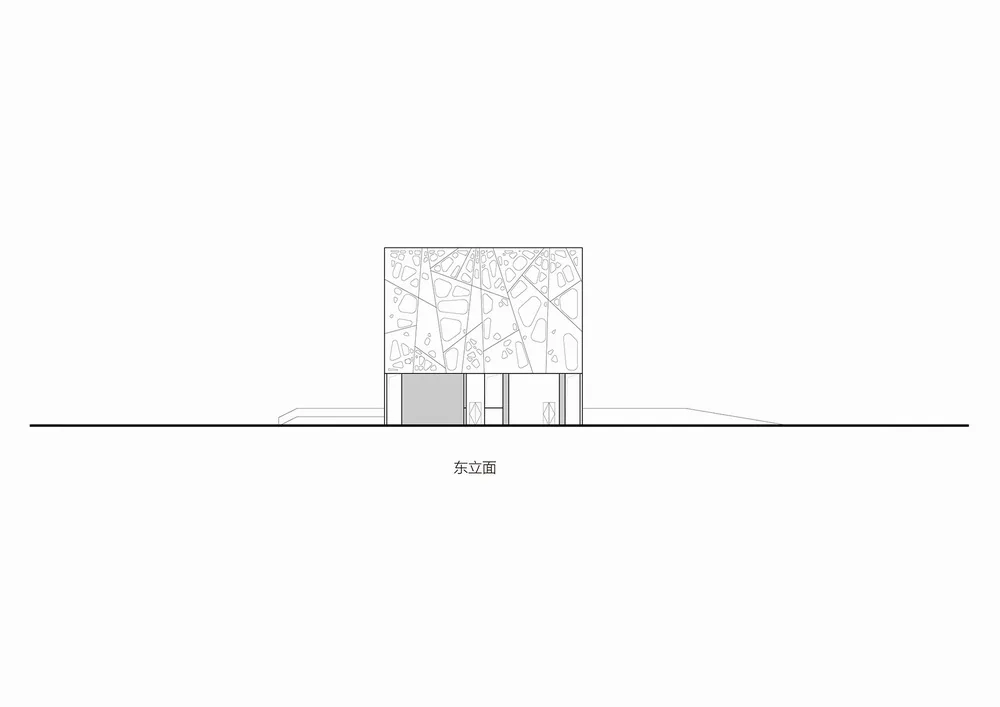
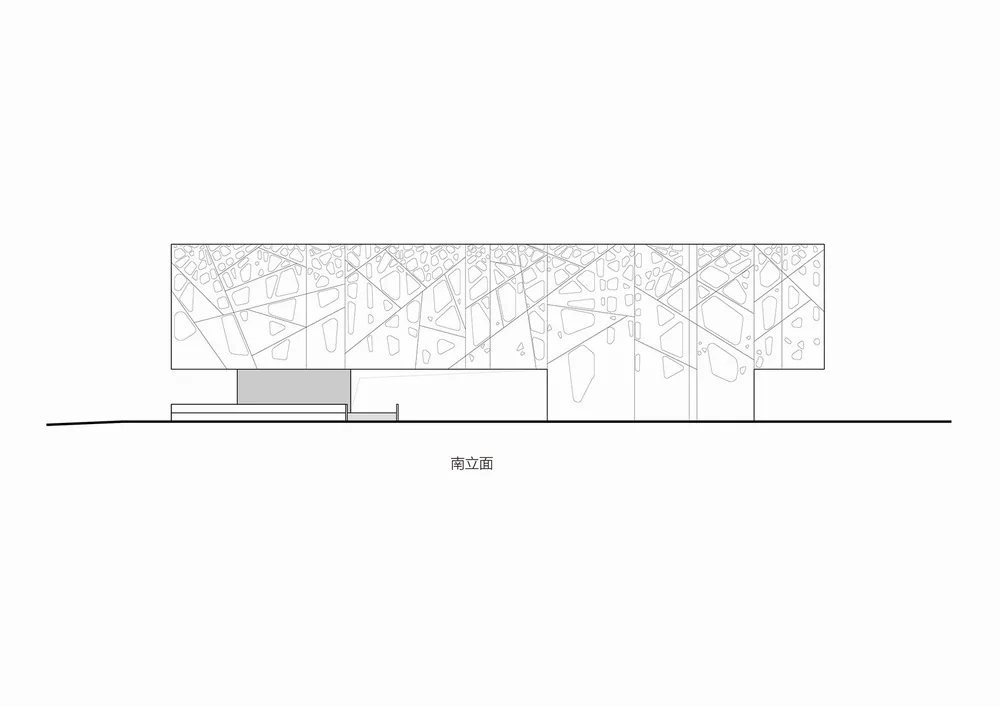
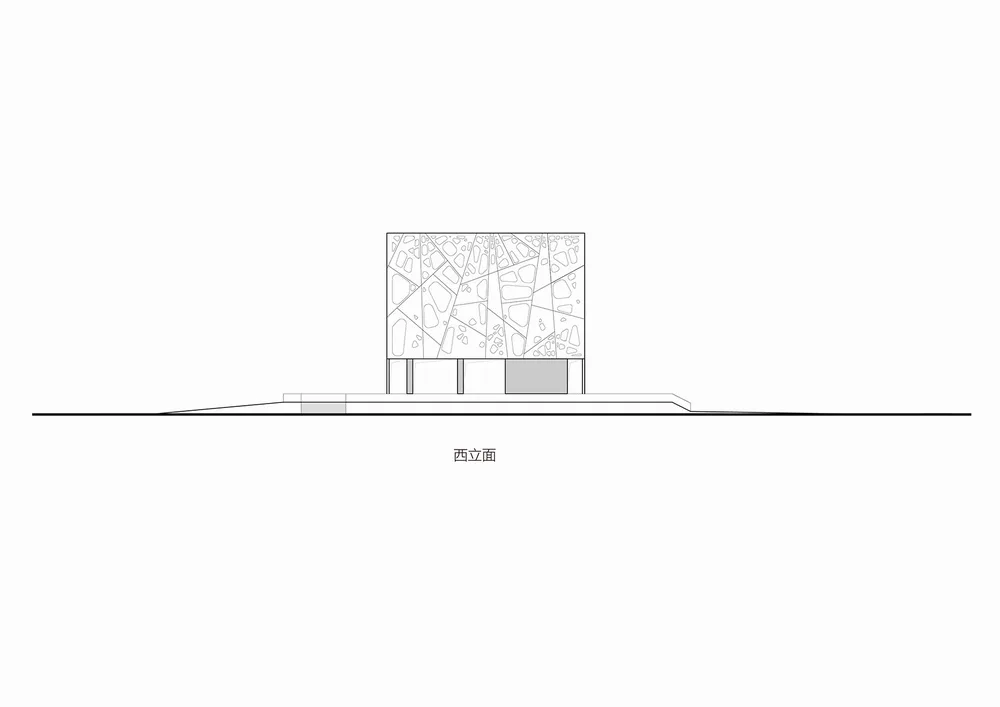
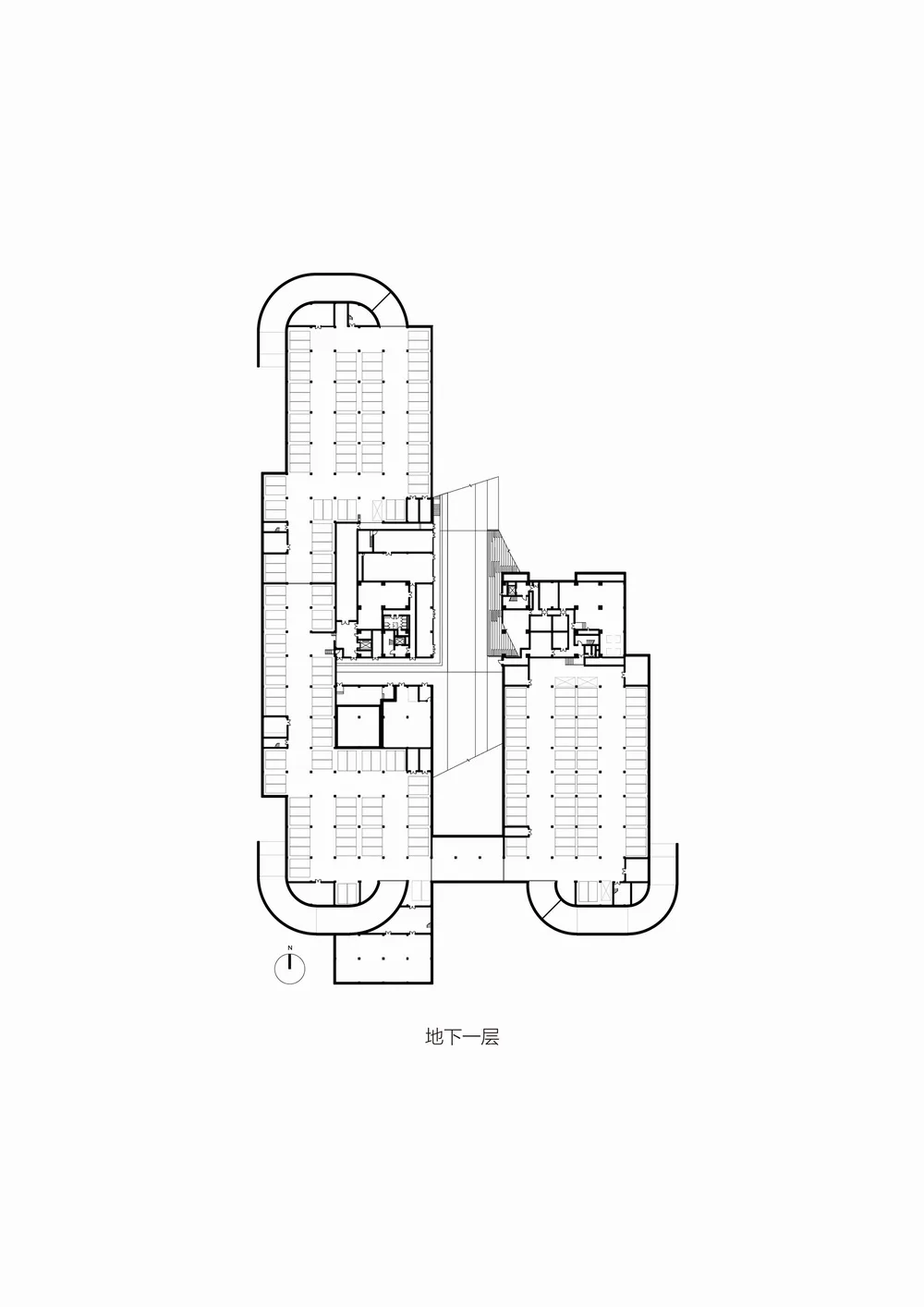
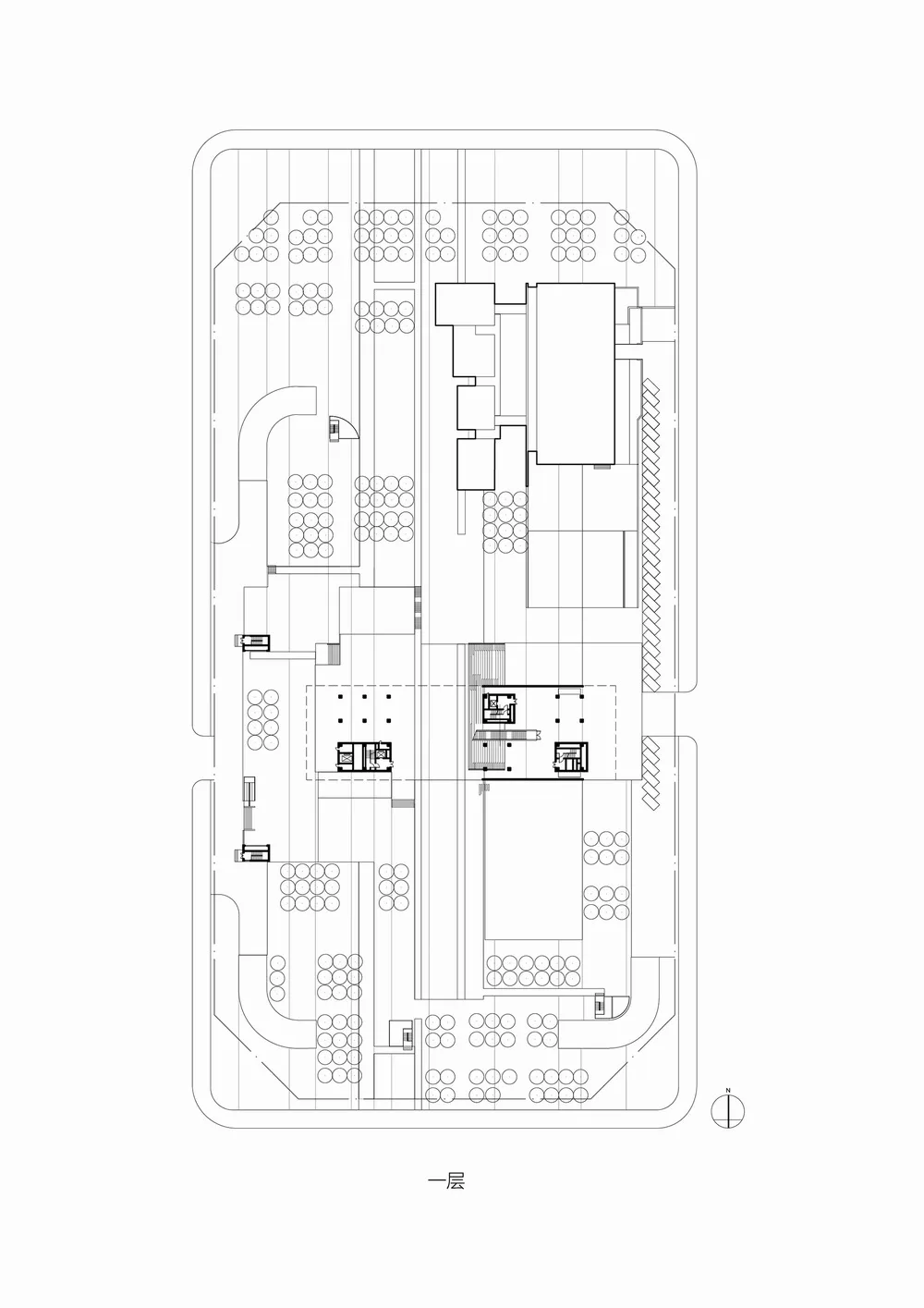
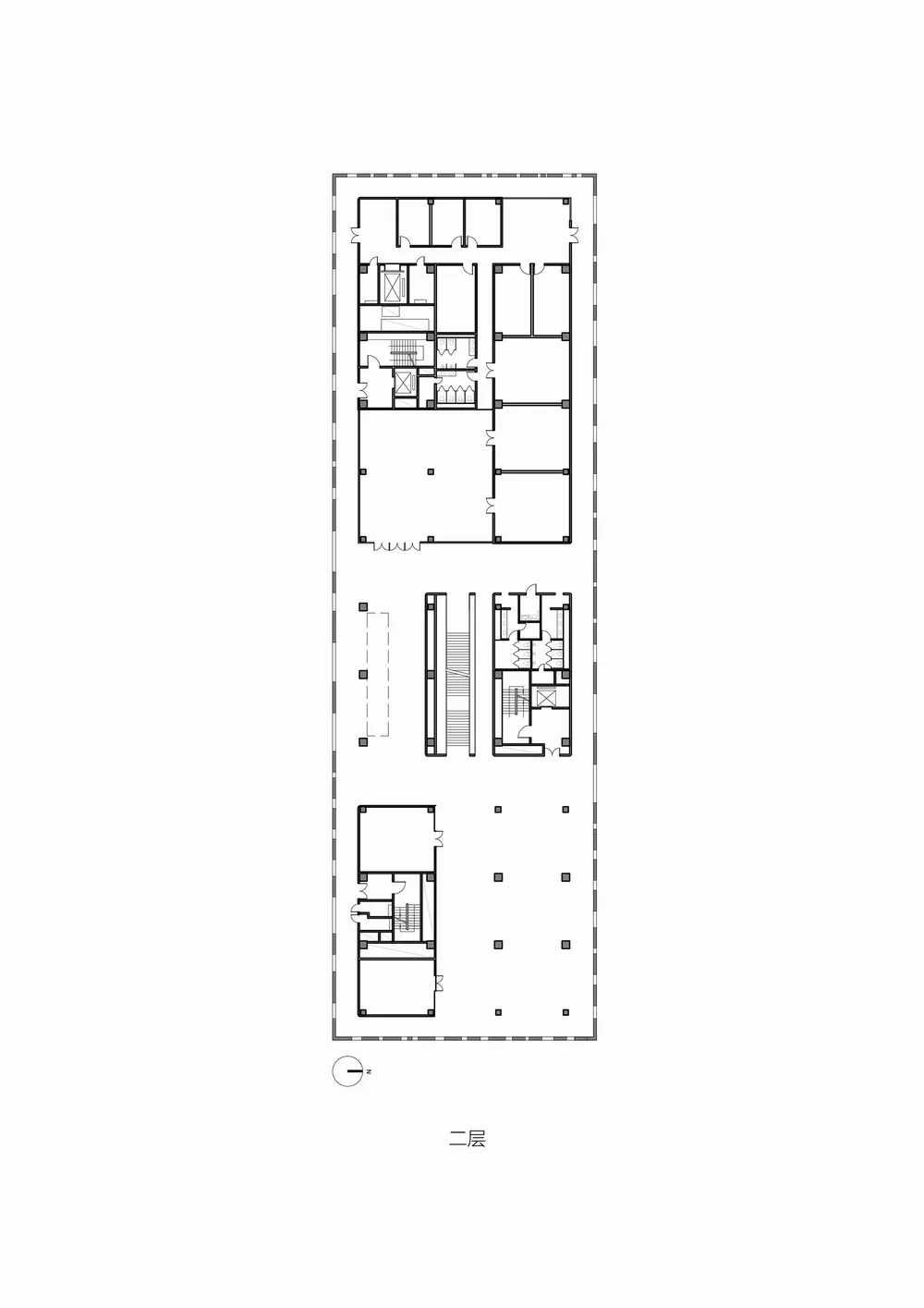
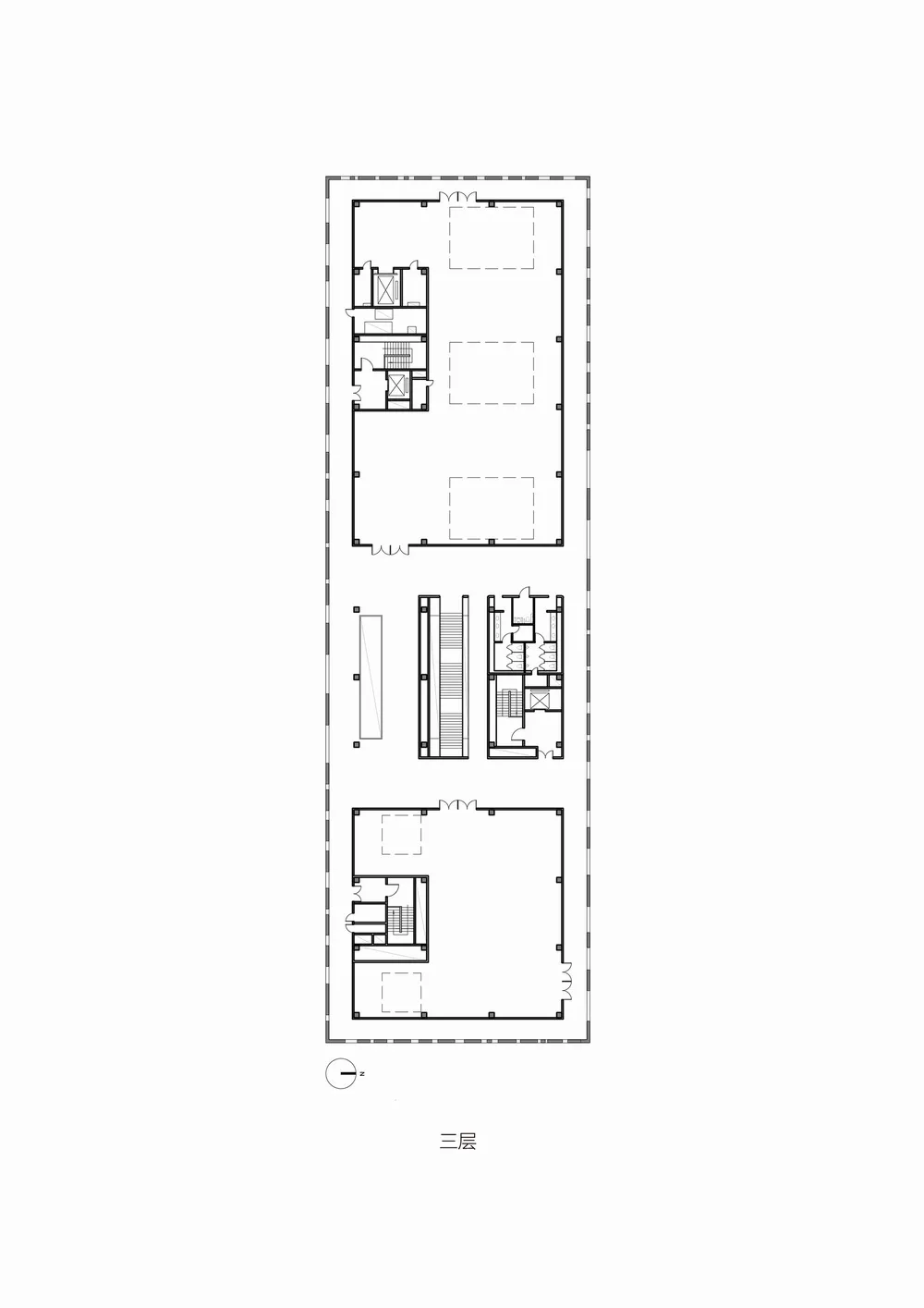
Project Information
Project Name: The Central Ring Gallery
Project Type: Architecture / Landscape / Interior
Location: Hefei City, Anhui Province
Design Firm: Studio A+
Lead Architect: Wang Min
Design Team: Wang Min, Ding Mei, Li Hui, Zhang Wenwen, Wang Chongshuo, Jing Xin, Wei Yuwei, and others
Client: Anhui Zhonghuan Real Estate Co., Ltd.
Budget: 150 million yuan
Status: Completed
Design Period: May 2008 – December 2008
Construction Period: March 2018 – July 2019
Site Area: 30,017 m²
Building Area: 16,525 m²
Collaborators: CCDI (Xidi International)
Lighting Design: Beijing Ningzhijing Lighting Design Co., Ltd.
Construction: Anhui Zhonghuan Innovation Green Building Industry Co., Ltd.
Photography: Chen Su, Fang Chun












Must log in before commenting!
Sign Up