
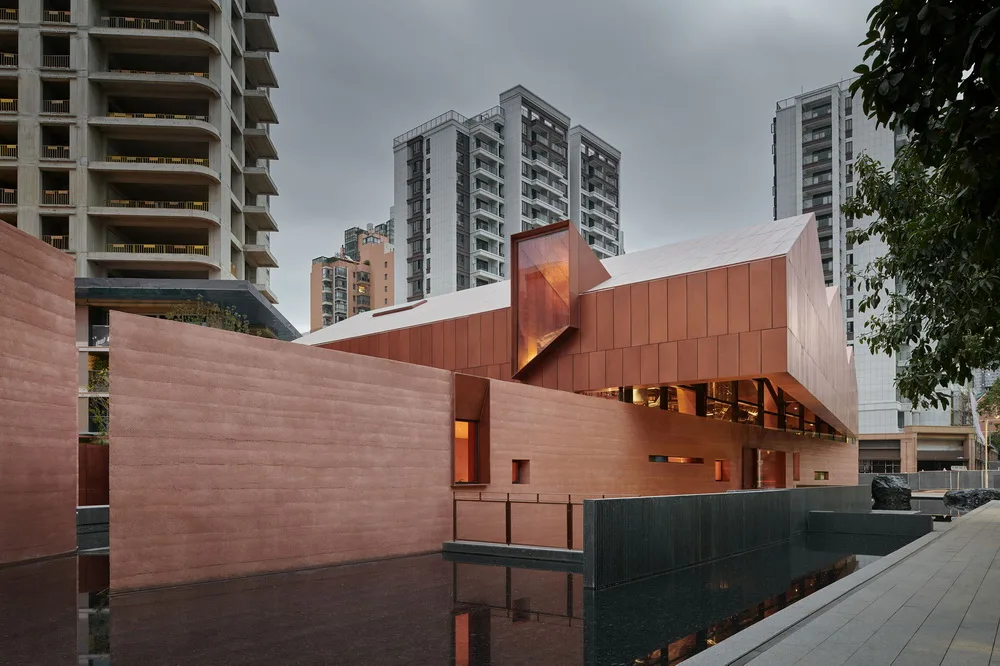
Fuzhou Teahouse
The design of Fuzhou Teahouse draws inspiration from the Jinshan Temple in Fuzhou, immortalized by the British photographer John Thomson. As one of the earliest photographers to visit China, Thomson used his camera to bridge Eastern scenery and culture with the Western world. In his collection “Fuzhou and Minjiang,” he documented his historic 1871 journey along the Minjiang River, capturing the rare ancient temple built upon floating stones in the river—a timeless symbol of Fuzhou’s heritage.
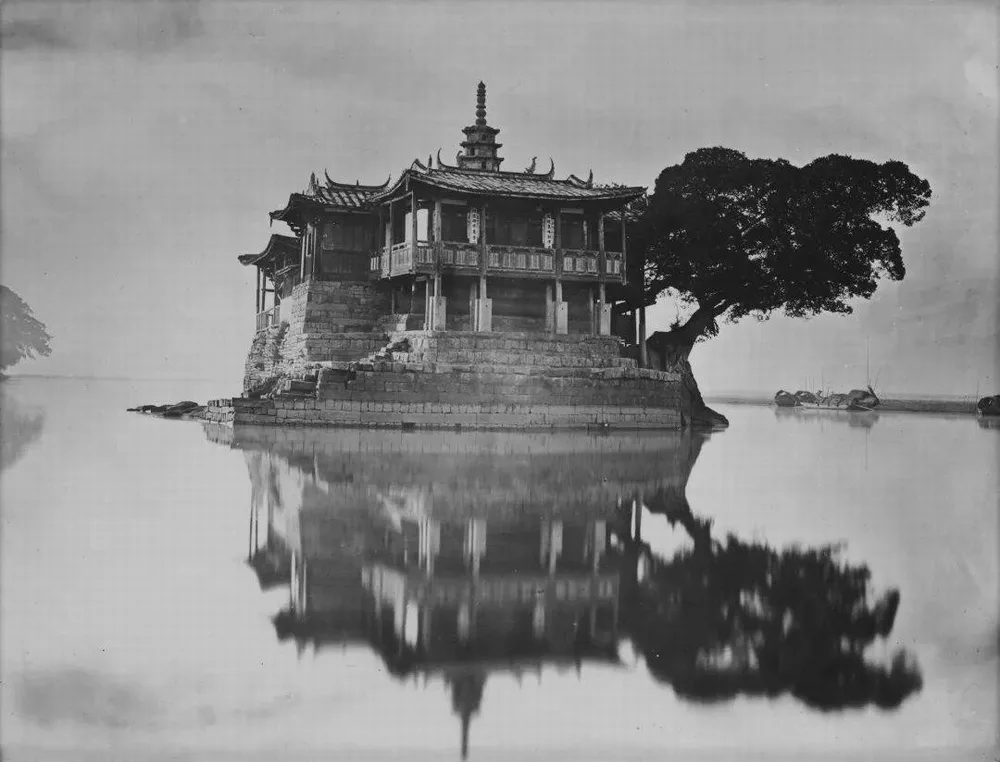
John Thomson, The Island Tower, 1871
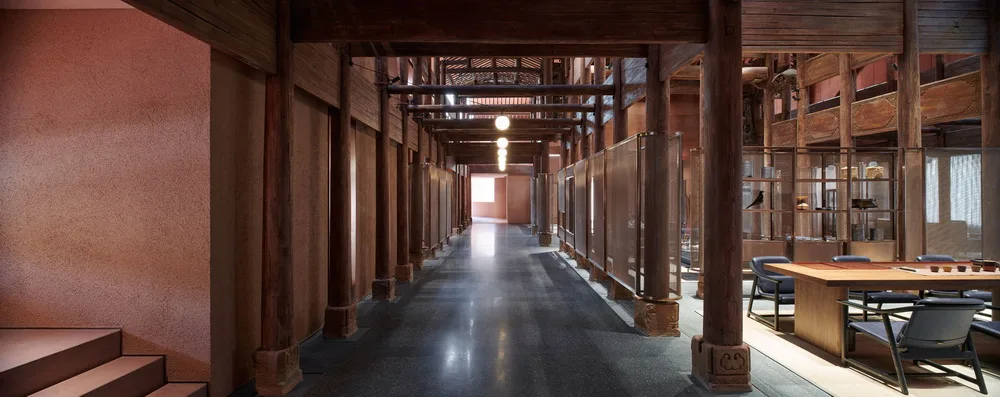
First floor
Ru En has used Fuzhou’s rich cultural and historical legacy as a creative foundation to shape this teahouse into a cherished urban cultural relic. The teahouse’s ancient wooden structure is a classic example of Huizhou-style architecture from the Qing Dynasty, adorned with intricate wood carvings that display remarkable craftsmanship. This wooden framework is carefully encased within a new building shell, serving as the teahouse’s defining feature. In an era of rapid urban development that threatens to erode traditional culture and identity, the Fuzhou Teahouse stands out as a distinctive preservation of historical heritage.
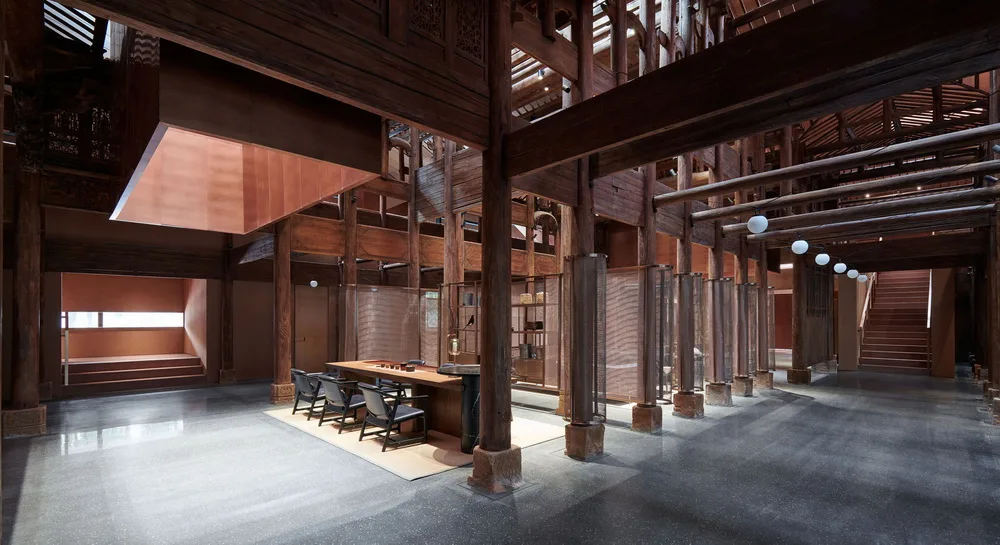
First floor
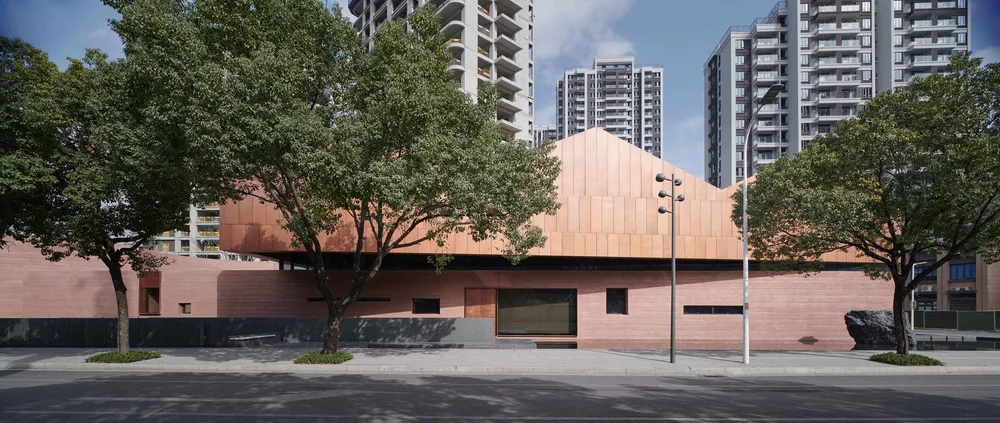
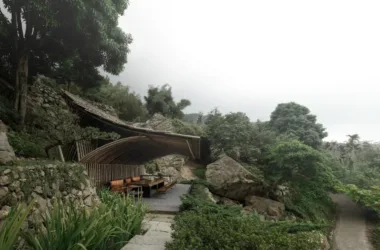
The teahouse is envisioned as a home resting upon rocks, featuring a continuous, hill-like copper roof that rises above rammed concrete walls. This design mirrors the interior wooden rooflines, creating a harmonious connection between inside and out. Rammed concrete—a nod to traditional local earthen dwellings—is the primary material, lending both modernity and a solemn, timeless quality. Approaching the building, visitors are greeted by two reflections of the teahouse: its upright silhouette and its mirrored image in the surrounding pool.
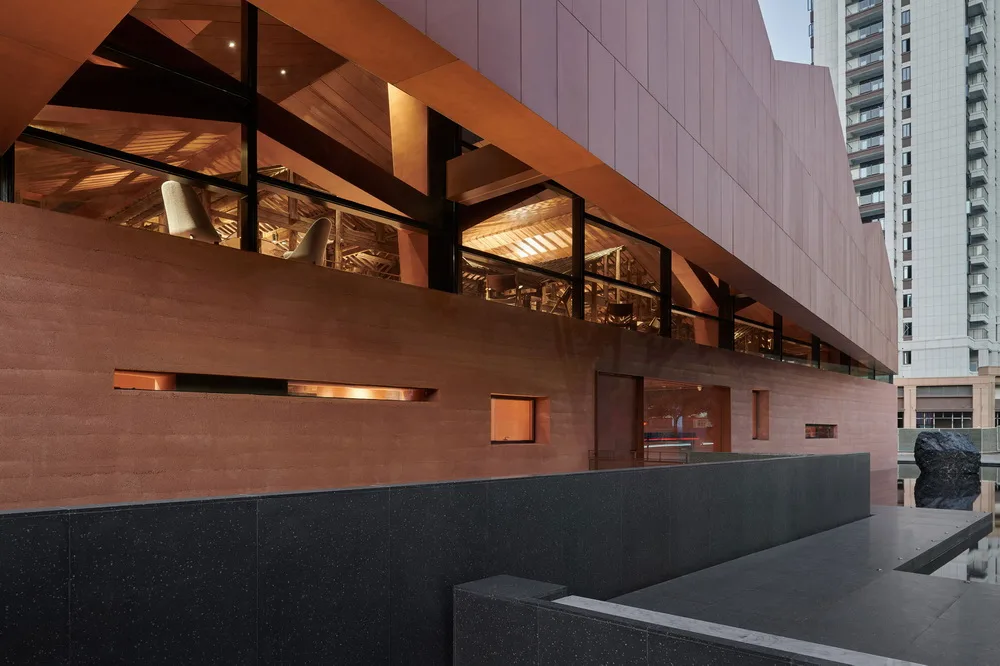
Building facade
Inside the teahouse, wandering through the ancient structures on the first floor evokes a journey through contrasts: light and shadow, delicacy and solidity. Natural light filters through courtyard windows, illuminating the precious Qing Dynasty mansion within. The copper-clad truss elevates the metal roof by half a meter, allowing sunlight and shadows to dance across the interior from the side. At the mezzanine level, the original form of the ancient building is fully revealed, surrounding visitors with history and showcasing exquisite wood carving artistry.
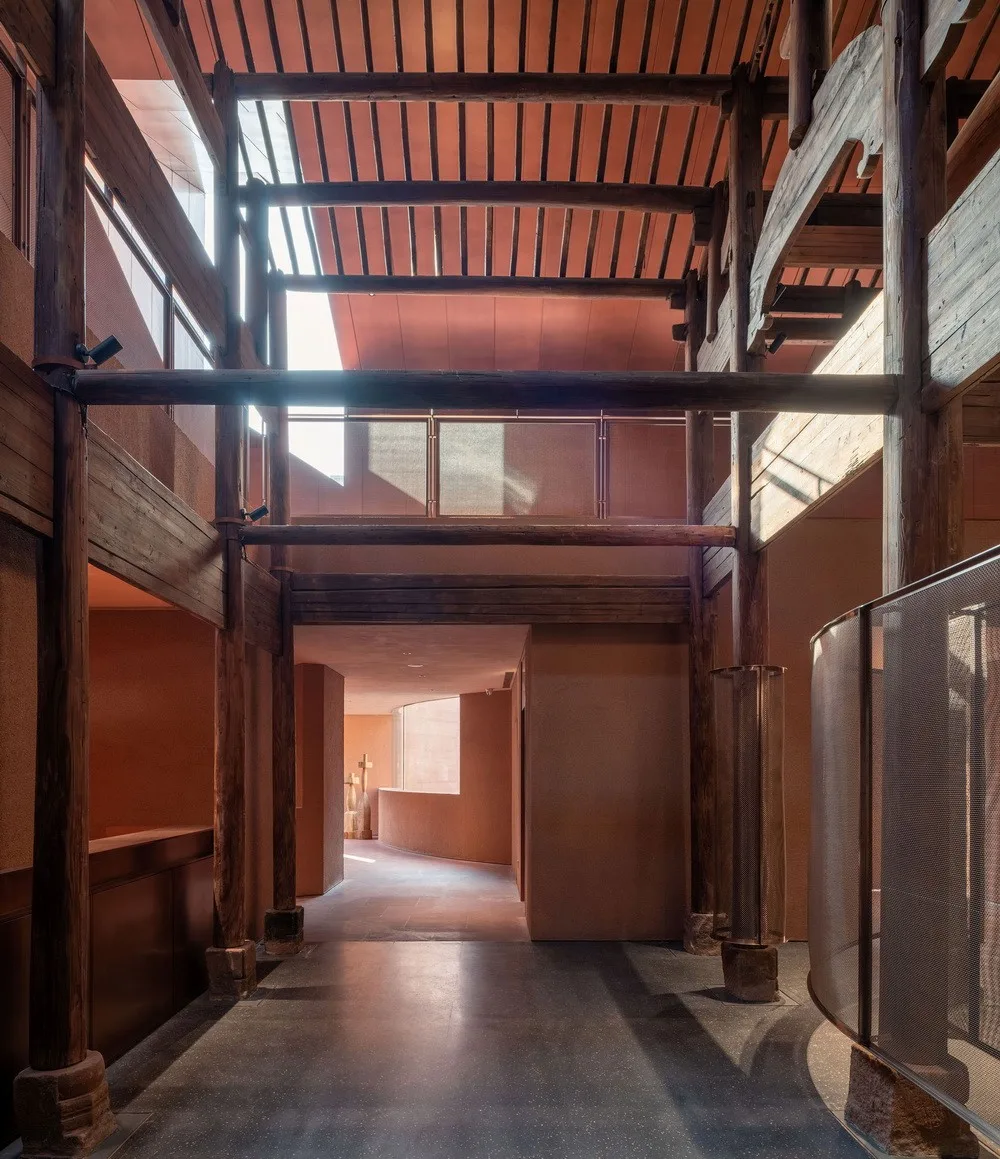
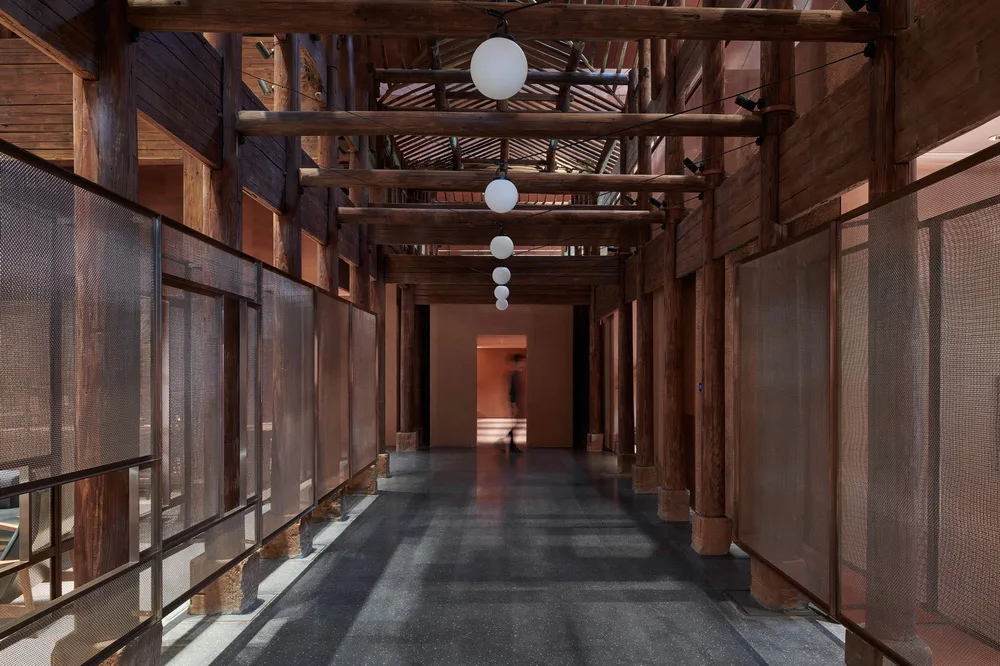
First floor
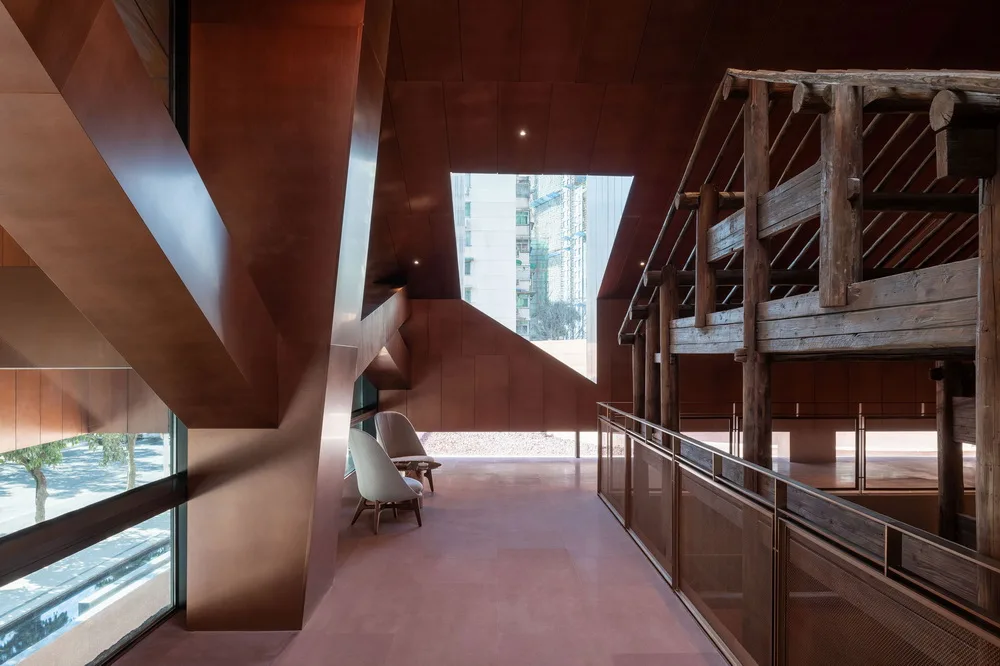
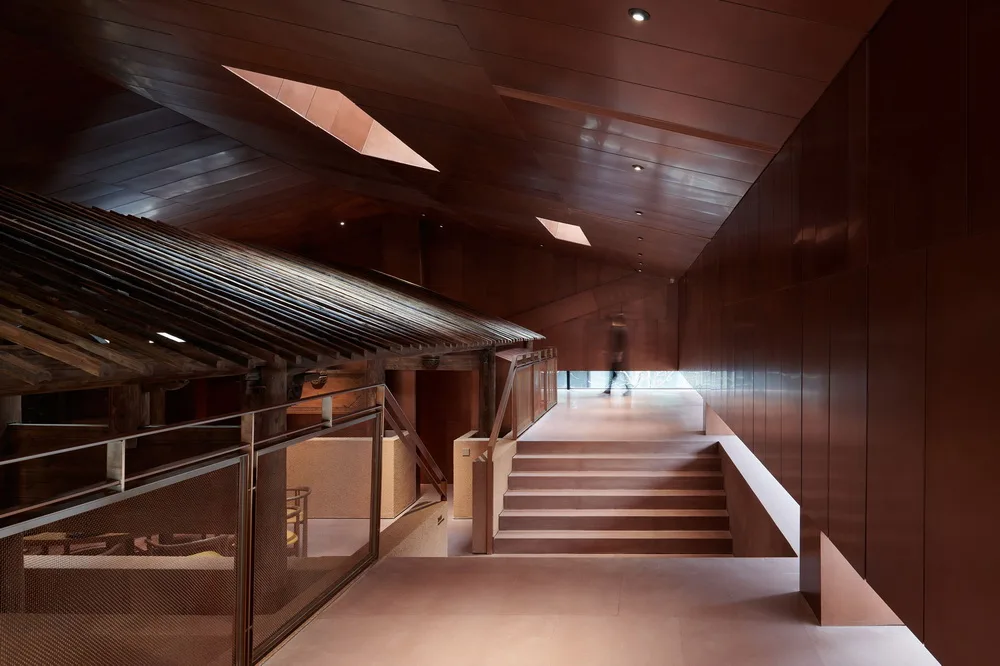
Second floor mezzanine
The teahouse includes a reception hall, sunken courtyard, and tea tasting room located on the basement level. Above the circular reception hall lies an outdoor water pool on the first floor. Sunlight passes through the circular glass at the base of the pool, casting mesmerizing patterns of light and shadow onto the underground reception space.
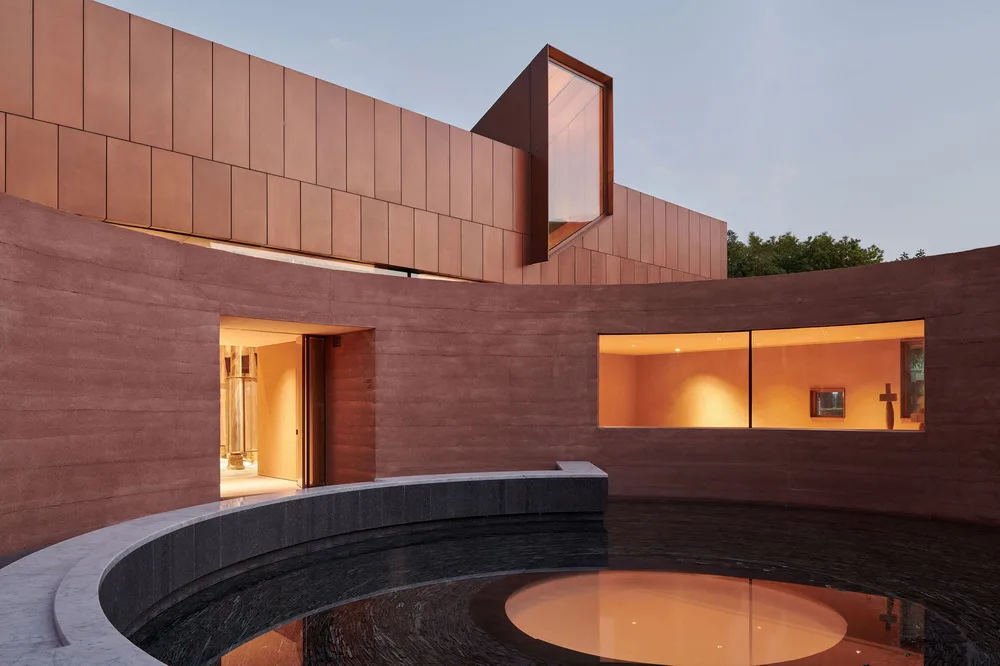
Outdoor water pool
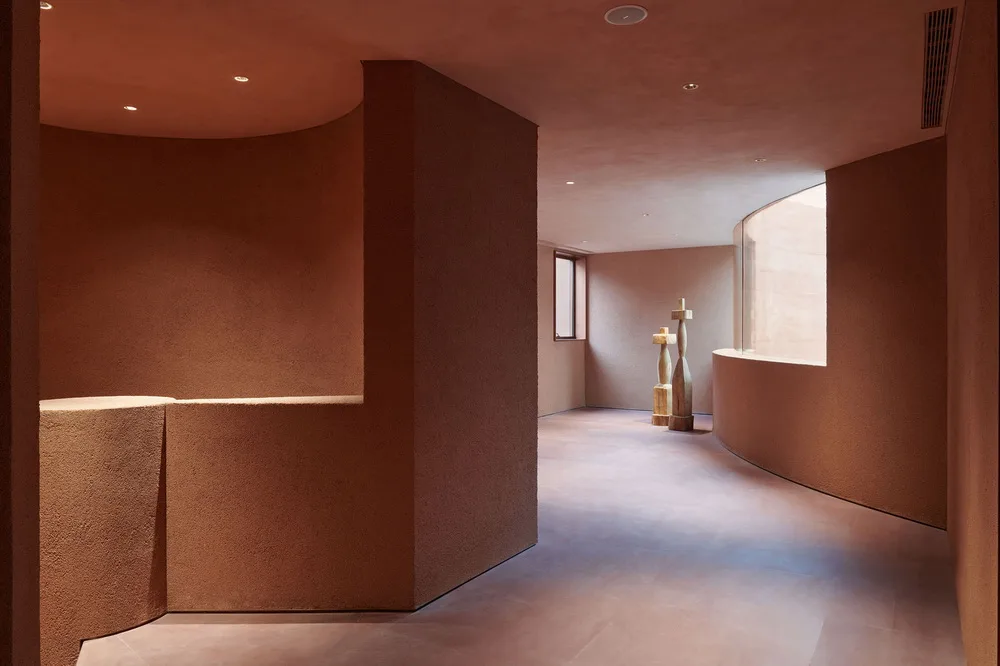
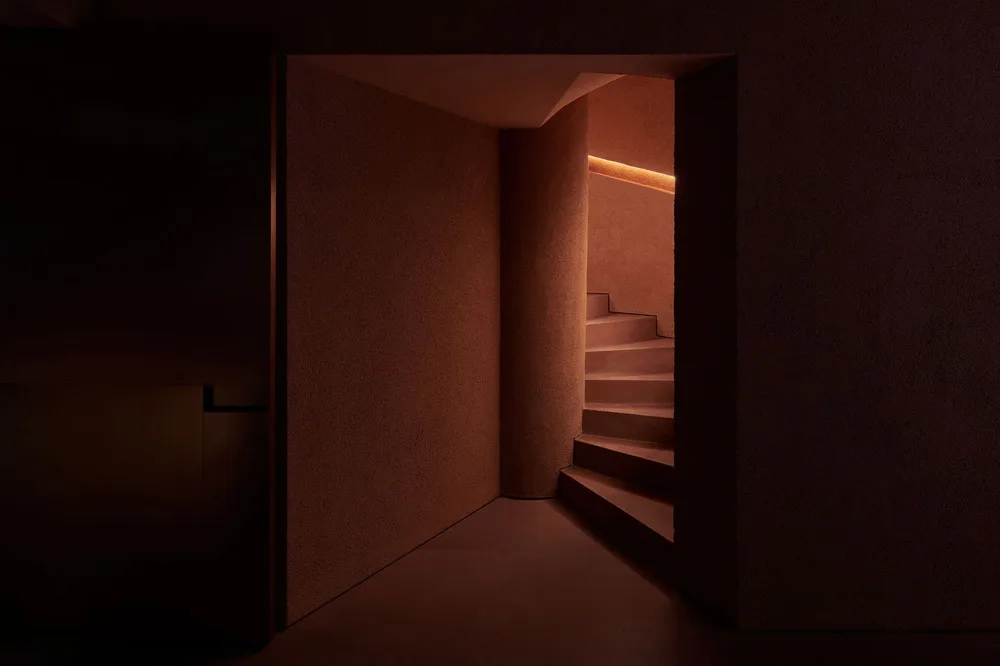
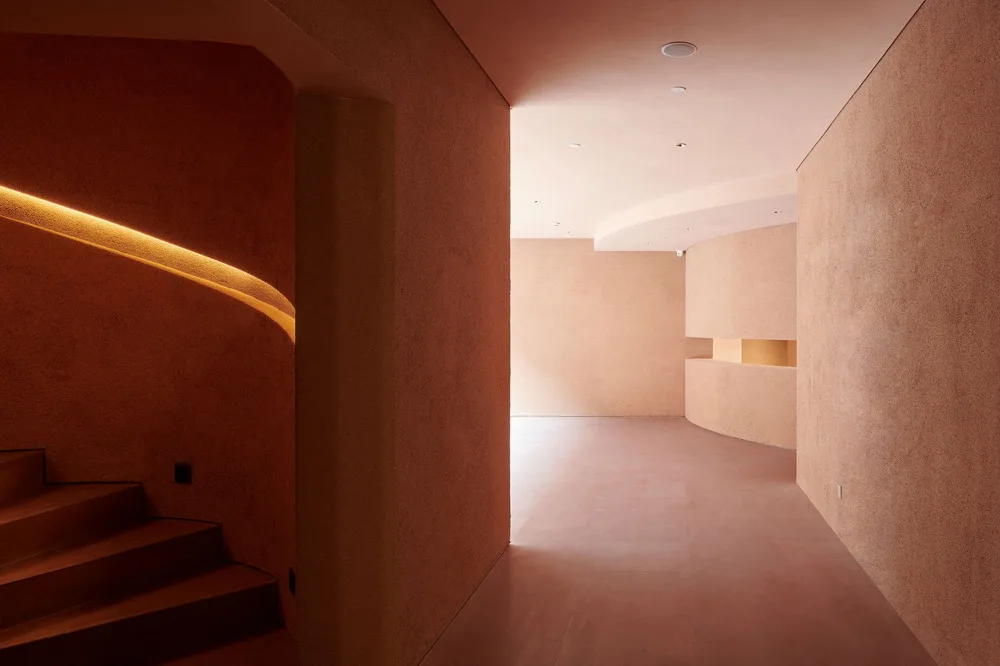
Basement level
Technical Drawings
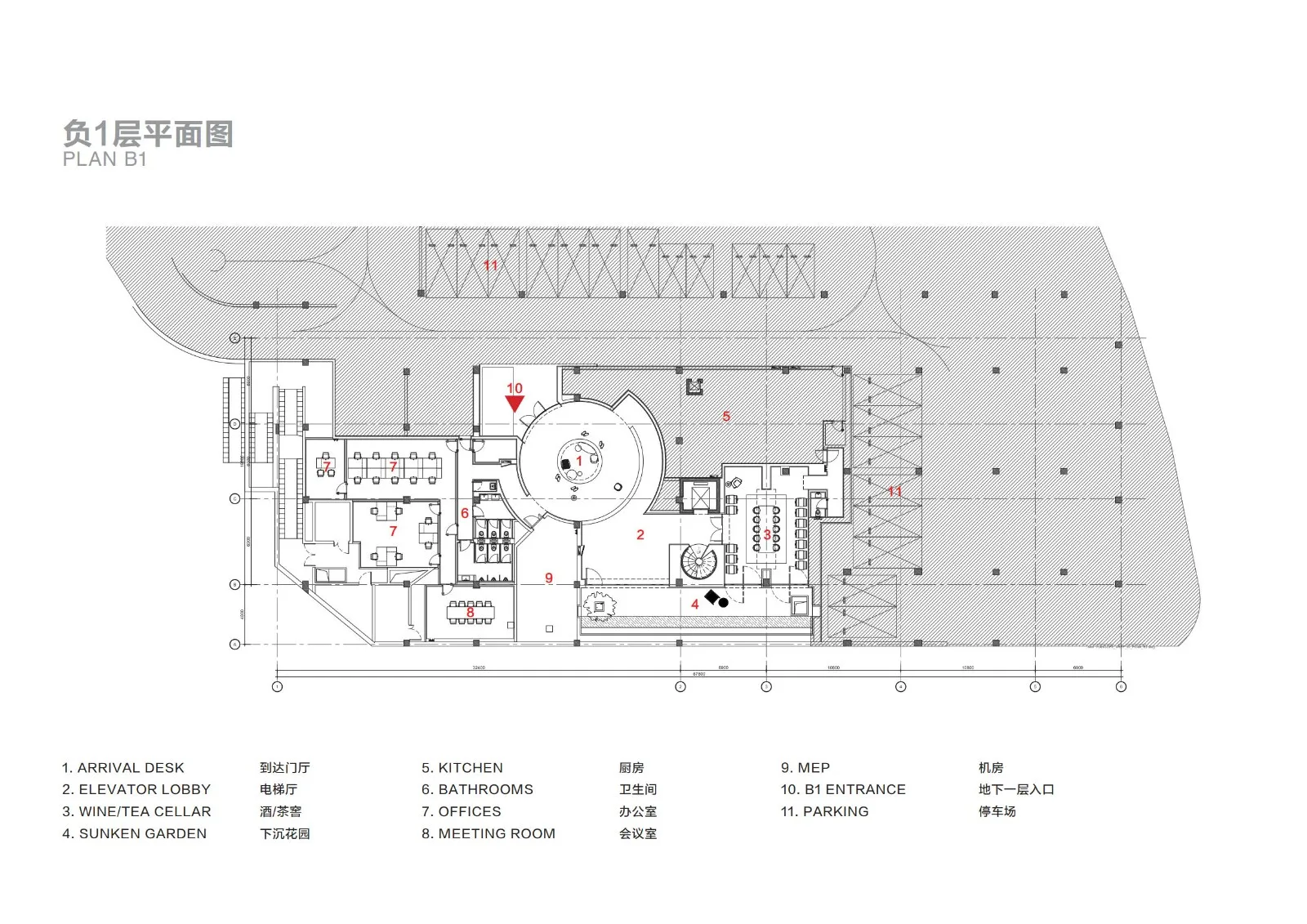
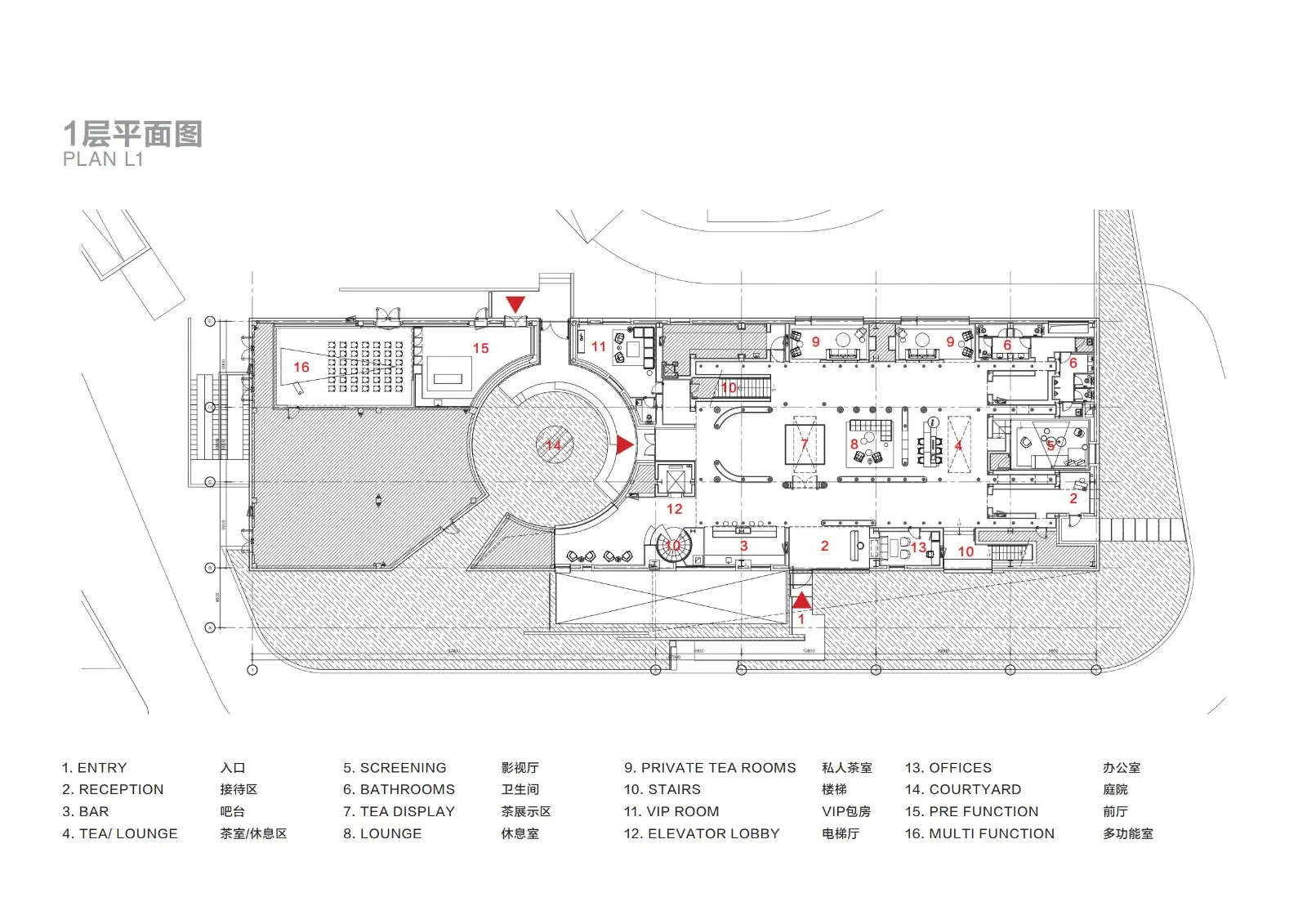
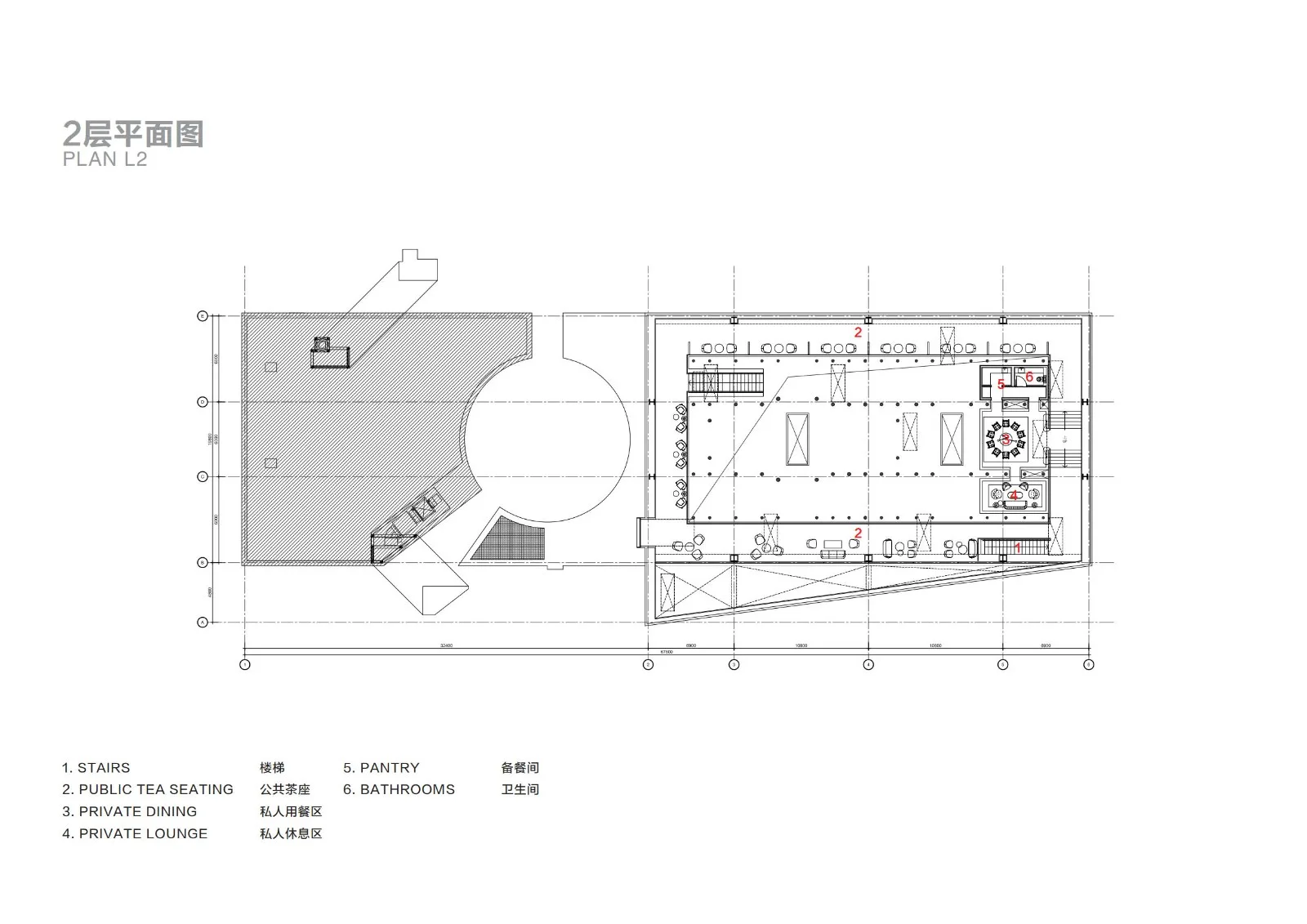
Plan view
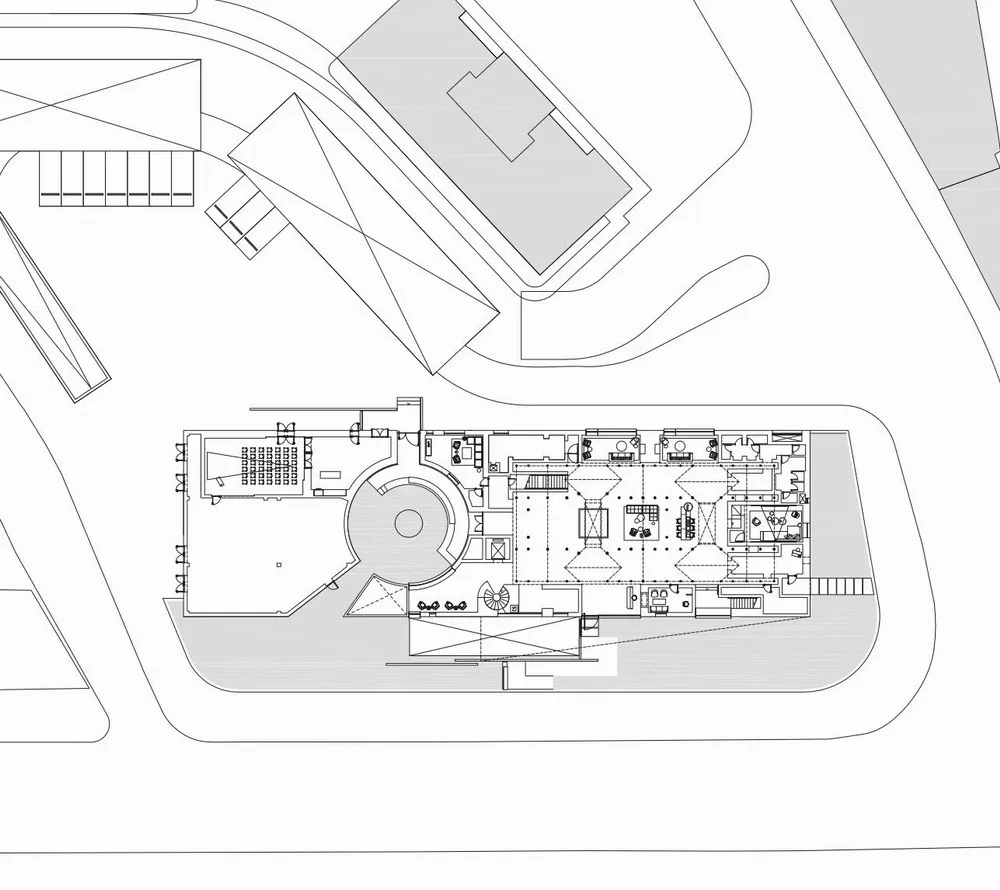
Overall site plan
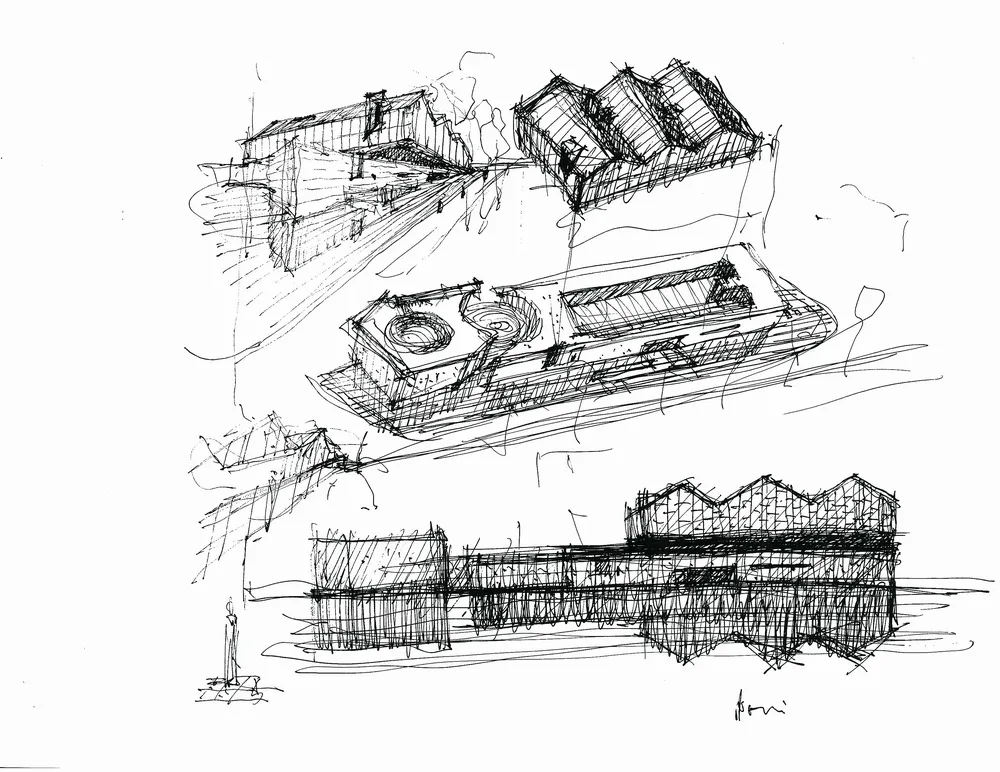
Sketch
Project Information
Location: Fuzhou
Year: 2021
Client: Sunshine City Group Fujian Region
Floor Area: 1,800 square meters
Lead Architects: Guo Xi’en, Hu Rushan
Senior Lead Designer: Scott Hsu
Design Team: Jorik Bais, Li Yinan, Hu Yunqing, Huang Yongfu, James Beadnall, Ivana Li, Jesper Evertsson, Du Shangfang, Bingmiao Li, Evelyn Jiang, Junho Jeon, Ath Supornchai, Xin Haiou, Huang Huizi
Photography & Film: Chen Hao












Must log in before commenting!
Sign Up