
△ Project video © in space
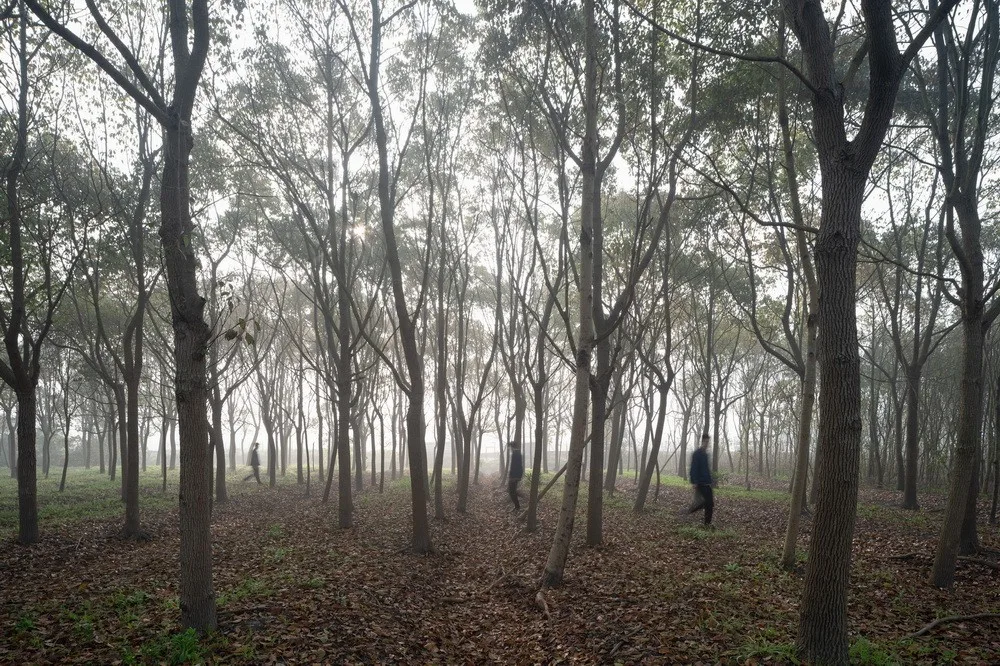
The forest near the site © Zhu Runzi
Qianshao Village, located in the northern part of Chongming Island, was reclaimed 41 years ago in 1968. Here lies the Frontier Bay Art Tribe, a community aiming to develop Chongming Island’s cultural and economic landscape through art tourism.
The library was originally a dilapidated bungalow serving as the outpost elementary school’s building. Over time, it fell into disrepair and became unsafe. Commissioned by the local government, a new library was designed to replace the old structure. This new space also functions as a café and supports the activities of the art tribe in Qianshaowan.
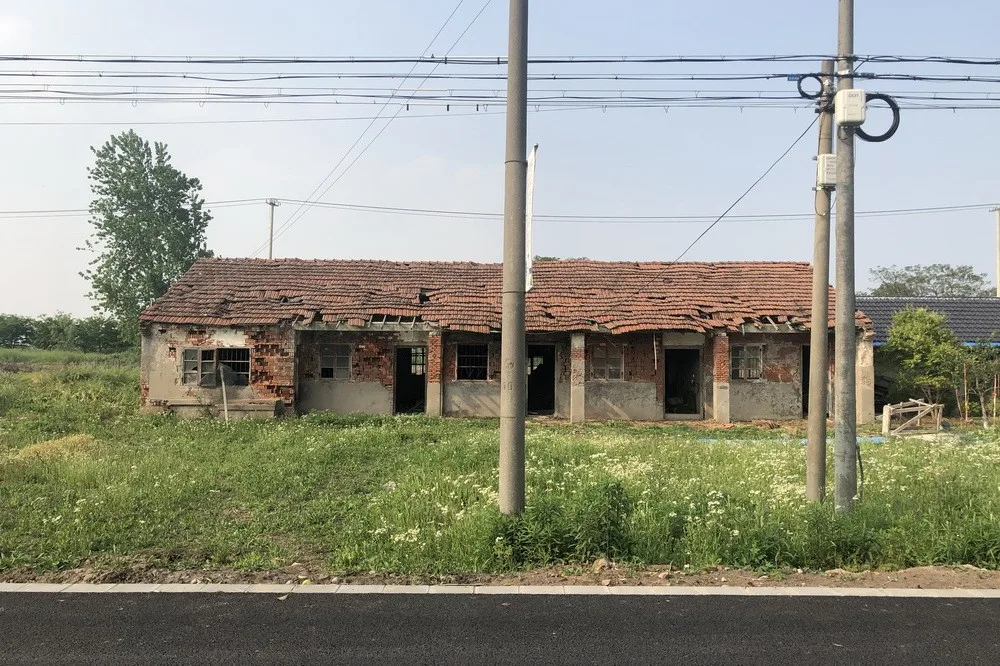
△ Original condition of the school building © in space
During our initial site survey in May 2020, the vast seedling forest of Qianshao Bay captivated us. Walking through this area offers a rare, intimate connection to nature amidst urban life.
Key design questions included:
How can abstraction be expressed through concrete forms?
How can architecture evoke a natural atmosphere?
The design strives to translate the forest’s natural scenery into an architectural ambiance, blending reality and surrealism, concreteness and abstraction, to showcase the harmonious coexistence of nature and built space.
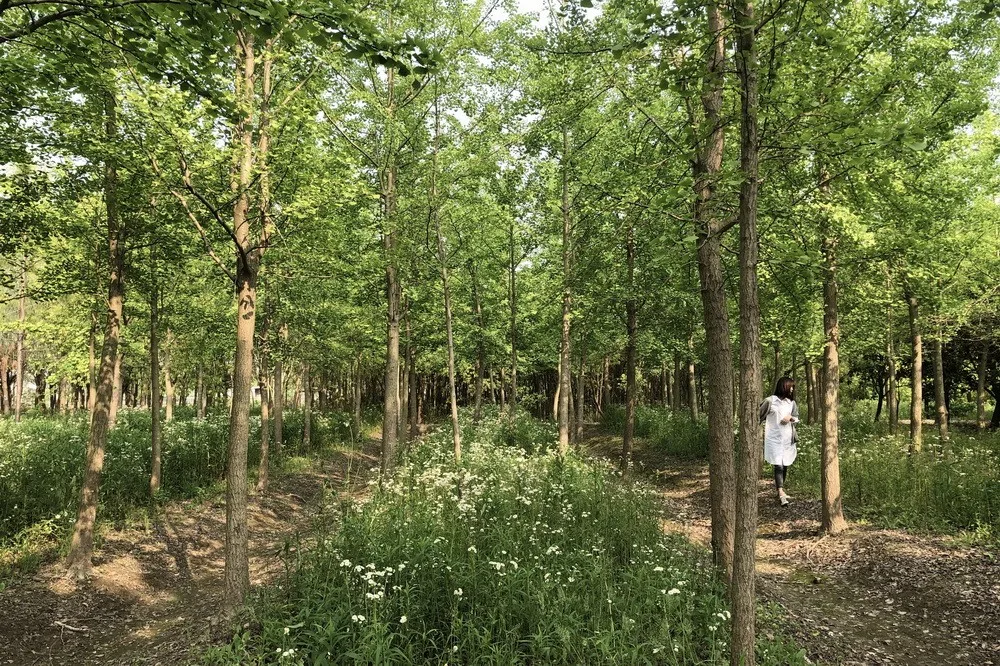
△ Nursery forest environment © in space
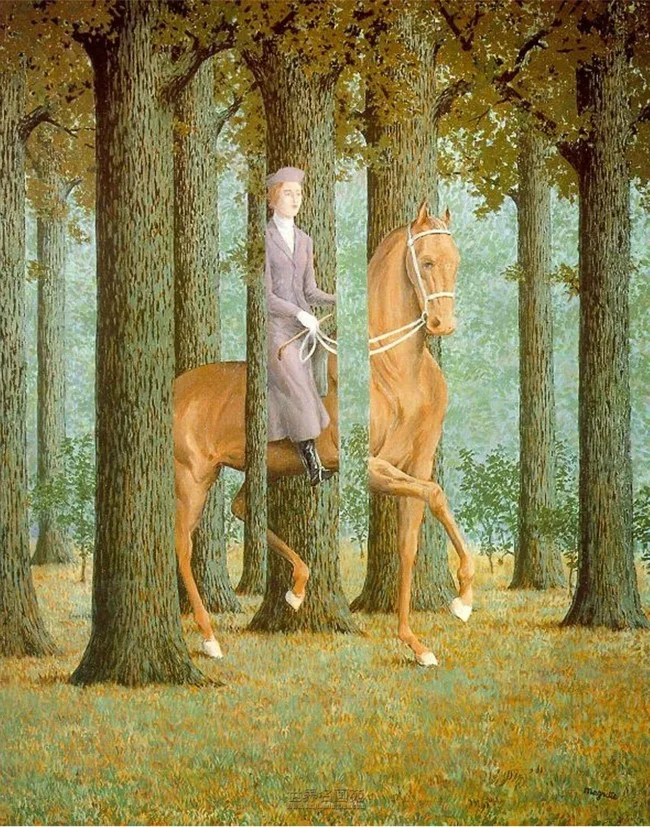
British surrealist painter Margaret Gillis
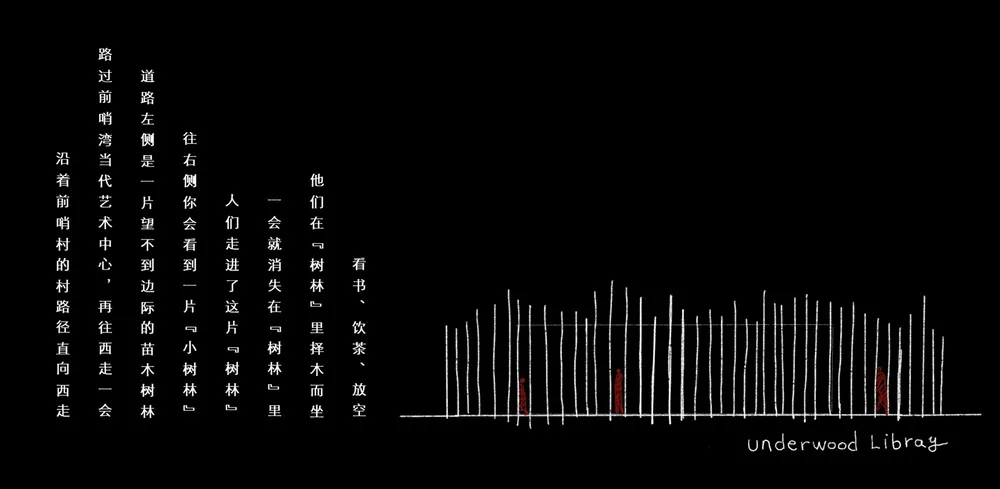
△ Design Concept © in space
On our way back to the studio, we came across a truck loaded with wooden stakes. These pillars, originally intended for river facilities, sparked the idea of creating an “artificial forest.”
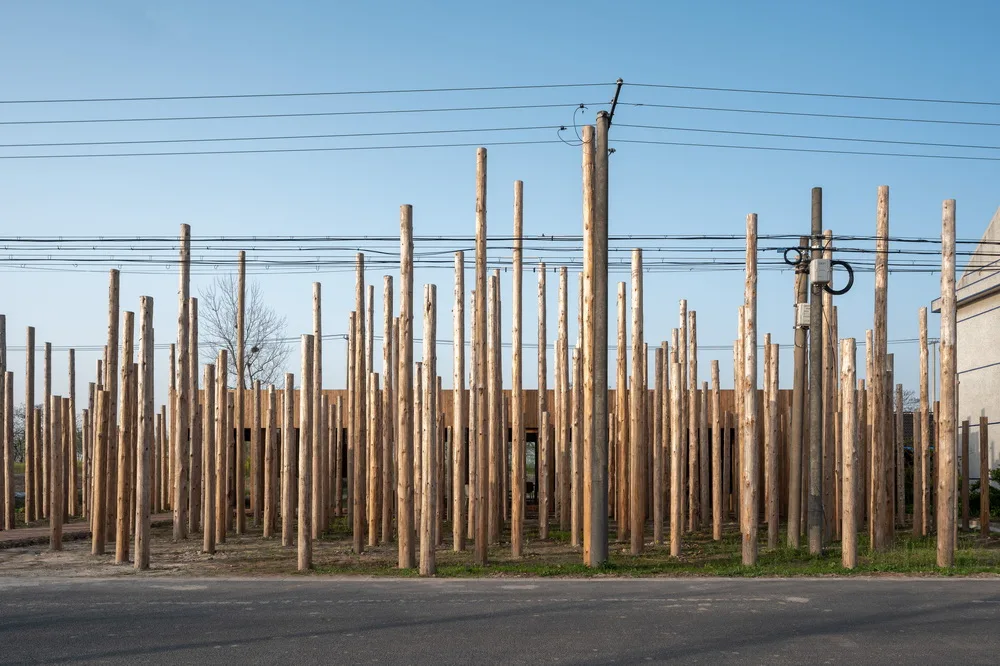
△ Street facade © Zhu Runzi
The design features cedar stakes arranged as a “forest,” which dismantles the typical geometric form of the house. This softens the building’s exterior boundaries, creating a hazy, mysterious environment reminiscent of a natural forest.
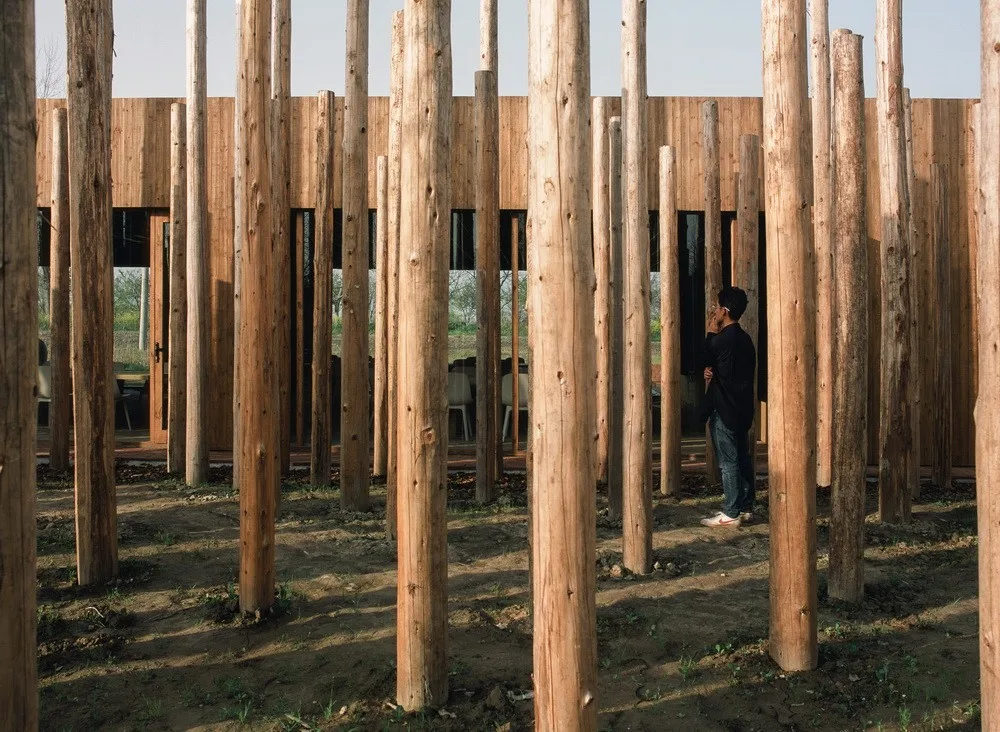
△ Wooden stump forest © Zhu Runzi
A total of 300 cedar stakes were used, with diameters of 150mm and 200mm, and lengths ranging from 2.5m to 6m above ground. By applying visual principles—such as larger stakes near the viewer and smaller ones farther away, as well as varying density—the layout creates an illusion of depth and scale, offering a rich spatial experience within a compact area. This design concept defines the “forest” and “deep forest” library zones.
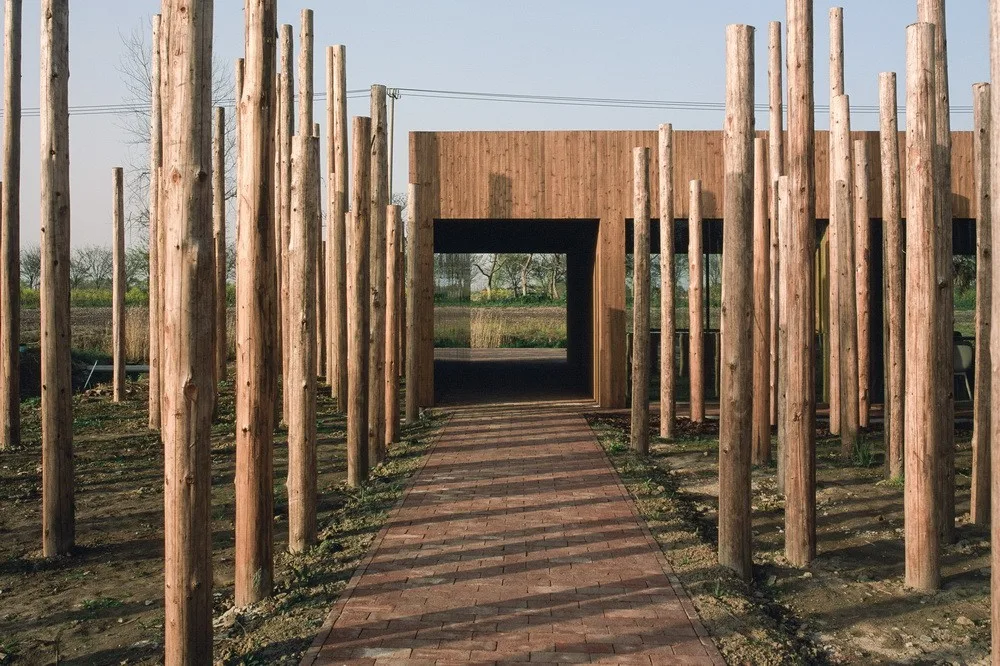
△ Building entrance © Zhu Runzi
Through this unique spatial design and the interplay of near and far perspectives, visitors experience an extended sense of space far beyond the building’s physical boundaries.
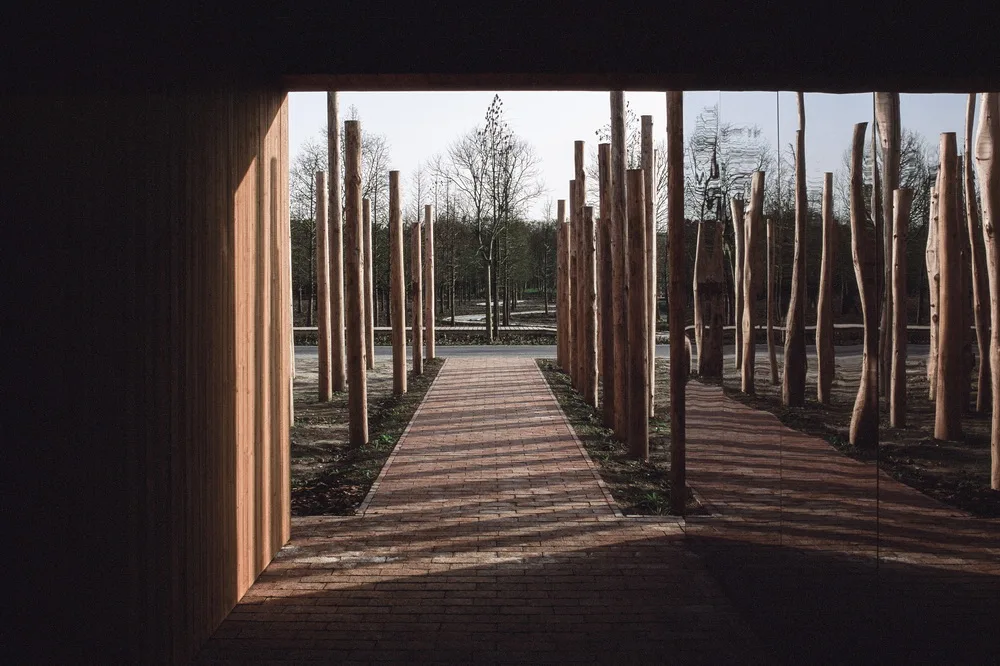
Looking back after passing through the “forest” © Zhu Runzi
The passage through the “forest” connects the library to the riverside courtyard. A mirrored wall blurs visual boundaries, creating a seamless transition where people, forest, and river reflections merge, forming a space between reality and illusion.
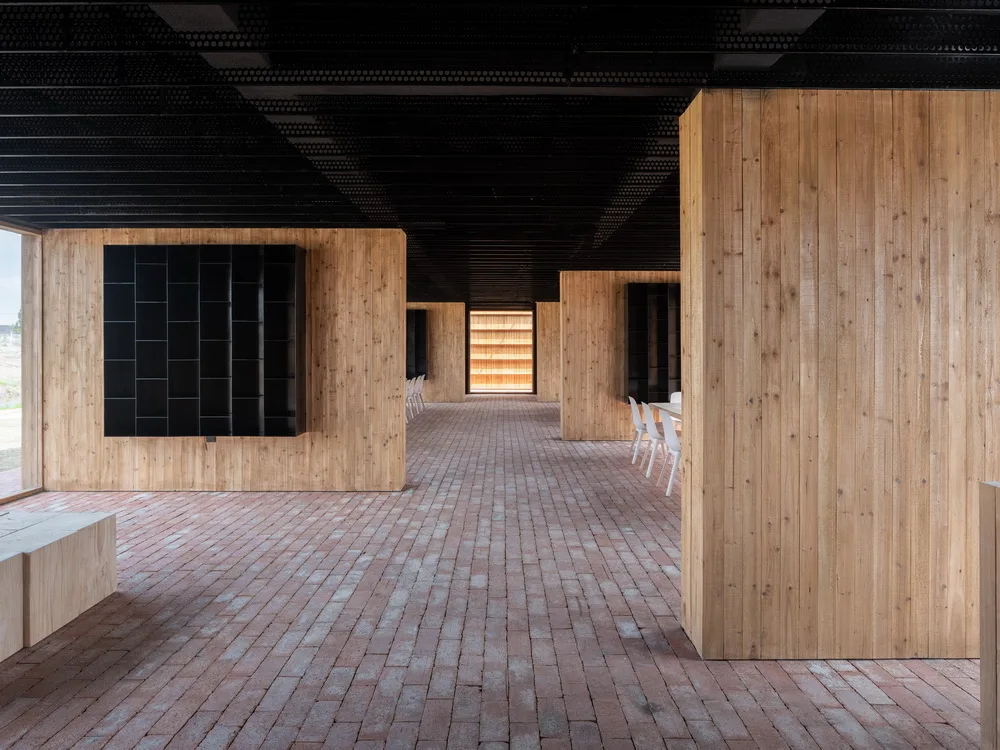
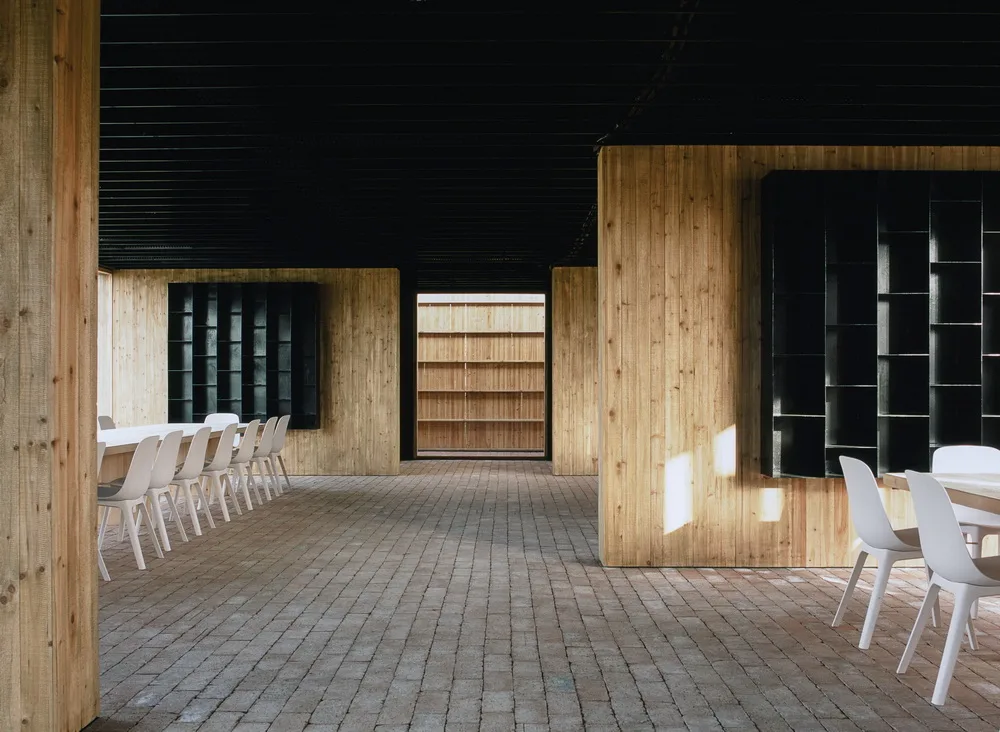
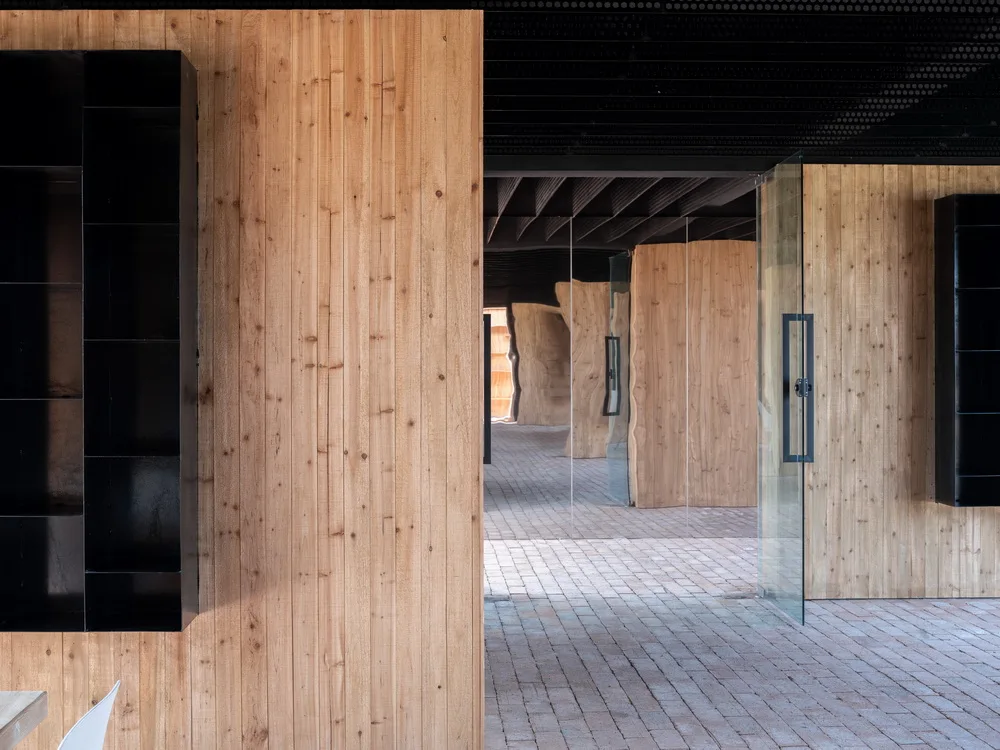
△ Interior © Zhu Runzi
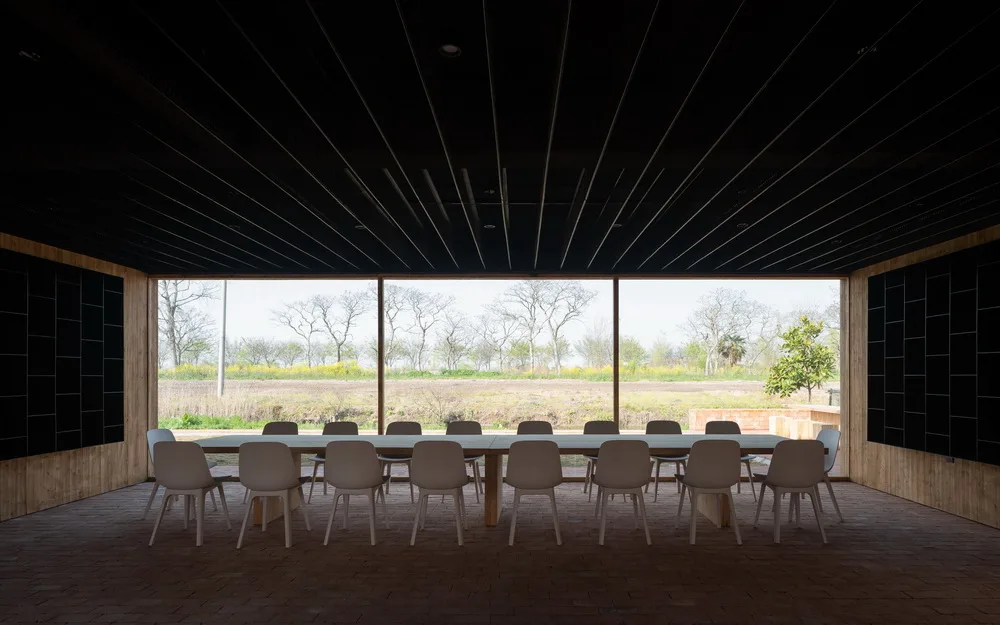
△ Large French window facing north © Zhu Runzi
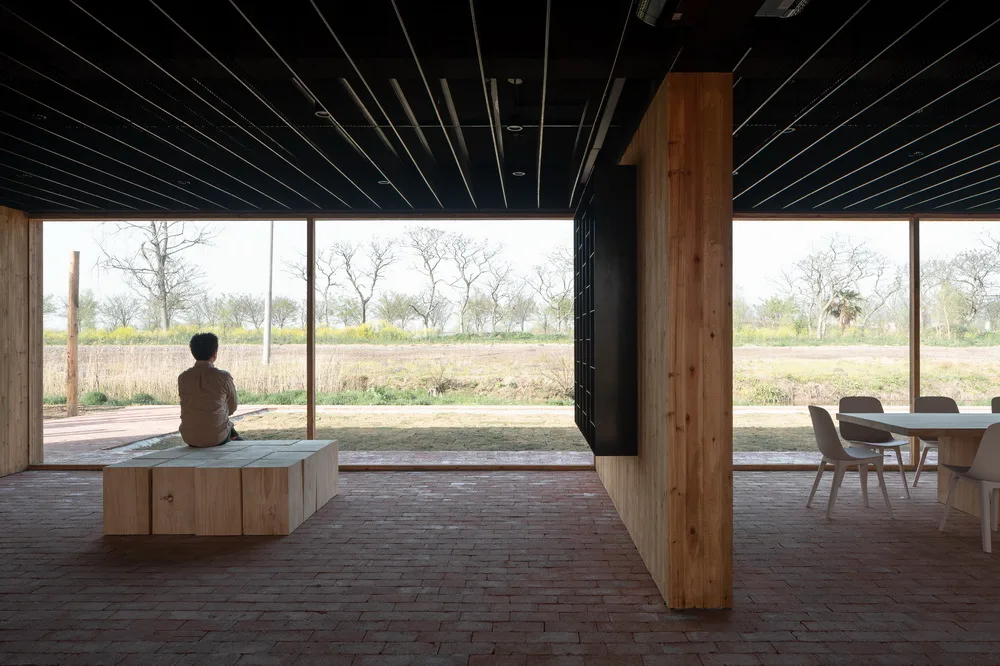
View of the riverbank outside the north window © Zhu Runzi
The building’s rectangular layout is orderly and transparent, with minimal partitions to accommodate various functions. Natural wood furniture complements the large floor-to-ceiling windows, seamlessly blending the interior with the surrounding environment.
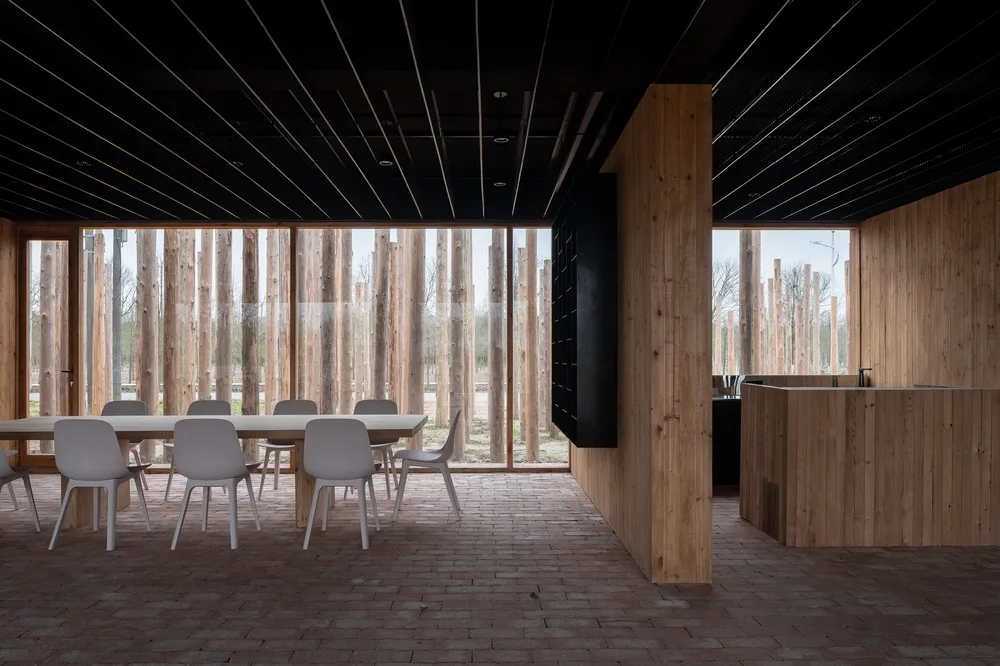
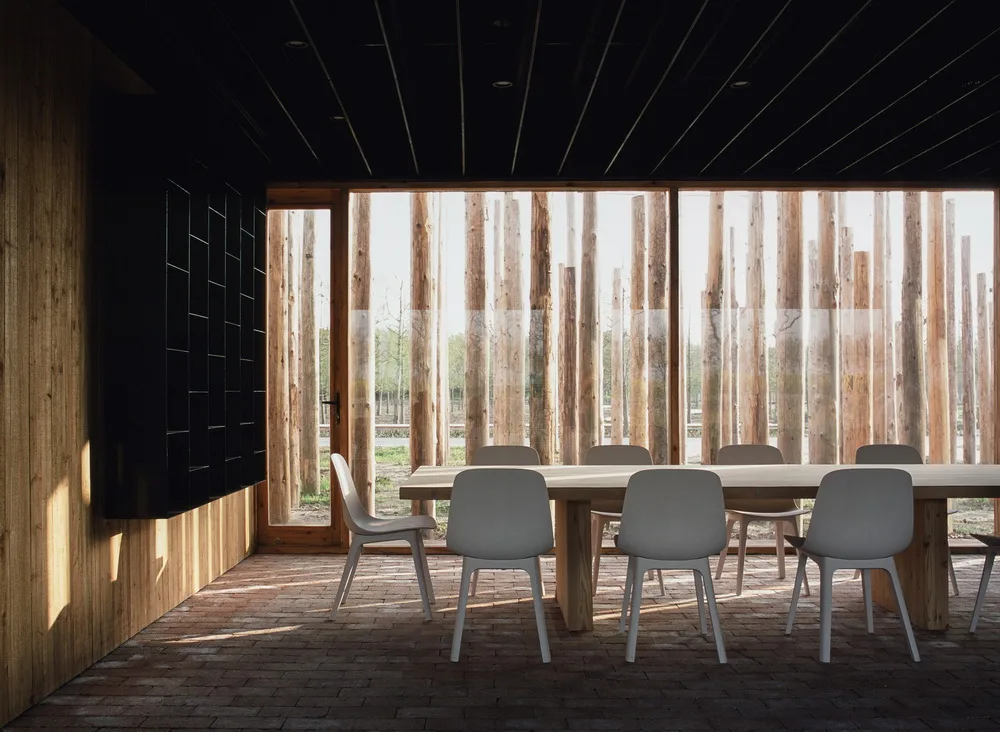
△ French window facing south © Zhu Runzi
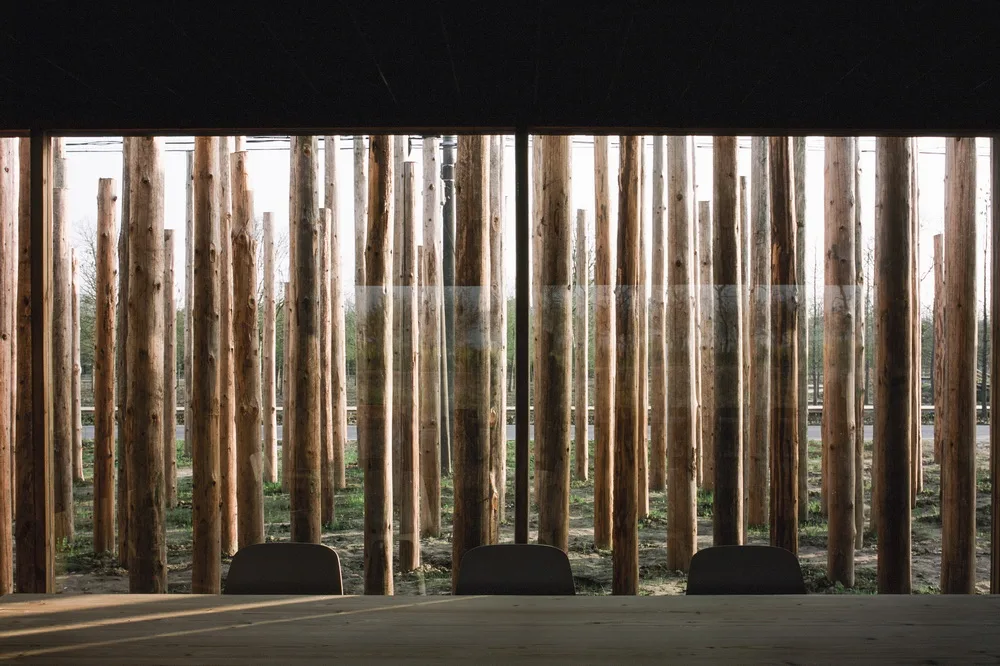
“Pillar Forest” outside the south window © Zhu Runzi
The view facing the road is shielded by the pillar forest, which blocks traffic noise and distractions, creating a quieter indoor environment. The shadows cast by the cedar stakes filter the harsh midday sunlight, enhancing the feeling of being immersed in a dense forest.
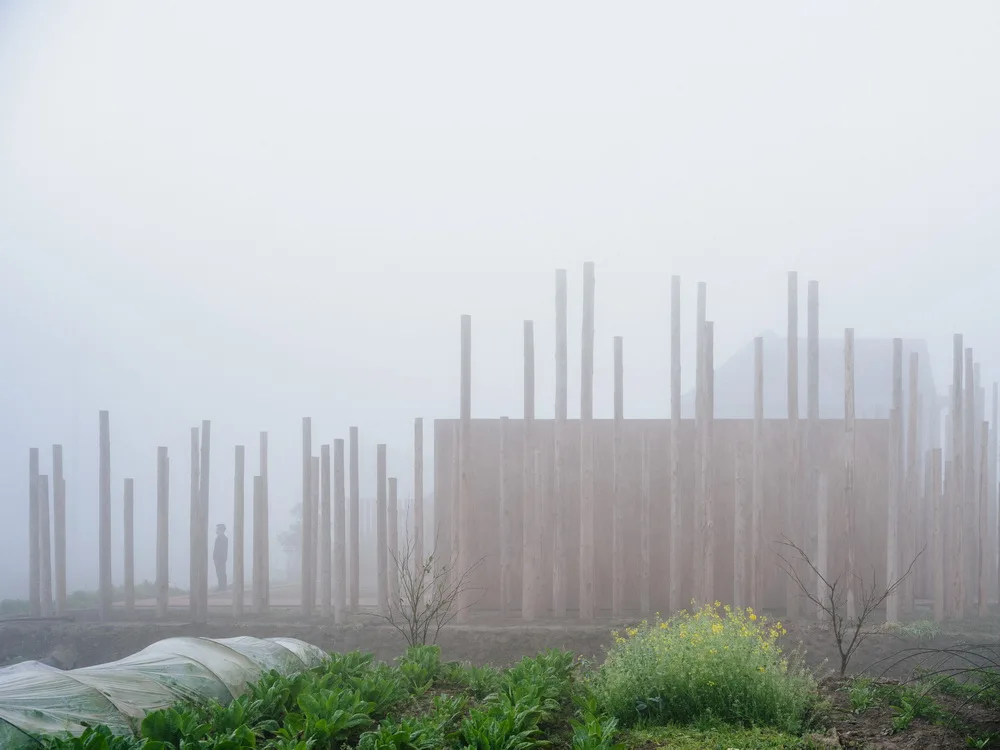
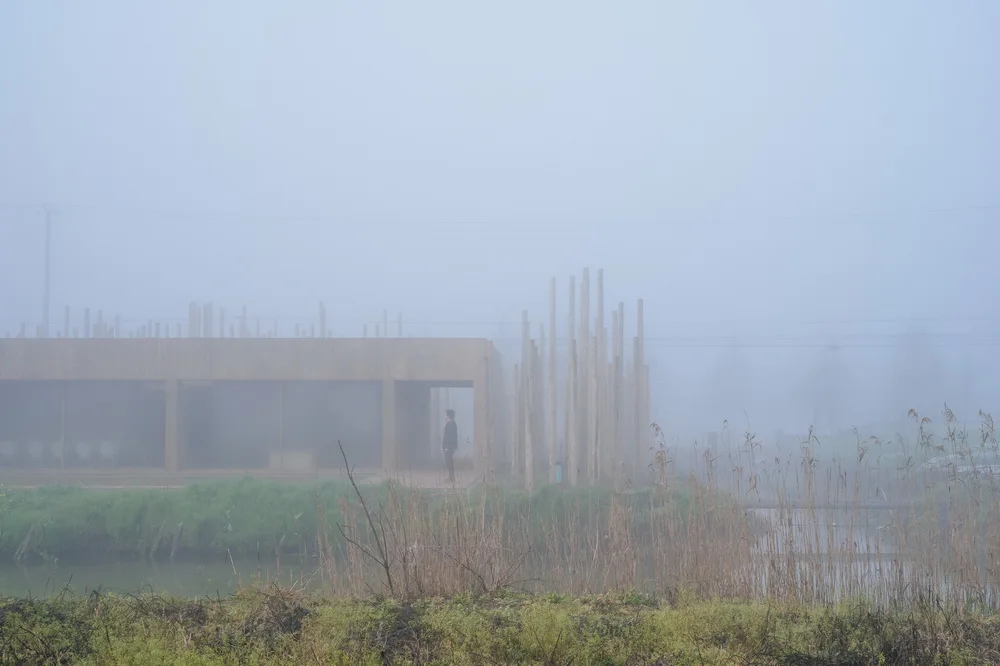
The forested library across the river © Zhu Runzi
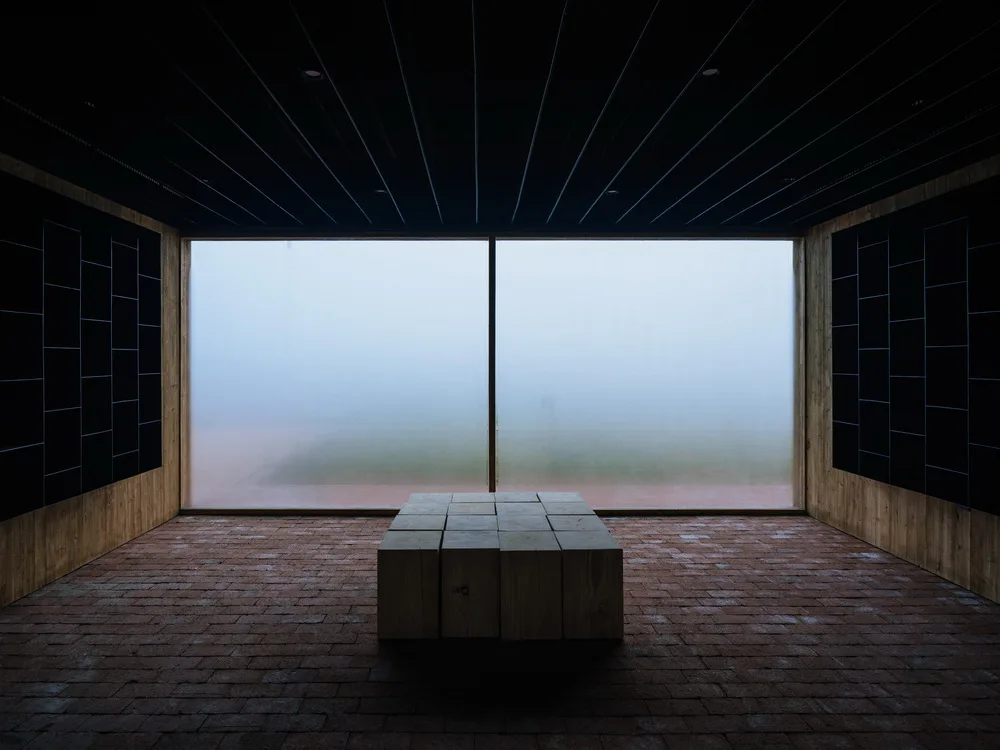
View from the northern window enveloped in mist © Zhu Runzi
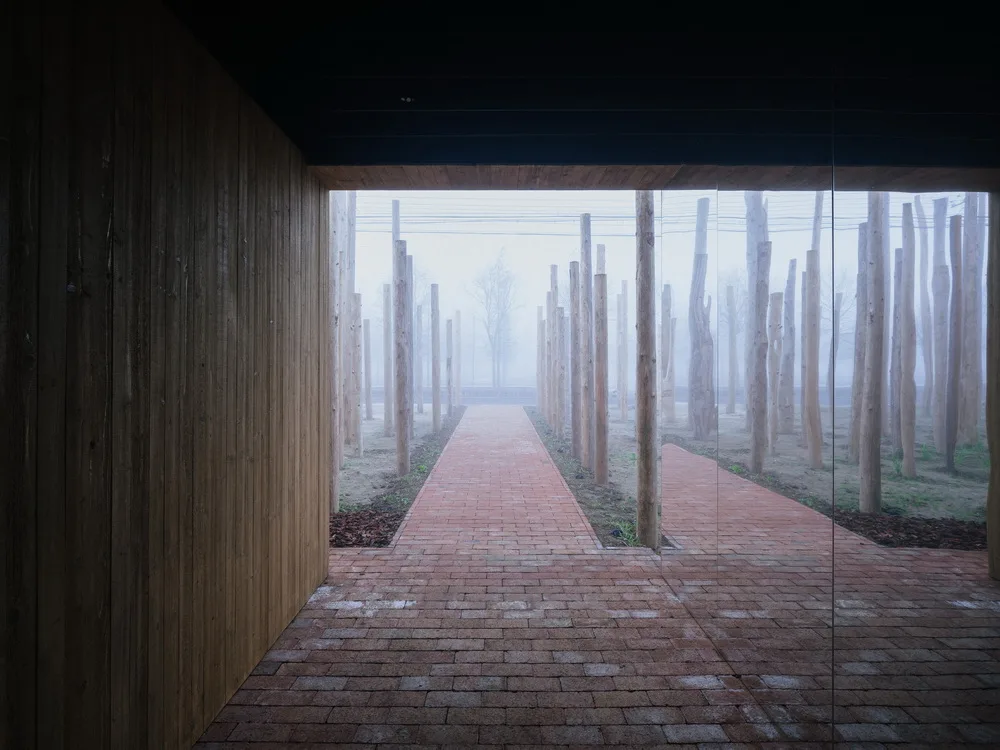
The corridor shrouded in mist © Zhu Runzi
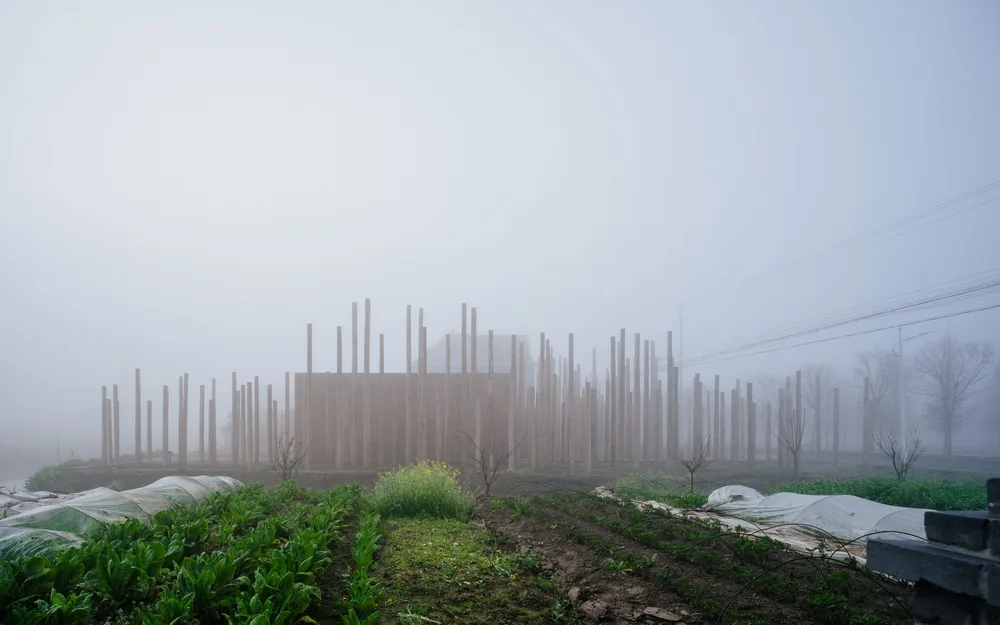
△ Forest Library in the Mist © Zhu Runzi
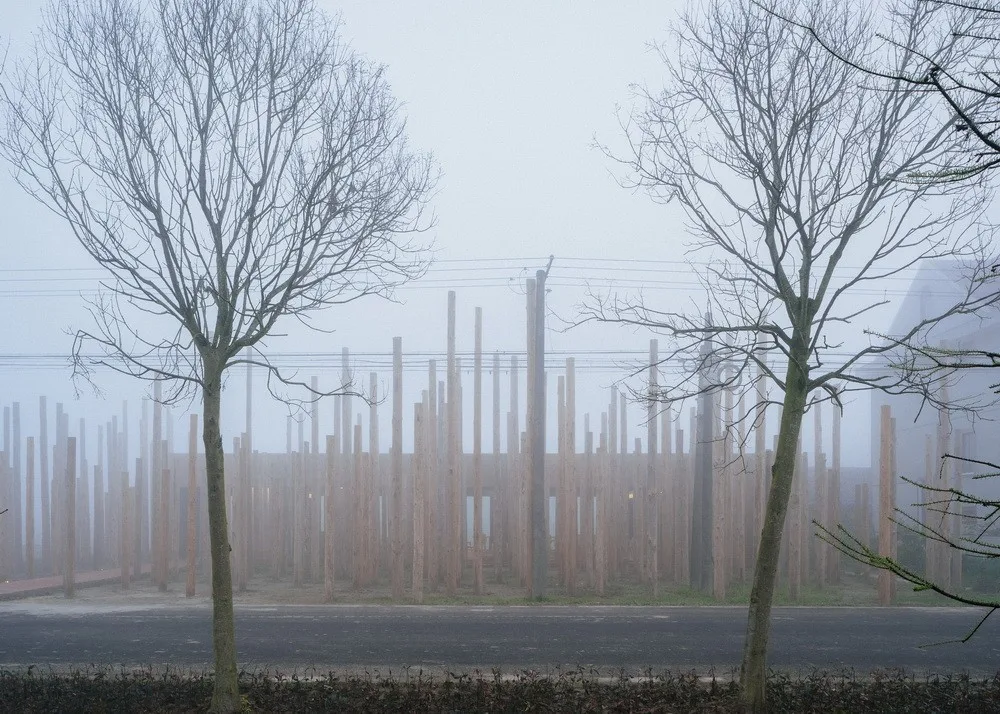
△ Forest Library in the Mist © Zhu Runzi
Technical Drawing
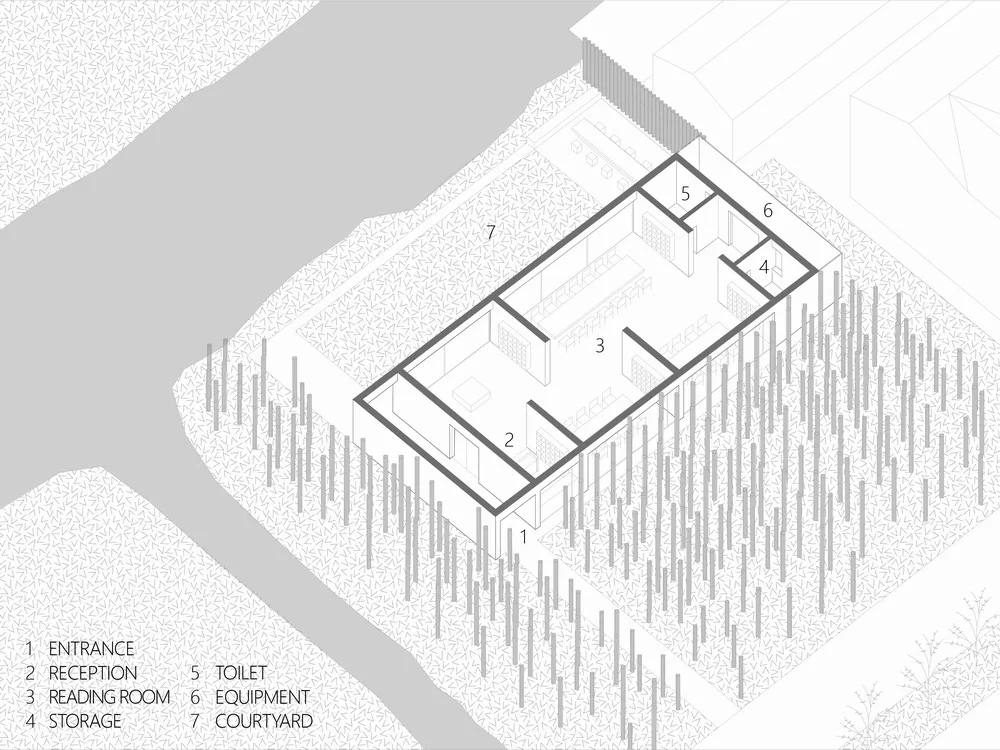
△ Building axis side © in space
Project Information
Project Name: Library in the Woods
Project Type: Architecture, Interior, Landscape Design
Location: Qianshao Village, Chongming District, Shanghai
Lead Architect: Wang Shaorong
Project Managers/Architects: Zhu Jialei, Wang Shaorong
Design Team: Wang Shaorong, Wang Yin, Zhang Xinyi (intern)
Owner: Chongming District Bureau of Culture and Tourism, Shanghai
Project Cost: 1 million yuan
Status: Built
Design Period: June – August 2020
Construction Period: February 2021
Building Area: 178 square meters
Main Materials: Cedar stakes, cedar boards, red bricks
Photography: Zhu Runzi (including some film photography)












Must log in before commenting!
Sign Up