
TECLA represents the future, heralding a new era where modern technology transforms traditional materials to support society’s sustainable development. The appearance of a building is not merely an aesthetic endeavor; it results from the fusion of technological research and material innovation. Its form integrates aesthetics, materials, functionality, and technology, embodying a deep empathy for the environment and life.
— Mario Cucinella, Founder of MC A Architecture Firm
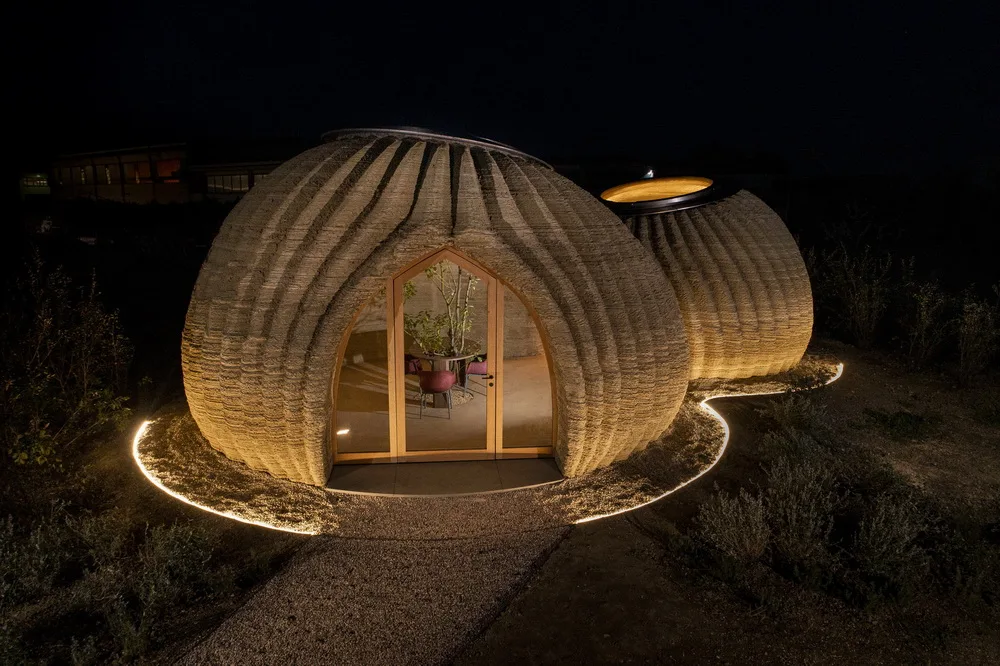
The TECLA project, a collaboration between Mario Cucinella Architects and WASP, is the world’s first eco-friendly home fully constructed from raw materials using 3D printing. This pioneering project reflects extensive research into local architectural traditions, climate, and bioclimatic principles, combining natural local materials with cutting-edge 3D printing technology.
Design Background
TECLA was developed to address climate challenges and housing demands in areas such as city outskirts, regions with high immigrant populations, or zones affected by natural disasters. It meets the demand for Km0 sustainable housing—built entirely from locally sourced materials, eliminating transportation needs and waste production.
Design Concept
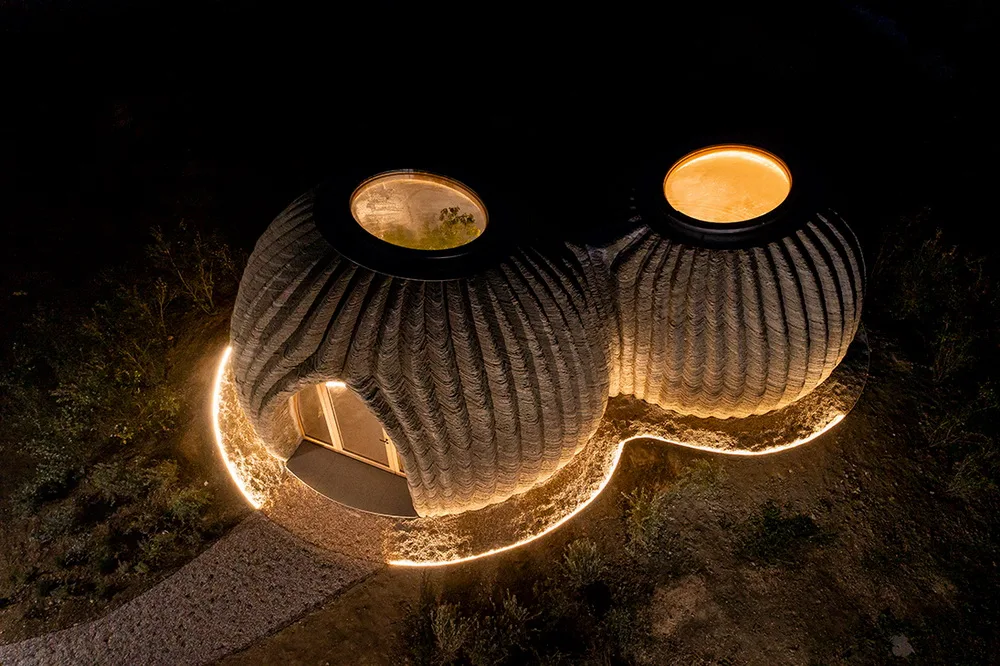
The name TECLA metaphorically evokes one of Calvino’s “invisible cities”—a city under perpetual construction. It merges the material wisdom and climatic insights of ancient dwellings with 21st-century technological innovation, bridging past and future while reimagining architecture. Compared to traditional construction, TECLA offers benefits such as reduced build time, raw material conservation, and minimized waste generation.
TECLA
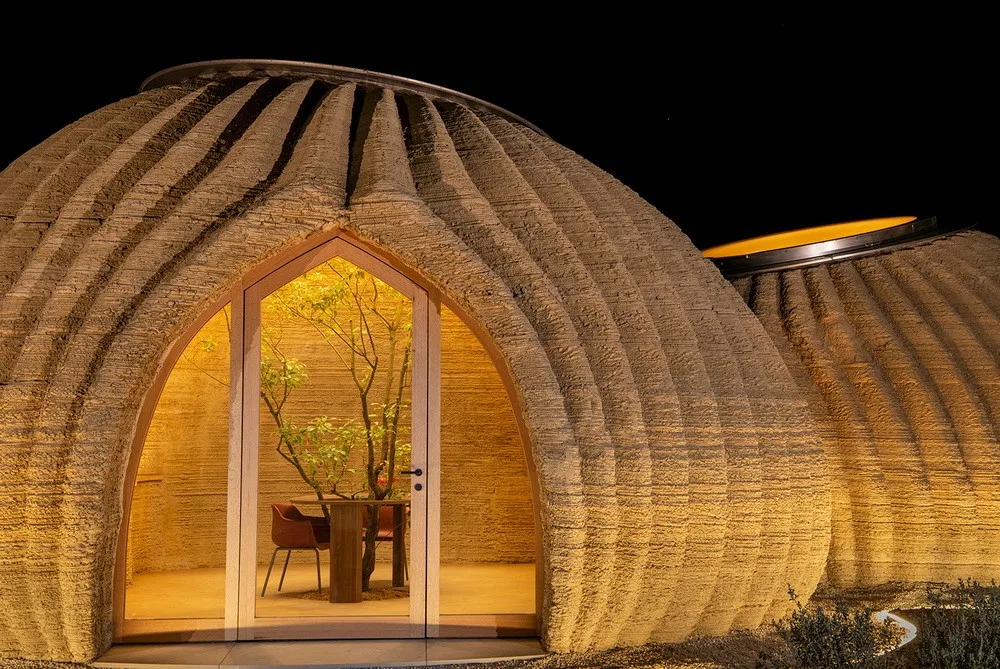
TECLA represents an innovative circular economy housing model combining traditional building methods, bioclimatic principles, and local natural materials. The project approaches zero carbon emissions and uses exclusively local raw materials. Its design and material choices minimize surplus and waste, establishing TECLA as a groundbreaking example of low-carbon housing.
Function and Form
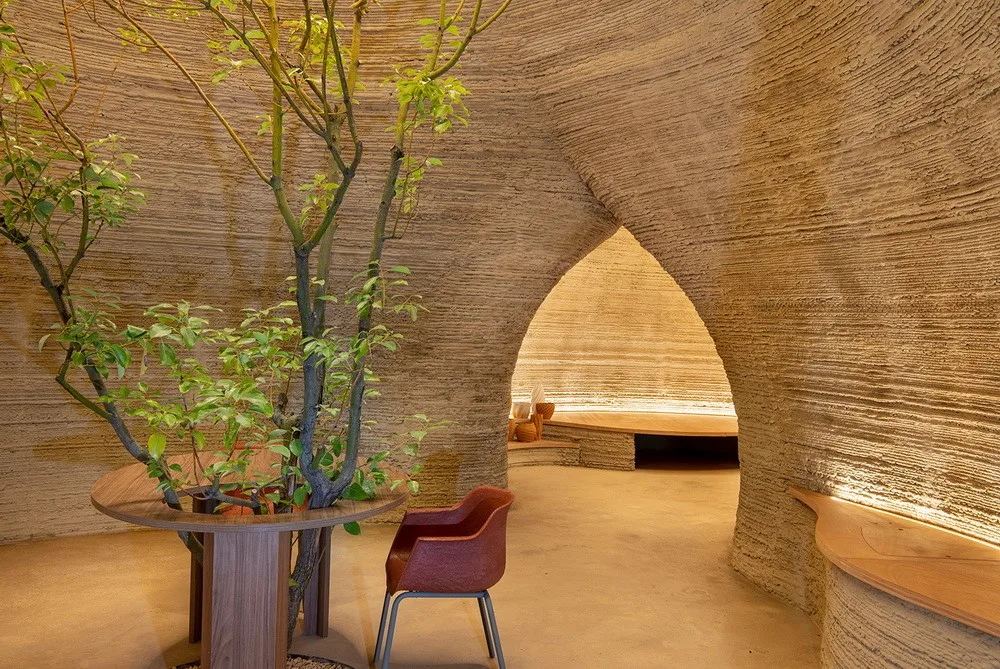
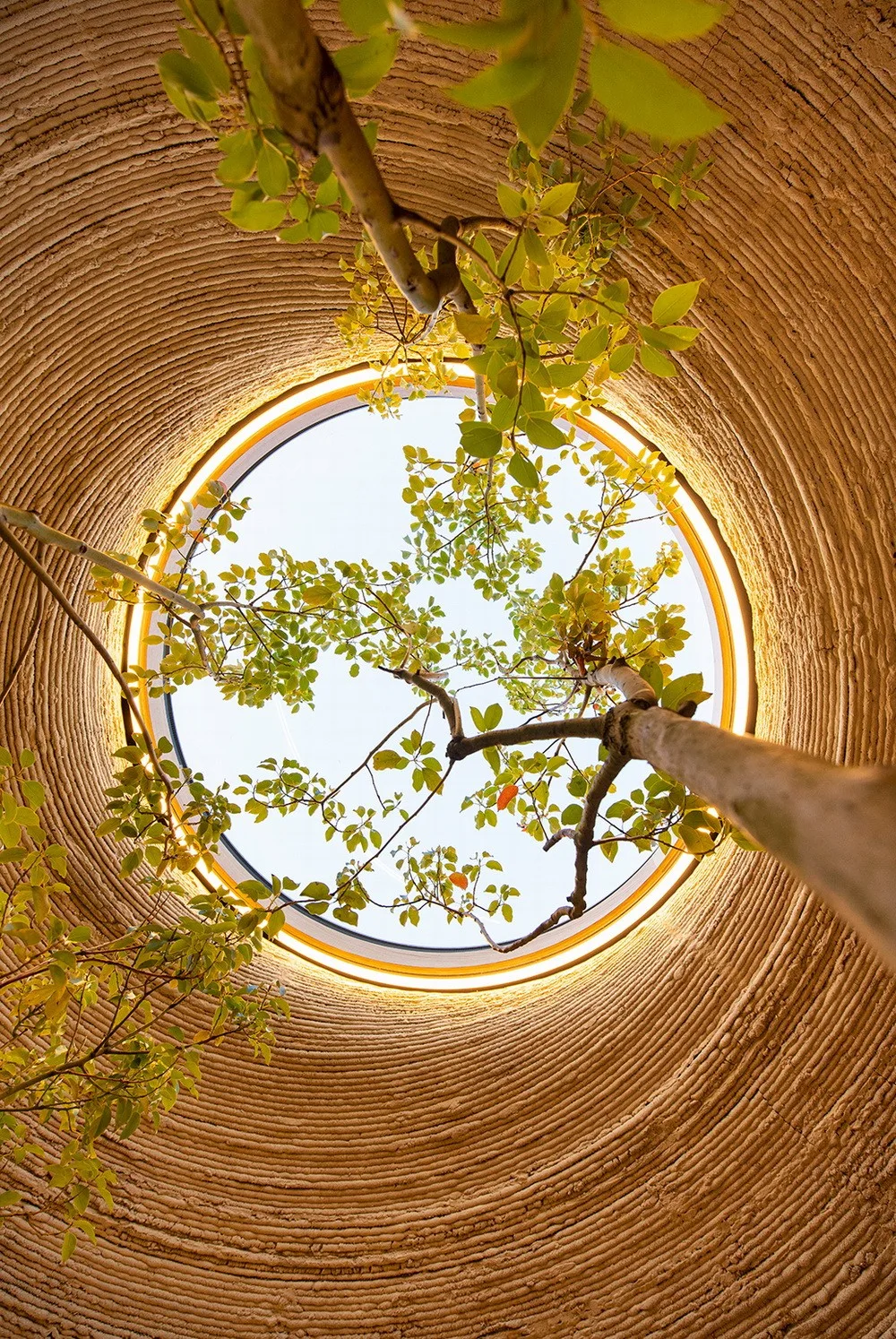
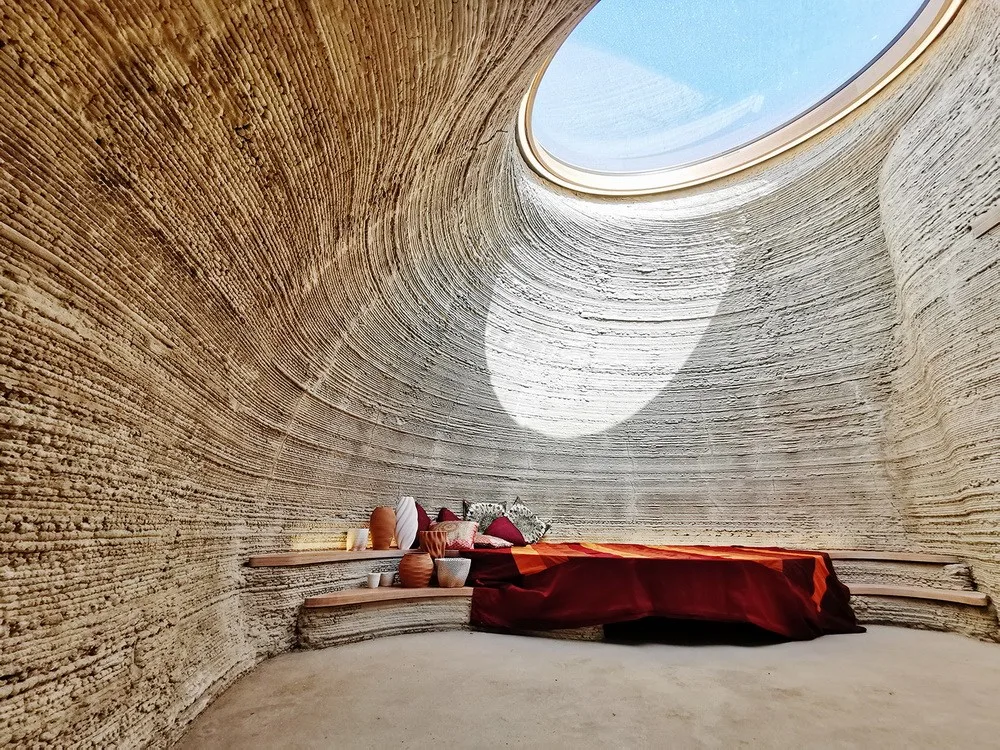
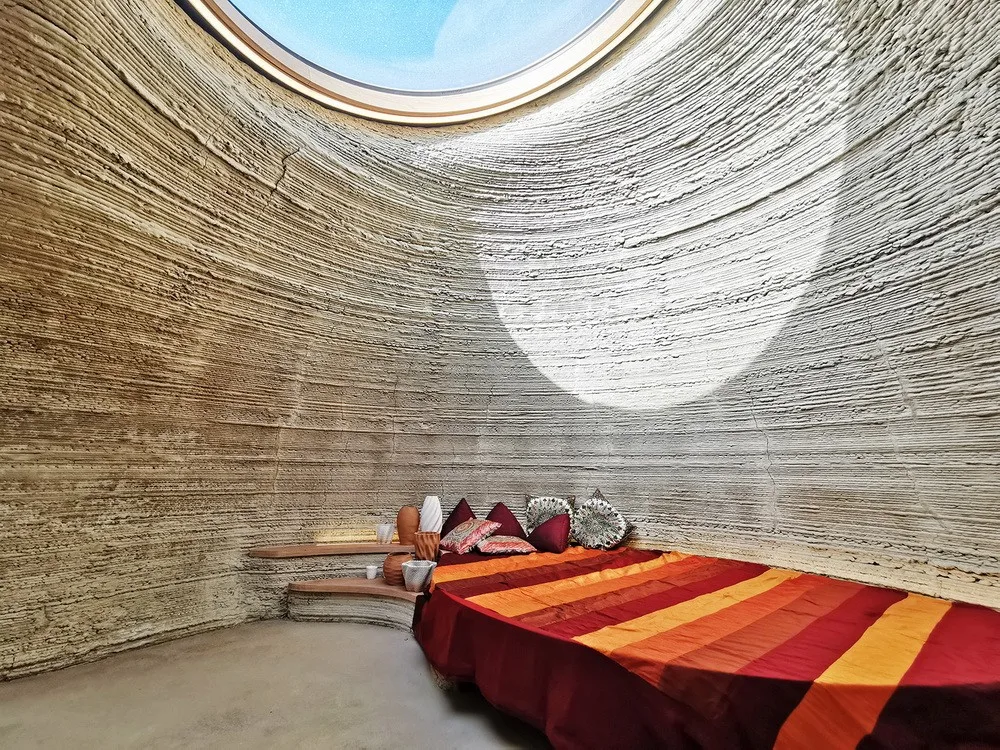
The project’s footprint covers approximately 60 square meters, featuring a living area with a kitchen, and a bedroom with an attached bathroom. Furniture, also printed from raw soil, is integrated into the building’s structure. Some elements employ recyclable green design, reflecting the ecological philosophy underlying the residence.
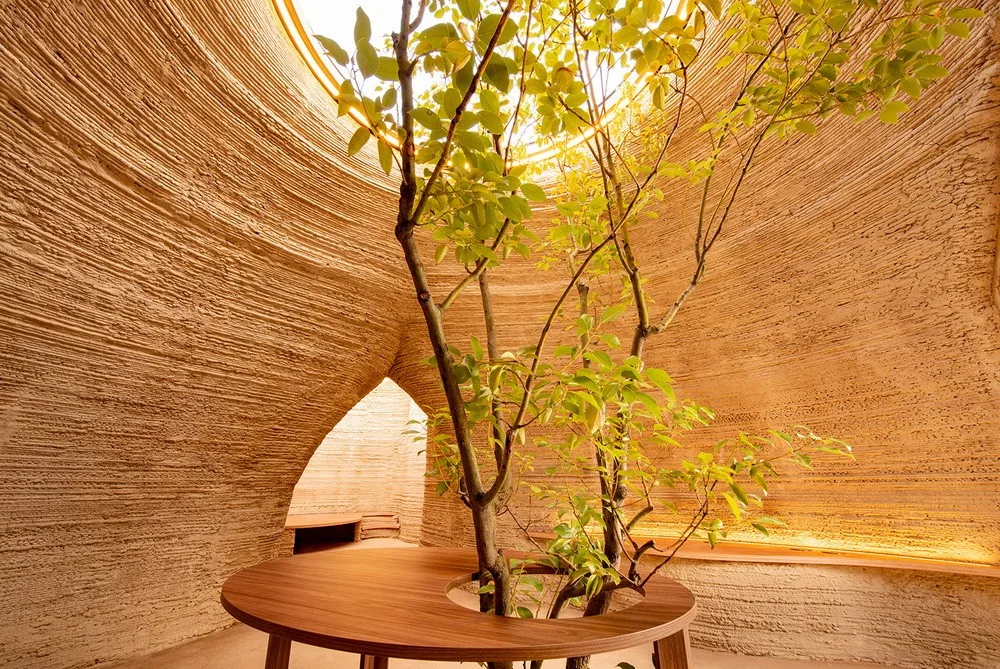
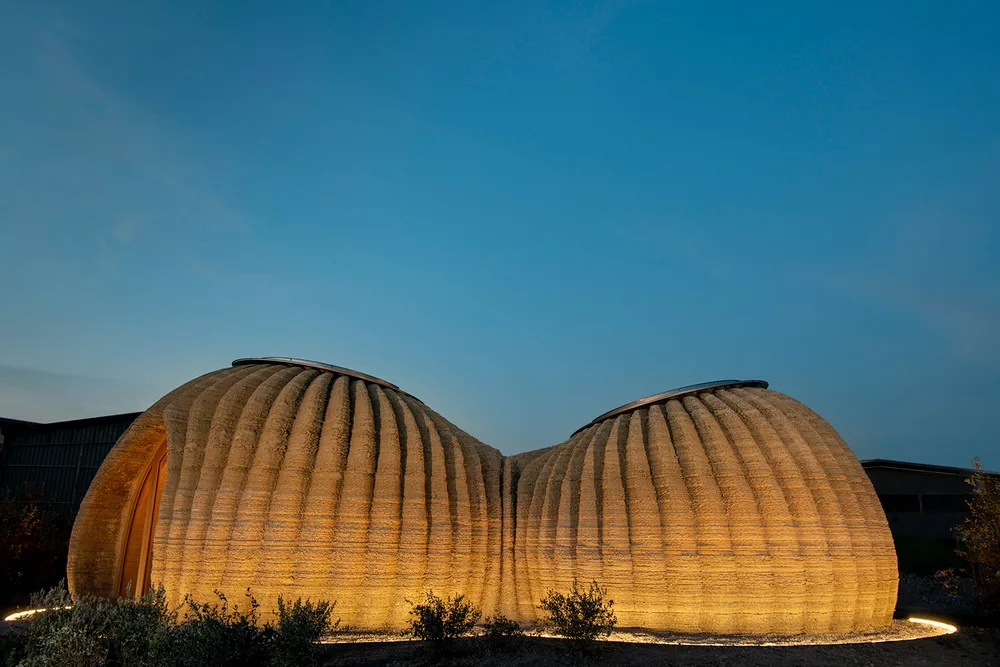
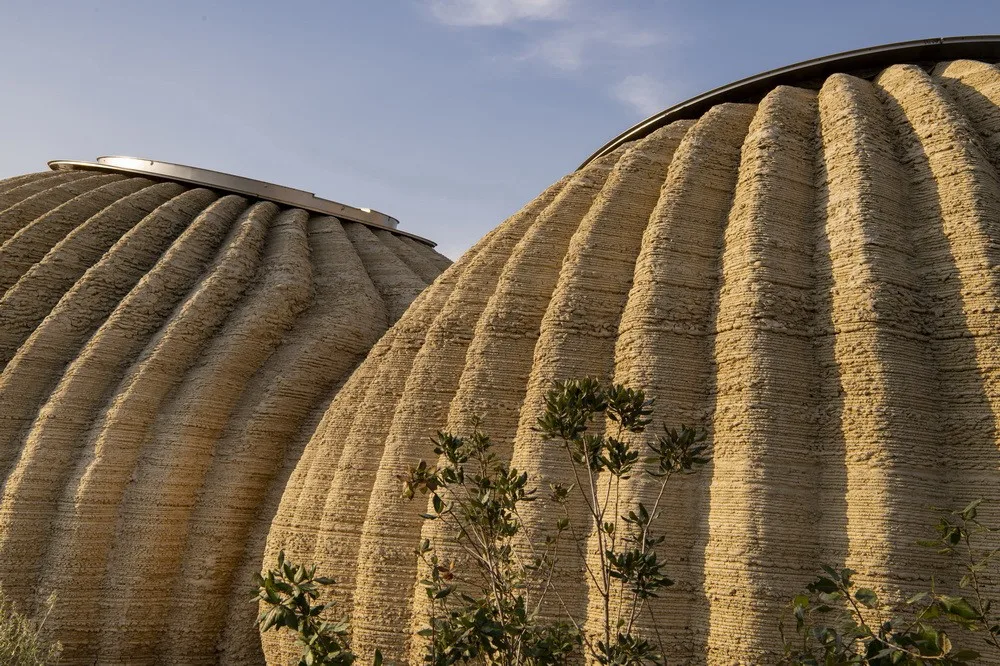
TECLA is composed of two continuous elements formed by curved sine waves rising upwards, leaving two circular skylights at the top to bring natural daylight inside. From its geometric shape to external ridges, the building’s unique form satisfies both the requirements for 3D printed shells and structural stability, offering an organic and harmonious design.
Structural Optimization
Unlike traditional construction methods, 3D printing technology offers extreme flexibility in building forms. The structural design draws inspiration from wasp honeycomb patterns, which provide superior load-bearing capacity while using less material. This structure also offers excellent ventilation and insulation properties.
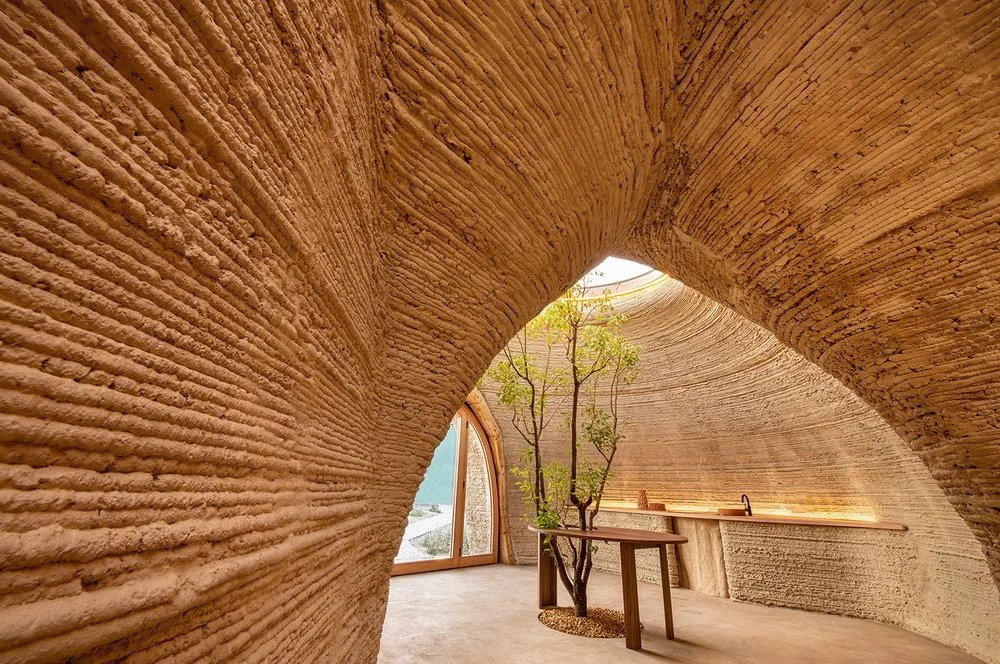
Optimizing the internal structure involves three key parameters: ventilation (outer facade layer), partitions (middle layer filled with discarded rice husks), and thermal mass (increased by the internal “skeleton” structure). Through numerous combinations, the ideal configuration can be tailored to each climate type. For instance, in extremely humid climates, it’s crucial to store excess moisture in the thermal mass, requiring wider sine curve curvatures and larger ventilation openings. Conversely, in cold climates, insulation is key, so contact between the building’s skin and cold air is minimized. These optimizations, grounded in local materials and energy-saving principles, ensure the interior environment adapts to external conditions while maximizing comfort.
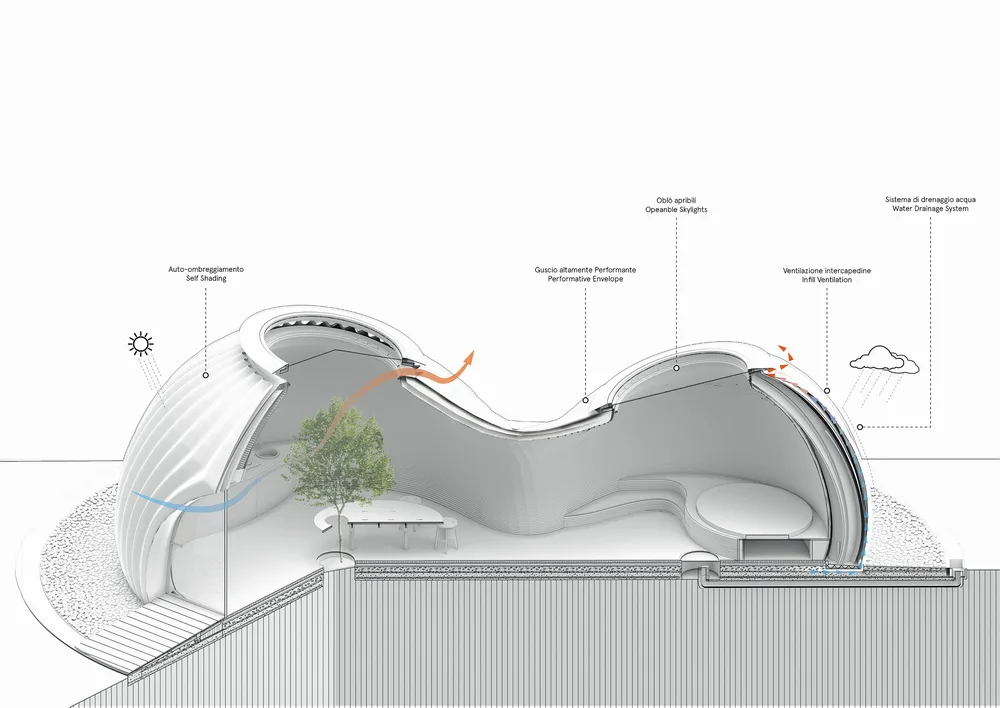
△ Structural schematic diagram
3D Printing
WASP’s research focuses on 3D printing with Km0 clay, pioneering an innovative 3D printing method called Crane WASP. This modular, multi-layer technology enables collaborative construction. TECLA uses two printer arms simultaneously, coordinated by software to prevent collisions and ensure seamless operation. Each print unit can cover 50 square meters, enabling the construction of independent homes within just a few days.
The construction of TECLA took 200 hours and involved 7,000 machine codes, building 350 layers each 12 millimeters thick, totaling 150 kilometers in unfolded length. It consumed 60 cubic meters of natural materials with an average energy use of just 6 kilowatts.
Community Planning
Located in Massa Lombarda, Italy, TECLA is more than a single eco-friendly dwelling—it promotes comprehensive community planning. The goal is to establish a small intelligent ecological community capable of independently producing and distributing water and energy resources, while recycling and reusing waste.
Technical Drawings
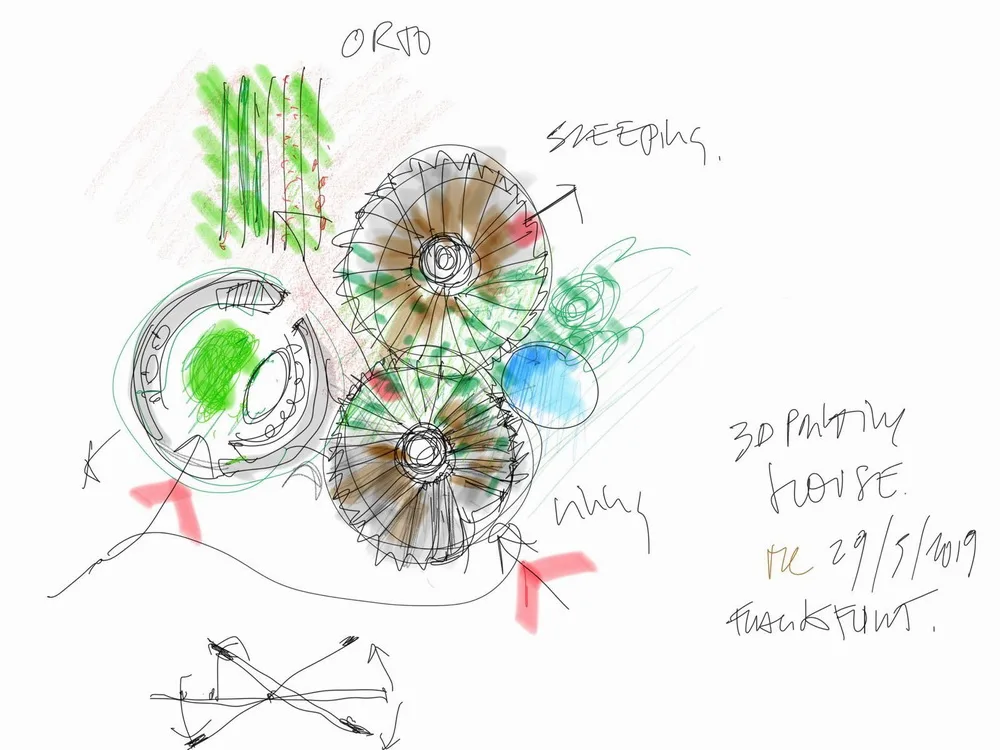
△ Sketch
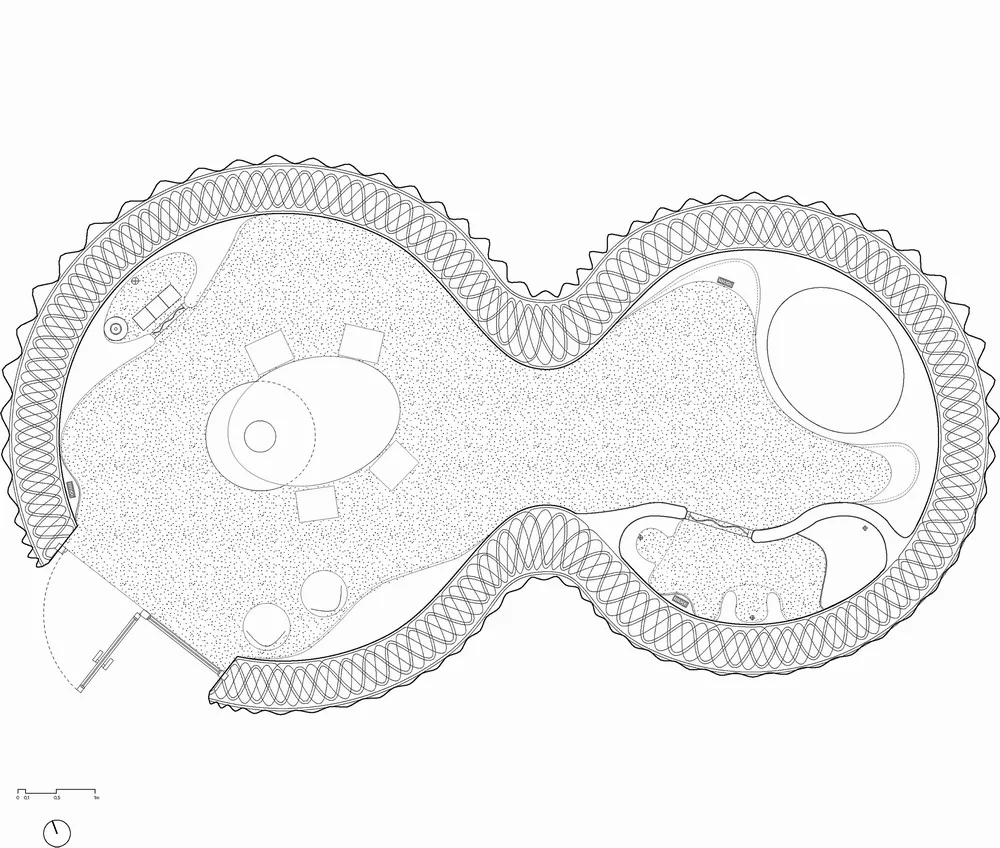
△ Plan view
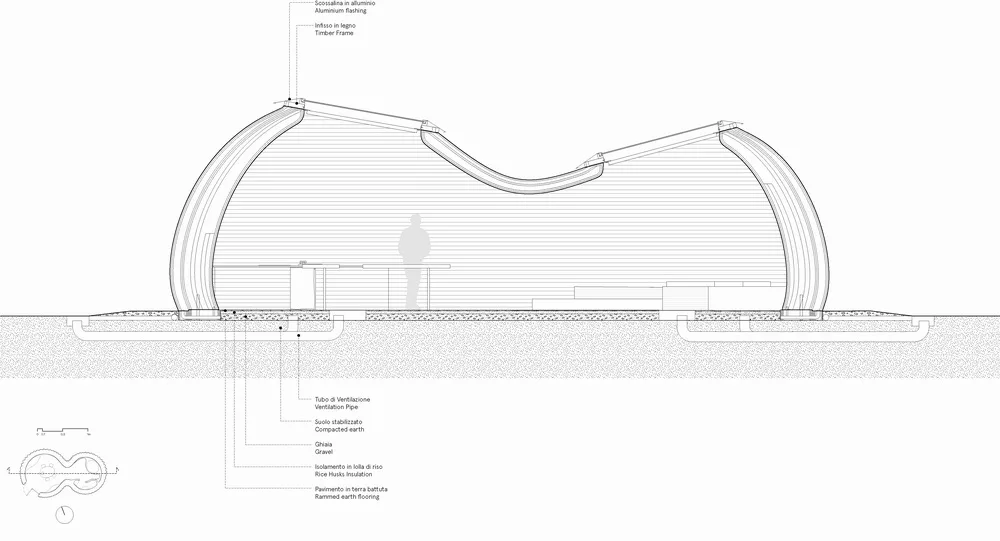
△ Section diagram
Project Information
Design Team: MC A Architectural Firm
Team Members: Mario Cucinella, Irene Giglio, Augusto Barichello
Sustainability Research Team: SOS – School of Sustainability (Italian Institute for Sustainable Development)
Team Members: Lorenzo Porcelli, Stefano Rosso, Lori Zilrante
3D Printing Technology Collaboration Team: WASP
Team Members: Massimo Moretti, Iapo Naldoni, Alberto Chiusoli, Francesco De Fabritis, Massimo Visonà
Project Support: Government of Massa Lombarda, Ravenna, Italy
Door and Window Design: Capoferri Serramenti
Mechanical and Electrical Design: Cefla
Landscape Design: Frassinago
Wood Accessories: Imola Legno
Lighting Design: Lucifero’s
Filling Material Optimization: Mapei
Structural Design: Milan Ingegneria
Furniture Design: Officine Tamborino
Construction Supervision: WASP
Photography by Iago Corazza












Must log in before commenting!
Sign Up