
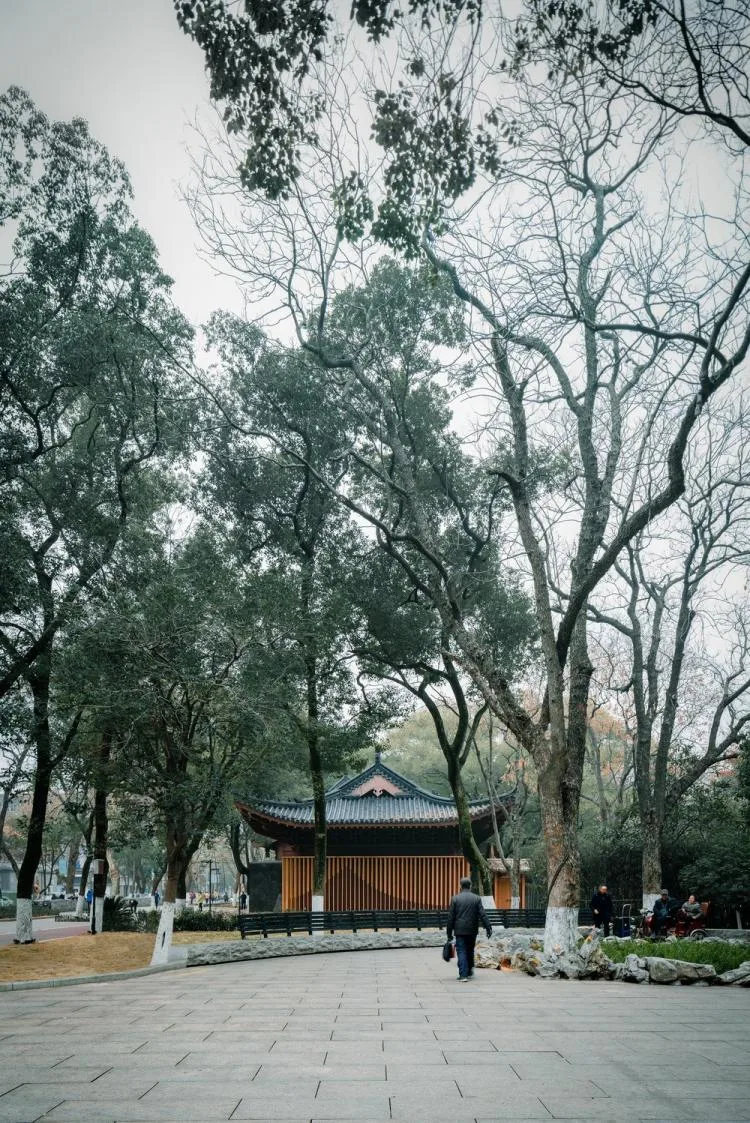
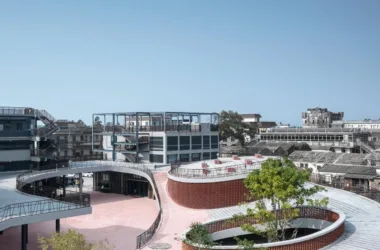
△ North Park Entrance Square (Photo by Ren Tian)
The Liangshu Art Museum renovation project is situated in Bayi Park, Nanchang City, at the intersection of urban and garden landscapes. Its goal is to become a key visual display for the city and a welcoming public space for residents to enjoy leisure activities.
The original structure was a tea house with an antique style, located on the site. Despite severe damage to the walls, doors, and windows, the building’s original form and style still harmonize well with the site’s atmosphere, as revealed by initial surveys.
Our renovation approach is guided by three principles: careful intervention on site, preserving and showcasing the elegant characteristics of the original building, and restoring and enhancing the surrounding public spaces to create a pleasant environment.
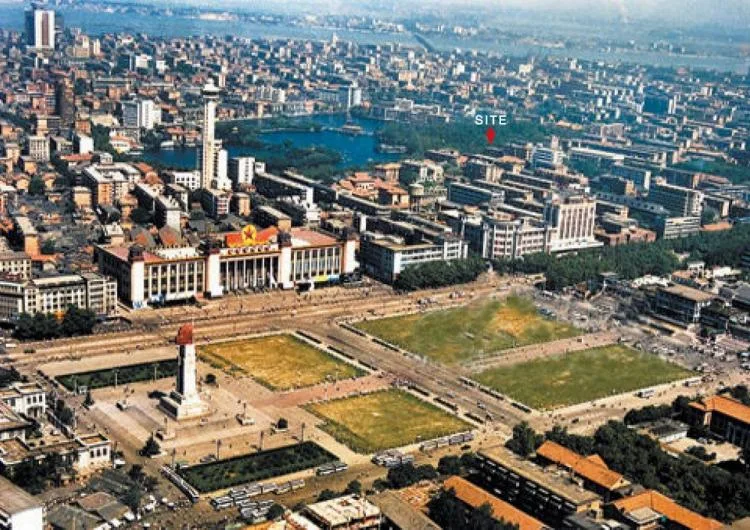
The project site is located in Bayi Park, Donghu District, Nanchang City (marked with a red dot).
The original building’s north façade features a bold design, with lifted eaves reminiscent of the imagery described by Ouyang Xiu as “a pavilion with wings standing on a spring.” Weathered roof tiles reveal a subtle royal blue hue under sunlight, imparting a sense of stability. Bayi Park itself is a historic local attraction dating back to the Ming Dynasty, granted to Prince Ning Zhu Quan of Nanchang City.
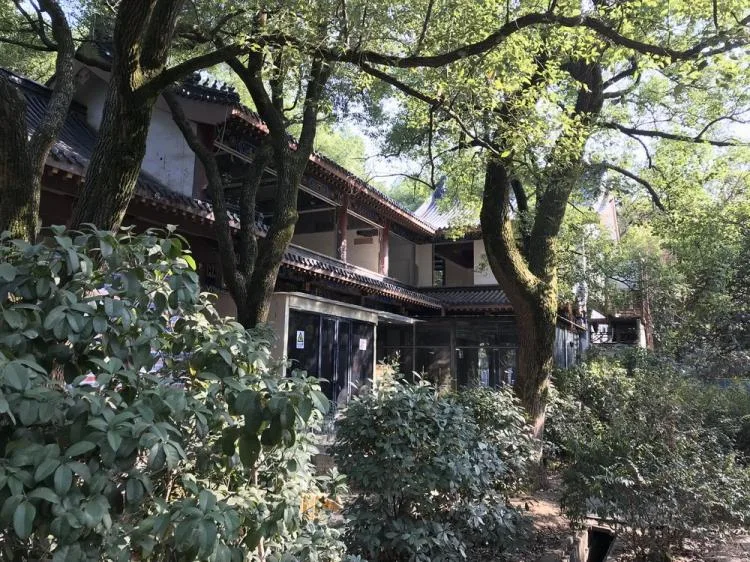
△ West façade of the original building
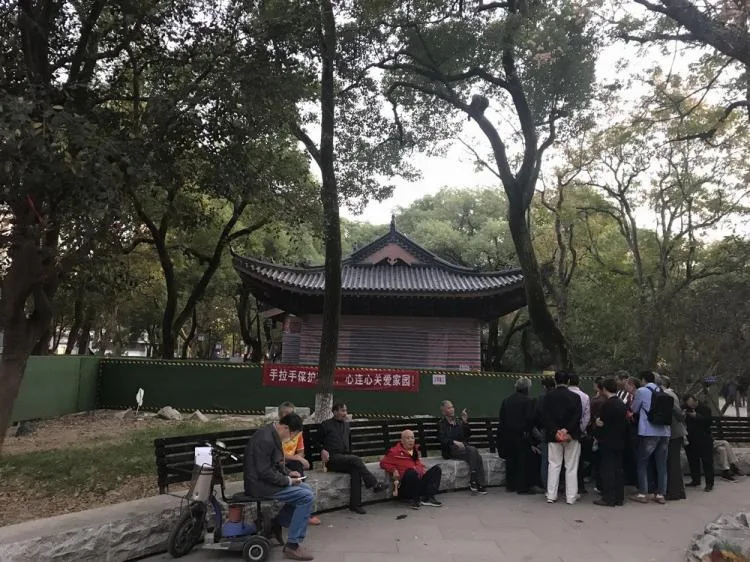
△ Original building and north square
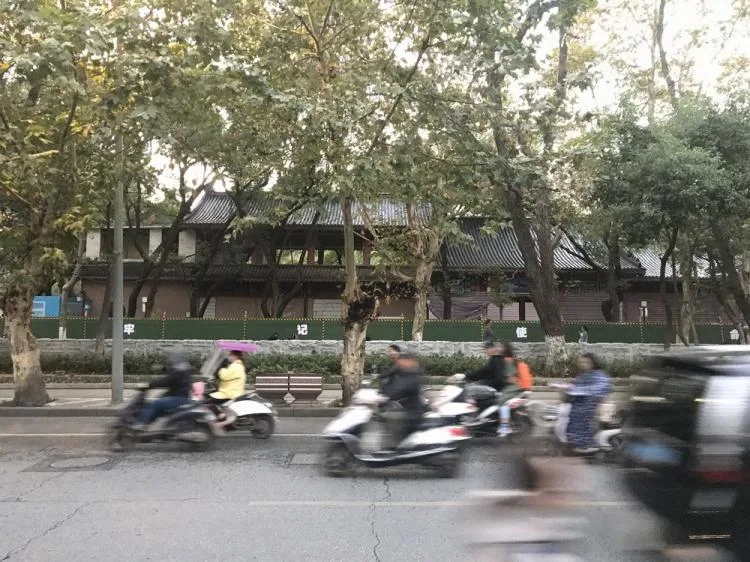
△ East entrance of the original building
Our initial investigation showed that while the original building is dilapidated and no longer functional, its scale and form remain well-suited to the surroundings. The site frequently attracts residents for informal gatherings and recreational activities.
When tasked with renovating a site rich in heritage and a building that complements its environment, we approached the project humbly, opting for a renovation strategy that respects the site and avoids excessive alterations.
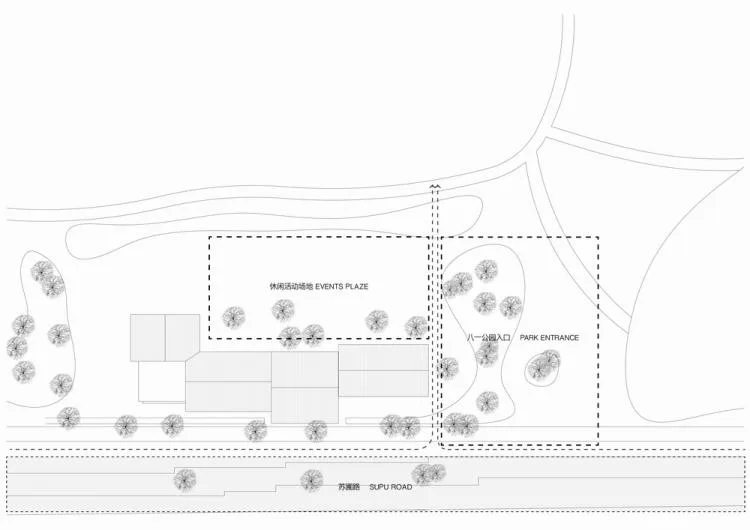
△ Analysis of the surrounding site
The original building aligns parallel to the north-south axis of Supu Road, with its front facing east toward the road opening and its back facing the park to the west. The north side opens to one of Bayi Park’s squares, surrounded by large trees and serving as a popular leisure spot for local residents. To the south lies the ruins of the ancient Gongyuan, while the west formerly housed the park’s public fitness area.
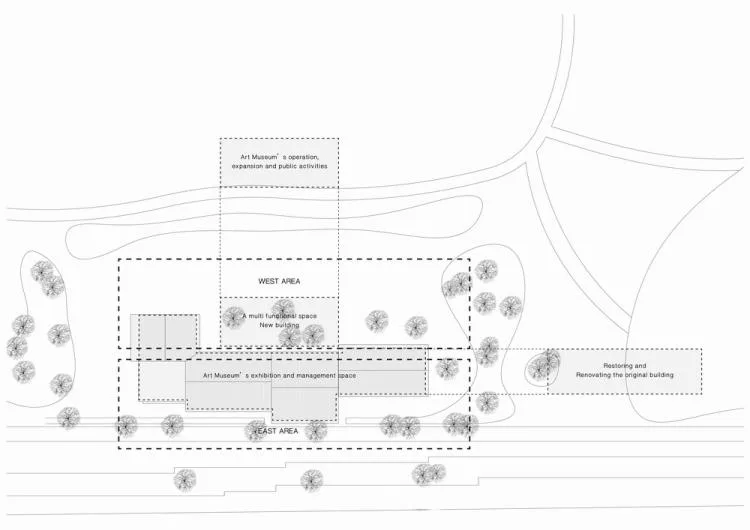
△ Architectural design strategy
Based on community activity patterns and the museum’s functional requirements, the site is divided into two zones: east and west. The eastern section focuses on restoring and renovating the preserved original building to serve as the main exhibition and administrative space. The western section is planned as a flexible, multi-purpose area for museum operations, expansion, and public events.
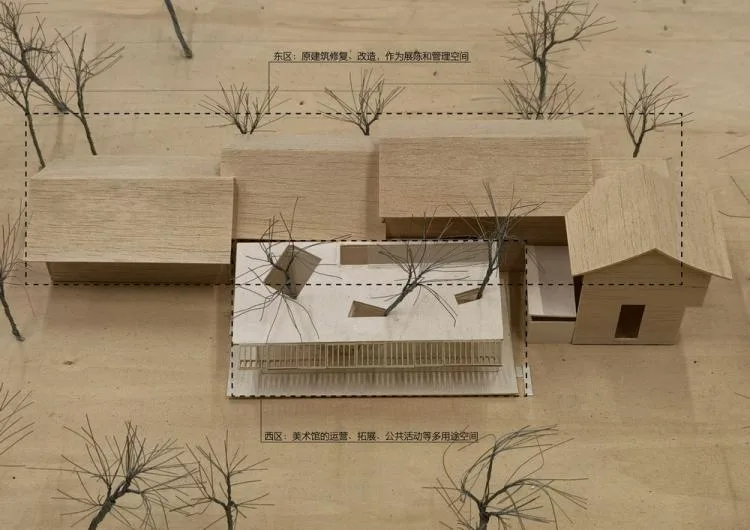
△ Model of the west multifunctional tea hall
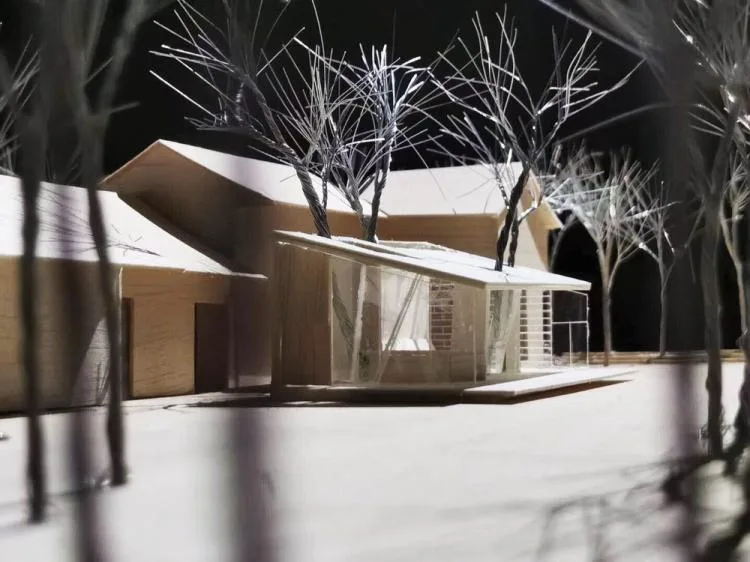
△ West multifunctional tea hall model
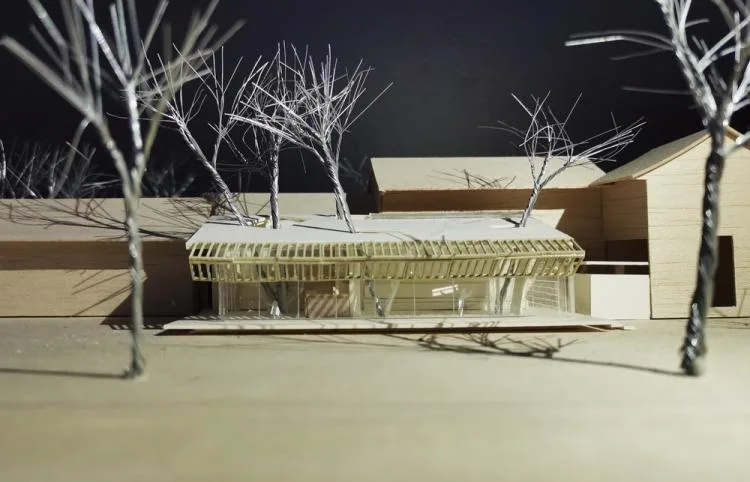
△ West multifunctional tea hall model
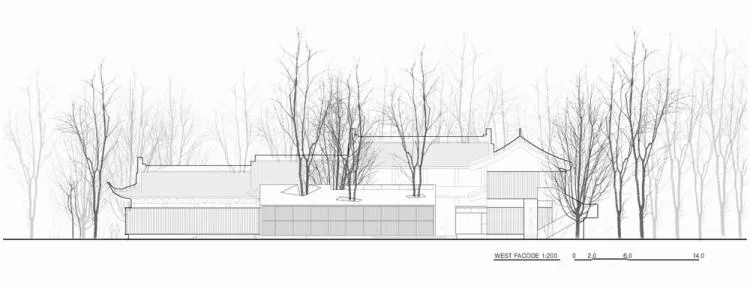
△ West elevation of the multifunctional tea hall
Our vision is to transform the underutilized public garden west of the original building by adding a one-story multi-purpose building. This will create a well-organized, transitional public backyard capable of hosting diverse functions, invigorating the area.
The space will serve as a resting spot for locals during leisure times and adapt to special events by opening or closing the new building’s façades to create various activity and performance spaces.
Four ancient trees stand at the center of the western site. To ensure harmony between the new construction and these trees, we collaborated with structural engineers to design a unique concrete inclined shear wall structure. The skylight courtyard of the building acts as both a structural support and a tree pool, allowing coexistence and integration between the trees and the new multi-purpose building.
The multifunctional tea house is scheduled for construction in Phase II.
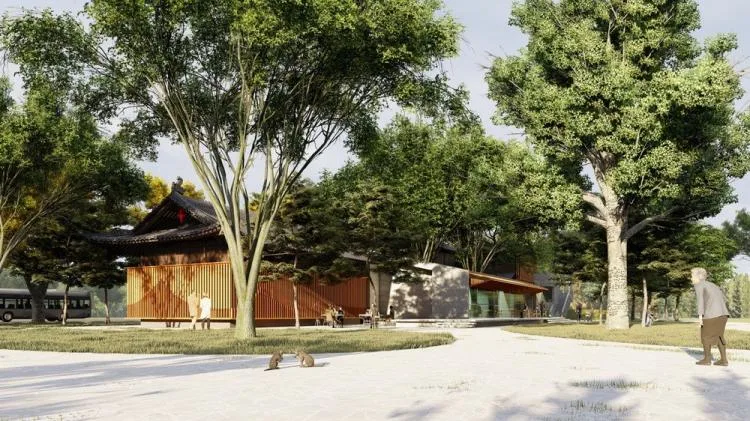
△ Rendering of the West Multifunctional Tea House (Phase II)
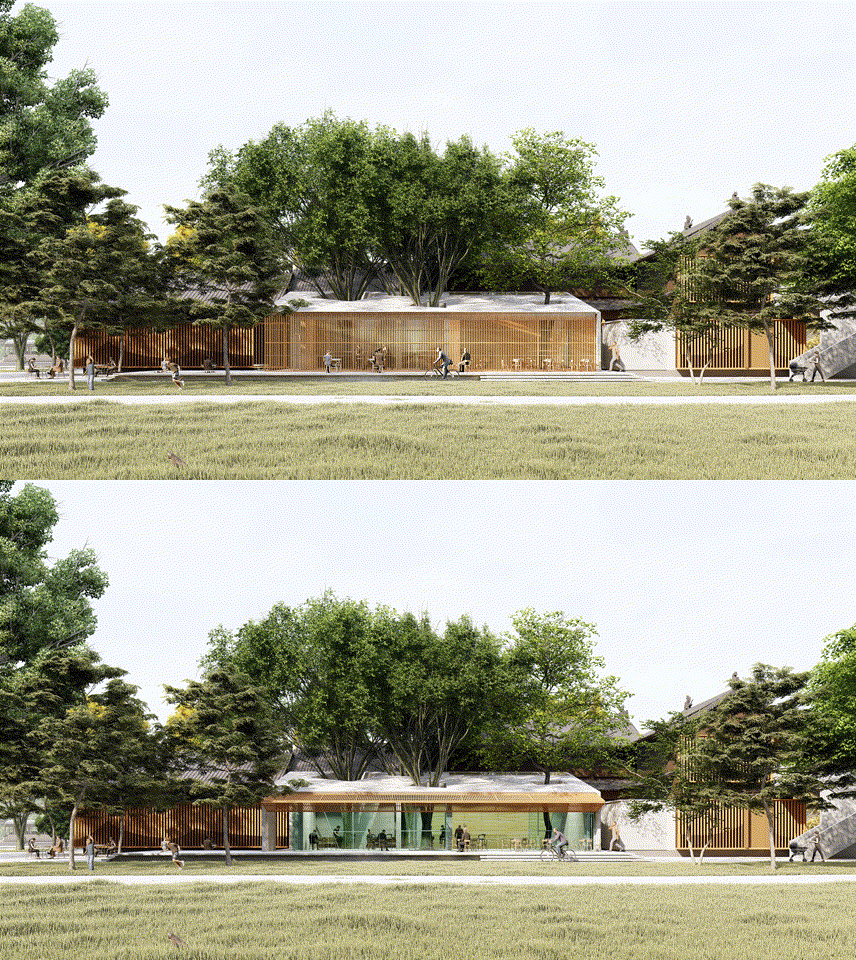
Phase II multifunctional tea hall featuring operable exterior grilles
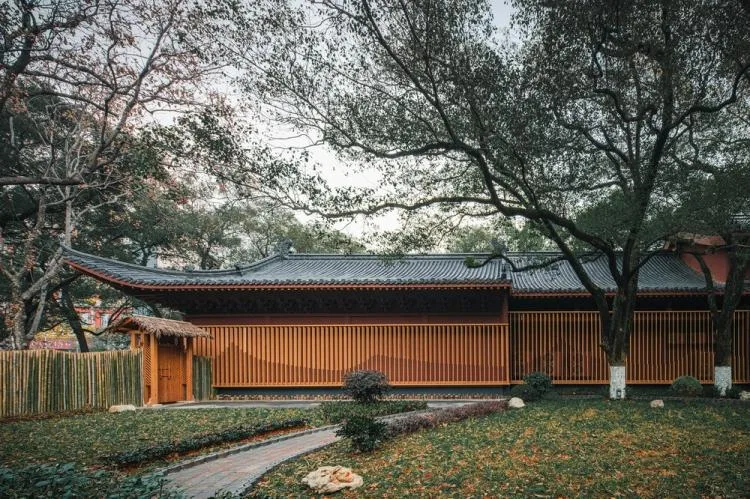
Partial view of the building’s west façade (Photo by Ren Tian)
To enhance the public space on the site’s north side, we opened up the original internal area and connected it to the garden entrance square, removing the physical barrier between the art museum and the northern park square.
The elegant north façade will become a key visual backdrop for the entrance square after renovation. It will define the abstract boundary between the square and the museum and serve as a natural landmark.
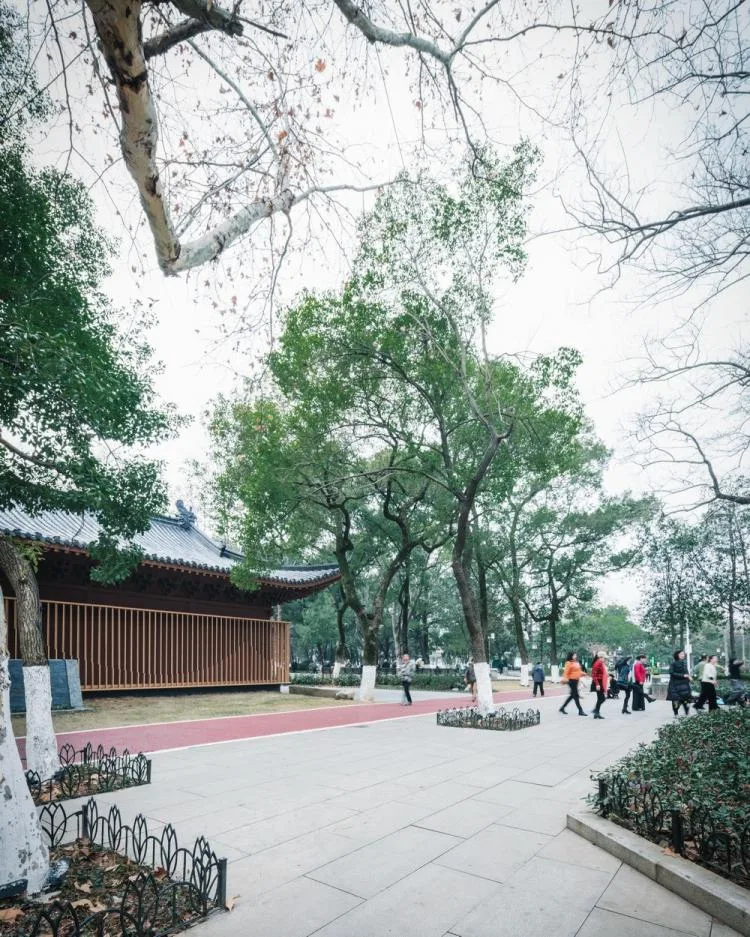
△ East Entrance Square (Photo by Ren Tian)
The east and south sides border Supu Road, an important urban interface. We restored the original street texture and added urban furniture and small open spaces at the museum entrance square, providing areas for citizens to gather and relax.
Our aim is for the renovated art museum to blend harmoniously into its urban context, rather than appearing as an isolated structure.
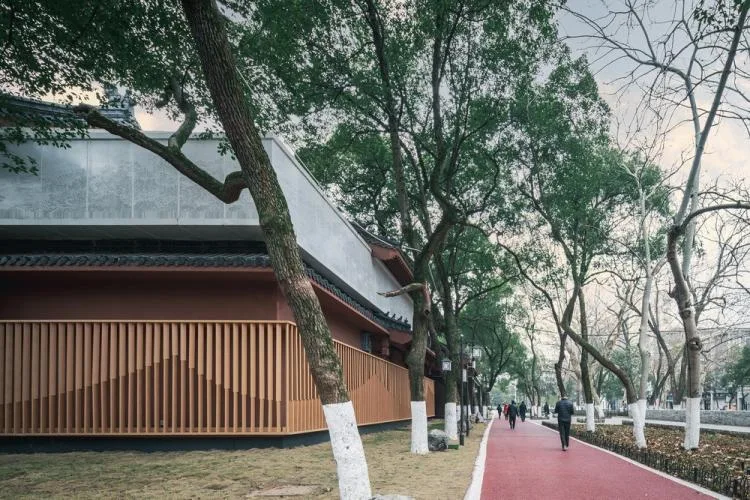
Southeast façade of the building (Photo by Ren Tian)
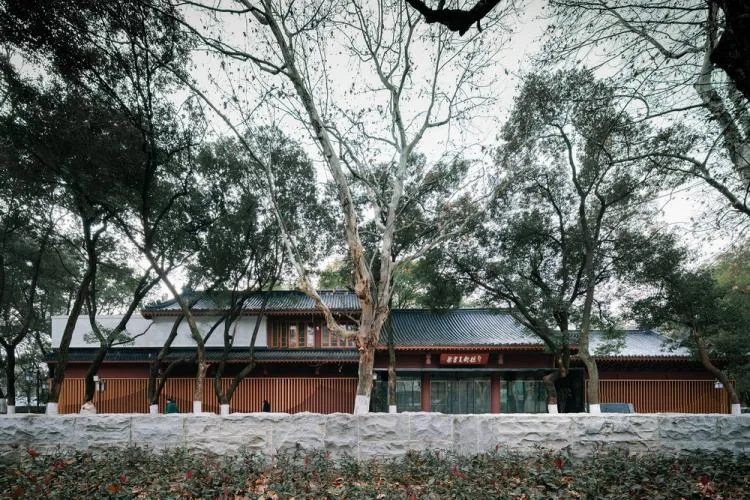
△ East entrance façade (Photo by Ren Tian)
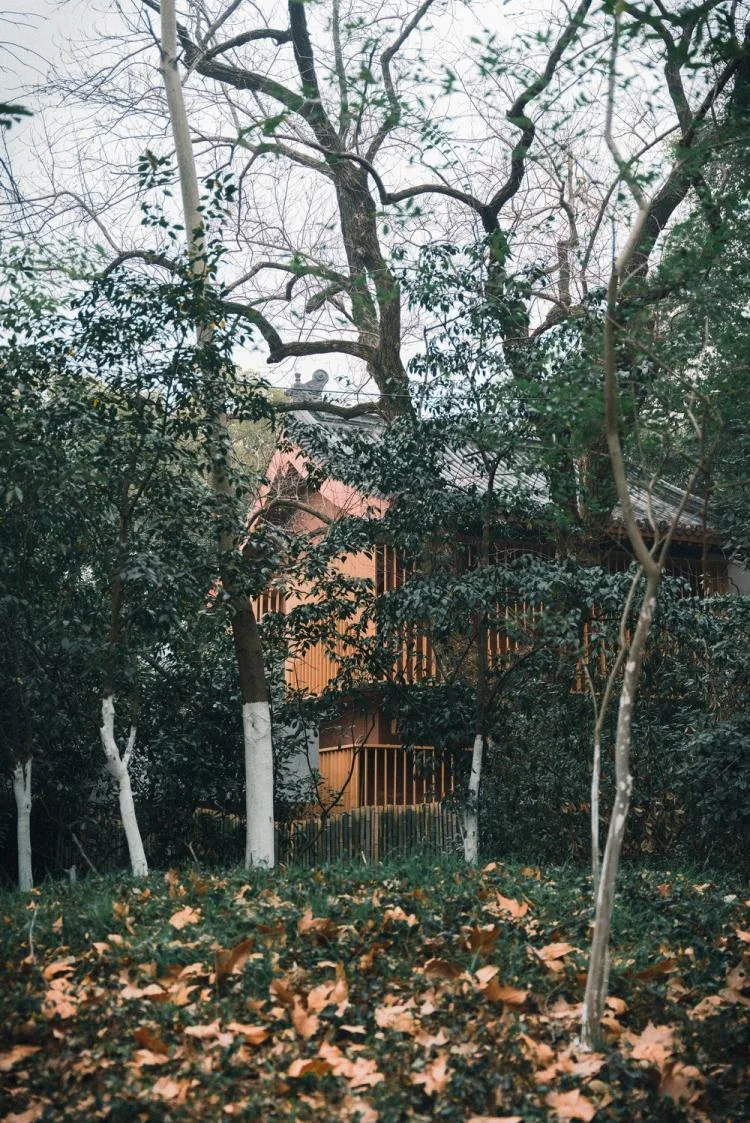
Southeast façade detail (Photo by Ren Tian)
Using the original tea house’s structural system, we divided the space into a series of exhibition halls. Connecting two independent rooms on the second floor with added box-like spaces creates a continuous flow.
Vertical gradient grilles and white perforated panels display the silhouette of the building’s mountain-shaped roof and highlight representative Tibetan paintings, symbolically reproducing the original architecture. This approach preserves the building’s core identity and emphasizes its Tang dynasty style.
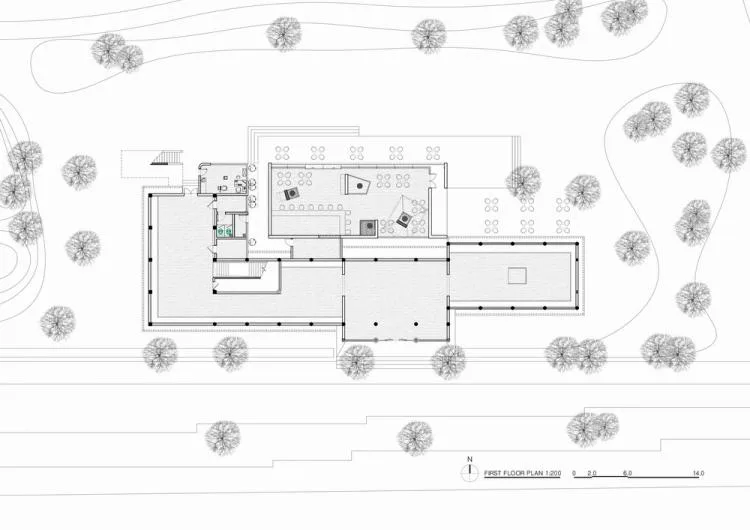
△ First floor plan
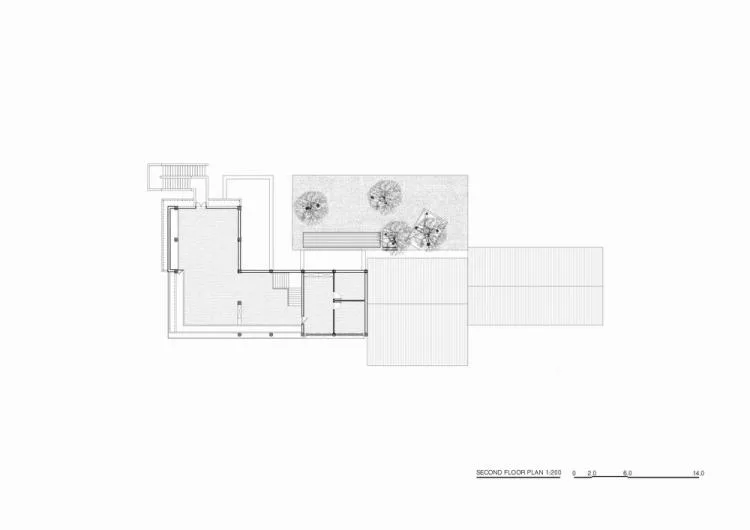
△ Second floor plan
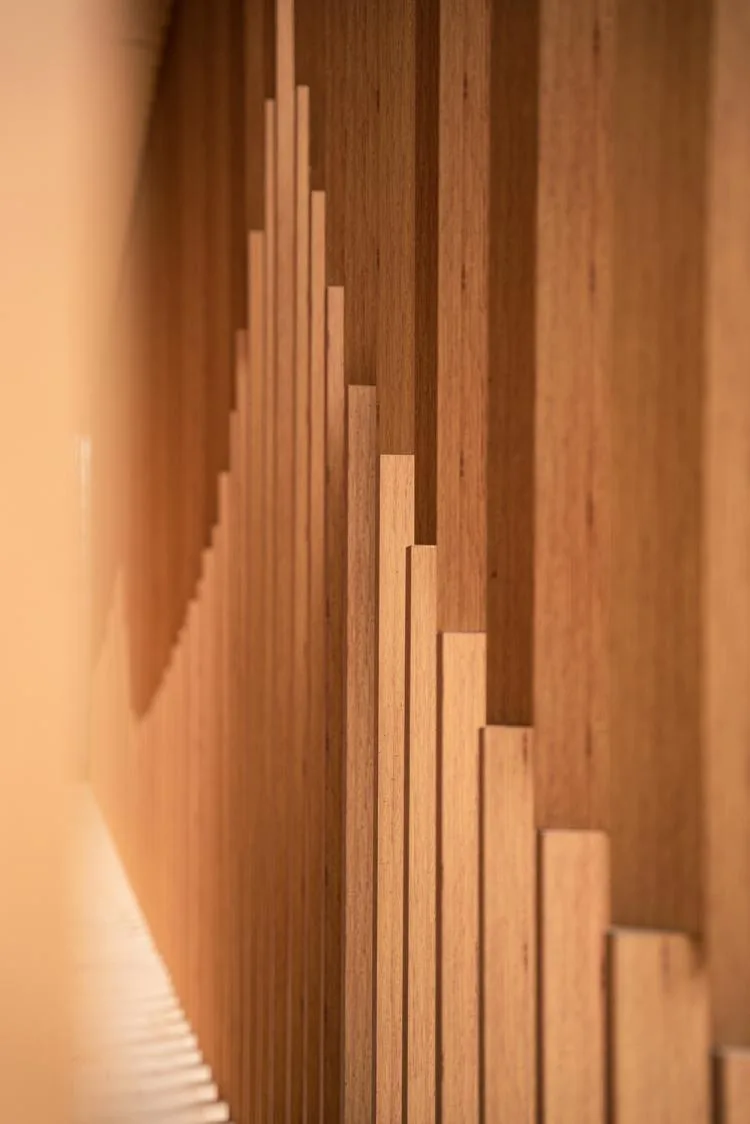
△ Vertical gradient grille detail (Photo by Ren Tian)
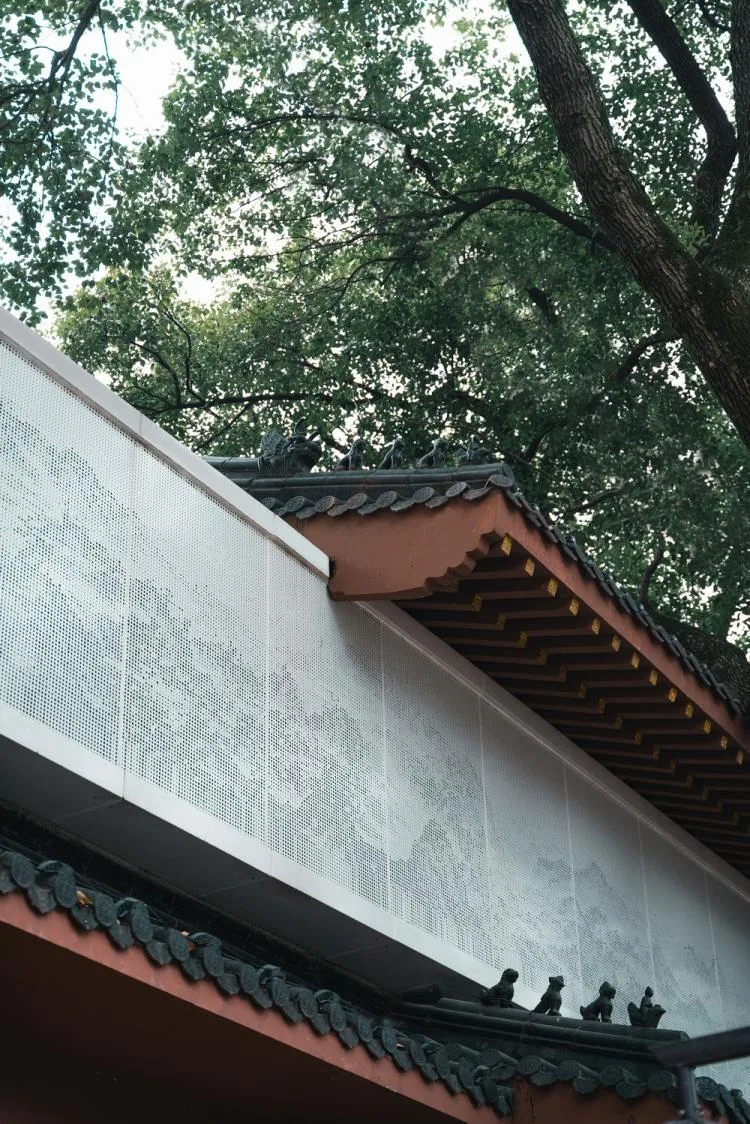
△ White perforated panel with printed imagery (Photo by Ren Tian)
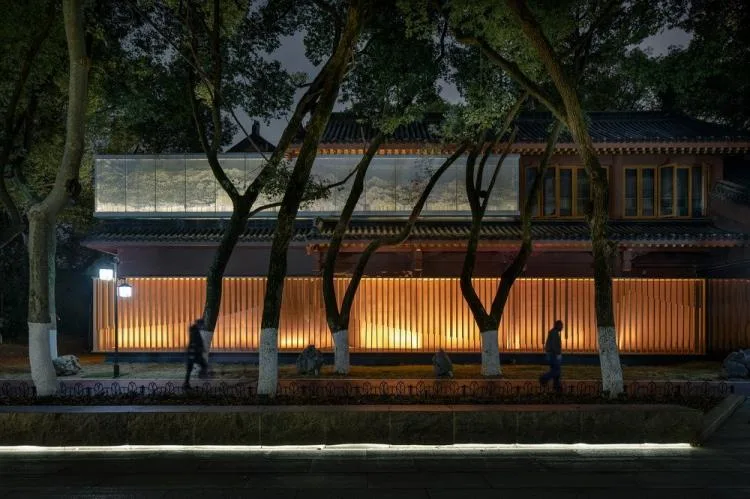
△ Architectural night view (Photo by Ren Tian)
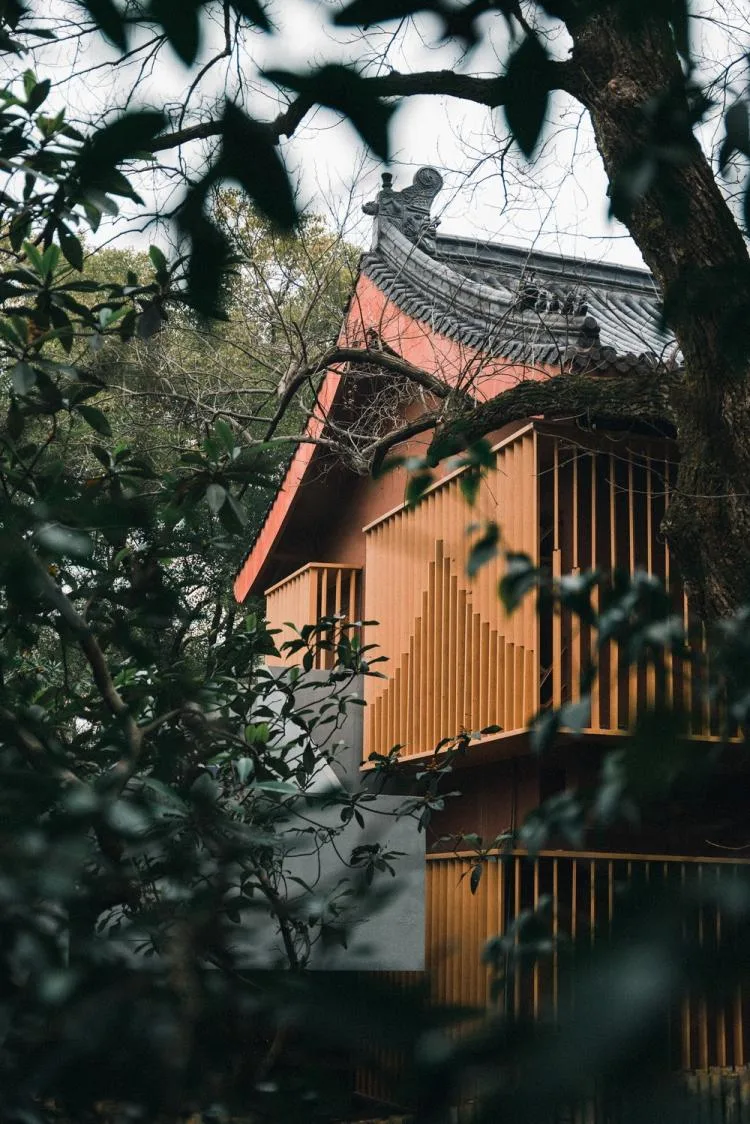
Details of the south façade (Photo by Ren Tian)
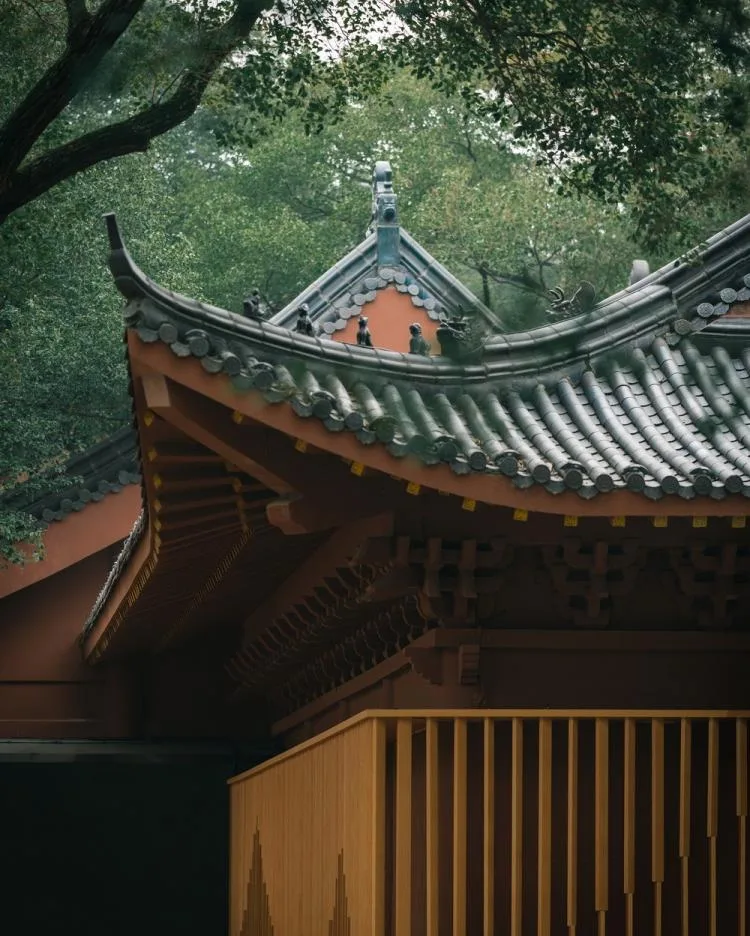
△ BoFeng eaves detail (Photo by Ren Tian)
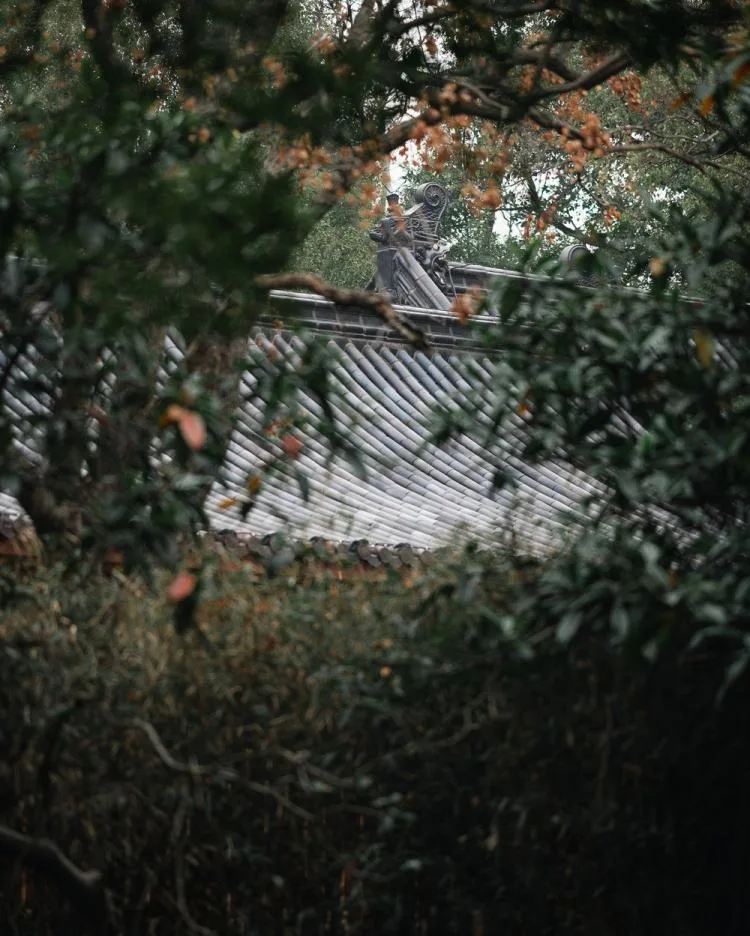
△ Blue roof tiles detail (Photo by Ren Tian)
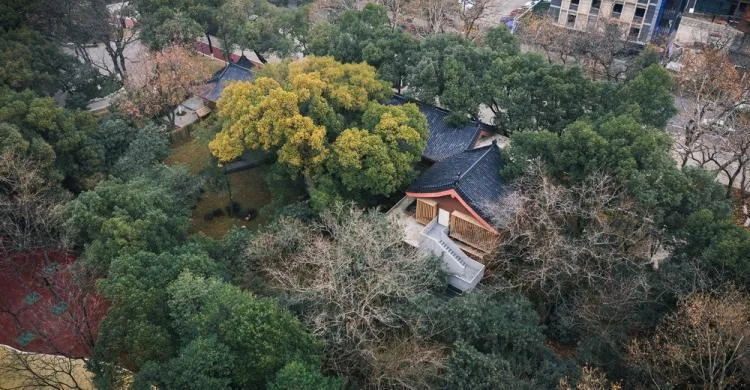
Aerial view of the site (Photo by Ren Tian)
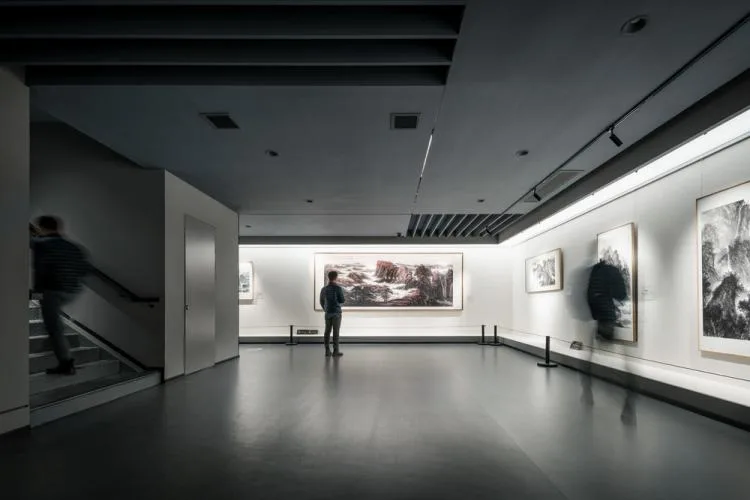
Interior exhibition hall of the art museum (Photo by Ren Tian)
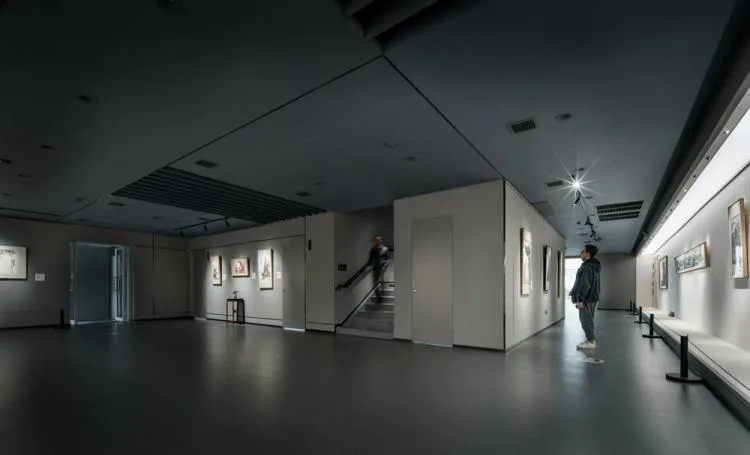
Interior exhibition hall of the art museum (Photo by Ren Tian)
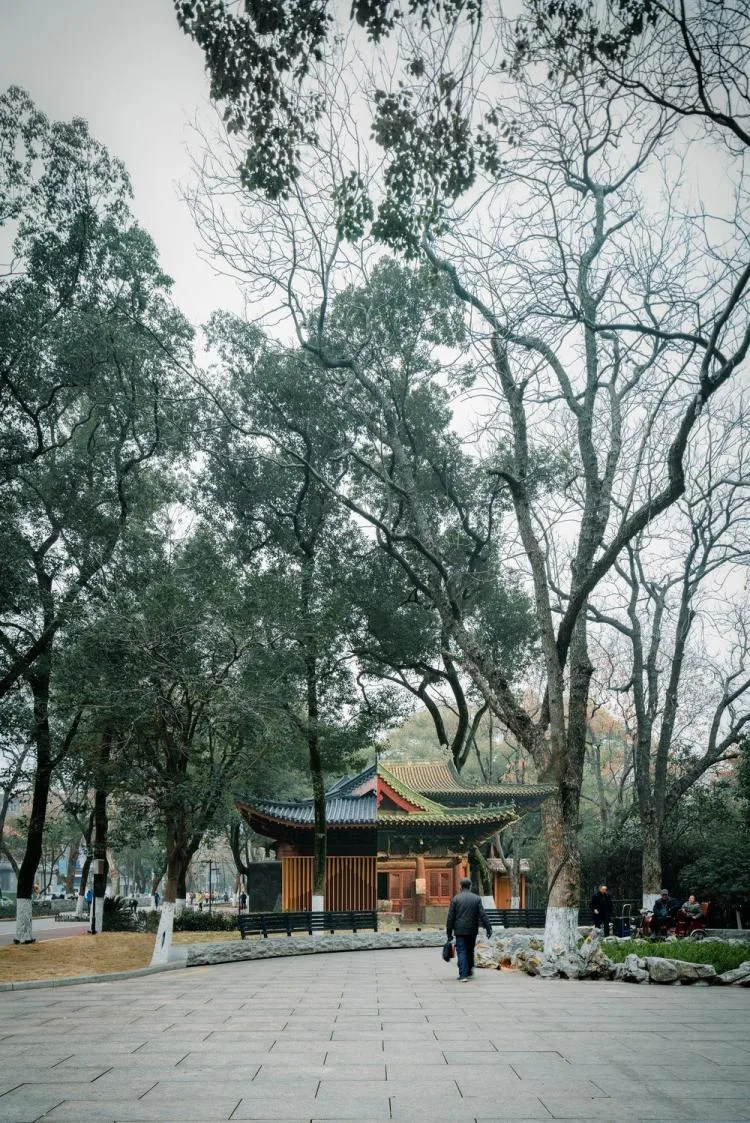
Comparison of the art museum and ancient architectural façades (Photo by Ren Tian)
Technical Drawings
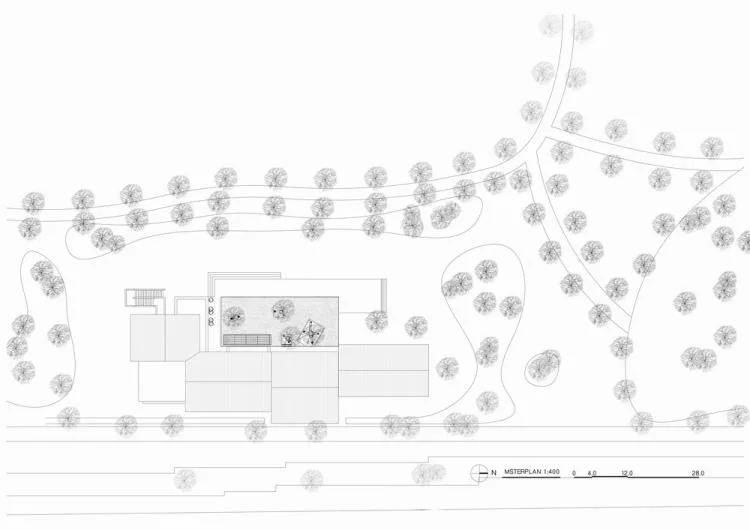
△ General layout plan
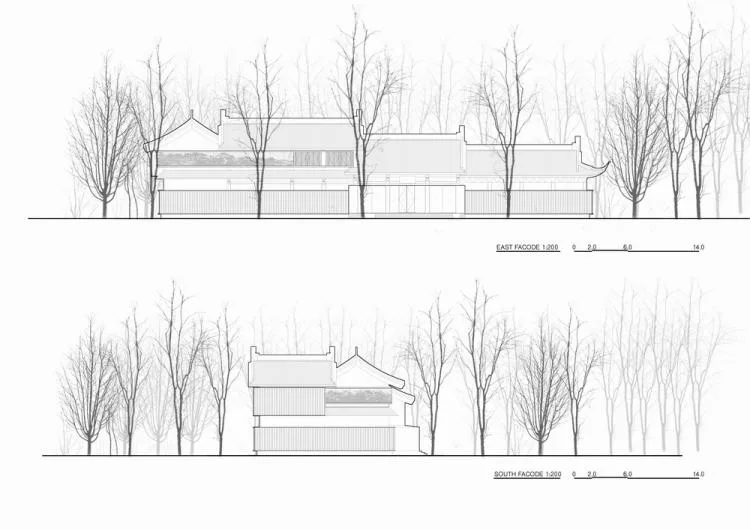
△ East and South façades plan
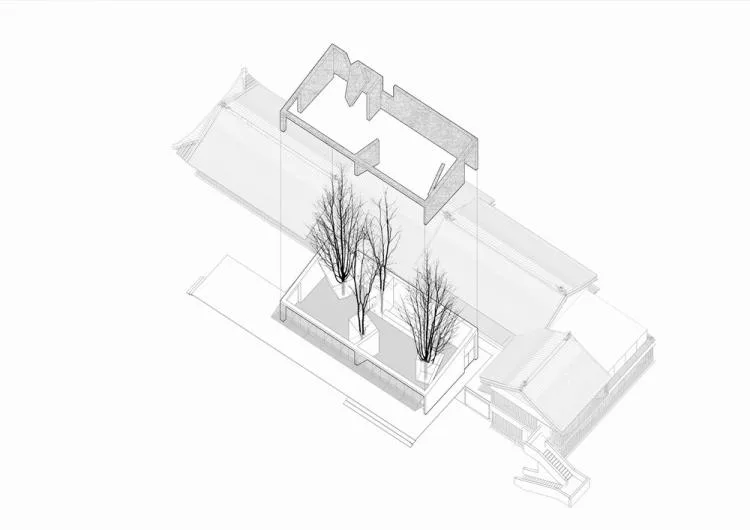
Structural axonometric drawing of the multifunctional tea hall on the west side
Project Information
Project Name: Renovation of Liangshu Art Museum in Bayi Park, Nanchang City
Location: Bayi Park, Supu Road, Donghu District, Nanchang City, Jiangxi Province
Design Team: Zhan Tao Studio, XAA Architecture Firm
Office Website: __AI_ST_URL_0__
Lead Architect: Zhan Tao
Conceptual Design Stage: Zheng Zhuowei, Li Zhi
Architect Team: Li Zhi, Zheng Zhuowei, Kong Miansheng, Wang Mengyu, Luo Jingjing, Huang Anqi
Owner: People’s Government of Donghu District, Nanchang City
Design Period: December 2019
Completion Date: October 2020
Land Area: 1,733 m²
Building Area: 780 m²
Project Management: Liu Jie, Guangzhou Sanchuantian Culture and Technology Co., Ltd
Interior Design Team: Mikawa Tian, Bao Xiangkun, Li Sen
Construction Management Team: Mikawa Tian, Luo Junwen, Wu Jian, Luo Dikang
Photographer: Ren Tian
Author: Li Zhi, Ren Tian












Must log in before commenting!
Sign Up