
Pae Thewaraj is a 40-year-old Thai restaurant situated along the Pa Sak River. TEWA embodies the original spirit of this traditional establishment, which specializes in a diverse range of desserts, main dishes, and beverages. Now in its third generation, the restaurant has expanded its operations within the food industry to offer a broader range of services to a wider audience. As a new generation of culinary graduates takes the helm, the owners aim to introduce a menu that reflects contemporary tastes and meets the demand for variety. Adjacent to Prince’s Restaurant, the Teva Café complements this vision by offering drinks, coffee, and Italian cuisine.
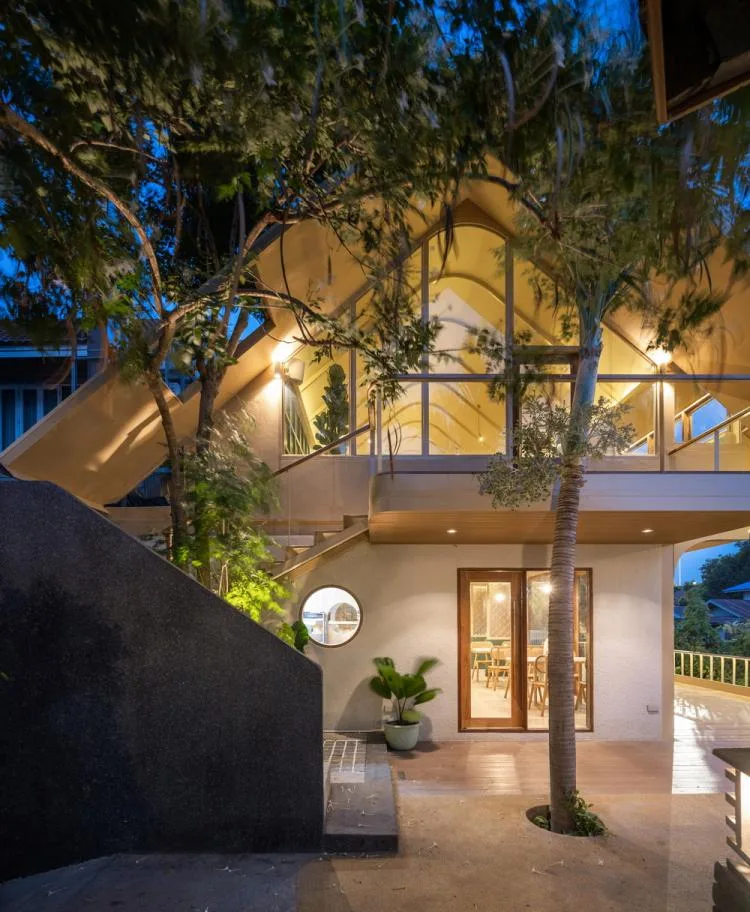
Located at the confluence of the Pasak River and the Khao Mao Canal, the Prince’s Restaurant and Teva Café face each other across the river, offering guests breathtaking views of the Pasak River throughout the day. Visitors can immerse themselves in the relaxing atmosphere of the interconnected canals and vibrant waterfront life.
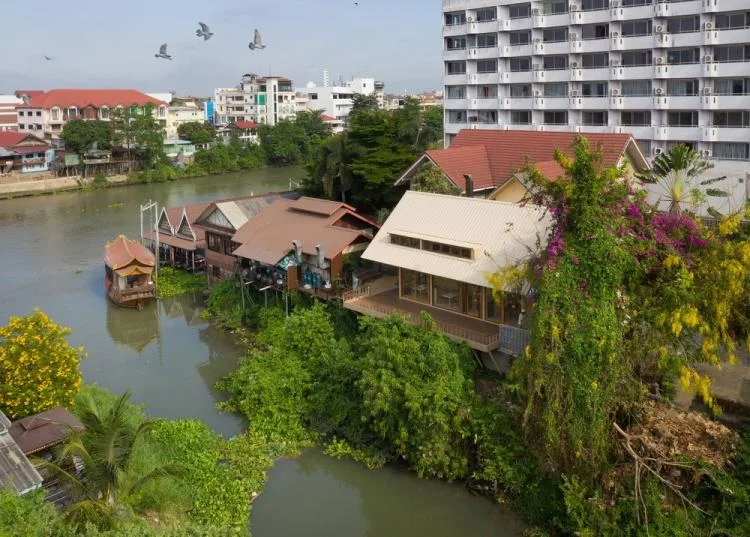
The architect sought to establish a connection between the two establishments, despite their differences in cuisine and style. To achieve this, the design integrates a unifying architectural element.
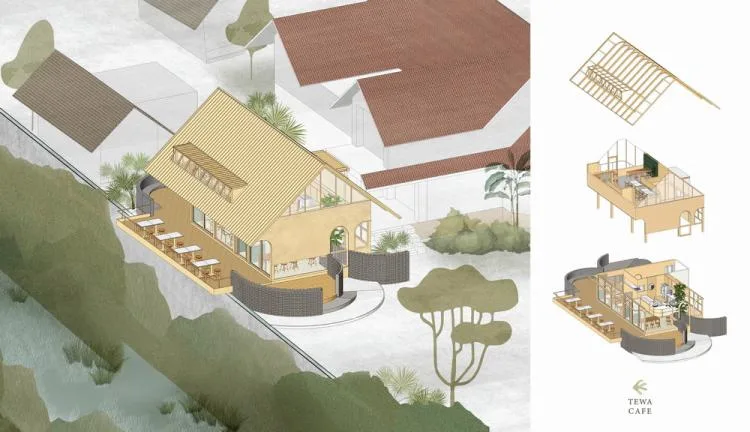
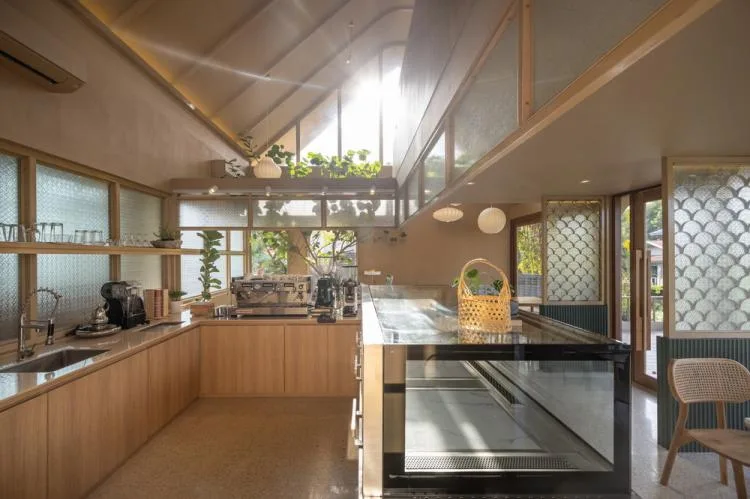
The concept of palm leaf carp was chosen by the architects and owners to symbolize the connection between the restaurant and the water. This design interprets the TEWA concept from a unique perspective, unfolding the form of palm leaves and highlighting the intertwined lines of two palm leaves.
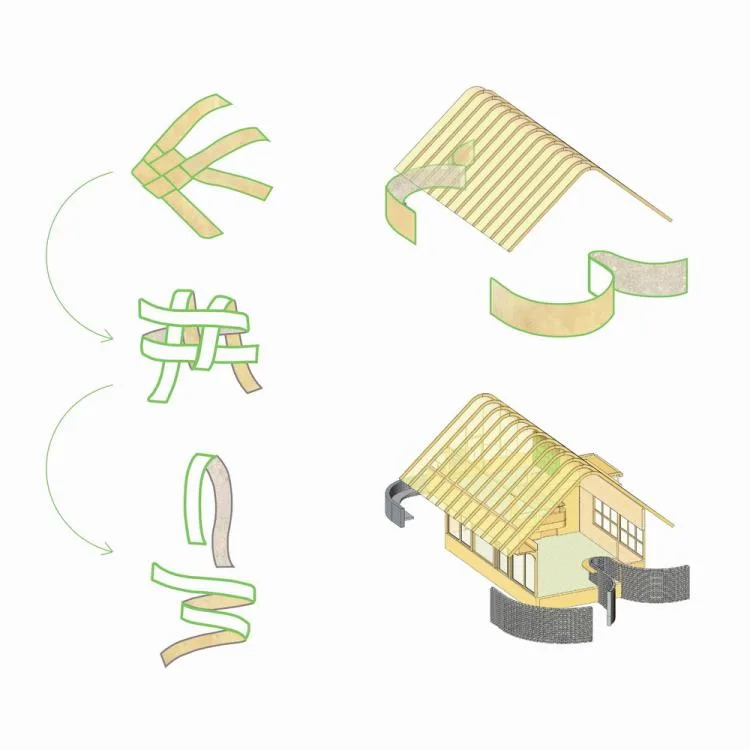
△ Shape Analysis Diagram
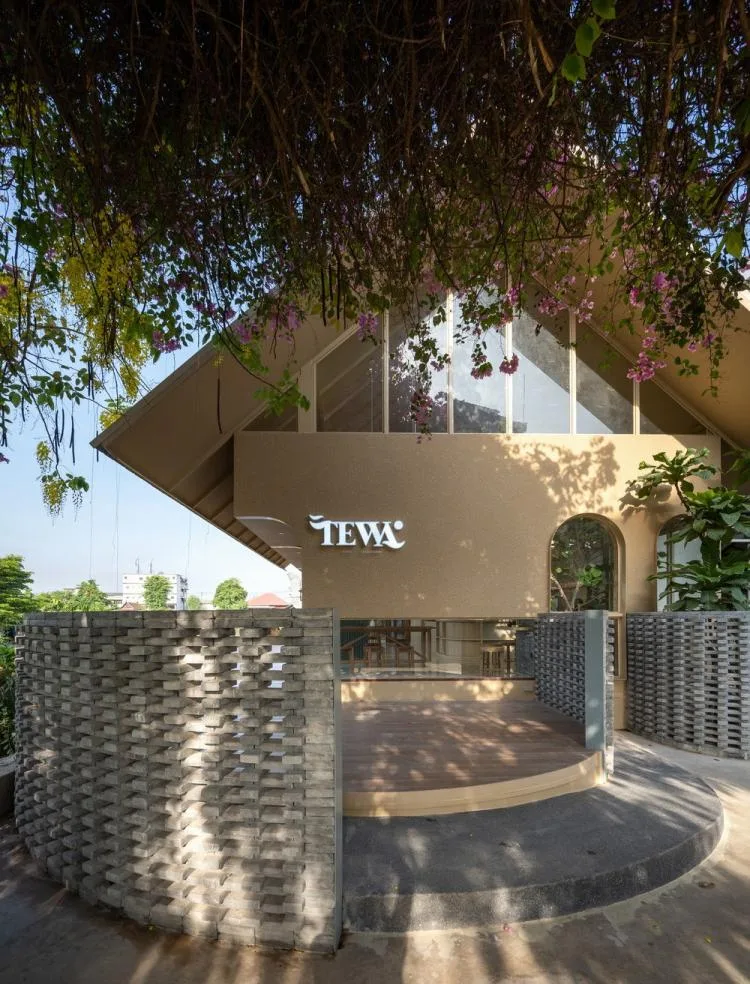
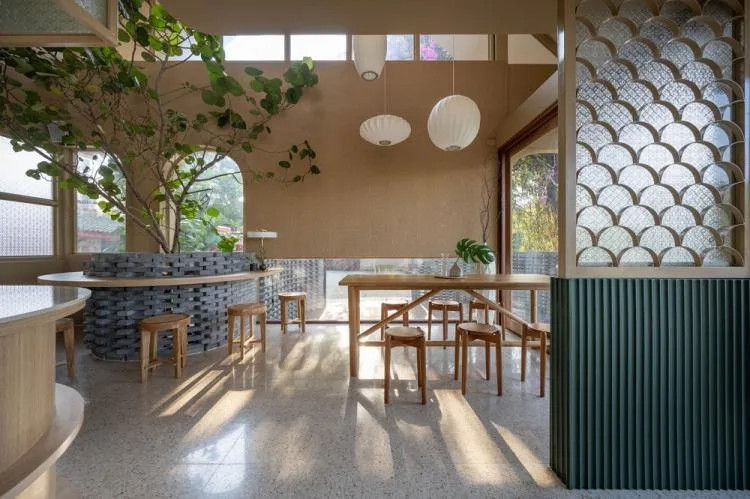
The building’s façade features lines inspired by carp scales and incorporates grey glass bricks to construct walls aligned with the entrance, enhancing the experience of approaching and entering the establishment.
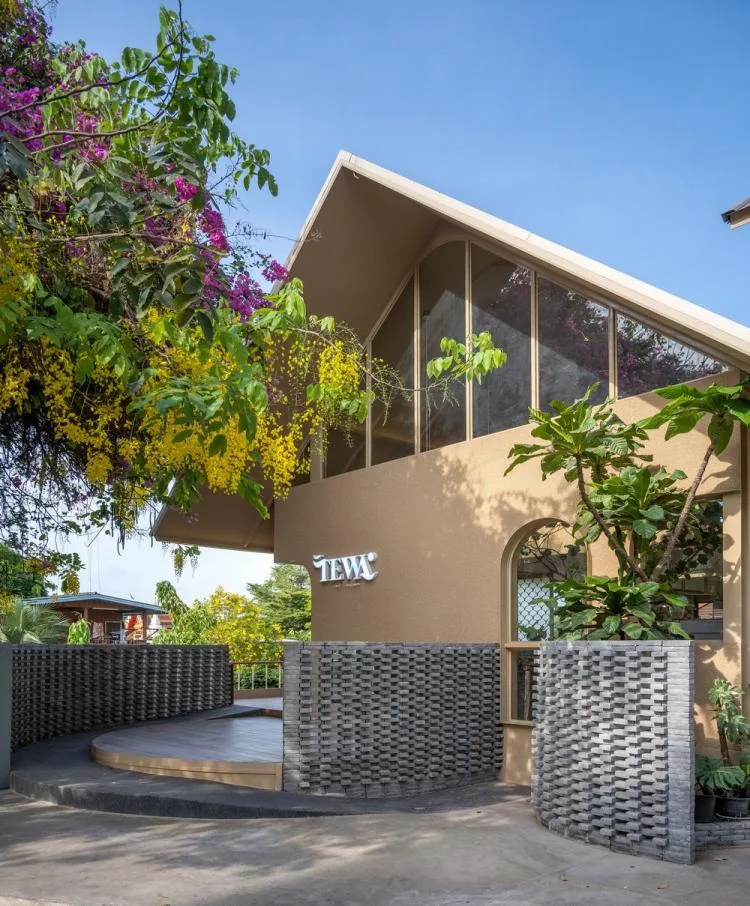
The stacked layers of glass bricks create an enclosing effect, bridging the interior and exterior spaces seamlessly.
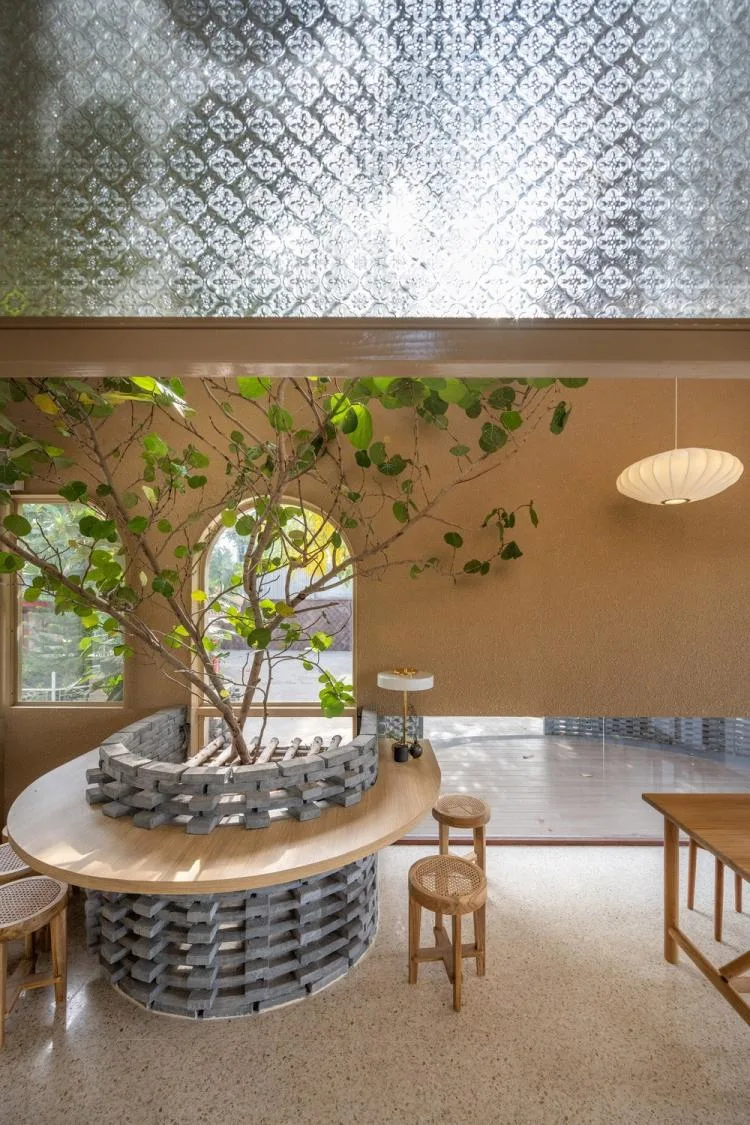
Natural light gently filters through the building, bringing greenery into the interior. The grey glass brick wall at the rear fosters interaction between the Teva Café and Prince’s Restaurant.
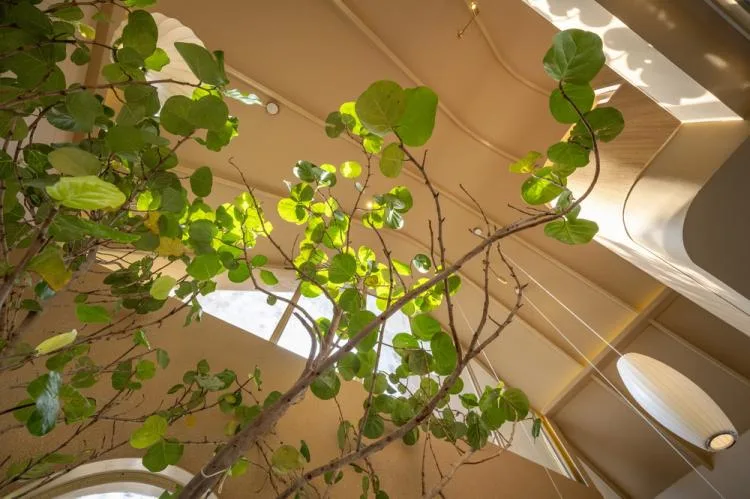
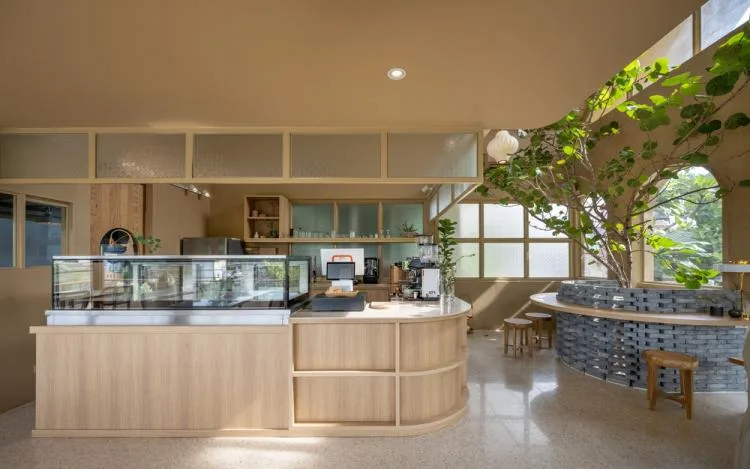
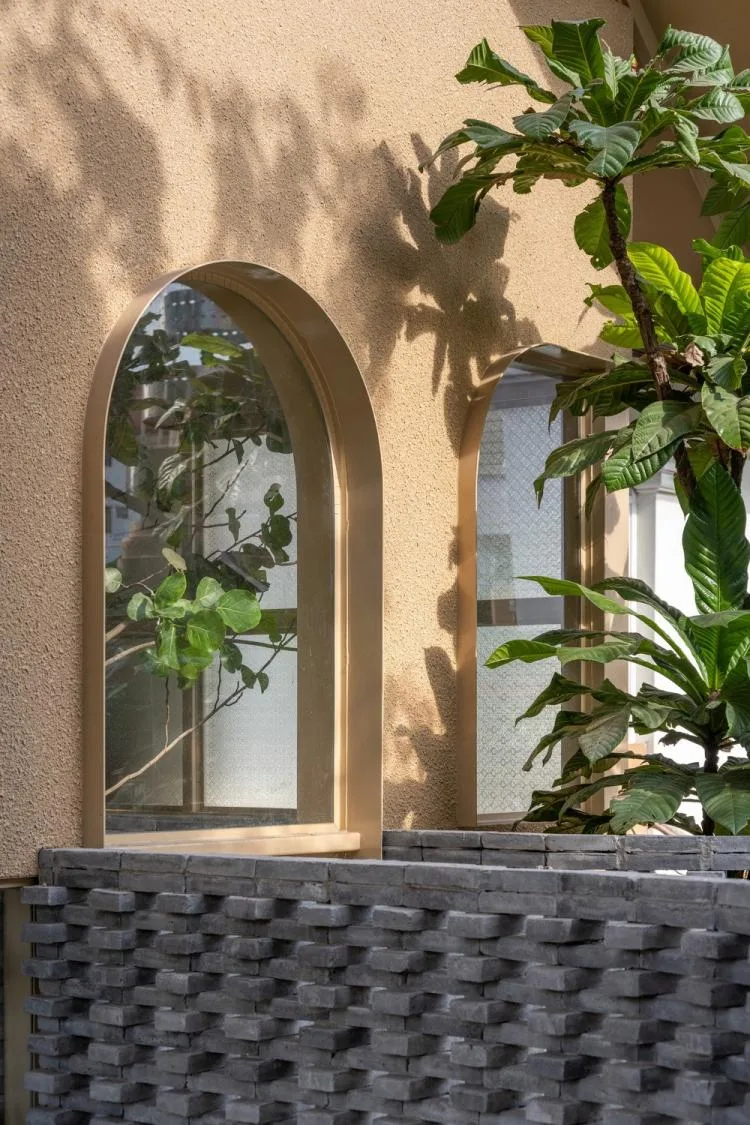
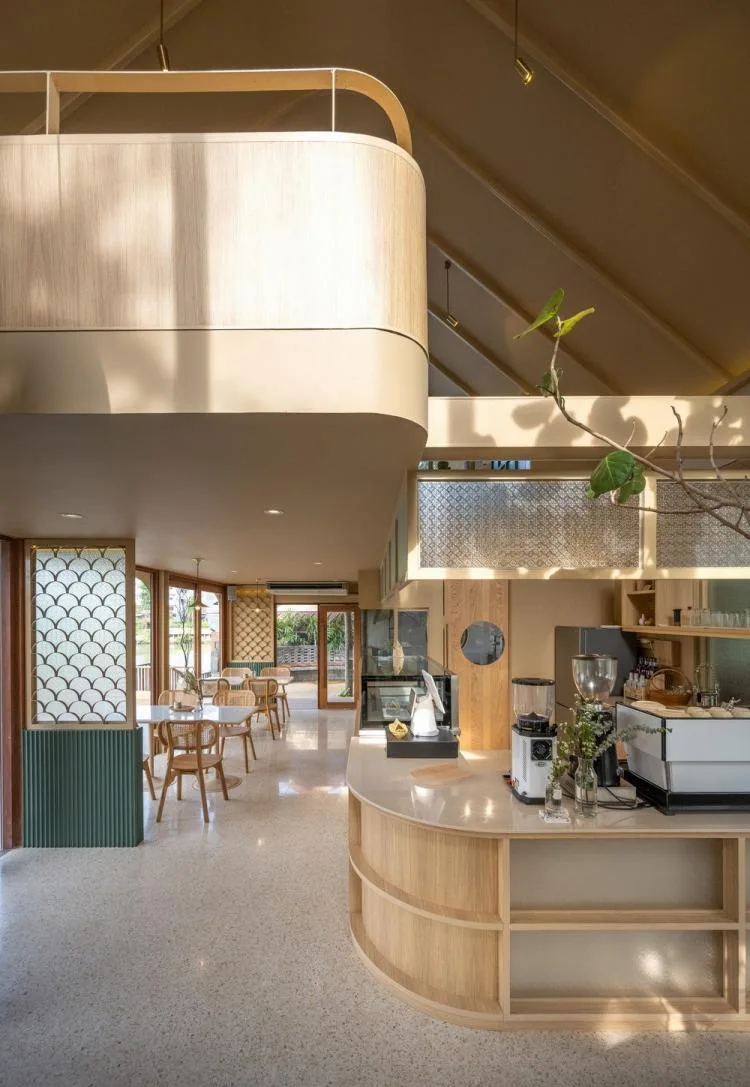
The staircase area includes a cleverly concealed wheelchair ramp at the main entrance, ensuring accessibility for elderly and disabled guests. The second floor serves as the café’s core, housing the kitchen and beverage preparation areas.
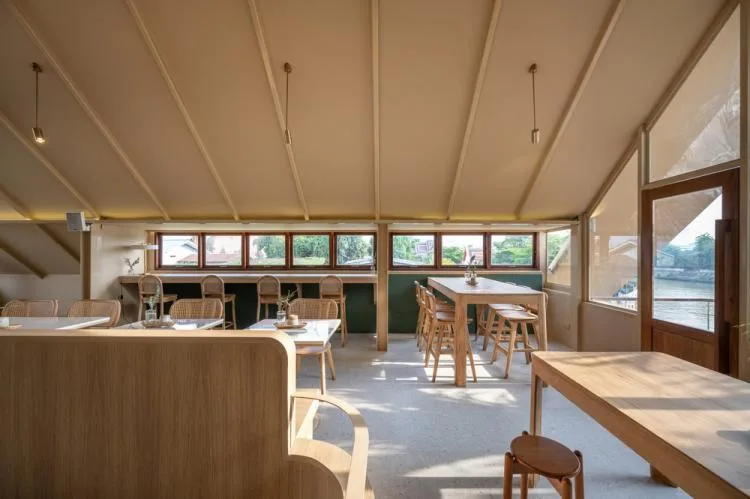
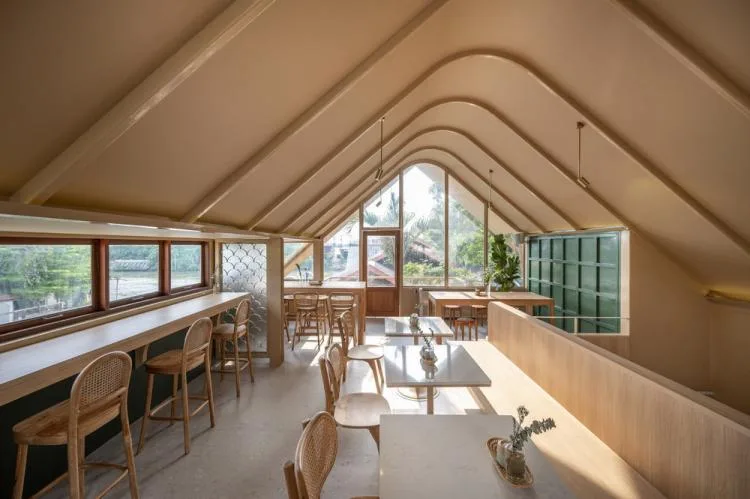
The customer reception and seating areas are designed to accommodate a larger number of guests, inviting them to enjoy the café’s renowned atmosphere.
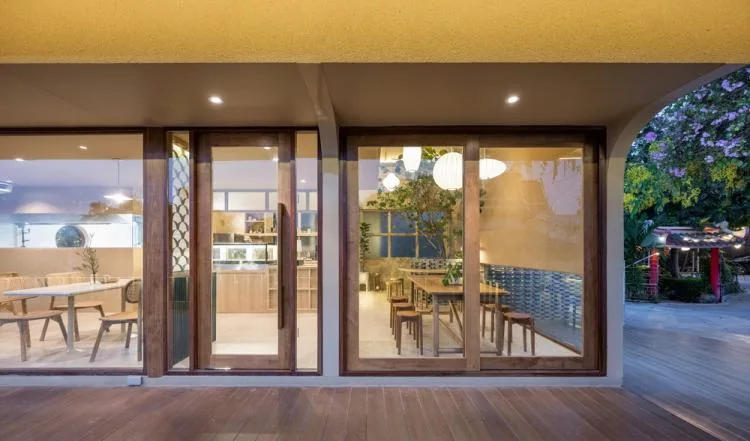
 To help guests focus on their dining experience, the front façade primarily consists of opaque elements, while still framing views of nearby temples, waterfront communities, and intersecting rivers.
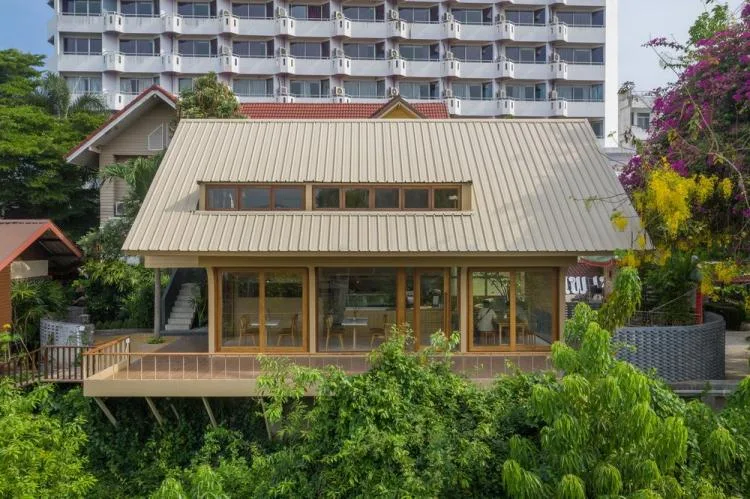
The staircase to the upper floor begins outside the building, pushing the streamlined design to the building’s edge and maximizing interior space.
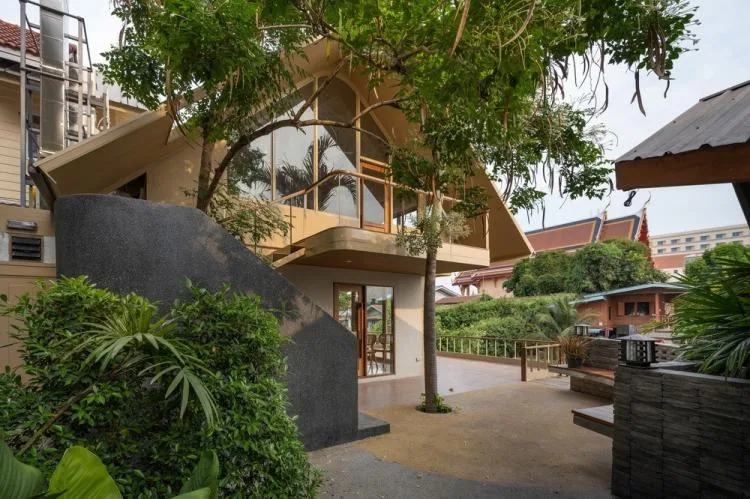
The upward walkway balances the building’s proportions, preventing it from appearing oversized.
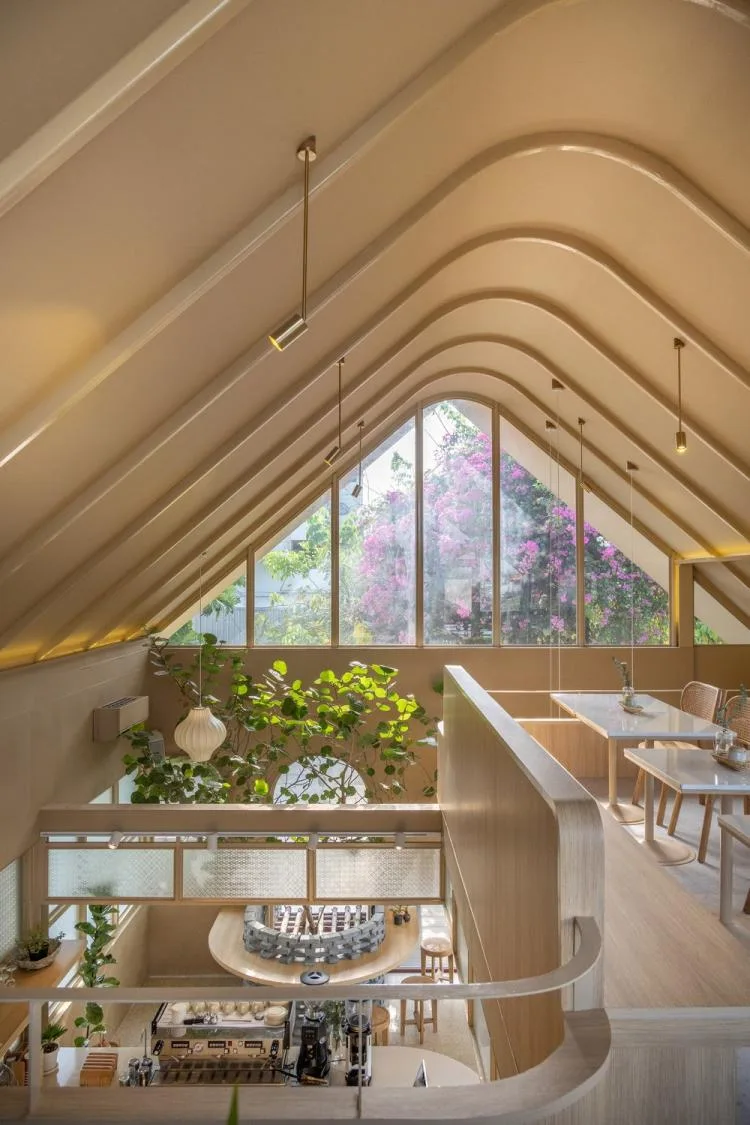
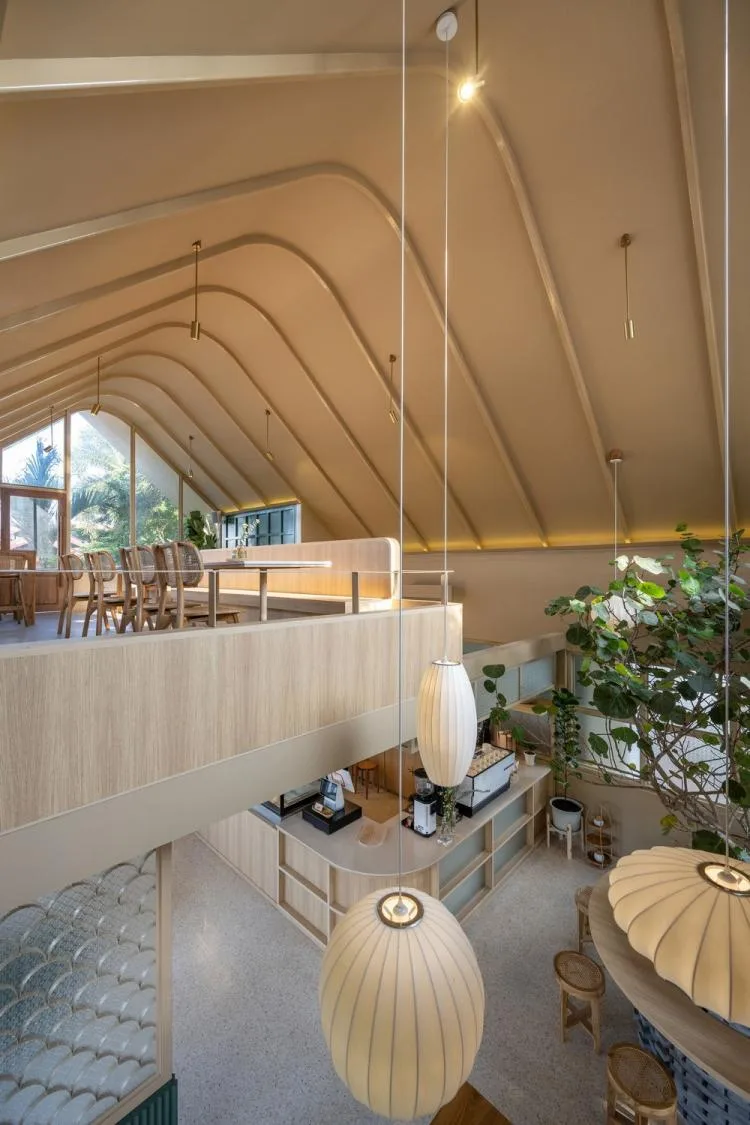
Before entering, guests are greeted by a floor-to-ceiling glass window that opens up the interior view, blending natural elements into the space and creating a vibrant, inviting atmosphere.
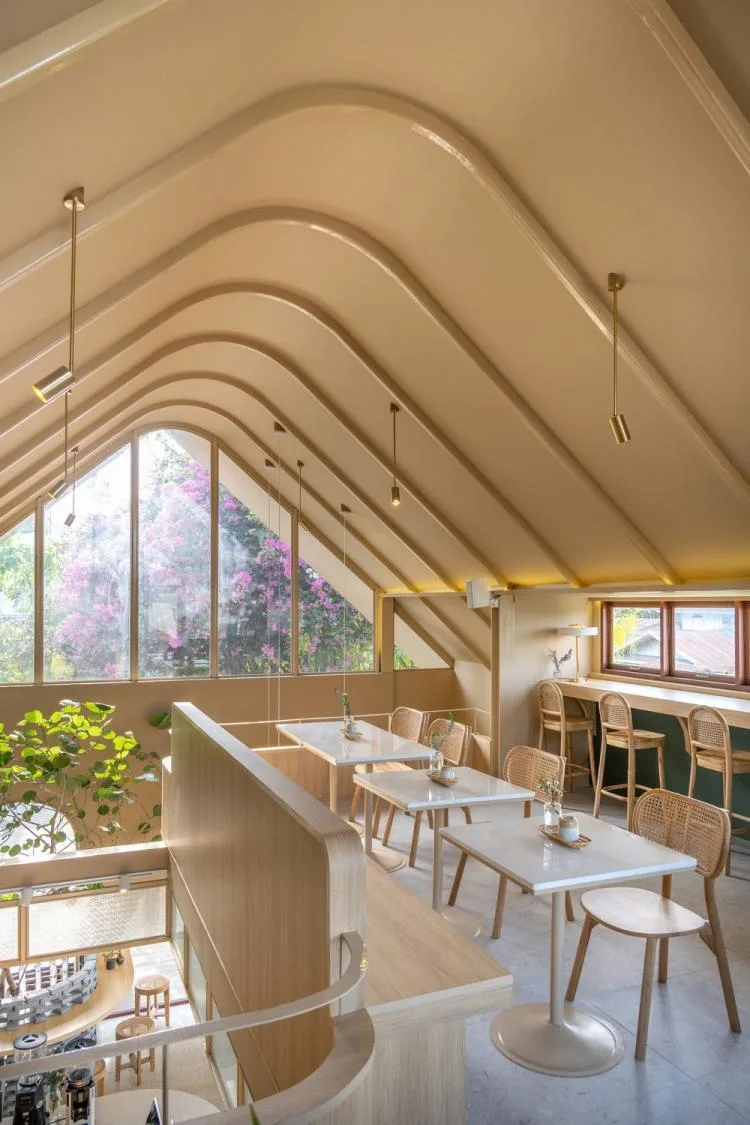
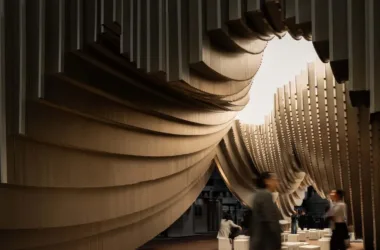
The upper interior space features a distinctive roofline inspired by the geometric forms of palm trees, reflected in its curved ceiling design.
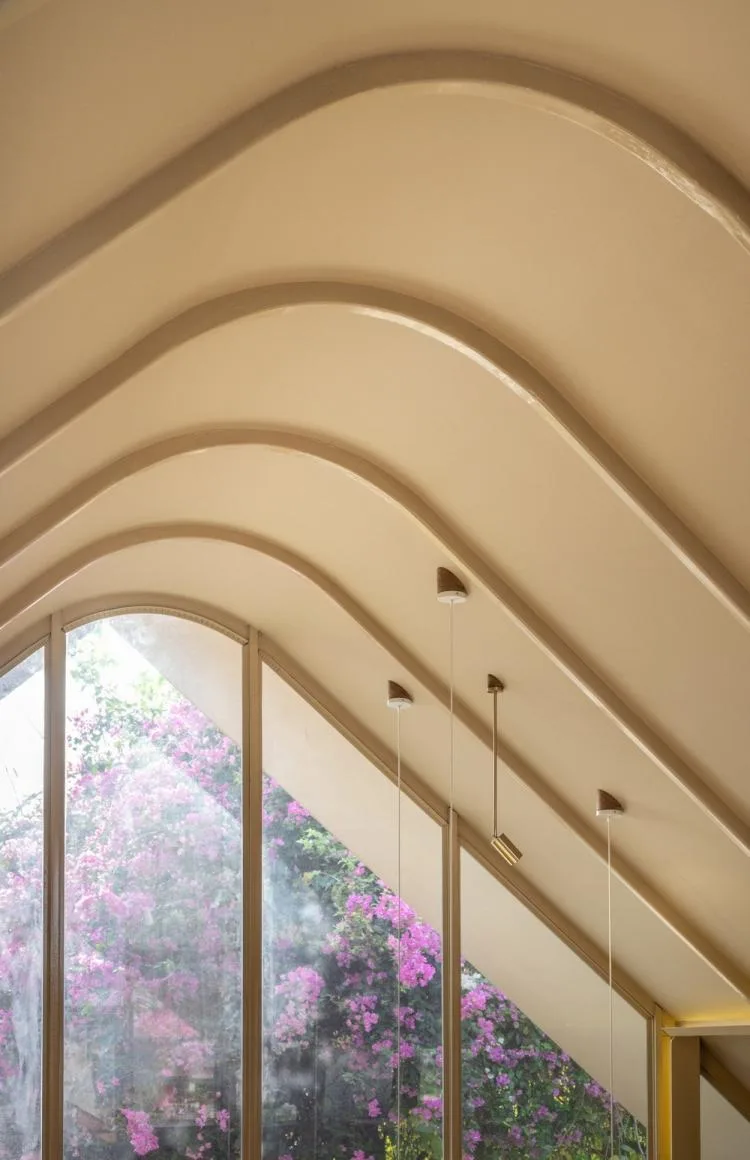
The architect has opened portions of the upper floor, creating a multi-level spatial connection within the building.
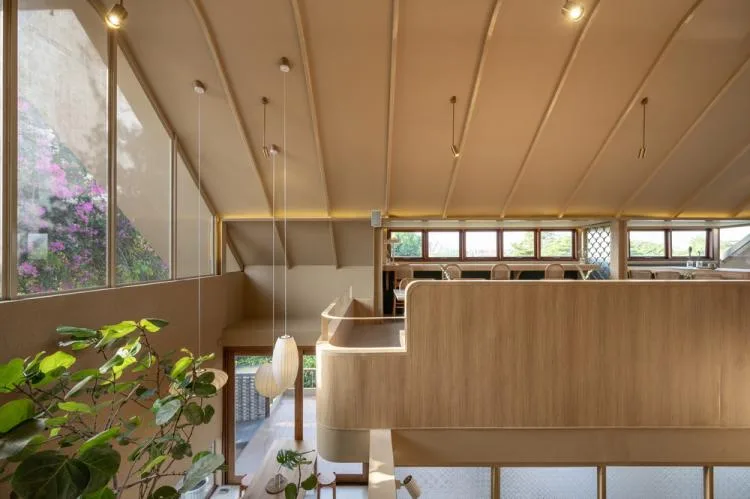
The design prominently features colorful lines inspired by the palm leaf carp concept.
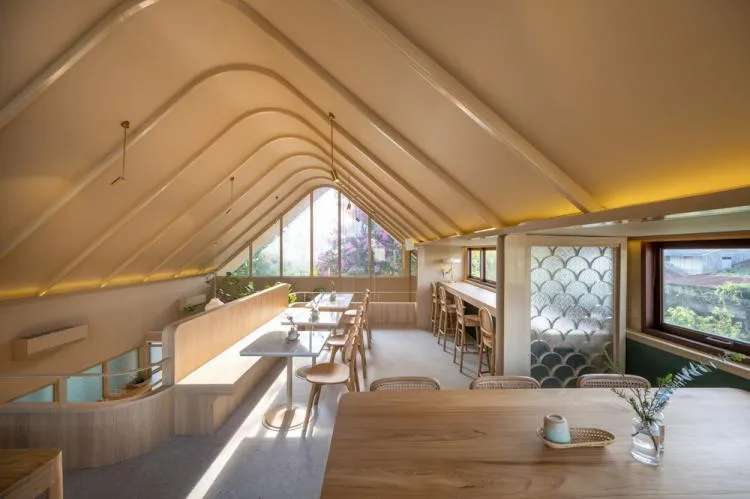
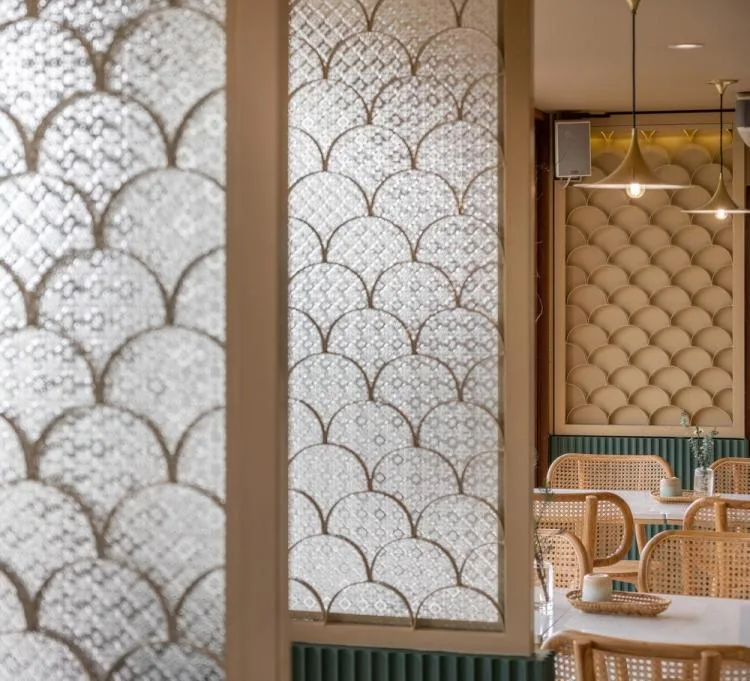
Additionally, a series of symbolic spaces have been crafted to enrich diners’ experiences, allowing them to savor the cuisine while appreciating the meticulous design details and material craftsmanship.
Technical Drawings
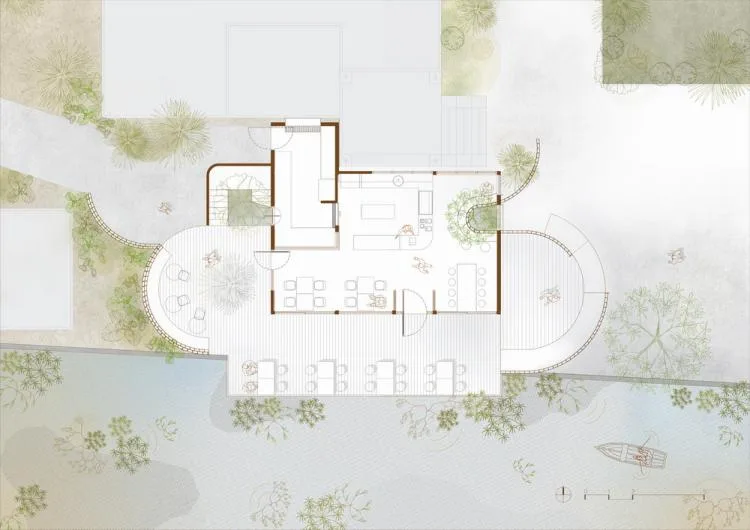
△ First Floor Plan
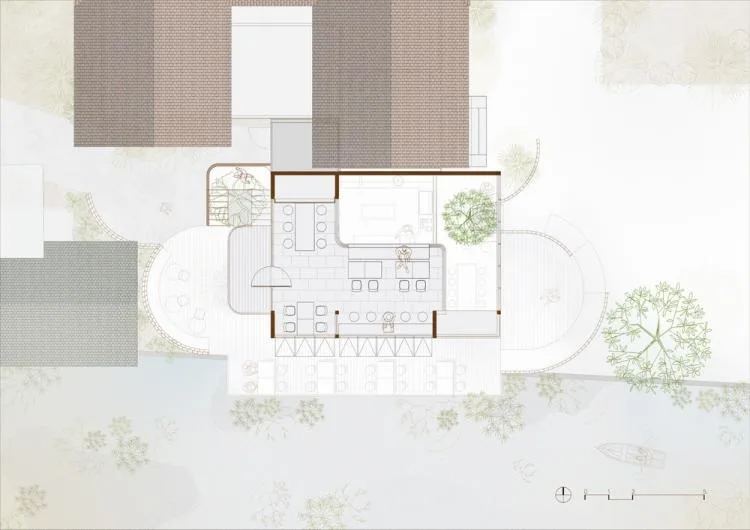
△ Second Floor Plan
Project Information
Architectural Design: BodinChapa Architects
Area: 200 m²
Project Year: 2021
Photographer: Rungkit Charoenwat
Architect: BodinChapa Architects
City: Ayutthaya Prefecture
Country: Thailand












Must log in before commenting!
Sign Up