
Jiangzhuang is a village located along the Yellow River, straddling the border between Henan and Shandong Provinces in China. With a history spanning over 400 years, 99% of its residents share the surname “Jiang.” The village has meticulously preserved a genealogy tracing the Jiang family lineage back to the Zhou Dynasty, covering 96 generations to date. Due to frequent flooding from the Yellow River, villagers began relocating westward beyond the river embankment starting in the 1960s, leading to the abandonment of the original settlement.
In 2017, supported by the local government and the China Poverty Alleviation Foundation’s “Baimei Village Accommodation” public welfare initiative, Jiangzhuang was selected as a key pilot site for rural tourism aimed at poverty alleviation.
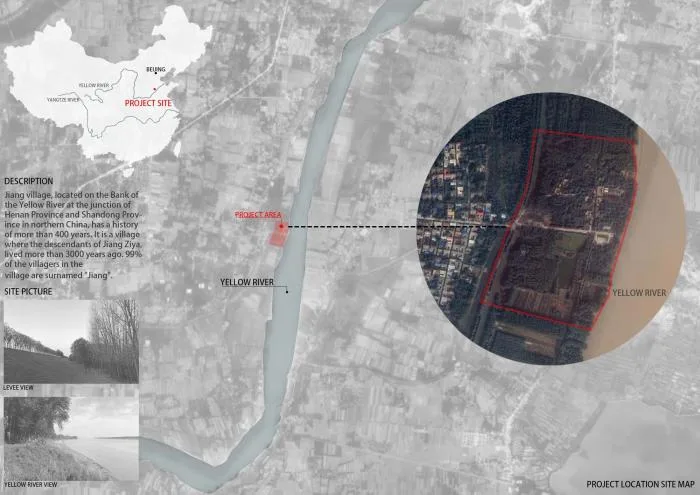
△ Project location
The project revolves around a small rural hotel complex that repurposes over ten abandoned residential buildings into courtyard-style hotels. It also includes three public cultural buildings and two treehouses nestled in the forest. Beyond individual structures, the project undertakes comprehensive infrastructure upgrades and preserves the village’s overall architectural style and environment through organic renewal.
The renovation plan highlights the village’s close connection to the Yellow River, surrounding embankments, forests, and farmland. It respects the original layout, textures, and natural scenery of the rural setting.
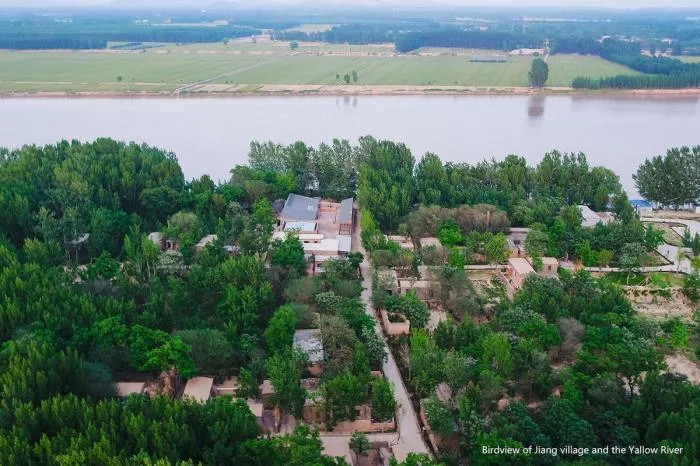
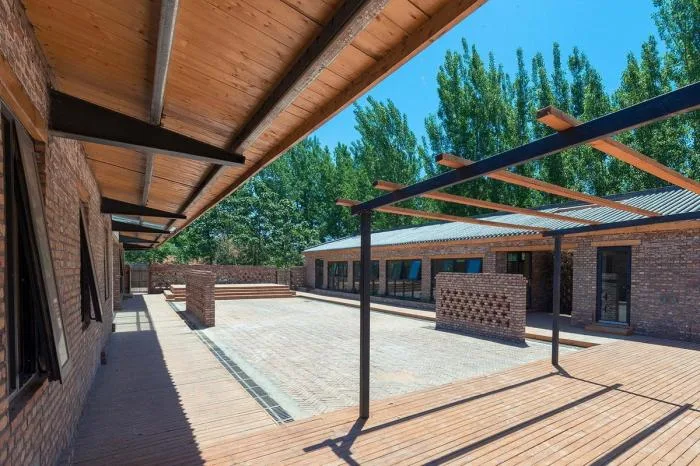
The renovation preserves the traditional L-shaped and U-shaped courtyard layouts typical of local residential architecture. It maintains the characteristic materials such as raw soil, brick, and bluestone for the exterior walls, along with staggered brick eaves, yellow mud roofs, and gently arched wooden frames.
Structurally, the abandoned buildings have been reinforced, with added internal insulation, expanded sanitary facilities, and raised ceiling heights to improve natural ventilation and lighting. This creates a seamless integration between indoor and outdoor spaces.
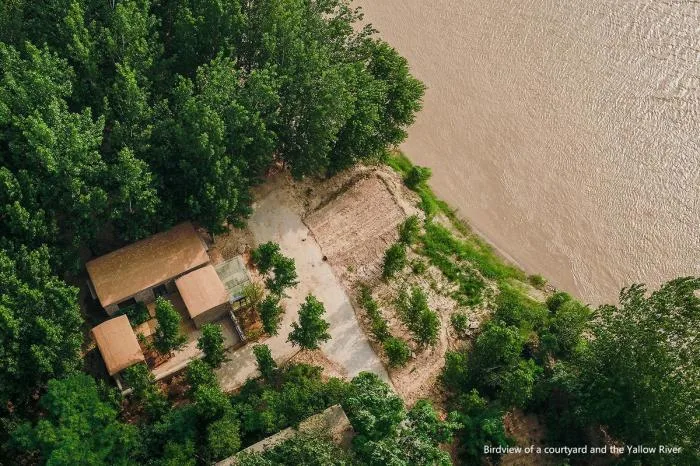
The village cultural center was transformed from former sheep pens and pigsties, now housing a library, rural bar, exhibition hall, and restaurant within three interconnected public courtyards. The forest treehouses feature gently arched roofs that harmonize with the residential buildings, blending into the surrounding landscape as both storage and scenic elements.
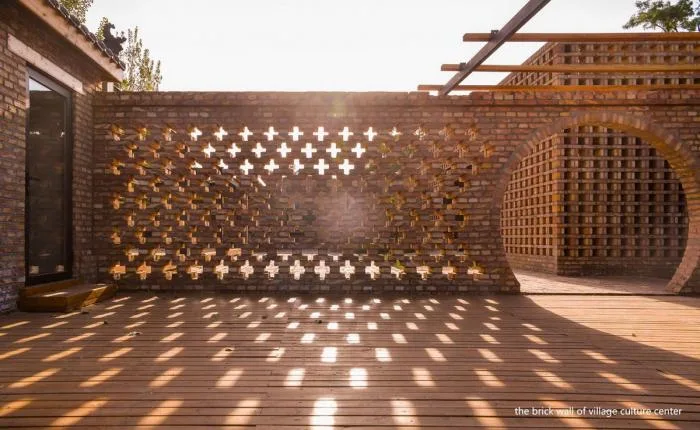
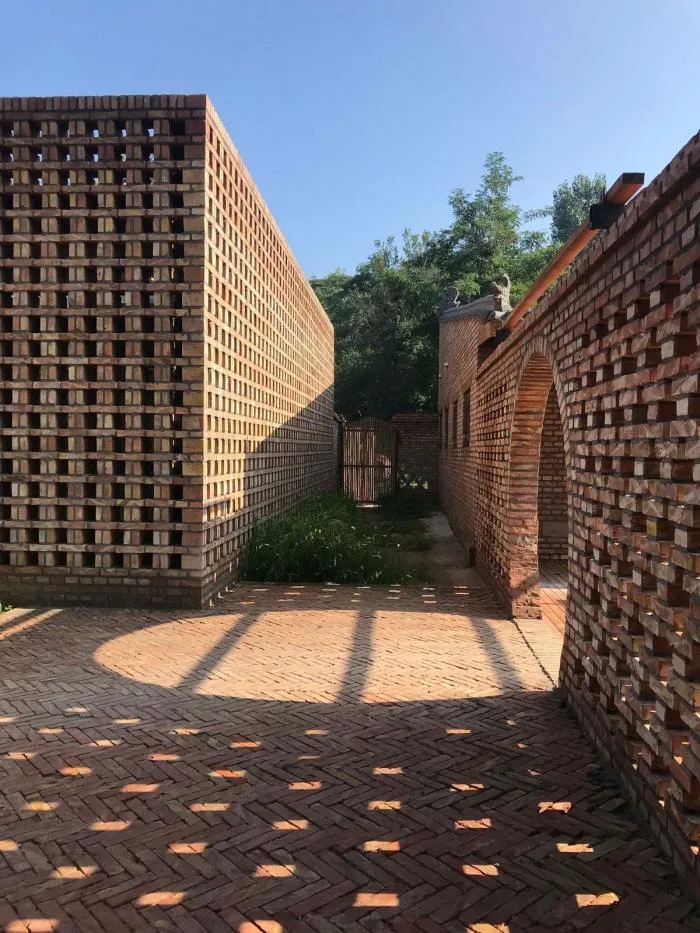
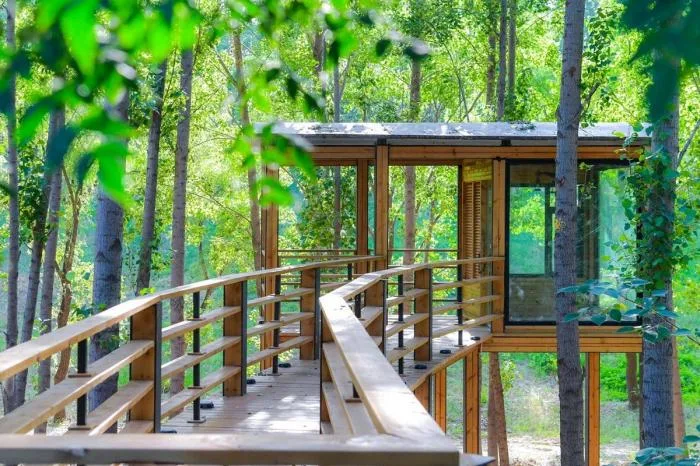
As a poverty alleviation initiative funded by charitable donations, Jiangzhuang employs a cooperative model where villagers voluntarily participate and share in the profits from the business operations. This approach ensures that the villagers become the primary beneficiaries, helping lift the community out of poverty.
The construction was carried out entirely by local villagers, who revived traditional building techniques and cultural practices. This process strengthened the community’s identity and cohesion.
The architect’s vision is to create a new rural social and ecological environment through the comprehensive renovation of Jiangzhuang. The project aims to improve villagers’ public living standards, boost their self-worth and social awareness, and facilitate a natural transition from a traditional to a modern rural community.
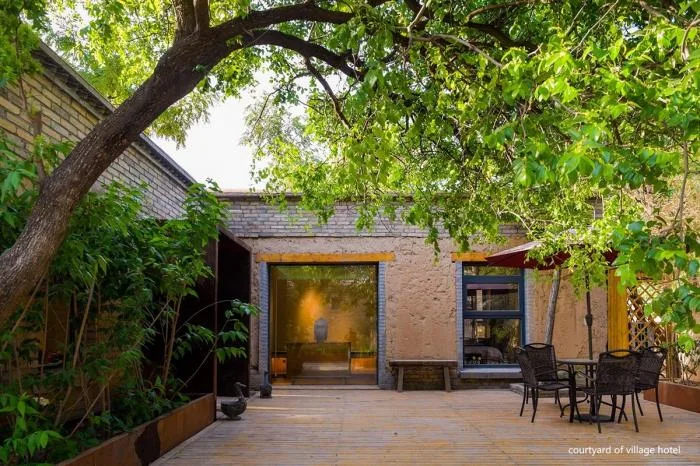
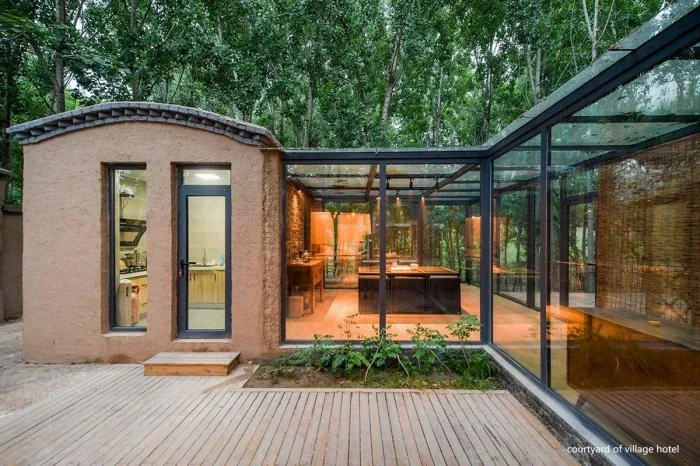
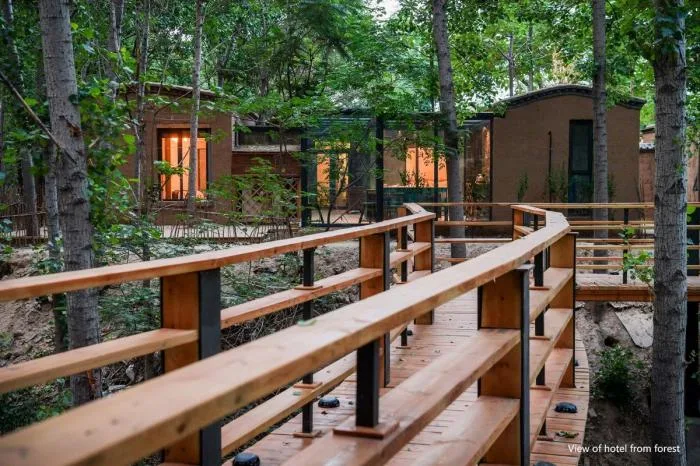
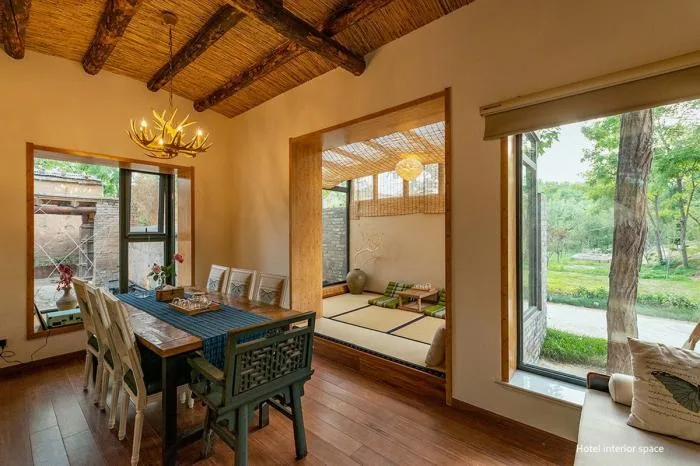
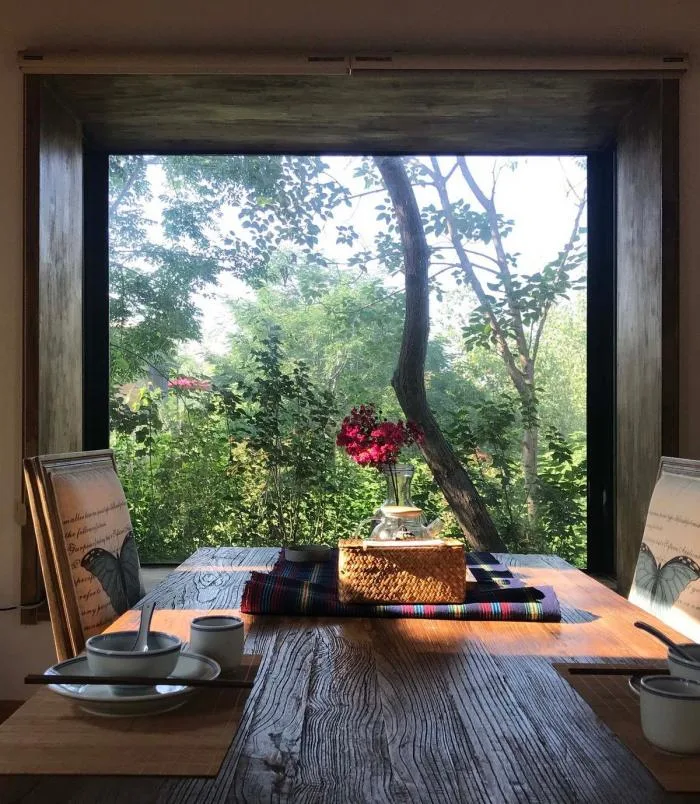
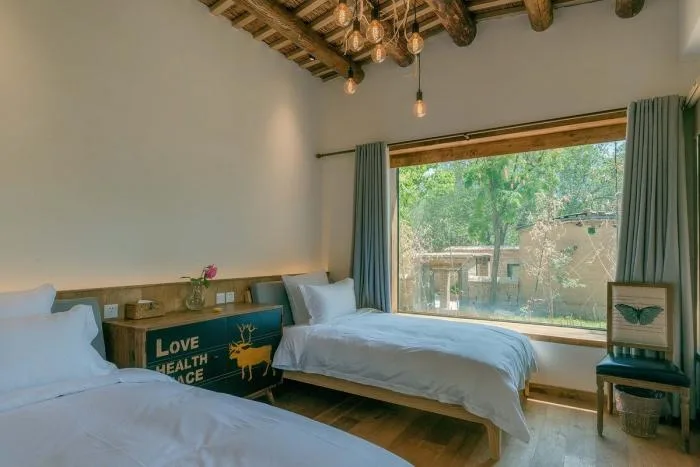
The renovation of Jiangzhuang also imparted an important lesson to the architects: true architectural harmony is achieved by returning to the “origin”—reestablishing the deep emotional bond between people and the land, and fostering a symbiotic relationship between humans and nature.
Through “local design” and “local construction,” buildings can naturally emerge from the land, creating a spiritual homecoming.
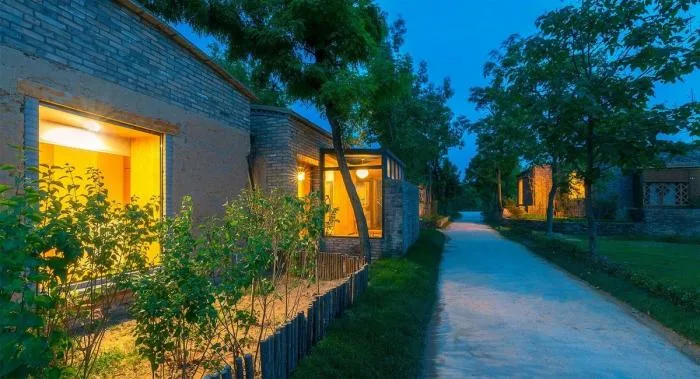
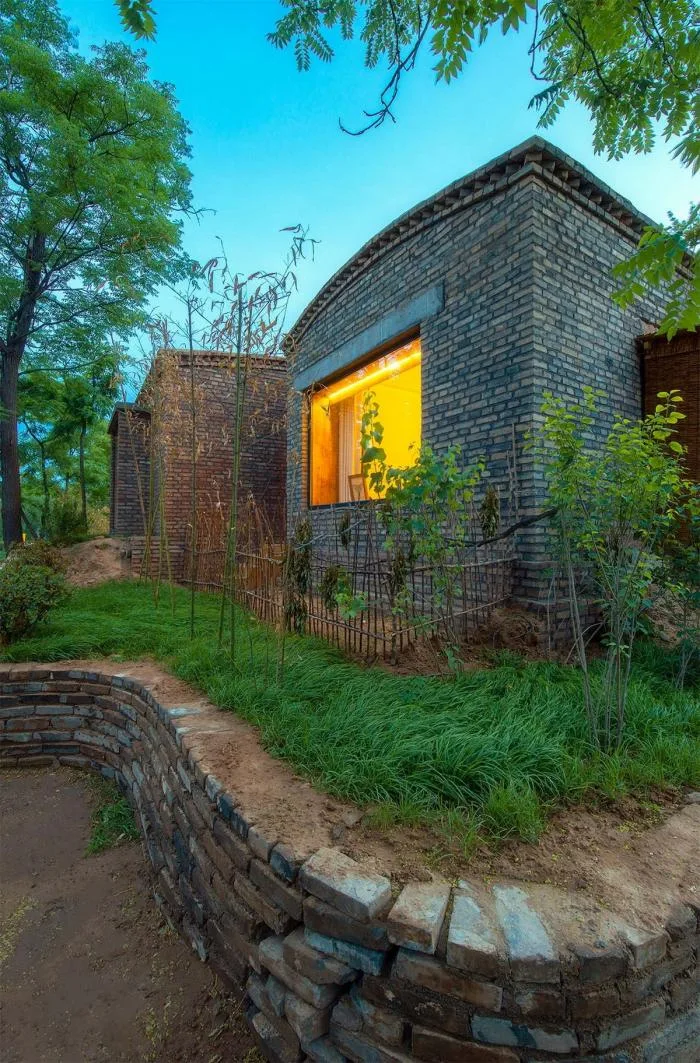
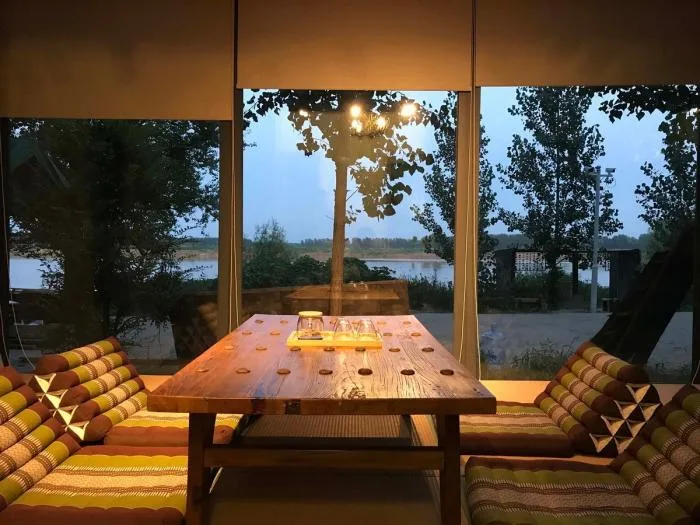
Design Drawings
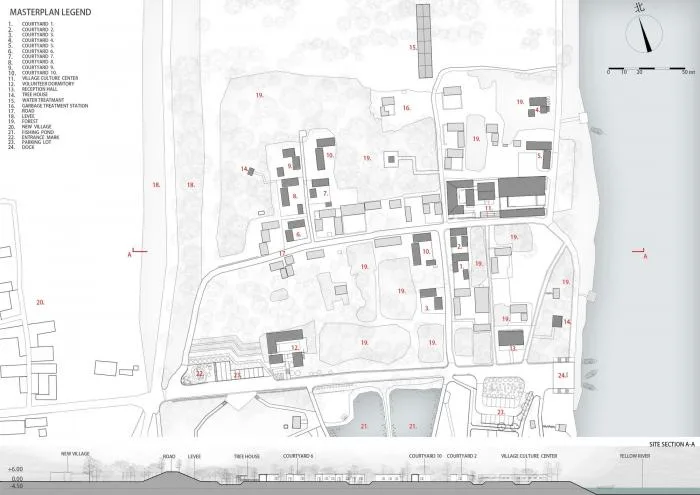
△ General layout plan
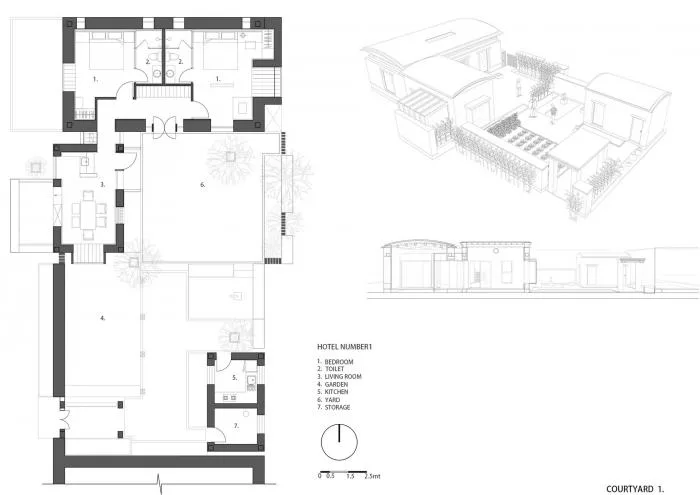
Plan of Courtyard 1
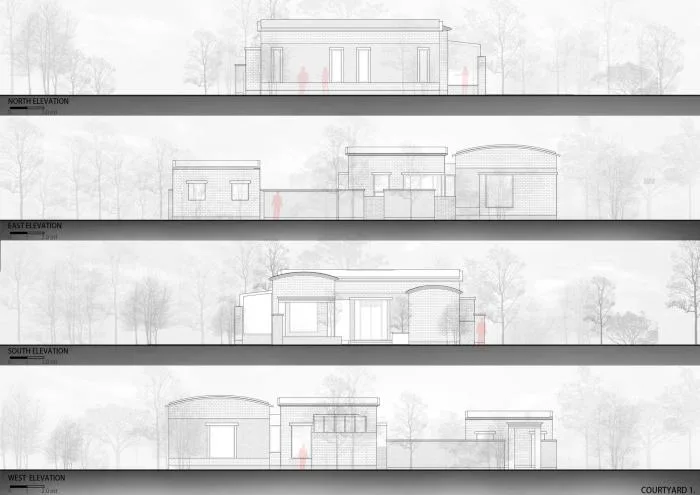
△ Front view of Courtyard 1
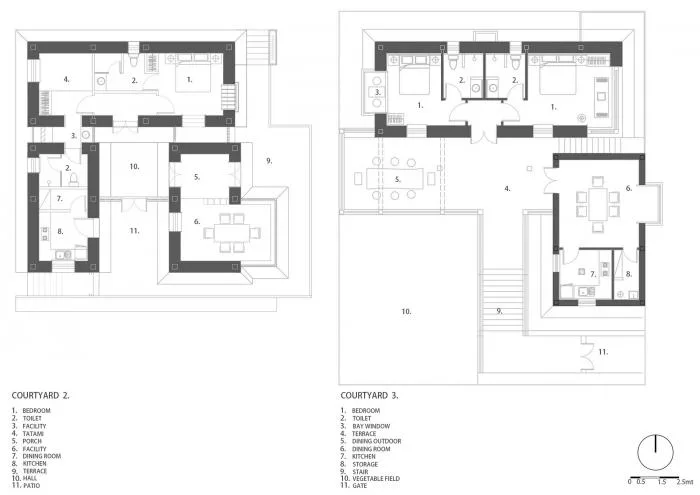
Plan of Courtyards 2 and 3
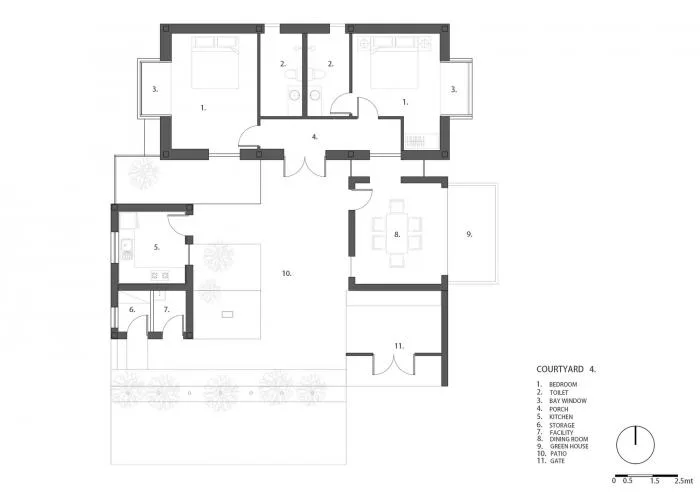
Plan of Courtyard 4
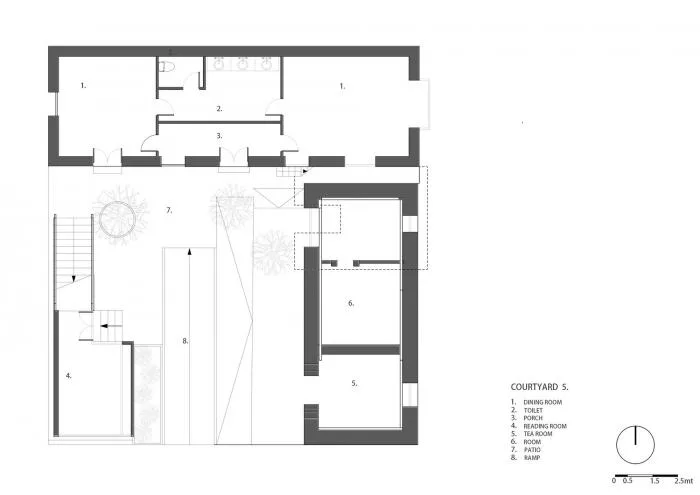
Plan of Courtyard 5
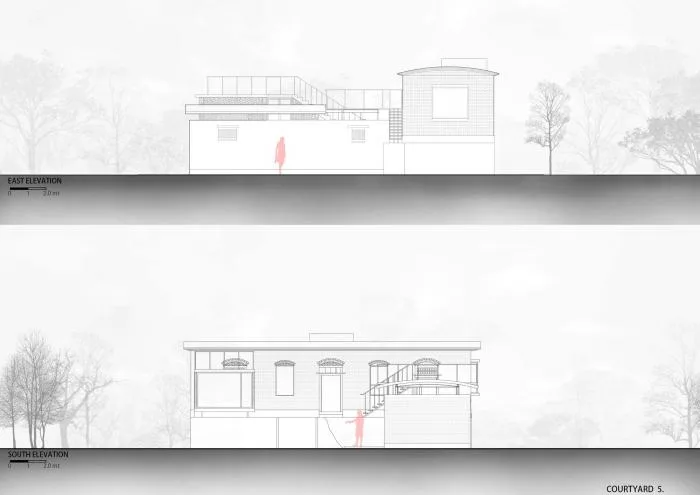
△ Courtyard 5 elevation view
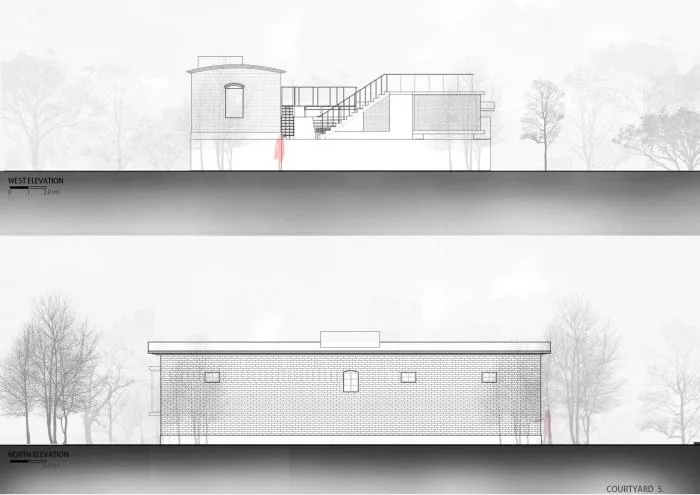
△ Courtyard 5 elevation view
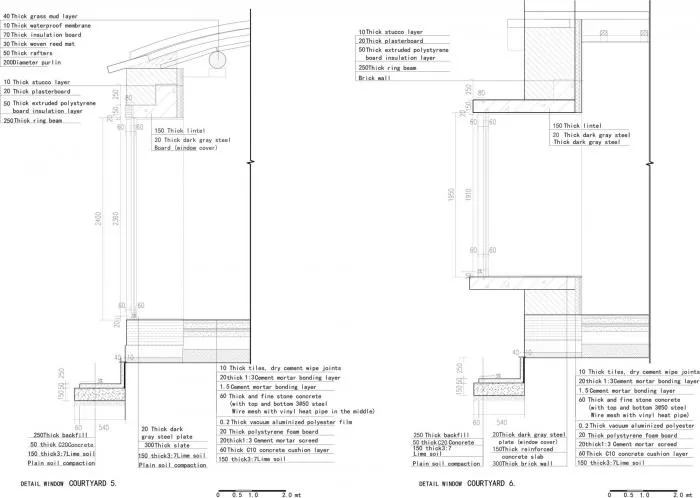
△ Detailed window node drawings for Courtyards 5 and 6
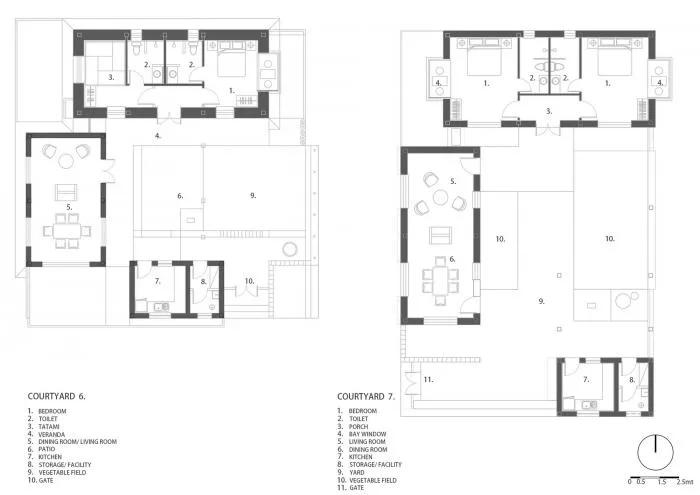
Plan of Courtyards 6 and 7
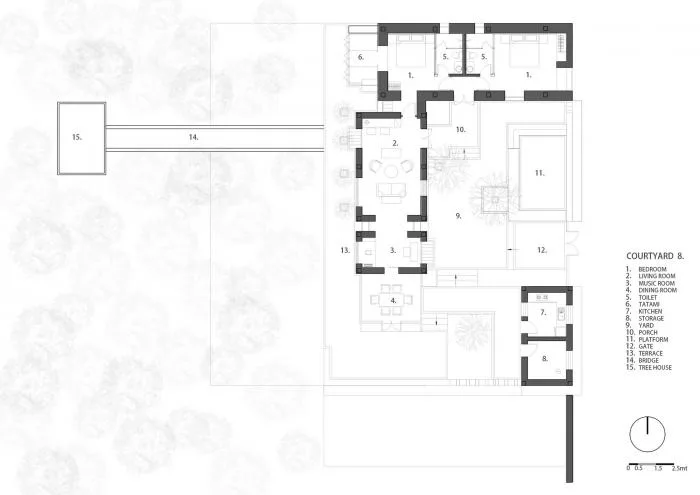
Plan of Courtyard 8
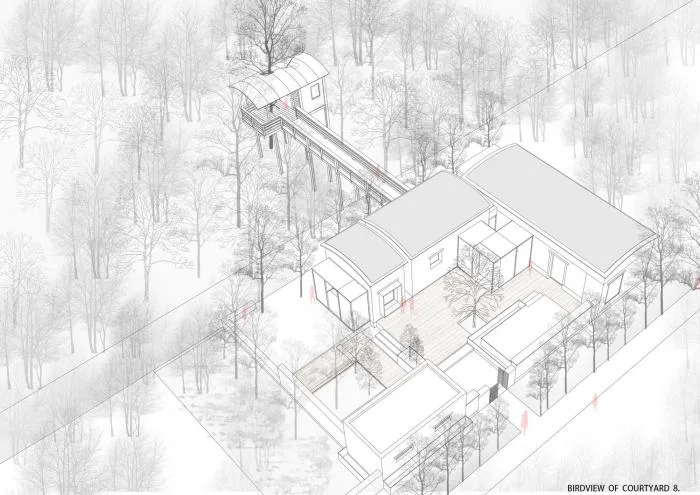
△ Courtyard 8 axis measurement diagram
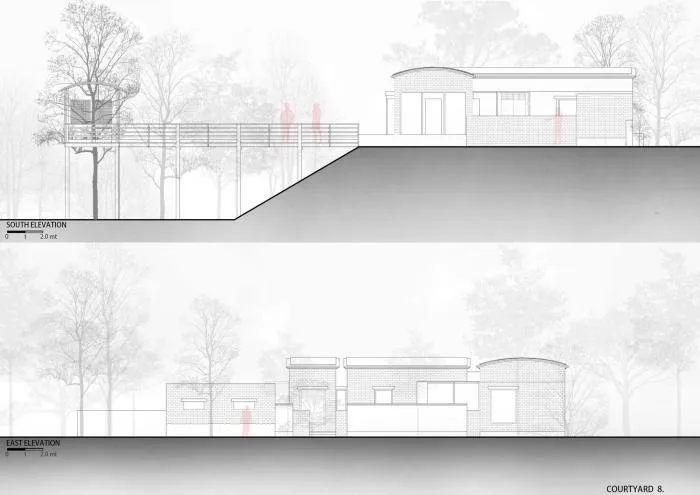
△ Courtyard 8 elevation view
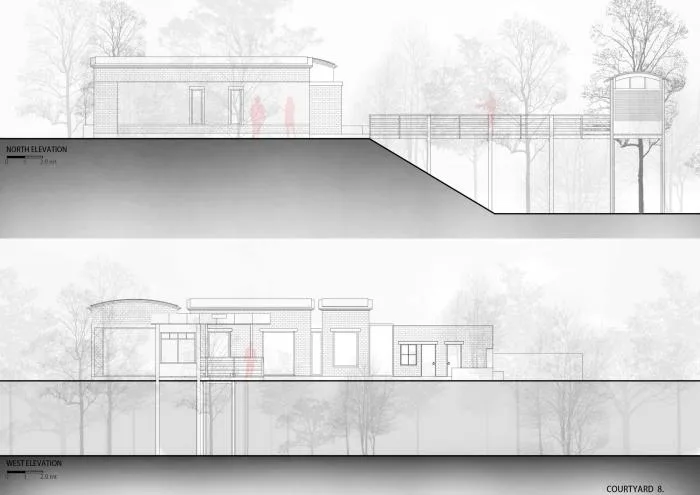
△ Courtyard 8 elevation view
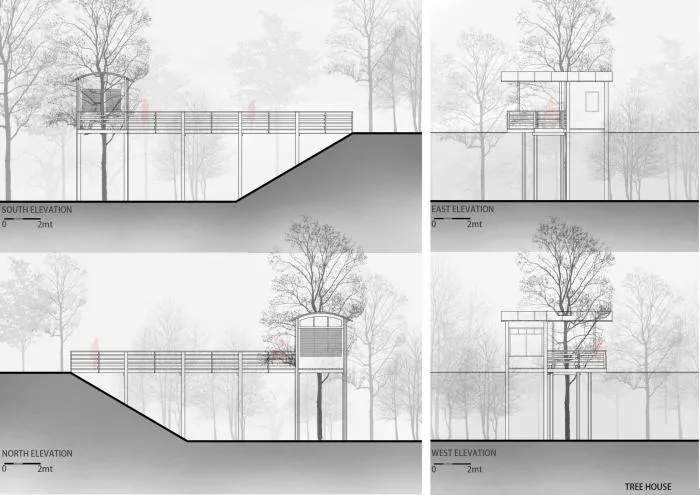
△ Treehouse elevation view
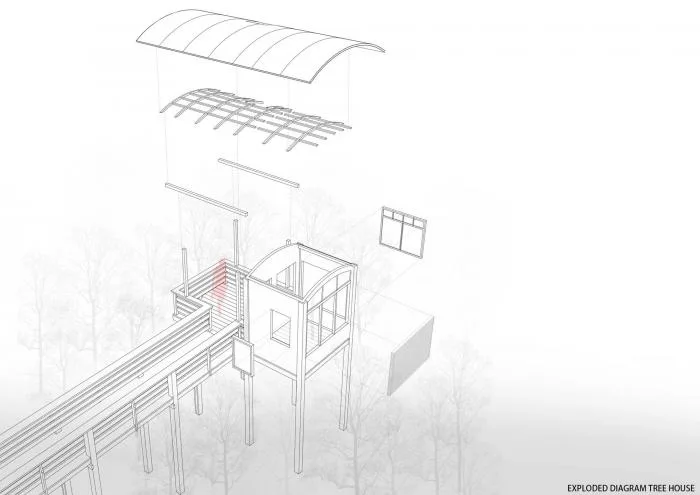
△ Treehouse axonometric diagram
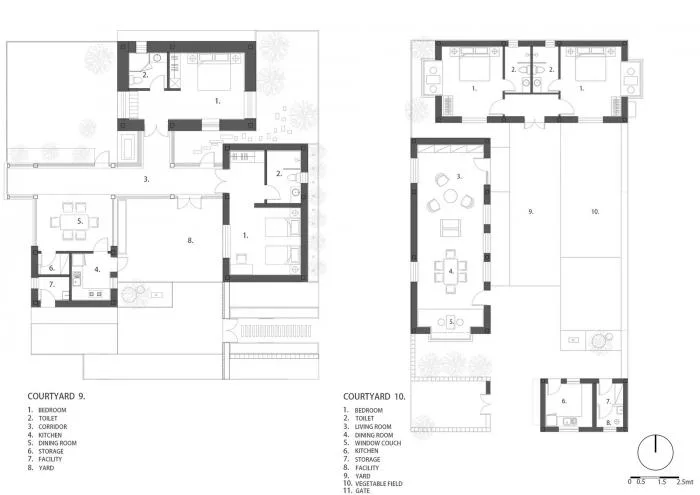
Plan of Courtyards 9 and 10
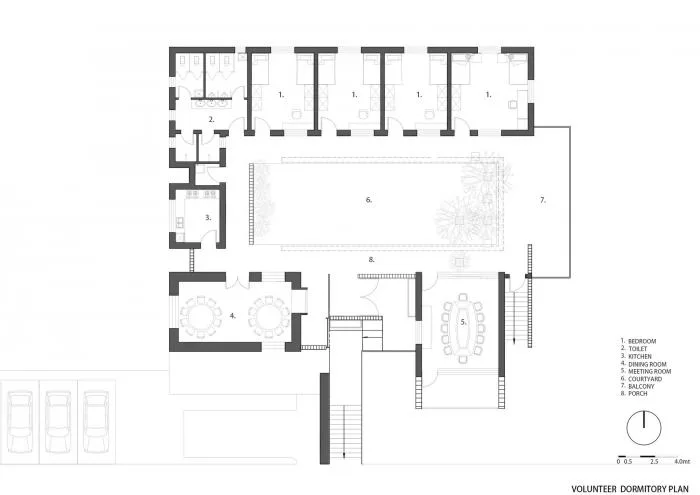
Plan of Volunteer Dormitory
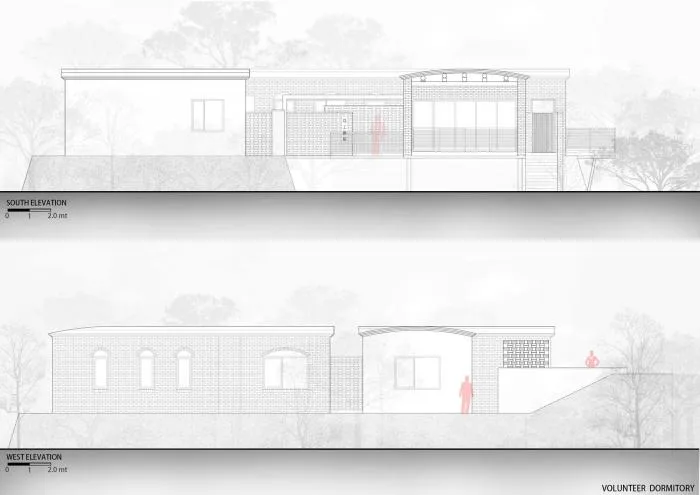
△ Front view of Volunteer Dormitory
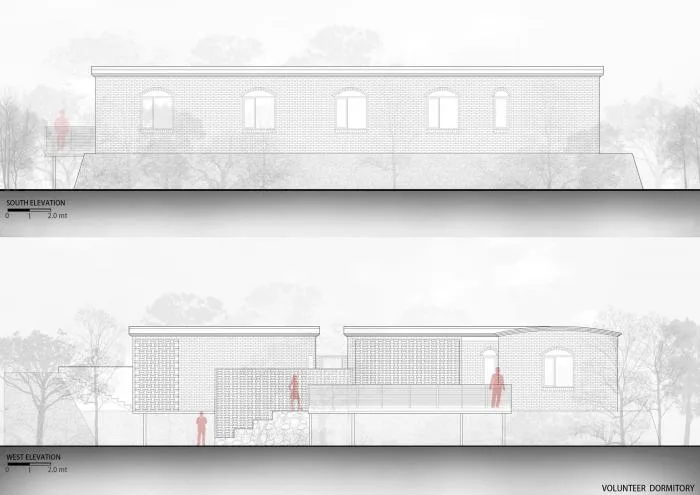
△ Front view of Volunteer Dormitory
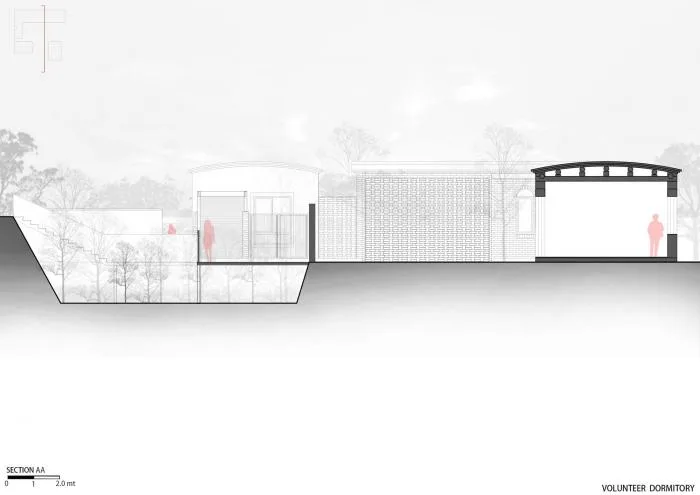
△ Section of Volunteer Dormitory
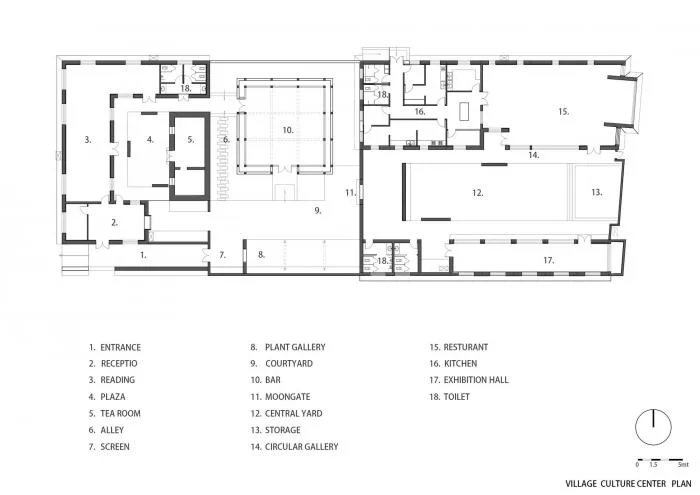
△ Plan of Cultural Center
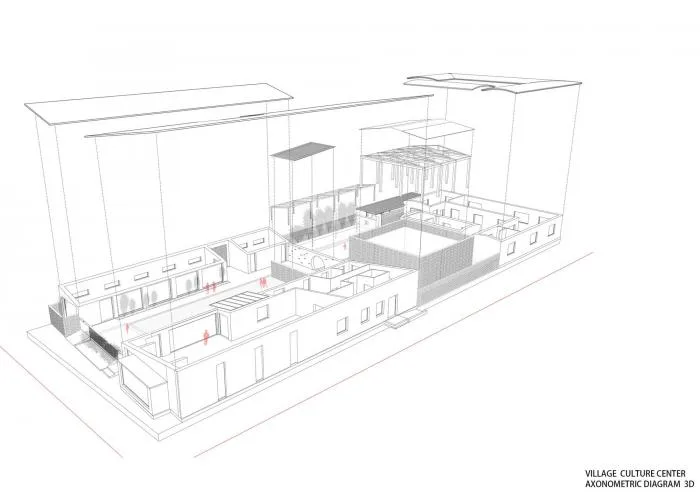
△ Axonometric view of Cultural Center
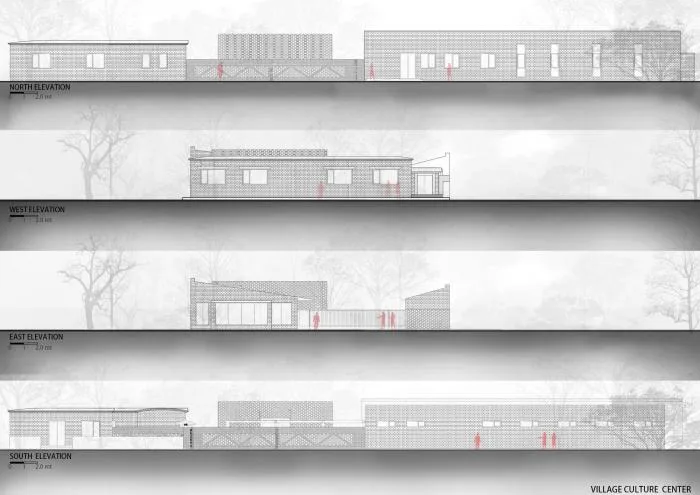
△ Elevation of Cultural Center
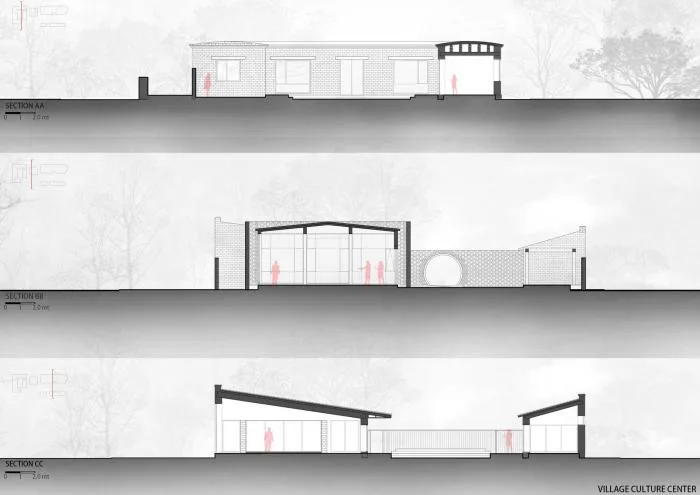
△ Profile of Cultural Center
Project Information
Project Type: Independent Residential, Renewal Project
Location: Puyang County, China
Architect: Yuan Ye Architecture Studio
Area: 2,065 m²
Year: 2019
Principal Architect: Yuan Ye
Structure and Landscape Design: Yuan Ye Architecture Studio
Principal Sponsor: China Foundation for Poverty Alleviation












Must log in before commenting!
Sign Up