
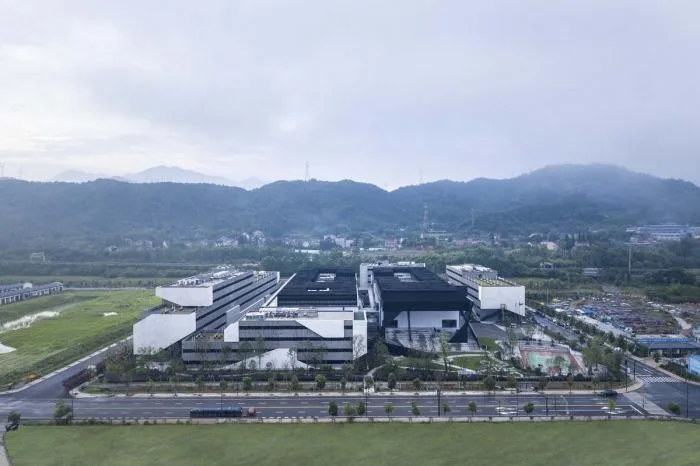
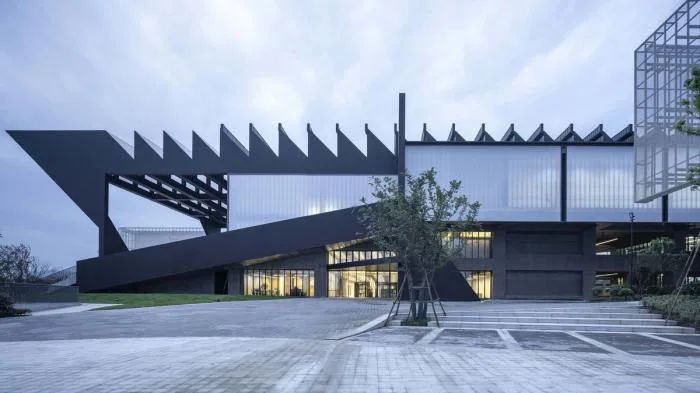
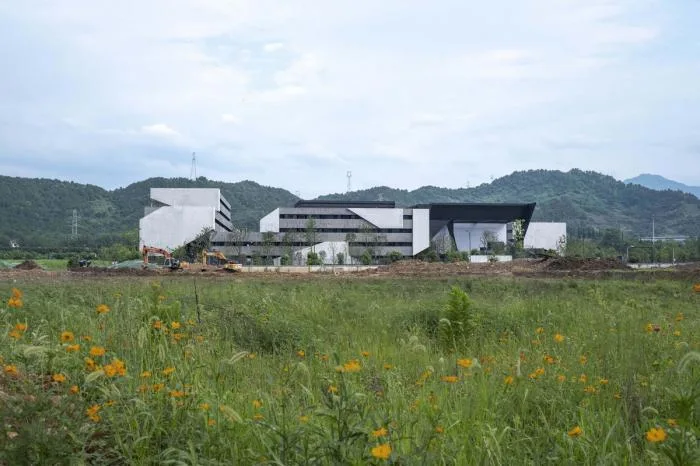
Eagle Studio is an art education institution dedicated to nurturing future artists and designers. Covering approximately 72,000 square meters, it accommodates over 3,000 students. These students, preparing for their art college entrance exams, spend eight intensive months learning and living within this space. The designers regard this building as a “dream factory”—a place that holds the ambitions and aspirations of its temporary residents and serves as a spatial model that meets the learning and communication needs of a young artist community.
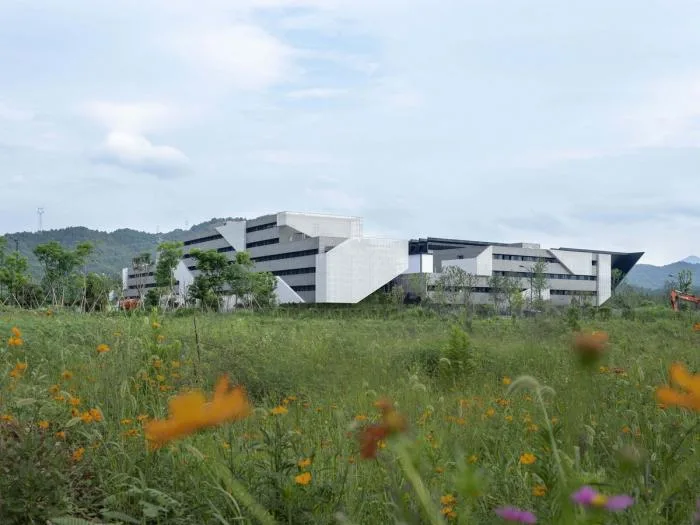
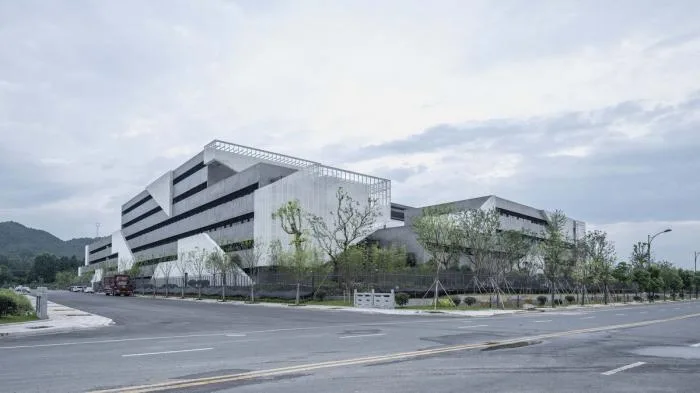
Venue
Inspired by the concept of “place,” the design seeks to create an environment that fosters a shared sense of identity and belonging among its users. This “Dream Factory” combines spaces for learning, competition, living, and dreaming. It offers an engaging learning atmosphere, comfortable living conditions, and excellent social experiences.
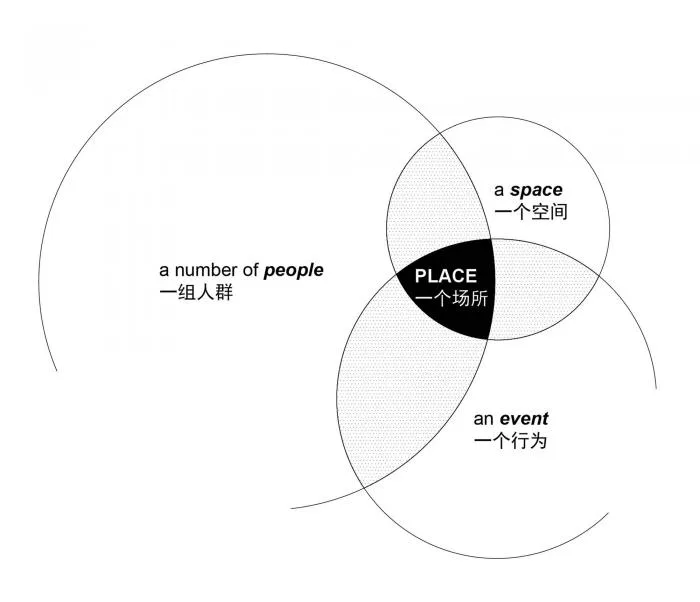
△ Design Concept
The facility is divided into functional zones including art studios, classrooms, a multifunctional hall, dining areas, sports facilities, and leisure spaces. These areas are thoughtfully distributed within the public domain, intersecting and blending to encourage visual connectivity and architectural dialogue. This design subtly promotes communication, interaction, and a strong sense of community. The building transcends its original spatial constraints, evolving into a three-dimensional network where the boundaries between interior and exterior become soft and blurred, creating spaces that are both permanent and transitional.
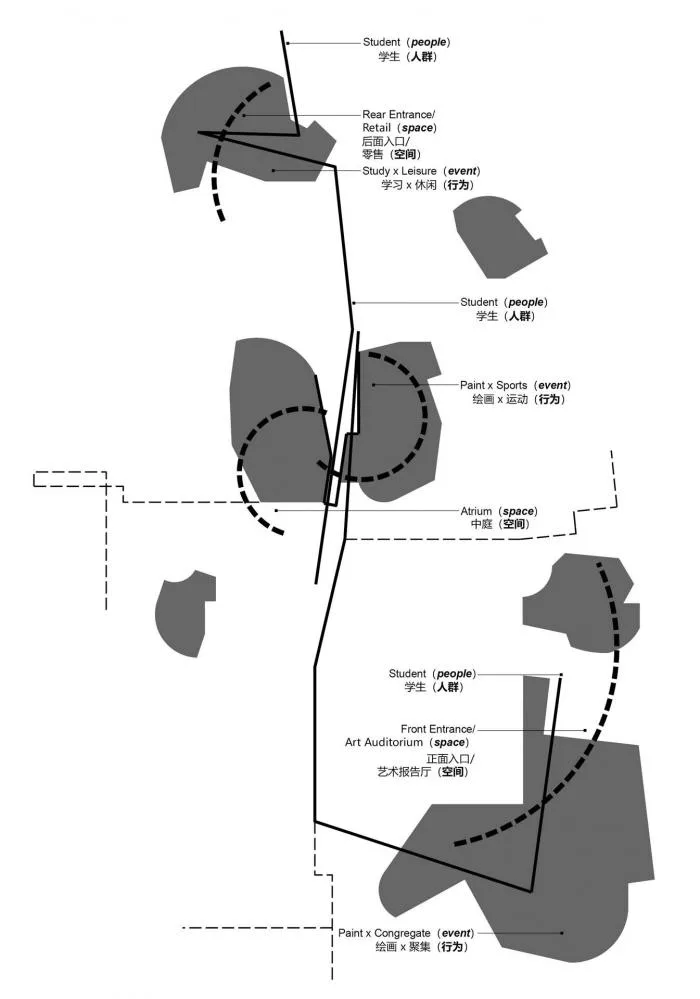
△ Design Concept
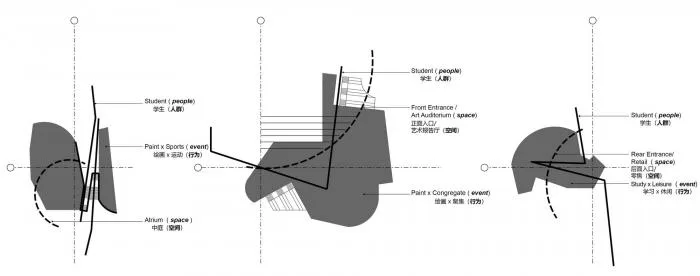
△ Design Concept
Space
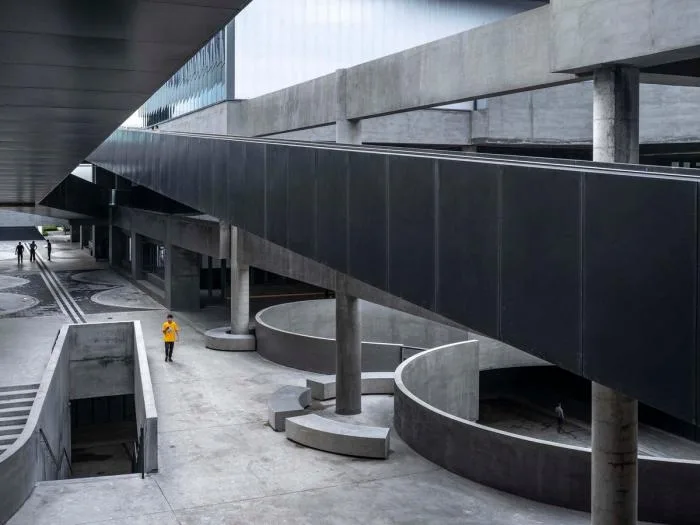
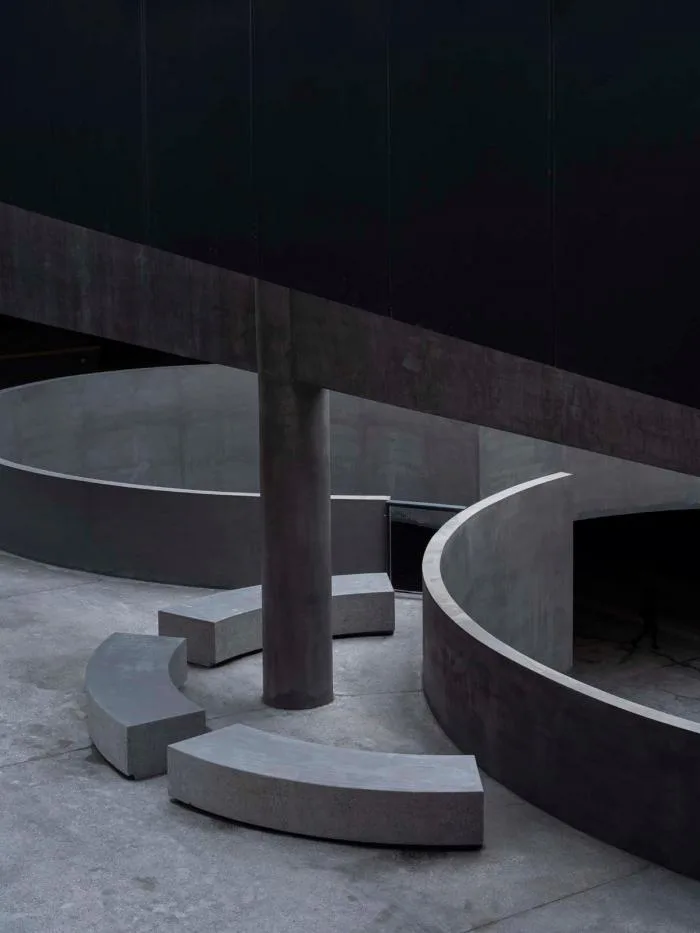
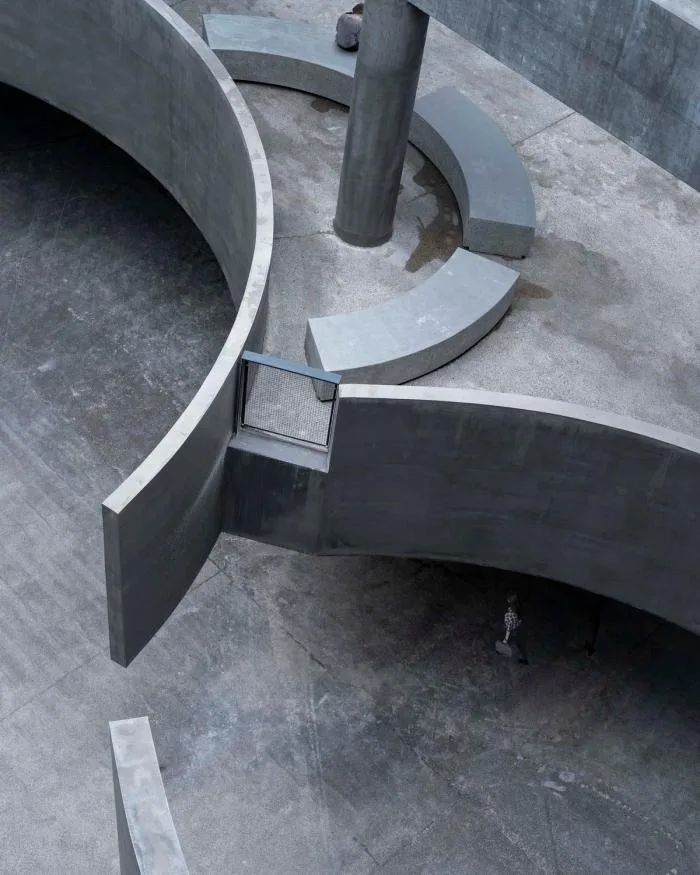
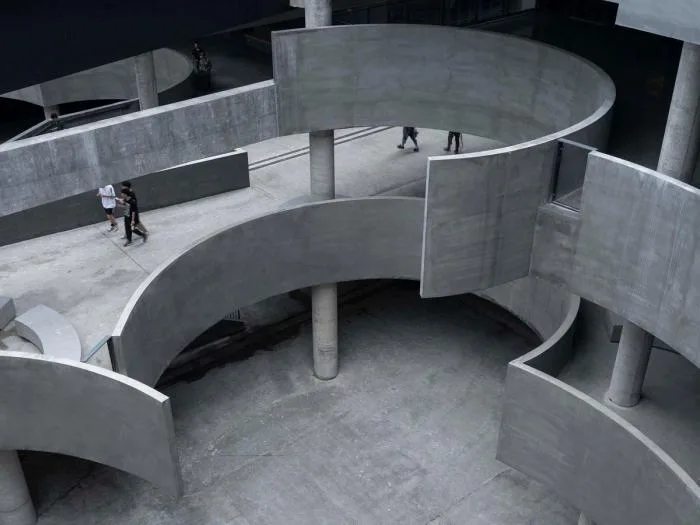
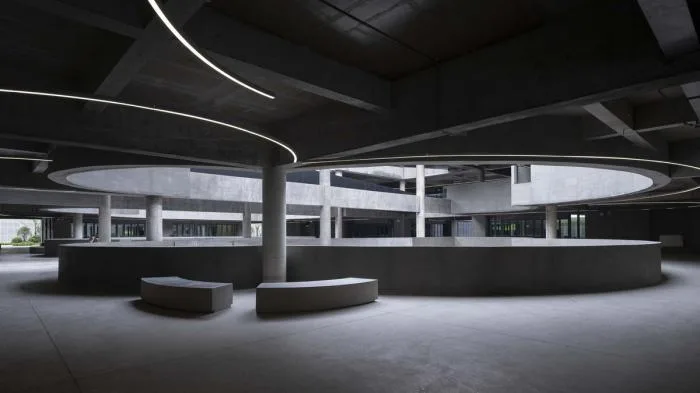
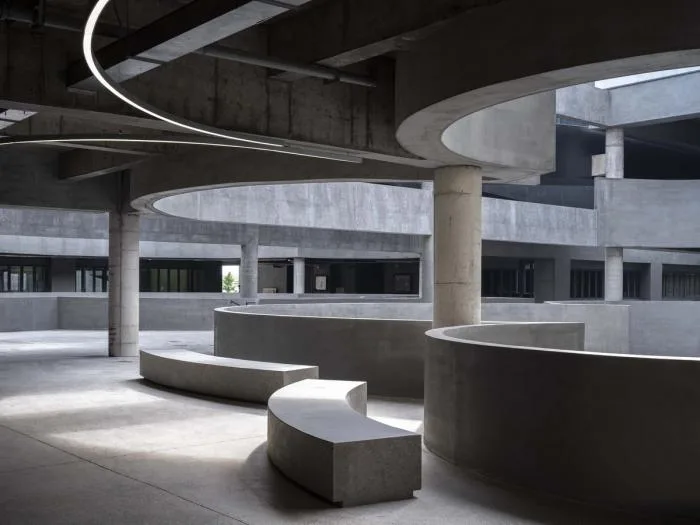
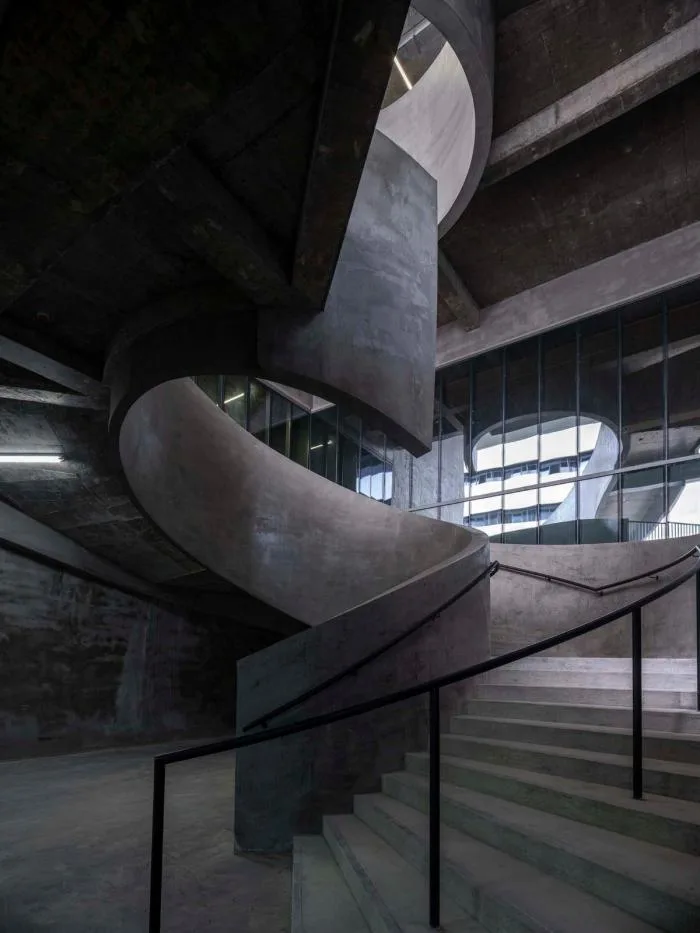
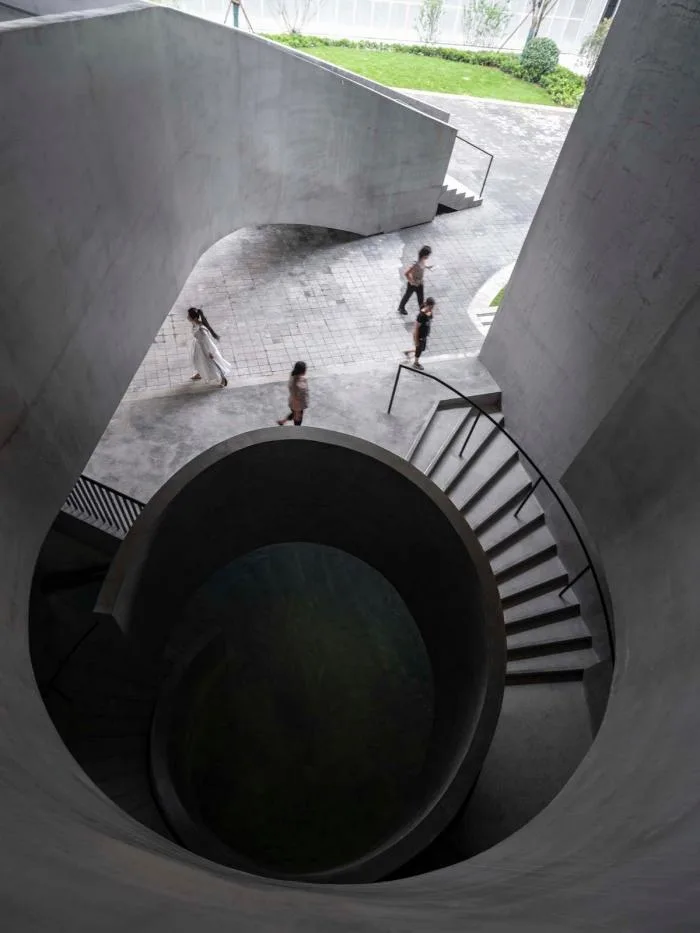
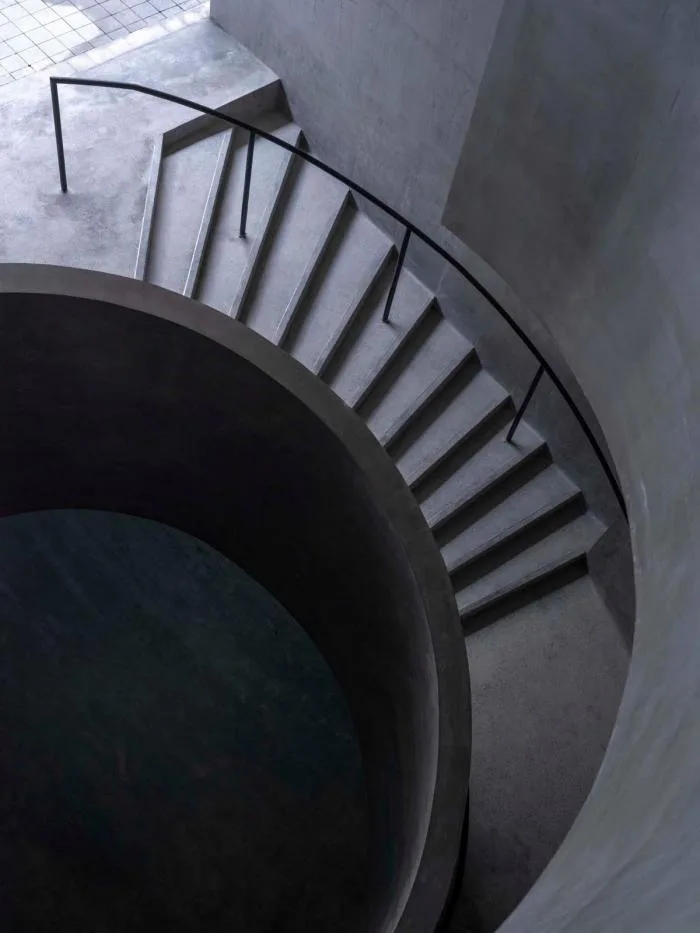
Unlike the low-density sprawl typical of traditional campuses, this project features a continuous vertical spatial volume. Multiple ramps connect different floors through a central atrium, allowing students easy access throughout the building.
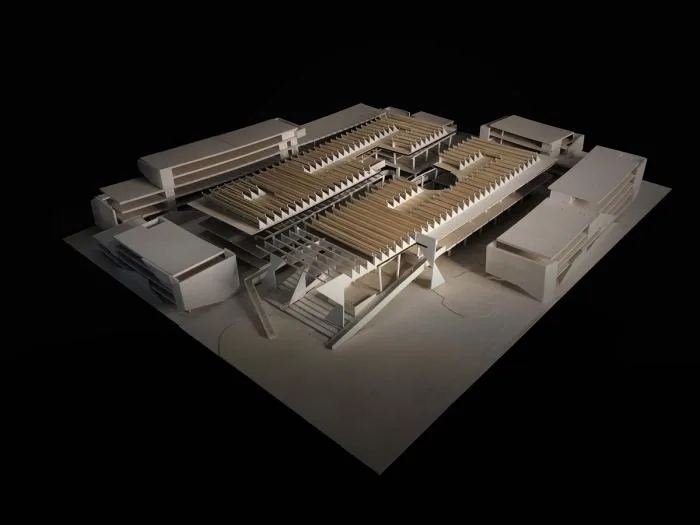
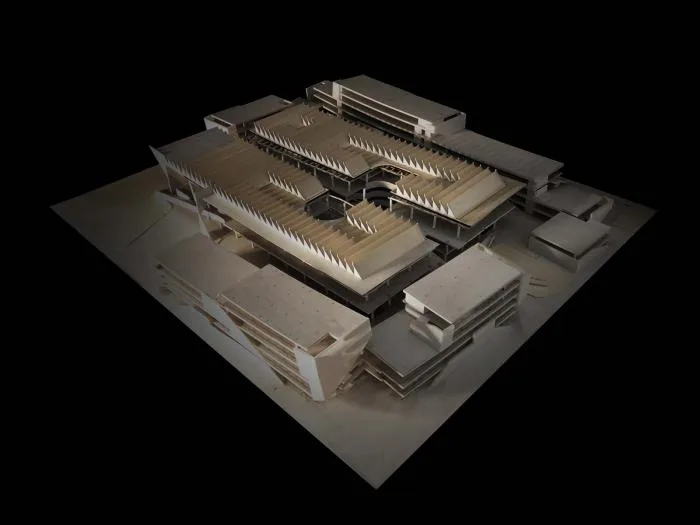
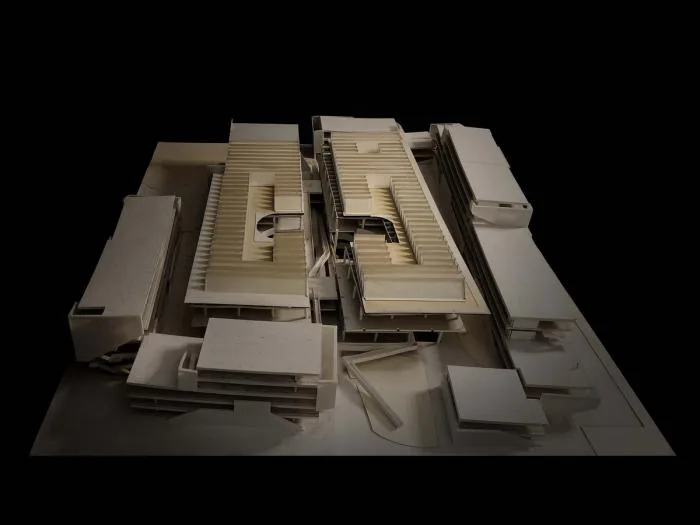
△ Model
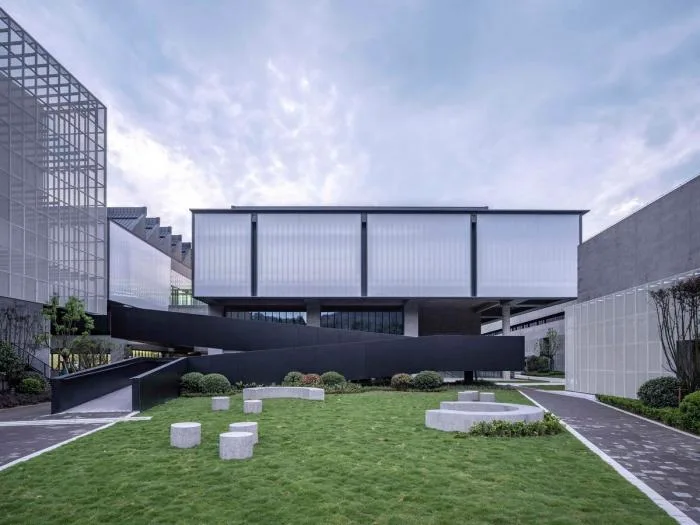
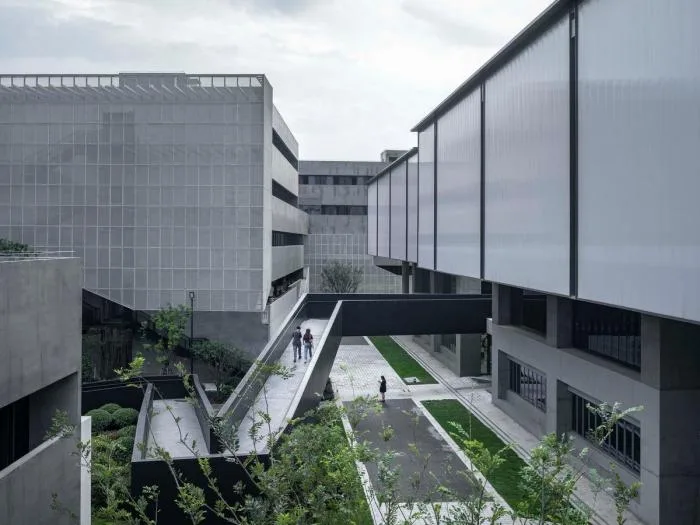
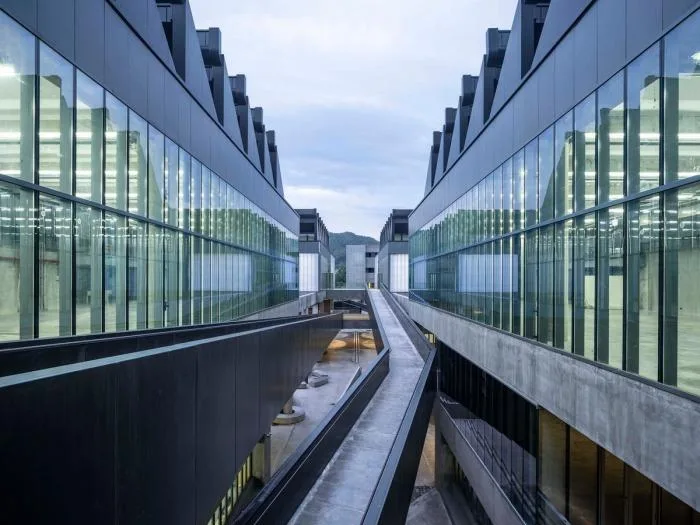
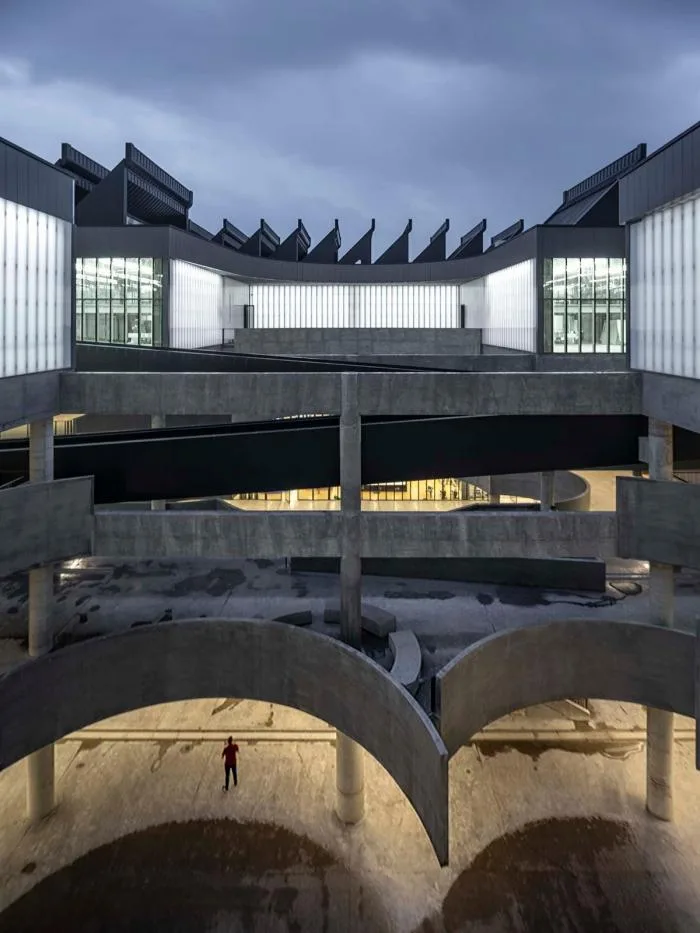
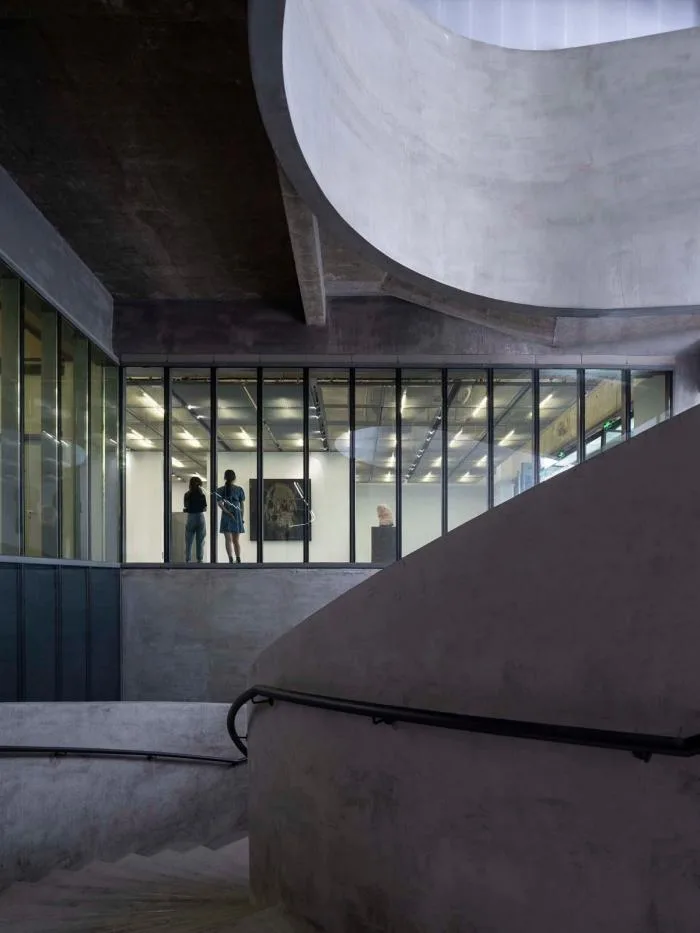
The art studio, located on the third floor, is a flat space with a 6-meter ceiling height and covers over 10,000 square meters. It accommodates 3,000 students simultaneously, providing a space for learning and creativity. This three-story studio is the core of the design and the foundation for the entire building layout. Transparent curtain walls enclose the space while interior walls are minimized, breaking down rigid boundaries between functions and fostering an open, unified atmosphere. The building’s design emphasizes natural ventilation through an operable north-facing curtain wall. To prevent direct sunlight, a north-facing skylight is installed on the top floor, while a serrated louver system on the facade filters light, creating natural lighting strips. This diffuse natural light offers optimal conditions for artistic work and simulates the bright, spacious environment typical of art exam settings.
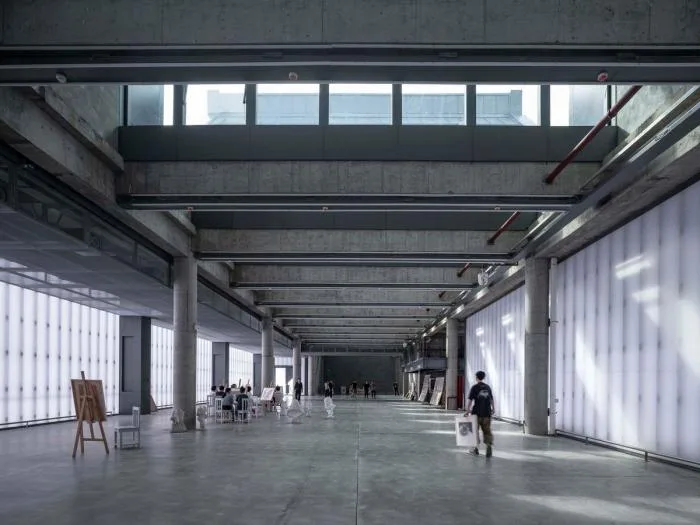
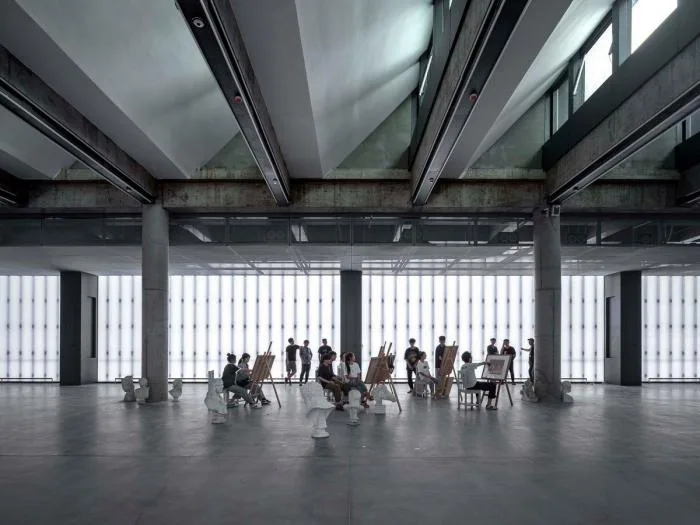
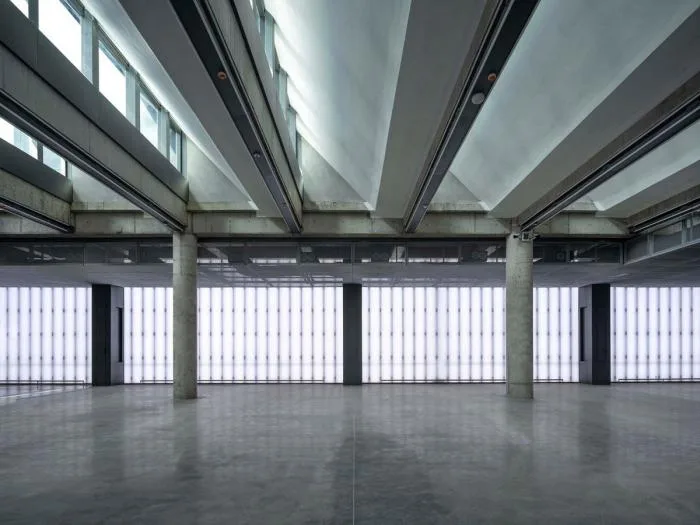
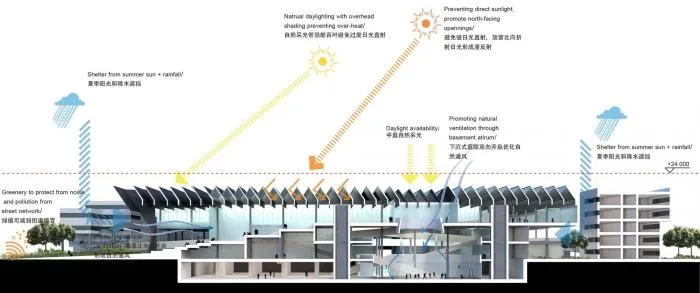
△ Environmental Strategy
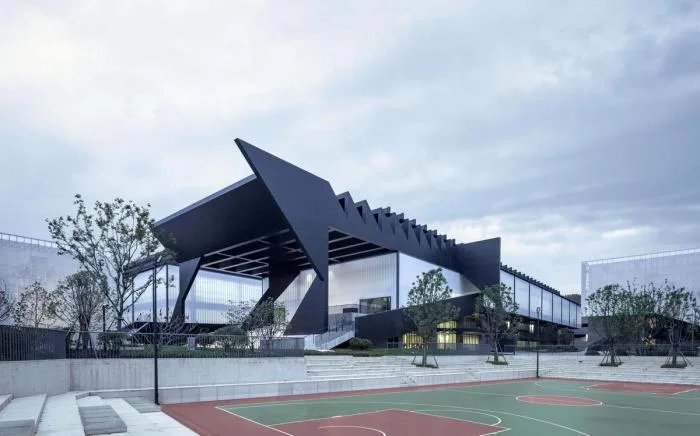
Classrooms occupy the first and second floors of the teaching building, creating shaded areas between the atrium and classrooms where students can relax and socialize during breaks. The basement level houses the cafeteria and sports facilities, illuminated by an atrium and two large daylight tunnels. Student dormitories are arranged around the teaching building, forming shaded internal streets and separated by larger student plazas. The multifunctional hall is designed as a stepped space suitable for impromptu events and painting classes.
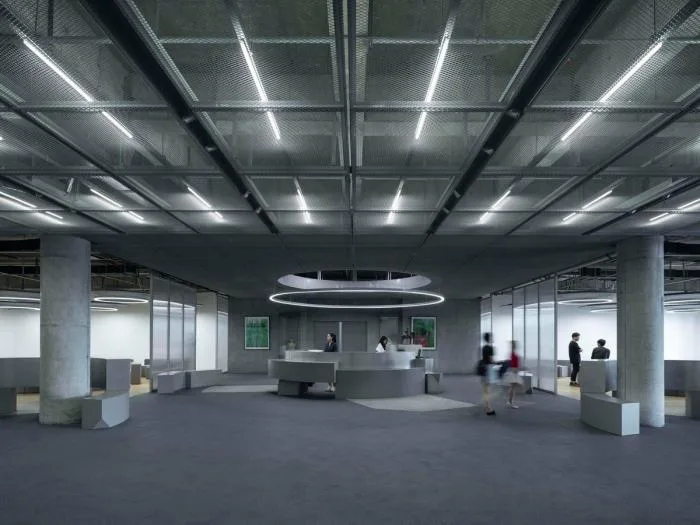
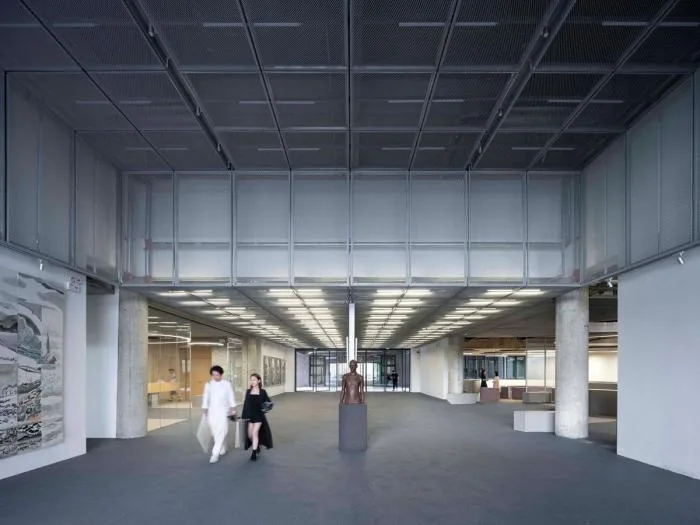
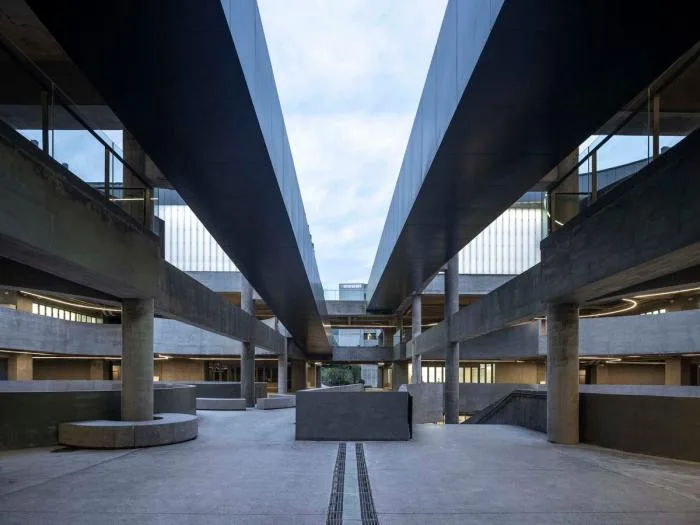
Pathways and Socialization
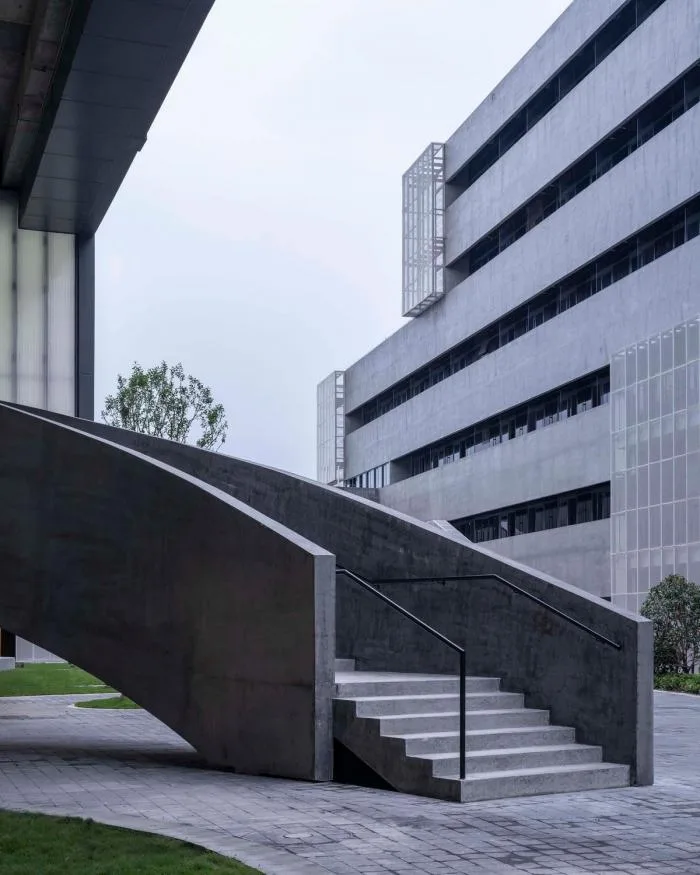
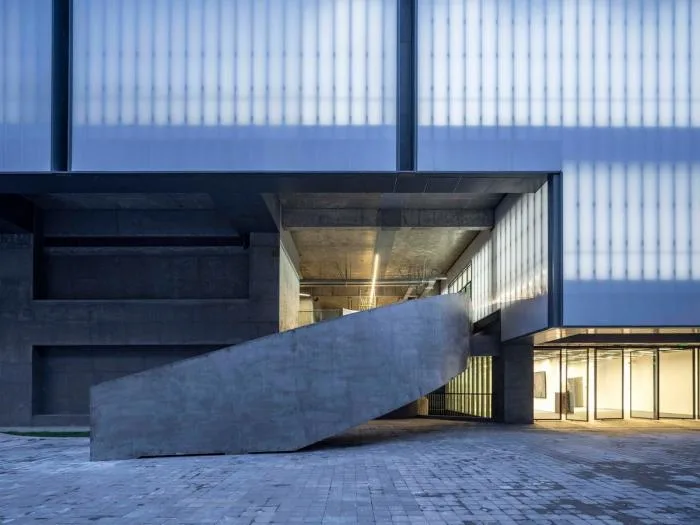
The main entrance faces the city street, seamlessly transitioning from the student plaza and landscaping into the building. Hangzhou’s mild climate encourages outdoor teaching and leisure activities, making outdoor public sculptures focal points and creating temporary gathering spots where students can create under varying light conditions. Shaded internal streets between buildings serve as excellent social spaces.
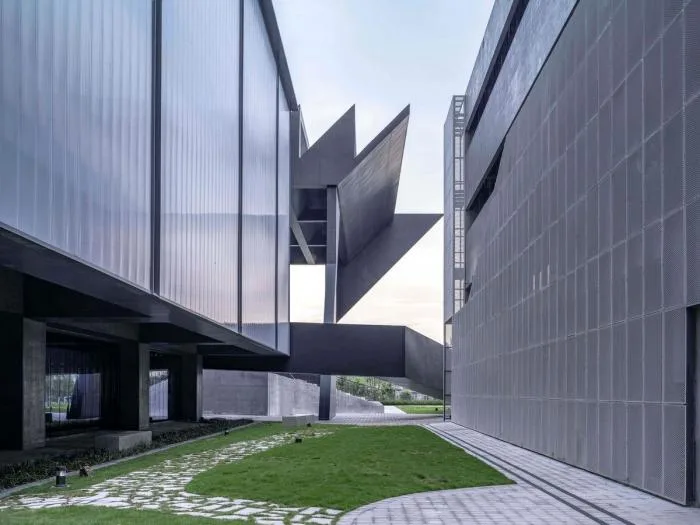
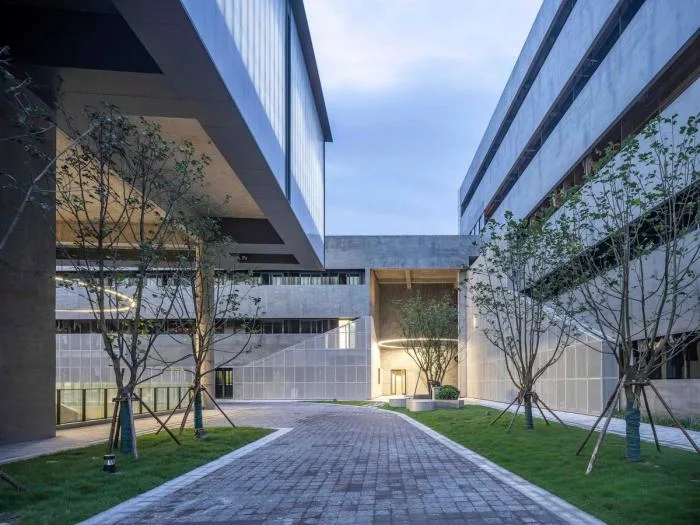
Inside, the atrium serves as a central gathering space. Ramps weave through greenery, creating natural meeting points for students. The multifunctional hall connects to the northern student plaza via stairs, integrating performance and activity spaces into the landscape. The spatial flow blurs the line between indoors and outdoors, linking urban streets, dormitories, classrooms, and art studios to offer a unique and organic experience.
Conclusion
The architects intentionally designed this building as a collective entity. Unlike previous art training centers, this project features orderly innovation, rational spatial organization, and thoughtful human-centered care. It fosters a sense of connection among individuals within the venue. By softening boundaries between art studios, classrooms, and leisure spaces, a shared ownership—or even a feeling of “home”—is cultivated. The smaller scale of the architectural space enables both teachers and students to maintain a sense of control. As Hermann Herzberg observed, “Place means a special value assigned to space, which holds special significance for individuals who are interdependent or have a sense of belonging to a certain group.”
Design Drawings
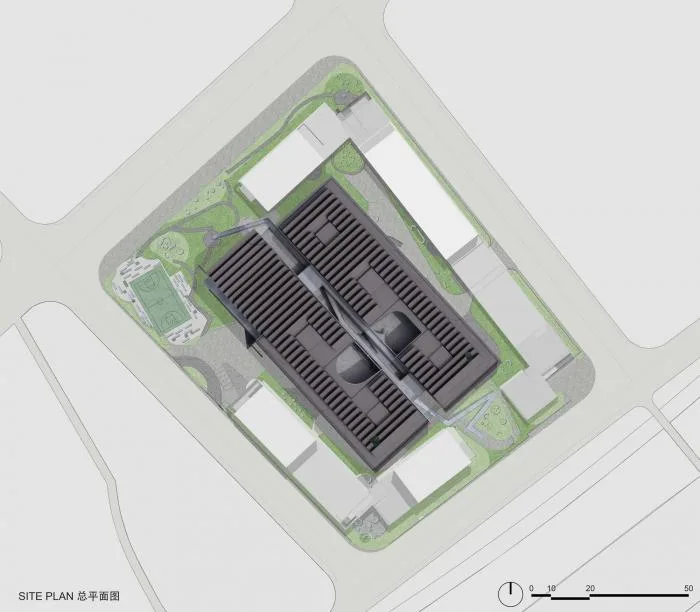
△ General Layout Plan
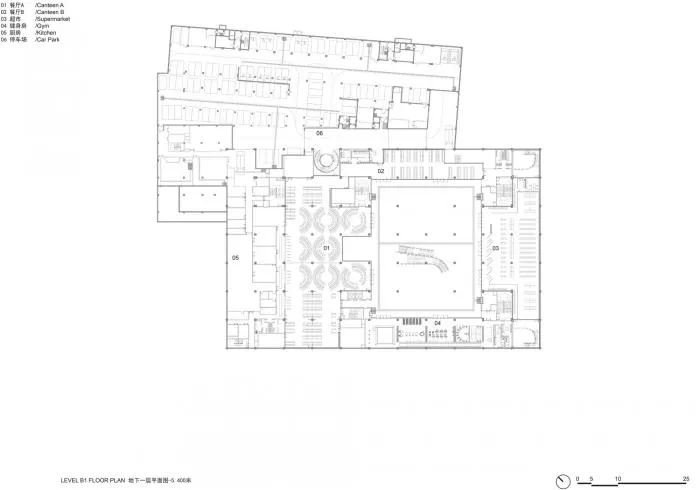
△ Floor Plan
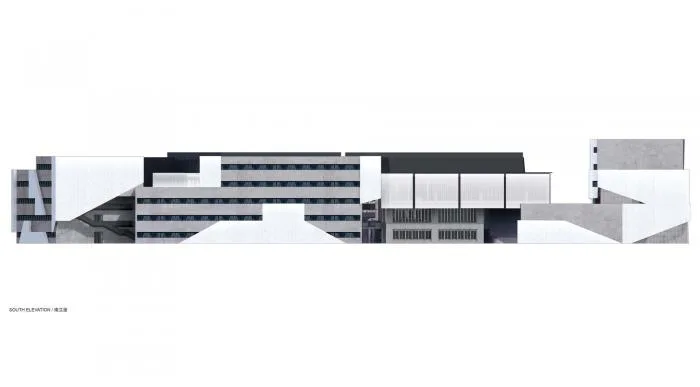
△ South Elevation View
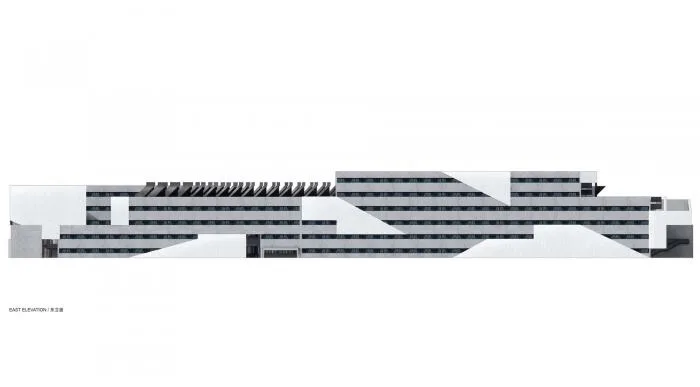
△ East Elevation View
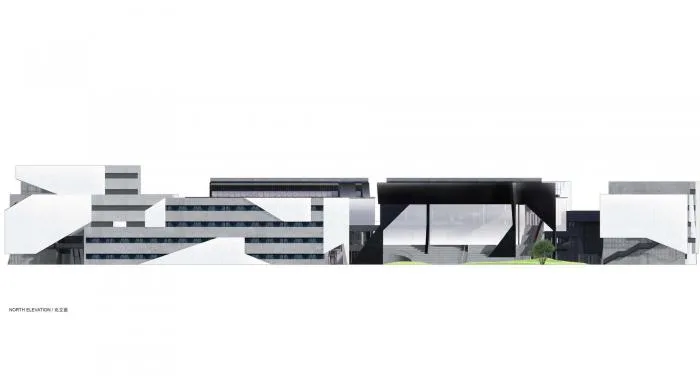
△ North Elevation View
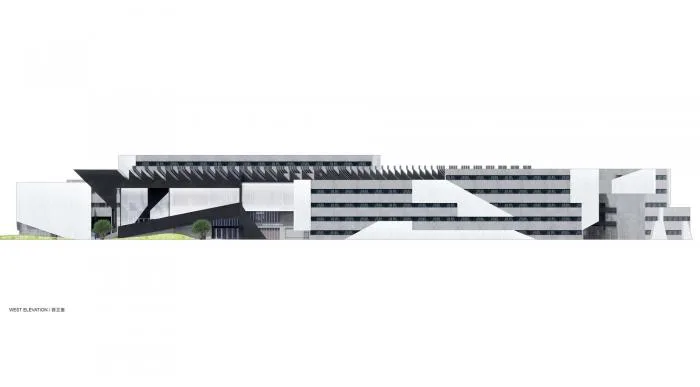
△ West Elevation View
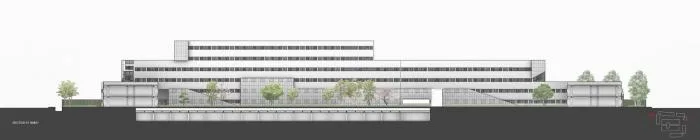
△ Section Diagram
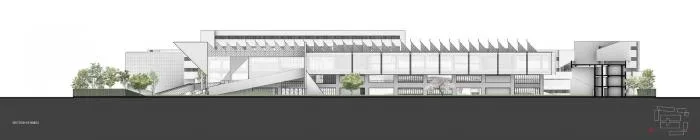
△ Section Diagram
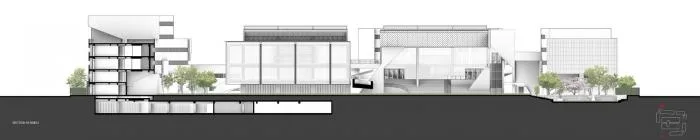
△ Section Diagram
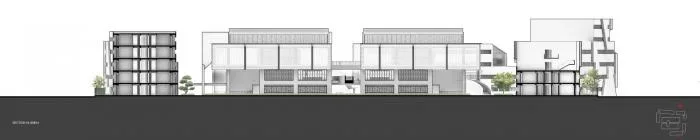
△ Section Diagram
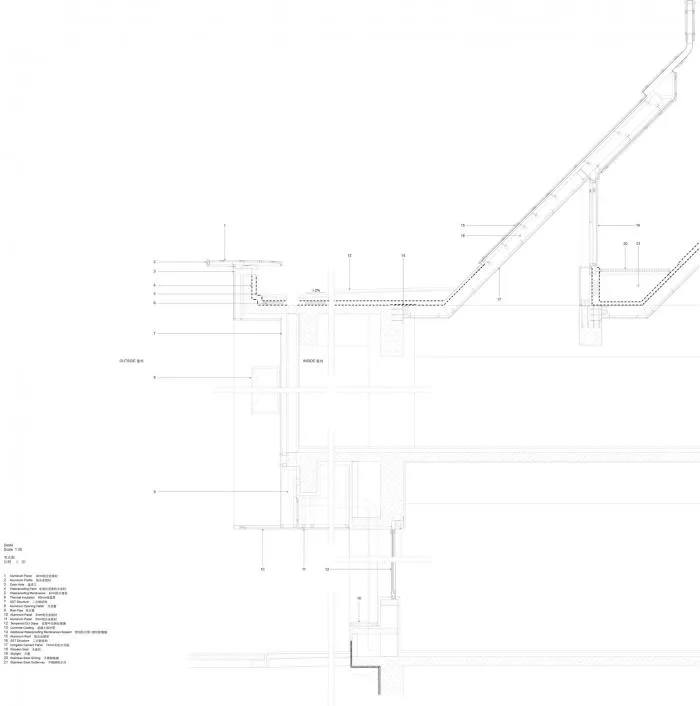
△ Node Diagram
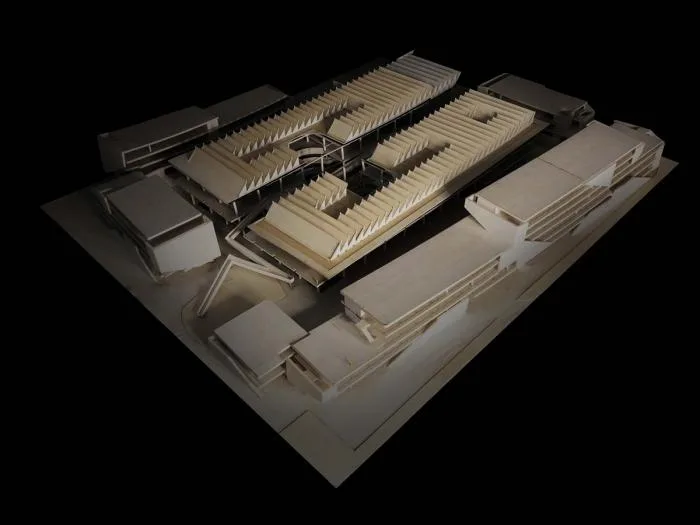
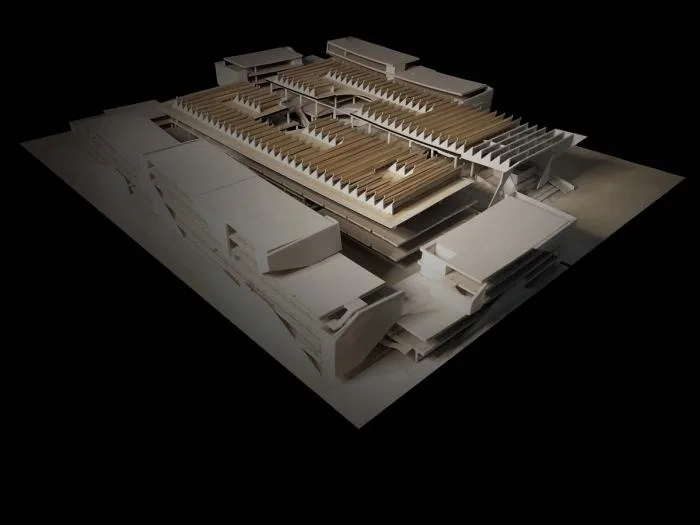
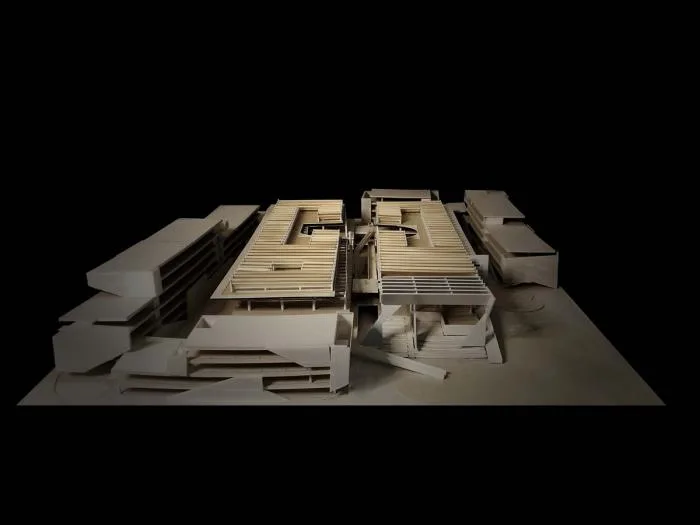
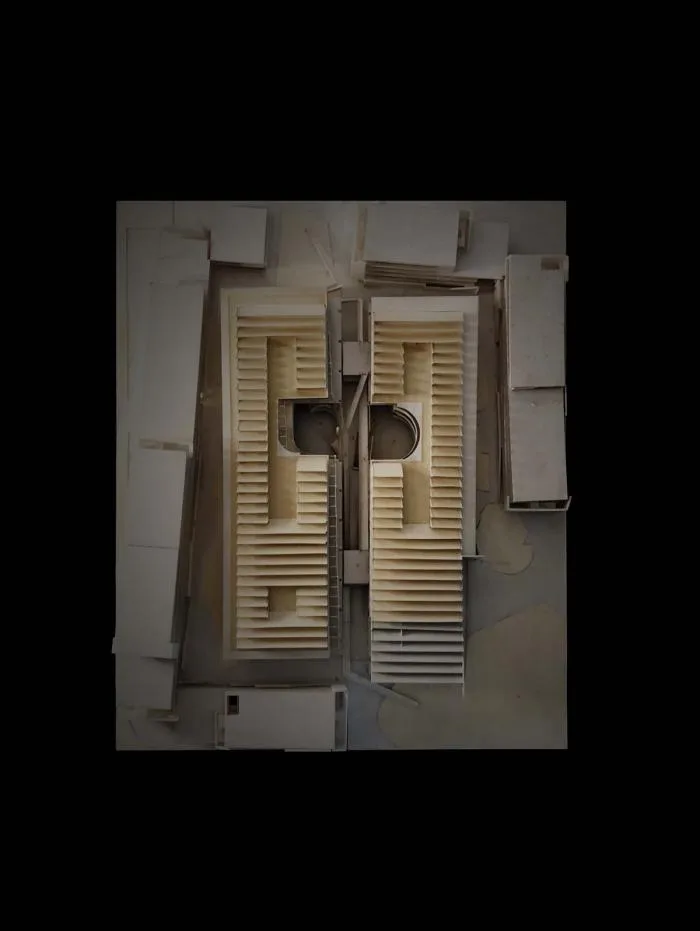
△ Model
Project Information
Location: Hangzhou, China
Architect: Unconscious Architecture
Area: 72,187 m²
Year: 2020
Photographer: Tian Fangfang
Lead Architects: Zhang Di, Yang Jieke
Design Team: Huo Minghui, Yang Hualin, Cao Mengbo, Zhu Fangdi, Liang Jian, Zhang Haiyang, He Yue, Li Weiya, Liu Mo, Liu Yipeng, Zhang Zeyong
Construction Drawing Design: Weijue (Beijing) Architectural Design Firm Co., Ltd., Beijing Zhongtian Jianzhong Engineering Design Co., Ltd.
Interior and Landscape Design: Unconscious Architecture
Construction Contractor: Zhejiang Haida Construction Co., Ltd.
Owner: Hangzhou Eagle Education Technology Co., Ltd.












Must log in before commenting!
Sign Up