
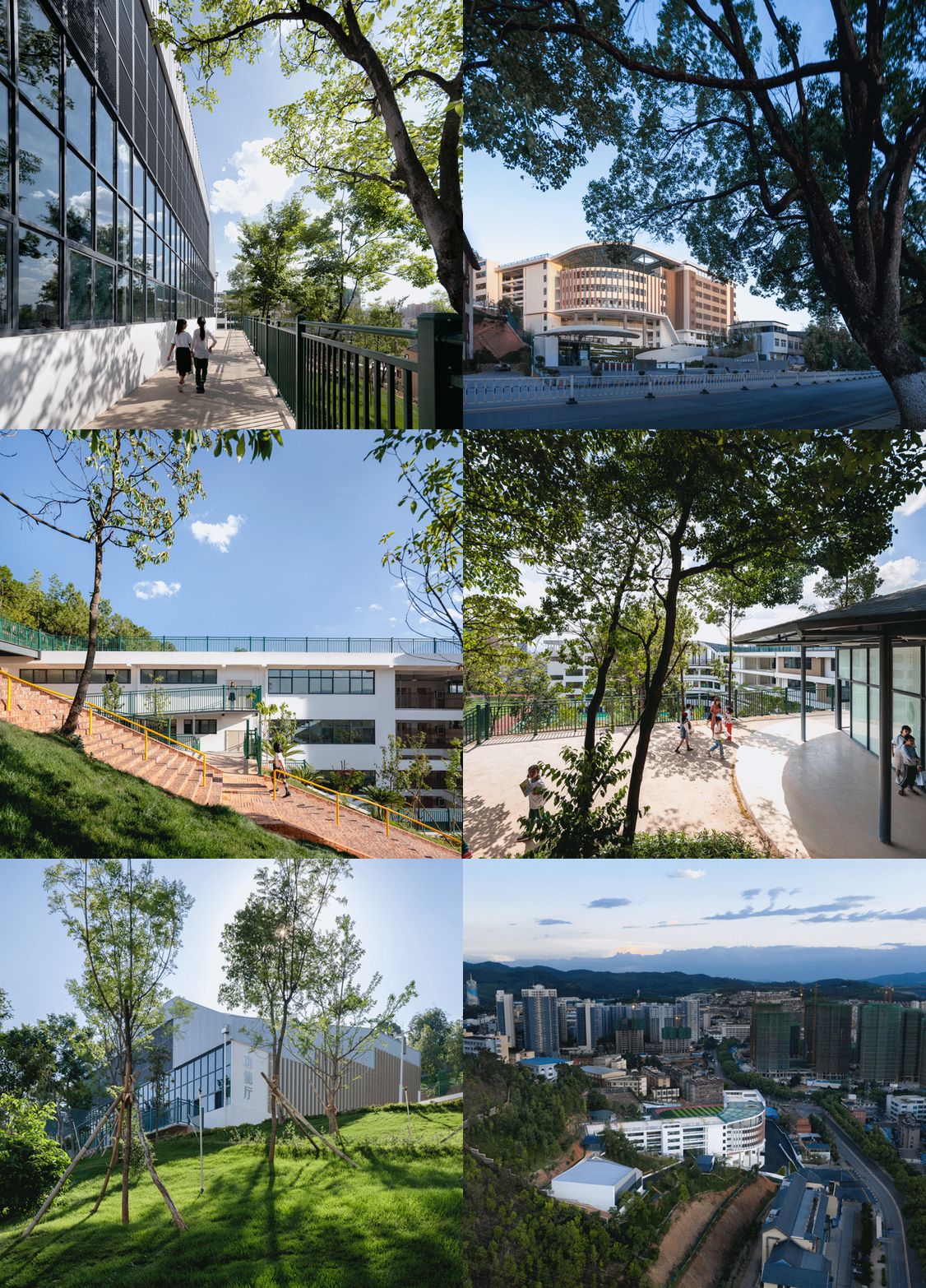
A natural ecological campus space, seamlessly blending mountains and school.
“The power of architecture must adapt to the power of nature. The purpose of architecture is to create an environment where architectural and natural forces coexist in harmony.”
— Tadao Ando
Origin – The Value of Old Schools in Urban Renewal
As urban development shifts from expansion to renewal, and management evolves from broad to refined, concepts such as “organic urban renewal,” “renovation of existing buildings,” “land use integration,” and “correcting unnatural constructions” have become central to discussions. Rapid growth of roads and high-rise residences has created tensions between old campuses and the modern cityscape. The Yuxi Ecological Experimental Primary School project emerges within this context.
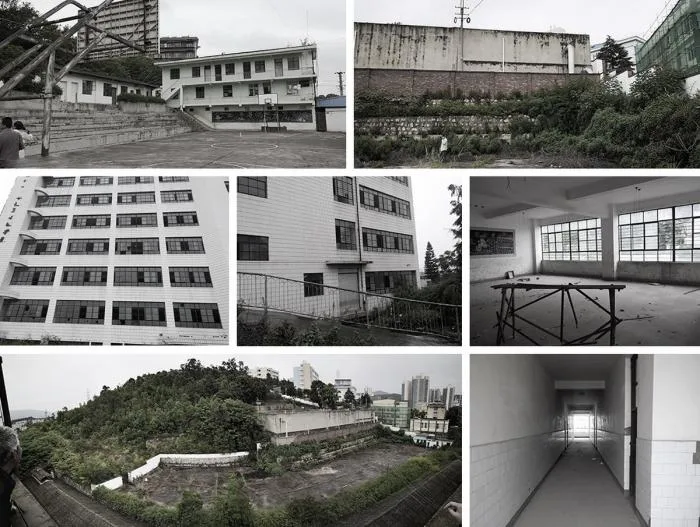
△ On-site view, 2018
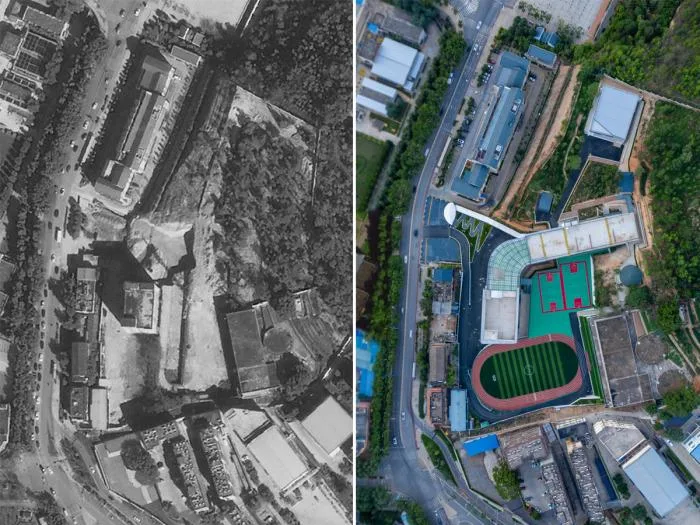
△ Plan comparison before and after renovation – a: before, b: after
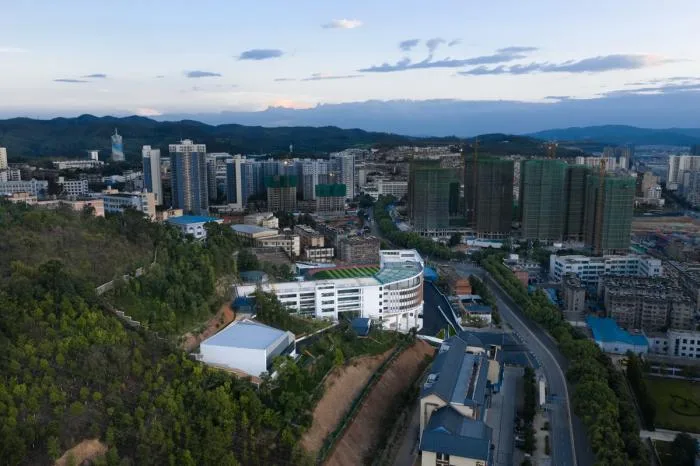
△ Aerial view of campus and city
The site is located in central Yuxi, covering 23,500 square meters. Its terrain slopes from low in the west to high in the east, offering a distinctive setting. During the initial survey, after ascending a long steep slope, an old teaching building was found, forgotten amidst overgrown weeds in the open area before the mountains. Weathered walls bore the marks of years of sun and rain. Continuing further uphill from behind the building, the architect observed a panoramic city view and was inspired to design a campus that overlooks the city.
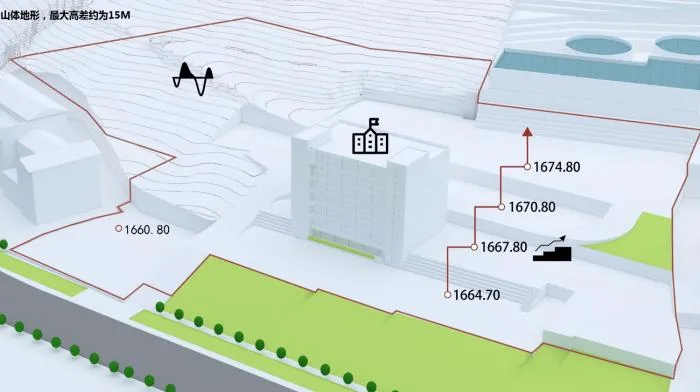
△ Terrain elevation differences and diagram of preserved buildings
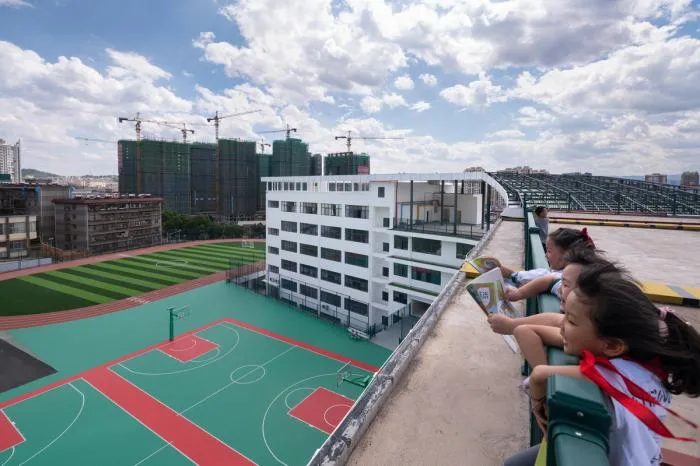
Children enjoying the city view from the roof.
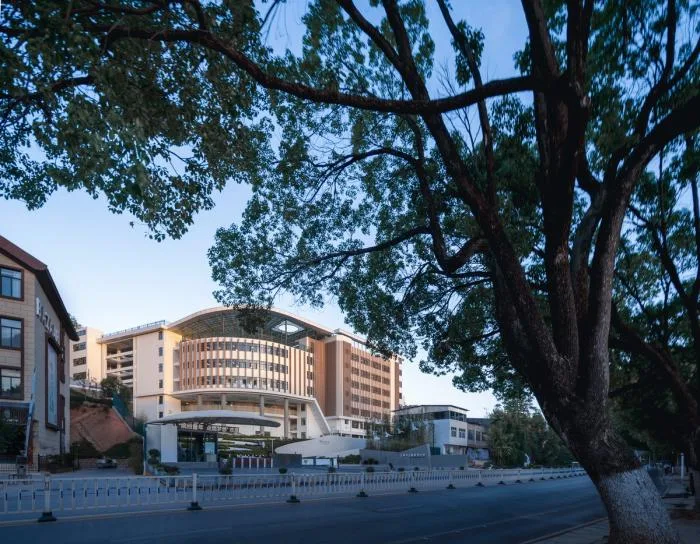
△ Buildings nestled at the urban boundary
Breakthrough – Creating a New Narrative Experience
Effective communication at the design’s outset was essential: gathering requirements, analyzing challenges, and aligning strategies. Addressing the significant elevation differences was both the core challenge and the key to the solution. The approach was to adapt to the local conditions by integrating terrain elevation management with ecological protection, transforming the difficult topography into a defining campus feature that harmonizes with the natural mountain landscape.
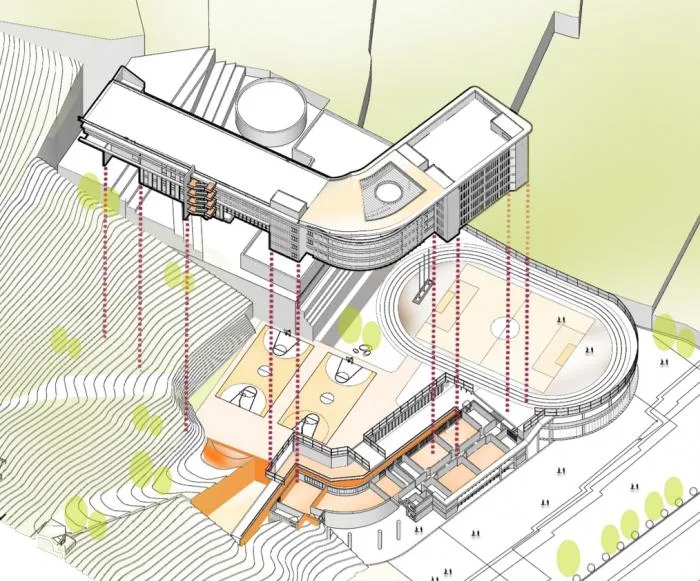
Diagram illustrating the deconstruction of the main teaching building.
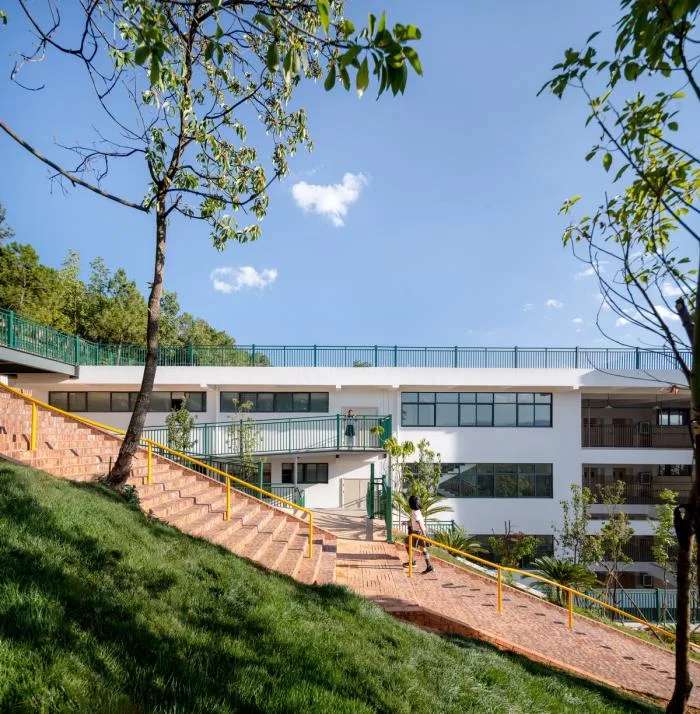
△ Architecture and mountainous landscape integration
The design goal was clear: to transform the abandoned teaching buildings, add new structures, protect the environment, meet school needs, optimize planning, and convert challenging terrain into functional campus spaces. The core challenge was resolving elevation differences while integrating ecological considerations. Initially, the focus was not on detailed teaching functions but on uniting old and new buildings, blending architecture with the mountain environment, and crafting a new narrative experience for the campus.
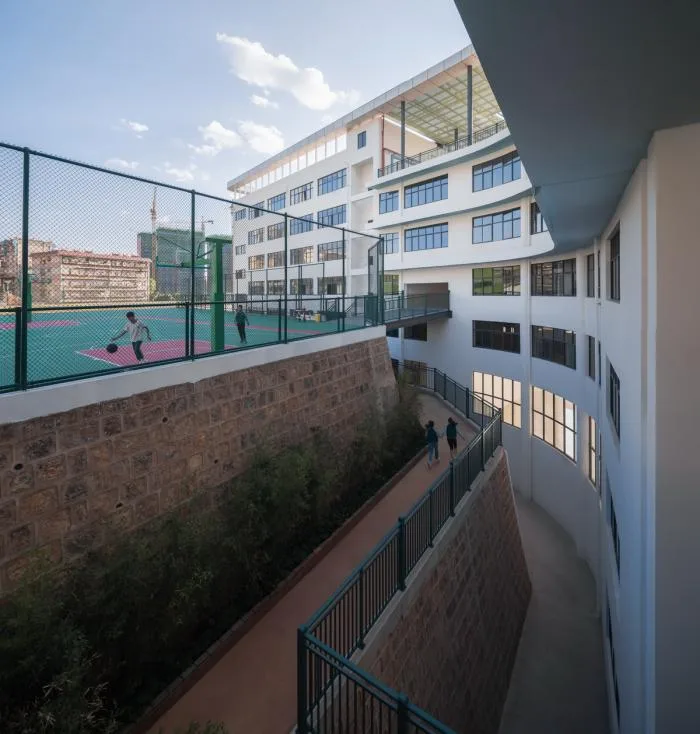
△ Elevation differences between buildings and terrain
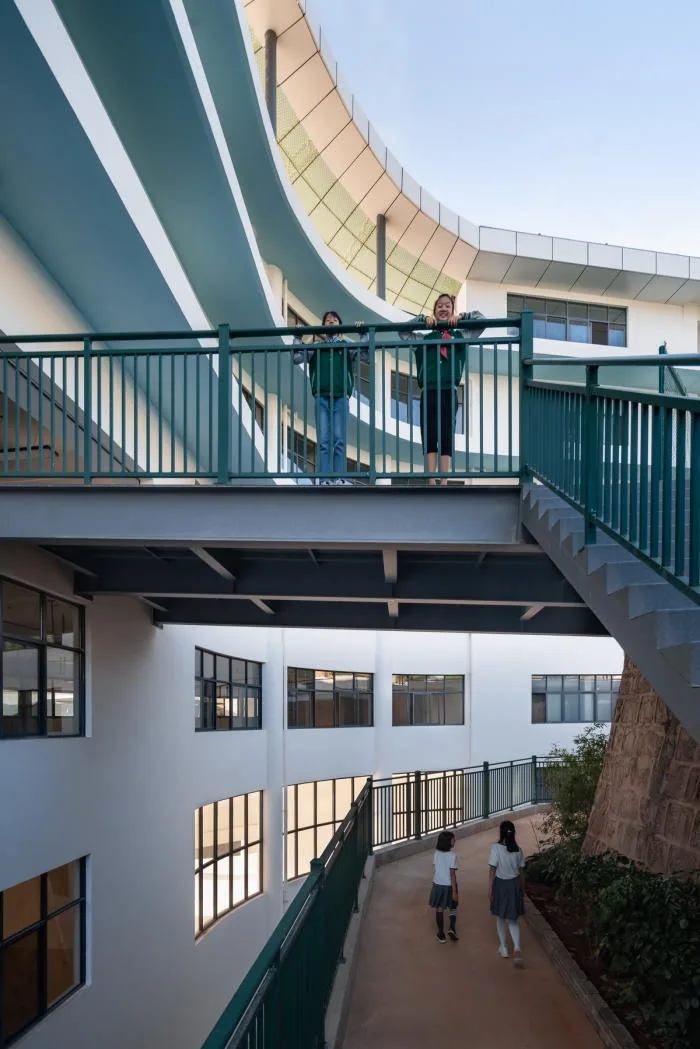
△ Connections and circulation paths
Integration – Harmonizing New and Old Structures
Since the buildings along the urban interface could neither be demolished nor extensively renovated, the design opted for a fresh, minimalist style using pure white as the main color. From afar, the school appears as a white castle nestled among urban structures and embraced by natural mountains and forests.
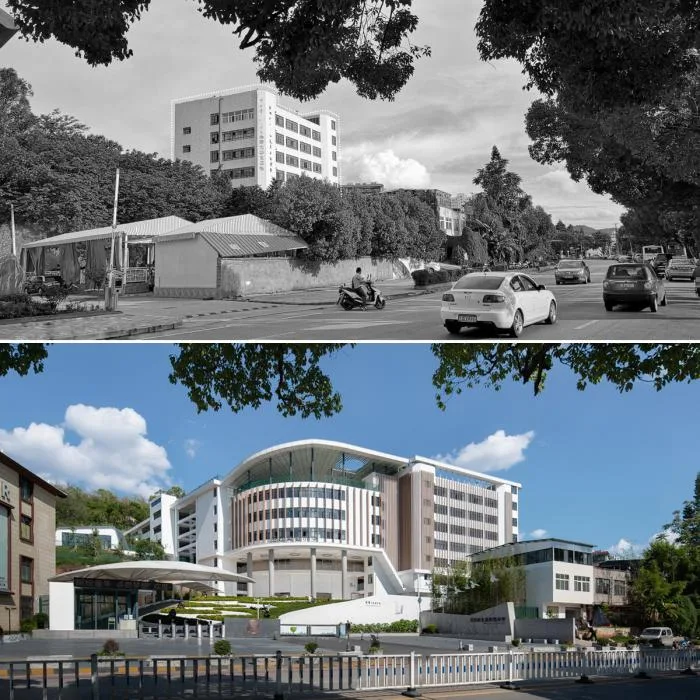
△ Before and after renovation comparison 02 – main building facade, front and back
The original teaching building structure remains intact, enhanced with wooden aluminum grilles on the exterior for aesthetic improvement, along with decorative trim added to unify the old building’s appearance with the new additions. The new buildings leverage the mountain’s vertical layers to create imaginative spatial experiences. Old and new structures are connected by corridors, and the L-shaped courtyard naturally integrates with student pathways. After class, children can expand their activities into the mountainous areas, sparking endless opportunities for play and exploration.
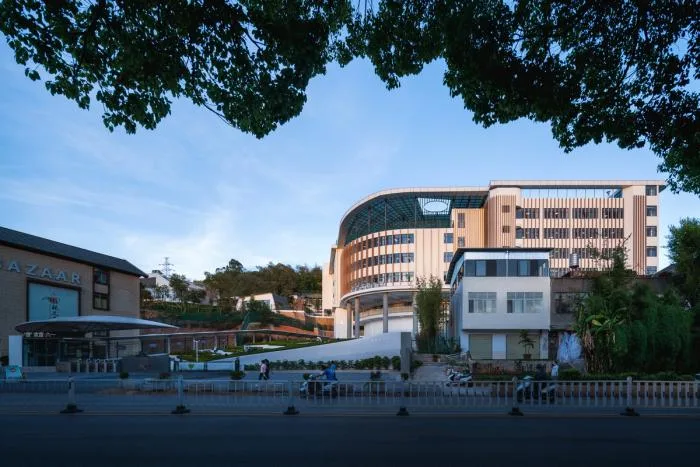
△ New and old buildings at the urban interface
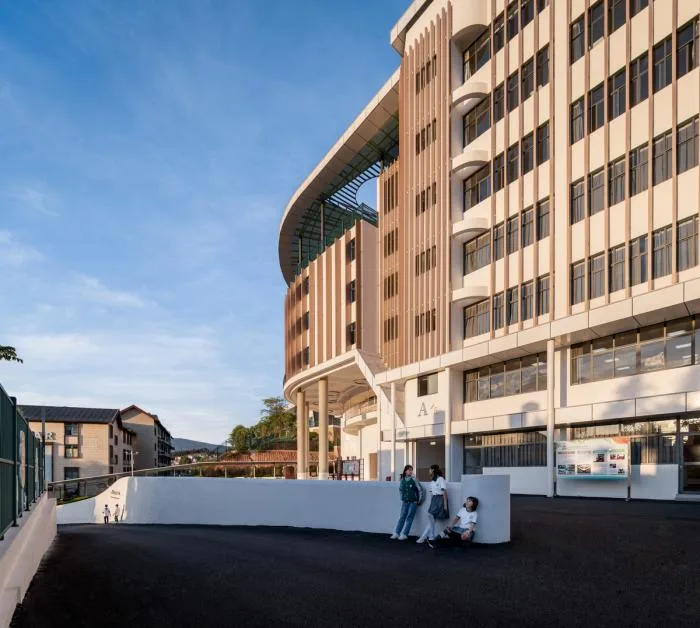
△ Building facade details
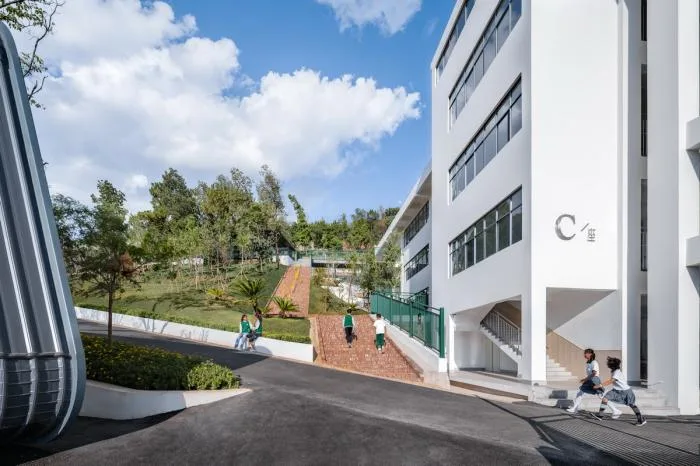
The relationship between architecture and mountains.
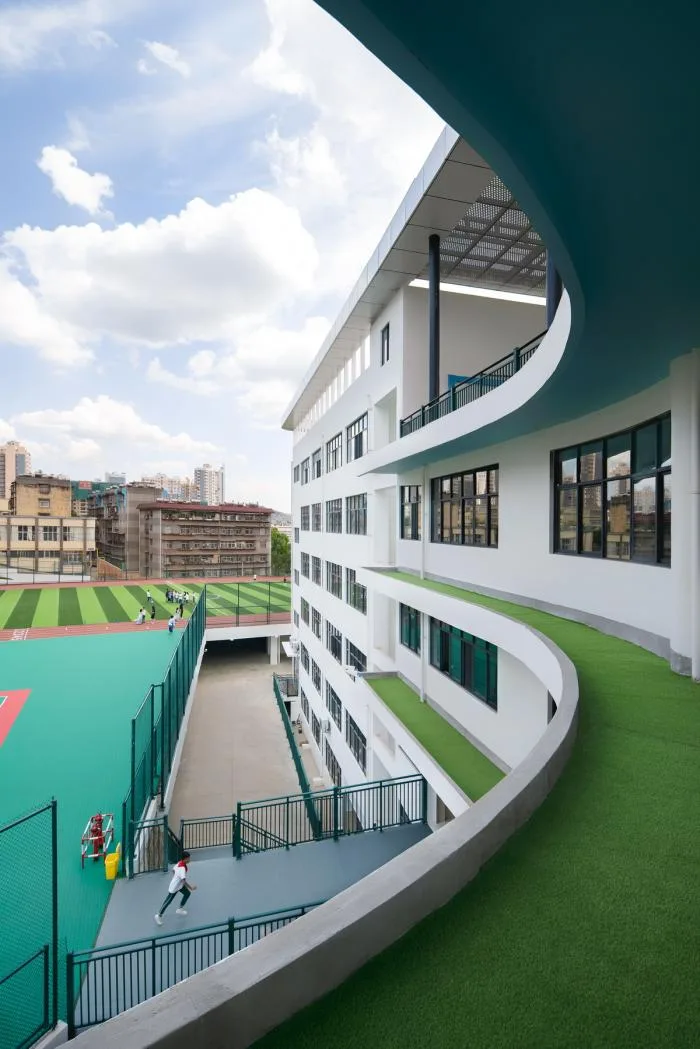
△ Architecture and sports field
The campus main entrance plaza aligns with the street level, creating a spacious gathering area for parents during drop-off and pick-up times, while also facilitating quick evacuation when necessary. The ramp leading up to the reception hall features a nearly 40-degree slope. To address the challenge of a height difference exceeding 4 meters over more than 10 meters of depth, innovative solutions were needed.
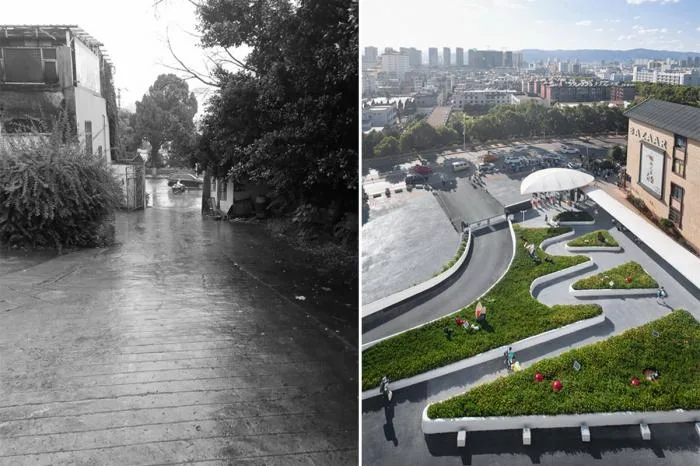
△ Before and after renovation 03 – entrance ramp, front and back views
Inspired by San Francisco’s famous Nine Bend Flower Street, the design extends the route with curves to reduce the slope’s intensity and create a spacious experience. Permeable asphalt paving enhances traction. Children now joyfully run up the winding ramp, gathering happily at the circular plaza before the reception hall. Seasonal flowers, plants, and distinctive sculptures along the way add vibrancy to the environment.
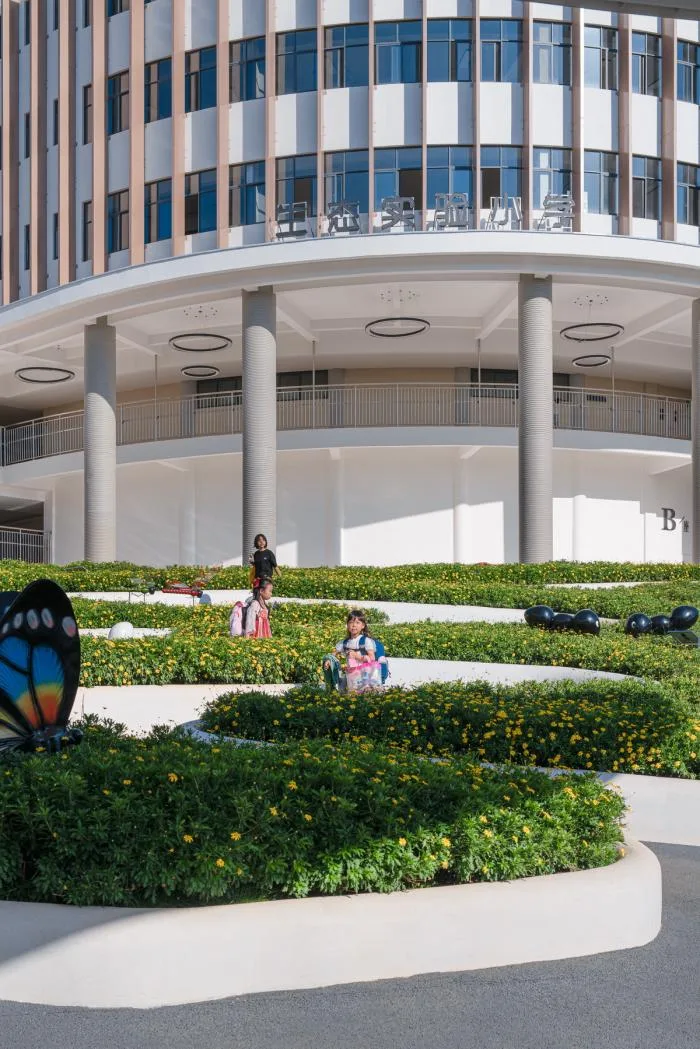
△ Nine-curved pedestrian entrance corridor
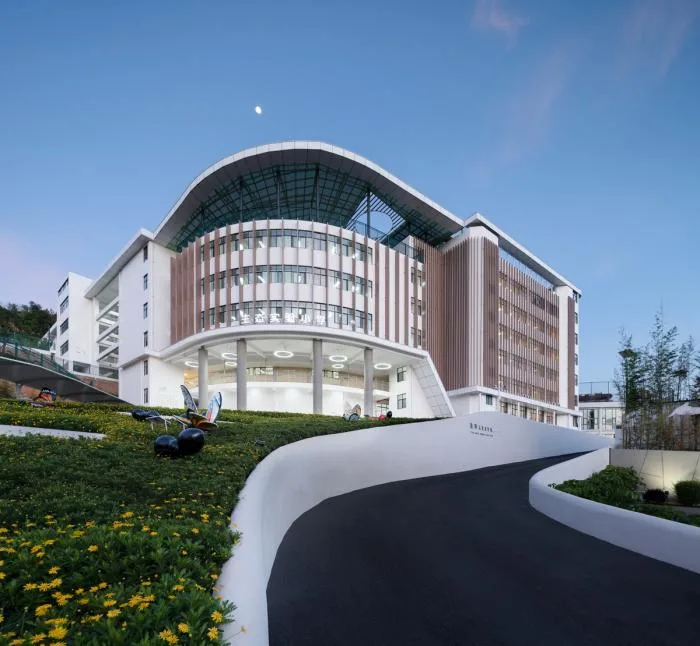
Jiuqu Gallery and teaching building.
Stacking Functions and Elevated Playgrounds
When planning athletic fields, protecting the mountain and natural environment was paramount. Earthworks remained untouched to minimize costs. Installing a track on the existing field would have further reduced limited space.
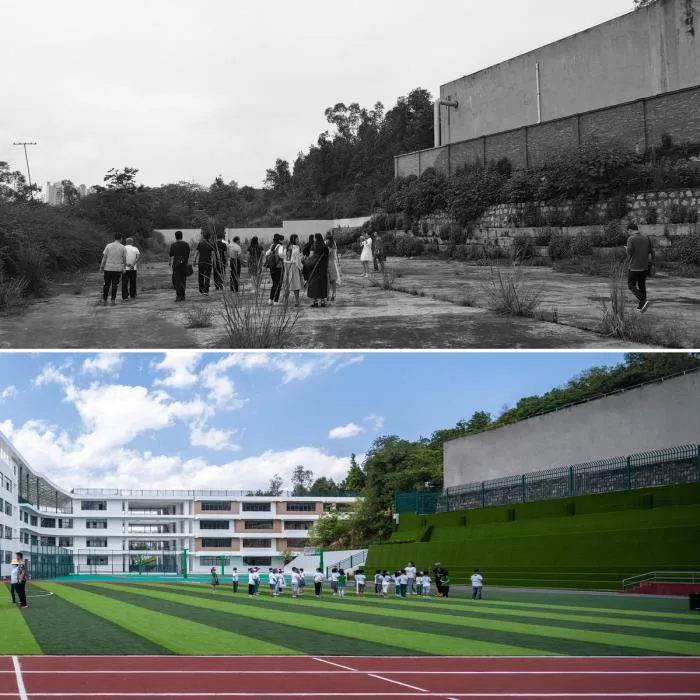
△ Playground space before and after renovation – a: before, b: after
The designer raised the playground area, placing the cafeteria and parking beneath it, effectively maximizing land use and adding functional space. A 250-meter circular track called the “Sky Playground” was created, offering a feeling of running close enough to touch the clouds. The view towards the distant city is broad and refreshing.
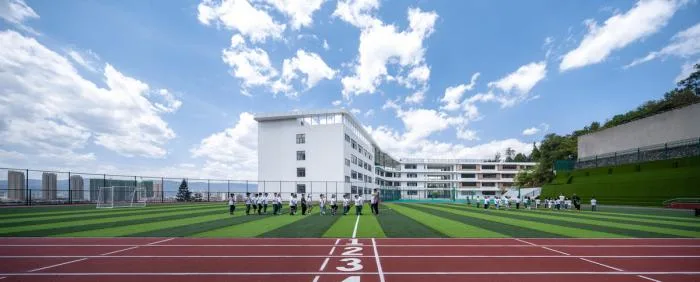
△ Expansive playground space
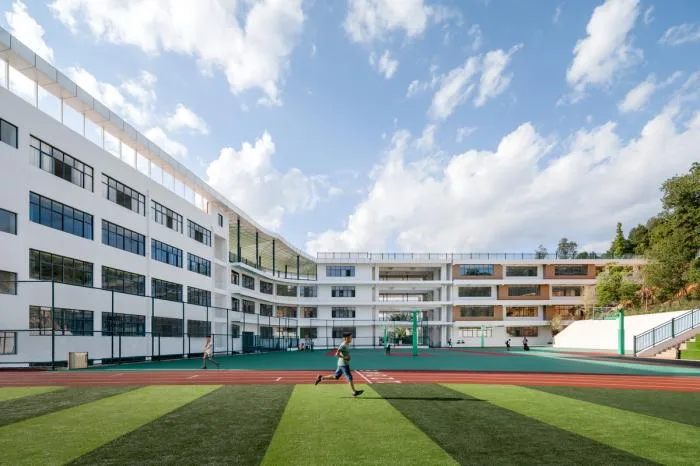
Architecture harmoniously integrated with the mountain landscape.
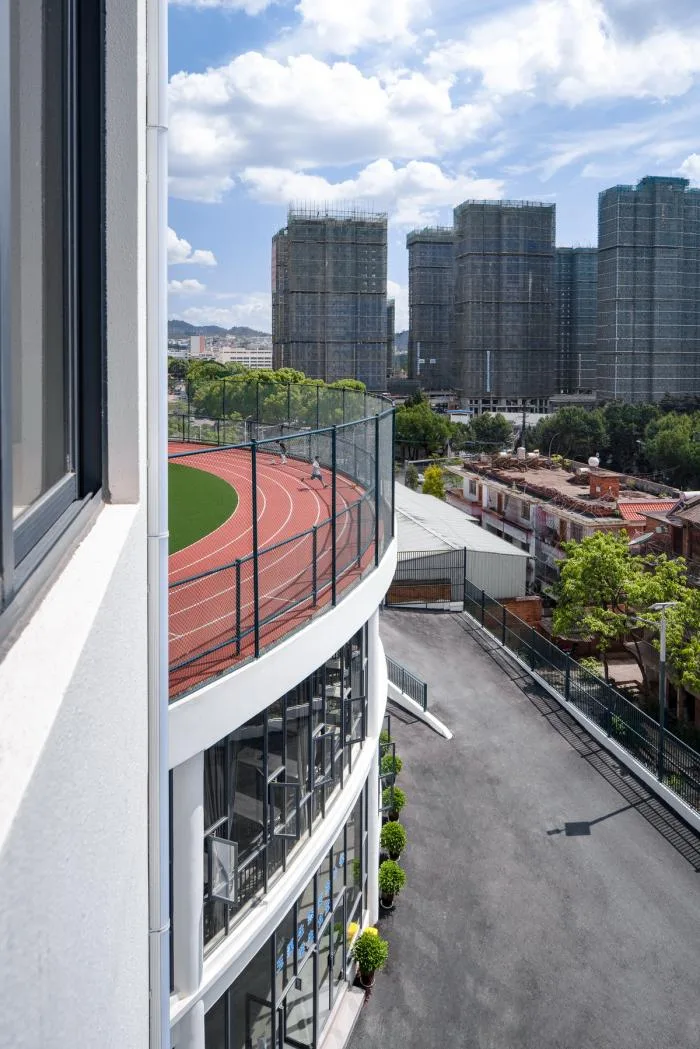
Elevated playground overview.
The forest adjacent to the playground serves as an entry to a mysterious natural world for children. As they climb the stairs, curiosity leads them into this secret natural realm. The mountain and forest ecology create an inspiring environment. The design intentionally breaks the school into multiple smaller buildings placed at various elevations, nestled within the green landscape. Over time, these buildings form a symbiotic relationship with the mountain, partially hidden among rocks and foliage.
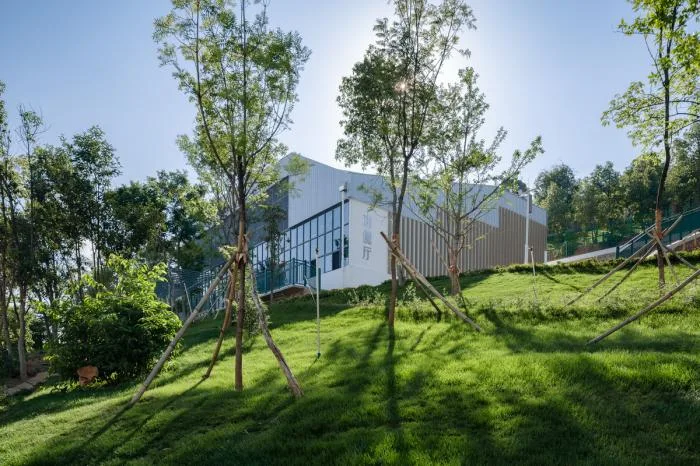
△ Multi-functional classroom nestled in the forest
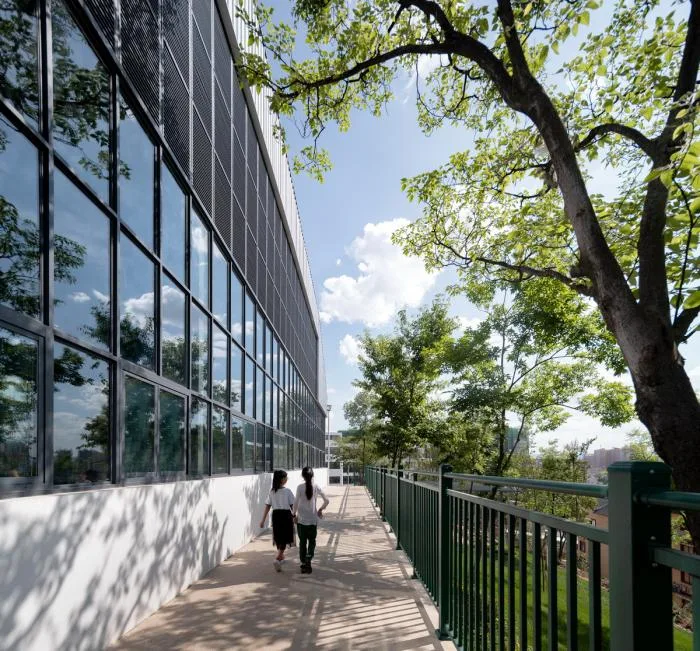
△ Natural ecological campus space
Surrounded by lush greenery under endless blue skies, with sunlight filtering through gentle breezes, children find their favorite “corners” within this forested campus. Classrooms extend beyond walls, offering learning environments under tree shade and in open sunshine.
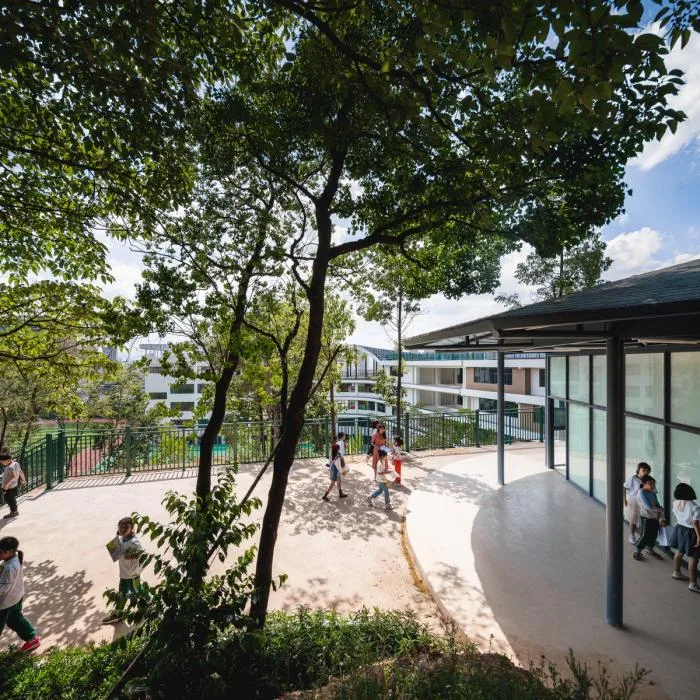
△ Forest classroom
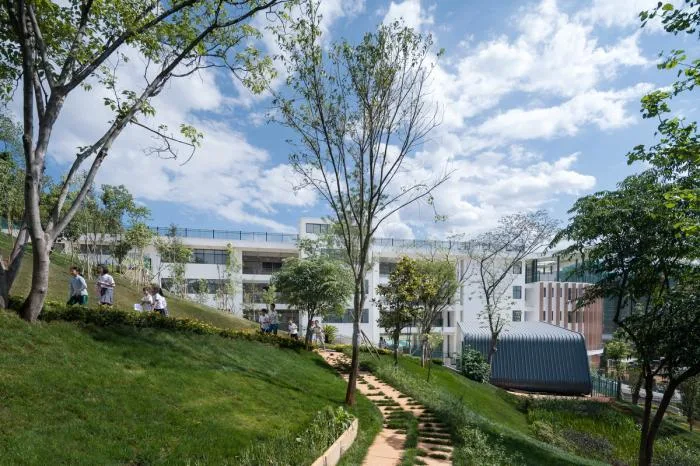
△ Teaching buildings subtly hidden within the forest
Conclusion – Crafting a New Educational Landmark
In the ever-changing urban landscape, campuses have traditionally played a supportive, secondary role. For individuals, they hold cherished memories of youth; for cities, they symbolize cultural spirit. Designing beautiful campuses through innovation benefits not only individuals but also enhances the city’s image. Creating a new educational landmark is both a vision and a strategic urban goal.
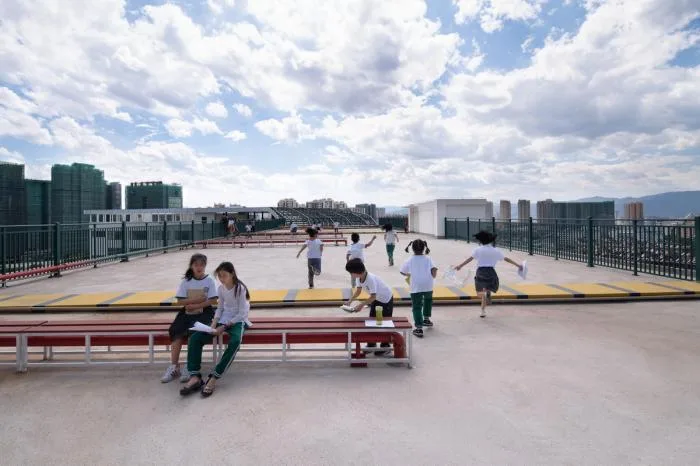
Children actively playing on the rooftop.
The design balances quality and cost while prioritizing functional needs and children’s healthy development. It integrates urban renewal with campus expansion and renovation through multi-layered strategies and comprehensive design execution, significantly improving land and space utilization. By renewing old buildings, enhancing functions, and preserving nature, urban vitality is gradually revived.
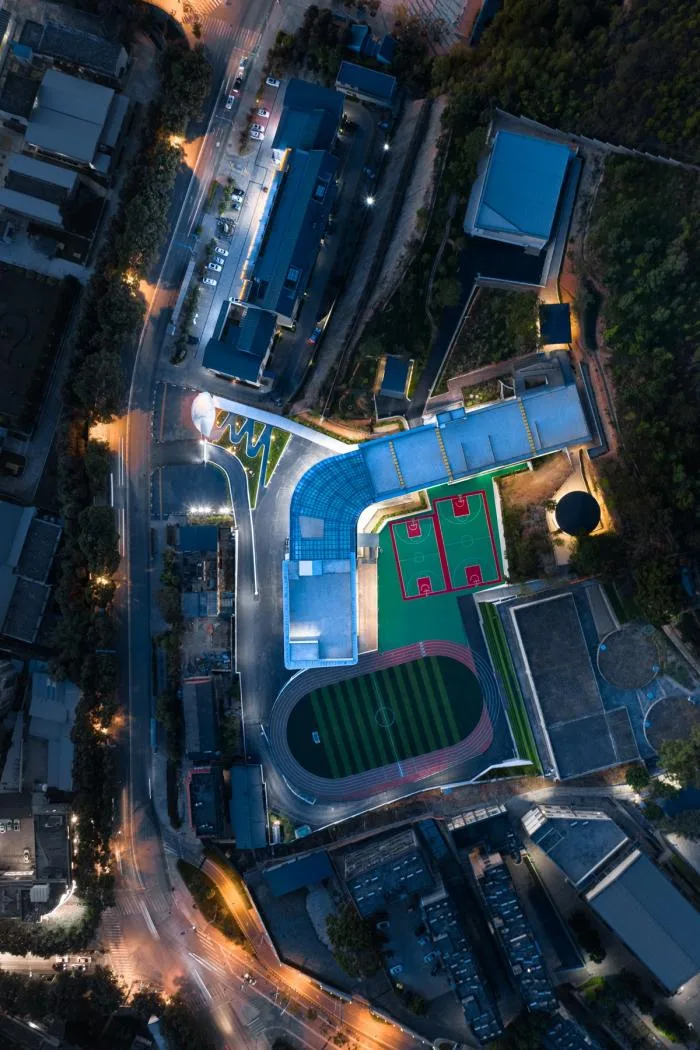
△ Nighttime aerial view from above
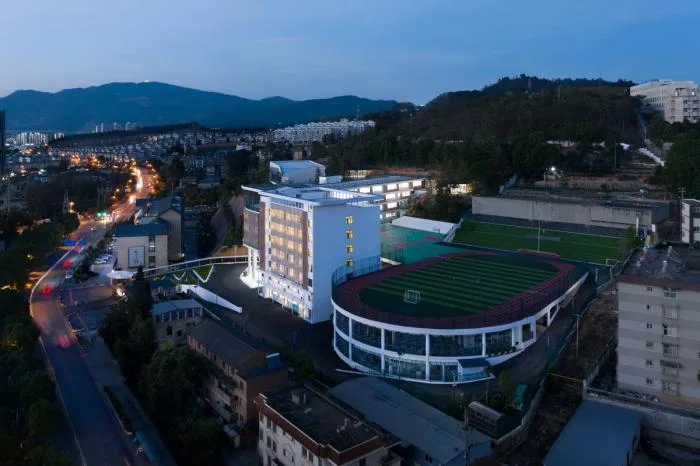
△ Night view aerial perspective
As night falls, the campus quiets. Half mountain, half school—Yuxi Ecological Experimental Primary School patiently awaits the return of teachers and students on the next day.
Technical Drawings
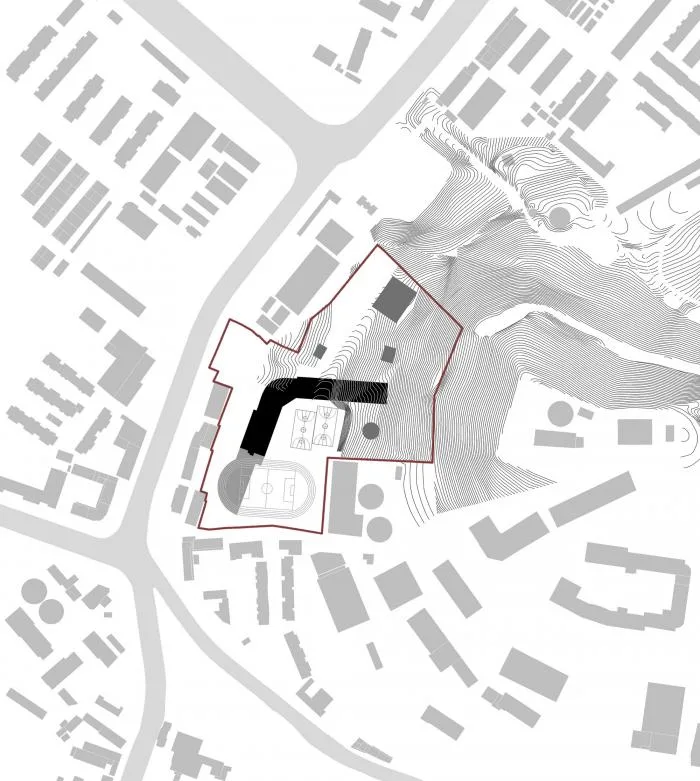
△ Site location analysis
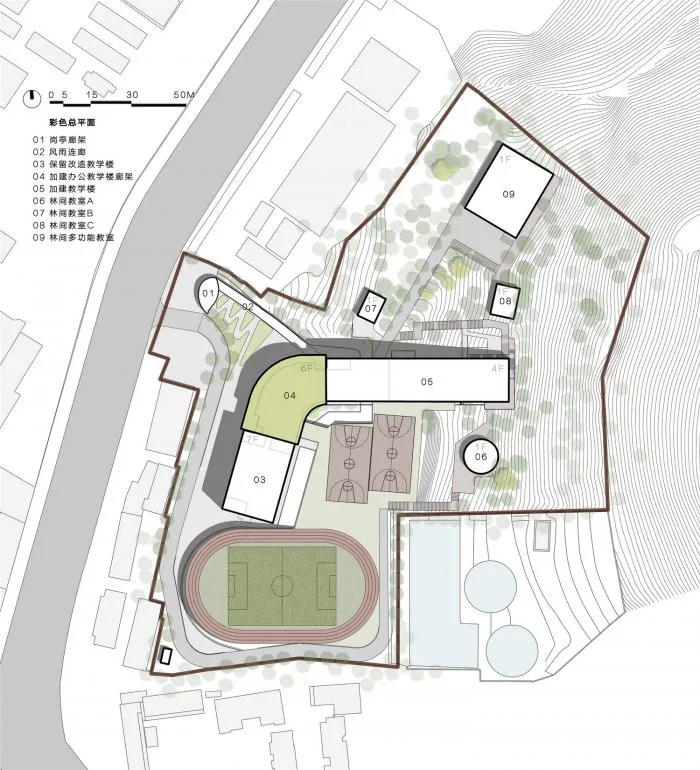
△ Overall campus master plan
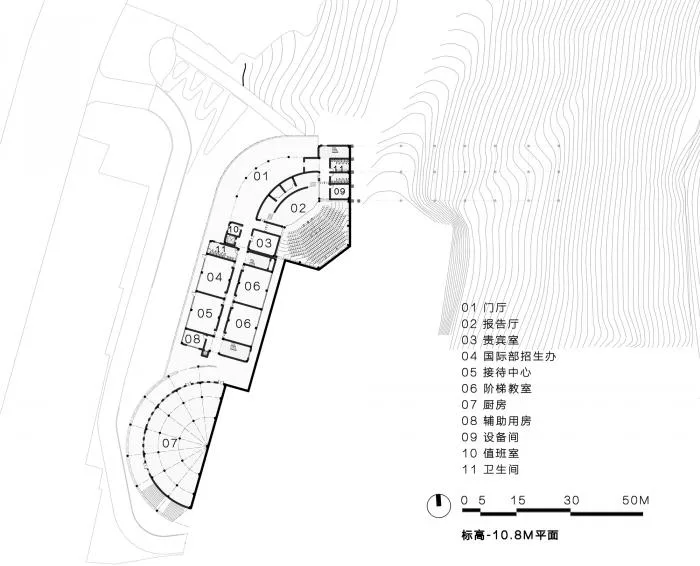
△ Elevation plan at -10.8 meters
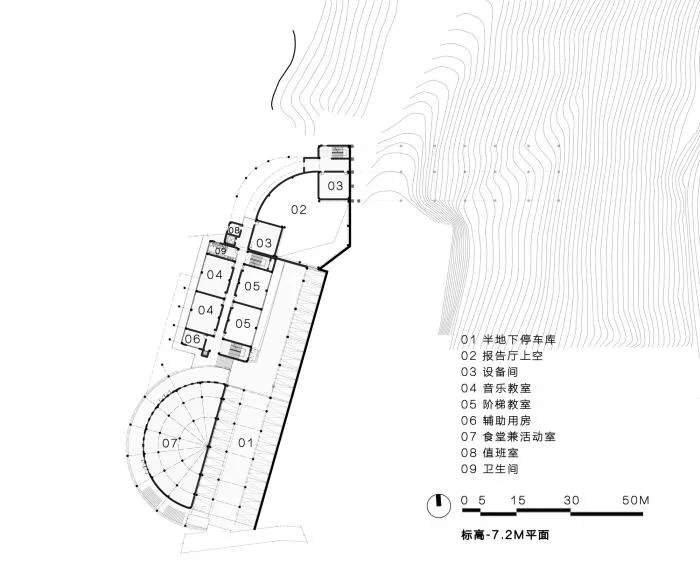
△ Elevation plan at -7.2 meters
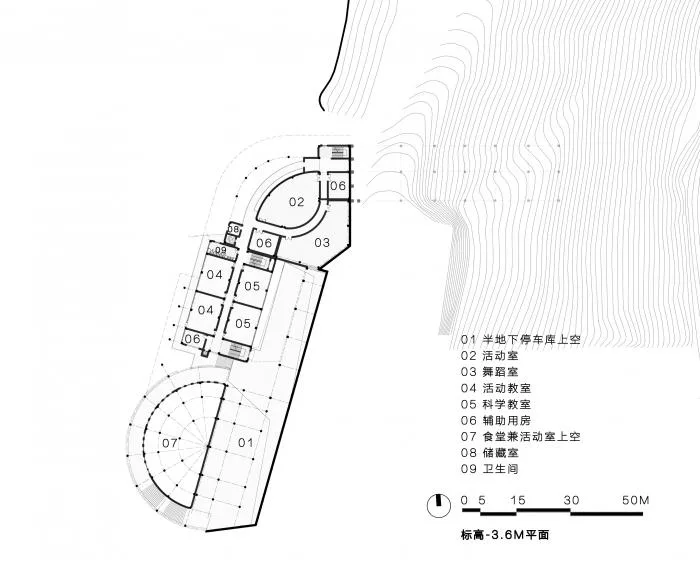
△ Elevation plan at -3.6 meters
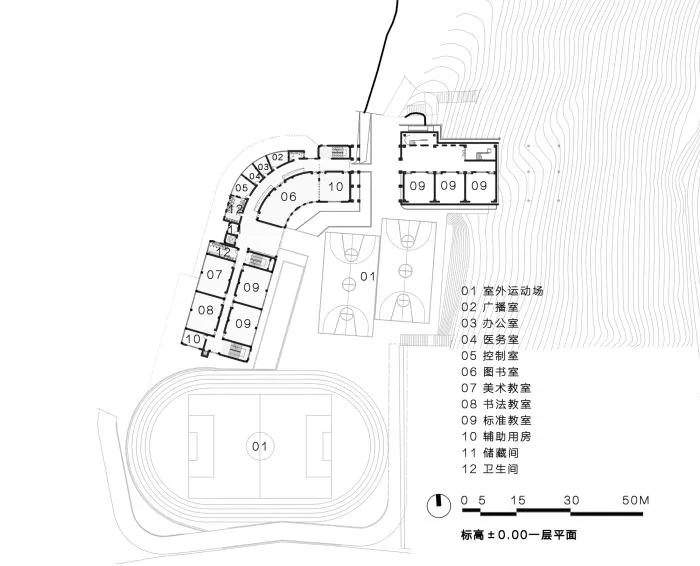
△ First floor plan
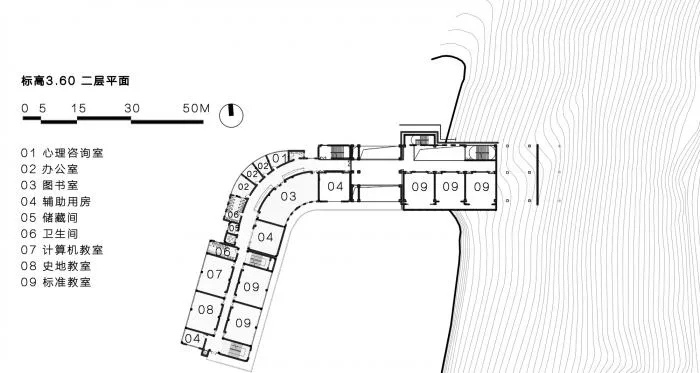
△ Second floor plan
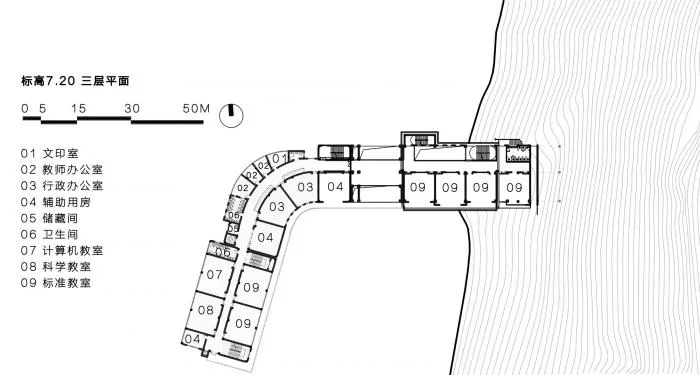
△ Third floor plan
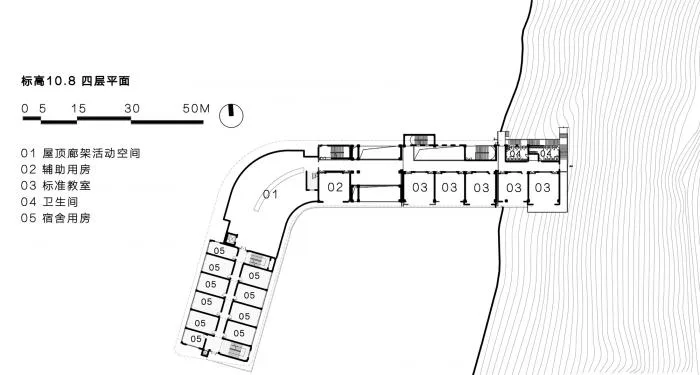
△ Fourth floor plan
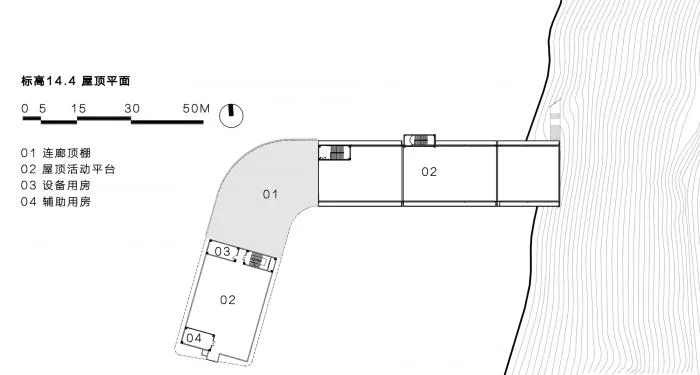
△ Roof plan
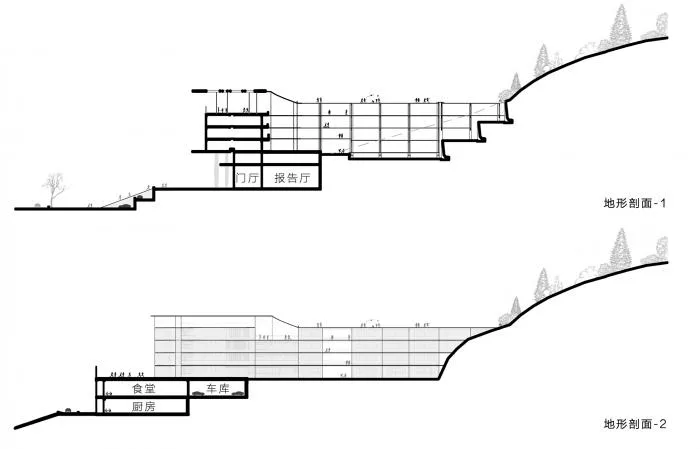
△ Building profile
Project Information
Project Name: Yuxi Ecological Experimental Primary School
Location: Yuxi, Yunnan Province
Owner: Yuxi Guolian Cultural Industry Development Co., Ltd.
Design Firm: Shanghai Sixu Architectural Planning and Design Co., Ltd. (Integrated Architecture, Interior, and Landscape Design)
Lead Designer: Wang Tao
Design Team: Dai Qinghui, Huang Cai, Gao Yan, Gao Chang, Chen Lifeng, Li Yan, Dong Wen, Lu Qin, Si Di, Chen Xiaomeng
Collaborators: Yuxi Architectural Design Institute (Structural and Construction Documentation)
Land Area: 23,500 square meters
Building Area: 13,000 square meters
Capacity: 24 classrooms
Design Timeline: August 2018
Completion Date: March 2020
Architectural Photography: Wu Qingshan












Must log in before commenting!
Sign Up