
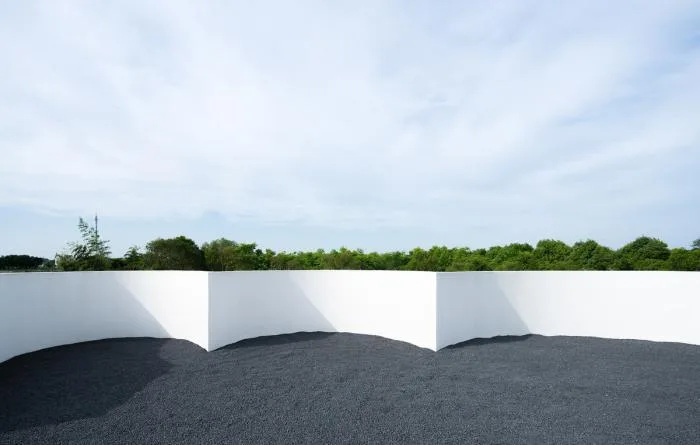
From the rooftop platform, the forest to the north appears to be floating above the treetops. © Lv Xiaobin
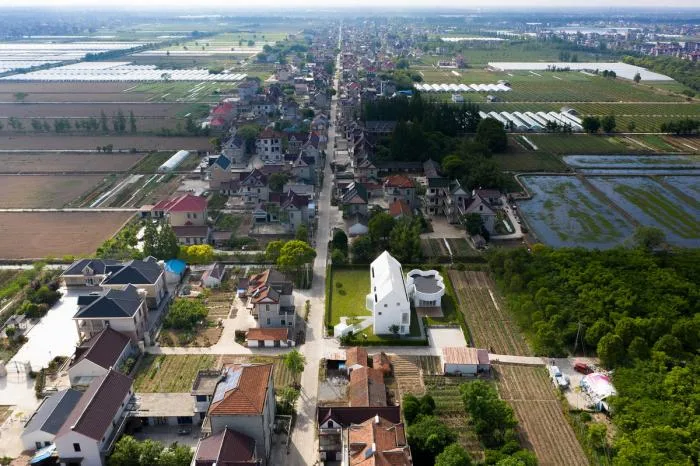
△ Panoramic bird’s-eye view © Lv Xiaobin
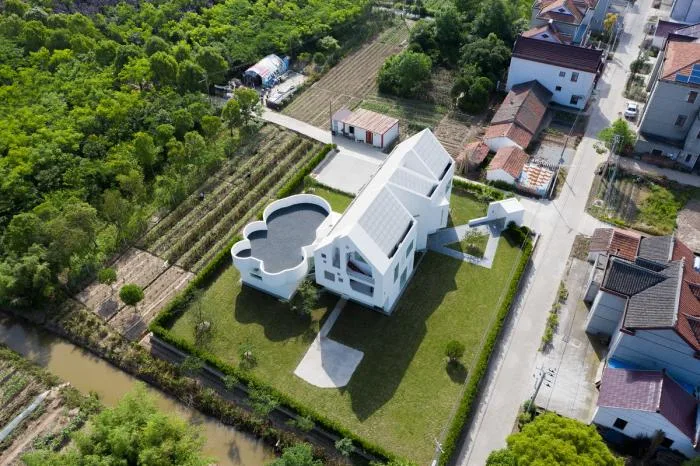
△ Aerial view © Lv Xiaobin
When wandering through the houses of the old countryside or city, we are often confined by limited boundaries. Yet, people long for a journey of eternal return. This residence offers a place where one can wander endlessly within the same space…
— Yuan Xiuwan
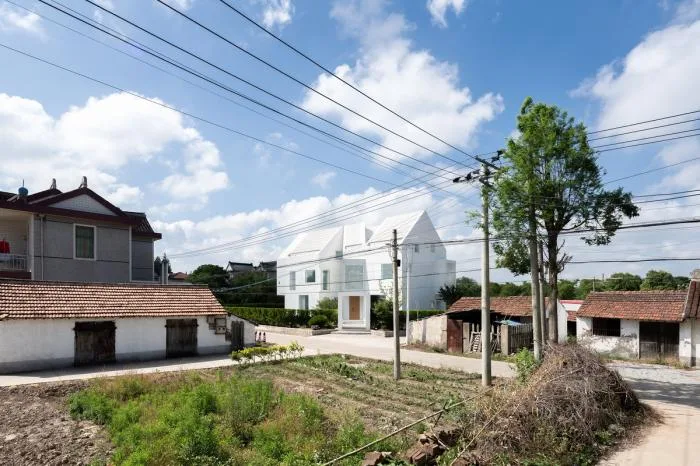
Neighbors observe the exterior of the buildings © Lv Xiaobin
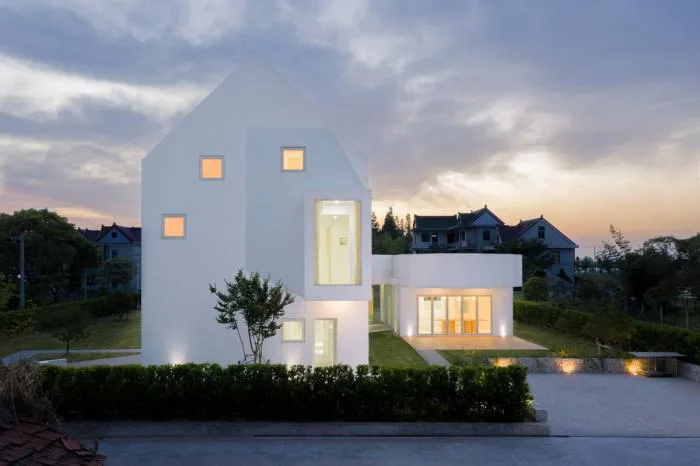
△ Night view of the west facade © Lv Xiaobin
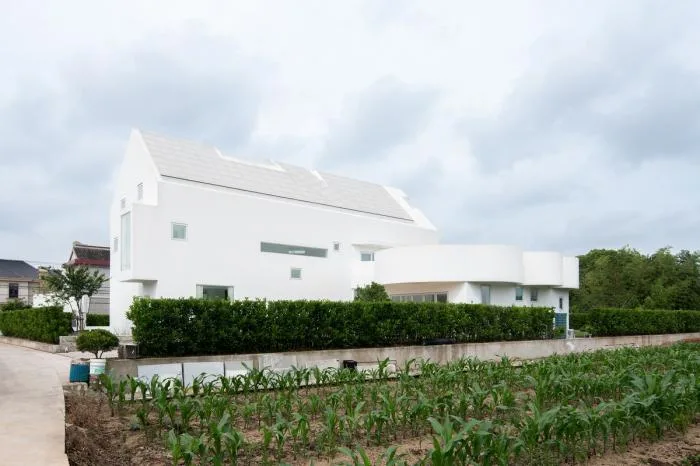
△ Facade perspective © Lv Xiaobin
Lu Zhai is a weekend residence designed by Yuan Xiuwan for a family of three from Shanghai, situated on Chongming Island. The original house, built in the 1980s, was demolished and rebuilt on the same site. Based on the old house’s size and local soil regulations, the first floor was limited to 190 square meters, featuring a two and a half-story sloped roof structure. The auxiliary building has a ground floor construction area of 60 square meters.
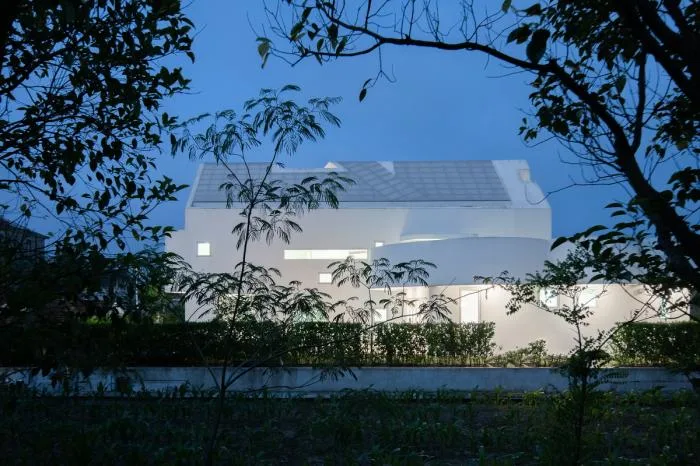
Night view overlooking buildings in the fields © Lv Xiaobin
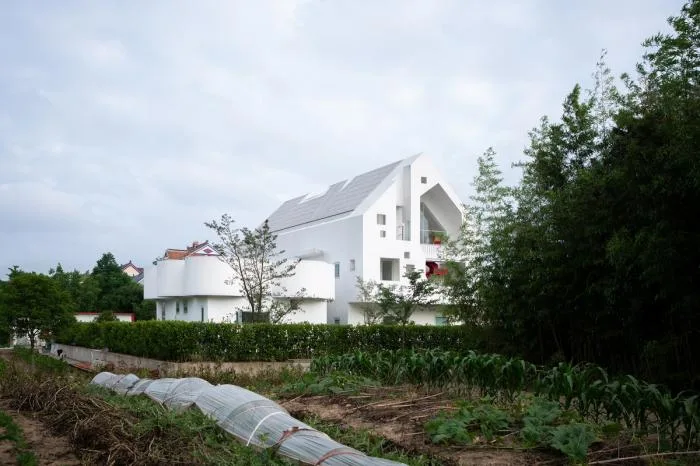
Neighbors, fields, and buildings © Lv Xiaobin
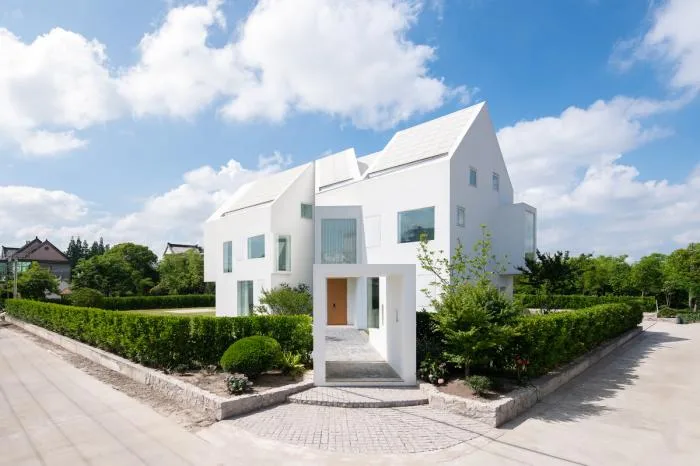
△ View of buildings from the main road © Lv Xiaobin
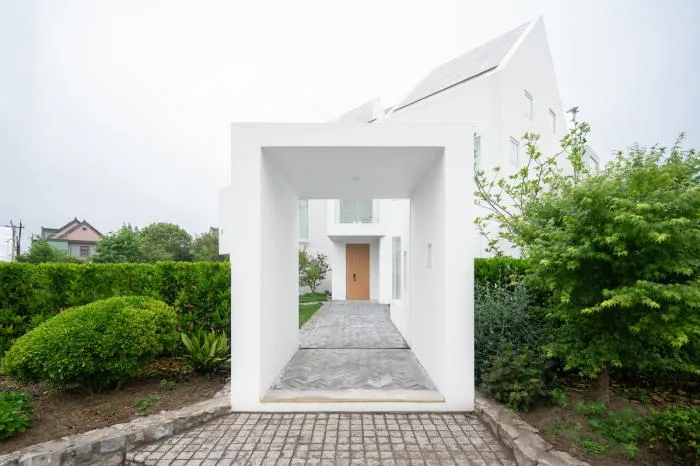
△ View of the building from the main entrance © Lv Xiaobin
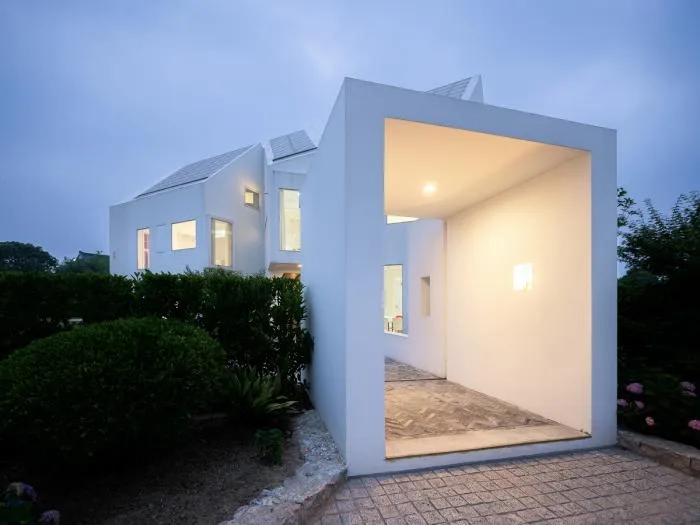
△ Night view of the main entrance © Lv Xiaobin
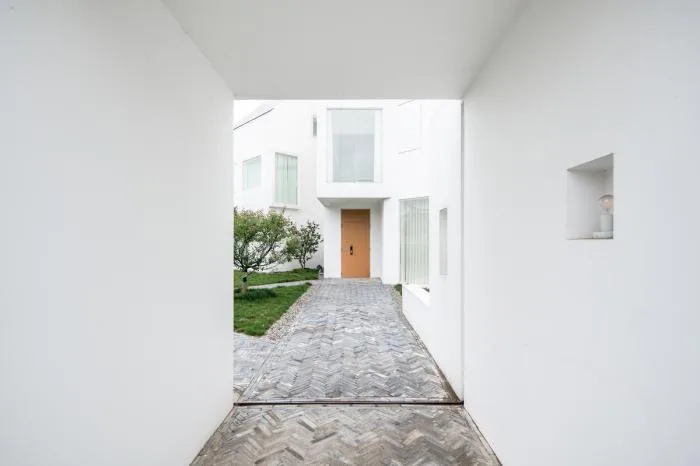
△ View of the building from the entrance hall © Lv Xiaobin
The structure of older houses on this island serves as a model for residential spaces, reflecting a common domestic style after liberation — focusing primarily on the two fundamental functions of eating and living.
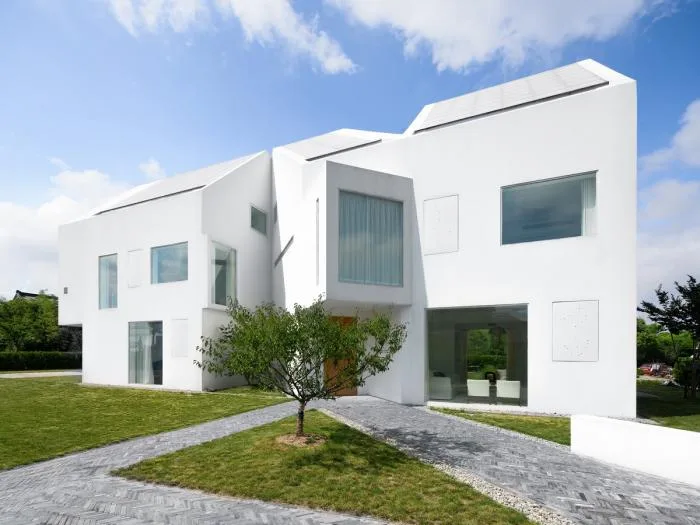
Viewing the architecture from the courtyard © Lv Xiaobin
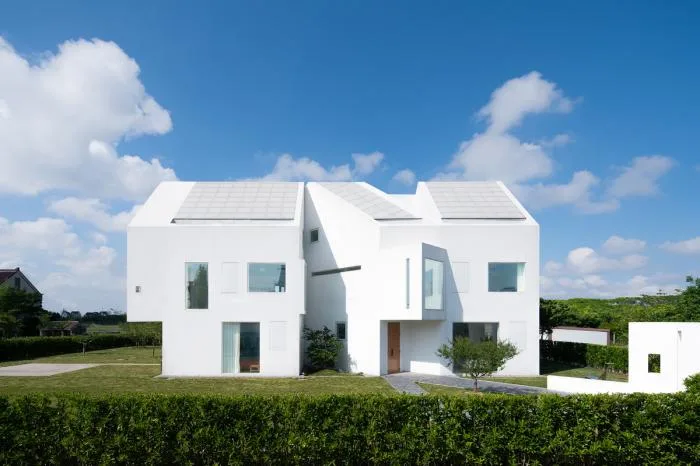
View of buildings along the main road © Lv Xiaobin
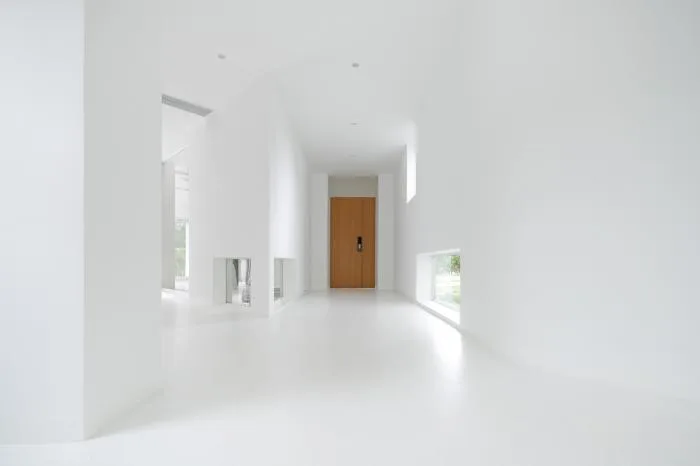
△ 45° axis entrance corridor © Lv Xiaobin
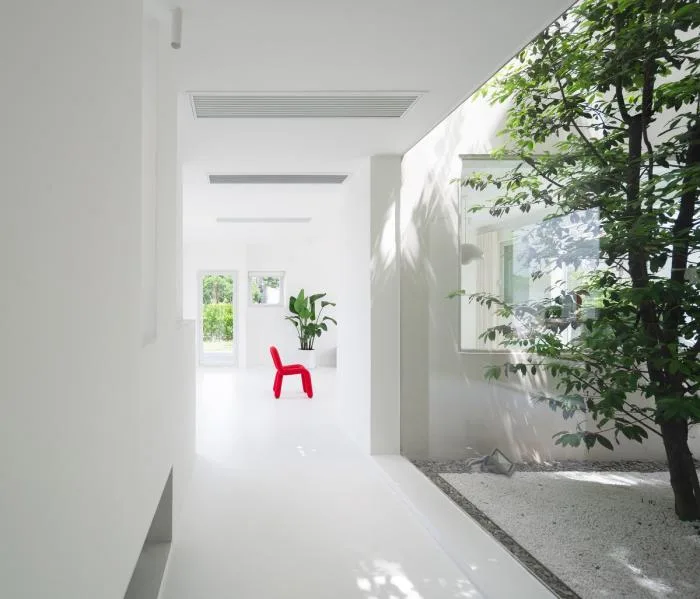
View of the inner courtyard from the corridor along the east-west axis © Lv Xiaobin
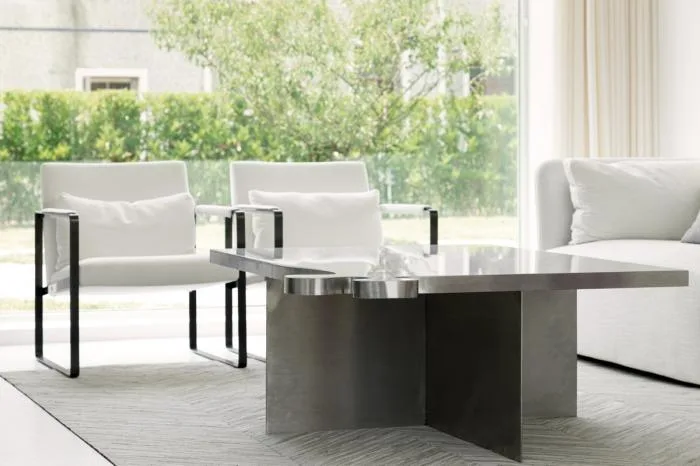
△ Living room with tea table designed by Yuan Xiuwan © Lv Xiaobin
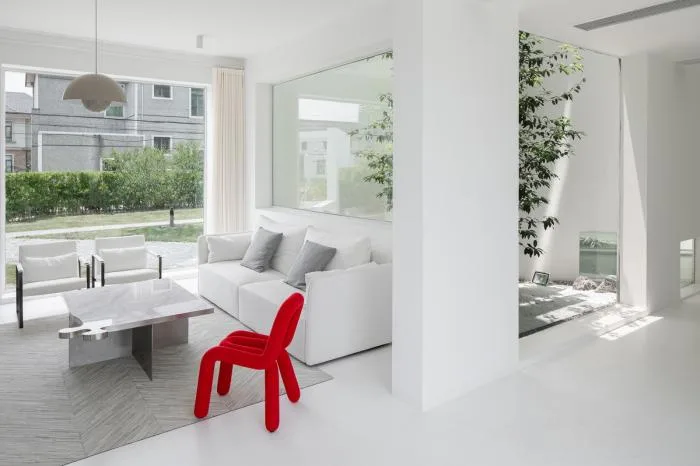
The living room extends seamlessly from the inner courtyard to the outer courtyard © Lv Xiaobin
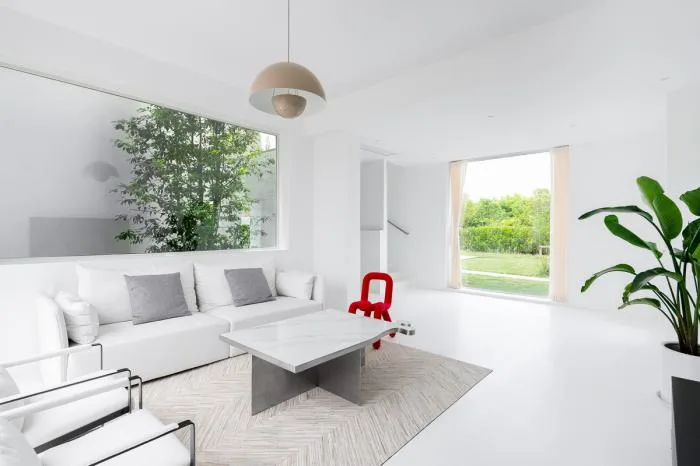
△ Living room, inner courtyard, and outdoor space © Lv Xiaobin
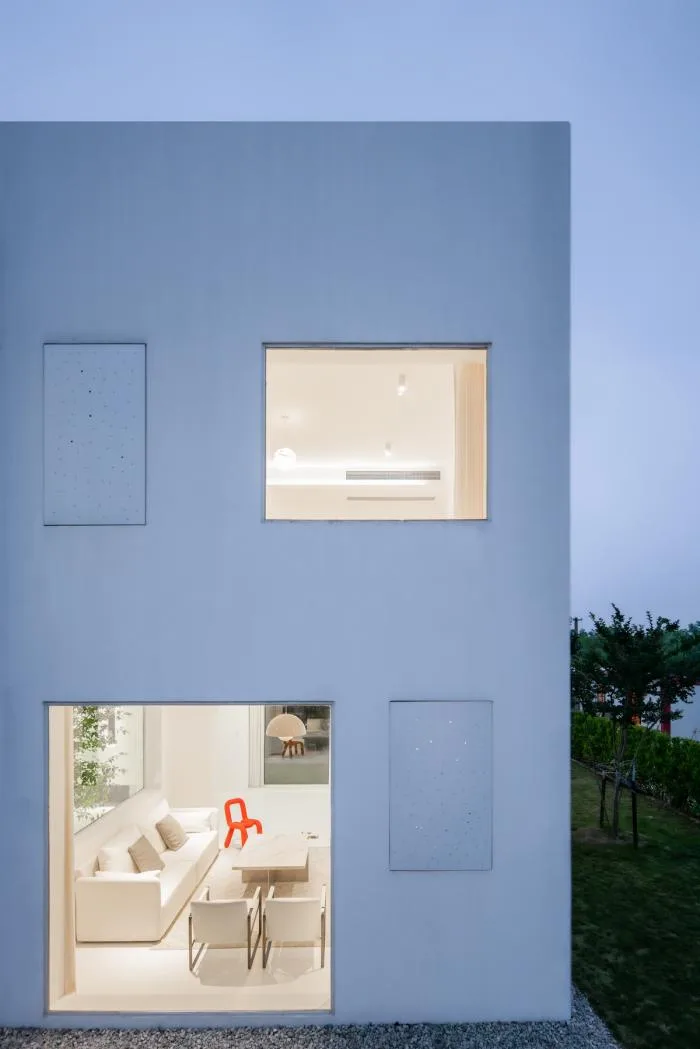
Partial facade featuring an operable constellation window © Lv Xiaobin
The design of L Mansion seeks to create multiple possible routes and ‘extra’ spaces by integrating the everyday routine of sleeping and eating.
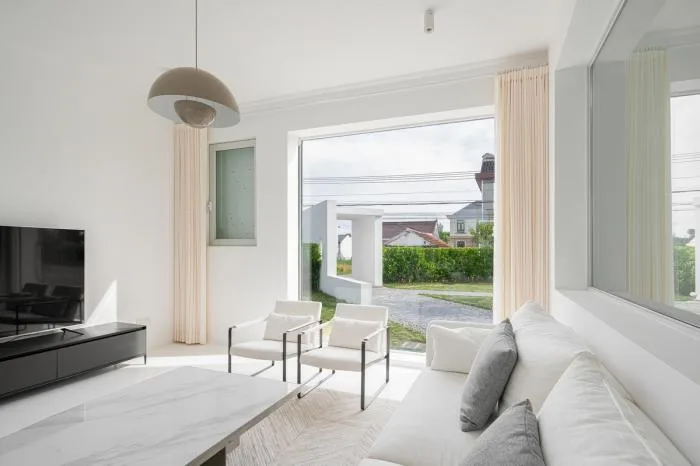
△ View of the main entrance door from the living room © Lv Xiaobin
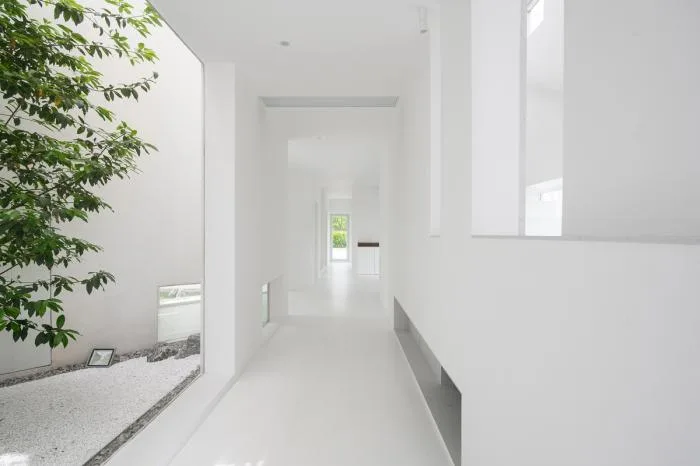
△ East-West axis corridor © Lv Xiaobin
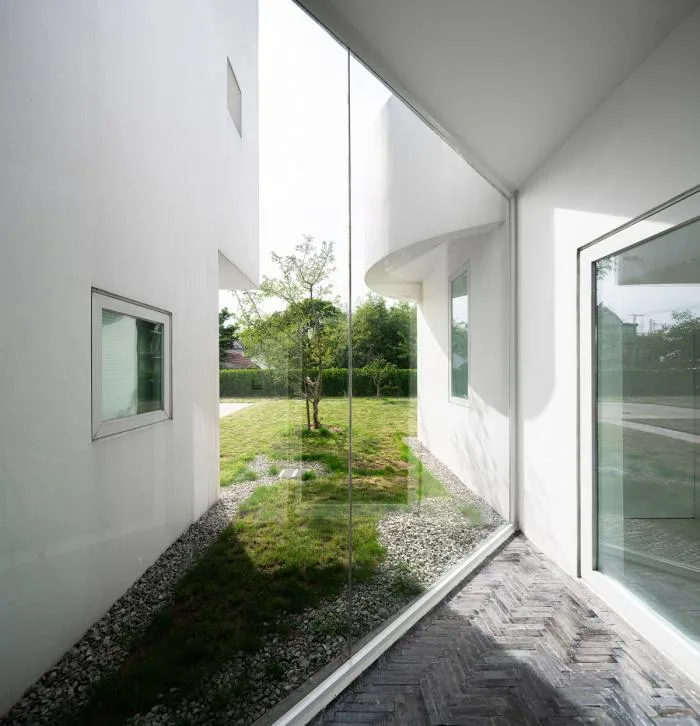
△ Auxiliary room and main building corridor © Lv Xiaobin
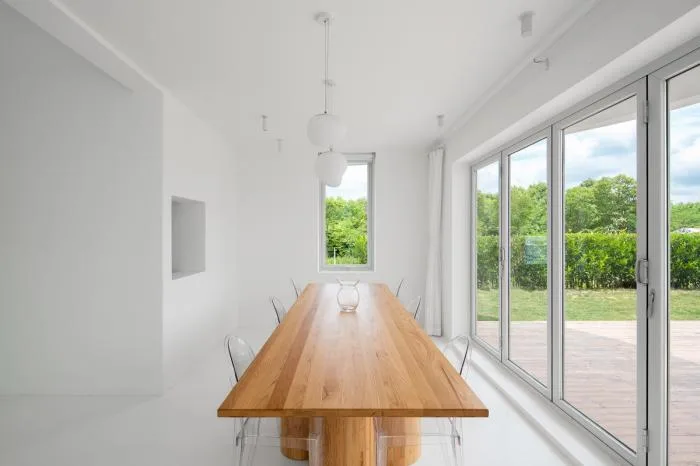
△ Restaurant © Lv Xiaobin
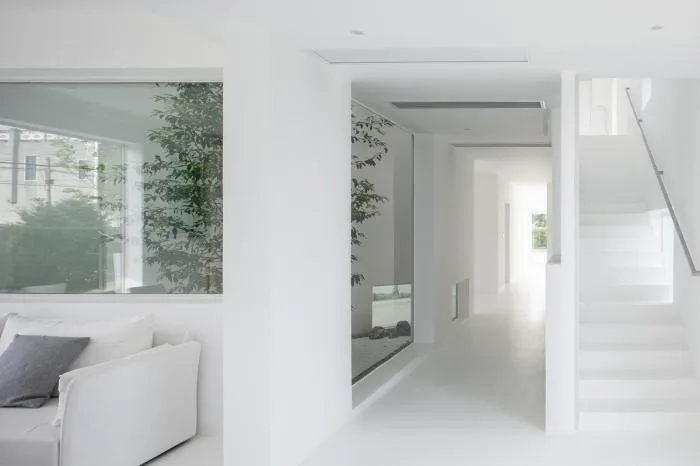
△ Access to the second-floor staircase © Lv Xiaobin
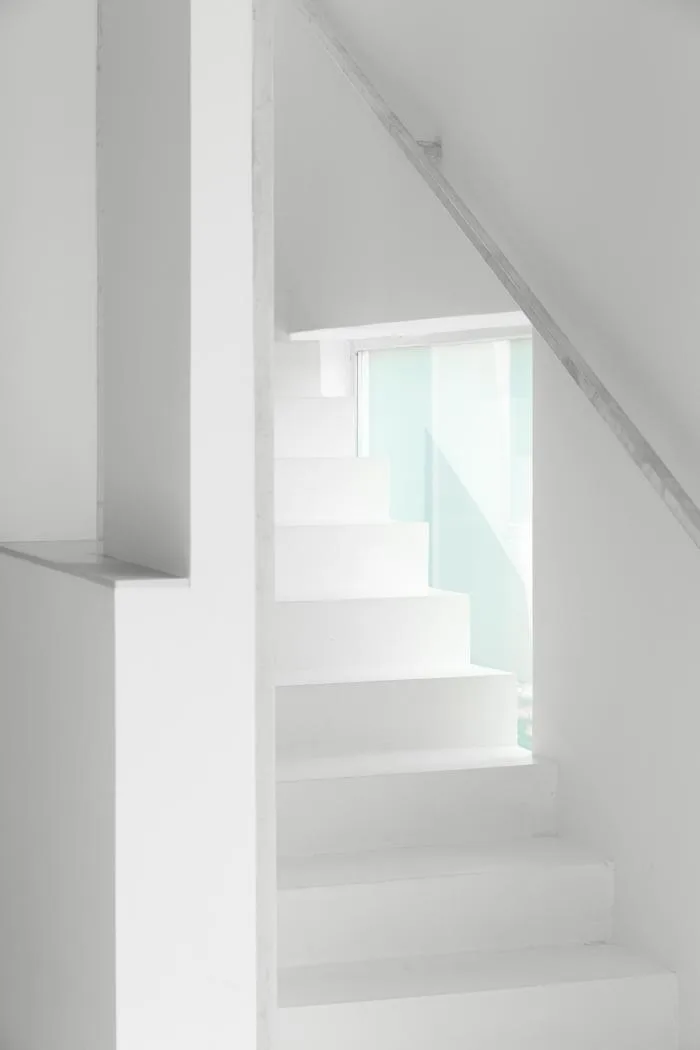
Partial view of the staircase © Lv Xiaobin
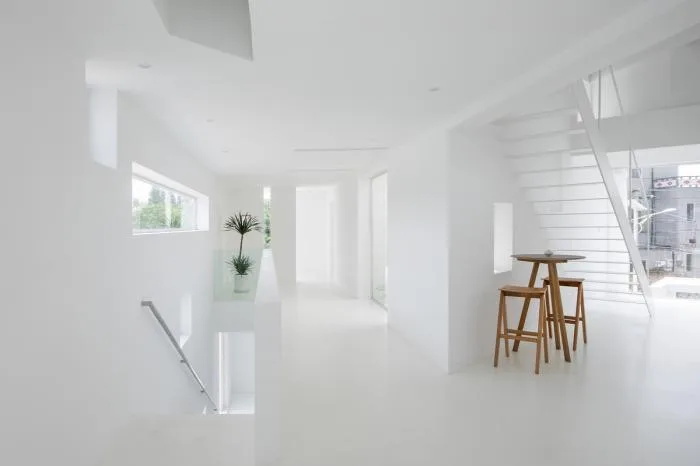
View of the interior and exterior scenery at the intersection of the east-west and 45° axes on the second floor © Lv Xiaobin
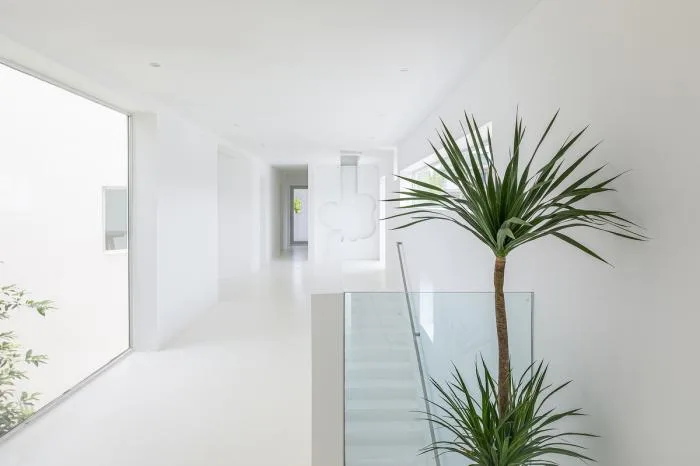
△ Second-floor east-west axis corridor © Lv Xiaobin
Chongming Island is connected to Shanghai by a cross-sea bridge, resembling a floating fish bubble on the sea. The Chenhai Highway traverses the entire island, bordered by farmland and nurseries arranged within a rectangular road network. Buildings line both sides of the road. The L residence sits on the north side of Hongji West Road, adjacent to a nursery and farmland to the north, which lead to another village.
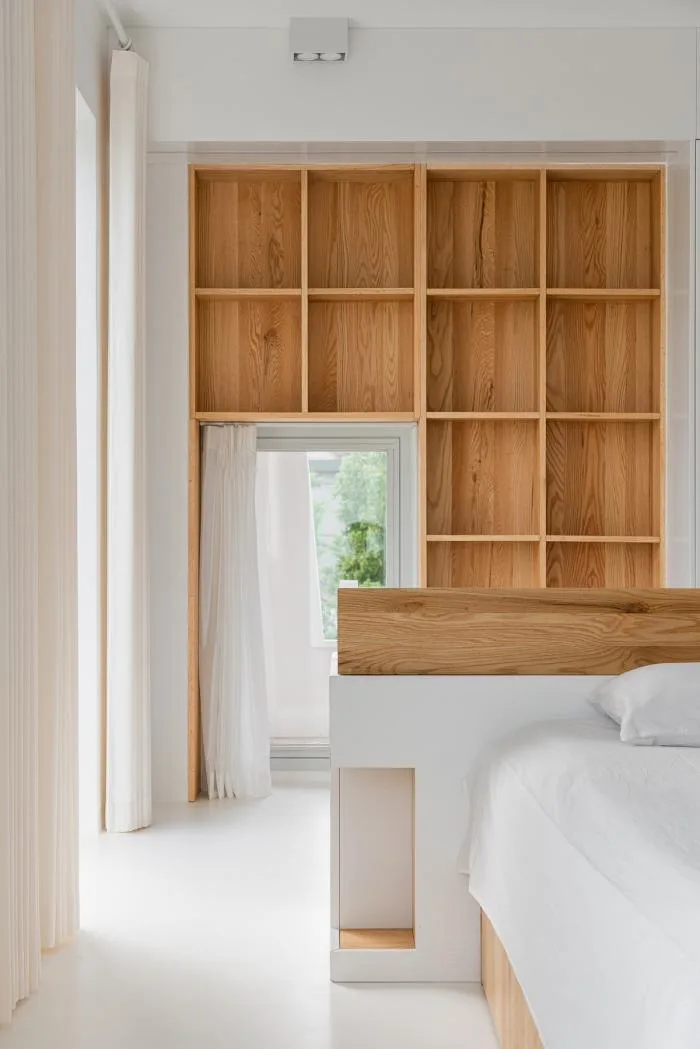
△ Master bedroom © Lv Xiaobin
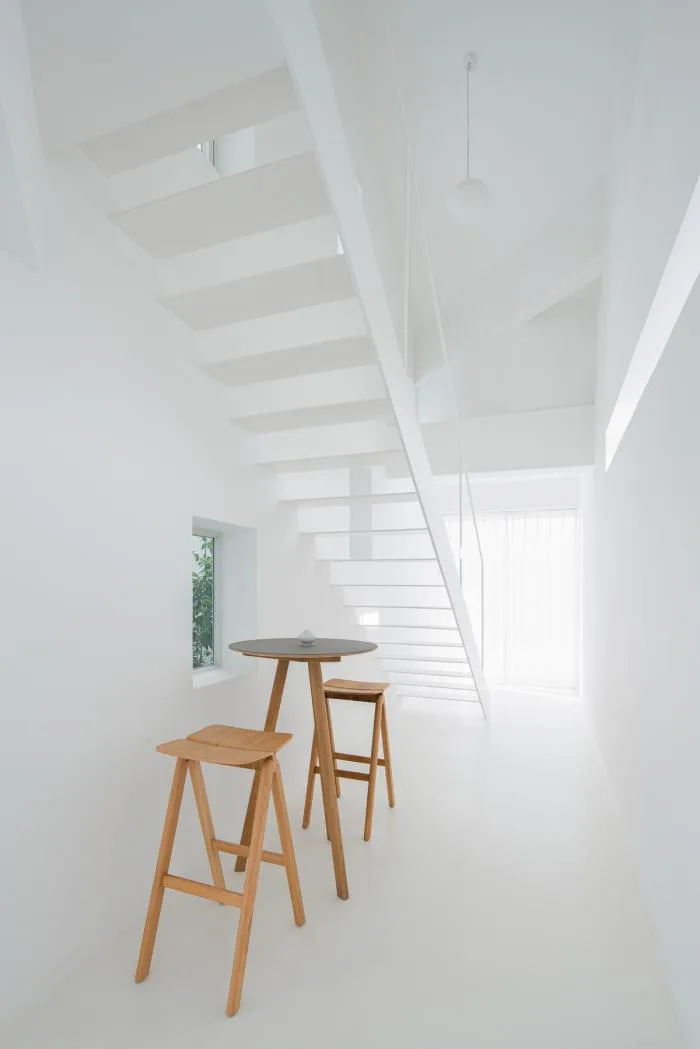
△ Steel staircase leading to the third floor © Lv Xiaobin
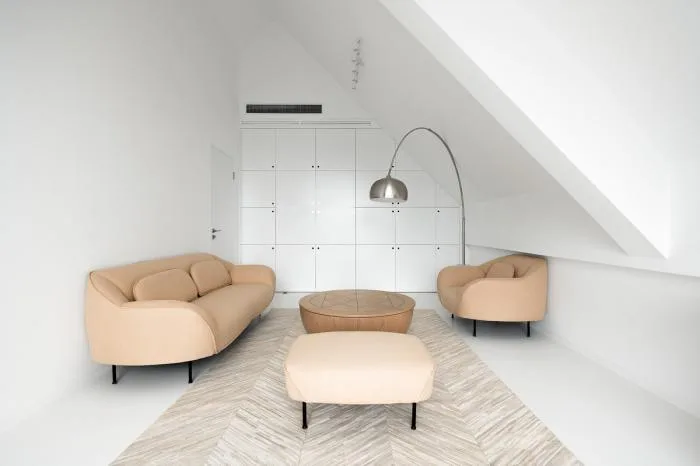
△ Studio © Lv Xiaobin
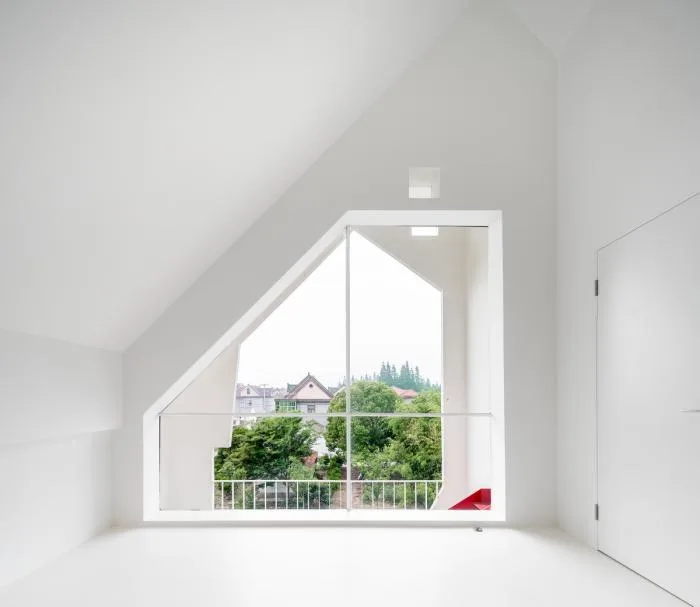
△ Three-story studio © Lv Xiaobin
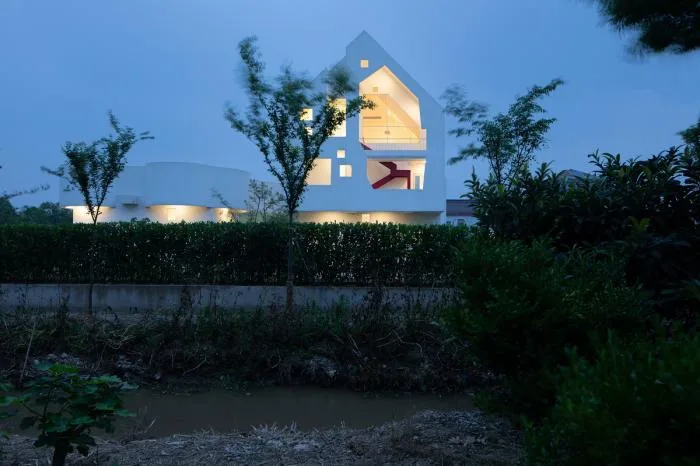
Neighbors across the river view the buildings © Lv Xiaobin
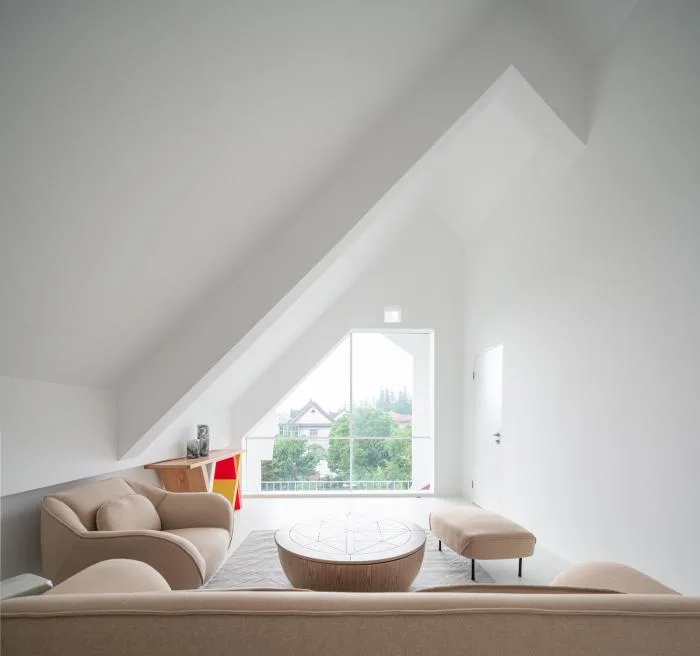
△ Studio and multifunctional room © Lv Xiaobin
The homestead covers approximately one thousand square meters. To the east, a road runs alongside the nursery, while to the west lies a river and trees, offering unique scenic views in every direction.
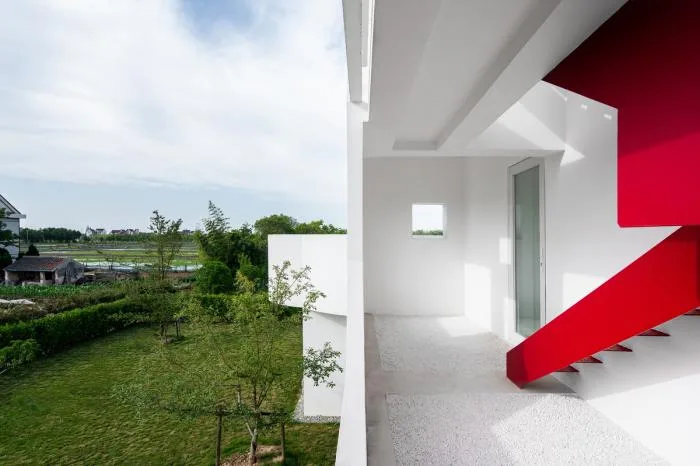
△ West viewing balcony © Lv Xiaobin
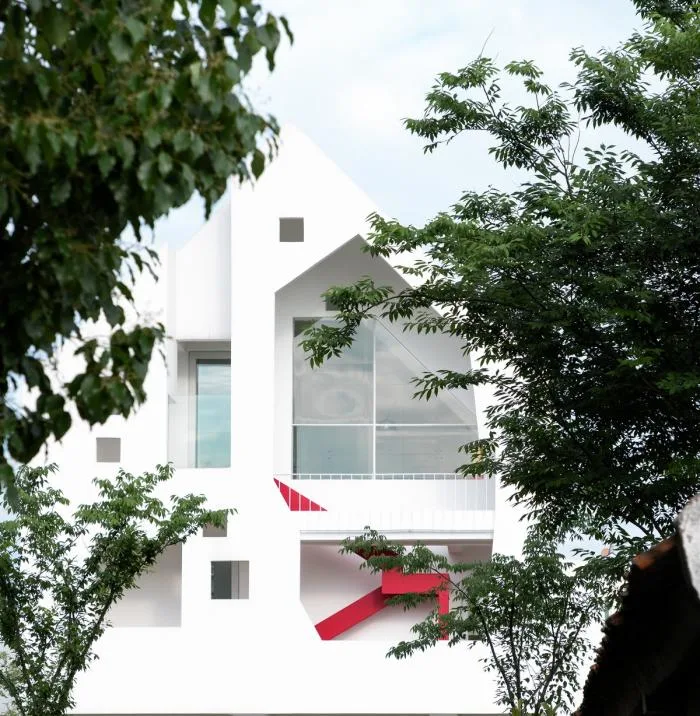
△ West facade connecting the landscape staircase and viewing platform on the second and third floors © Lv Xiaobin
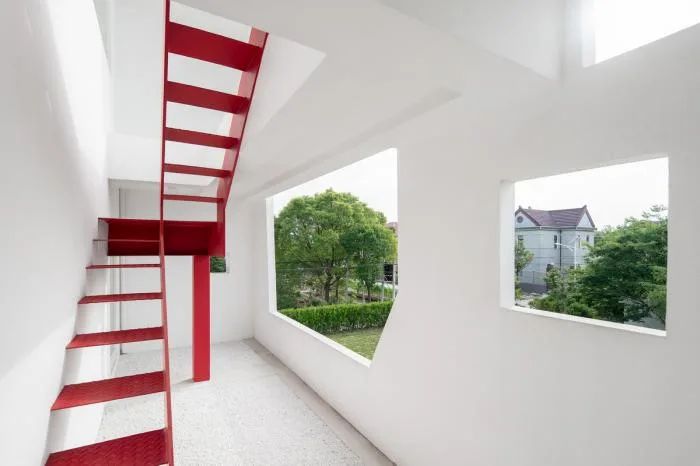
△ Western landscape staircase and balcony © Lv Xiaobin
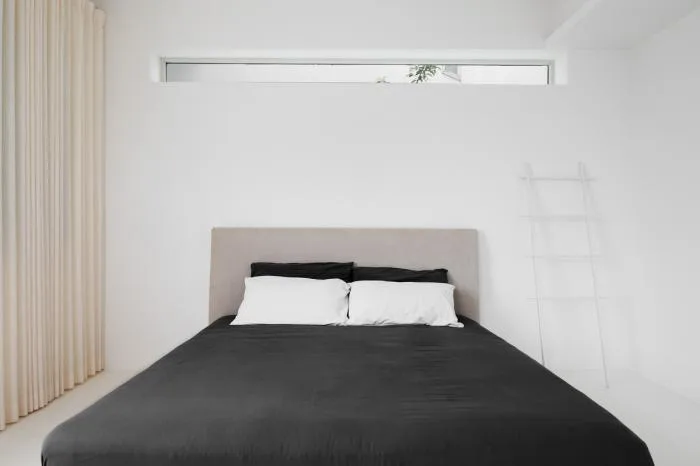
△ Secondary bedroom © Lv Xiaobin
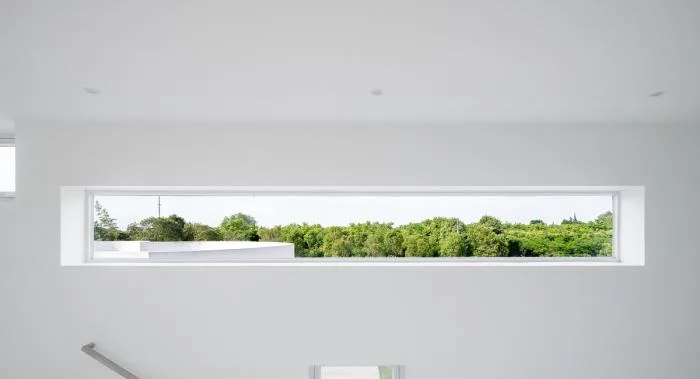
View of the northern forest along the east-west axis corridor © Lv Xiaobin
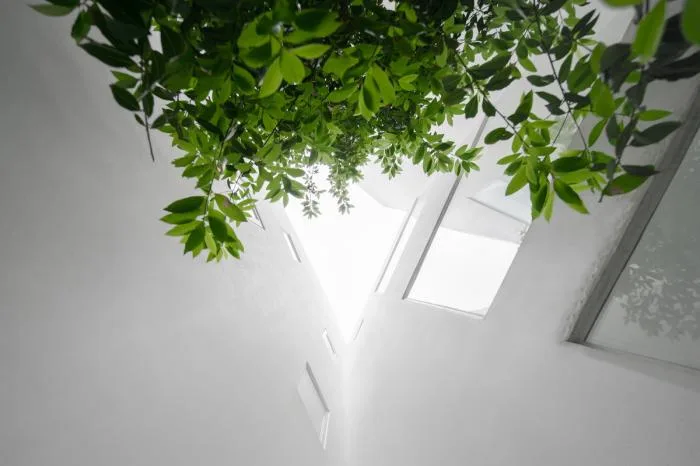
△ Inner courtyard © Lv Xiaobin
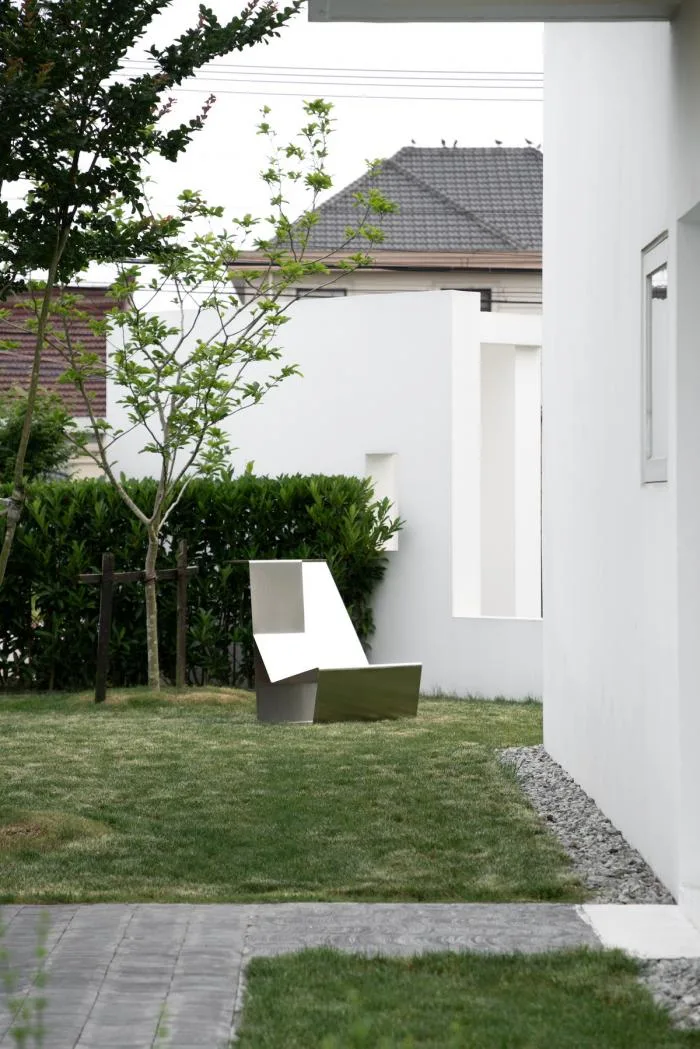
△ Love Chair © Lv Xiaobin
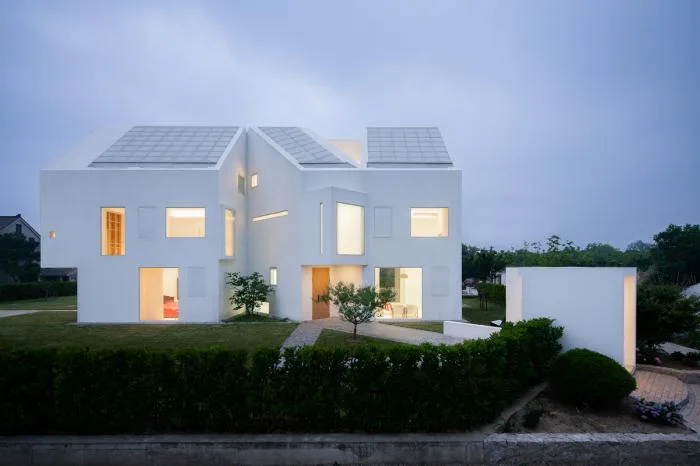
△ Night view of buildings along the main roads © Lv Xiaobin
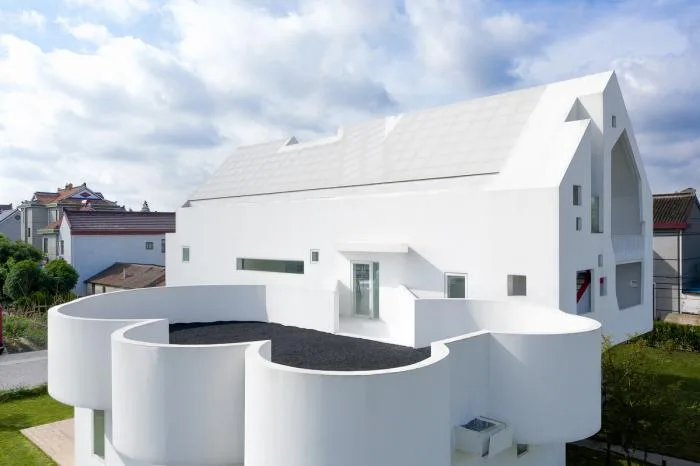
△ Cloud platform and architecture © Lv Xiaobin
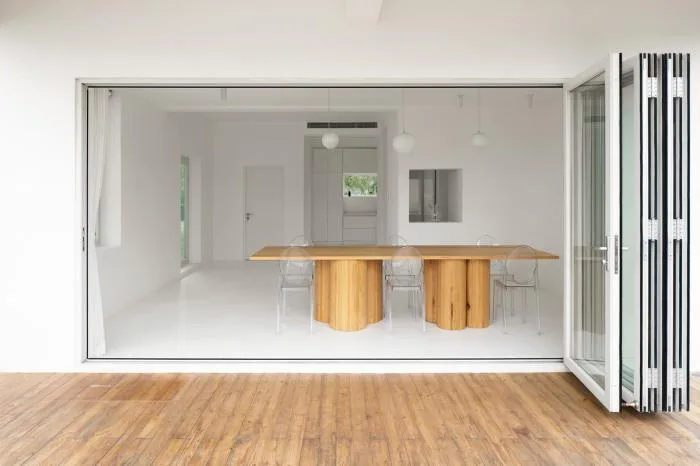
△ Restaurant and outdoor area © Lv Xiaobin
The main gate is located at the southeast intersection of the road, intentionally avoiding direct exposure to the busy street and visual interference from neighboring buildings. The elongated entrance path begins at the gate and forms a 45° angle with the main building, which runs parallel to the road. A secondary entrance is placed on the east side of the main building, continuing westward along this path and intersecting with the active line dividing the inner and outer courtyards.
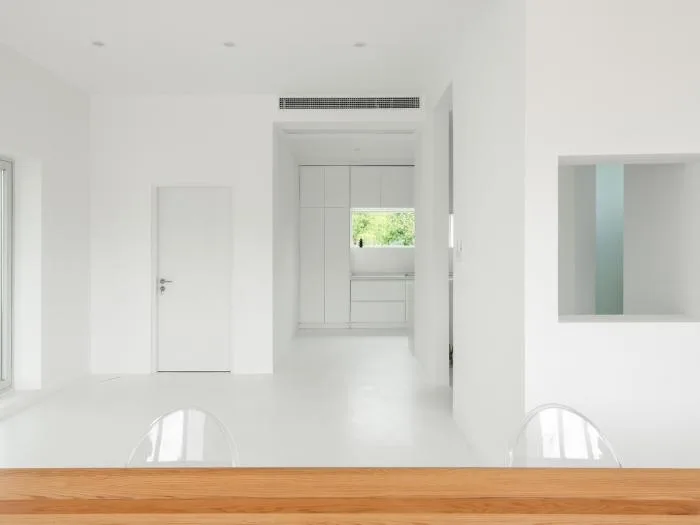
△ Restaurant view towards the kitchen © Lv Xiaobin
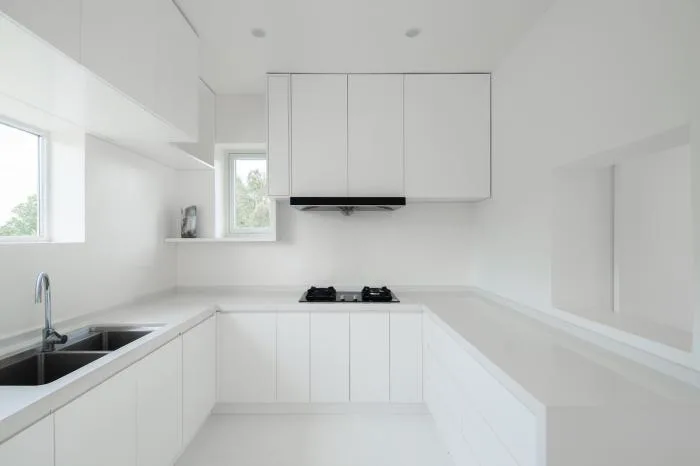
△ Kitchen © Lv Xiaobin
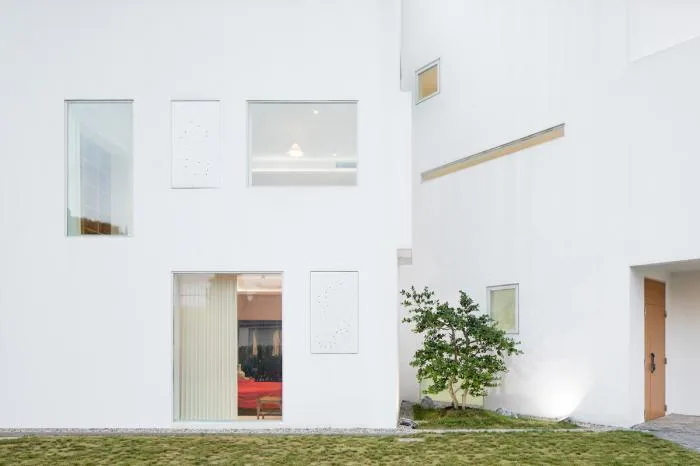
△ Outer courtyard and building facade © Lv Xiaobin
The entire living space revolves around the inner and outer courtyards. The inner courtyard faces north towards the living room, with a hallway and staircase leading to the second floor on the north side. The outer courtyard faces west, with the bedroom on the first floor and the master bedroom above on the second floor. The third floor houses a studio and multifunctional room.
The master bedroom and studio are connected by landscape staircases spanning two levels of elevated space that extend outward, allowing occupants to enjoy outdoor views while moving between the two areas.
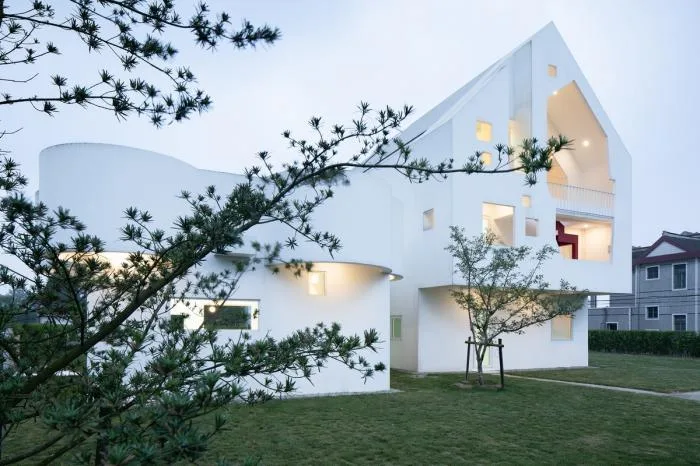
View of the architecture from the west courtyard © Yuan Xiuwan
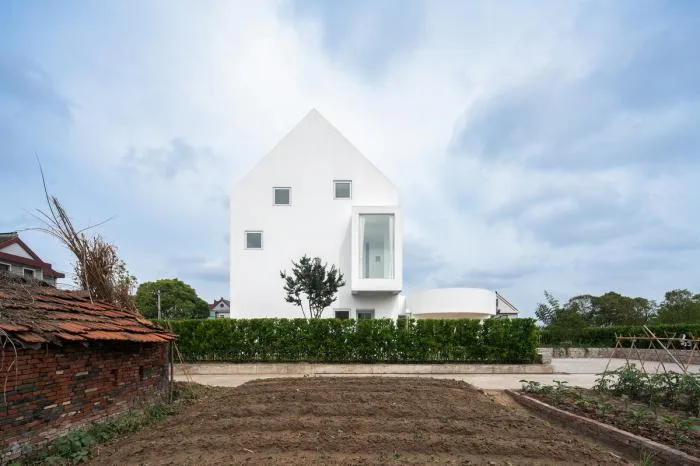
△ East facade © Lv Xiaobin
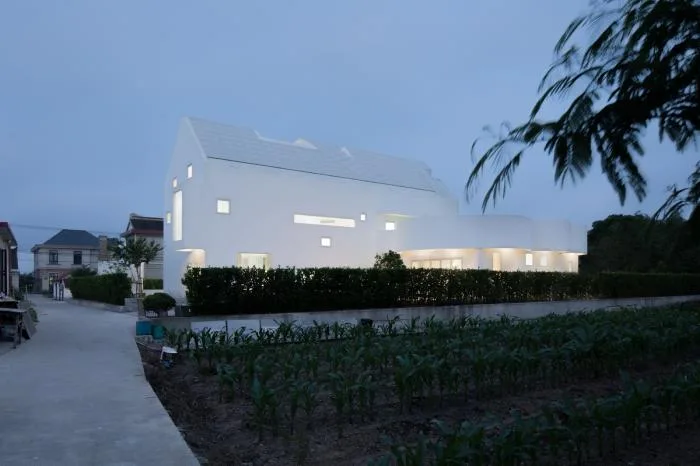
Night view of buildings viewed from the forest © Lv Xiaobin
The inner and outer courtyards are connected by a hallway at a 45° angle. The varying heights of window openings blur the boundaries between these spaces. Floor-to-ceiling windows open to the outside, bringing the outdoors into the interior. The placement of these windows guides unpredictable routes, allowing wandering and exploration to reveal different views, leaving memories marked by both repetition and variation.
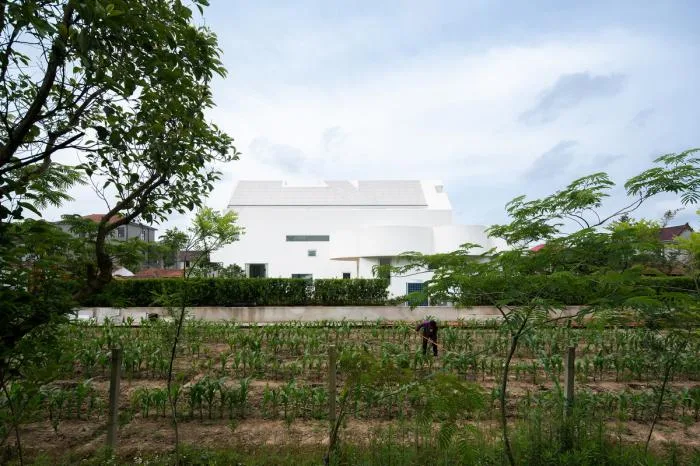
View of buildings through cornfields from the woods © Lv Xiaobin
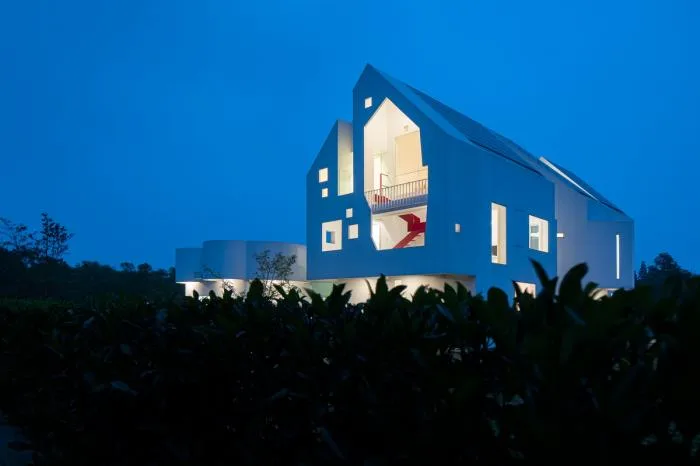
△ Night view of buildings along the main roads © Lv Xiaobin
The staircases converge at the intersection of two axes — one leading to the west garden, the other to the northern forest. The cloud-like platform, covered with fine stones, undulates over the oasis like gentle waves.
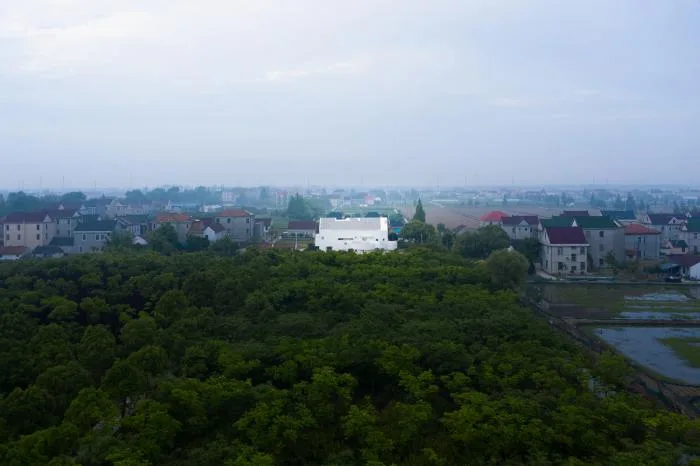
Passing through the forest and looking up at the buildings above © Lv Xiaobin
Drawings
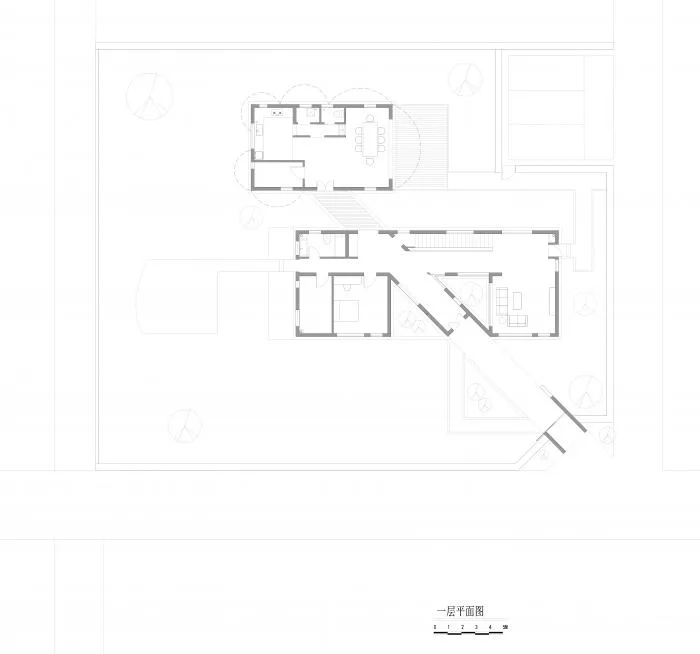
△ First floor plan
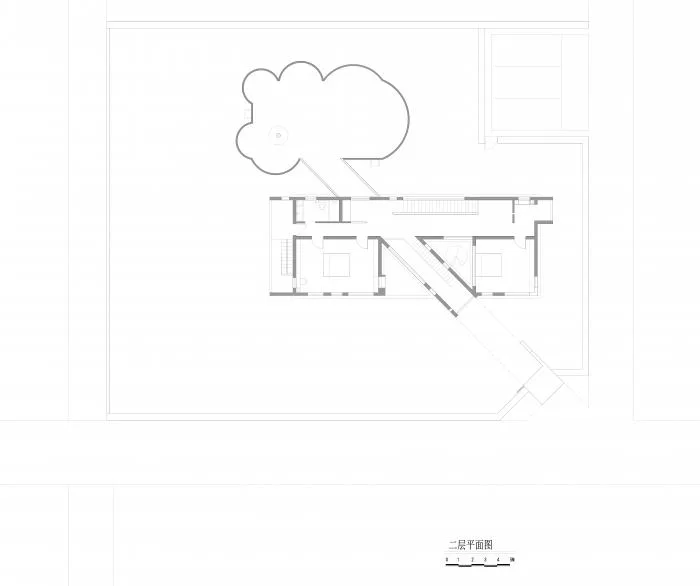
△ Second floor plan
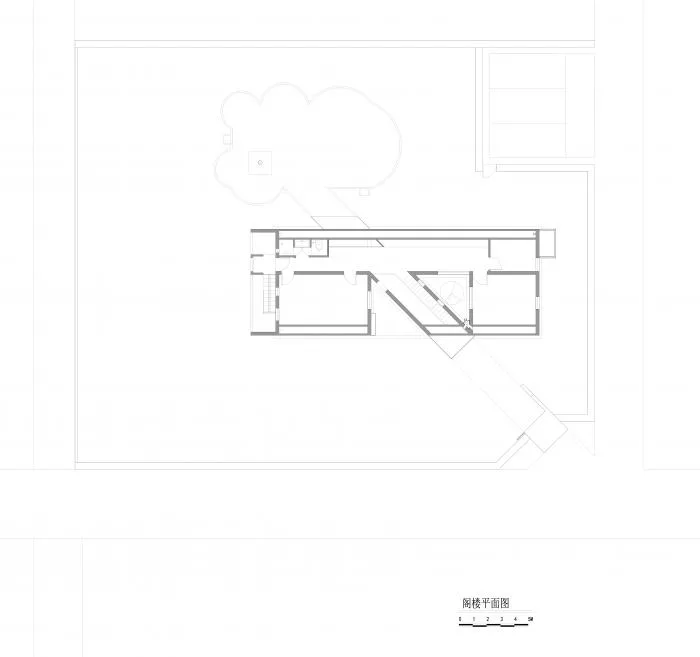
△ Third floor plan
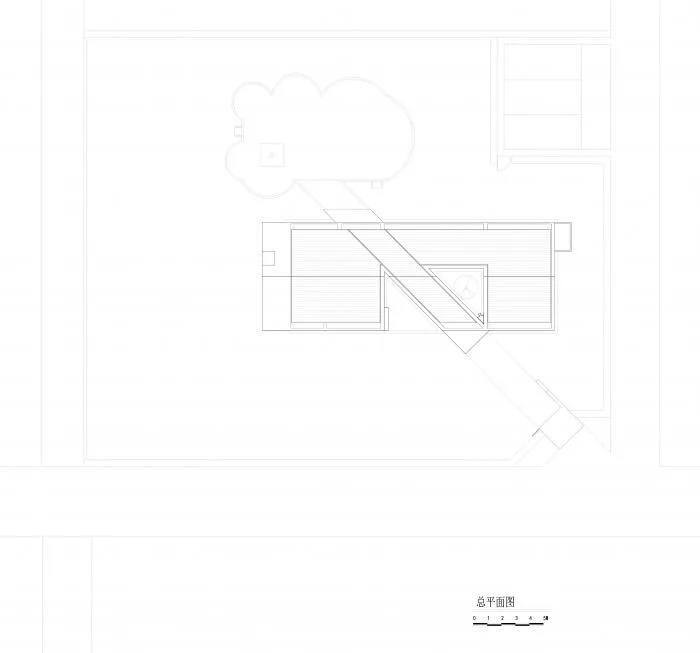
△ General layout plan
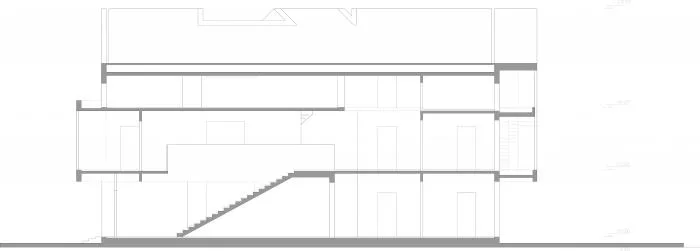
△ Section 1
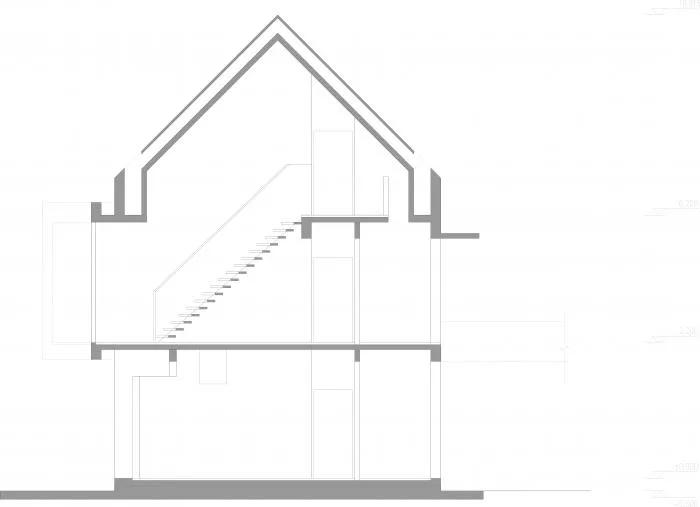
△ Section 2
Project Information
Type: Residential
Site Area: Approximately 2000 square meters
Total Construction Area: 600 square meters
Architectural Design: AMS Yuanxiu Wan Architectural Firm
Interior Design: AMS Yuanxiu Wan Architectural Firm
Landscape and Lighting Design: AMS Yuanxiu Wan Architectural Firm
Chief Director: Yuan Xiuwan
Design Team: Zou He, Wang Qingrui
Structural Design: Jianghe
Furniture Design: Yuan Xiuwan (coffee table, love chair, dining table, X-side table)
Furniture Brands: Scream Design, Andi, Ruichi, CHIC
Photography: Lv Xiaobin












Must log in before commenting!
Sign Up