
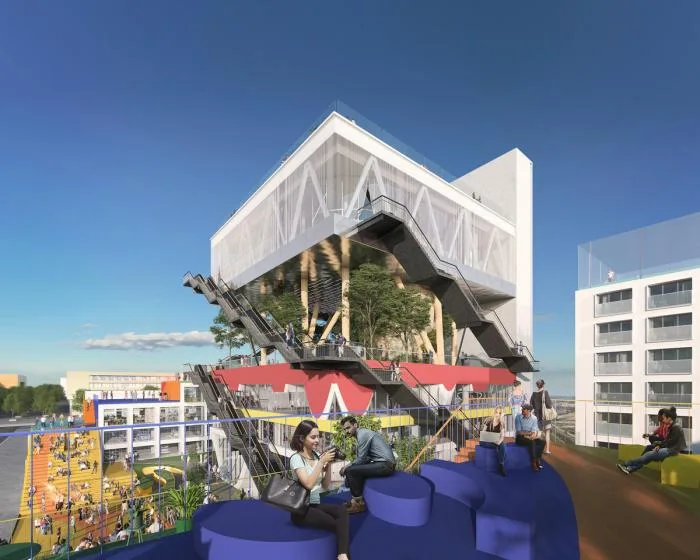
MVRDV has unveiled plans to renovate their iconic Dutch pavilion from the 2000 Hanover World Expo in Germany. The project aims to convert the Museum of the Past Lives into a public office building, while adding student dormitories and parking facilities. The design team’s objective is to reinterpret the original concept in light of these new functions, honoring the legacy of this landmark exhibition hall.
According to MVRDV, the original pavilion was designed to respond to the Dutch theme “Creating Space in the Netherlands” at the Expo. Six distinct Dutch landscapes were stacked vertically to form a tower, while the surrounding areas were left as open outdoor spaces within Expo Park. Over the years, the pavilion has become a celebrated example of sustainable design, thanks to its self-sufficient ecosystem.
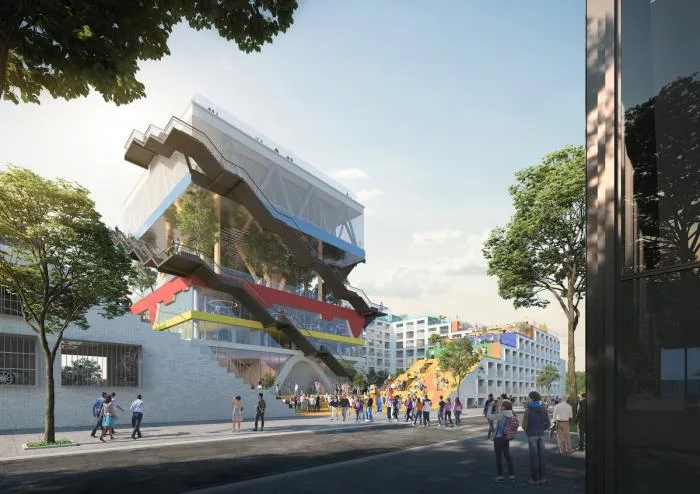
The renovation preserves the “stacked landscape” concept by refurbishing existing structures and adding two stepped buildings along the original open site’s perimeter. The refurbished pavilion will function as shared office space and conference rooms, retaining features such as the forest level, ground-level “sand dunes,” roof dome, and external staircases.
Of the two new buildings, the larger will house student dormitories while the smaller will accommodate offices and parking. These structures frame the site, stepping down toward the west to form the main entrance, which leads to a landscaped courtyard and convergence center. The stepped roofs are designed as vibrant terraced fields, complete with gardens and sports facilities, descending to a learning area and cinema.
Jacob van Rijs, co-founder of MVRDV, commented, “This is an exciting chance to revisit a project from over twenty years ago. The original design was unique and served a very special purpose. Beyond its distinctive design, the core structure’s adaptability and reusability have exceeded our expectations. Each floor’s differences will be transformed into office environments while preserving the pioneering spirit of the World Expo. Imagine working amidst sand dunes, forests, and potted plants.”
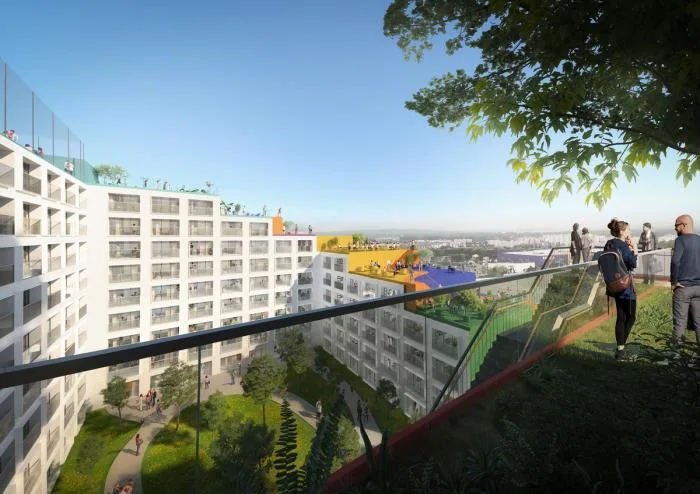
The larger new building will feature nine floors containing 370 student apartments. Its lowest level includes a bicycle parking system with over 300 spaces. The smaller building has five above-ground floors plus one basement level. The top three floors will be offices and conference rooms, while the basement and first two floors serve as parking for the entire site.
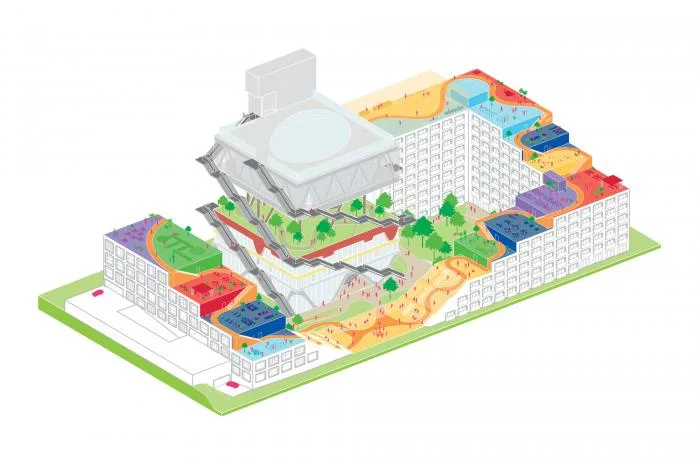
△ Axonometric diagram
The renovation of the World Expo Pavilion and the construction of the new buildings are managed by iLive Expo Park Company, a joint venture between real estate developer Die Wohnkompanie Nord and micro-apartment developer/operator iLive. MVRDV leads both projects, collaborating with Die Wohnkompanie Nord on the pavilion renovation and partnering with AI+P Planungs GmbH on the new construction.
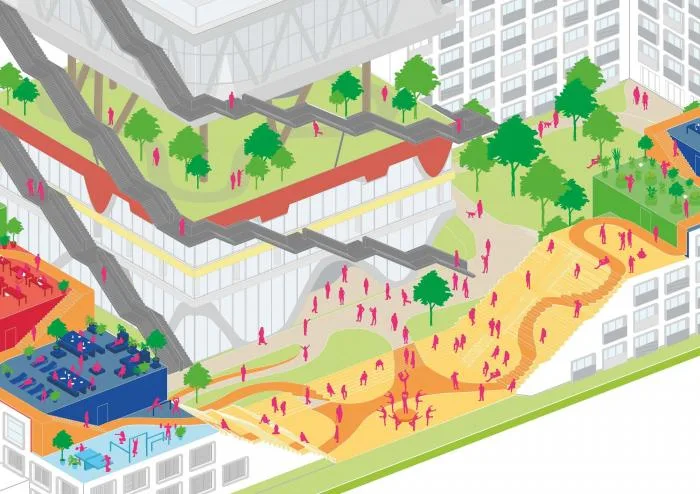
△ Square
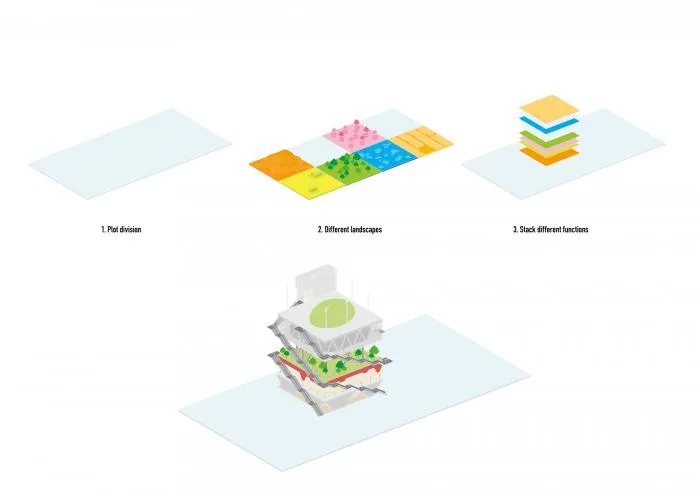
△ Floor plan analysis
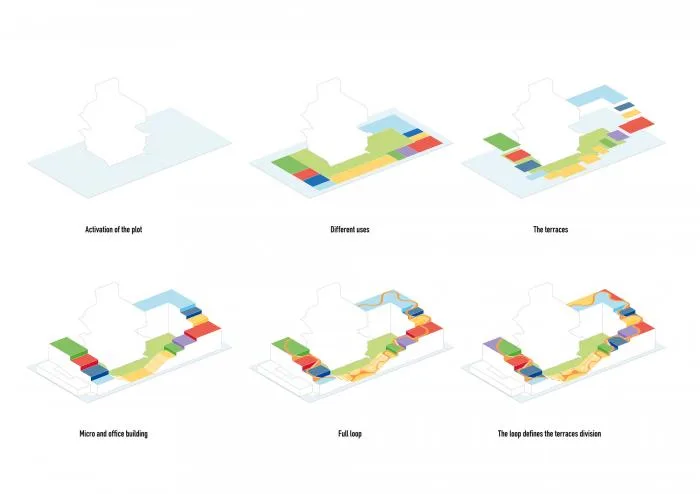
△ Block analysis
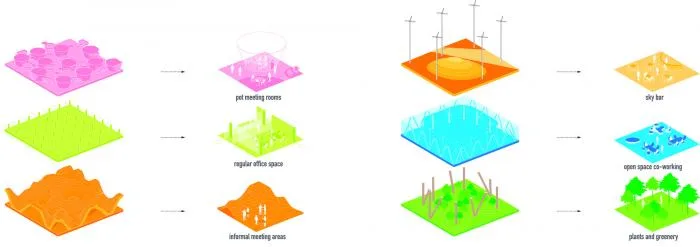
△ Functional analysis

Conceptual analysis of floor profiles














Must log in before commenting!
Sign Up