
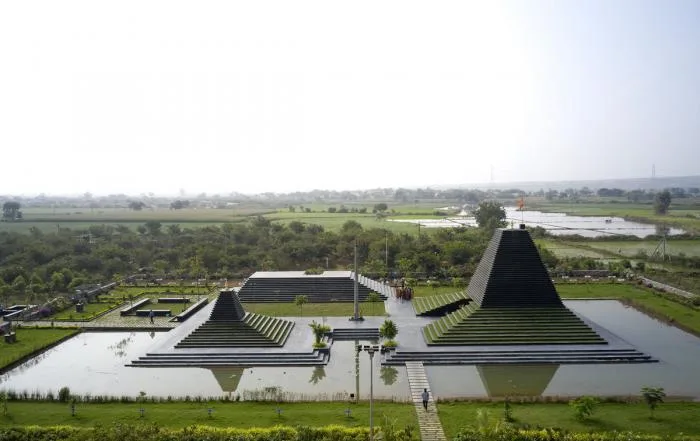
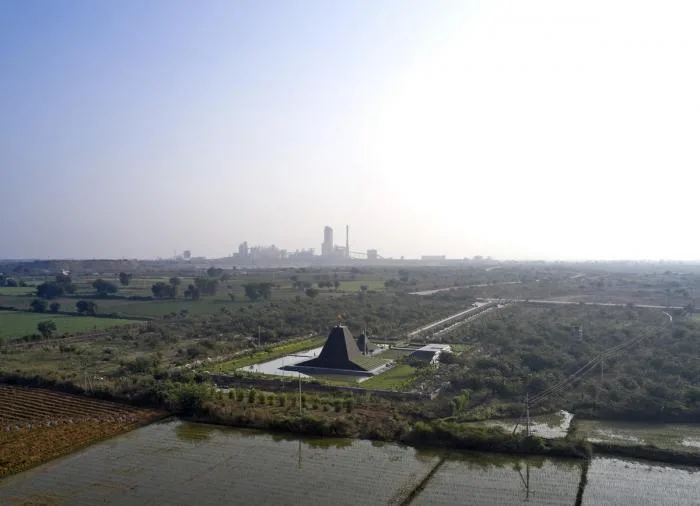
The architect was commissioned to design a temple for the villagers near Nandyal, located in an arid region. The primary challenge was to create a space that harmoniously blends the cultural expectations of temple worship with the ecological context and environmental dynamics of the site. Notably, the natural canal system nearby has dried up, significantly impacting the local cotton and pepper farming landscape.
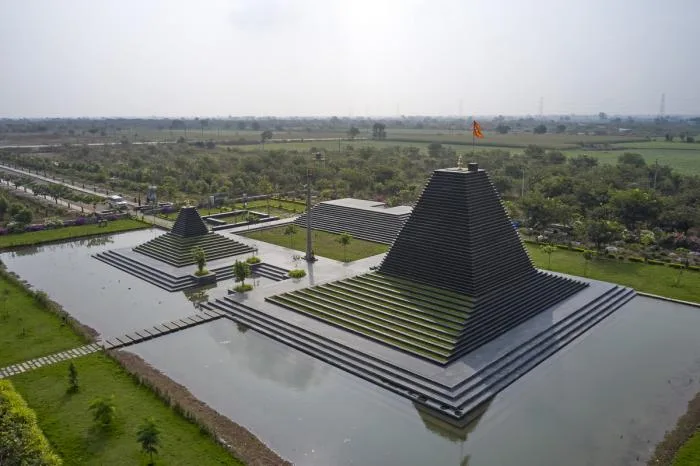
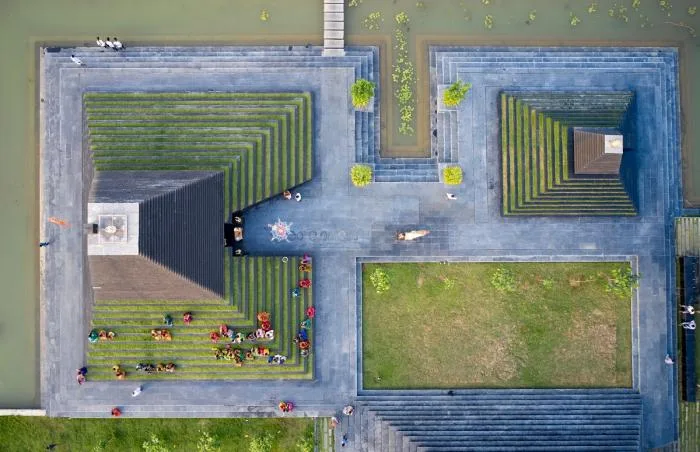
In response, the temple’s ecological strategy focuses on groundwater replenishment. Overflow water from limestone quarries creates small, low-lying puddles known locally as “kund.” By building traditional Indian stone steps descending into these water bodies, the waterfront is transformed into a social space. This architectural approach—steps leading down to water—has deep roots in Indian heritage, as seen in the ancient stone steps of Benaras, fostering a meaningful dialogue between land and water.
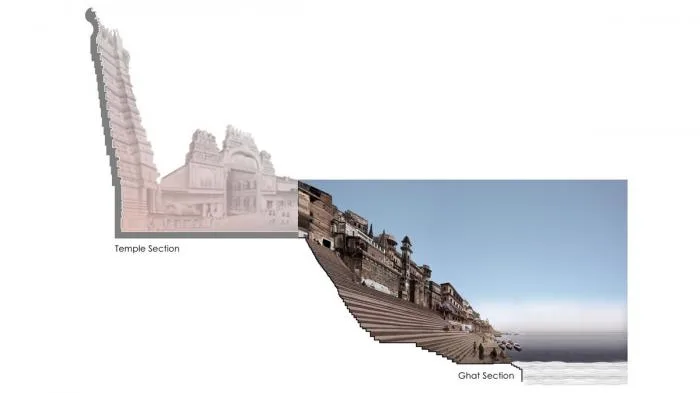
△ Analysis chart
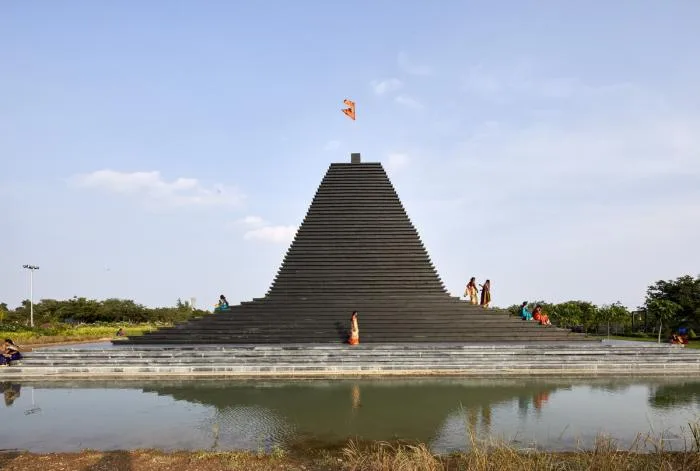
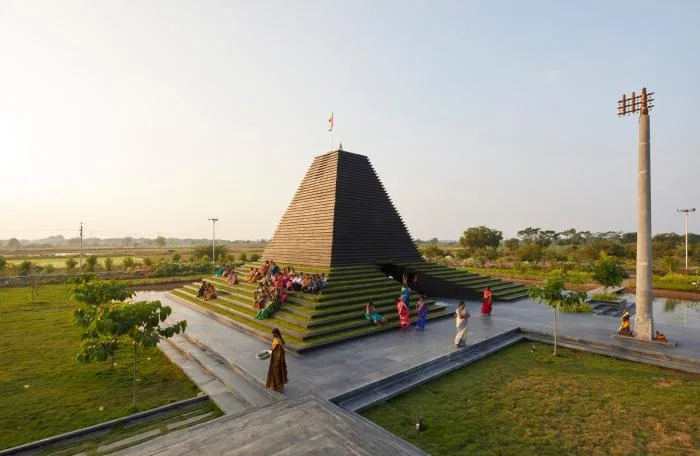
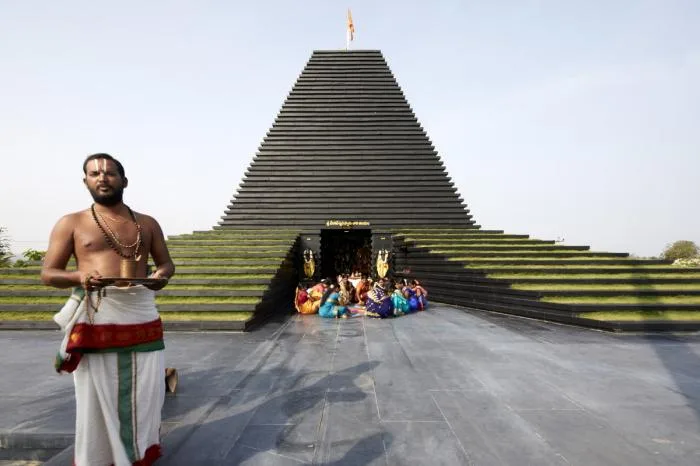
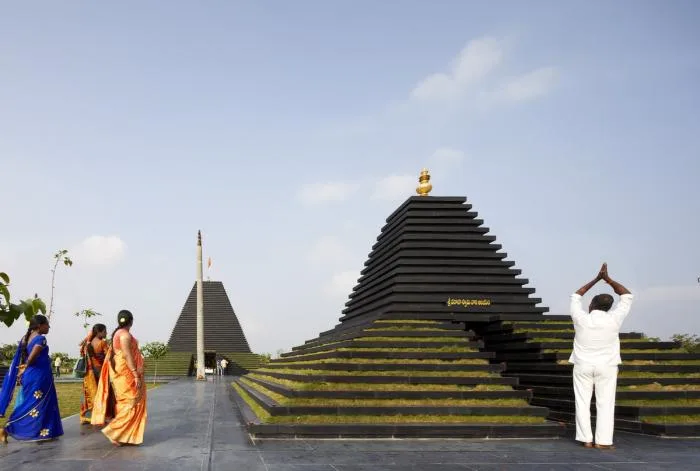
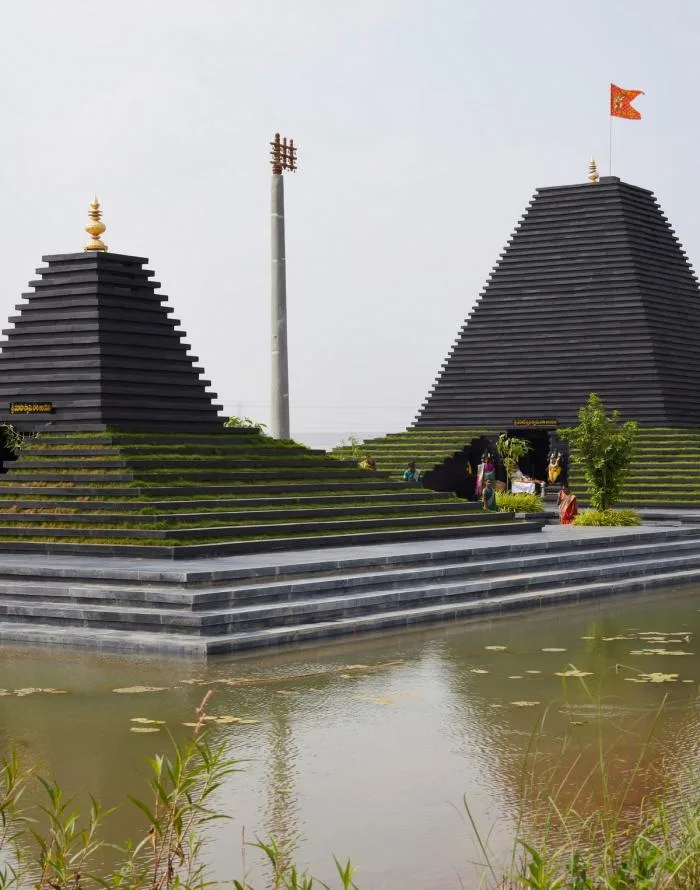
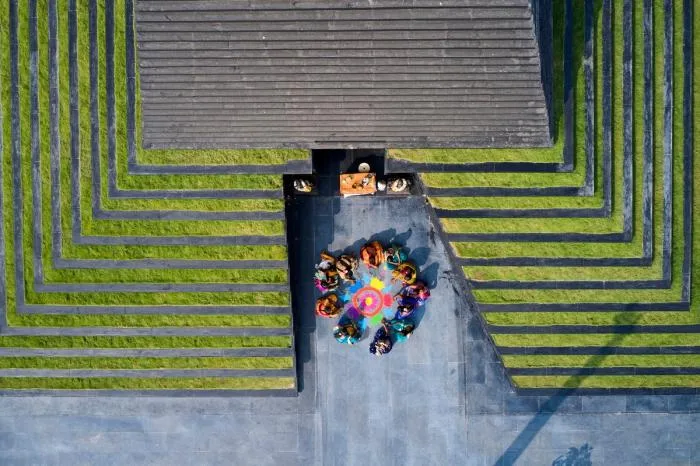
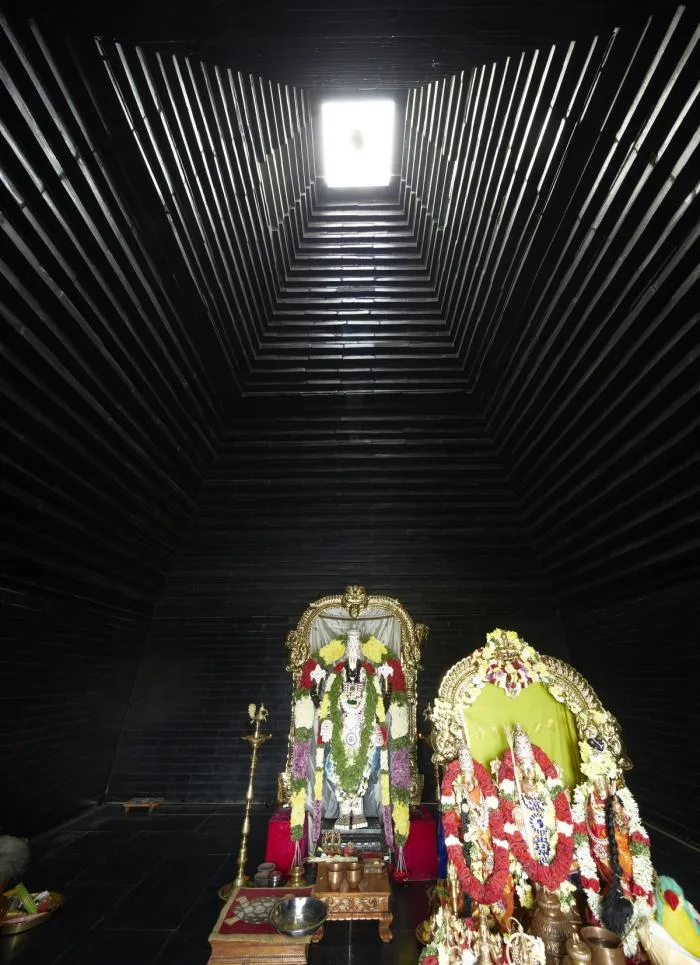
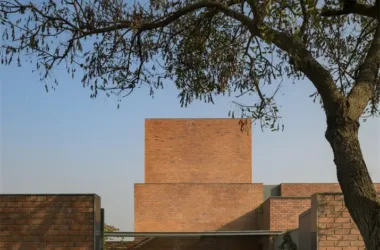
The temple’s design draws inspiration from a 10th-century temple in Tirupati, southern India, dedicated to the same deity. Similar historical examples include the Balaji and Varahashwamy temples, along with their sacred pools known as Pushkarini (water tanks). Construction employs locally sourced black limestone slabs, stacked to form the temple’s core structure. This stacked stone technique is also applied at the base, where soil and vegetation are planted to act as natural heat buffers. The stone stacking culminates in a stone staircase that leads down to the water’s edge.
Design Drawings
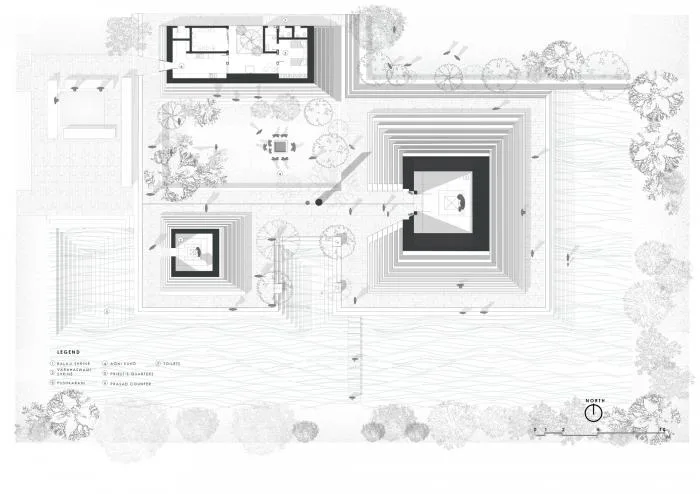
△ Plan View
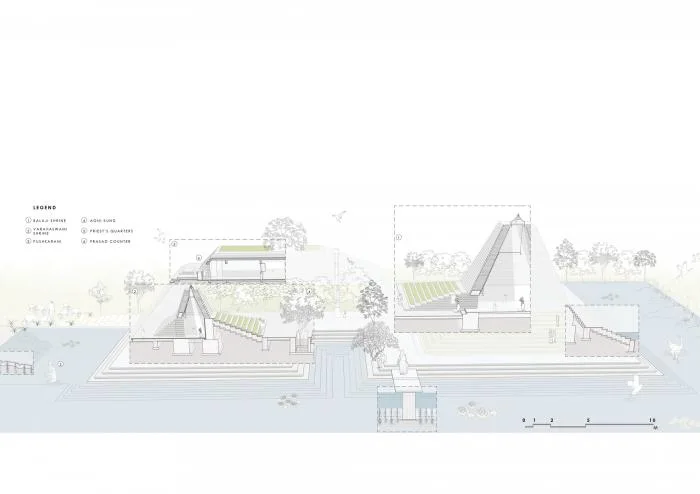
△ Sectional Perspective View

Concept Analysis Diagram
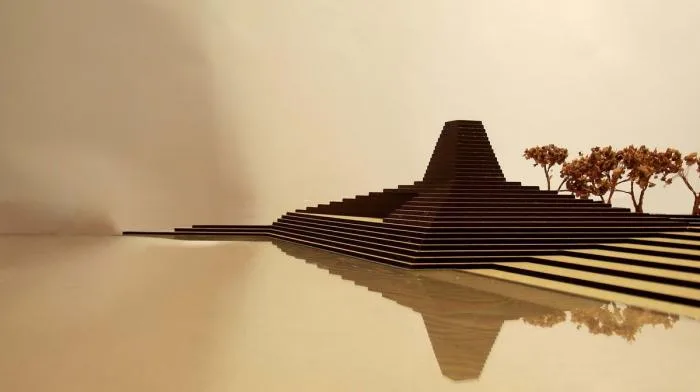
△ Model Diagram
Project Information
Project Type: Temple
Location: Nandyal, India
Architectural Firm: Sameep Padora & Associates
Area: 10,000 ft²
Year Completed: 2019
Photographer: Edmund Sumner
Lead Architect: Sameep Padora & Associates
Design Team: Sanjana Purohit, Vami Sheth, Aparna Dhareshwar, Kunal Sharma
Client: Anushree Jindal, JSW Cement












Must log in before commenting!
Sign Up