
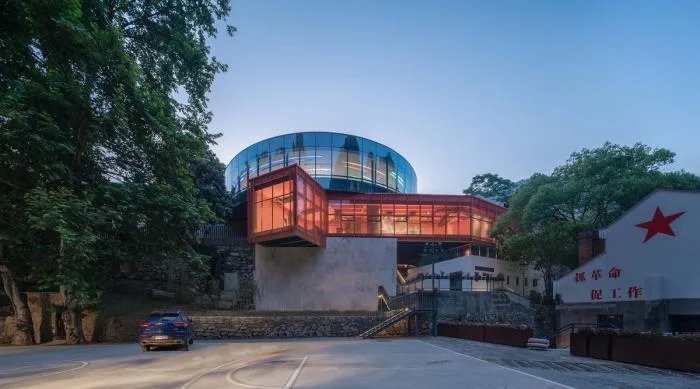
△ Lobby perspective
Background and Original Appearance: Long-Abandoned Yet Full of Potential
The 809 Factory is situated in Xialaoxi, a suburb of Yichang in Hubei Province, China, approximately a 30-minute drive from the city center. Originally an old third-line military factory, it gradually ceased operations and was abandoned in the 1990s. Covering roughly 3 hectares with a building footprint of about 13,000 square meters, the site is now being repurposed to house a resort hotel and a parent-child activity center. The project seeks to transform and reuse this abandoned industrial site, preserving and showcasing its original architectural character while adapting it for modern functional uses, thereby revitalizing the former factory into vibrant contemporary life.
The 809 Factory lies within a canyon characterized by karst topography, significant elevation changes, and complex geological conditions. The canyon, known as Xialao Creek, boasts a beautiful and comfortable environment, making it a popular summer retreat for Yichang residents. The creek runs year-round with excellent water quality, suitable for swimming and leisure activities. Prior to renovation, the area featured many farmhouses and small amusement parks. Positioned in the middle section of Xialao Creek, the factory enjoys close ties to the natural creek environment, combining a strong industrial foundation with pristine nature.
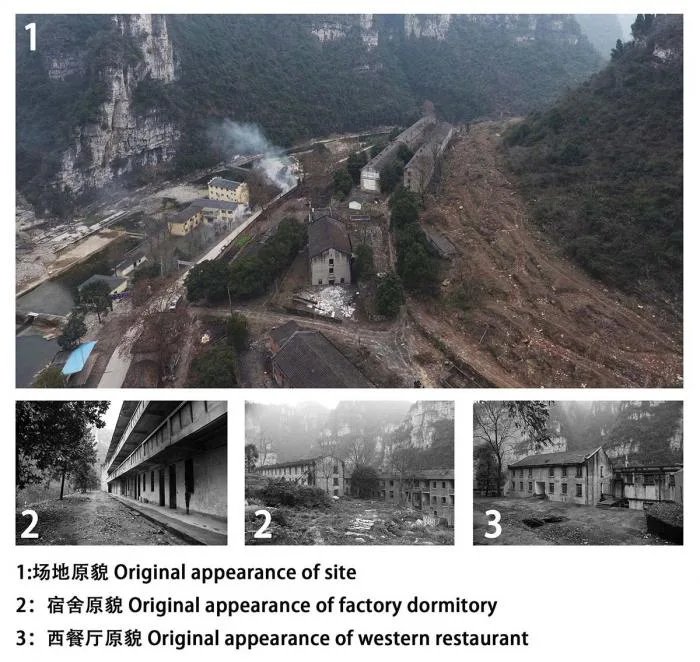
△ Original appearance of the venue
Once a crucial military factory in western China, 809 Factory mainly produced gas masks. Before renovation, the factory had been long closed and had been rented out to private enterprises. All machinery was removed, leaving only the buildings’ structural shells. A detailed survey revealed three main building types: expansive factory halls, medium-sized equipment rooms (like boiler rooms), and smaller-scale dormitories and office buildings. Constructed between the 1950s and 1970s, these structures predominantly feature precast brick and concrete floors. Building techniques included rubble masonry, brick walls, and precast concrete floors, most of which no longer meet current building codes and require structural reinforcement. However, these construction traces from different periods carry significant cultural value, reflecting the historical memory and architectural heritage of old third-line factories. The design challenge lies in preserving most exterior facades while adapting the buildings for new uses and regulatory compliance.
Design Principles and Concepts
The design aims to breathe new life into the abandoned site, transforming the old third-line factory into a vibrant destination. With new functions and spaces, the owners and architects envision the 809 Factory as Yichang’s premier short-term vacation spot, offering refined living with character and atmosphere.
From the outset, the project integrates architecture, interior design, landscaping, and lighting to maximize preservation of the factory’s industrial features and historical identity. Structural reinforcement safeguards the original building appearances. Existing spaces are selectively repurposed: former dormitories become hotel rooms; boiler rooms transform into auditoriums; office and equipment rooms convert into restaurants and reception areas. New public buildings are strategically located at key site nodes to serve as spatial and visual anchors, including a hotel lobby, a book bar at the entrance, and a tea bar perched on cliffs. The new and old structures contrast deliberately in form and materials, creating a dynamic dialogue that highlights the two distinct historical layers.
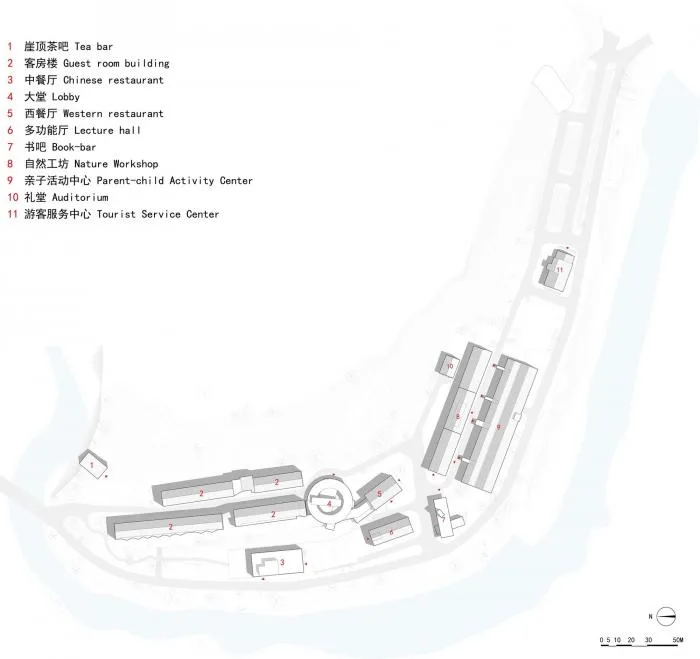
△ General layout plan
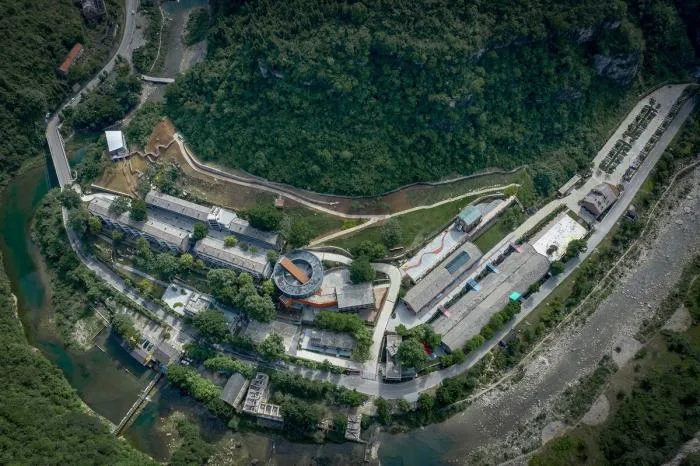
△ Aerial view of 809 Factory area
The design carefully preserves the site’s mature trees, constructing new buildings to avoid impacting them, fostering a harmonious coexistence. Nighttime lighting continues the architectural concept by highlighting building nodes while maintaining overall tranquility. Guest rooms feature warm white lighting at 3000K, while public areas use neutral white light around 4000K.
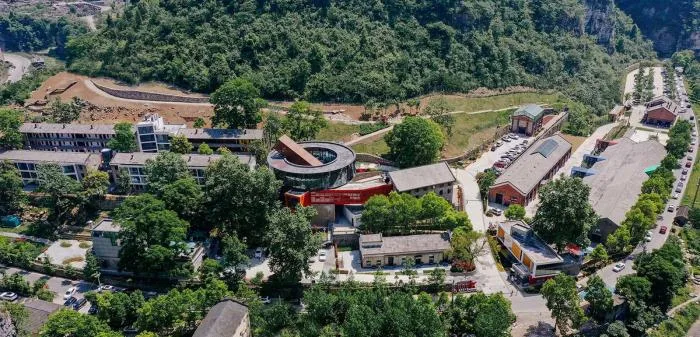
△ Aerial view
Guest Rooms: Streamlining Circulation and Reorganizing Space
The guest rooms were converted from the original factory employee dormitories. These dormitories consist of four buildings arranged parallel north-south, with construction dates varying, adding complexity to the renovation. Structurally, the buildings differ: walls include solid brick, hollow brick, and gravel-filled walls; floors feature prefabricated trough slabs. Additionally, the rooms have over ten different layouts. The main challenge was to meet hotel standards, current regulations, and safety requirements while maximizing use of existing spaces.
For the two east-side dormitories near the hillside, the design maintained the original traffic flow: vertical circulation in the center and an outer corridor on the building’s west side. Some dormitory rooms between the two buildings were removed to add vertical stairs, elevators, and public spaces. The southern dormitory was transformed into a youth hostel, while the northern one offers standard hotel rooms. This approach balances room quantity with views, as these buildings do not offer wide vistas, positioning them as affordable accommodations.
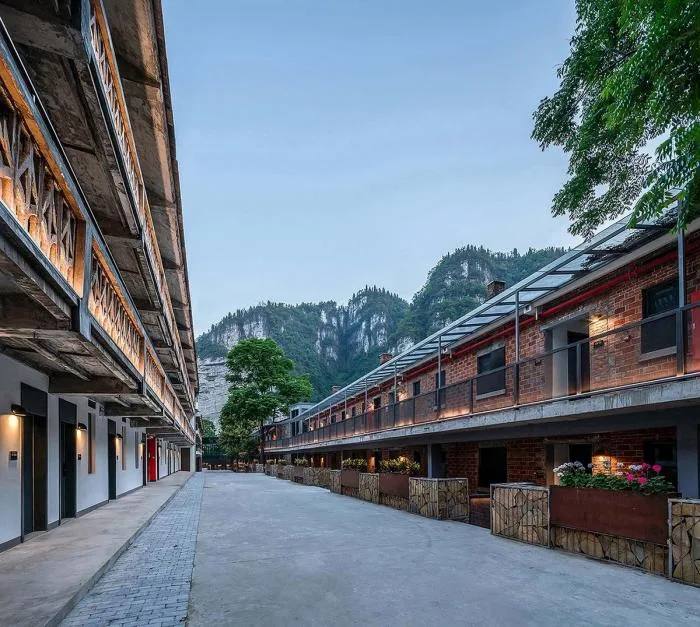
The guest rooms retain the original red brick facade
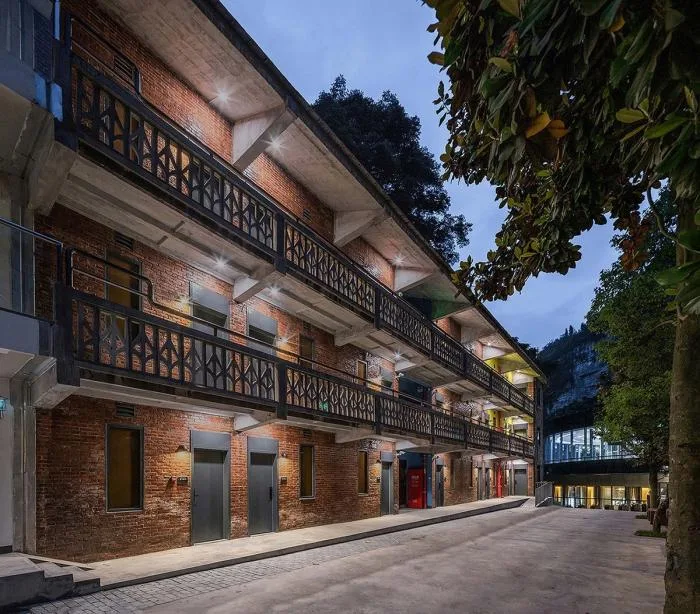
△ Appearance of the youth hostel
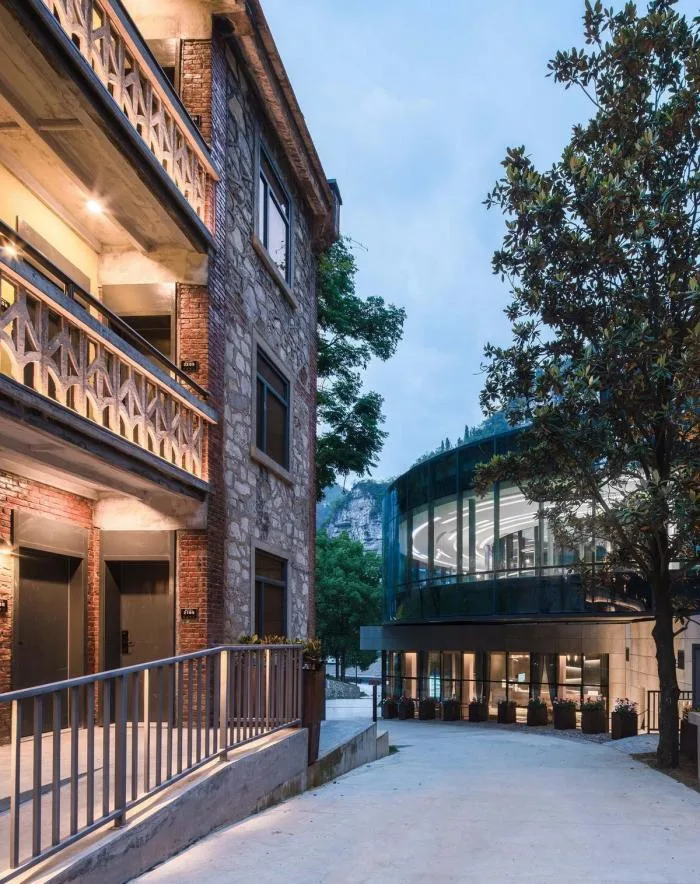
△ Comparison between old and new rooms and lobby
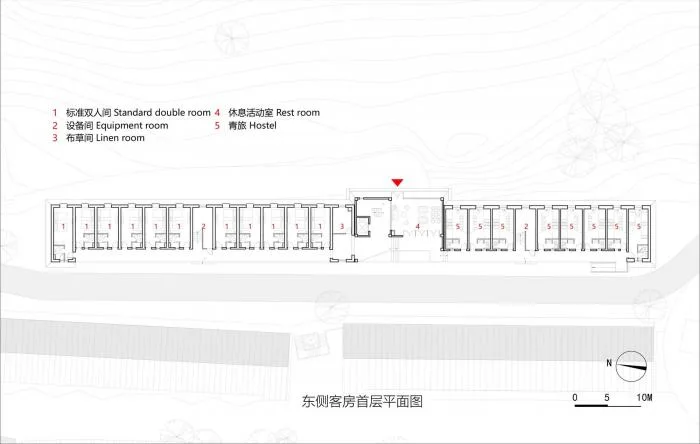
△ East Room Floor Plan
The two west-side dormitories offer expansive western views of the stream and mountain peaks across the canyon, holding greater market value. However, the original western corridors conflicted with the rooms’ viewing surfaces. Architects relocated circulation to the east side, adding stairs, elevators, and external corridors. Original corridors were demolished and replaced with balconies to expand indoor space and enhance guest views. Northern guest rooms are standard with asymmetrical trapezoidal balconies creating a rhythmic facade, while southern rooms are suites with alternating balconies that soften the original rigid exterior. New white-painted sections contrast with the red brick and rubble walls, showcasing architectural features from different eras.
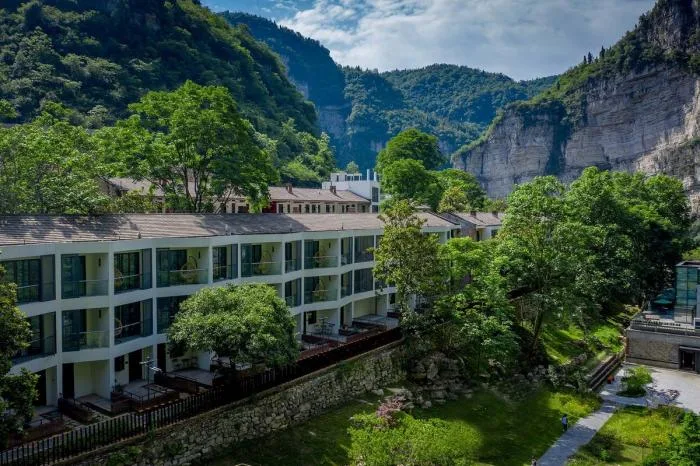
△ West side guest room bird’s-eye view
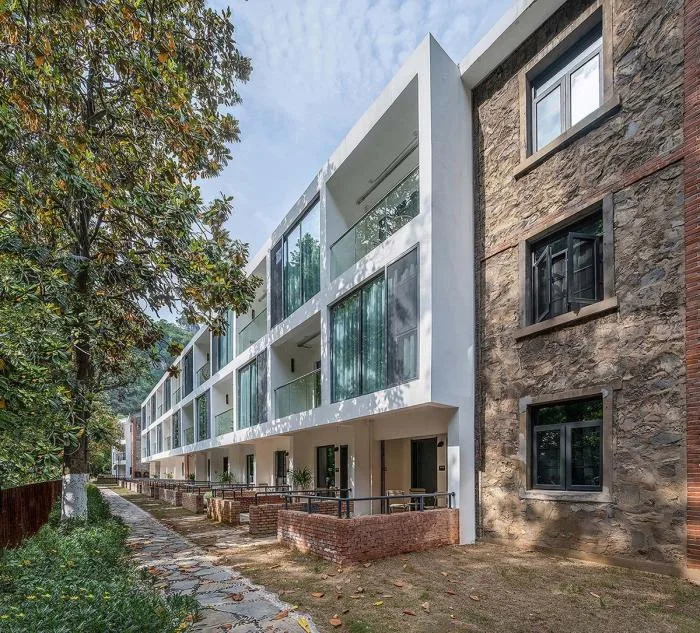
△ Rooms renovated from the original dormitory
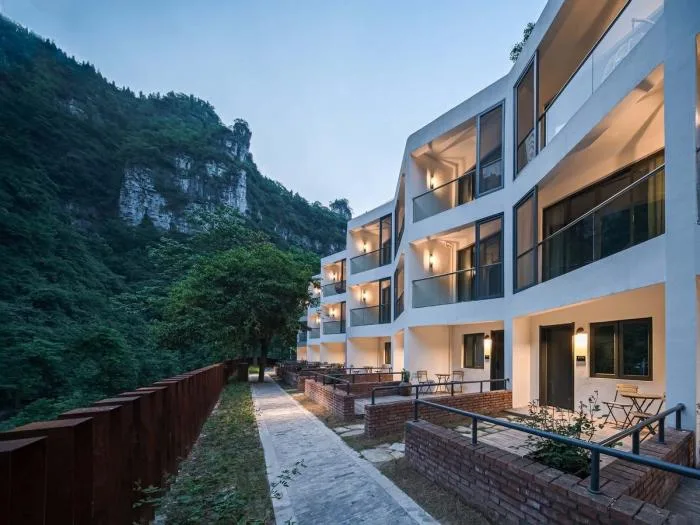
△ West side guest room with newly added balcony and courtyard
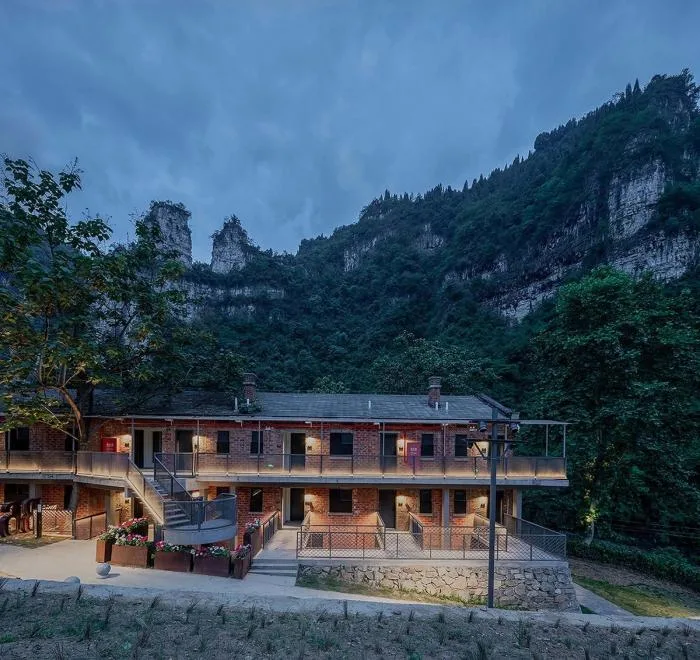
△ West side guest rooms and newly constructed corridors
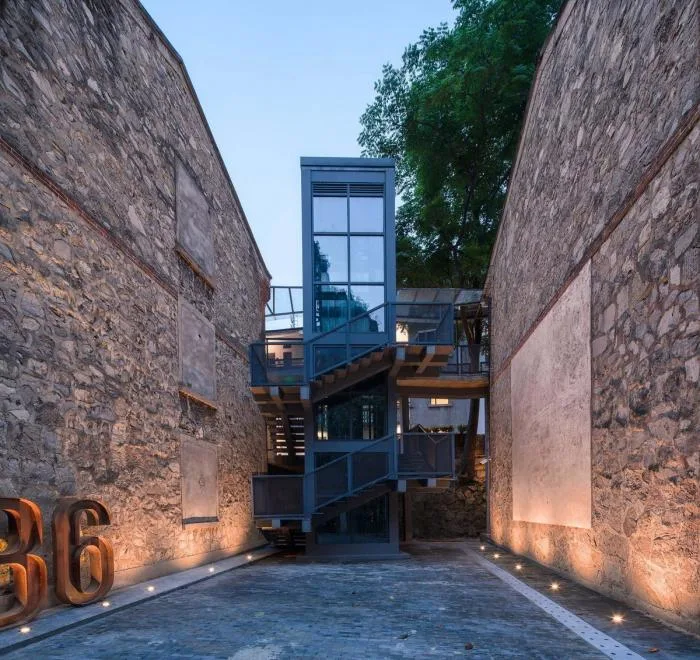
△ Preserving the original mountain wall with new circulation added centrally
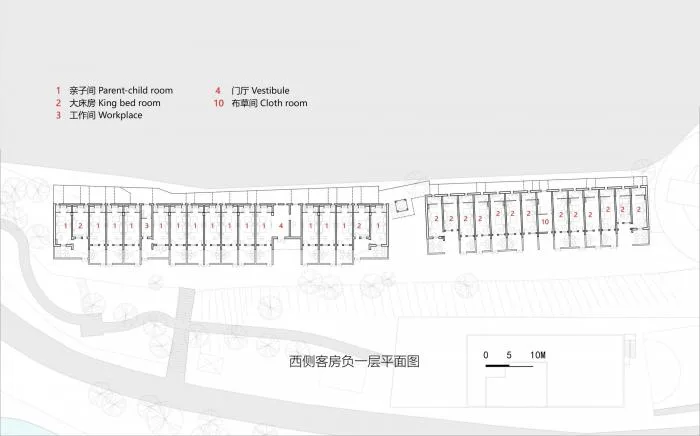
△ West Room Floor Plan
Structurally reinforced and equipped with bathrooms, the guest rooms meet safety and basic functional standards. To preserve the historical essence, some rooms retain original trough roofs and expose portions of original walls. The hotel’s positioning is mid-range, so the interiors are kept simple with industrial-style furnishings that complement the overall theme.
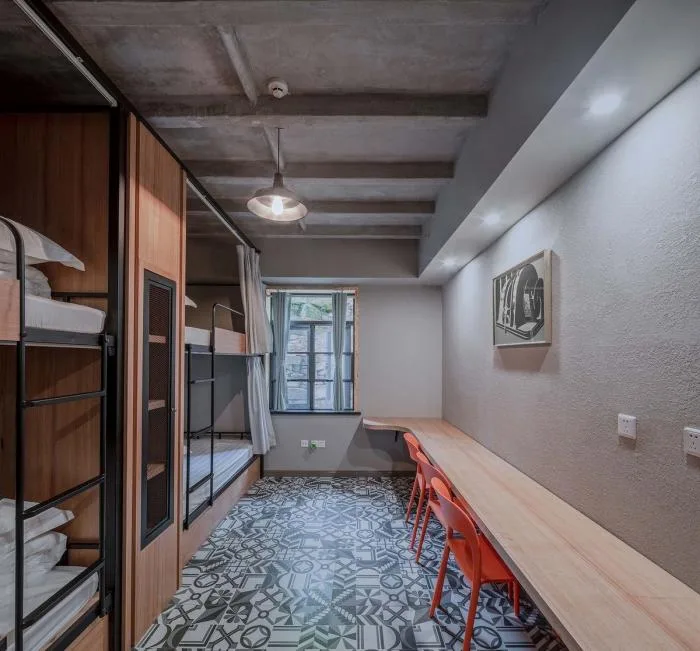
△ Indoor youth hostel
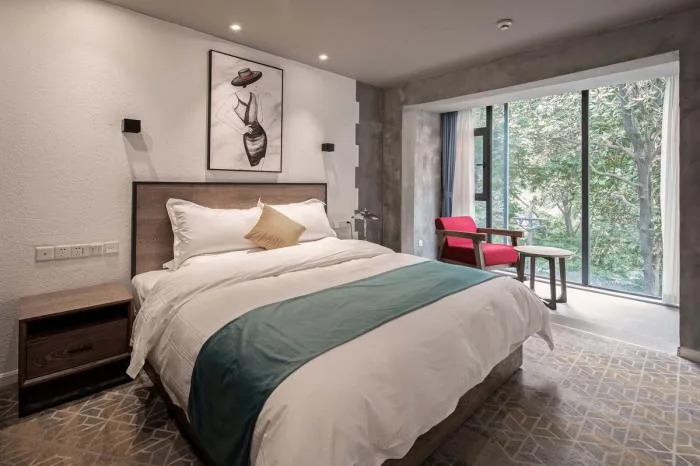
△ Room interior
Lobby: Interwoven Blocks Creating a Distinctive Landmark
The newly constructed hotel lobby sits between the four guestroom buildings and the Western restaurant, acting as a transitional barrier between public and private zones. The two-story building consists of four interlocking blocks. The first floor hosts the lobby, including the front desk, lounge, and waiting areas. An orange-colored lounge connects the lobby to the third floor of the Western restaurant. The second floor is a circular exhibition hall designed to host events and exhibitions. Access between floors is provided both via indoor stairs and an external staircase.
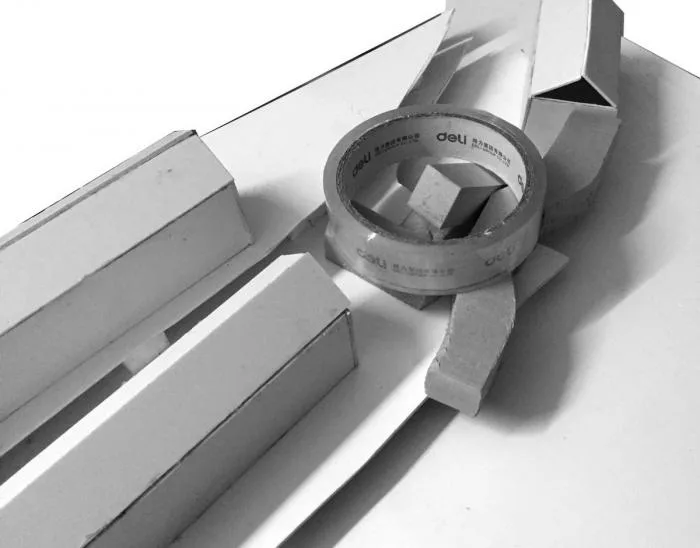
△ Conceptual model of lobby
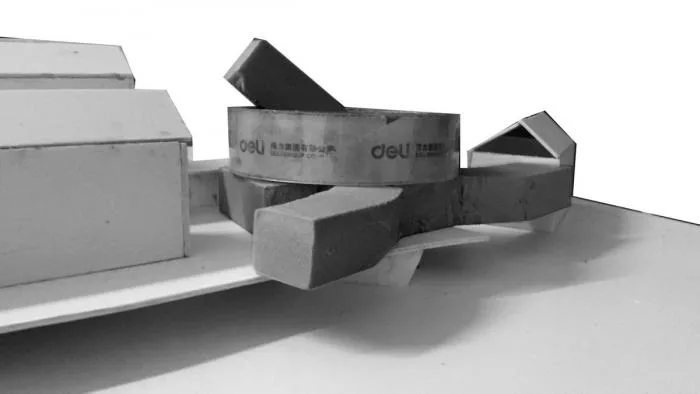
△ Conceptual model of lobby
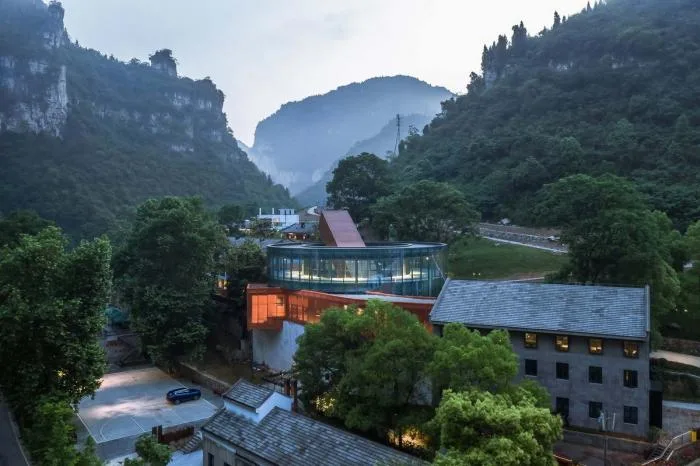
New lobby seamlessly integrated with the old building
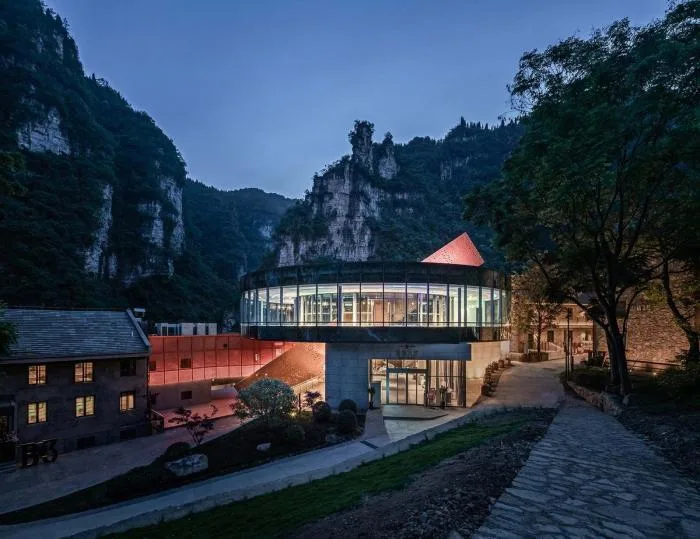
The diagonal staircase block interlocks with the circular ring like stacked building blocks
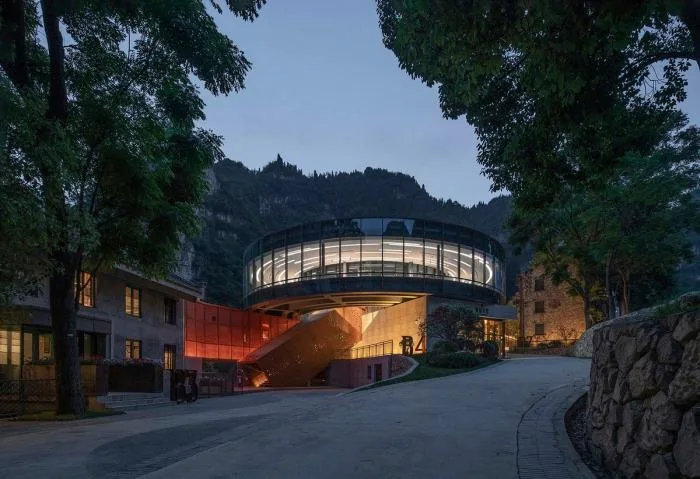
△ New lobby inserted into the old building and natural environment
For the architects, the new lobby is envisioned as the iconic landmark of the revitalized 809 site. Designed to be visible from afar and attract visitors, the architecture showcases visual tension through interwoven geometric blocks of varying scales. The collision of diverse materials and bold colors creates a dynamic sensory experience distinct from everyday life.
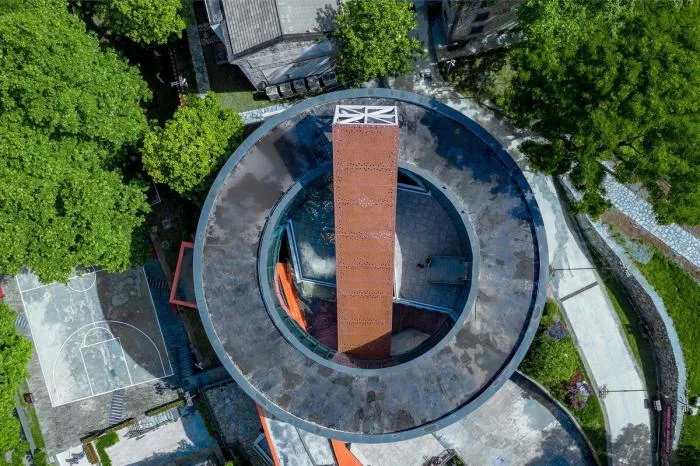
△ Aerial view of the lobby
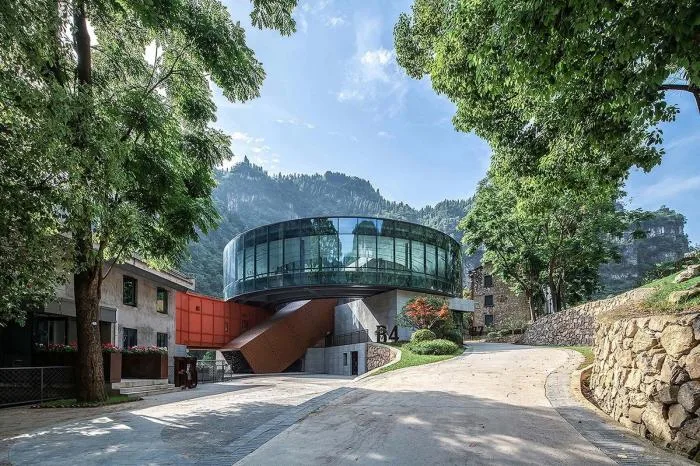
△ New lobby exterior
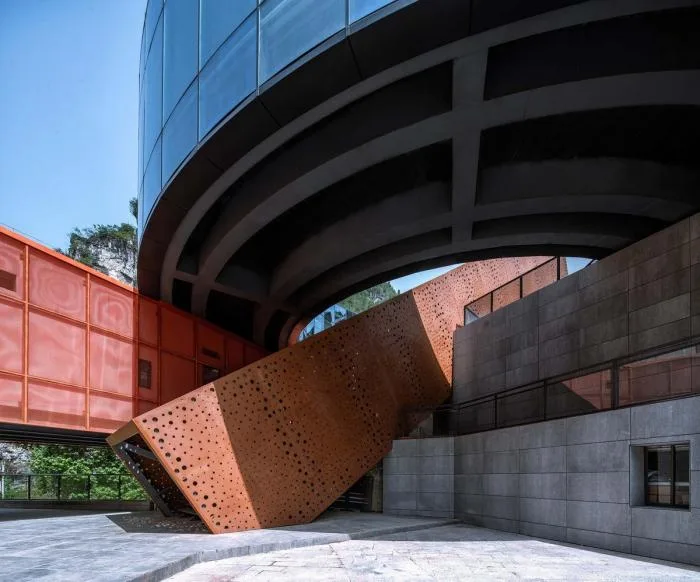
The lobby features contrasting materials and colors
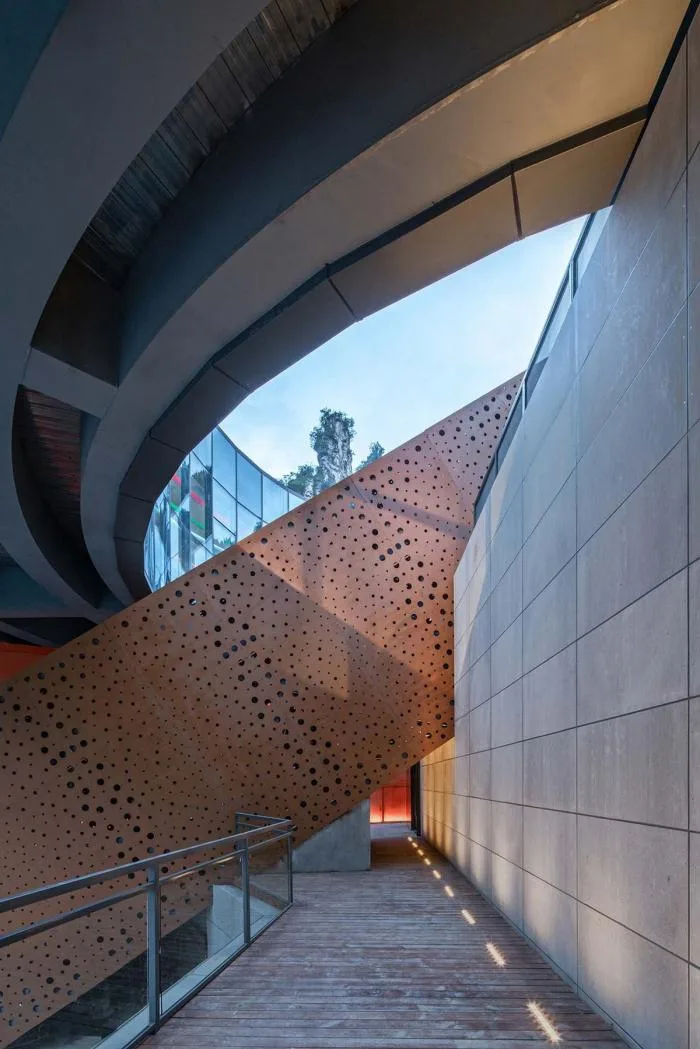
△ The interweaving of building blocks creates a unique spatial experience
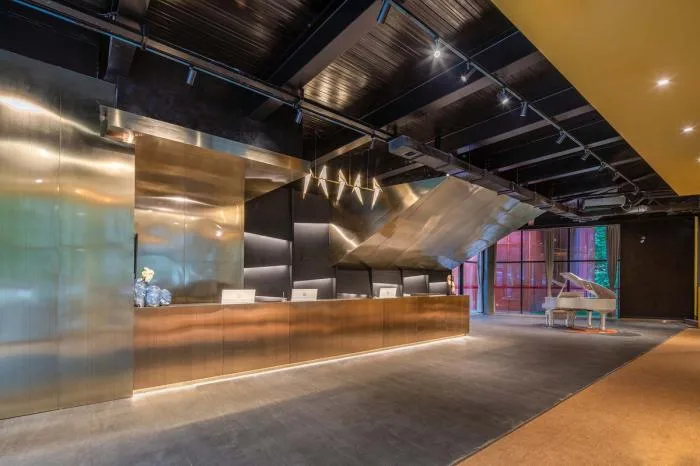
△ Indoor lobby space
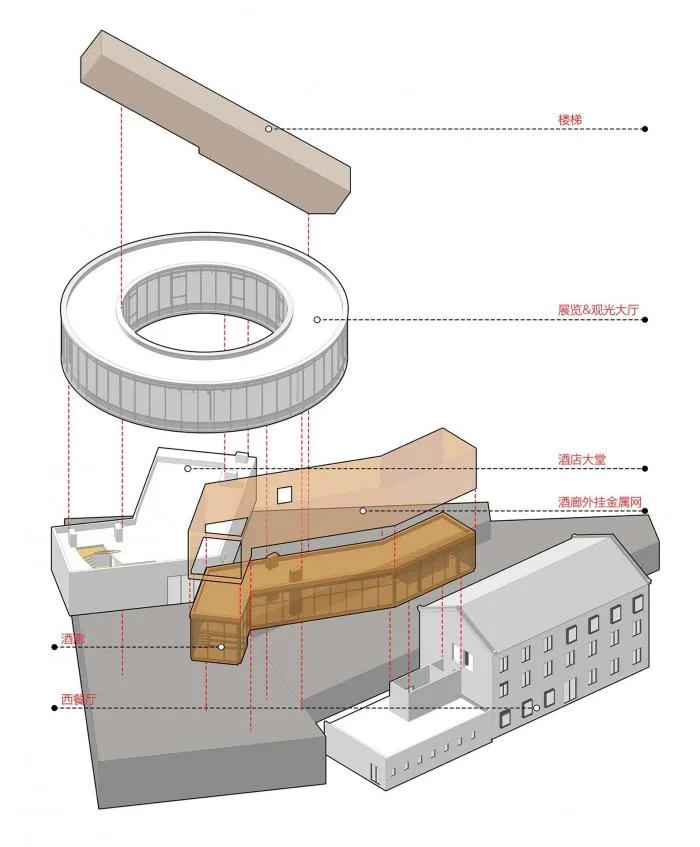
△ Axonometric diagram
The irregular shape of the first-floor lobby responds to the site’s terrain and preserves existing trees. The second-floor circular exhibition hall features a full glass curtain wall and is suspended above the first floor, offering visitors a 360-degree panoramic view.
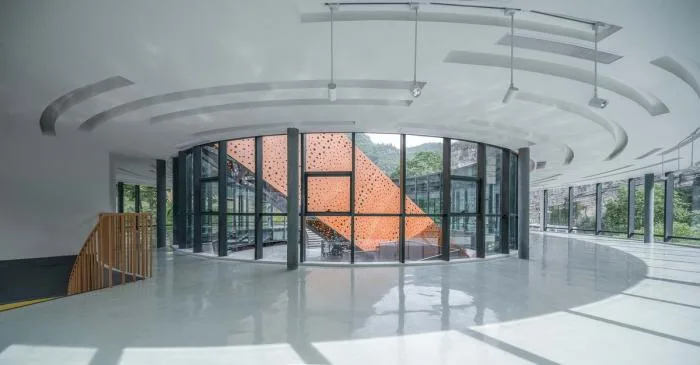
△ Interior of the circular exhibition hall
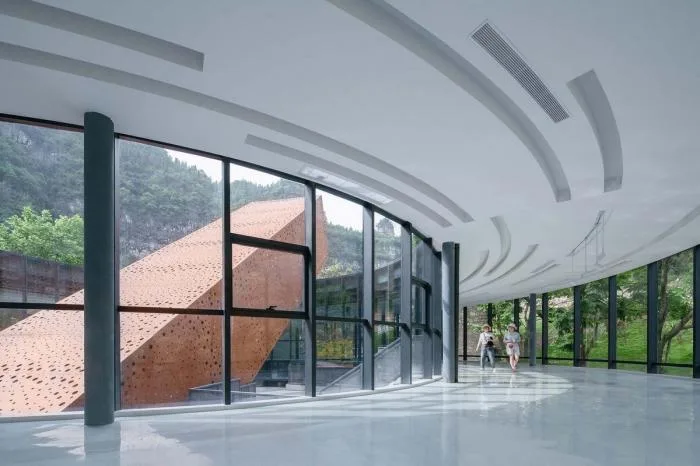
View from the circular exhibition hall towards the large stepped square tube
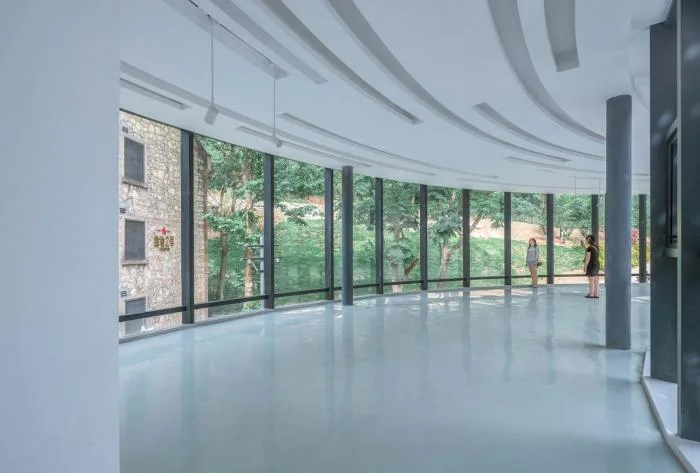
△ Circular exhibition hall interior
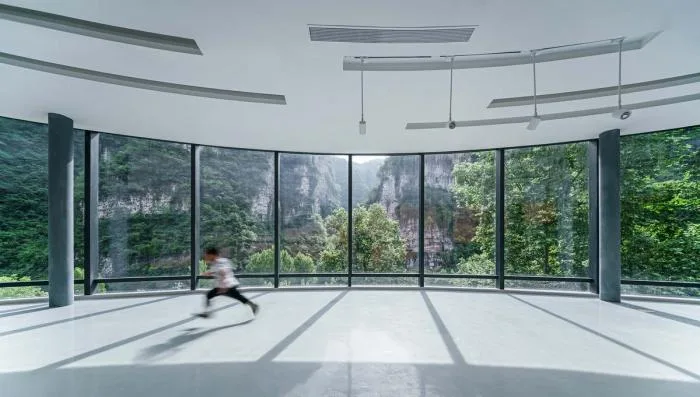
△ Circular exhibition hall with continuous mountain views through the windows
The bent lounge connects to the Western restaurant’s building block on the south side and is elevated above a steep concrete slope to the north, creating strong dynamic tension. Its elevation aligns with the breakfast room on the restaurant’s third floor, linking the lobby and breakfast space. The lounge’s exterior is clad in orange metal mesh, with matching interior finishes, emphasizing the interlocking building blocks and subverting visitors’ expectations.
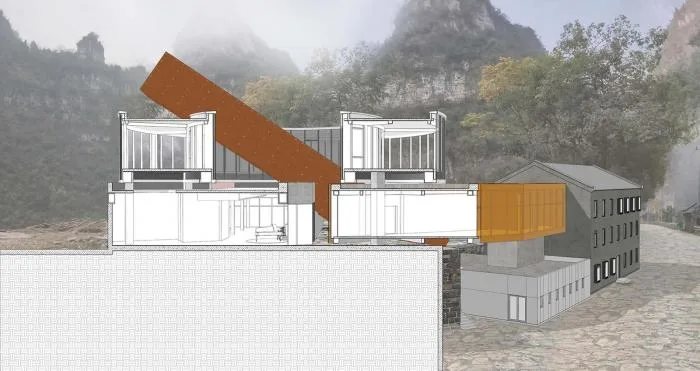
△ Sectional perspective of the lobby
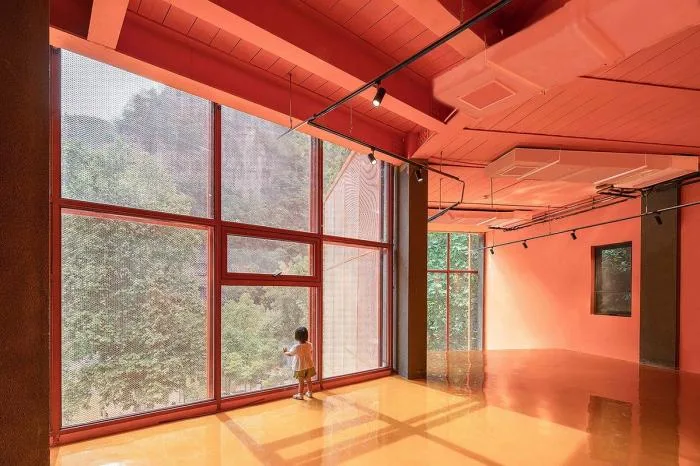
△ Orange Lounge
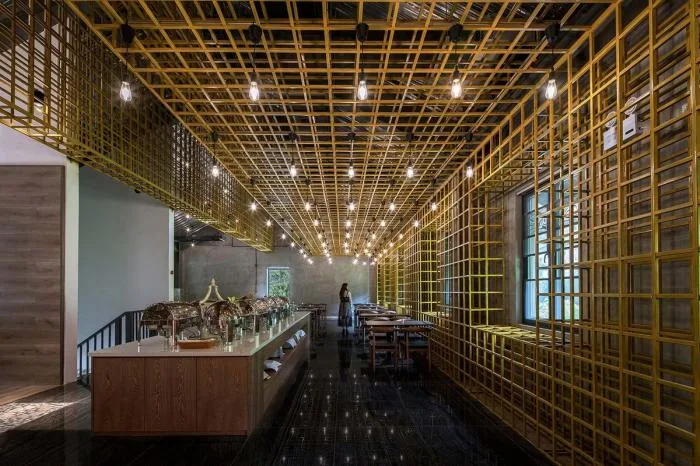
△ Interior of Western restaurant’s third floor
The slanted outdoor staircase is wrapped in dark brown metal, forming a square tube that extends diagonally upward. Circular perforations in the metal create dynamic light-and-shadow patterns inside, evoking a dreamlike atmosphere. This contemporary design contrasts sharply with the original third-line factory style, highlighting the dialogue between old and new: the old structures age gracefully while the new elements bring fresh vitality.
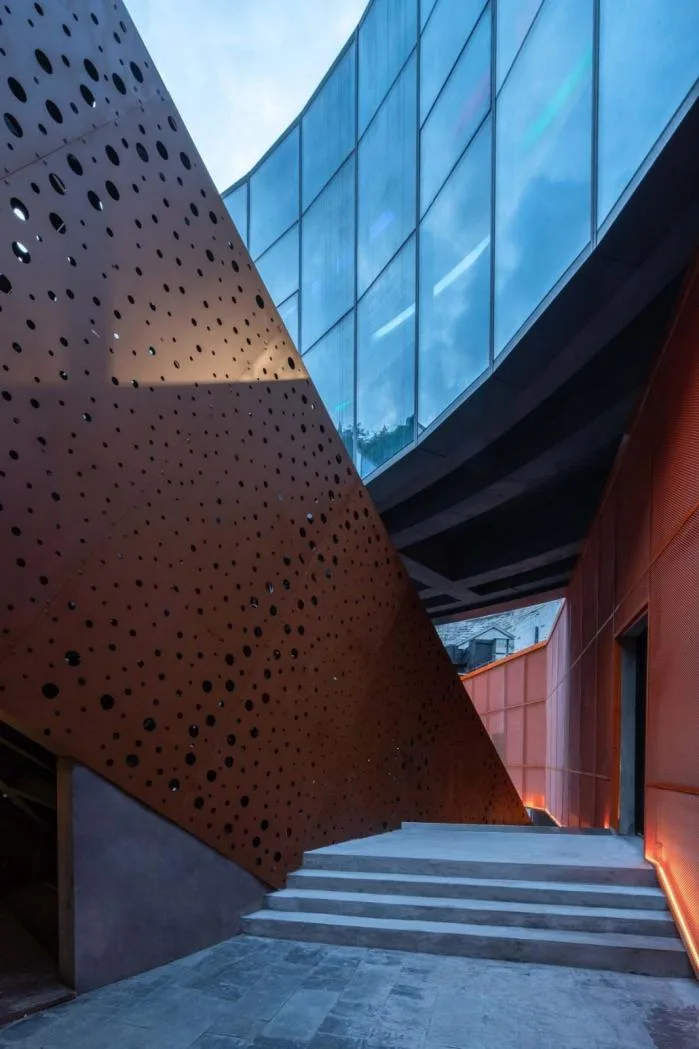
△ Interweaving of blocks in the lobby
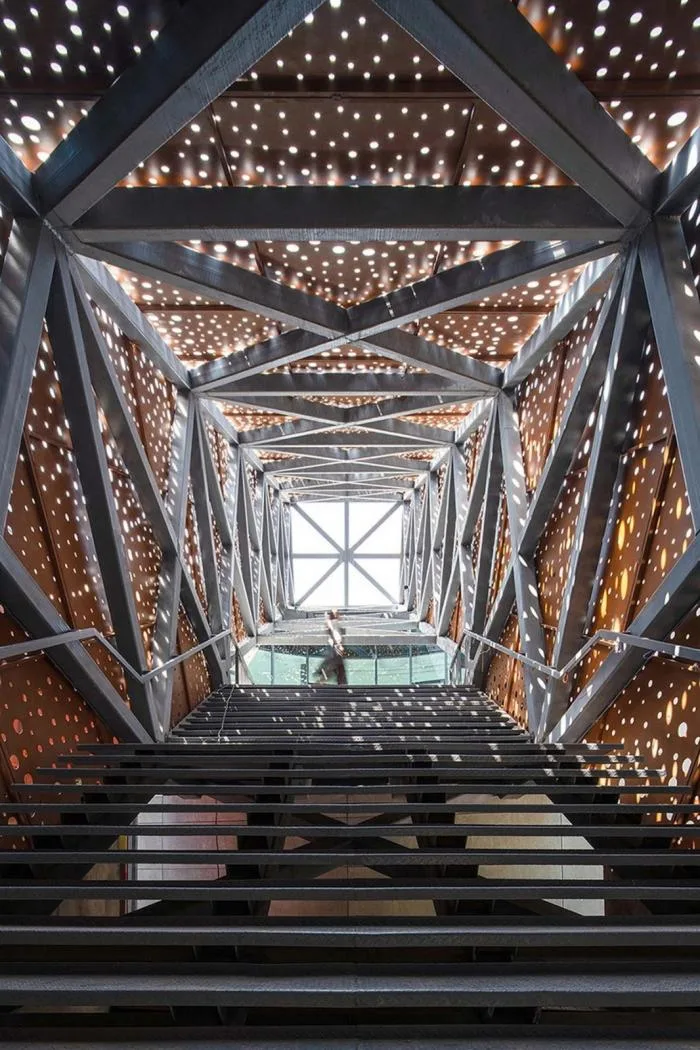
The large staircase leads to the roof, with perforations creating intricate light and shadow effects.
Architects and structural engineers invested significant effort to realize the lobby’s unique form. The entire building uses a steel structure. To maximize transparency in the circular exhibition hall and maintain comfort on the first floor, three giant steel columns arranged at 120-degree intervals support the upper level. These columns are concealed within the lobby’s service and lounge spaces, remaining invisible from the outside. The circular exhibition hall itself is supported by nine steel columns, forming a “box” suspended above the first floor. The slanted staircase and its surrounding tube act as a massive square pillar inserted diagonally through the circular ring, providing vertical connections. Although the four building blocks appear stacked, each has an independent structural system, ensuring safety. The project faced numerous challenges, including complex elevation changes, karst geological conditions, preservation of old foundations, and protection of mature trees. These were overcome through close collaboration among architects, engineers, and construction teams, culminating in the successful realization of this complex architectural form.
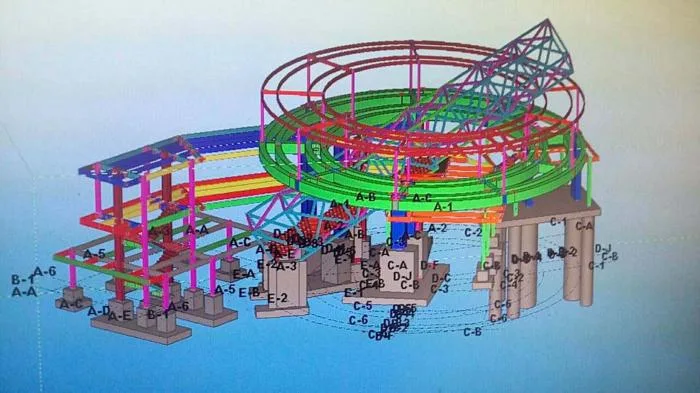
△ Lobby structural model
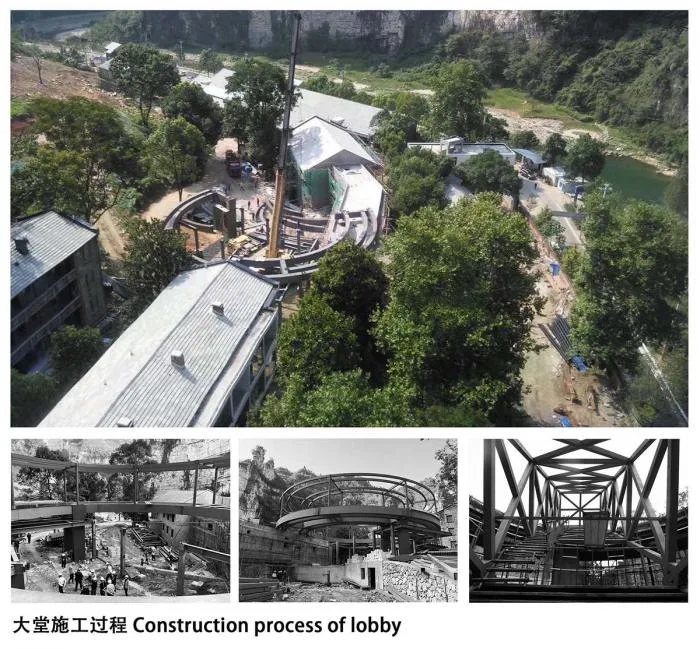
△ Construction process of lobby
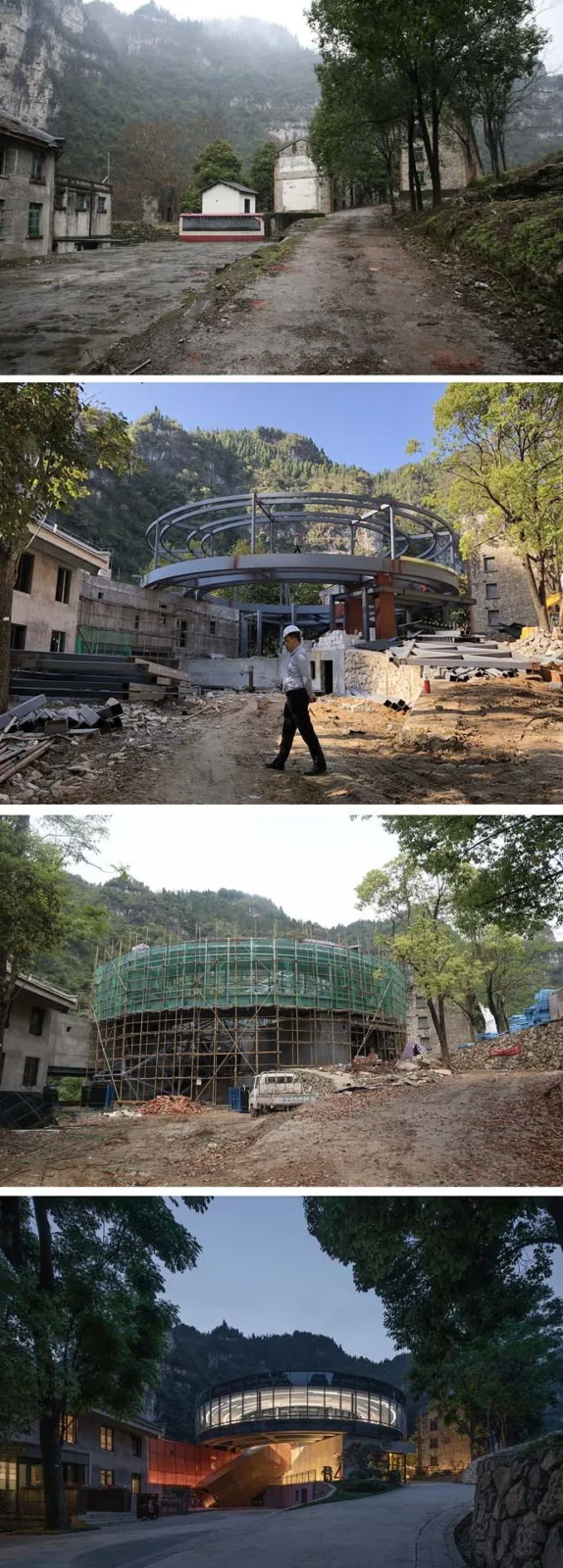
△ Evolution of the lobby
Restaurants and Multi-Function Halls: Utilizing Existing Spaces as Supporting Elements
Besides guest rooms, lobby, and exhibition hall, the hotel’s Chinese restaurant and multi-function hall were converted from existing 809 Factory spaces. Following regional design principles, these spaces retain the building exteriors’ original third-line factory character while adapting interiors for new uses. The Chinese restaurant and multi-function hall embrace the dialogue between old and new.
The Western restaurant and breakfast area occupy a three-story office building on the original site. The new structure reuses the old building’s foundation and preserves its main exterior features, while modernizing doors, windows, and details. The interior layout includes a coffee shop on the first floor, a chess and card room on the second, and the restaurant and breakfast dining on the third.
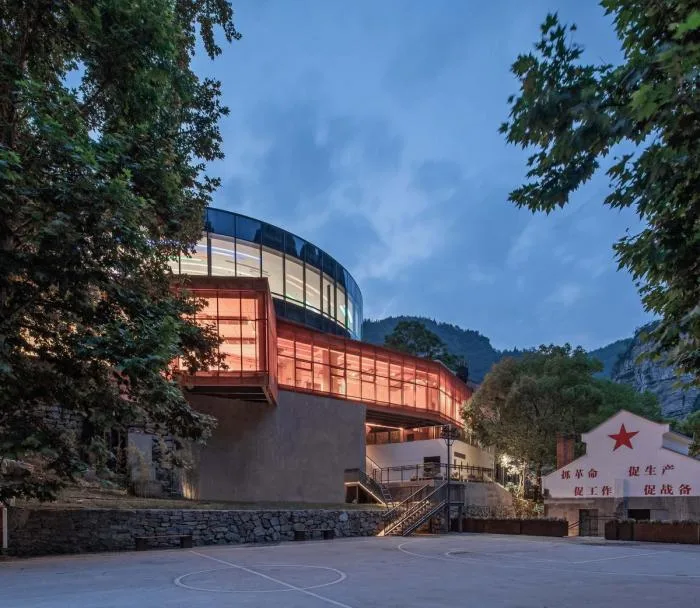
View of the lobby and exhibition hall from the entrance of the Chinese restaurant
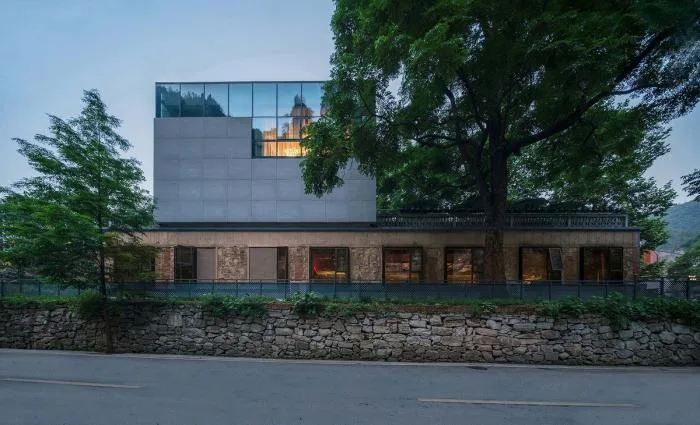
The renovated Chinese restaurant preserves the original stone wall on the first floor, contrasting with new materials on the upper floors
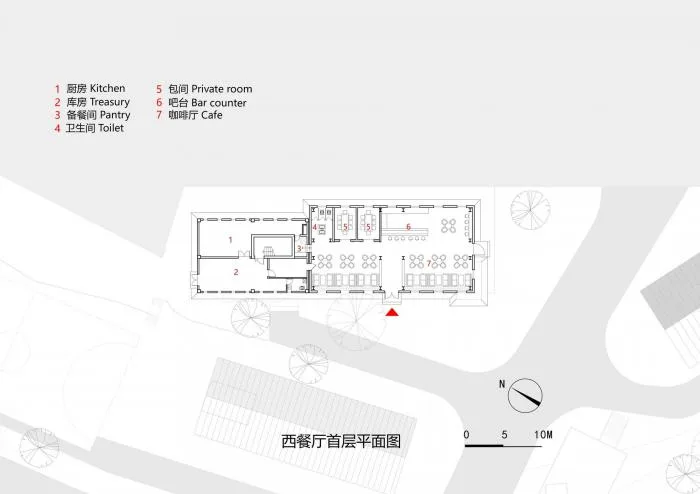
△ Plan of Western Restaurant
Overall, the restaurants and multi-function halls take a modest role in the complex: they avoid flashy appearances and serve as supportive “bases” surrounding the lobby and guest rooms, providing essential services to visitors in the regenerated 809 Factory area.
Conclusion
The 809 Factory exemplifies the old third-line military factories in western China. Built mainly in the 1950s and 1960s with brick and stone, these factories showcase the industrial architectural style of that era. As China’s economy evolved and industrial structures transformed in the 1990s, most of these factories were shut down or abandoned. However, their buildings remain culturally significant as historical records. This project represents a concerted effort to reactivate such industrial relics while preserving their historical essence.
Unlike many industrial relic transformations in China, which often focus on cultural or art parks primarily in urban areas, this project’s new function as a hotel is distinctive and innovative. It offers a meaningful example of revitalizing industrial heritage in western, non-urban China.
Project Information
Project Type: Hotel, Renovation
Location: Yichang City, China
Architectural Firm: Sanwen Architecture
Area: 8,300 m²
Year: 2020
Photographers: Zhao Yilong, Jinge Song, Jinjun Cao
Lead Architects: He Wei, Chen Long
Structural Consultant: Pan Congjian
Lighting Design: Zhang Xin Studio, School of Architecture, Tsinghua University
Lighting Design Team: Zhang Xin, Han Xiaowei, Zhao Xiaobo, Wang Dan, Song Boyi, Tao Longjin
Construction Drawings: Beijing Huaju Architectural Design Institute Co., Ltd
Interior Construction Drawings: Beijing Hongshang International Design Co., Ltd
Interior Design & Landscape Concept: Three Literature Architecture
Owner: Yichang Transportation and Tourism Group













Must log in before commenting!
Sign Up