
The project is situated at the foot of Nanchan Temple in Wuxi, nestled within a cluster of historic residential buildings along the banks of Qingming Bridge and the ancient canal—hence the name “Nanchan Guanshui.” Amidst evolving times and urban renewal, Benzhe Architecture reinterprets the concept of homestay architecture while preserving the essence of the area’s rich historical and cultural heritage.
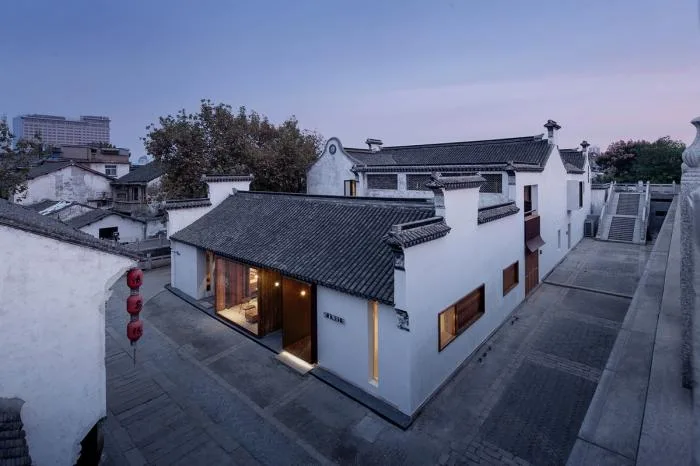
△ Architectural Facade
The original site features a typical traditional three-entry courtyard layout, characterized by a low front and higher rear, presenting a relatively conservative form. The old structure encloses the space, resulting in dim interior lighting and narrow corridors that conceal multiple safety risks. The renovation retains the signature white walls and tiled roofs, complemented by small bridges and flowing water, preserving the quaint, elegant ambiance typical of Jiangnan courtyards while introducing more open areas. Modern design elements such as rusted steel panels, sleek floor-to-ceiling glass, and distinctive wayfinding systems breathe new life into the historic residence.
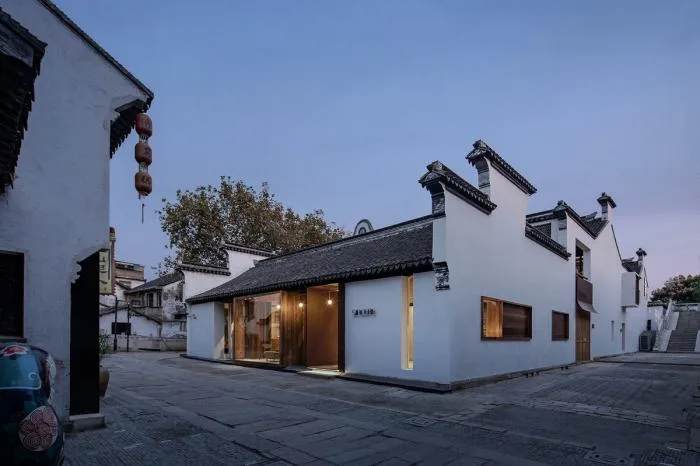
Southwest Wall
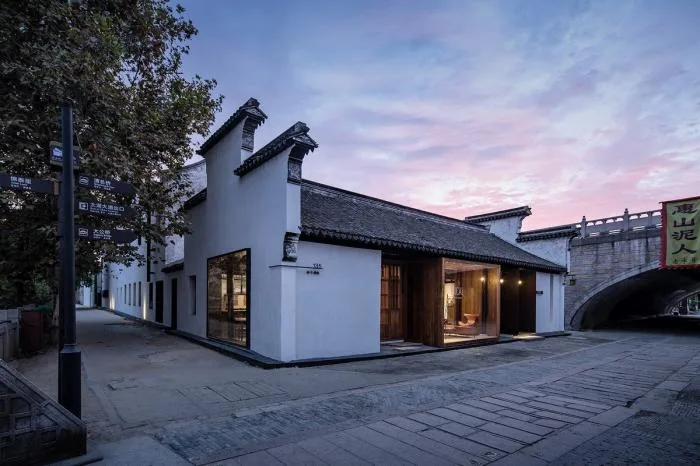
Northeast Wall
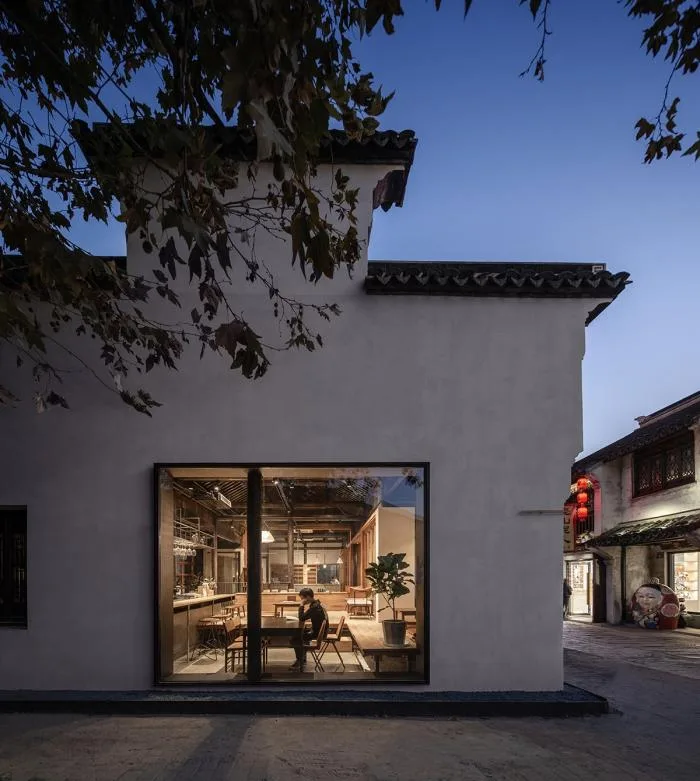
Northeast Wall
The original thick earth wall at the main entrance was removed, creating access points on both sides at the rear. Square-shaped French windows protrude forward, adding depth and layering to the flat facade. Delicately crafted wooden lattice windows replace the old dark, sealed ones. This renovated facade forms a compelling juxtaposition with the surrounding historic residential complex.
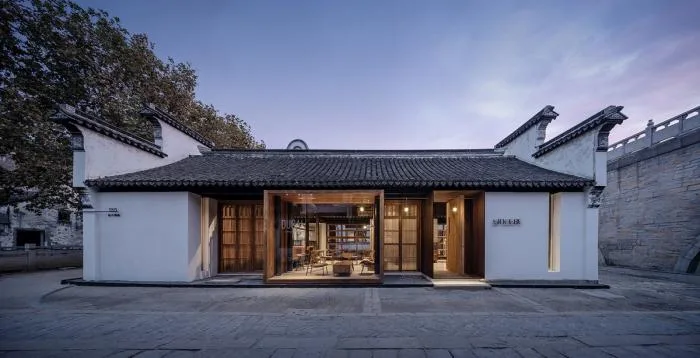
△ Main Entrance
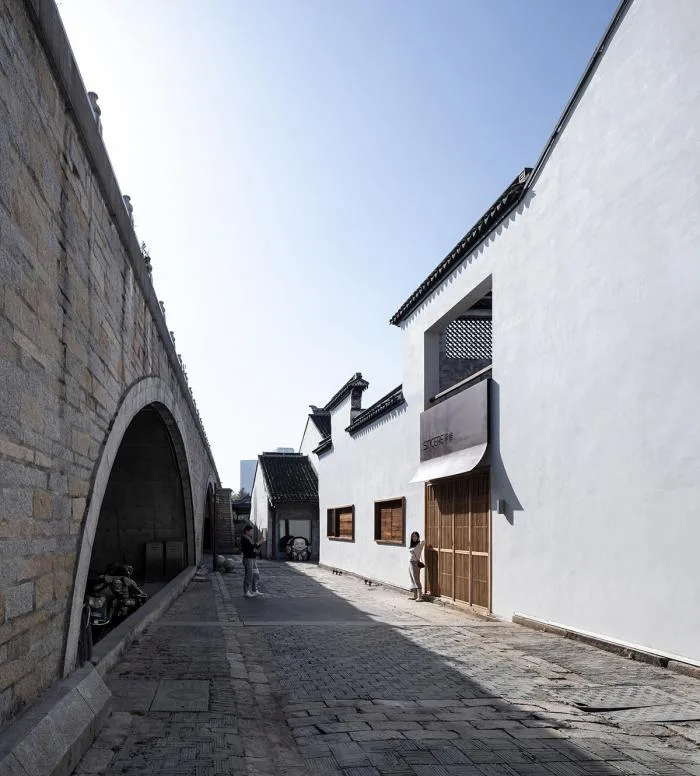
Southwest Wall
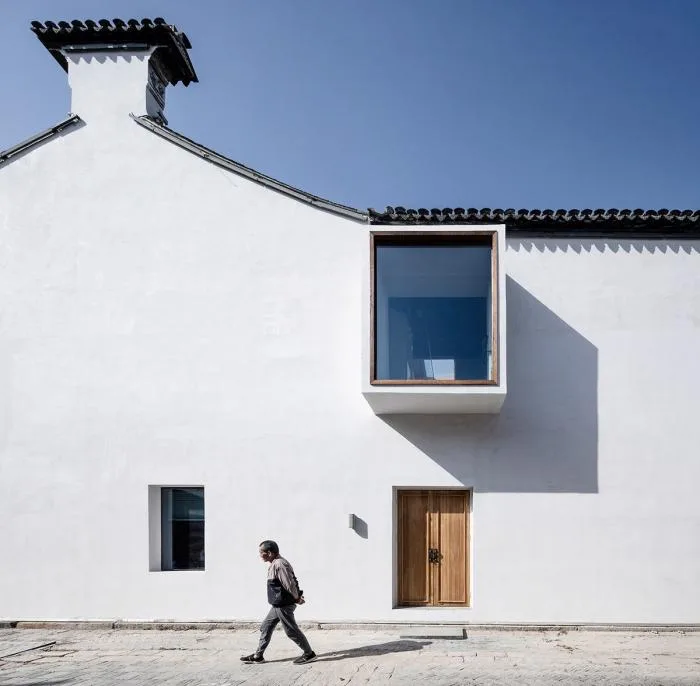
Southwest Wall
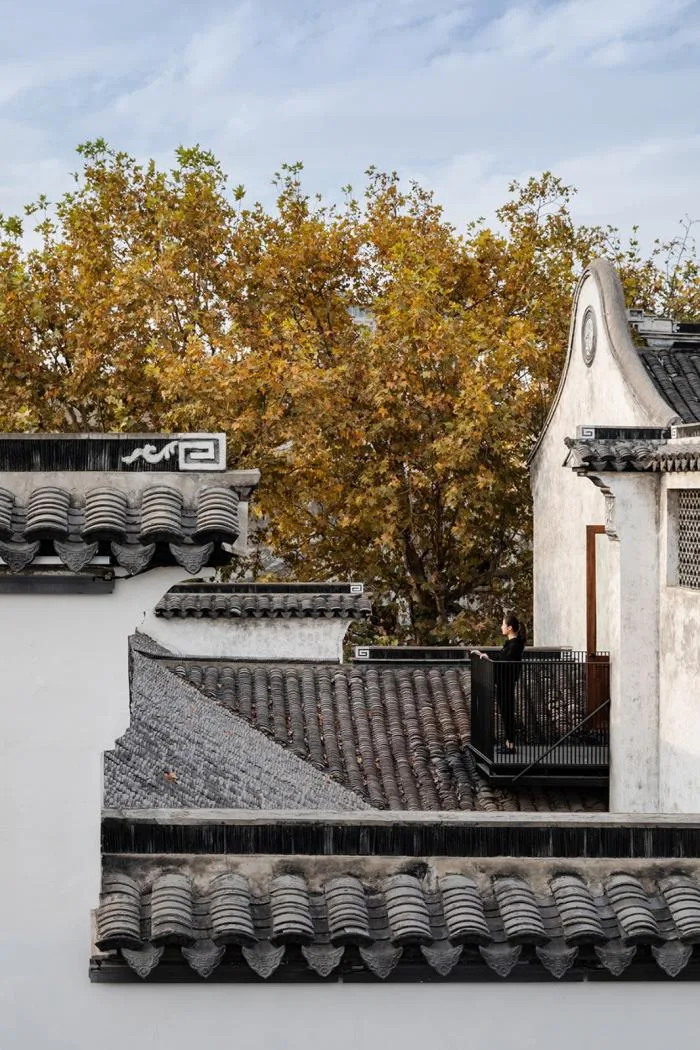
Balcony Details
A newly poured concrete three-way box at the front desk’s entrance links the reception, restaurant, and courtyard. The restaurant features tatami mats, casual seating, and a water bar, offering clear views and staggered spatial levels.
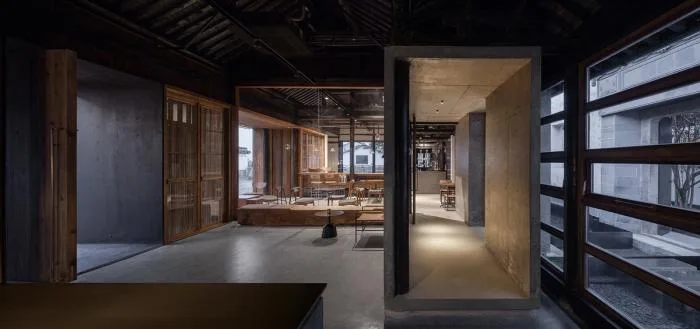
△ Hotel Reception Area
For the passageway from the reception to the rooms, the design cleverly creates two distinct paths: an inner and an outer route. The inner path leads from the reception through the restaurant and then veers off to the guest rooms, forming a winding route that culminates in a secluded retreat. The outer path goes directly from the reception to the second room area, with the walkway slightly submerged in water, giving guests the sensation of walking on water. The tea room, floating atop the water, emanates a quiet, serene atmosphere, offering a hidden sanctuary.
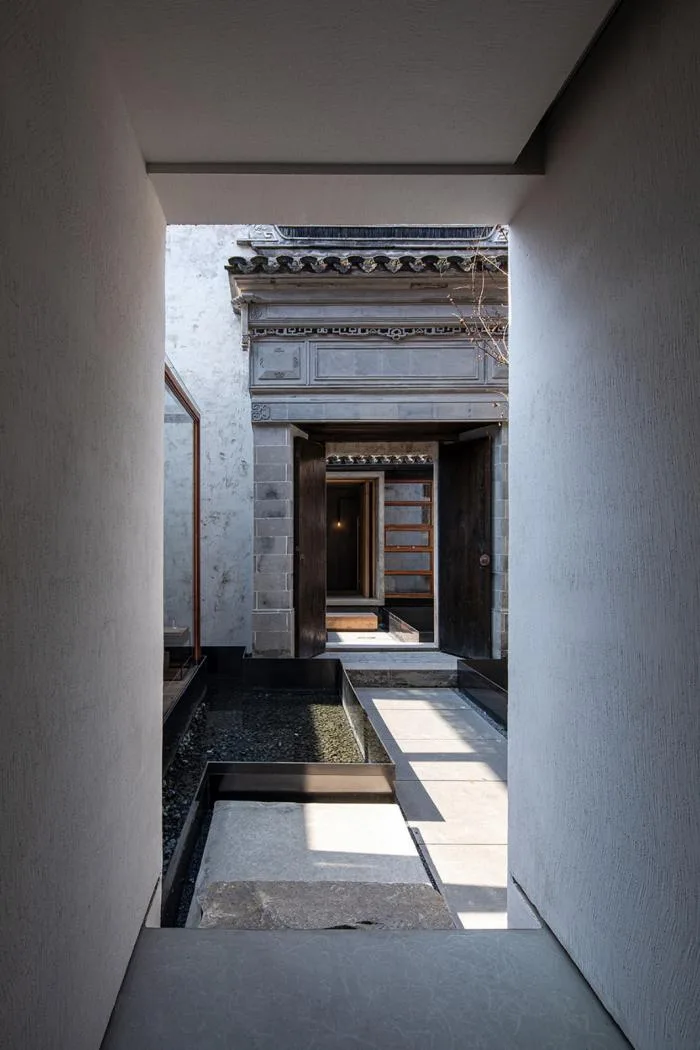
△ Internal Path
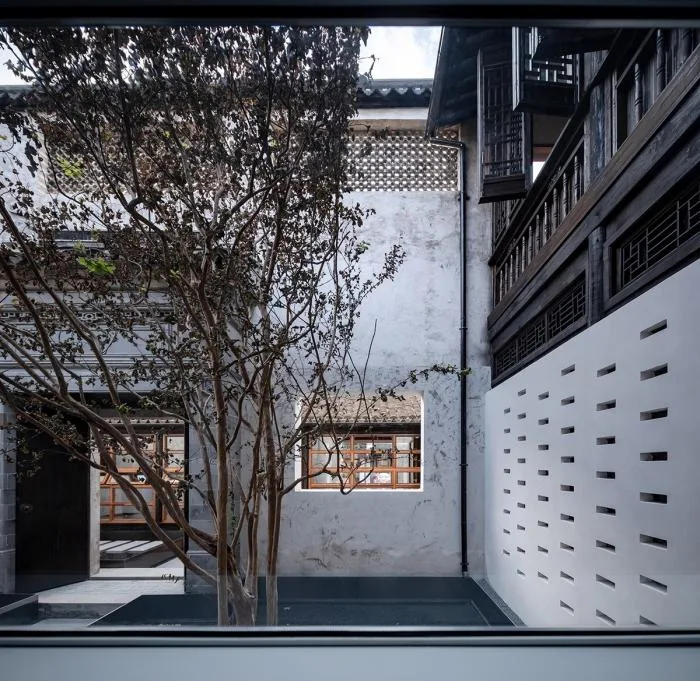
△ Internal Path
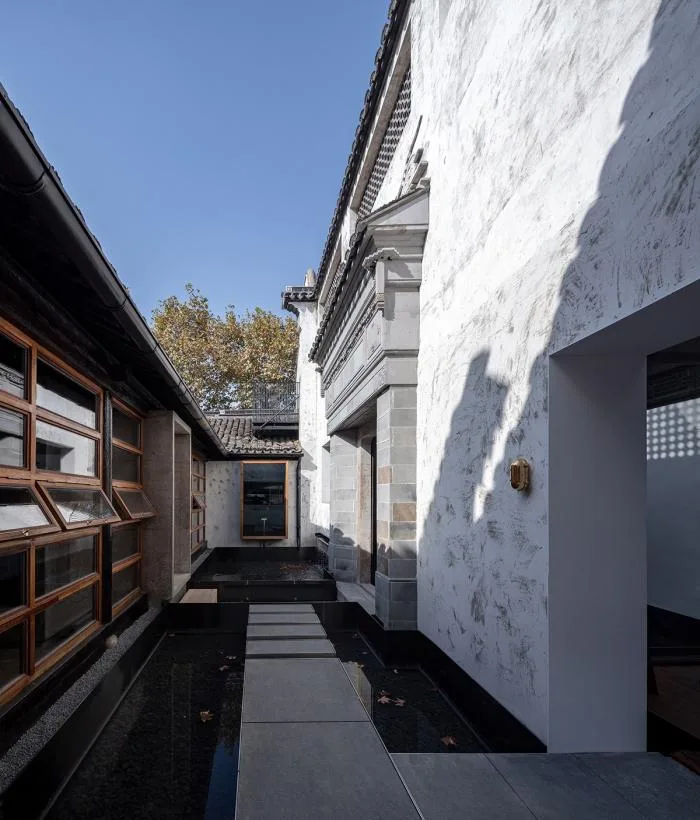
△ External Path
Entering the second courtyard, guests reach the hotel’s room area, where the original lotus pond has been preserved. The walkway has been widened, providing ample space to relax and observe the fish in the pond. The homestay features sixteen uniquely styled rooms—like sixteen shining pearls—surrounding and nestled within this charming water courtyard. Each room is named after a character associated with the word “water,” including “Trace,” “Pan,” “Bo,” “Ze,” “Han,” “Xi,” “Run,” “Yang,” “Zhan,” “Hong,” “Du,” “Jian,” “Yi,” “Dan,” “Che,” and “Cheng.” Water symbolizes spirituality and the source of life; by observing water, one also reflects on the heart.
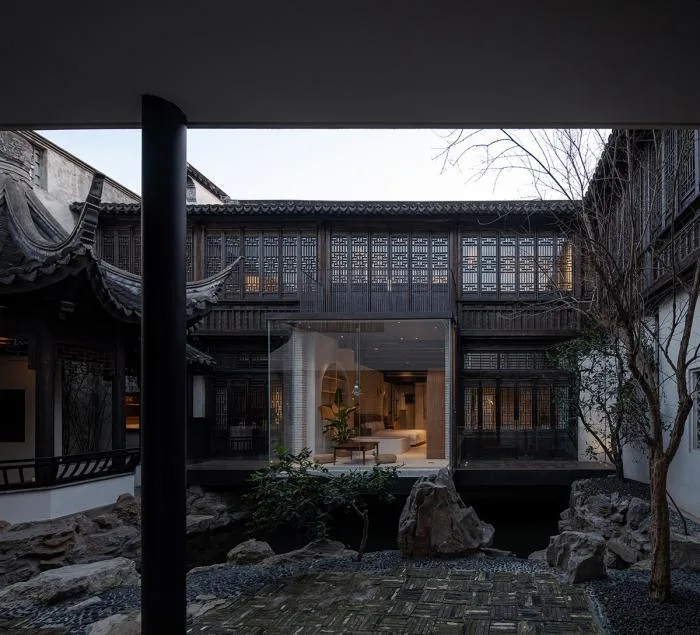
△ Courtyard
The nostalgic charm of “Su” and “Du” is expressed through plain white stone walls, deep brown timber beams, and Cycladic-style arches, leaving a distinctive imprint on the space.
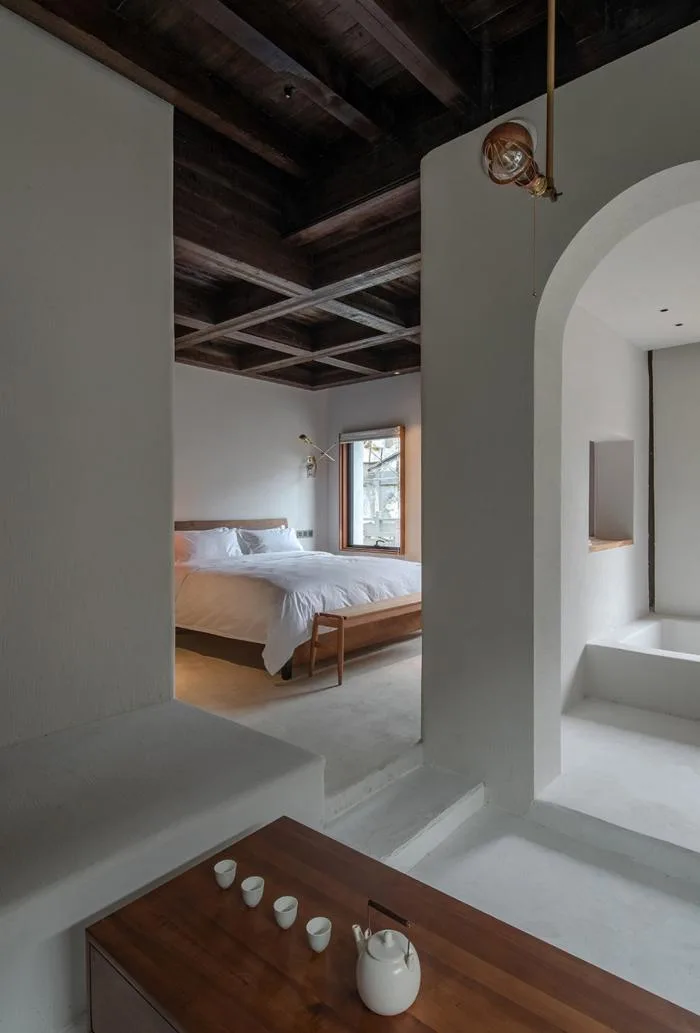
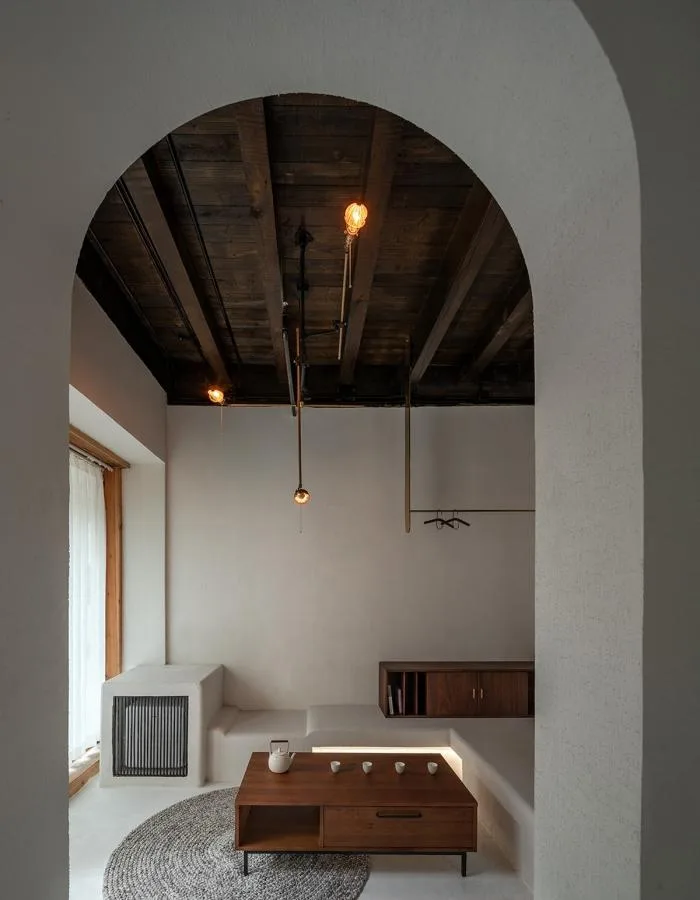
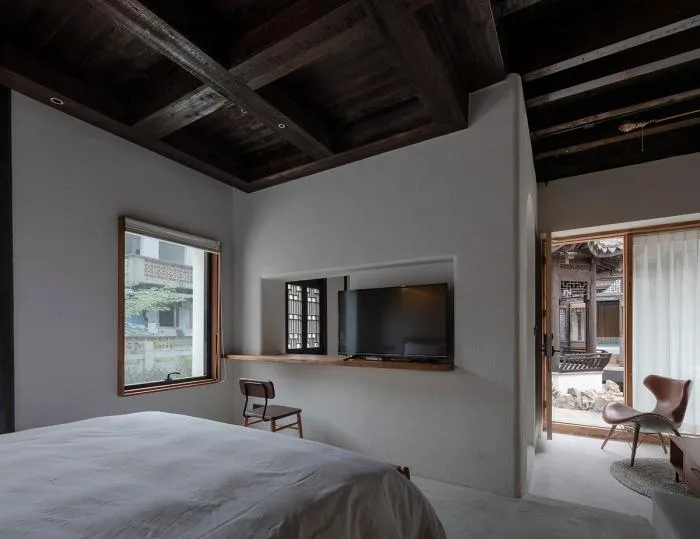
△ Room “Tracing”
The rooms “Run” and “Yang” feature loft levels designed by the hotel, where frosted stainless steel and natural wood contrast with the original exposed walls. The rhythmic spatial arrangement embodies a deconstructivist sense of order. “Yang” notably includes a suspended mesh rest area, offering a unique and engaging lodging experience.
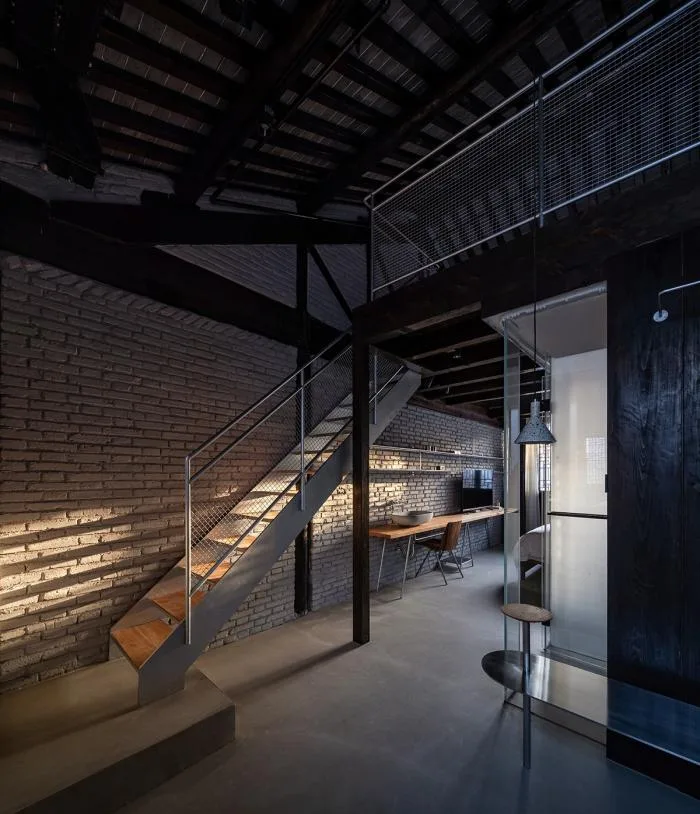
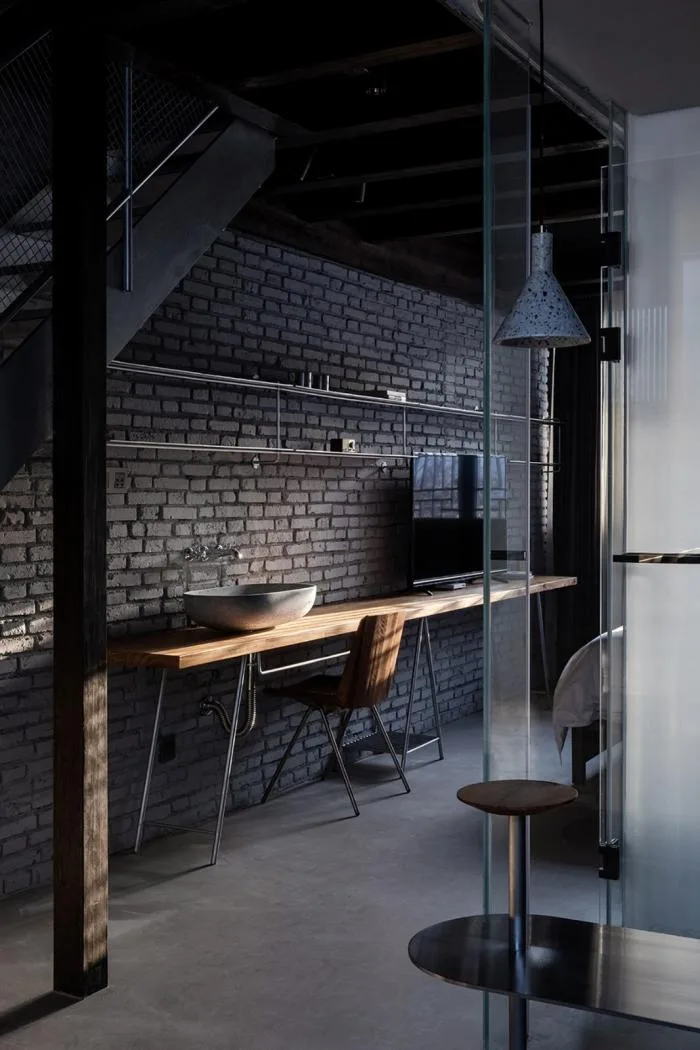
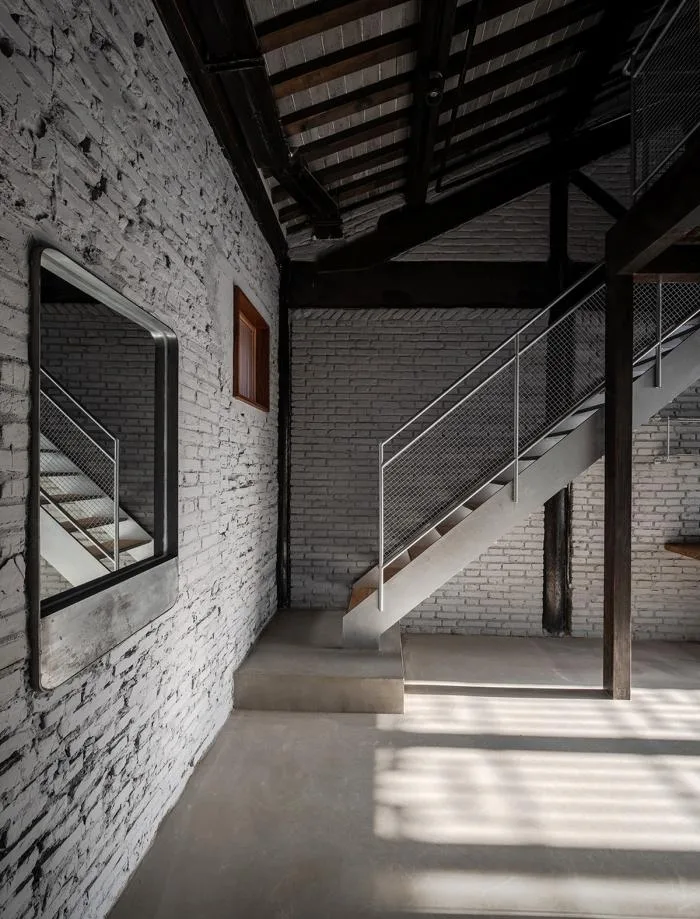
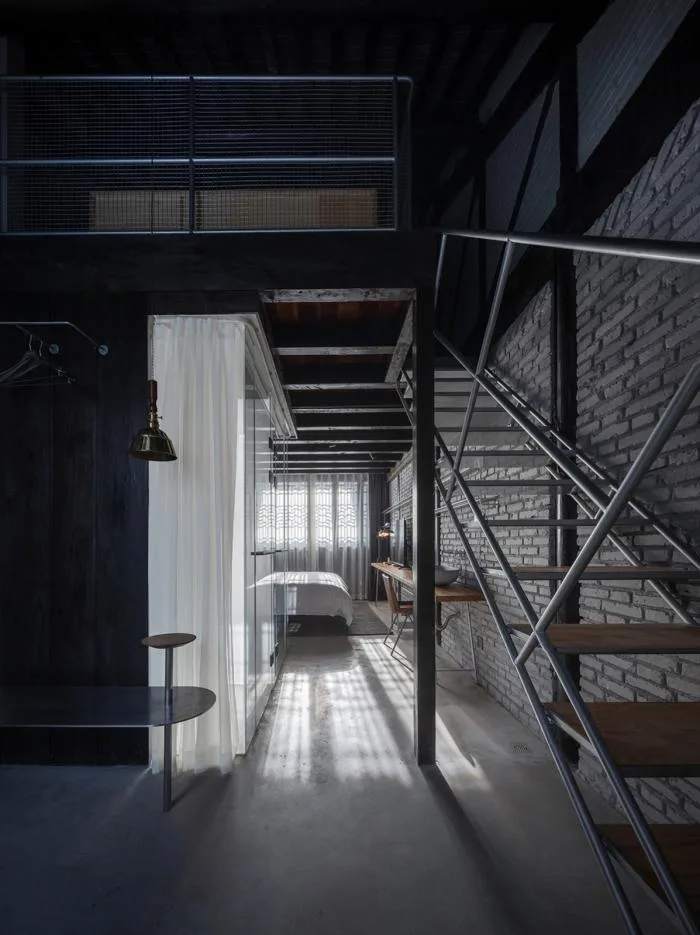
△ Loft with Large Leap Levels
The rooms “Pan” and “Hong” adopt an industrial style, characterized by clean, sharp lines, exposed original walls, and metal elements that convey a restrained elegance. Geometry and composition deliver a neutral and pure spatial experience, where delicate details contrast with a rugged, distinctive aesthetic.
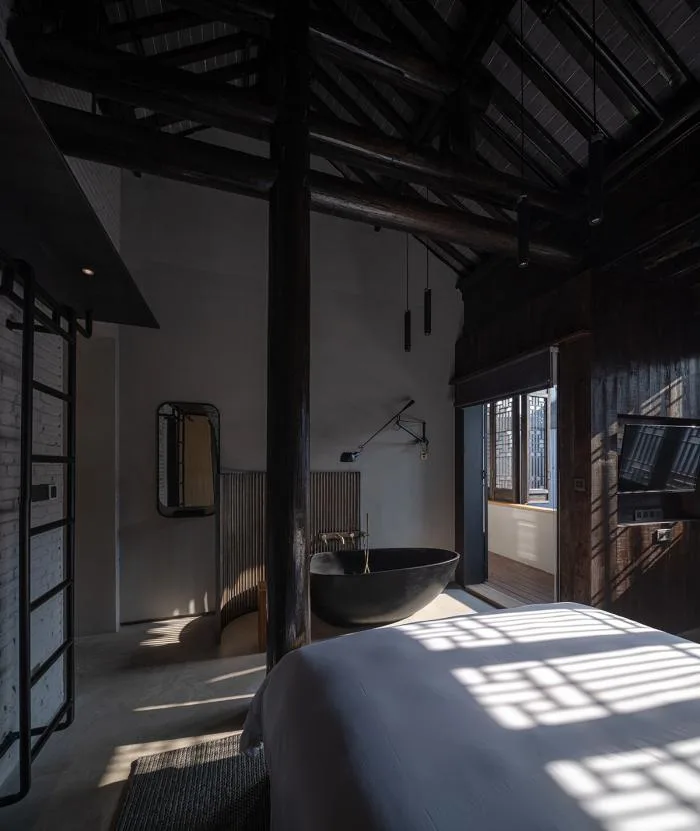
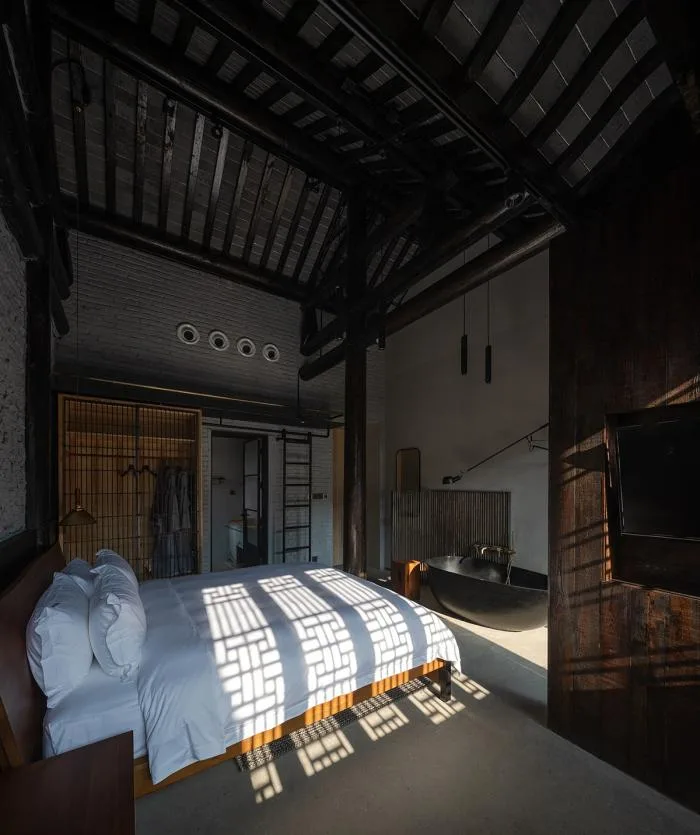
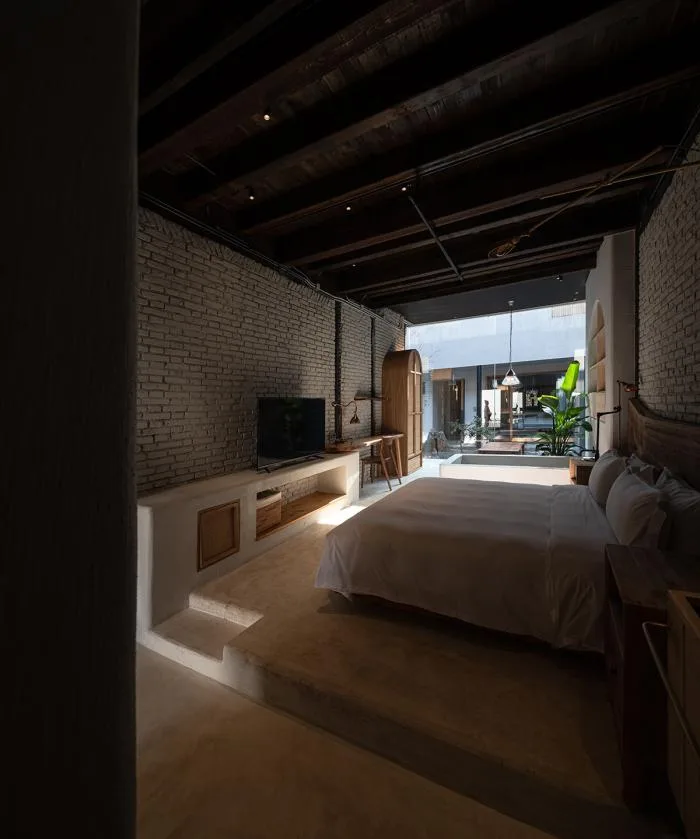
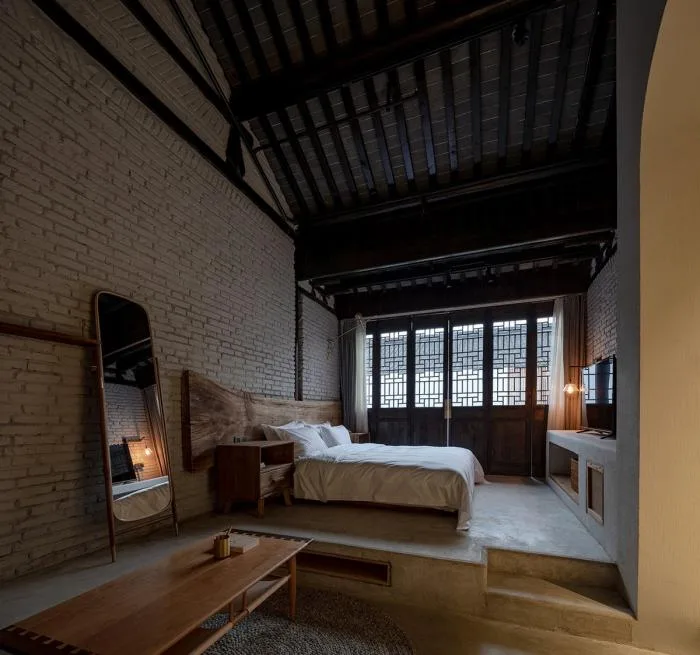
△ Industrial Style Room
The renovated backyard exudes a distinctive charm, presenting a peaceful Zen atmosphere reminiscent of dry mountains and rivers. Newly constructed concrete walls and stairs connect seamlessly with the original mountain wall in a bare and austere manner. Ascending the stairs, sunlight filters through a circular opening, brilliantly showcasing the interplay of light and shadow, blurring the lines between reality and illusion.
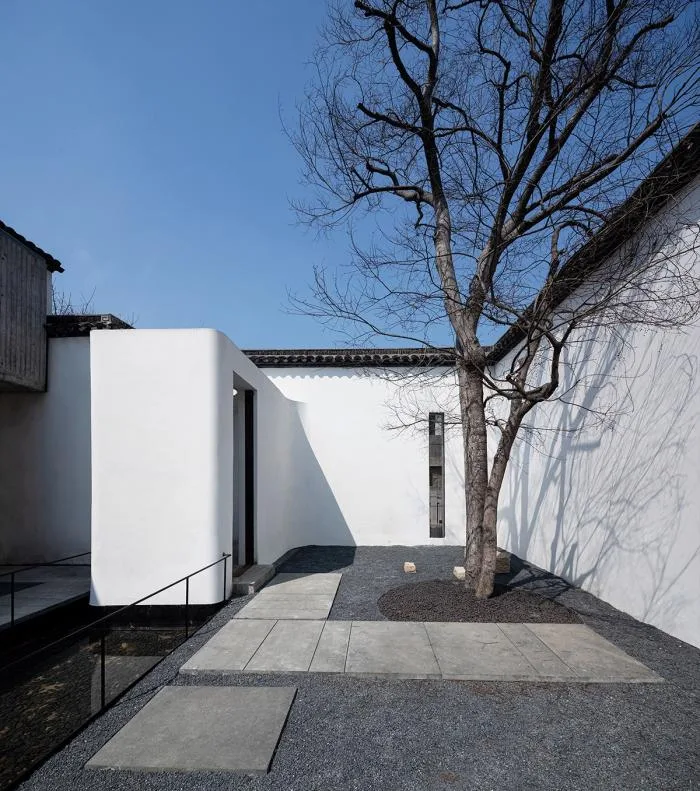
△ Backyard
Zhishe Nanchan’s water-inspired design draws from history and returns to nature, achieving a harmonious coexistence among architecture, humanity, and the natural environment.
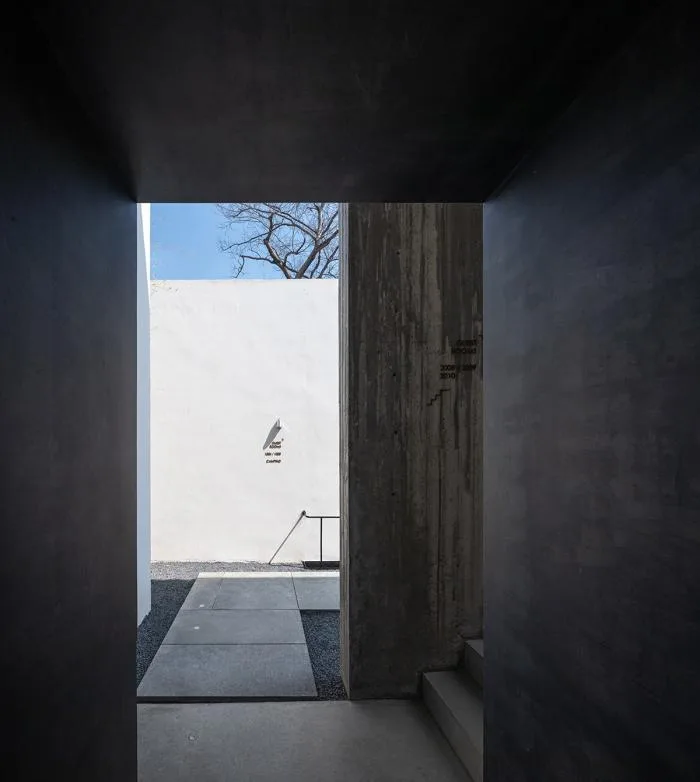
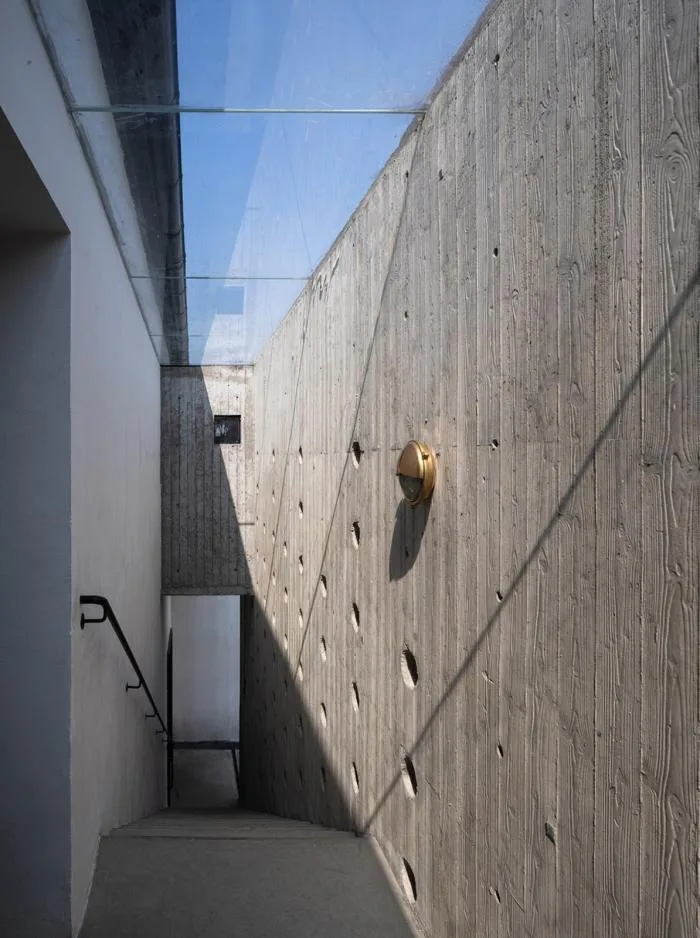
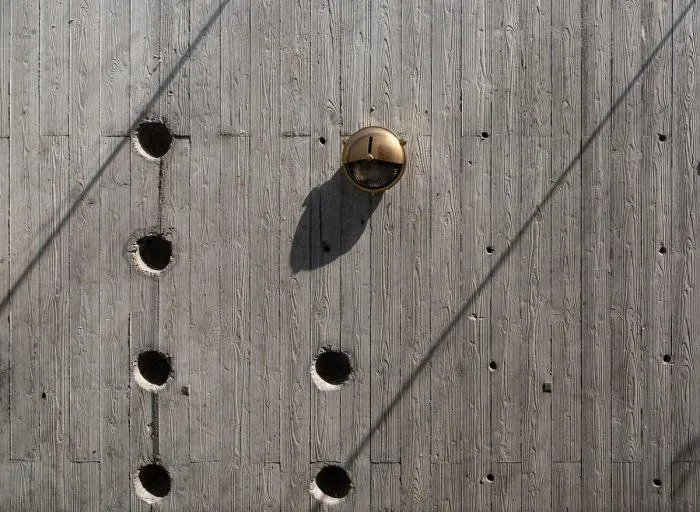
△ Architectural Details
Design Drawings
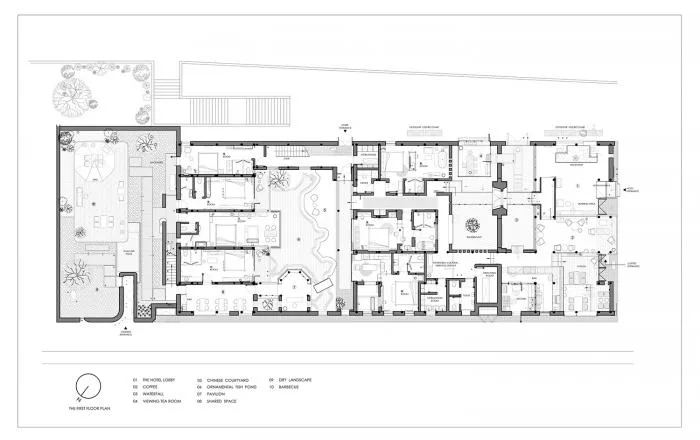
△ First Floor Plan
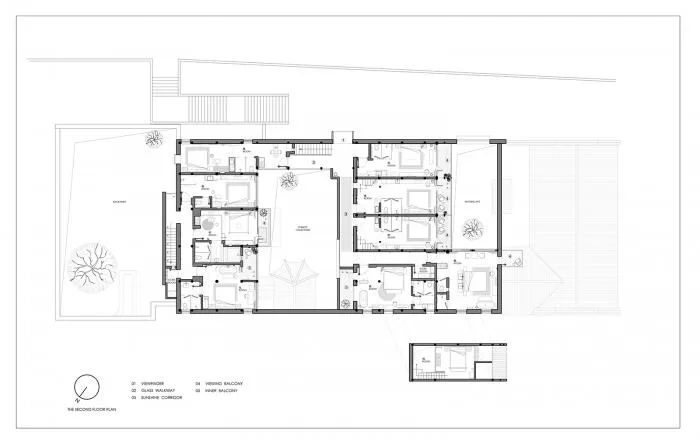
△ Second Floor Plan
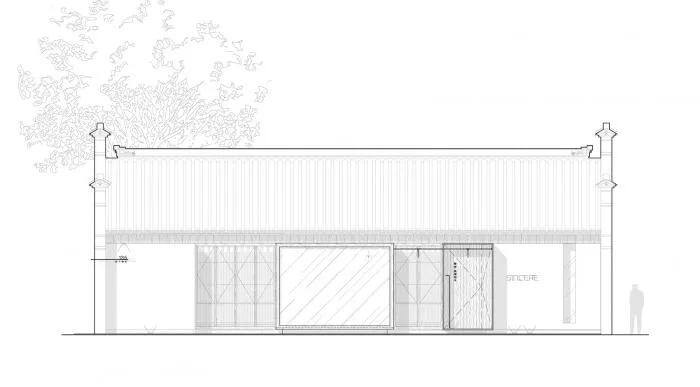
△ Front Elevation
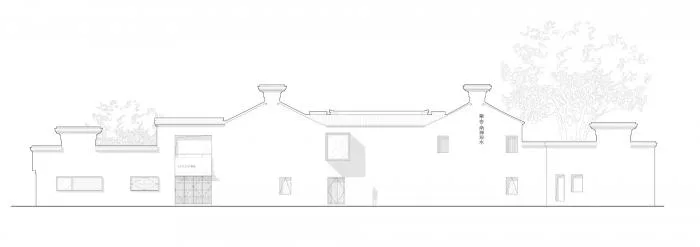
△ Side Elevation
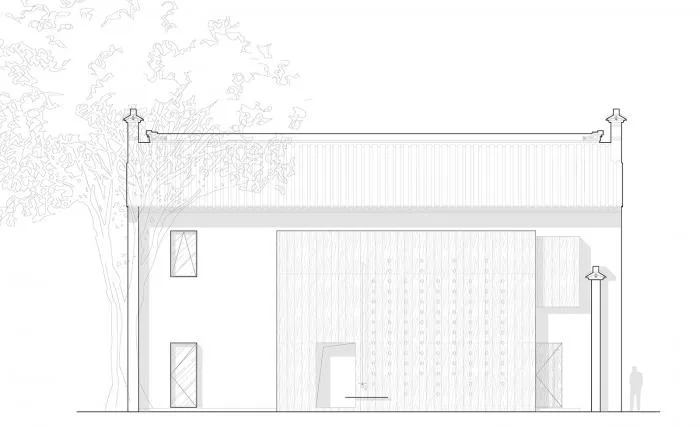
△ Backyard Elevation
Project Information
Project Type: Hotel, Renovation
Location: Wuxi, China
Architectural Firm: Benzhe Architecture
Area: 1,280 m²
Year: 2020
Photographer: Su Shengliang
Lead Architect: Jiang Huajian
Owner: Dukou Space (Wuxi) Hotel Management Co., Ltd













Must log in before commenting!
Sign Up