
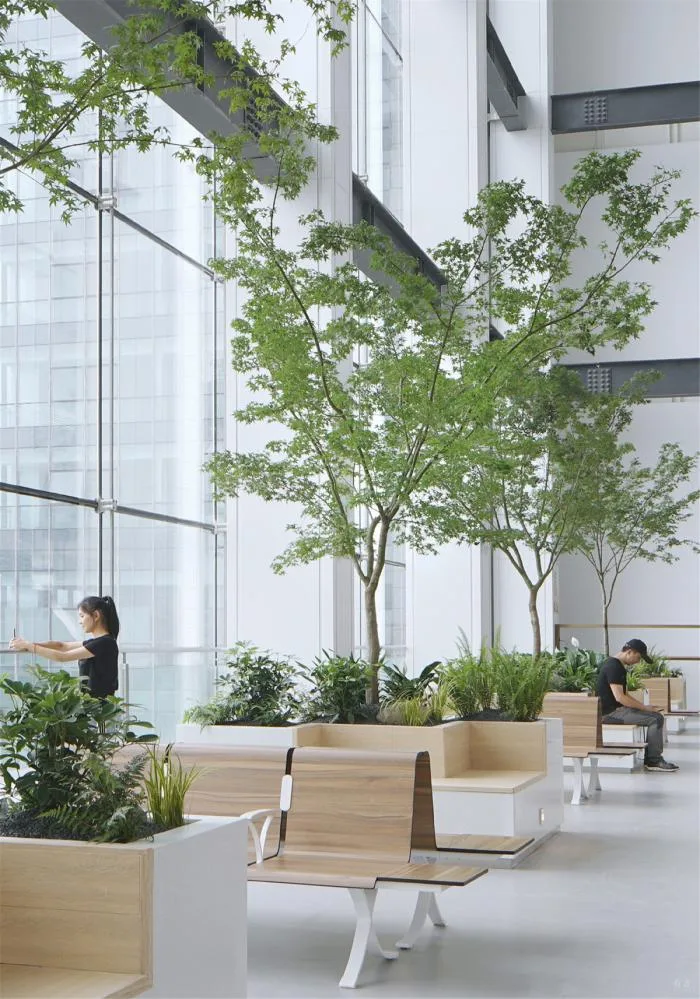
△ Waiting Area for Government Affairs. Photography by Song Yi.
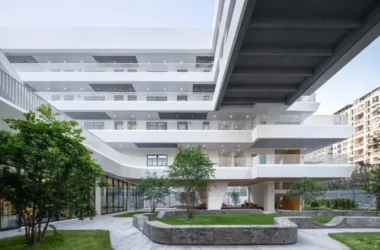
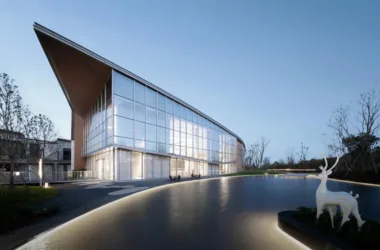
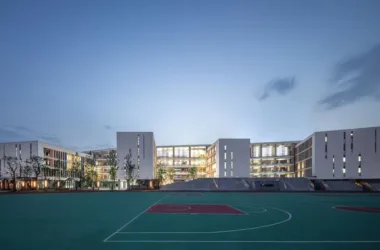
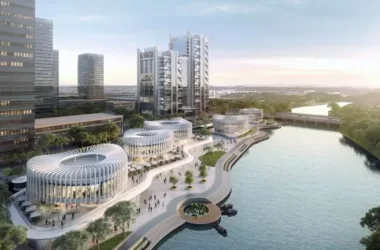
The Kunshan Municipal Government Service Center is composed of four towers connected by a podium, covering a total area of 102,000 square meters. It houses over 20 municipal committees and bureaus, offering one-stop services for residents and businesses. Services include social welfare, taxation, public security, immigration, public resource trading, investment and construction, market access, and comprehensive social management.

△ Architectural Form © Civic Design
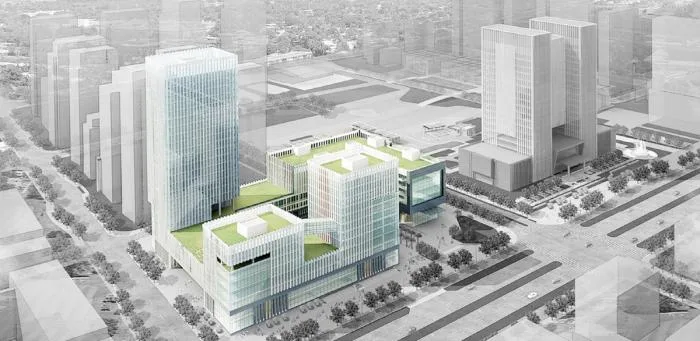
△ Bird’s-eye view rendering © Kunshan Urban Investment Group
Initiated in 2009, with building scheme design involvement from late 2011, the project has undergone multiple revisions. These include adaptations to national policies, repositioning of urban comprehensive service management, functional changes, and updates to building codes both old and new.
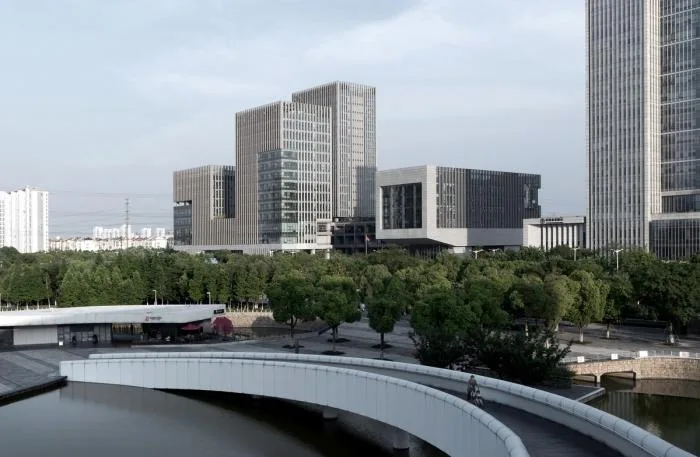
△ Architectural exterior photography: Song Yi
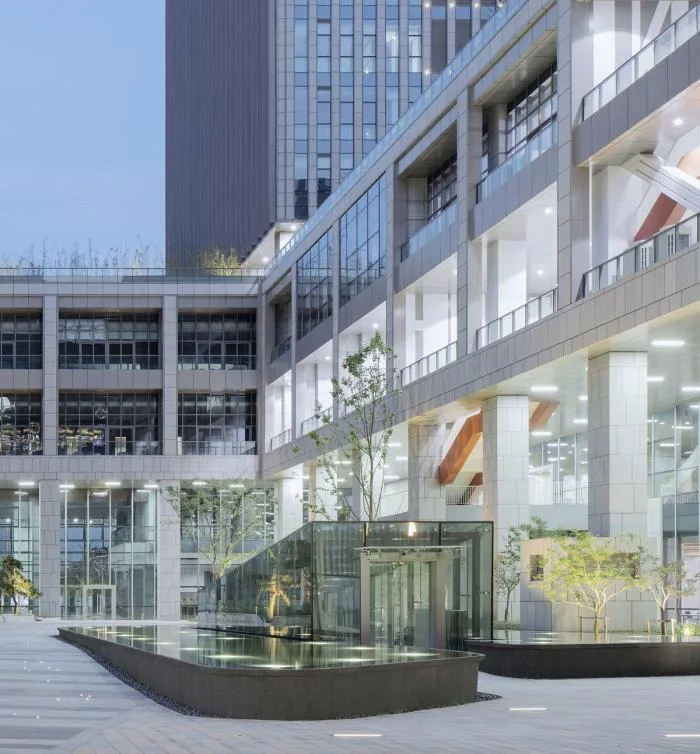
△ Interior courtyard underground lighting landscape staircase exit. Photography: Summer Solstice
The designers shifted their focus from the original building design to addressing the dynamic relationships among urban public function managers, citizen spaces, and service users in a rapidly evolving era. This approach promotes a sense of physical and emotional well-being and respect for users, enhancing urban vitality through everyday activities.
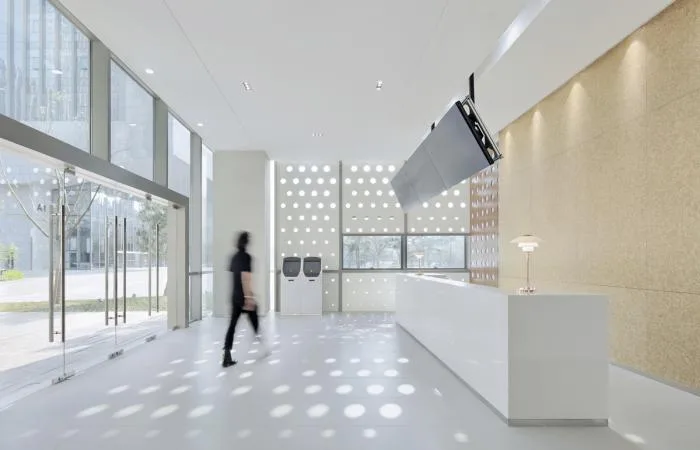
△ Social Security Application Hall B. Photography: Summer Solstice
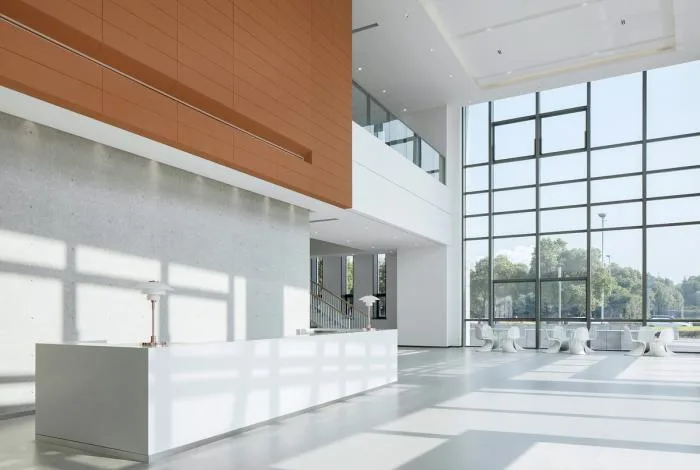
△ Social Security Processing Entrance Hall A. Photography: Summer Solstice
Origin
Design inevitably reflects its era, capturing the uncertainties and transformations brought by shifts in work, lifestyle, internet, social media, and government reforms. Initial plans regarding classification, volume, and workflows were disrupted and redefined. Furthermore, updates to building fire prevention and smoke control regulations triggered unforeseen chain reactions during the design process.
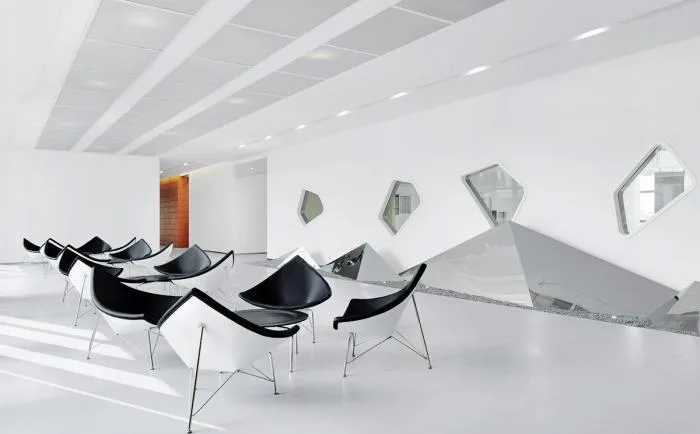
△ Rest Discussion Area. Photography: Summer Solstice
Light
Light is often misunderstood as mere brightness and shadow. In reality, it conveys information about shape, color, distance, and size, reflecting order, emotion, and physical perception. Without this depth, John Lowell’s renowned book “Between Silence and Light” might have been titled “Shade and Light”. Light gains meaning only when filtered and shaped through a medium, becoming a vital immaterial element in spatial experience.
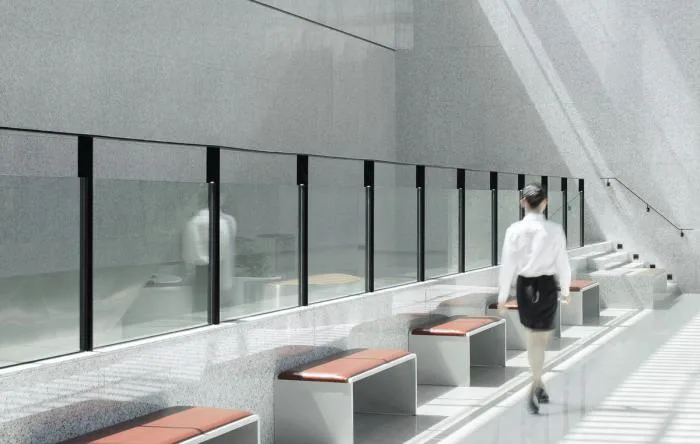
△ Citizen Culture Gallery. Photography: Summer Solstice
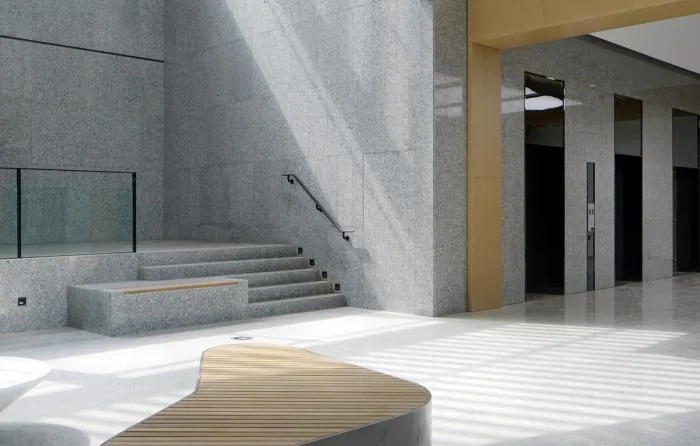
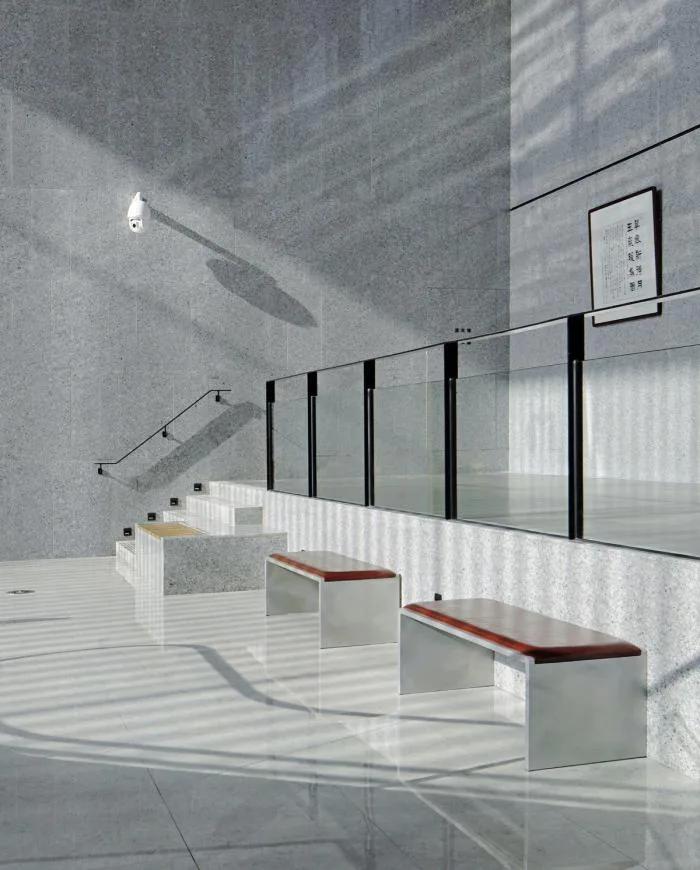
△ Citizen Culture Gallery. Photography: Song Yi
As a large public service space, “sunshine” and “openness” are essential spiritual qualities and metaphors for urban environments. The grilles flanking the elevated space from B2 to the 2nd floor serve different purposes: the west side provides shade and reduces the oppressive feel from adjacent buildings, while the east side features a bamboo forest and lotus pond courtyard that lowers the sightline to the building enclosure.
This design echoes a scene from the ancient Kunshan text “Yushan Yaji”, describing “bamboo cultivation in front of the house and lotus plants behind the house. Lotus and beans grow, a cool breeze fills the corner. When tired, we chat, close the window, and step outside.”
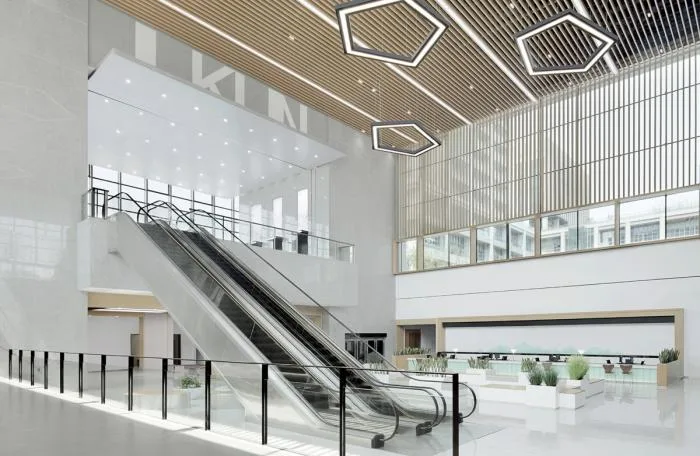
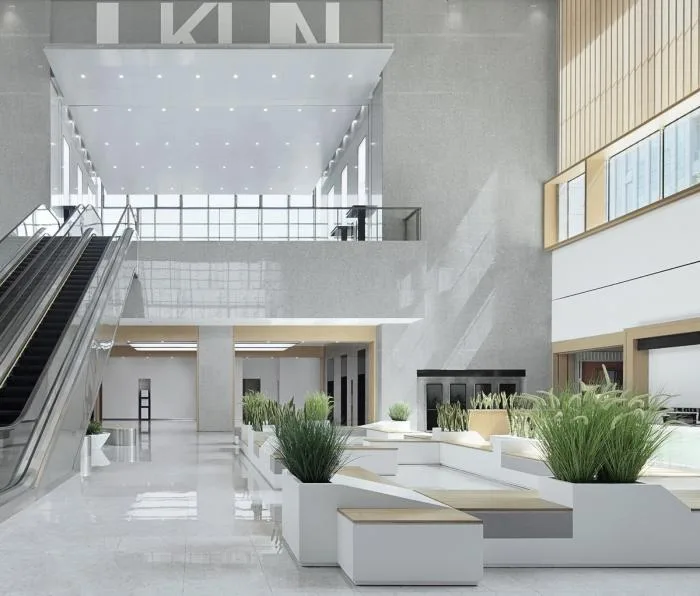
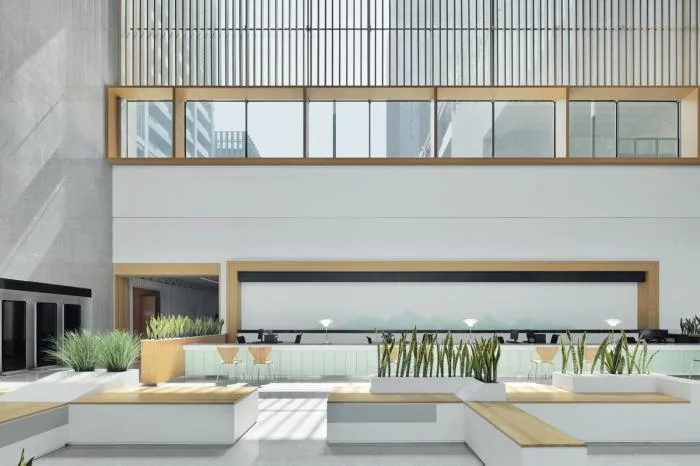
△ B2 Public Resource Trading Center. Photography: Summer Solstice
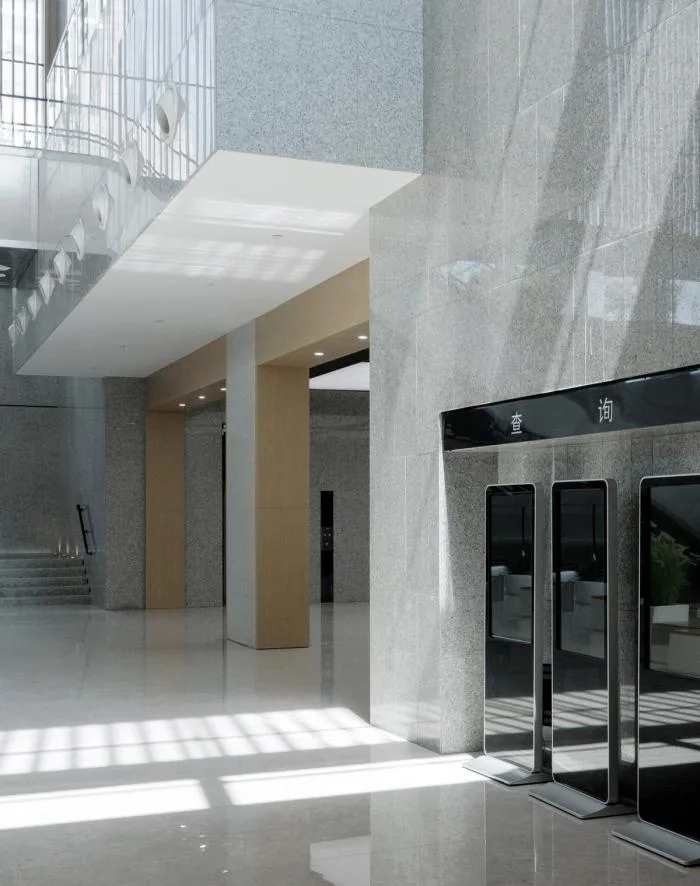
△ Public Resource Trading Center Hall. Photography: Song Yi
This design also mitigates the physiological effect of “dark adaptation” caused by excessive light differences between underground and outdoor spaces. The grille pattern itself expresses regional culture, embodying an Oriental calmness and orderly temperament.
The waiting area integrates indoor landscaping with green maple trees styled after traditional oriental courtyards, blurring the line between interior and exterior. The combination of sunlight and outdoor greenery creates an intimate, harmonious atmosphere linking humans and nature.
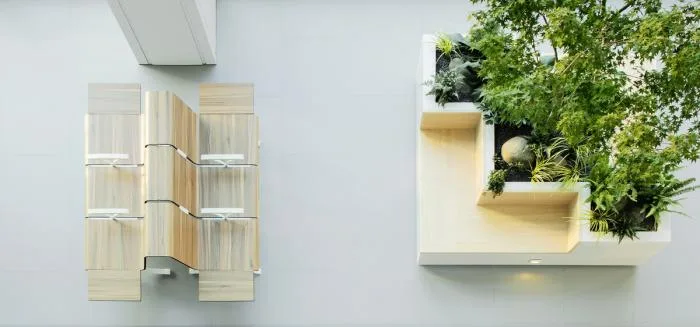
△ Waiting Area for Government Affairs. Photography: Summer Solstice
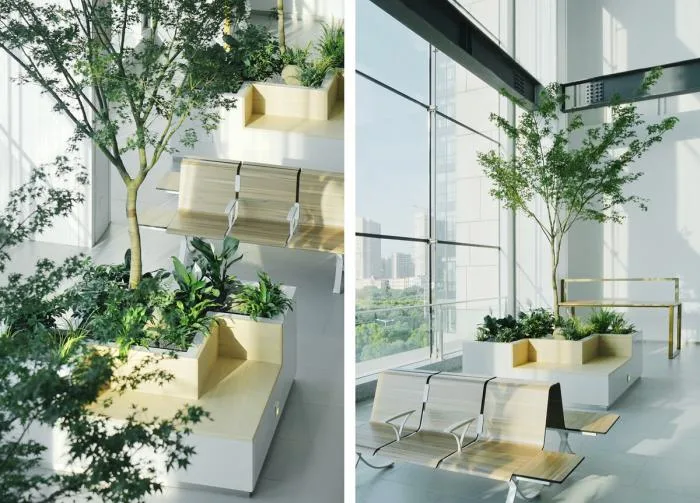
△ Waiting Area for Government Affairs. Photography by Song Yi.
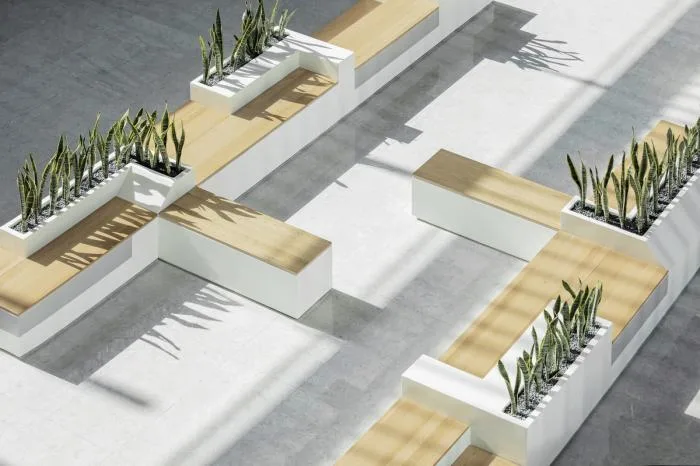
△ Waiting Area of Resource Trading Hall. Photography: Summer Solstice
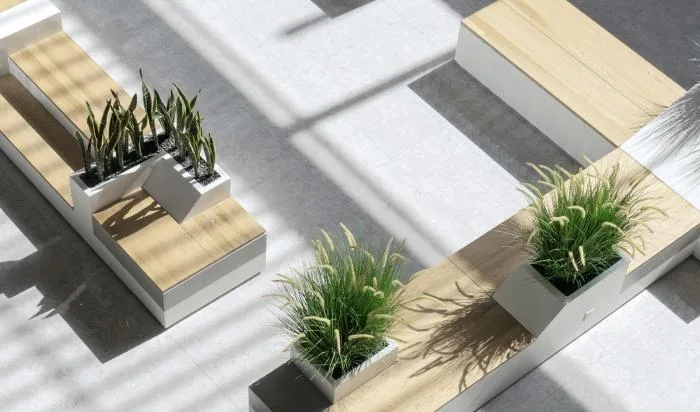
△ Waiting Area of Resource Trading Hall. Photography: Song Yi
Material
Early in construction, site inspections were conducted to meet the high standards of the “Luban Award” for construction quality. Formwork and concrete pouring, especially on the podium where new formwork was first applied, were executed with high precision. After formwork removal, minor repairs were made to achieve a smooth plain concrete finish, and original design plans were adjusted accordingly with site protection measures.
The project also meets LEED-NC Gold certification standards from the US Green Building Council, emphasizing material reuse, energy conservation, and environmental protection. The neutral gray, ink-wash Jiangnan aesthetic aligns with regional cultural control strategies. Polished concrete flooring uses cement-based materials instead of epoxy, balancing environmental concerns with government-mandated cost controls.
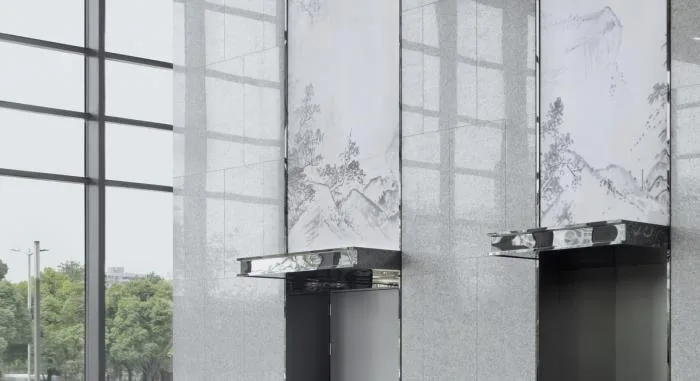
Partial elevator hall photography: Summer Solstice
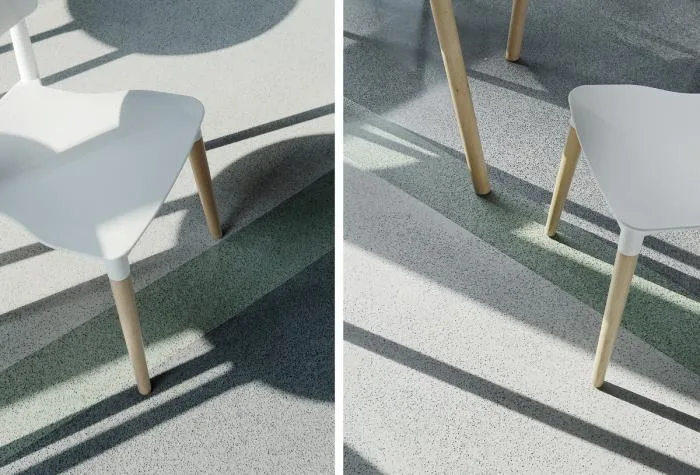
Partial photography of cement-based terrazzo flooring: Song Yi
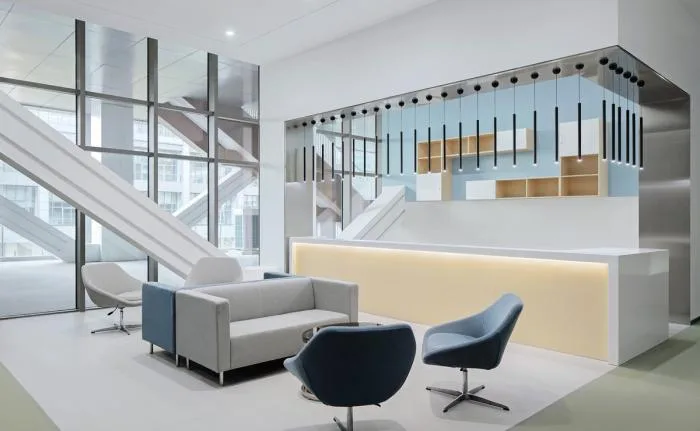
△ Activity Center Front Desk. Photography: Summer Solstice
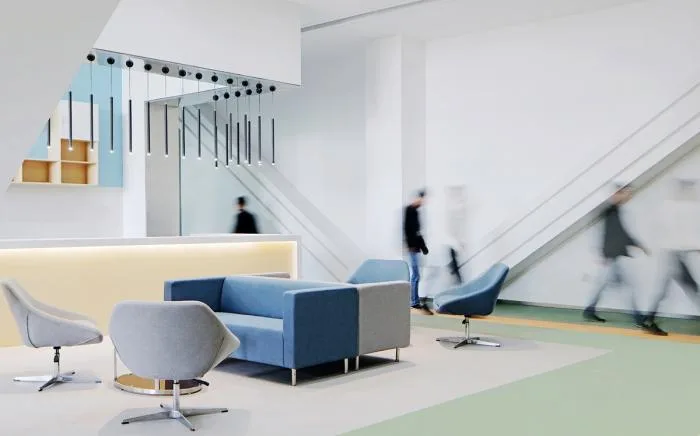
△ Activity Center Front Desk. Photography: Song Yi
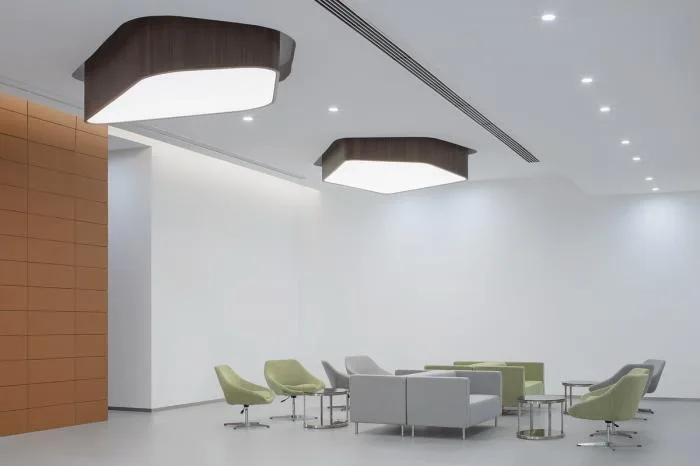
△ Elevator lounge rest and negotiation area. Photography: Summer Solstice
Form
This project can be seen as a new interpretation of an “old script” from several years ago. The planning concept draws on a subtle connection between the porous transformations of Kunshan’s local Kunshi and Hushi and the functionality of the “window.”
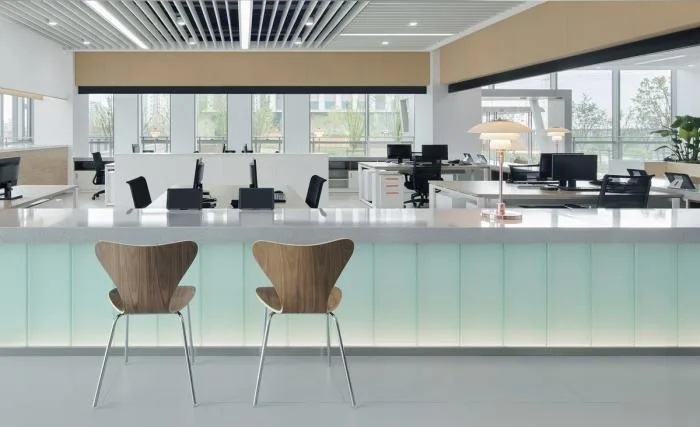
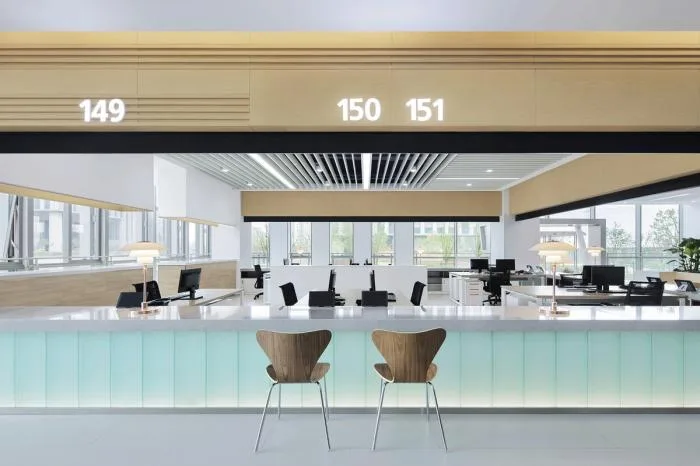
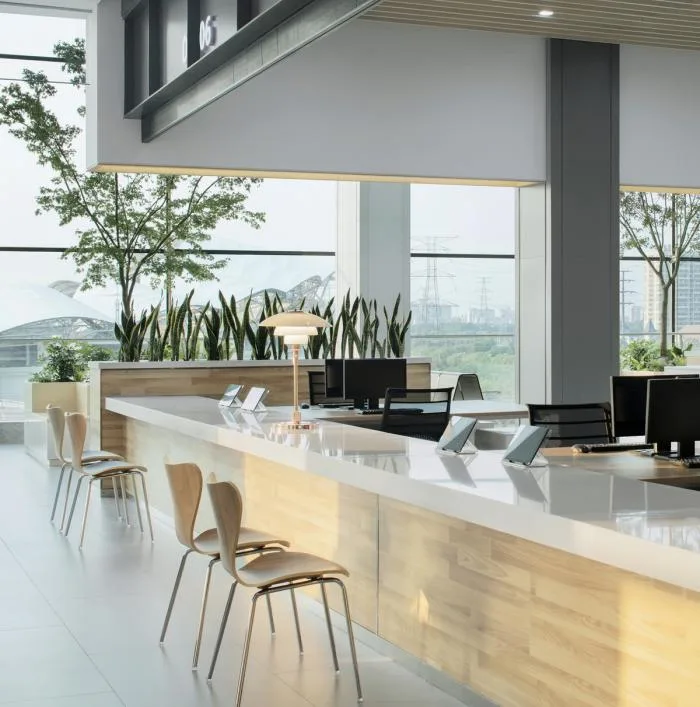
△ One-stop Government Service Window. Photography: Summer Solstice
The illuminated “Yushan” on the B2 floor marks the project’s location in Yushan Town. Due to a smoke exhaust fan added after smoke control regulations changed, the partially enclosed first-floor restaurant space was lowered by 1.2 meters. Its form is a geometric abstraction reminiscent of Dutch lake stones.
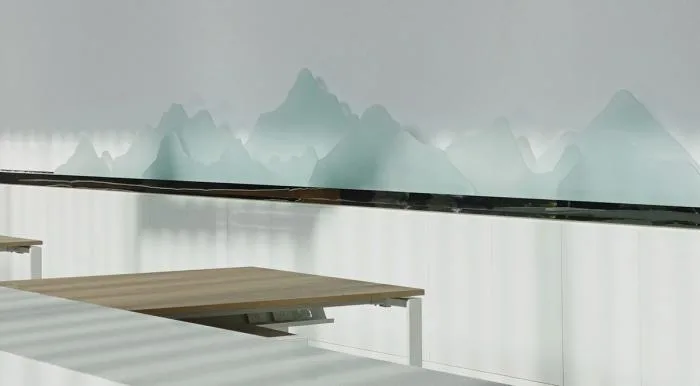
Partial Photography of “Yushan”: Song Yi
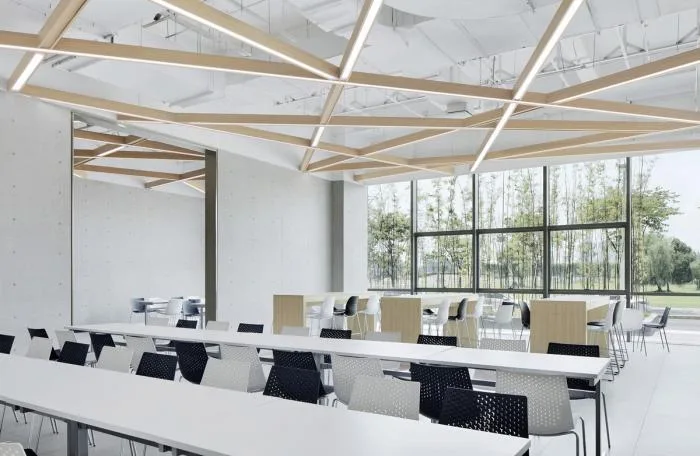
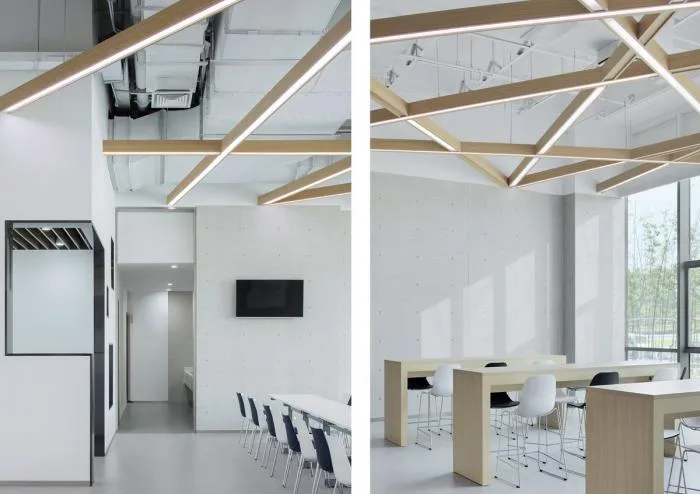
△ Restaurant. Photography: Summer Solstice
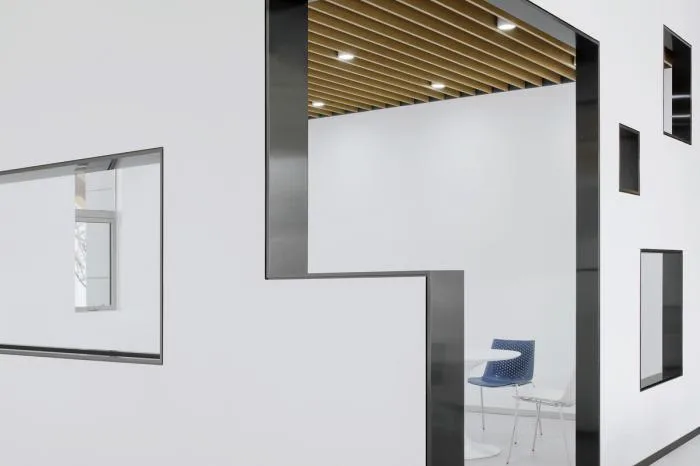
△ Local Photography of Restaurant: Summer Solstice
The cheese wall in the filling area represents a subtle visual deconstruction. While the user required the N-shaped steel structure to be enclosed within a solid wall, the designer sought to minimize the closed surface’s visual impact by allowing minimal permeability. This reflects ongoing reflection at various design stages. Were this ‘script’ written today, its language would likely differ.
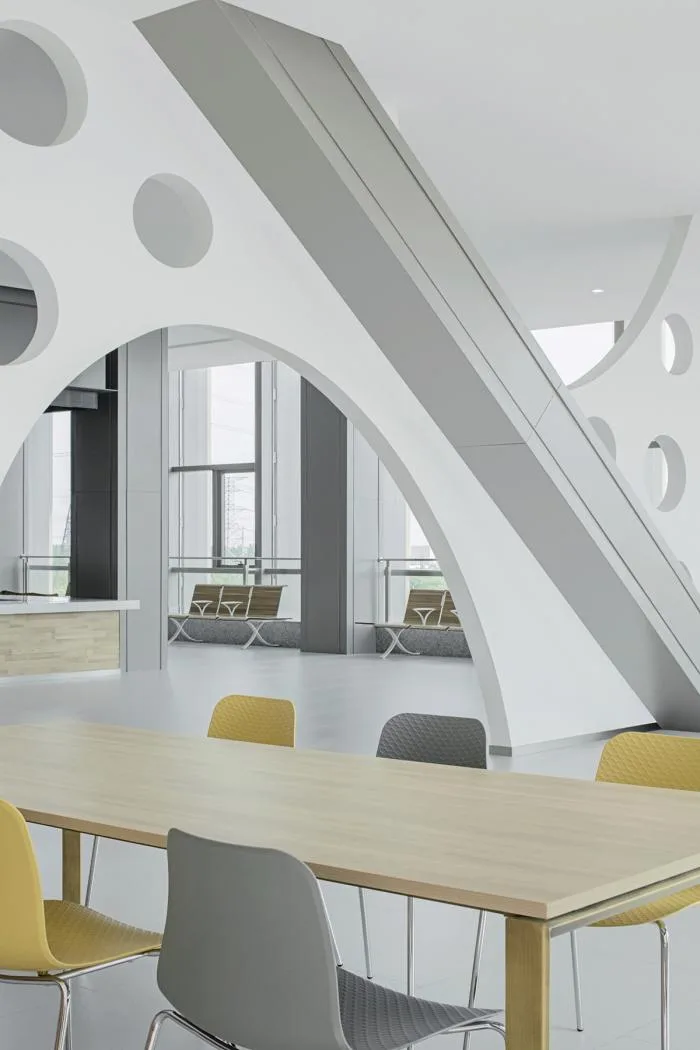
△ Component Hidden. Photography: Summer Solstice
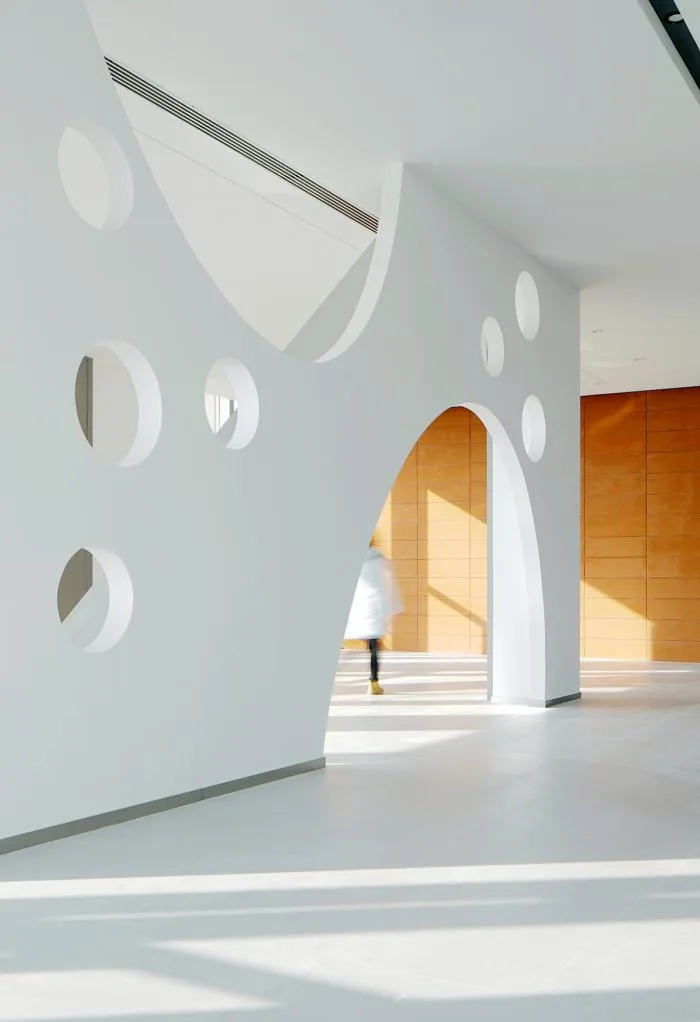
△ Component Hidden. Photography: Song Yi
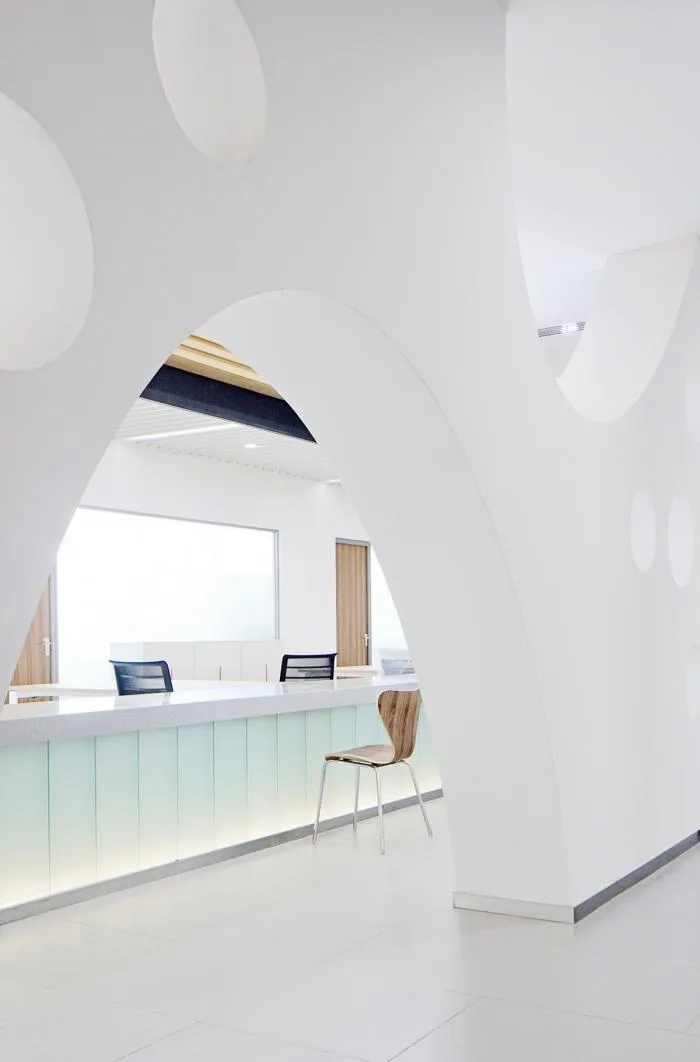
△ Component Hidden. Photography: Song Yi
Vision
The design aims to foster positive interaction between urban citizen spaces, society, and nature. It seeks to enhance relationships and provide citizens with respect for their physical and emotional well-being through spatial perception, seamlessly integrating form and function without pretense or arrogance. While design may not drastically change outcomes, even small improvements are valuable.
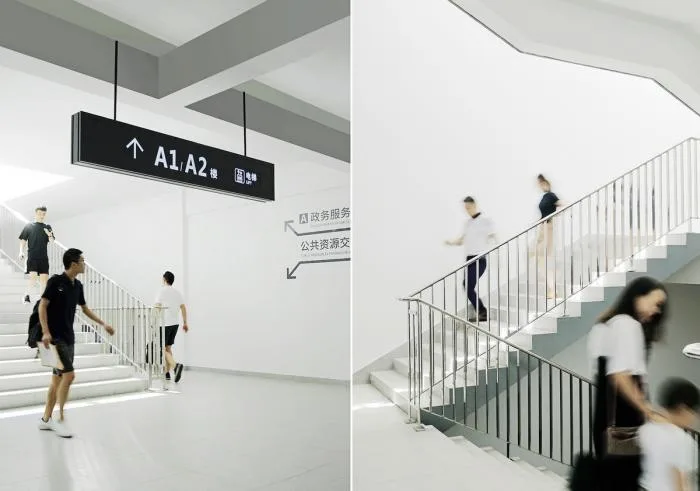
△ Underground lighting staircase. Photography: Song Yi
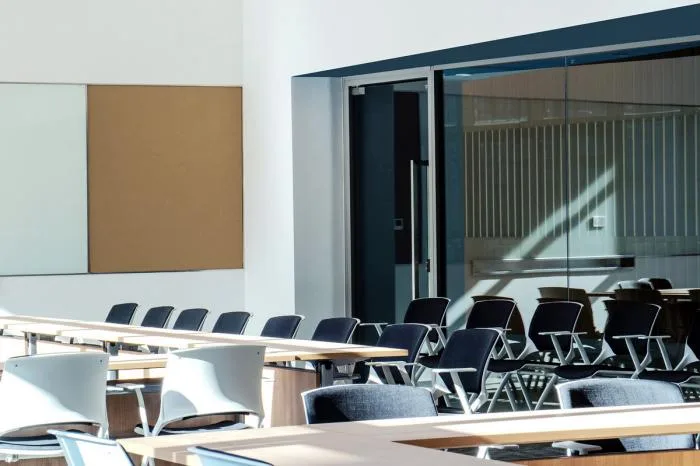
△ Public Policy Training Room. Photography: Song Yi
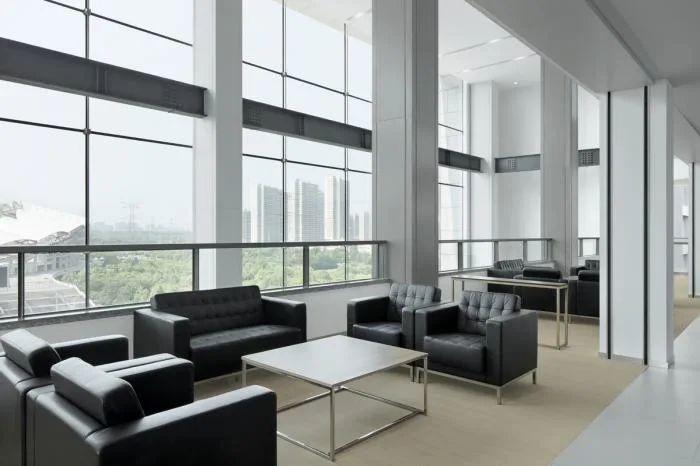
△ Bid Evaluation Waiting Area. Photography: Summer Solstice
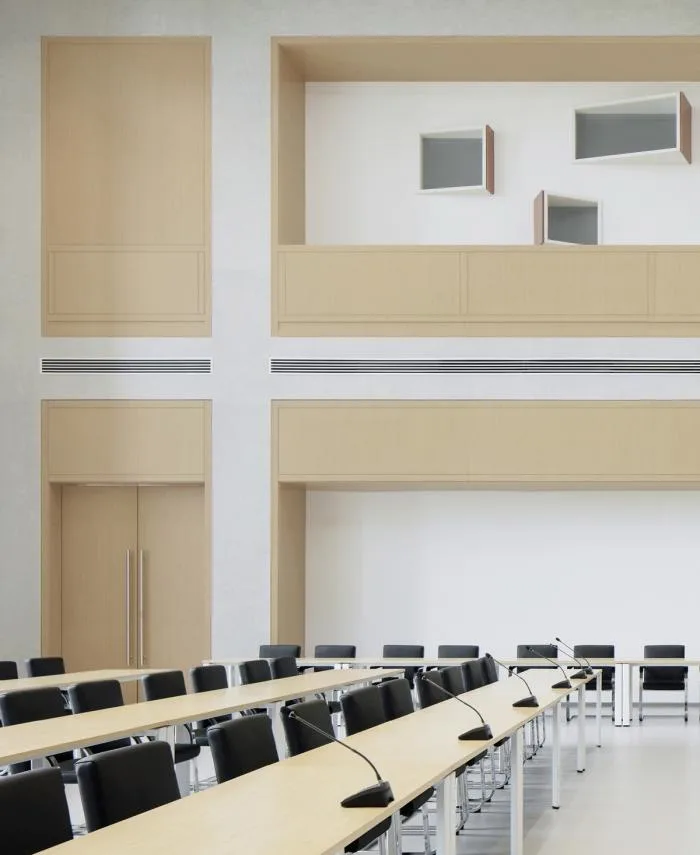
Partial Photography of the Citizen Hearing Conference Hall. Photography: Summer Solstice
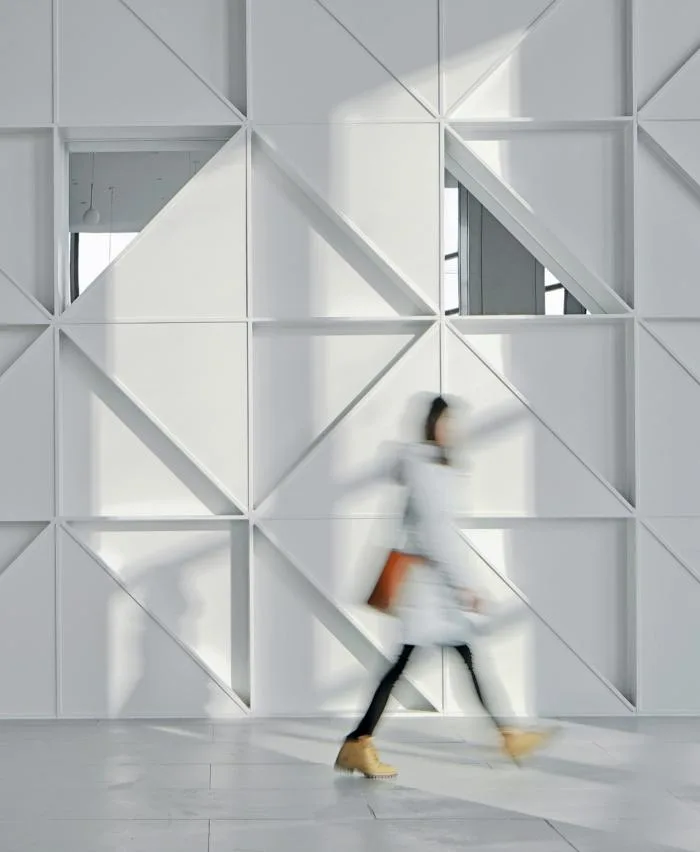
△ Partial photography of service area facade. Photography: Song Yi
Attachment: This project received the 2020 Best of Year Citizen Space Award from Interior Design magazine (USA) and the 2020 Jury Prize, the highest government public space award, from Frame magazine (Netherlands).
Design Drawings
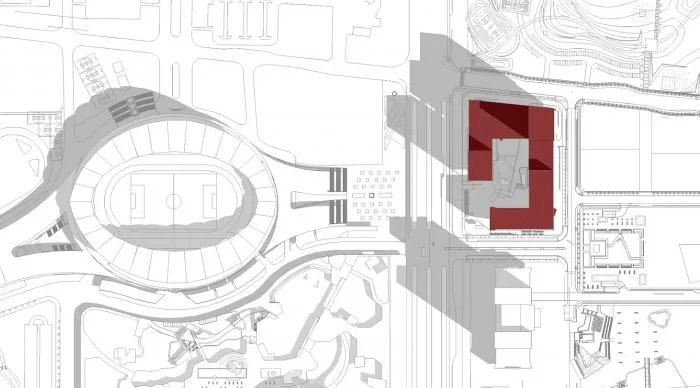
△ Site Plan © Civic Design
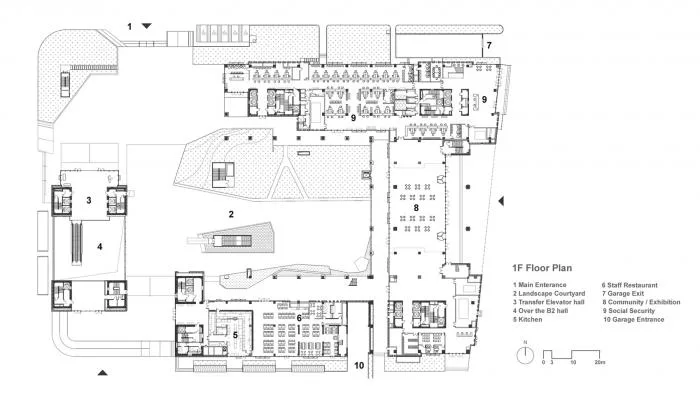
△ First Floor Plan of Buildings A-D © Civic Design
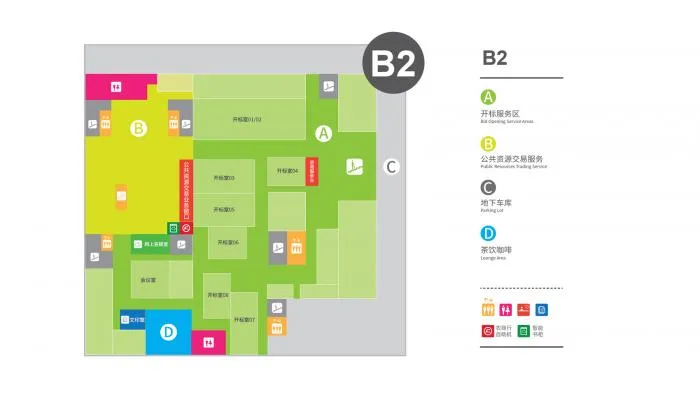
△ Function Distribution Plan of B2 Floor in Building A © Civic Design
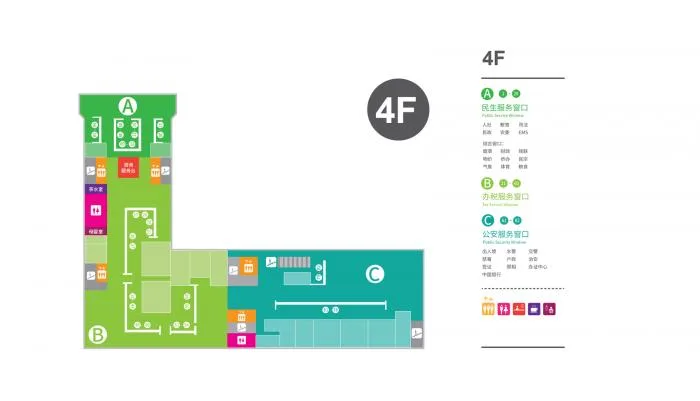
△ Function Distribution Plan of 4th Floor of Building A © Civic Design
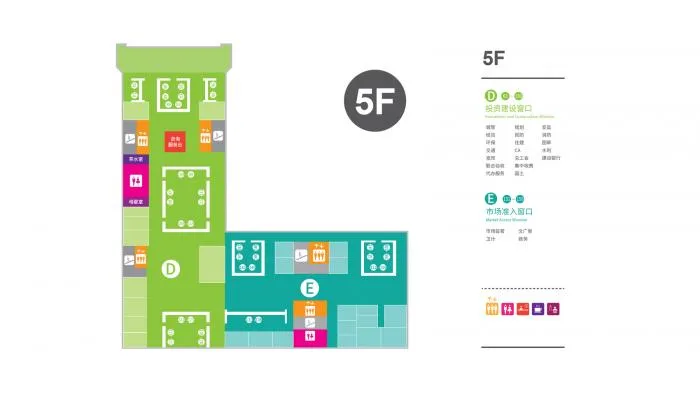
△ Function Distribution Plan of 5th Floor of Building A © Civic Design
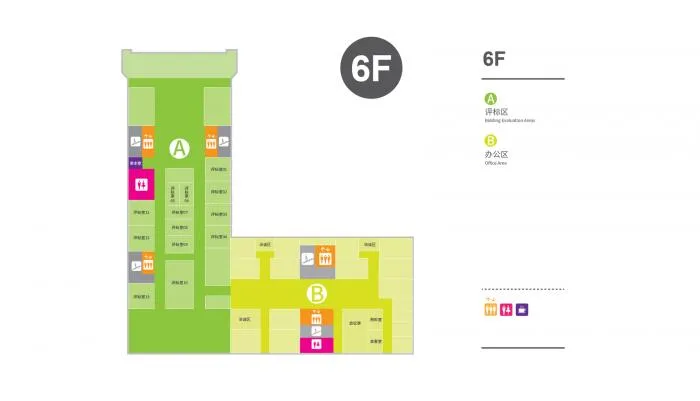
△ Function Distribution Plan of 6th Floor of Building A © Civic Design
Project Information
Project Name: Kunshan Municipal Government Service Center
Location: Qianjin West Road, Kunshan City
Building Area: 102,000 square meters
Construction Unit: Kunshan Urban Construction Investment and Development Group Co., Ltd
Interior Design: Shanghai Civic Interior Design Co., Ltd
Contact Email: __AI_S_SC0__
Design Director: Song Yi
Design Team: Wang Nangang, Ban Yajiao, Jin Li, Zhuang Zichong, Li Yun, Ge Lili, Zao Chen, Zhang Huan, Dong Guowei, Jiang Bo
Project Management: Li Weijie, Li Zilin, Lu Zhong, Fei Yiming, Huang Caihong, Huang Juntao
Green Certification: LEED-NC Gold from the US Green Building Council
Design Period: August 2012 – October 2014
Completion Date: November 2018
Photography: Summer Solstice, Song Yi












Must log in before commenting!
Sign Up