
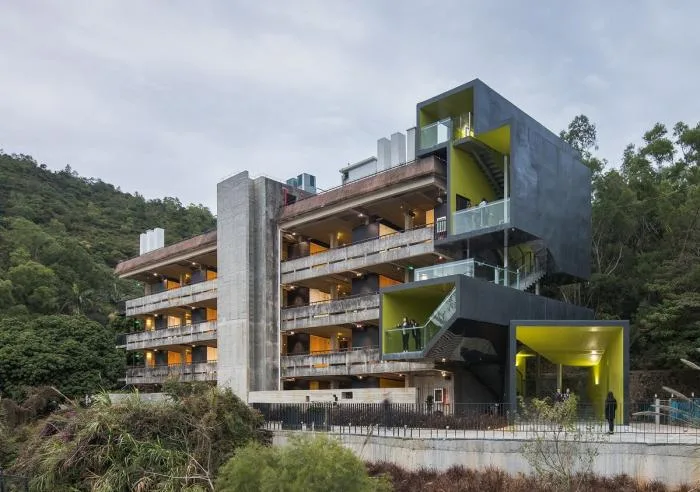
△ Third Student Dormitory © Zhang Chao
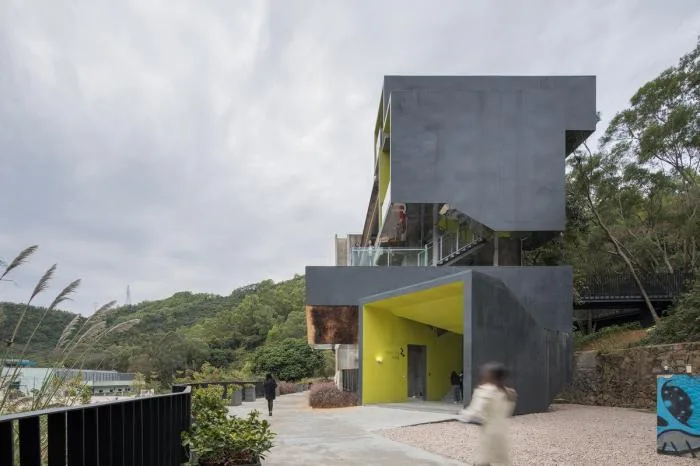
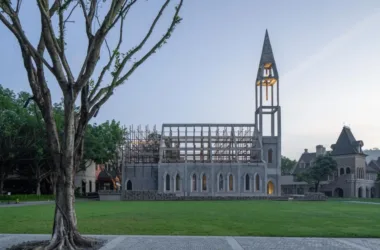
The observation tower next to the third student dormitory © Zhang Chao
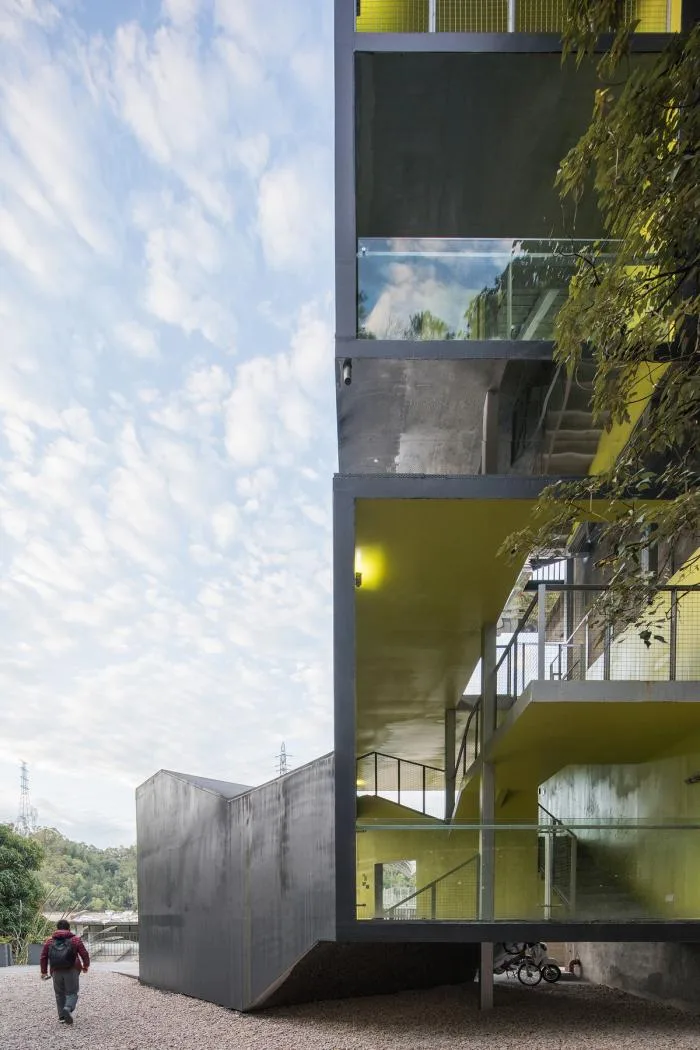
△ Watchtower © Zhang Chao
Mingde College is an experimental school jointly founded by the Shenzhen Mingde Education Foundation and Manjinghua Group. The campus occupies the former residential and storage power areas of a reinforced concrete factory building located in the central valley of the Honghua Printing and Dyeing Factory.
The campus covers a total area of 43,200 square meters, divided into two main zones: the residential area and the teaching area. The school operates a full boarding system, with a total building floor area of 25,000 square meters.
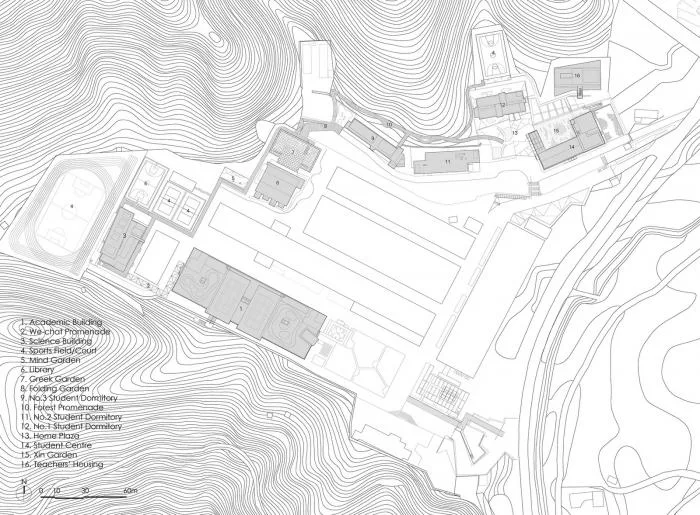
△ General layout plan
The residential zone, located on the northern side of the campus, was renovated from the original factory living quarters. It includes a two-story student center, three four-story student dormitories, and a six-story faculty apartment building.
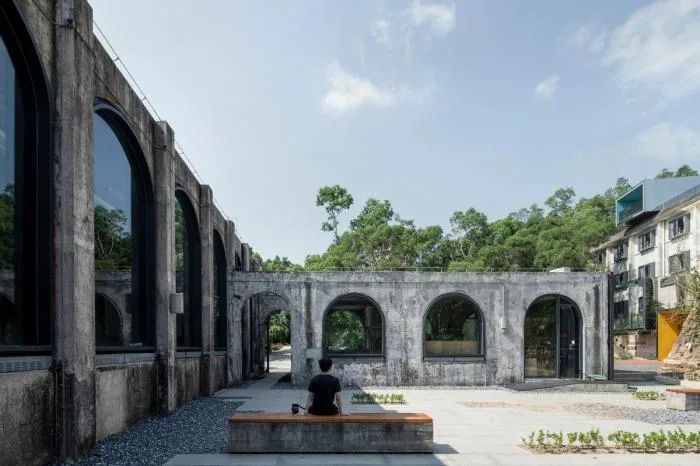
△ Student Center © Wu Siming
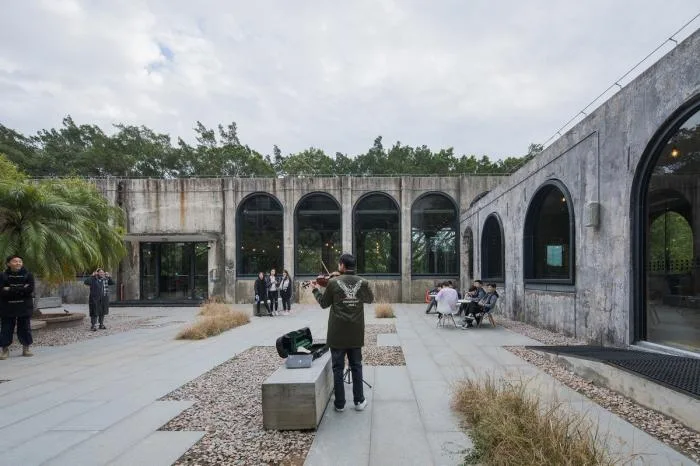
△ Student Center Courtyard © Zhang Chao
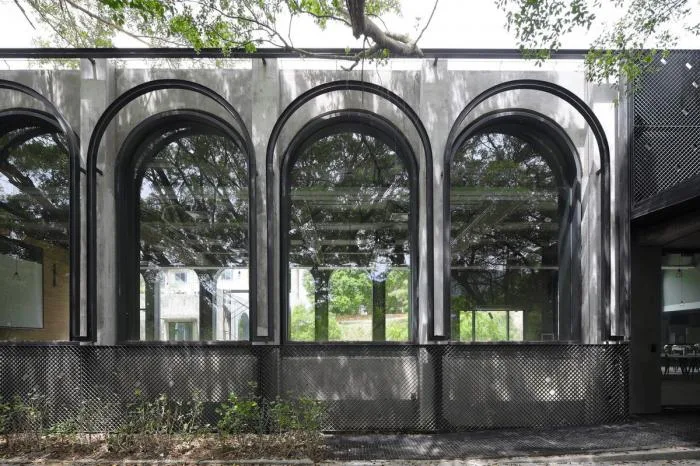
The curved steel window in the student center © Liky Photos
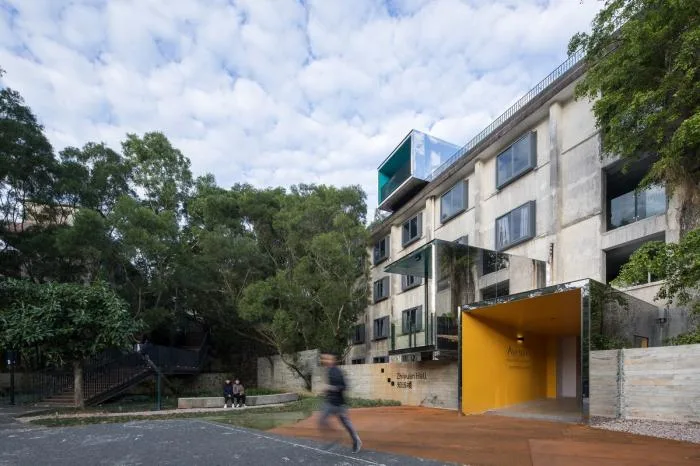
△ First Student Dormitory © Zhang Chao
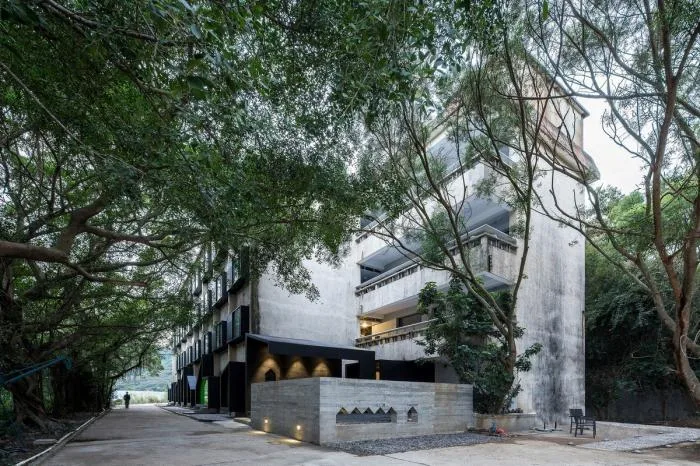
△ Second student dormitory of the art community youth hostel © Zhang Chao
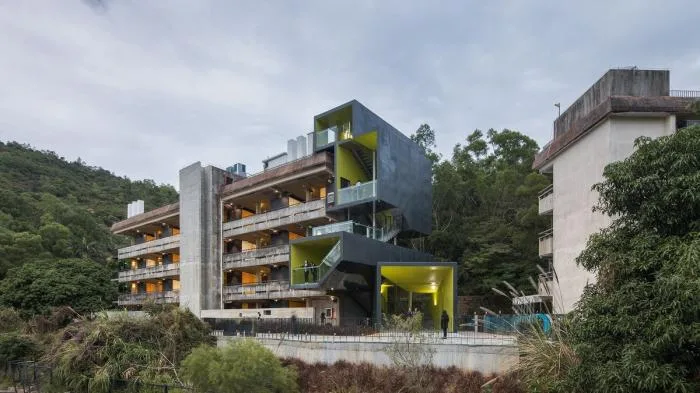
△ Third Student Dormitory © Zhang Chao
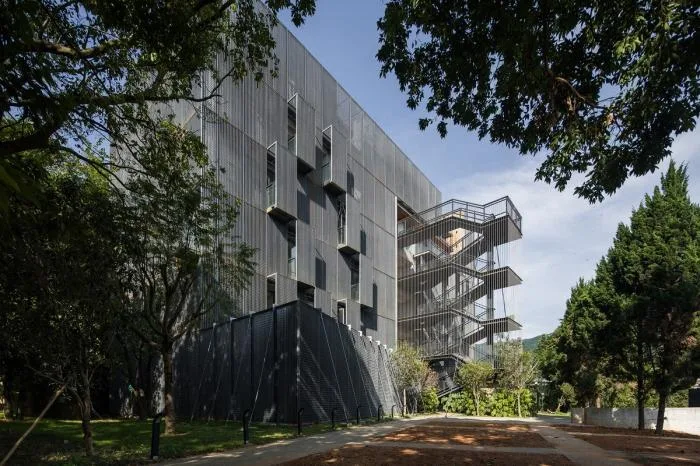
Teacher’s Apartment © Zhang Chao
The teaching area is situated in the southwest part of the campus, within the storage and power zones. It comprises a four-story science building, a three-story comprehensive building, a two-story library, a future sports center complex, outdoor sports fields, and a rooftop sports area on the comprehensive building.
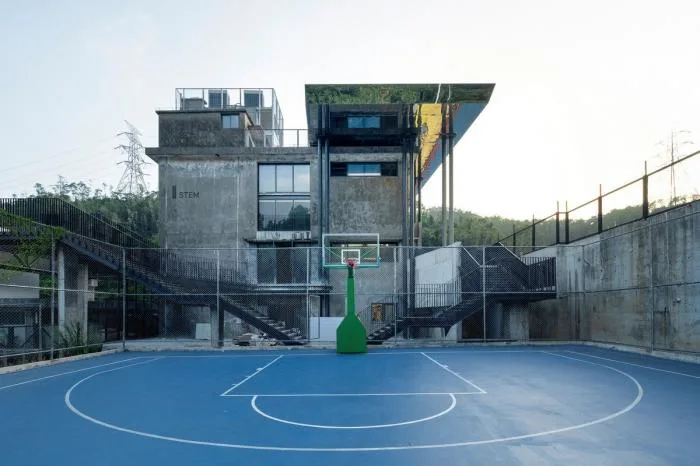
Scientific building converted from the original dye warehouse © Wu Siming
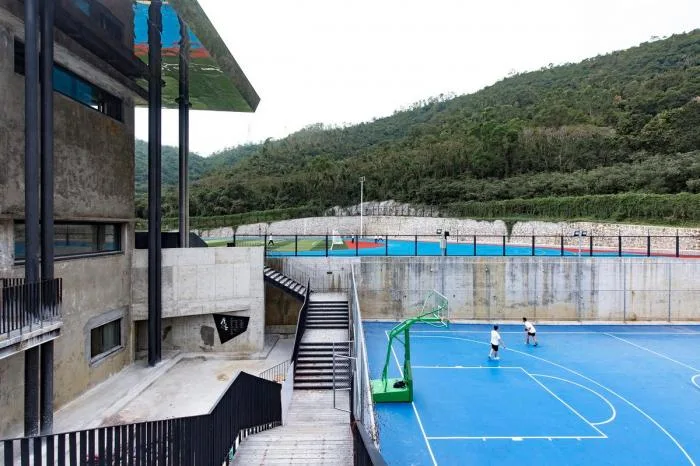
△ Sports field © Huang Chengqiang
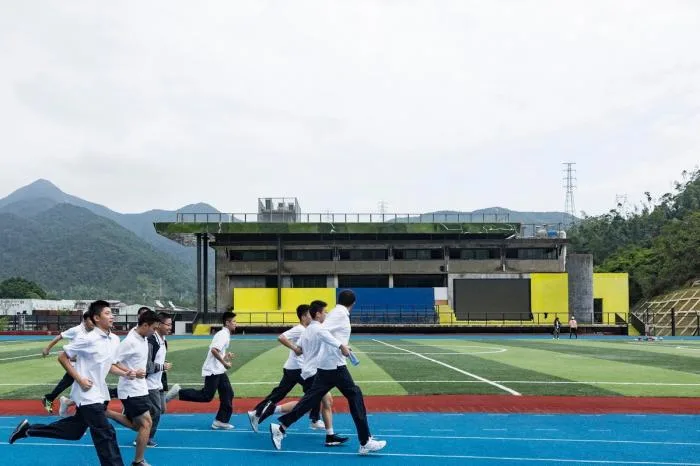
Students running on the sports field © Huang Chengqiang
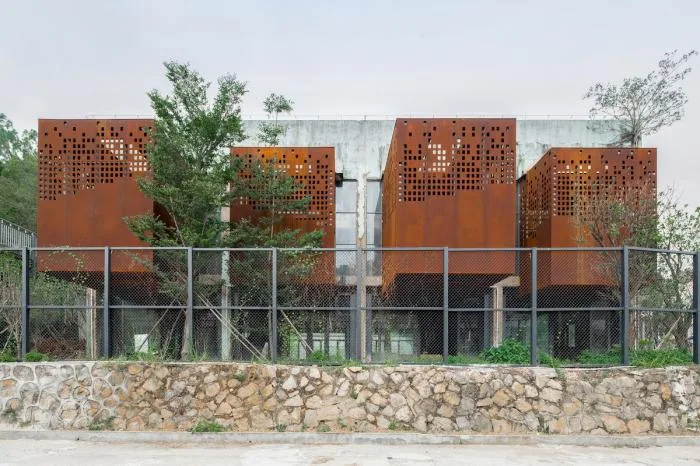
△ Library facade © Wu Siming
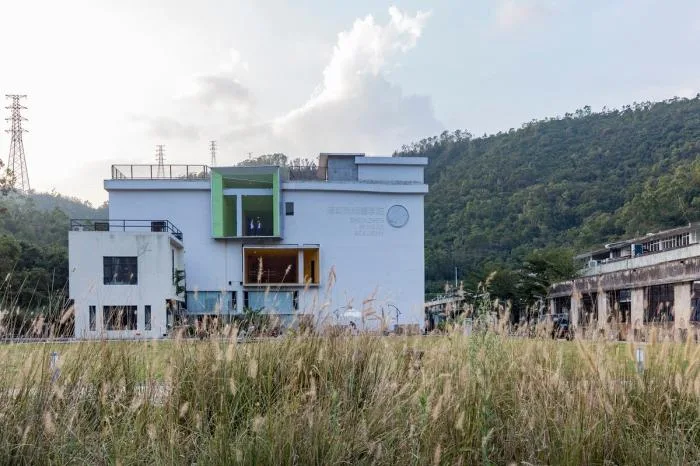
East facade of the main teaching building © Huang Chengqiang
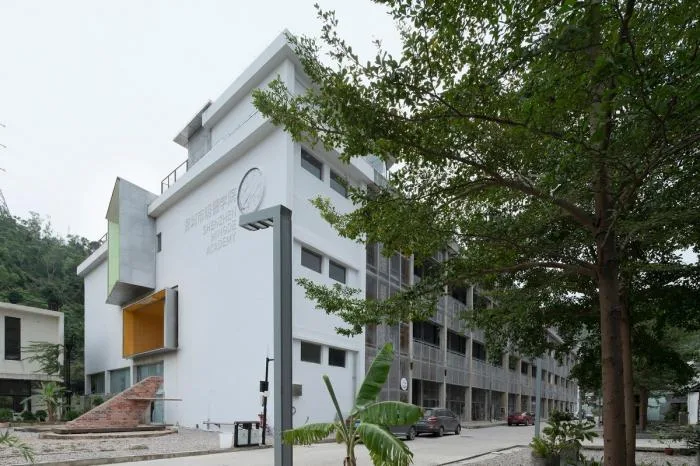
△ Bishop’s School Building © Wu Siming
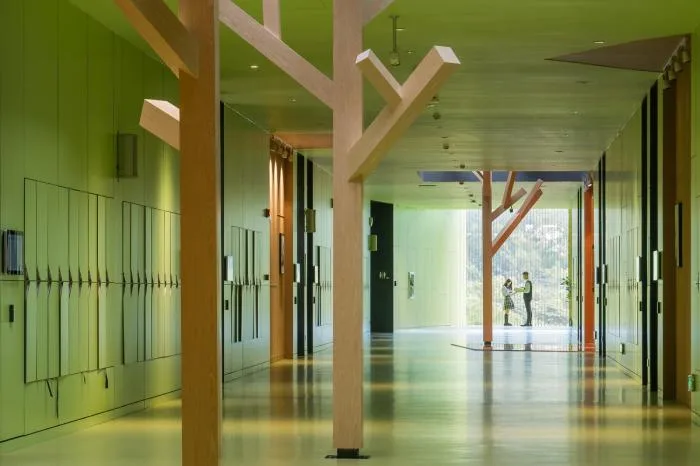
△ Central foyer © Zhang Chao
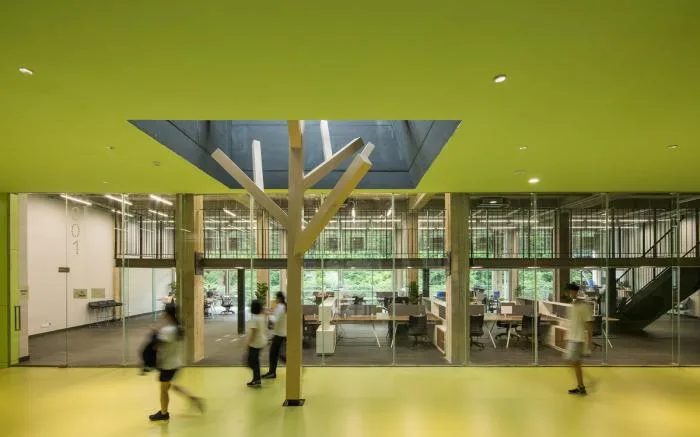
Central foyer of the Bishop’s Building © Zhang Chao
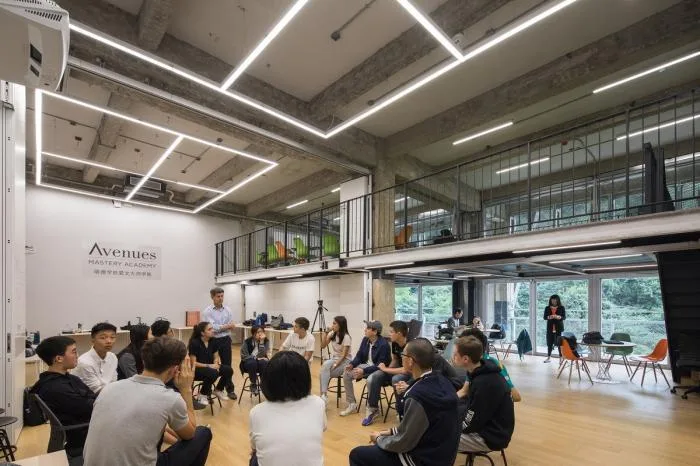
Flexible learning units in use © Zhang Chao
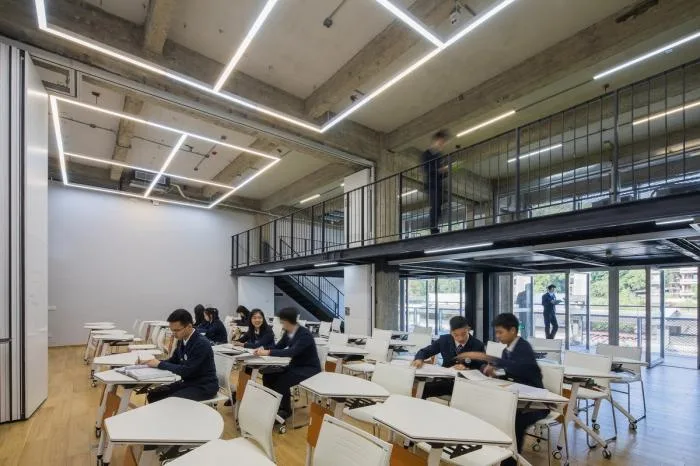
Flexible learning units in use © Zhang Chao
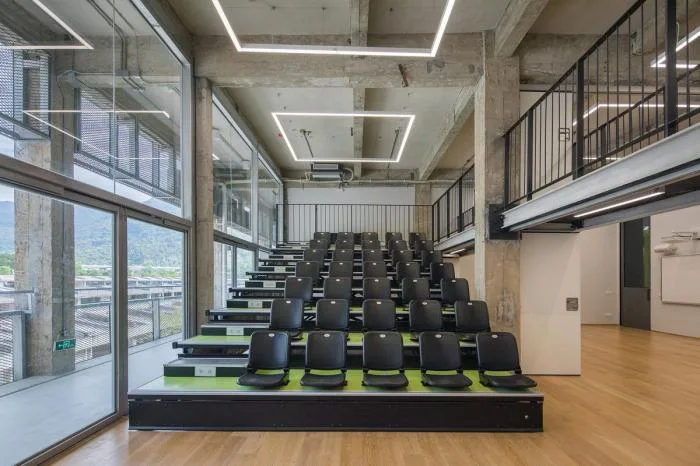
Flexible learning units in use © Zhang Chao
The campus’ most distinctive feature is a 450-meter-long ecological corridor that connects various independent buildings and garden plazas. This corridor allows students to walk safely and enjoyably between different functional areas while experiencing the natural seaside scenery.
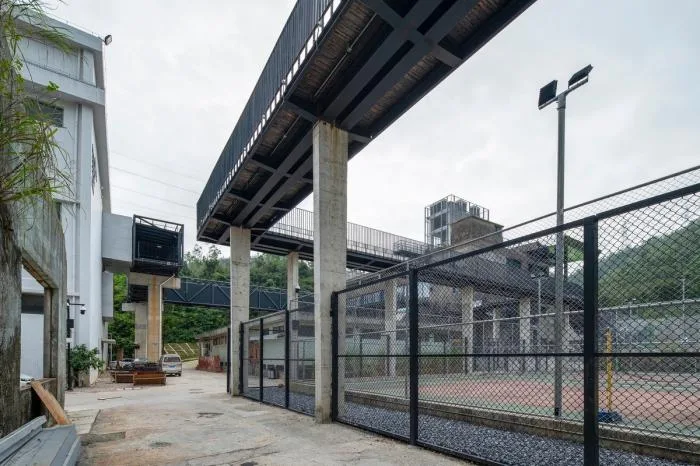
△ Aerial walkway © Wu Siming
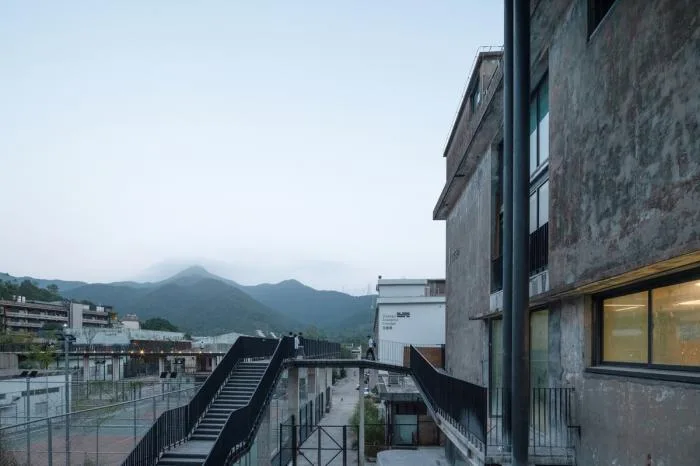
△ Elevated walkway through the Science Building © Wu Siming
Establishing a private school within this charming urban enclave was a bold and challenging decision. The campus aims to offer unique opportunities for sports, communication, and aspirations for young people in this setting. However, the scattered arrangement of individual buildings with varying heights and construction methods, incompatible with the natural environment of the strip terrain around the “Valley City” — spanning about 500 meters — posed challenges for creating a cohesive campus space.
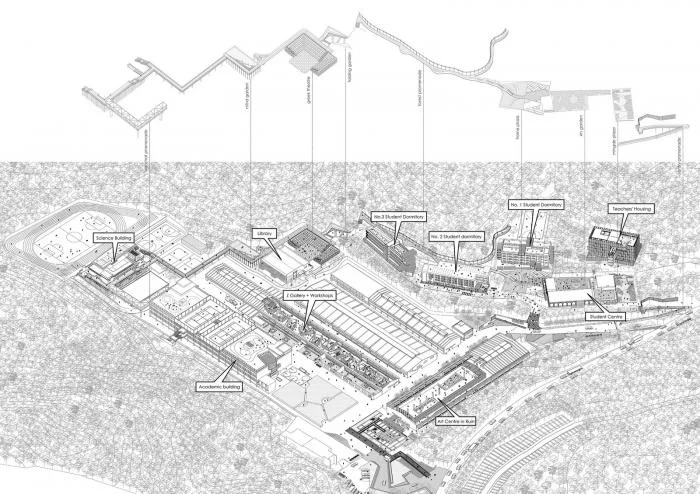
△ Mingde College axonometric drawing
Therefore, our initial spatial focus was not on individual buildings but on creating a seamless spatial narrative across the campus. We emphasized the relationships between buildings, the surrounding environment, and the landforms. Through a series of ramps, linear corridors, elevated walkways, small plazas, and gardens, we connected the original northern factory living area to the large three-story fabric warehouse in the south. This connection forms the most significant natural spatial feature of Mingde College.
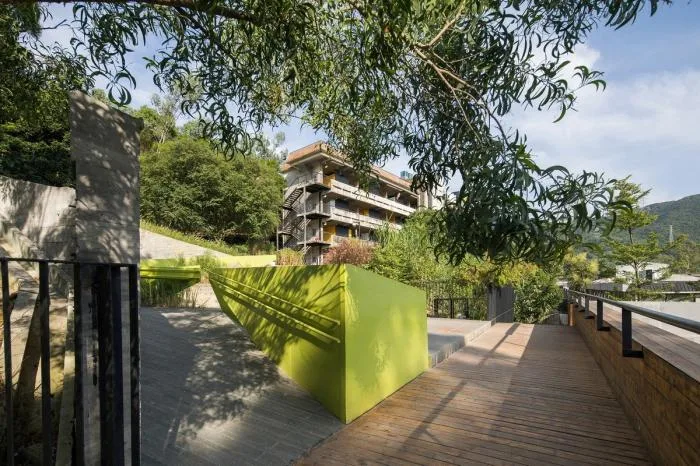
△ Landscape trail leading from the residential area to the library © Zhang Chao
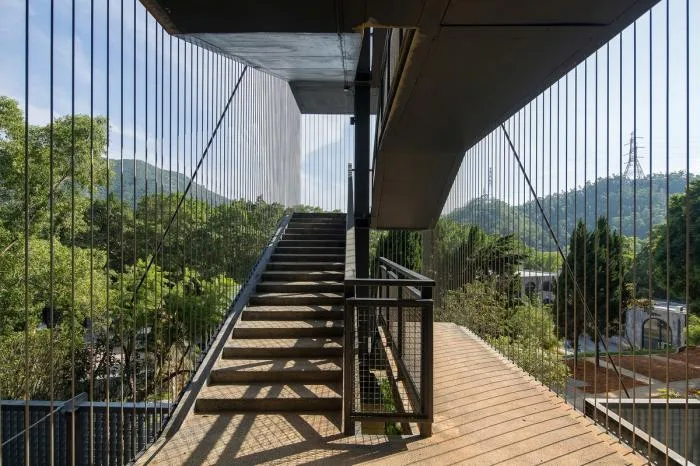
Staircase at the teacher’s apartment © Zhang Chao
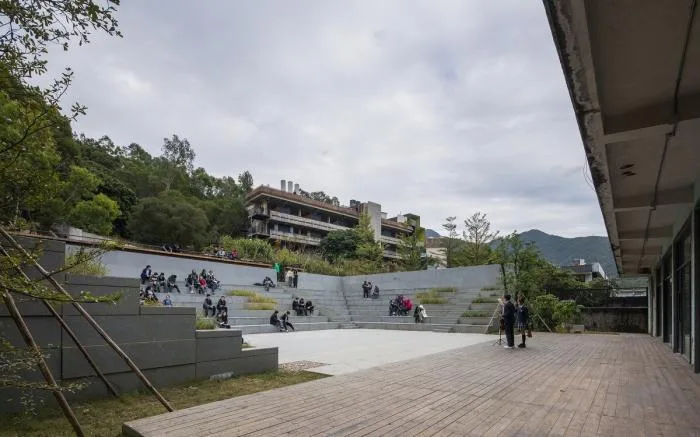
△ Sunken Theater © Zhang Chao
Students walk daily through the “forest corridor” in the residential area from their dormitories, then ascend the elevated two-story walkway in the teaching and sports zone along the outdoor theater behind the library (formerly the factory power room). They pass through the science building and finally reach the comprehensive teaching building—transformed from a fabric warehouse—via an “L”-shaped truss bridge.
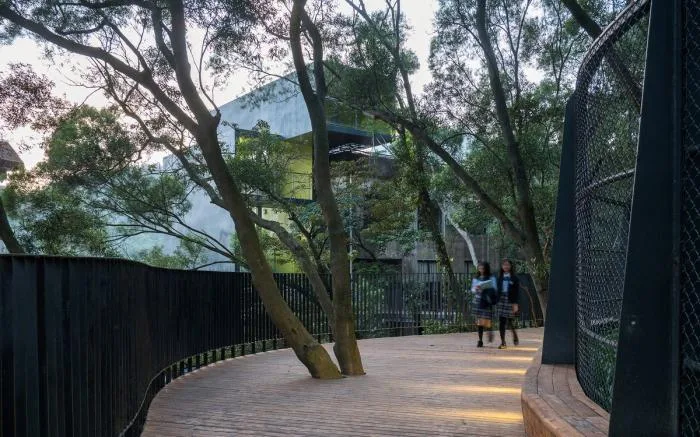
A forest stroll connecting the residential and teaching areas © Zhang Chao
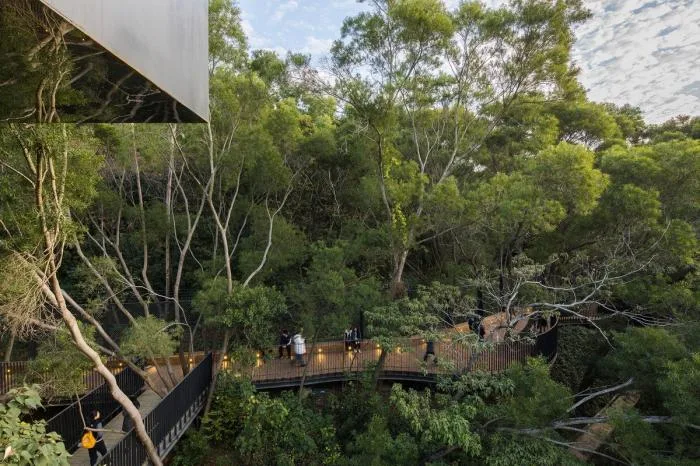
View of the forest trail from the observation tower at the third student dormitory © Zhang Chao
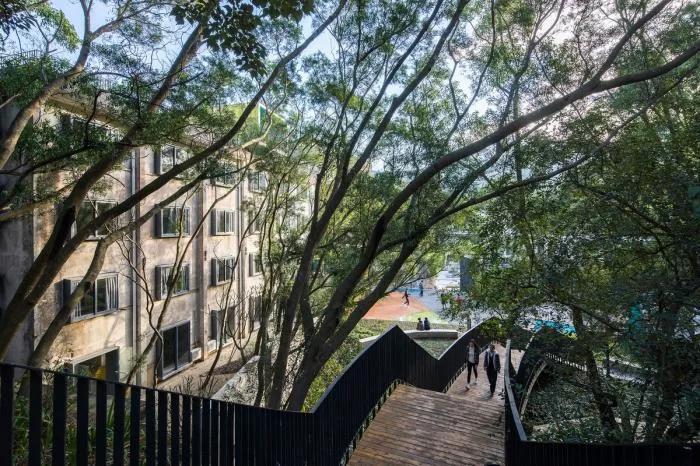
The forest trail beginning at Life Square © Zhang Chao
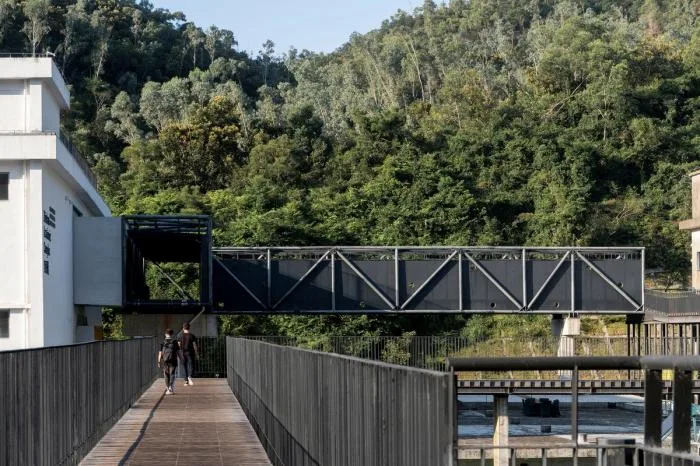
“L”-shaped overhead bridge connecting the main school building and science building © Wu Siming
Beyond a defined walking path, the outdoor space system offers a variety of options for movement through occasional on-site connections with buildings. This design encourages students to engage with nature and space through enjoyable walks and exercise. The diverse and imaginative spatial environments support the physical, mental, and character development of young students.
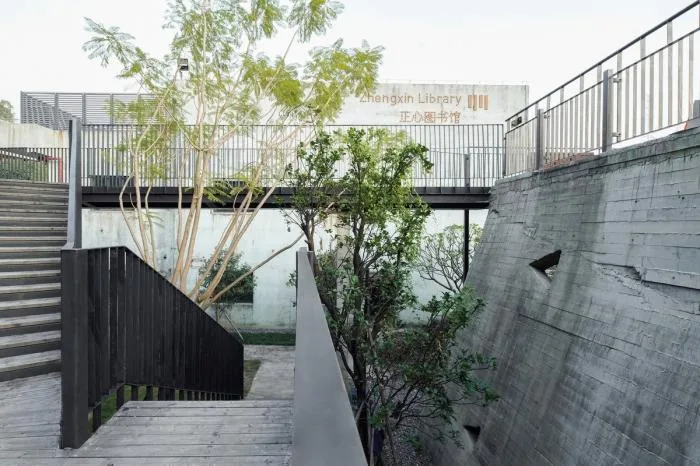
Landscape walls and steel walkways blending with the on-site vegetation © Wu Siming
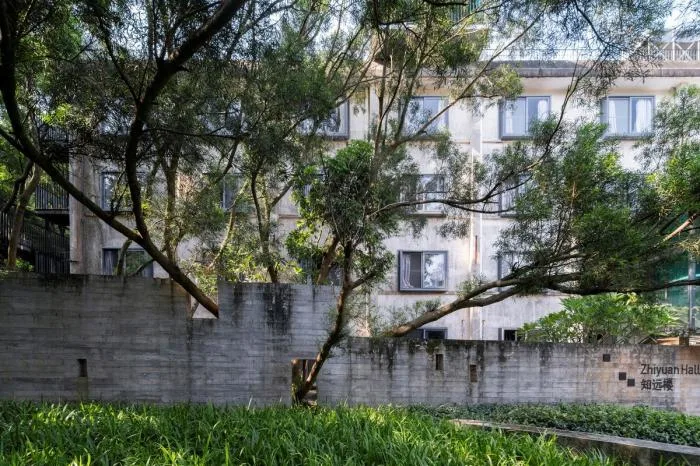
Concrete landscape wall in front of the student dormitory © Wu Siming
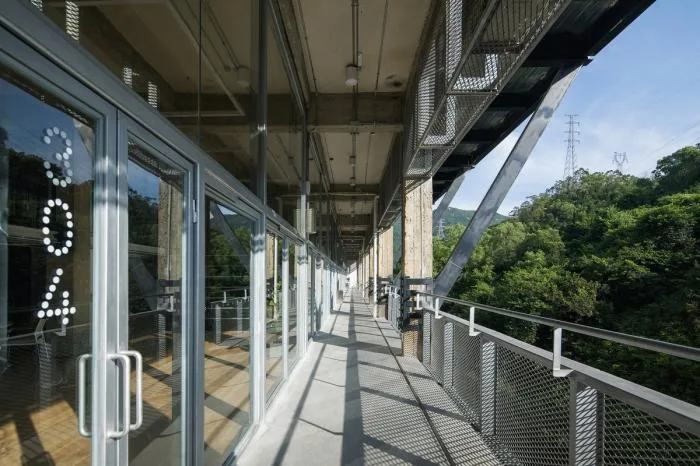
Semi-outdoor corridor of the main school building © Zhang Chao
Each building employs distinct construction strategies, materials, and methods tailored to the terrain, construction approach, and relationship with surrounding vegetation. This creates unique spatial qualities for each location, enriching the site’s history and linking it to the daily life of the campus today.
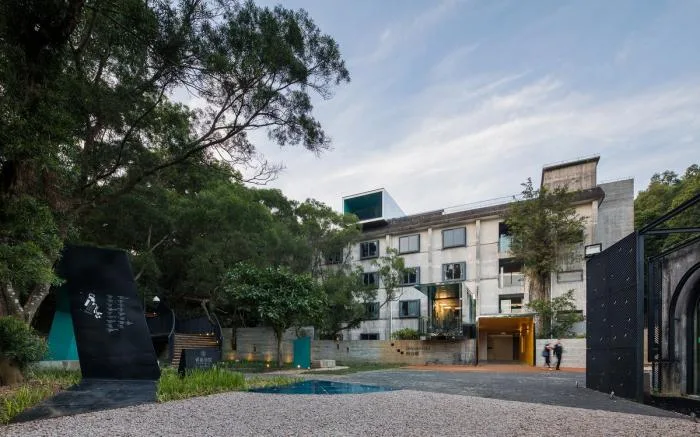
Living square in front of the first student dormitory © Zhang Chao
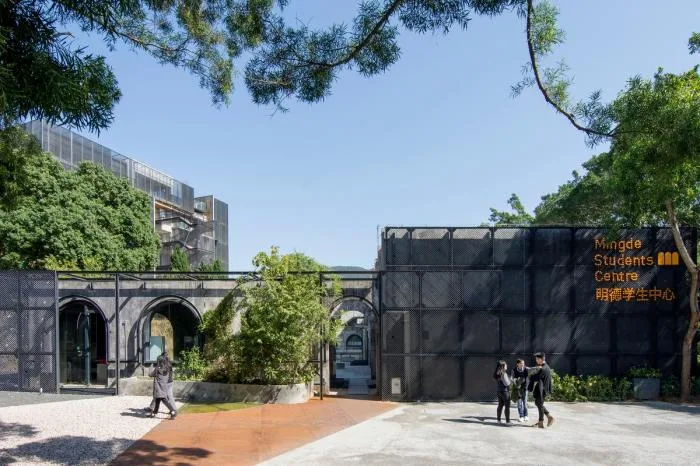
Living square beside the student center © Wu Siming
Project Drawings
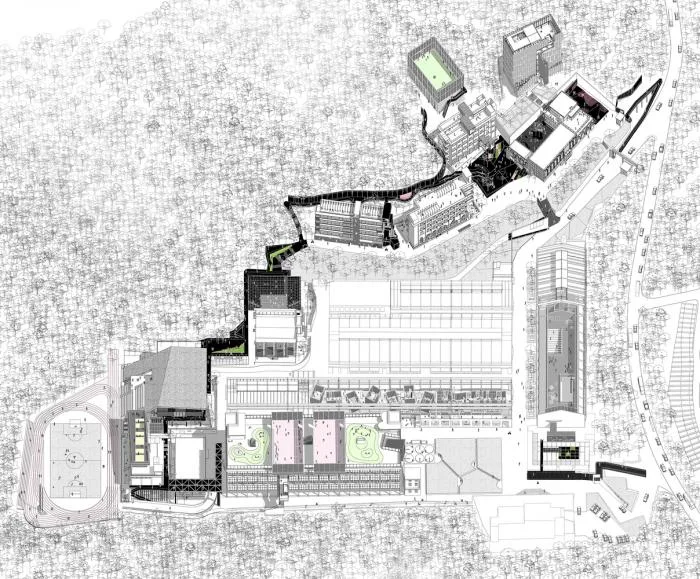
△ Mingde College axonometric drawing
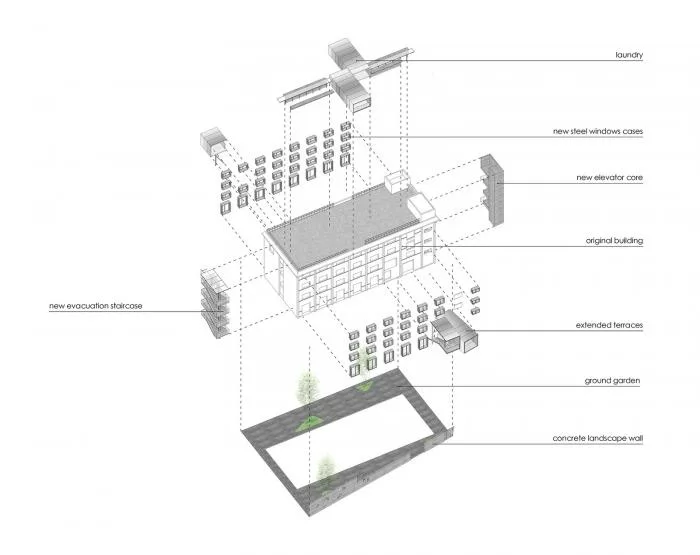
△ First Student Dormitory exploded axonometric diagram
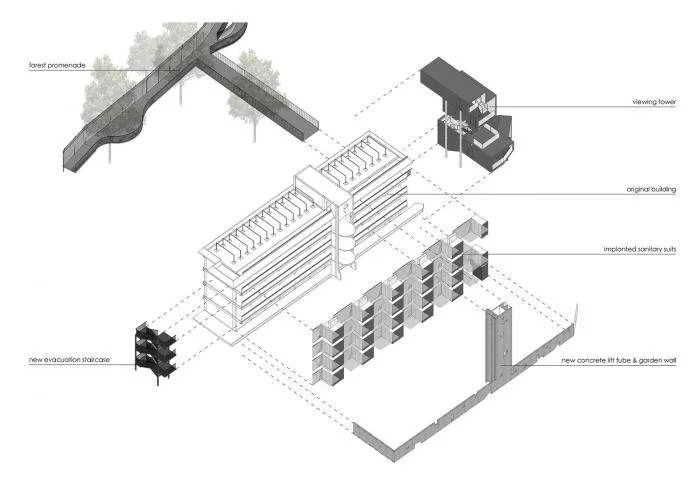
△ Third Student Dormitory exploded axonometric diagram
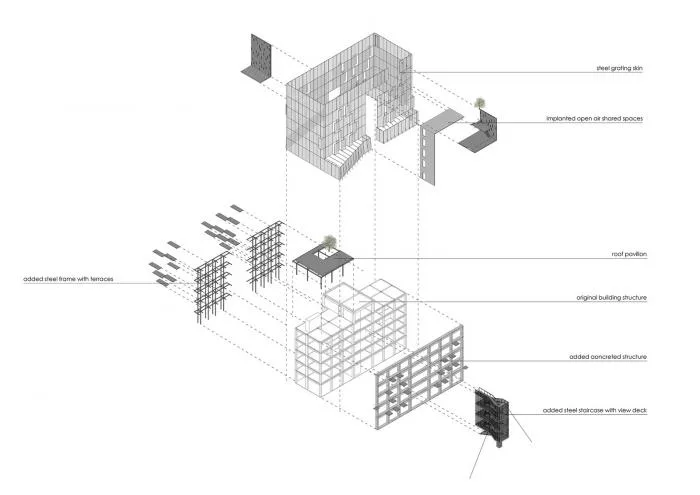
△ Exploded axonometric diagram of the teacher’s apartment
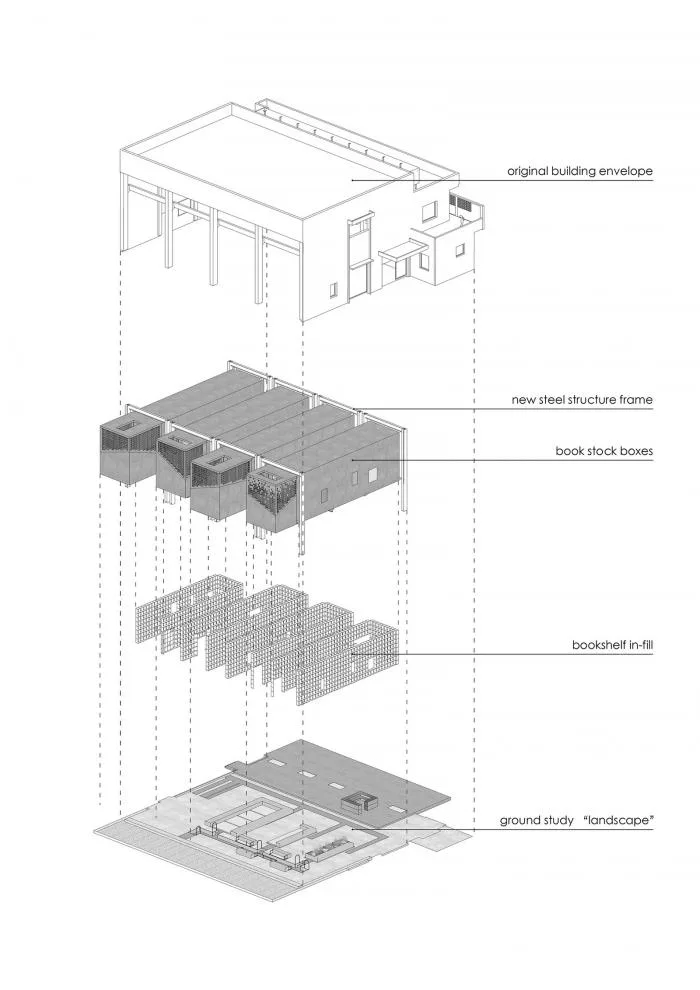
△ Library exploded axonometric diagram
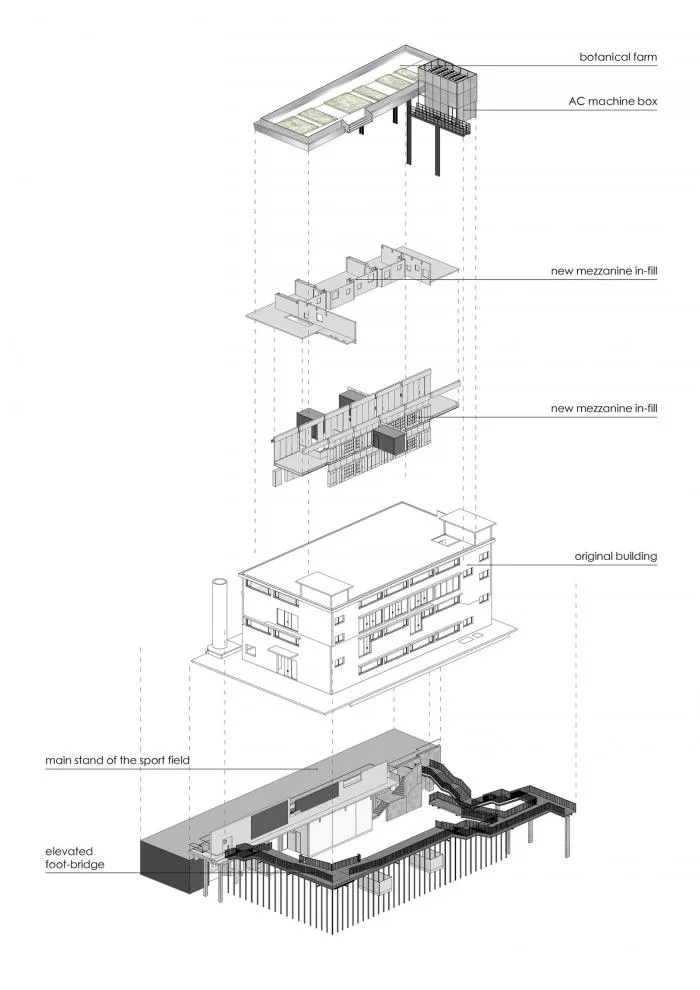
△ Exploded axonometric diagram of the science teaching building
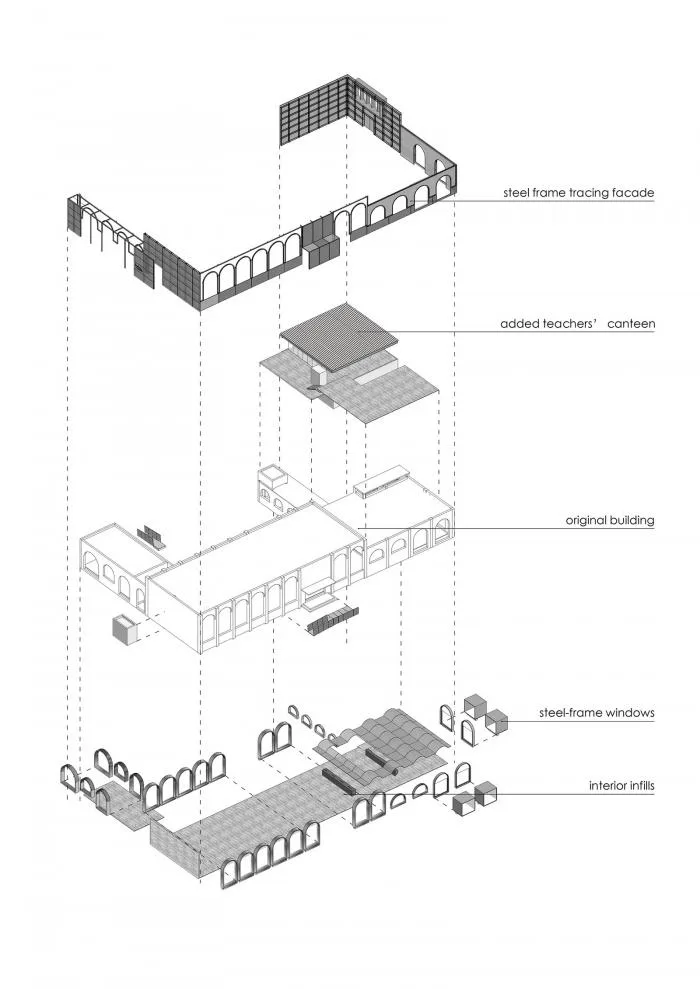
△ Student Center exploded axonometric diagram
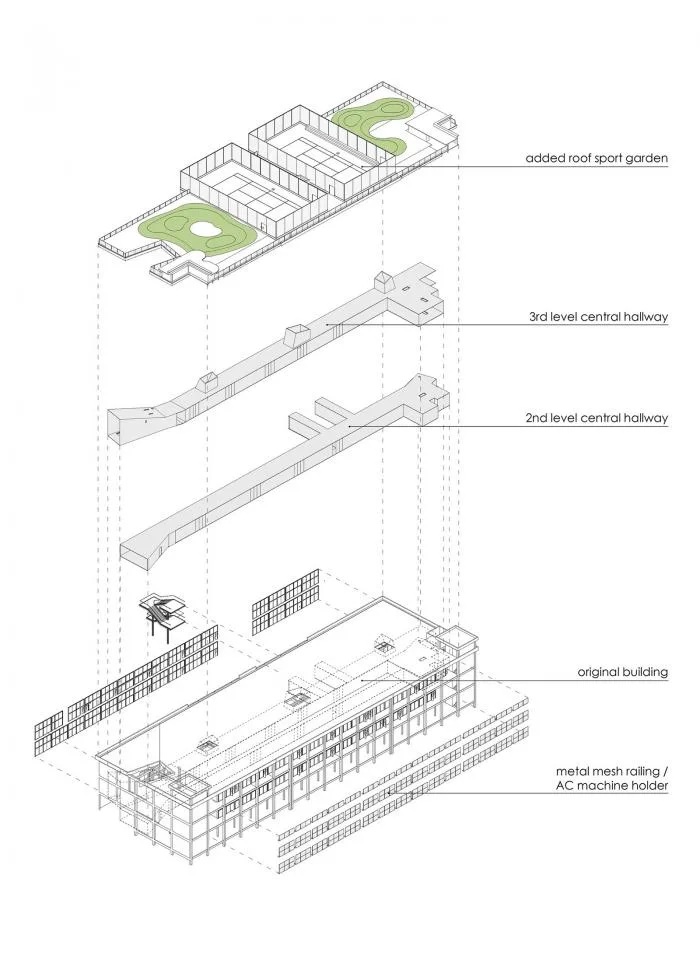
△ Exploded axonometric diagram of the comprehensive teaching building
Project Information
Project Type: Primary and Junior High School Renovation
Location: Shenzhen, China
Architectural Design: Yuan Plan Architectural Firm
Area: 25,000 m²
Year: 2019
Photographers: Zhang Chao, Wu Siming, Liky Photos, Chengqiang Huang
Lead Architects: He Jianxiang, Jiang Ying
Project Architects: Dong Jingyu, Huang Tong
Design Team: Huang Chengqiang, Chen Xiaolin, He Wenkang, Zhang Wanyi, Zhang Tao, Deng Mincong
Owners: Manjinghua Group, Shenzhen Mingde Education Foundation












Must log in before commenting!
Sign Up