
Preface
Yongjiang Experimental School is a nine-year integrated institution with 54 classes, situated in Jiangbei District, Ningbo City. The school occupies approximately 34,484 square meters of land and features a total construction area of around 29,500 square meters. It is bordered by Meizhu Road to the east, Juxing West Road to the north, Shitai Road to the west, and Xujiang’an Road to the south.
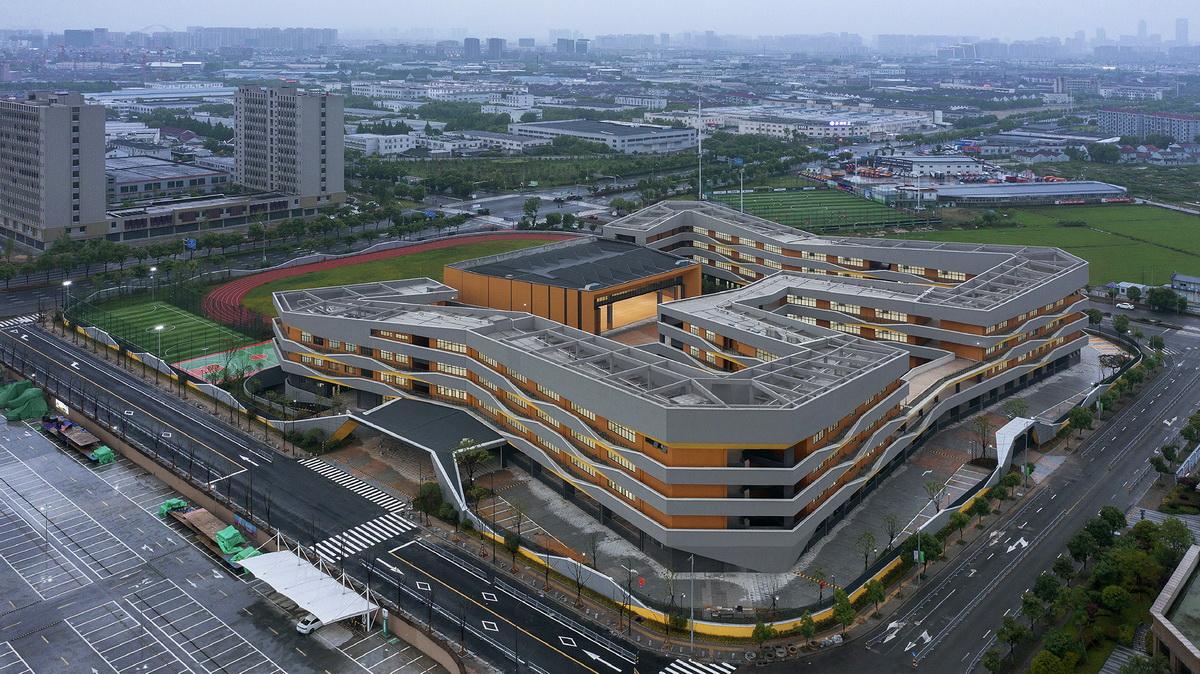
Northwest corner bird’s-eye view © Summer Solstice
Spatial Pattern
In today’s era of quality education, the goal of schooling extends beyond merely imparting knowledge and solving problems. It focuses on igniting students’ passion for learning and enabling them to enjoy the experience. Traditional teaching spaces, often isolated and single-purpose, no longer meet the growing demand for interdisciplinary, ecological, and experiential learning environments. This project introduces the spatial concept model called “Le Xue Yuan” to address these evolving educational needs.
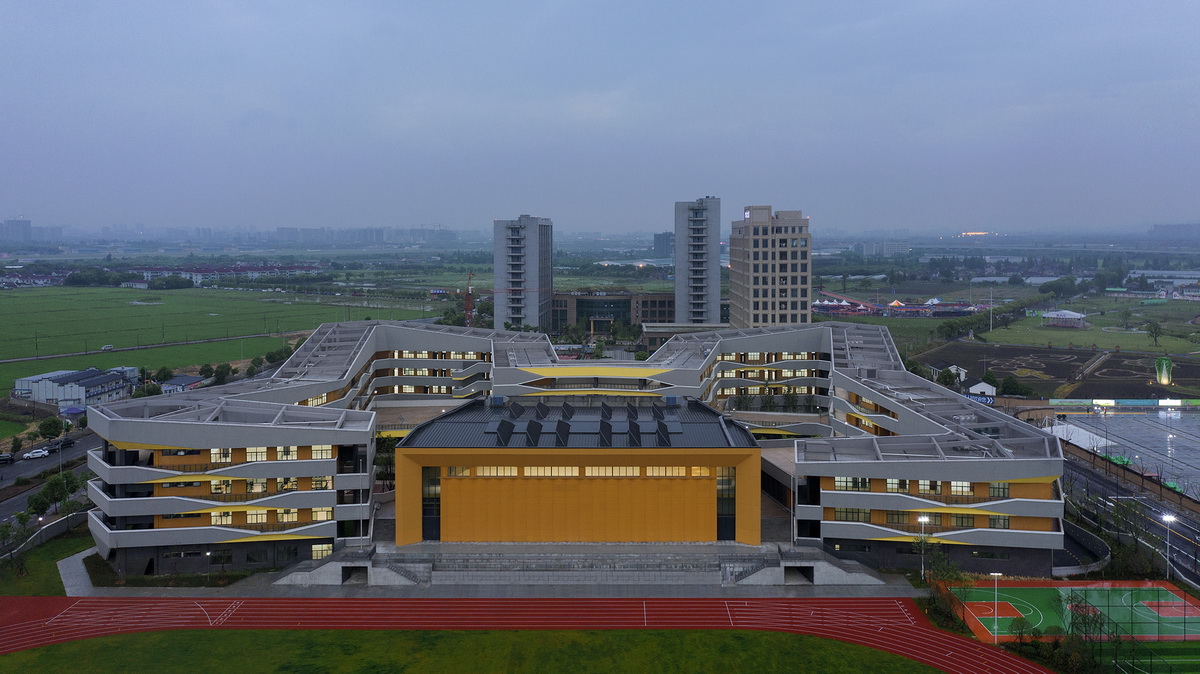
East side bird’s-eye view © Summer Solstice
The term “Le Xue Yuan” refers to a campus that combines the functions of a school and a playground. This design helps students better absorb knowledge in the classroom while encouraging diverse and flexible activities both inside and outside. By offering multi-dimensional spatial configurations and varied functional settings, it fosters student interaction, communication, and social development, creating a comprehensive learning complex.
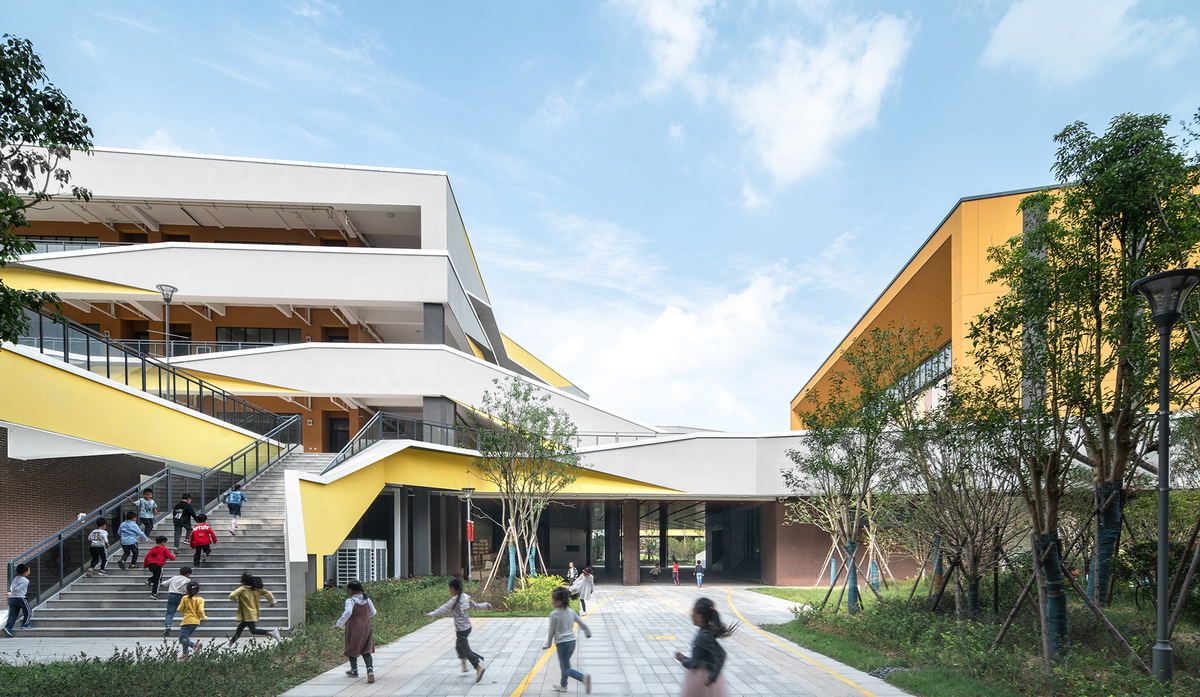
Internal courtyard space © Xingzhi Image
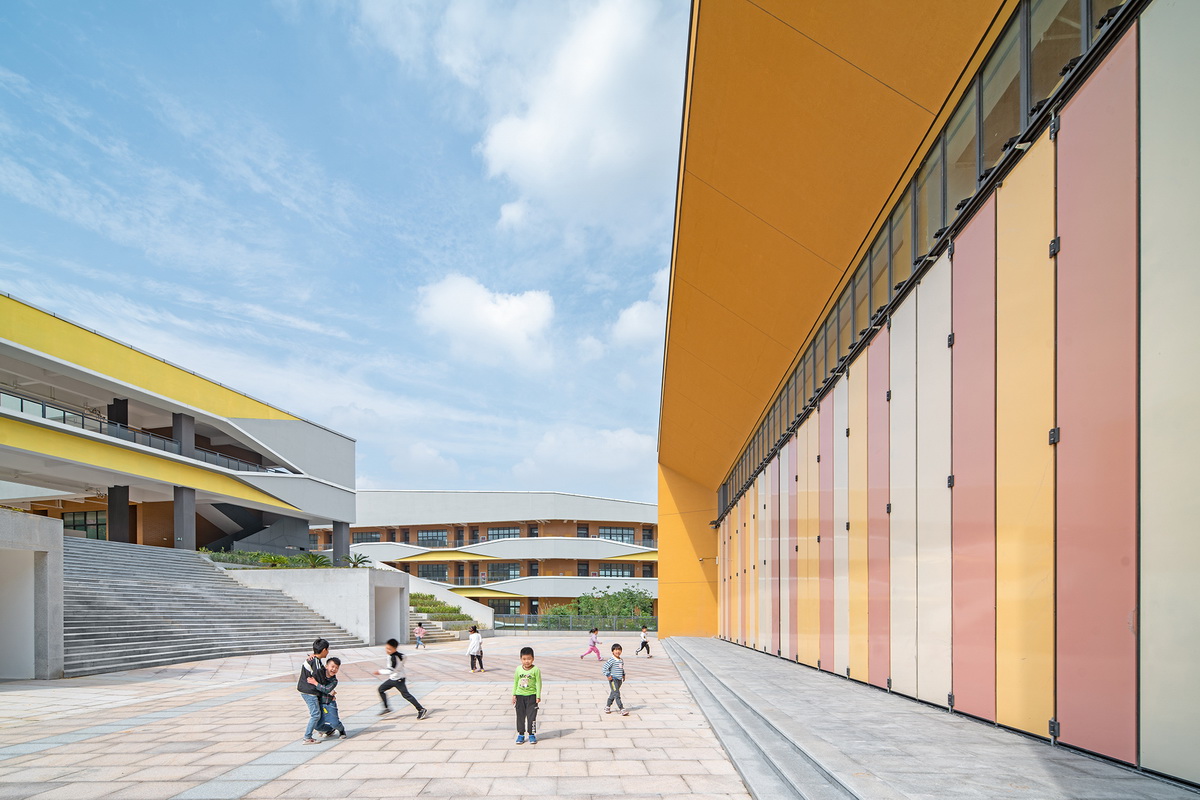
Second floor activity platform © Xingzhi Image
From an architectural standpoint, the “Le Xue Yuan” model hinges on two key principles: first, enclosing the campus in a “self-contained heaven and earth” layout to minimize external disruption and cultivate a stable, secure environment that fosters a sense of belonging; second, maximizing public access to teaching resources and expanding campus activity spaces to invigorate the campus life. This is achieved by positioning functional buildings along the perimeter, enclosing a large central public space. The approach is reminiscent of the game Go, where minimal building volume encloses the maximum public area.

Inner courtyard © Xingzhi Image
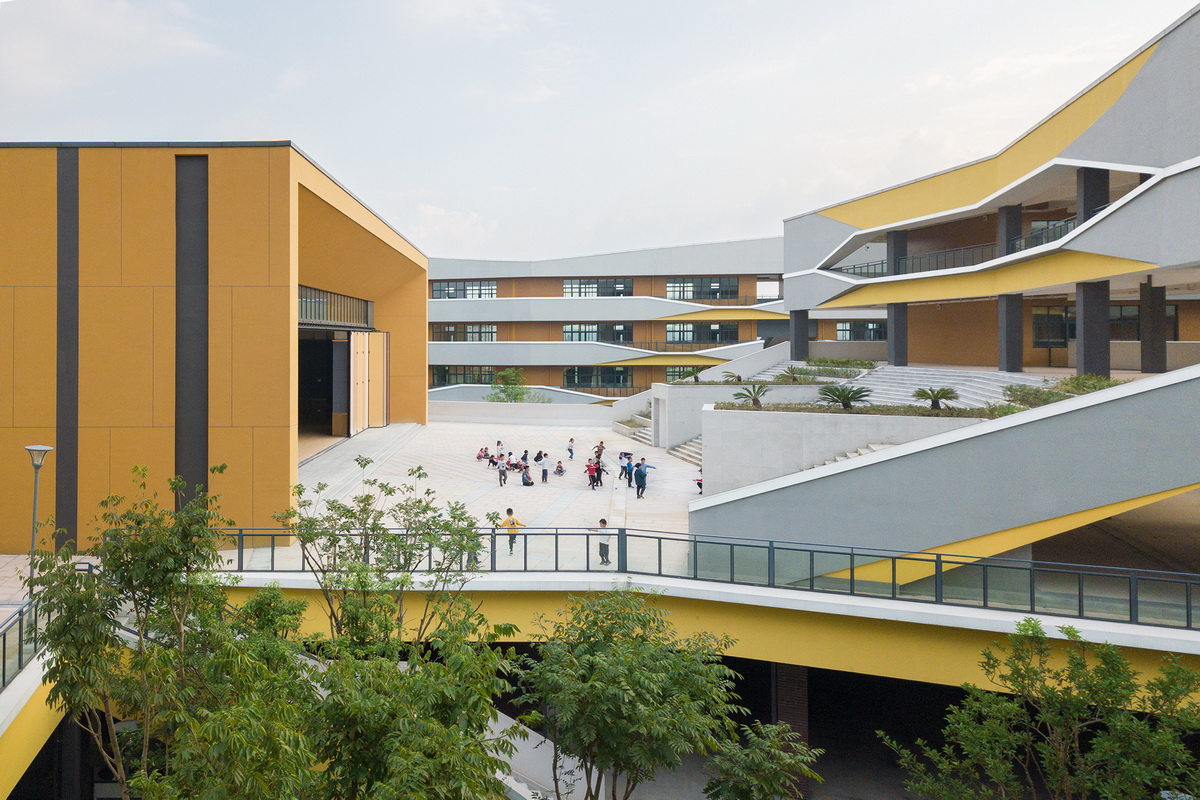
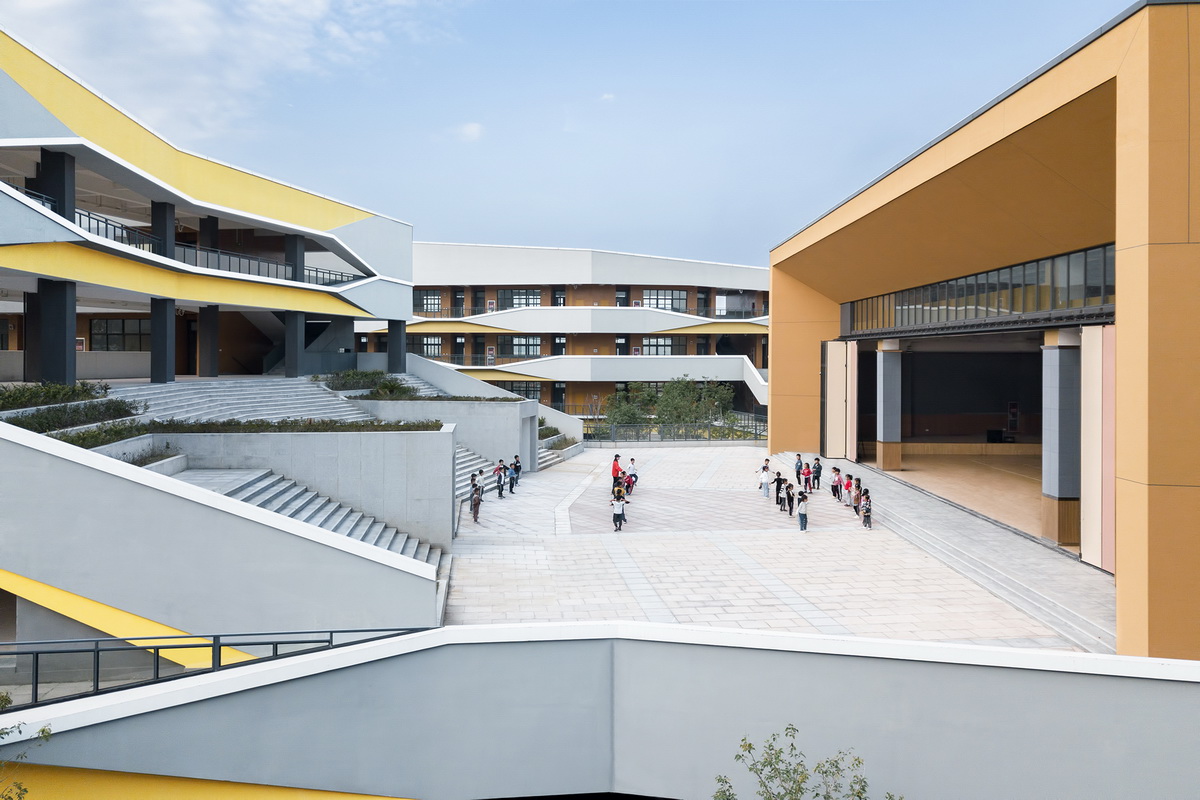
Second floor activity platform © Xingzhi Image
Overall Layout
The teaching area is organized around a large courtyard, enclosed by classrooms and administrative offices, creating an inward-facing space primarily for student activities. Lower-grade classrooms are located along Juxing West Road on the southern side, while senior classrooms sit on the western side along the planned northern road, with administrative offices positioned to the east. Dedicated classrooms line the western side along Shitai Road, effectively separating grades while maintaining connectivity. Teacher offices are strategically placed near their respective grade classrooms to enhance the synergy between teaching and learning.
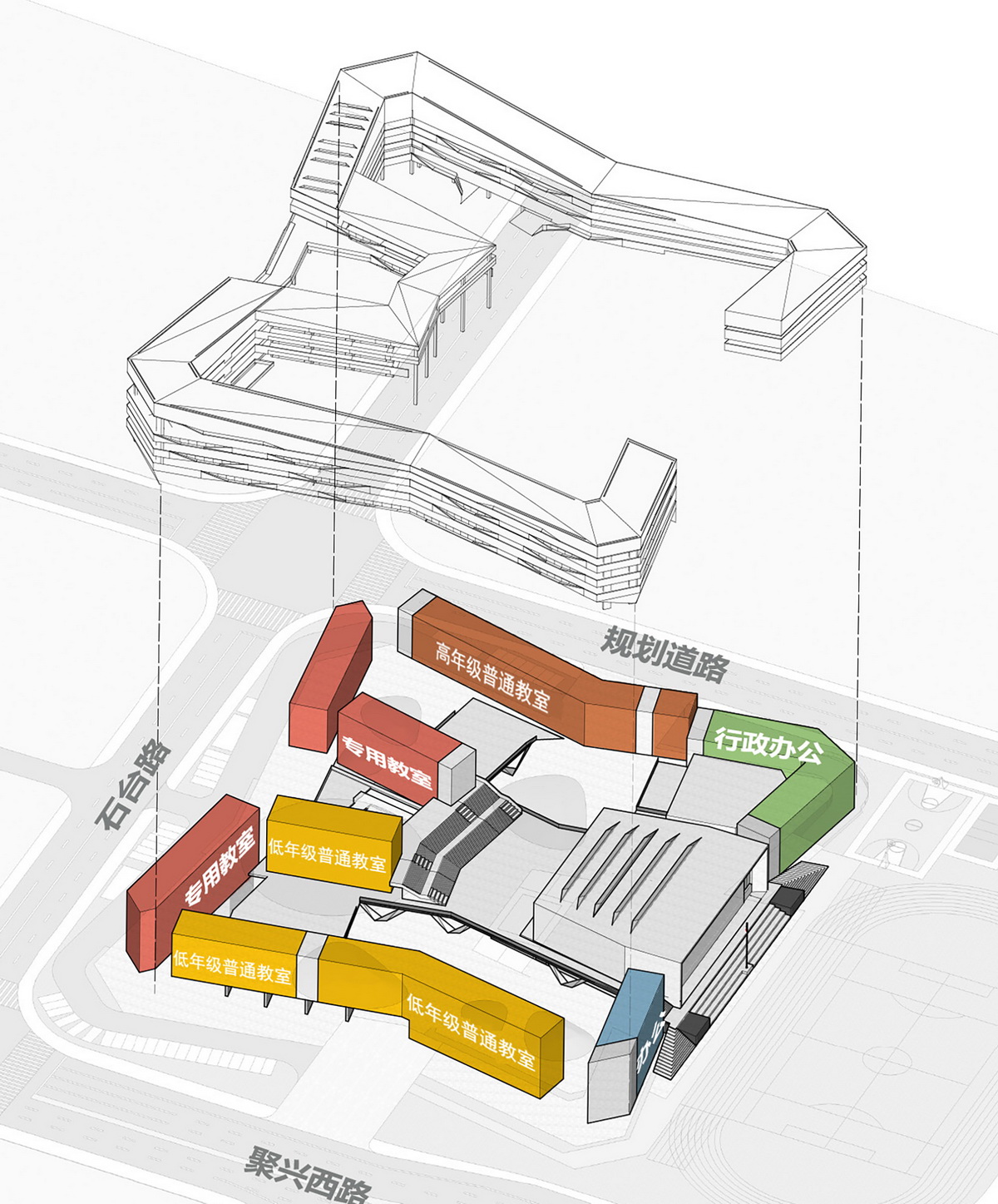
Functional layout diagram
Large public spaces are integrated into the courtyard, establishing a campus centered on communal areas. The sports activity room is situated on the east side of the courtyard, adjacent to the sports field, with a podium oriented toward the runway. The library lies on the west side, forming an east-west axis with the sports room. The lecture hall and co-classrooms occupy the southwest, northwest, and southeast sections of the campus, while the cafeteria is positioned at the northeast corner, downwind. Corridors conveniently connect public spaces and classrooms. The original courtyard is subdivided into one main courtyard and four smaller ecological courtyards, enriching spatial diversity and avoiding the emptiness of a large, undifferentiated courtyard.
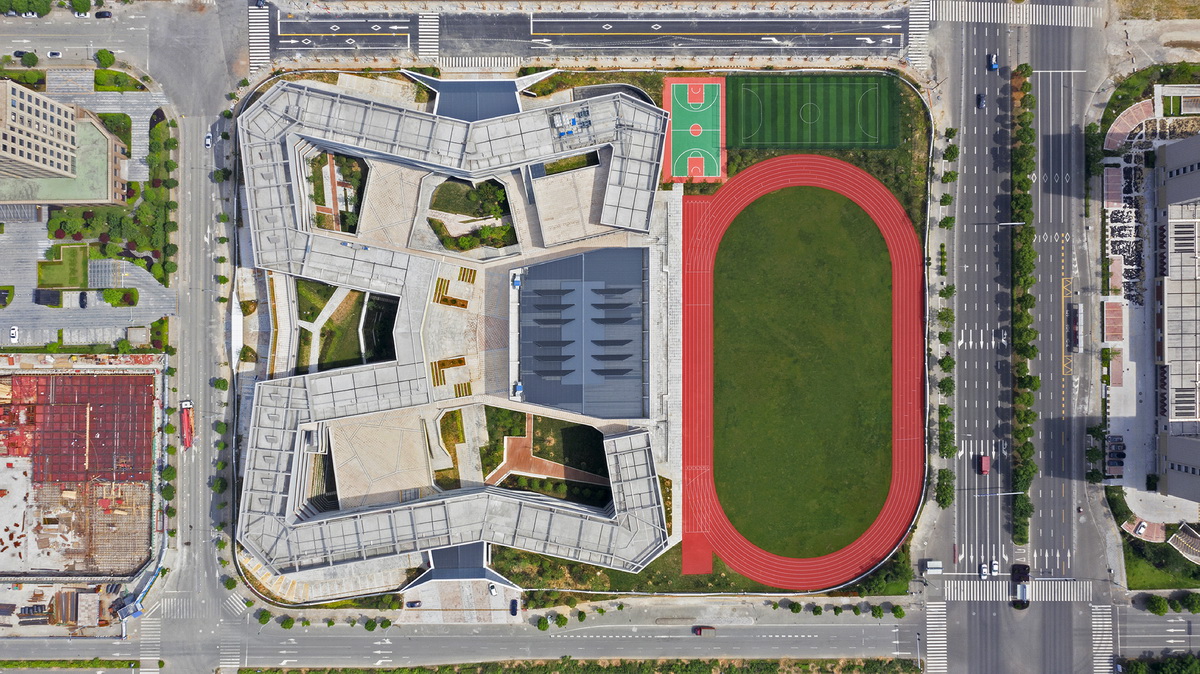
Top view © Summer Solstice
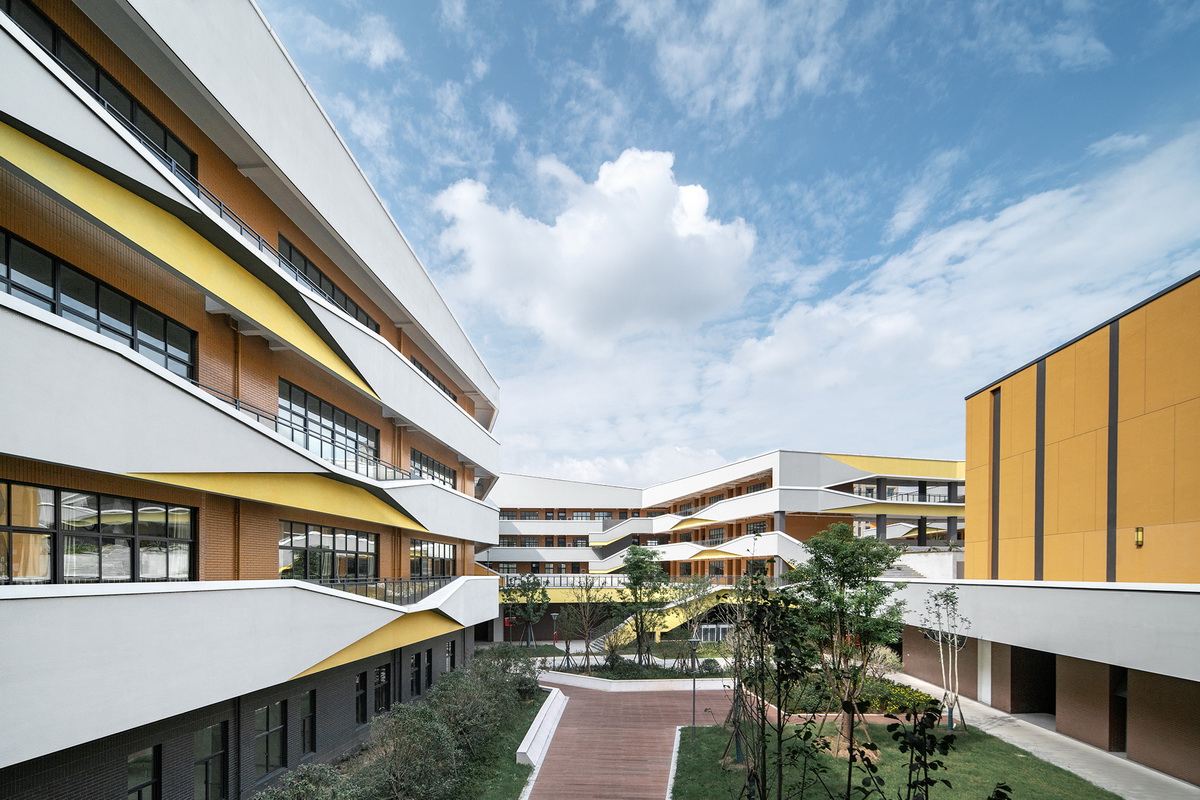
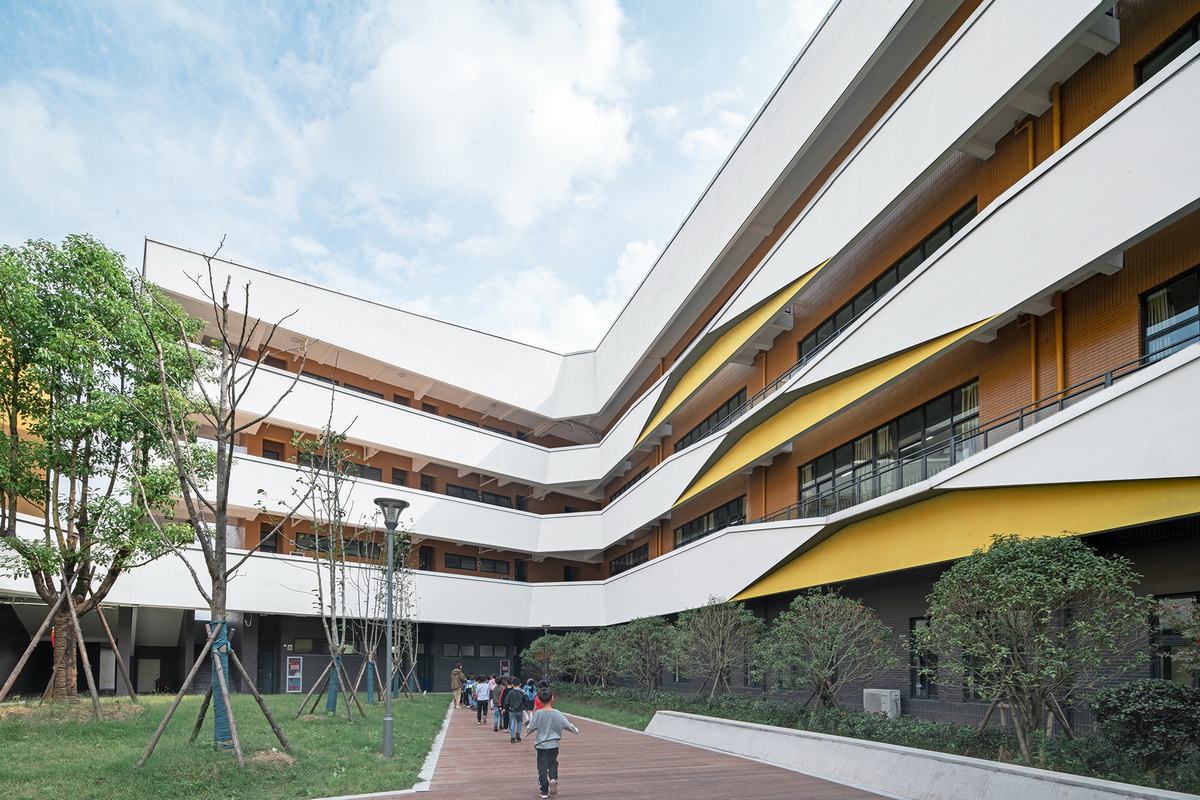
Inner courtyard © Xingzhi Image
The large courtyard is recessed on all four sides, with main entrances for lower and higher grades on the north and south sides respectively, and auxiliary entrances and stadium stands on the east and west sides. To mitigate any sense of enclosure, the ground floor is elevated to visually reduce mass, while openings on the four corners and sides create an open, communicative relationship with the surrounding city. This design also accommodates public services such as lobbies, transportation, and parking for both motorized and non-motorized vehicles.
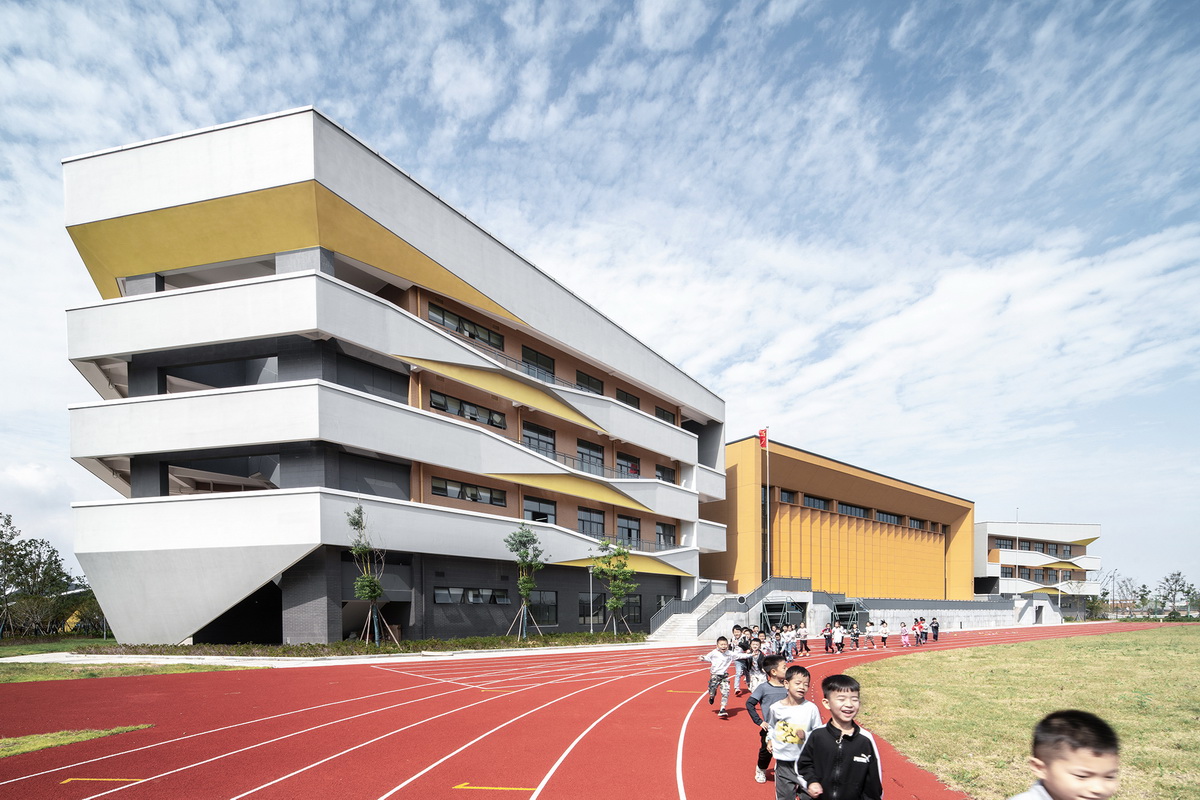
The courtyard’s concessions on all four sides © Xingzhi Image
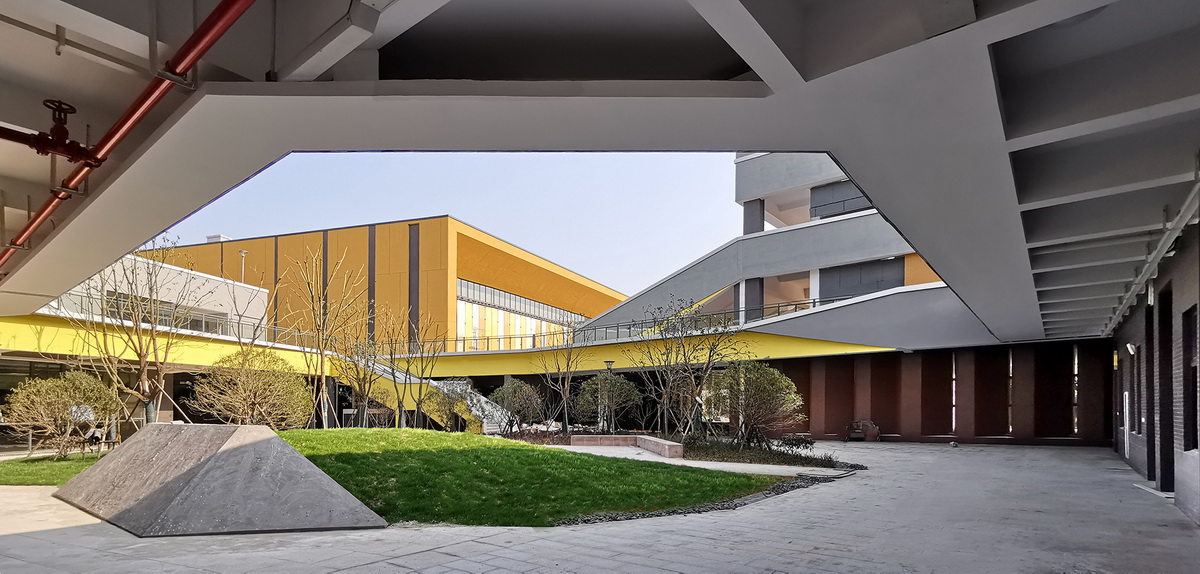
Elevated ground floor structure © High disk
Folding Paper Facade
The facade design embraces the concept of “fun,” inspired by the art of origami. The “paper tape” form is rotated and layered, using contrasting colors to distinguish interior from exterior, creating a folding visual effect that extends seamlessly along the four outer facades. The courtyard’s inner facade employs the same folding technique, unifying outdoor staircases into an origami system. This approach generates a cohesive, dynamic, and engaging appearance. The origami facade imparts a lively, fashionable, and elegant urban presence to the school.

Conceptual illustration of origami
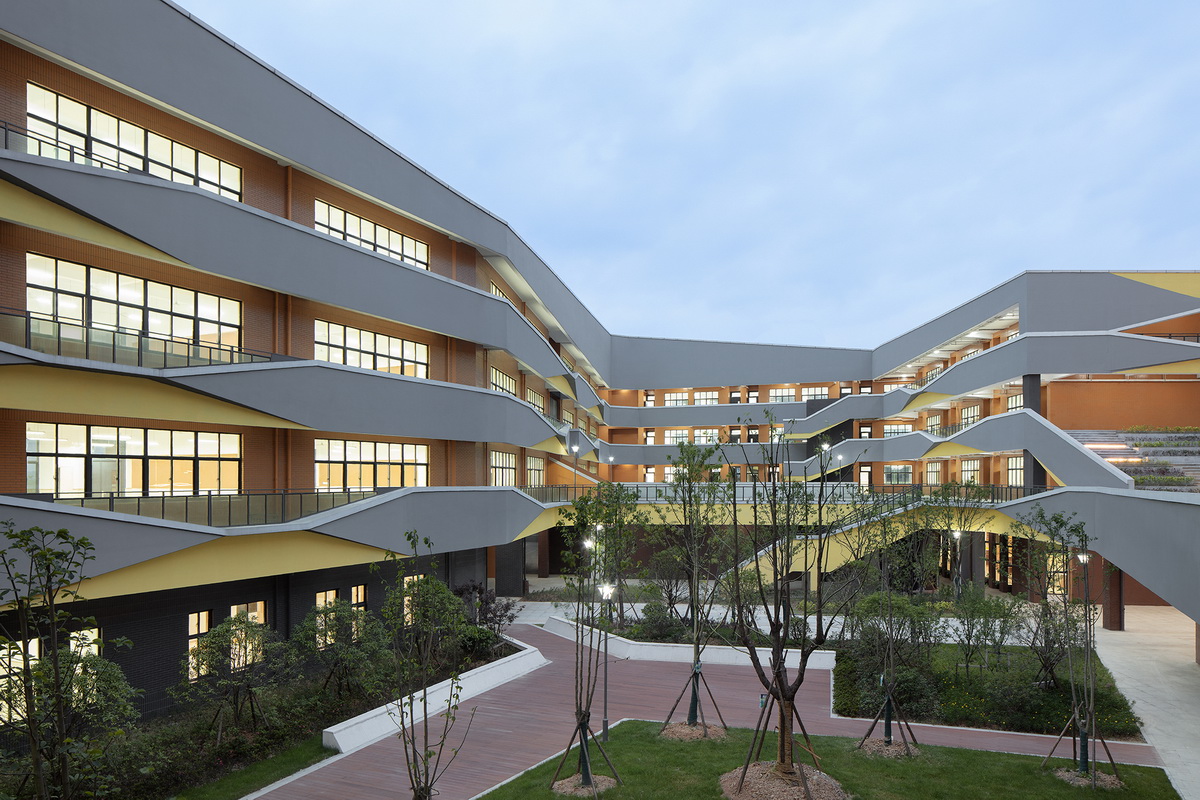
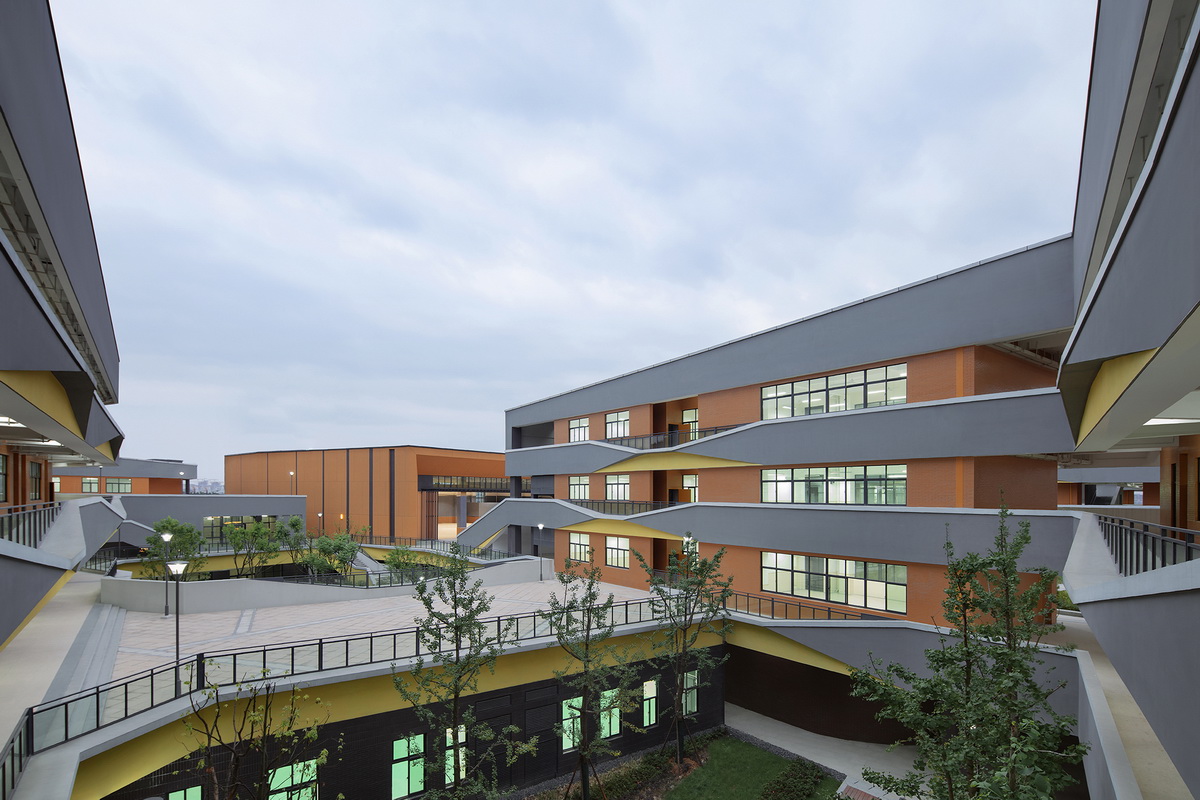
Folding paper facade © Summer Solstice
Green Building
Yongjiang Experimental School incorporates numerous green building technologies, including a solar power generation system, rainwater harvesting, rooftop greening, and permeable pavement. The building envelope utilizes insulation materials on exterior walls, elevated floors, and roofs to enhance energy efficiency and environmental protection while meeting functional and aesthetic standards.
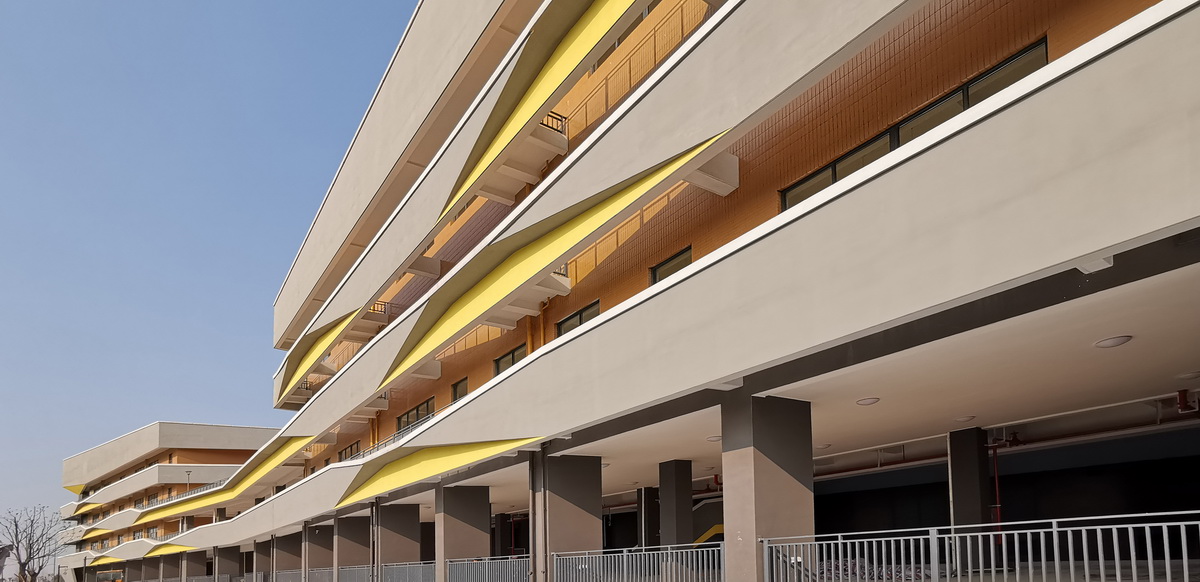
Bridgeway © High disk
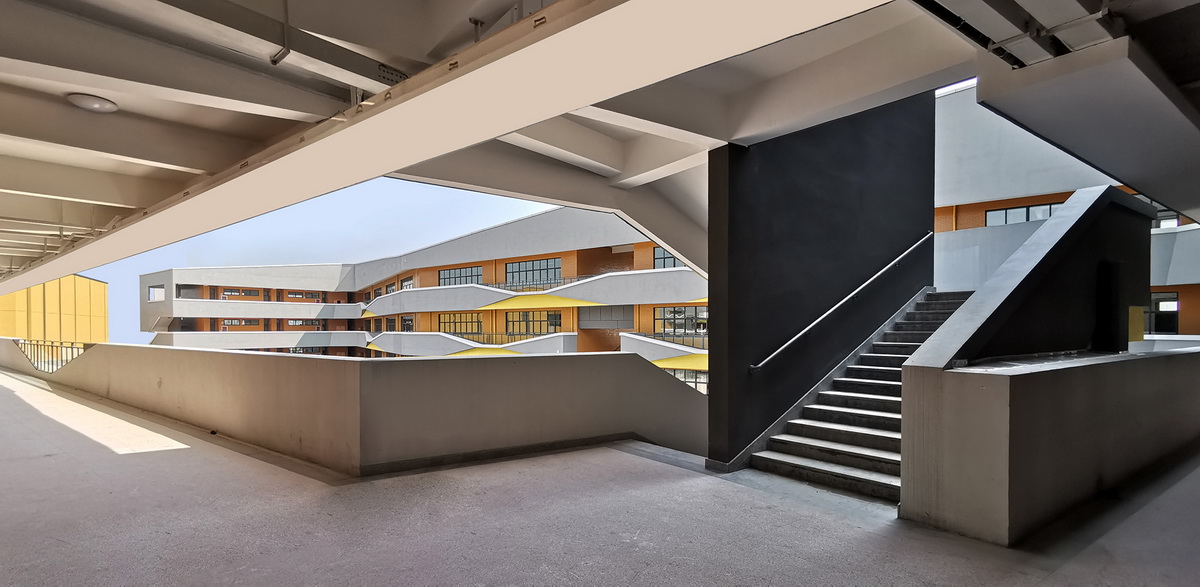
Corridor space © High disk
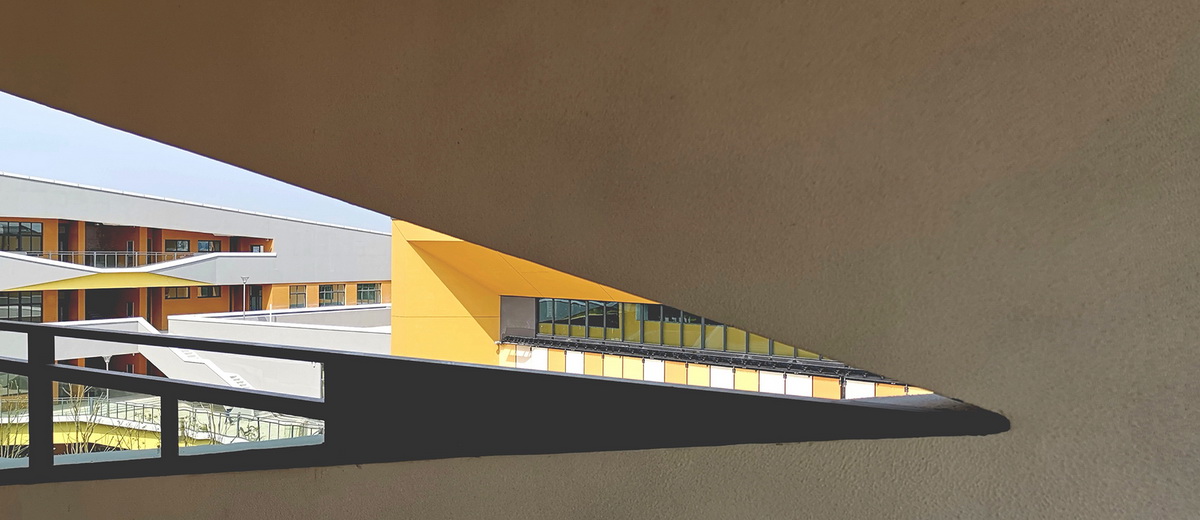
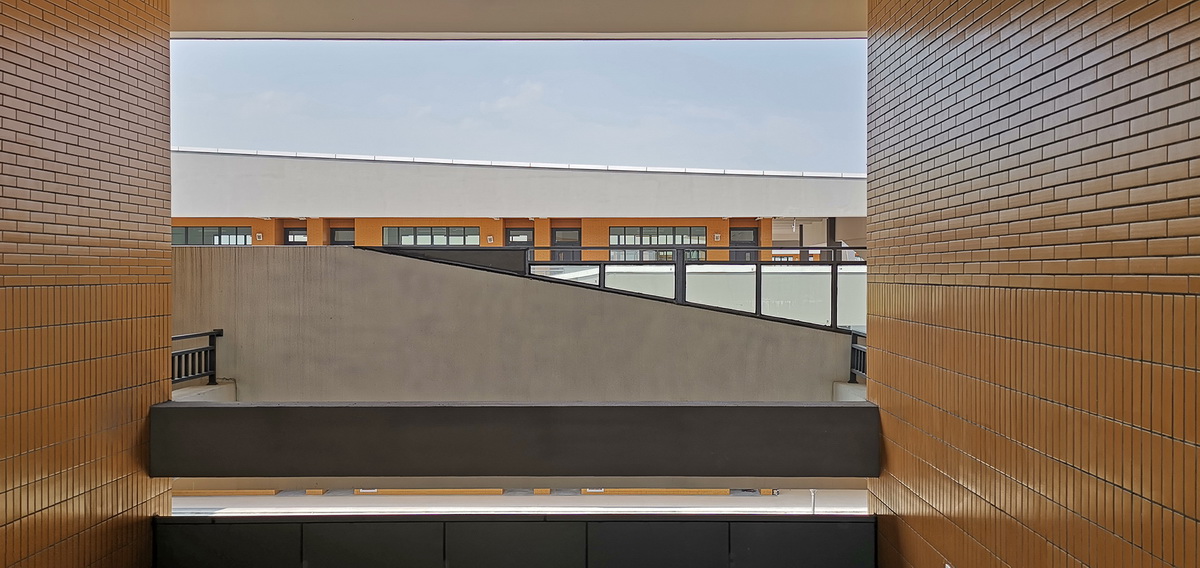
Detail nodes © High disk
Material Specifications:
Exterior walls use 200mm thick ceramic aggregate concrete composite blocks (grade 900) with sandwich EPS insulation and 30mm thick inorganic lightweight aggregate insulation mortar (type C).
The underside of the overhead layer or cantilevered slab exposed to outdoor air is insulated with a 35mm thick rock wool board.
Roofs are insulated with 100mm thick extruded polystyrene boards featuring B1-level fire resistance.
External windows feature heat-insulating aluminum alloy frames with insulated metal profile window frames and double-glazed glass (6mm clear + 12mm air gap + 6mm clear).
Epilogue: Learning with Joy, Inside and Out
Upon project initiation, Yongjiang Experimental School embraced the “Le Xue Da Yuan” design philosophy, adapting the curriculum to align with national standards while reflecting the school’s educational goals. The curriculum is organized into four categories: “Morality and Health,” “Language and Reading,” “Science and Technology,” and “Art and Aesthetics.” This framework bridges traditional disciplinary gaps and promotes interdisciplinary integration, allowing the “Le Xue” concept to resonate throughout the school’s physical and educational environment.
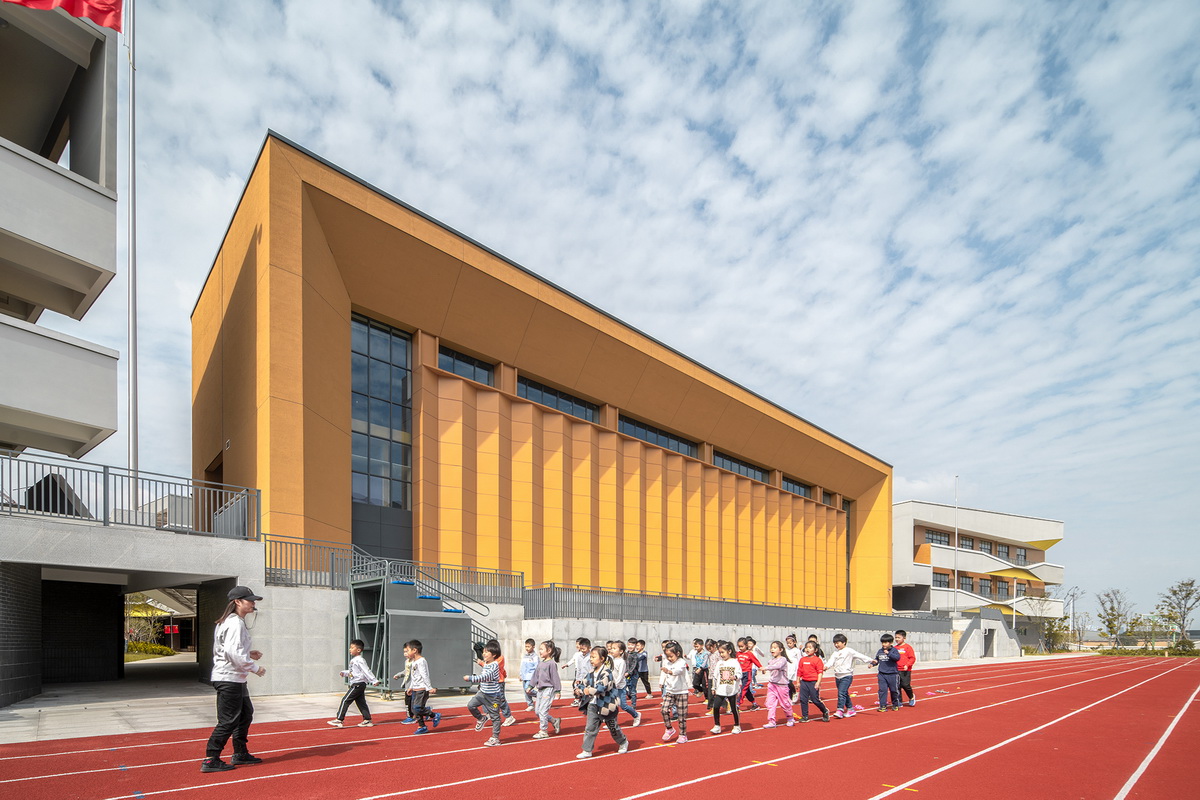
Stadium © Xingzhi Image
This project embodies the belief that designing a school involves more than constructing physical spaces; it inspires new explorations in educational methods and organizational models by shaping the environment where learning happens.
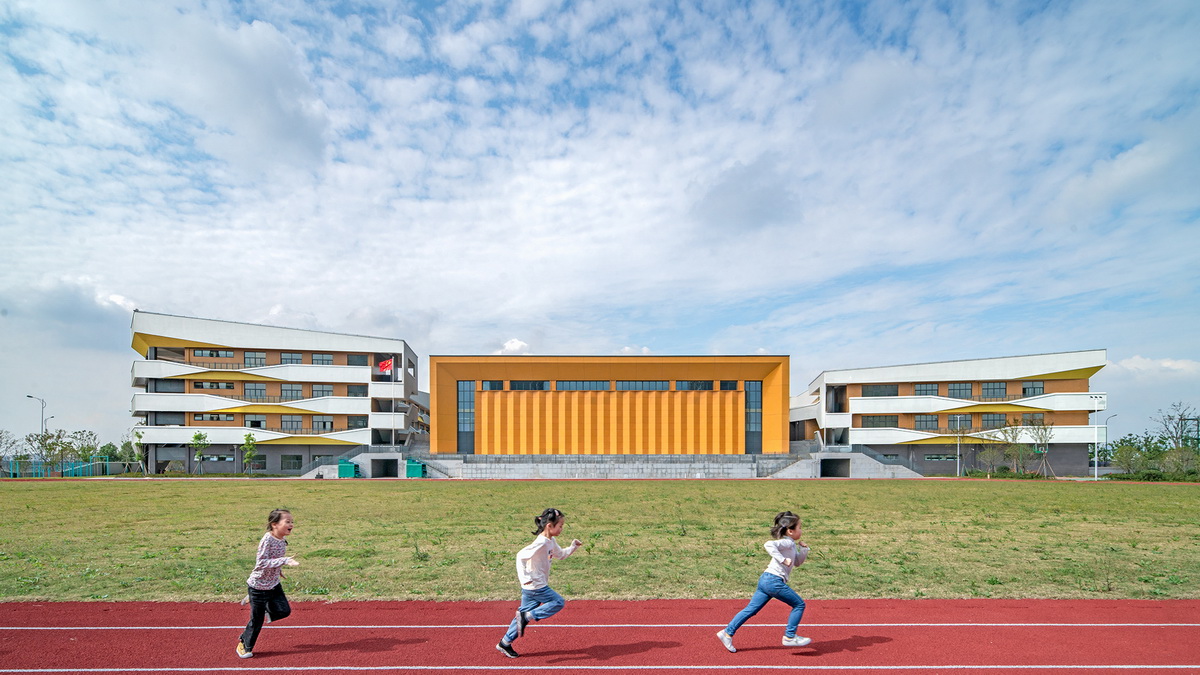
Playground perspective © Xingzhi Image
Project Drawings
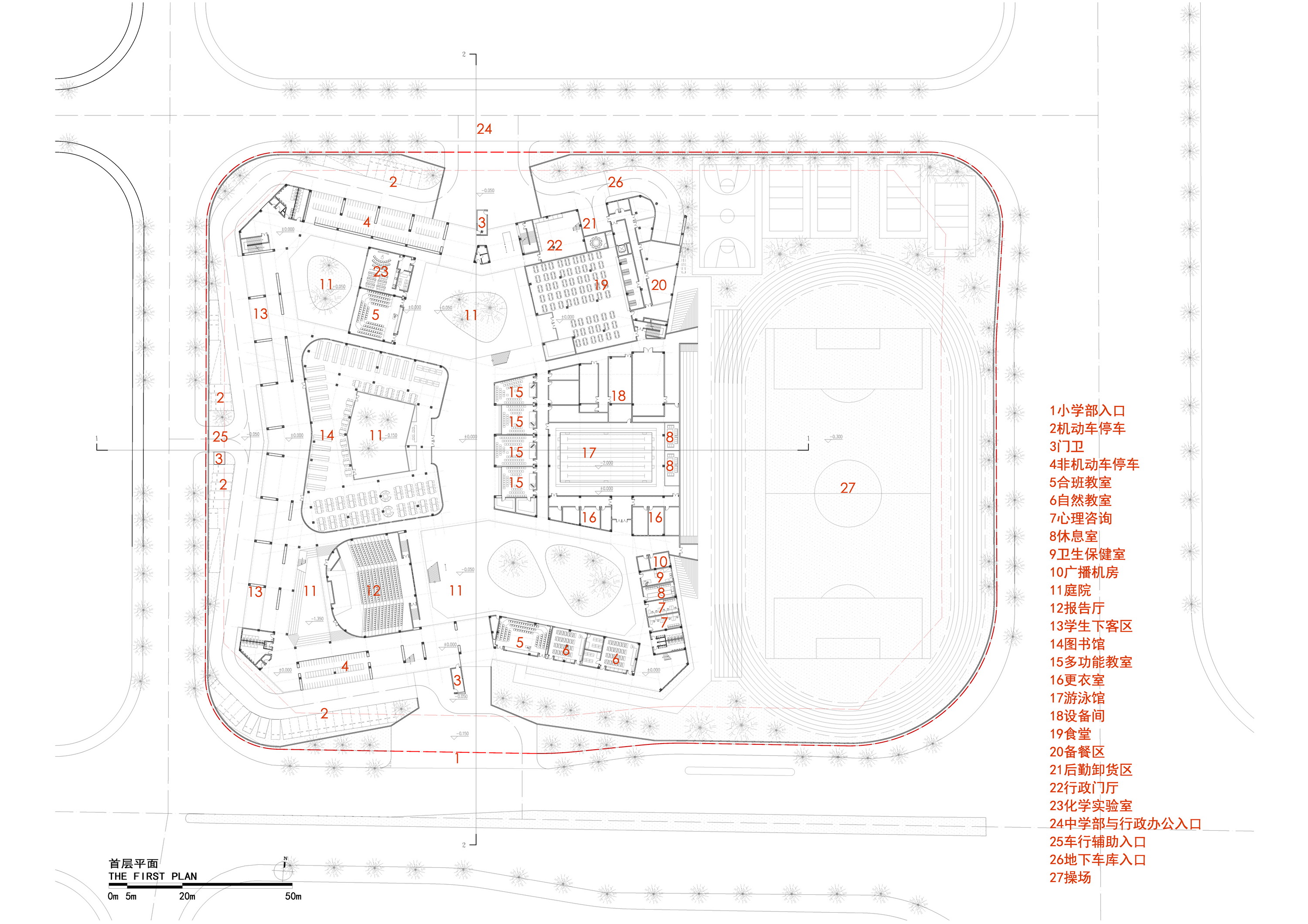
Ground Floor Plan
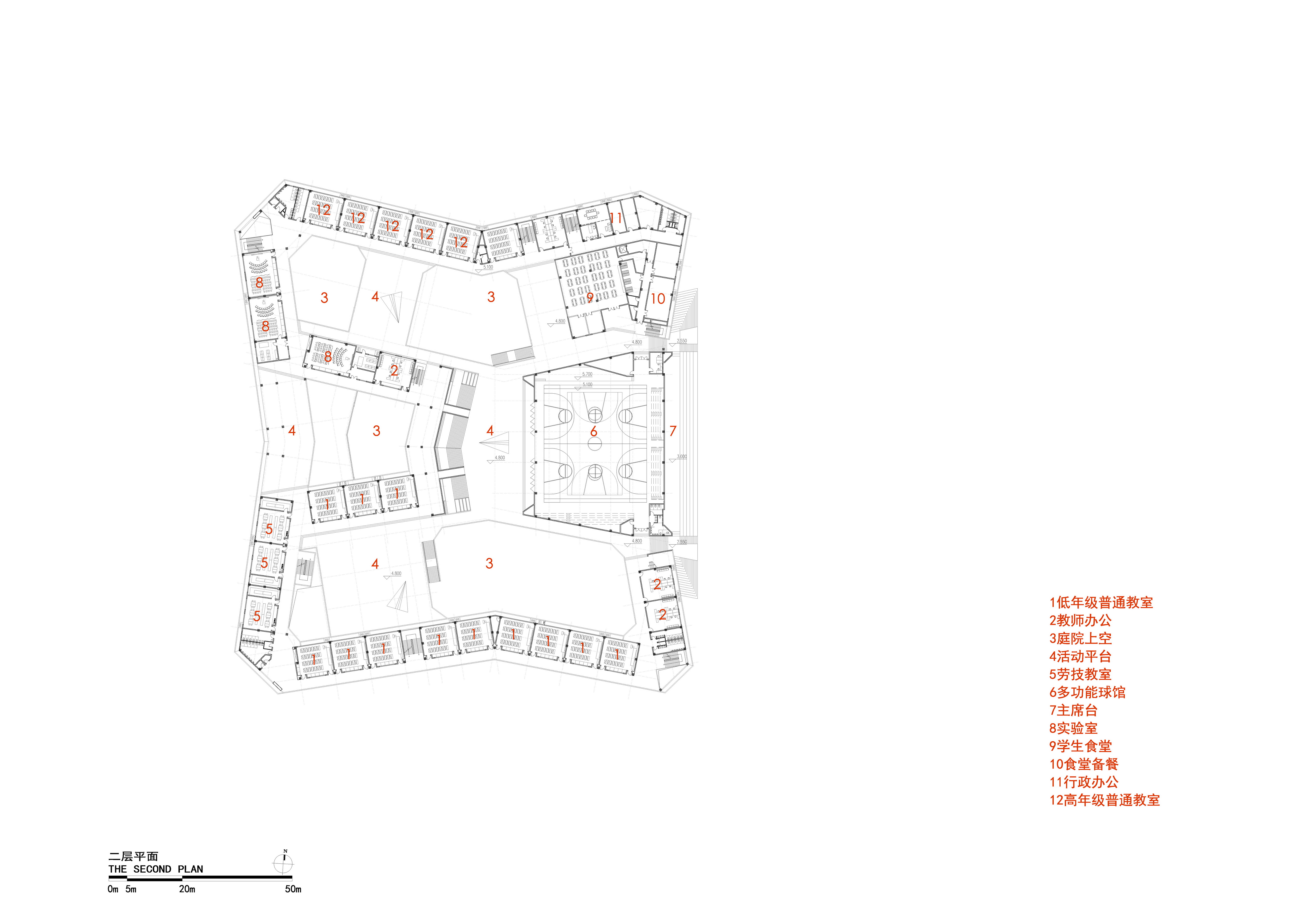
Second Floor Plan
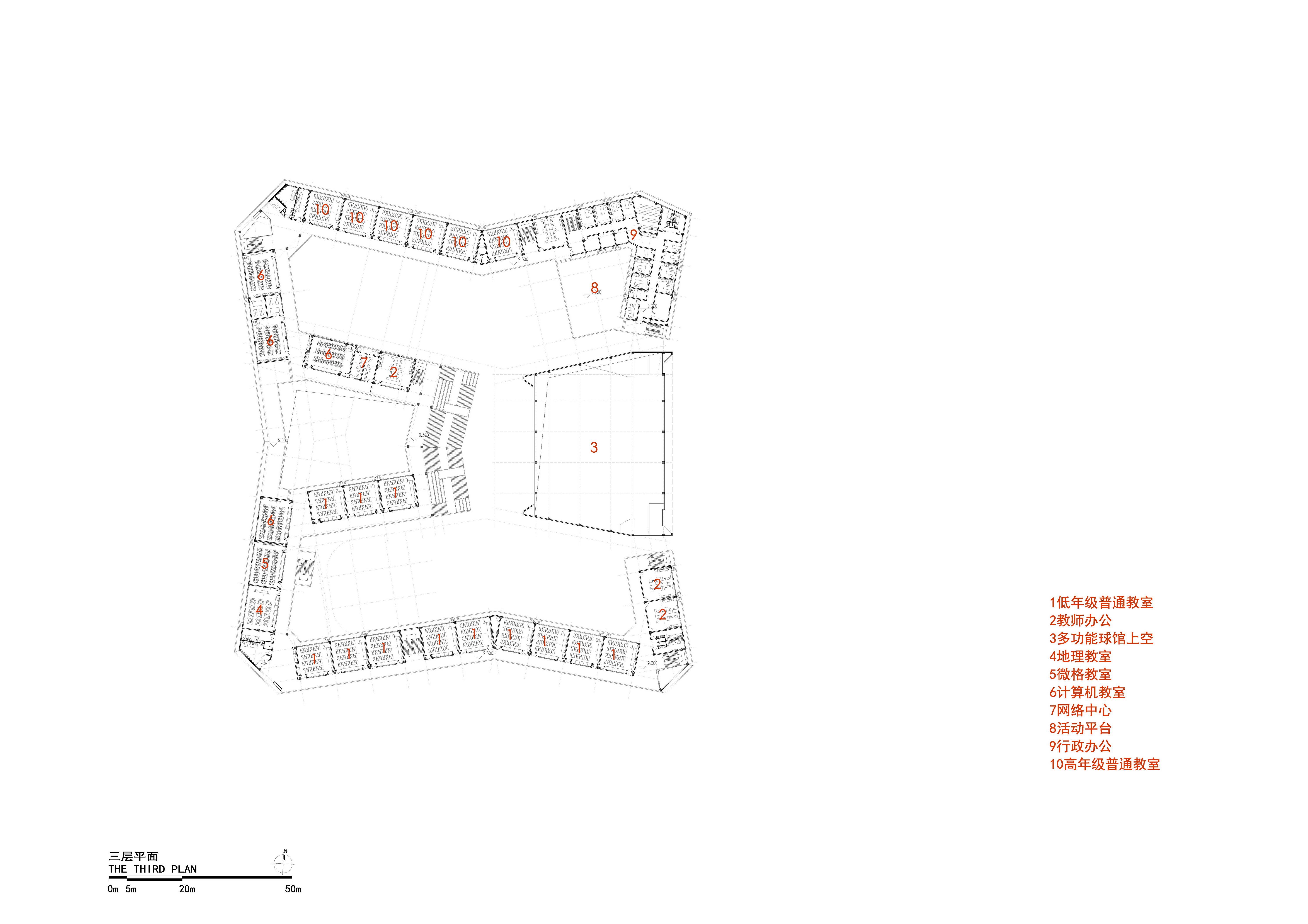
Third Floor Plan
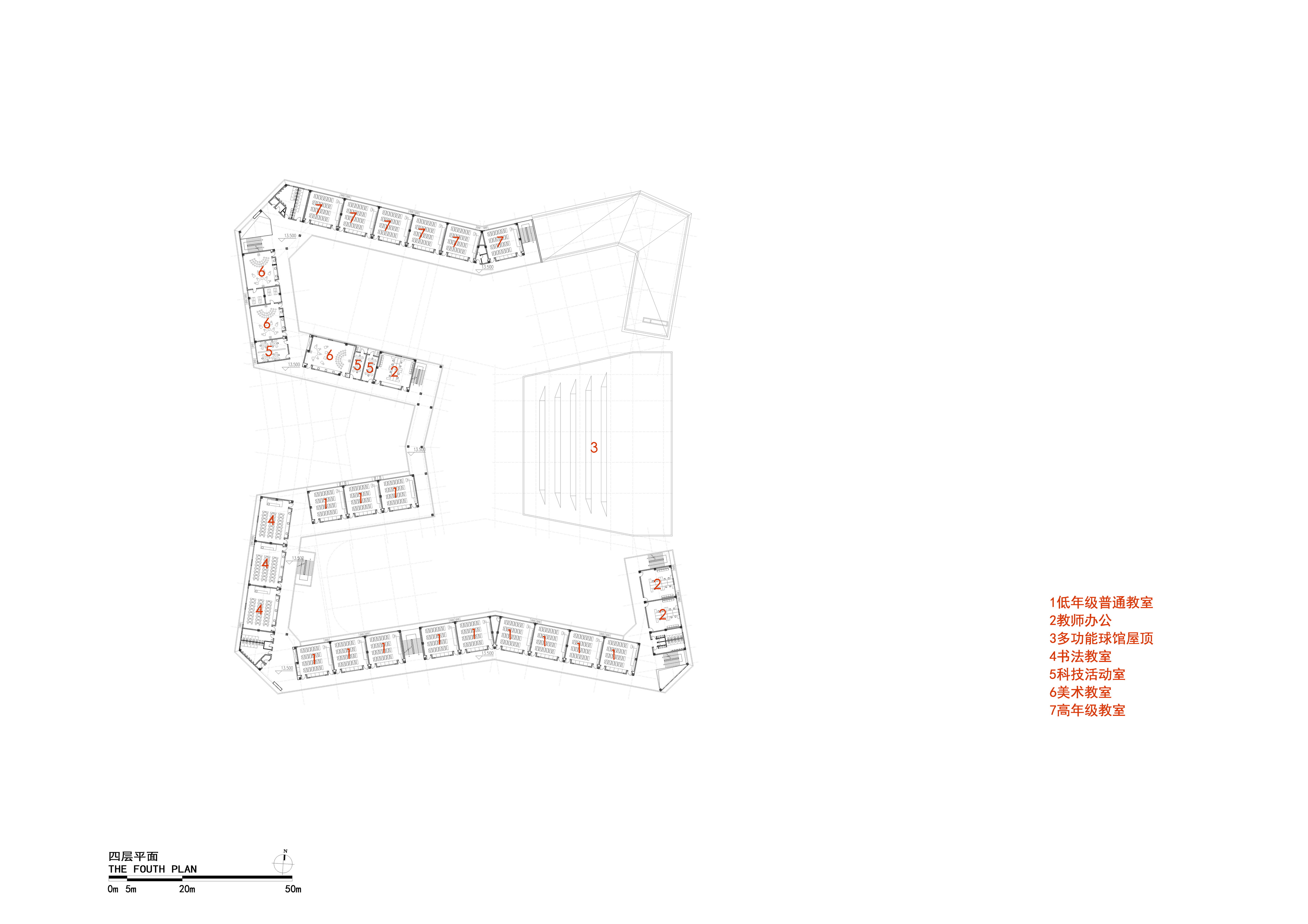
Fourth Floor Plan
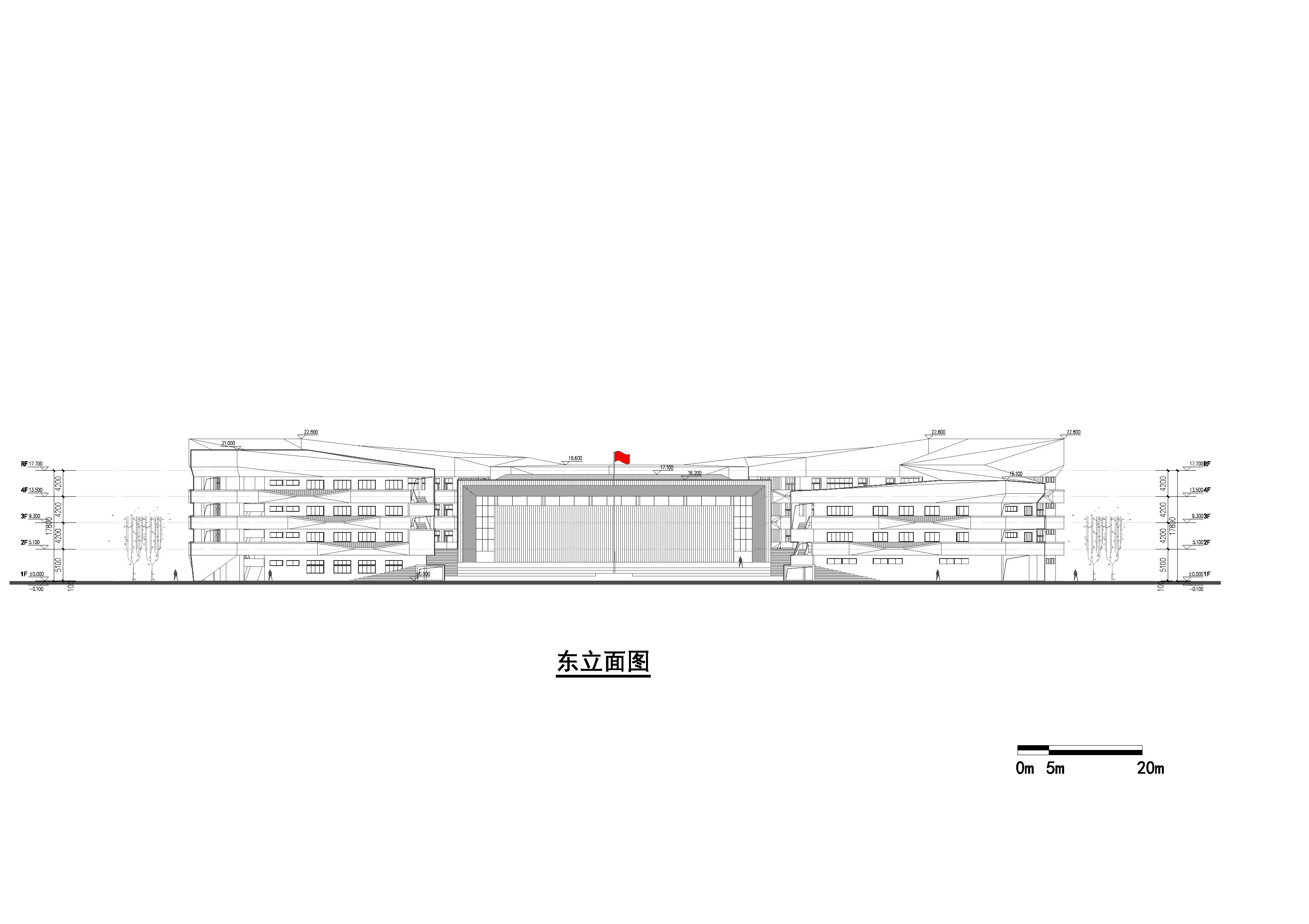
East Elevation

West Elevation
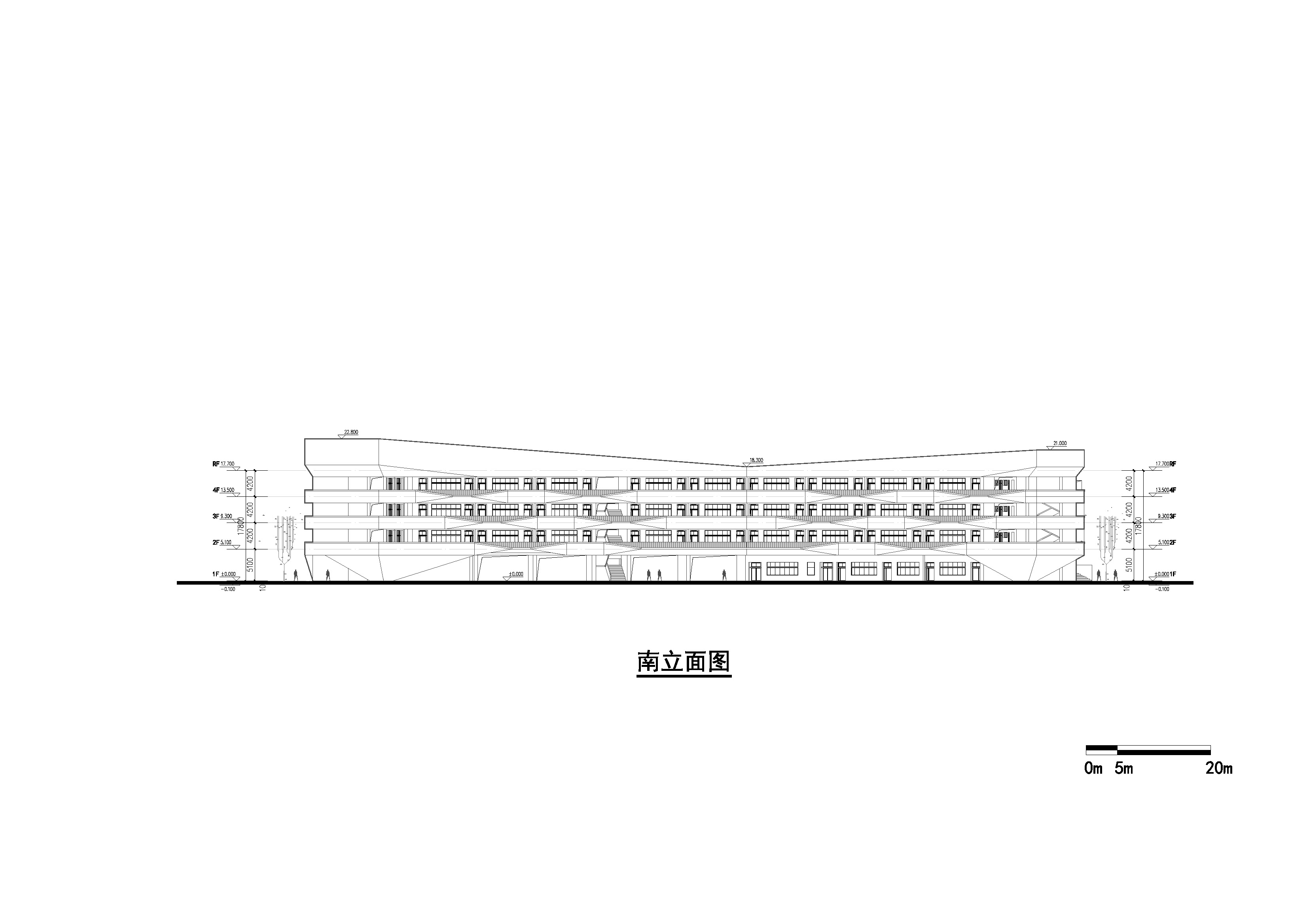
South Elevation
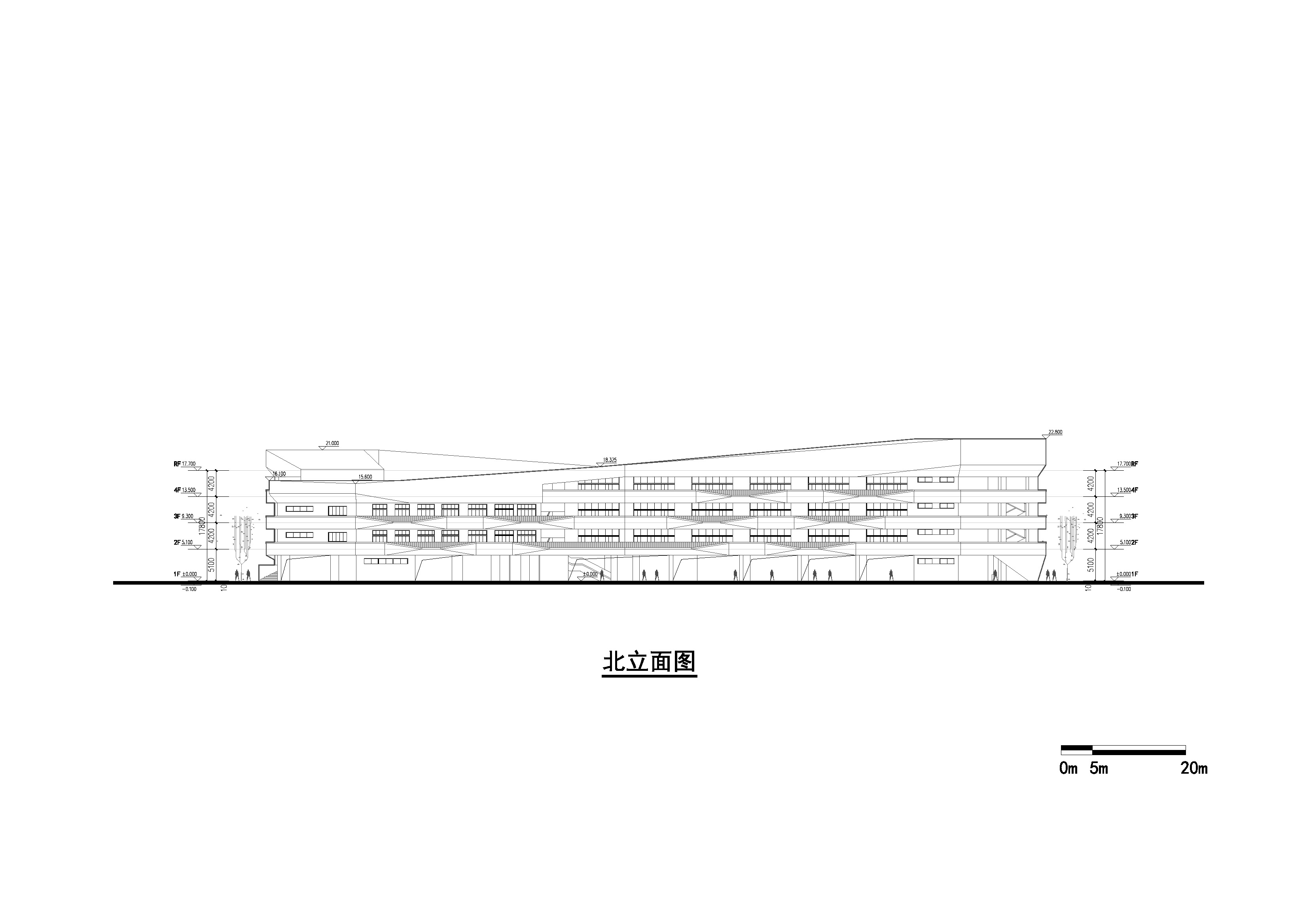
North Elevation
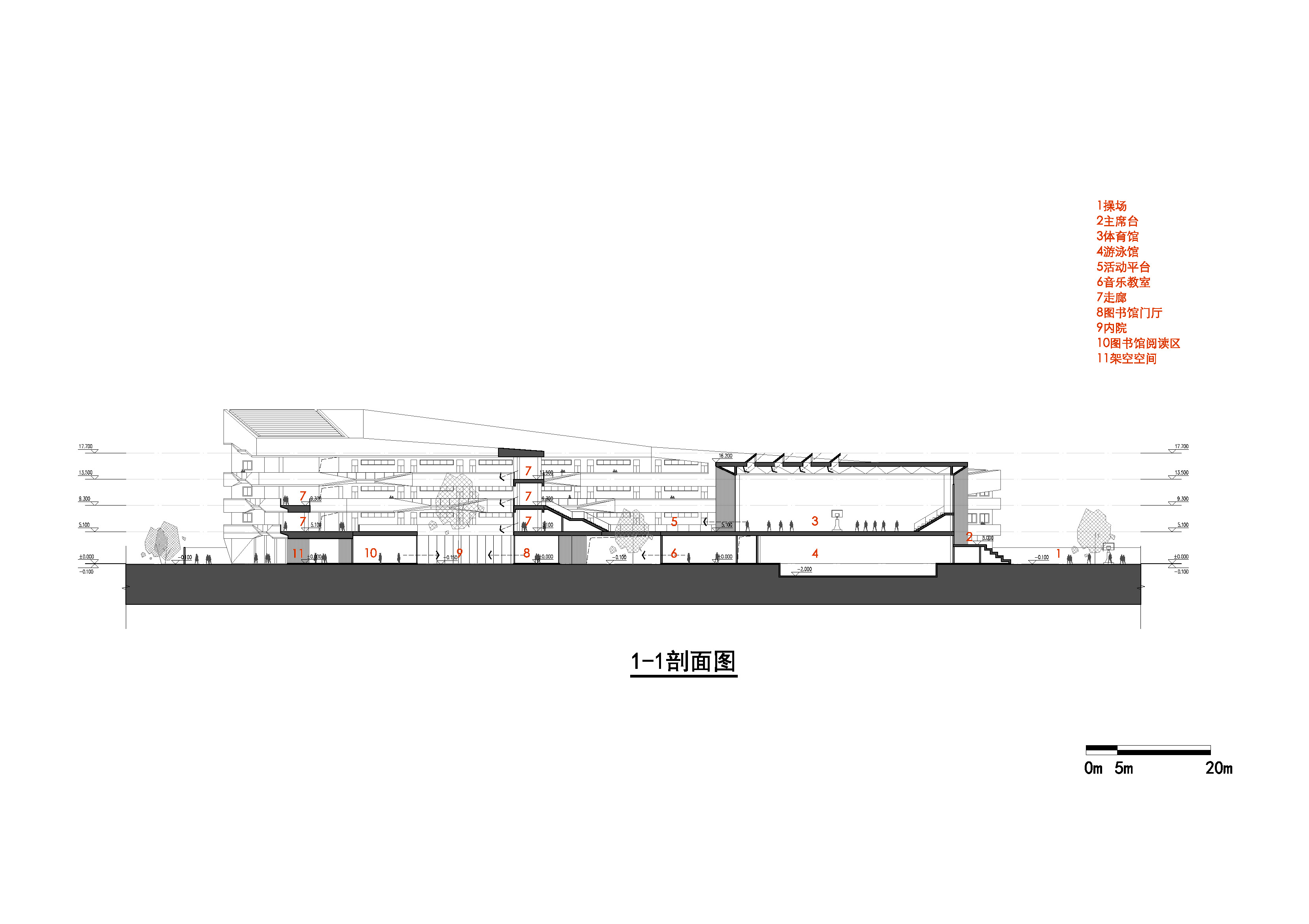
Section 1-1
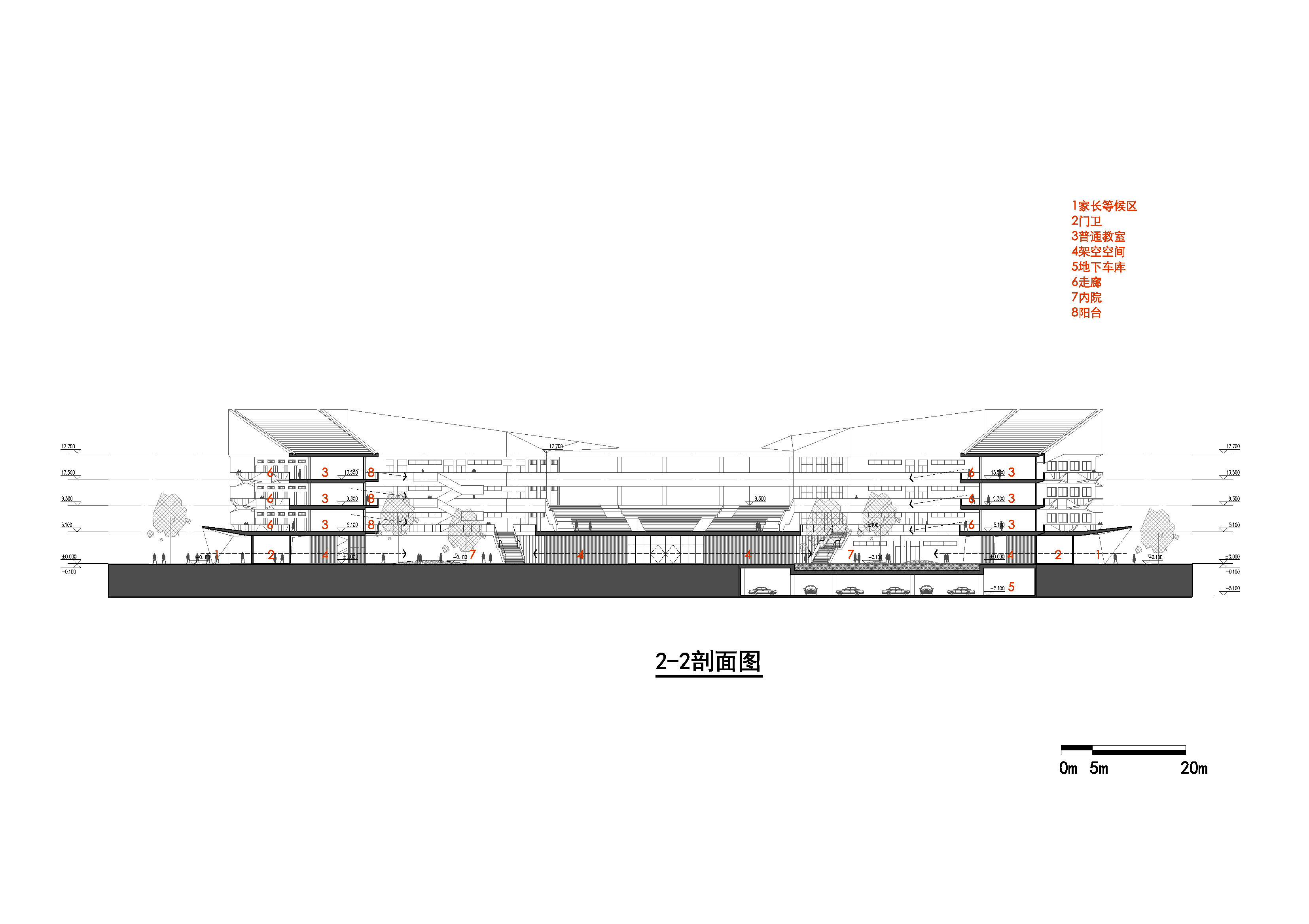
Section 2-2
Project Information
Project Name: Yongjiang Experimental School, Jiangbei District, Ningbo City
Designer: DC International C++Design Research Center
Company Website: www.dccd.com.cn
Project Duration: 2016-2018
Main Creators and Design Team: Dong Yi, Gao Pan, He Weiwei, Zhang Jia, Xiao Rong, Hou Jiawei
Project Location: Intersection of Juxing West Road and Meizhu Road, Jiangbei District
Building Area: 29,500 square meters
Photography Credits: Xingzhi Photography, Summer Solstice, High Plate













Must log in before commenting!
Sign Up