
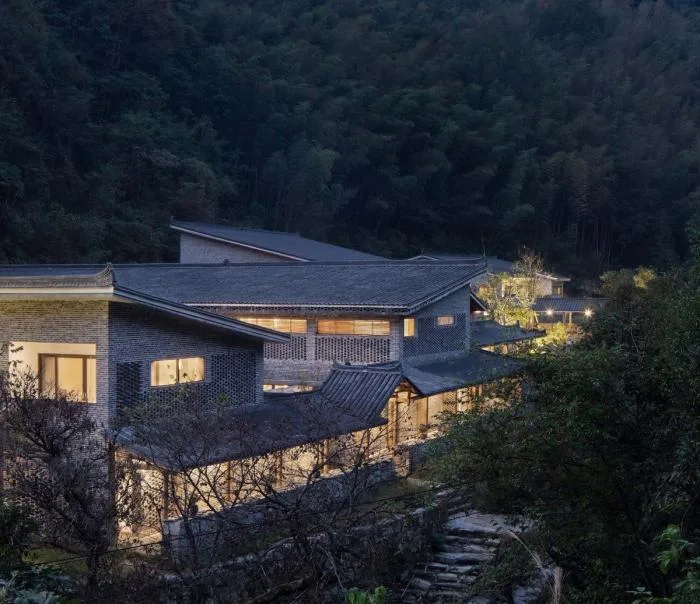
▲ Corner of Homestay
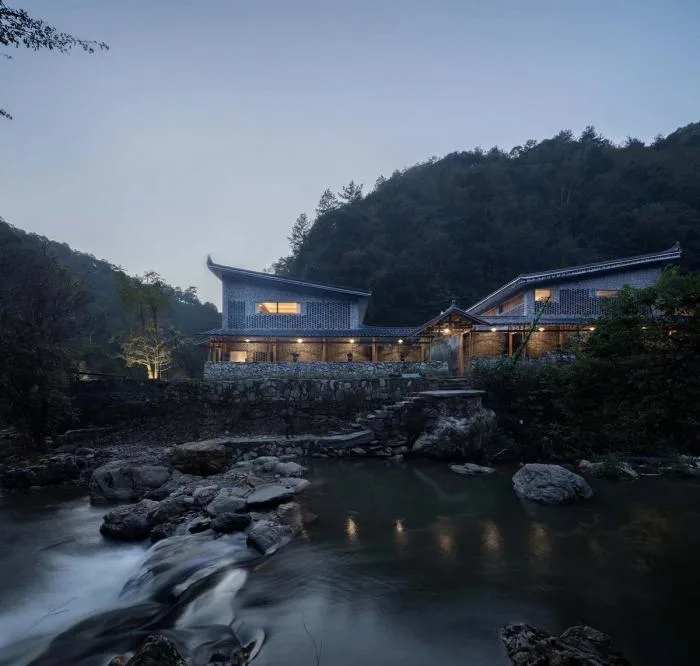
▲ Architecture and Stream
Suining Huangsang
This project is situated in the Huangsang National Nature Reserve, located at the intersection of Dananshan Mountain’s northern slope and Xuefengshan Mountain’s southern foot, roughly 80 miles southwest of Hunan Province. Towering ancient trees and clear streams highlight the natural beauty and ancient charm of the area.
The site lies in a rural, mountainous environment where original buildings have been demolished for many years. It stretches narrowly from north to south, approximately 160 meters long and 35 meters wide east to west, covering around 10 acres. The terrain slopes gently from north to south, with an overall height difference of about 4 meters.
Facing a river to the east and a highway, the site exemplifies the typical mountainous and hilly landscape of Hunan.
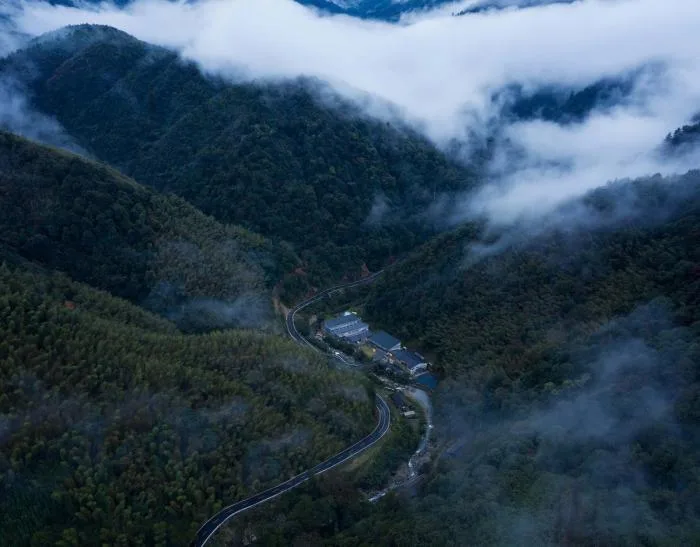
▲ Aerial view
Design Concept and Positioning
The owner, a local resident, envisioned a project that would satisfy urban visitors seeking cultural homestay experiences and natural living, while also showcasing the beauty of his hometown to a wider audience. Through extensive discussions and research with the owner, we established the homestay’s core positioning focusing on regional identity, differentiation, immersive experience, and target audience.
From this, we defined the key functional spaces and their locations: independent guest rooms, a leisure lobby, multifunctional lawn, stove experience area, independent restaurant, and a mountain swimming pool. We also aimed for efficient management throughout the site.
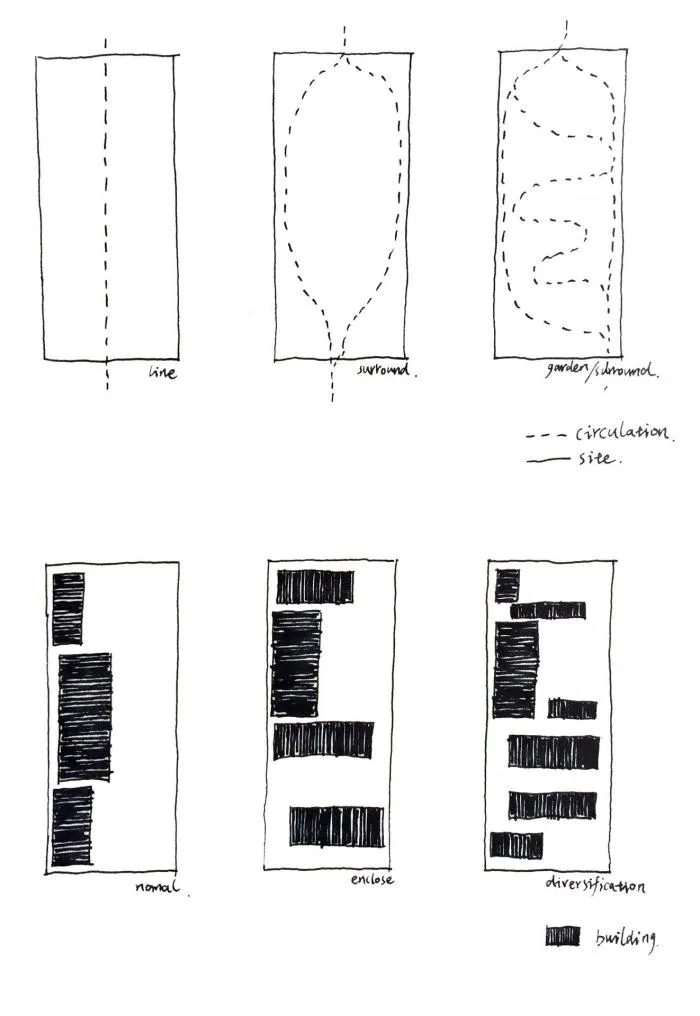
▲ Conceptual diagram
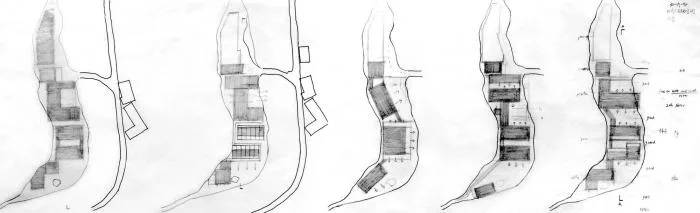
▲ Floor plan schematic
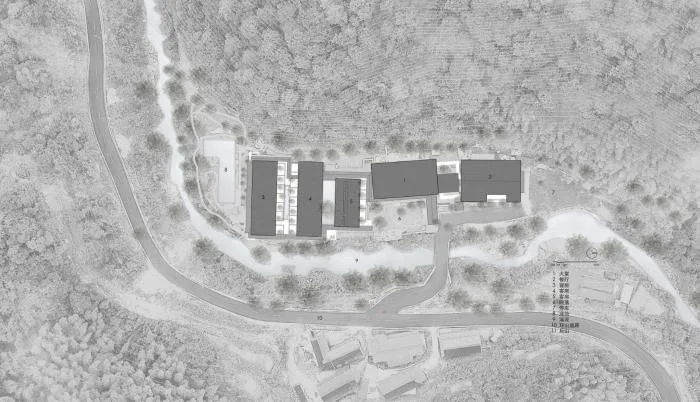
▲ Master site plan
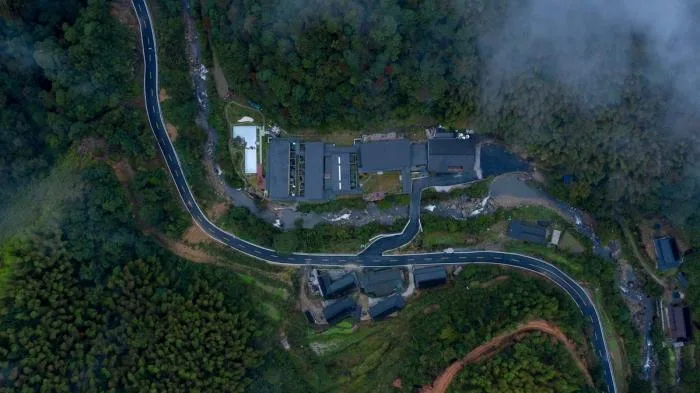
▲ Aerial perspective from above
Harmony Between Nature and Architecture
Huangsang Township’s landscape offers dense mountains and forests, a rolling sea of clouds, flowing streams, blue-tiled wooden houses, and stone-paved paths. This unadorned natural beauty forms the unique character of the area.
Choosing this site inspired us to consider the balance between natural and man-made environments. Our design respects the existing state of the land and traditional ways of life, following the natural contours and patterns of local villages. We aimed to reflect an aesthetic that appears effortless, addressing the site’s conditions and functional needs with a simple architectural language.
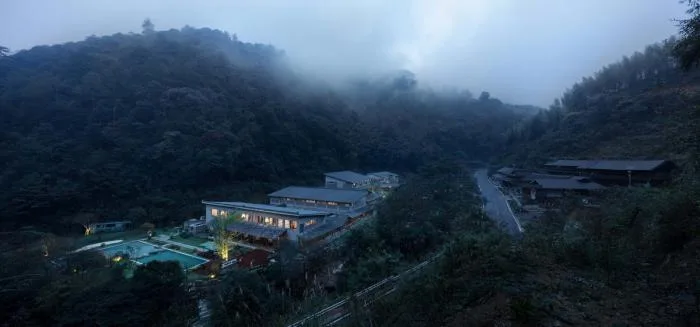
▲ Homestays integrated with traditional villages
Visual Interaction and Layout Strategy
The design separates public and guest room buildings into multiple smaller structures, arranged in a dispersed layout to reduce the sense of scale and bulk. After exploring various configurations, the final layout positions buildings either perpendicular or parallel to the site’s boundaries, aligning with the scale and arrangement of surrounding villages.
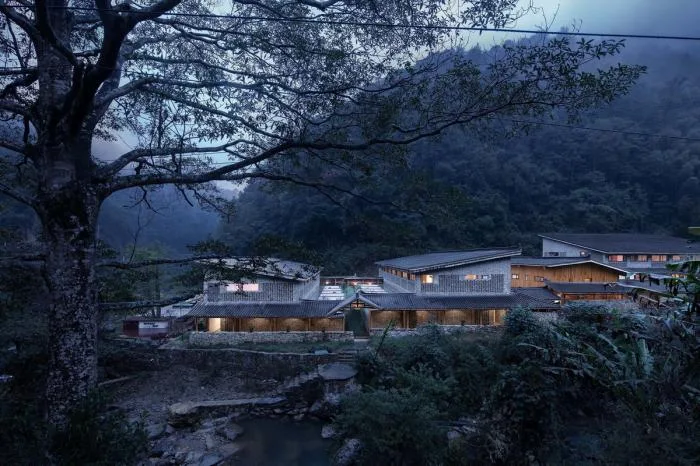
▲ View toward the homestay from the highway
Guest rooms are located deeper inside the site to ensure privacy. The first floor faces inward toward the courtyard, while the second floor offers views of the distant mountain landscape, mainly oriented along the north-south axis. Physical walls facing the east road preserve privacy while maximizing scenic views.
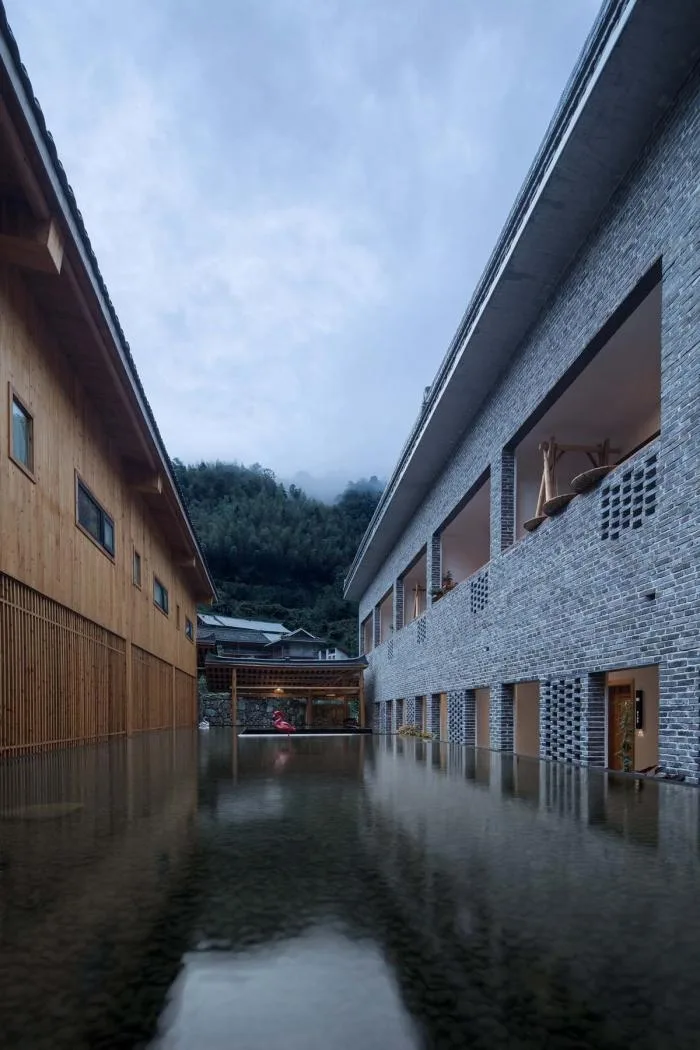
Mirror-like water pools nestled between guest room buildings
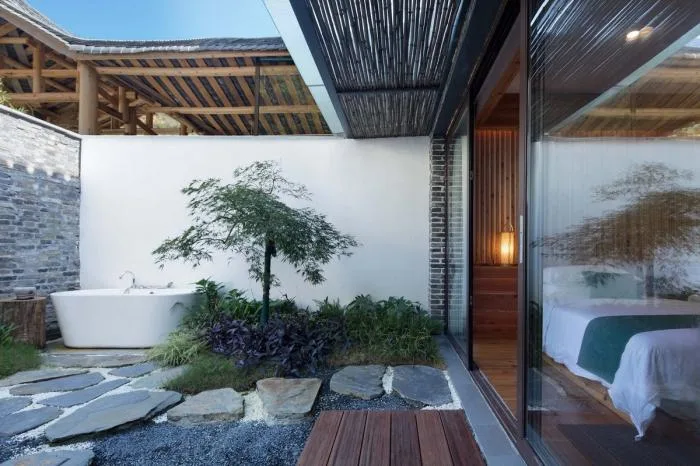
▲ Guest room courtyard
The largest buildings—the lobby and restaurant—face the highway to the east with open spaces, emphasizing public openness and marking the homestay’s main entrance. Additional structures, including the entrance hall, firewood gate, and corridors, are visible from the highway, shaping the settlement’s overall image.
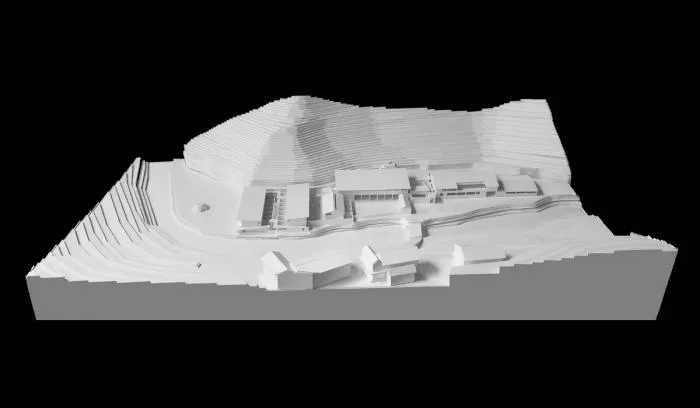
▲ Overall model
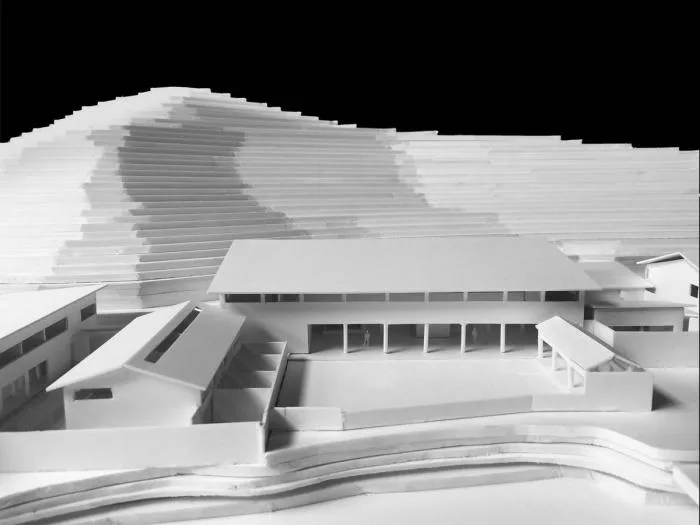
▲ Partial models showing lobby and guest rooms
Exploring the Village Experience
The winding path from the stone bridge crossing the stream to the Chai Gate offers visitors shifting views of distant mountains, alleys, and courtyards, crafting a unique, meandering village atmosphere.
Buildings are nestled against the mountains and open toward valleys, surrounded by lush vegetation. The view of distant peaks and the sound of streams provide a natural backdrop. At different times, framed views through various windows reveal ever-changing natural landscapes akin to living paintings.
Roofs are staggered and connected by corridors. Structures emerge organically from the landscape, blending seamlessly with the local architectural style.
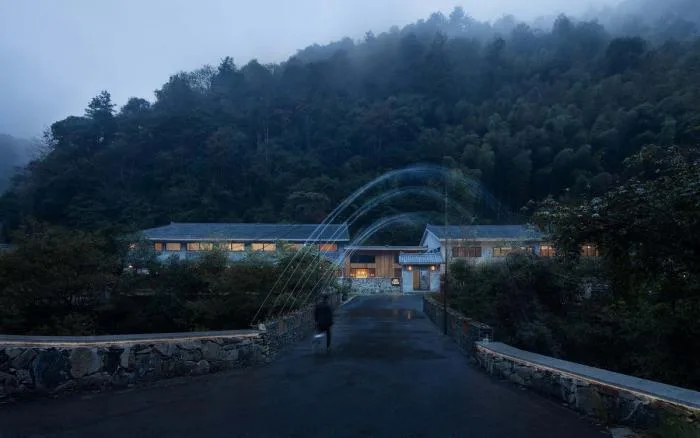
▲ Entrance stone bridge and firewood gate
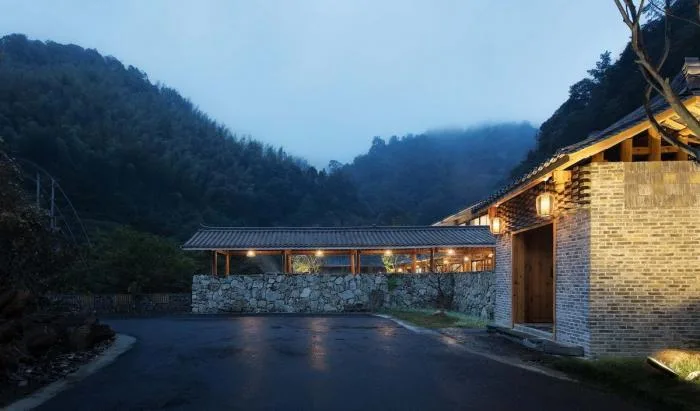
▲ Firewood gate and courtyard wall at the entrance
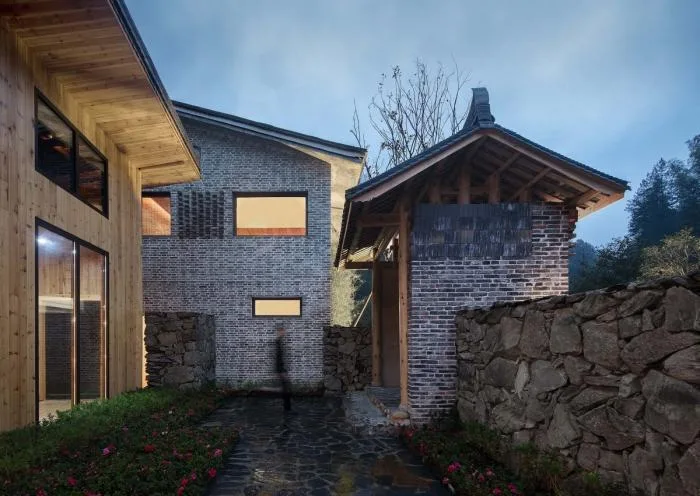
▲ Entrance hall courtyard
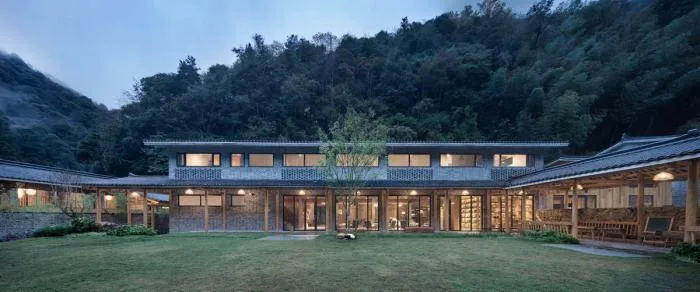
▲ Multifunctional inner courtyard
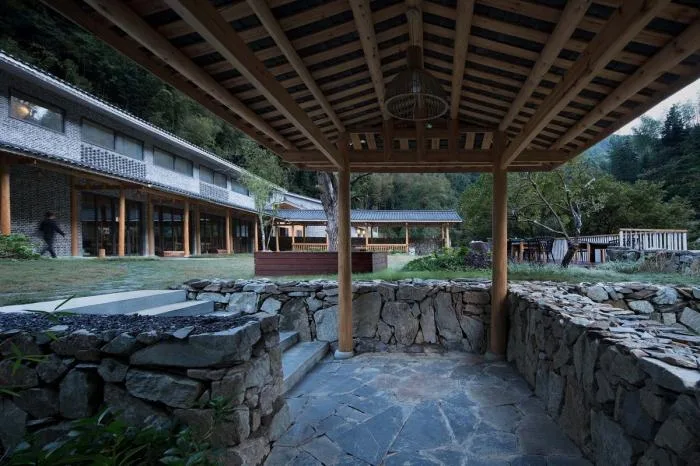
▲ Corridor following the microtopography
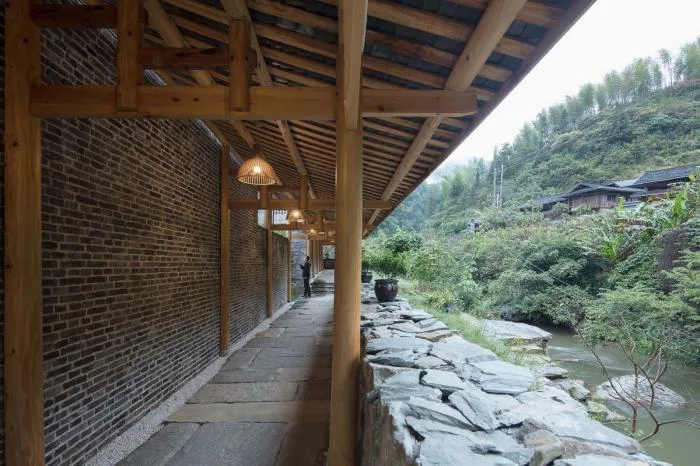
▲ Corridor beside the stream
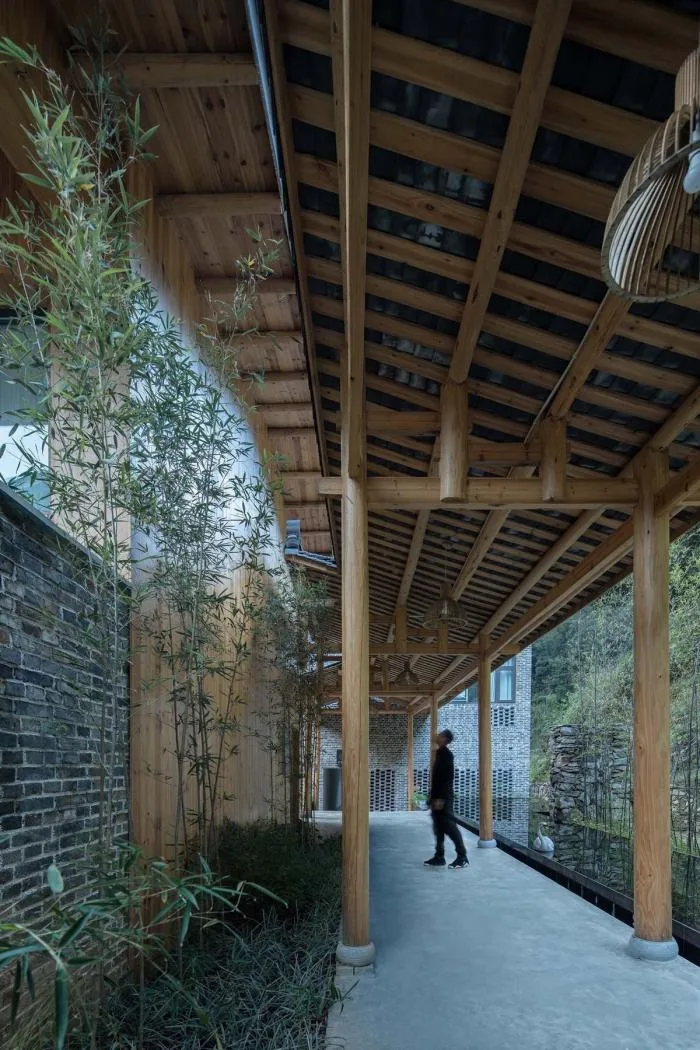
▲ Corridor space
Materials and Construction Techniques
Given Hunan’s cold winters and hot, humid summers, we incorporated two elevated layers in the design: a roof insulation layer and a ground moisture barrier. These features enhance comfort through low-tech, cost-effective means.
The buildings feature sloping roofs clad mainly in gray bricks and small blue tiles, blending into the natural surroundings while maintaining traditional cultural continuity. Decorative elements like upturned eaves and Miao architectural symbols adorn the ridgelines, adding cultural depth without compromising the design’s visual simplicity.
Variations in bricklaying, wood joinery, rubble stacking, and tile placement create an organic, harmonious relationship between materials and forms, reflecting local craftsmanship and lifestyle.
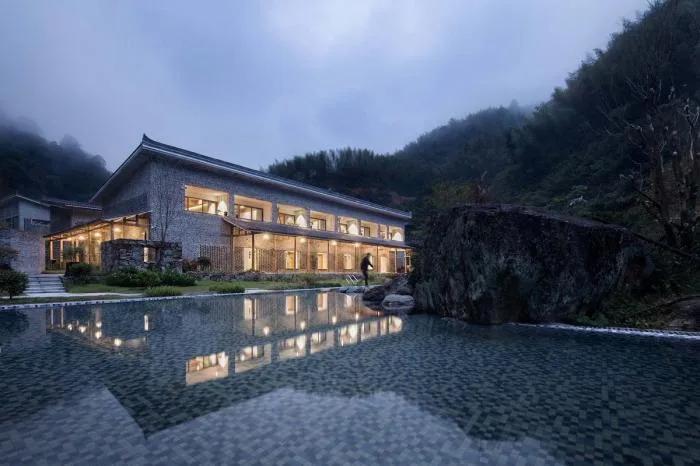
▲ Natural rubble embedded in the swimming pool
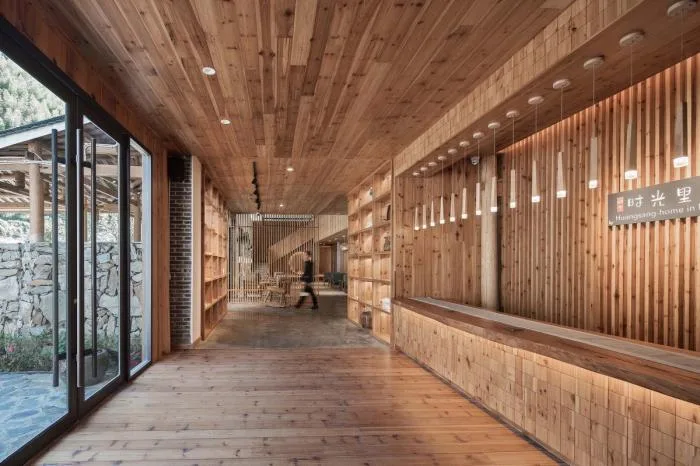
▲ Entrance hall space
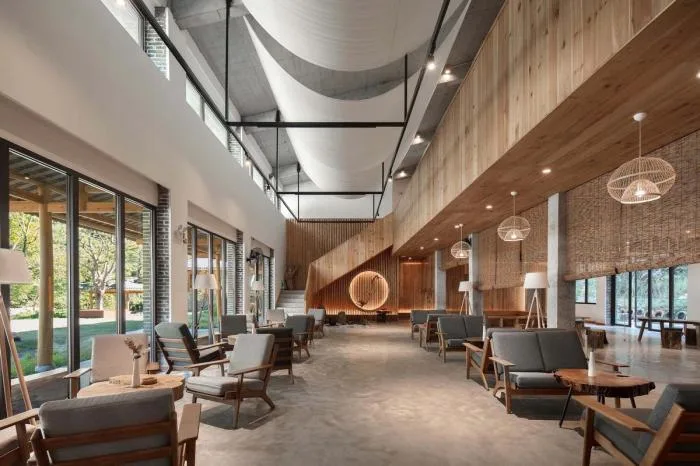
▲ Lobby space
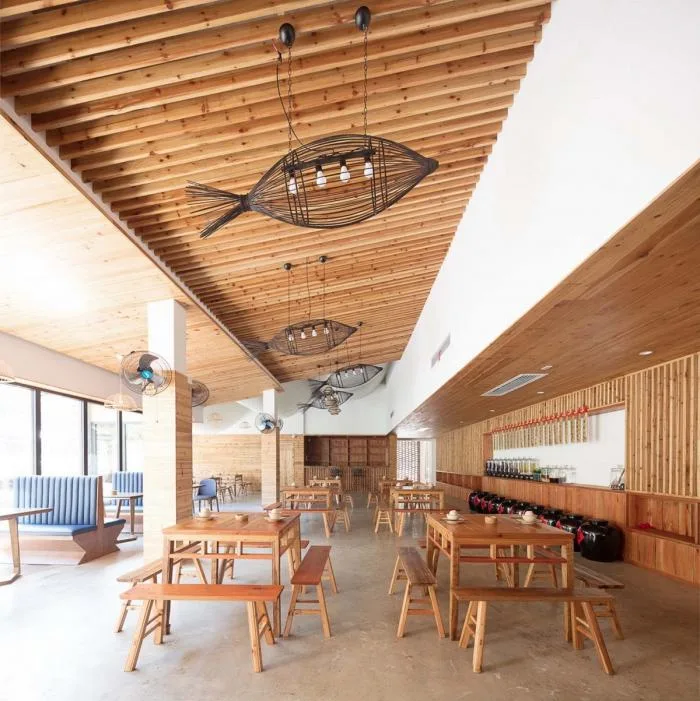
▲ Restaurant space
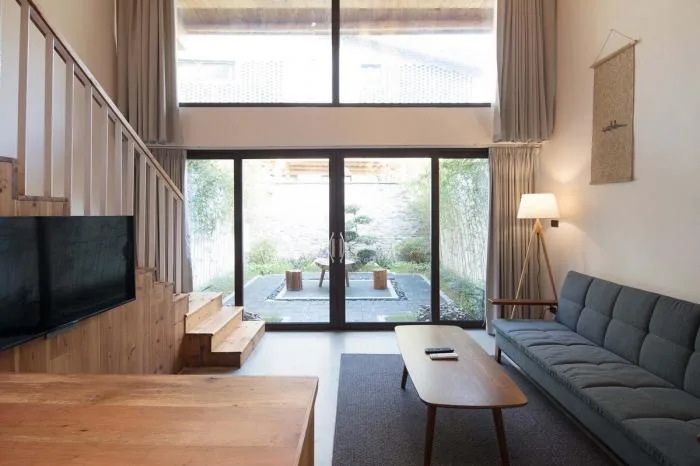
▲ Solitary room
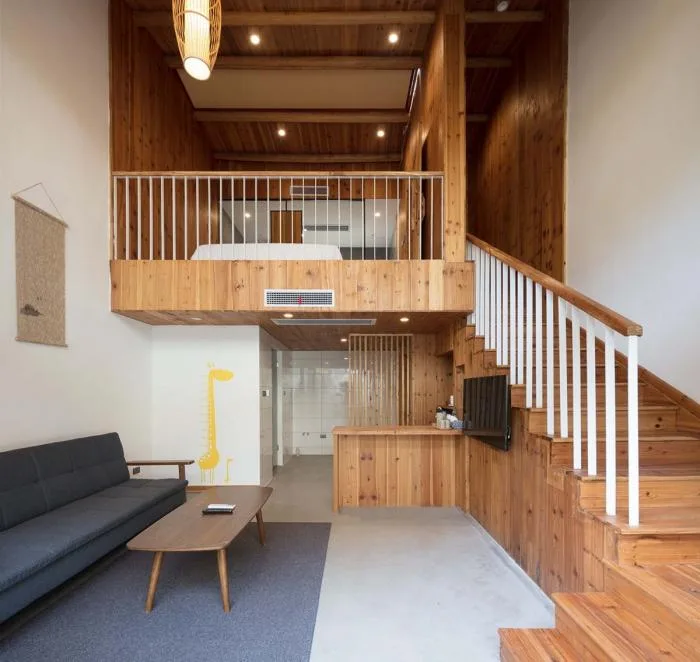
▲ Solitary room
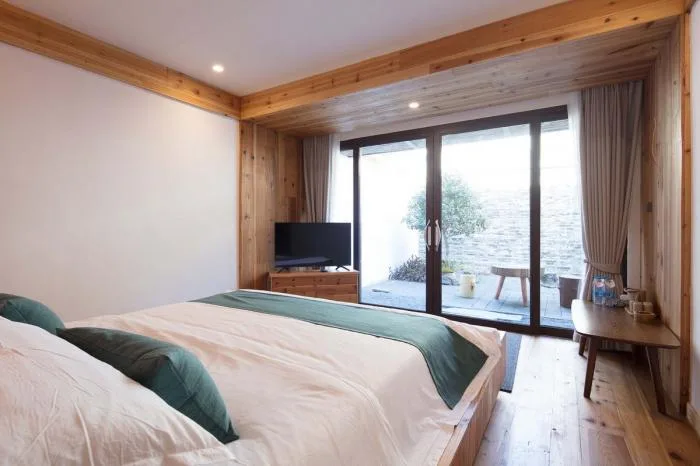
▲ Solitary room
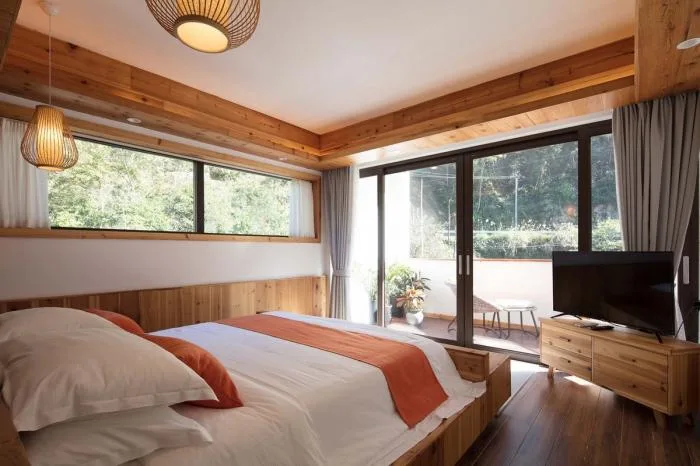
▲ Balcony room
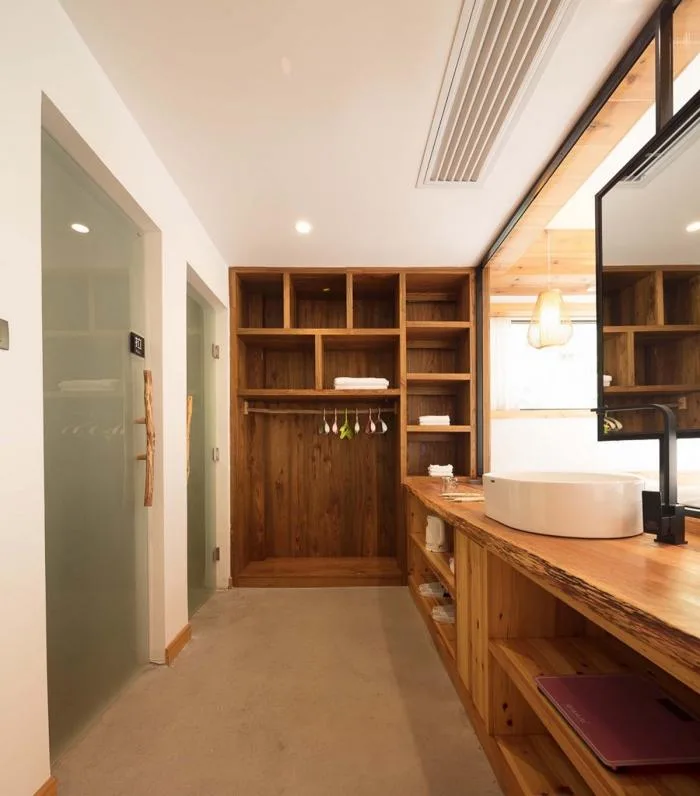
▲ Guest rooms
Conclusion
The Time Inn homestay project took nearly three years from design to construction and official opening, significantly longer than originally anticipated. This extended timeline allowed us to gain valuable experience and insights into non-professional construction projects in rural settings.
We are grateful for the owner’s full trust in our design approach. Throughout construction and operation, we continually reviewed the design process, reinforcing our commitment to the initial design strategies.
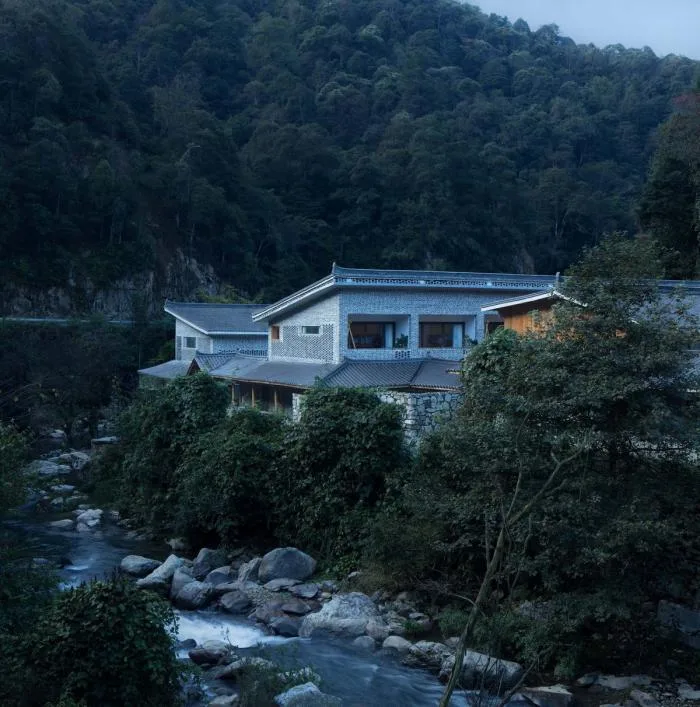
▲ Buildings nestled within the mountains and forests
Project Drawings
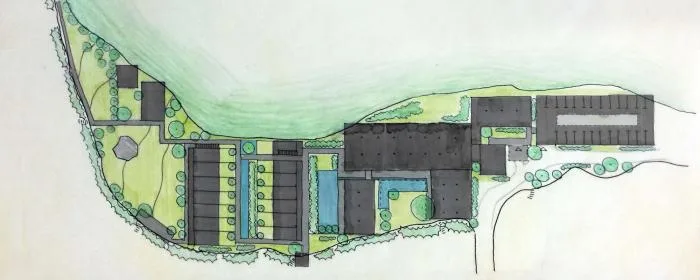
▲ General layout plan
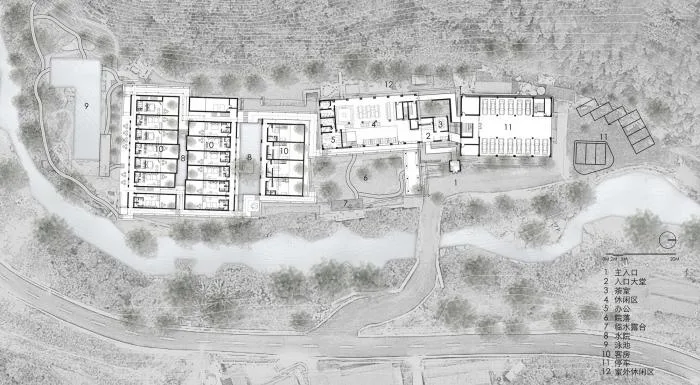
▲ First floor plan
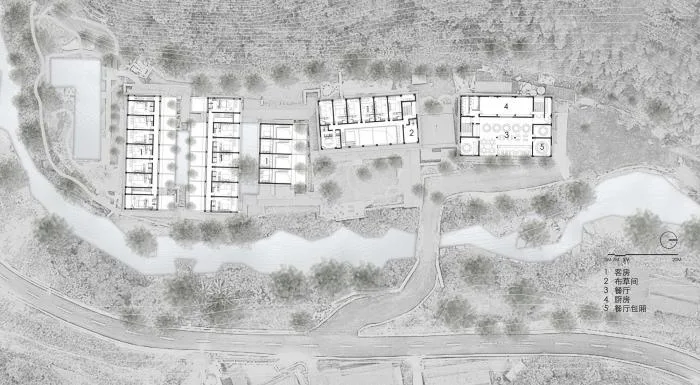
▲ Second floor plan
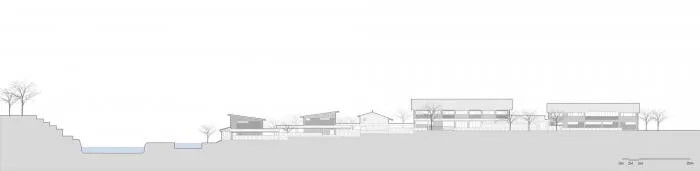
▲ Front elevation view 1
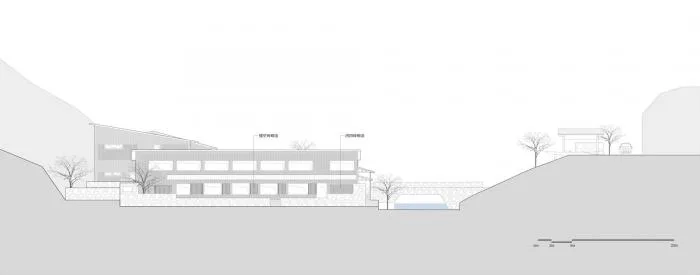
▲ Front elevation view 2
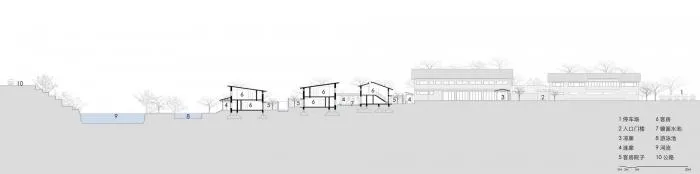
▲ Section 1
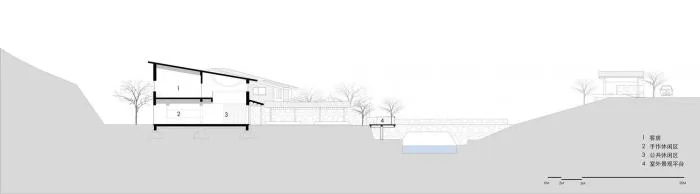
▲ Section 2
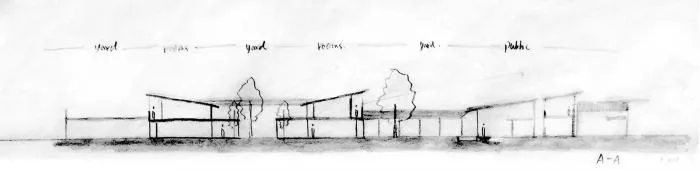
▲ Hand-drawn section 1
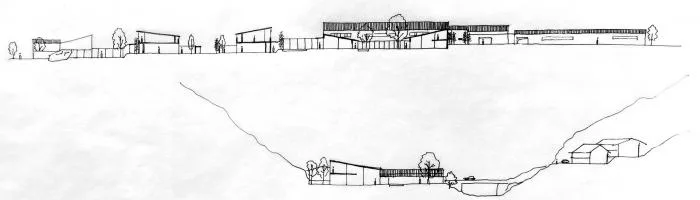
▲ Hand-drawn section 2
Project Information
Type: Hotel
Location: Suining County, China
Architectural Firm: Zhixing Architectural Firm
Area: 3,313 m²
Year: 2019
Manufacturers: Foshan Lidu Doors And Windows Co., Ltd., Hunan Naimei Flooring Engineering Co., Ltd., Wanxing Building Materials Co., Ltd.
Lead Architects: Chen Kai, Zhou Ziqiao
Design Team: Deng You, Zhou Lili
Structural Engineer: Zhao Xiaolei
Interior Design: Zhixing Architectural Firm












Must log in before commenting!
Sign Up