
▲ Project Video
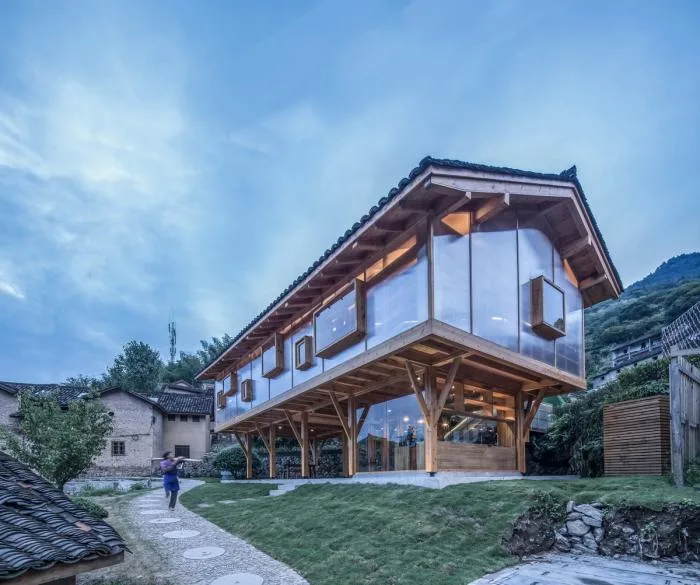
▲ Shiyun Mountain Residence
The southern region is characterized by numerous mountains covered with dense forests.
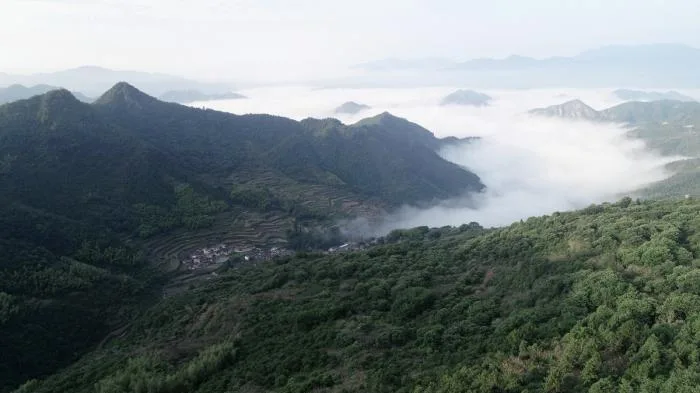
A Village Nestled Among Mountains
Shiyunshan House is situated in an ancient mountain forest village in Wuyi County, Jinhua, Zhejiang Province. The village preserves its original rammed earth dwellings, built to adapt to the varying mountain elevations. Surrounded by mountains, the village entrance is marked by several centuries-old ancient trees. The bookstore stands near the village entrance square, adjacent to well-preserved rammed earth courtyard houses. The original site housed a cowshed, which had collapsed and was subsequently demolished.
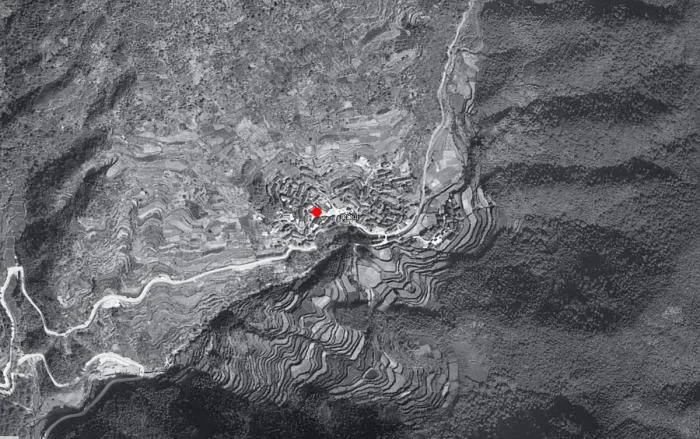
▲ Building Location

▲ Overall View of the Village
The library was designed to serve as a tranquil reading space for the ancient village, offering residents a calm retreat. It aims to attract young people and children back to the mountains, providing a rich and peaceful environment where both children and the elderly can experience freedom and joy.
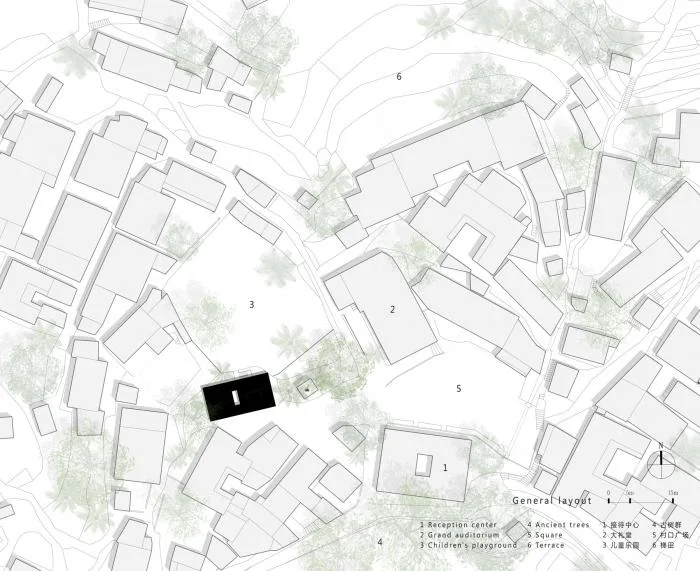
▲ General Layout Plan
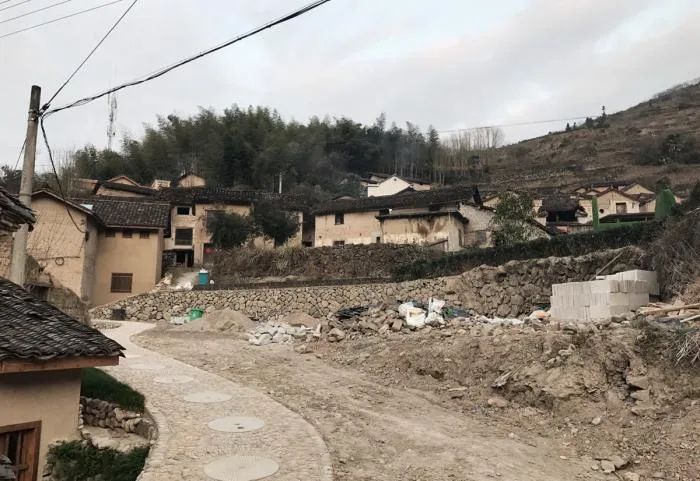
▲ Venue Environment
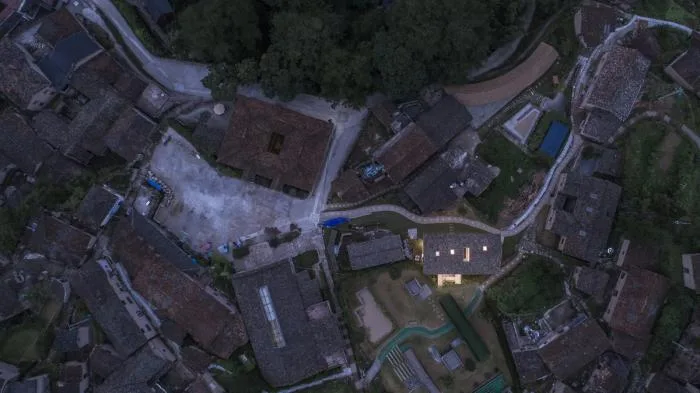
▲ Overlooking the Building, Harmoniously Integrated into Surrounding Residences

▲ Aerial View of the Bookstore
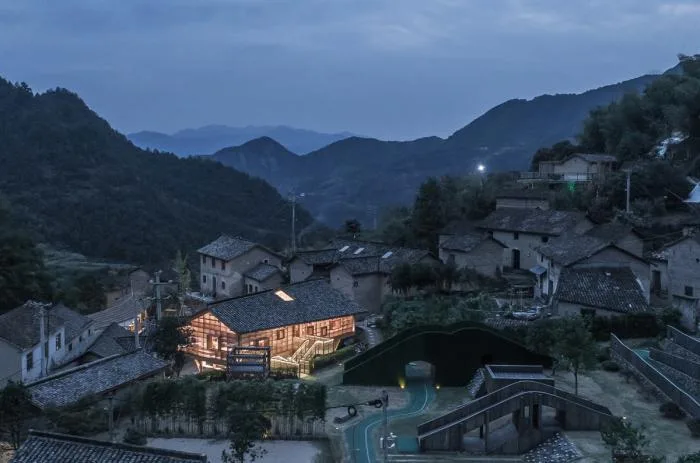
▲ Aerial View of the Bookstore
Creating a Space Friendly to Both Villagers and Nature
From the outset, we envisioned dedicating part of the library’s space for the villagers. To achieve this, we designed an elevated, semi-outdoor open area on the library’s first floor, supported by ten structural columns lifting the entire level. The main reading area is situated on the second floor, connected to the open space below by an outdoor staircase. On the first floor, only a small water bar is provided for refreshments; the rest remains open to the public. This open area invites villagers to enjoy tea and conversation, while children can play freely, fostering a variety of community activities.
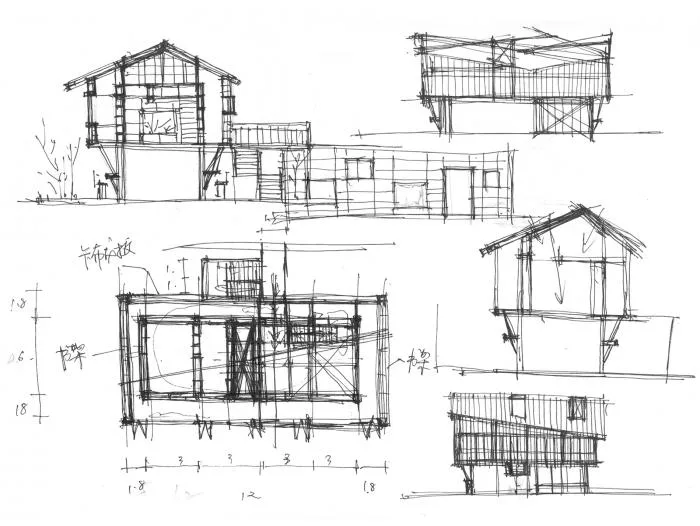
▲ Design Sketch
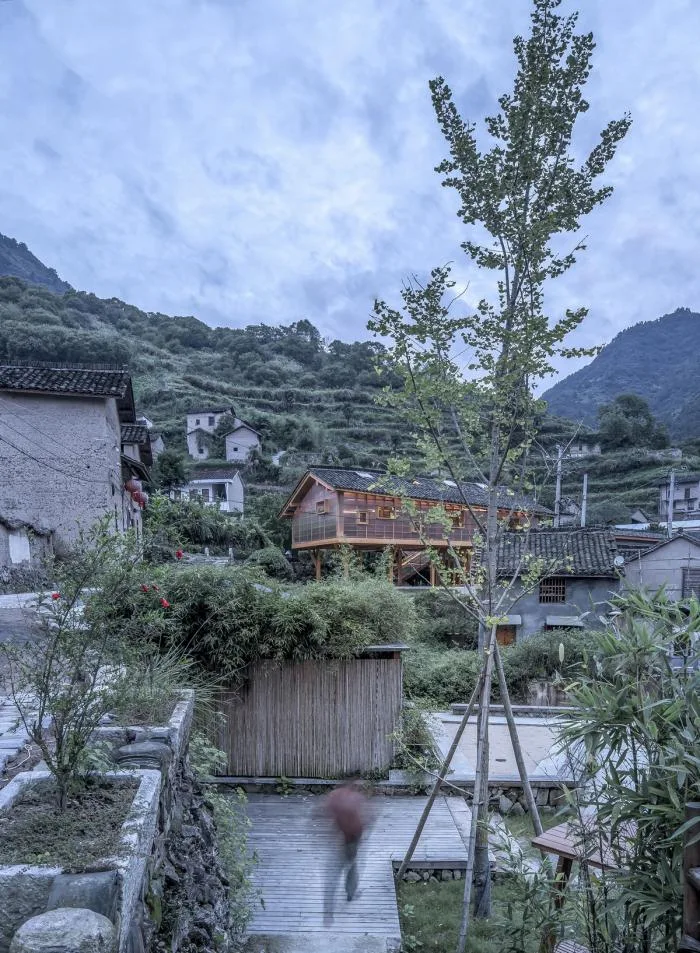
▲ Library Harmoniously Integrated into the Village Environment
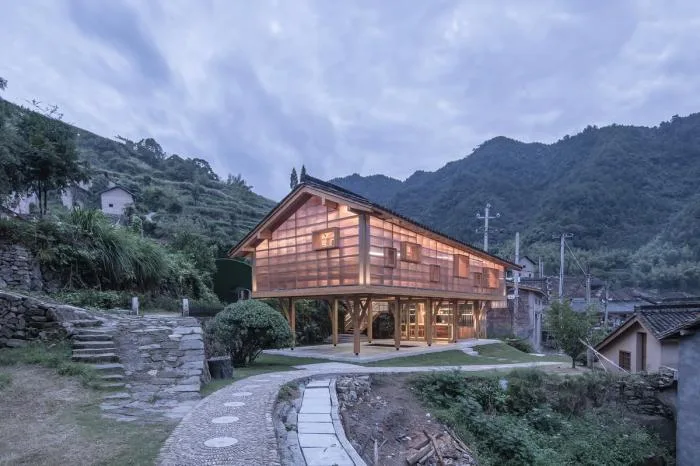
▲ View of the Conceptual Library from the Southwest Corner
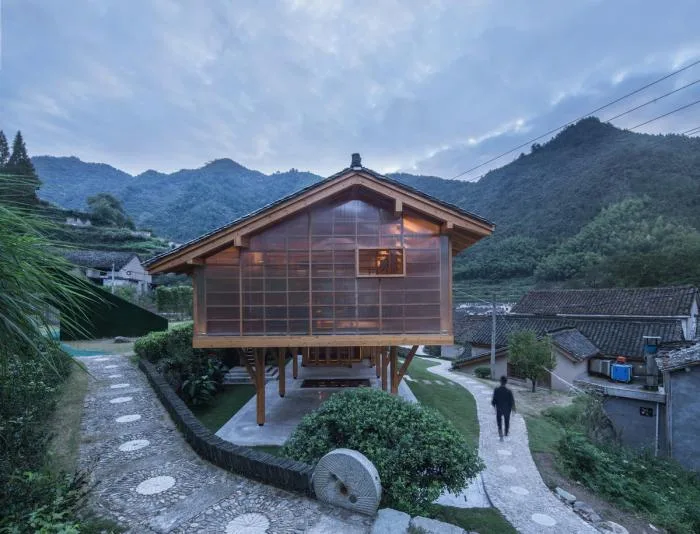
▲ West Facade of the Library
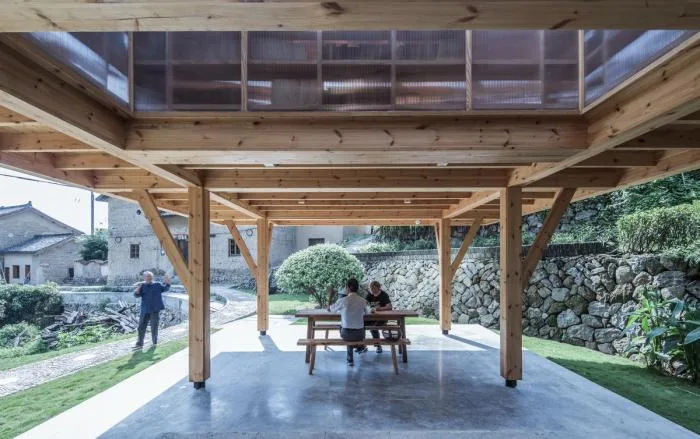
▲ Villagers Enjoying Tea and Conversation on the Bookstore’s First Floor
The library is located on a triangular site bordered by the village’s main pedestrian path to the south and a three-meter-high stone wall to the north, behind which lies a children’s playground. To foster a harmonious relationship with the surroundings, the library’s main reading area is elevated, creating a sheltered space beneath it where pedestrians can rest. The second floor aligns with the children’s play area, encouraging easy access for children to the library and allowing parents to supervise their children while reading. This design respects both the site’s characteristics and rural lifestyle, aiming to maintain a friendly connection between the building, villagers, and the environment.
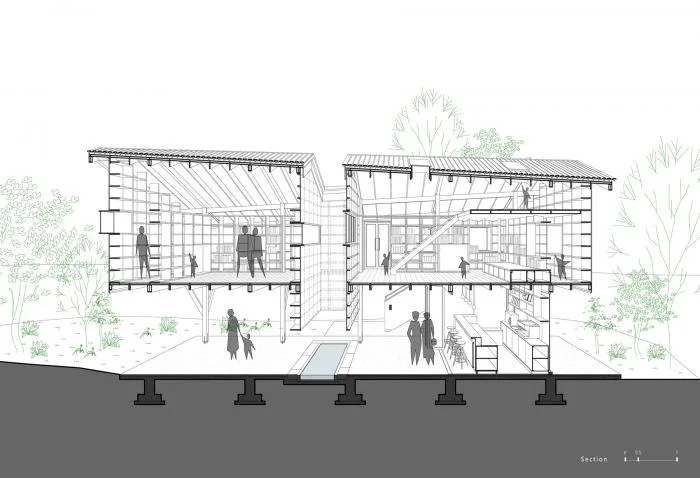
▲ Sectional Perspective
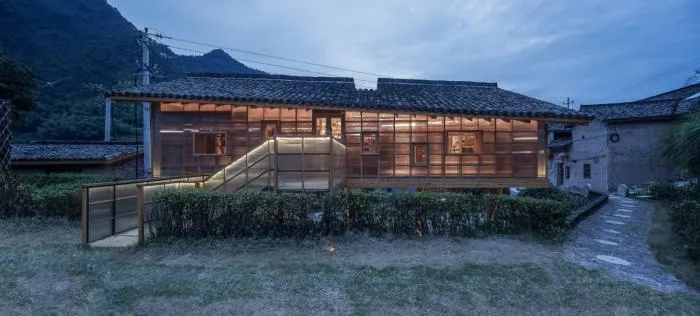
▲ North Facade of the Library
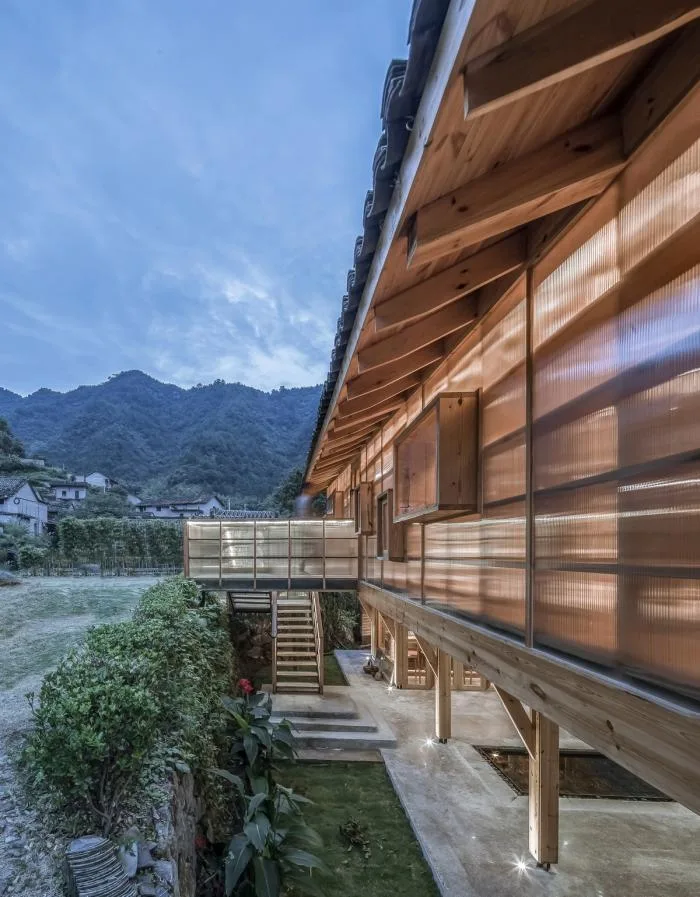
▲ Addressing Height Differences Between Building and Site
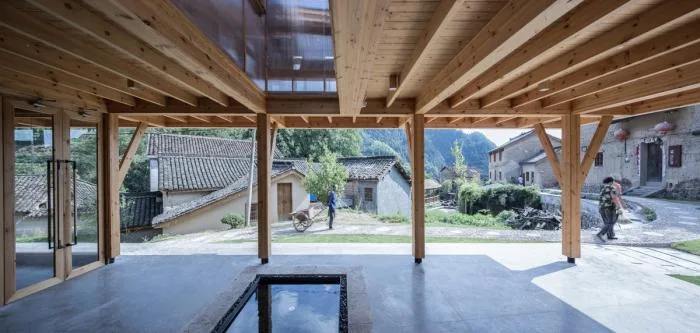
Relationship Between the Library’s First Floor and the Village Road
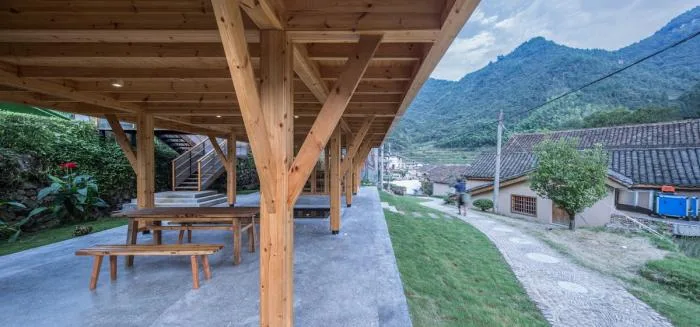
Relationship Between the Library’s First Floor and the Village Road
Courtyard and Temporality
The courtyard, serving as the spatial core, is incorporated into the library at a comfortable scale. Beneath the courtyard floor on the first level, a water surface is maintained. Rainwater falls from the courtyard into this pool, creating a soothing dripping sound within the library. On sunny days, sunlight streams directly into the courtyard, producing unique light and shadow patterns. This courtyard not only connects the building with nature, time, and space but also embodies the concept of temporality that is vital to the design.
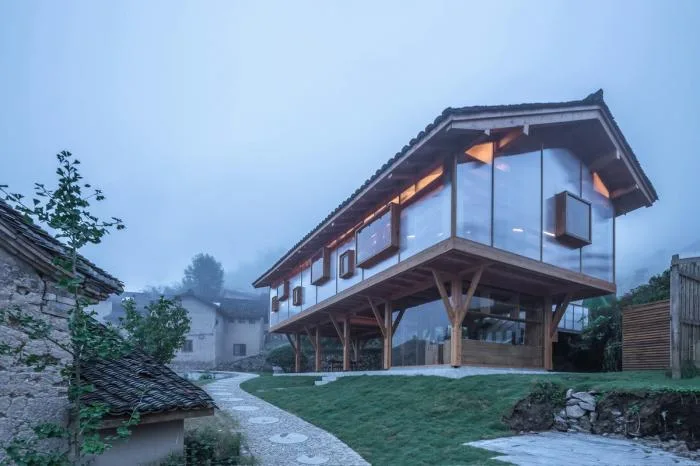
▲ Bookstore Amid Clouds and Mist
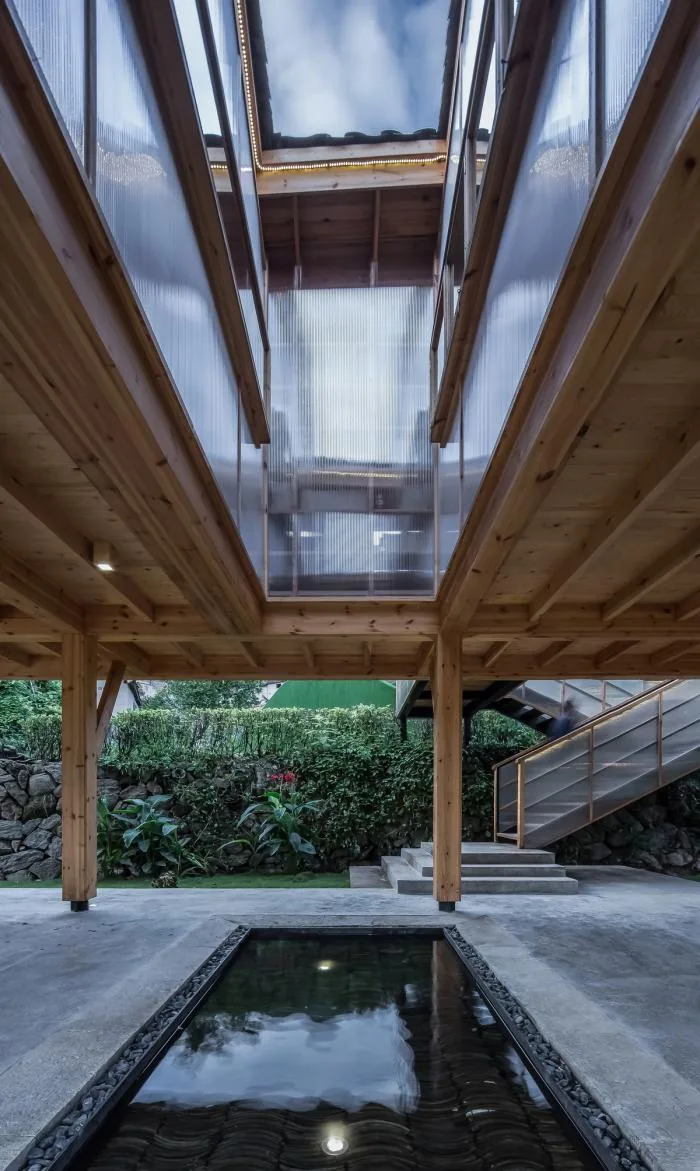
▲ Courtyard and Water Feature
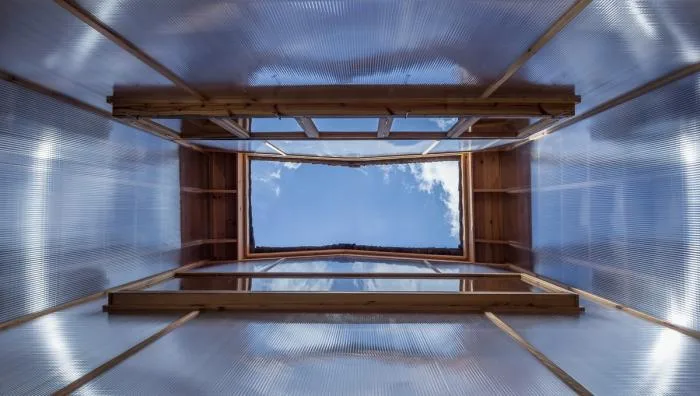
▲ Inside the Courtyard
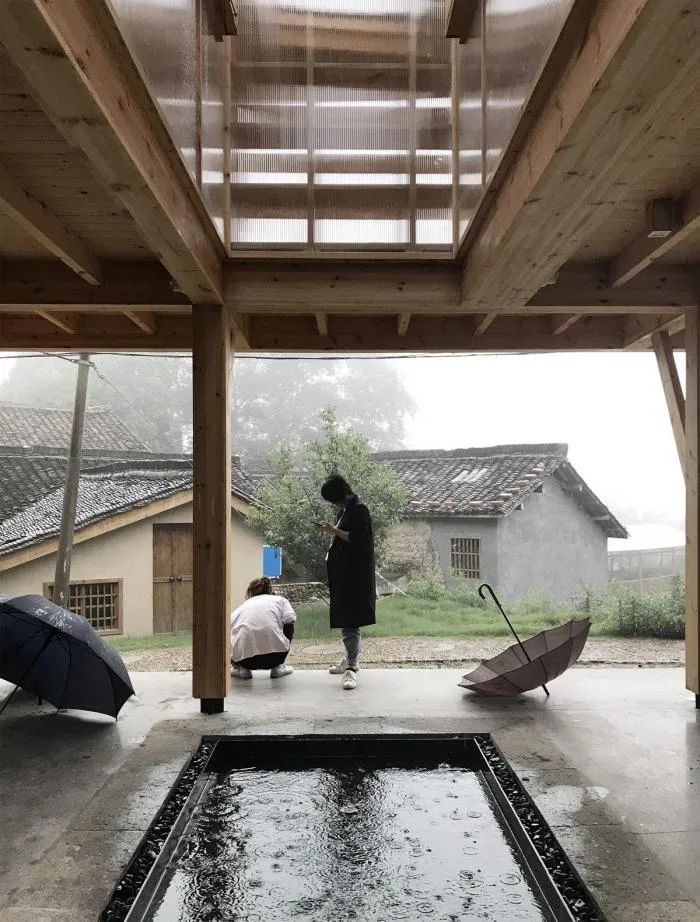
▲ Rainwater Falling into the Courtyard
The courtyard is designed to await specific moments — when sunlight filters in, casting dynamic shadows; when raindrops ripple the water surface; when gentle breezes flow through the space. This special place embodies the harmonious coexistence of people, nature, space, and time in rural architecture. The courtyard invites natural elements — sunlight, rain, air — to become part of the indoor experience.
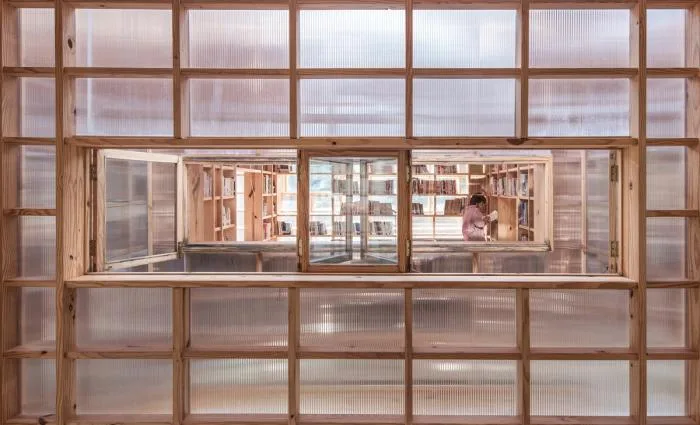
▲ View of the Reading Area Through the Courtyard
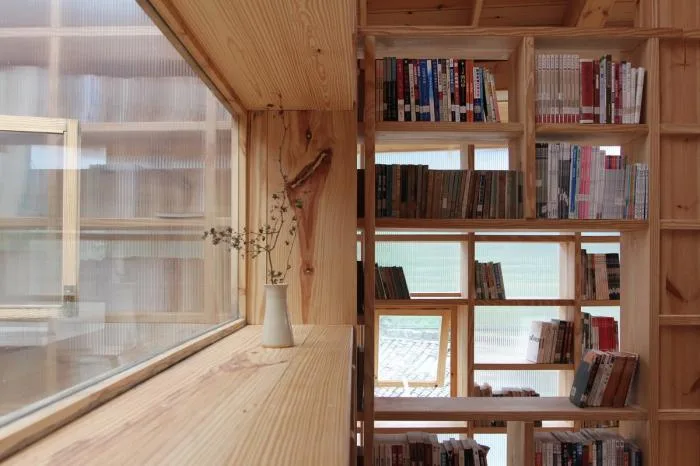
▲ Courtyard and Bookshelf
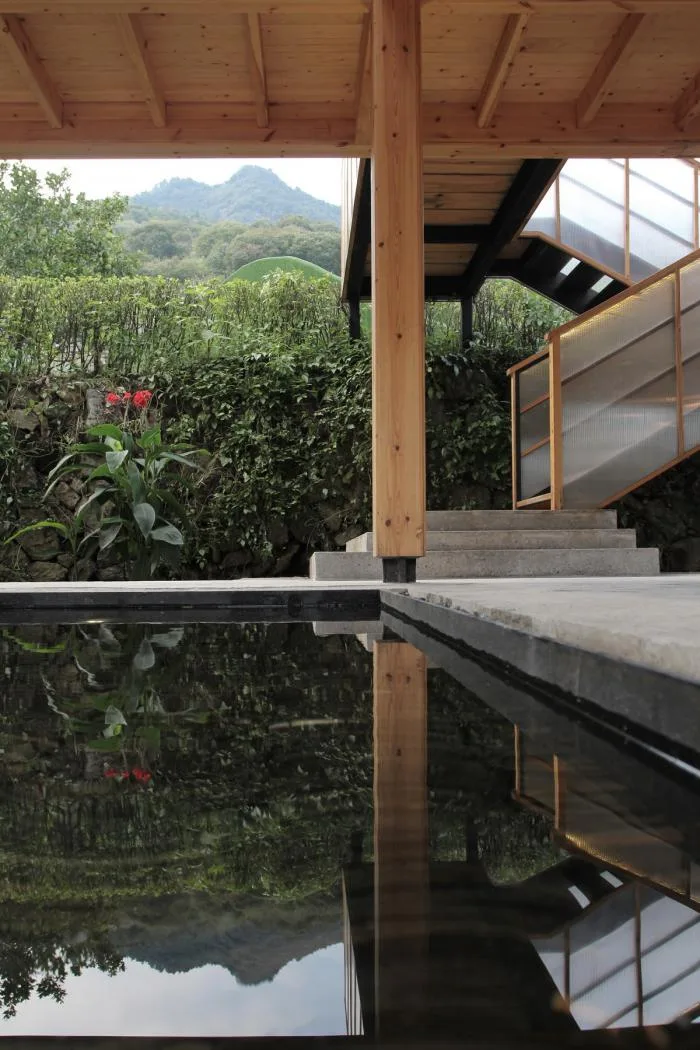
▲ Detailed View of Column Base
Corridor and Connection
On the library’s second floor, two circular bookshelves create a walkway surrounding the courtyard and central reading space. These shelves are about one meter wide and comfortably scaled, suspended from the first floor’s structure. Walking through this corridor provides a garden-like wandering experience. The zigzag bookshelves feature staggered openings of varying heights and sizes that allow sightlines to extend and air to circulate freely.
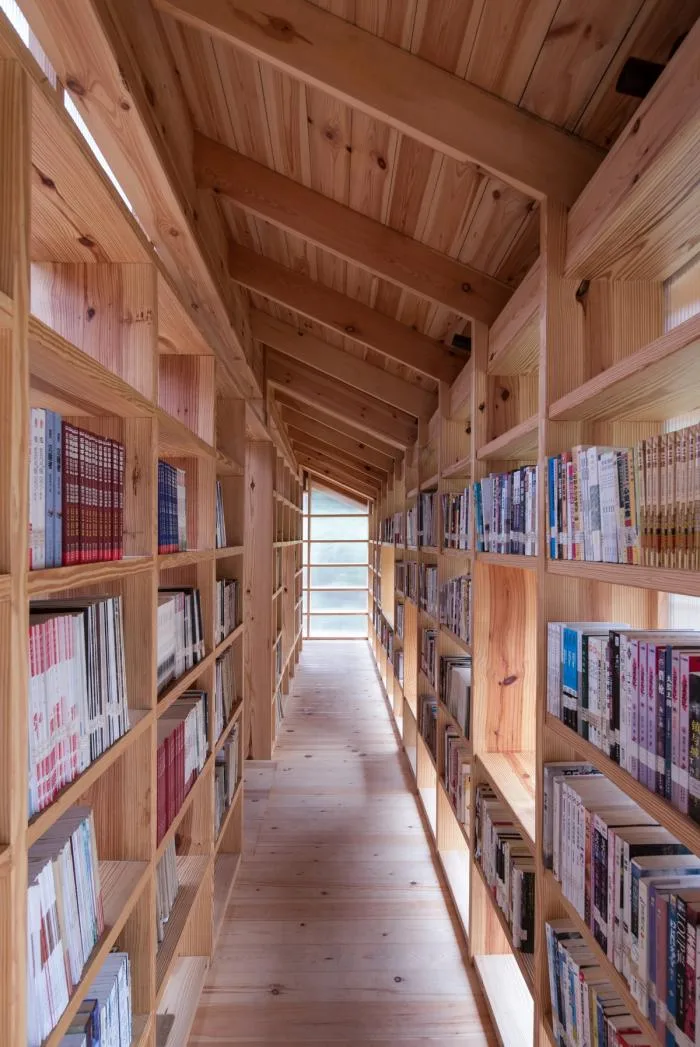
▲ Bookshelf Corridor
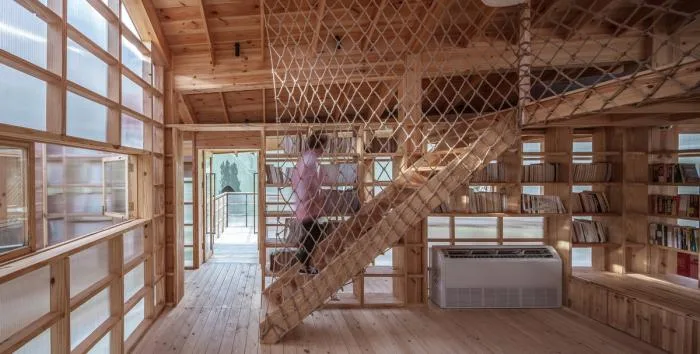
▲ Entrance and Staircase on Upper Level
As visitors wander through the corridor, their perspective suddenly opens up through an entrance, dissolving spatial boundaries. From the other side of this cave-like entrance, one can see a person reading on the windowsill, while beyond the window, distant mountains, forests, and trees unfold. This layered perspective fosters communication and dialogue between space, people, and the surrounding environment.
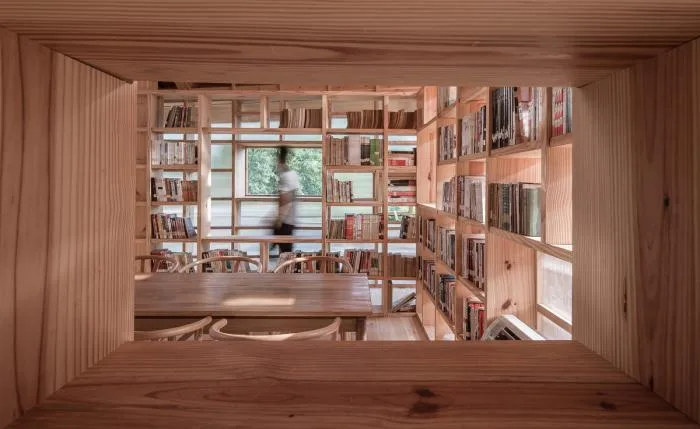
▲ Peeking into the Reading Space Framed by Bookshelves
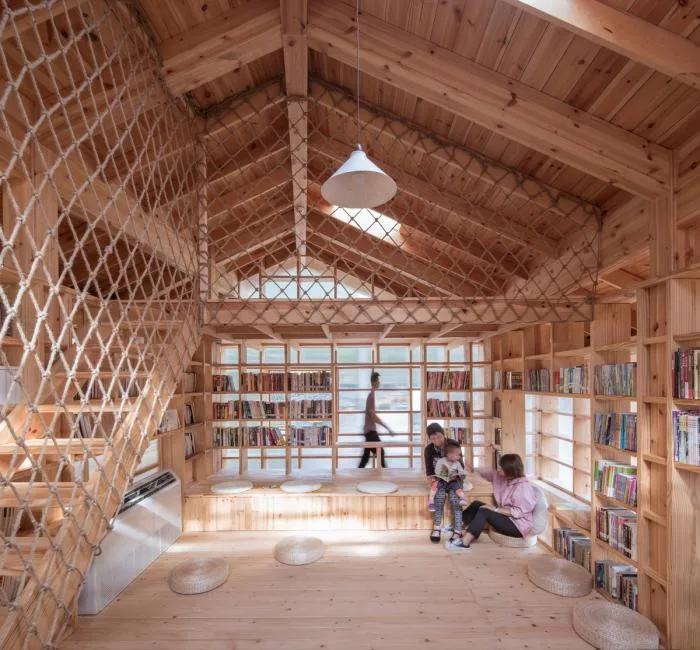
▲ Various Scenes of Children’s Reading Spaces
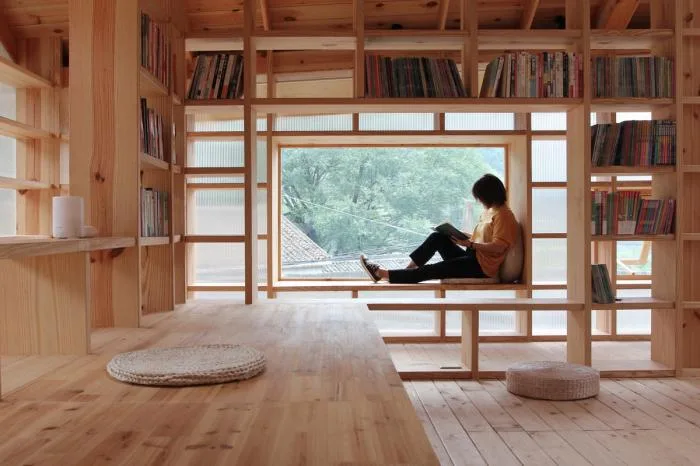
▲ Bookshelf Integrated with Reading Areas
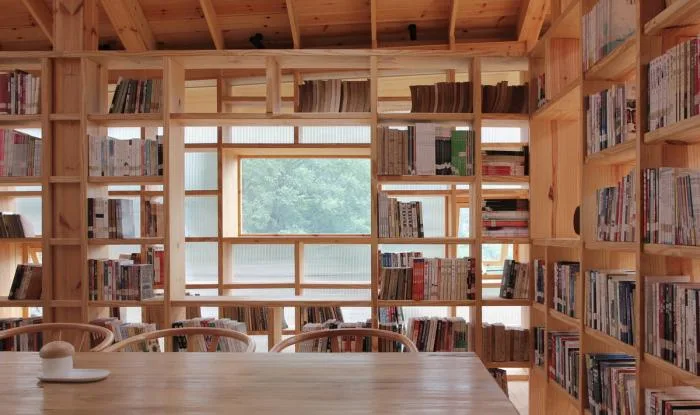
▲ Transparent Bookshelf Design
Experimental Approach
Experimentation has been central to our architectural design process. For this library, we conducted two key experiments: one focusing on form and typology, and the other on material application.
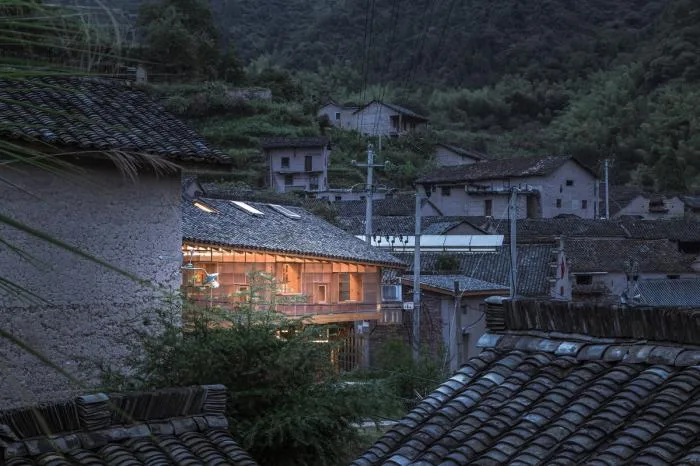
▲ Library Integrated with Layered Roof Forms
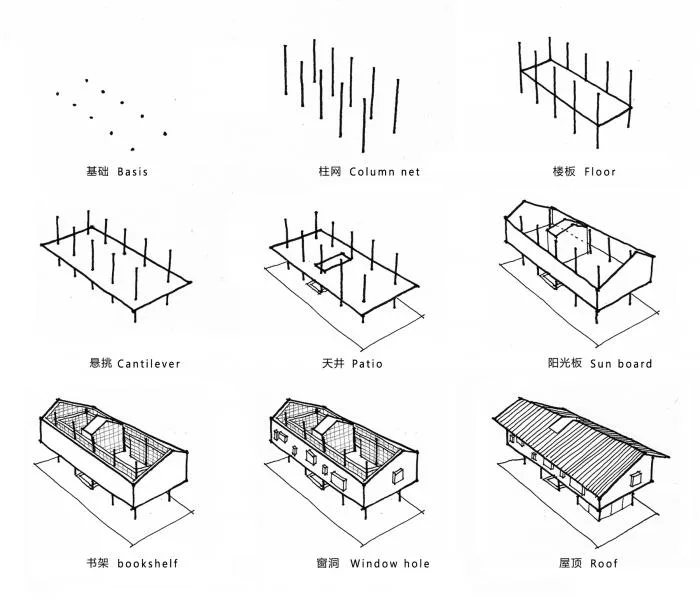
▲ Morphological Evolution
Regarding form, the library’s reading area is elevated and continues the traditional double-sloped roof style of local residences, including the roof’s slope and the use of small blue tiles for water drainage. However, a subtle design twist was introduced—a 6.5° deviation in the roof ridge angle—creating variation in the eave heights. This sloping interior roof, combined with the homogeneous bookshelf arrangement, results in a dynamic and varied spatial experience.
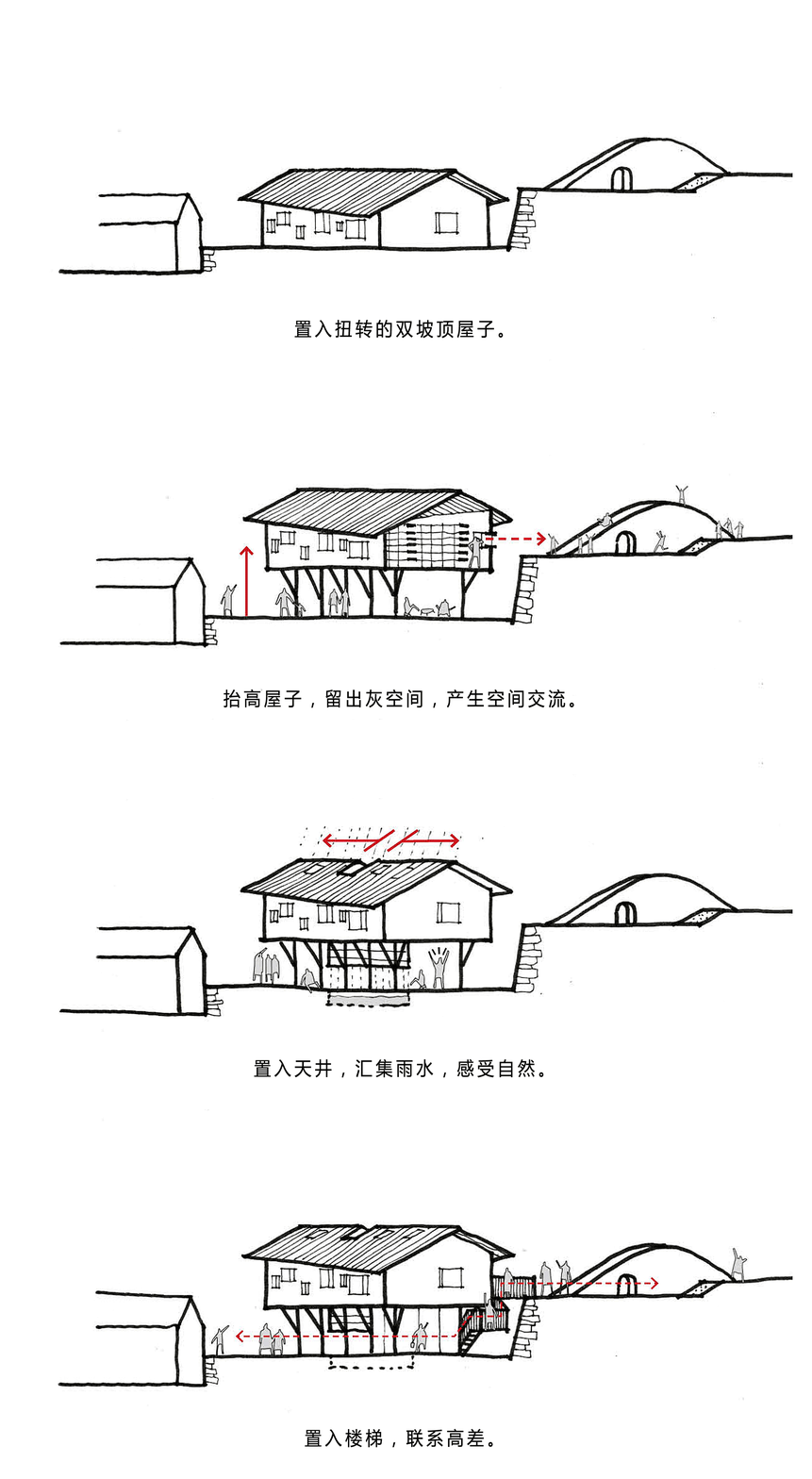
▲ Design Strategy
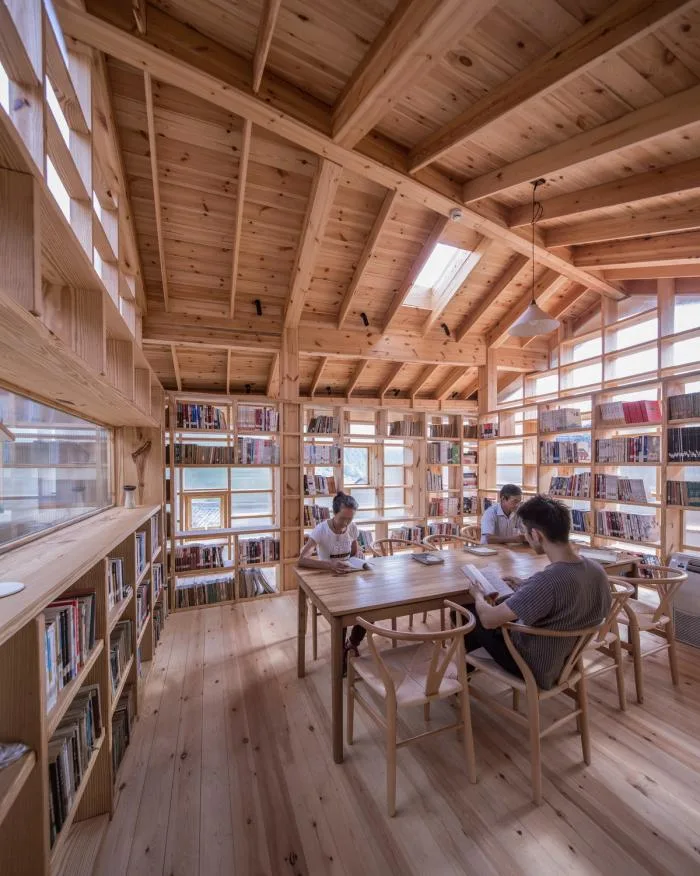
▲ Reading Space
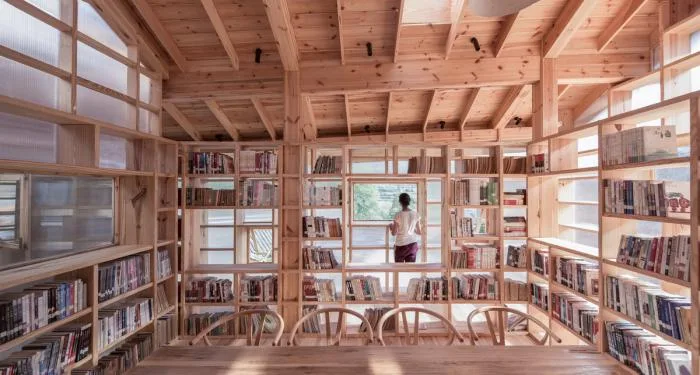
▲ Roof Structure Corresponding to Bookshelf Layout
Material-wise, the library’s bookshelves are crafted from 3 cm thick pine boards arranged modularly with a consistent scale. The vertical supports of the bookshelves align directly with the roof’s structural beams, creating a cohesive design language. The exterior facade features sunlight panels—an uncommon choice in rural settings—that render the building semi-transparent. These panels filter natural light softly inside, providing a comfortable reading atmosphere while maintaining a subtle connection with the surrounding outdoor landscape, enhancing the sense of semi-transparency.
▲ Kablon Edition
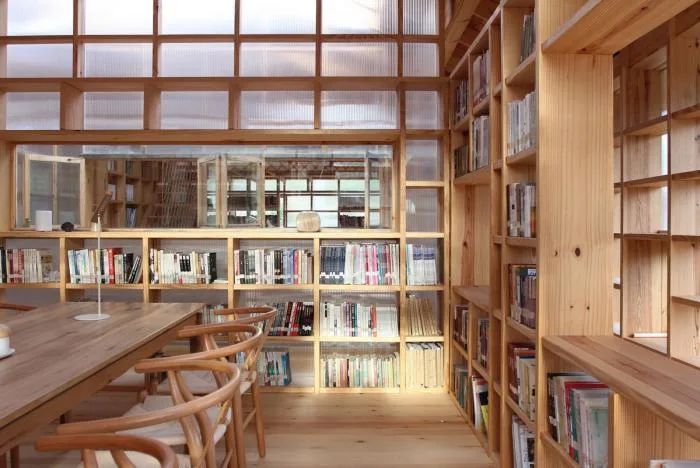
▲ Soft, Gentle Lighting for Reading
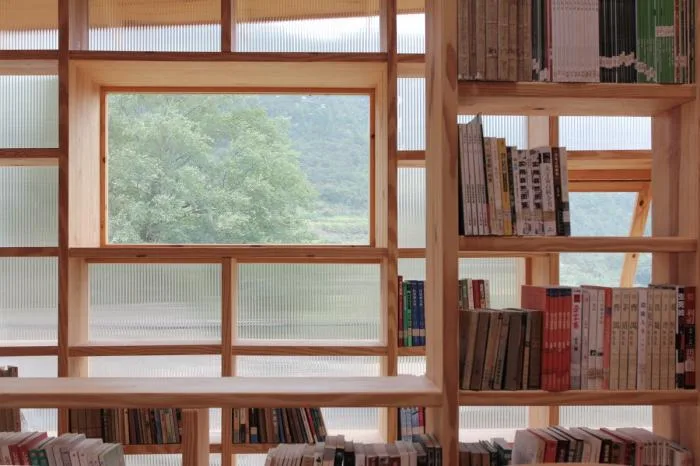
▲ Concealed Outdoor Views
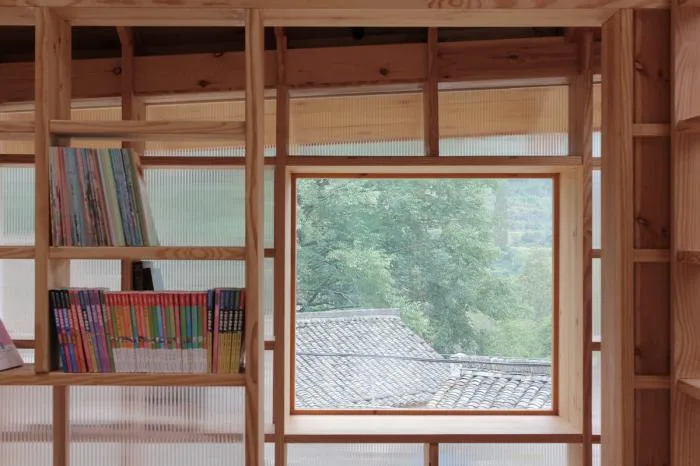
▲ Concealed Outdoor Views
Rural areas remain unfamiliar territory for many architects, yet more are engaging with countryside projects and embracing experimentation. We approach rural design with an exploratory and integrative mindset, aiming to intervene thoughtfully. Design inspiration often arises not only from architects’ intuition but also requires deep roots in local context to harmonize creativity with place. Rural architecture lacks fixed standards or rules; its success depends on its resonance with the countryside itself. We hope this project marks a positive beginning.
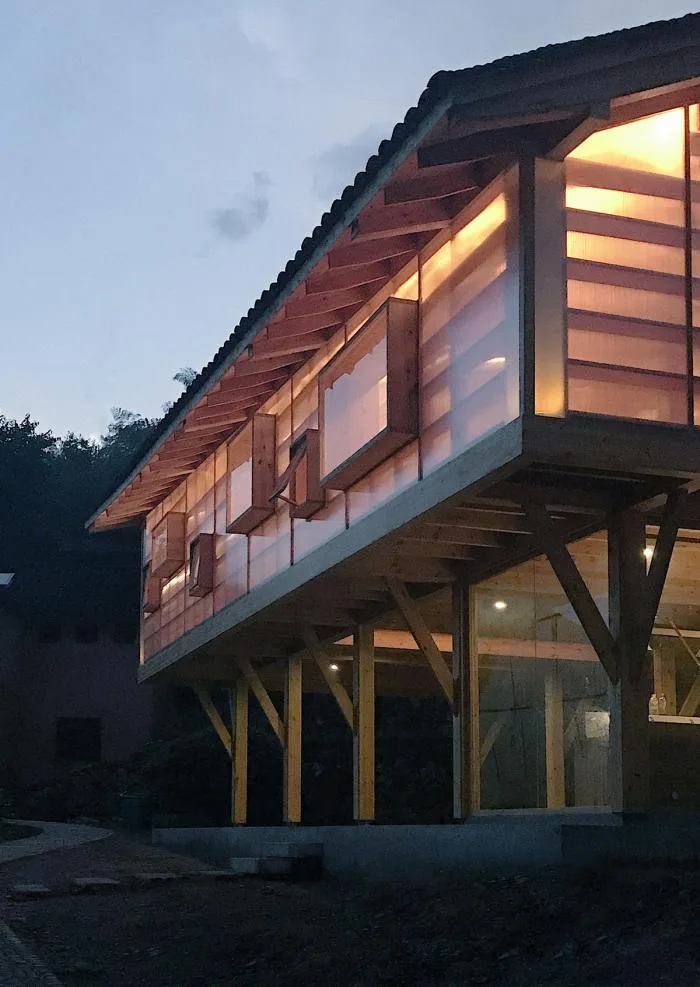
▲ Evening View of the Bookstore
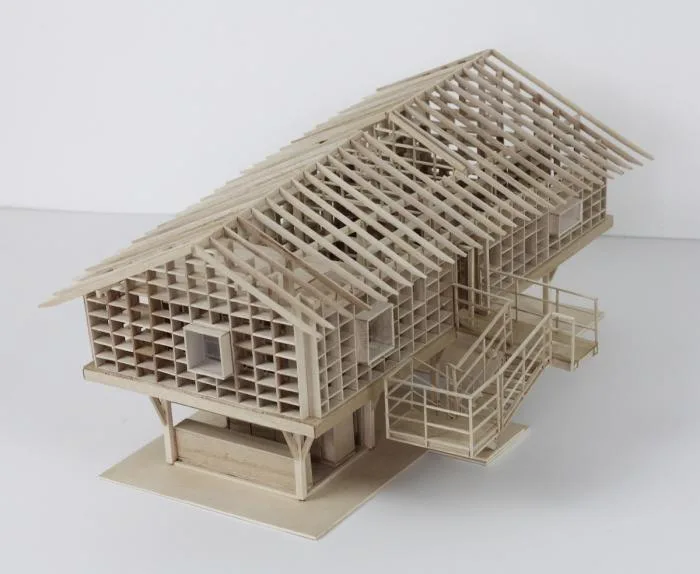
▲ Handmade Model
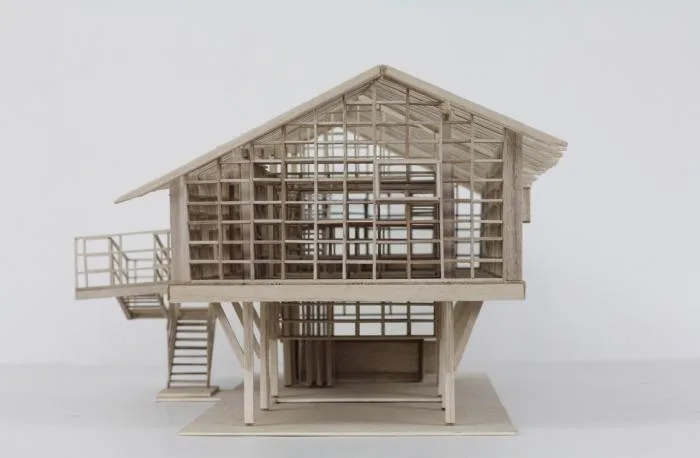
▲ Handmade Model
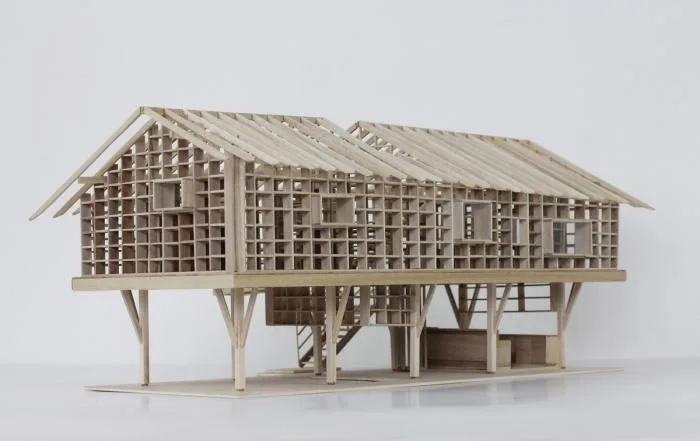
▲ Handmade Model
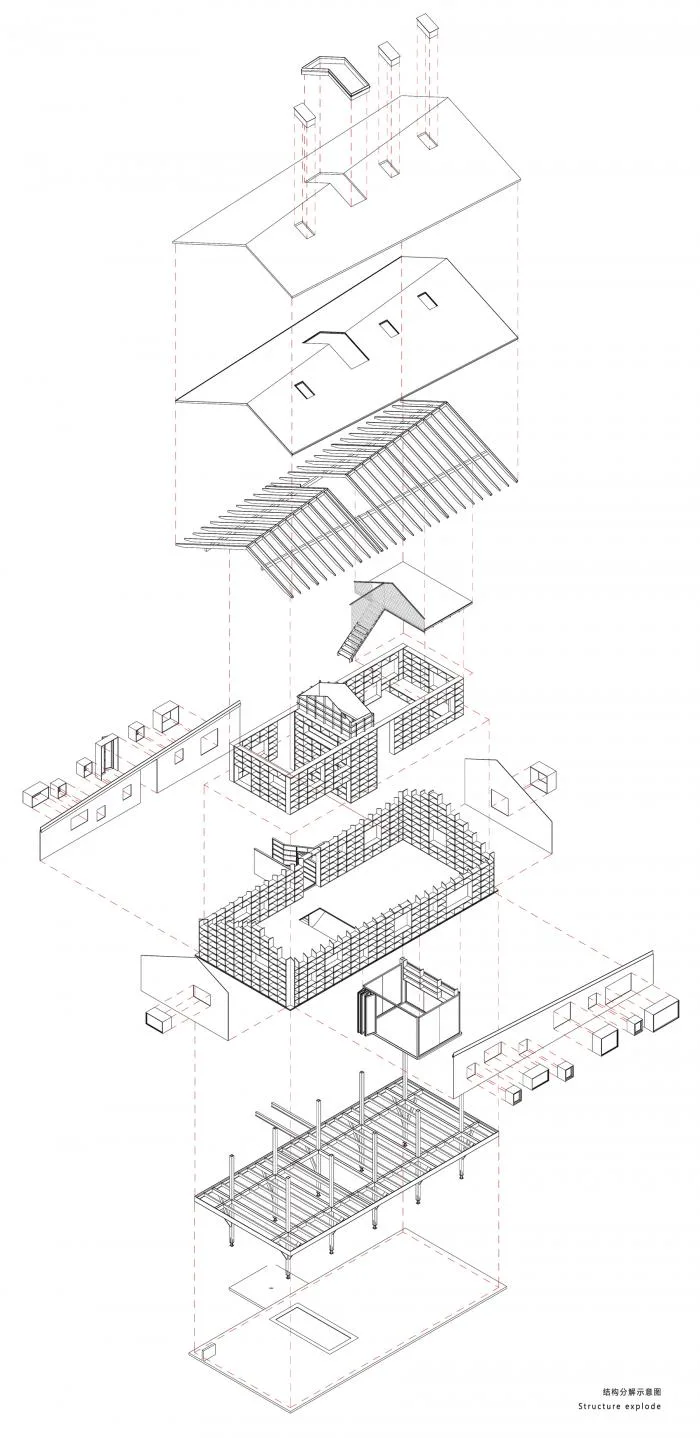
▲ Structural Decomposition Diagram
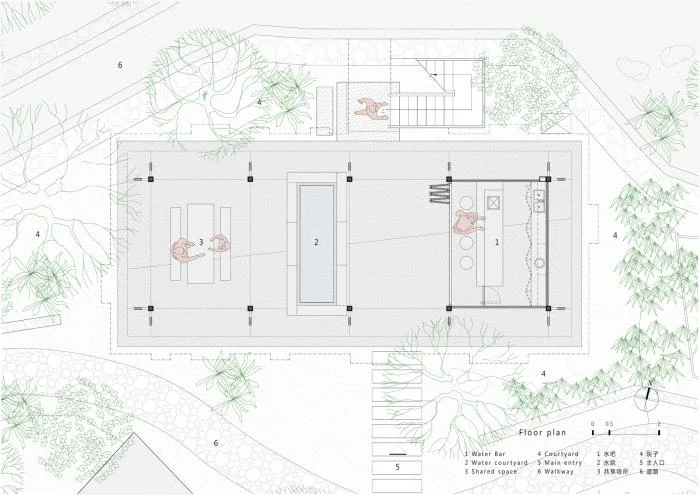
▲ First Floor Plan
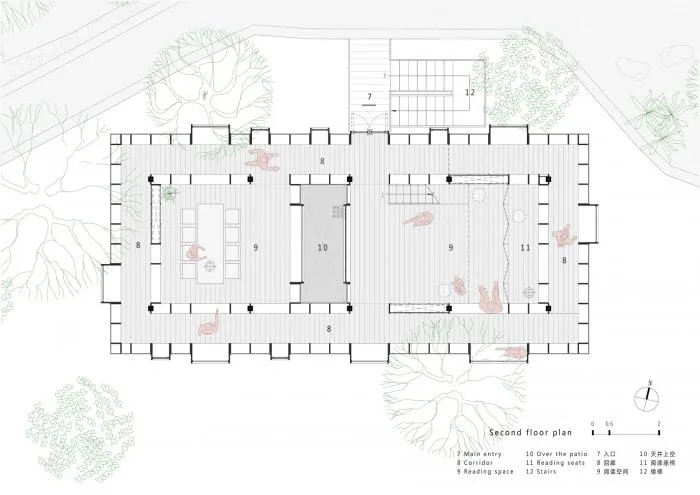
▲ Second Floor Plan
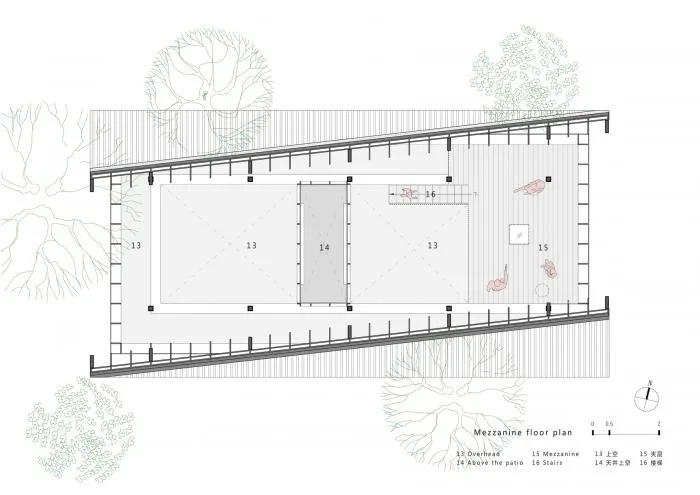
▲ Mezzanine Plan
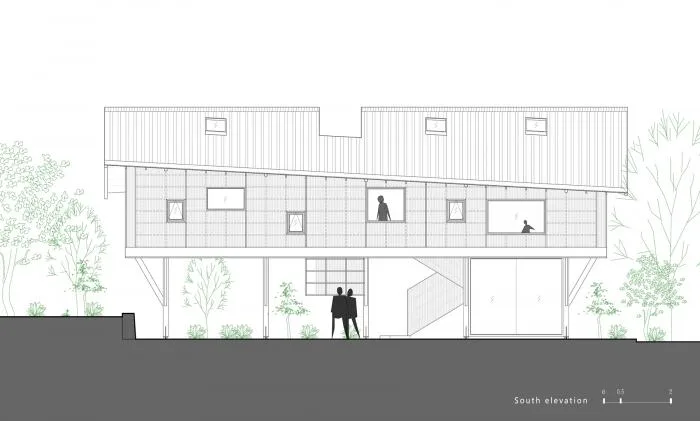
▲ South Facade
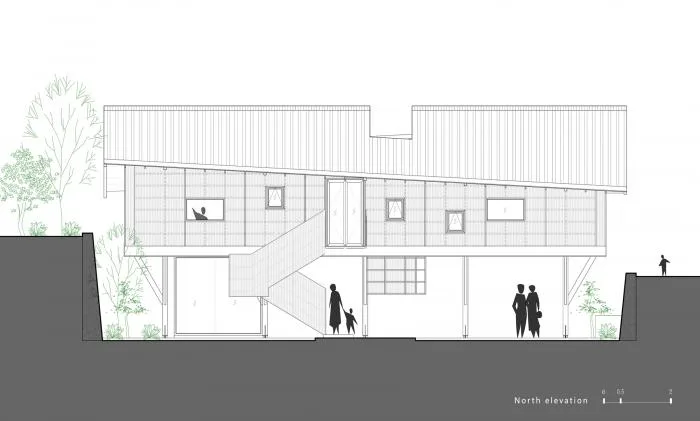
▲ North Facade
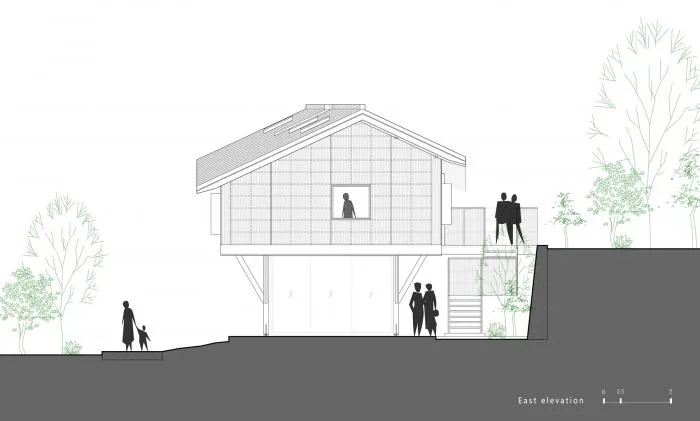
▲ East Facade
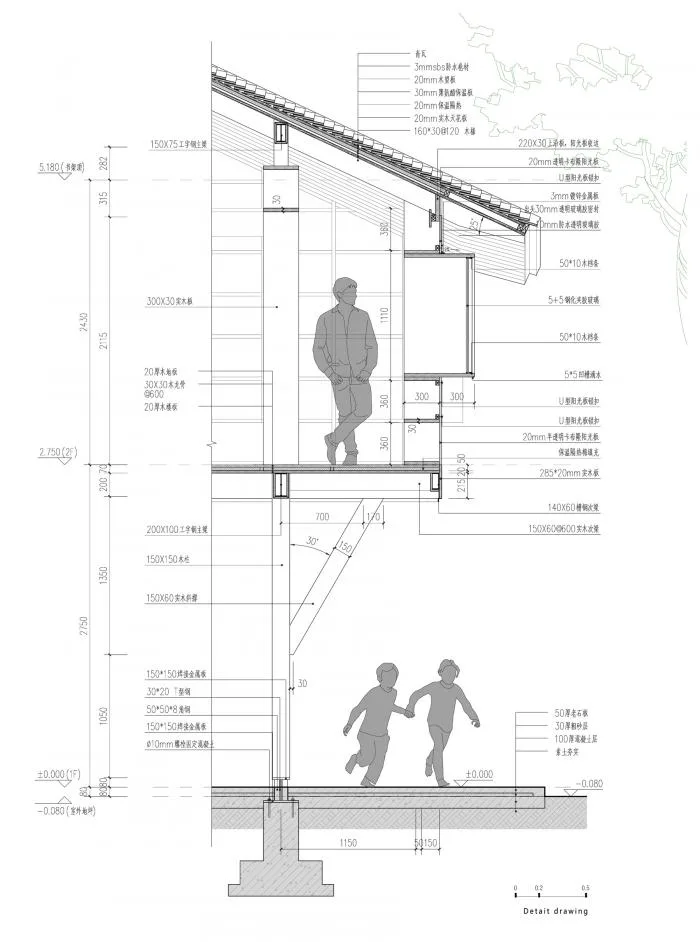
▲ Detailed Wall Section
Project Information
Project Name: Wuyi Liangjiashan Shiyunshan House
Location: Liangjiashan Village, Liucheng Town, Wuyi, Jinhua
Owner: Hongfu Tourism Group Co., Ltd
Type: Rural Bookstore
Design Period: December 2016 – August 2017
Construction Period: October 2017 – June 2018
Design Firm: Jianlin Architectural Design Firm
Website: www.hzshulin.com
Contact Email: __AI_C_SC_0_. com
Lead Architect: Chen Lin
Project Architect: Liu Dongying
Architects: Liu Dongying, Yang Shiqiang, Jian Xuelian
Structure: Steel and wood
Materials: Imported pine, polycarbonate, terrazzo
Building Area: 156 square meters
Photography: Zhao Yilong, Chen Lin












Must log in before commenting!
Sign Up