
No more, no more. All the beautiful memories worth mourning have faded away. I ask myself, why continue to search for them when I know they have vanished? This contradiction in the heart turns into homesickness—where old things disappear, replaced by new sorrows. Homesickness is an echo that cannot be held, a beauty that cannot be captured.
—— Liang Heng
Fuqing Douyuan, grandmother’s house, is a small fishing village south of Fuzhou. After a two-hour drive, my parents’ nostalgia transformed into a deep rural love. The attachment to one’s hometown not only arises from the care of relatives but also from the taste of a bowl of soup that evokes memories of elders. The appearance of this small fishing village keeps changing, as if nothing old is worth preserving. Although the local dialect remains unchanged, the village feels increasingly unfamiliar. I wish there was an object to carry the collective memories of the villagers, recording their joys and sorrows, along with their profound affection for their hometown.
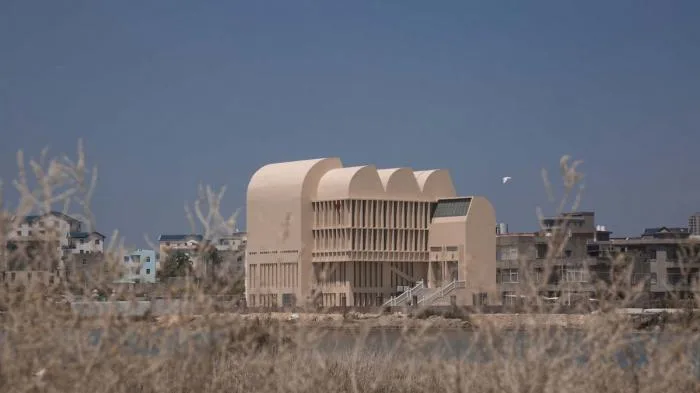
▲ The church faces the mudflat side
At the highest point of the village stands a temple, and nearby, a Catholic church is nestled in a mountain valley. The newly built Christian church faces the sea, embodying the current state of Chinese religious beliefs within this small fishing community. All teachings that promote truth, goodness, and beauty represent ultimate values. The sea connects many rivers, and with tolerance comes greatness. This is the spirit that buildings born by the sea should possess.
Religious architecture here is symbolized and integrated peacefully into villagers’ lives. Regardless of sect, the focus is on the truth, goodness, and beauty of faith.
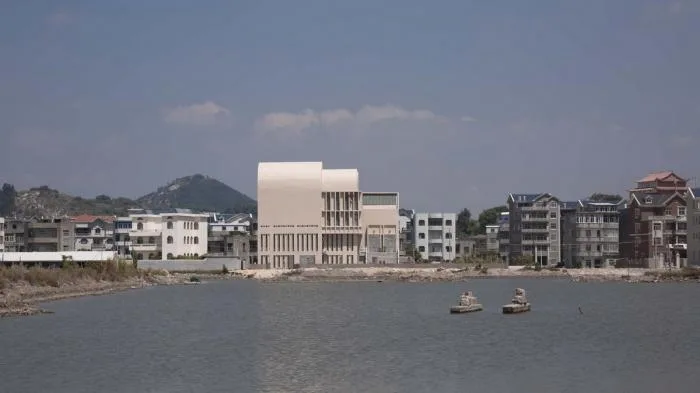
▲ View of the church from the mudflat
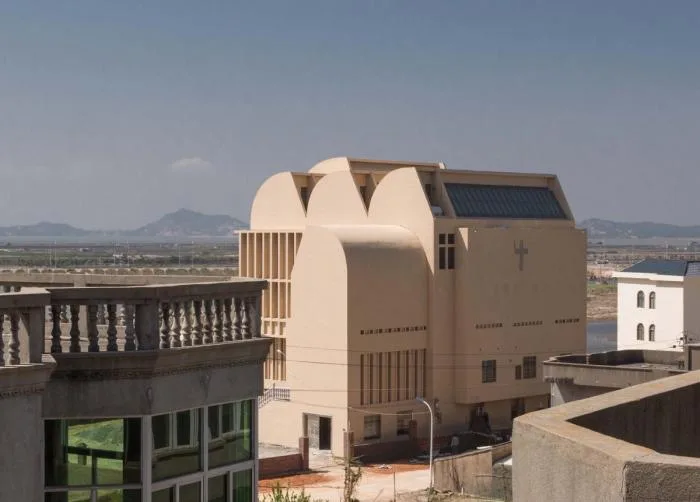
▲ Overlooking the church from the village
The village’s ash hall pillars are decorated as Corinthian columns, symbolizing a collapse of traditional Chinese aesthetics from the countryside to the ground. This is no longer a reverence for foreign styles but a denial of one’s own roots. What must be preserved is not only material culture but fundamental values.
Architecture strives to affirm its roots by embodying the spirit of the place. It resists following trends and embraces the foundational values that take root in villagers’ hearts. It may seem “powerless” amid dazzling external stimuli, but this vitality lies in its subtlety. The spirit constructed by the architecture evokes resonance and reflection among both villagers and visitors.
At its core, architecture extends the worldview and values of its designers, builders, and users. Personal and national confidence arises from affirming one’s roots.
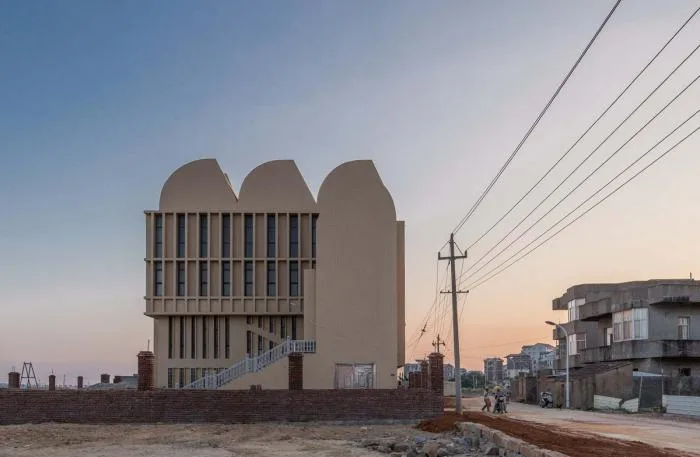
▲ Looking towards the church from the village road
Traditional regionalism was largely defined by structure and materials shaped by climate and logistics. Today, with advances in information and logistics, construction techniques and materials are becoming more universal. Therefore, expressing regionalism through construction and materials alone may appear superficial.
Instead, regionalism now shifts toward a more introspective dialogue with nature and spiritual expression. This natural dialogue partly arises from the transformation of the majestic sea skyline, which blurs the boundary between walls and roofs. Additionally, the “defensive” form of local residential buildings, born from reverence for nature, informs the solid volumes of the church, following local construction logic.
Spiritually, this approach reflects gratitude toward the ocean, creating a space that feels like a mother’s embrace. It also draws inspiration from the villagers’ hardworking spirit, projecting a genuine and positive presence.
No matter the style or technique, this architecture embodies emotions of awe, gratitude, and deep attachment.
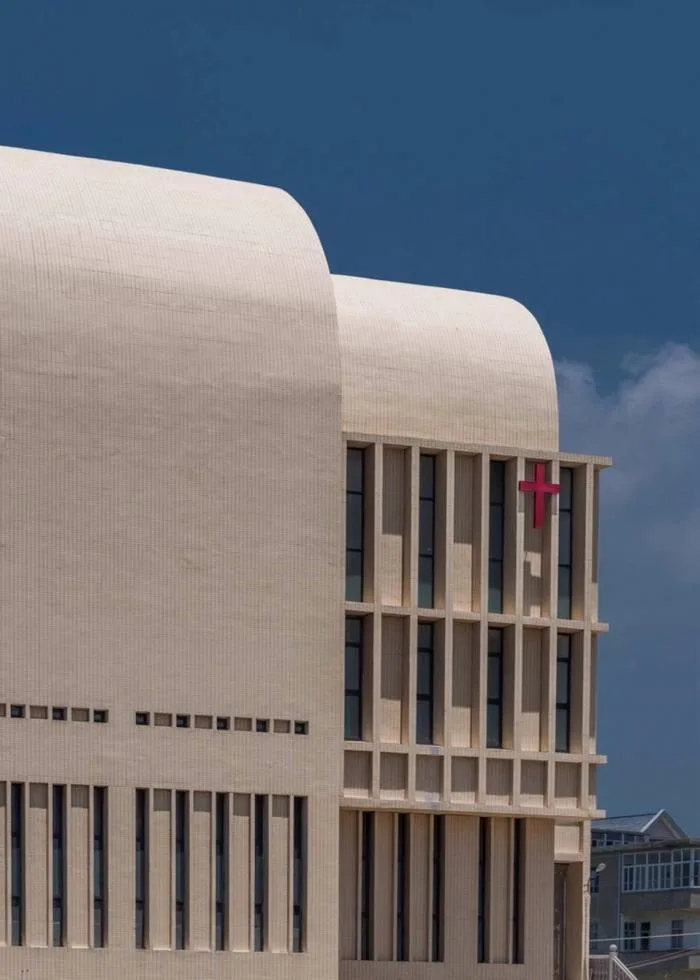
▲ East side church facade
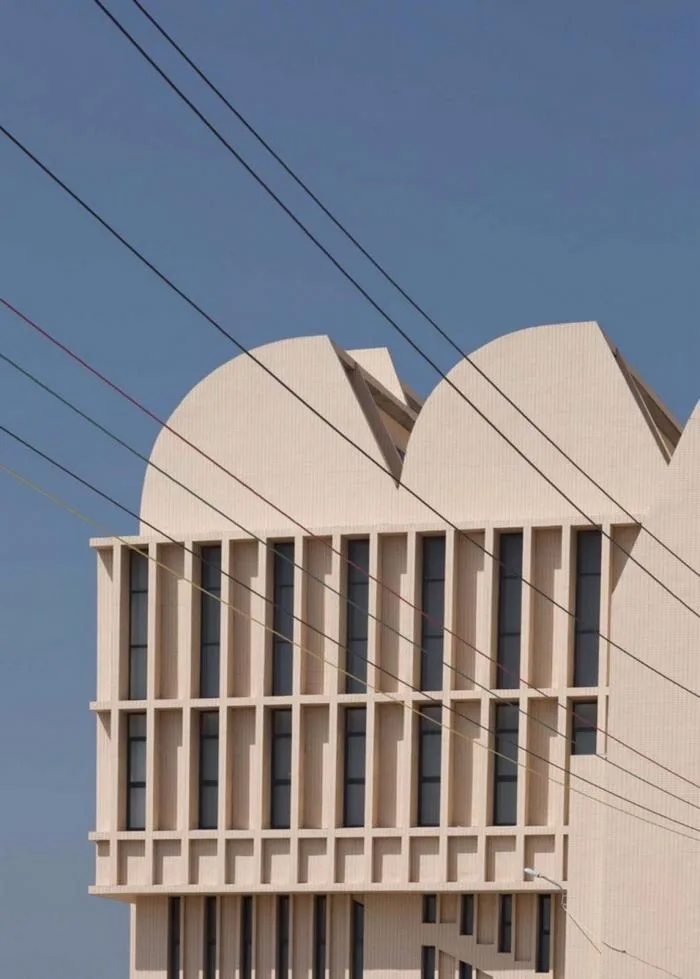
▲ North side church facade
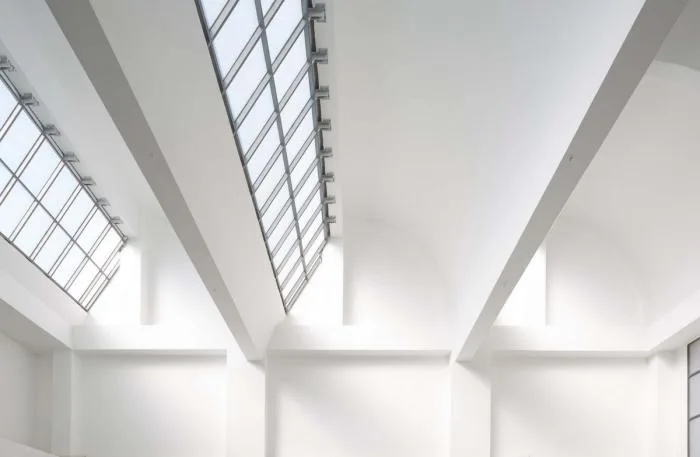
▲ Roof of the three-story chapel
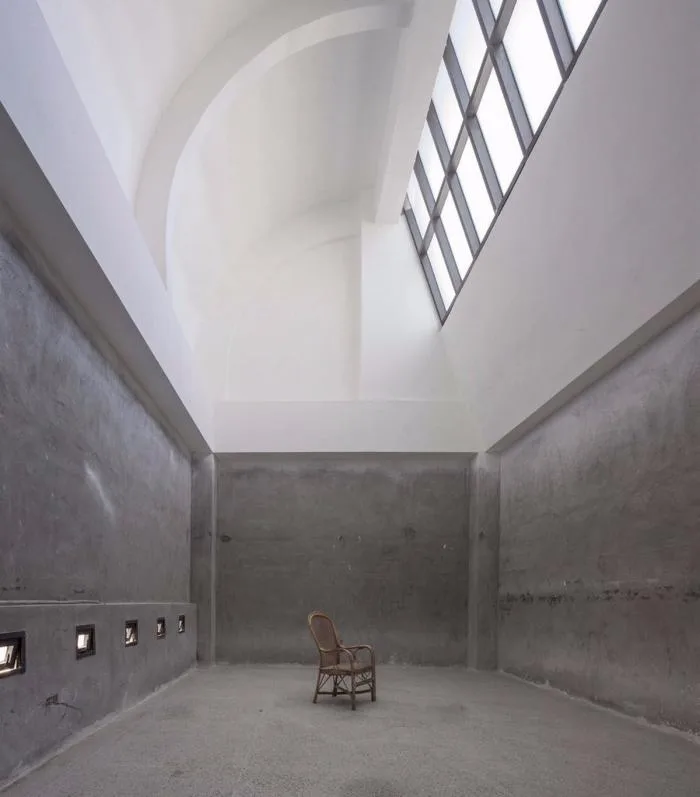
▲ Third-floor preparation room
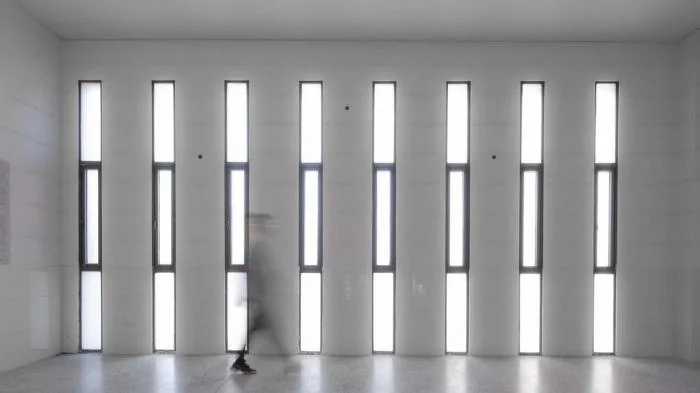
▲ Second-floor foyer
Project Drawings
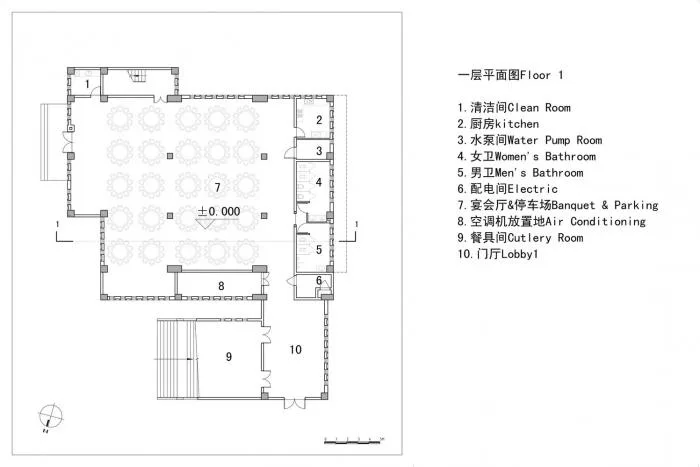
▲ First floor plan
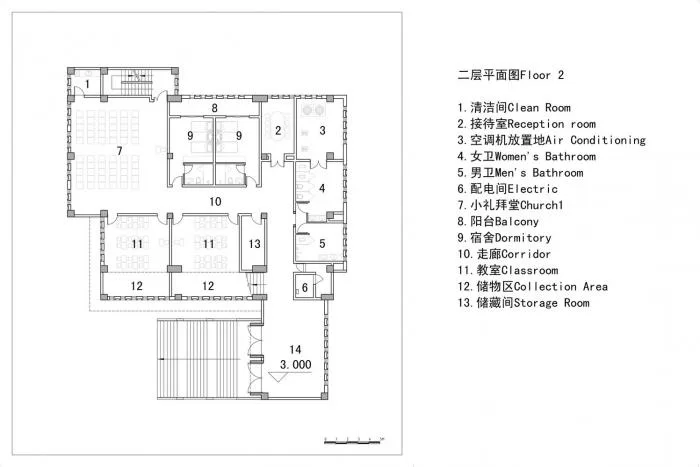
▲ Second floor plan
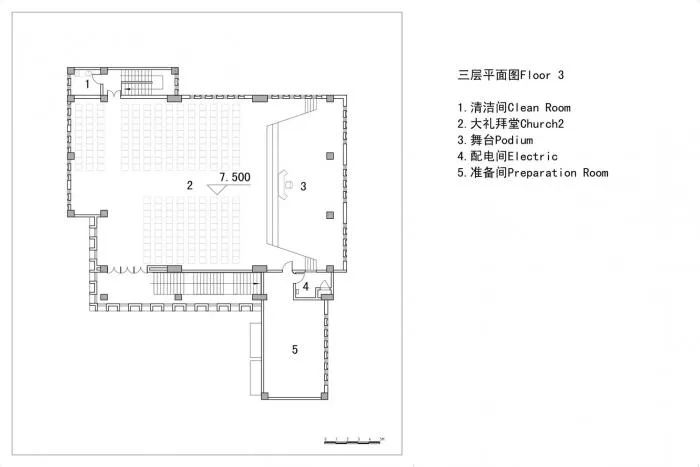
▲ Third floor plan
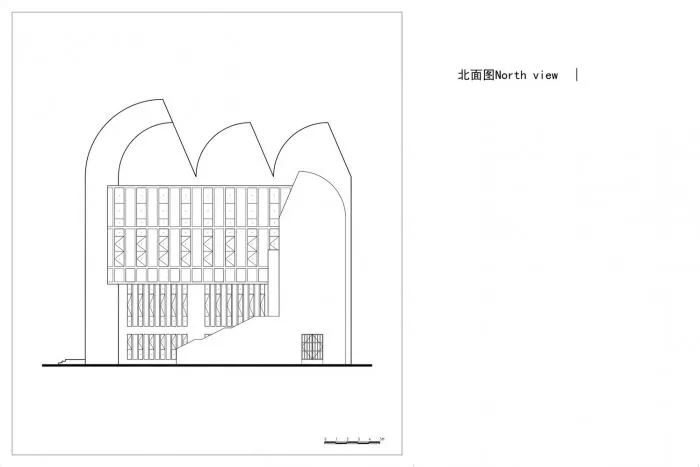
▲ North elevation view
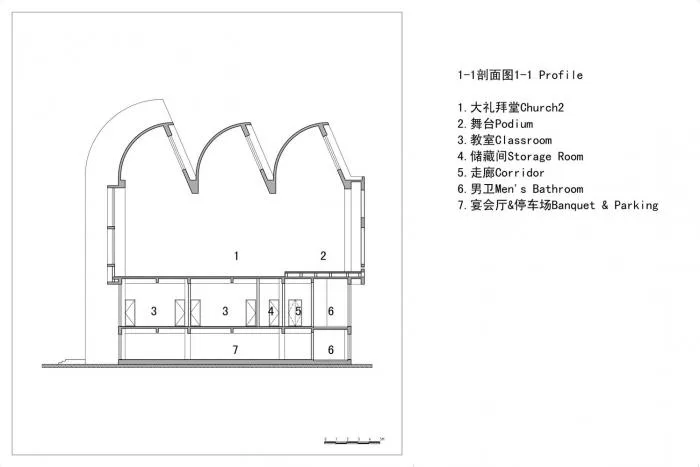
▲ Sectional view
Project Information
Project type: Church
Project location: Fuqing City, China
Architectural Design: CWXD Architectural Firm
Area: 1628.0 m²
Project Year: 2017
Architectural Photography: Zimo












Must log in before commenting!
Sign Up