
Waugh Thistleton, a London-based architecture studio, has designed a sustainable village plan that will feature over a thousand homes built on a lake in Bergen, Norway. This development will serve as the centerpiece of the new Trenezia village.
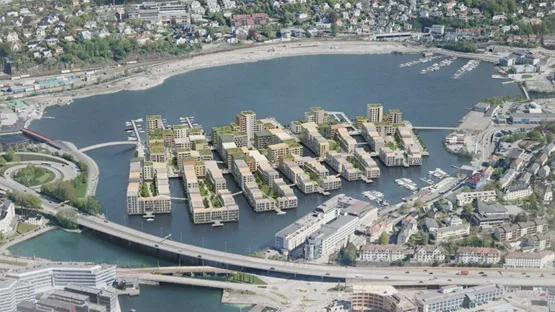
The project, led by Vogel Sisterton Architecture Studio, aims to establish a carbon-neutral residential and cultural hub that will attract locals to live in Bergen’s city center.
“Given the scale of the development, achieving carbon neutrality in operational energy on a net annual basis will be a challenge,” said Kirsten Haggart, Senior Assistant at Vogel Sisterton Architecture Studio.

This master plan, commissioned by the BOB Housing Association, proposes placing 1,500 homes on a series of artificial islands in the city center lake. These islands will be connected to the shore by an extensive, publicly accessible wooden boardwalk.
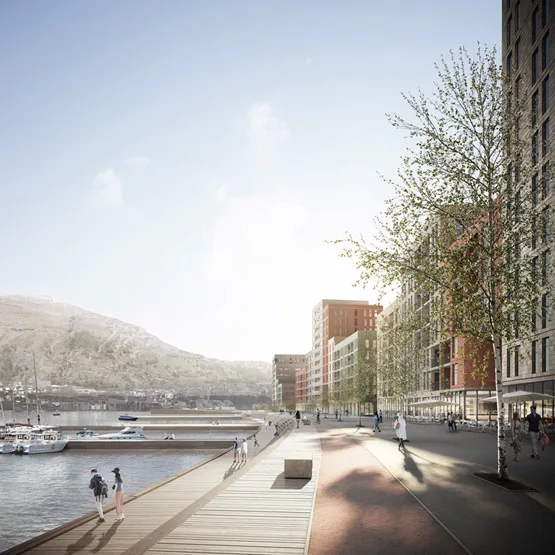
Once completed, the wooden boardwalk will stretch across the lake, forming the ‘central spine’ of Trenezia. Floating structures along this spine will include swimming pools, performance venues, and parking areas designed to foster community interaction and activities.
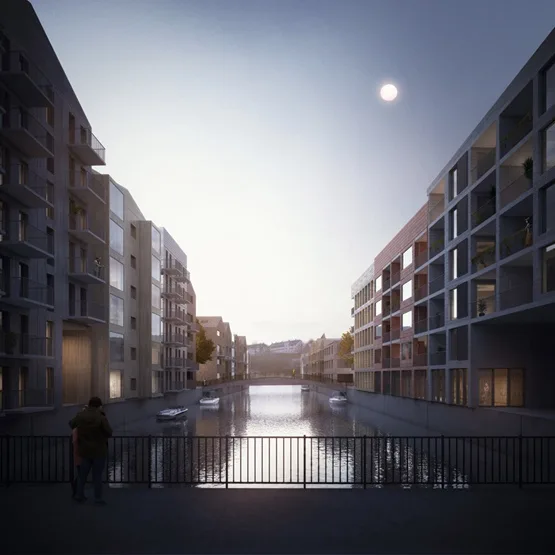
The boardwalk will also serve as a link between Bergen’s old town on the west side of the lake and the art center on the east, where a new beach will be established.
Ecological sustainability is a top priority for Vogel Sisterton Architecture Studio in this project, focusing on low energy and water consumption as well as minimal waste generation.
“Firstly, by using efficient building envelopes and water-saving technologies, we minimize the demand for resources in buildings and facilities,” explained Keith Haggart, Senior Assistant at Vogel Sisterton Architecture Studio.
Secondly, the project will harness clean, on-site renewable energy sources to generate power, with the goal of exporting more energy than it consumes, effectively offsetting its carbon footprint.
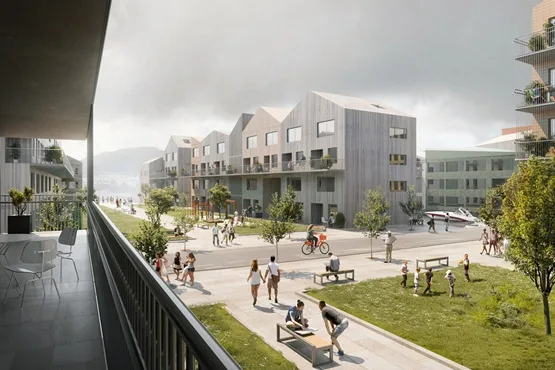
All homes will be constructed primarily from wood, with foundations made from repurposed materials sourced from existing local infrastructure projects.
An on-site energy center will also be established, employing technologies such as biomass and seawater heat pumps to help offset carbon emissions.
Considering Bergen’s limited winter sunlight, each residential cluster in Trenezia will be separated by a “solar corridor” designed to maximize natural indoor light.
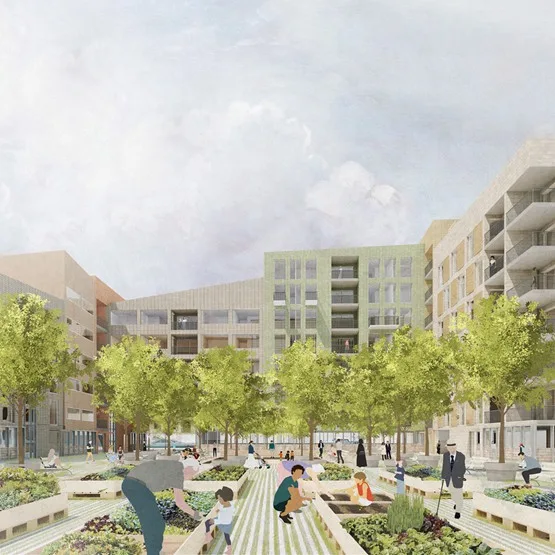
This design strategy is further supported by the building heights, which gradually increase from south to north across the site to reduce shadowing.
Within each complex, smaller private residences will be complemented by taller buildings suited for individuals, couples, or students.
At the heart of each cluster, shared outdoor spaces will be created, varying in nature depending on the adjacent buildings.
Between large structures such as elderly care centers and daycare facilities, “citizen squares” will be developed to encourage social interaction among diverse groups.
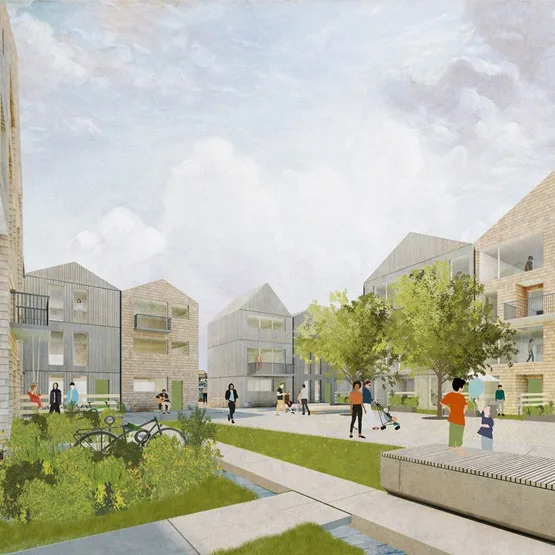
Smaller buildings will be arranged around linear, family-friendly courtyards. Each home will feature a front garden with trees, shrubs, plantations, playgrounds, and seating areas.
All buildings and courtyards throughout the entire development will be accessible to both residents and tourists via bridges and walkways, offering expansive views of the lake and surrounding mountains.
Vogel Sisterton Architecture Studio, founded in 1997 by Andrew Waugh and Anthony Thistleton, is based in Shoreditch, London.












Must log in before commenting!
Sign Up