
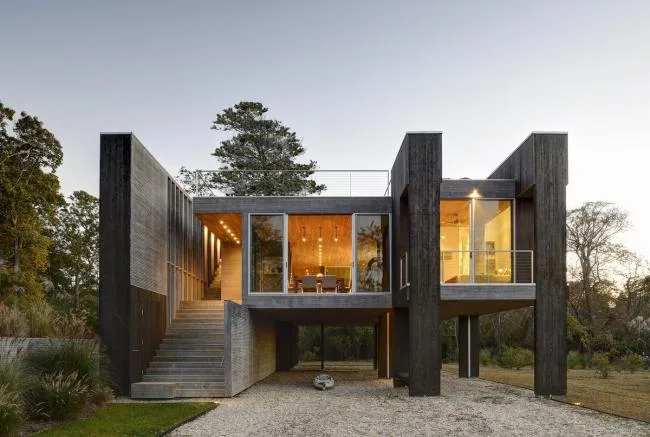
This unique residence is situated at a rare geographical location, spanning freshwater wetlands and tidal estuaries at an elevation of six feet. The designers faced several constraints, including proximity to protected wetland areas, local zoning limits on the building’s footprint, and Federal Emergency Management Agency (FEMA) requirements. To prevent flooding, the structure’s first floor had to be elevated eight feet (approximately 2.4 meters) above ground level.
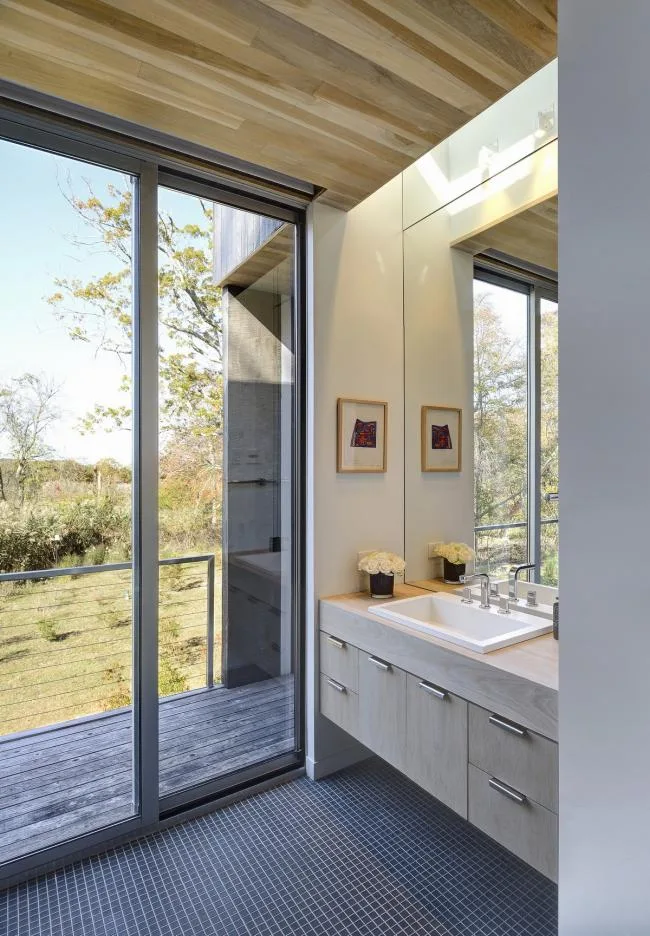
The home’s footprint is limited to around 1,900 square feet (about 176 square meters), with the elevated first floor resting atop a novel structural foundation. Inside, expansive French windows flood the interior with natural light and promote air circulation throughout the living spaces.
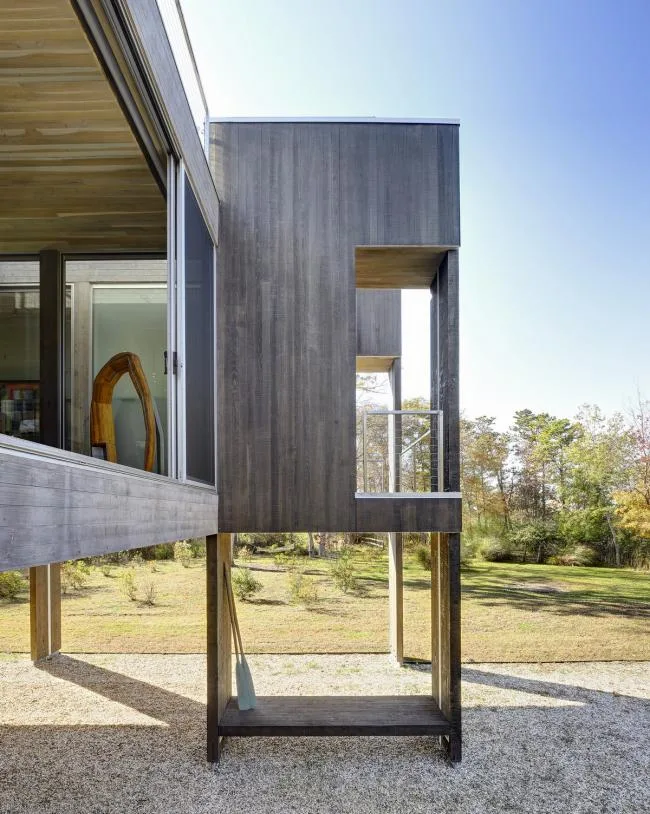
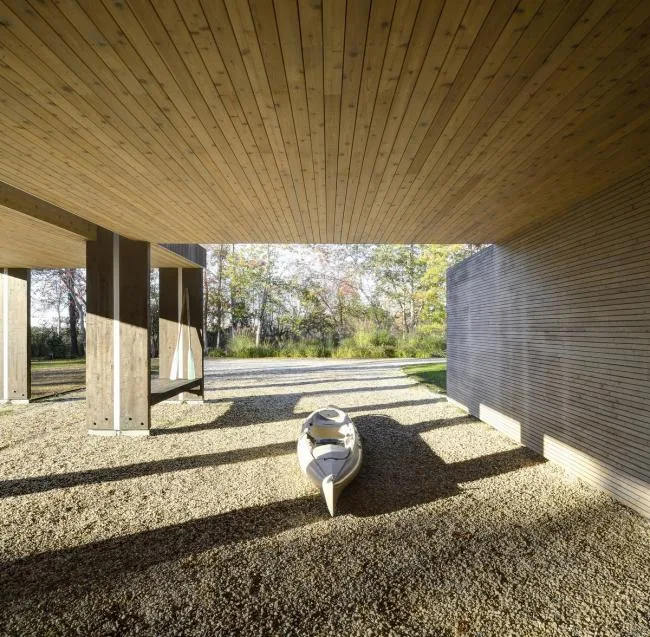
Traditional waterfront homes typically rely on pile foundations to create an artificial raised platform. However, this project takes a distinctive approach: sixteen exposed laminated piles extend from the ground all the way to the roof, forming an enclosure around three bedrooms.
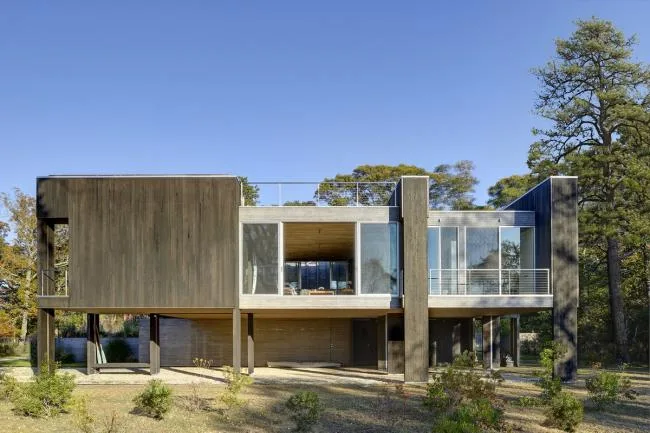
These piles serve more than a structural purpose. Integrated within them are functional spaces such as a wardrobe, desk, laundry room, kitchen, and shower. Additionally, the gaps between the vertical piles open up to create inviting public areas, blending private and communal living zones seamlessly.
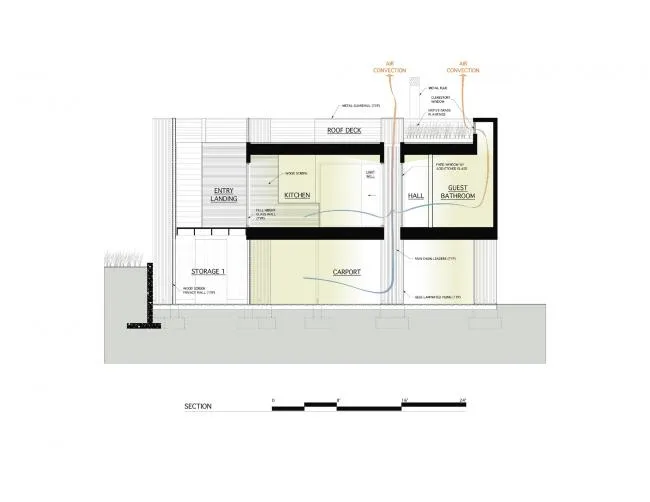
▲ Sectional view
The building’s design cleverly maximizes the limited site without imposing on the surrounding environment. The open spaces between the piles enhance indoor environmental quality while reducing ecological impact. This design offers three key benefits:
- Natural light channels through openings into the underground garage, providing daylight below ground level.
- Rainwater from the roof is directed down through carved piles acting as downspouts, efficiently managing runoff.
- The intermediate spaces facilitate indoor air circulation, promoting natural ventilation throughout the home.
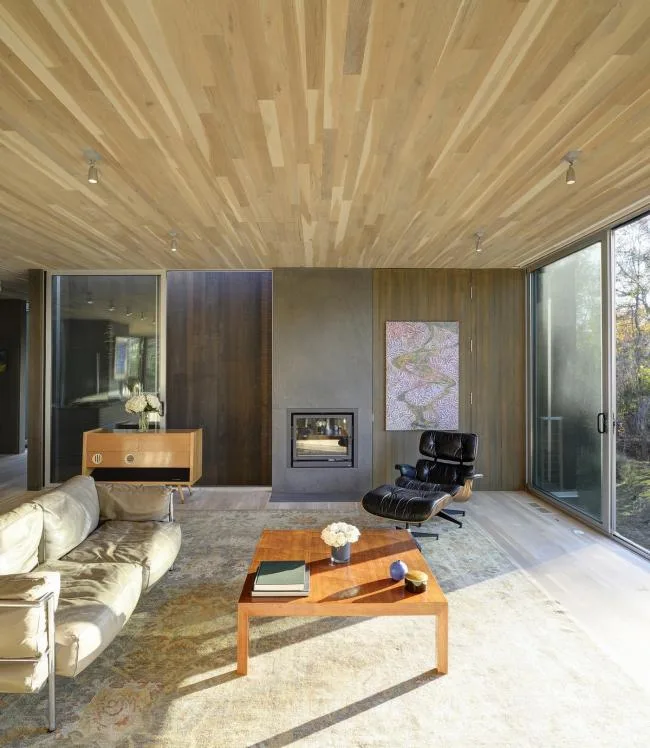
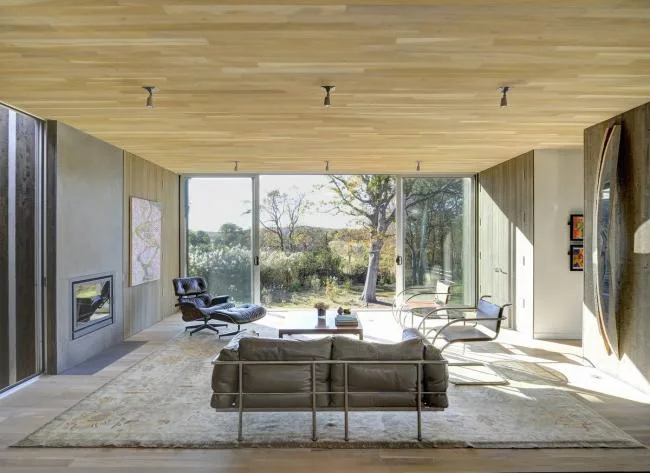
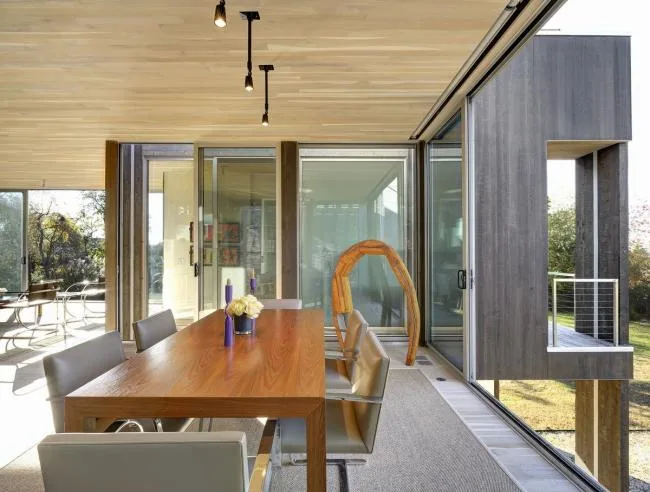
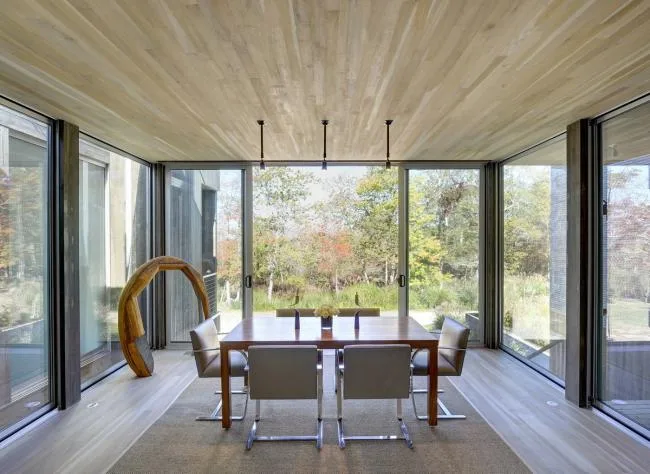
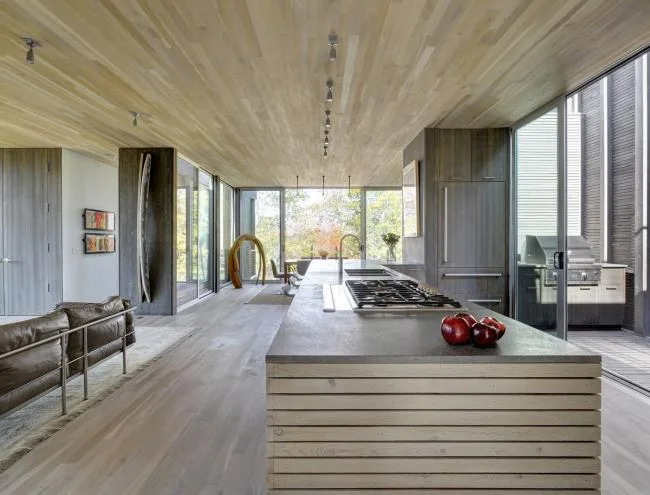
On the roof, wooden stakes protrude to define spaces aligned with the living quarters below. Above each bedroom, a modular planting system is installed to reduce stormwater runoff. These extended piles also function as geothermal heat pumps, harnessing abundant groundwater to support photovoltaic power generation and regulate indoor temperatures year-round.
Below the house, the open space is efficiently utilized for parking and storage, optimizing site usage without compromising the natural surroundings.
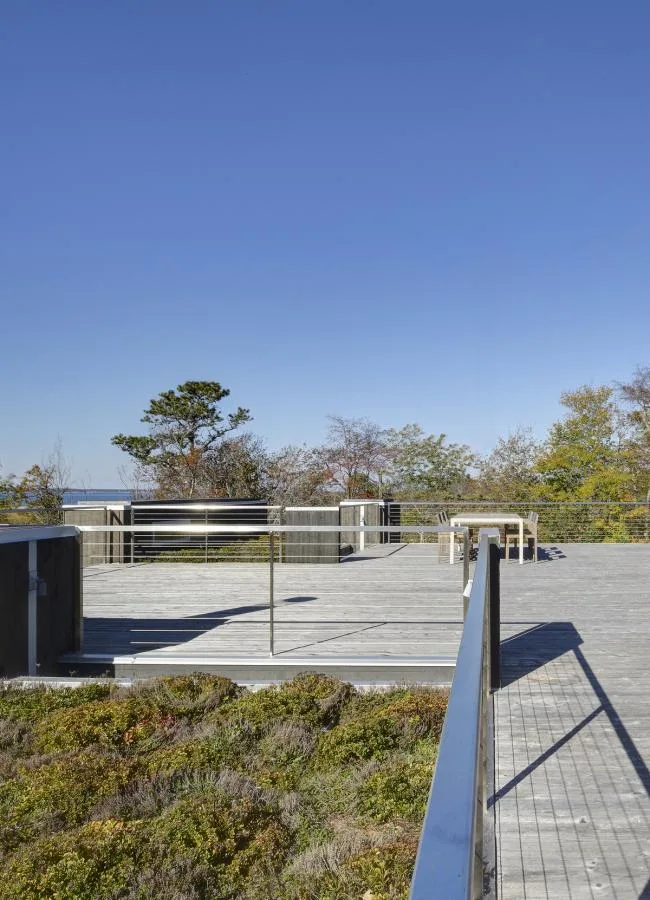
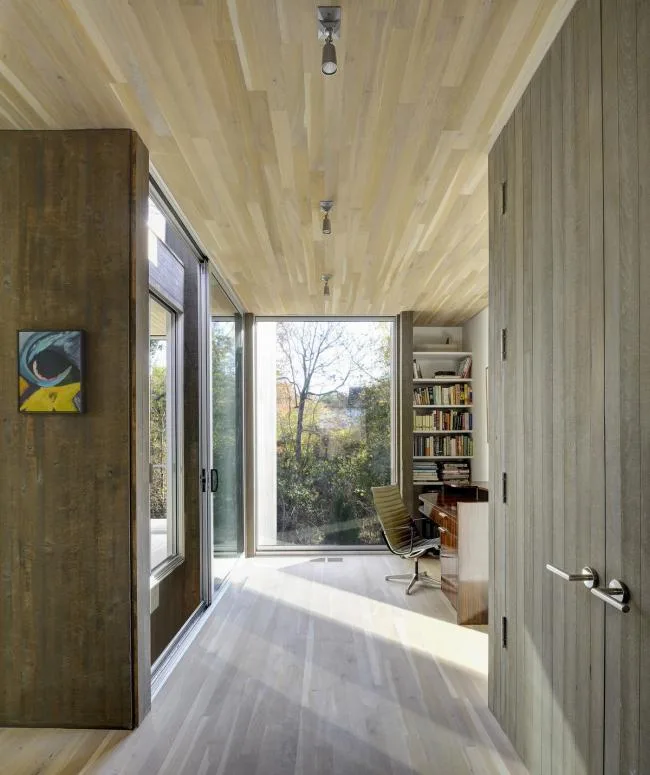
Through the open gaps, space flows seamlessly from the exterior into the interior, creating a continuous visual landscape from the ground up to the roof. This spatial design fosters a strong sense of connection and belonging for the residents.
Project Drawings
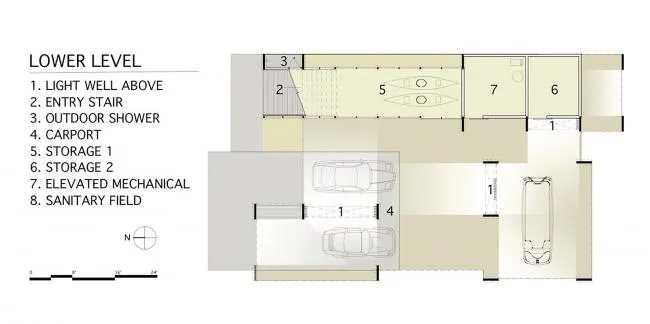
▲ Lower Floor Plan
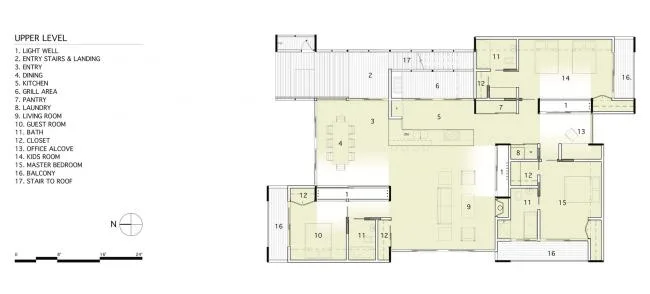
▲ Upper Floor Plan
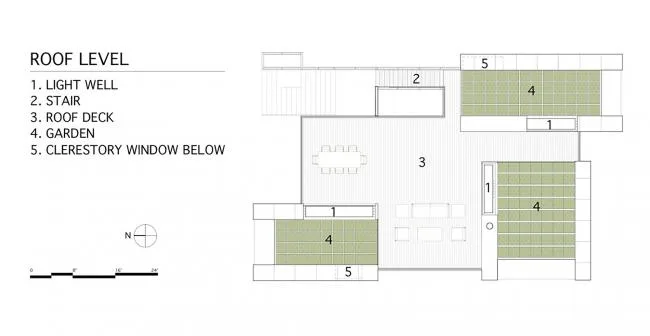
▲ Roof Plan
Project Information
Project Type: Independent Residential Building
Location: East Hampton, USA
Architect: Bates Masi Architects
Area: 1,895 ft² (176 m²)
Year Completed: 2013
Structural Engineer: Steven L. Maresca, Hampton Bays, NY












Must log in before commenting!
Sign Up