
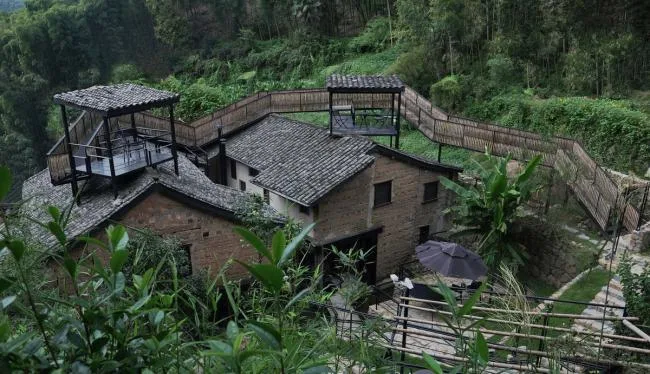
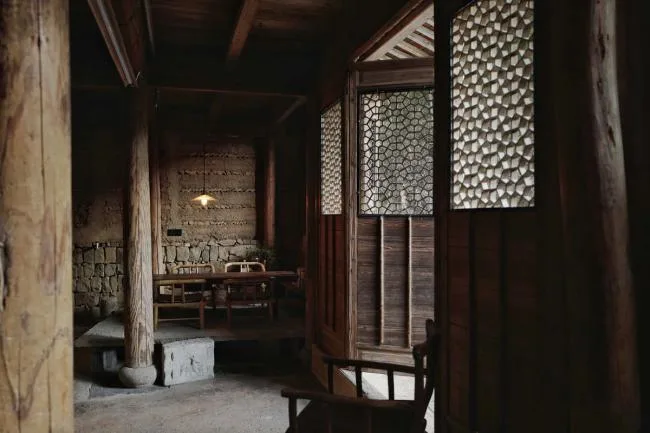
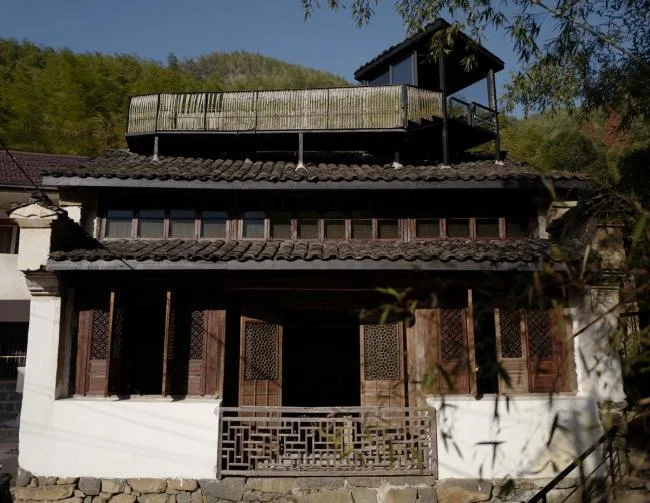
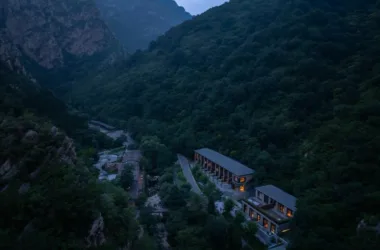
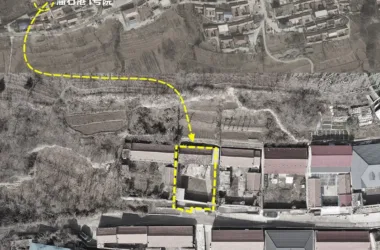
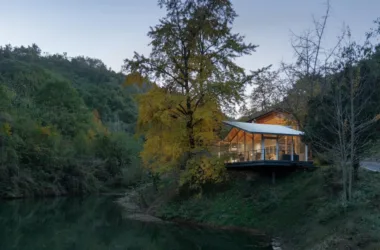
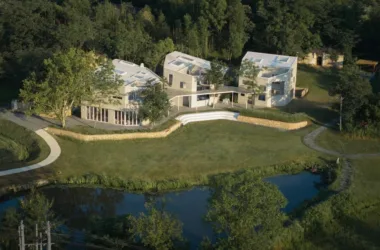
The site is situated in a rural area of Moganshan, Deqing. The front building is a century-old mansion and the only preserved structure within the complex. Its former lobby reflects the traditional Huizhou residential architectural style. Behind it stands a two-story house built in 1985, offset by nearly 18 degrees relative to the front building. On the west side, the nearest neighboring structure is just one meter away. The entire plot lies within a valley, surrounded on three sides by bamboo forests. The outdoor area is terraced with significant elevation changes, connected by public stone steps. Adjacent to these steps runs a small stream, adding a natural element to the setting.
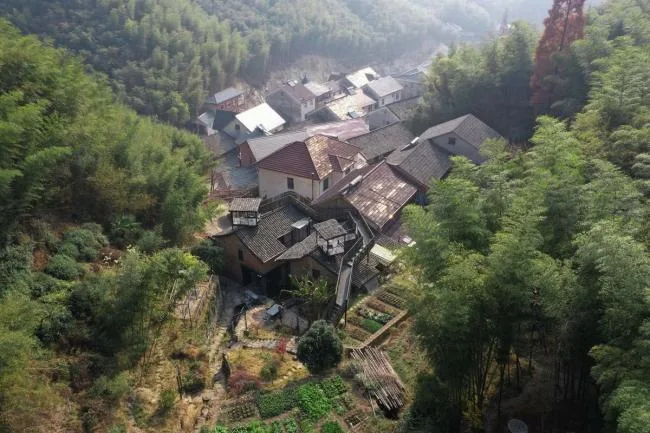
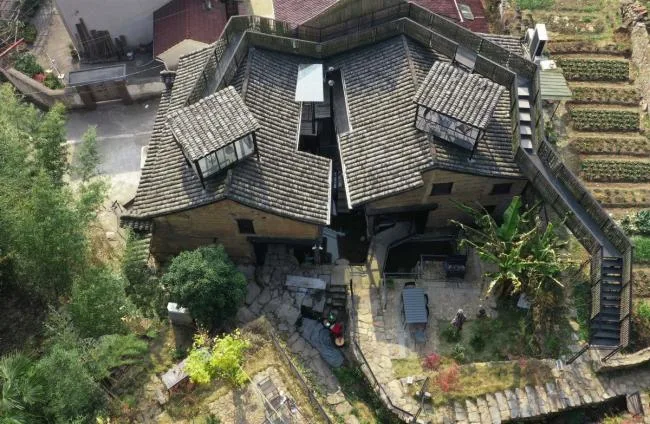
Preservation and restoration efforts focus primarily on the front building, while the rear house’s interior wooden structure is entirely new, retaining only the rammed earth wall on the east side. The two buildings have been integrated into a cohesive whole, with certain spaces deliberately separated to create a semi-enclosed, irregular courtyard. Outdoor steel stairs connect the two houses, facilitating movement between the first and second floors and enhancing the overall unity of the structures. A new first-floor addition on the west side, along with a rooftop corridor, further unifies the two buildings, resulting in a seamless and organic architectural composition.
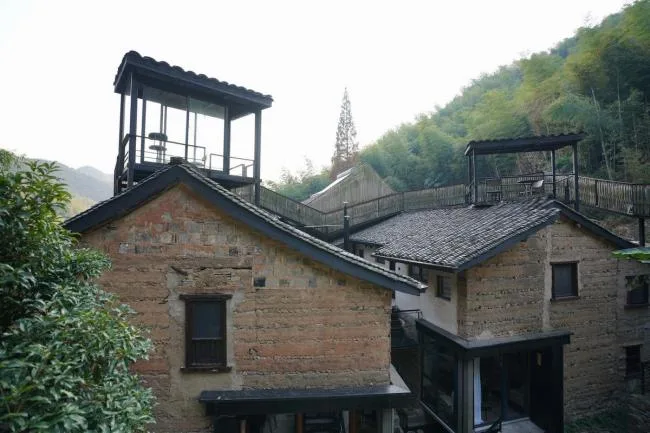
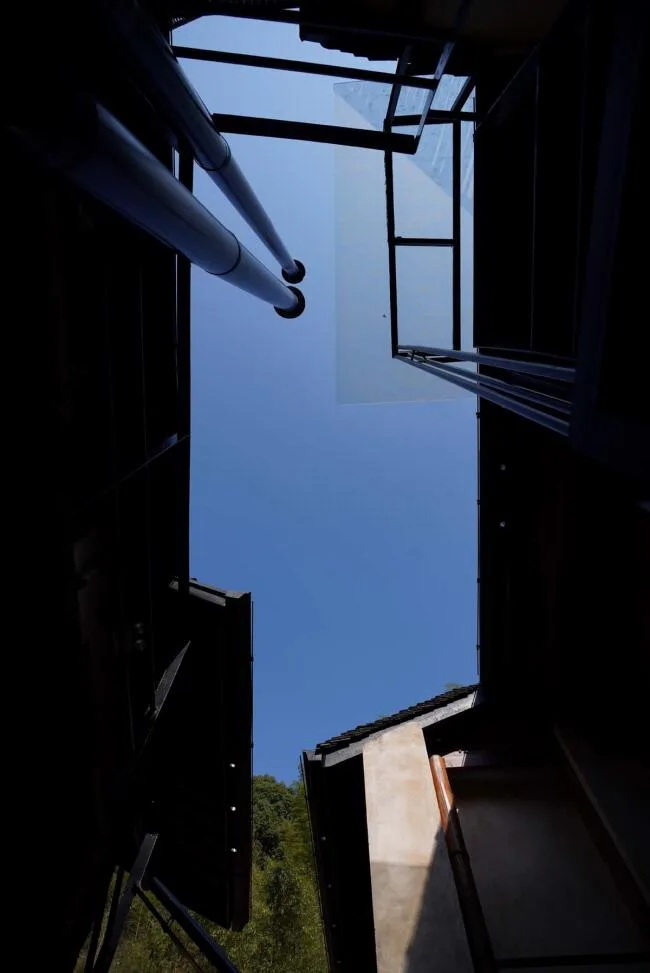
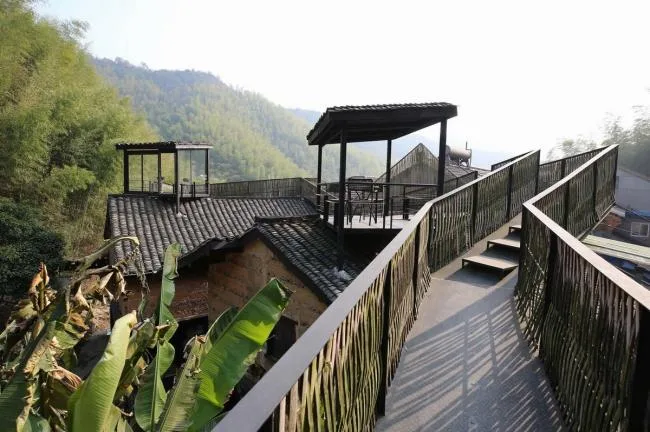
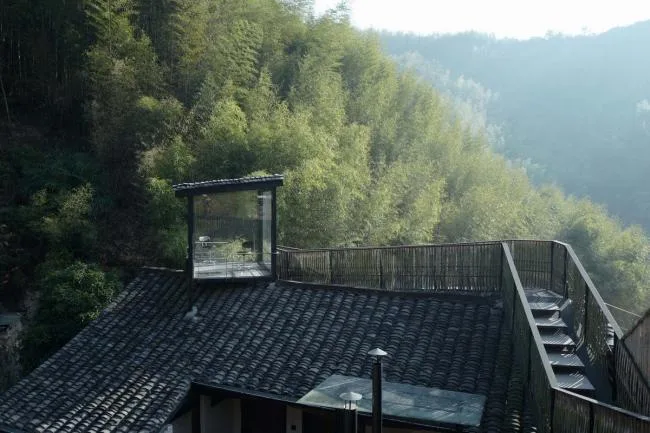
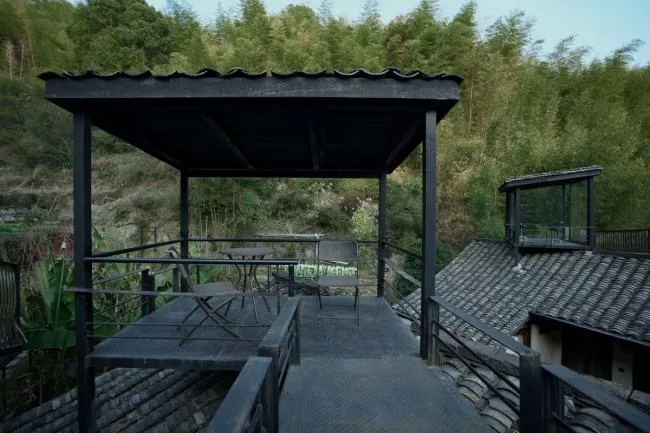
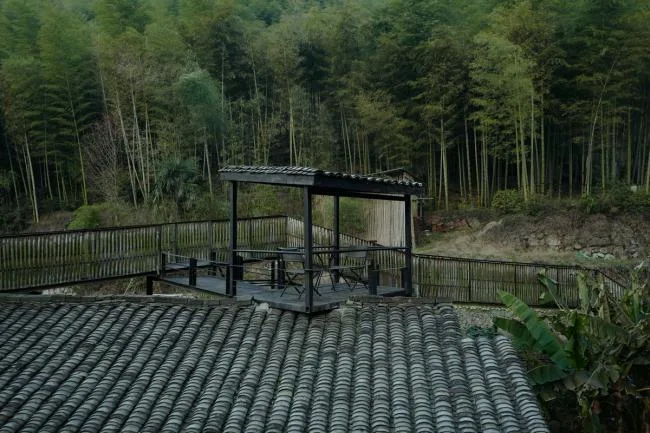
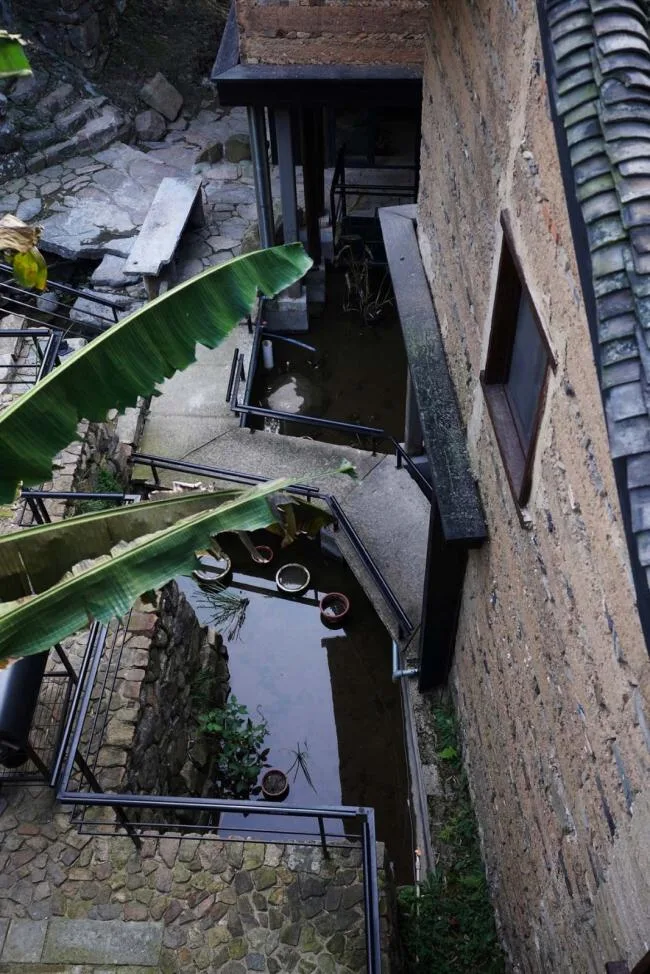
The outdoor design draws from traditional garden techniques. A pond has been created between the two houses, linked by a stone bridge that connects the shared first-floor spaces. Above this bridge floats a column-free steel staircase, adding a modern architectural feature. The surrounding mountain acts as a natural fence, while a remodeled stone pathway extends to a steel gallery on the roof, enclosing the central platform and pond. Throughout the design, principles such as contrast and borrowed scenery are skillfully employed. Unlike traditional classical gardens that rely on artificial mountains and water features in urban settings, this design embraces a more three-dimensional and open landscape garden concept.
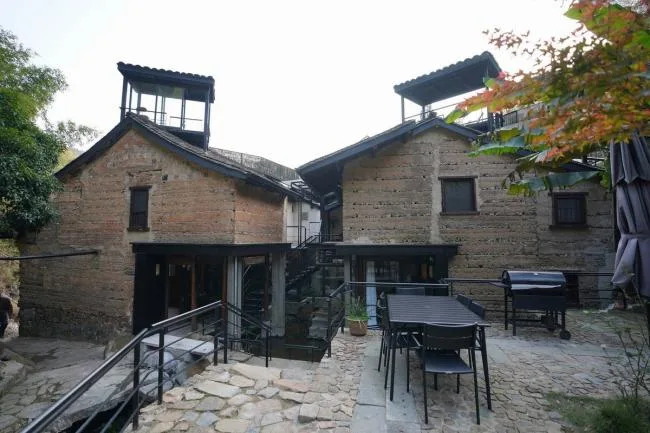
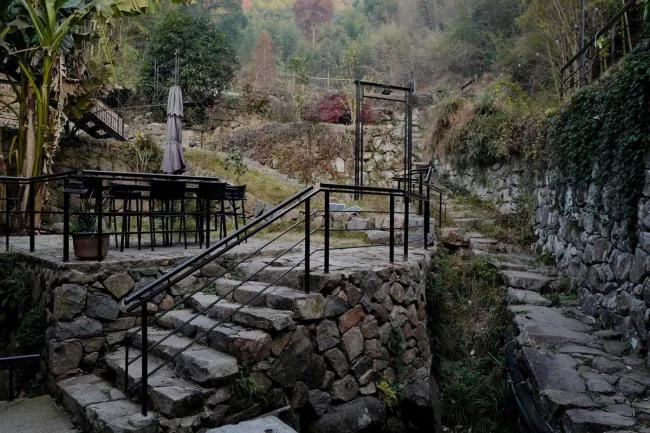
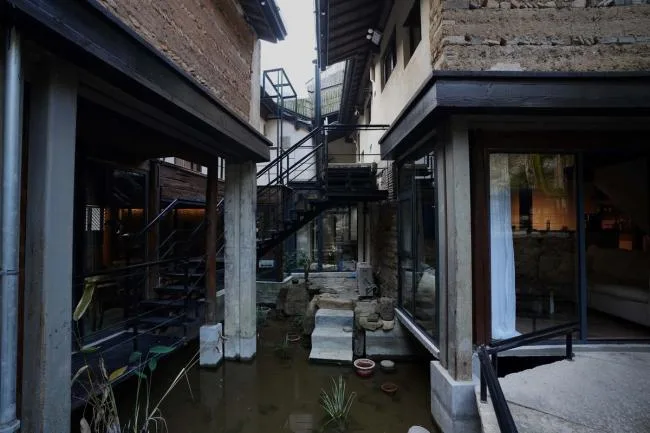
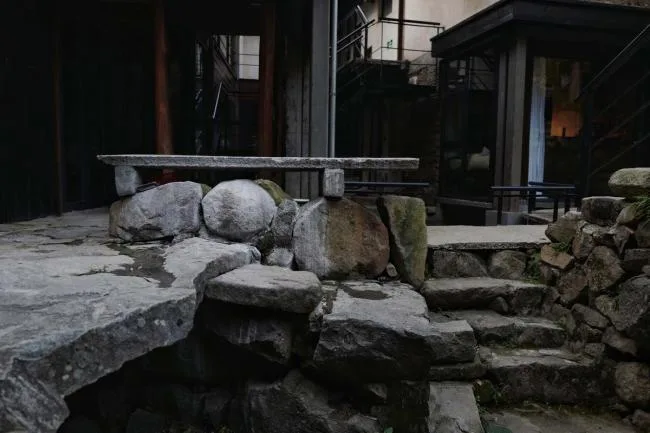
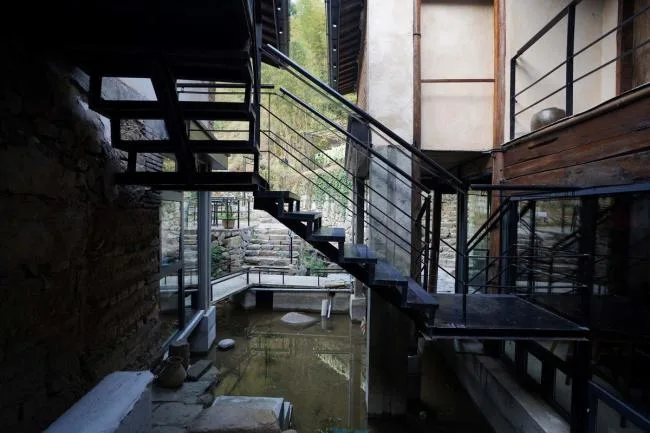
The design employs polylines as abstract representations of nature, using numerous folding lines to define the transitions between indoor and outdoor spaces. True Chinese style architecture should not be reduced to mere formalism. As times change, traditional materials and construction methods have become less practical. Modern Chinese design embraces the spirit rather than the exact form of tradition. For instance, creating a rockery in the courtyard alone does not constitute a new Chinese-style garden. The essence lies in the art of folding and hiding, crafting an evocative atmosphere.
By adhering to these principles and utilizing contemporary materials and techniques, the architecture achieves an unmistakably Chinese identity. The project incorporates modern materials such as steel, cast-in-place beams and columns, and large floor-to-ceiling glass panels prominently featured in the public ground-floor areas. The color palette harmonizes with the preserved elements, resulting in a blend of traditional and modern aesthetics that appeals to younger generations.
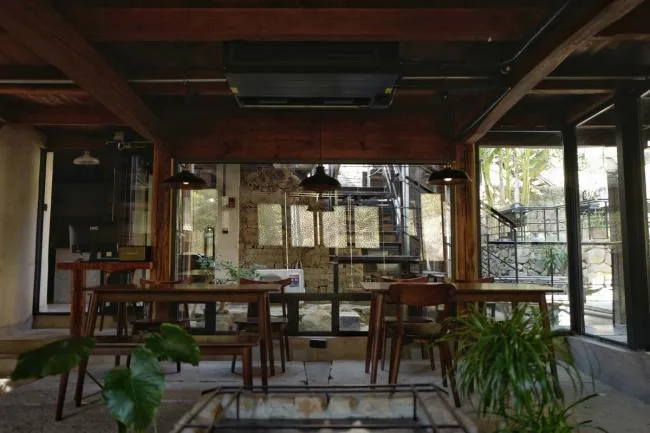
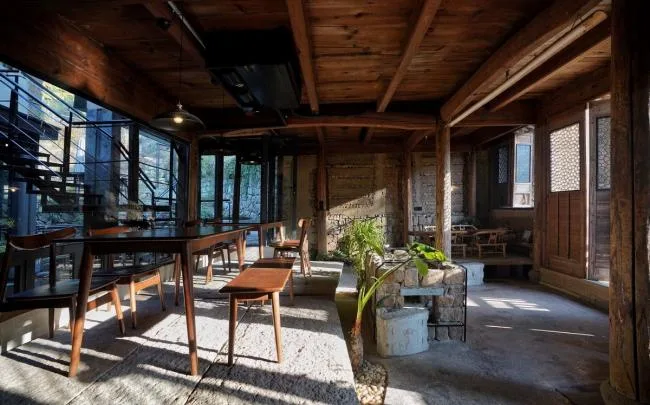
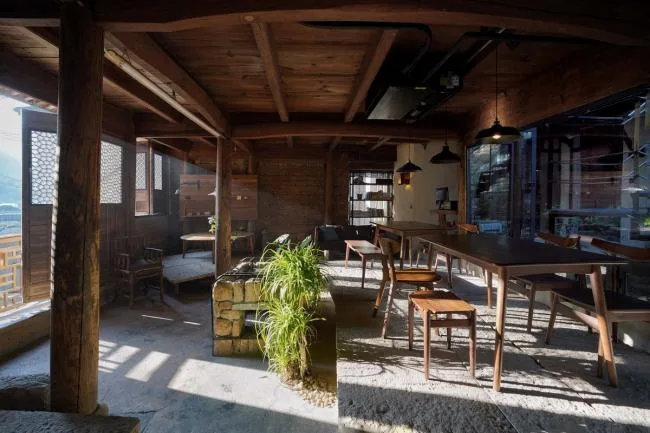
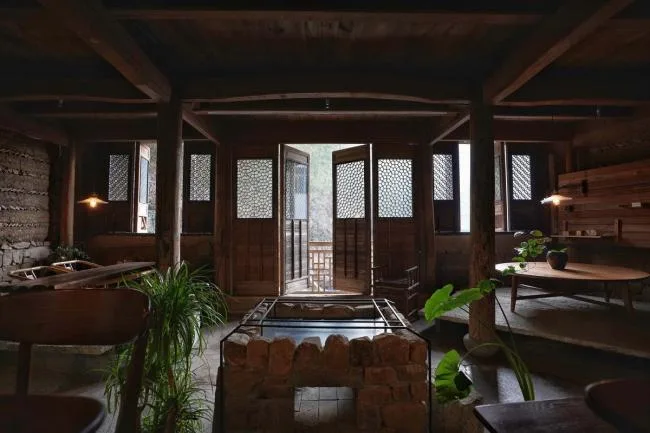
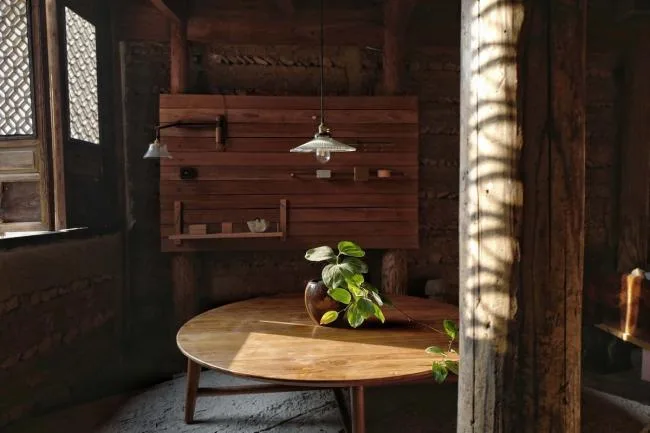
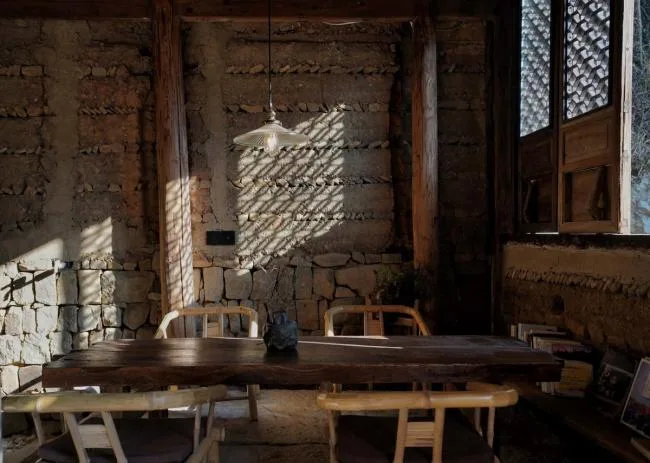
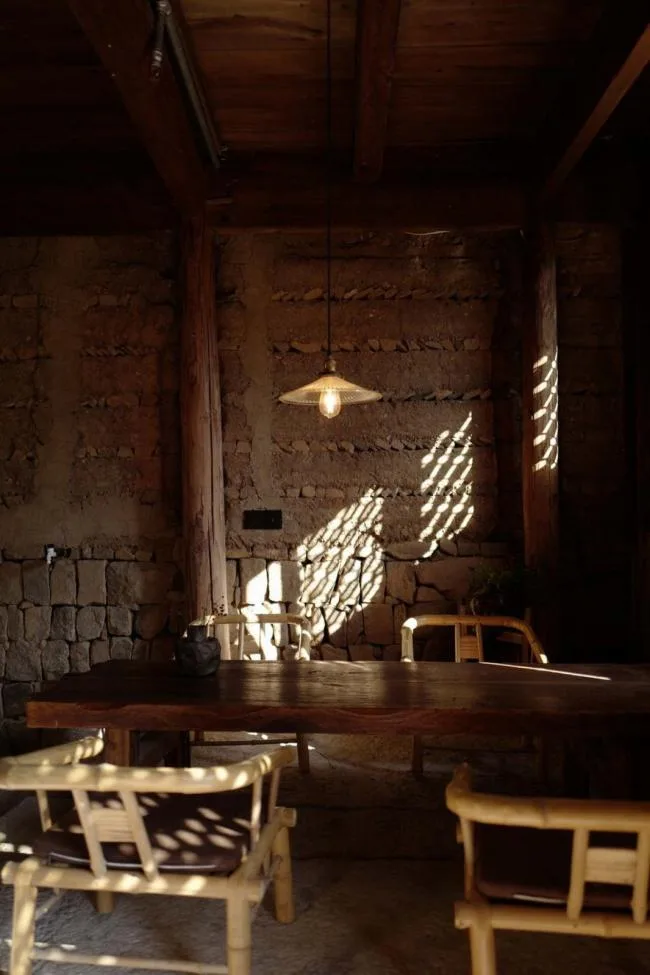
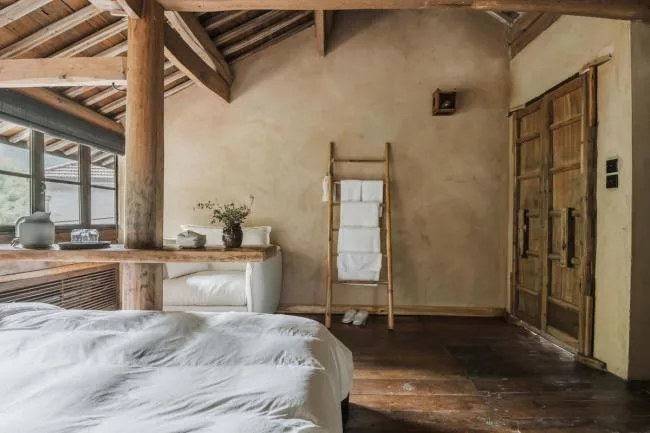
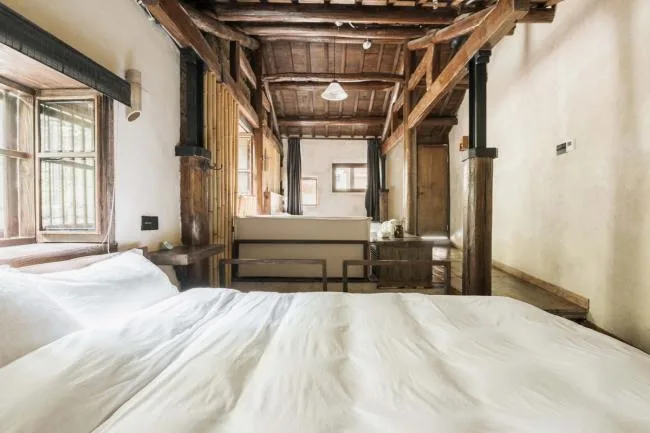
Inside, interconnected L- and Z-shaped rooms create a dynamic sense of hierarchy and playfulness. Each turn reveals new views and landscapes. The interiors openly showcase materials such as rammed earth walls, cement, and solid wood, partially complemented by bamboo accents and thoughtfully designed lighting. This combination produces a naturally textured yet comfortable and artistic atmosphere.
Due to restricted access preventing large machinery from entering the site, the original rammed earth wall on the first floor was dismantled and repurposed as partition walls for two rooms in the rear building. Other materials like wood and stone were also salvaged and reused. This renovation approach resembles a thoughtful redistribution and recombination of existing resources. The partition walls in the rear building extend visually toward the front building, enhancing spatial interest and accommodating functional changes within the guest rooms.
Project Drawings
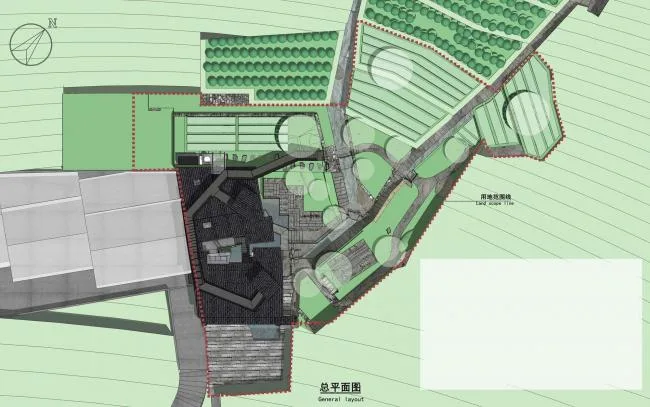
▲ General Layout Plan
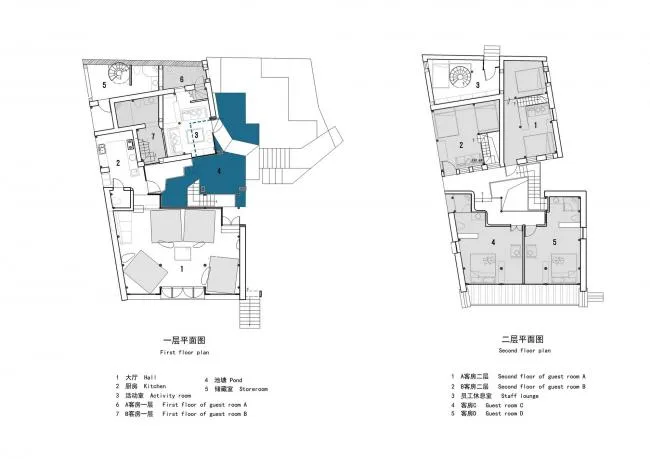
▲ First and Second Floor Plans
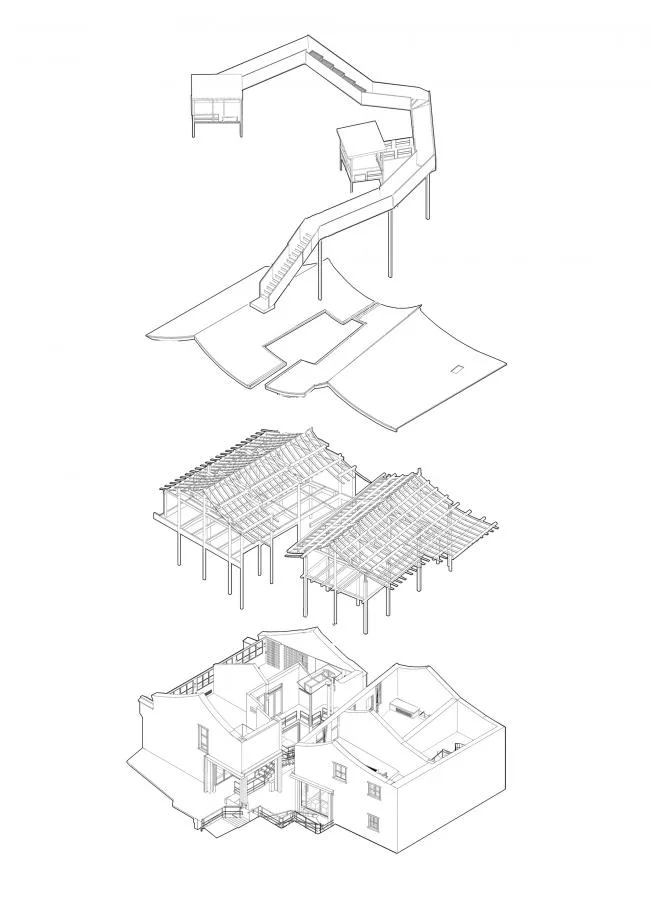
▲ Exploded Axonometric Diagram

▲ Shape Analysis Diagram
Project Information
Project Type: Hotel, Renovation
Location: Huzhou, China
Architect: HEI Architectural Design Studio
Area: 254.0m²
Year: 2018
Photographer: Meiko
Principal Architect: Peng Xianfei
Design Team: HEI Architectural Design Studio












Must log in before commenting!
Sign Up