
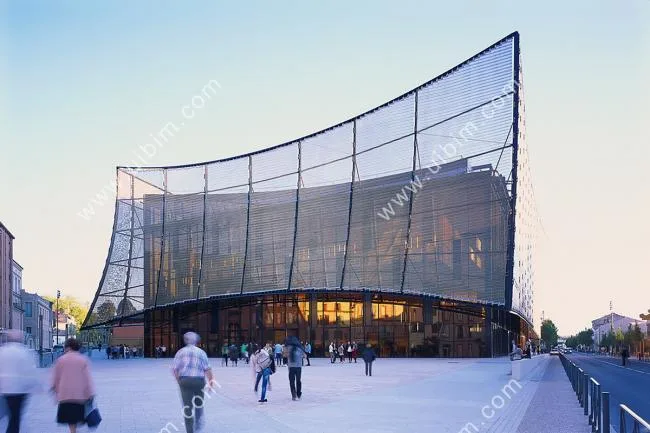
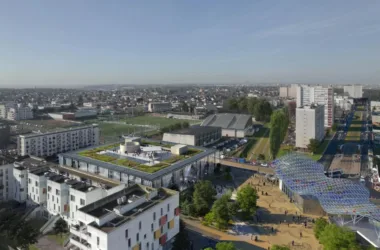
The Albi Grand Theatre is set to transform the city’s structure and cultural landscape. Situated on the edge of the historic center, it has become a striking architectural landmark. The project focuses on shaping a network of public spaces and cultural facilities around the theatre, prioritizing its form over that of a cinema. At the heart of this development lies the Grand Theatre.
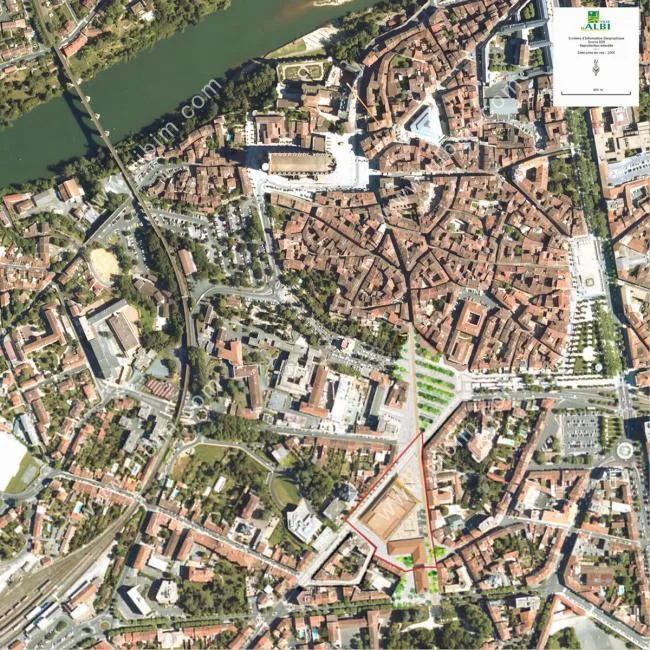
▲ Project location
Along the cultural alleyway, a series of public spaces are arranged sequentially, enhancing the path from the cathedral to Rochegouod Grand Park. This route begins at the square on Sibill Avenue, passes the theatre, continues to the cinema in front of Athanor, and finally opens onto the public garden. The design draws inspiration from the heritage, layout, and interaction of numerous cultural buildings, creating an “urban corridor.”
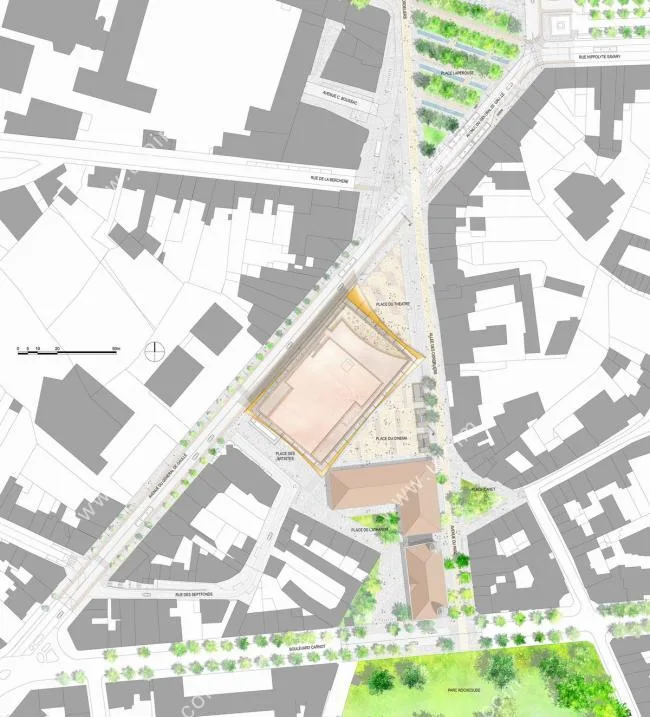
▲ Location Plan
The architects consciously defined each building by marking its place in the city. The well-preserved Athanor Building was renovated to serve as the cinema’s entrance, forming a visible “iceberg” floating above water. This space includes a spacious lobby and may house shops and cafés at the square level. The screening hall is located entirely underground, with the theatre’s base level dedicated to projection facilities. This layout frees all public spaces for civic events and public access.
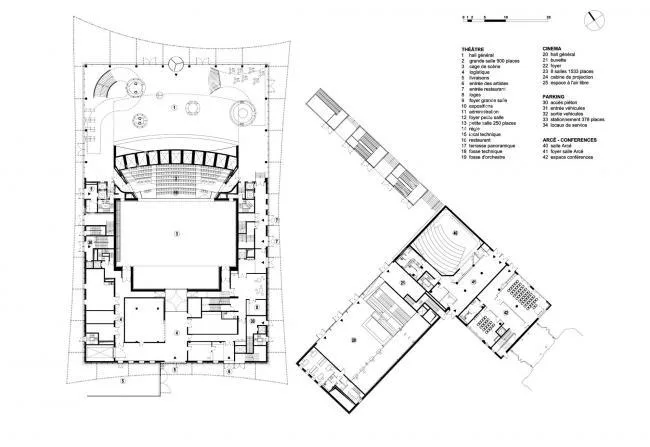
▲ First floor plan
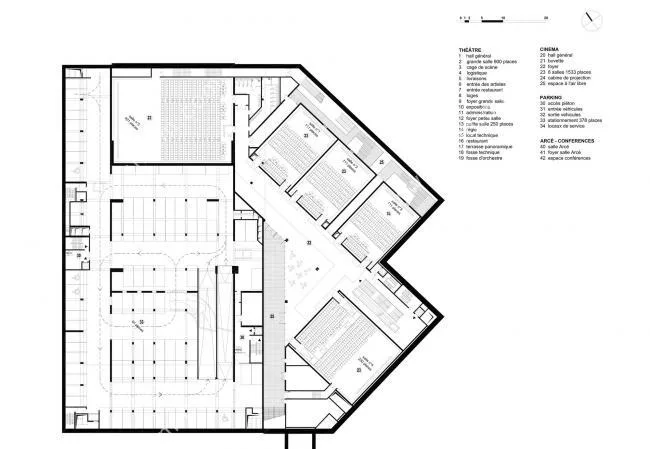
▲ Underground Floor Plan
The theatre’s minimalist geometric design sits adjacent to the multifunctional library on General de Gaulle Avenue, together forming two triangular plots along the “Cultural Street.” These public spaces serve as new urban infrastructure arranged around the Grand Theatre: one facing the historic center, the other overlooking the residential area.
The architects employed a compact layout, allowing the theatre to blend seamlessly with the urban environment. This approach informs the design of entrances, exits, public spaces, and backstage areas, emphasizing functionality, simplicity, directness, and immediacy.
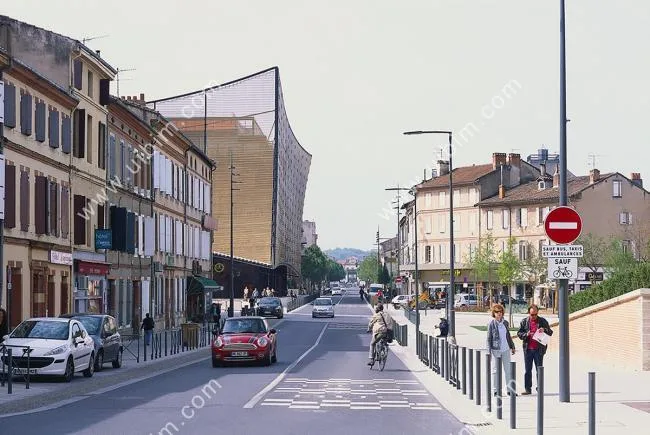
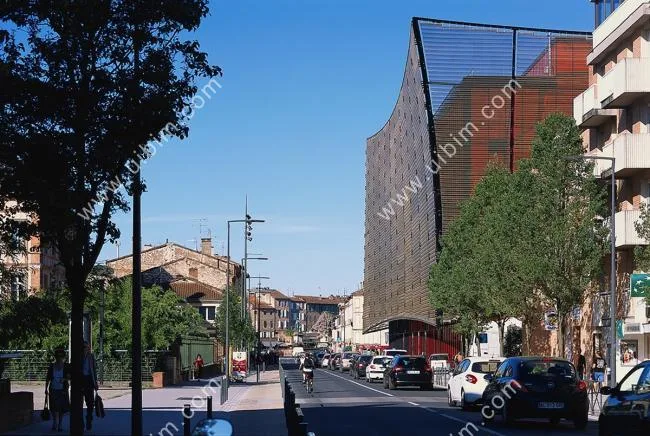
To avoid a “silent” rear façade caused by ticket offices and administrative functions above the laboratory, all four sides of the building remain open and functional.
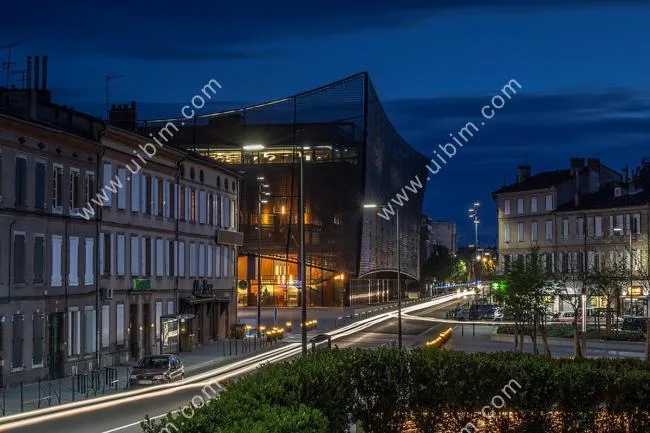
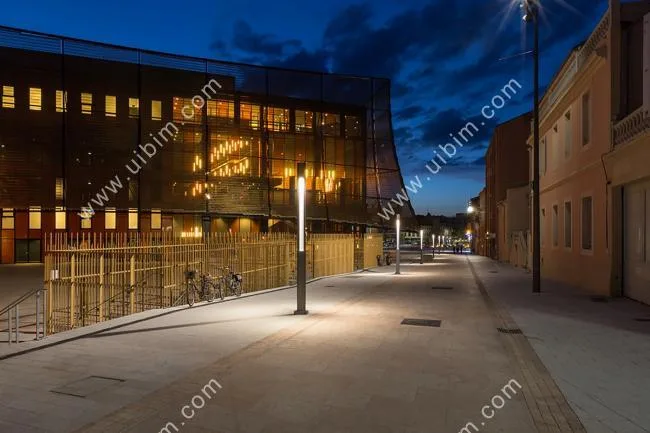
The theatre’s only opening is fully glazed, resembling a large window that connects to the city and houses the lobby, gallery, terrace, and auditorium.
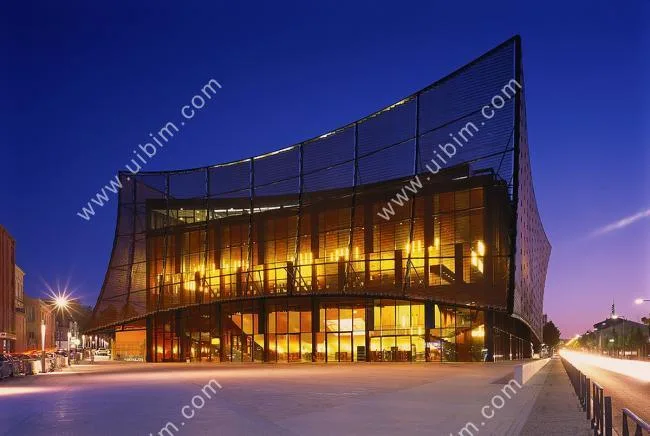
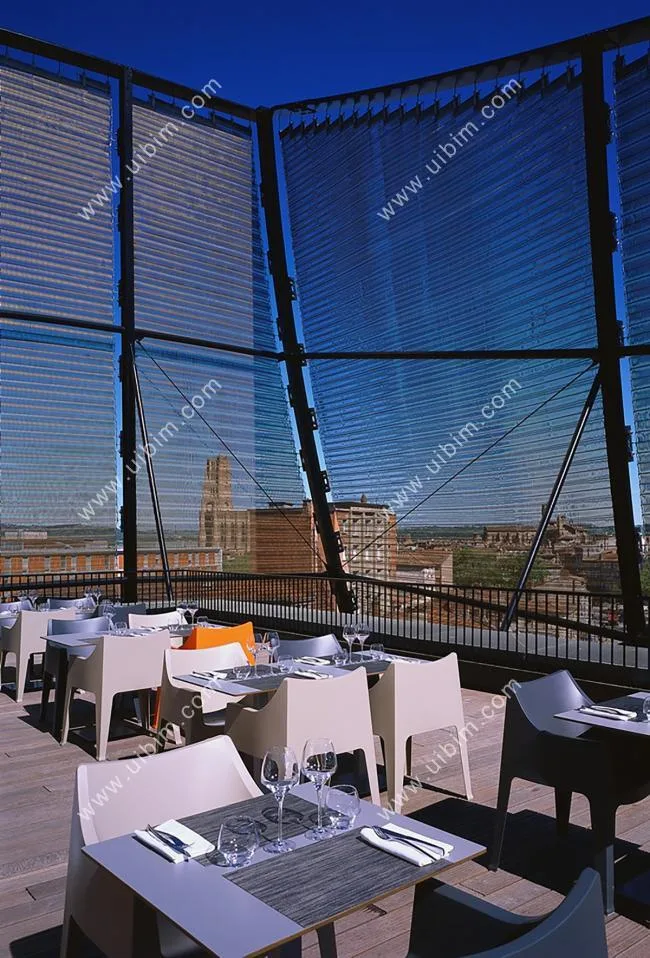
This transparent façade leads on one side to the experimental hall and on the other to a rooftop terrace featuring an aerial garden and restaurant. From this vantage point, visitors can enjoy panoramic views of Albi and its surroundings.
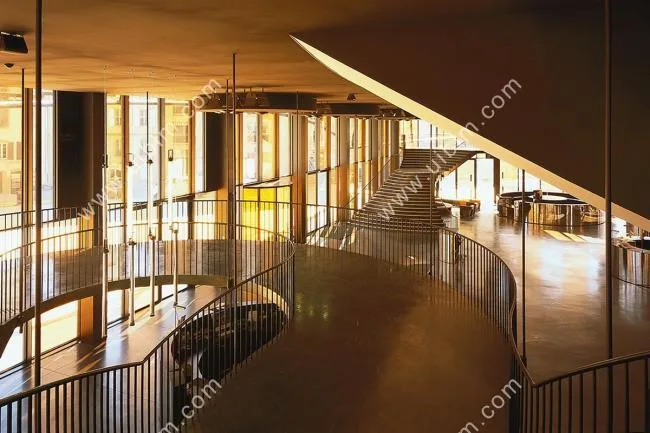
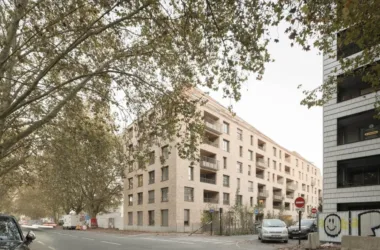
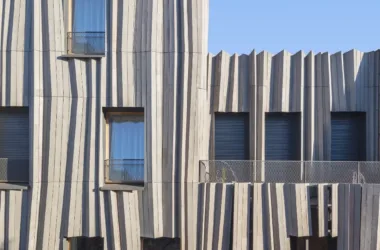
The building’s structure is concrete, clad with brick on the exterior. The architects used the same materials internally and externally—on floors, walls, and ceilings—to create a cohesive material expression.
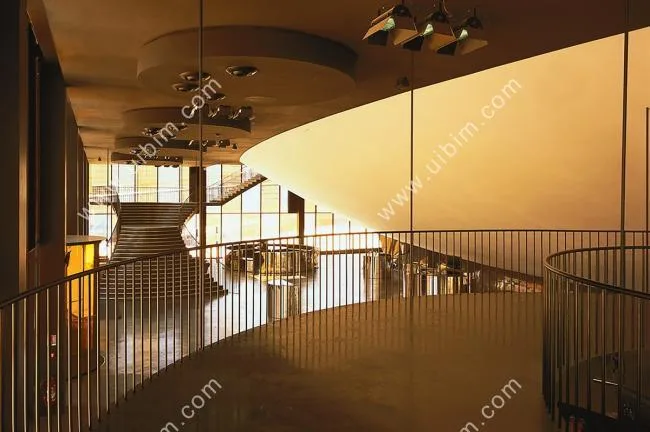
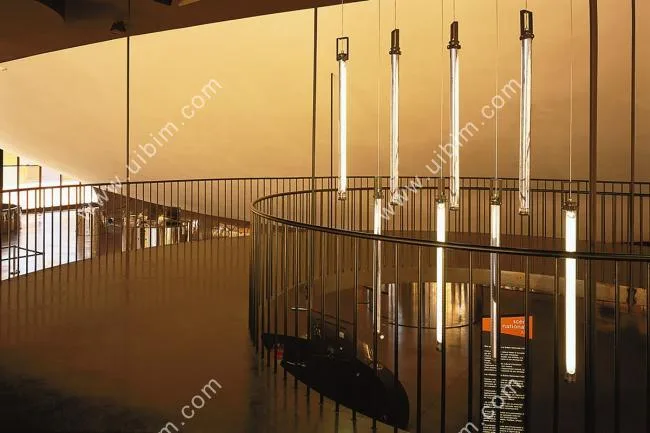
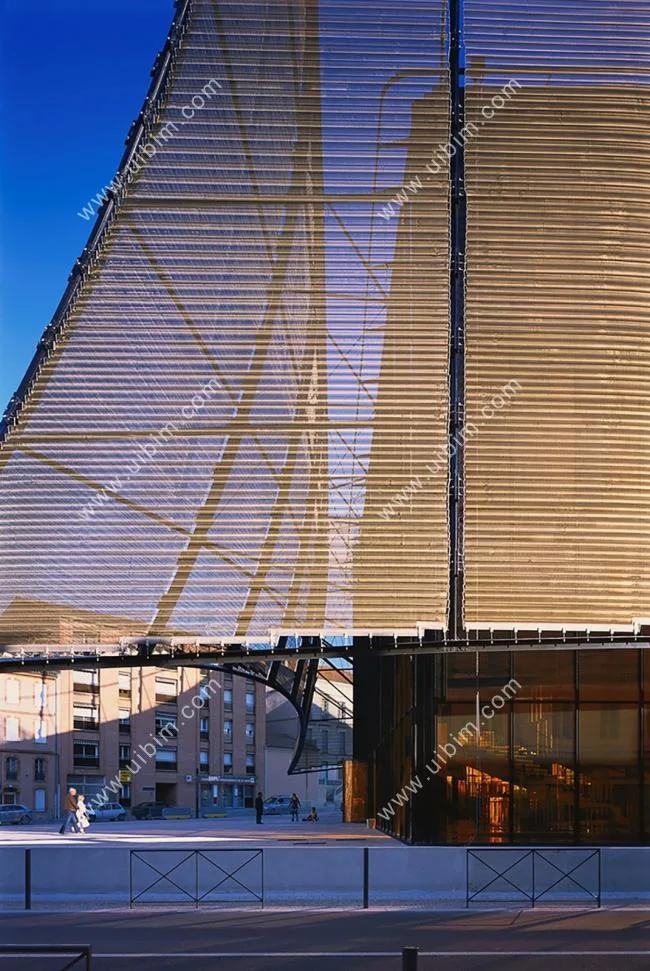
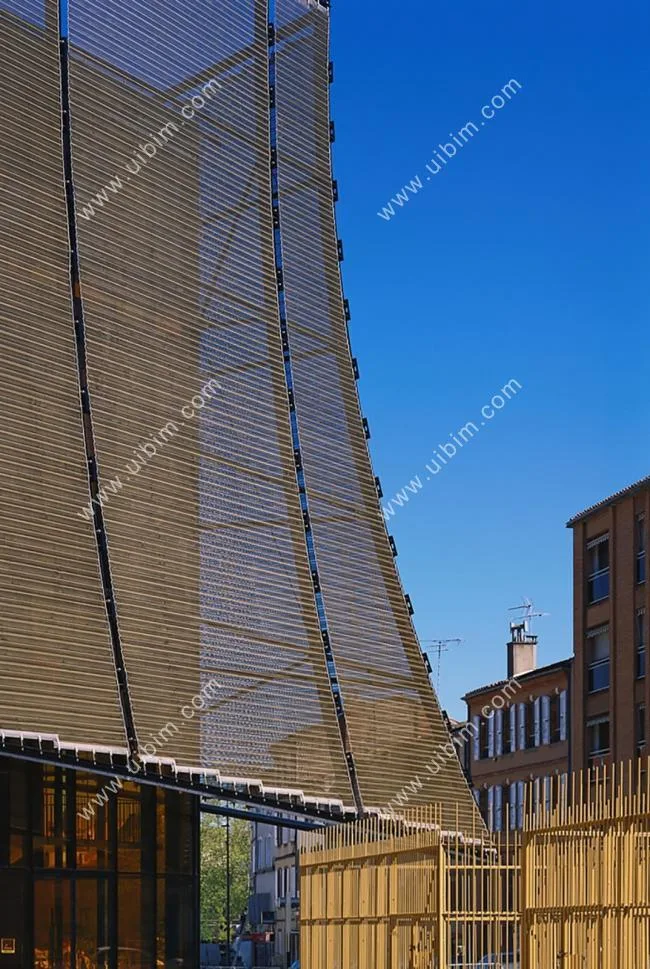
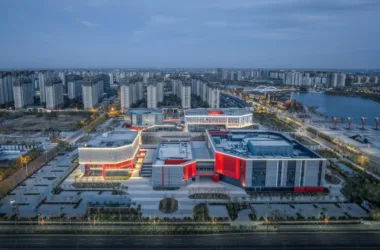
Contrasting with the heavy brick façade, the architects avoided smooth, lightweight materials. Instead, they adorned the two vertical sides of the building with a fabric-like red copper-colored stainless steel mesh. The remaining sides remain white, creating the impression of a large fabric draping over both the theatre and cinema.
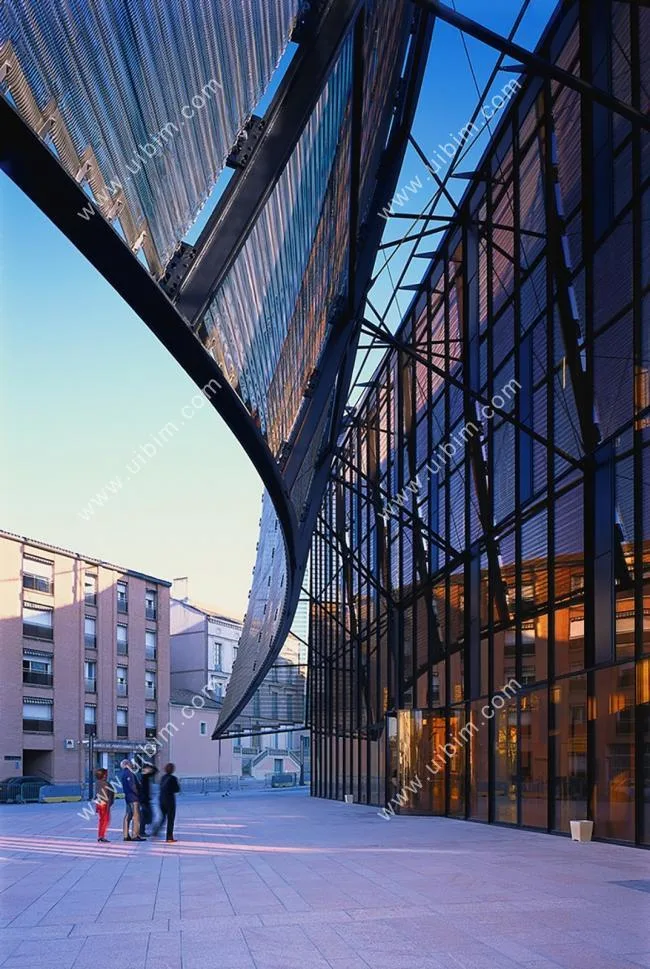
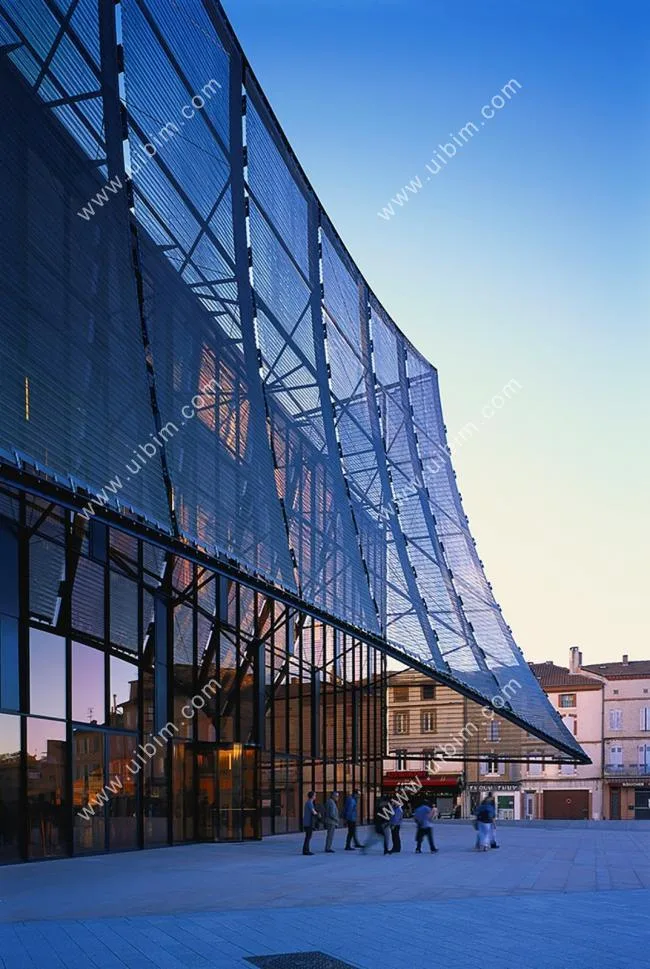
The curves and counter-curves create a free, joyful, and poetic architecture within this large stationary grid. The cascading fabric evokes the atmosphere of an opera stage. Importantly, the theatre is designed to “bathe in bright light” through thoughtful use of lighting, reflections, and color.
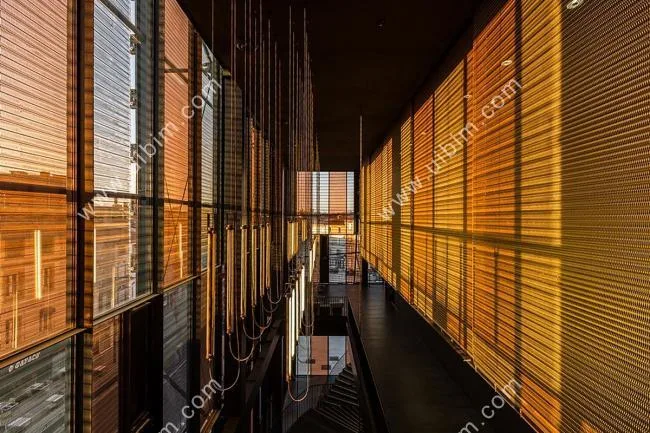
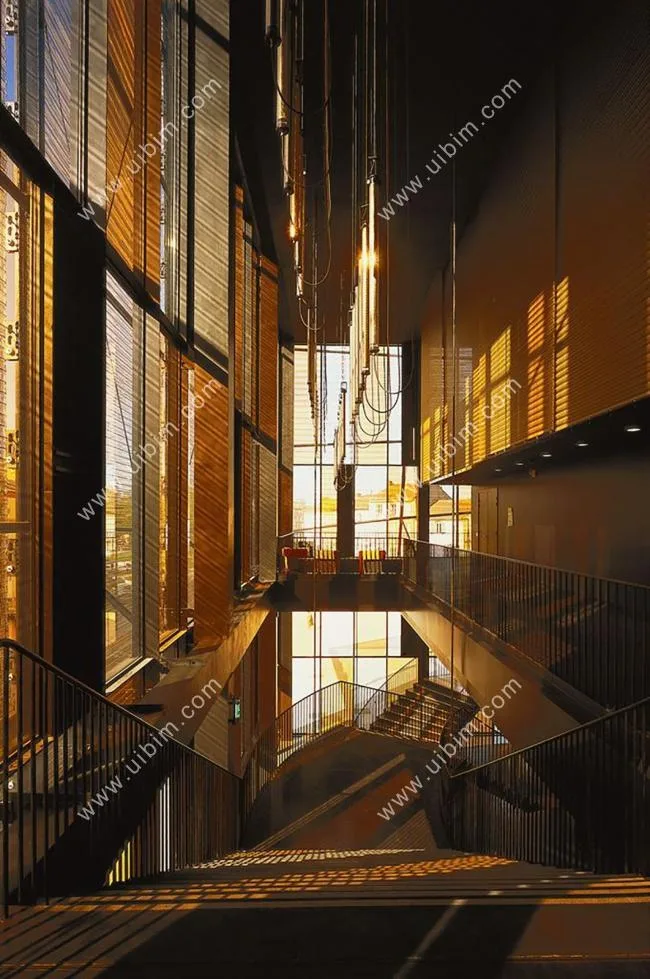
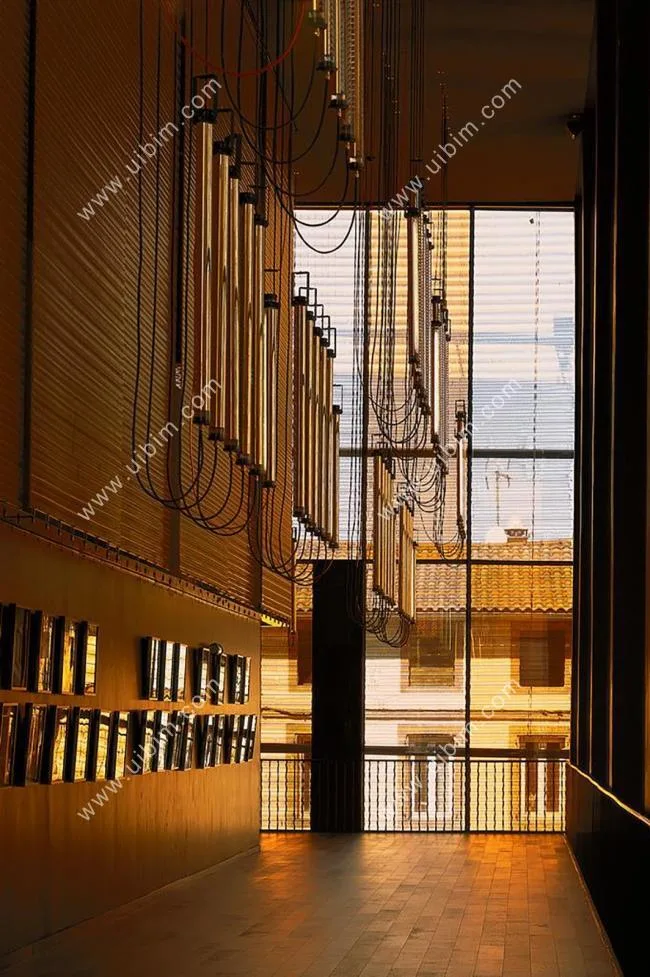
The lace-like metal mesh exterior maintains the theatre’s functionality without isolating it from the city. It filters light and offers protection from wind and rain.
This vast façade also incorporates sustainable features. The mesh grid adjusts its coverage and purpose: when expanded, it offers outward views from inside; when closed, it screens structural walls or filters sunlight in the large lobby like a sunshade. This tight veil clears significant areas in the public space, inviting visitors and audiences to enter the theatre and experience the extraordinary landscape above Albi.
In summary, the key strategies include: utilizing underground space for parking and cinema; prioritizing cultural facilities at ground level public spaces; and designing a concise, compact, effective, flexible, and economical theatre structure.
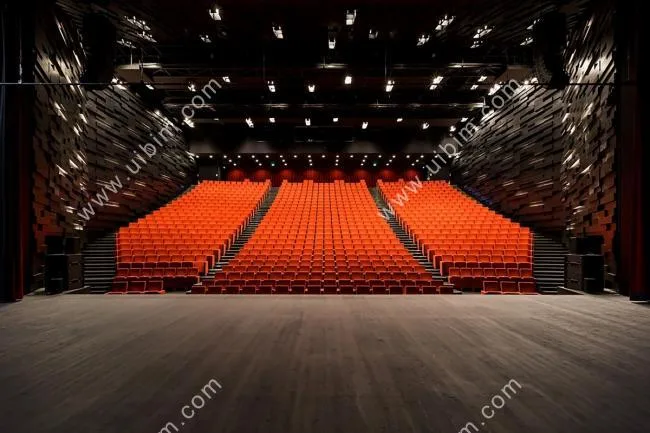
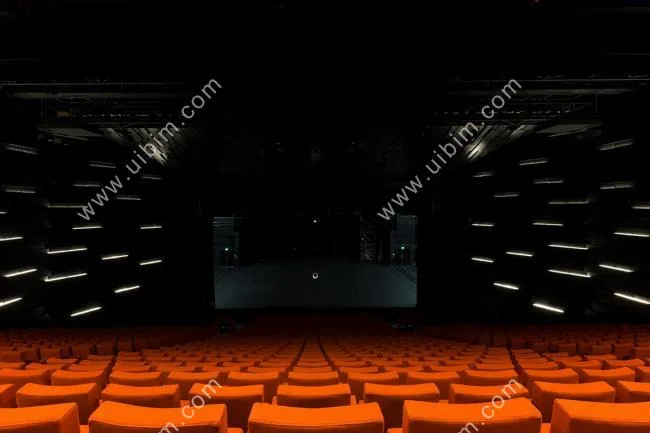
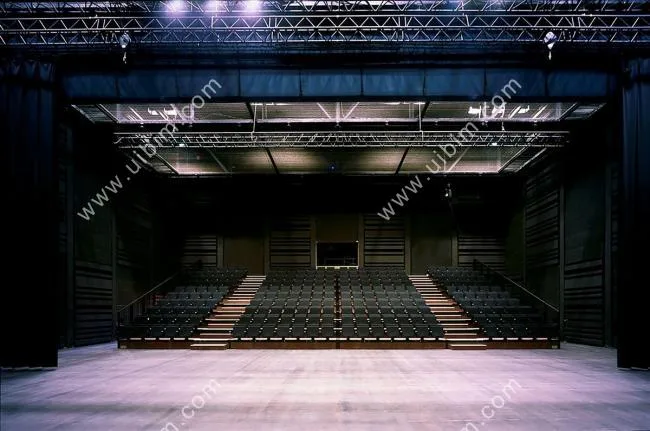
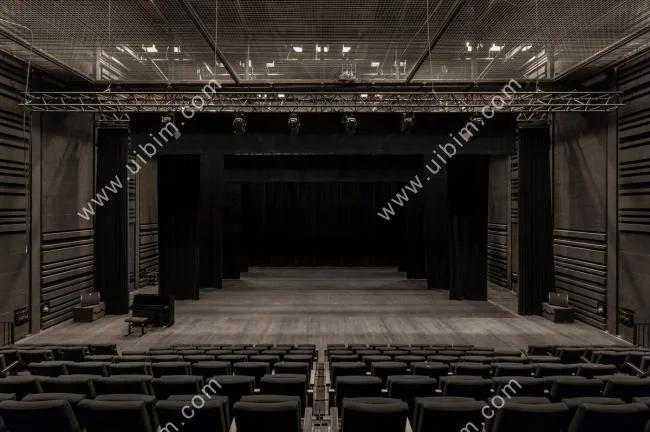
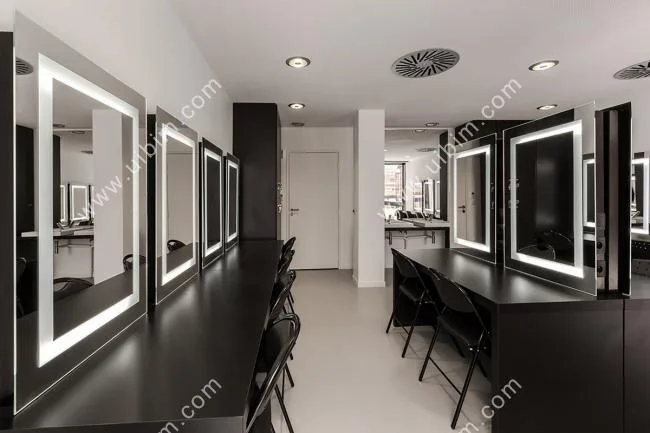
Project Drawings
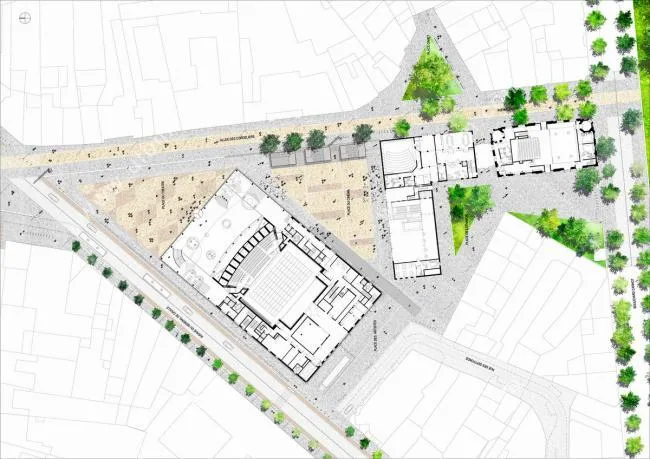
▲ General layout plan
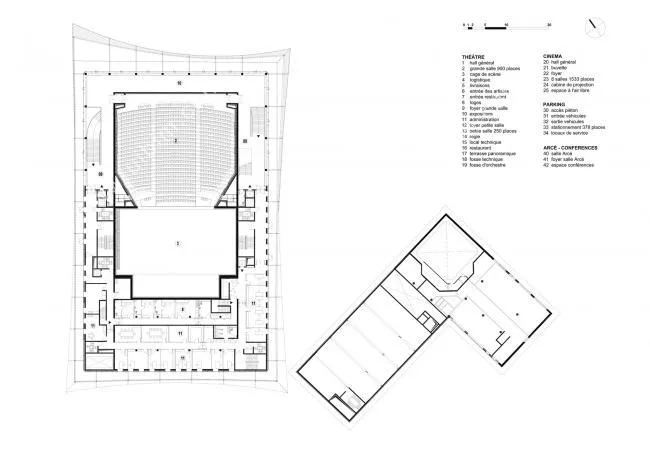
▲ Second floor plan
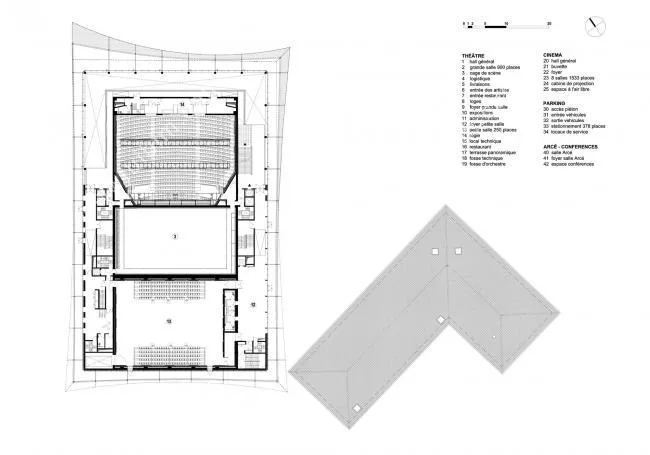
▲ Third floor plan
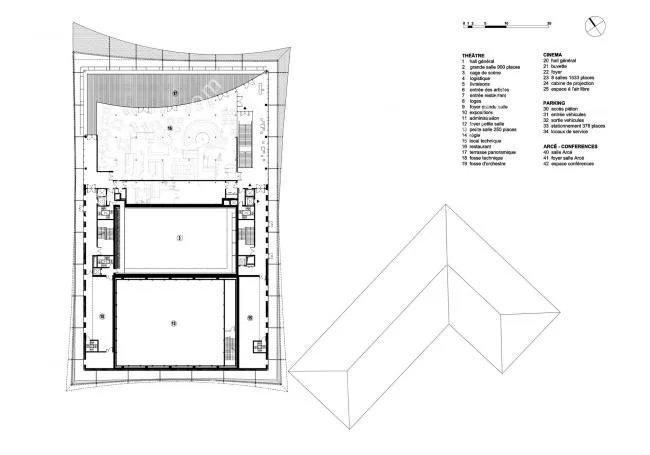
▲ Fourth floor plan
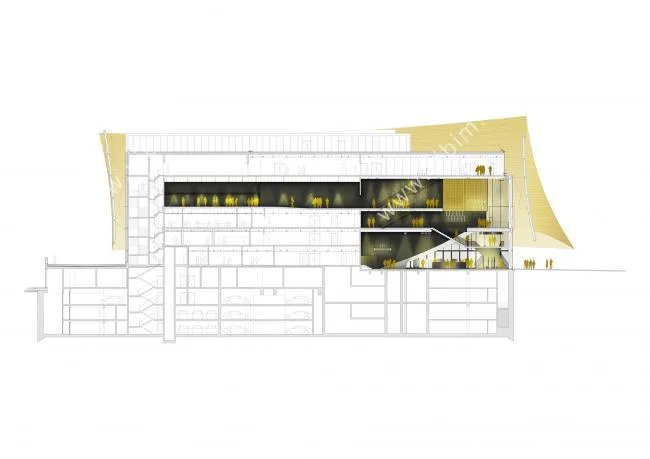
▲ Sectional view
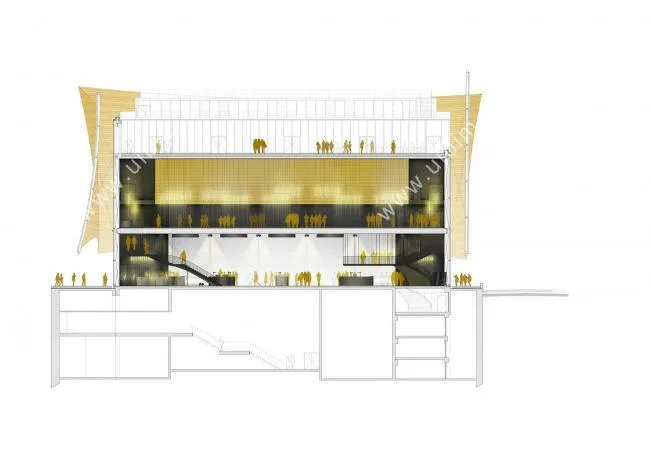
▲ Sectional view
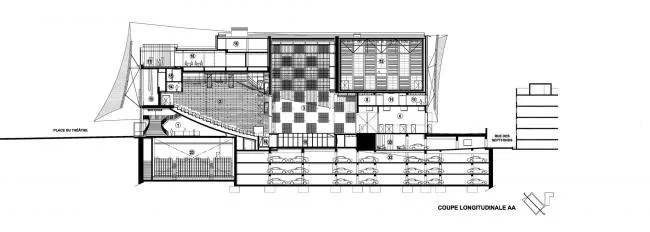
▲ Longitudinal sectional view AA
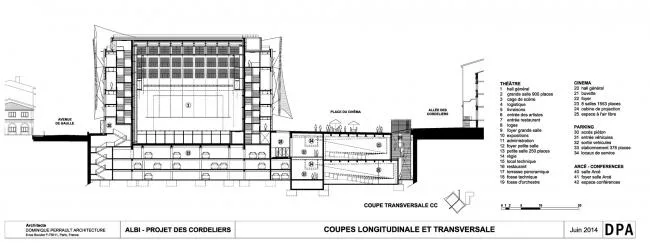
▲ Horizontal sectional view CC
Project Information
Project Type: Cultural Architecture, Theater
Project Location: Albi, France
Architect: Dominique Perrault Architecture
Area: 34,000 m²
Year Completed: 2014
Photographers: Georges Fessy, Vincent Boutin
Manufacturers: Vanceva, Alucobond
Local Architect: Christian Astruc Architects
Structural Engineer: VP GREEN
Mechanical Engineering: ETCO
Economic Analysis: RPO
Perspective Design: Change à vue
Acoustics Consultant: Jean Paul Lamoureux












Must log in before commenting!
Sign Up