
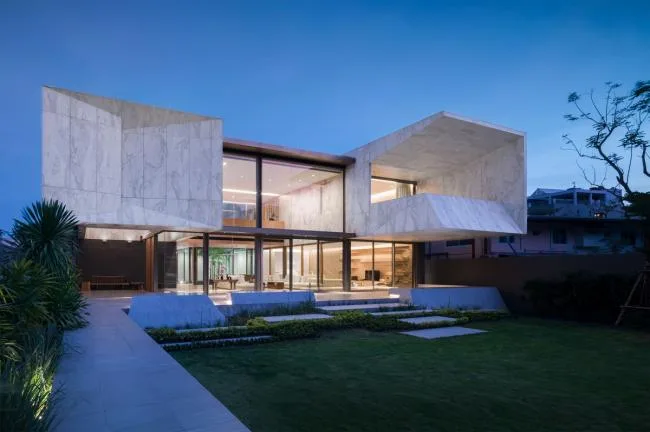
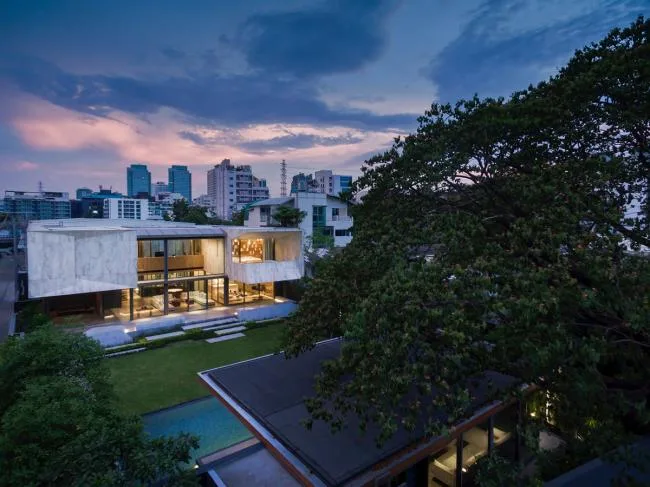
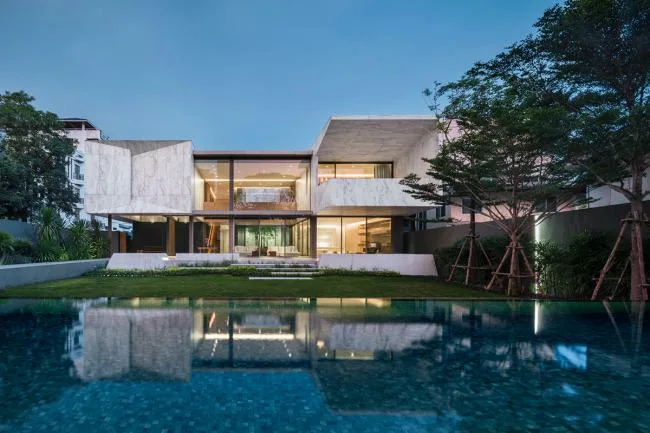
The architect’s original vision was to let the residents’ lifestyle shape the spatial design, crafting the residence as a unified marble sculpture. The building’s main structure appears both solid and lightweight, seemingly suspended in mid-air defying gravity. A central courtyard sits beneath the marble blocks, bringing the outdoor landscape seamlessly into the interior. Marble fragments leftover from the sculpting process are scattered on the ground, becoming part of the landscape and maintaining a strong visual connection to the original marble boulders.
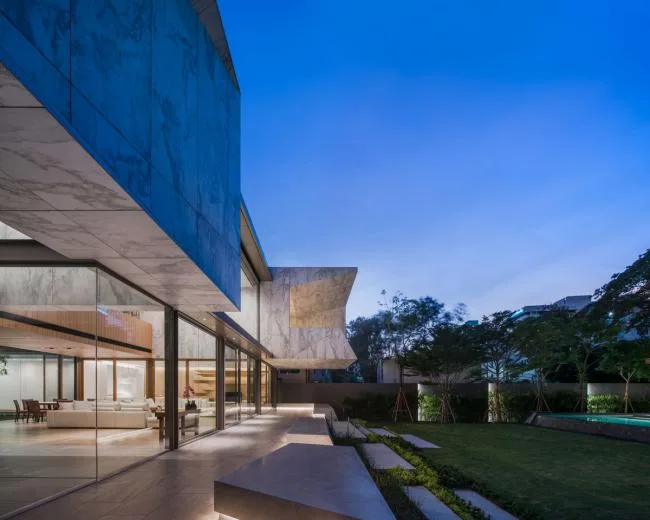
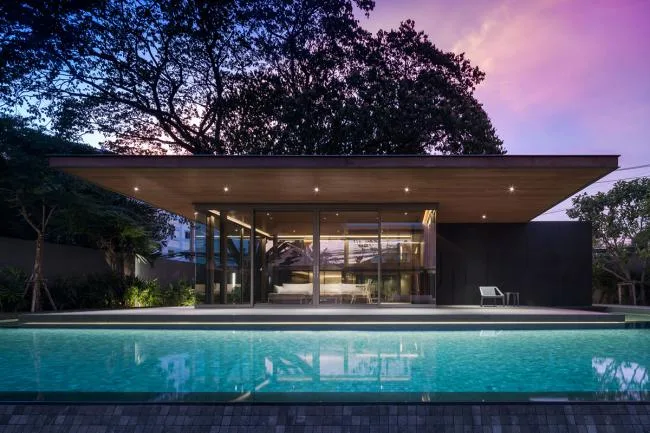
By playing with the building’s balanced and unbalanced surfaces, a distinctive spatial form emerges. The Marble House is situated at one end of a rectangular plot, with a large ‘Rain Tree’ standing at the opposite end. The building’s modern style highlights the presence of these mature rain trees, whose reflections ripple on the surface of the swimming pool, creating a memorable and harmonious scene.
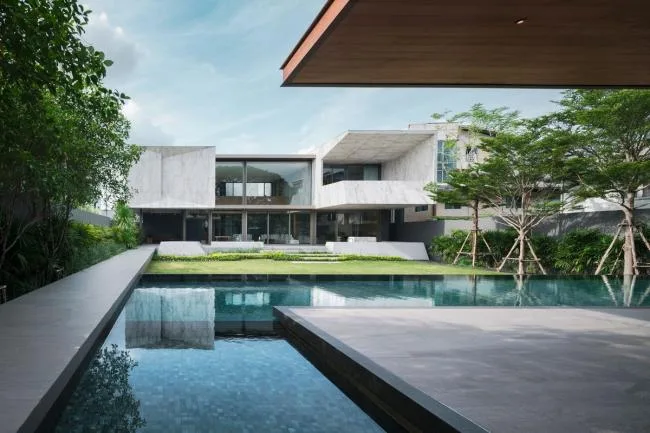
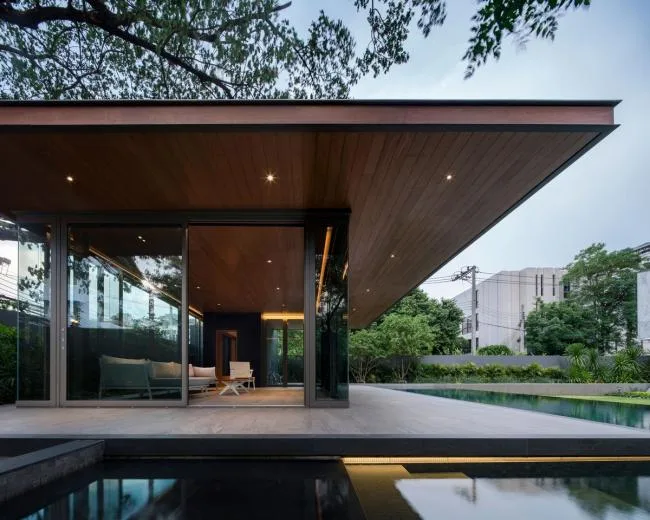
The marble veneer applied is actually large, lightweight marble-patterned printed wall tiles. These outdoor decorative materials cover the brick walls and provide waterproofing. They also shade the building, protecting it from direct sunlight, minimizing the heat of Bangkok’s summer, and helping to cool the interior during the day.
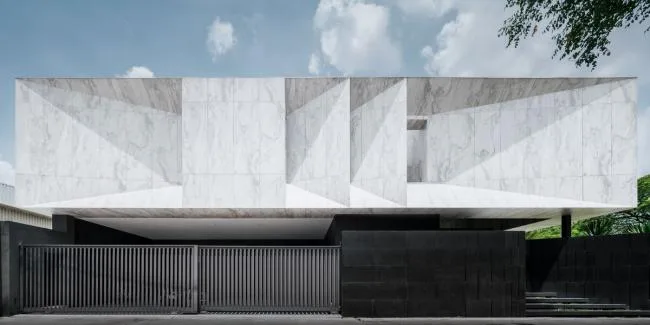
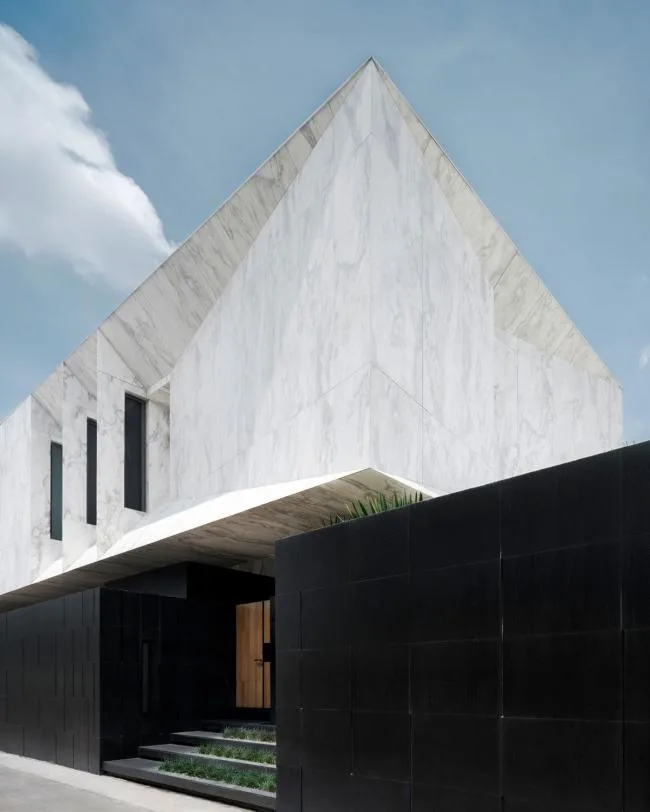
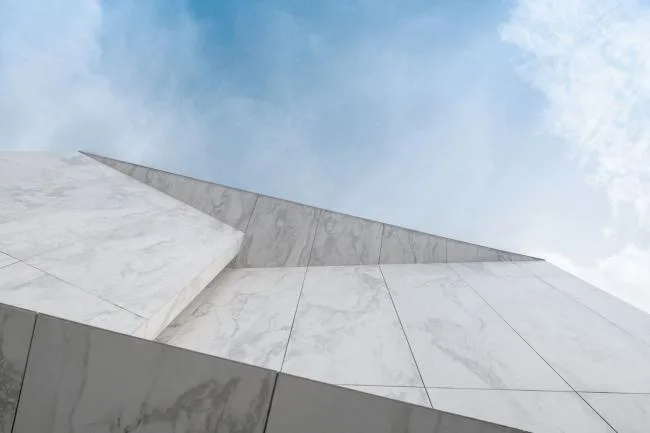
The subtle interplay between architecture and landscape is evident throughout the design. The building’s overall square layout surrounds an open central courtyard, allowing natural light and ventilation to reach every corner of the interior. Bamboo plants in the courtyard sway gently in the wind, further connecting the indoor and outdoor environments.
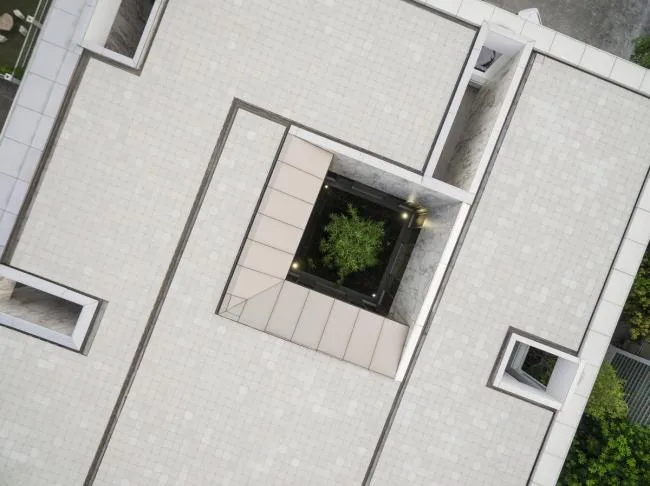
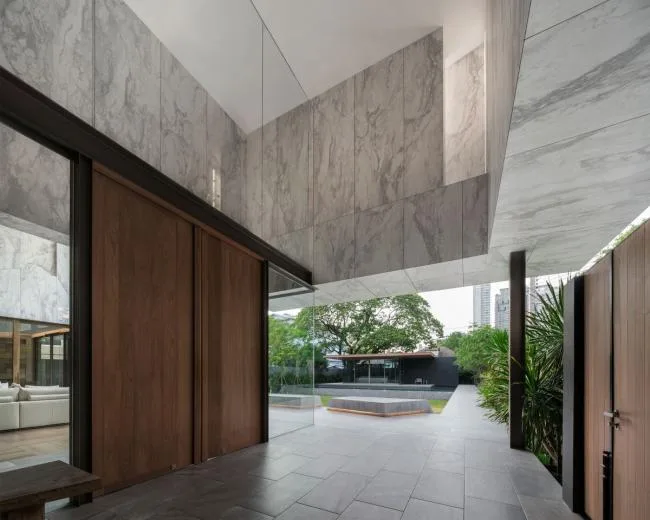
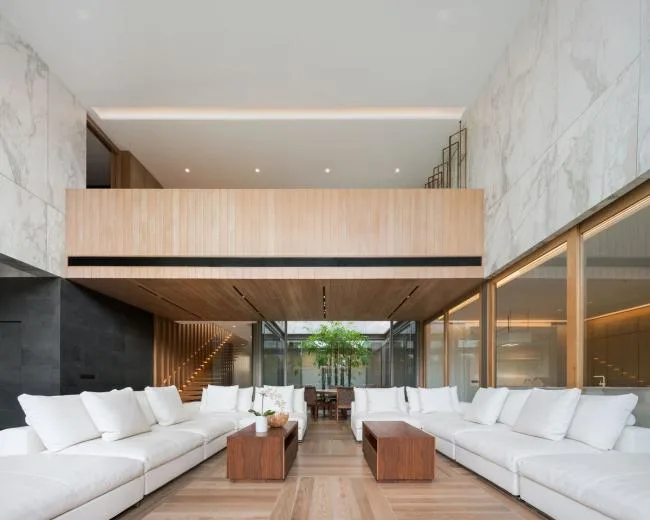
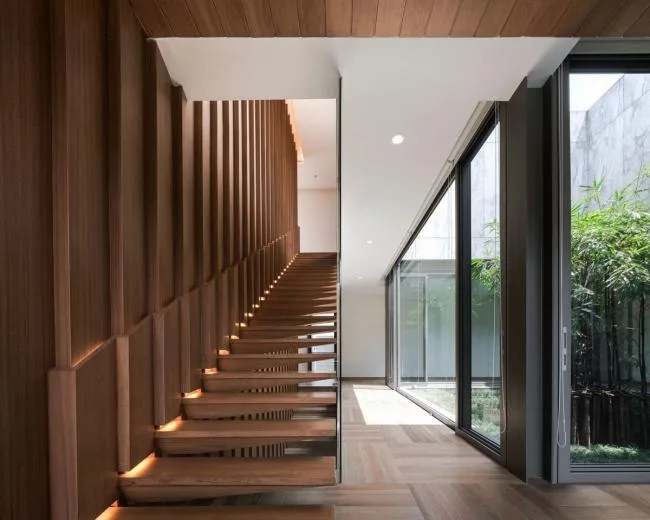
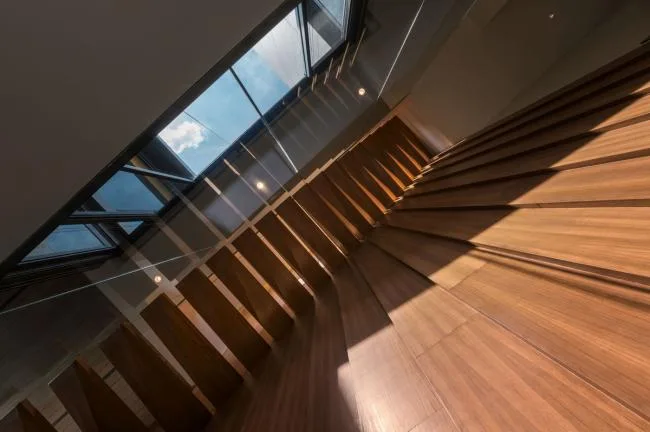
The innovative “private balcony” concept is highly effective for urban homes surrounded by neighbors. This enclosed outdoor terrace offers privacy while still allowing natural light and airflow. The unique excavation above the terrace, referred to by the architect as ‘Private Sky,’ becomes a defining feature of the building.
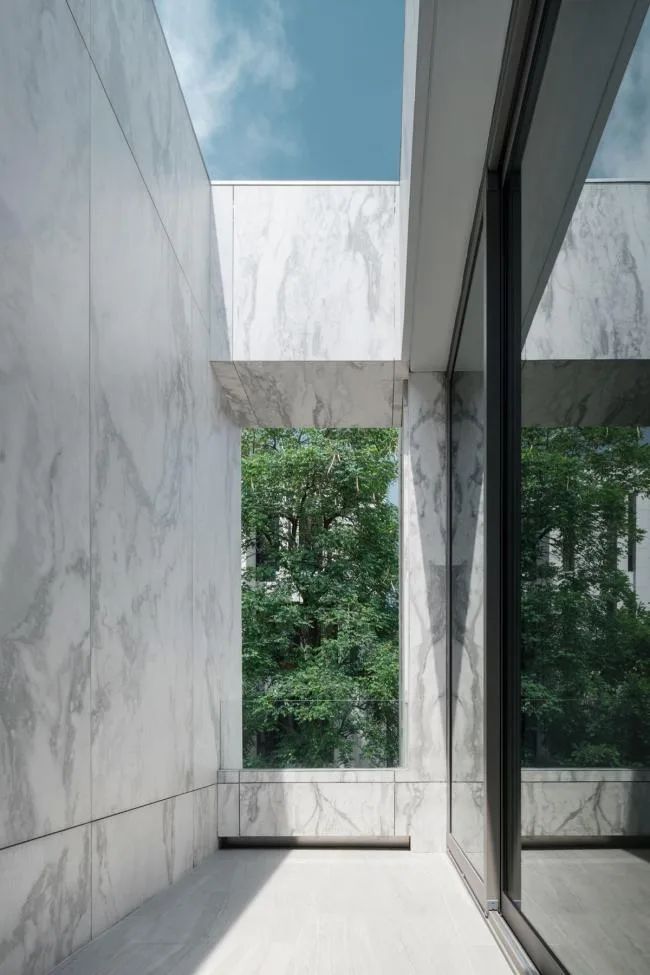
Some windows are strategically placed on the sides facing neighbors, but they are angled towards more open areas to shape the building’s final form. Ultimately, the design prioritizes the residents’ lifestyle and landscape preferences, allowing these elements to naturally define the architecture. Material choices, spatial layouts, and forms blend seamlessly between interior and exterior spaces, creating a strong connection among the architecture, landscape, and interior design.
Night View:
Project Drawings
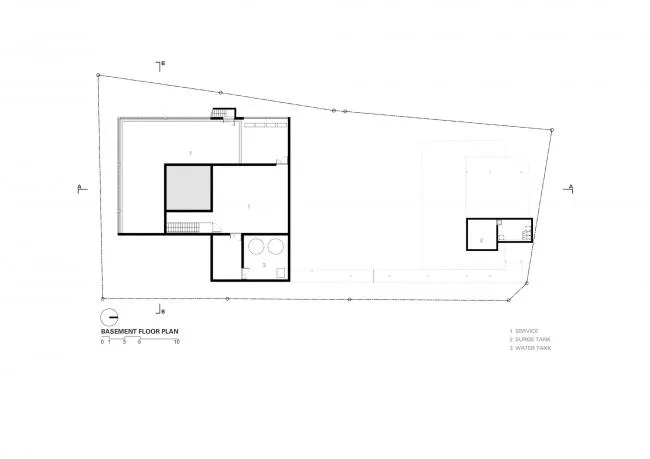
▲ Underground Floor Plan
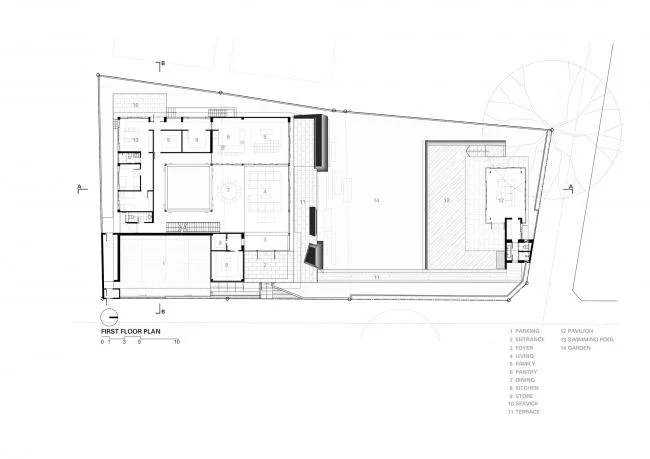
▲ First Floor Plan
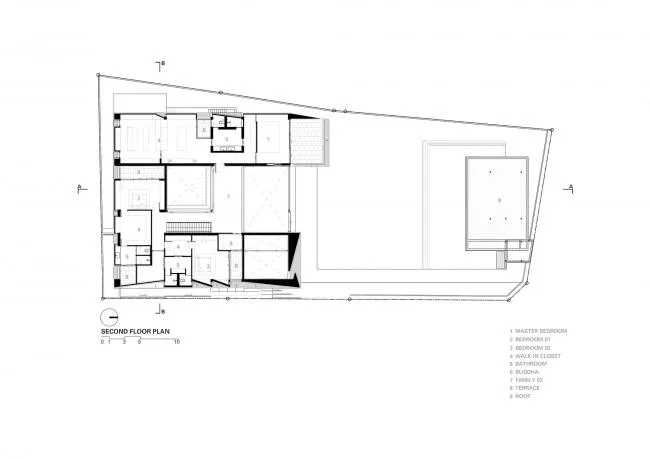
▲ Second Floor Plan
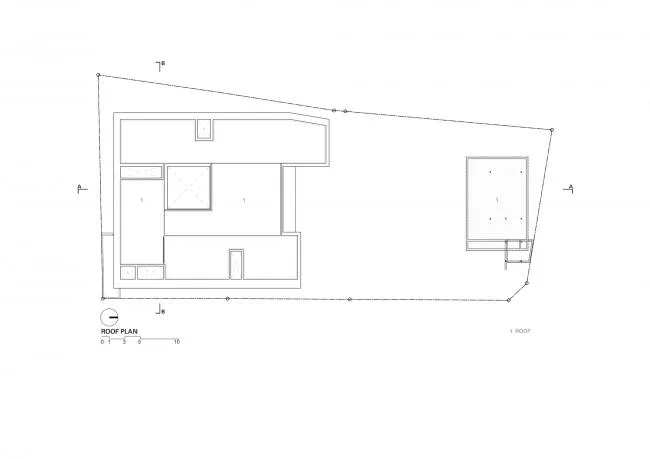
▲ Roof Plan
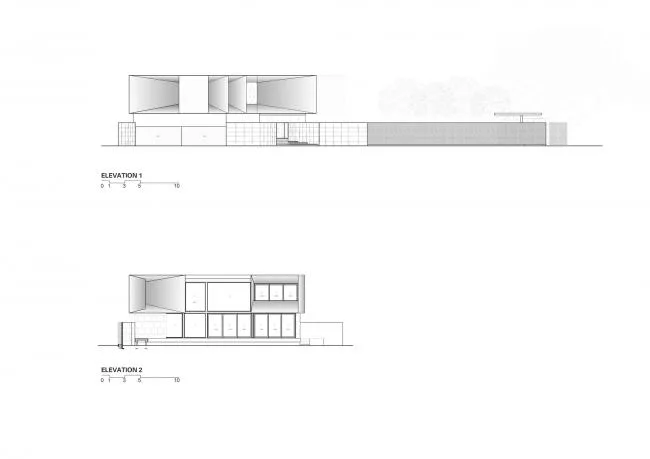
▲ Elevation View
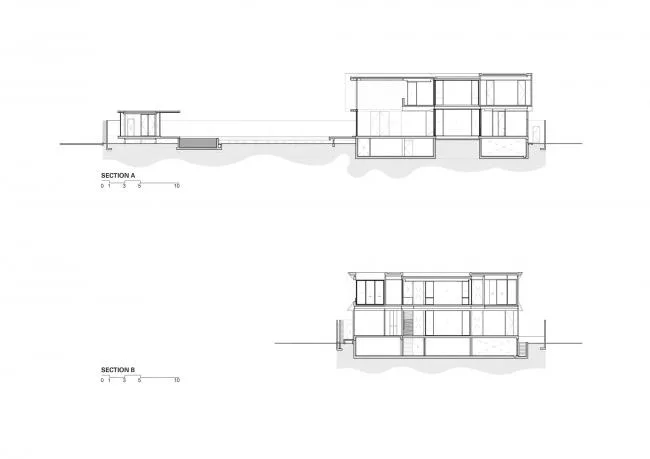
▲ Sectional View
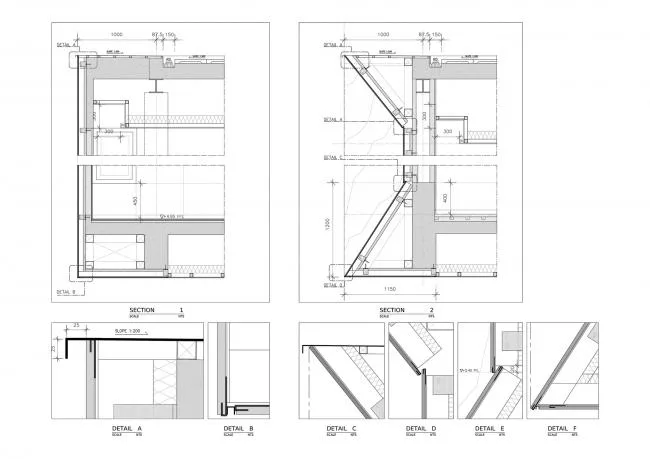
▲ Large Sample Nodes
Project Information
Architectural Design Firm: Openbox Architects
Location: Bangkok, Thailand
Category: Independent Residential Building
Principal Architect: Ratiwat Suwannatrai
Design Team Members: Nattawan Supanan, Sudatip Pipathakorn, Nonglak Boonsaeng
Building Area: 1000 square meters
Project Year: 2017
Photographer: Wison Tungthunya
Manufacturers: Hafele, Porcelanosa Grupo, LifeStyle Furniture, Boonthavorn
Landscape Architect: Wannaporn Suwannatrai
Landscape Design Team: Chawannuch Jirasukprasert
Interior Chief Architect: Wannapat Jenpani (BIM Tutorial) chkarn
Interior Design Team: Pichaya Sampanvejsobha, (BIM Engineer) Chitchaya Klinkhum
Lighting Designer: FOS Lighting
Facade Technology Manufacturer: Boonthavorn












Must log in before commenting!
Sign Up