
The project is located in Ruili City, in the western part of Yunnan Province, near the China-Myanmar border. It borders the mountains and rivers of Myanmar on the northwest, southwest, and southeast sides, with villages facing each other across the border. This unique geographical position gives the city rich ethnic and cultural influences from both countries, making it China’s most active inland port connecting to Southeast and South Asia.
The Hengduan Mountains traverse the region, and the humid tropical monsoon climate of South Asia brings abundant rainfall and lush forest resources. This vast land exudes a mysterious natural charm, inviting exploration. Inspired by this environment, the design concept of the project is a “Secret Realm” — evoking the feeling of being inside a deep water cave, discovering the mysteries of mountains and rivers, and refreshing both body and mind. This concept reflects the spiritual aspiration of every visitor to the beauty salon and serves as the salon’s purpose: to uplift the spirit of its customers.
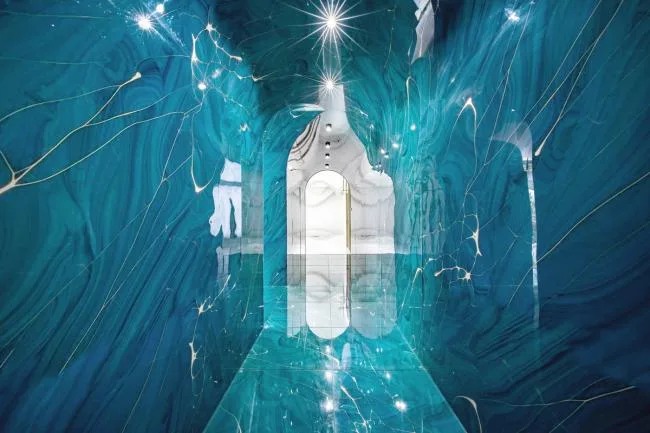
▲ Tunnel perspective
The owner sought to integrate multiple functions within a limited space to fully meet customer needs. The biggest challenge was to organize efficient circulation patterns and rational spatial layouts within the original 300m² area, while creating ample public spaces for functional requirements.
To address this, the designer adopted a branching spatial layout, featuring only a “T”-shaped corridor as the traffic artery. This minimized circulation area, reduced wasted space, and freed up more room for public functions such as reception, waiting, and leisure. The design creates centralized open spaces within the various functional blocks, resulting in an orderly and efficient spatial organization.
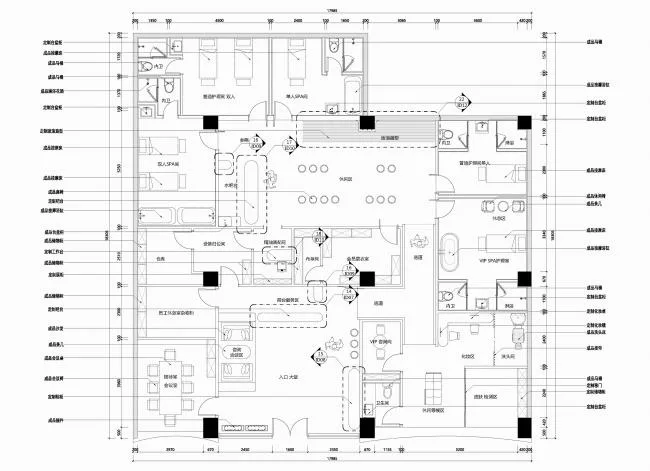
▲ Design floor plan
Aligned with the “Secret Realm” concept, the “T”-shaped passage was designed to resemble a tunnel filled with illusions. This corridor connects the three main functional areas—reception, waiting, and leisure—allowing guests to easily move between them and creating a cohesive spatial flow.
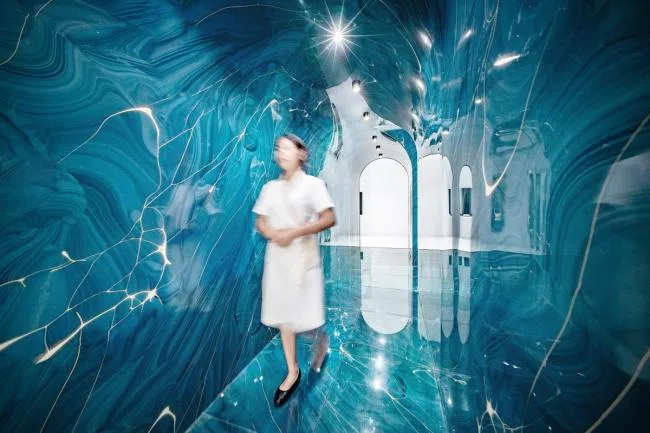
▲ Employees passing through tunnels
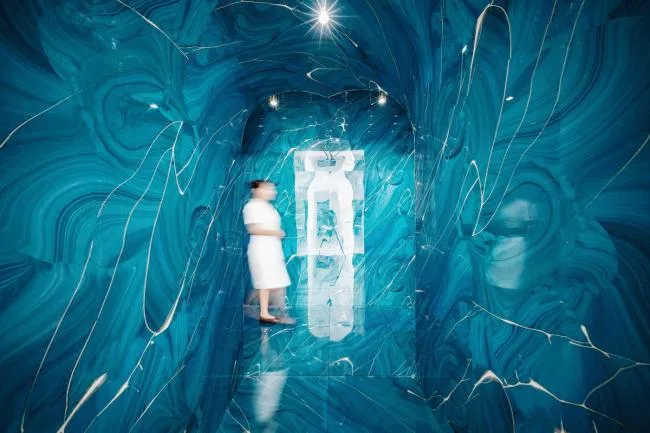
▲ Tunnel perspective
Visitors enter through the lobby and proceed to the reception area before continuing through the blue-hued passage to begin their beauty journey. They first pass through the waiting area for skin tests and consultations, then traverse the corridor again to reach the leisure area, which is equipped with skincare, therapy, and relaxation amenities. Here, guests can enjoy treatments, conversations, and tea in a comfortable setting. The spacious leisure area also accommodates public events such as salons and lectures. The design increases privacy in these three zones, while the corridors serve as smooth transitions between different functions and atmospheres.
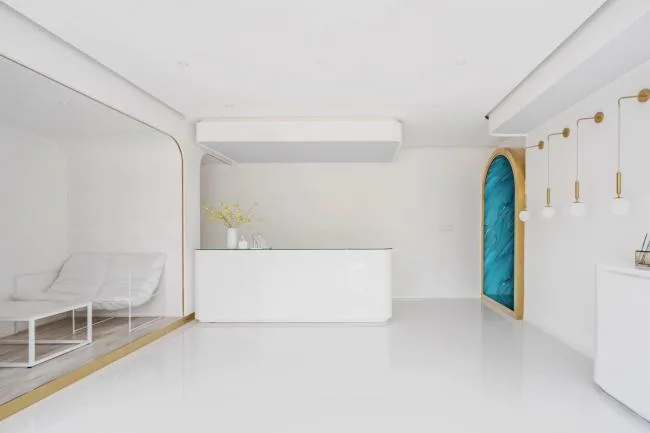
▲ Lobby perspective
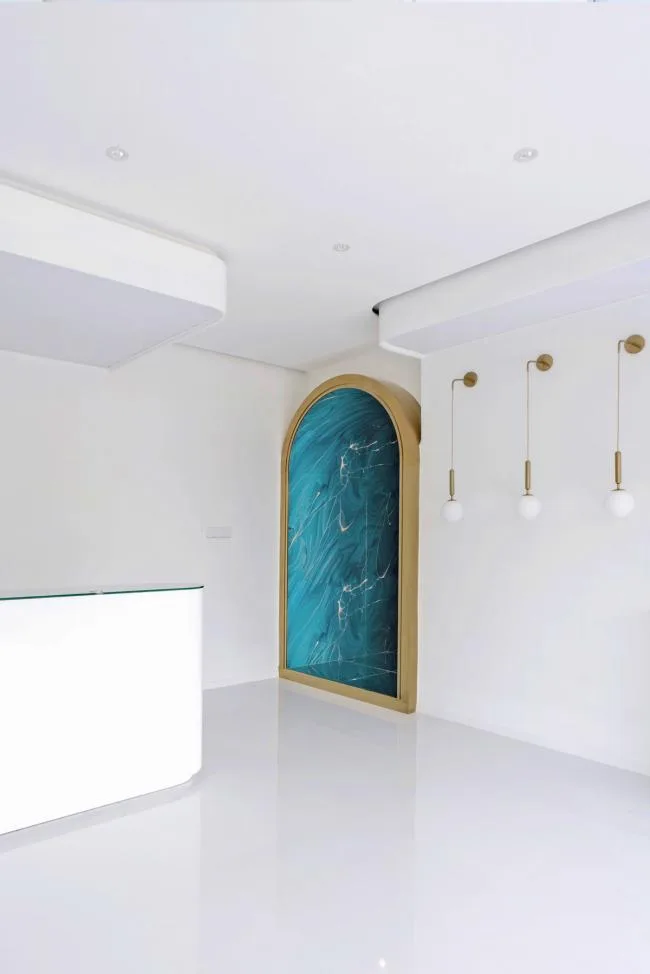
▲ Entrance to the lobby tunnel
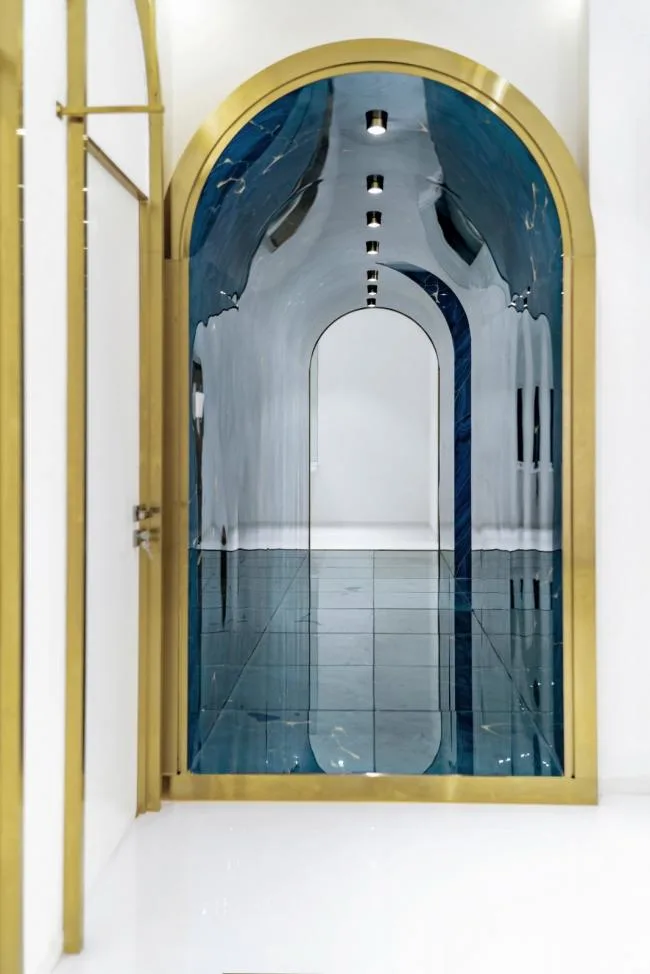
▲ Tunnel perspective
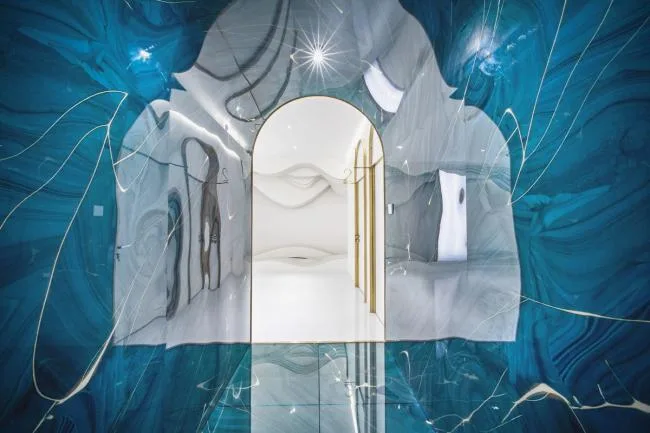
▲ Tunnel perspective
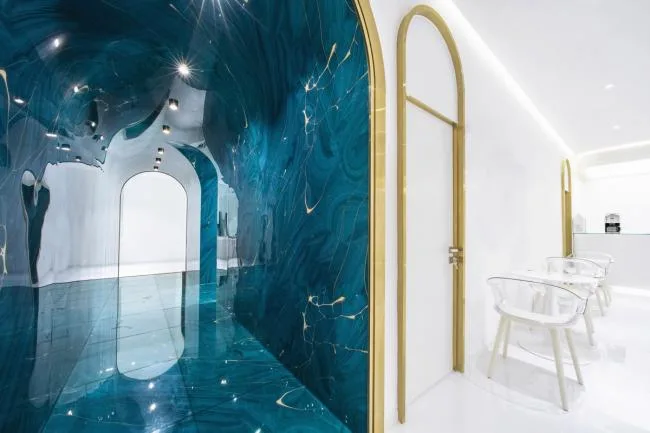
▲ Tunnel entrance to leisure area
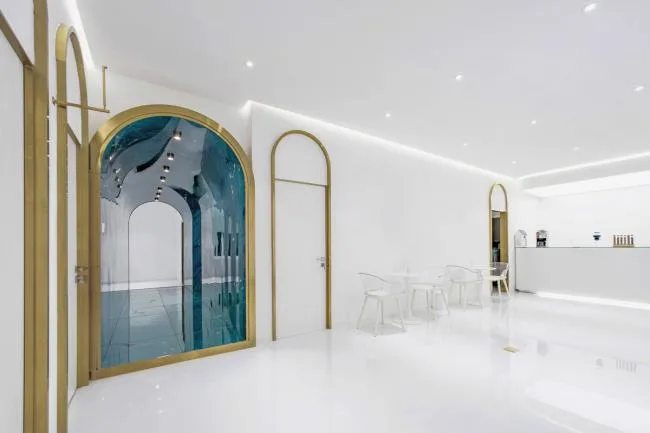
▲ Entrance to the leisure area tunnel
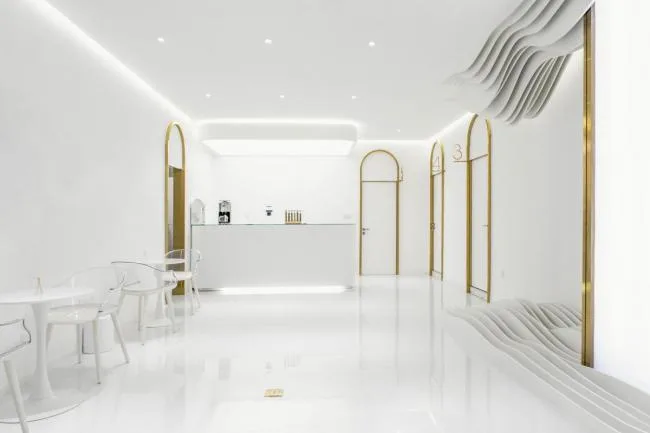
▲ Leisure area perspective
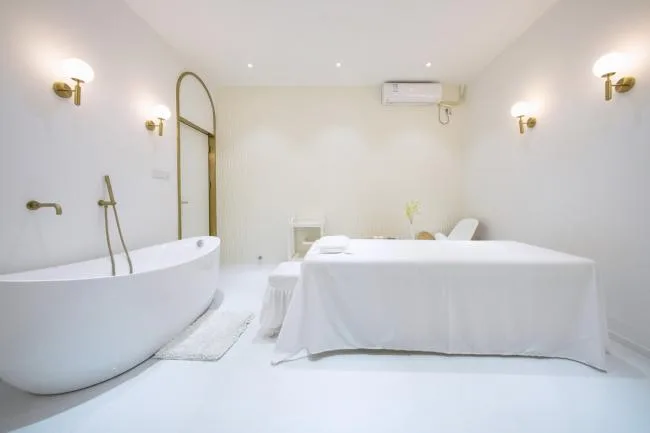
▲ SPA care room
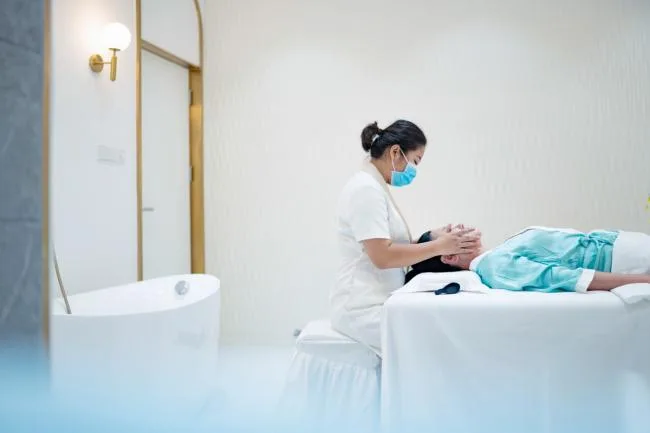
▲ Guests enjoying treatments
The spatial material palette features white wood veneer and latex paint as the overall tone, accented by antique copper brushed stainless steel, crystal panels, and light gray wood logs. The “T”-shaped corridor features a curved dome design, with blue crystal acrylic panels covering the walls, ceiling, and floor to create an immersive “deep water ice cave” experience. This combination produces a striking contrast in color and form, emphasizing the unique impact of the “Secret Realm” corridor.
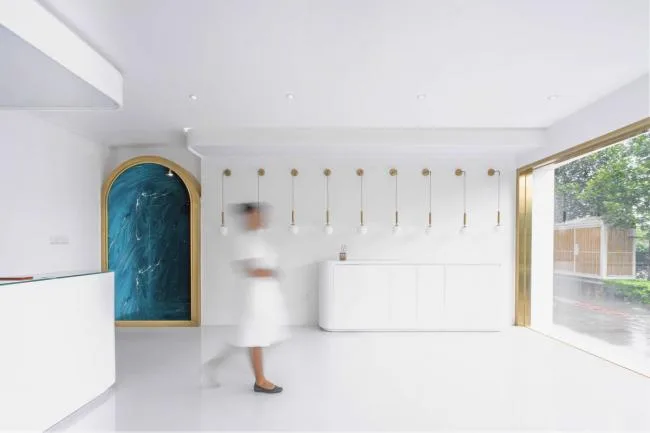
▲ Lobby perspective
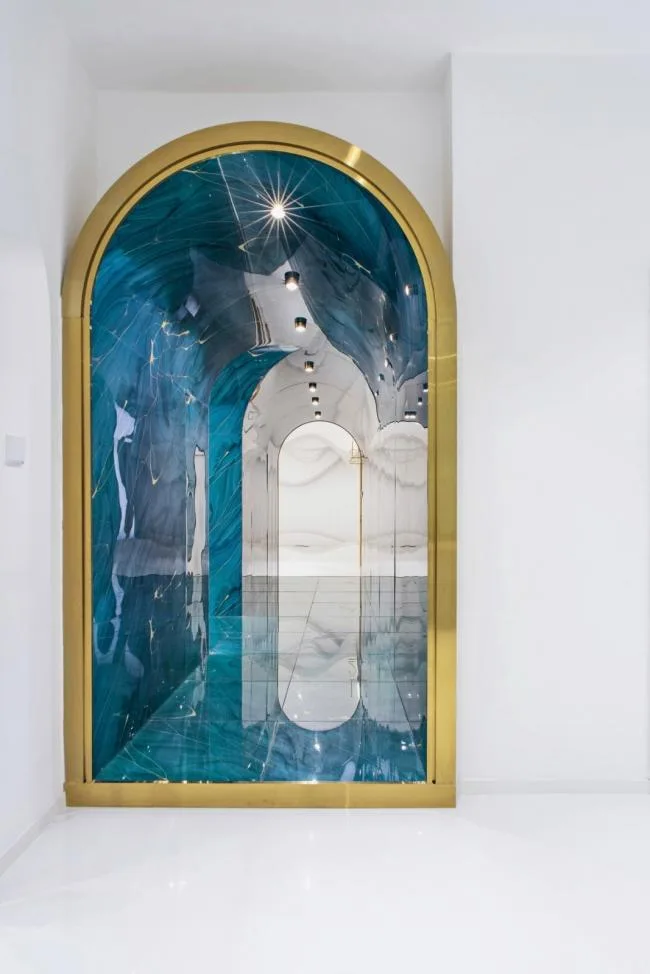
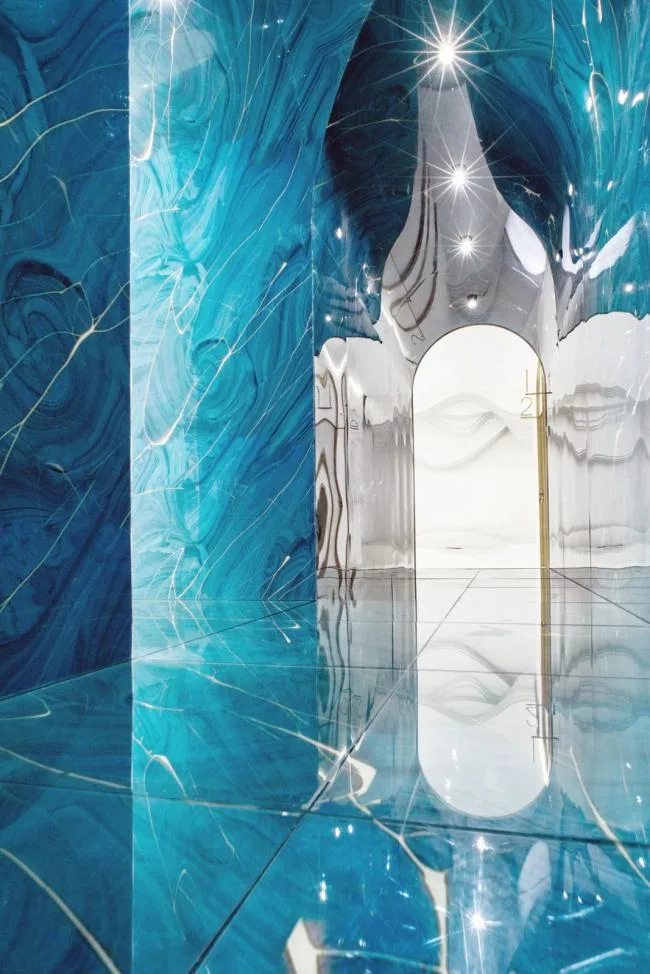
(BIM Architecture)
▲ Tunnel perspective
As an extension of the “Secret Realm” concept and to enhance the natural atmosphere, the designer incorporated numerous wave-shaped sculptures in the leisure area. Some sculptures hang from the ceiling, while others rise from the floor in layers. Their soft, undulating lines evoke the imagery of mountains and the illusions of flowing water, adding a strong sense of depth and hierarchy to the space.
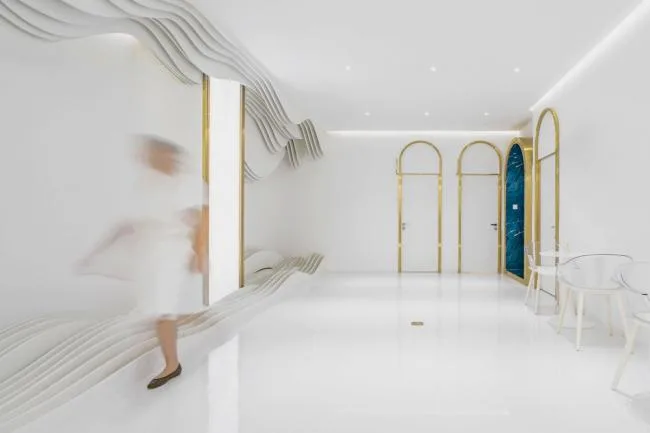
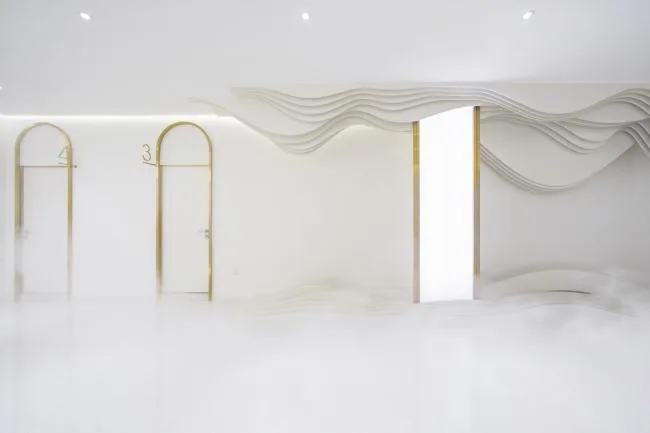
▲ Leisure area perspective
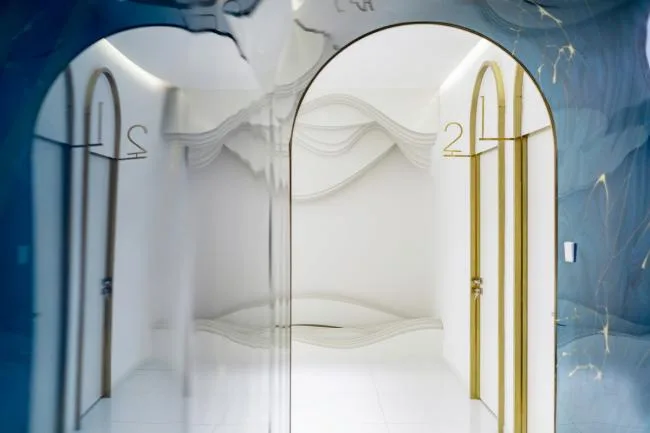
▲ Tunnel leading to leisure area
The project focuses on maximizing usable functional space while ensuring a high-quality environment for service. It employs a branching spatial layout model with simple, efficient circulation, clear spatial hierarchy, and logical functional organization. The innovative “T”-shaped corridor connects the three primary zones, establishing a secret, immersive space.
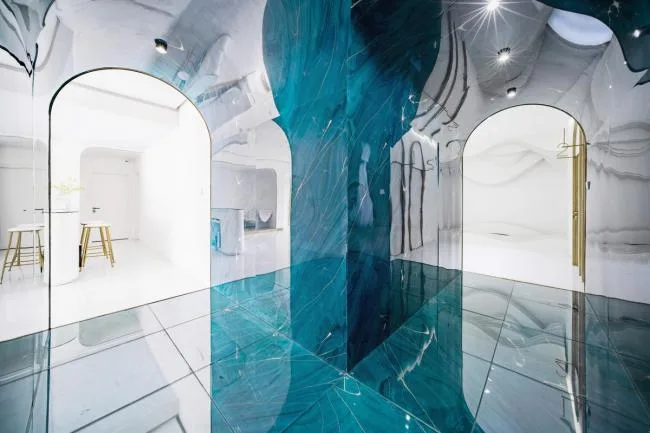
▲ Tunnels leading to the lobby and leisure areas respectively
Entering this space feels like being inside a deep water cave, greatly enriching the guest experience. The design cleverly minimizes circulation space, allowing more room for public activities and enhancing overall comfort. Although the corridor contrasts sharply with other areas in color and materials, the wave-shaped sculptures tie the entire space together, reinforcing the immersive landscape atmosphere.
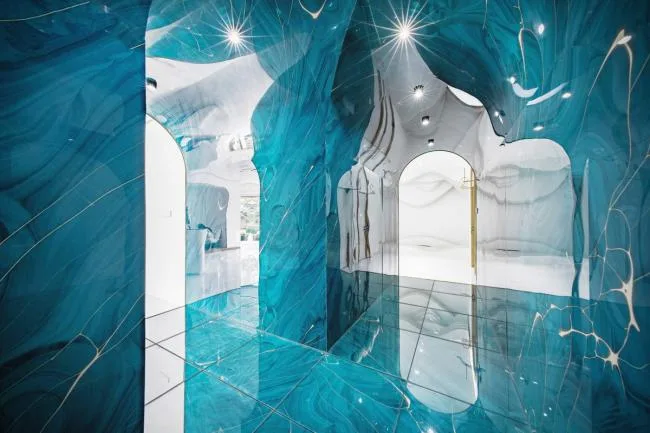
▲ Tunnel perspective
Project Drawings
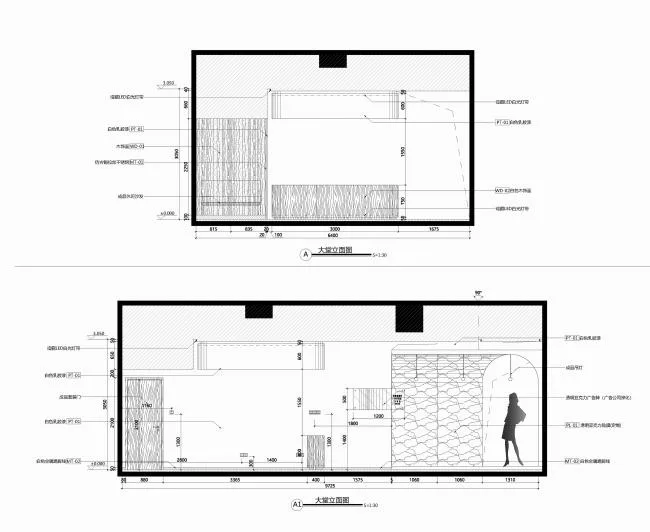
▲ Lobby facade construction drawing
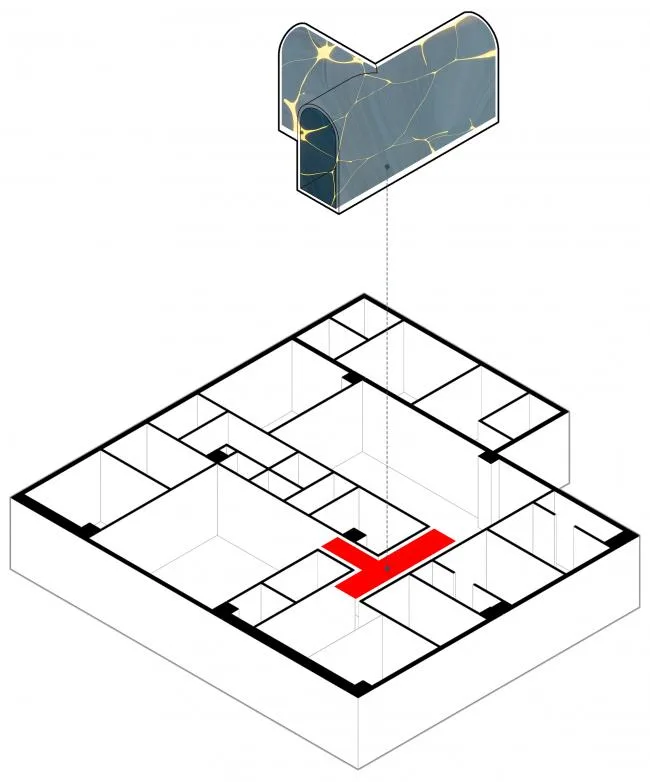
▲ Tunnel analysis diagram
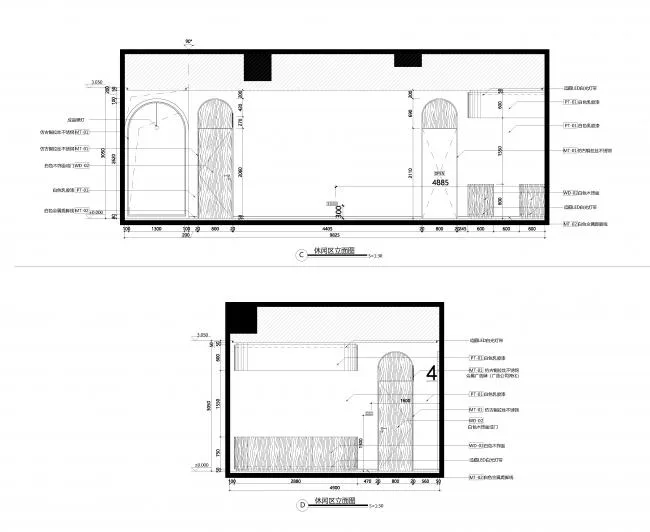
▲ Leisure area facade construction drawing
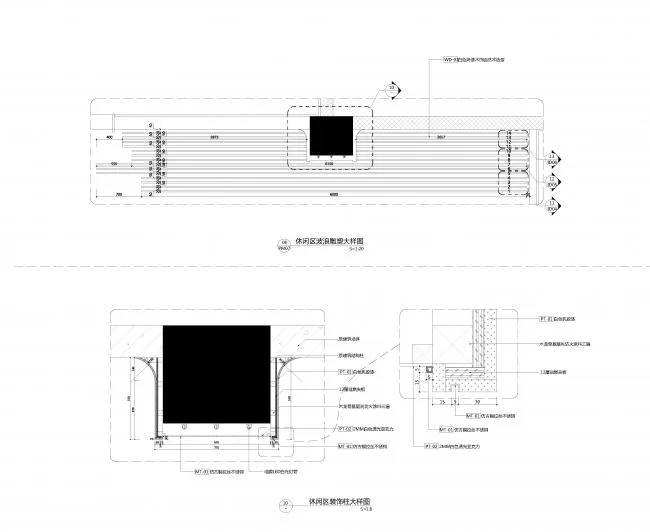
▲ Detailed drawing 1
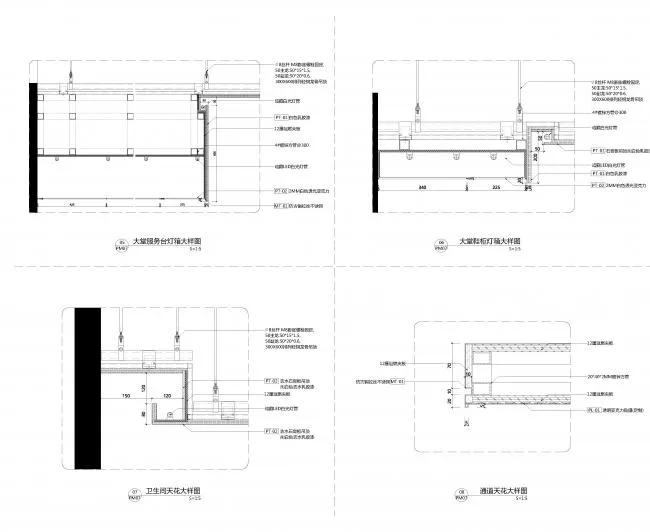
▲ Detailed drawing 2
Project Information
Project Name: BIM Training Institute for Online Beauty Salon at the Border
Design Company: Pingjie Design
Design Company Website: www.paralleliz-design.com
Contact Email: __AI_S_SC0__
Company Location: Suzhou, China
Project Completion Year: 2019
Building Area: 300m²
Project Address: No. 149-8, Nongmo Road, Ruili City, Dehong Prefecture, Yunnan Province, China
Principal Architect: Huang Di
Email of Chief Architect: __AI_S_SC0__
Design Team: Yang Nan, Wang Yitong, Zhang Shijie, Chen Xueqi
Client: Yuchen Beauty Salon
Photographer: Wang Yixiang












Must log in before commenting!
Sign Up