
When discussing design in architecture and spatial planning, most people immediately think about a building’s appearance, the designer behind it, and its style—doors, windows, colors, and symbolic elements. However, these visual aspects are merely a dramatic “shell.” The true value of design lies in the “emptiness” they enclose—the core essence. This includes the state, emotions, behaviors, and perceptions of the people inside and around the space.
Both design and art originate from life and elevate it. Yet, today, design and art often seem detached from life, existing above it. Many of the trendy “Internet-famous” buildings and spaces in the digital age are fleeting, like fireworks that quickly fade after their moment in the spotlight. Art can take form as paintings or sculptures that may not be immediately understood, but their soul speaks to a select audience. In contrast, design’s soul is not dictated solely by the designer’s imagination; it requires users and experiencers to bring it to life.
In rapidly evolving China, life moves at a dizzying pace marked by drastic changes. The concept of a “generation gap” is newer; previously, a difference of ten or twenty years defined a generation, but now even three to five years can mark one. Interests, hobbies, and experiences have shifted dramatically. In such a fast-paced era, many building and spatial designs appear to perform a juggling act to capture attention, consuming vast resources to drive commercial traffic. Every industry aims to peak and form communities, but this comes at a high cost. Urban life, fragmenting into smaller groups, is losing common ground, and cultural overlaps create new barriers. People living in the same era seem to inhabit different worlds amid endless choices.
Access to knowledge and information is instant online. Everyday products are often designed with first-rate quality, and comprehensive services simplify life. Yet genuine human interaction is becoming rare, and psychological distances between people grow wider—a common urban phenomenon. Despite material and spiritual advances, architectural and spatial design lags behind, especially in urban public buildings and community spaces, which lack alignment with modern demands and attention to detail. If aesthetics are removed from design and architecture is viewed through a broader social lens—focused on addressing current social issues, breaking stereotypes, and filling necessary gaps—this represents a more appropriate design philosophy for urban living spaces. Aesthetics should be the minimum standard and considered last in the design process.
Regardless of societal progress, human connection remains fundamental. Urban public buildings and spaces—though often rigid and unavoidable—offer vast opportunities for imagination and innovation. These include transit hubs, urban parks, open squares, public restrooms, community areas, pedestrian paths, and overpasses. Currently, such spaces primarily meet basic functional needs, but future enhancements can amplify their potential. These spaces reflect a city’s friendliness, inclusiveness, care, and attitudes toward urban development.
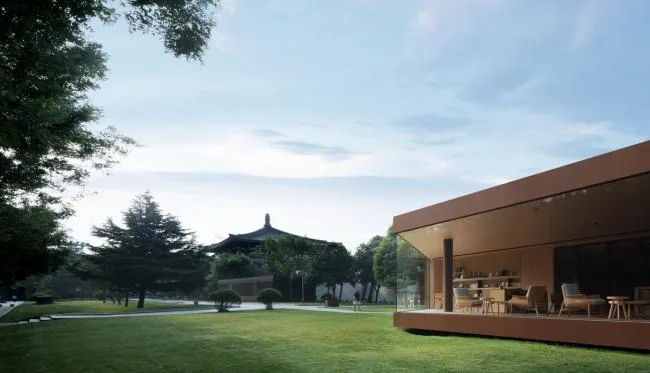
In 2018, I was commissioned to renovate a public restroom in Qujiang, Xi’an, located just 120 meters from Datang Night City. Xi’an is one of the world’s four ancient capitals and the Silk Road’s starting point, attracting around 13 million tourists annually. The restroom is surrounded by traditional antique architecture, with commercial buildings and pedestrian squares to the east, residential communities to the north, and adjacent to the ancient Tang city wall ruins.
During the initial site investigation, I found that the original design aimed to incorporate elements of ancient Chinese architecture to harmonize with the surroundings. However, proportion issues were apparent: the building’s height exceeded that of the city wall, creating a jarring visual impact. Renovation rules prohibited demolishing the foundation, and partial demolition wouldn’t resolve proportion problems. Additionally, the renovation needed to be simple, shorten construction time, and maintain sidewalk continuity. We devised a comprehensive, disruptive design solution that addressed these constraints.
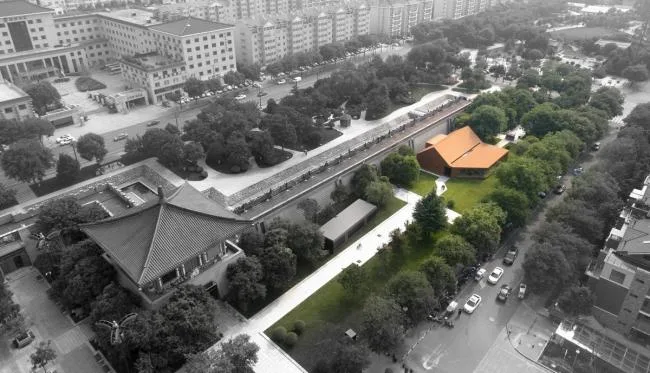
▲ Project and surrounding relationships
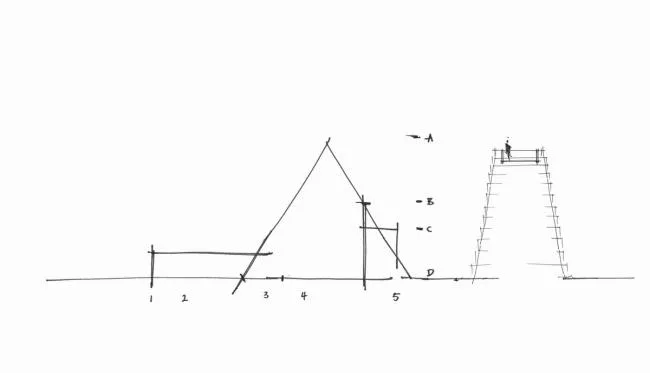
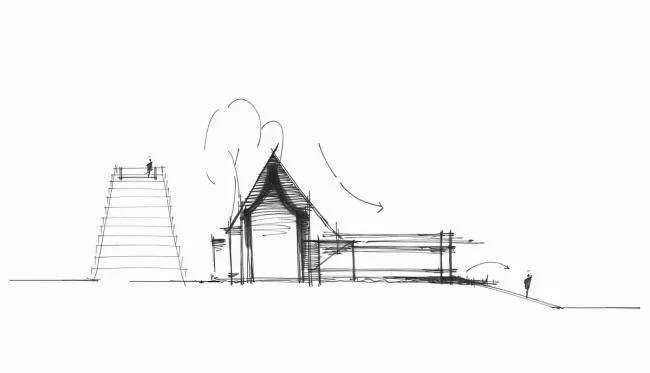
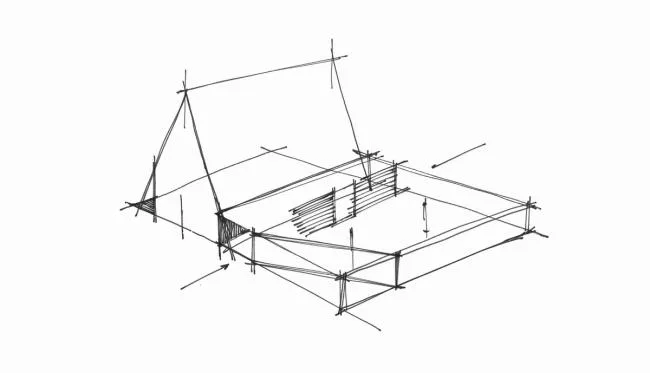
▲ Project Sketch
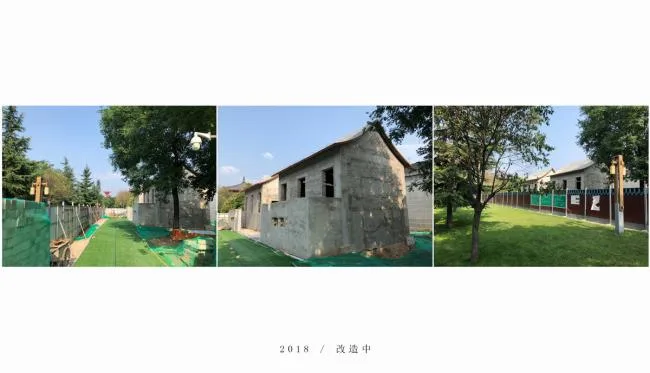
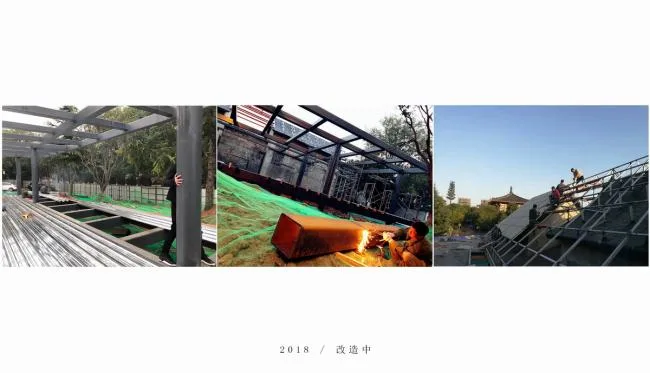
Our approach began by stripping away the original public restroom’s imitation of ancient architecture, returning to its basic functional form to create a building with universal significance—a “non-reference” structure. This met contemporary needs and removed ideological constraints. Merely replicating ancient buildings with modern techniques lacks value; true heritage comes from understanding the ancient mindset about social environments.
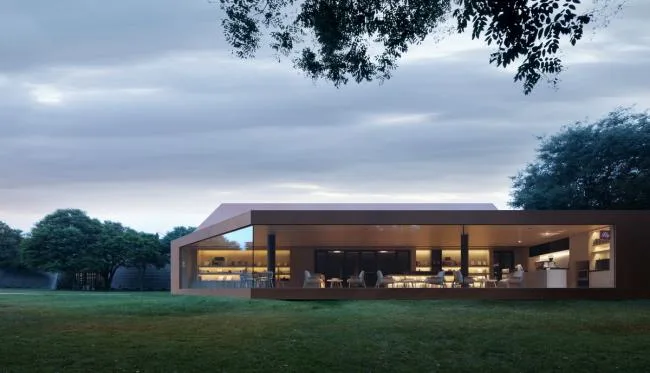
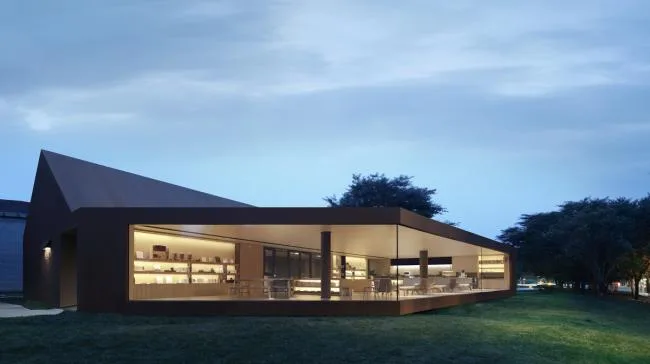
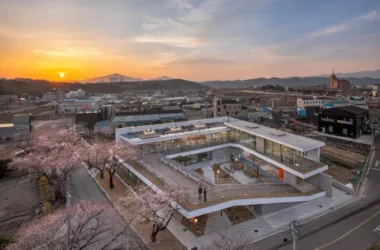
Utilizing the outdoor space beside the original structure, we divided the design into three parts: the public restroom, a reading and coffee area, and an open corridor connecting them. To soften the abruptness of the building next to the old city walls, the overlapping space scale was minimized, descending quickly from the highest point to the lowest. This plays on human perception and creates visual illusions that reduce the perceived height.
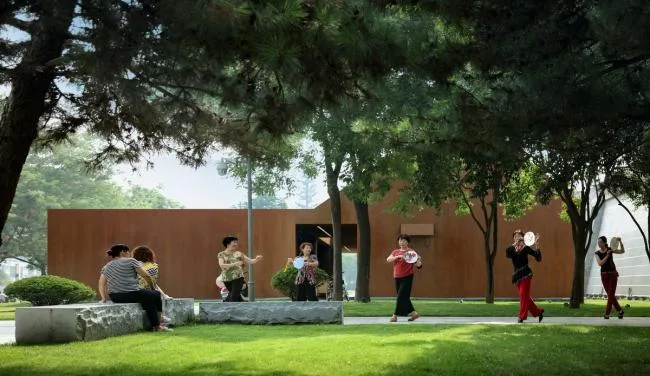

The pedestrian walkway traverses the entire building, creating a natural entry point. Along this path, spaces are designed for pet hydration, shelter from rain, and resting, fostering a community gathering area. The walkway divides the public toilets from the reading and coffee spaces, separating functions while complementing each other without interference (BIM learning).
This unusual combination of public toilets and coffee, alongside the addition of waiting areas, transforms a monotonous functional space into a vibrant urban social hub. Passersby can pause here, residents meet and greet, and pets receive care. The space fosters connections, bringing people closer and offering opportunities for social interaction, breaking down stereotypes around public restrooms and repositioning them as centers of urban life.
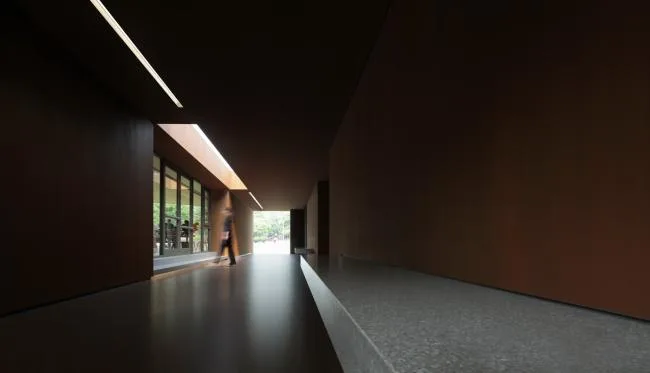

The coffee space is 15 centimeters higher than the corridor, creating a subtle step at the entrance. The door handles are designed with varied heights to accommodate different user preferences. Their cylindrical single-slope handles are flattened on one side, reducing the risk of slipping when opening doors while holding drinks.
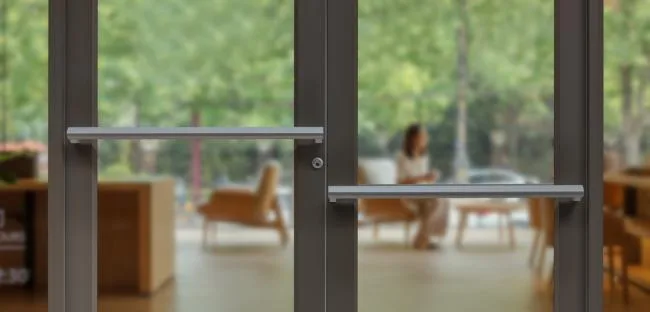
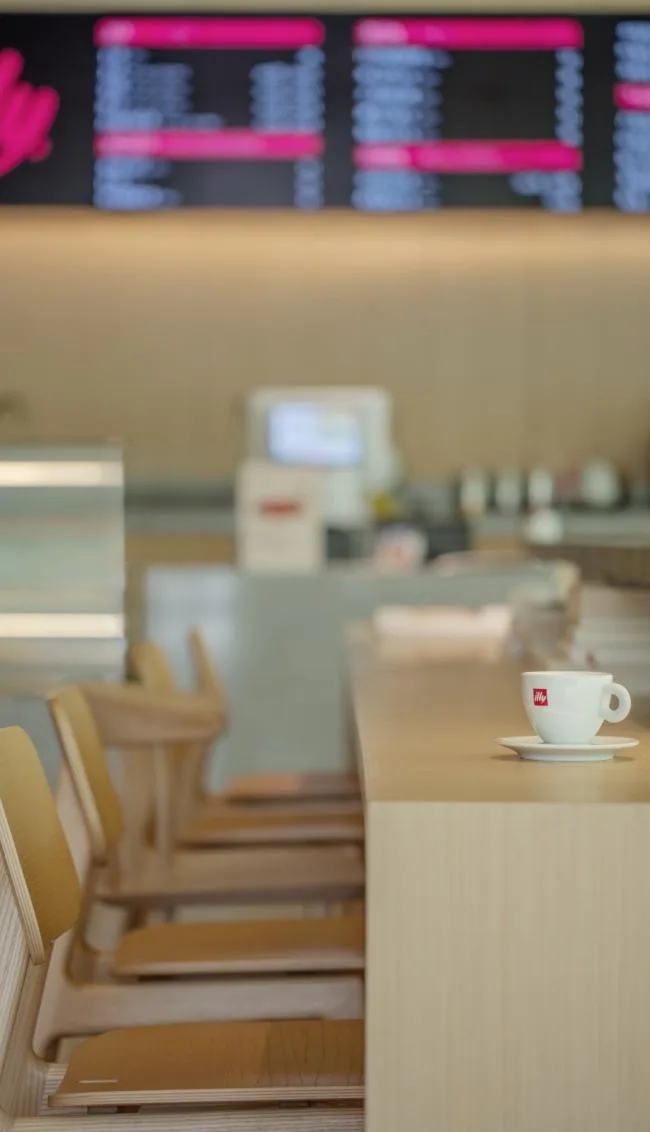
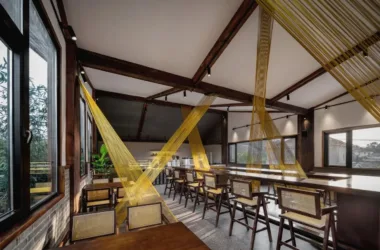
After completion, Illy Coffee from Italy opened its space here. The interior features simple design lines that reflect the building’s sloping edges. Long glass windows embedded in the walls of the reading and communication areas frame the scattered greenery and street scenes outside like a continuous scroll, creating a dynamic, silent interaction between inside and outside views.
The interior décor is minimalistic and harmonious, with no overwhelming ornamentation. This approach focuses on the people using and experiencing the space, giving them freedom and space to engage naturally. Furniture arrangements encourage visitors to find comfortable seating postures, fostering diverse social interactions in a relaxed atmosphere.
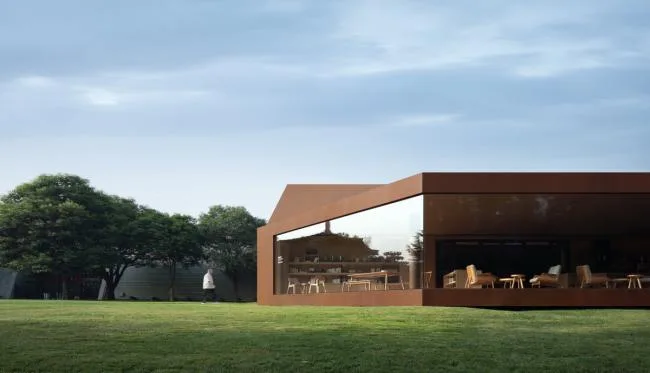
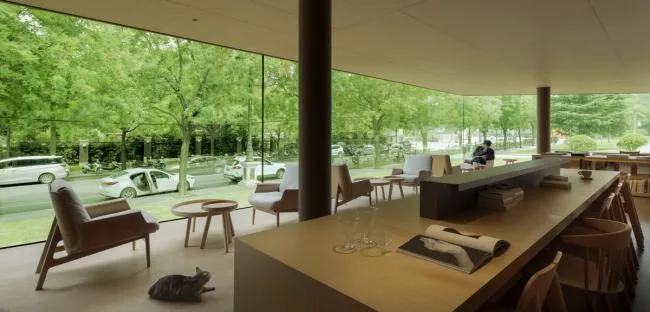
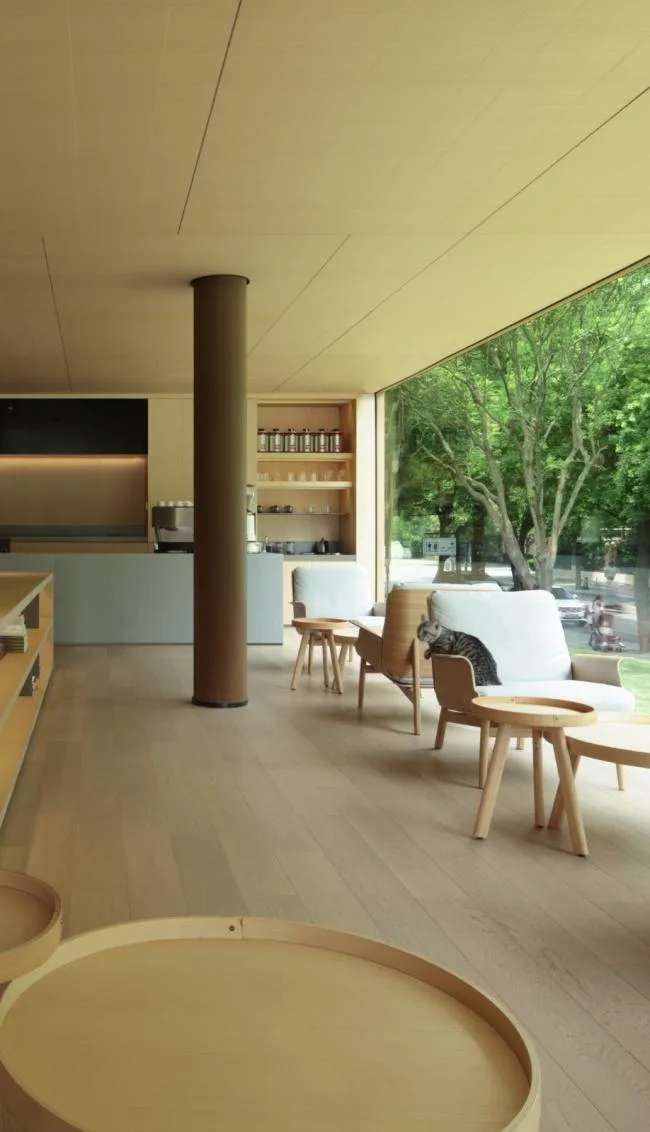
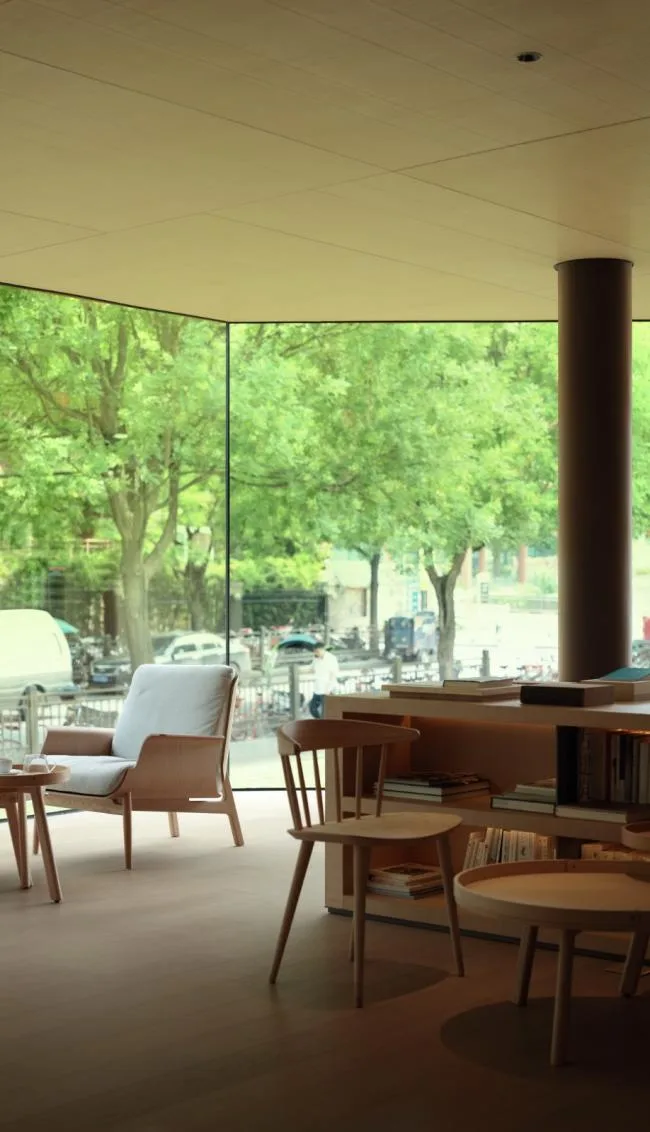
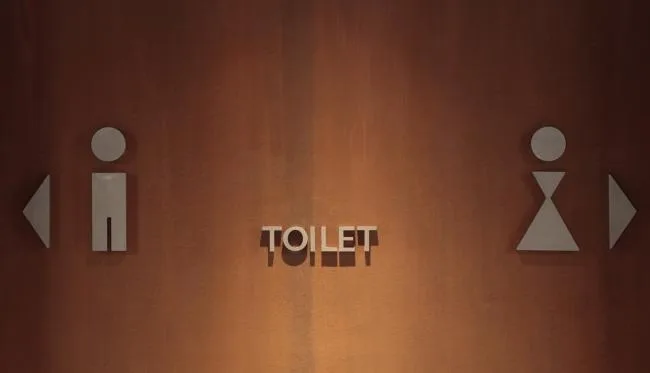
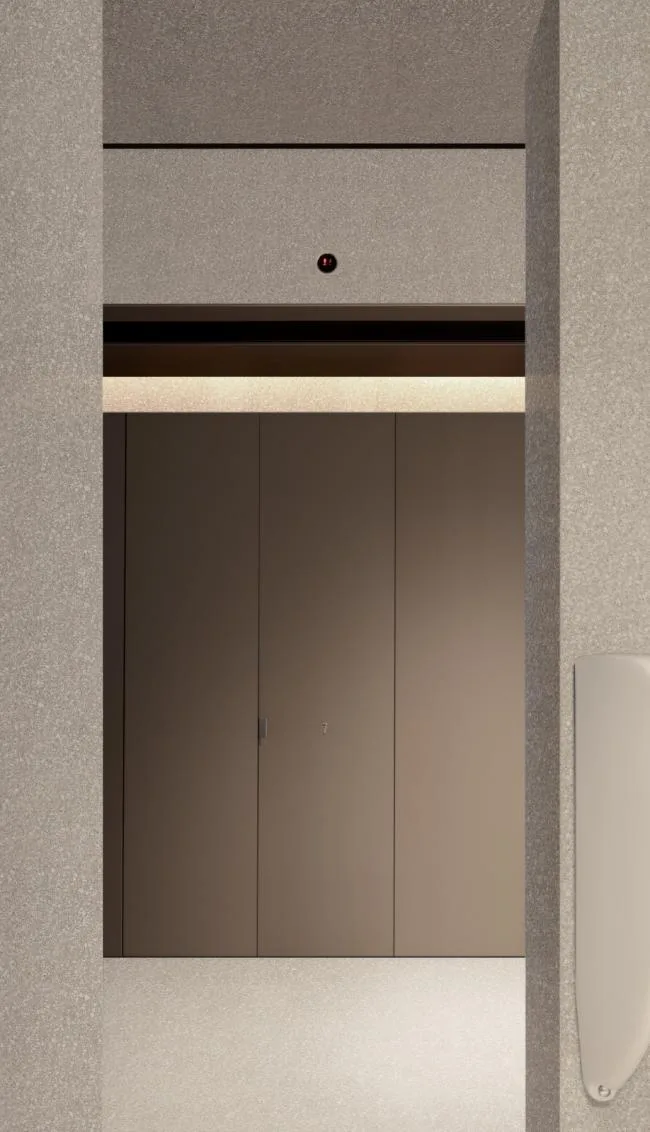
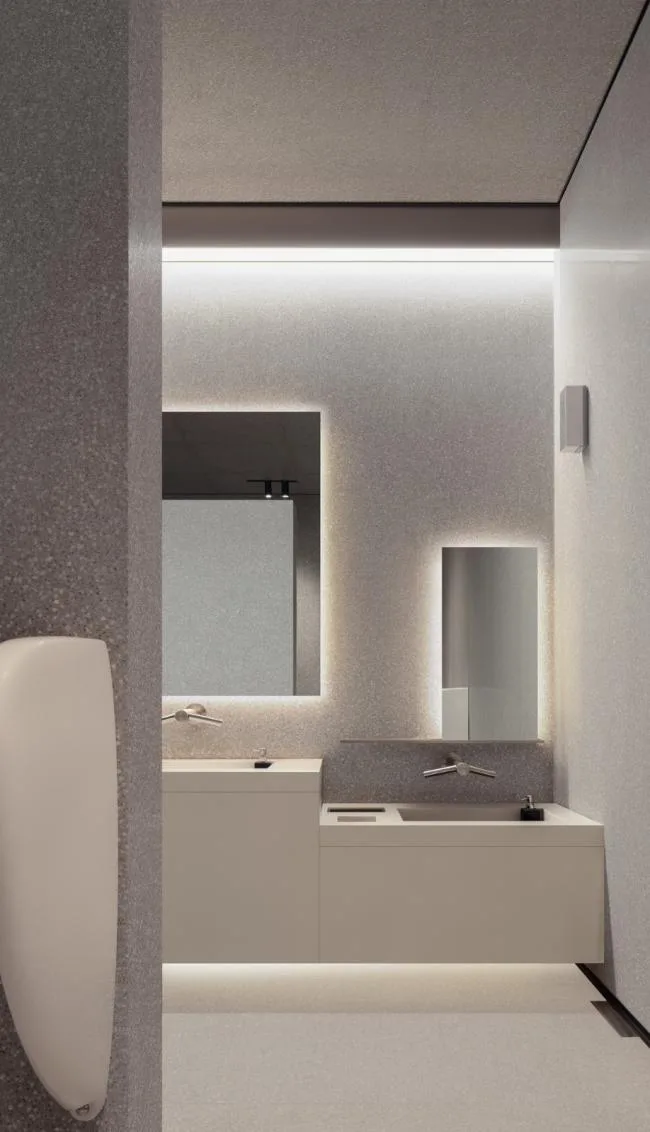
The restroom area lies at the corridor’s opposite end, with separate sections for men and women. A third, independent restroom accommodates people with disabilities and infants, equipped with safety handrails at varying heights, a children’s toilet, and an alarm system. Safety and ease of cleaning were prioritized in material selection.
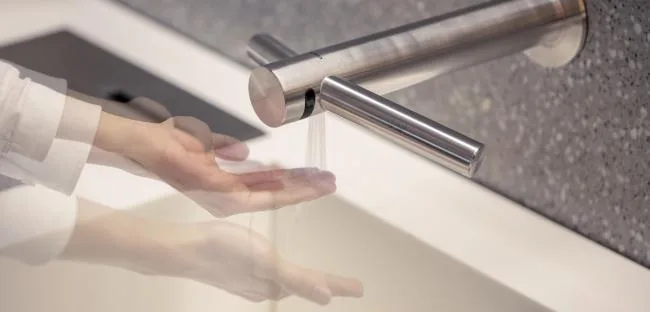
Each stall includes overhead lighting to indicate occupancy. Integrated faucets combine hand washing and drying, eliminating the need for separate hand dryers and preventing users from walking around with wet hands. Pet-friendly stakes are installed in the toilets, while women’s restrooms feature makeup lighting and full-length mirrors designed with geometric shapes of varying sizes and angles. This design adds dynamism while preventing disorienting reflections that a large mirror surface might cause (BIM work).
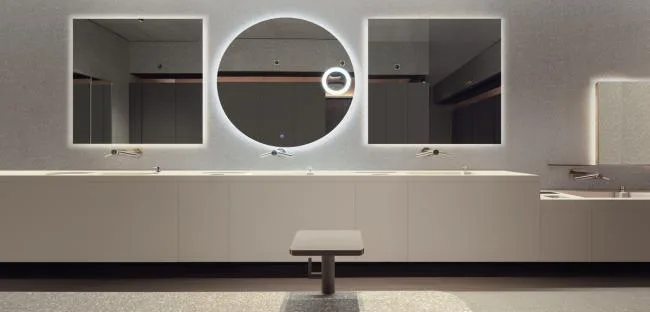
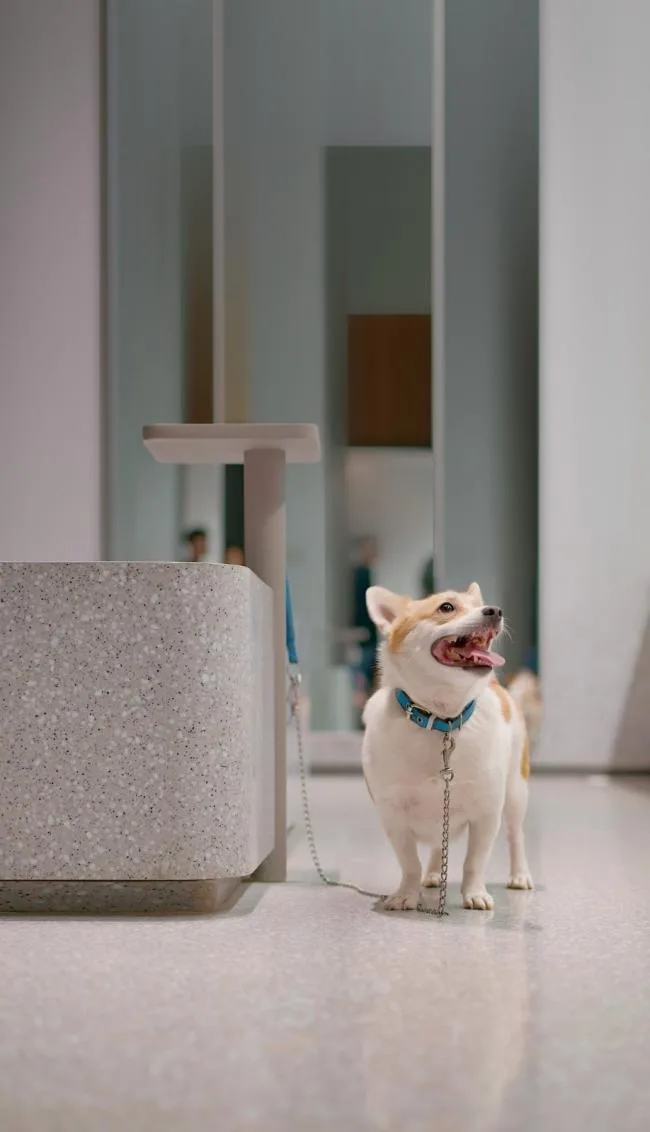
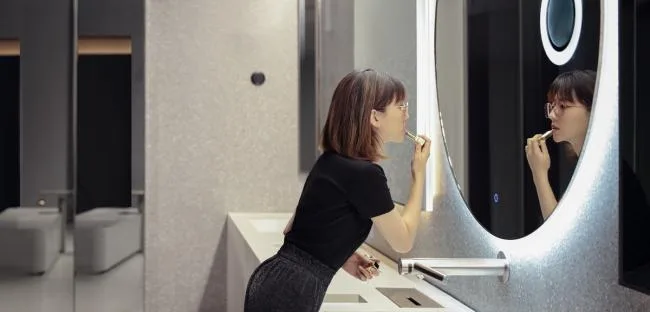
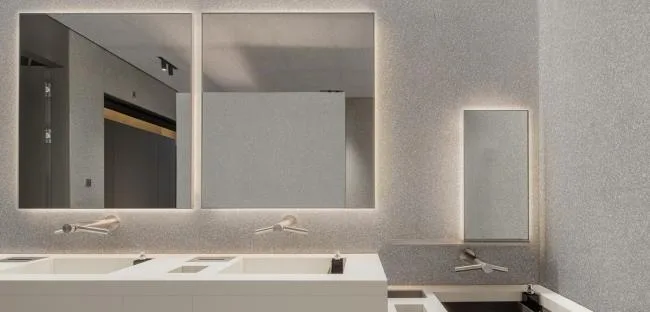
As Yang Gail highlights in his book Communication and Space, outdoor living is more practical and engaging over time than any intricate architectural form. This public restroom was only filmed after six months of operation. As a designer, I am pleased to see our original design intent validated through real-life use during the filming. The interactions and expressions of people inside and outside the building foster goodwill and friendliness—helping each other take photos, petting cats and dogs, sharing laughter among the elderly, and coexisting harmoniously with younger generations. Children run freely on the grass, creating a space where diverse groups coexist and care for each other.
These visitors represent the missing element in today’s fast-paced life. Reflecting on childhood memories, neighbors would often chat about family matters in the “empty spaces” between houses—known as hutongs in Beijing and alleys in Shanghai. Urban life always needs such “empty spaces” for sharing stories and building community.
The physical and social fabric of cities continues to evolve. The key to exploring urban authenticity lies in its social characteristics—not just the physical structures. Authenticity involves personal and sensory experiences of the city, encompassing not only visual elements but also the social activities shaped by architecture. Design and creation emerge from history, stand in the present, and resonate with understanding and recognition. Without noise, rationality and care, thoughtful perception and patient observation of life, there is always a way to heal a broken heart.
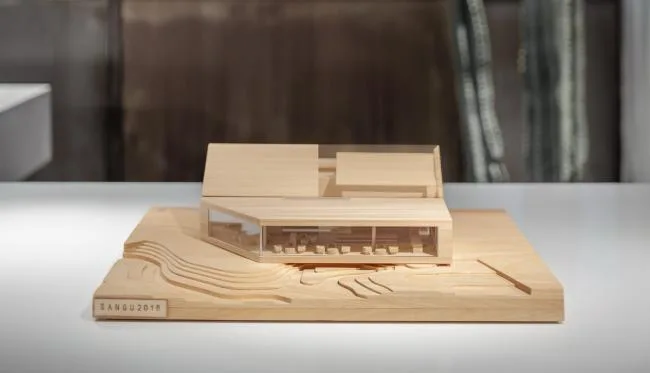
▲ Model
Project Information
Project Name: Chengdong
Project Location: Xi’an Qujiang
Project Type: Urban Public Buildings
Owner Organization: Xi’an Qujiang Management Committee
Construction Agency: Xi’an Qujiang International Convention and Exhibition Holdings Group
Exterior Wall Material: Teknai
Interior Decoration: OriginalRelationship (a home furnishing brand under Times China)
Design Agency: Three Valley Design
Chief Designer: Gu Teng
Film Production: Peanut Studio (Xi’an)
Photography: Tan Xiao
Music: Huayin Laoqiang, Cang: Overture – Tan Dun; The Kiss—Phildel
Special Thanks: Zhong Gang, Liang Xuan, Audrey SONG












Must log in before commenting!
Sign Up