
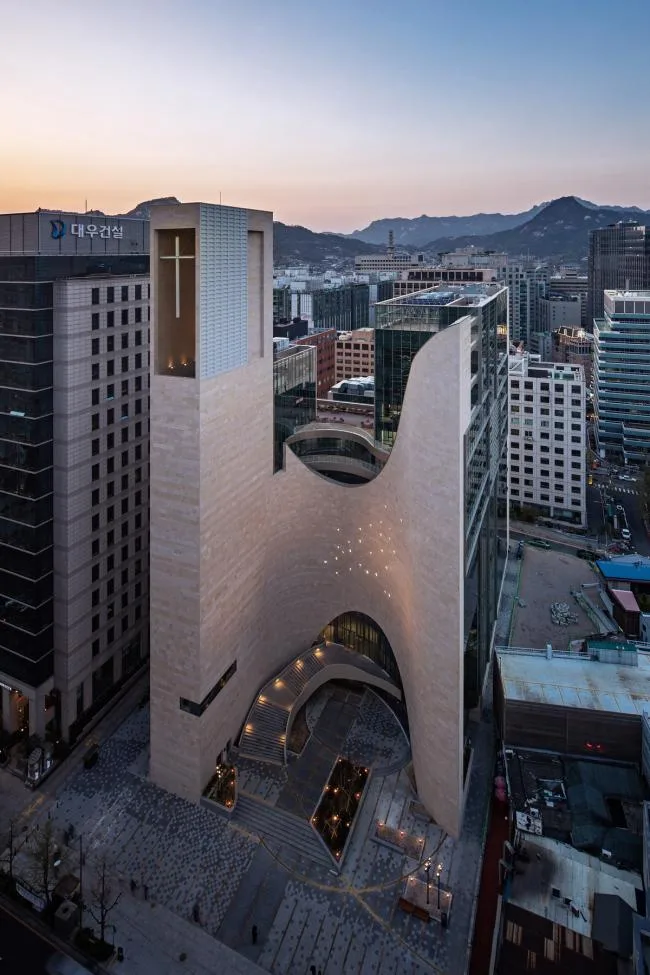
Saemaonan Church, as the project owner, set four clear construction requirements for the designer. First, the finished church should embody the historical essence of the Korean New Mother Church. Second, its doors must remain open to the sky, serving as a symbolic gesture. Third, the spatial design should allow worshippers to perceive Christ as the incarnation of light. Lastly, the church must include a water feature to represent baptism and harmony. To meet these goals, the designer embraced the concept of “loving God and loving neighbors”, integrating it throughout the design.
The idea of loving God is primarily expressed through the internal spatial design and its symbolic elements, while loving neighbors is conveyed through the church’s exterior form and its relationship with surrounding community buildings.
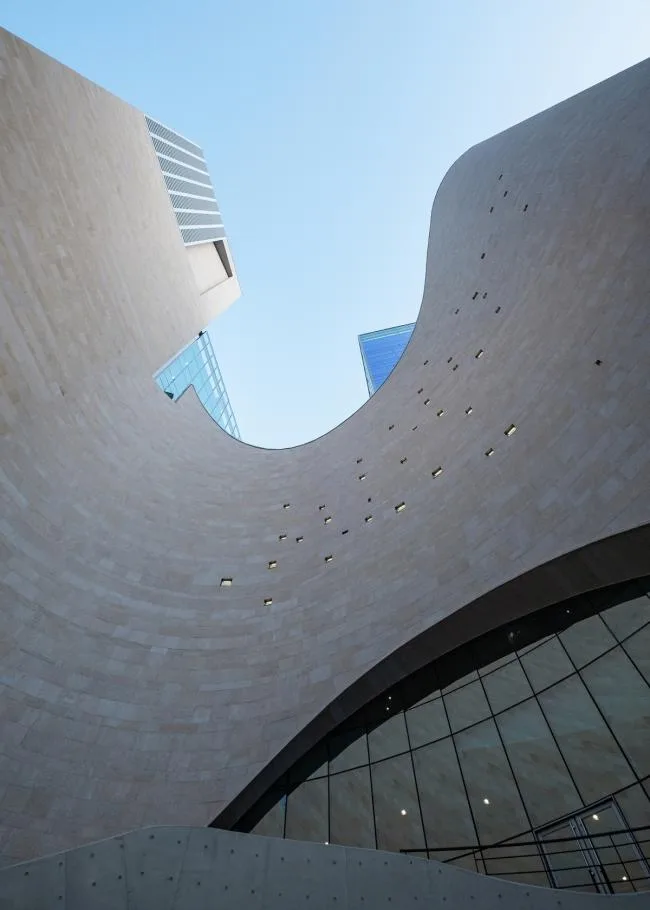
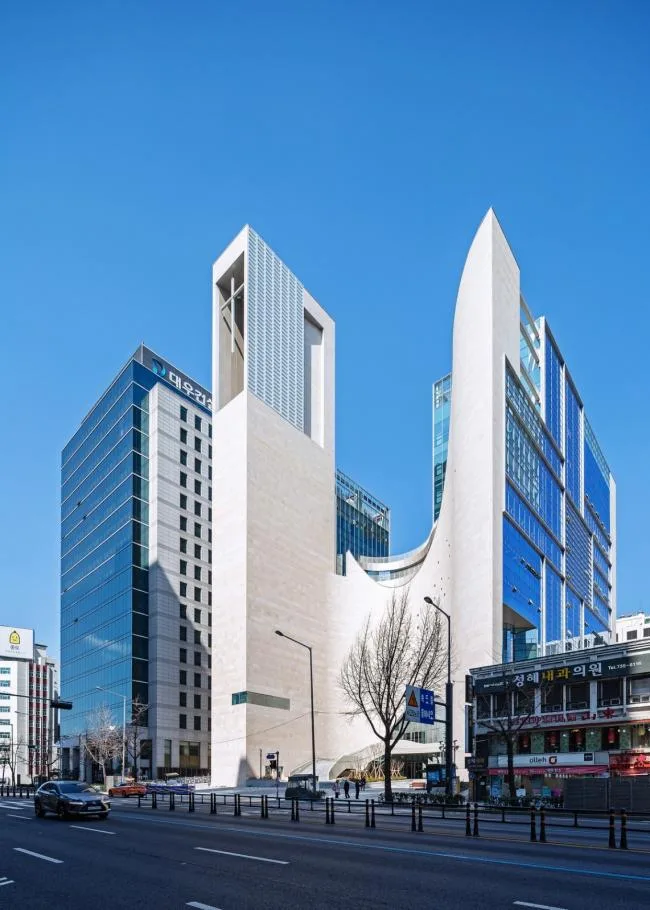
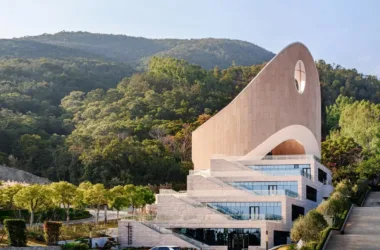
In designing the church, traditional Gothic spires have been replaced by gently curved surfaces that open towards the sky, and elaborate, grand decorations are simplified into modern, abstract forms. Instead of emphasizing the church’s power and grandeur, the designer chose soft, curved eaves to symbolize God’s love and mercy. Furthermore, a fan-shaped floor plan replaces the conventional solemn corridors, fostering communication and connection among the congregation.
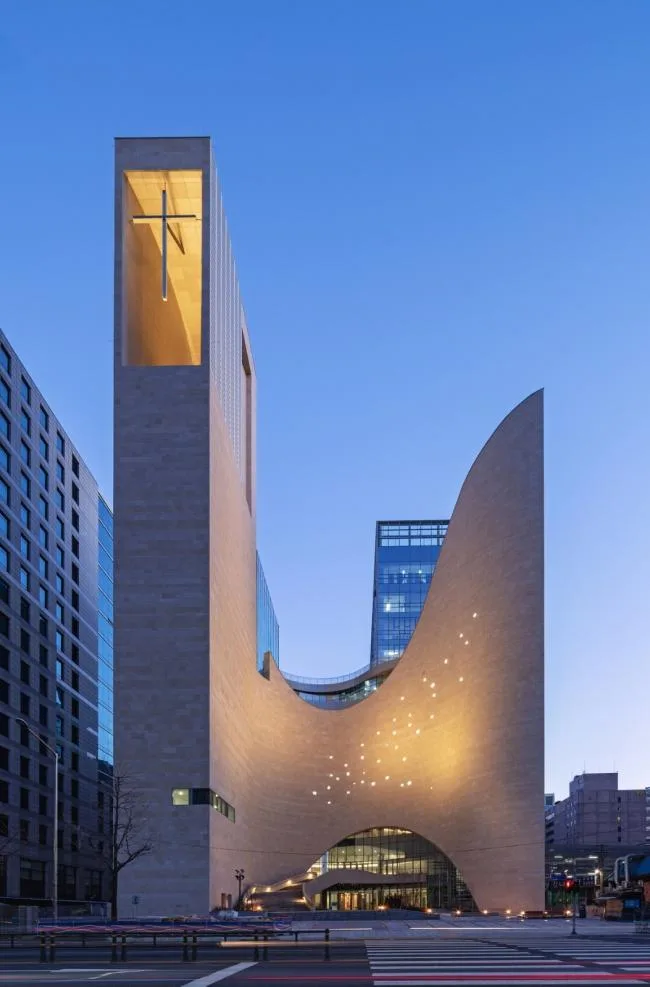
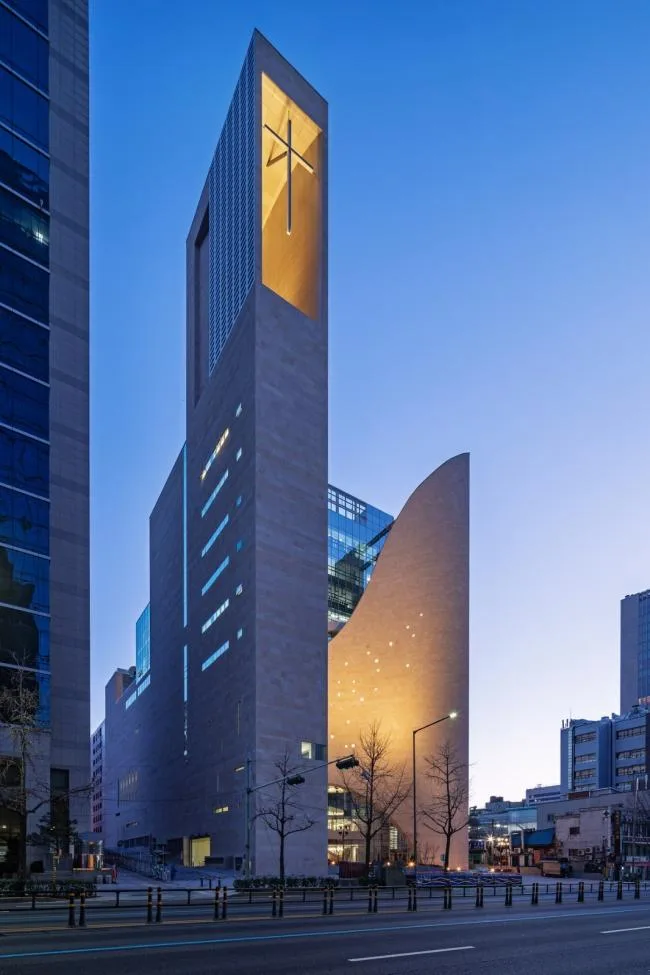
The “loving neighbors” concept is clearly reflected in the church’s exterior design. This represents a significant consideration for 21st-century church architecture. The Saemaonan-ro courtyard, framed by curved arches and concave front eaves, is designed as an open civic space for community members rather than a secluded prayer area like a monastery. This spatial concept is unprecedented globally. Additionally, the front hall connects spatially with the nearby Sejong Center for the Arts, symbolizing the church’s openness and inclusiveness.
Smaller churches will be developed by proportionally scaling existing brick church designs to suit the needs of public cultural spaces.
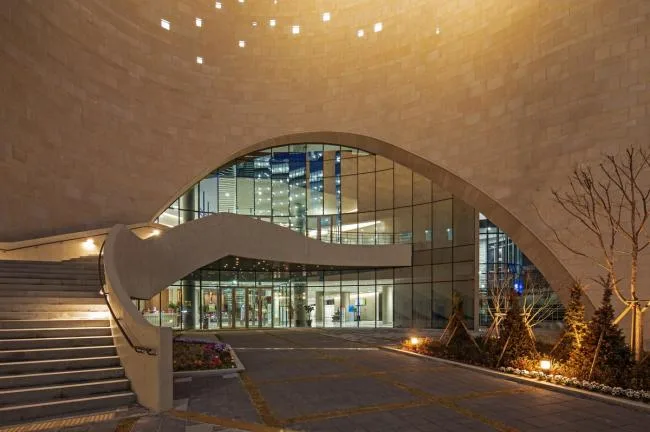
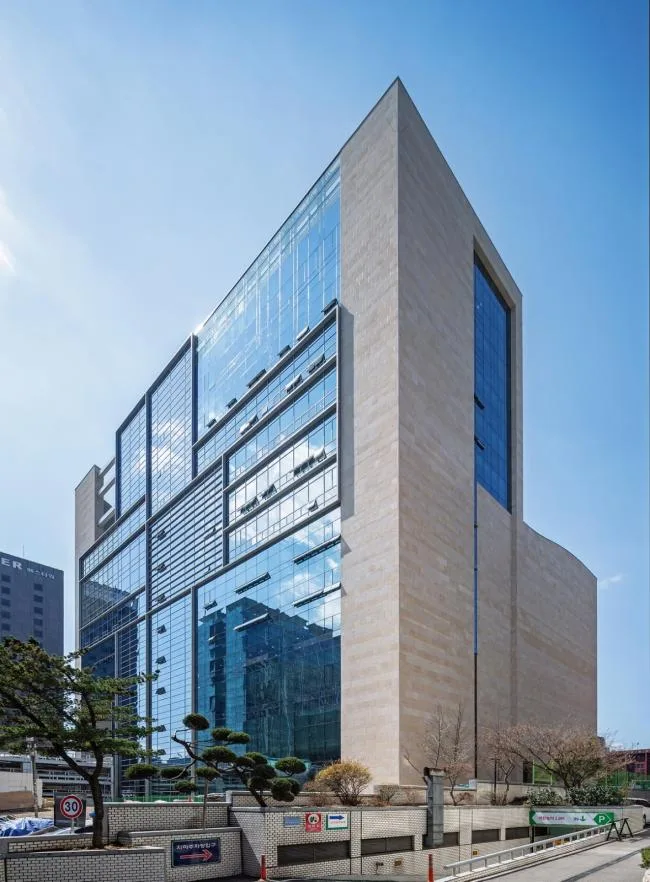
The transparent glass box on one side of the church, juxtaposed with the curved form, appears to float in the air. This glass structure balances the soft curved wall and includes a rooftop garden designed for educational purposes, nurturing younger generations amidst the bustling streets. Moreover, this rooftop space doubles as a commemorative area open to the public, offering panoramic views of central Seoul. Similar rooftop openings are common in churches worldwide, though most feature domed openings instead.
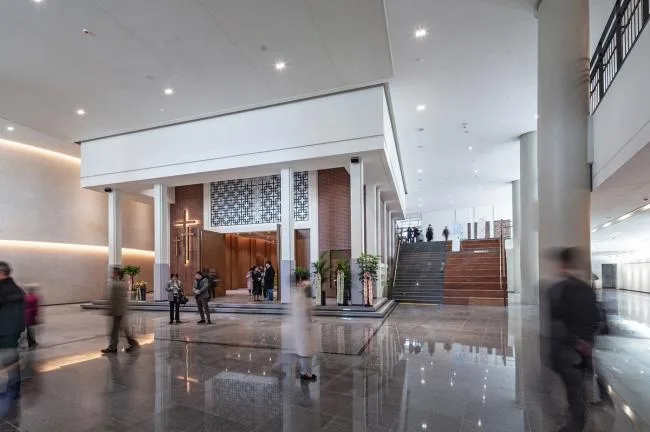
Inside the Church
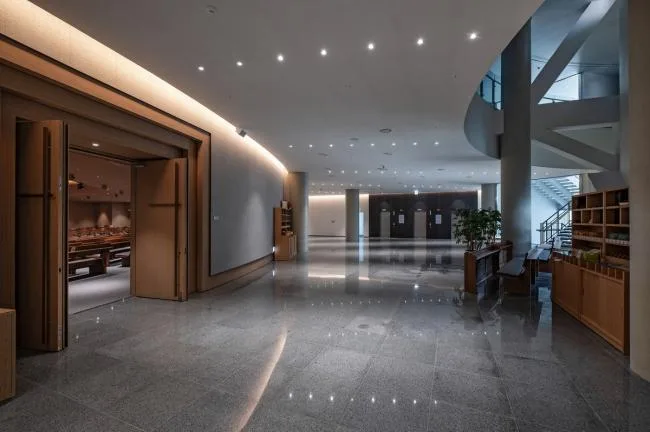
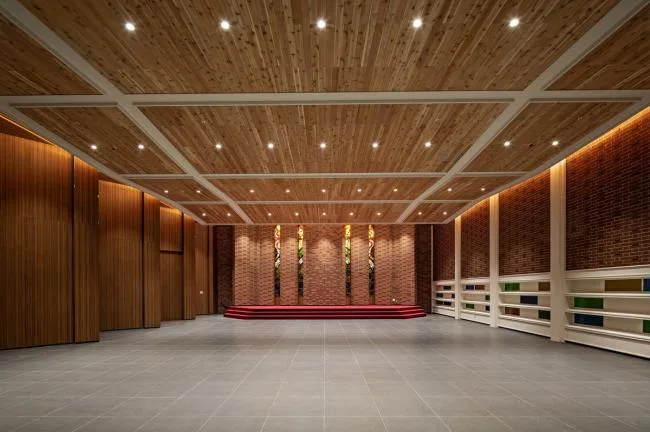
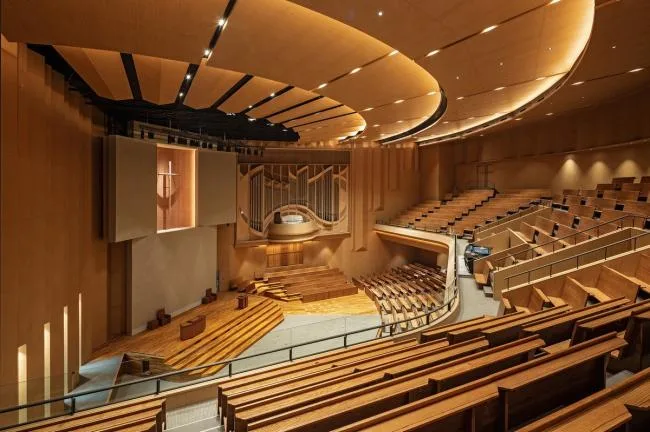
Project Drawings
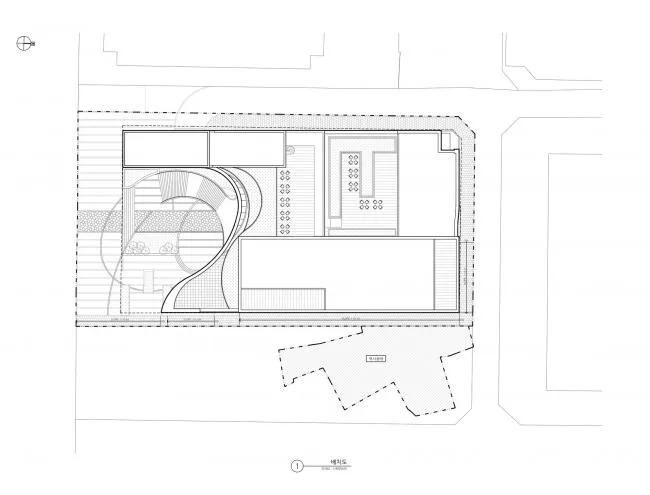
▲ General layout (BIM building) plan
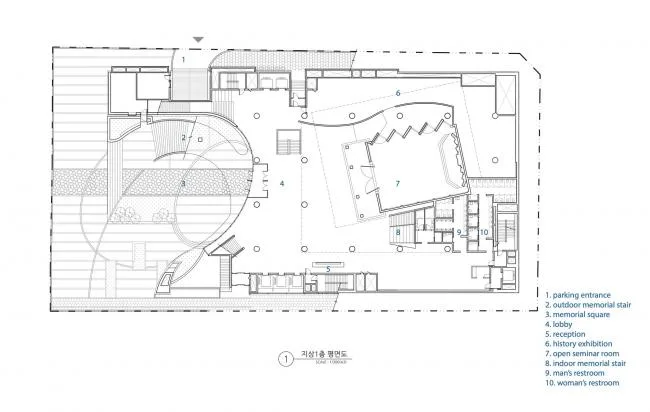
▲ First floor plan
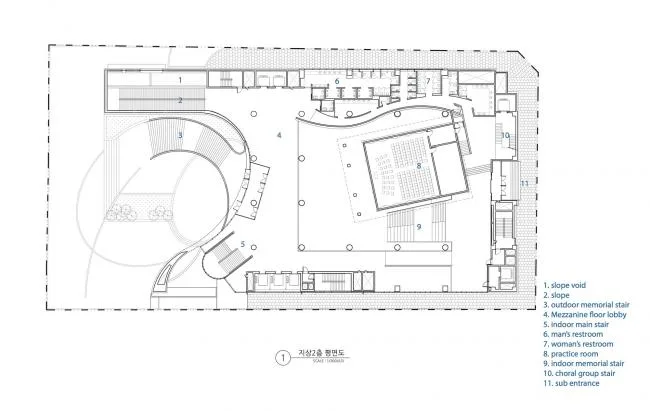
(BIM Design) ▲ Second floor plan
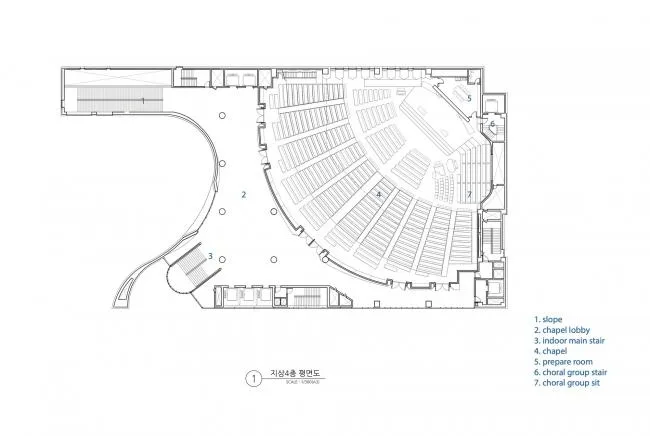
▲ Fourth floor plan
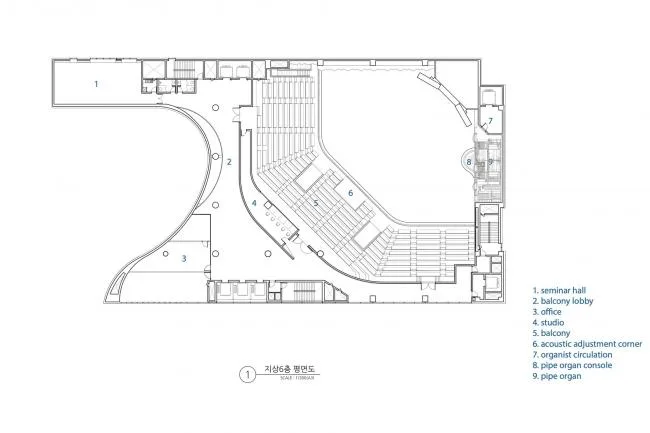
▲ Sixth floor plan
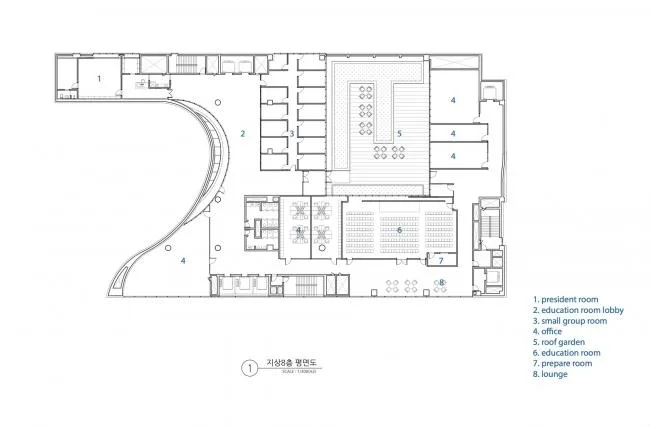
▲ Eighth floor plan
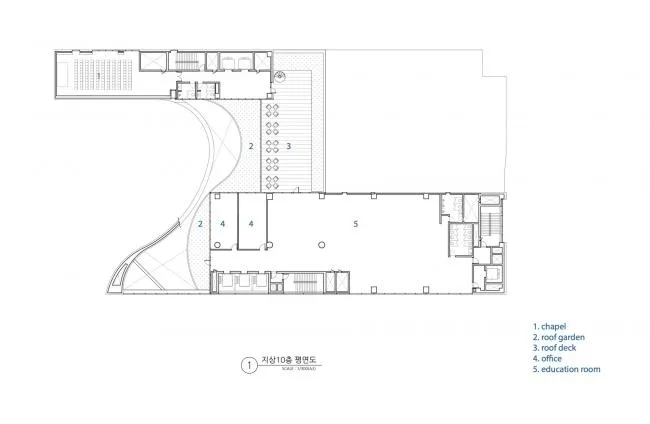
▲ Tenth floor plan
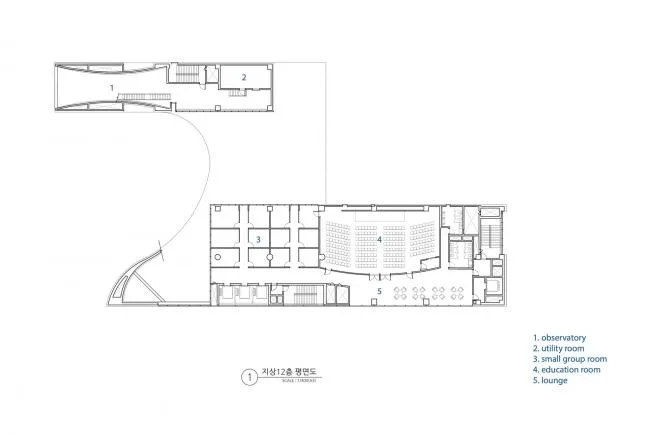
▲ Twelfth floor plan
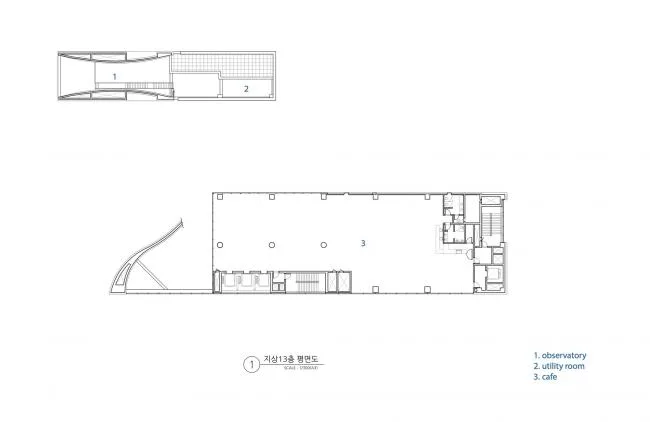
▲ Thirteenth floor plan
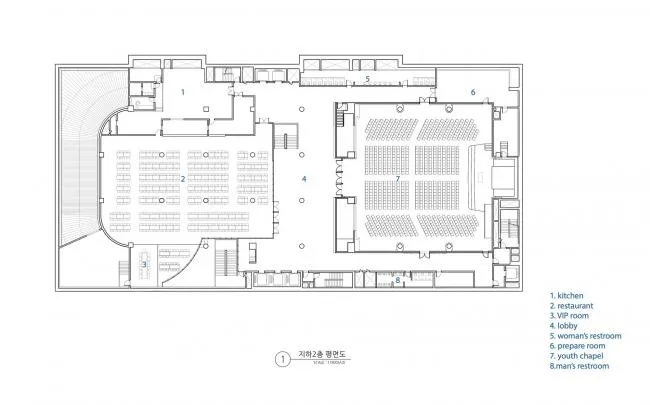
▲ Underground second floor plan
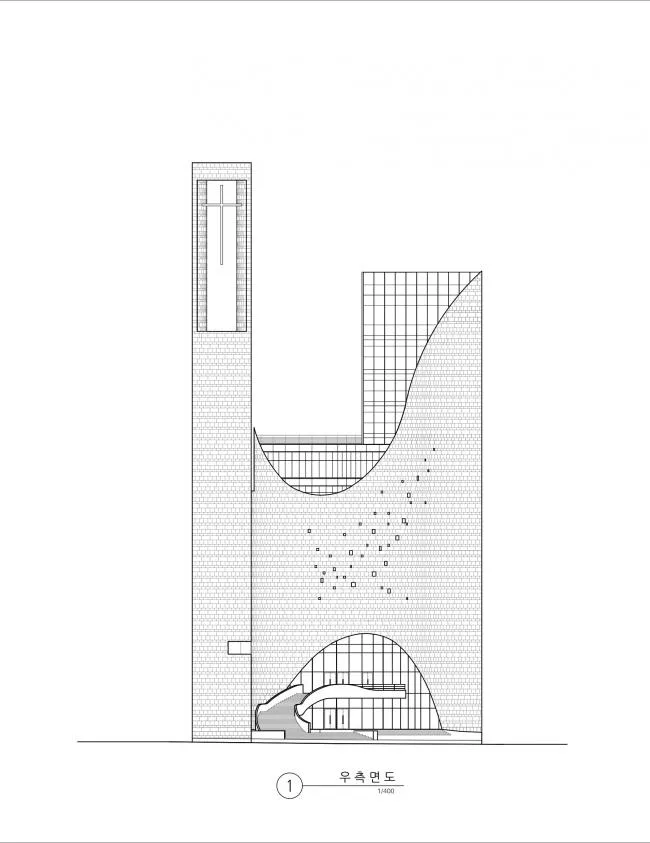
▲ Front view 1
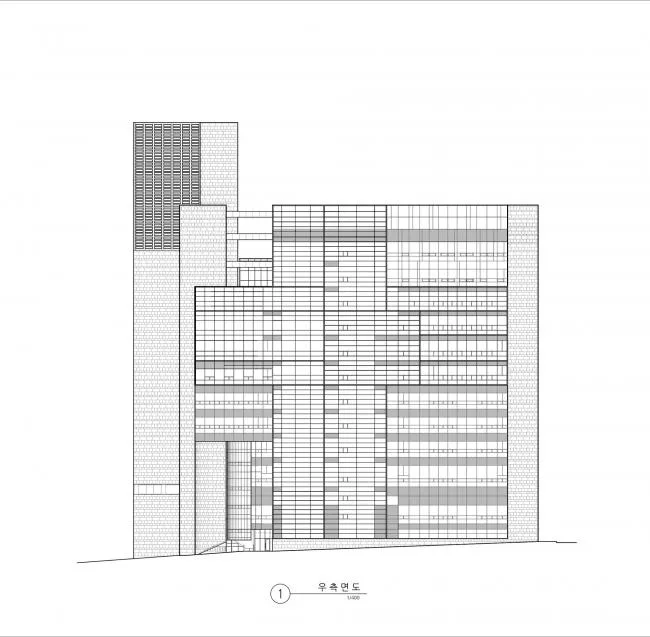
▲ Elevation view 2
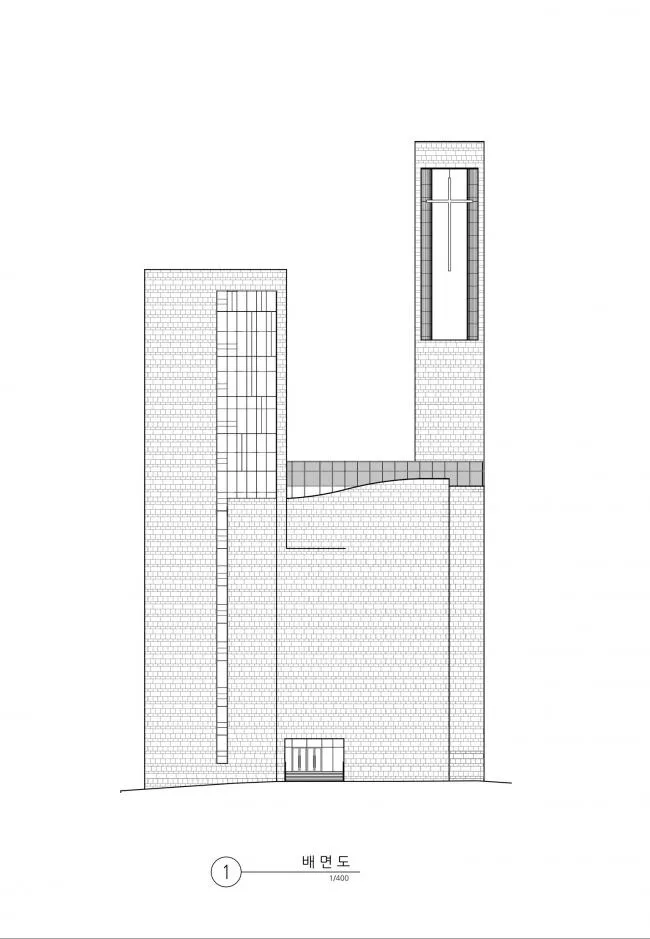
▲ Elevation view 3
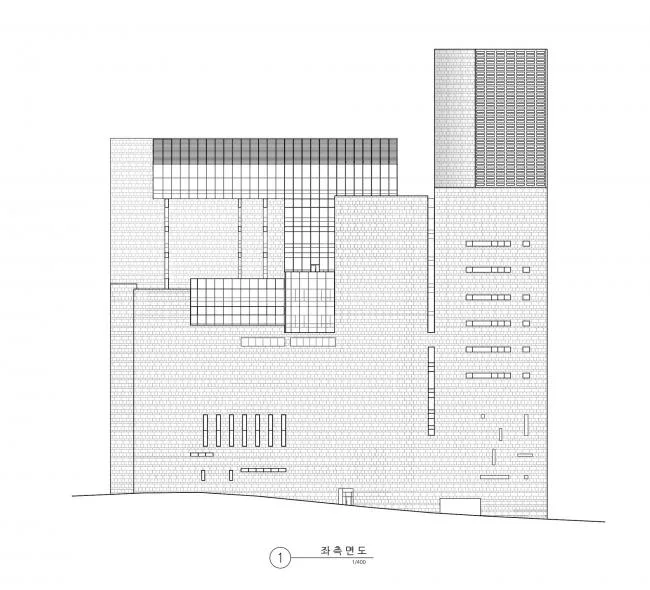
▲ Front view 4
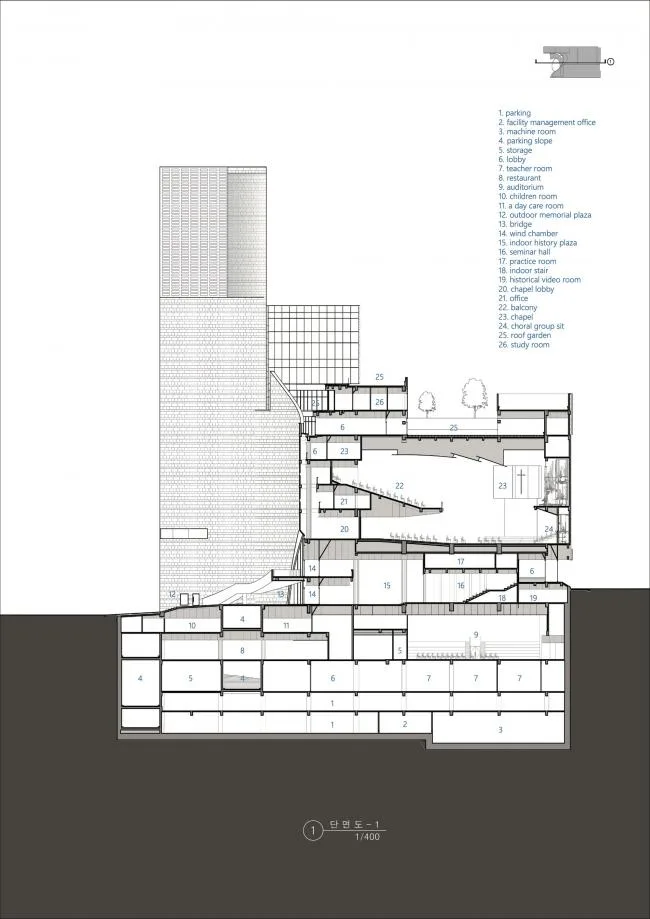
▲ Sectional view
Project Information
Design Firm: Lee Eunseok, Seoinn Design Group
Address: 97 Saemunan-ro, Sajik-dong, Jongno-gu, Seoul, South Korea
Category: Church
Lead Architects: Dongkyu Choi, Eunseok Lee
Building Area: 4,219 m²
Project Year: 2019
Photographer: Juneyoung Lim
Construction: CJ Engineering & Construction Co., Ltd.
Consultant: HanmiGlobal Co., LTD
Structural Engineer: The Naeun Structural Engineering Co., Ltd.
Mechanical Engineer: Mac& MEC
Electrical Engineer: Electrical Engineer












Must log in before commenting!
Sign Up