
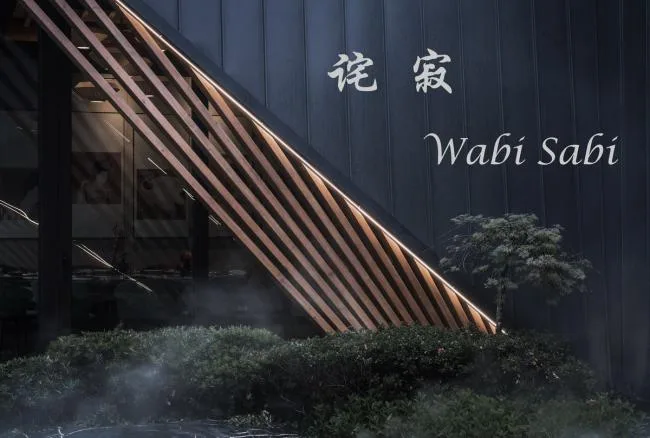
“In the realm of ’emptiness without anything,’ there is only existence; white is regarded as black.”
— Laozi
Returning to Nature
The beauty of solitude lies in its moderation, humility, purity, and vibrant life force. The designer sought to capture the simple elegance of natural simplicity—“untroubled by constraints yet merging seamlessly”—ultimately achieving a balance of refinement and rawness, returning to the essence of simplicity.
Beyond Environmental Phenomena
This project is situated in Luozhou, a small town in Fuzhou famed as the hot spring capital. Surrounded by three districts and seven alleys to the north and Luozhou Ancient Town to the south, the site is divided into three sections. The hot spring clubhouse, serving as a high-end spa center, is located in the northeast corner, adjacent to an inland river, with a mountain to the north as the focal landscape.
The architecture is deeply rooted in its environment, embodying Eastern cultural tones. It transcends mere material and functional concerns, embedding cultural identity into the spatial experience.
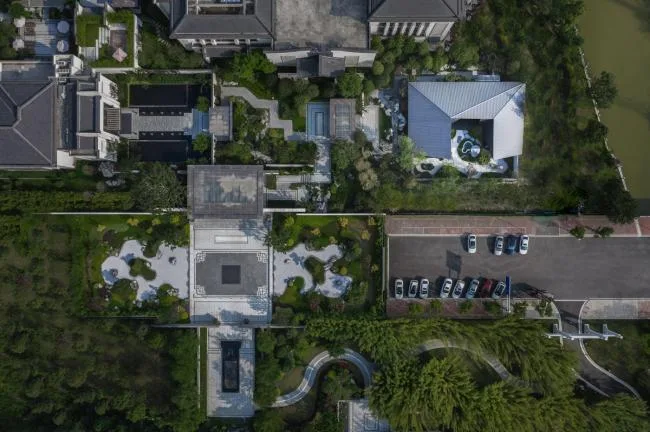
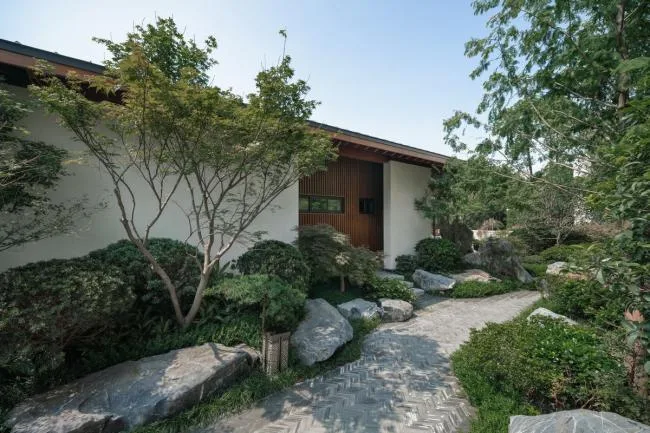
The Oriental garden is compact yet exquisite—desolate, mysterious, abstract, and profound. Nestled within this serene garden, the building invites visitors into a tranquil Zen atmosphere by borrowing the beauty of nature’s scenery.
Transforming Meaning into Form
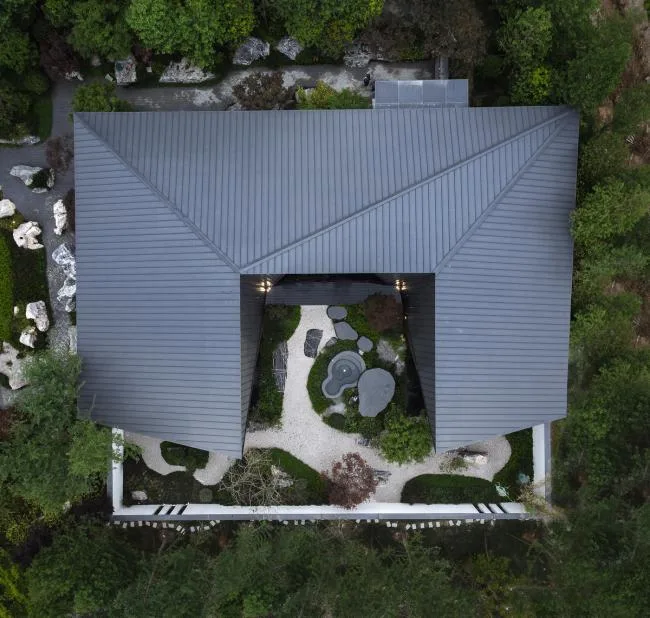
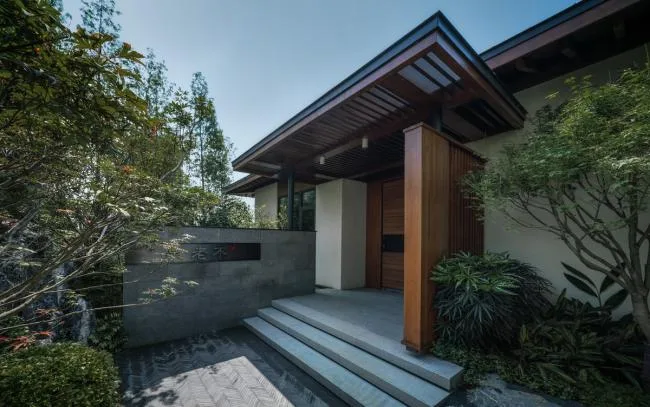
Harmony, respect, clarity, and tranquility embody the spiritual essence of Eastern culture. The clubhouse carries forward the traditional architectural style of Luozhou, drawing inspiration from the ancient town’s texture. It adopts a courtyard layout with symmetrical design.
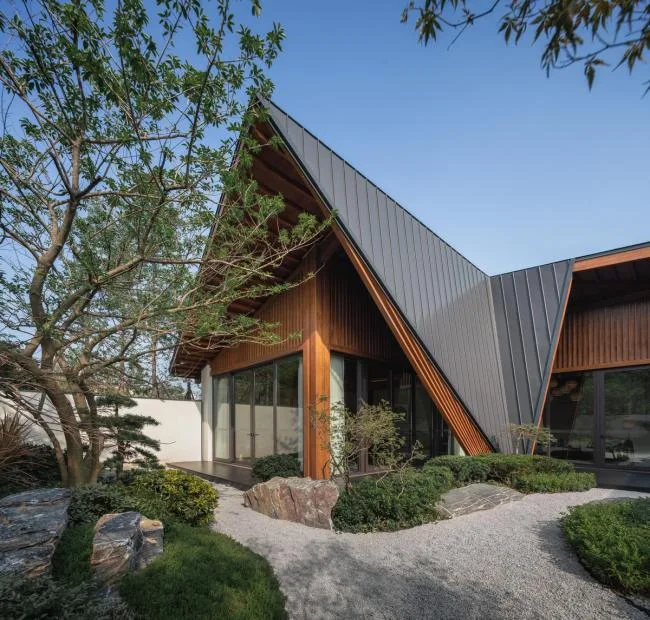
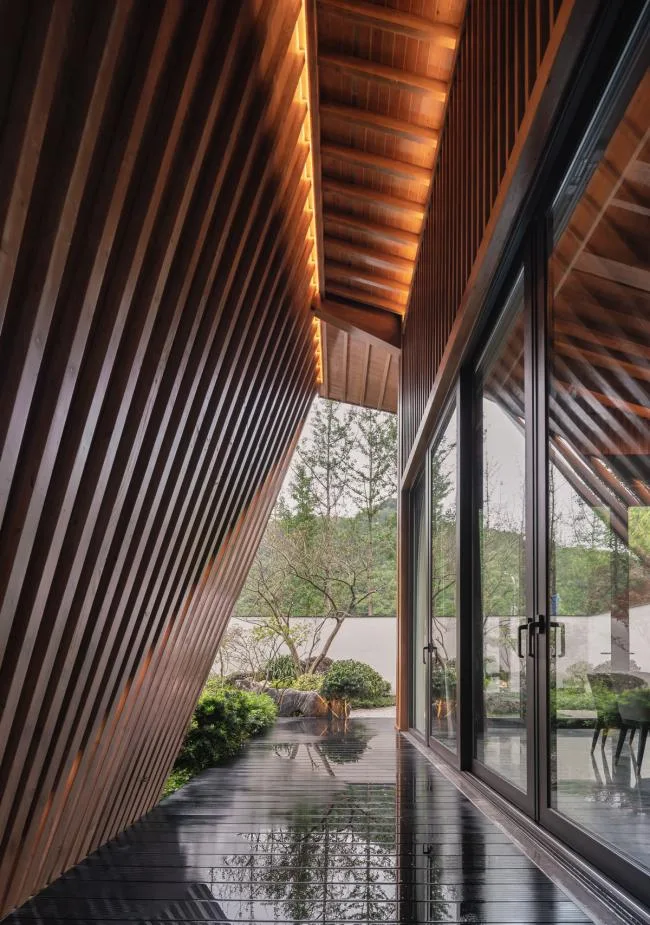
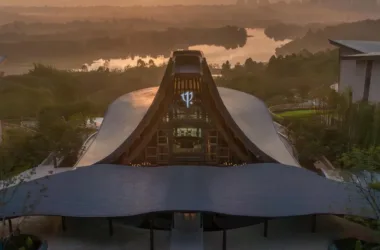
Breaking away from the conventional four-sloped roof, the design introduces a modern five-sloped roof with broken lines. The roof opens and folds downward, forming a corridor. The spa and restaurant roofs echo the large eaves typical of ancient architecture but are rendered in a simpler, more refined manner.
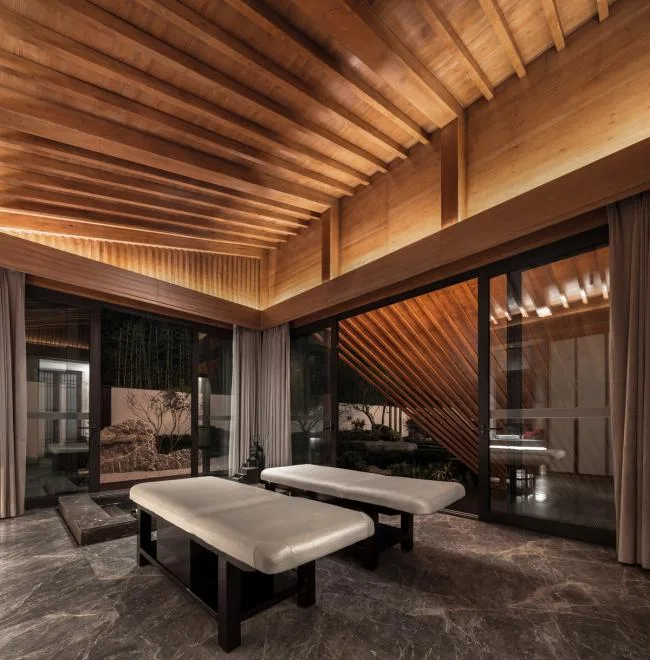
The building space transitions gradually, with roof heights varying according to function. The spa, as the most private area, features a lower roof, balancing the dynamic and static elements harmoniously.
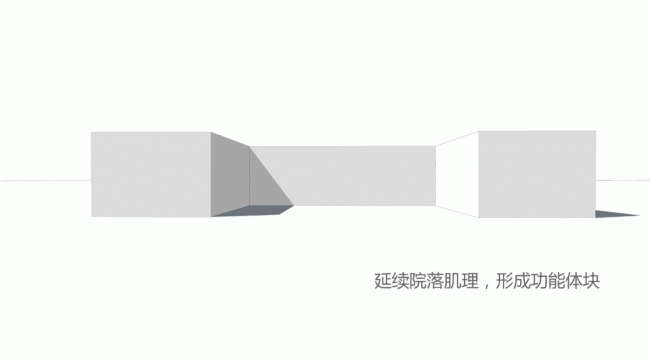
▲ Shape Generation
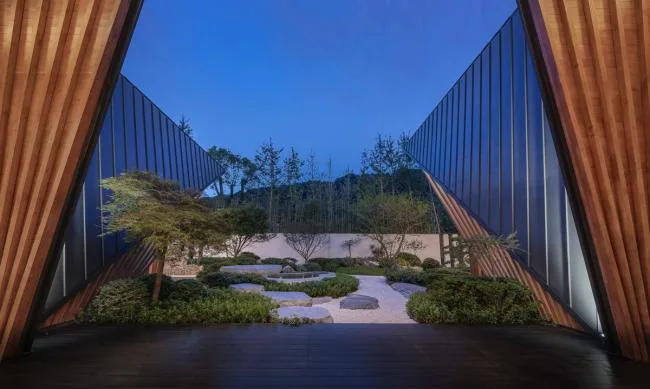
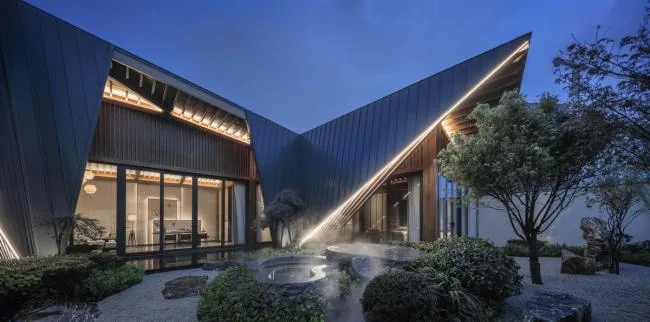
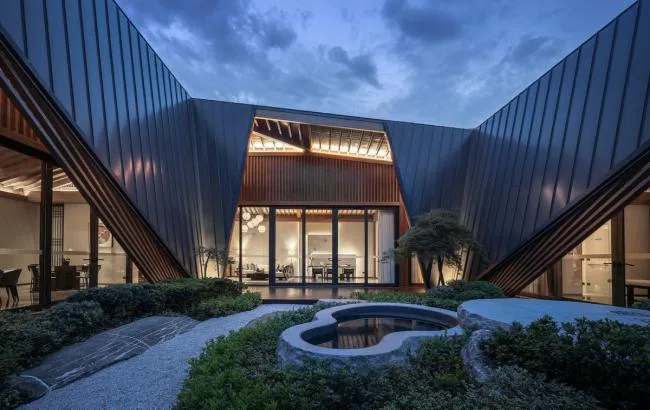
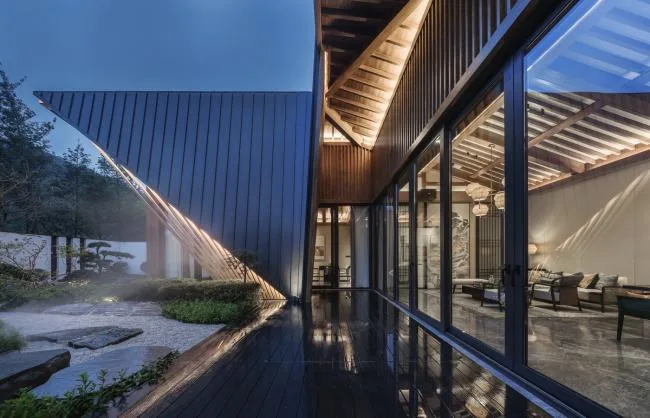
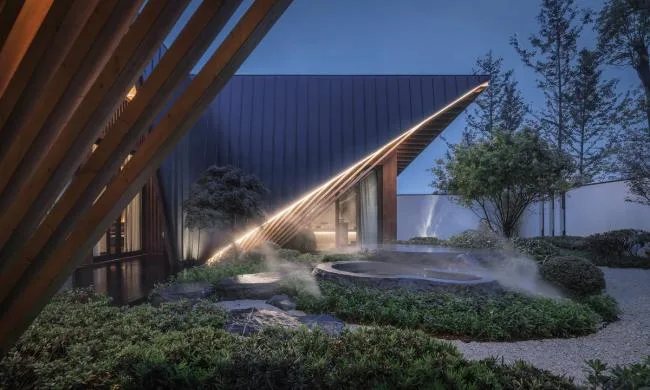
Indoor and outdoor spaces are divided using glass and wooden grids that guide the line of sight, creating framed views of the distant northern mountains from three sides. The interplay of silence, light, and shadow brings architectural elements closer to the essence of the world, allowing visitors to resonate with the space and fostering a peaceful ambiance amidst surrounding noise.
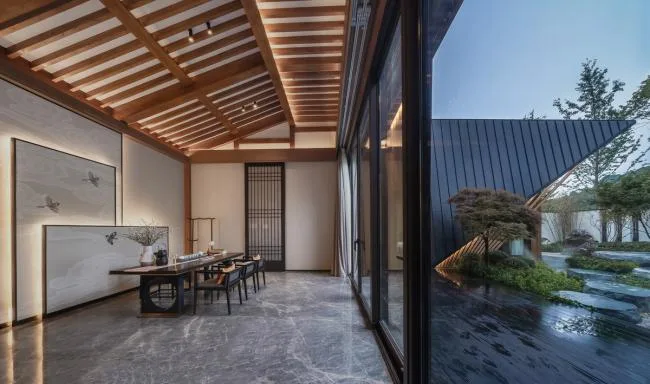
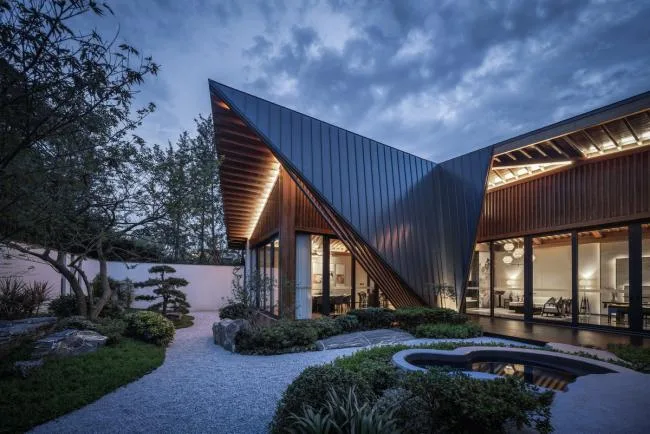
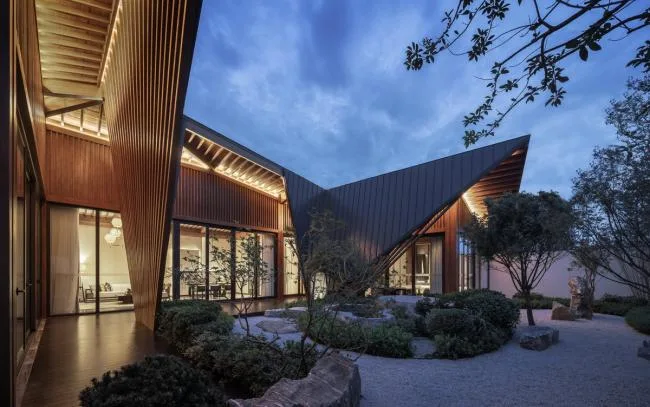
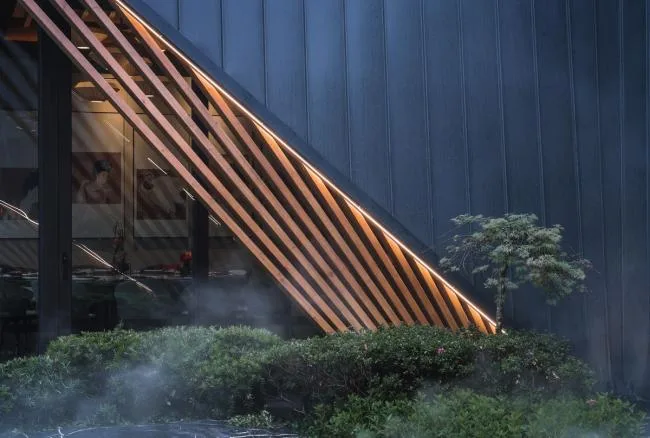
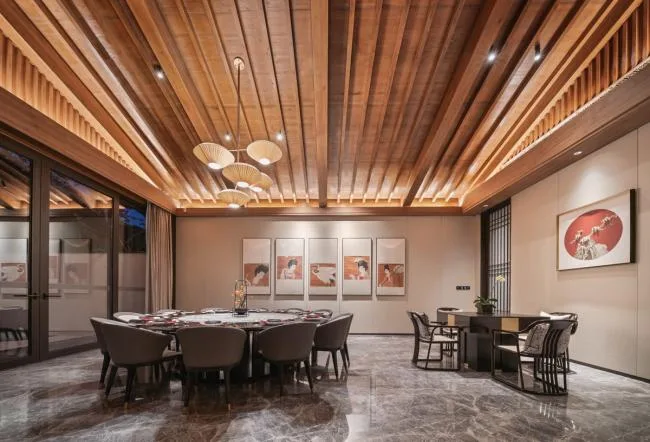
The architectural design centers on people, carefully refining every detail. From the moment visitors enter, they are greeted with a warm, elegant, simple, and inviting atmosphere. Many indoor and outdoor decorative surfaces use Cross-Laminated Timber (CLT) instead of traditional wood panels, reducing complexity and harmonizing with the structure.
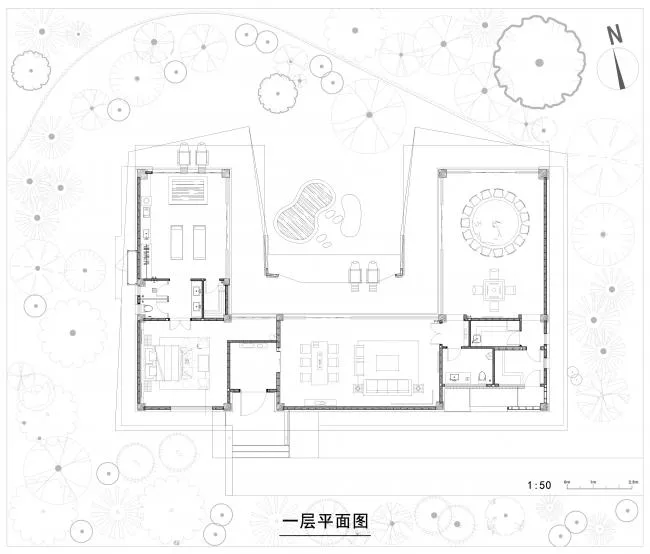
▲ First Floor Plan
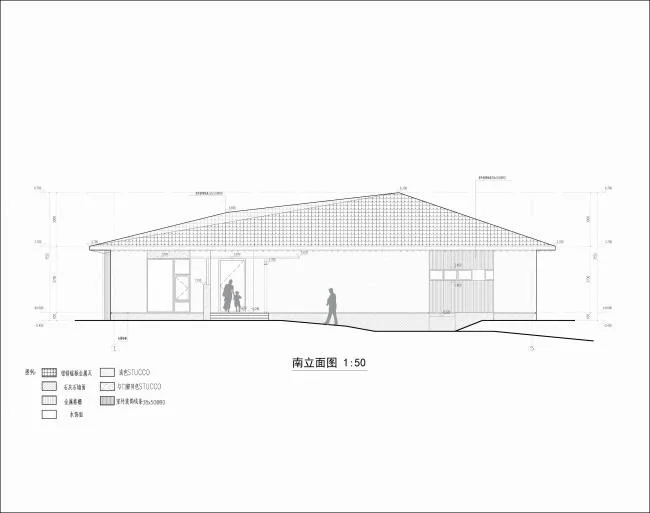
▲ South Elevation
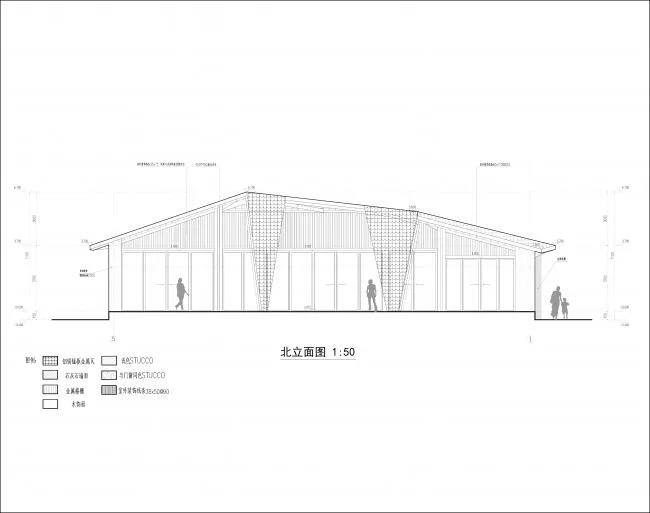
▲ North Elevation
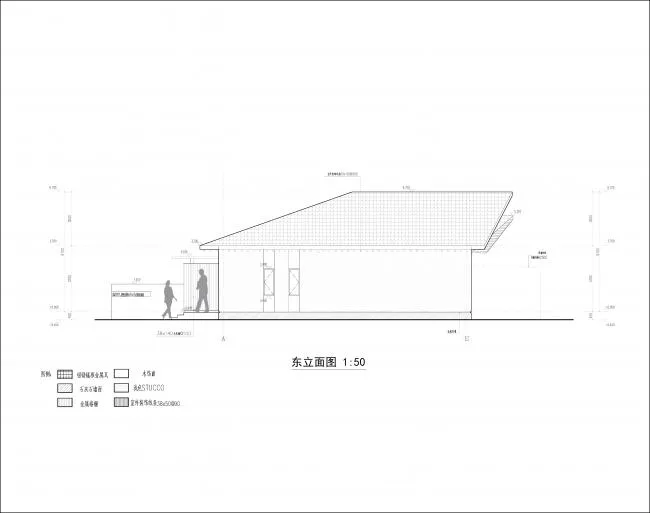
▲ East Elevation
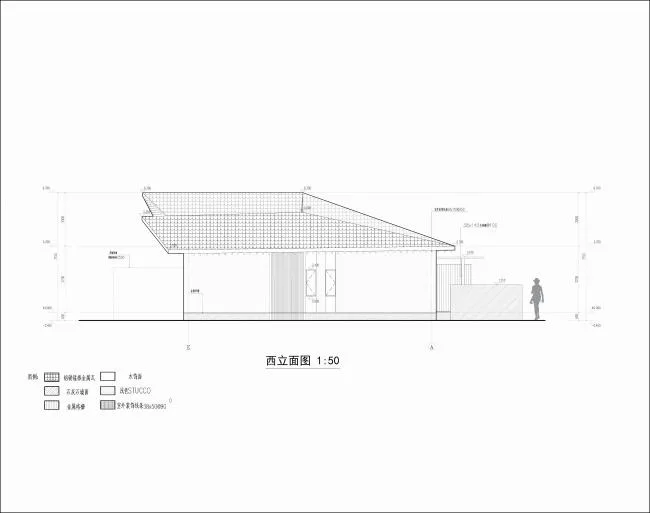
▲ West Elevation
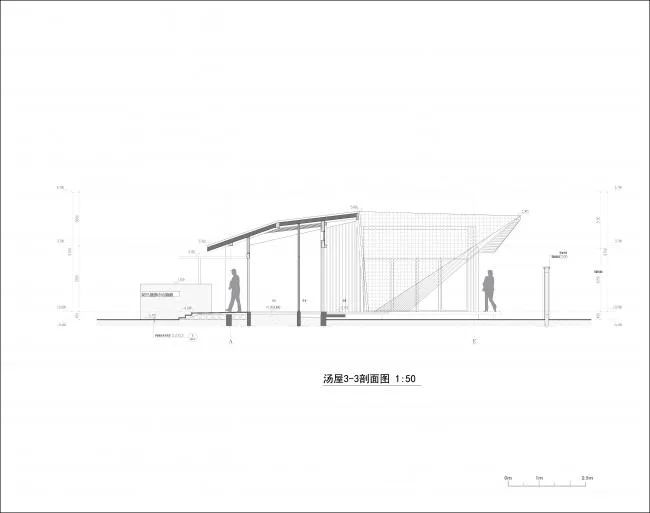
▲ Sectional View
Integrating Interior and Exterior
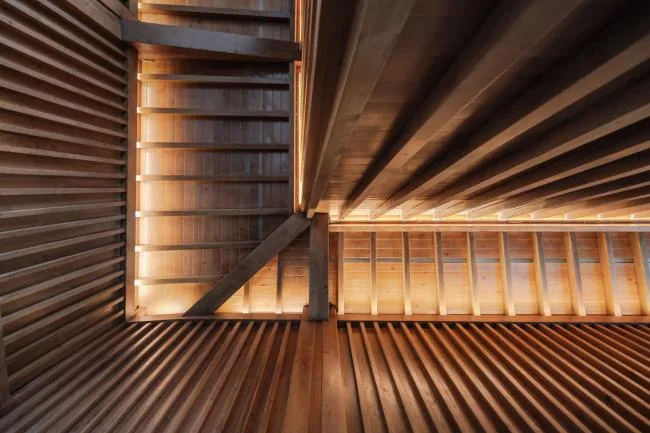
The design honors the natural integrity of materials, using wood to preserve the building’s original character. The exposed laminated wood structure features a smooth finish that highlights the natural grain and offers a soft, natural sheen.
Unlike larger wooden projects, the small wooden elements here are carefully “granulated” into modular components that form the architectural composition.
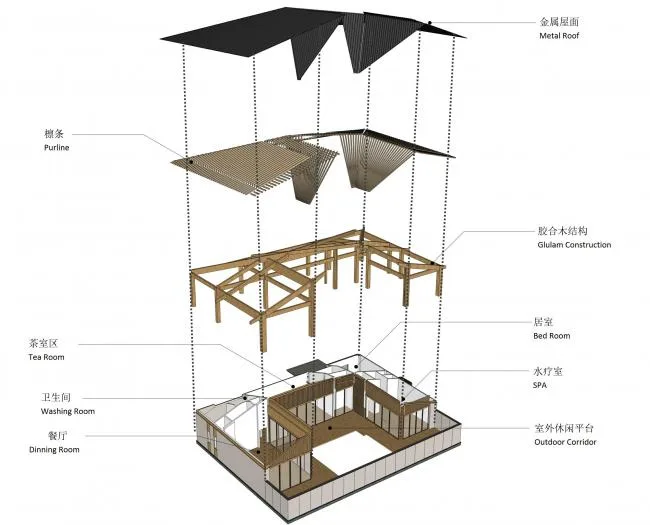
▲ Structural Breakdown Diagram
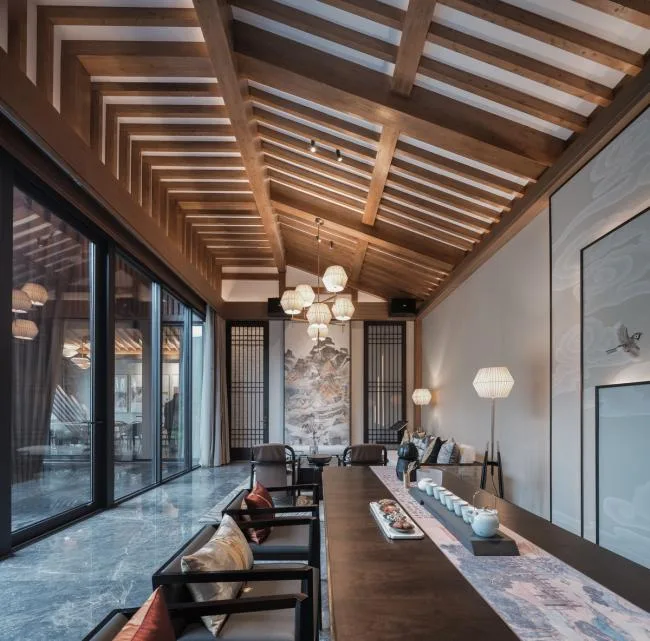
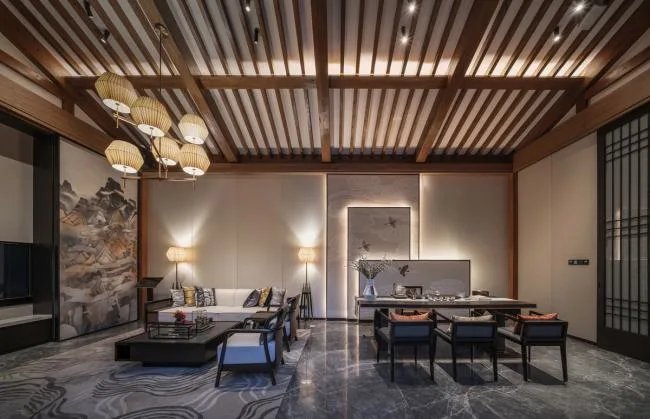
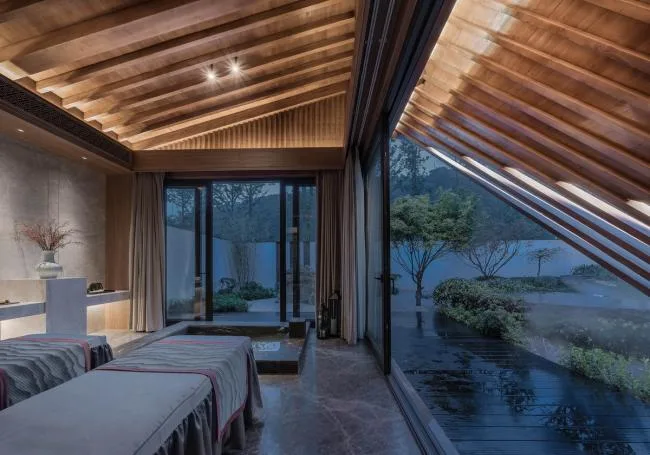
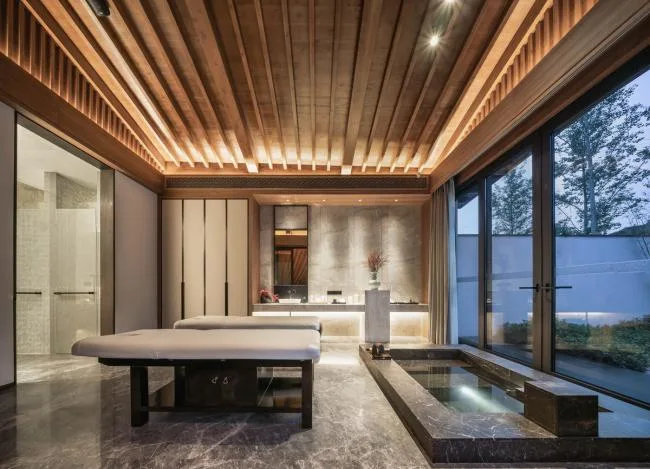
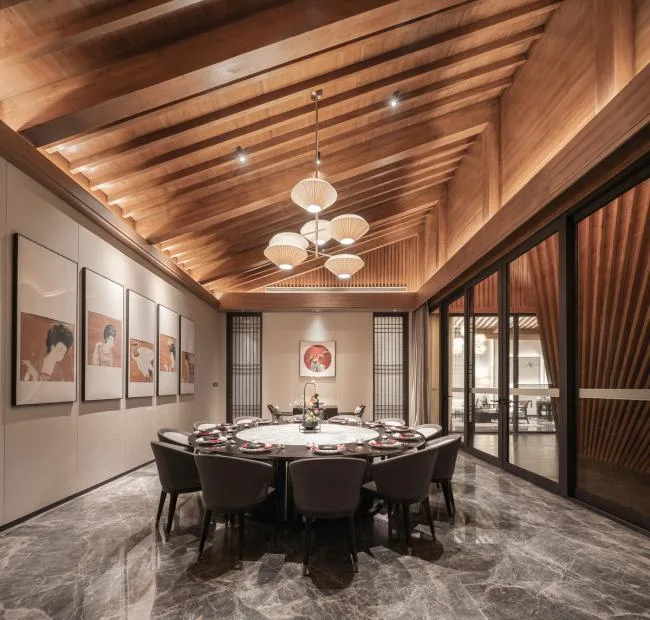
The folded roof lines enrich the interior spatial experience and break the original regularity. As sunlight filters through the wooden slats of the corridors, it diffuses softly and evenly, balancing and uniting indoor and outdoor spaces. In this pure and simple language, the story of “leaving no trace yet already transformed” unfolds.
Built According to Form
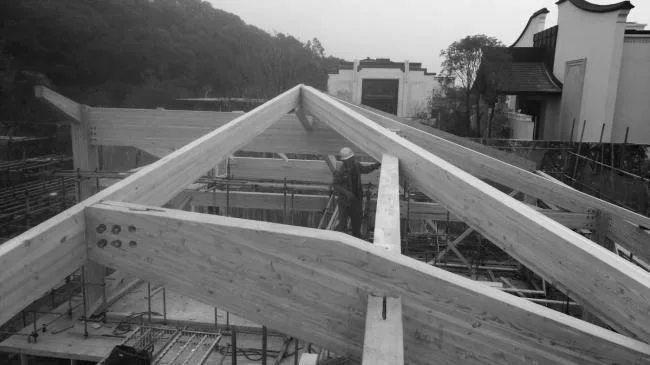
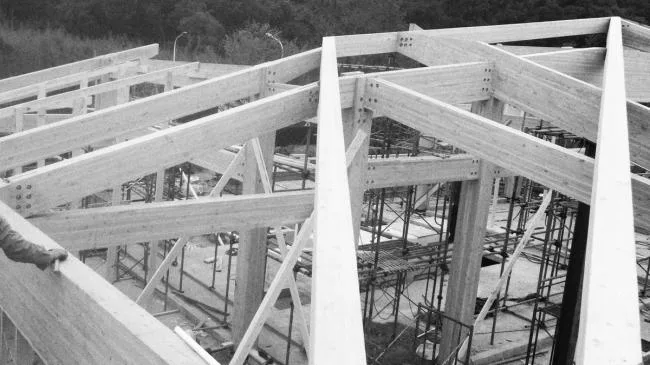
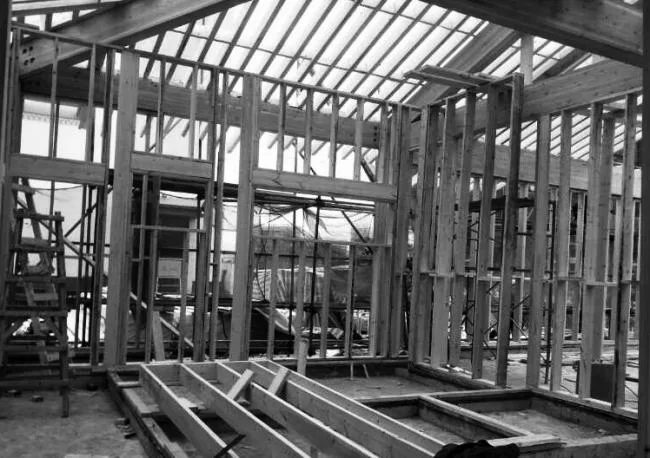
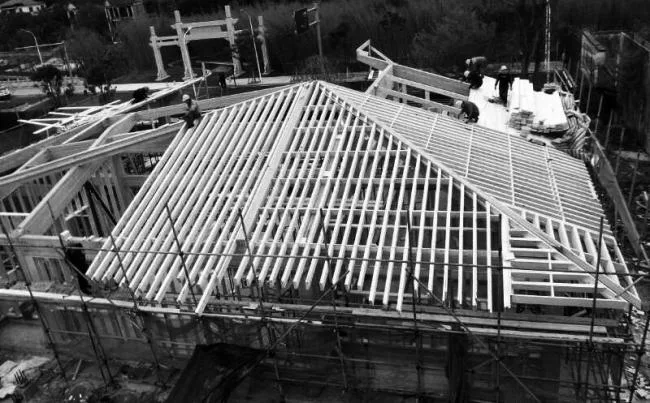
The laminated wood structure was assembled as a whole during winter, completed in just two weeks. Wall and roof components were prefabricated in the factory and installed on site, eliminating installation errors caused by unstable environmental conditions.
To preserve the material’s natural texture and beauty, each wooden element was hand-polished to remove unnecessary decoration, perfectly reflecting simplicity and harmony.
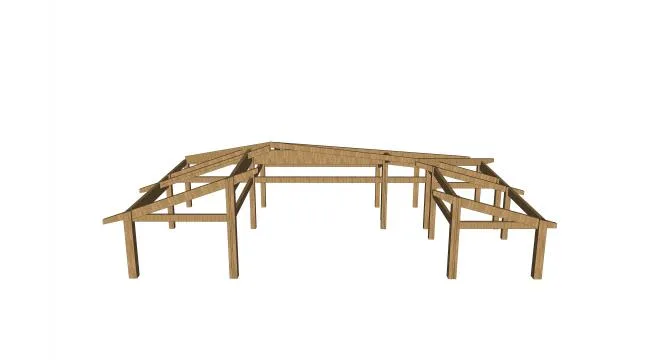
▲ Glued Wood Framework
The complex and irregular roof nodes lack uniformity. The overhanging eaves depart from traditional beam and column systems by utilizing Nail-Laminated Timber (NLT) technology. This method achieves two-way large overhangs inspired by ancient wooden arch structures, simplifying traditional elements through modern technology.
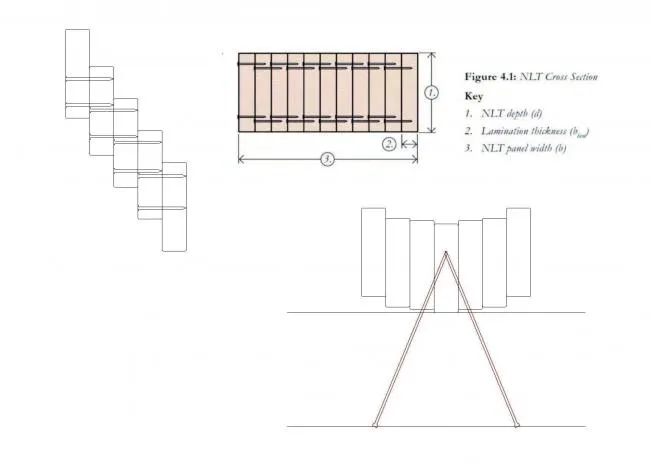
▲ NLT Component Section (Guide for NLT Nail-Bonded Laminated Wood Design and Construction)
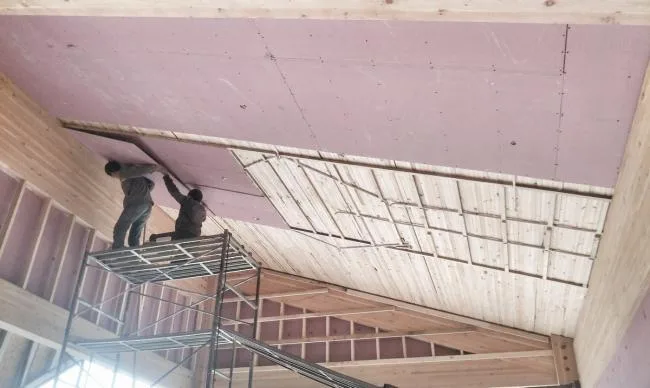
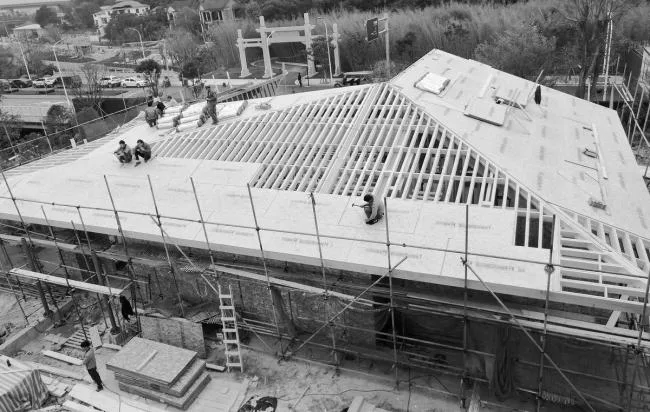
This project embraces simplicity and natural charm by minimizing external decoration and implementing “hidden” treatments on the building’s space, form, structure, and surfaces. From formal design to conceptual expression, the beauty of solitude is continuously reinterpreted and renewed.
Project Information
Project Name: Fuzhou Shoukai Jianguo Shifu Hot Spring Club
Location: Luozhou, Fuzhou City
Building Area: 400 square meters
Owner: Fuzhou Shoukai Ruitai Real Estate Development Co., Ltd
Architectural Design: Shanghai Chengzhi Architectural Design Co., Ltd
Chief Architect: Li Jie
Design Directors: Yan Fang and Li Juan
Design Team: Lin Wei, Liu Gang, Chen Fengfeng
Interior Design: Shanghai Chengzhi Architectural Design Co., Ltd
Design Director: Wu Xueyan
Design Team: Shen Liping, Tang Ji, Xue Chengzong
Wooden Structure Construction: Shanghai Junzhi Construction Technology Co., Ltd
Project Managers: Chen Dilong, Chen Jingyong
Soft Decoration Design and Construction: Shanghai Enwei Architectural Design Co., Ltd
Civil Construction Drawings: Jiabo Architectural Design Co., Ltd
Completion Date: April 2019
Photography: Zhang Qianxi












Must log in before commenting!
Sign Up