
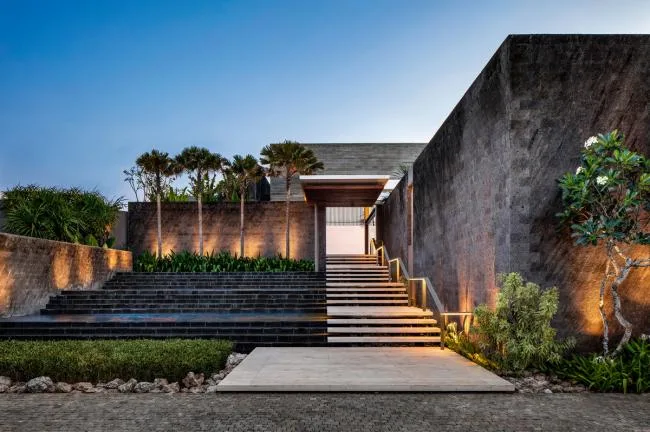
This residence draws inspiration from the iconic surfing destination of Uluwatu in Bali. It blends modern elements with local architectural design and carefully selected materials to create a luxurious resort that harmonizes perfectly with its natural surroundings.
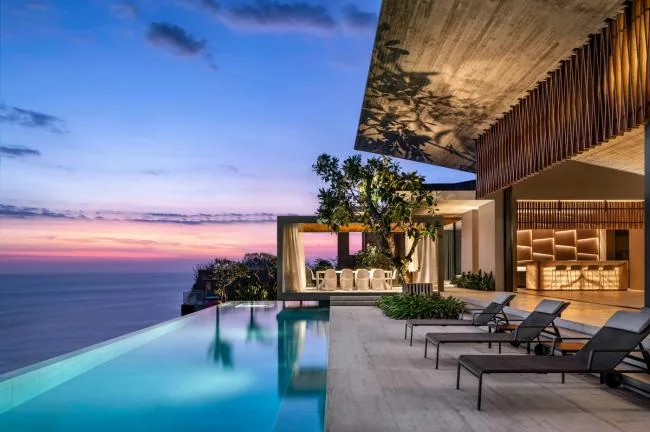
Designed by SAOTA, this vacation home is located in Uluwatu, on the southwest side of Bali’s Bukit Peninsula, Indonesia. The striking structure is perched atop a limestone cliff. The name “Uluwatu” combines “Ulu,” meaning “end of the land,” and “Watu,” meaning “rock,” reflecting the rugged beauty of this vast, arid peninsula. Uluwatu is famed for its world-class surfing beaches, where visitors can stand on steep cliffs and enjoy breathtaking ocean views.
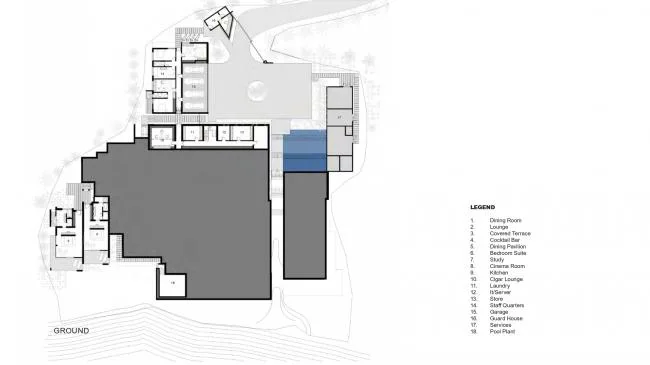
▲ First Floor Plan
The SAOTA-designed residence is oriented east-west, with the east side facing the sea. The site’s layout disperses independent suites and living areas across the property, blending indoor and outdoor spaces seamlessly. The courtyard, gardens, and terraced vegetation are carefully integrated into the architecture, merging natural greenery with the built environment to create an effect that unites landscape and structure. The design takes inspiration from rock formations, with gaps between rocks filled in over time, making the building appear as a natural extension of the landscape.
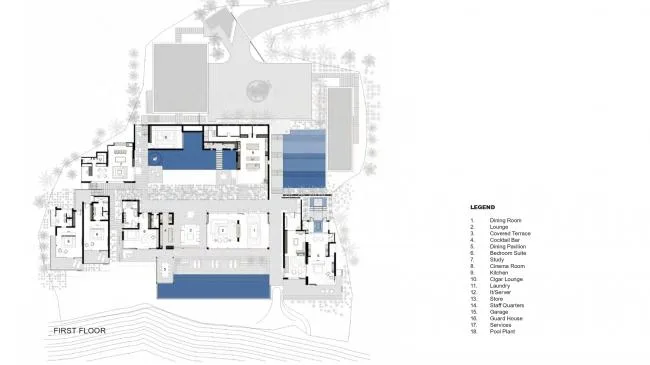
▲ Second Floor Plan
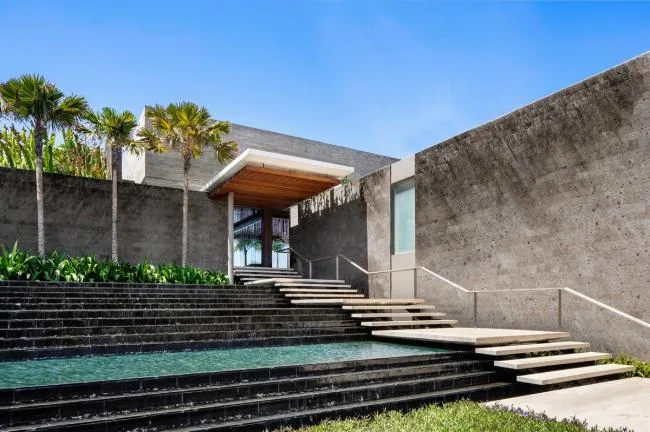
A grand entrance courtyard, framed by palm trees, creates a dramatic arrival experience, featuring massive stairs floating above a waterfall. A wall clad in a single slab of stone offers a striking first impression. This central entrance doubles as a gathering space, connecting the living room, dining room, and adjacent outdoor terrace, which form the heart of the home. These areas radiate outward, with courtyards and landscaped planting beds complementing each other and contrasting with the expansive western courtyard.
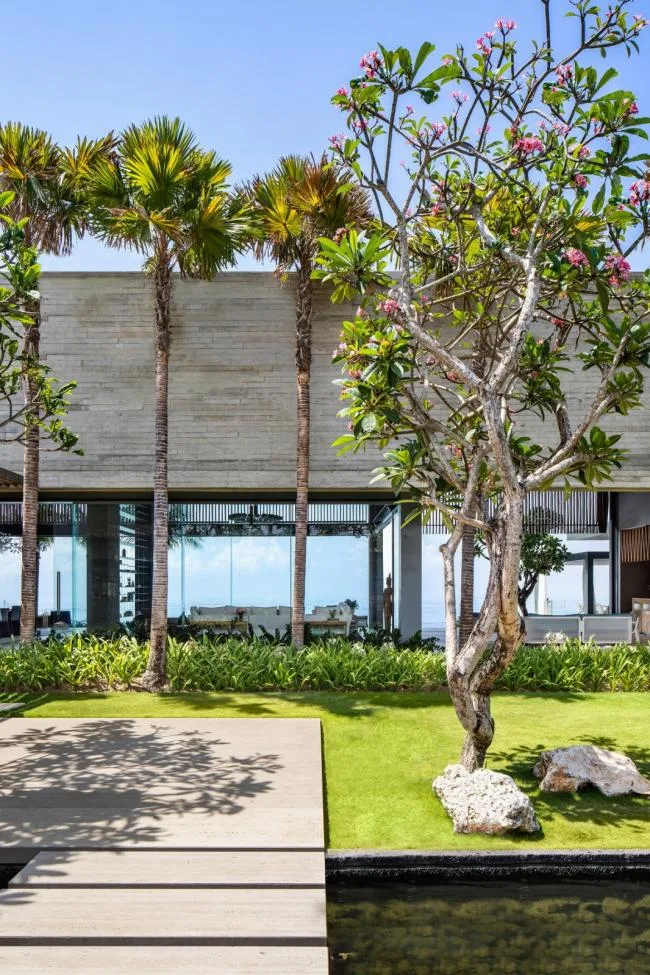
The home’s decentralized layout cleverly avoids long internal hallways while offering a flexible, “chameleon-like” design that adapts functional spaces to different needs—whether for intimate gatherings or larger parties. Even when unoccupied, the main suite and living areas feel cozy and inviting, without unused or wasted rooms. Throughout the design, the scale of large facilities like entrances, pool terraces, and western courtyards is balanced with private living spaces, maintaining a strong sense of intimacy.
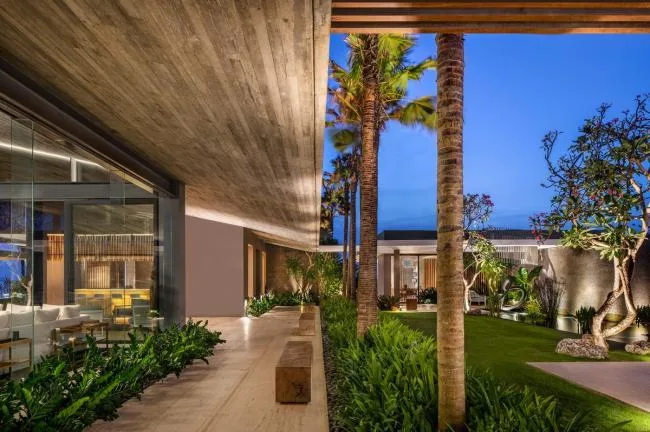
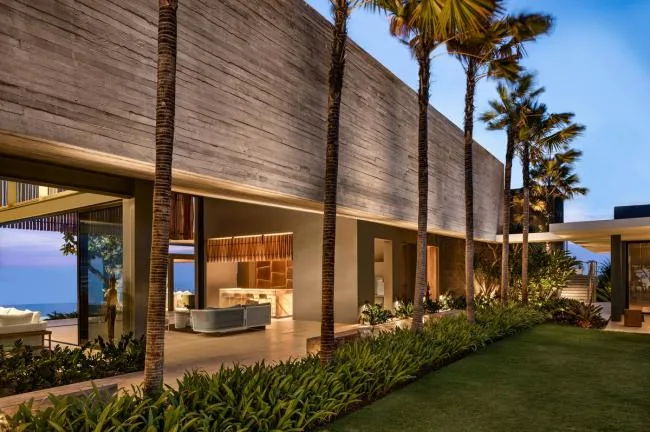
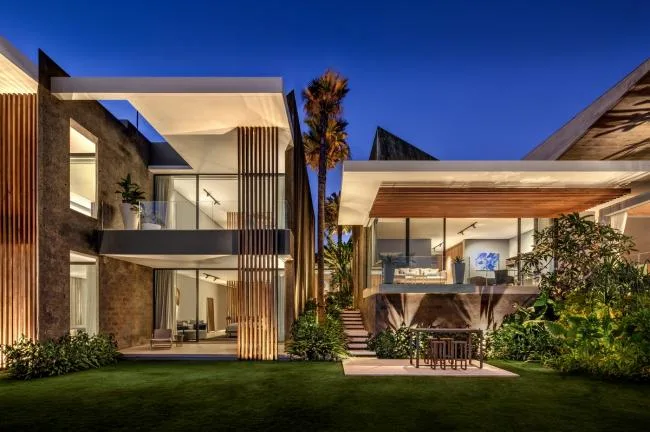
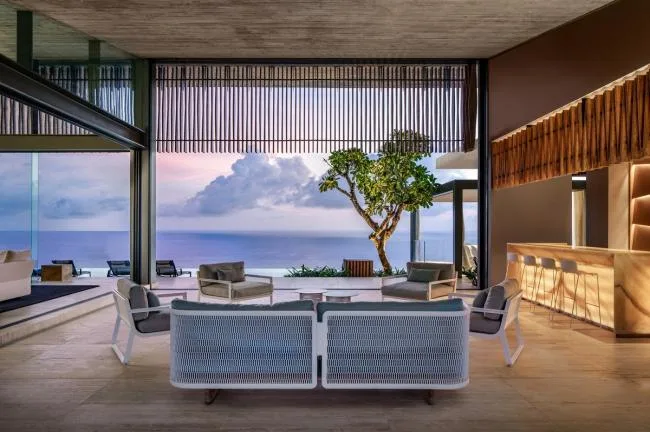
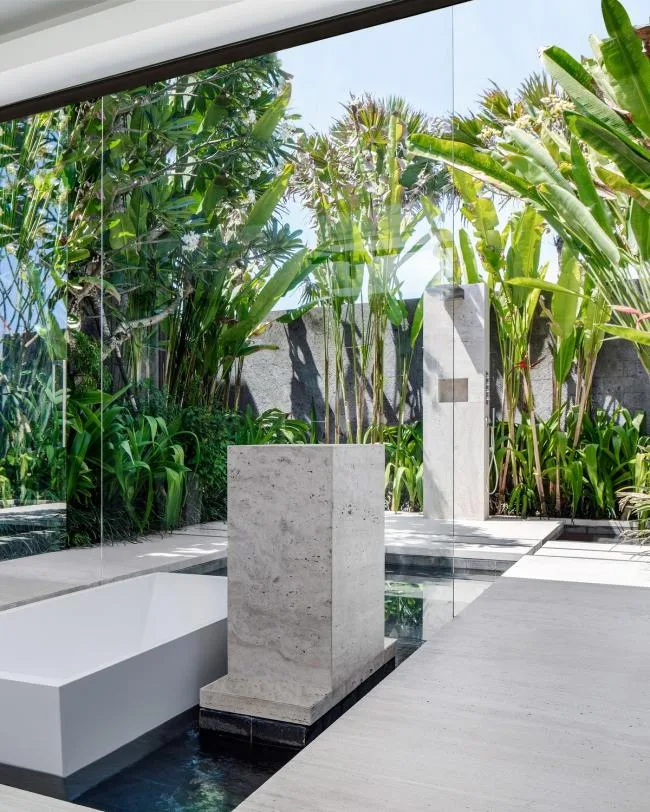
The architecture and outdoor courtyards are intertwined, encouraging residents to move fluidly between indoors and outdoors, creating a strong spatial connection throughout the property. This integrated indoor-outdoor lifestyle reflects Bali’s climate perfectly. Outdoor spaces, courtyards, and pavilions offer varying degrees of open-air experiences, while the porous design allows natural ocean breezes to circulate through the interior. For hotter days, enclosed, air-conditioned lounges and dining areas provide comfort.
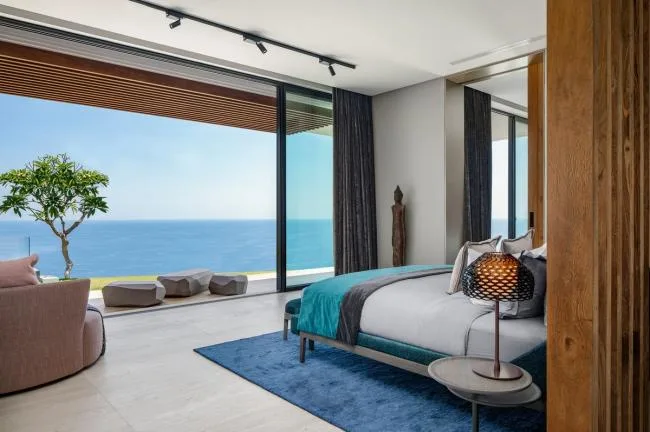

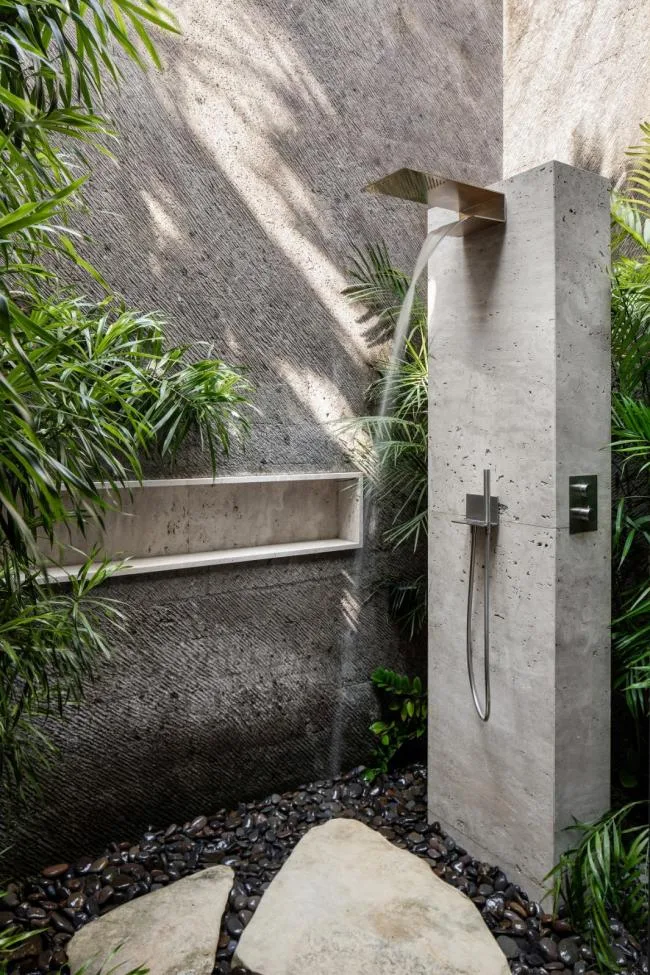
SAOTA’s aesthetic inspiration comes from the unique combination of dense, heavy materials and lightweight elements found in local architecture, seen both in traditional temples and modern buildings. The resort’s entrance features large-scale walls clad in dark local stone, with deep handcrafted textures that emphasize the scale and character of the residence. Organic weathering techniques give the stone a natural, antique bronze finish.
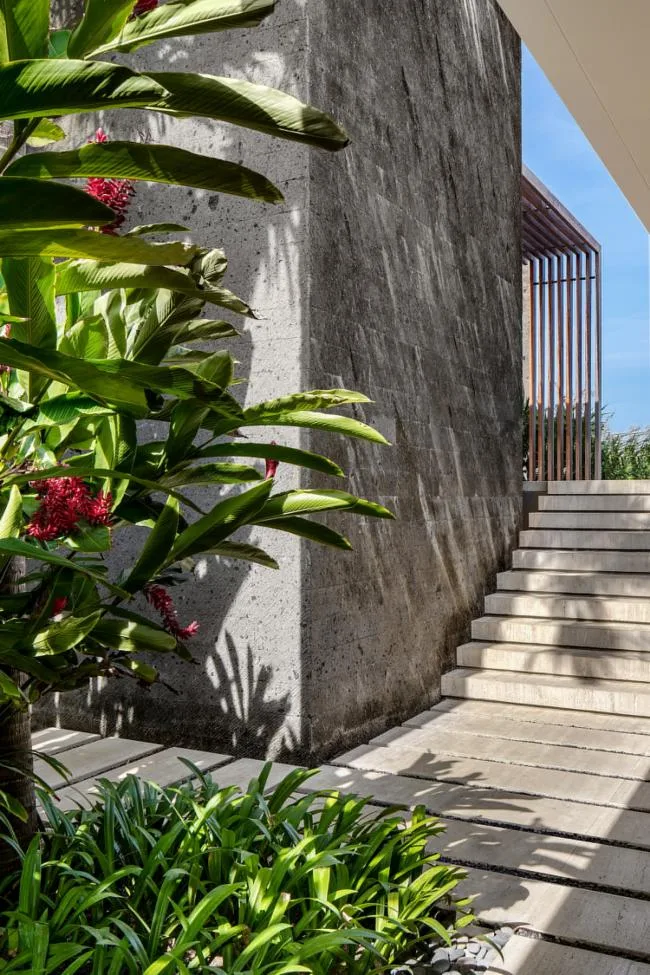
In the main living area, the traditional wooden screening typical of Balinese architecture is reimagined using glass curtain walls. The lightweight wooden roofs common locally have been replaced with suspended corrugated concrete roofs. This adaptation optimizes the local wooden structures to suit the scale of the project. The roof’s distinctive slope runs east-west, allowing morning sunlight to illuminate the eastern sea views while shielding the interiors from harsh afternoon sun.
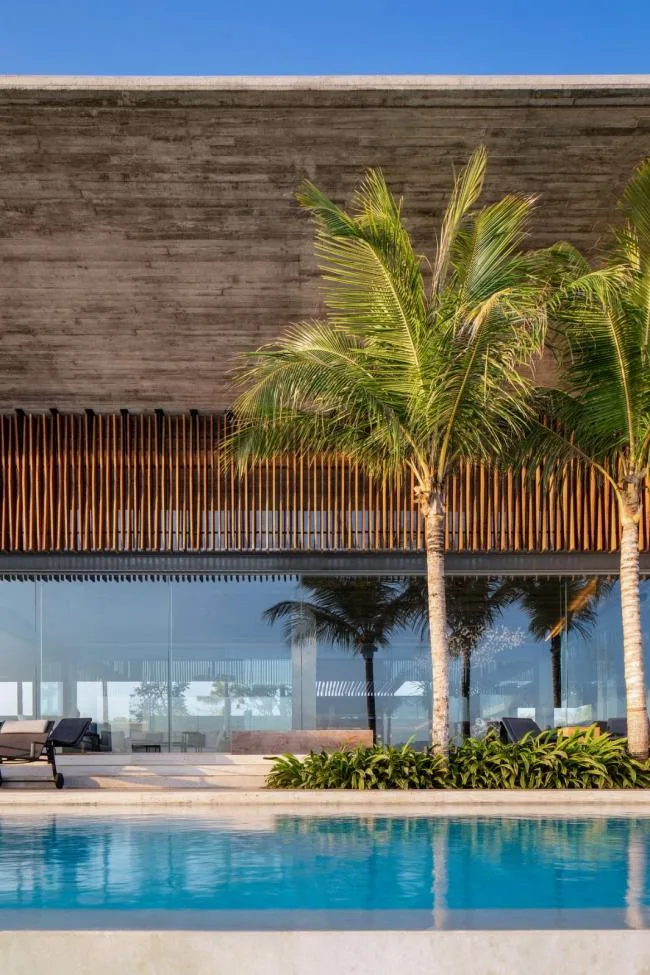
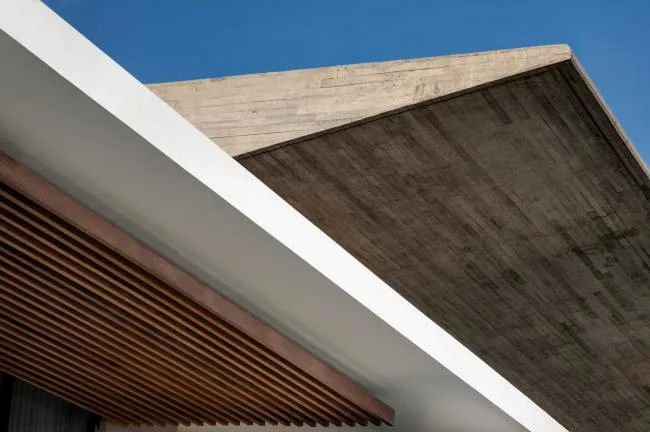
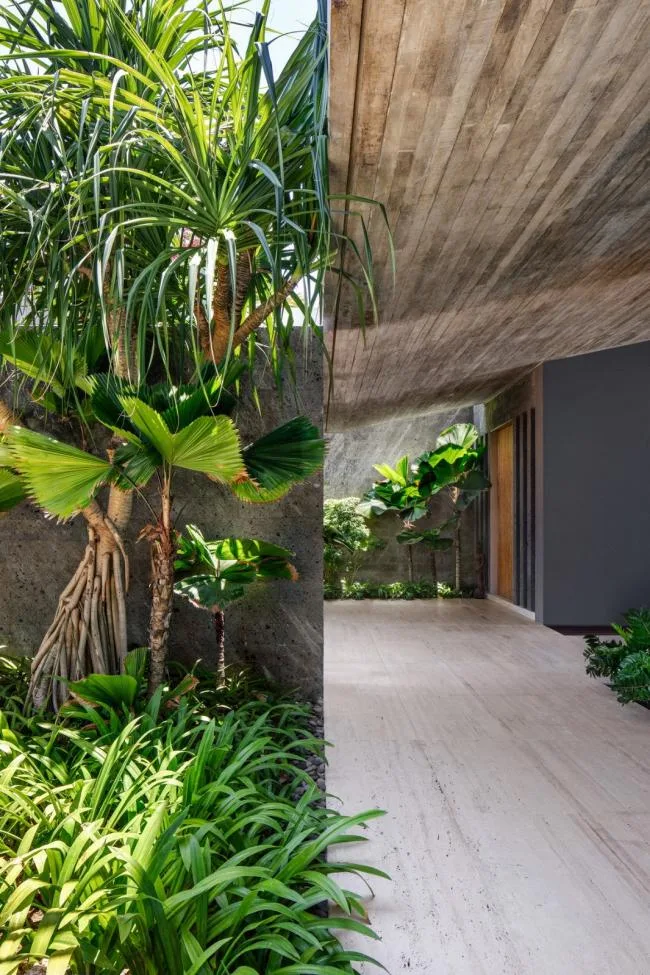
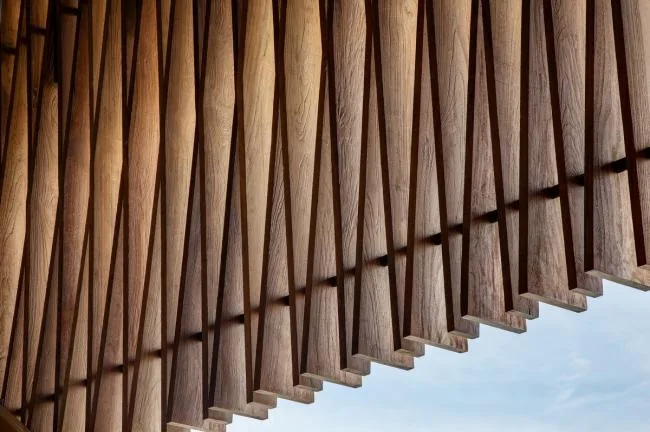
Throughout the residence, surfaces of concrete and other materials are complemented by uniquely designed wooden structures. Vertical screens, furniture, and decorative metalwork—such as the multi-faceted antique bronze aluminum pieces behind the bar and in the smoking room—add subtle richness to the materials. Polished but unfilled limestone flooring enhances the luxurious feel, with continuous flooring that reinforces spatial unity. The residence embraces a modern minimalist style with medieval influences, incorporating high-quality European furniture and finishes that are understated yet elegant.
Project Information:
Architectural Firm: SAOTA
Location: Indonesia
Project Team: Philip Olmesdahl, Mark Bullivant, Dominik George, Tasneem Mohamed & Carl Schmidt
Area: 14,170 m²
Project Year: (BIM) 2018
Photographer: Adam Letch
Suppliers: Flos, Molteni & C – Rodolfo Dordoni, Molteni & C – Jean Nouvel, Kettal (Spain), Paola Lenti, Molteni & C – Vincent Van Duysen
Client: N/A – wishes to remain anonymous
Engineer: Saka Undagi Design
Landscape Design: Bali Landscape Company
Architect: H+H Architecture
Project Management: Penjor Bali Mandiri
Lighting Consultant: Nipek
MEP Engineer: Wija Kusuma Nadi (Design & Construct)
Consultant: Twotimesmono
Surveyor: Penjor Bali Mandiri
Construction: Penjor Bali Mandiri
Interior Design: Molteni & C












Must log in before commenting!
Sign Up