
The artwork titled Layered Forest and Waves, Long Pavilion Lying on Waves is not just a painting—it is also a house. This small courtyard, known as Niang, is nestled within Beijing’s historic old city. Its owners nurture and cultivate Beijing’s cultural heritage.
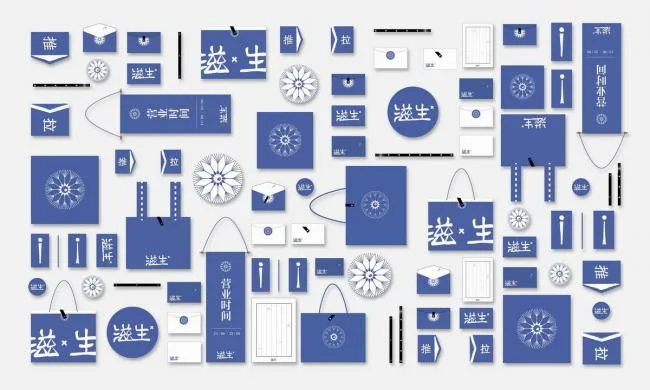
▲ Graphic Visual Design
Introduction – Visual Inspirations from the Site
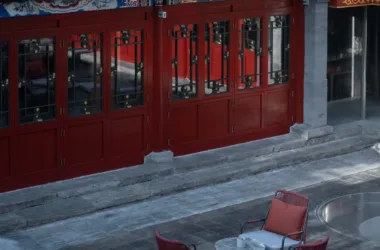
In spring 2018, we discovered this courtyard, covered by greenhouses and spanning approximately 200 square meters. To reach the venue, one must navigate a narrow, cluttered alley before entering through a north-facing gate. Buildings surround the courtyard on the west, east, and south sides, making the site feel like a gorge. Only the northern side offers an open view. From here, I sought to establish a connection between the courtyard and the surrounding old city.
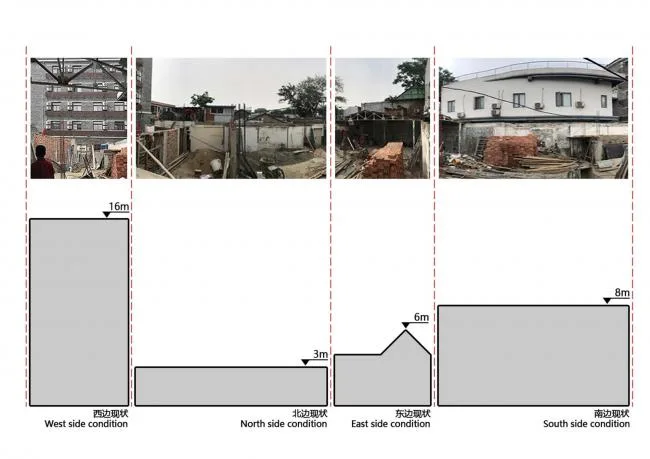
▲ Venue’s Surrounding Context
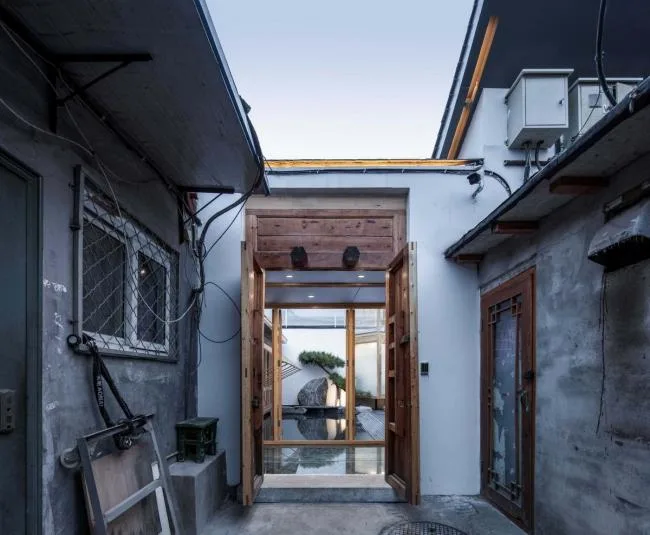
▲ The Relationship Between the Courtyard Entrance and Alley
I climbed to the south side of Xiaobailou, standing atop an 8-meter-high roof, and observed the traditional courtyard roofs of Beijing stretching northward toward Deshengmen—sometimes orderly, sometimes chaotic—like waves endlessly surging north. On the rooftop, due to recent land development and construction, countless auxiliary structures of various shapes and forms have emerged, creating a rich variety of postures. These structures relate to the roofs and courtyards in diverse ways — embedded, suspended, leaning, or intertwined. This unique, organized chaos defines Beijing’s courtyard houses today.
These intriguing relationships sparked my design concept: to emulate waves through the roof and build a cluster of houses floating atop these waves…
Conceptual Imagery
Picture endless surging waves of water—calm yet powerful. Within these waves, dense forests flourish, with pine and rocks winding gracefully. On the waves, long pavilions stretch out, floating structures rest gently, and boats and painted vessels scatter across the surface. Within this scene, I imagine sitting by a window sipping tea, listening to the waves, playing the guqin, and fishing from a phantom boat. At night, lights rise within the forested waves, blending into boundless ink washes. The waves continue endlessly.
This vision is the painting Layered Forests and Waves, Long Pavilions Lying on the Waves that I hold in my mind and seek to realize in built form.
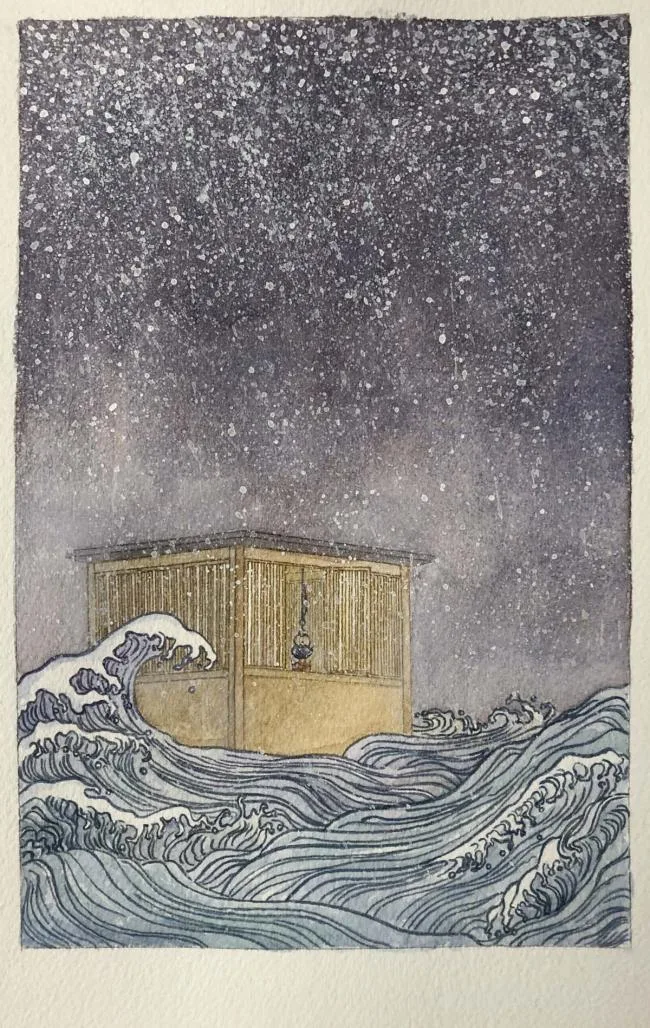
▲ Conceptual Watercolor Painting: Layered Forest and Waves, Long Pavilion Lying on Waves
Bringing the Vision to Life
Starting from visual inspiration, I divided the transformation of the building into five “entries.” The first two layers represent the composition’s foundation—constructing the large form of “waves.” The first entry is the rooftop waves: stacked layers forming the dynamic shape of waves. The second entry is the ground waves, reinforcing the wave concept and establishing the terrace’s base.
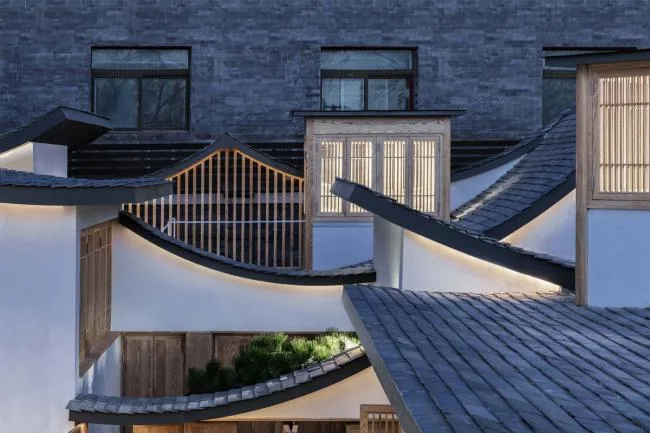
▲ Roof Waves: Layered Stacking
The next two entries focus on the Changting (long pavilions), which form the picture’s main theme. The first Changting entry is the main building nestled beneath the curved waves, representing the transformation of walls. The second entry is a flat-roofed pavilion floating atop the waves, known as the “floating pavilion.” The spatial relationships among these pavilions establish the overall building layout and framework of the scene.
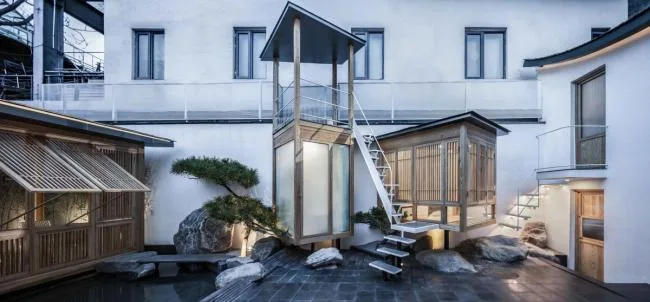
▲ Long Pavilion on Terrain Waves
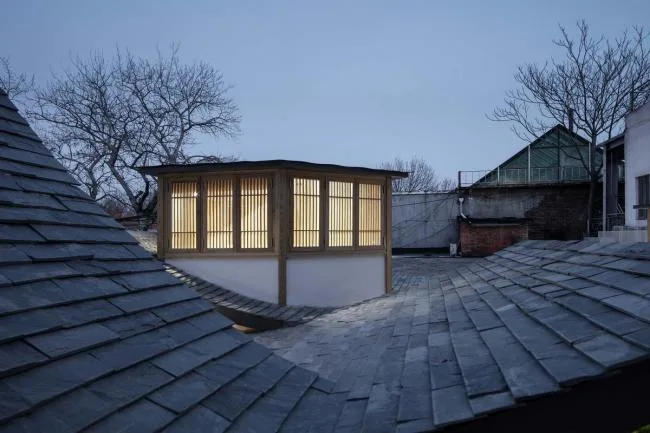
▲ Long Pavilion on Roof Waves
The fifth and final entry, “Layered Forest,” focuses on visual refinement through door leaves and plants. The door leaves resemble a forest, and the plants represent the woodland itself. Vertical door leaves, either solid or perforated, feature dense grilles arranged in staggered layers alongside fresh pine and bamboo, forming a layered forest within the waves.
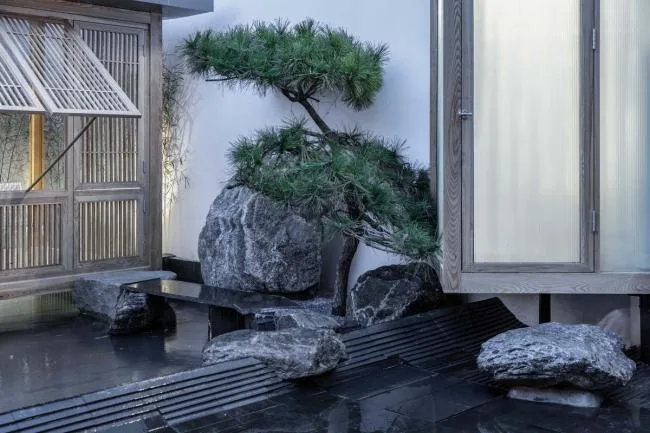
The texture of terrain “waves” and the pine forest of the “layered forest”
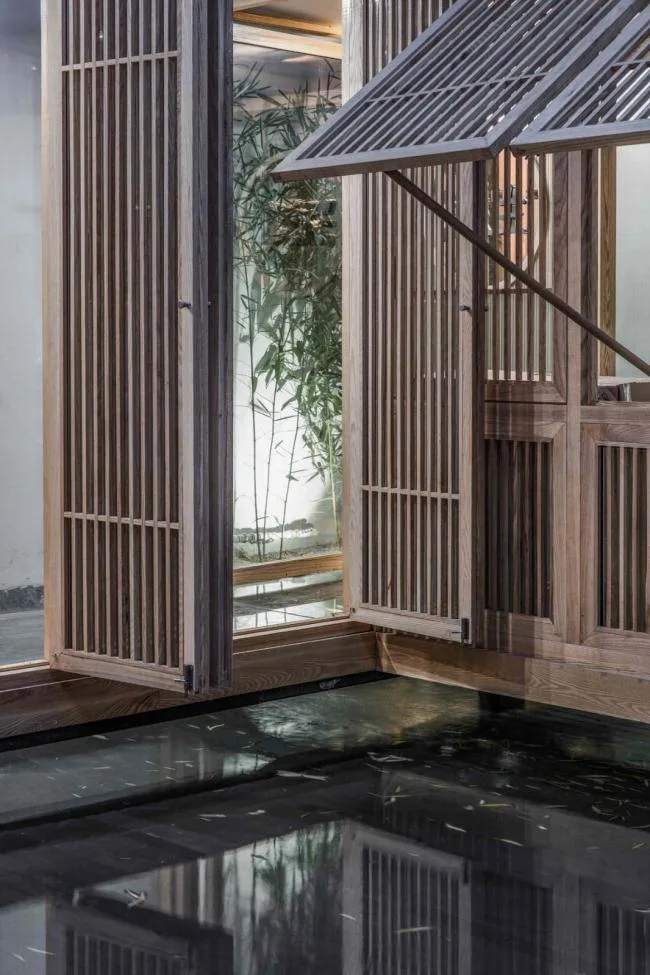
Door leaf design within the “Layered Forest”
These multiple “entries” complete the transformation from image to building. Functionally, the design divides the space into two areas: the public East Garden, dedicated to tea drinking and socializing, and the private West Garden, reserved for accommodation and more intimate gatherings.
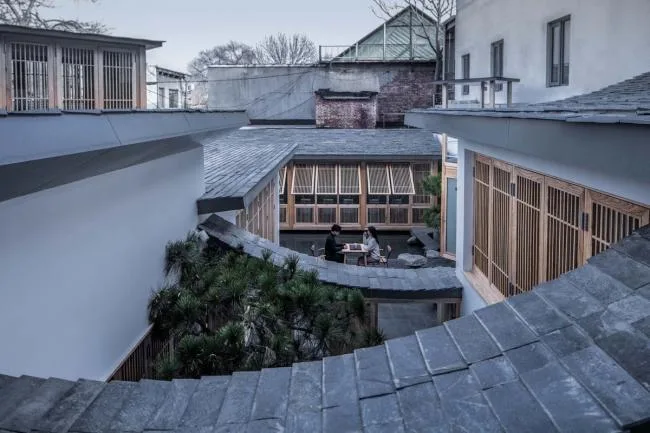
▲ Courtyard Space Beneath the Waves
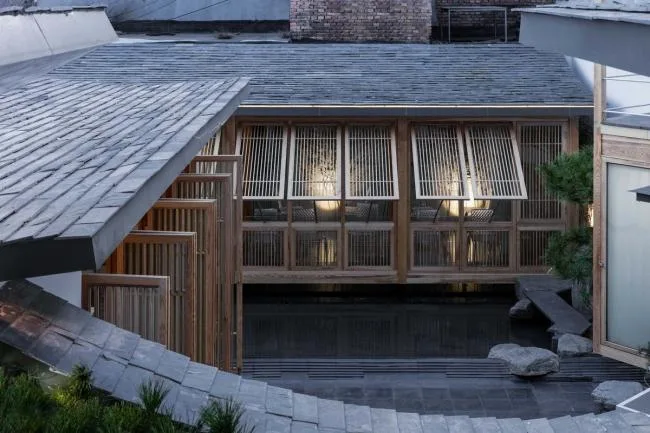
▲ Aerial View of Dongyuan Courtyard
The opening and closing of doors between the East and West Gardens create a dynamic yet tranquil atmosphere, enriching every inch of the courtyard space.
The entrance gallery bridge’s door leaf, when opened, frames views of the pine and stone landscape south of the pool. The mountains and rocks arranged like waves create a picturesque scene of cascading stones. The solid door leaf between the West and East Gardens, when opened, connects the two spaces seamlessly, layering them to maximize the courtyard’s spatial richness.
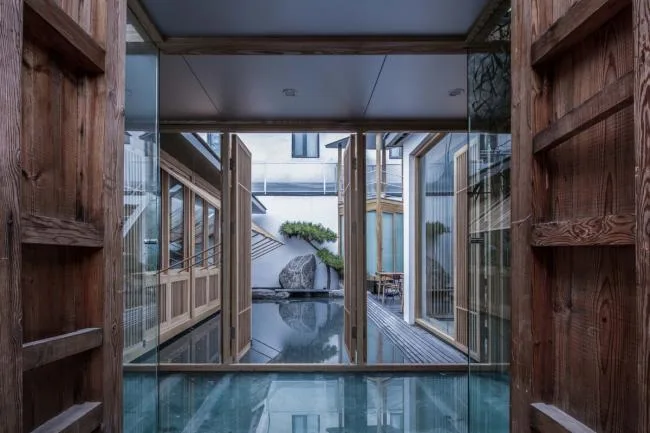
▲ Entrance Corridor Bridge
Translating Painting into Space
Painting is a direct expression of function and form, transforming objects through visual representation. In this design, the figurative elements of “waves” and “pavilions” embody the core vitality. Architecture is the physical realization of these concepts—where intention, structure, materials, and construction details converge. Moving from imagery to architecture is the process of turning visual ideas into tangible form.
Stacking the Waves
The waves are represented by curved, layered undulations that flow continuously. Formally, waves have a crest and a tail, with peaks rising high and troughs dipping low.
Crafting a “Wave” Roof
The roof mimics waves both in shape and tile technique. Curved roofs reflect the dynamic posture of waves. The curve is inspired by the lifted and folded roof trusses typical of Beijing’s Siheyuan, layered to evoke the momentum and emotion of rolling waves, creating a high-low continuous roofline.
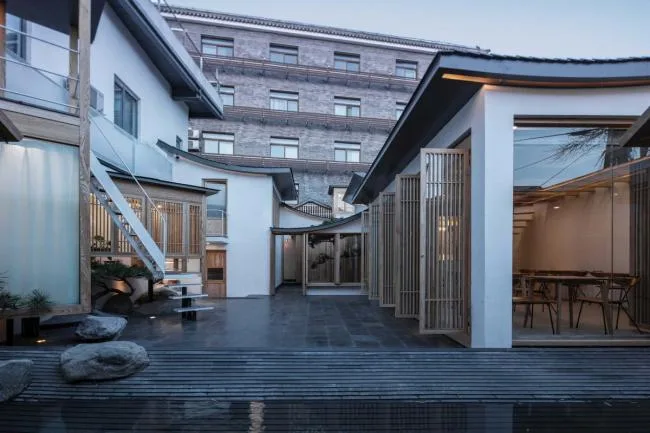
▲ Roof curve viewed from east to west
The roofing material consists of stacked stone slabs arranged to create a linear texture, carefully crafted to resemble the fluidity of waves.
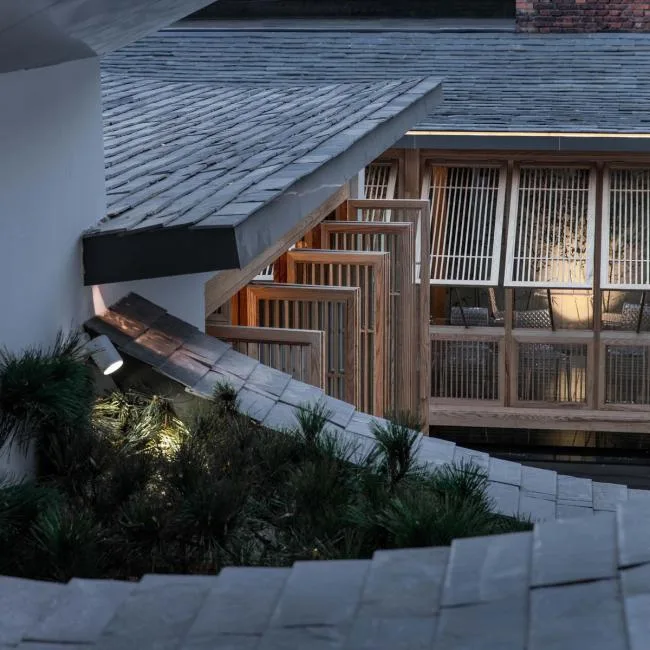
▲ Detail of stone tile roofing
Forming “Wave” Terrain
The terrain undulates like rolling waves rising from flat ground, resembling drifting clouds. The form stretches from east to west, beginning at the eastern pool and ending beneath the west courtyard wall. The pool’s edge features a concave curve that forms a wave crest, naturally turning toward the eastern courtyard. This crest also serves as a subtle boundary between the pool and courtyard, exemplifying the nuanced BIM-inspired transformation.
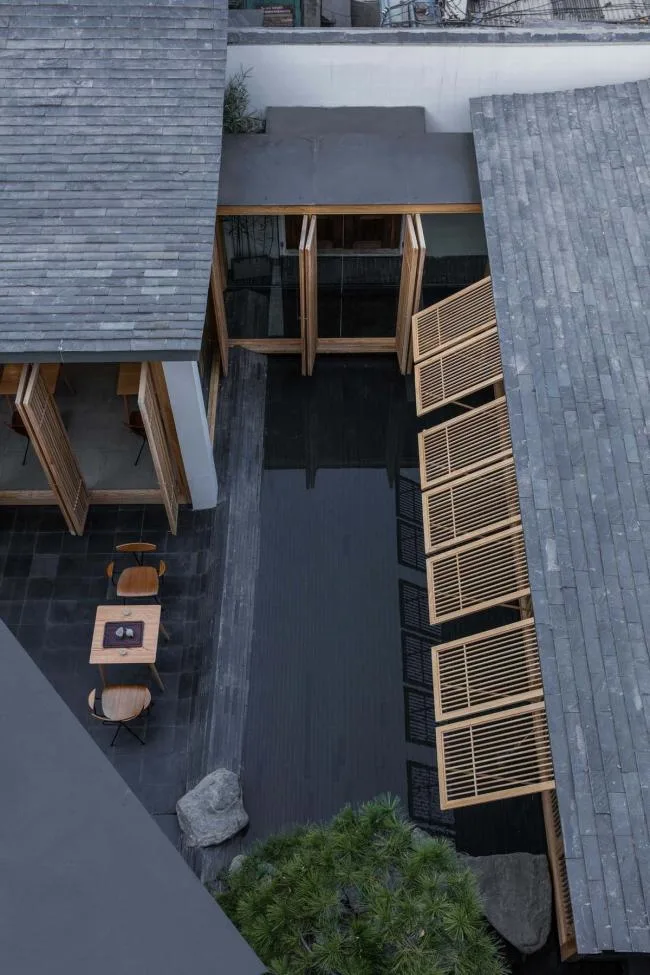
▲ View overlooking the pool
Long Pavilions
Ting refers to two main building types within the courtyard. The first is the main building with a curved roof that “grows” amid the waves: including the water corridor, drawer hall, pine garden, water courtyard, and kitchen. The second type is flat-roofed pavilions floating on the waves, such as Shisongwu, Chuchun Fang, Tiyun Fang, and Haitang Jian.
One hall that grows amid the waves is the water corridor, located at the courtyard’s easternmost edge and elevated above a pool. The western facade features detached windows that create flexible, transparent pavilion and corridor spaces. Here, one can sit atop the waves, watch the water, and enjoy the evening breeze.
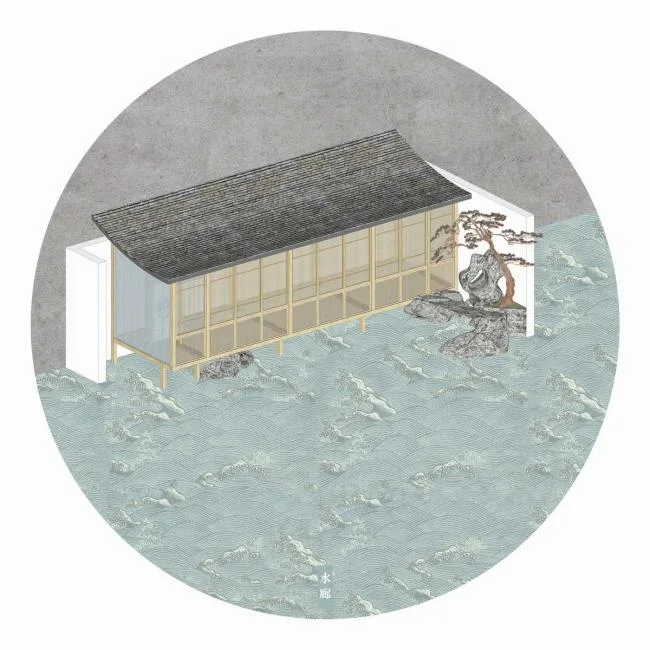
▲ Water Corridor
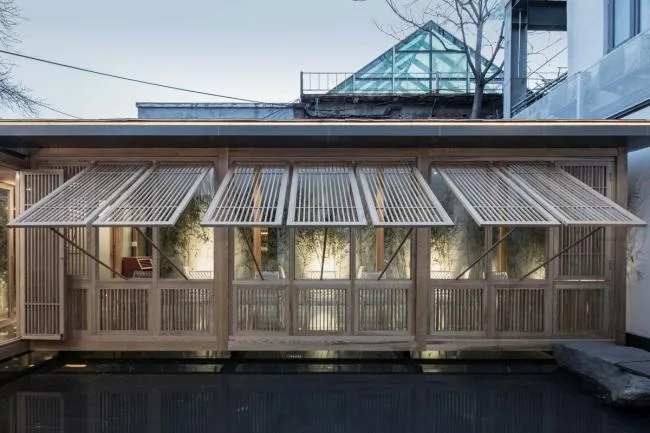
▲ Outdoor View of Water Corridor’s Support Window
The water corridor’s south, north, and west facades are all glass, separated from the courtyard walls by a narrow space planted with bamboo. This creates a bamboo-shaded corridor enveloped in greenery year-round.
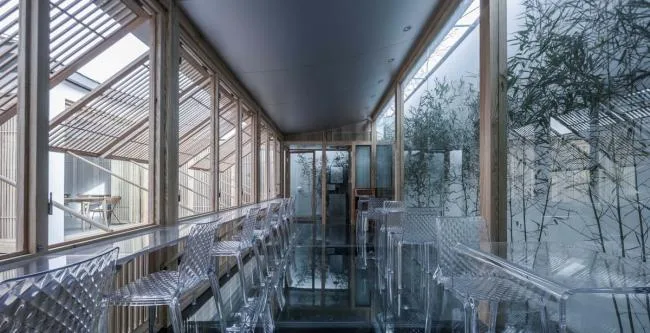
View north from the water corridor, surrounded by bamboo forests on the north, east, and south sides.
The corridor’s floor is transparent glass, allowing visitors to see the water waves’ textures below as if walking on water. Red fish swim leisurely beneath, bringing to life the imagery of mandarin ducks flying and fish leaping.
The drawer hall serves as Dongyuan’s core building. Named for its “drawer” feature, it contains an internal box that can be pulled out into the courtyard, integrating with the lobby to create a large, flexible activity space. This design explores architectural adaptability.
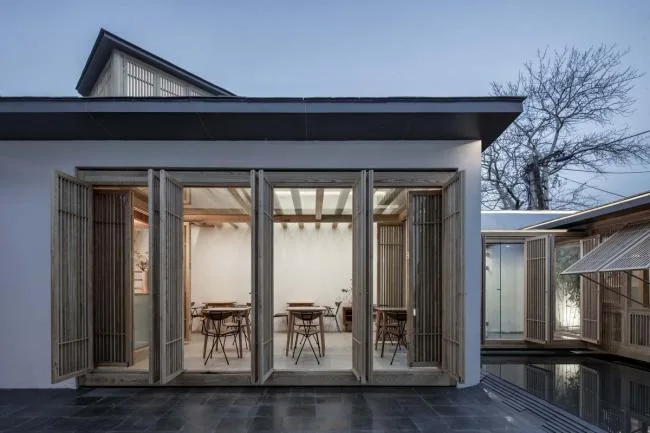
▲ Drawer Hall
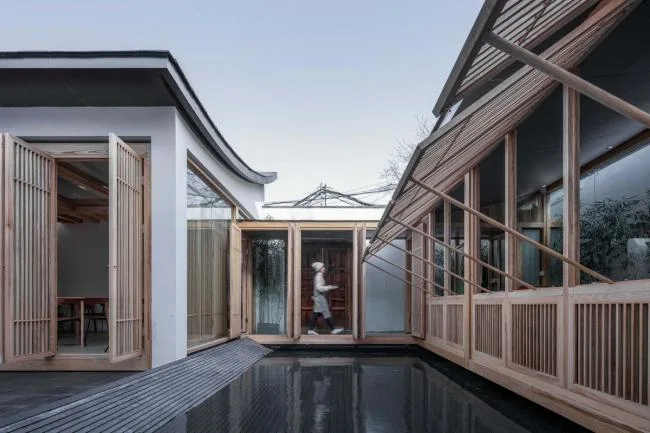
The drawer hall to the west connects to the water corridor to the east via the entrance corridor bridge.
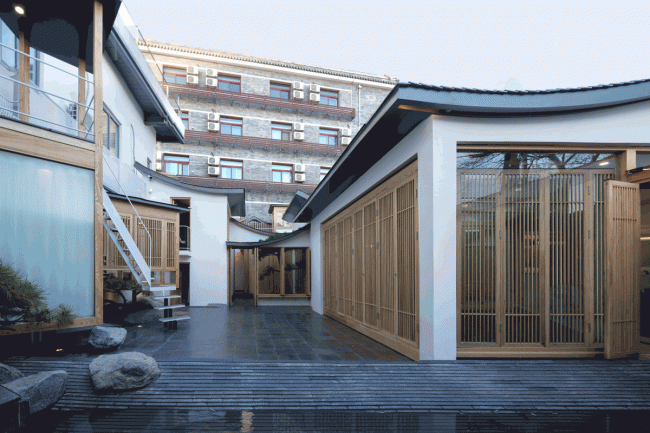
▲ Animated GIF showing the drawer hall box being pulled out, viewed from the water corridor
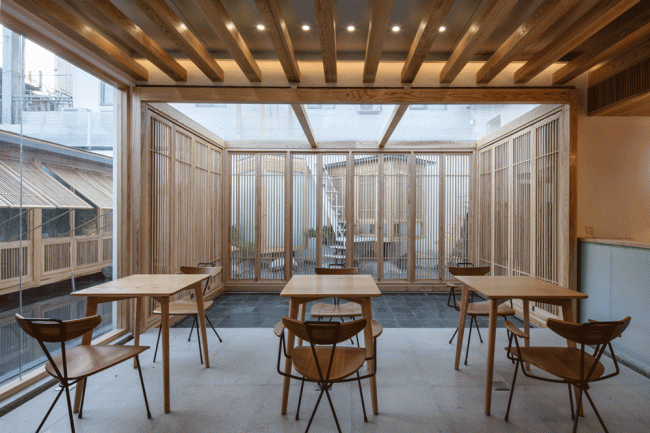
▲ Interior view of the drawer box pulling out (animated GIF)
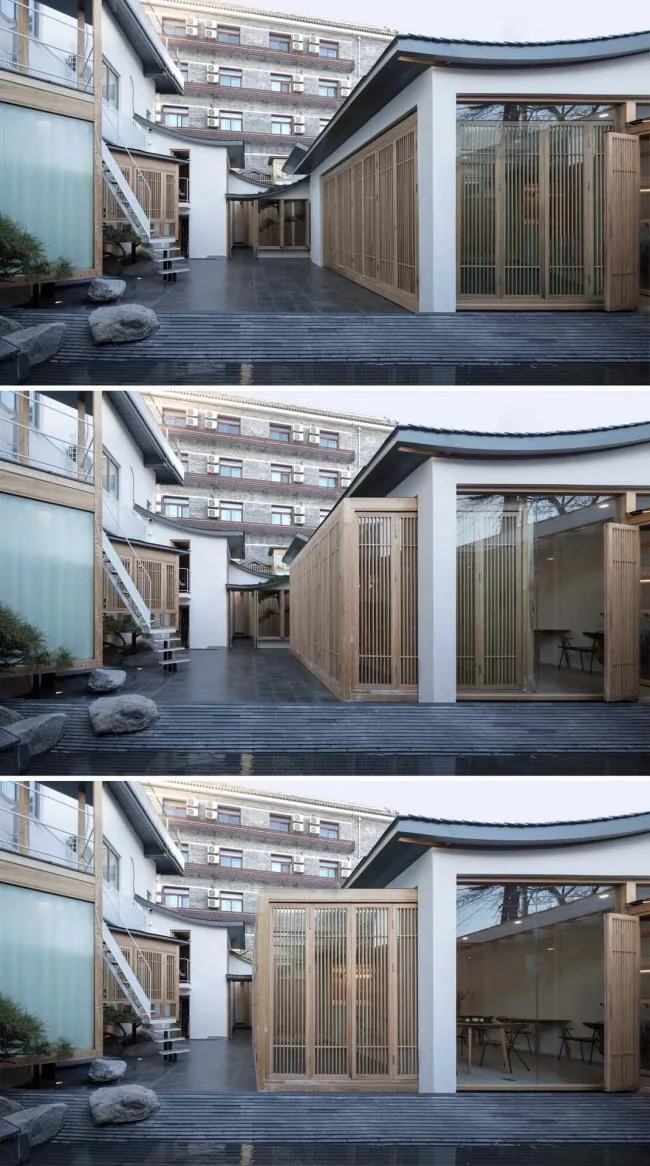
▲ Diagram analyzing the east facade and box extraction of the drawer hall
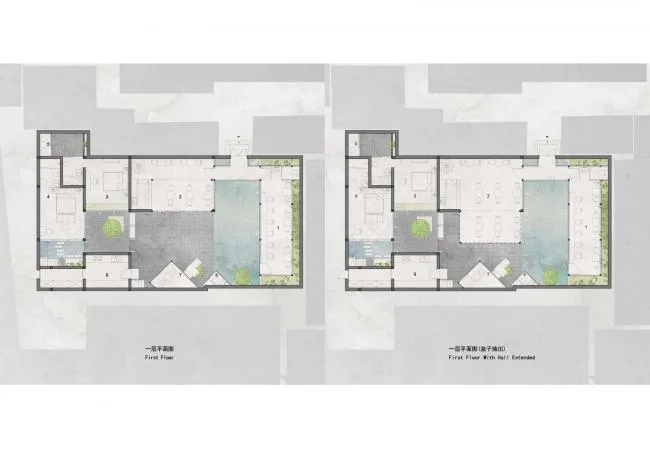
▲ Comparison diagram of drawer hall extraction plans
Next, Taishi Taishi is a tea room located on the second floor of Xiyuan, primarily for the owner’s private use. Access is via stepping stones and stairs along the south wall. Upon entering, guests are greeted by the green pine branches and rolling waves outside.
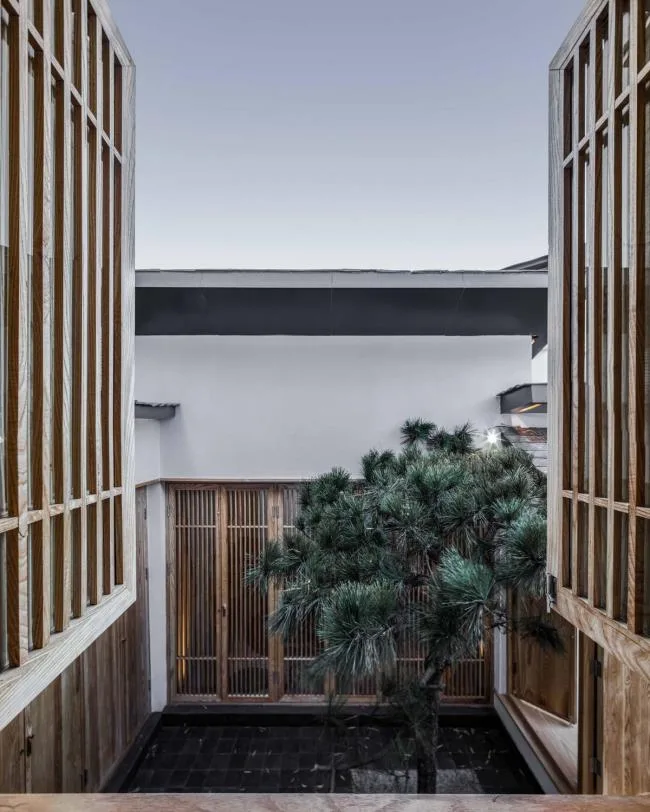
▲ View of landscape outside the tea room window
The Songyuan Guest Room, one of Xiyuan’s main buildings, is named after a crooked-neck pine planted in the private courtyard at Haitang window. Its independent courtyard in the northwest corner continues the “wave-like” flooring motif, extending the wave theme.
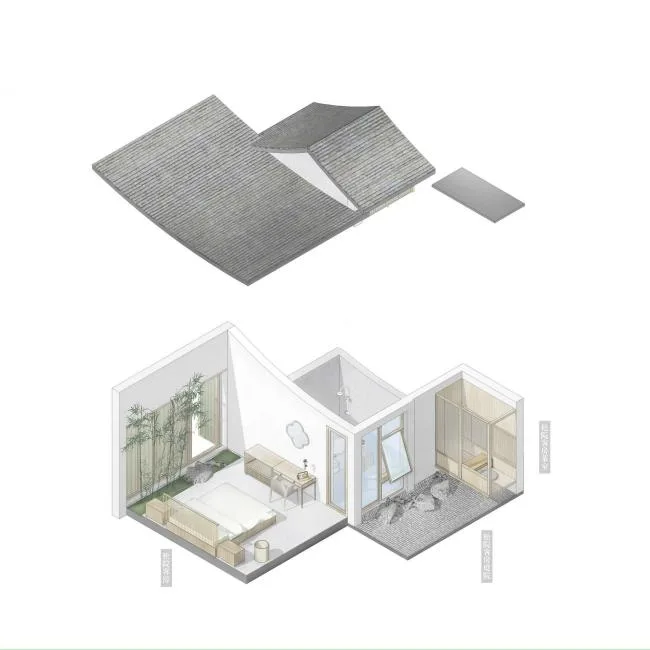
▲ Axonometric diagram – Songyuan Guest Room
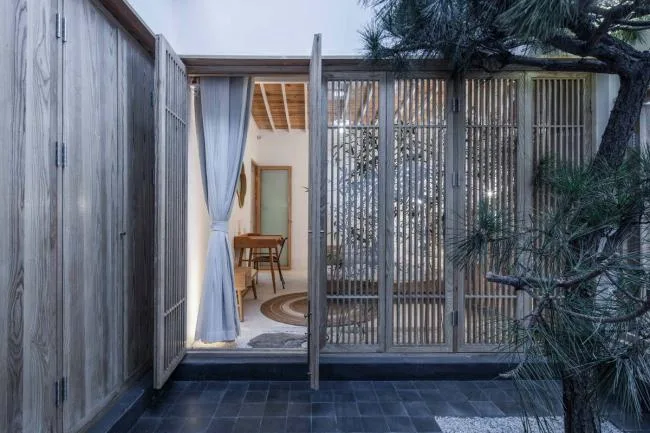
▲ West Garden courtyard view of the Pine Garden Room
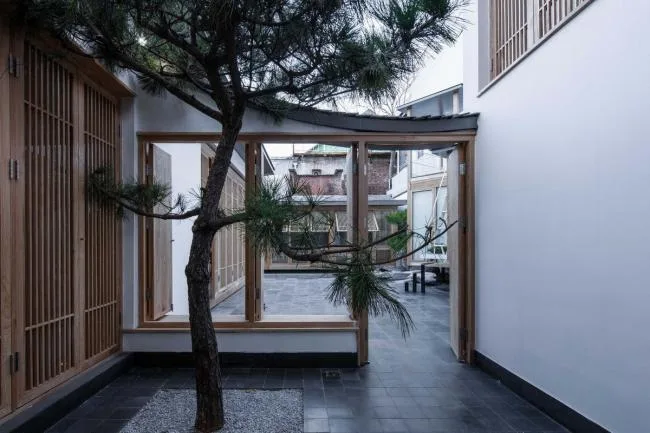
▲ View from west to east inside the Songyuan Guest Room
Fifth, the Shuiyuan Guest Room lies west of Songyuan. To its south is a shallow pond courtyard. Hanging stairs on the courtyard’s west wall lead to the second-floor tea room, Yunfang, which accesses the guest rooms. The south side features three sets of translucent grille door panels; the east side, facing West Garden courtyard, has three sets of solid wood door panels, creating a contrast between transparency and solidity. When the east wall’s door is opened, the view extends through West Garden to the water corridor.
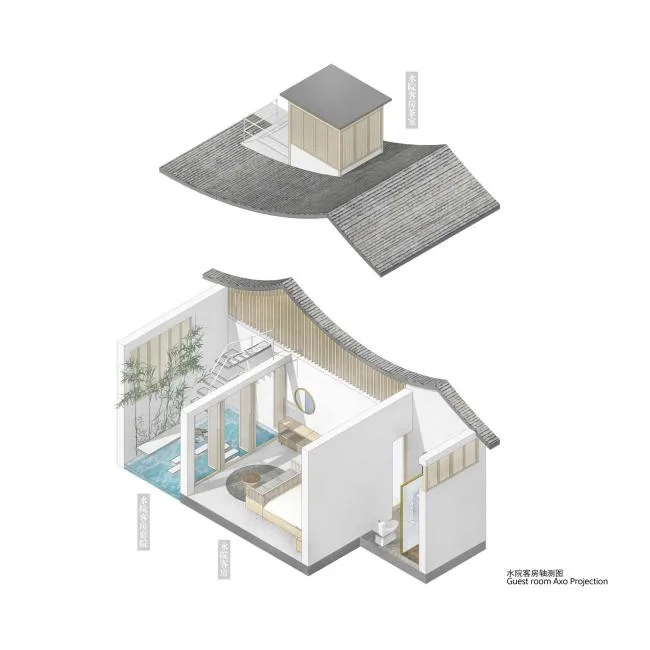
▲ Axonometric diagram – Shuiyuan Guest Room
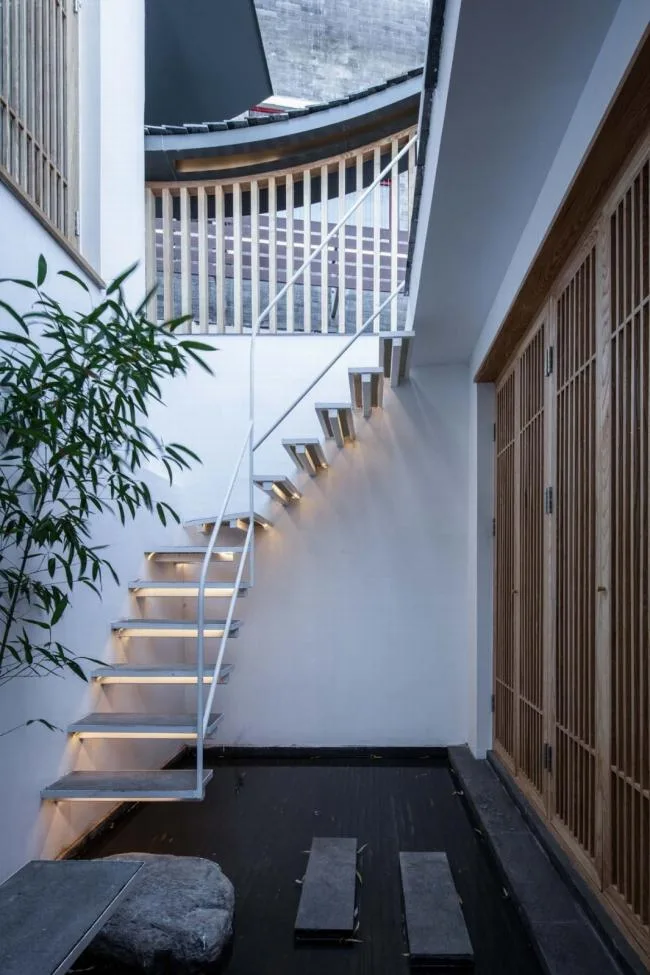
▲ Water Courtyard and Guest Rooms
Pavilions Floating on the Waves
Inspired by the poem “Kites and fish outside the window are lively, the classic bedside combination,” Xiaolively is a two-story pavilion. The first floor serves as a bathroom, while the second floor is an observation deck. Suspended from the south wall, it extends partly over the water and partly beyond the courtyard wall, making it the tallest eastern building. From inside, one can observe pine stones and the spring water flowing over rocks.
Next, Shisongwu is a dock where boats rest on the waves. Also suspended from the south wall, a half-person-tall pine grows beneath the dock. Climbing steps on this pine leads inside. Through the pavilion’s glass floor, visitors can see rocks and green pines beneath the water’s surface.
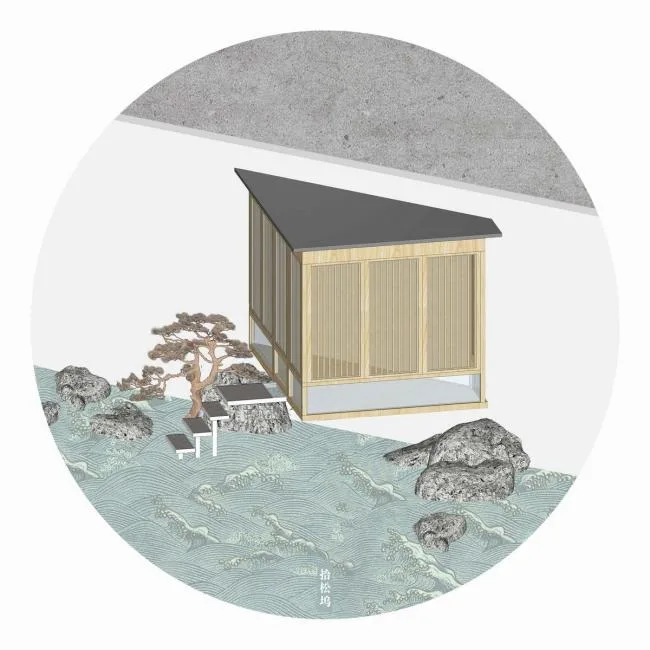
▲ Shisongwu
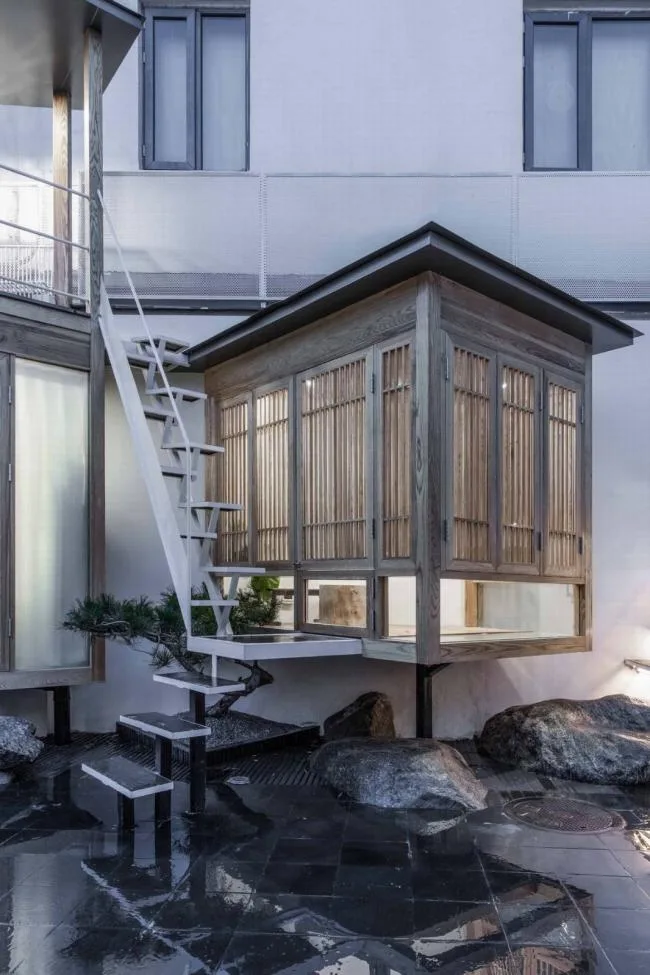
▲ After rain, rocks emerge from Shisongwu, surrounded by lush pine branches
Haitang Jian, located in the northwest corner, serves as the tea room for Songyuan’s guest rooms. It hangs in the courtyard corner like a stream flowing through mountains. Facing the east wall, a crabapple window opens with a pine branch extending through, known as Crabapple Stream.
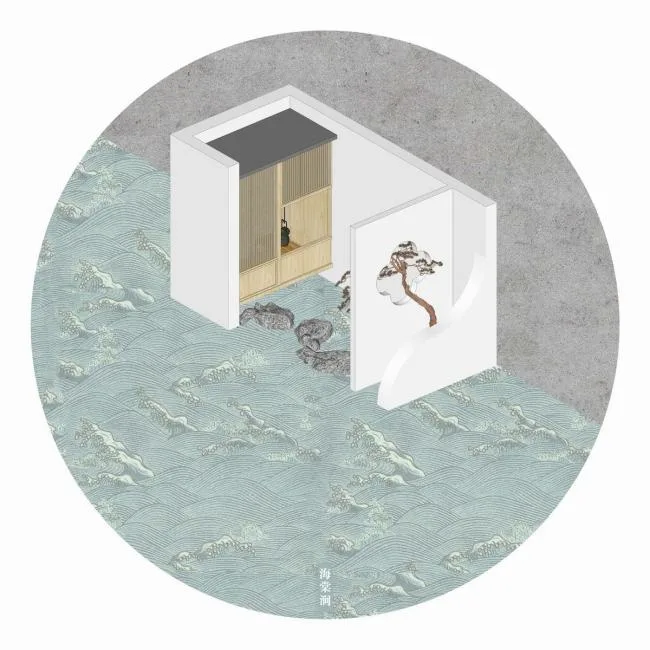
▲ Haitang Stream
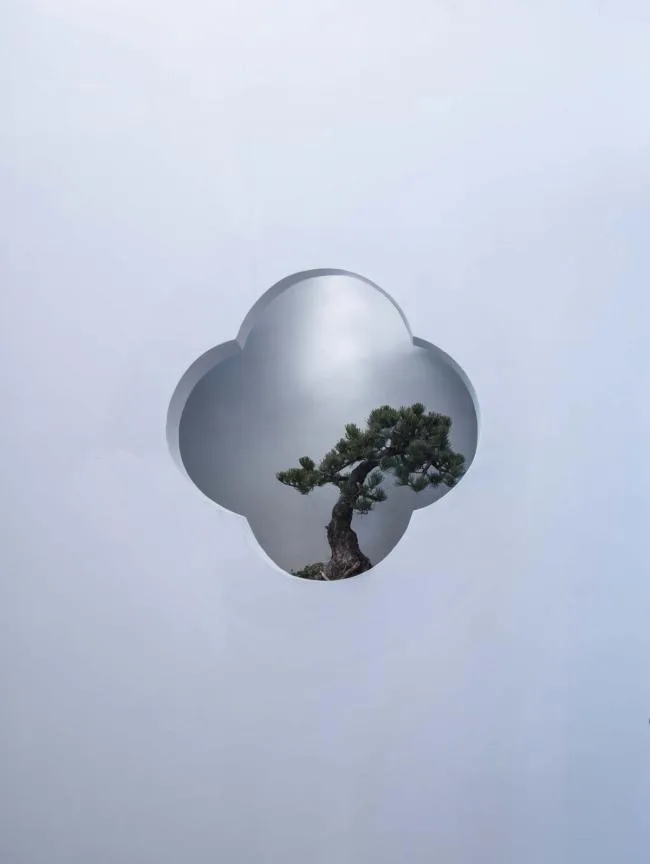
Crabapple tree with a leaky window in Songyuan’s courtyard
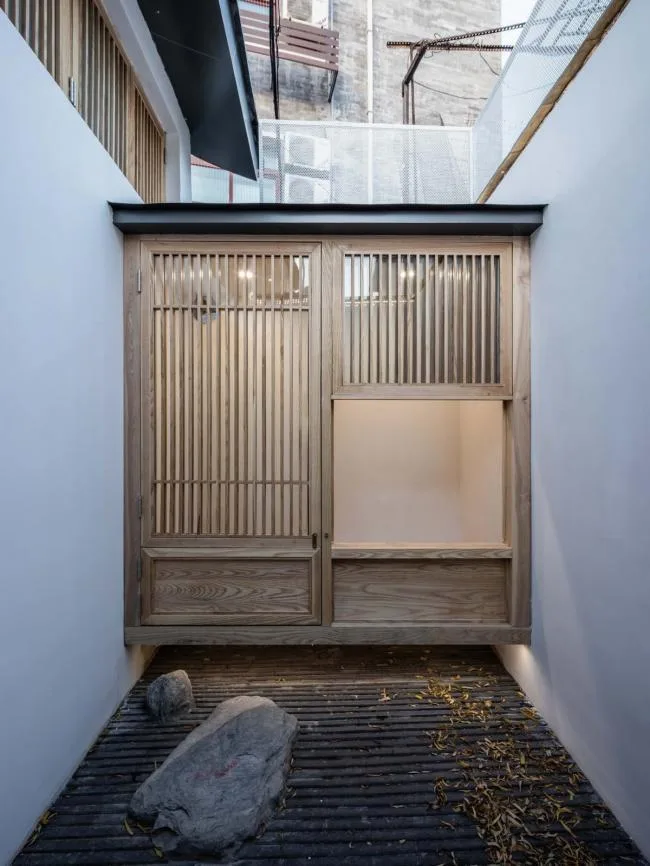
▲ View of Haitang Stream from Songyuan’s west courtyard
Chuchun Boat is perched on the drawer hall’s roof above the waves. A Chinese toon tree in the southeast courtyard corner orients the pavilion 45 degrees to complement the scenery. Within the vast waves, picking Chinese toon indoors is a poetic moment.
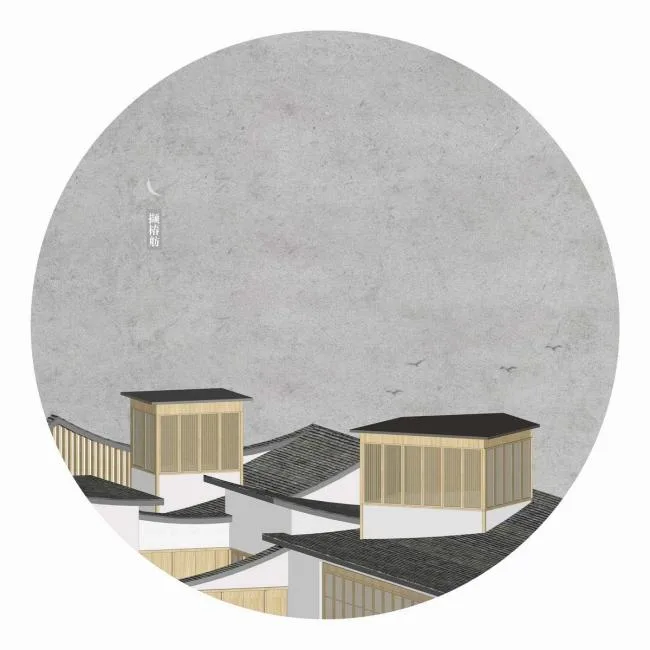
▲ Picking Spring Boat
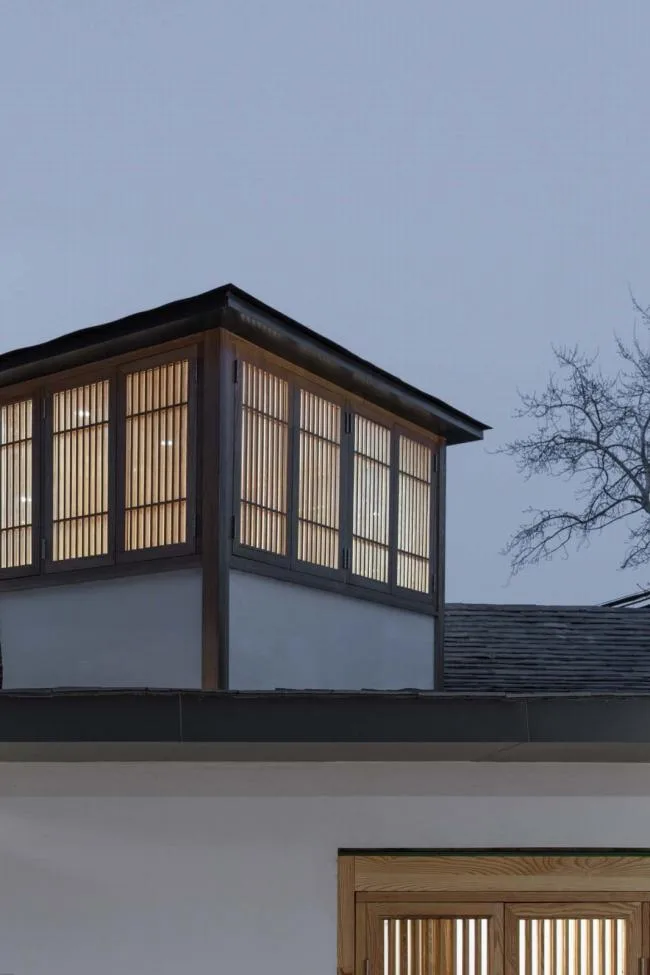
▲ Partial interior scene of Picking Chunfang
Finally, Ti Yun Fang sits on the westernmost roof and serves as a tea room for the water courtyard guest rooms. It is the tallest building among the wave group. Sitting here, climbing the rope stairs, one can imagine catching the moon from clouds while watching the rolling waves and relaxing.
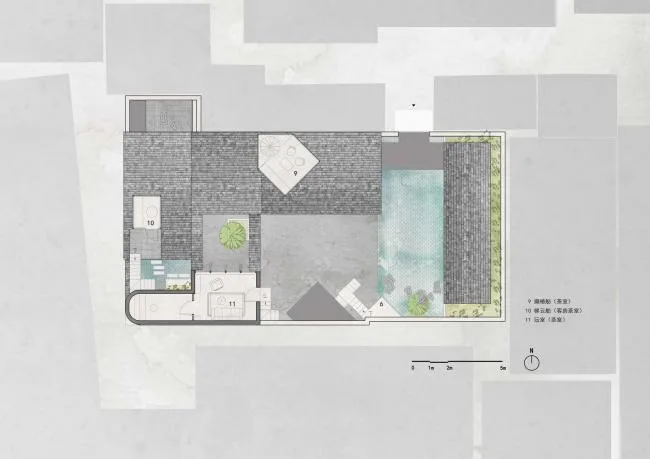
▲ Second Floor Plan
Conclusion
Space abstraction remains a timeless challenge in architectural design. Through BIM, I explored spatial intentions via abstraction, combining my understanding of painted space. Whether abstract or concrete, design methods serve to capture a unique atmosphere and spatial quality. The design must ultimately define the space’s character through a fundamental understanding of the site.
From the visual concept Layered Forest and Waves, Long Pavilion Lying on the Waves to its practical architectural realization, imagery repeatedly guides every stage—from form and material to construction. The building strives to faithfully recreate the scene depicted in the painting, turning the imagined into reality.
This journey from painting to architecture constructs picturesque spaces based on simulacra, marking a novel approach to fabricating evocative environments.
Project Drawings
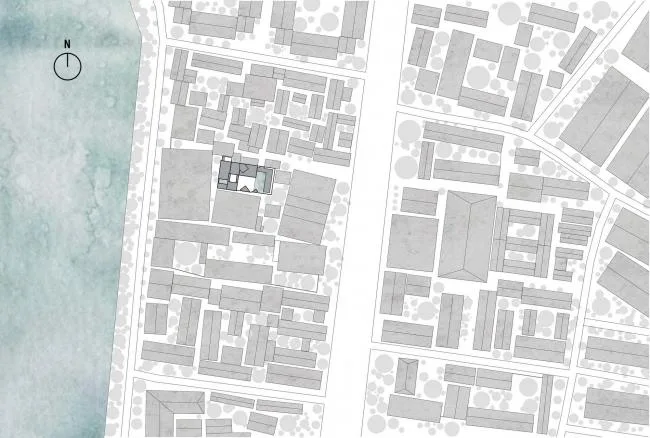
▲ General Layout Plan
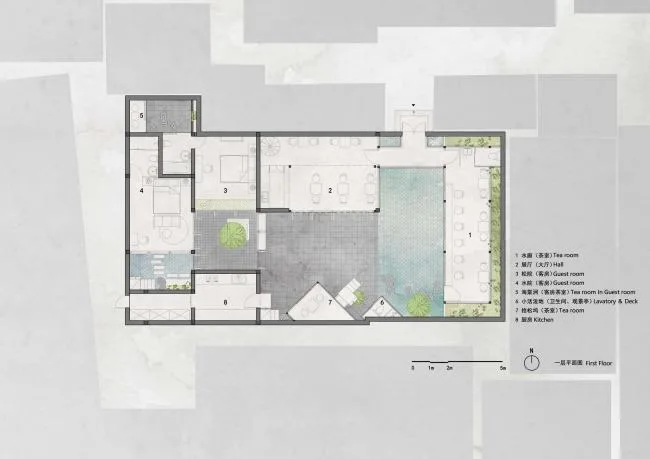
▲ First Floor Plan
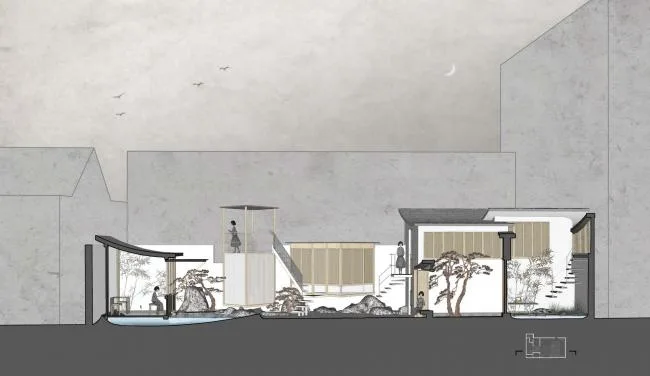
▲ Sectional Perspective View
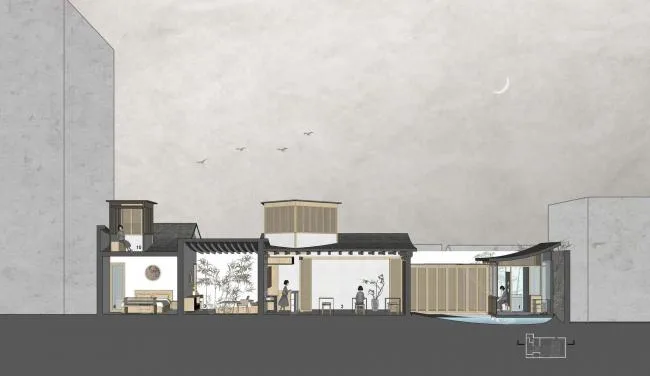
▲ Sectional Perspective View
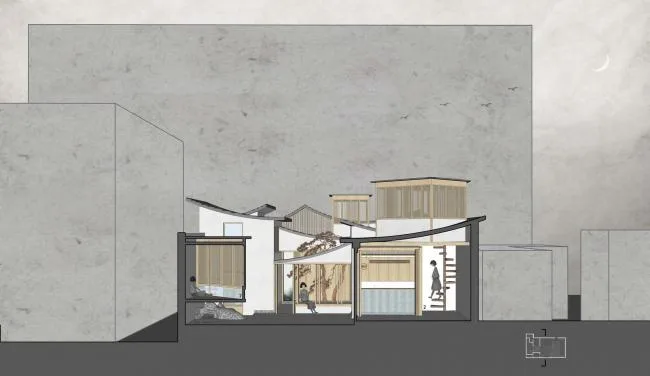
▲ Sectional Perspective View
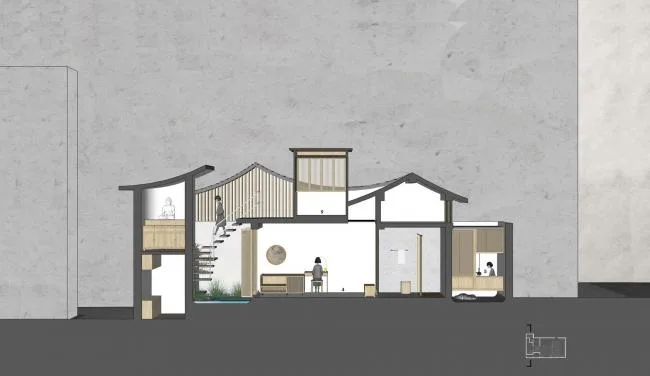
▲ Sectional Perspective View
Project Information
Designer: Jiejie Studio
Address: 61 Deshengmen Inner Street, Xicheng District, Beijing, China
Category: Residential Buildings
Architectural Design: Ming Guanyu
Building Area: 140.0 square meters
Project Year: 2018
Photography: Qiu Ripei
Interior Design: Ming Guanyu, Qi Ming
Proposal Review: Wan Lu, Wang Lei
Graphic Visual Design: Ming Guanyu, Shi Wei
Construction Team: Chen Fengli Team
Owner: Beijing Yongniang Culture Co., Ltd.












Must log in before commenting!
Sign Up