
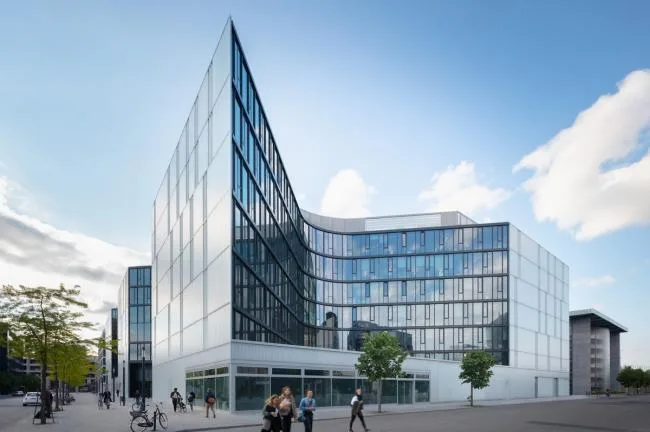
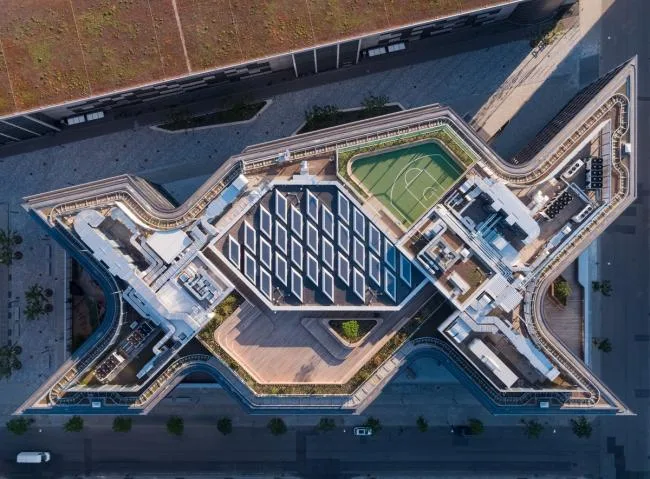
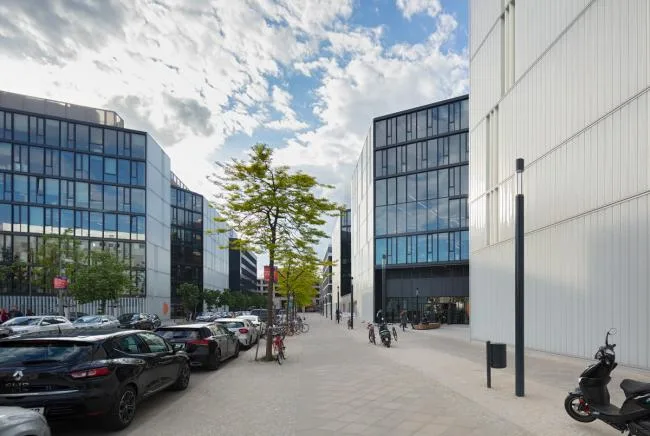
The new Zalando headquarters consists of two buildings located at the heart of the company’s campus in Berlin’s Friedrichshain district, near the Mercedes Benz Arena and the East End Gallery. This seven-story structure offers a total of 43,000 square meters of office space. Rather than forming a closed block, the building embraces an open and transparent design, making a bold statement that reflects the company’s identity.
The glass façade, shaped like square brackets, envelops the meticulously crafted building volume, serving as the foundation of the architectural design. By rotating the layout diagonally in relation to the urban development plan, the design reinterprets the traditional Berlin neighborhood structure. This approach facilitates an exploration of urban-oriented architectural methods.
(BIM)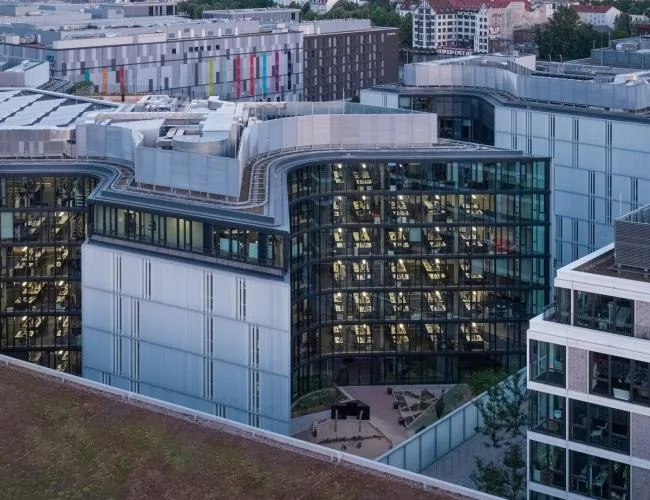
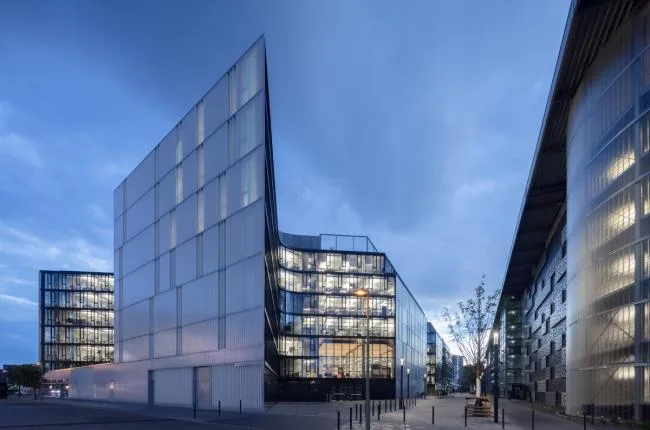
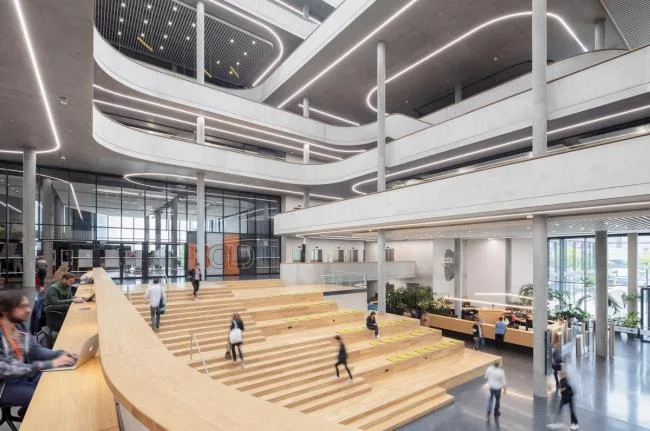
The internal courtyard has been shifted to the edge of the site, creating a seamless transition between office spaces and public areas. This design leverages transparent and semi-transparent facades to offer expansive views both inside and outside the building. At the core of the main building lies an atrium that extends openness vertically, flooding public spaces below with natural light.
Adjacent to the central hall is a grand staircase featuring integrated seating and rest areas that can also serve as event spaces. The atrium, in conjunction with a nearby auditorium, forms a multi-floor spatial continuum, enhancing user flexibility. The conference and training zones are conveniently located next to the coffee shop and staff canteen, seamlessly connecting with the overall complex.
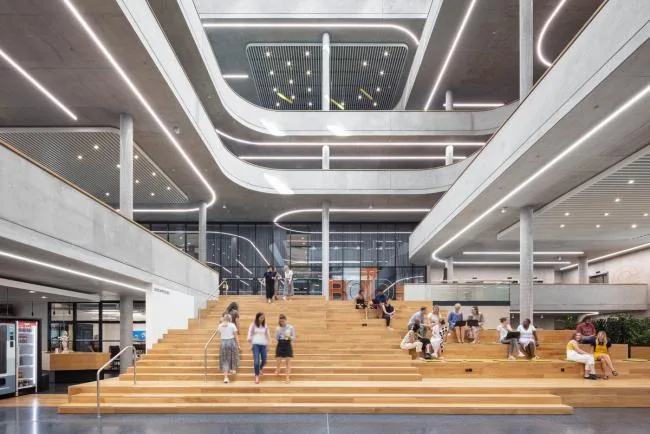
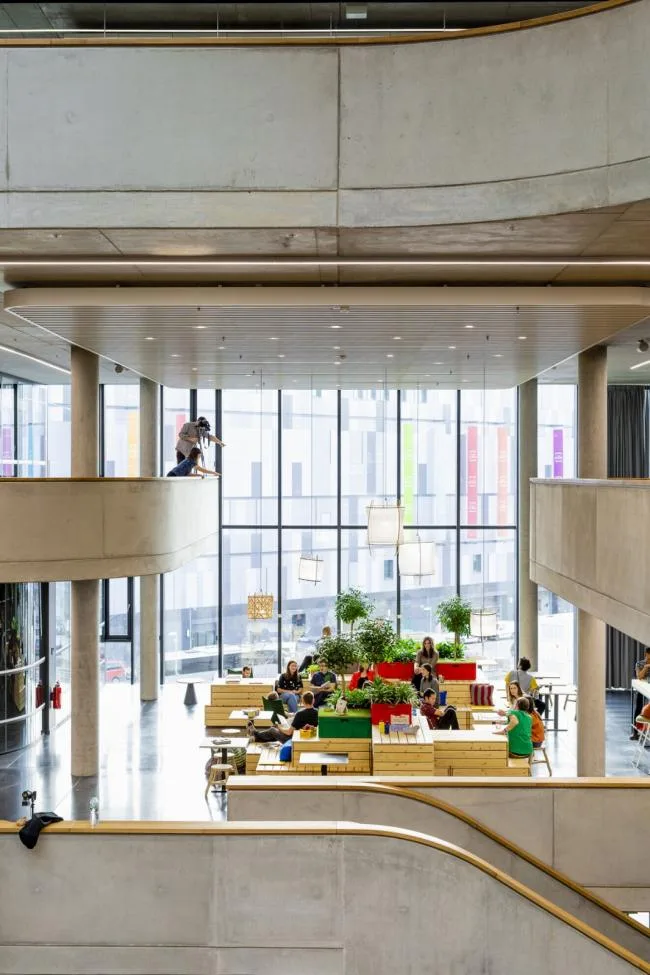
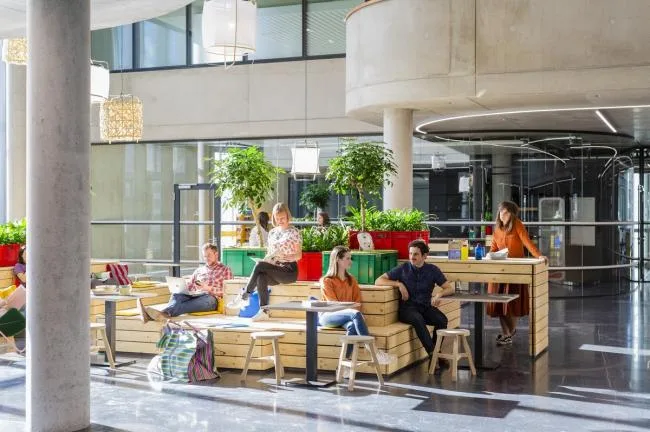
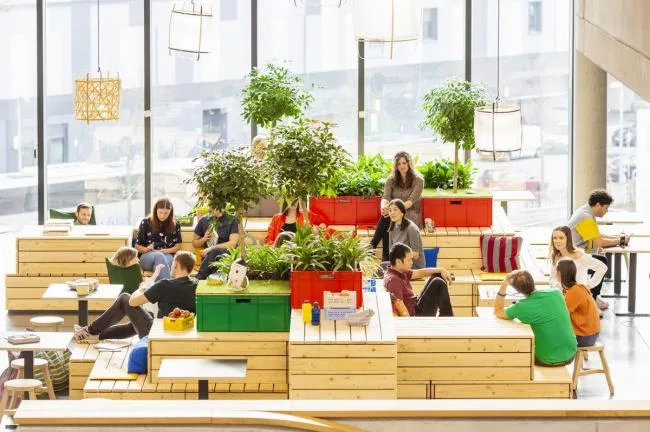
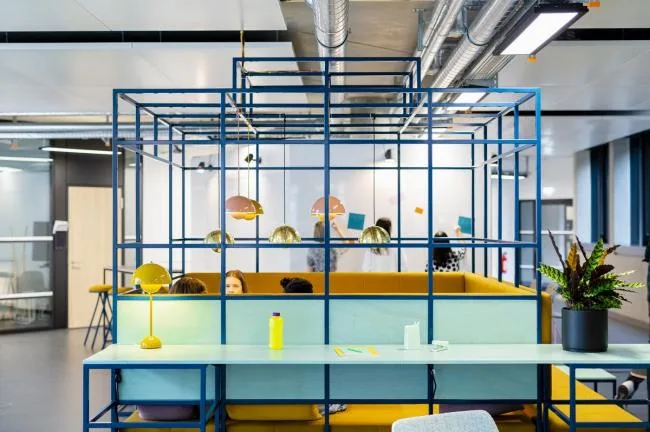
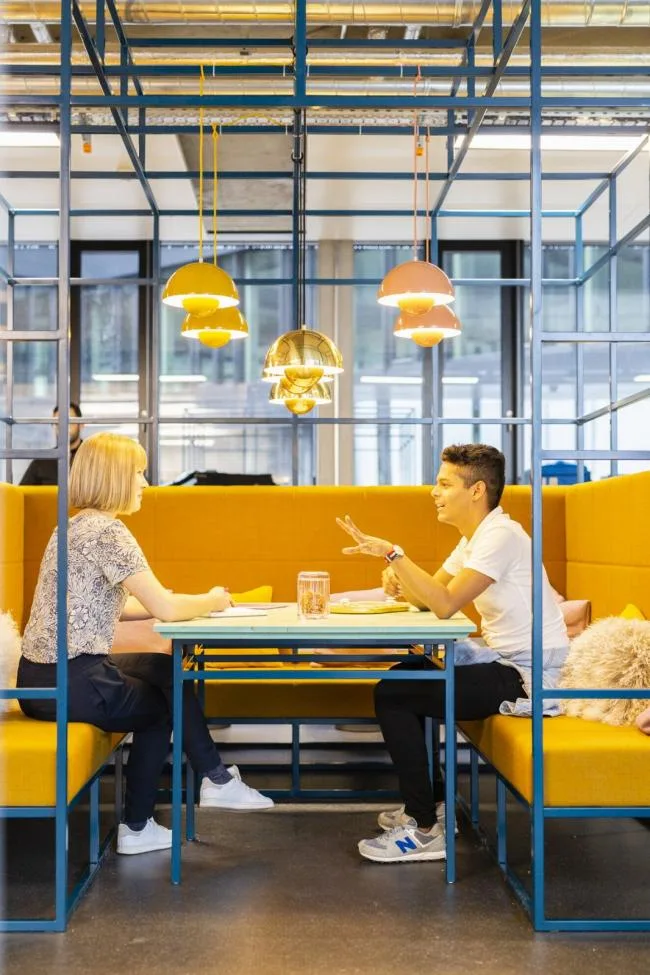
The building draws a deliberate analogy between the digital network society and a thriving marketplace. From kitchen and fitness areas to childcare facilities, occupants have access to everything needed to balance work and life comfortably and enjoyably.
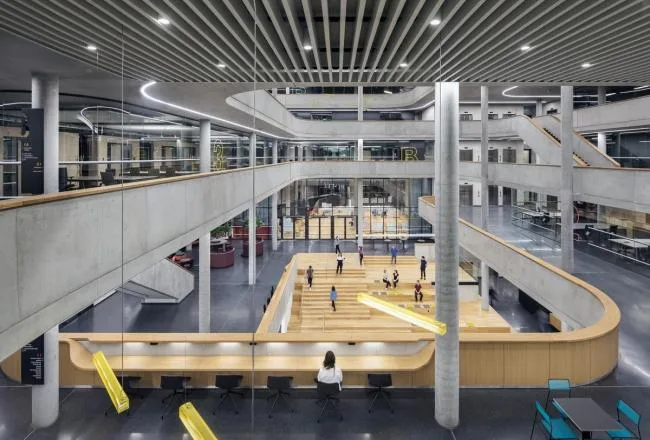
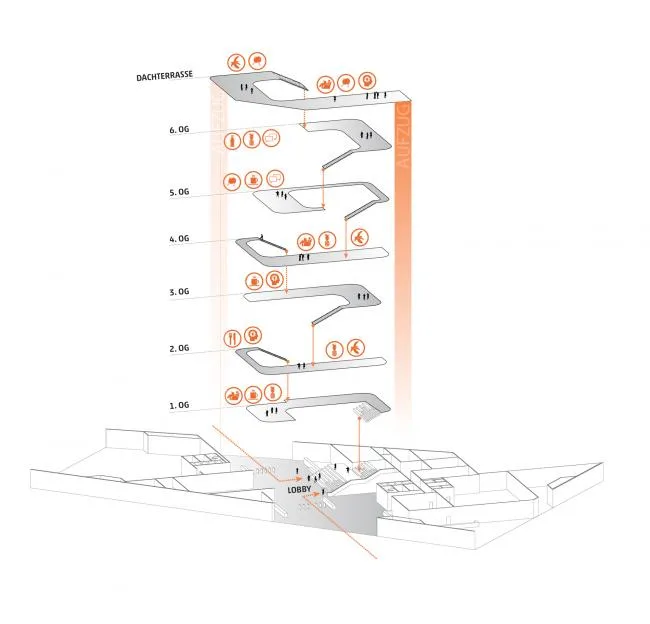
The atrium serves as the building’s central hub, its branching paths winding up through all seven floors like a spiral around a clearly defined core. A pedestrian walkway beginning at the lobby connects the stacked communal spaces across every level, embodying the core interior design principle: this layout fosters horizontal communication while also relying on vertical connections to encourage team collaboration and community spirit.
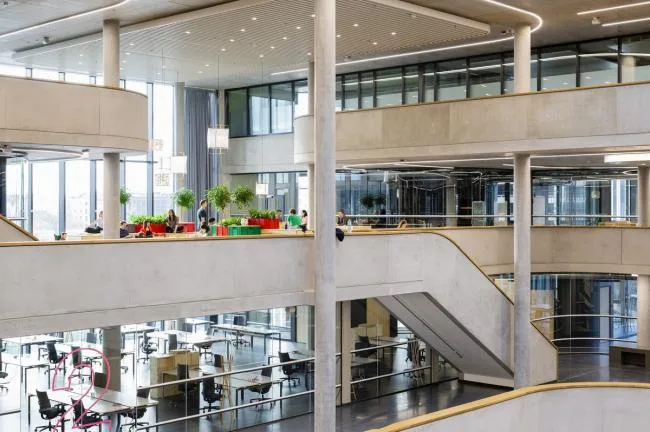
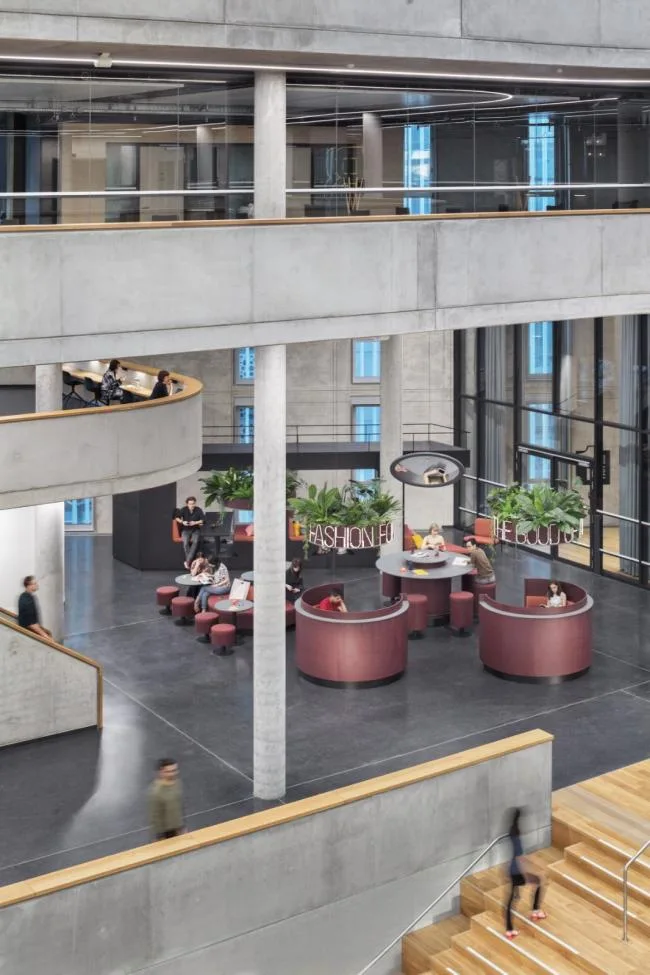
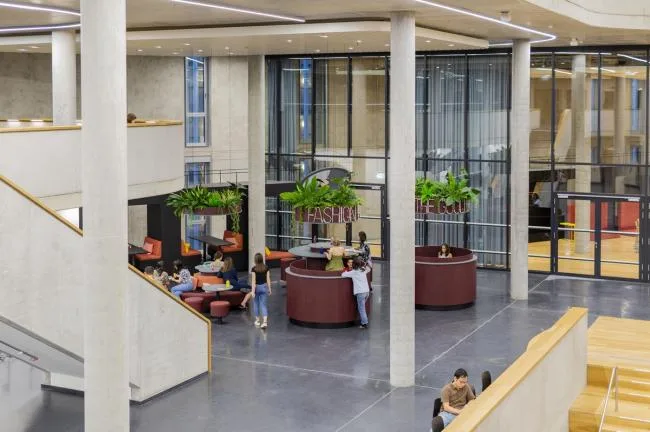
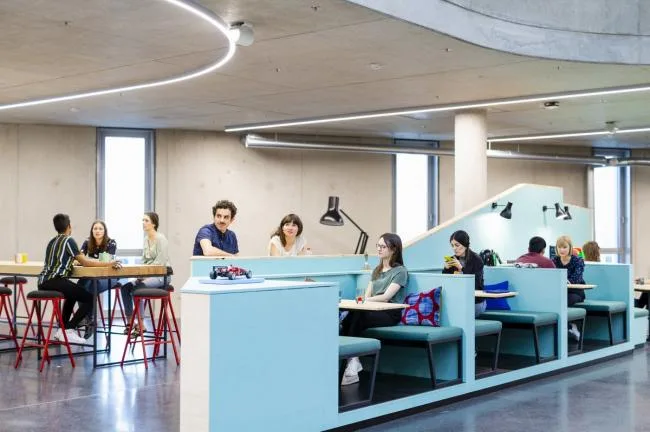
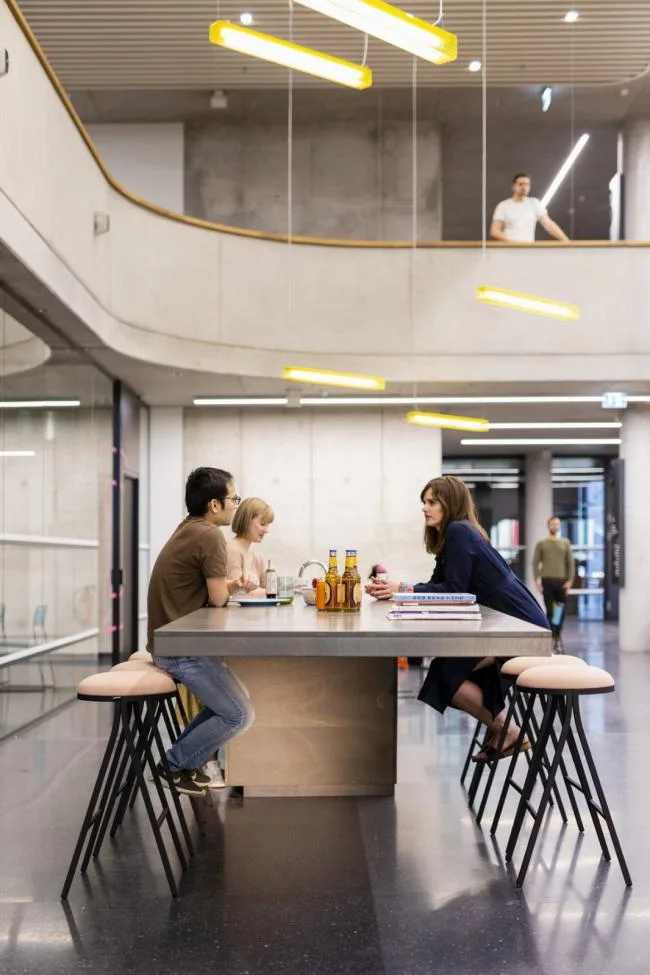
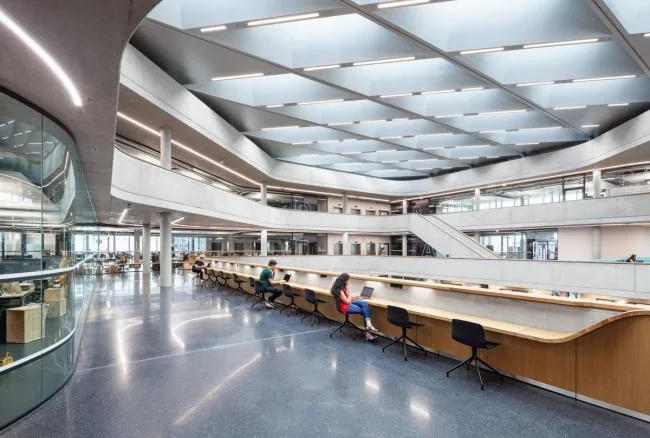
The unique interior layout is achieved through two levels of interconnected spaces surrounding the atrium, generating an unexpected dynamic atmosphere. This irregular distribution creates multiple layers of open spaces alongside more private, secluded areas designed to blend work zones, amplifying the building’s flexible and communicative environment.
Sustainable office spaces provide adaptable communication areas that encourage creativity and collaboration. The upper-level office spaces are deliberately organized to combine centralized, interactive zones that respond to employees’ evolving needs and various work functions.
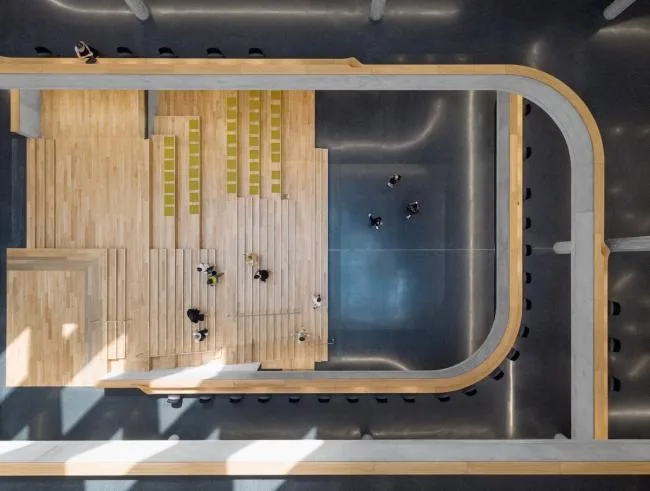
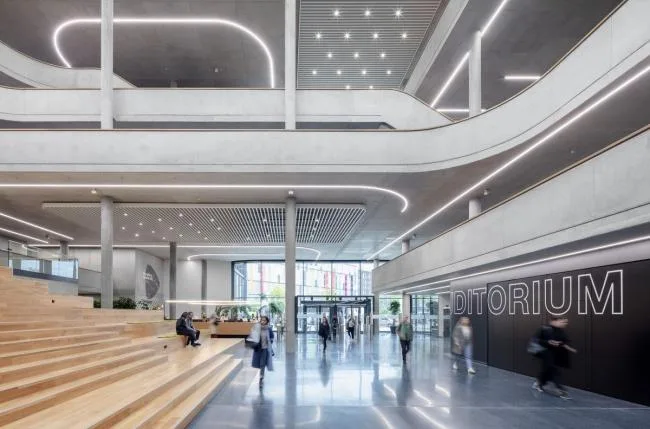
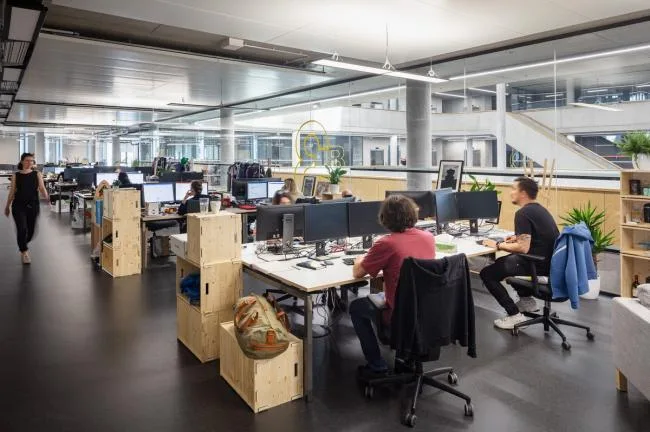
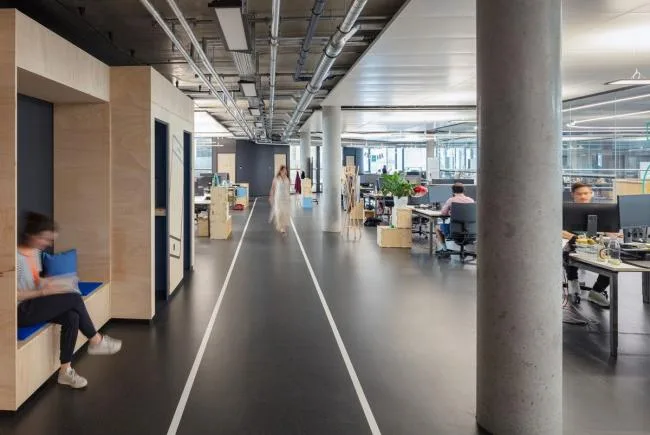
The building’s impressive depth is visually broken down through clever layering of spaces and functions, ranging from the lobby to the rooftop platform. These elements spiral like a double helix around the central atrium.
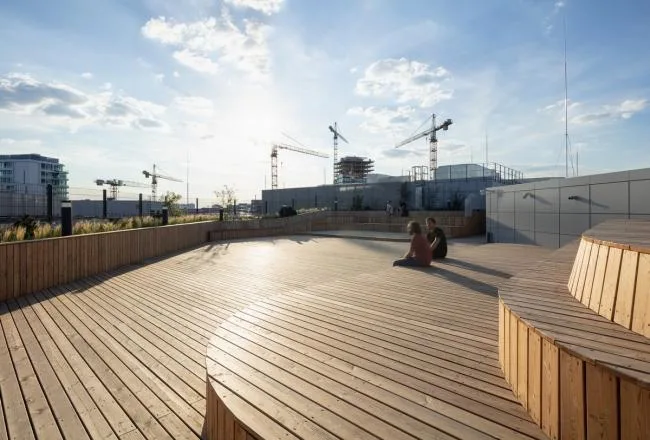
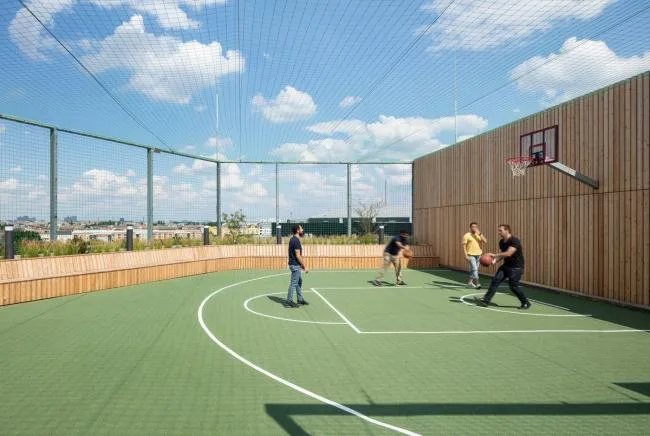
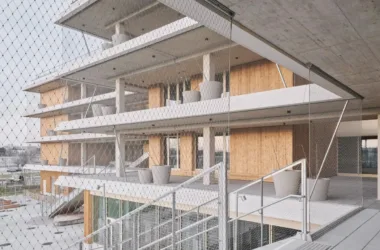
The so-called “living room” hosts various communication spaces meant to encourage social interaction. These include shared seating areas, small kitchens with wooden tables and bar stools, laptop-friendly railings, and panoramic views across the entire campus. Vertical connectivity between floors is enhanced by open staircases, amplifying the spirit of community and collaboration.
Kinzo’s forward-thinking design centers on people, recognizing that the most creative ideas arise from within community groups.
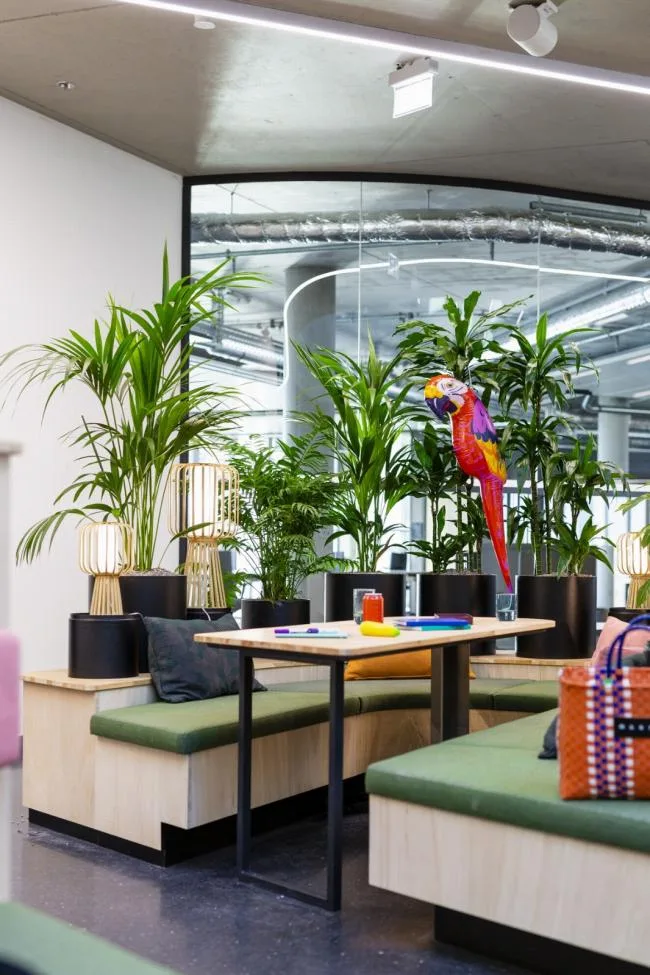
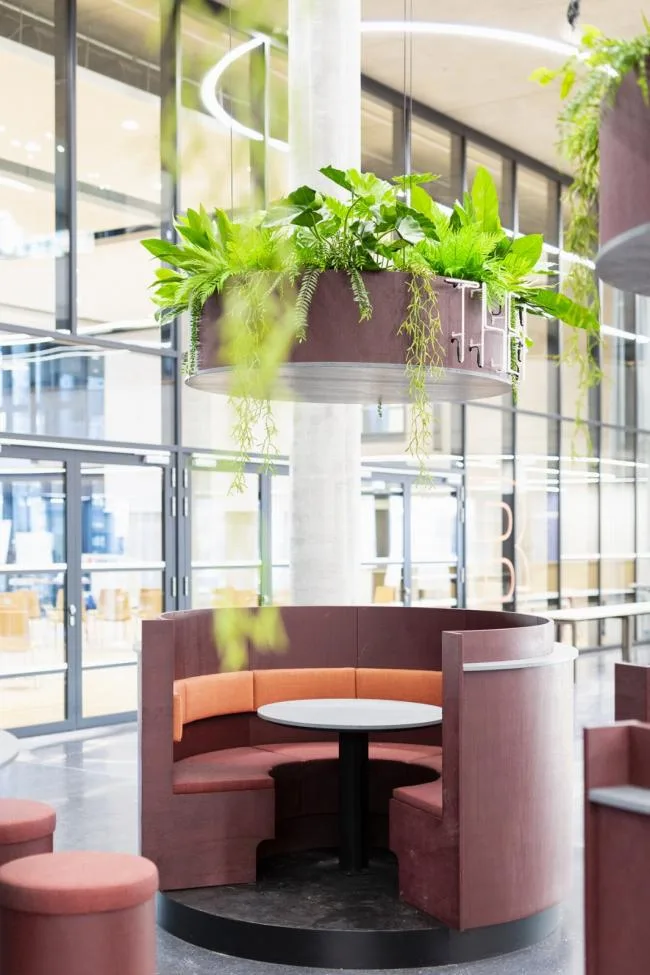
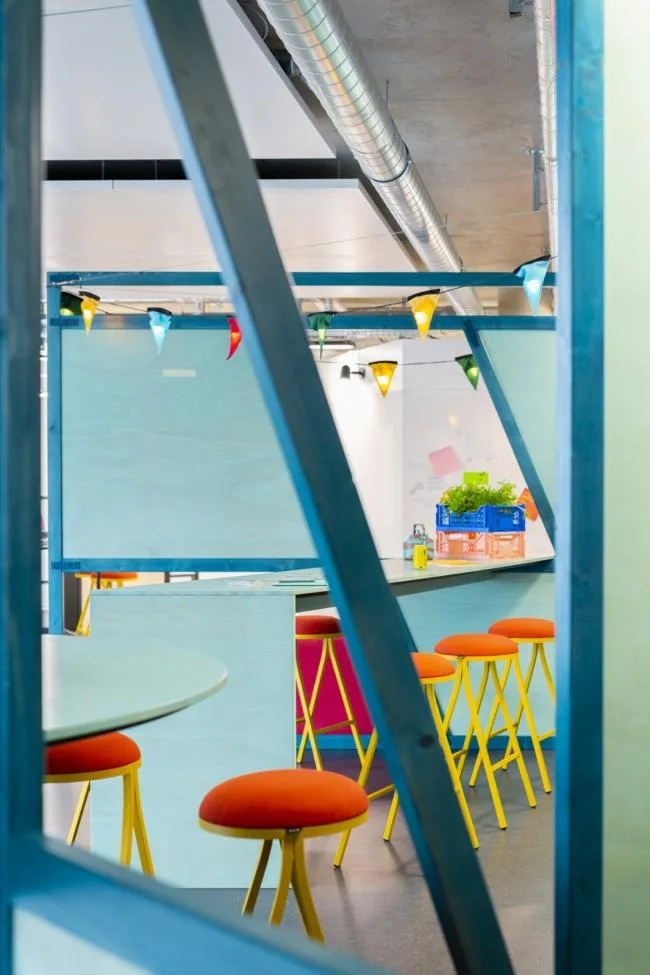
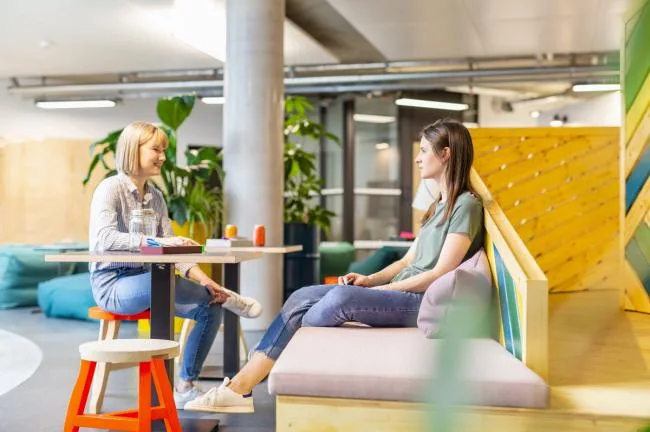
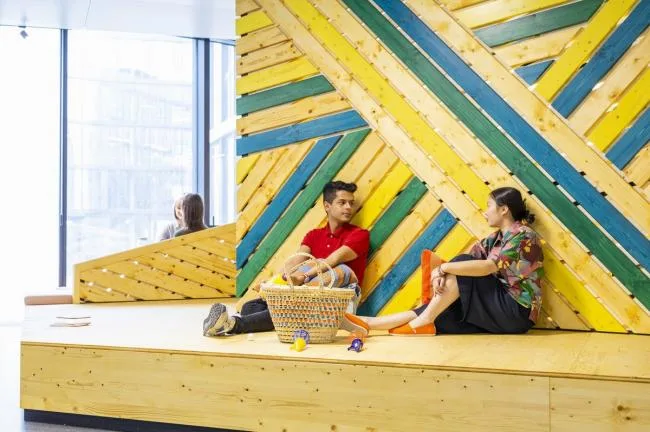
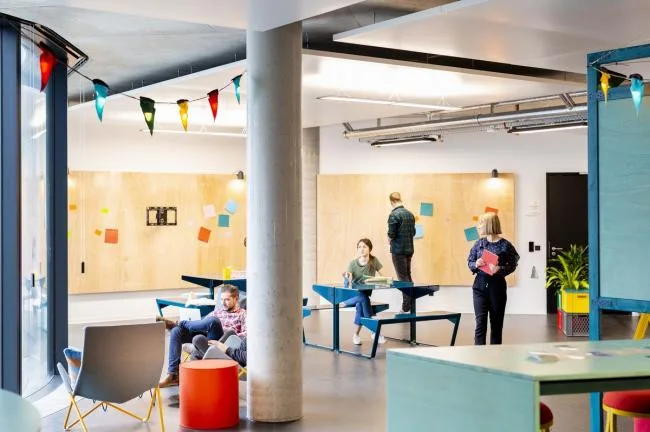
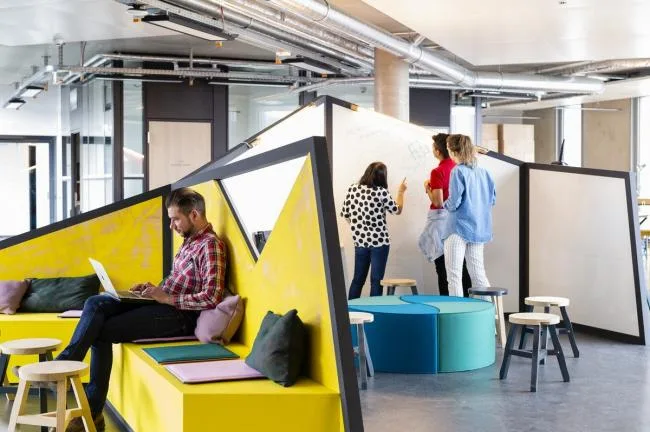
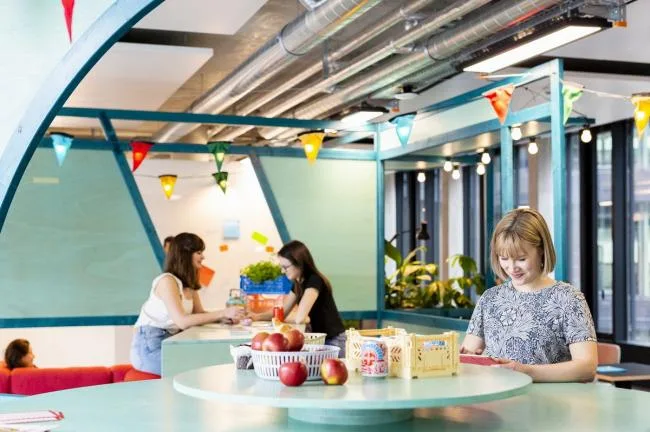
Public spaces are centralized to foster employee interactions and cross-departmental communication. The design promotes communication as a positive force. Transport routes designed like tree-lined avenues encourage social encounters, with resting and gathering spots on both sides of urban boardwalks.
Each floor also includes meeting room pods for spontaneous discussions and planned collaborations. These features evoke Berlin’s subway system, acting as anchors and connectors within the landscape surrounding Zalando’s campus. Streamlined acoustics and lighting design create an intuitive atmosphere, transitioning smoothly from loud to quiet and from public to private zones.
Design Drawings:
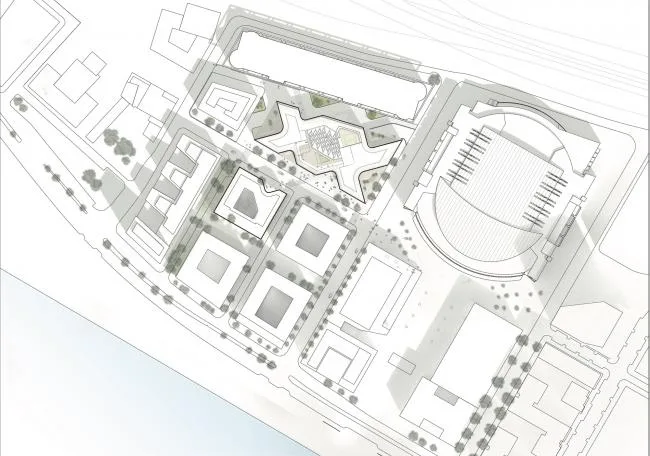
▲ General layout plan
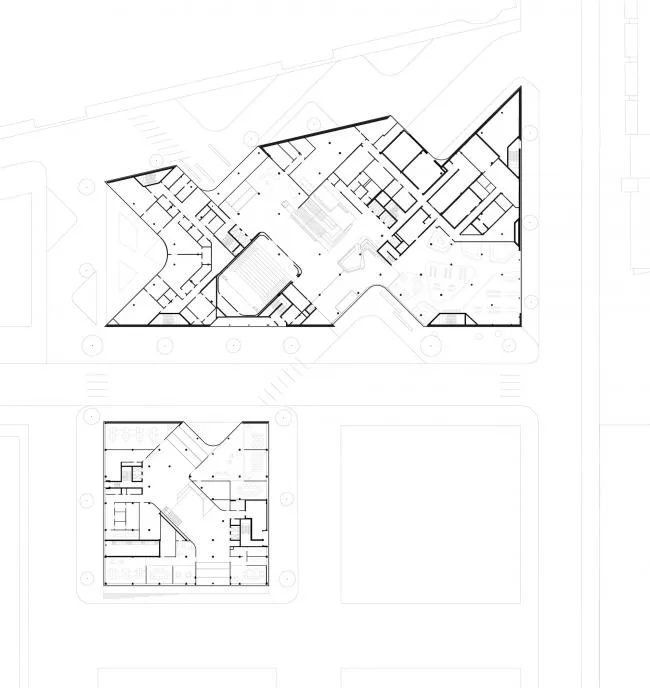
▲ First floor plan
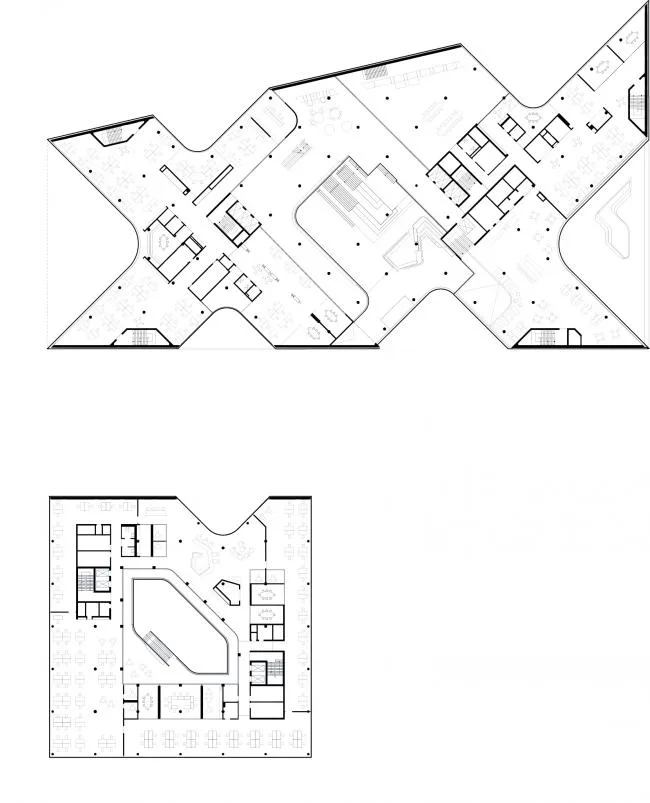
▲ Second floor plan
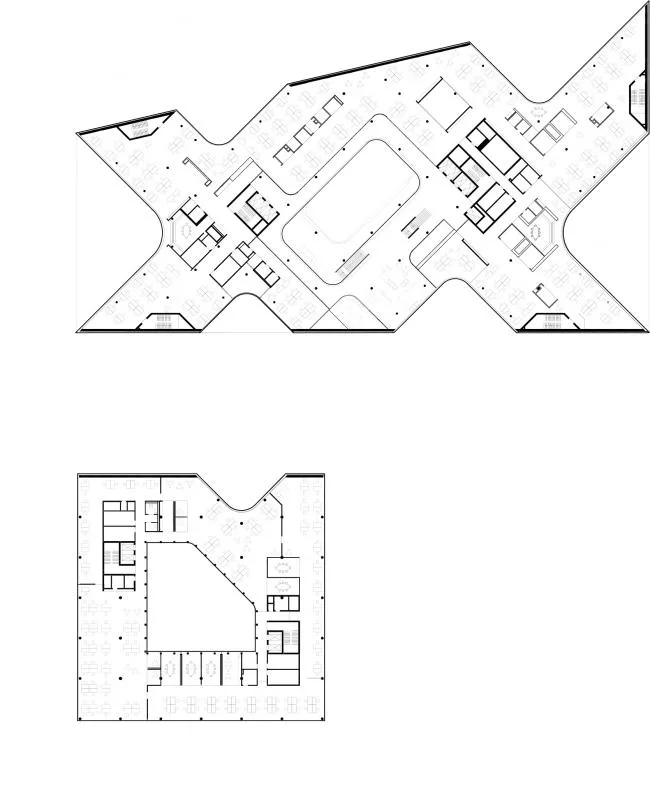
▲ Third floor plan
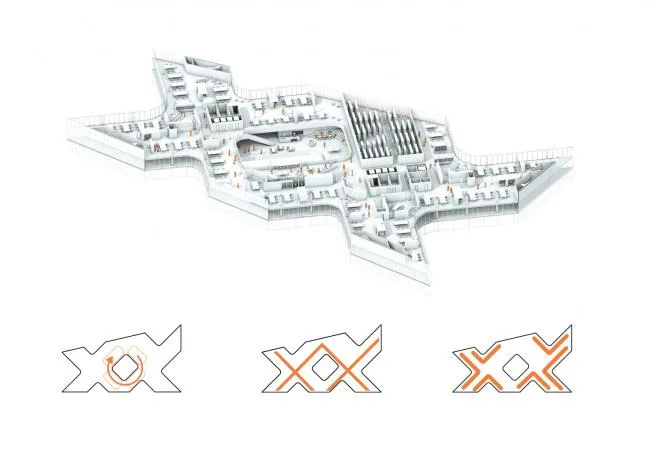
▲ Streamline Analysis Diagram
▲ Functional zoning analysis diagram
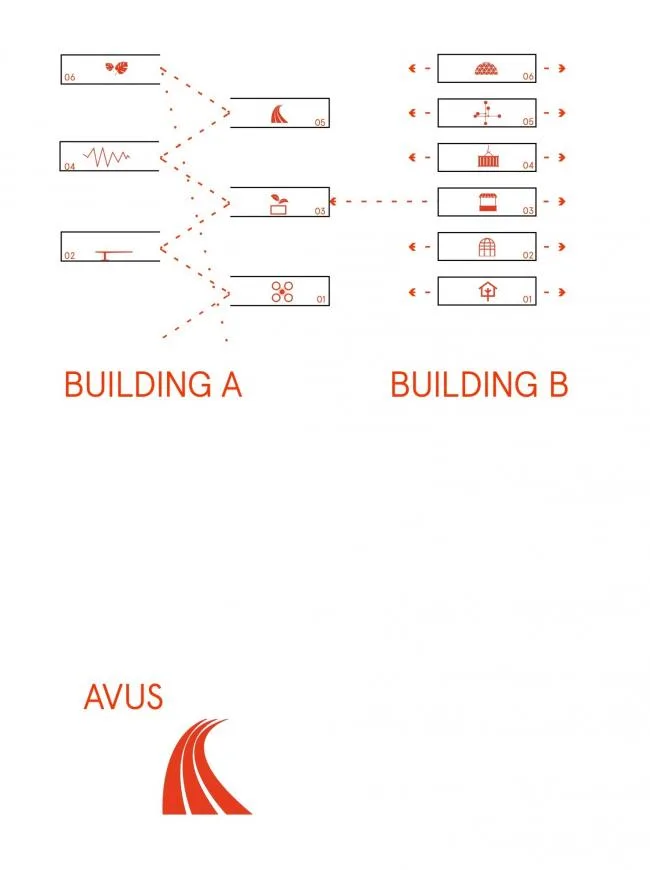
▲ Analysis chart
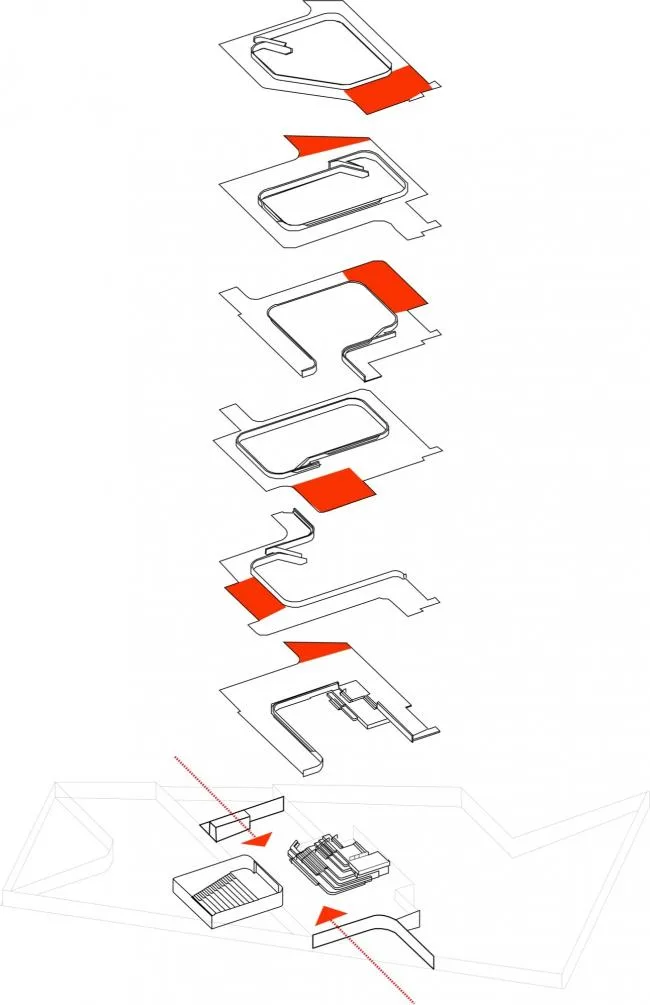
▲ Analysis chart

▲ Analysis chart
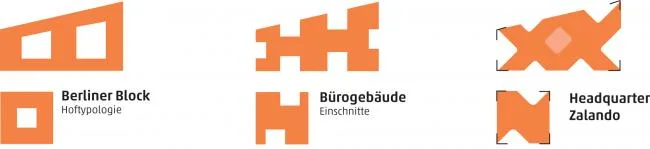
▲ Analysis chart

▲ Analysis chart
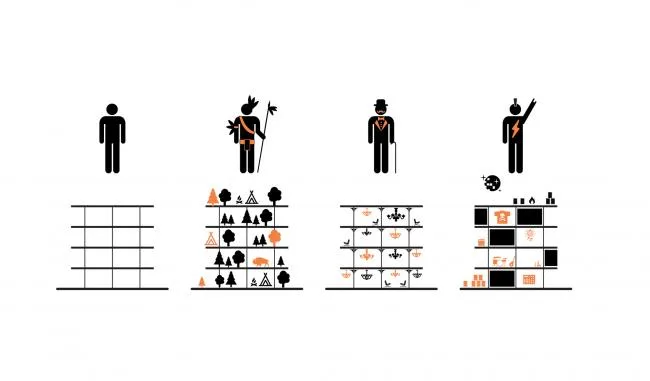
▲ Analysis chart
Project Information:
Architectural Firm: HENN, Kinzo
Location: Berlin, Germany
Category: Public Institution Facilities
Building Area: 59,000 m²
Project Year: 2019
Photographers: HGEsch Photography, Werner Hutchmacher, Sebastian Dörken
Owner: Zalando SE
Engineer: BuroHappold Engineering
Landscape Architect: Atelier Loidl
Fire Consultant: hhpberlin
Physics Consultant: Müller BBM
Lighting Design: Bartenbach LichtLabor












Must log in before commenting!
Sign Up