
Inheritance
In 1988, the reorganized Chinese Academy moved from the South Annex Building of the Ministry of Construction to the 19th Academy on Chegongzhuang Street.
Over the following two decades, the Chinese Academy experienced continuous renovation and expansion of its campus office buildings. The second office building was completed in 2000, the third in 2002, and the first building was renovated with a refreshed exterior facade in 2010.
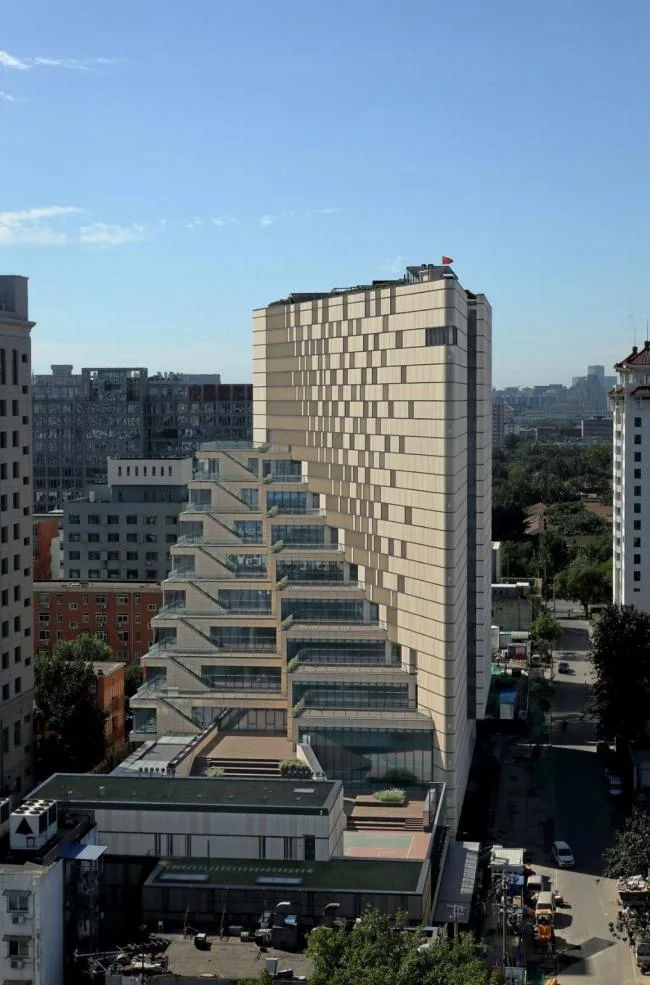
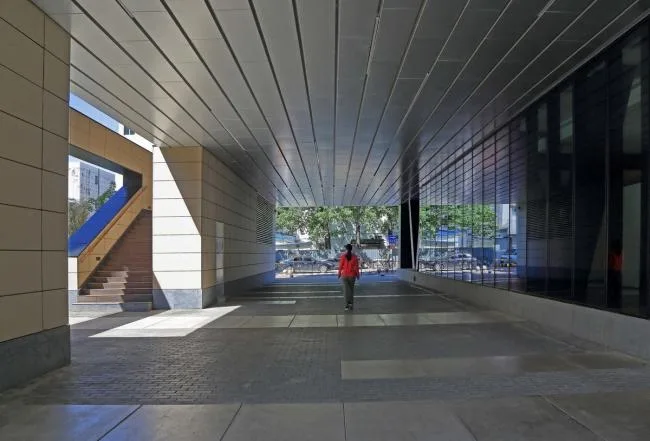
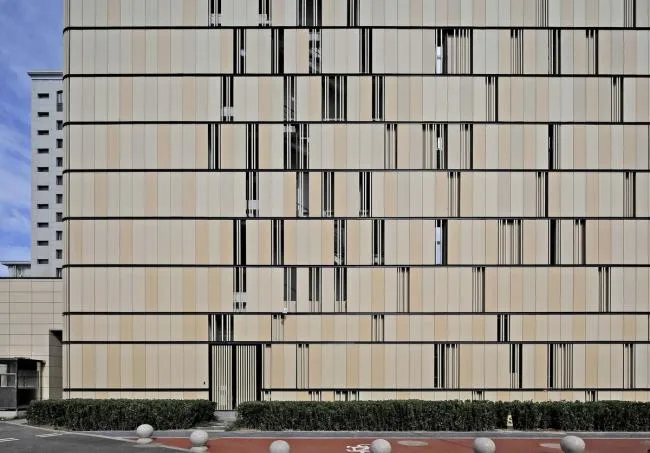
In 2011, the Institute Group initiated the construction of the Chinese Institute Innovation and Research Demonstration Center (referred to as the “Innovation Building”), utilizing BIM technology. The site was located at the northwest corner of the original cafeteria, basketball court, and boiler room within the 19th Institute campus. Unlike the simpler office buildings 1 through 3, the Innovation Building was designed to integrate the original courtyard functions into a new structure. By removing the courtyard walls, the building embraces openness to the city, evolving into a multifunctional office complex.
Prototype
In many Chinese cities, it was once common for organizations to enclose large courtyards serving as combined work, living, and recreational spaces. As urban development progressed, the tension between these enclosed courtyards and the expanding cityscape became increasingly evident, particularly the conflict between closure and openness. The 19th courtyard on Chegongzhuang Street, though not large, is a representative example of this courtyard type.
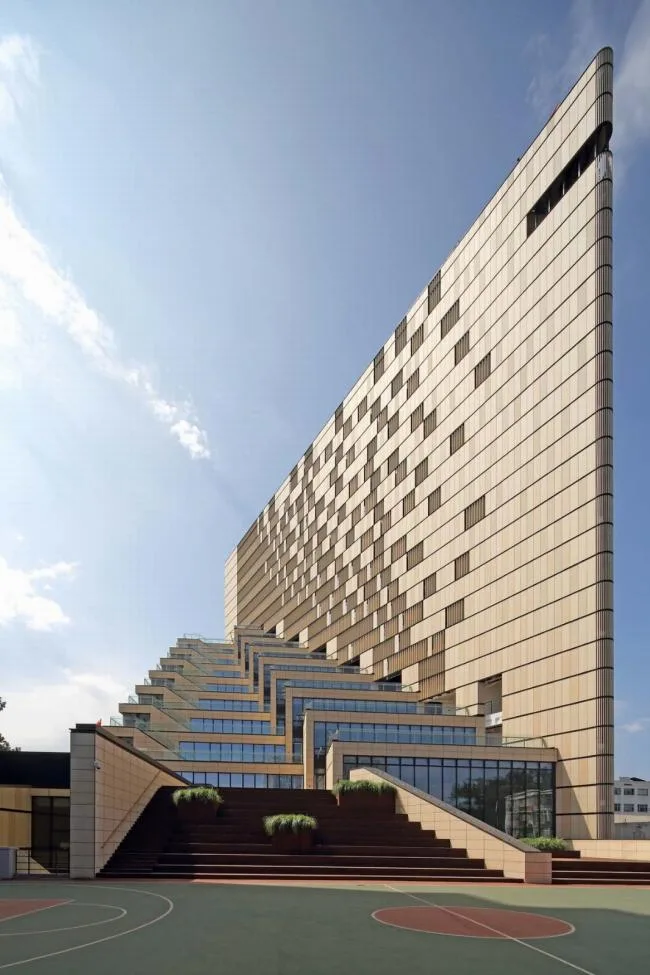
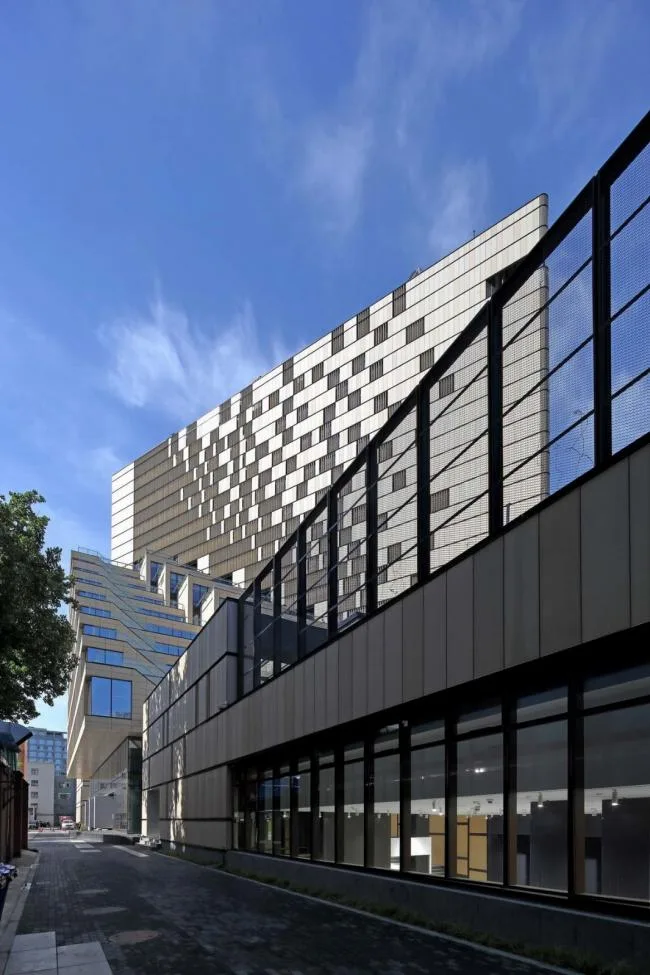
The construction of the Innovation Building required expanding the available space, necessitating a transformation of the 19th courtyard’s traditionally closed layout. Internally, the environmental relationships needed reorganization, while externally, boundaries were redefined to establish new neighborhood connections. A key consideration in this urban renewal was managing sunlight exposure in relation to surrounding residential areas.
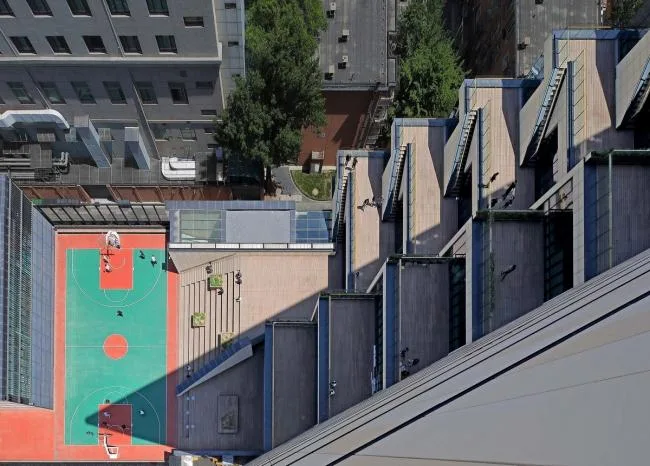
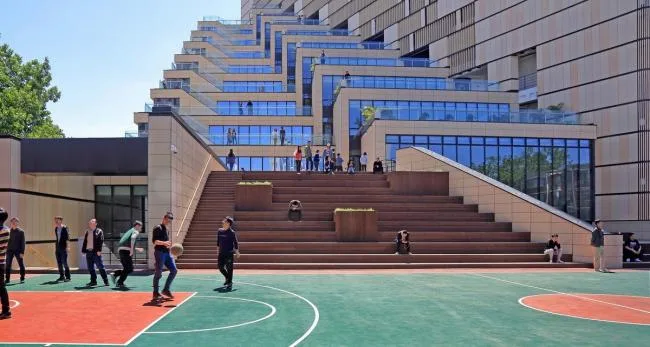
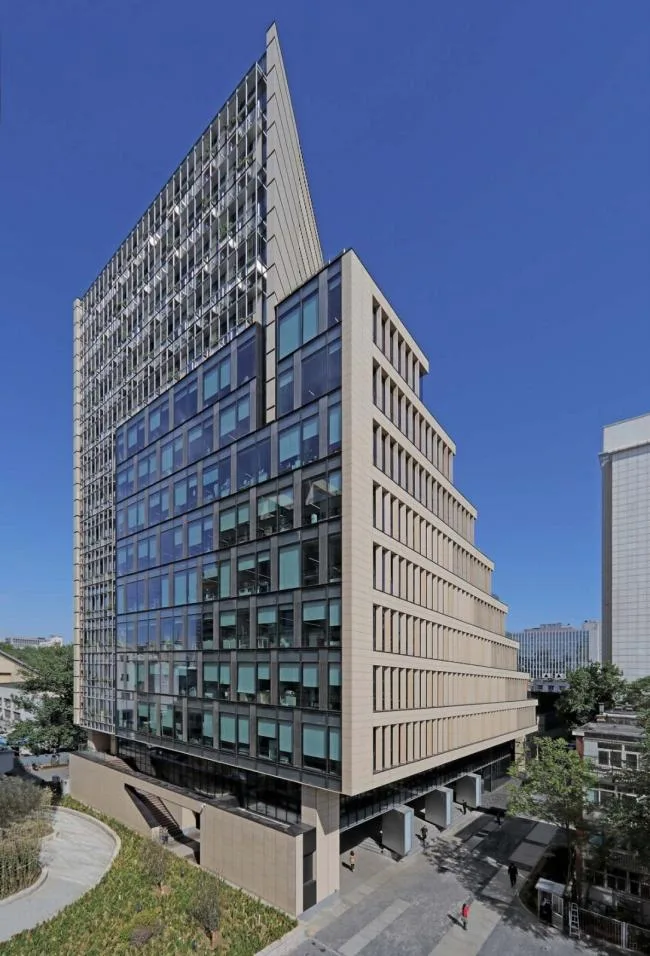
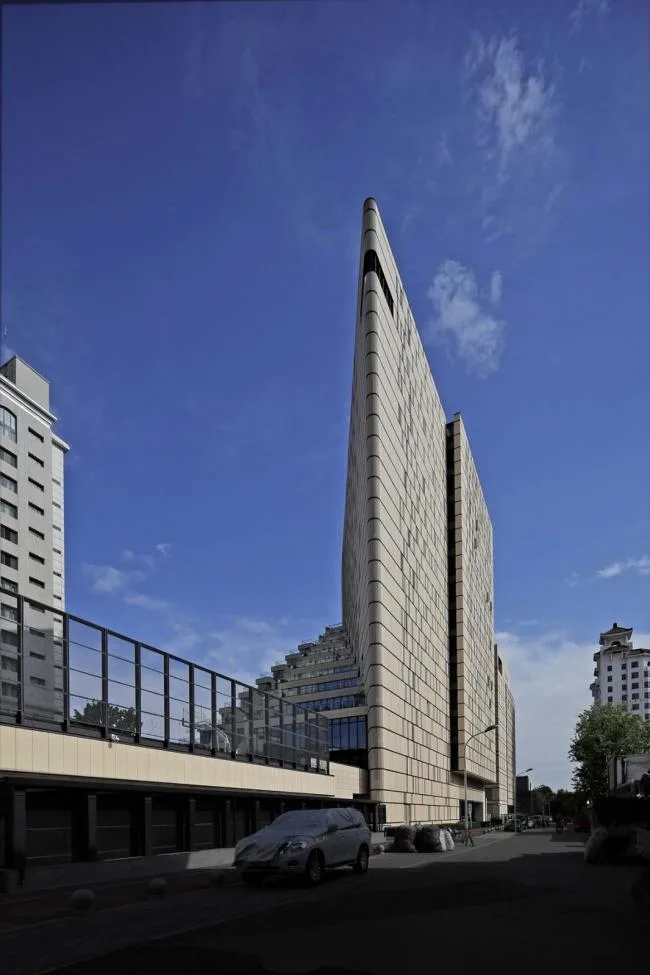
Along Wenxing West Street in the Chaoyang’an Community, two east-west residential blocks represent the most challenging points for sunlight access, which shaped the Innovation Building’s design constraints. After determining the maximum allowable building volume within height and land use limits, the sunlight trajectory carved an irregular building prototype focused on avoiding these unfavorable sunlight areas. This sunlight-driven form acts as an external restriction, while the internal demand for usable space pushes for expansion. The resulting prototype represents a balance between these opposing forces.
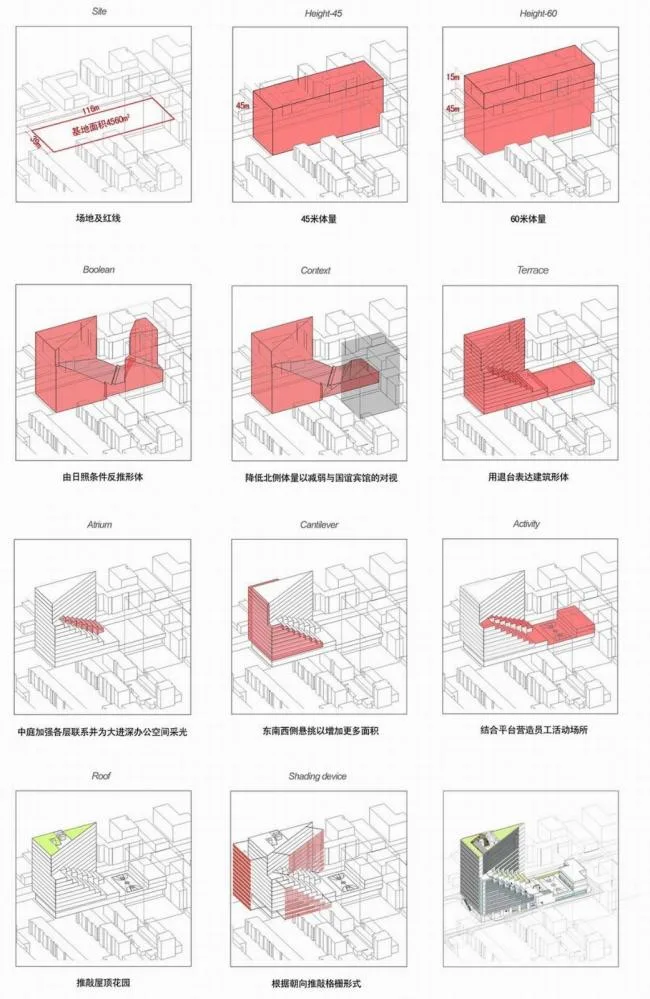
▲ Volume generation
Venue
The Innovation Building’s function is straightforward. During the design process, the focus shifted from traditional functional zoning to spatial use, emphasizing user behavior. The goal was to let user activities guide the creation of the space.
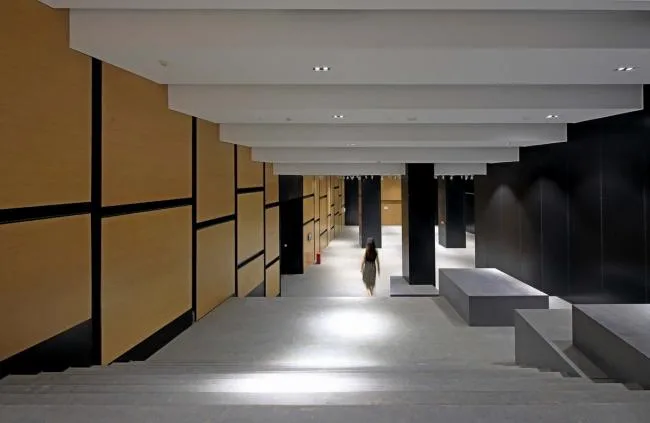
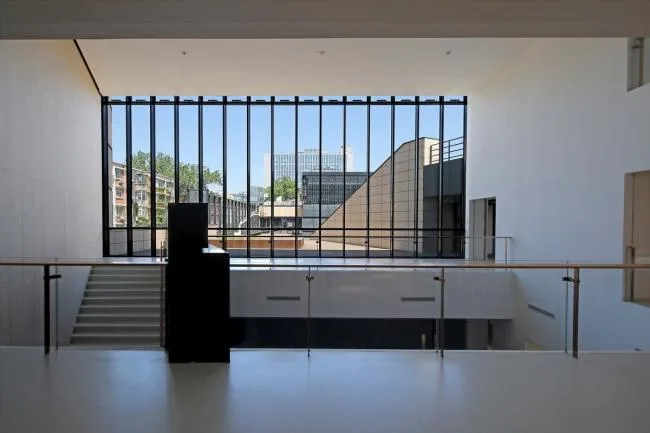
The two-story entrance hall serves as a hub for public services, including a coffee shop, exhibition hall, reading area, small supermarket, conference rooms, and a multifunctional hall. This area acts as the social “living room” for the Innovation Building.
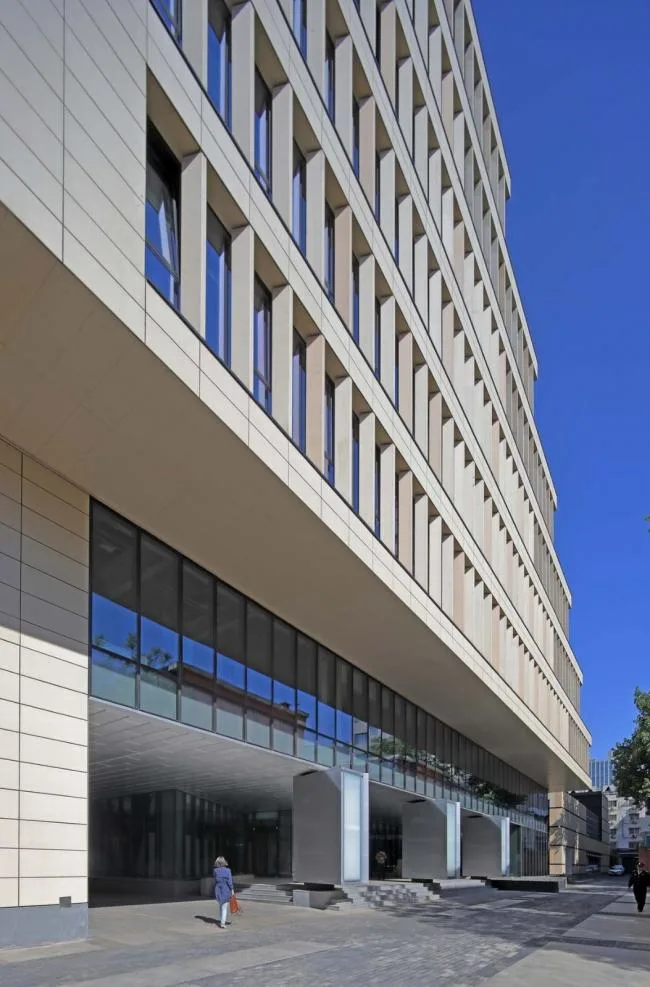
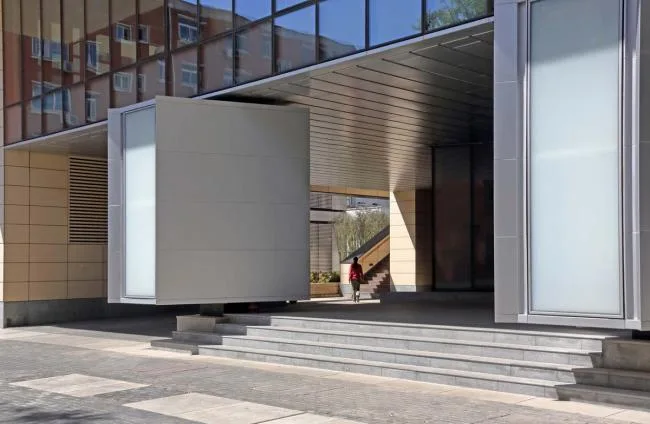
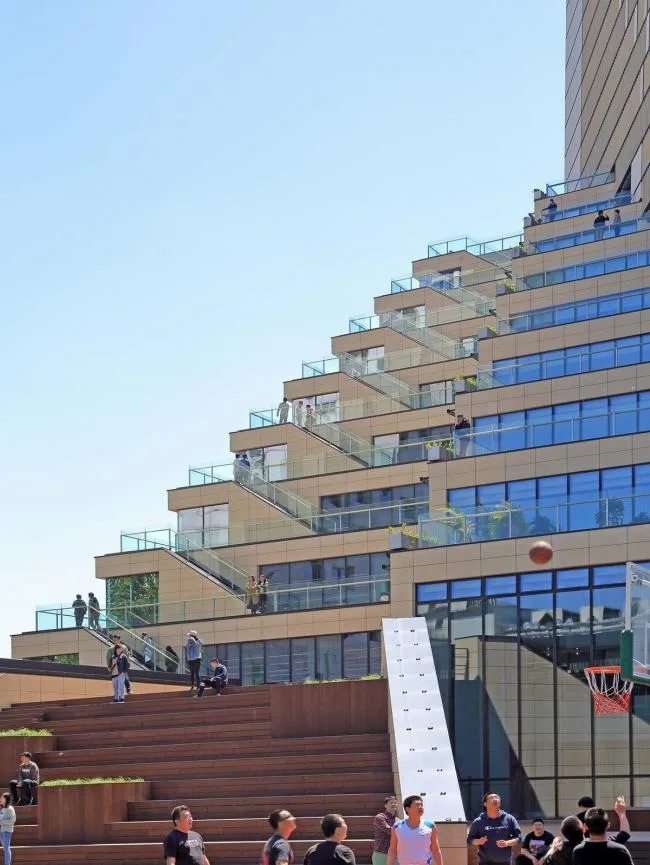
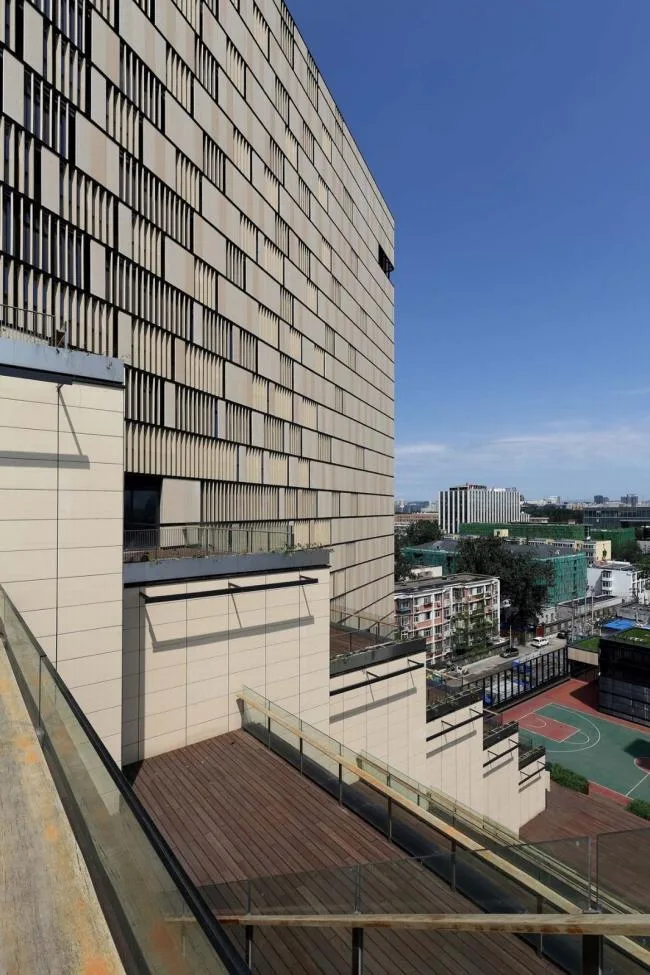
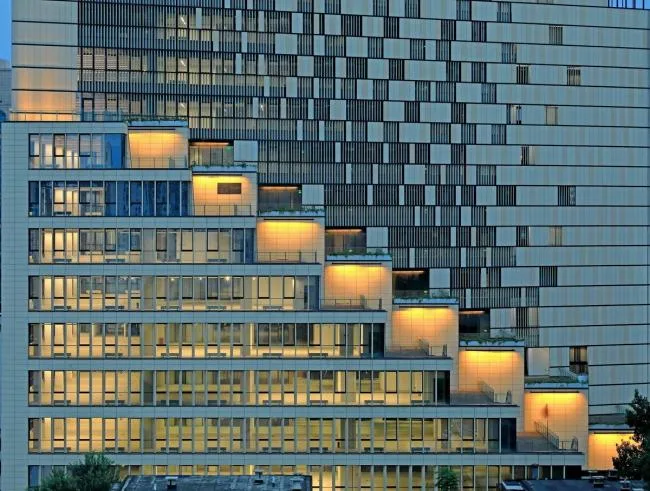
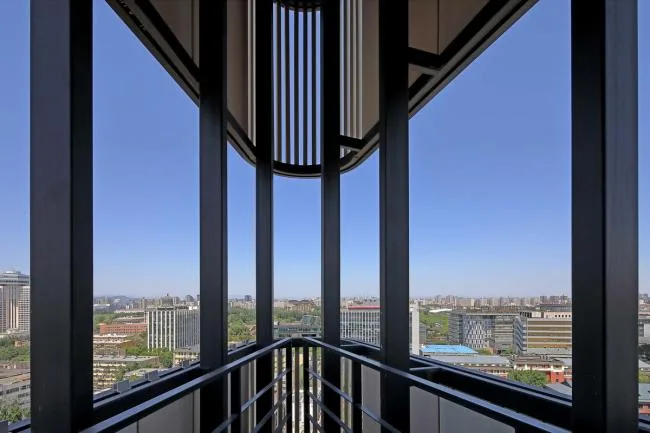
Floors three through fourteen accommodate various design departments. The building does not follow a standard floor plan due to its setbacks; usable space decreases gradually from 1,700 square meters on the third floor to 1,000 square meters on the fourteenth. Outdoor terraces and indoor courtyards create a dynamic environment, organizing open-plan office areas between floors three and ten.
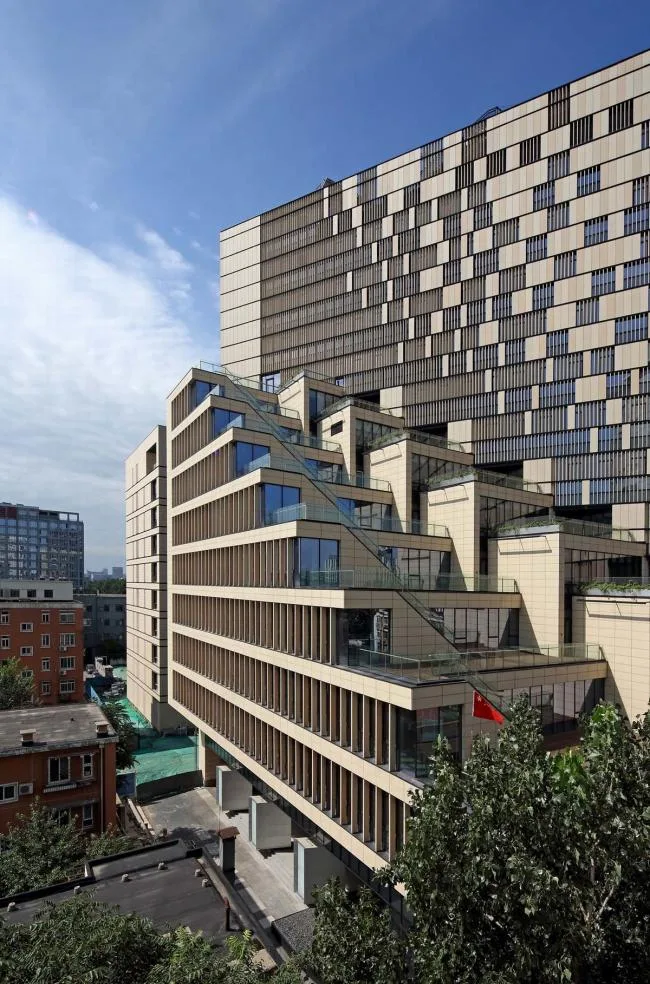
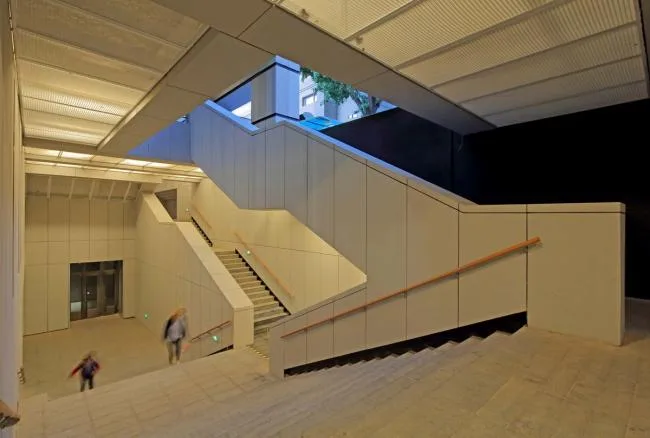
The atrium follows the setbacks of the building, creating a distinctive internal space with balanced scale and atmosphere. Unlike the large open-plan offices designed for efficiency, this informal space allows design departments to use it flexibly. The atrium extends vertically through the building, divided into layers that enhance spatial perspective and provide a sense of ceremony. From above, the atrium reveals the varied and vibrant use of space by different departments.
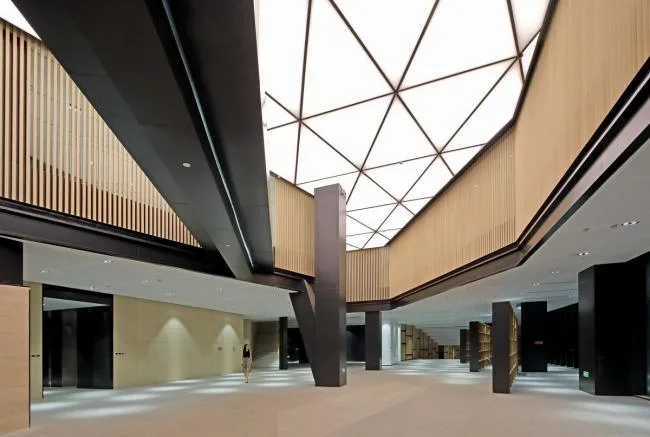
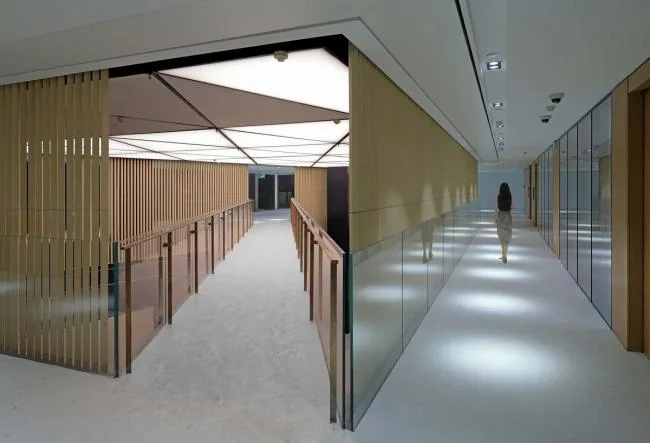
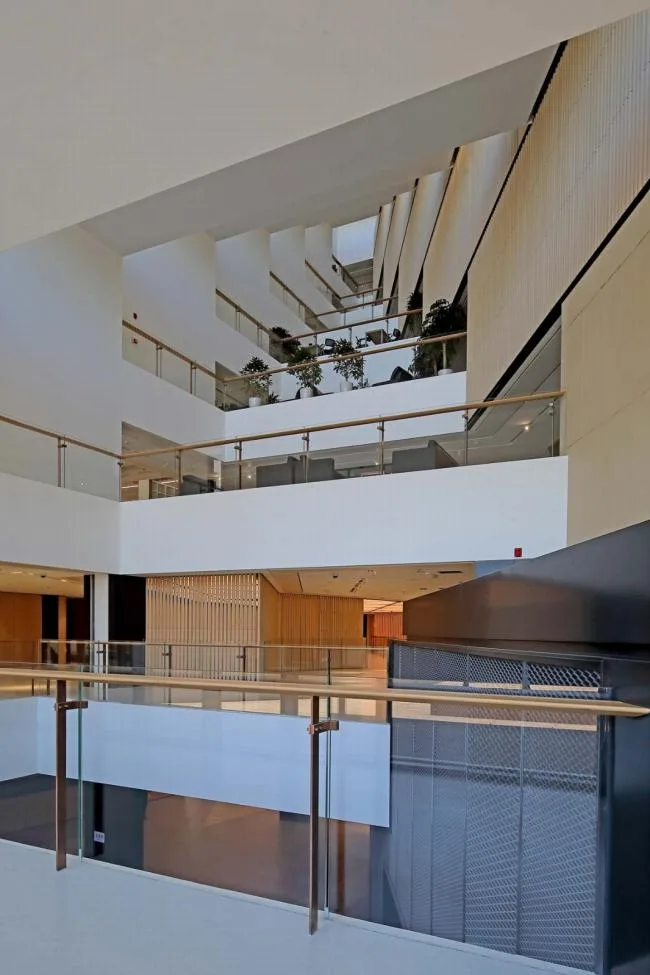
By fostering vibrant urban life, the Innovation Building challenges the typical impression of Chinese institutes as large, efficiency-oriented, monotonous office environments. Platforms, courtyards, and sports fields dissolve enclosed boundaries, encouraging spontaneous interactions and lively scenes that support creative design work. These social spaces also reflect the unique character of design enterprises.
Green Design
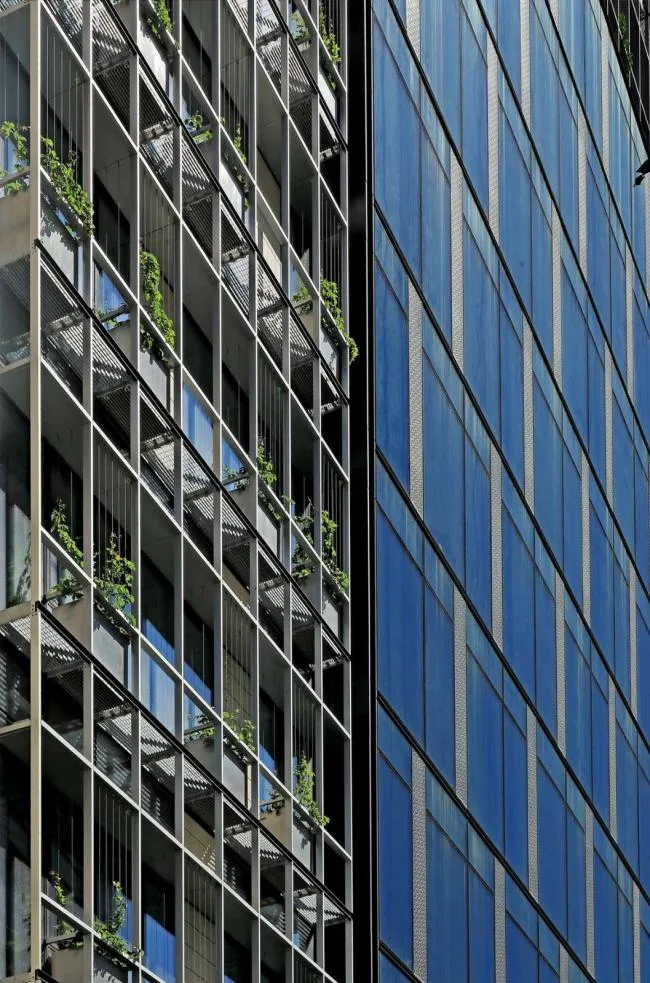
The Innovation Building also embodies sustainable design principles. Various disciplines incorporated moderate green technologies addressing ventilation, insulation, and lighting. The design adheres to a locally prioritized passive green strategy.
Based on the sunlight prototype, service areas such as elevators, staircases, and bathrooms are positioned on the west side to minimize the impact of afternoon sun. The large open office spaces face south and east, while a continuous northern atrium improves ventilation and daylight penetration deep into the building.
Additionally, the three-dimensional open pathways from the terraces to the basketball court encourage outdoor activity, promoting healthy, energy-saving habits. This approach ensures that sustainability is embedded not only as a concept but also as a daily practice.
Design Drawings:
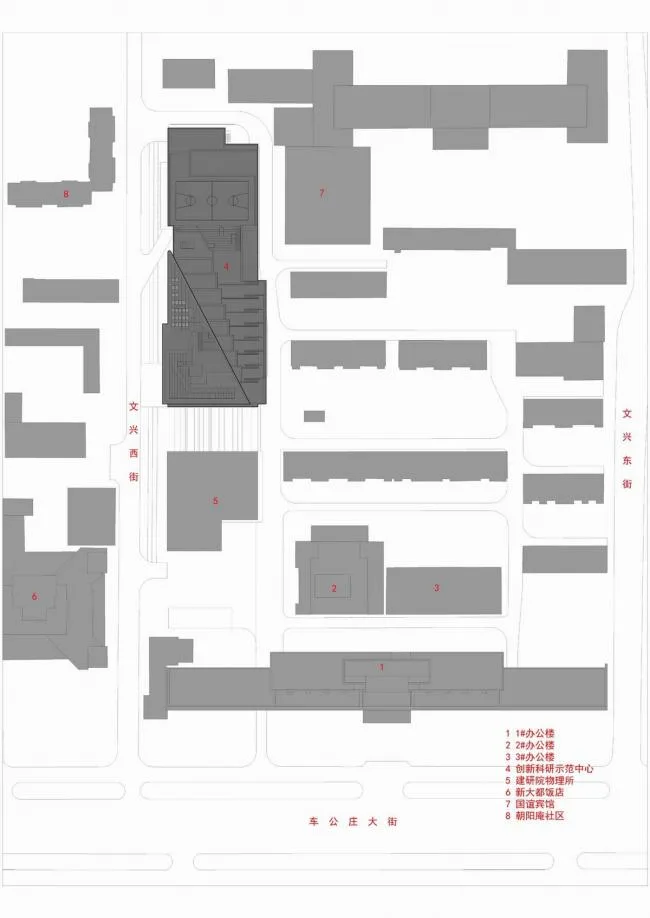
▲ General layout plan
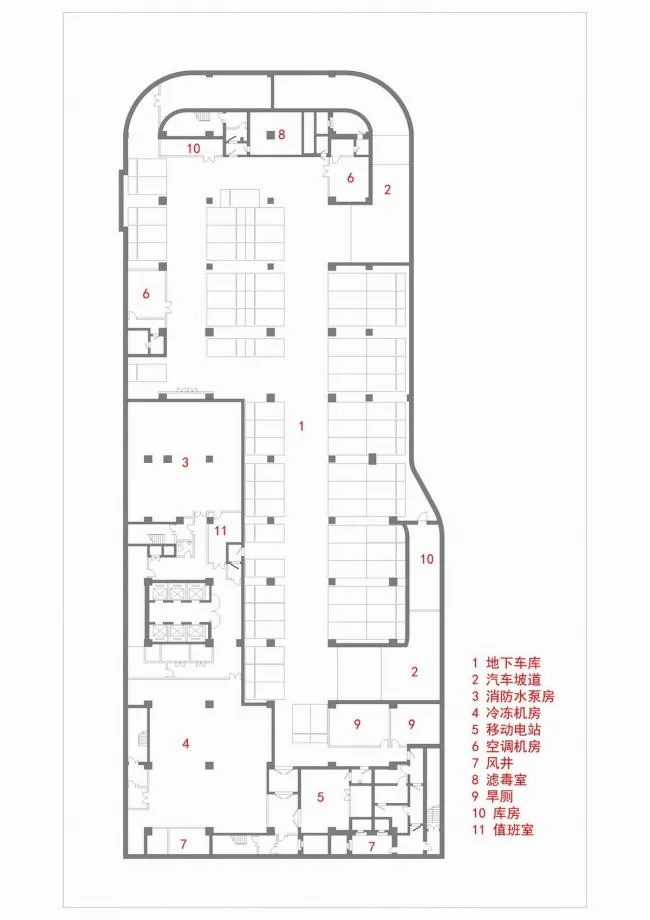
▲ Underground Fourth Floor Plan
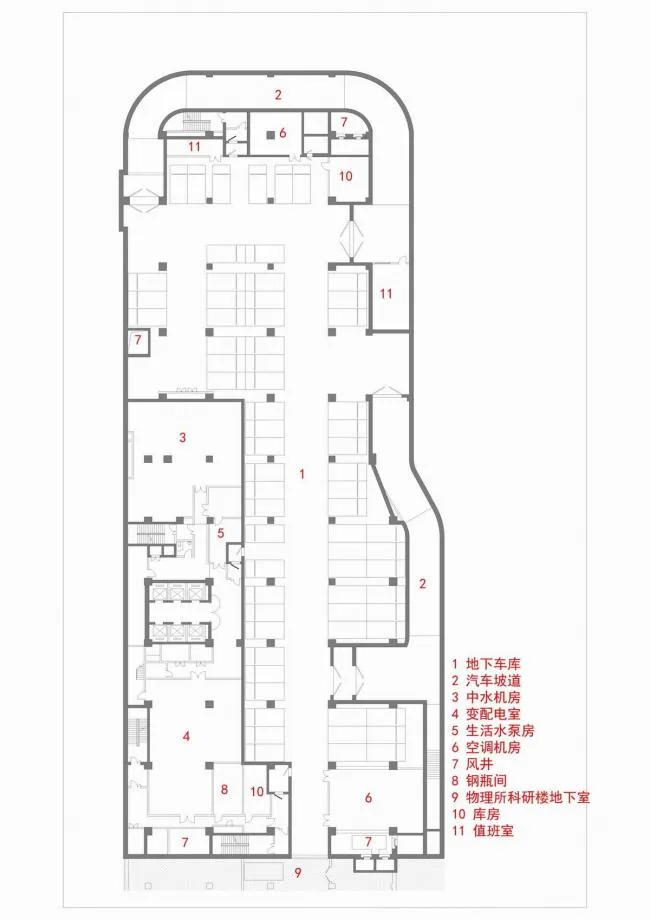
▲ Underground Third Floor Plan
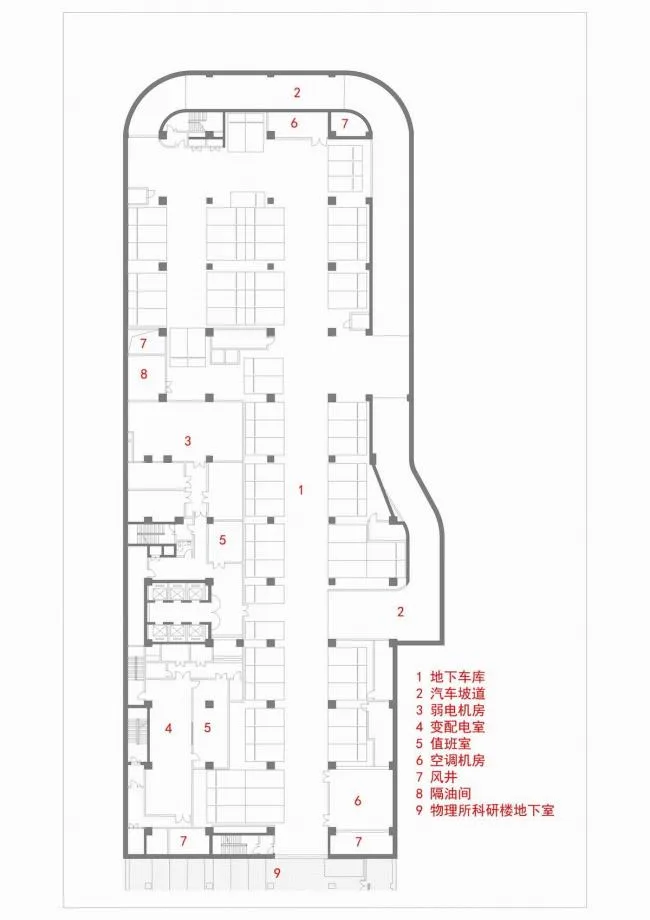
▲ Underground Second Floor Plan
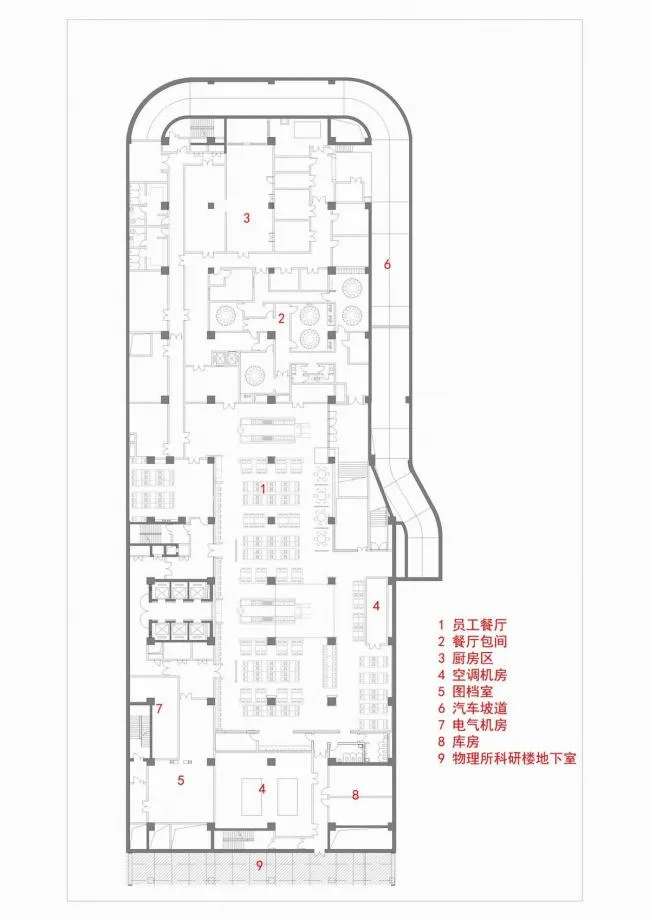
▲ Underground Floor Plan
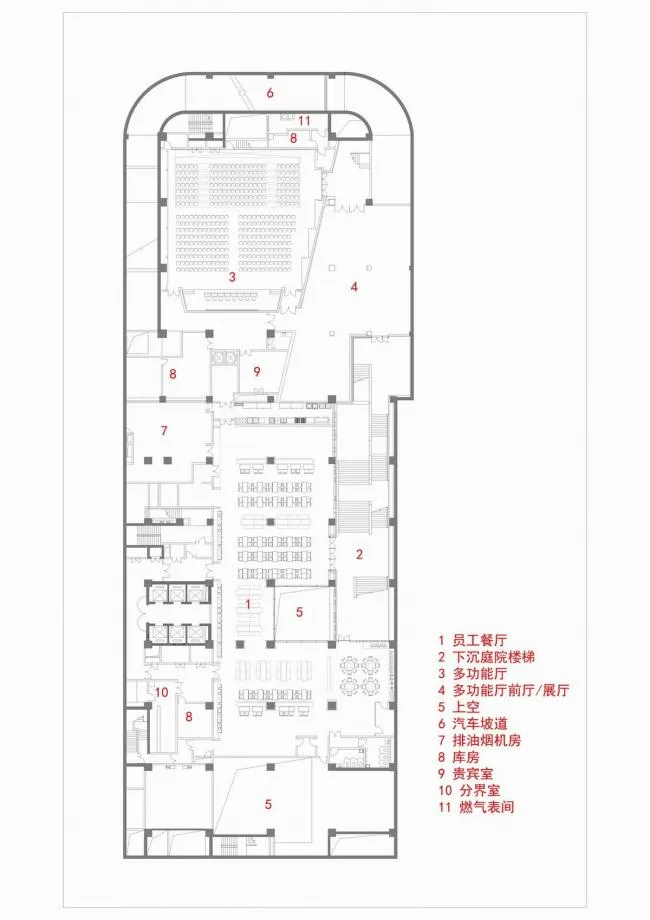
▲ Underground Mezzanine Plan
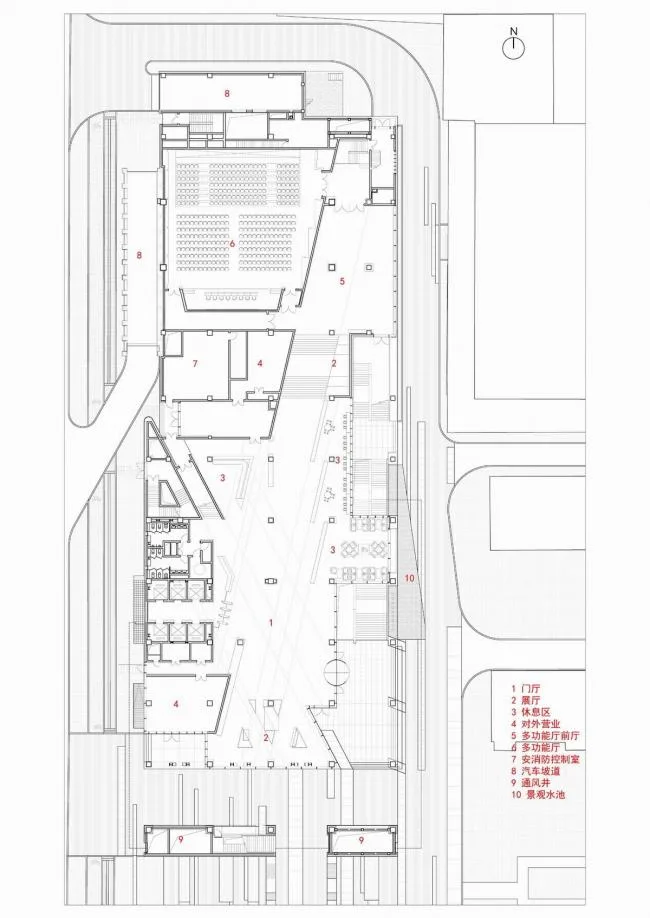
▲ First Floor Plan
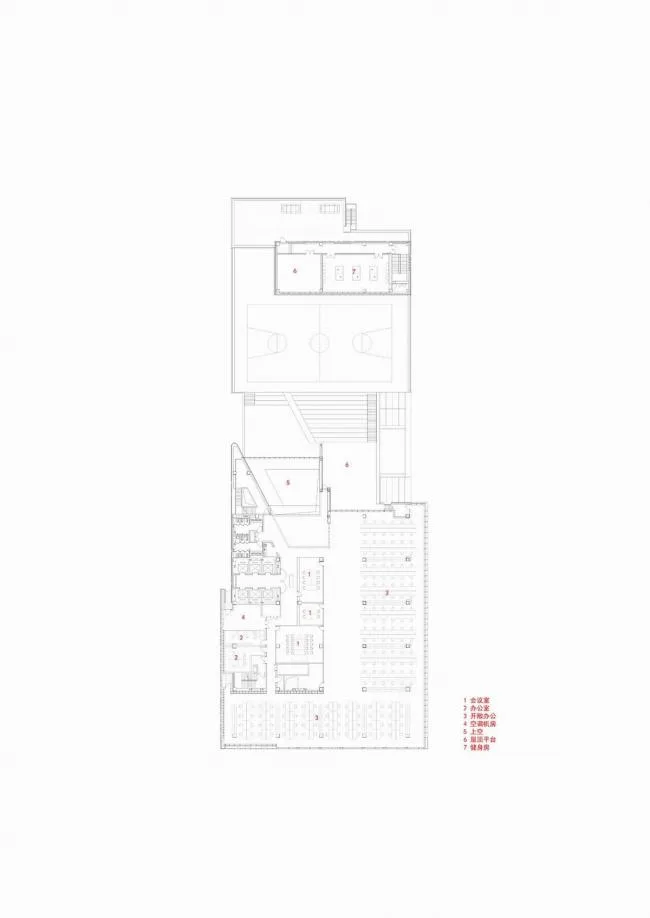
▲ Second Floor Plan
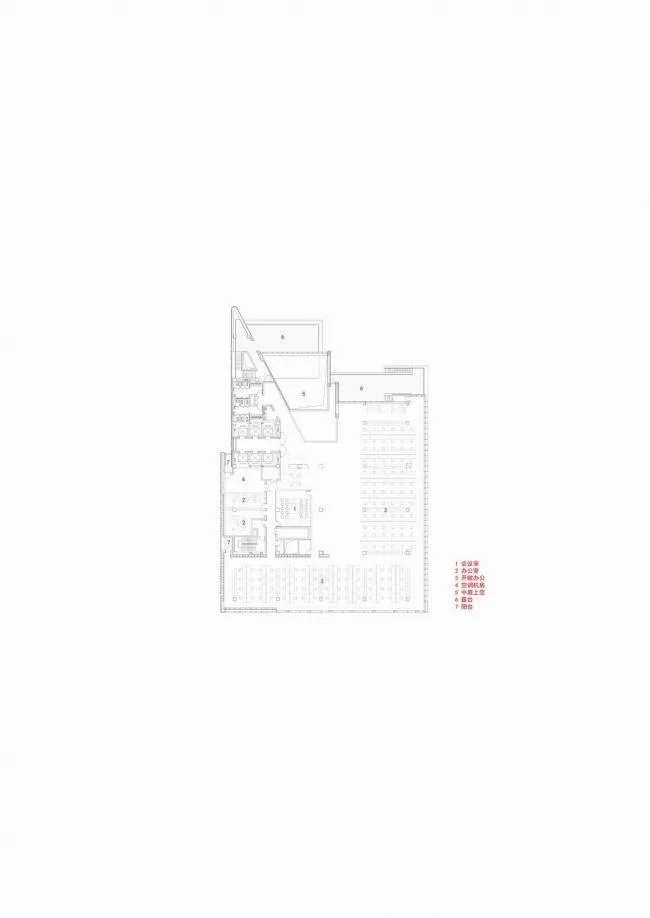
▲ Fourth Floor Plan
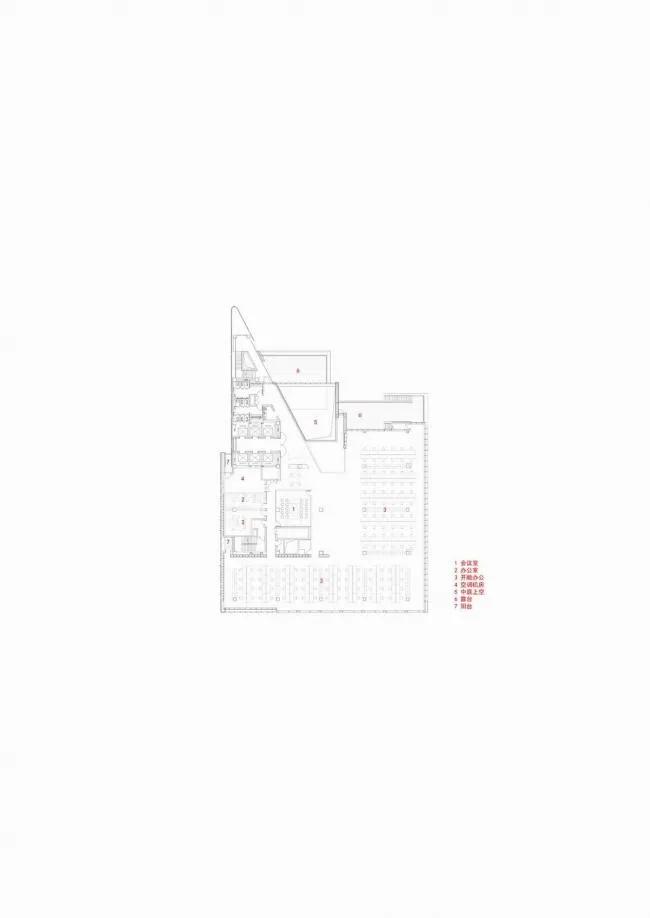
▲ Fifth Floor Plan
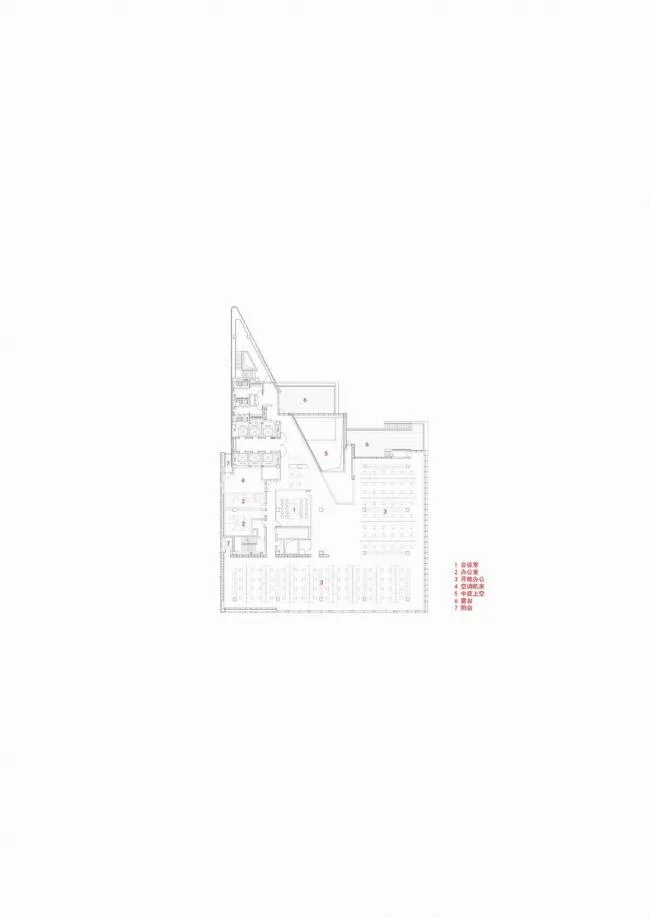
▲ Sixth Floor Plan
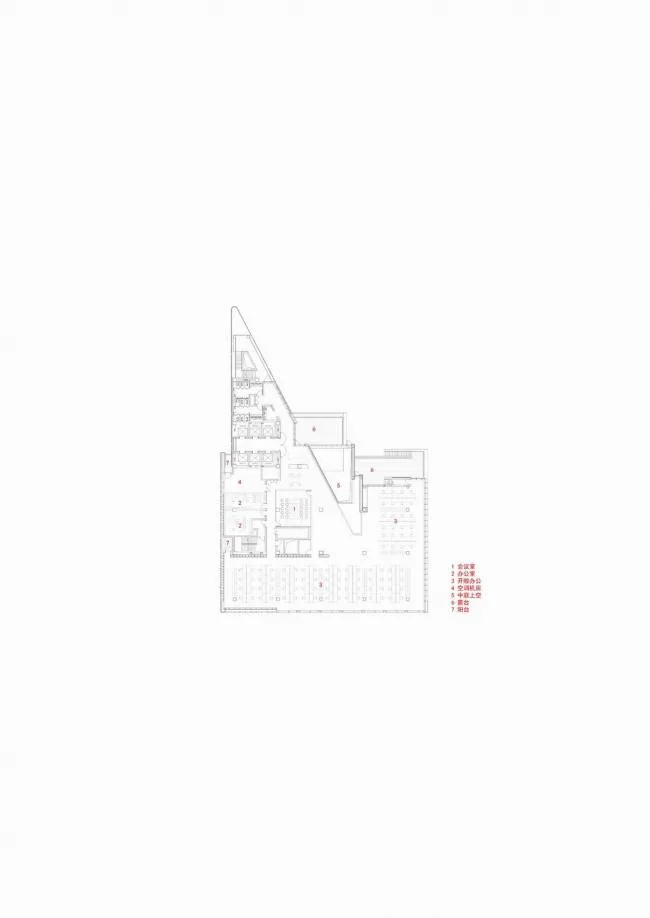
▲ Seventh Floor Plan
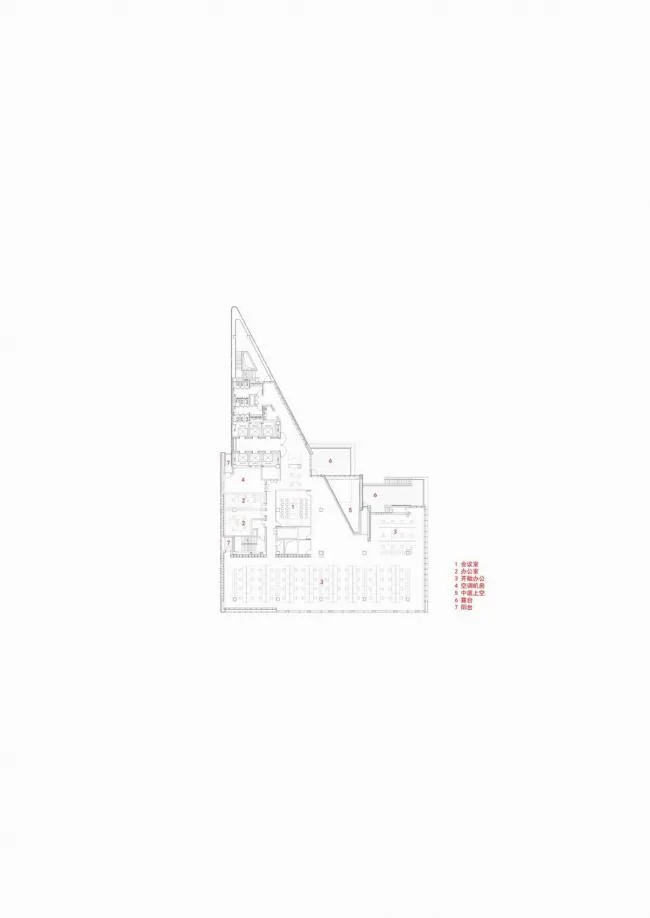
▲ Eighth Floor Plan
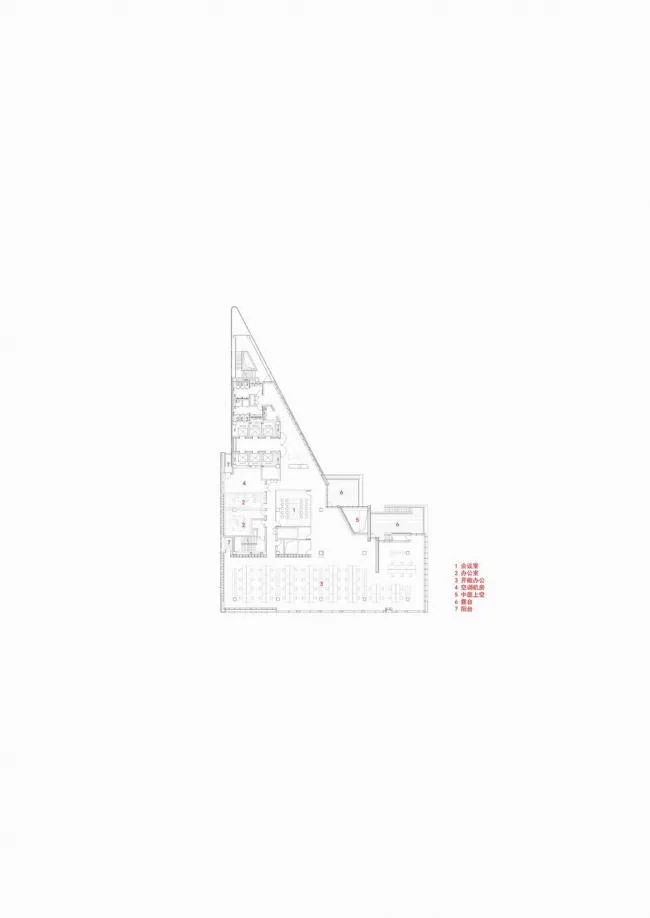
▲ Ninth Floor Plan
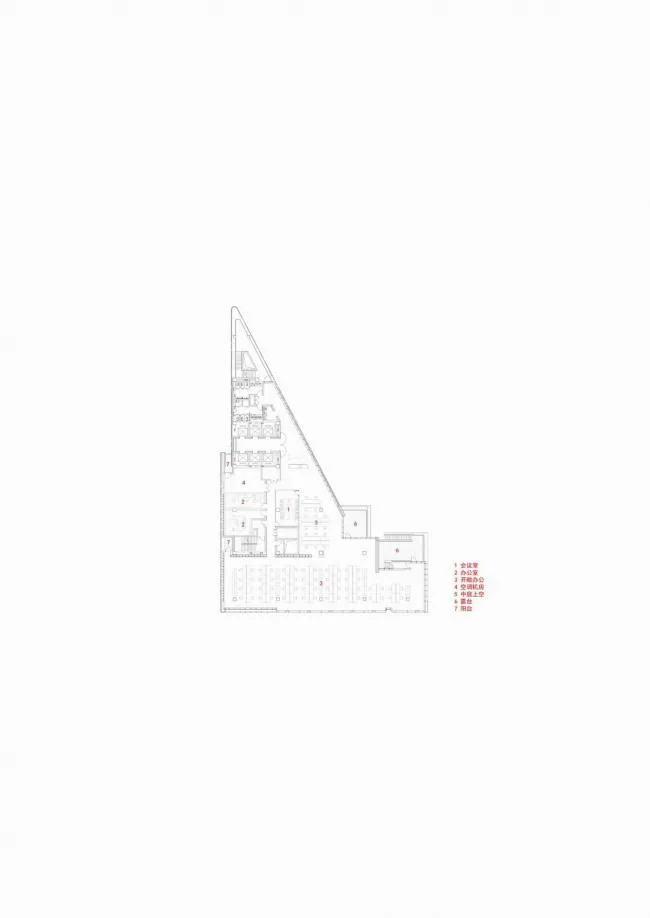
▲ Tenth Floor Plan
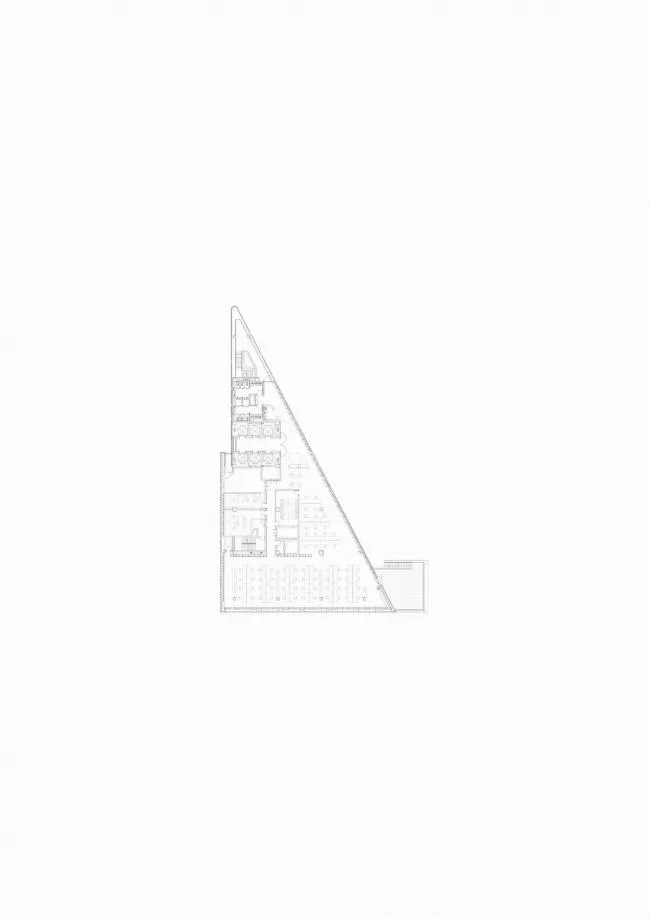
▲ Eleventh Floor Plan
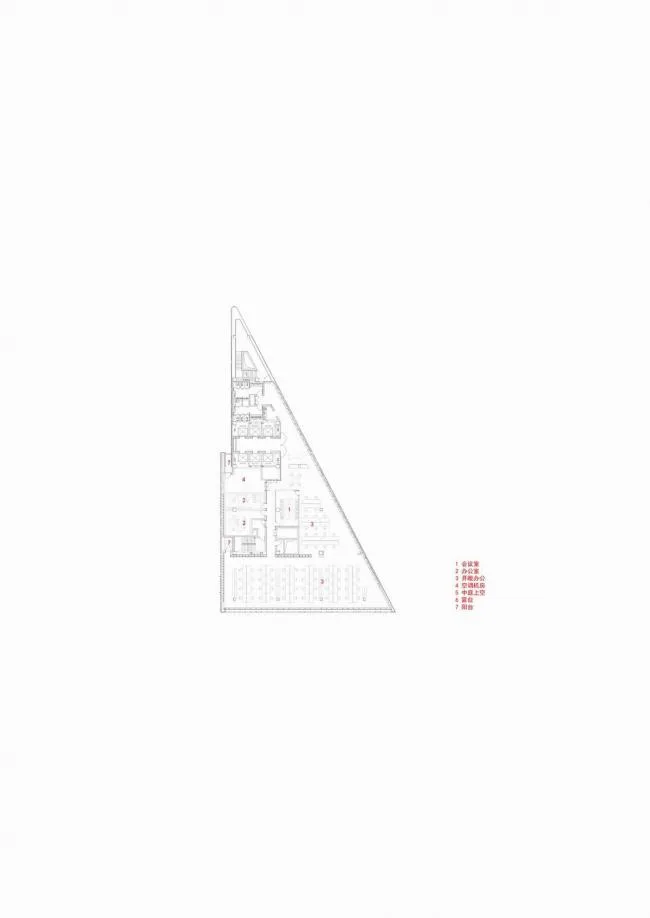
▲ Twelfth Floor Plan
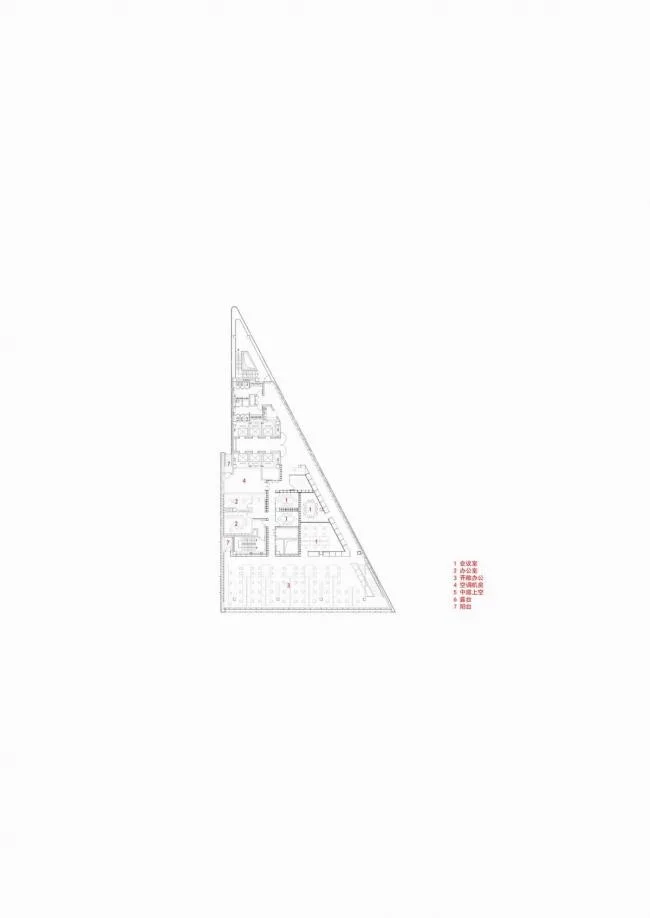
▲ Thirteenth Floor Plan
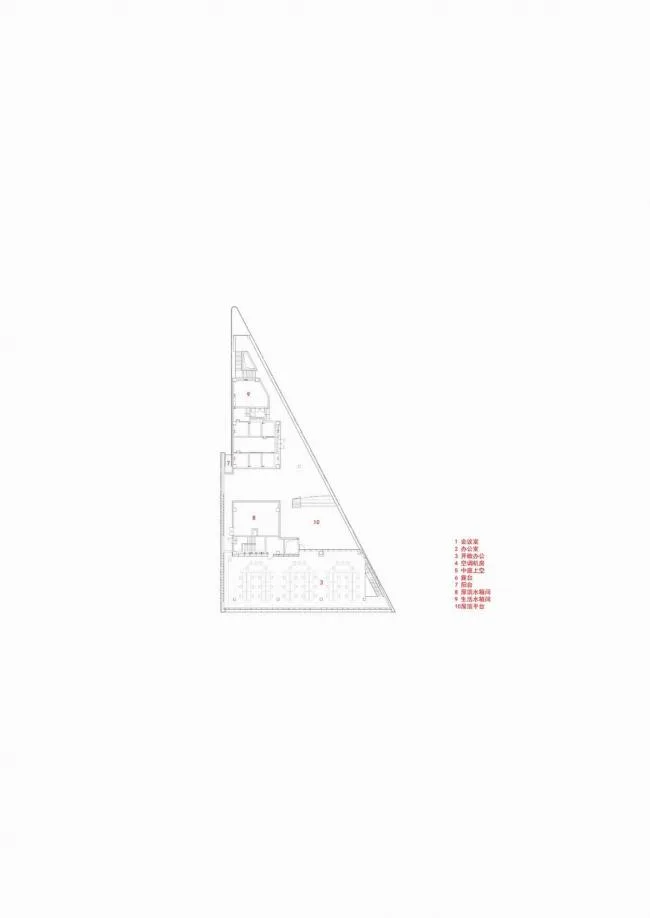
▲ Fourteenth Floor Plan
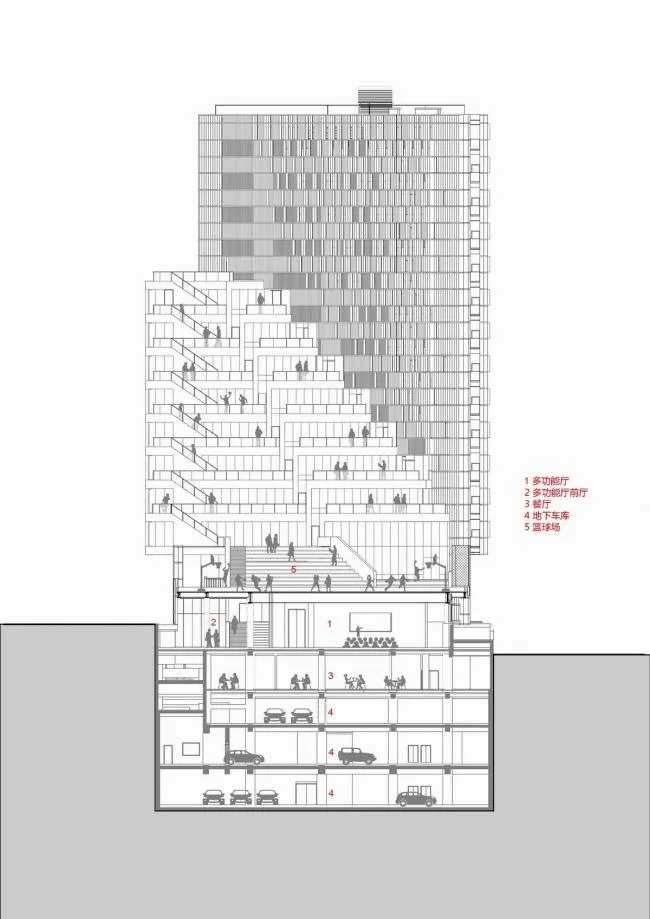
▲ Section
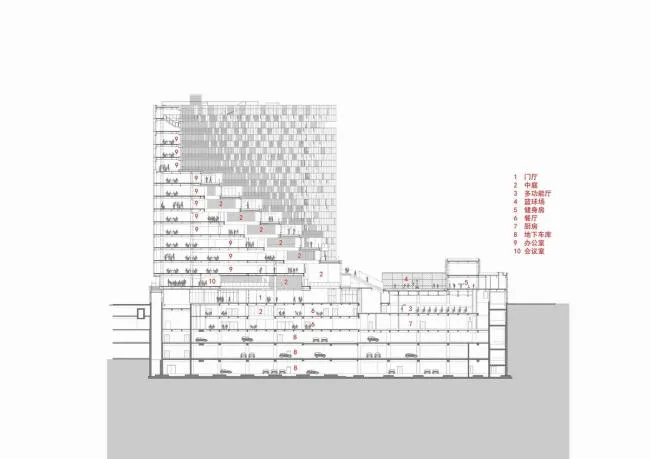
▲ Section
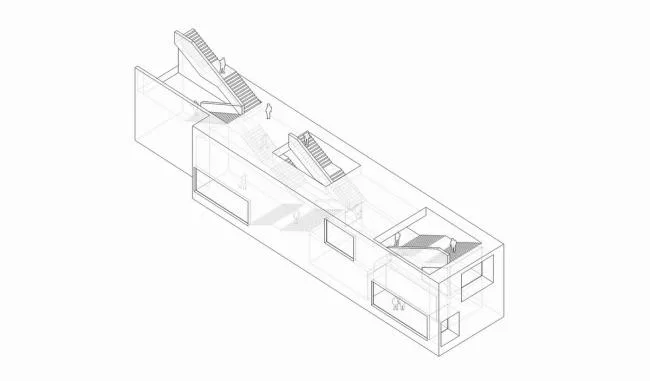
▲ Sunken Courtyard
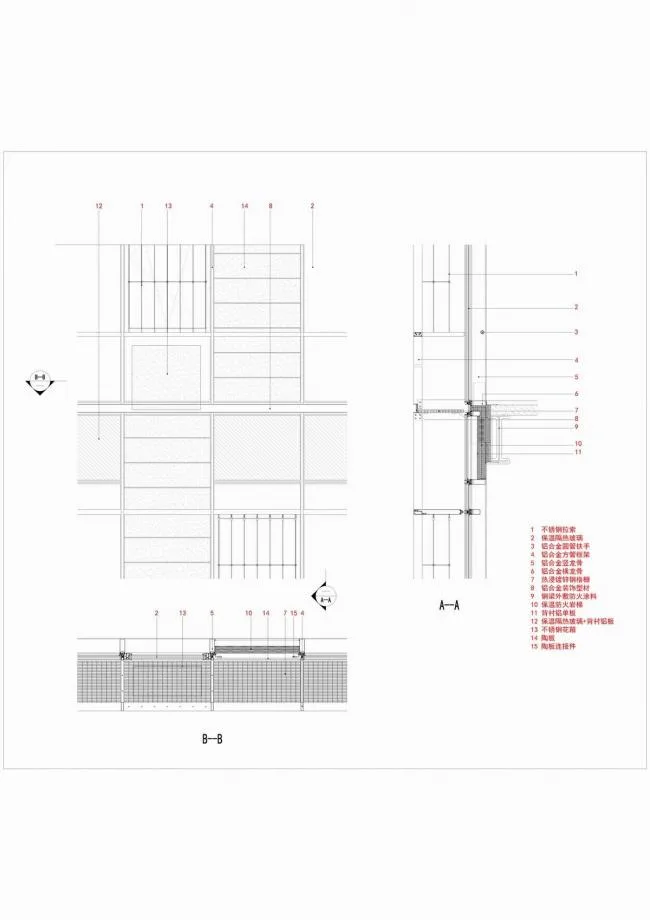
▲ Node Details
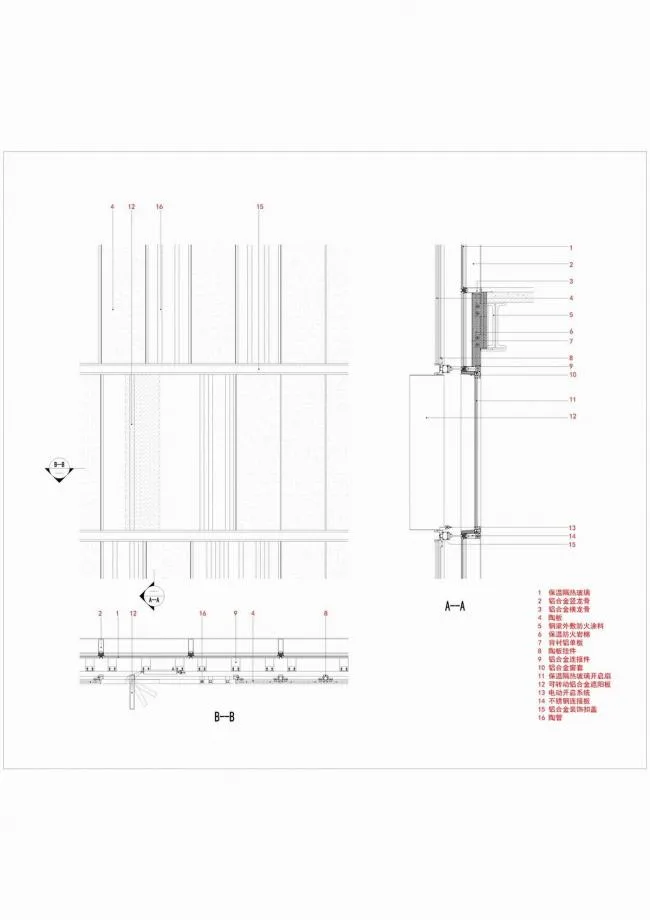
▲ Node Details
Project Information:
Designer: China Academy of Architectural Design and Research
Address: No. 19 Chegongzhuang Street, Xicheng District, Beijing, China
Category: Public Institution Facilities
Lead Architects: Chai Bacon, Zhou Kai
Design Directors: Xiu Long, Cui Kai
Project Managers: Ma Hai, Liu Peng
Architectural Design Team: Tian Haiou, Ren Yue, Li Ying, Li Nan, Zhang Dong, Yang Wenbin, Lou Shasha, Dai Tianxing
Building Area: 41,434 square meters
Project Year: 2018
Photographer: Zhang Guangyuan
Structural Engineers: Huo Wenying, Sun Hailin, Guo Jiaxu, Gao Fanghua, Chen Wenyuan, Lu Ying, Liu Huijun
Water Supply and Drainage: Zhao Shiming, Zhao Xin, Zhao Li, Guo Ruyan, Li Jianye, Zhang Chao, Tao Tao, Yu Jianfeng
HVAC: Pan Yungang, He Hailiang, Song Xiaochun, Li Efei, Li Jia, Zhu Xiujuan, Guo Yu, Tang Yanbin, Chen Tao
Electrical Engineers: Chen Qi, Wang Xu, He Xueyu, Li Junmin, Lin Jia, Xu Shiyu, Xia Xin, Guo Tao
Intelligence Systems: Ren Yawu, Wang Qing, Tang Yi
General Drawing: Gao Zhi, Wu Yaoyi
Interior Design: Zhang Ye, Rao Mai, Han Wenwen, Gu Dahai, Wang Jiaxu, Li Shen, Guo Lin
Landscape Design: Li Jia, Wei Hua, Cao Cheng, Shi Kai, Cao Lei, Wang Mengshu
Indoor Electromechanical: Liu Huan, Wang Ting, Li Yang
Construction: Beijing Urban Construction Group
Client: China Construction Technology Group












Must log in before commenting!
Sign Up