
Vertical Connection Nodes in Prefabricated Shear Wall Structures
Traditional cast-in-place concrete structures commonly use three reinforcement connection techniques: binding connections, welding connections, and mechanical connections. However, applying these methods comprehensively in prefabricated integral concrete structures presents challenges due to constraints like limited working space and construction technology. For instance, binding connections require ample width of cast-in-place concrete to ensure sufficient reinforcement overlap, which increases on-site wet work. Welding and mechanical connections demand adequate operating space, involve connecting steel bars individually, increase workload, and complicate quality control. Therefore, in assembled integral concrete structures, these traditional steel bar connection methods are difficult to apply directly for discontinuous steel bars in prefabricated components, except in post-poured concrete sections or stacked cast-in-place concrete layers.
Prefabricated shear wall structures are integrated systems formed by connecting precast components with on-site cast-in-place concrete and cement-based grout. Reliable connection nodes are essential for ensuring structural integrity and seismic resistance. These node connections primarily include beam-to-column, column-to-column, and horizontal and vertical wall connections.
There are two main types of vertical connection methods for prefabricated shear wall structures:
1. Wet Connections: These involve connecting steel bars between two load-bearing components and achieving an integral structural connection through on-site concrete pouring at the nodes, effectively replicating cast-in-place nodes.
2. Dry Connections: In this method, all prefabricated components, embedded parts, and connectors are fabricated off-site. No concrete pouring is required on-site, and connections are made using bolts, welding, or other mechanical means.
Wet Connection Methods mainly consist of cast-in-place strip connections, grout anchor connections, and grout sleeve connections.
01 Cast-in-Place Strip Connection
This method involves installing precast shear walls at designated locations, placing cast-in-place strips between the upper and lower shear walls to be connected, and overlapping reserved steel bars. After positioning the shear walls, concrete is poured to form a unified structure.
Characteristics: Fixing the position of the upper shear wall can be challenging, and ensuring adequate concrete compaction on the top surface of the cast-in-place strip is difficult.
02 Grout Anchor Connection
Grout anchor connection entails inserting discontinuous steel bars extending from the surface of prefabricated components into reserved holes in the corresponding connected components. The space between the steel bars and hole walls is filled with high-strength, non-shrinking grout, creating a steel grouting anchor connection.
In China, two common types are constrained grout anchor connections and metal corrugated pipe grout anchor connections.
In constrained grout anchor connections, spiral stirrups are embedded within the joint area and cast together with the component reinforcement. Ribbed ducts are formed by core drilling, and PVC hoses are embedded to create grouting and exhaust holes for subsequent grouting. After inserting the discontinuous steel bars into the holes, cement-based grout is pressure-injected from the grouting hole to form lap joints with embedded steel bars.
For metal corrugated pipe grout anchor connections, pre-embedded metal corrugated pipes are used. These pipes are tightly fixed to the embedded steel bars and tied with wire. The pipe bends outward at a high point to serve as the grout injection port. After inserting discontinuous steel bars into the pipe, high-strength grout is poured from the injection port, forming lap joints through the grout, corrugated pipes, and concrete.
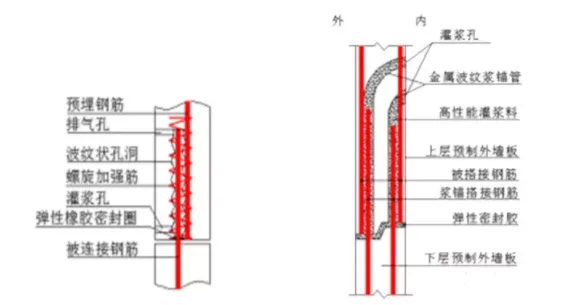
Constrained grout anchor connection and metal corrugated pipe grout anchor overlap connection
Both methods transfer stress from discontinuous steel bars to pre-embedded steel bars via bonding between grout, the embedded pipes, and concrete, achieving continuous force transmission. The steel bars form lap joints with embedded bars, but due to eccentric force transmission, strict regulations govern lap joint lengths. Spiral stirrups in constrained grout anchors strengthen concrete constraints, delaying radial splitting and improving lap joint performance. For metal corrugated pipe connections, spiral stirrups can also reinforce the joint externally, but care must be taken to maintain proper spacing to avoid compromising concrete quality during pouring.
Features: These connections offer stable mechanical performance, simple operation, effective filling of gaps between ribbed steel bars, and are well-suited for vertical steel bar connections. However, due to eccentric force transmission, ensuring mechanical safety—especially in seismic-resistant structures—remains a critical concern.
03 Sleeve Grouting Connection
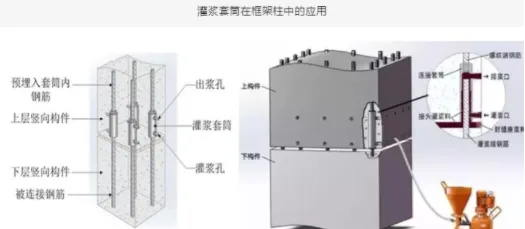
This method involves inserting reserved steel bars into high-strength sleeves with interlocking grooves, then injecting non-shrinking, high-strength grout into the sleeve cavity to form a secure steel bar sleeve connection.
Common sleeve grouting connection types include full sleeve connections (typically for horizontal components) and half sleeve connections (often used for vertical components).
Dry Connection Methods include bolted connections, post-tensioned prestressed connections, mechanical connections, welded connections, and lap connections.
01 Bolt Connection
This method fastens structural components such as columns and beams using bolts. Bolt holes and installation openings are designed via BIM at component edges, allowing bolts to pass through and secure the connection.
02 Post-Tensioned Prestressed Connection
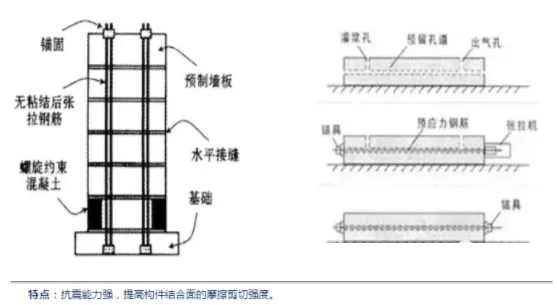
Before concrete pouring, holes are reserved in the precast shear walls for prestressed reinforcement. After the concrete attains the required strength, the prestressed reinforcement from the lower precast shear wall is inserted into these holes to reach the top of the upper shear wall. The reinforcement is anchored at the ends, and high-strength grout is injected to connect the walls into a unified structure.
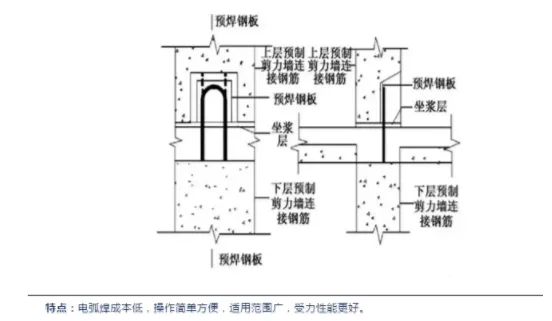
03 Welding Connection
This connection method embeds steel plate connectors within concrete components and joins them through welding.
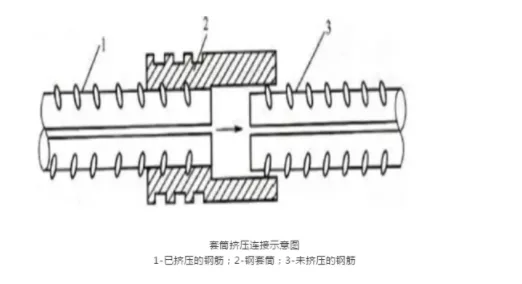
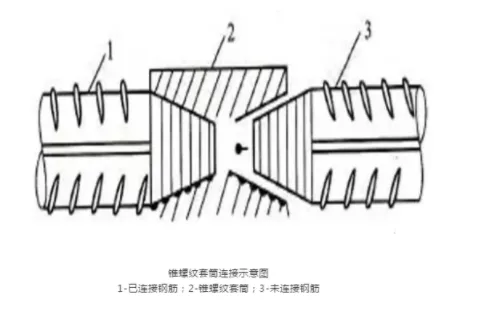
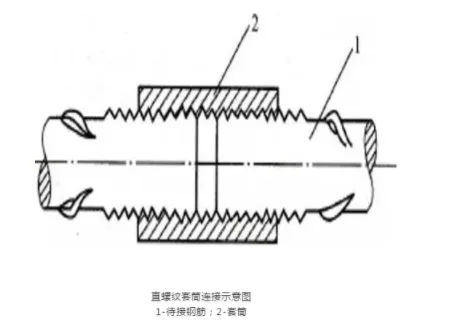
04 Mechanical Connection
Mechanical connections join two steel bars by interlocking them with connectors. Common types include extruded sleeve joints, tapered thread sleeve joints, and straight thread sleeve joints.
05 Overlap Connection
This technique connects reserved tie bars and stirrups extending from component edges by tying them with wire, then inserting steel bars vertically inside the stirrups before pouring concrete. This forms concealed columns that complete the vertical connection of prefabricated components.
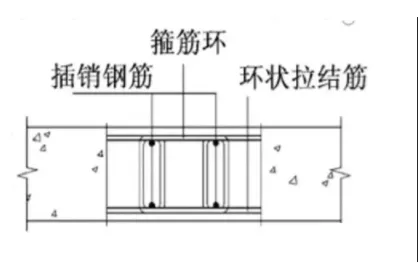
Features: Overlap connections are easy to construct, unaffected by external conditions, and do not demand high technical skill from workers. They are especially suitable for connecting smaller diameter steel bars.














Must log in before commenting!
Sign Up