
Lucton School is a historic private boarding school located in Herefordshire, England, founded in 1708. During the school’s 300th anniversary celebration in 2008, it received blessings from the British royal family and was honored with a visit from Prince Edward, representing the royals.
The first Chinese branch of Lucton School is situated in Pudong New Area, Shanghai, spanning 13,500 square meters. It lies approximately 15 kilometers from both Shanghai Pudong International Airport and Shanghai Disneyland International Tourism Resort.

▲ Aerial rendering
The campus comprises five main buildings. Starting at Administrative Building A, inspired by the Queen Anne Building in Stockton, England, visitors proceed to Teaching Building B, which houses the library and college-style facilities. Through a covered corridor, the transparent Science and Art Building C is reached, followed by the dormitory and dining halls, Buildings D and E, located deeper within the campus. While each structure features its own architectural language, the overall style remains cohesive to maintain campus unity.
The design team preserved the original structural framework while embracing core design principles of cultural heritage, simplification, and organic integration. This approach honors over 300 years of Lucton School’s legacy, creating a diverse and open learning environment both indoors and outdoors.
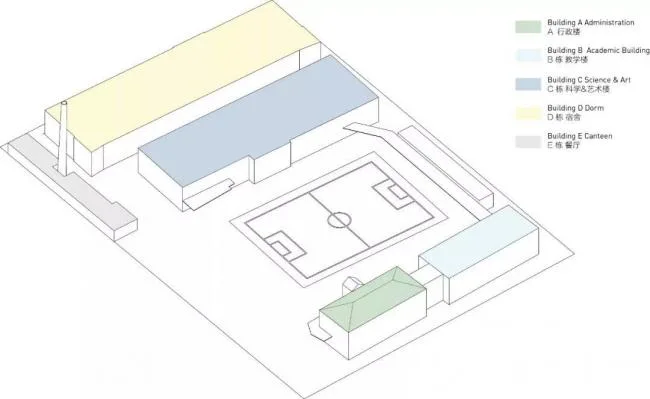
▲ Functional Block Diagram
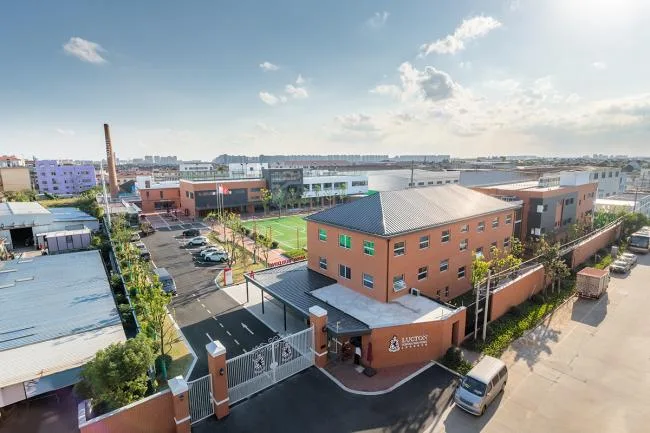
▲ Top view of school entrance
The facade echoes the brickwork style of the Queen Anne Building at the original Lucton School in the UK. Modern industrial elements such as gray steel structures and glass panels are integrated to enhance natural lighting and create varied corridor spaces and indoor landscapes. This design breaks down the rigid boundaries between indoors and outdoors, blending traditional aristocratic elements with a lively, student-friendly atmosphere. Brickwork techniques are also incorporated into the landscaping, fully expressing the classic British aristocratic aesthetic.
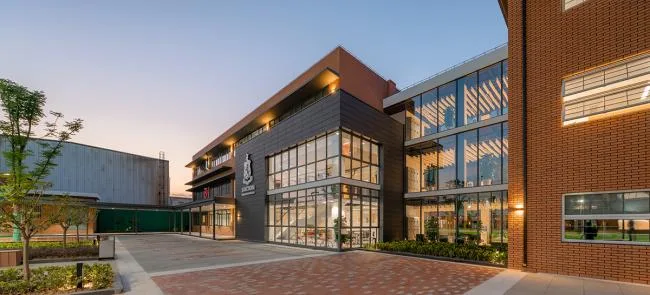
▲ View from the front of Building A towards Building B
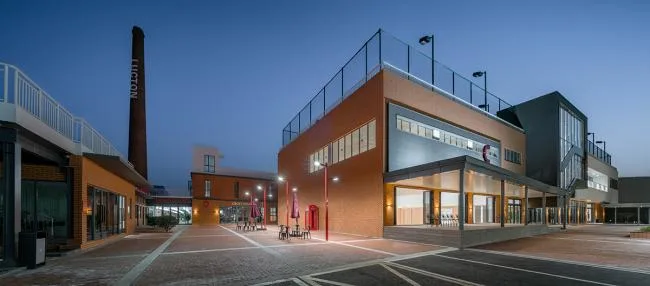
▲ Between Building C and the restaurant
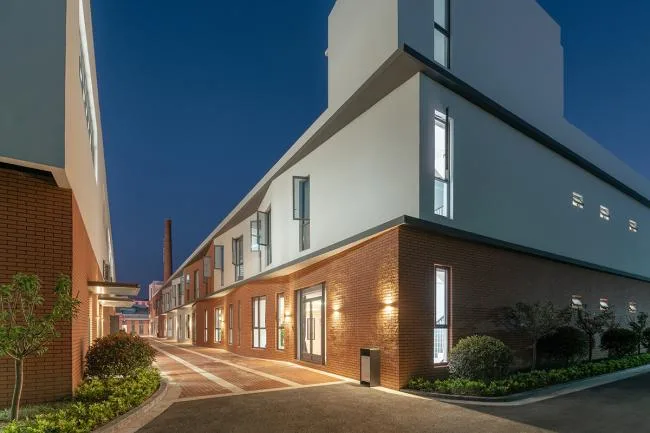
▲ Night view of the rear of Building C
The school’s interior design balances tradition and modernity, East and West. Natural materials and ample lighting create a nurturing environment that supports students’ personal and spiritual growth. Despite a compact site, outdoor public spaces are thoughtfully arranged between buildings, encouraging social interaction and activities beyond the classroom.
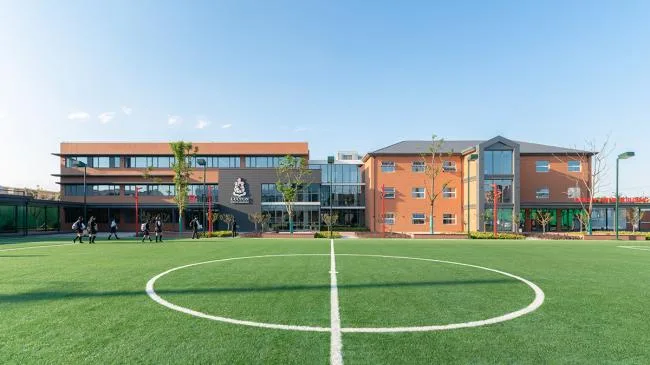
▲ View of Buildings B and A from the opposite side of the playground
Adjacent to the large stadium, outdoor seating areas provide students with spaces to relax during lunch or watch games. The indoor sports hall in the Science and Art Building features expandable partitions, allowing flexible use of the space for large events while maximizing natural light. Students enjoy versatile viewing options for both indoor and outdoor competitions. Additionally, the restaurant’s second-floor terrace offers panoramic campus views and serves as a venue for special events like evening barbecues and music parties.
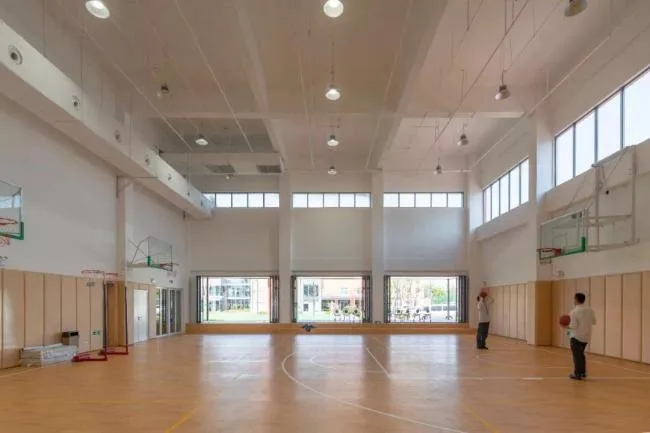
▲ Indoor sports field
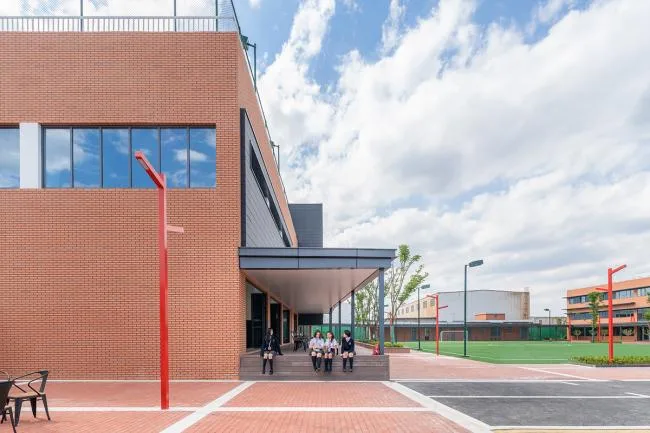
▲ Entrance on one side of Building C
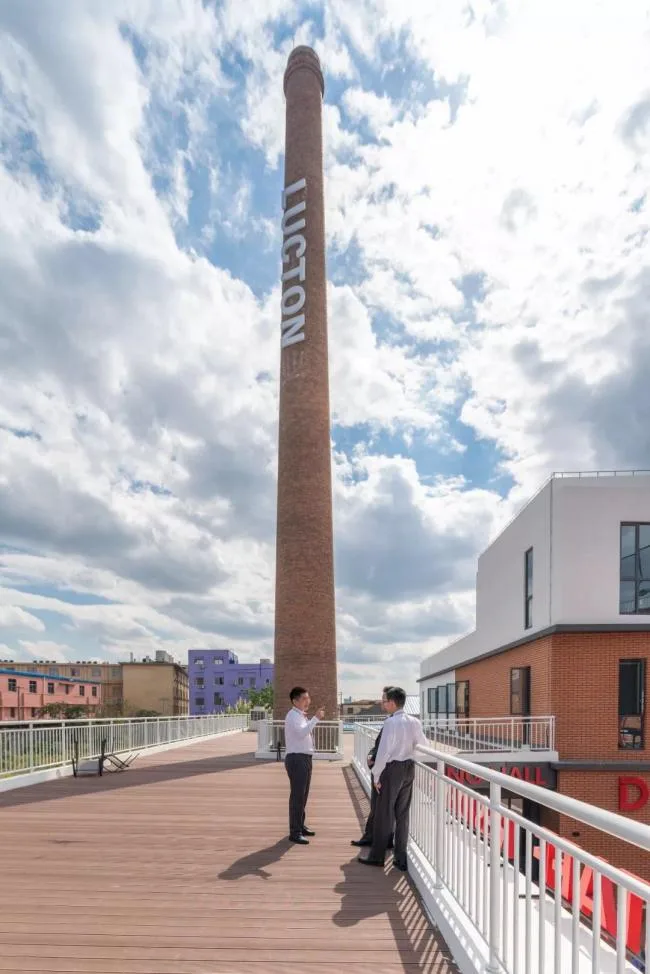
▲ Terrace on the second floor of the restaurant
In Building C’s Science and Art wing, the main staircase serves as a central architectural feature. Encased in gray steel and transparent glass, this stairwell emphasizes the building’s circulation and offers students direct views of the playground. At night, the illuminated staircase brightens the entire campus.
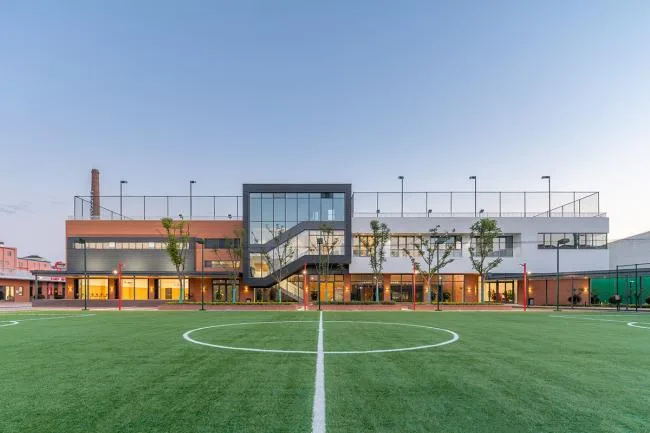
▲ Evening view of Building C
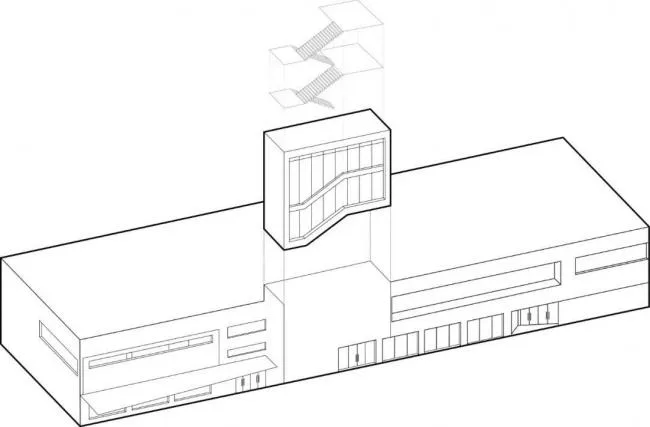
▲ Architectural drawing of Building C
Lucton School in the UK is a Baroque-style building influenced by Queen Anne architecture. In Shanghai’s Administrative Building A, the design simplifies intricate gable carvings into a striking sloped roof, paying homage to tradition. The central vertical section features exposed gray steel and transparent glass, emphasizing public space and creating a dialogue between historic red brick walls and modern elements.
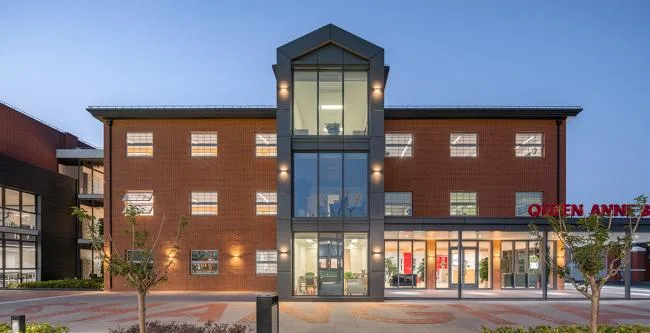
▲ Front night view of Building A
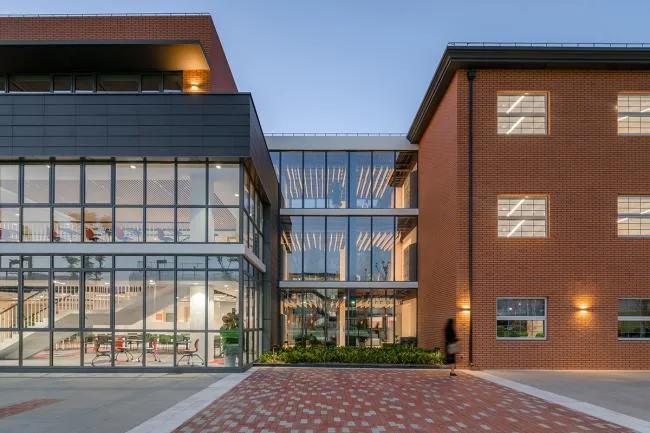
▲ Connection between Buildings B and A
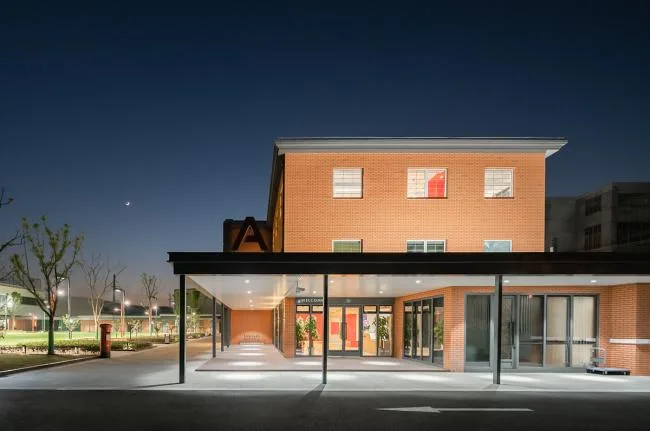
▲ Night view of Administrative Building A
The interior design divides functional zones using vibrant colors. The team’s approach embraces simplification—extracting essential elements from traditional classics and reinterpreting them with a modern design language. This reflects the evolving education system and teaching methods for future generations.
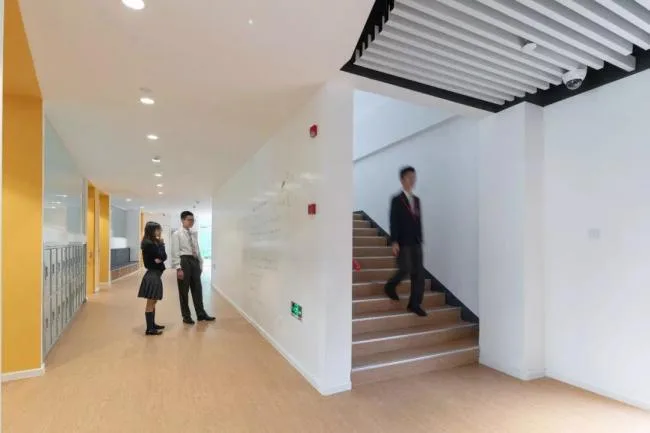
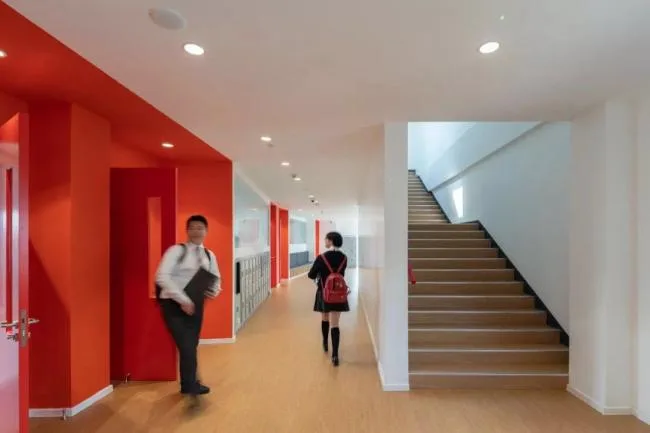
▲ Interior color-coded functional zones
By blending traditional British classics with innovative, futuristic design, the campus fosters an environment where students can develop character, cultivate morality, and pursue academic excellence in a peaceful, natural setting. Through BIM learning, they are encouraged to explore and shape their futures.
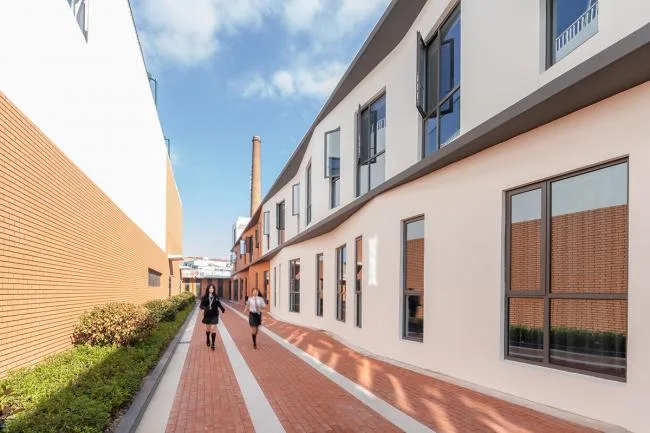
▲ Passage between Dormitory and Building C
Project Information:
Architectural firm: Eva Architects
Design team: Alan Wang, Chichi So, Cen Li, Xin Wang, Nicole Wu
Location: 90 Pudong Road W, Shanghai
Building area: 10,000 square meters
Photography: CreatAR Ima












Must log in before commenting!
Sign Up