
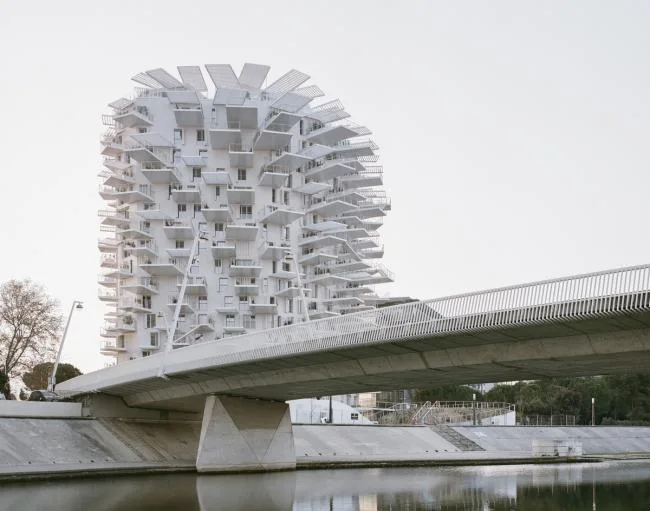
In 2013, the municipal government of Montpellier launched the “Folie Richter” design competition, aiming to enrich the city’s architectural heritage with a new tower blueprint. The request for proposals emphasized a bold vision, calling for a project that would adapt to its environment and include both retail and residential spaces.
Architects Manal Rachdi, Nicolas Laisne, and Dimitri Roussel collaborated with Japanese architect Sou Fujimoto. Despite their individual styles, all four drew inspiration from nature. Their collective vision for the White Tree Tower embraced inclusivity and harmony.
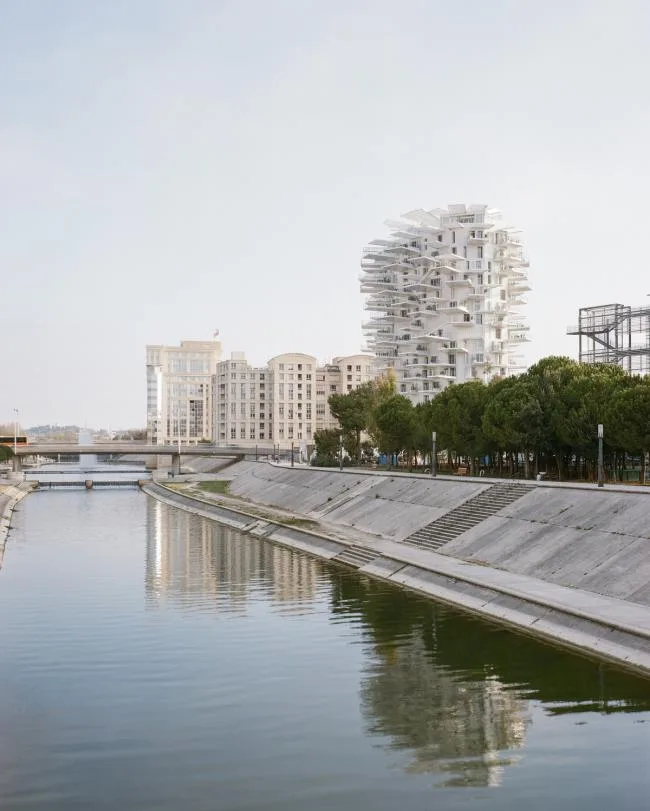
To prioritize people, the architects designed generous public spaces at both the base and top of the building. The ground floor features a glass-walled area connecting to the street, while the rooftop offers a public space accessible to residents and visitors alike. This ensures even those living on lower floors can enjoy panoramic views.
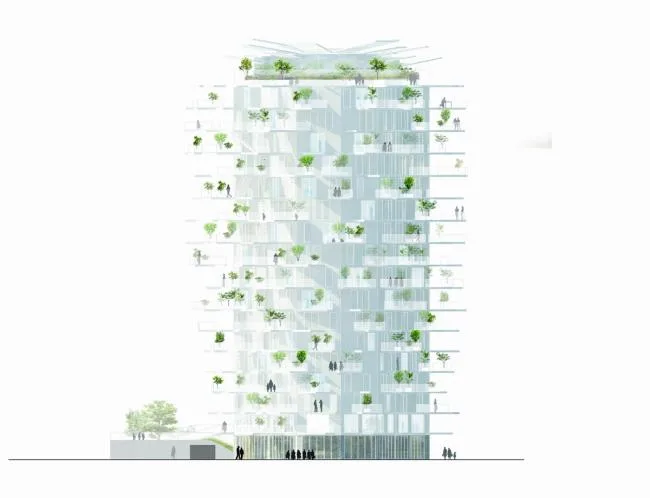
▲ South elevation view
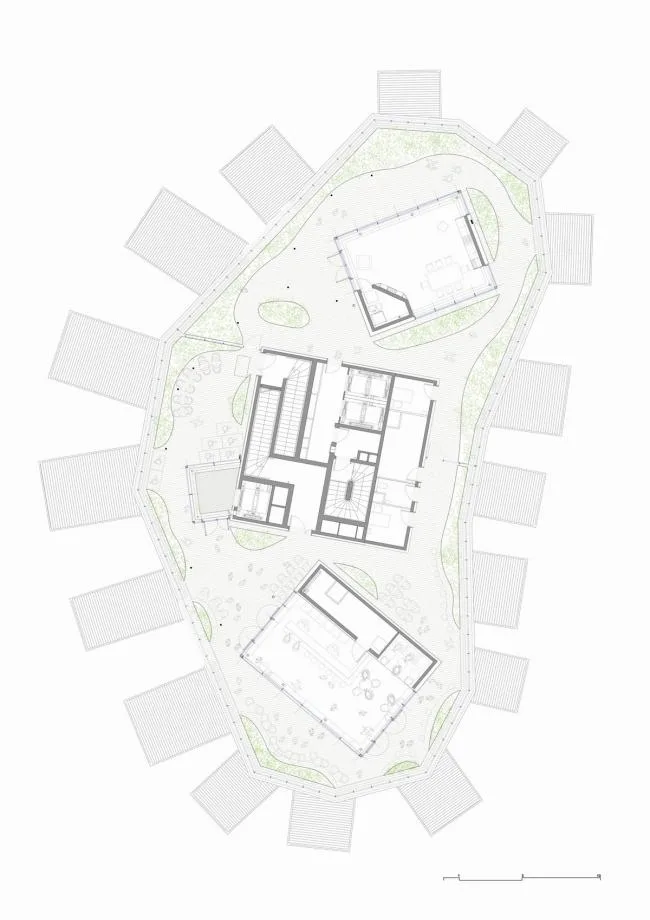
▲ Roof Plan
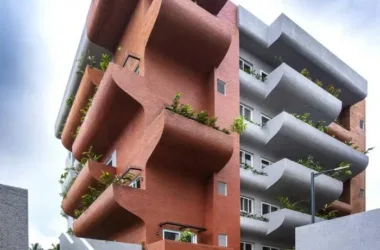
What makes this project unique is its tree-inspired design. The four architects developed a structure with a spiritual quality reminiscent of trees, with balconies that protrude like branches, casting shadows across the facade. Throughout the design phase, careful attention was paid to both the environment and the local lifestyle.
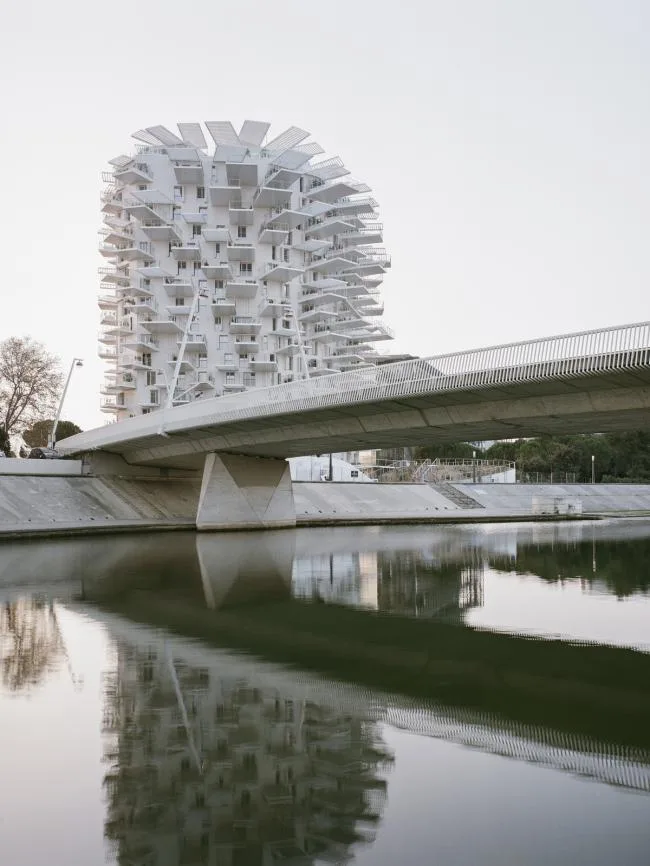
The balconies and pavilions have enhanced residents’ outdoor experiences, fostering new relationships between people and their environment. Each apartment features an outdoor area of at least 7 m², with the largest reaching 35 m². Multiple levels of privacy and layout options are available; duplex residents can access more than one balcony. To ensure pleasing views for all apartments, the architects conducted spatial experiments using physical 3D models as blueprints.
Technological innovations abound in the White Tree Tower. Among them is the world’s first 7.5-meter-high cantilevered balcony. These unique outdoor spaces seamlessly connect indoor and outdoor living, allowing residents to enjoy both environments. In a city blessed with 80% sunshine, this connection is a true luxury.
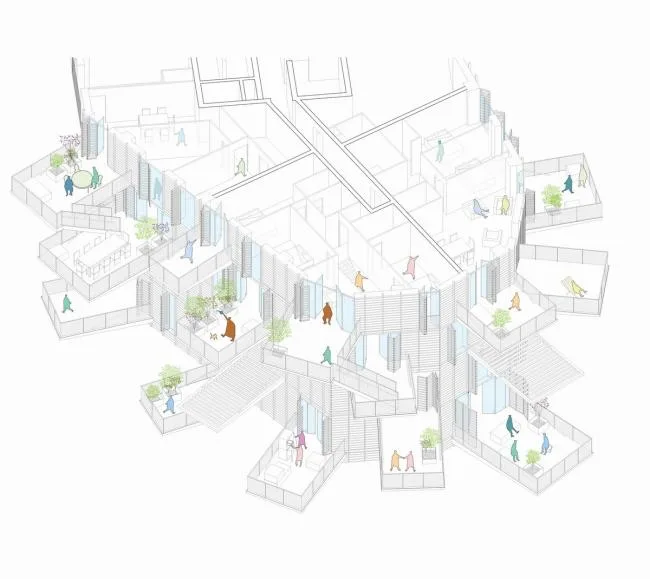
▲ Axonometric diagram
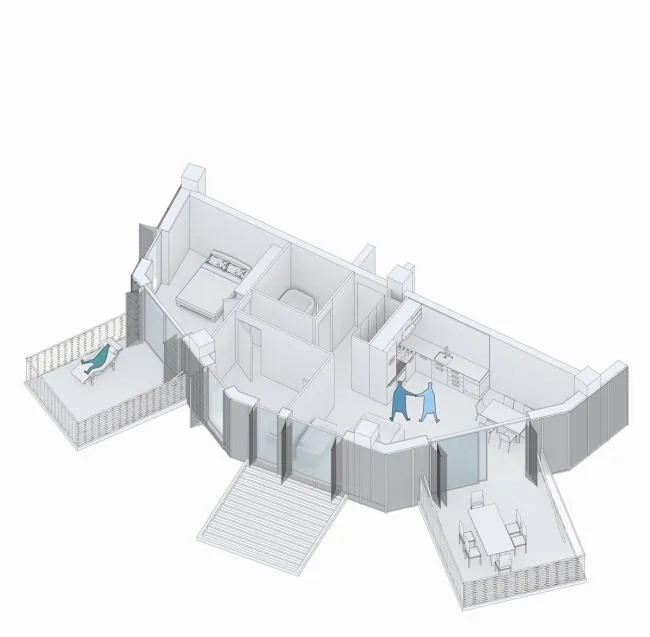
▲ Single apartment axonometric drawing
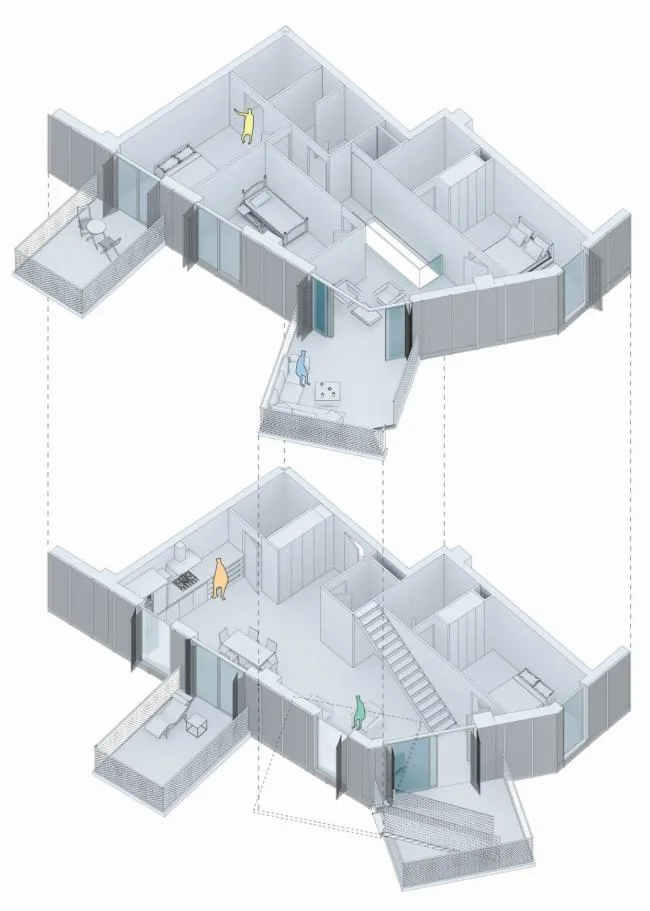
▲ Duplex apartment axonometric drawing
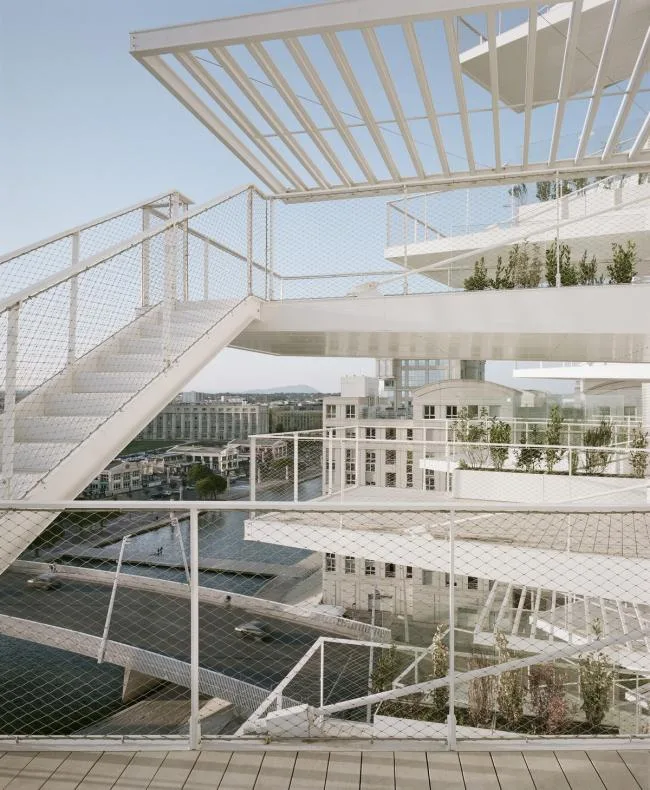
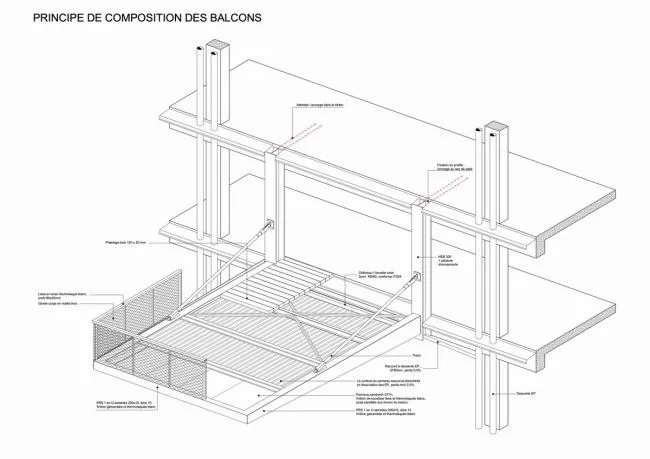
▲ Balcony analysis
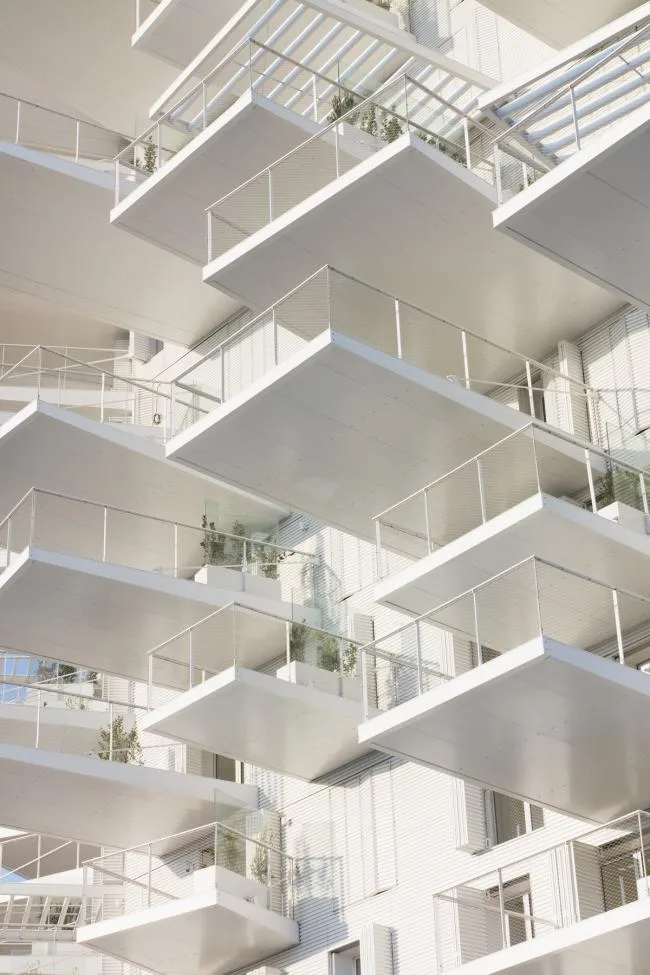
The proportion of balconies emphasizes the outdoor spaces, resembling folded leaves reaching toward sunlight. These spacious balconies offer an environmentally conscious solution suited for the southern ecological environment. They provide effective protection for the facade, offering necessary shade and disrupting diagonal winds, allowing for harmonious air circulation.
The architects envisioned the new tower as a comprehensive development. To address “tower syndrome,” the design emphasizes public spaces, including a scenic park along the Lez River, with the tower itself open to the public.
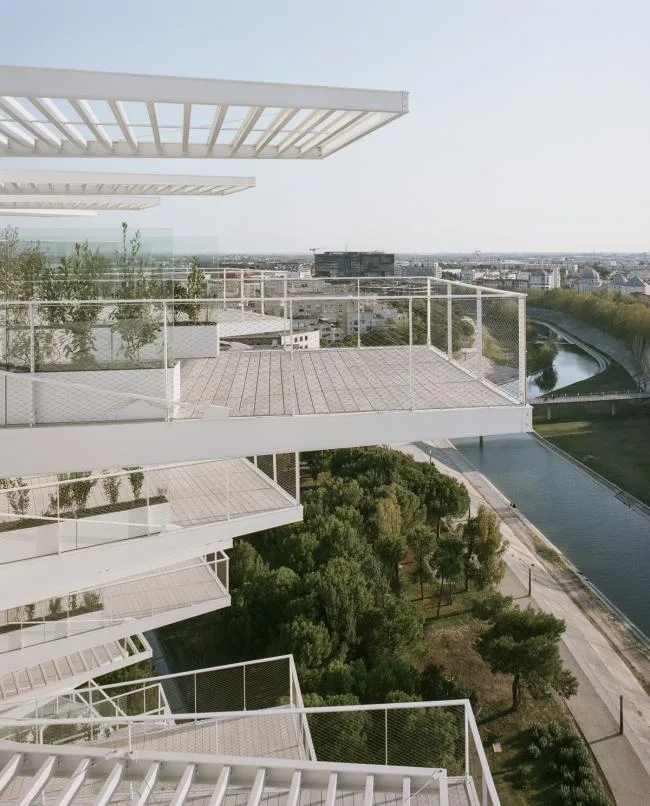
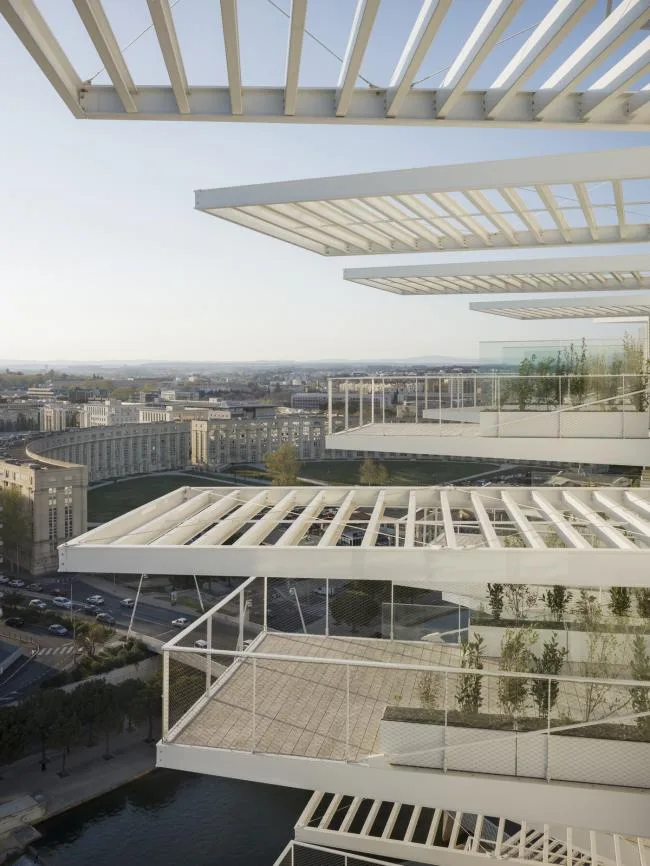
This 17-story building actively participates in urban life, aiming to be accessible to all Montpellier citizens. The ground floor houses an art gallery, while the rooftop features a bar connected to a panoramic garden. Once fully embraced by the community, the White Tree Tower will stand as a proud landmark and tourist attraction for Montpellier.
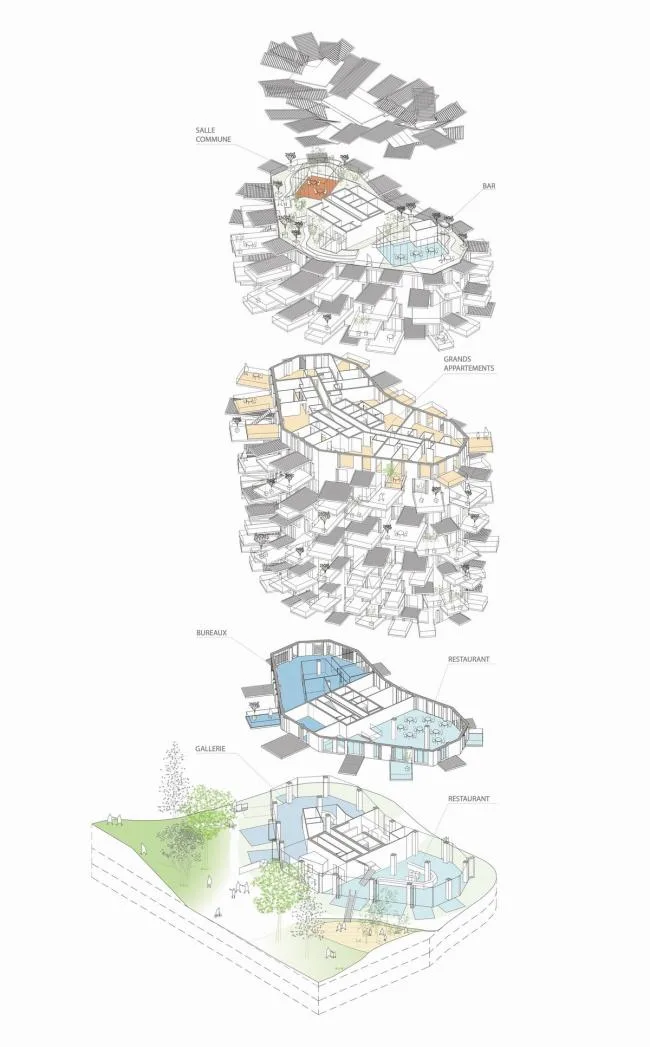
▲ Axonometric diagram
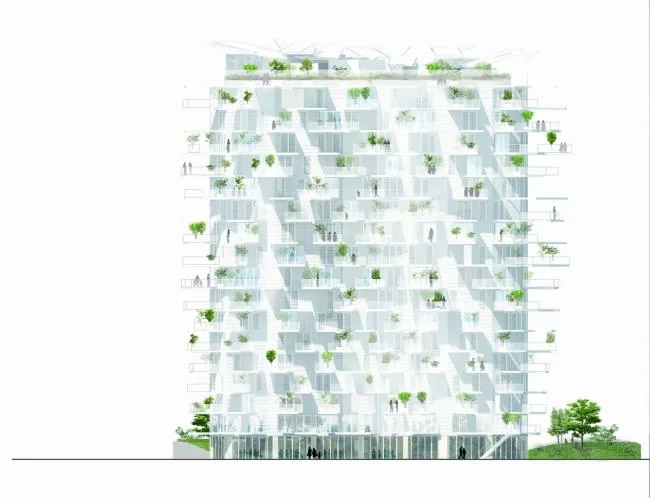
▲ East elevation view
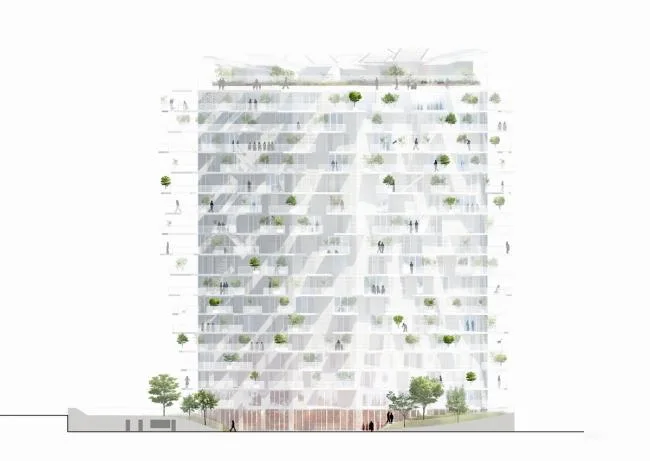
▲ West elevation view
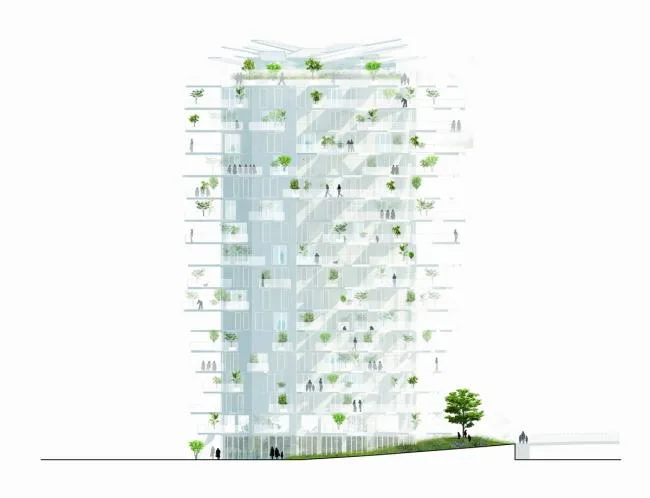
▲ North elevation view
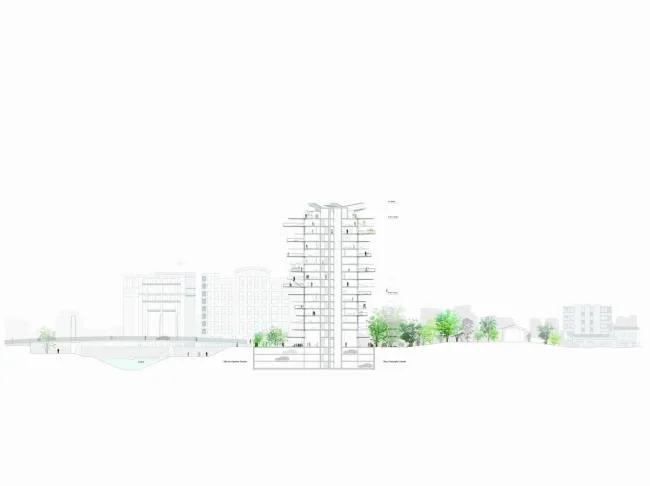
▲ Sectional view
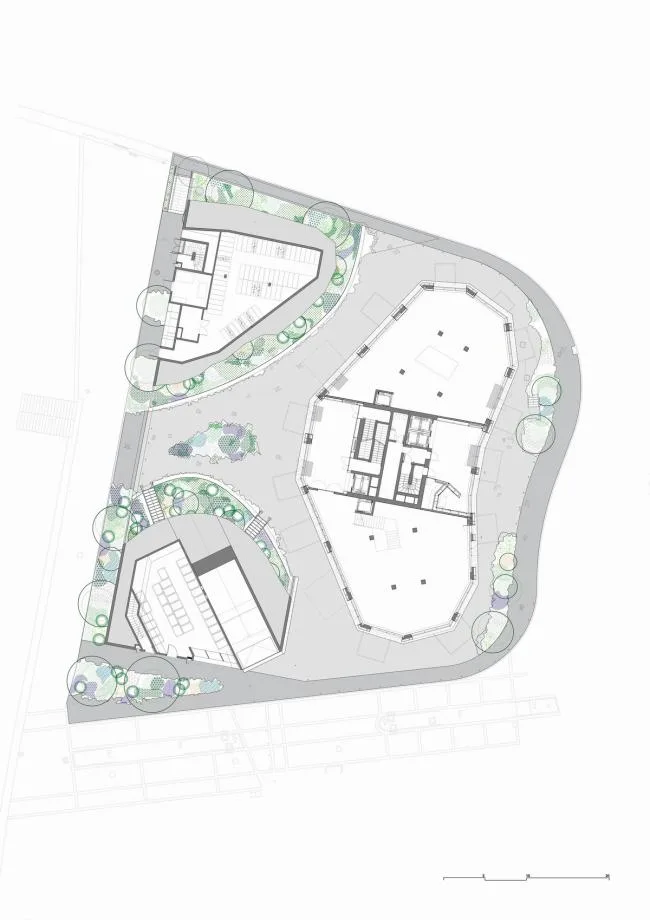
▲ General layout plan
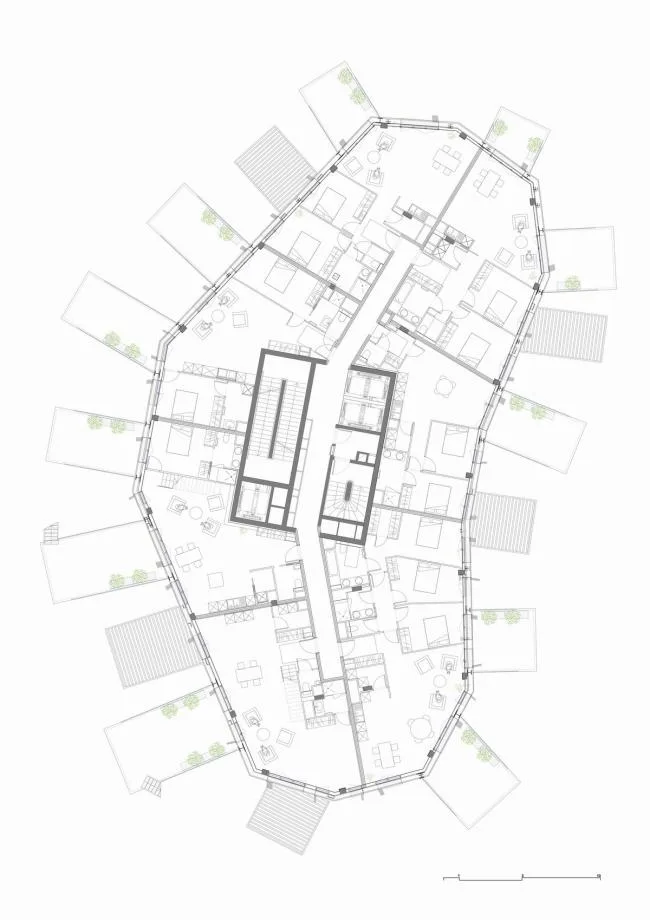
▲ Ninth floor plan
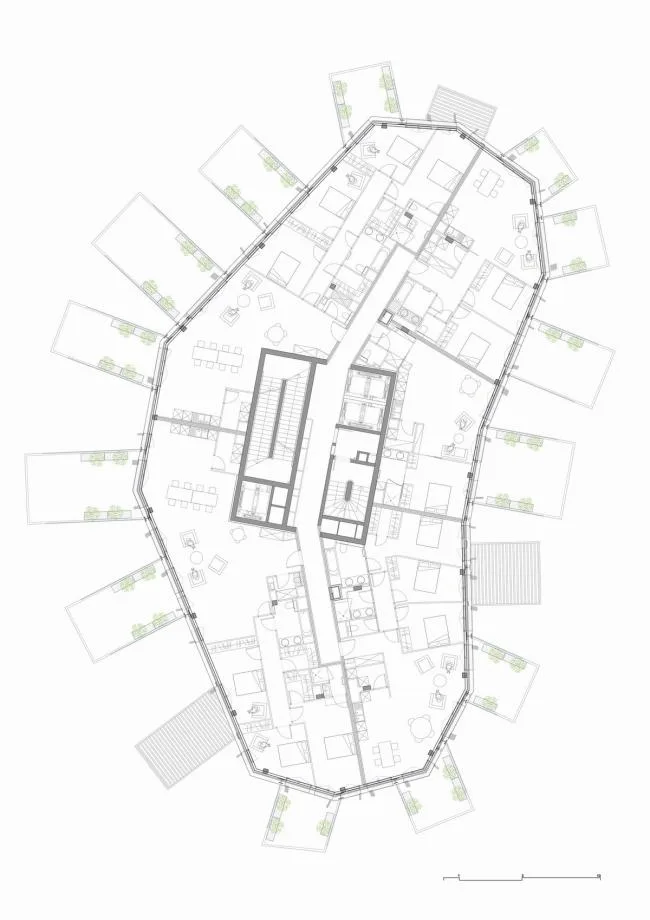
▲ Sixteenth floor plan
Project Information:
Designers: Dimitri Roussel, Manal Rachdi (OXO Architects), Nicolas Laisne, Sou Fujimoto Architects
Address: Place Christophe Colomb, 34000 Montpellier, France
Category: Apartment
Building Area: 10,225.0 square meters
Project Year: 2019
Photographer: Cyrille Weiner
Clients: Opalia, Promeo Patrimoine, Evolis Promotion, Crédit Agricole Immobilier Languedoc-Roussillon
Construction: André Verdier (Structure), ARGETEC (Fluids), Franck Boutté Consultants (Environmental), VPEAS (Cost management), Relief GE (Surveying, roads and services), Les Eclaireurs (Lighting), SOCOTEC (Inspection), Efectis (Fire performance)
Landscape Design: Now Here Studio












Must log in before commenting!
Sign Up