
How Can Space Be Used to Liberate Children’s Natural Curiosity?
Lead designer Cheng Fengqi explained, “Our goal was to create an engaging exploration space that breaks away from the usual rigidity and orderliness found in indoor environments. The inspiration came from our childhood imaginations of ‘secret bases’—structures reminiscent of ant nests, connected by narrow paths and full of playful surprises.”
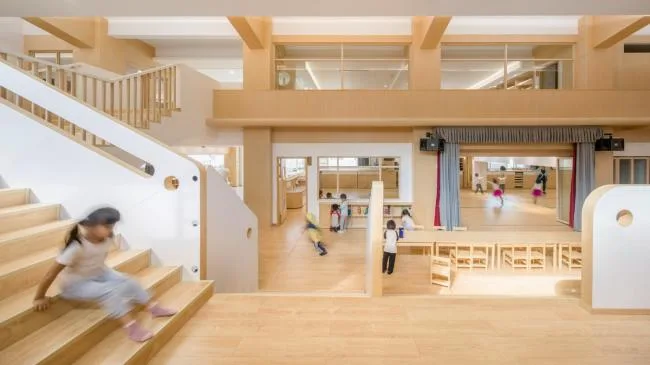
The Lion International Kindergarten is situated within an older neighborhood in Tianhe District, Guangzhou, surrounded by aging residential buildings. This community has a notable lack of activity spaces for young children, who are in urgent need of a safe and comfortable environment to learn and play.
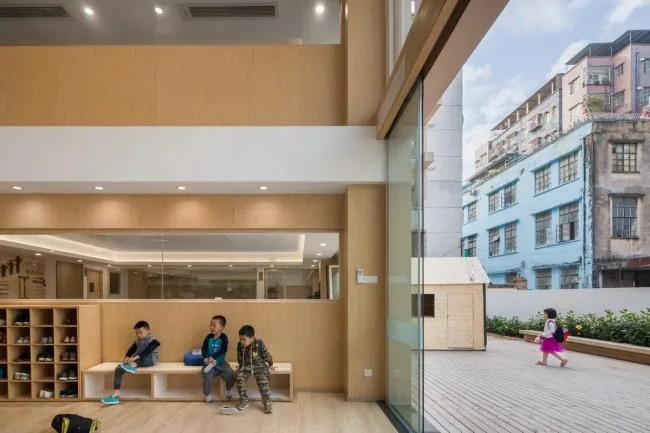
The project occupies a modest 500 square meter former grain warehouse. Facing challenges related to functionality, spatial constraints, and the surrounding environment, VMDPE Roundabout Design aimed to overcome these limitations by creating a healthy, eco-friendly, and sustainable growth environment for children in this old urban area.
As an educational institution that encourages free exploration, Lion International Kindergarten embraces the STEAM philosophy, integrating science, technology, engineering, art, and mathematics. This approach aligns with international standards, emphasizing holistic development. It nurtures children’s observation, problem-solving, collaboration, critical thinking, and communication skills, while also fostering social responsibility—encouraging them to protect the environment and cherish life within a free and exploratory setting. VMDPE Roundabout Design seamlessly incorporated this STEAM philosophy into the interior design.
Expanding Spatial Hierarchy and Form
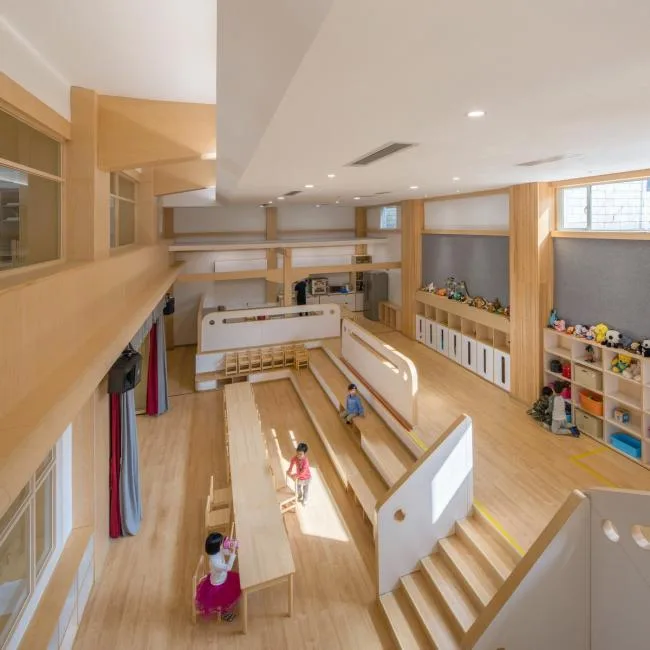
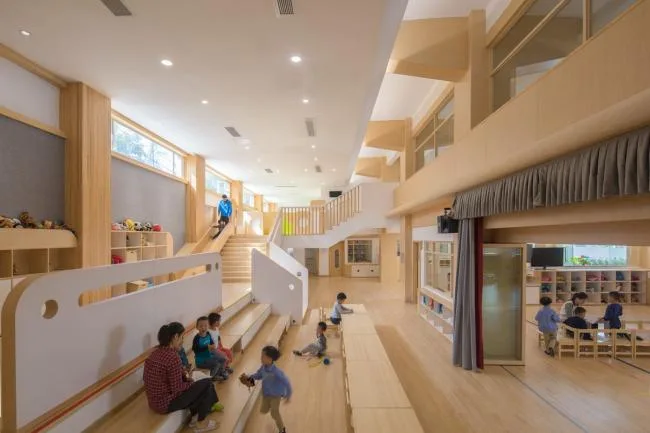
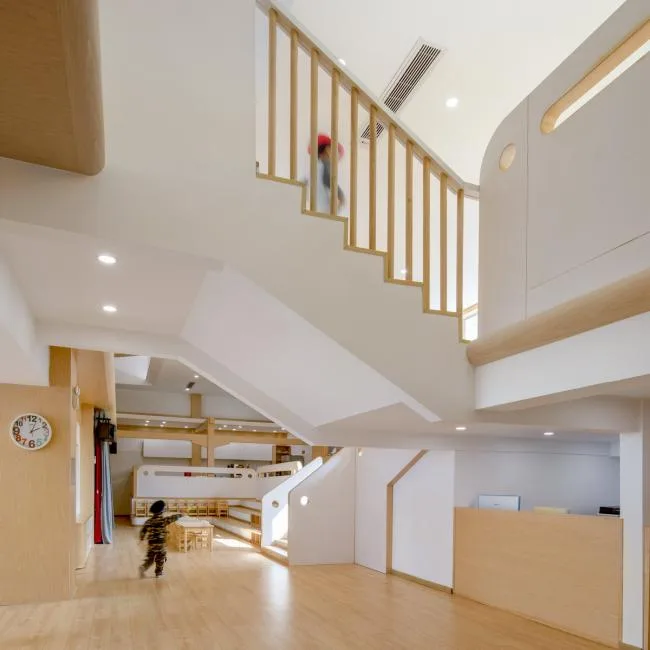
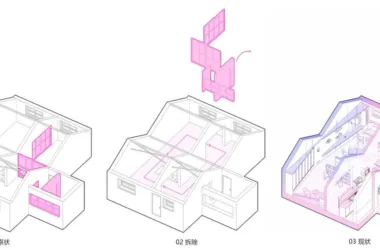
Before renovation, the site was a small warehouse with a height of nearly 7 meters but featured narrow windows which limited natural light on one side. Prioritizing children’s physical and mental well-being, the circular path design maximizes strengths and minimizes weaknesses by dividing the space into two zones. The front area serves as classrooms with ample sunlight, while the back area, leveraging the tall ceiling and expanded original windows, offers transparent, open spaces for free exploration. A prominent staircase running through the space further divides it, creating diverse areas that foster children’s natural curiosity.
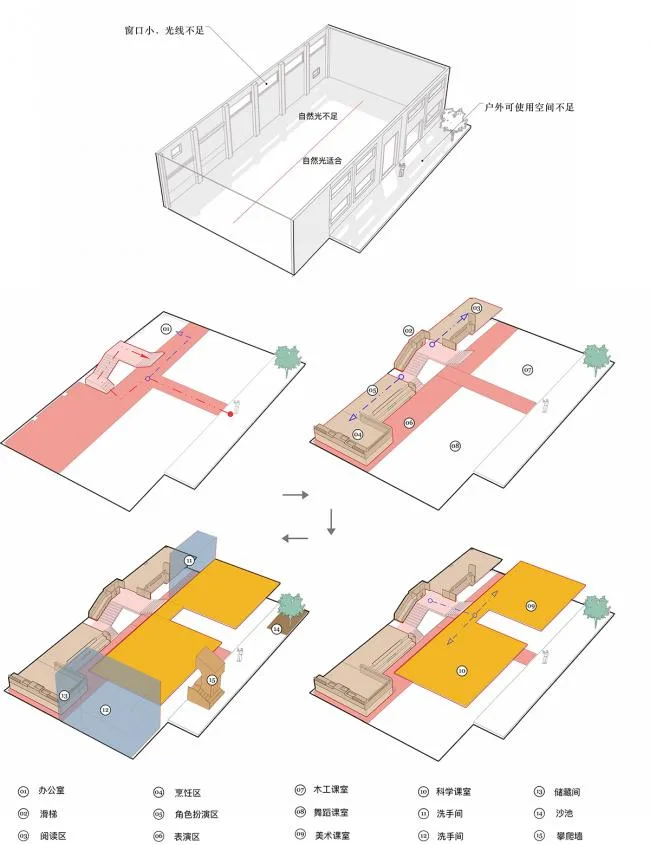
▲ Analysis Diagram
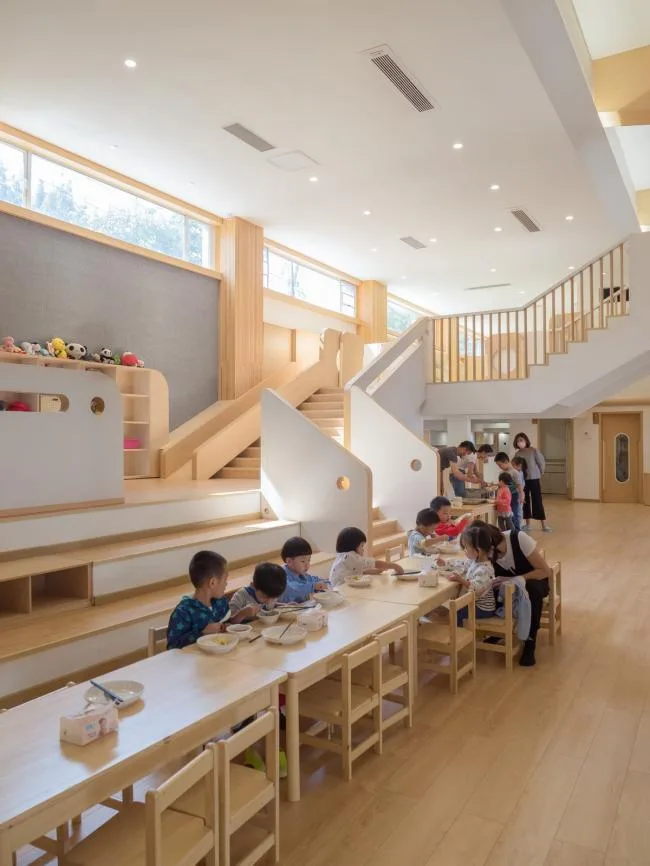
To meet international educational standards, the front classroom area is split over two floors: the first floor houses woodworking and dance classrooms, while the second floor contains art and science classrooms. This zoning supports the interdisciplinary nature of STEAM education, promoting diverse teacher-student interactions. The back free exploration space includes slides, reading platforms, open cooking classrooms, and role-playing areas, all connected by the central staircase.
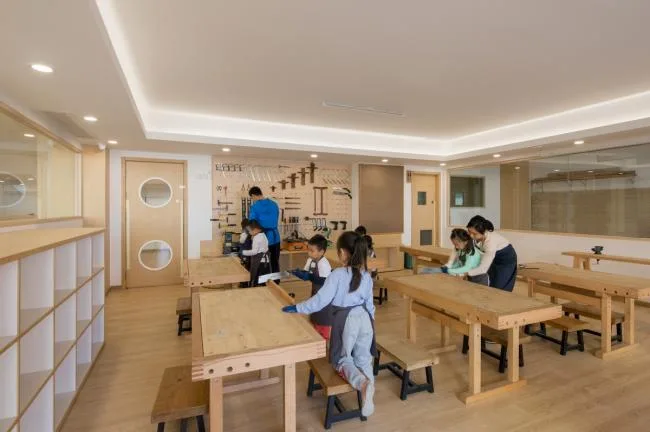
▲ Woodworking Classroom
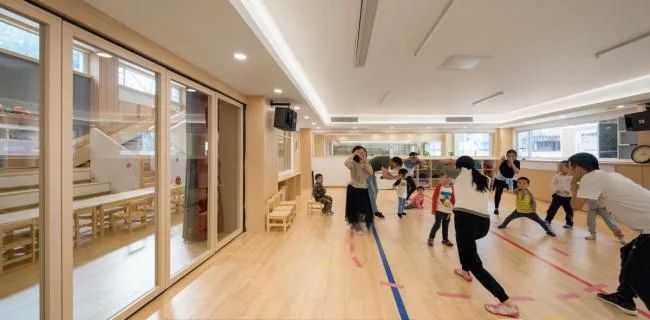
▲ Dance Studio
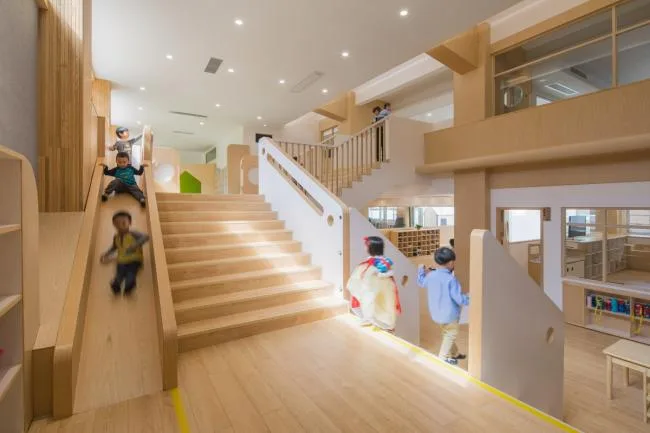
▲ Slide
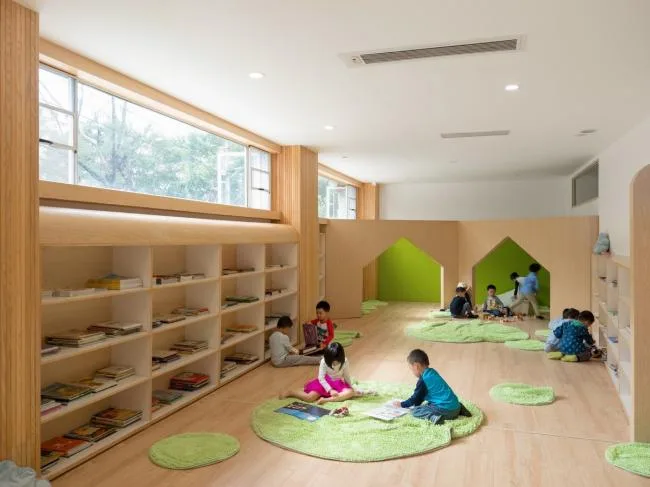
▲ Reading Area
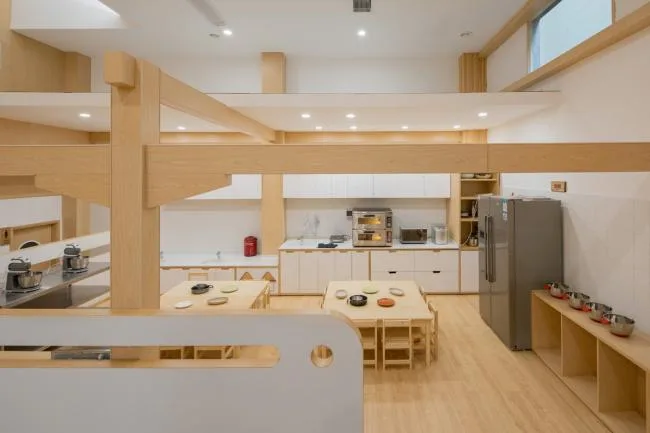
▲ Children’s Cooking Classroom
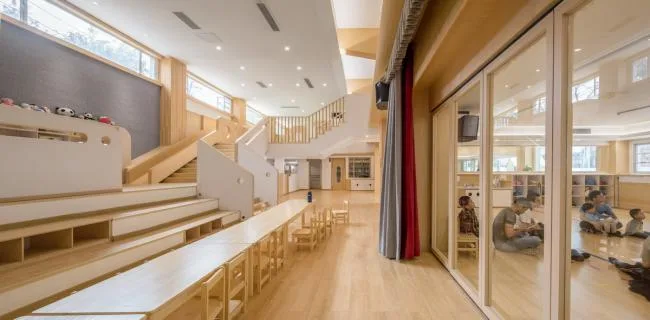
▲ Performance Area
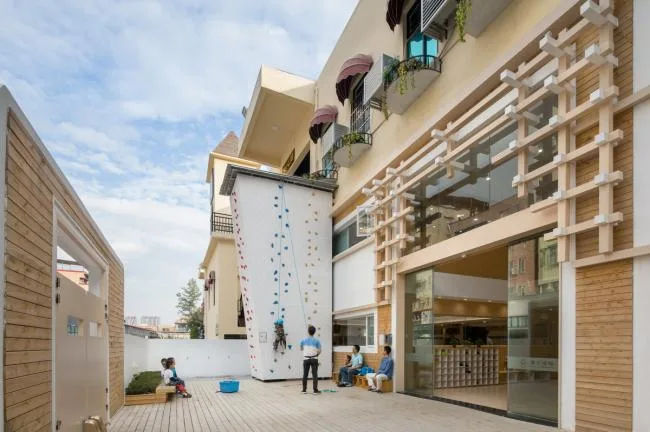
Additionally, the classroom doors on the first floor open onto an outdoor space, which can be used for small performances or group activities. By creatively utilizing spatial corners, the design strategically assigns different functional areas, enriching the early childhood education experience. This circular path design addresses shortcomings typically found in Chinese early education facilities by creating diverse indoor activity zones that stimulate children’s exploration and allow them to freely pursue their interests.
Modular and Sustainable Design
The project uses natural wood tones throughout, reflecting the designers’ and educators’ commitment to sustainability and environmental friendliness through simple, elegant design. Special emphasis was placed on safety and environmental quality, as Circle Road Design specializes in early childhood education spaces. A modular design approach was adopted, with all elements designed and produced off-site and then assembled on location. This method reduces site pollution and minimizes potential hazards to children, fully achieving the project’s sustainability goals.
Yuandao Design also highlights that modular design effectively controls costs by clearly defining spatial functions and producing targeted modules. This allows clients to receive an overall budget estimate early in the design phase. Although located in a major Chinese city, this cost-effective, healthy, and sustainable modular approach is highly practical and applicable to educational spaces in smaller cities across China.
Child-Friendly Scale and Attention to Detail
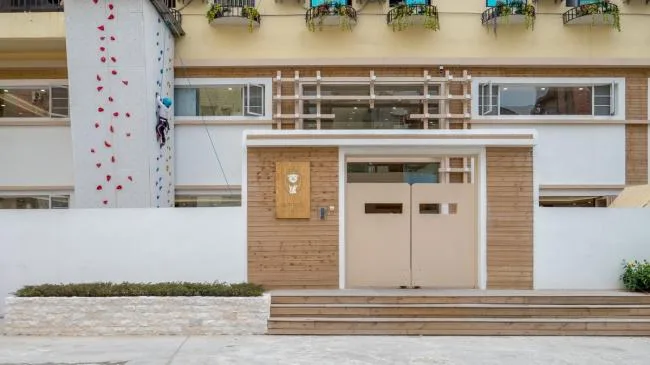
In terms of materials and details, the designers selected child-friendly building materials and customized furniture sizes to fit children of various ages. Electrical outlets and switches were installed out of children’s reach for safety. The small outdoor courtyard was thoughtfully designed to expand children’s activity options—a rare feature in Chinese early education facilities. Since children naturally enjoy water, sand, and stone, outdoor sandpits and climbing walls were included to support their developmental needs.
The Lion International Kindergarten project embodies a comprehensive approach to early childhood development through design, establishing it as a model international educational growth space.
With the increasing focus on early childhood education in China, Yuandao Design has responded professionally to site limitations while aligning with the brand’s international educational philosophy. The project aims to serve as a community resource, fulfilling social functions centered on safety, health, and sustainability.
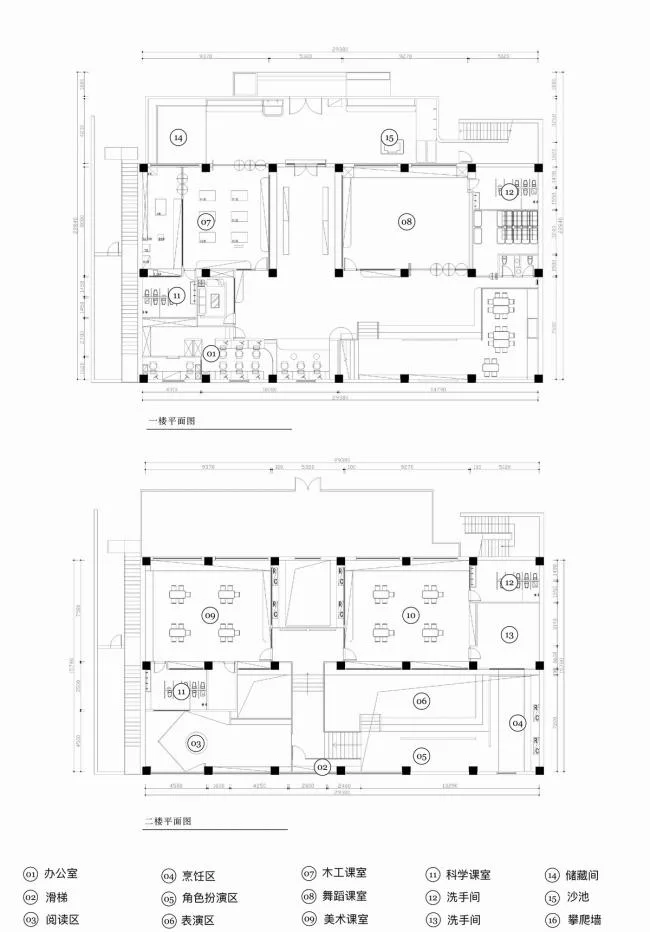
▲ Plan View
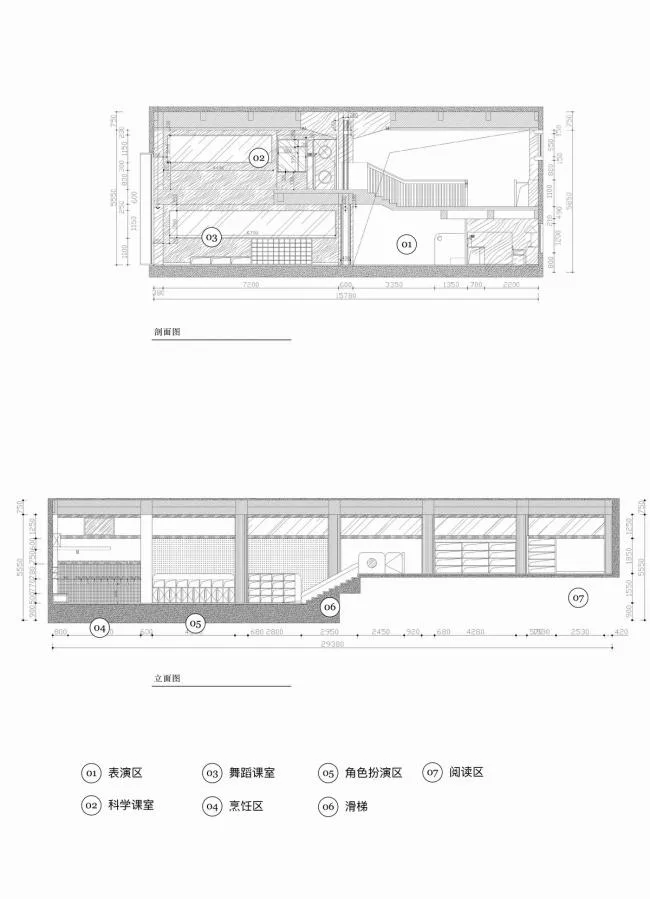
▲ Elevation View
Project Information:
Project Name: Guangzhou Lion International Kindergarten
Location: Yuancun 507 Creative Park, Tianhe District, Guangzhou, China
Design Company: VMDPE Roundway Design
Design Period: March 2018 – May 2018
Construction Period: May 2018 – September 2018
Site Area: 700 m²
Building Area: 500 m²
Indoor Area: 1000 m²
Status: Completed
Lead Designer: Cheng Fengqi
Design Team: Zhang Jian, Lu Yuchun
Project Type: Building facade renovation, interior design, lighting design, prop design
Structure: Frame Structure
Materials and Brands:
Lighting: Philips
Flooring: LG
Wall Paint: buoncolor
Photography: Half Shot Photography
Text: Zhang Sen Text Working Group












Must log in before commenting!
Sign Up