
Last bridge spanning the Huangpu River in Shanghai:
Kunyang Road Cross River Bridge
After 41 days of prefabrication and on-river assembly,
the substructure of the south bank approach bridge has been fully completed.
The tallest double-column stands at 23.15 meters, setting a new record for the highest double-section and double-root prefabricated assembly column in Shanghai.
New Record!
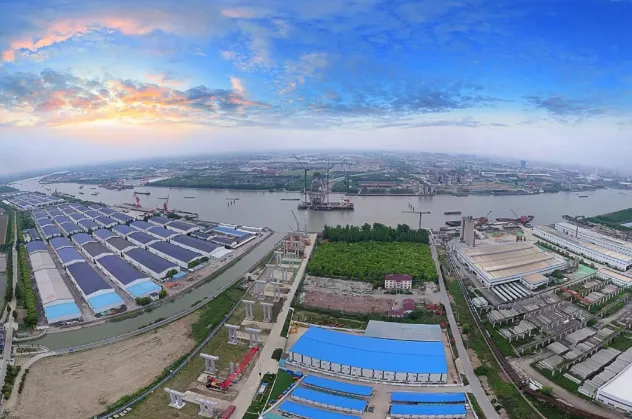
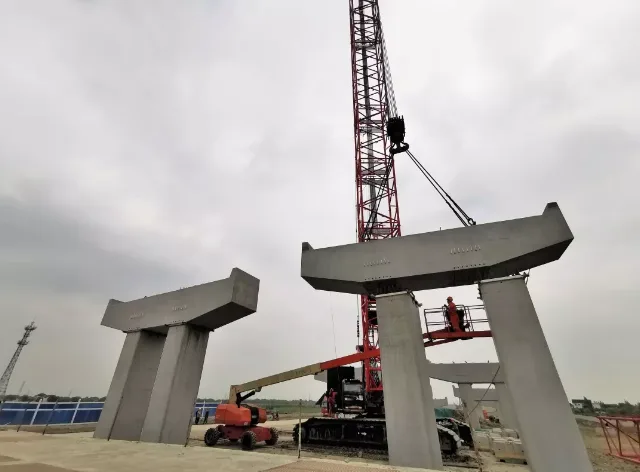
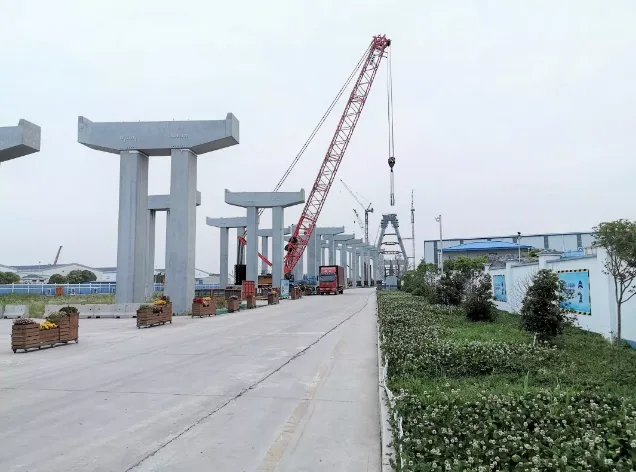
On May 18th, at the construction site on the south bank of the Kunyang Road Cross River and Supporting Road Project in Shanghai, the installation of the final prefabricated cover beam marked the completion of the prefabricated assembly substructure for the south bank approach bridge. This milestone was achieved by the Tunnel Group Road and Bridge team.
Currently, the main bridge’s tower columns are beginning to take shape. The next phase involves installing prefabricated small box girders for the upper structure. The entire project is scheduled for completion by 2020.
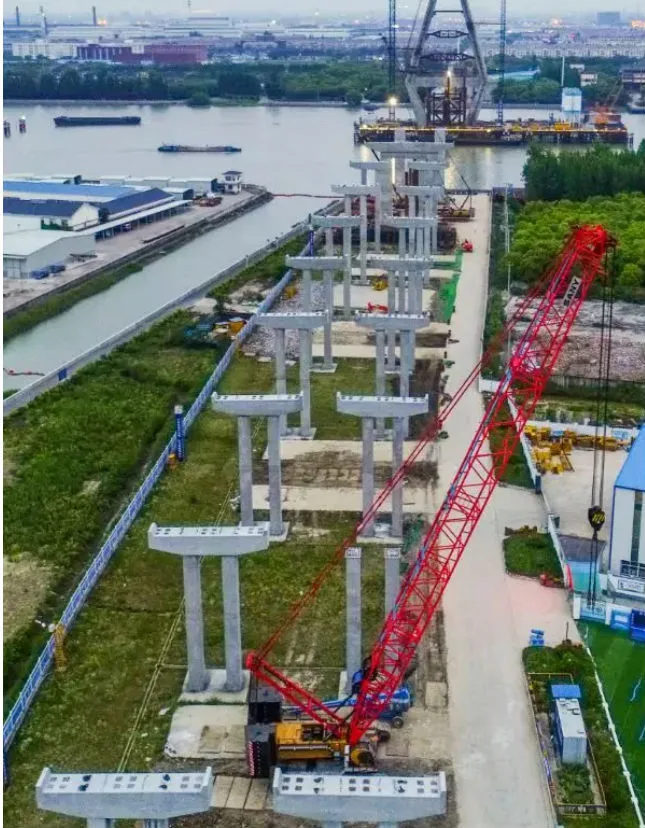
How was this bridge built on the banks of the Huangpu River without scaffolding or on-site pouring?
By assembling building blocks!
The Shanghai Kunyang Road Cross River Project starts at Kunyang Road in Minhang District to the north and extends to Puwei Highway in Fengxian District to the south. The north bank approach bridge spans 719.326 meters, while the south bank approach bridge measures 680 meters.
This engineering approach bridge utilizes double-column cap beam piers, with both the cap beams and columns prefabricated in a factory and assembled on site. This construction method marks the first time such technology has been applied to a Shanghai bridge crossing the Huangpu River.
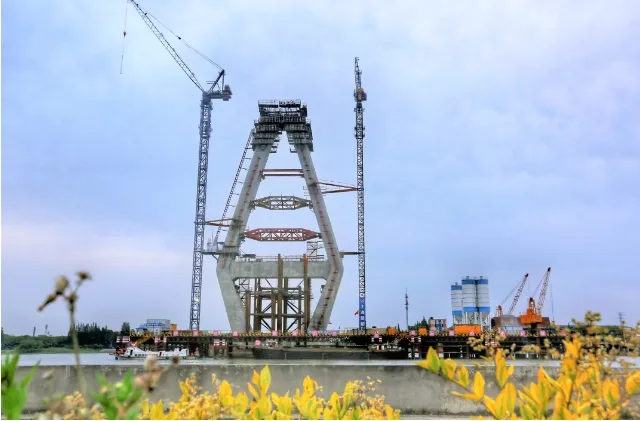
The south bank approach bridge features a total of 92 prefabricated columns and 32 prefabricated cover beams, including 28 double-section columns. The shortest double-section column measures 14.64 meters, while the tallest reaches 23.15 meters.
The assembly of these double sections and double roots not only raised the bar for difficulty and precision but also set a new record for the height of prefabricated assembly columns in Shanghai.
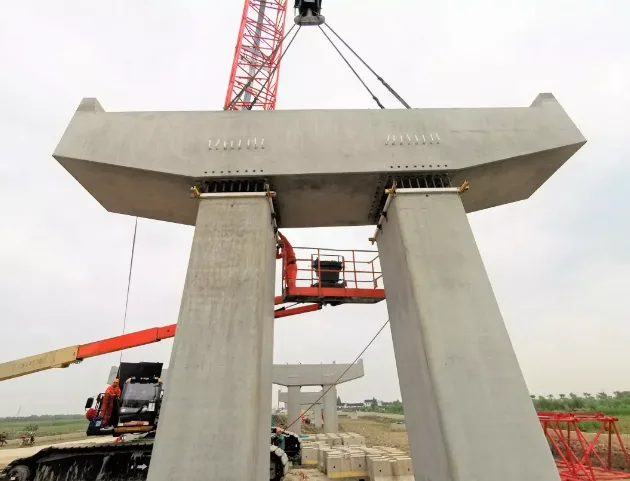
Unlike traditional bridge construction, prefabricated assembly bridges eliminate the need for scaffolding, manual reinforcement binding, or on-site concrete pouring. Instead, prefabricated components are transported directly to the site for assembly.
This factory-based prefabrication method offers clear advantages: improved quality control, reduced construction time, and significant reductions in noise and dust pollution on site. It represents a new trend toward green, energy-efficient, and smart manufacturing in bridge construction.
Step-by-step progress and continuous innovation lead to improved precision
The Tunnel Co., Ltd. Road and Bridge Group relentlessly researches and innovates prefabricated assembly technology, guided by the principle that “technology drives production.”
They strive to enhance the precision and finish of prefabricated components throughout every stage—from factory fabrication, transportation, on-site installation, to precise adjustments, seat grouting, and connection grouting. Each process is tightly controlled with alignment errors kept under 2 millimeters.
To guarantee production quality and flawless component fitting, the group employs standardized tire frames, large surface high-strength formwork, and high-performance concrete designs.
By carefully controlling raw concrete materials and continually refining production, they have established a fixed component acceptance standard, resulting in significant improvements in both concrete appearance and precision.
Author: Xu Jing














Must log in before commenting!
Sign Up