
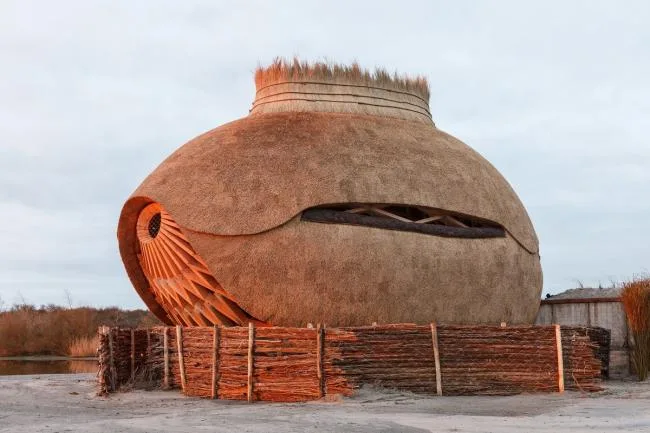
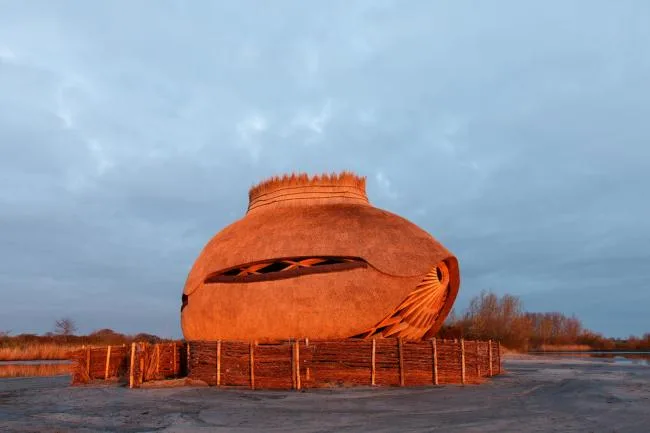
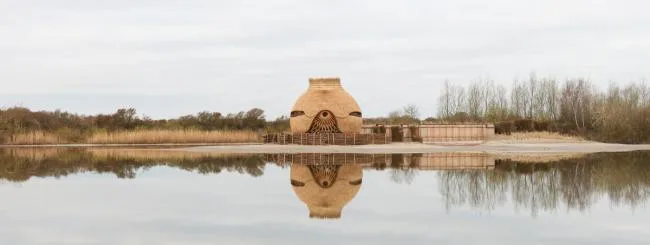
Tij (a Dutch pun where “Tij” means “tide” and also sounds like “egg” when pronounced quickly) is the largest and most striking project among a series created following the opening of the Haringvliet sluice in November 2018. The name reflects the returning tide of the Haringvliet waterway, symbolizing renewal and life.
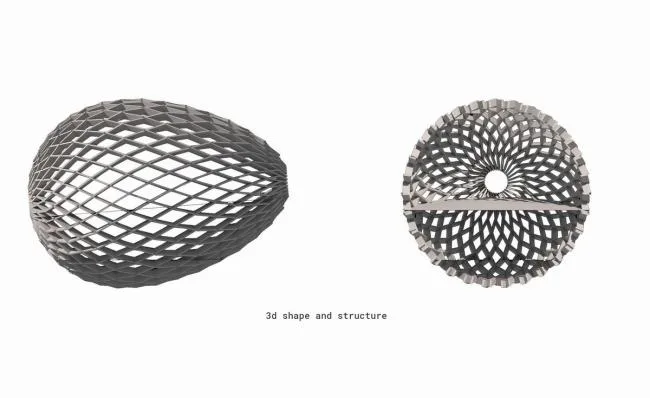
Shape and Structure
The opening of the water gates aims to improve water quality and boost biodiversity by facilitating the migration of fish from the North Sea to the Maas and Rhine river deltas. This initiative creates a new, salt-tolerant ecosystem where biodiversity in surrounding nature reserves will gradually increase, fostering a more resilient environment over time.
To encourage people to engage with and explore these ecological changes, a series of bird observation stations have been constructed in the Haring Waterway area.
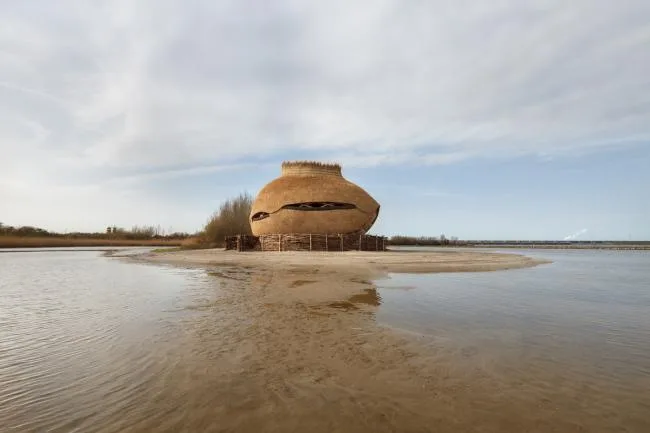
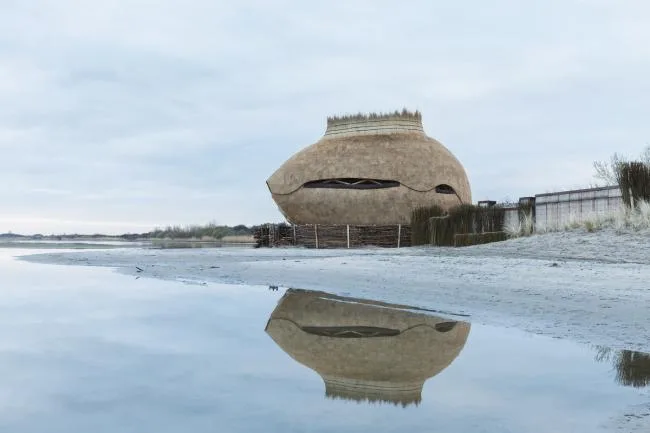
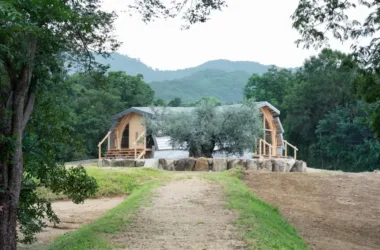
Tij is an egg-shaped bird observation house located within the Scheelhoek Nature Reserve near the Haring Waterway. Inside the coastal defense line lies a vast reed bed, while outside are flat sand islands that serve as breeding and foraging grounds for birds like the common tern, heron, and the locally iconic white-billed crested tern.
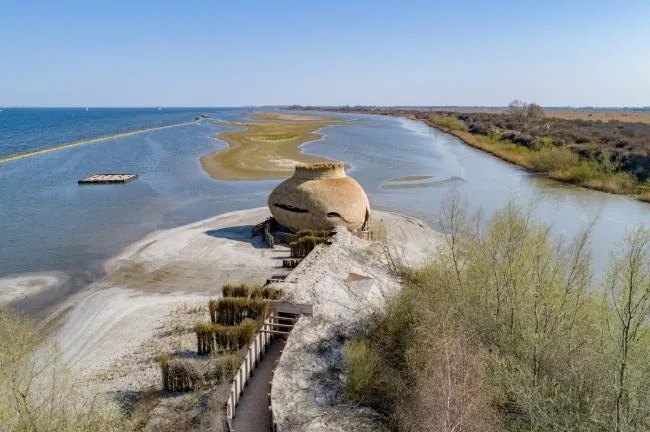
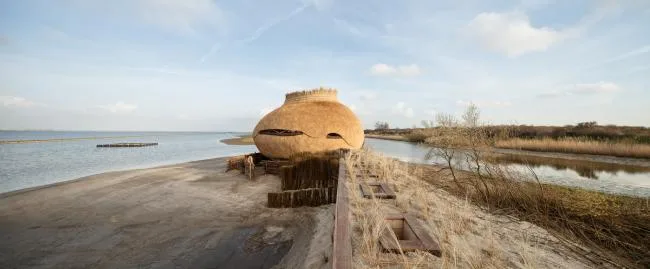
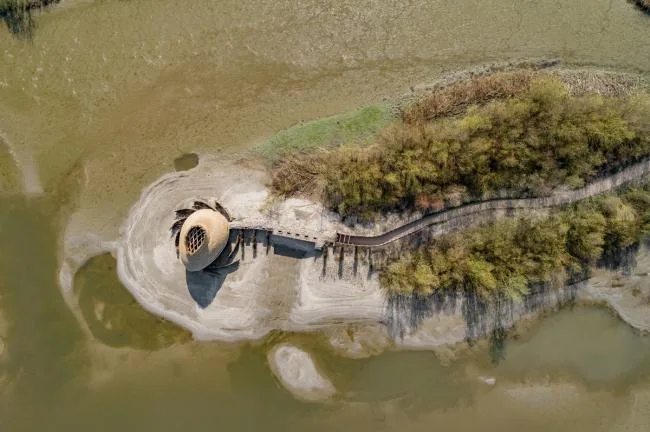
The Tij Bird Watching House is part of a comprehensive landscape design that allows visitors to walk from the parking lot through the Scheelhoek Nature Reserve. Along the path, visitors can observe habitats of various bird species, including sand swallows, wading birds, and terns, all thriving in this environment.
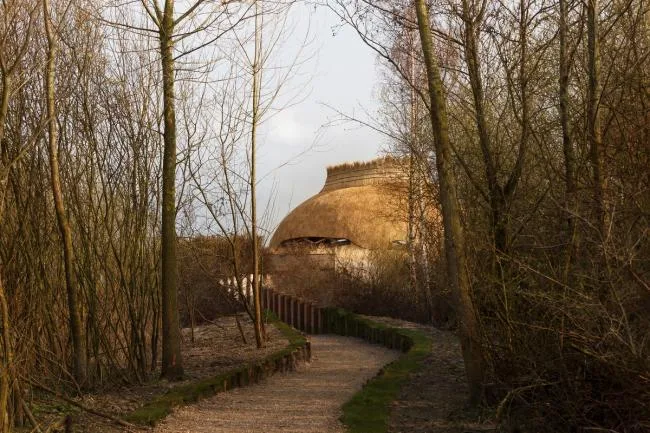
To minimize disturbance to the birds, the final section of the trail is designed as a tunnel constructed from repurposed mooring poles and red iron planks formerly used in the brick industry. The tunnel’s interior is lined with sand, providing nesting space for terns and wading birds, while the exterior serves as a nesting site for cliff swifts.
The “Bird Egg” observation house is located at the trail’s end, offering visitors a unique vantage point to observe hatching terns and various water-associated bird species.
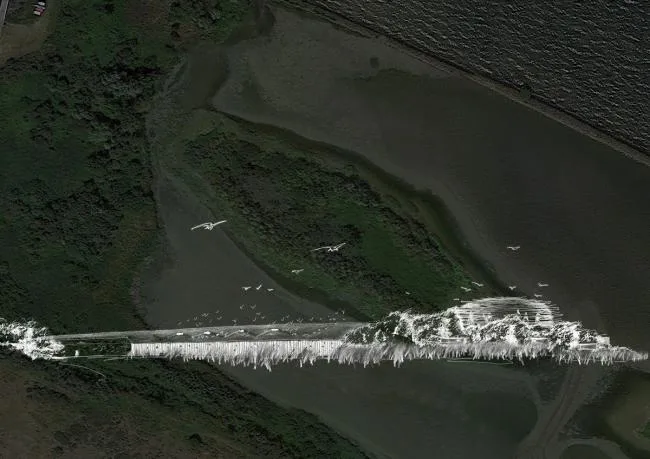
Initial Draft Sketch
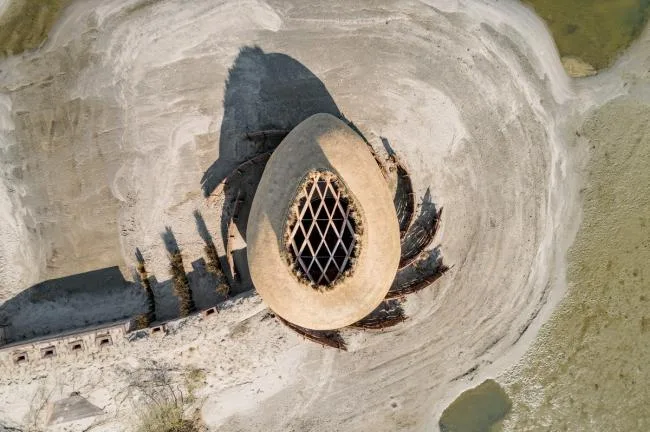
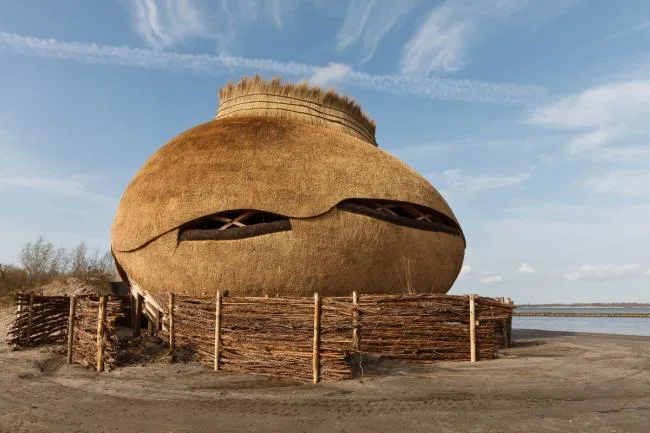
The bird watching house is built on a sandy base shaped like the white-billed tern’s egg, mimicking a natural nest. The nest structure consists of vertically arranged chestnut wood strips, reeds, and small sand dunes.
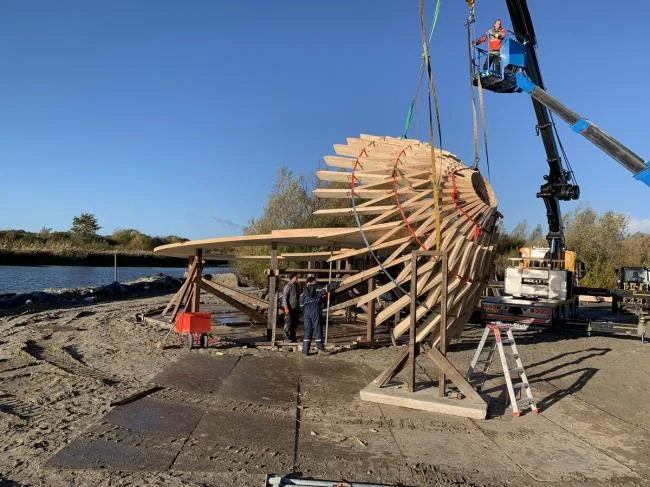
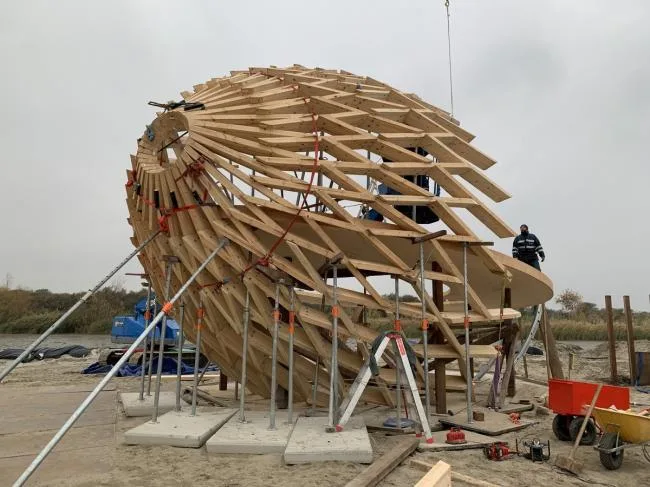
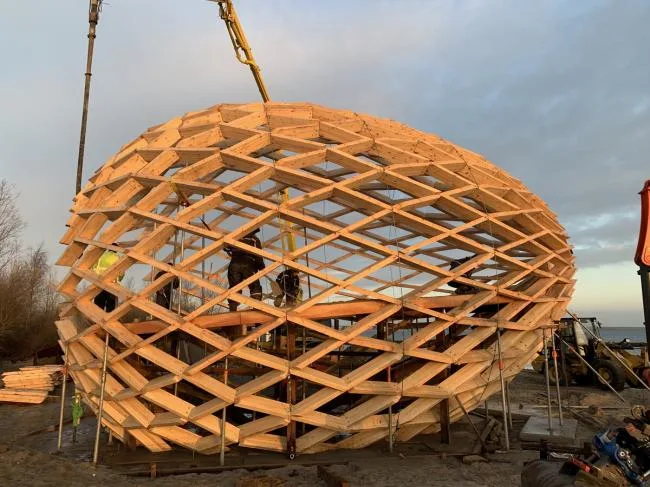
Using parametric design, the “bird egg” achieves an optimal balance between form, structural integrity, wood dimensions, and opening size. The structure is prefabricated in a factory and assembled on-site, allowing for larger spans through the use of small wooden units.
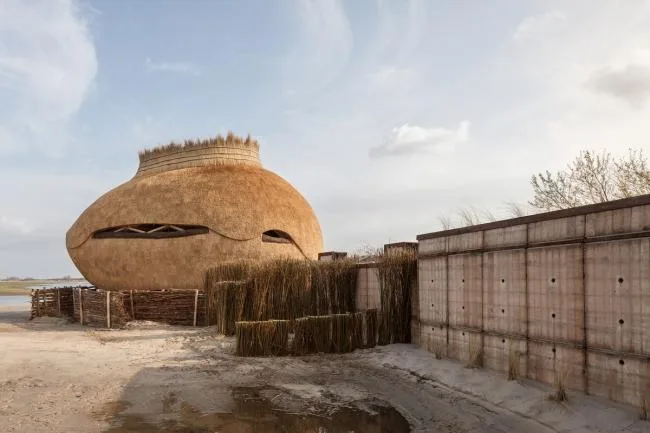
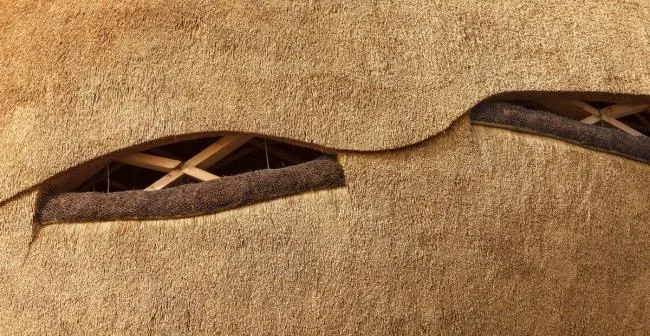
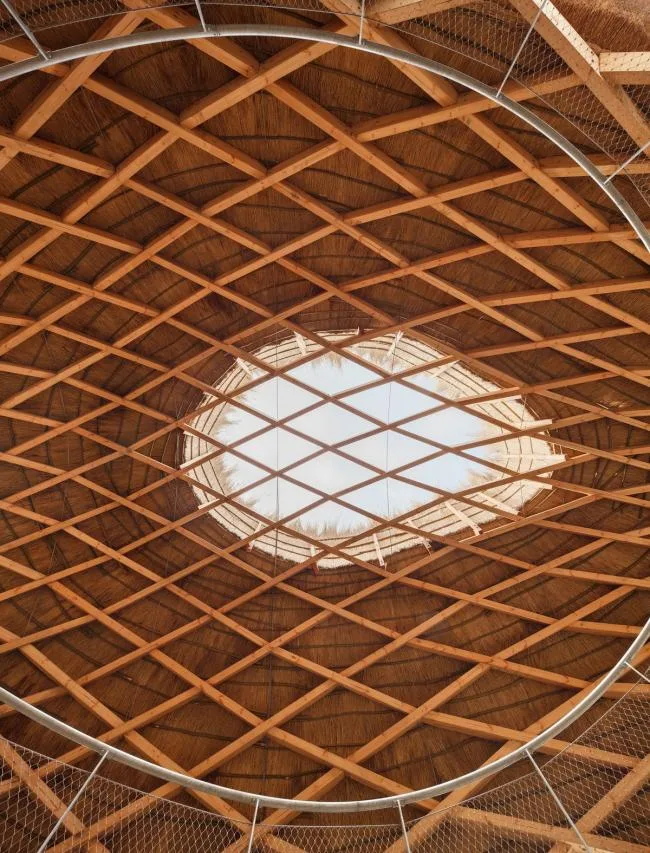
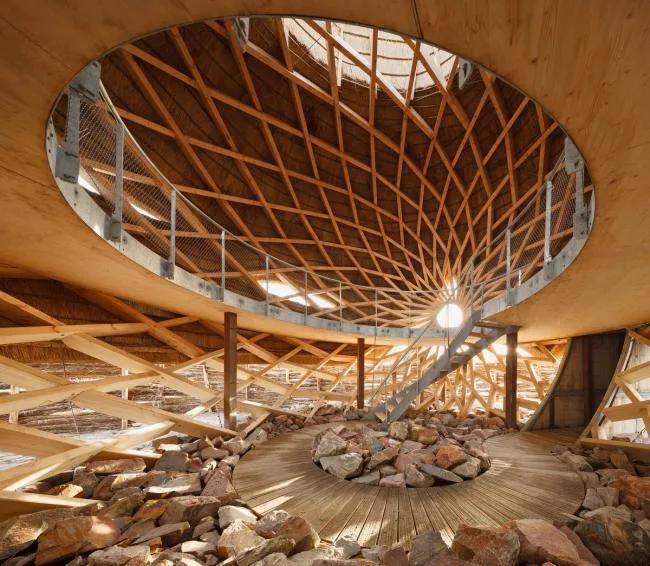
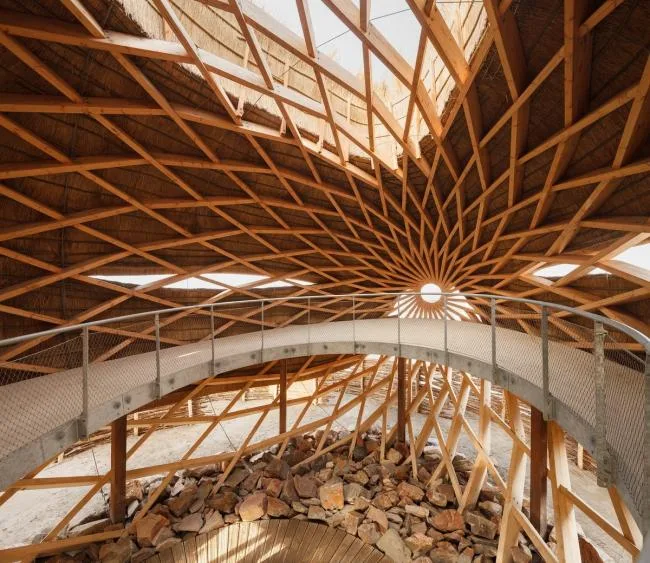
The lower part of the “bird egg” is made of Accoya wood, which withstands multiple annual floods. The upper part uses pine wood, remaining dry year-round. The top of the structure is covered with thatch harvested from inside the coastal defense, positioned above the potential highest water level.
The interior floor is constructed from composite wood (CLT) and concrete, enhancing structural stability. From the “Bird Egg,” visitors enjoy views of surrounding islands and the scenic Haring Waterway waterfront.
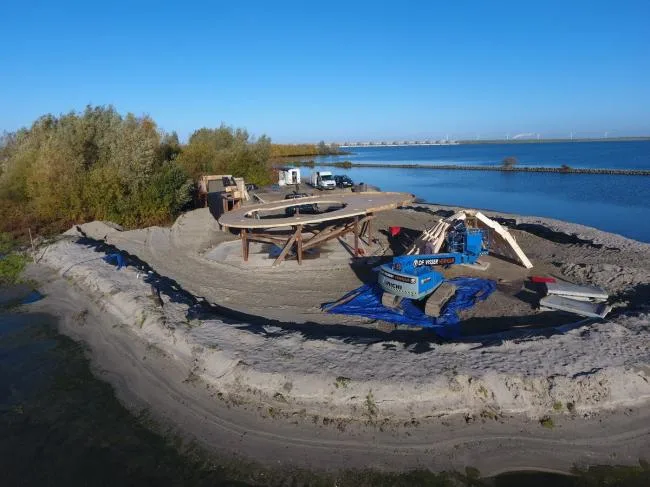
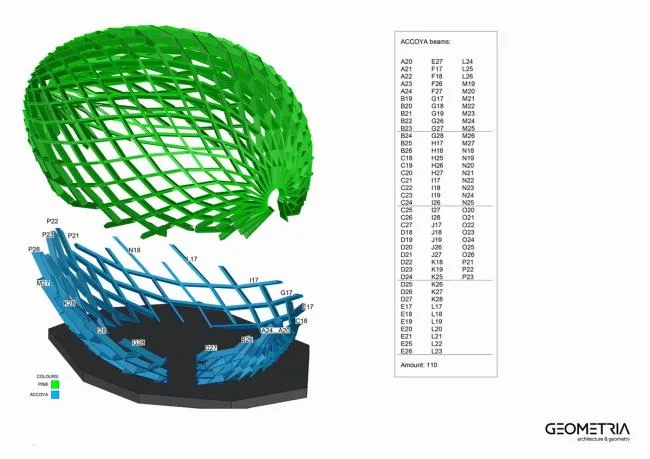
Analysis of Guya Wood Structure
The wooden framework of Tij is assembled on-site from 402 modular units, designed for complete disassembly. Its reusable modules and eco-friendly materials make the structure nearly fully recyclable and sustainable.
It is important to note that the project embraces the impermanence of all things; the “bird egg” is also temporary and will be dismantled in the future. When that time comes, the materials can be recycled or reused without harming nature or humans.
In this way, Tij fosters a renewed ecosystem, strengthening the relationship between humans and nature and becoming an integral part of both worlds.
Design Drawings:
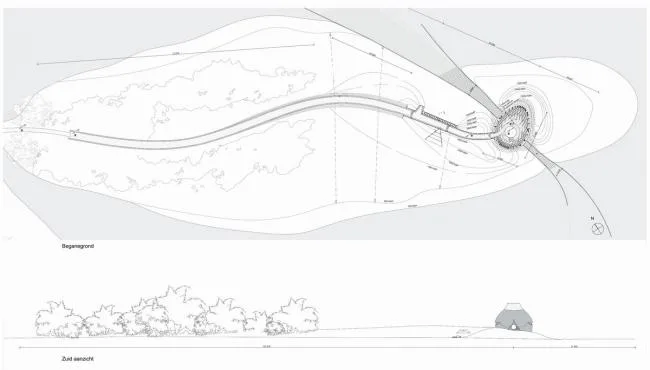
Site plan
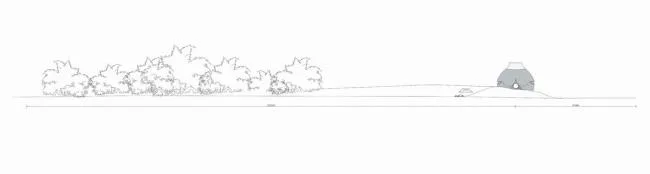
Elevation drawing
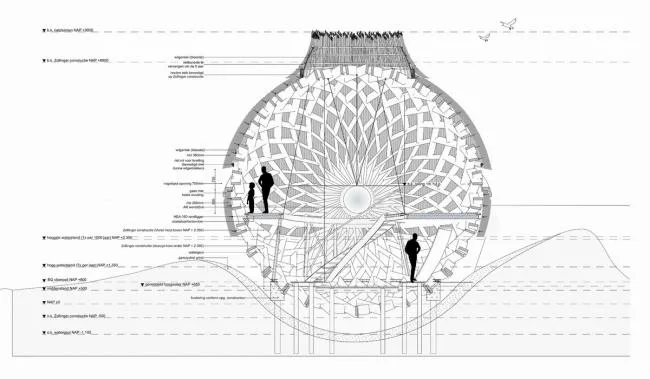
Sectional view
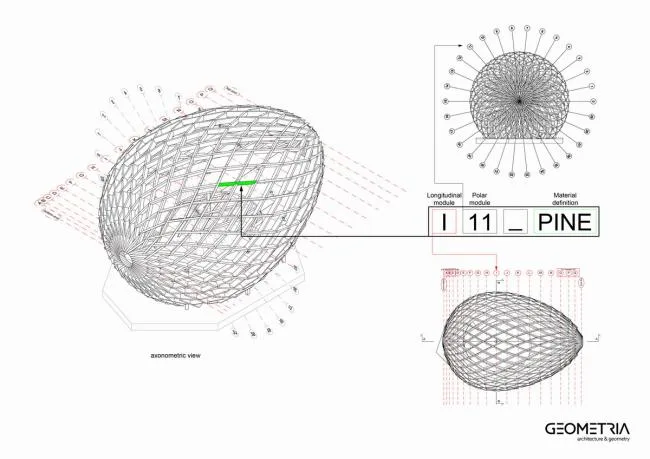
Axonometric analysis
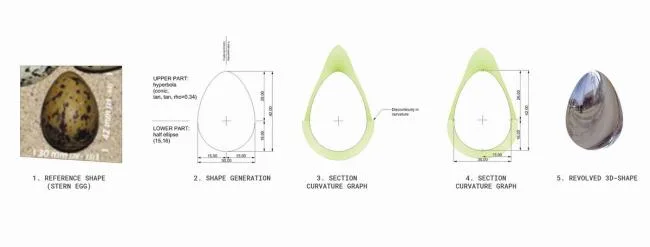
Morphological evolution
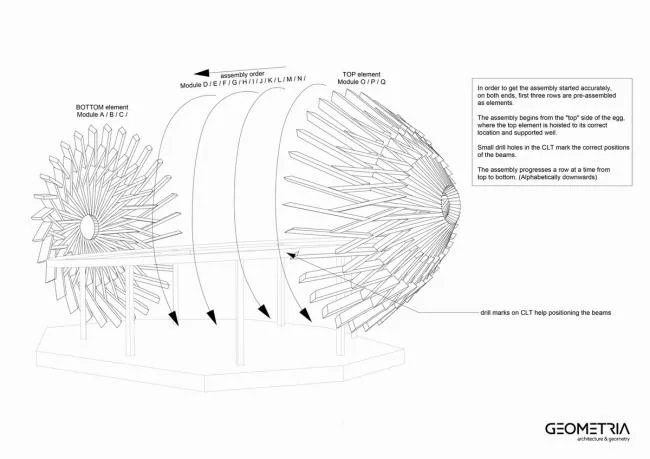
Structural module analysis
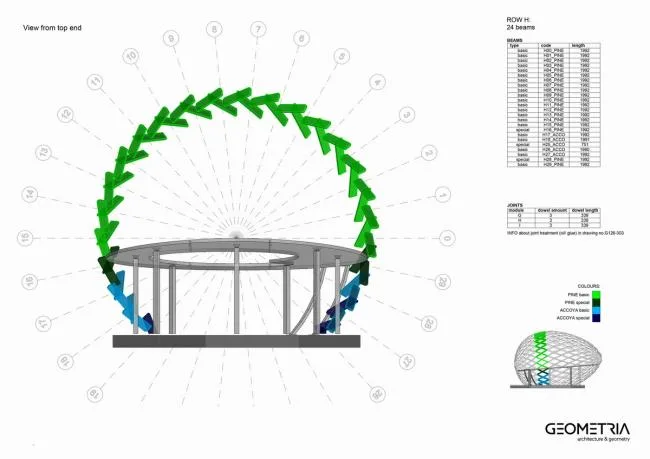
Analysis diagram
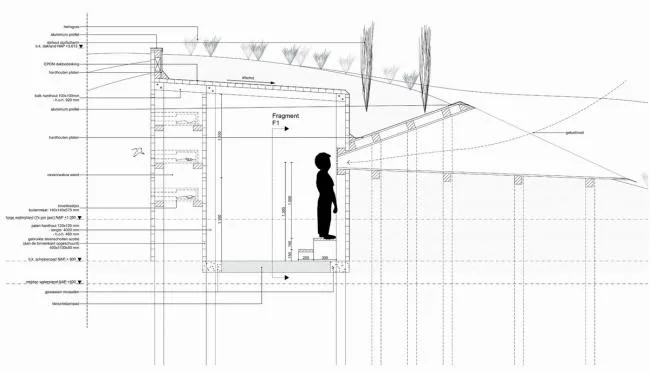
Observation perspective analysis
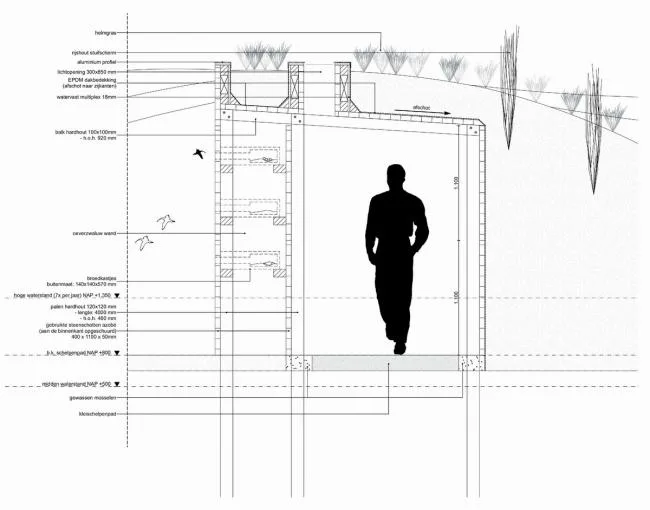
Analysis diagram
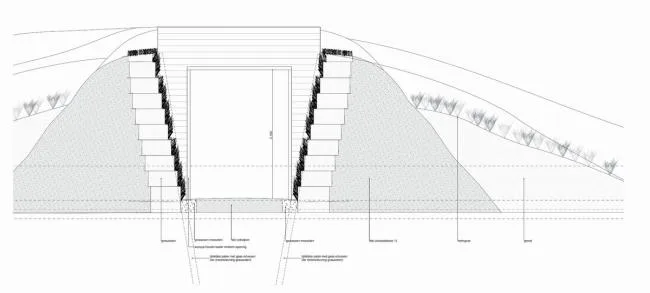
Analysis diagram
Project Information:
Architects: RAU Architects, RO& AD Architecten
Location: Scheelhoekweg, 3251 LZ Stellendam, Netherlands
Category: Other Buildings
Design Team: Thomas Rau (BIM Design), Ad Kil, Ro Koster, Jochem Alferink, Martin van Overveld, Michel Tombal, Athina Andreadou, Loyse Rebord
Building Area: 150.0 m²
Project Year: 2019
Photographers: Katja Effing, Merijn Koelink
Manufacturers: Wood, McNeel, Accoya
Client: Vogelbescherming Nederland (BIMhousing 315699), Nature
Engineering: Geometria, Finland; Aalto University Finland; BreedID, The Netherlands
Landscape: HNS Landscape Architects
Collaboration: Van Hesse Infra












Must log in before commenting!
Sign Up