
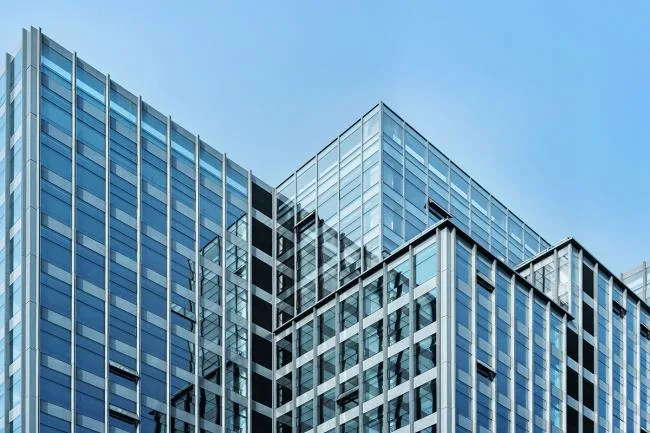
“To achieve an immeasurable artistic conception through measurable means.”
— Louis Isadore Kahn
The Urbanization of Architecture in Cities
The role of urban complexes within cities can be likened to catalysts in chemistry. These complexes are shaped by the city environment, while simultaneously influencing the city’s development and construction. There exists an integrated relationship of infiltration, continuity, and conformity between urban environments and the buildings within them.
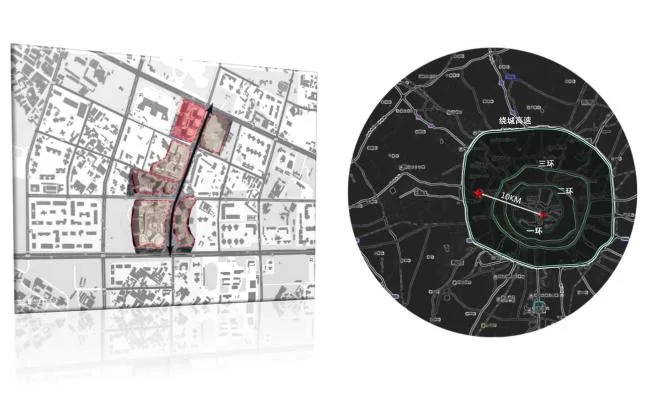
▲ Location Map
This project is situated in Qingyang District, Chengdu, at the core of the western new city area, on the east side of Guanghua Avenue towards the western part of the city. It is one of six billion-dollar commercial districts planned by the Chengdu Municipal Government, and forms part of the 19 commercial centers outlined in the city’s overall commercial layout.
The integrated spatial structure system serves as a relatively independent and self-contained functional unit. Internal functions complement and promote one another, while functional spaces connect closely and diversify both horizontally and vertically. The mixed-use layout combines business, leisure, services, and hotel functions, resembling a miniature city and creating a dynamic, one-stop complex.
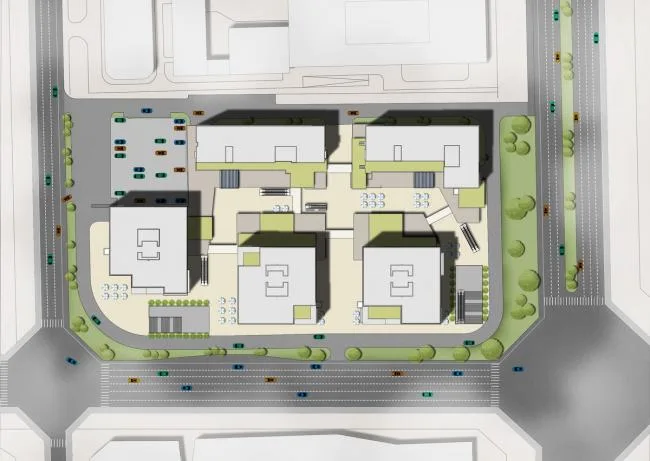
▲ General Layout Plan
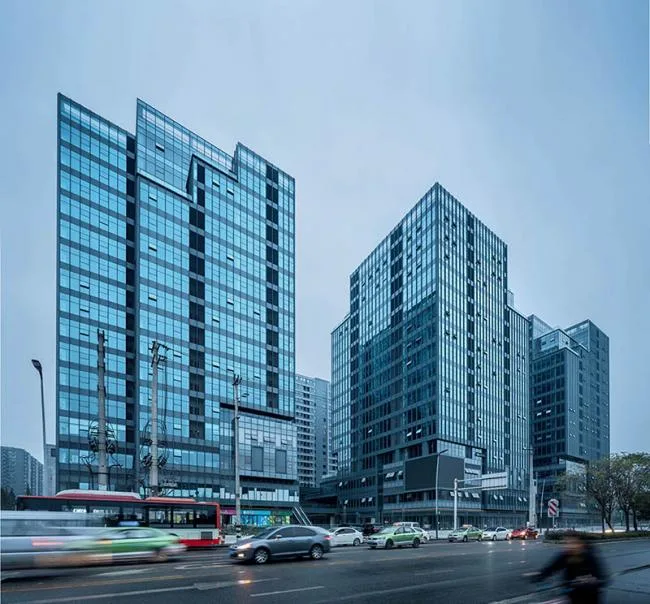
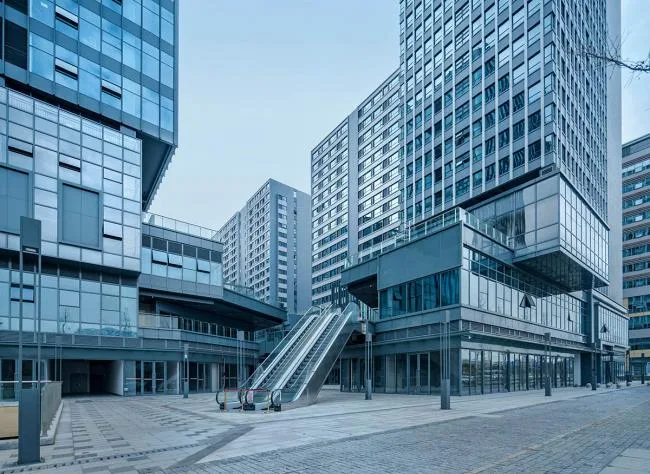
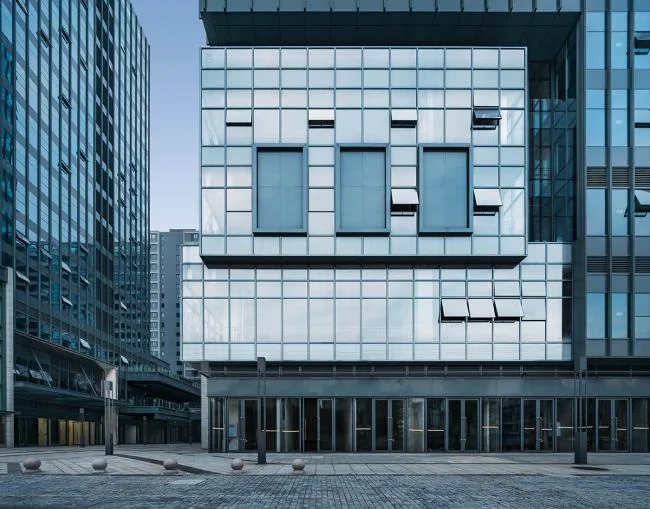
Open-Form Integrated Design
Urbanized architecture dissolves the boundaries between cities and buildings by creating outdoor spaces within structures and establishing an open transit-oriented development (TOD) business ecosystem. Numerous side streets branch off from the main avenue, forming a complex network. Seamless integration of subway stations, street corners, and hospitals with their surroundings creates a coherent planning sequence that reflects the building’s openness and integrity. This integration drives the regional development and enhances the overall value and image of the area.
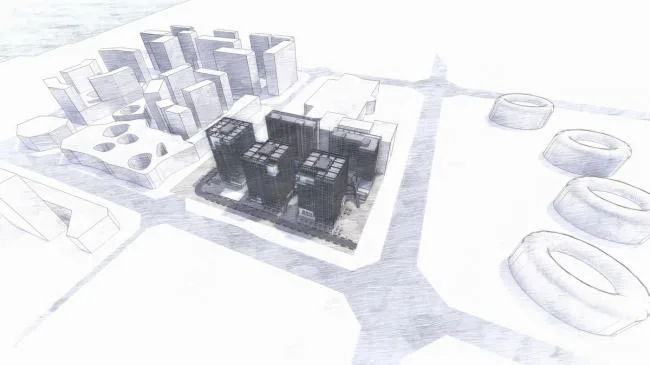
▲ Overhead View
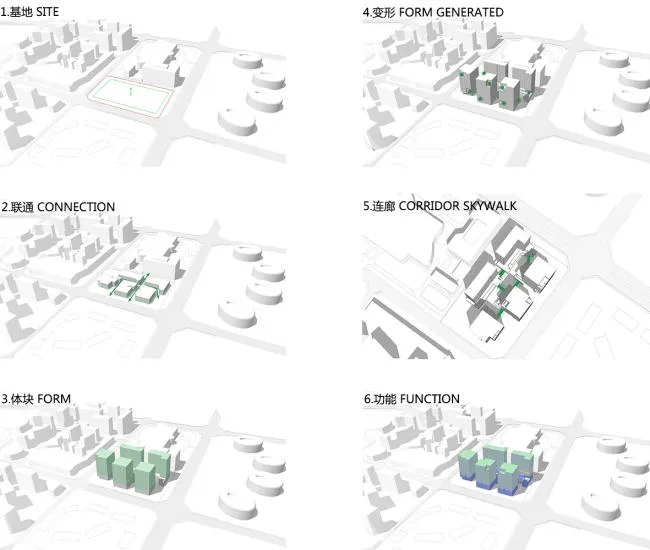
▲ Block Generation Analysis Diagram
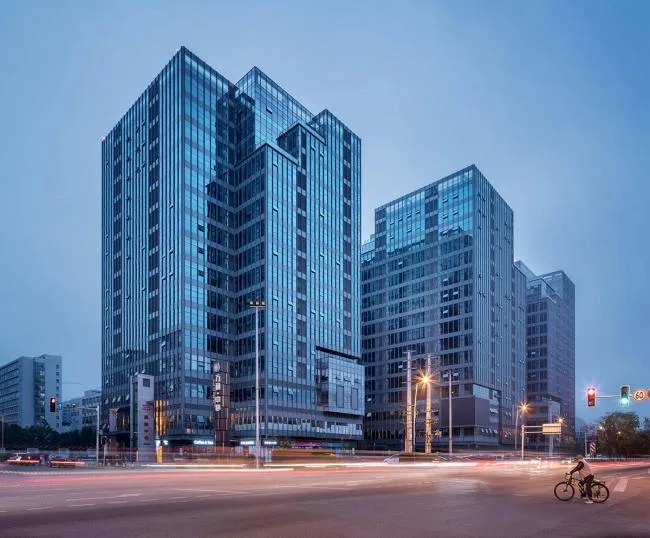
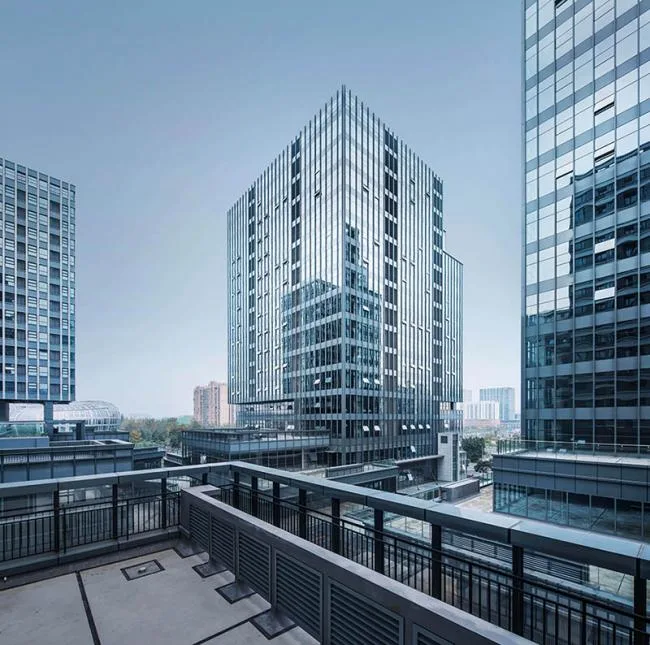
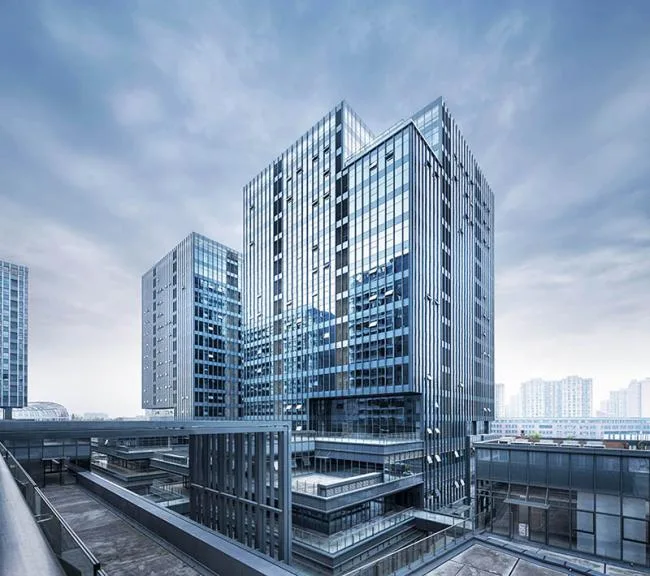
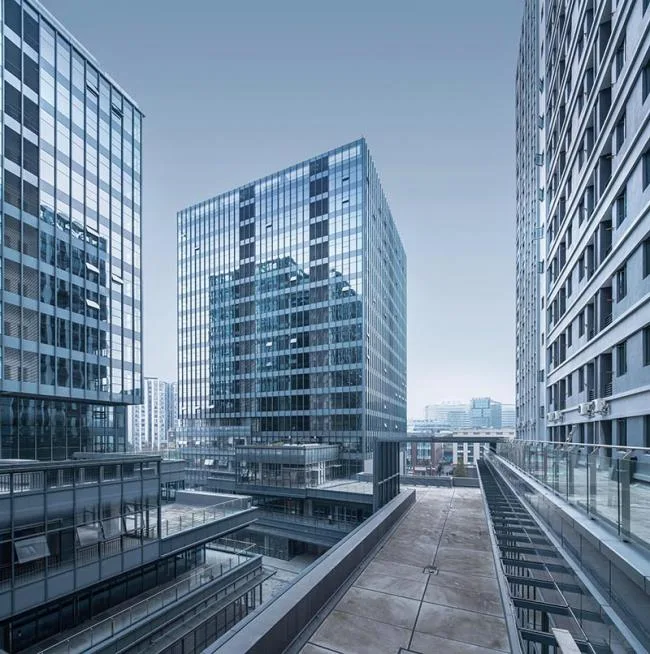
Interweaving and Juxtaposition of Complex Forms in BIM Training
The blurring of public space boundaries in this project arises from two main factors: the infiltration of indoor and outdoor spaces, and the enhanced functional continuity. The vertical layering of multiple distinct spatial systems encourages the interweaving and integration of urban and architectural spaces.
By linking diverse architectural spaces through courtyards, inner streets, outer corridors, and plazas, a complex aggregation of forms is created. Within this mixed-use commercial district, various public activities are interconnected, fostering mutual promotion, inspiration, and interdependence.
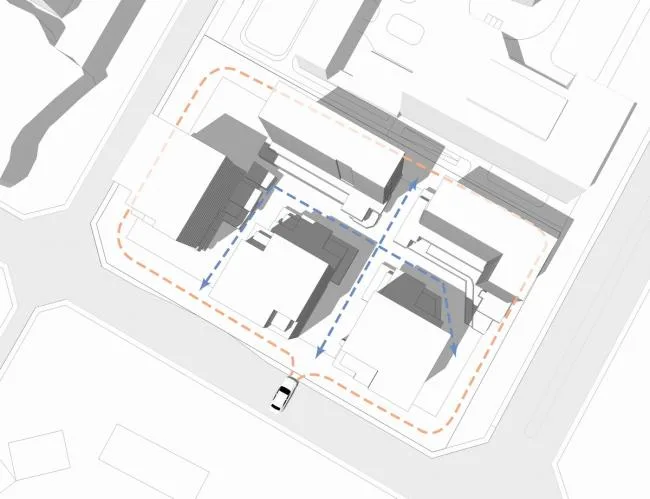
▲ Three-Dimensional Streamline Analysis
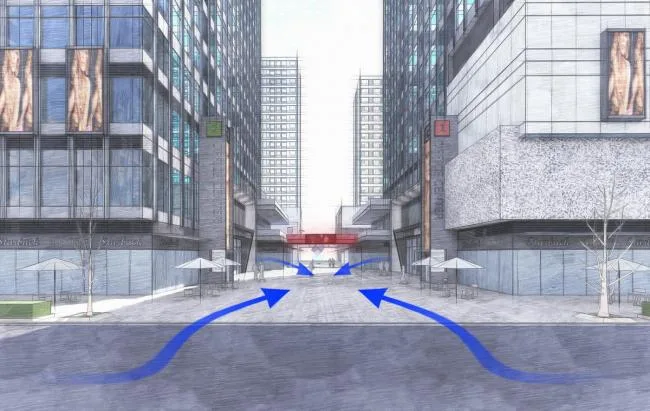
▲ Permeability
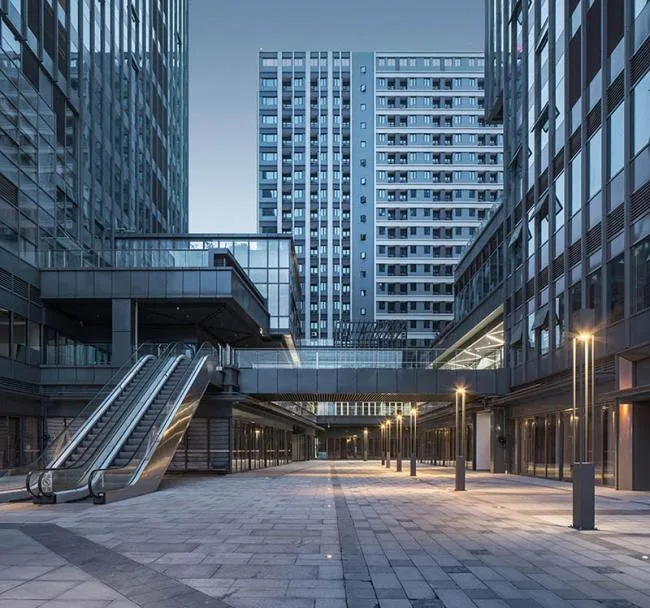
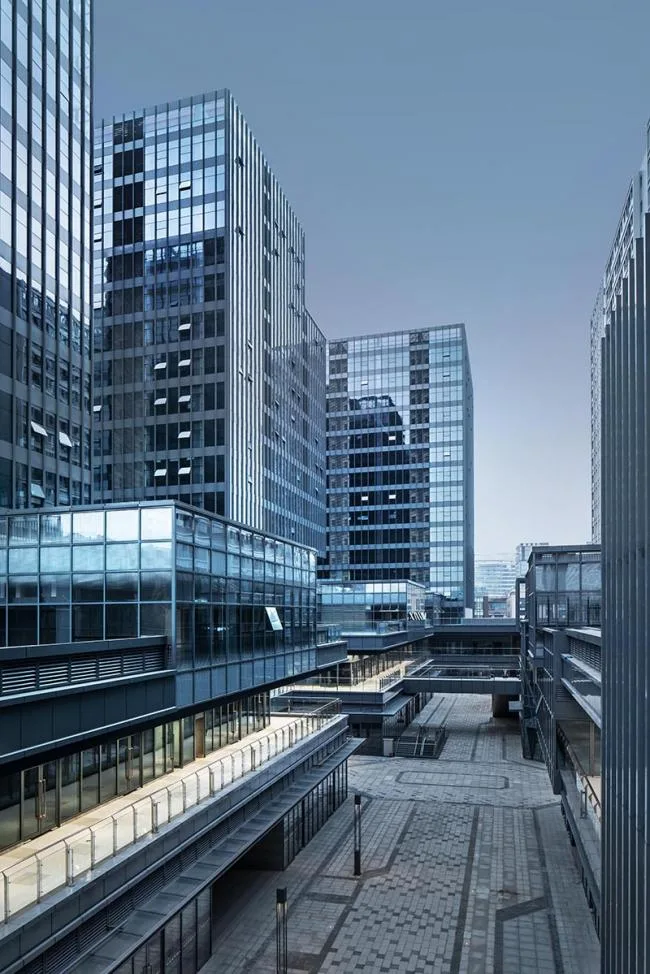
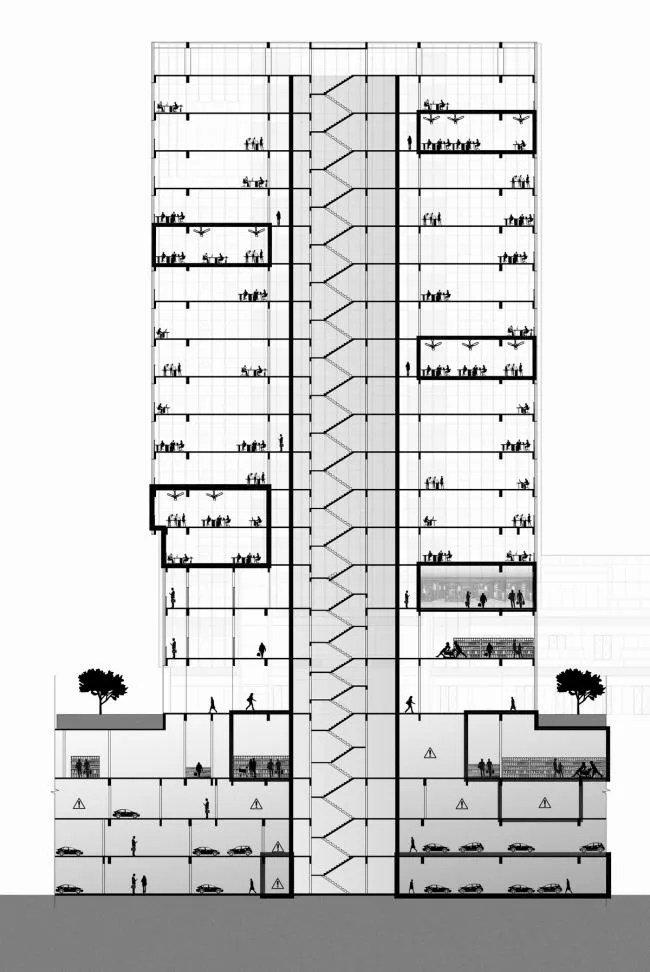
▲ Section 1
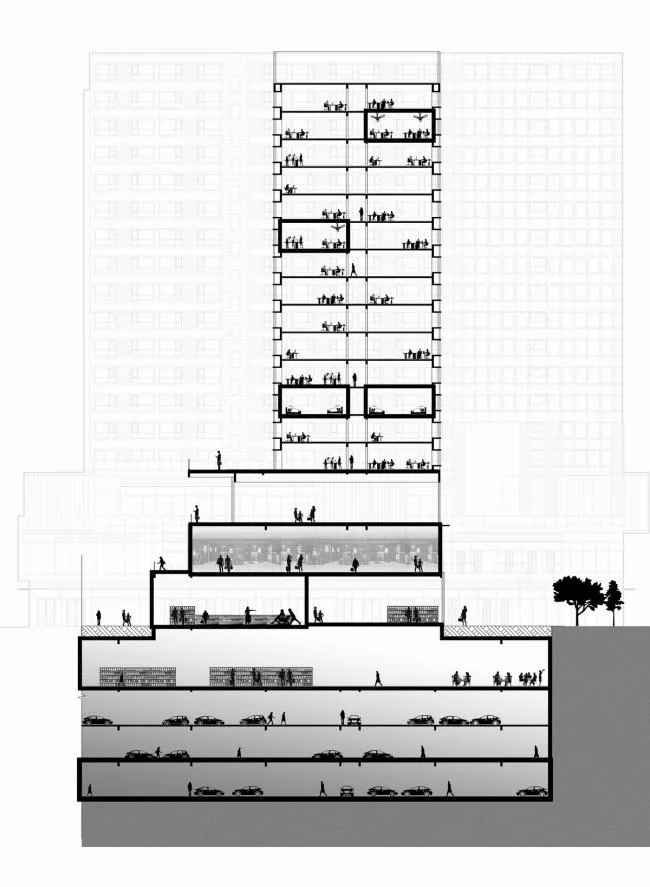
▲ Section 2
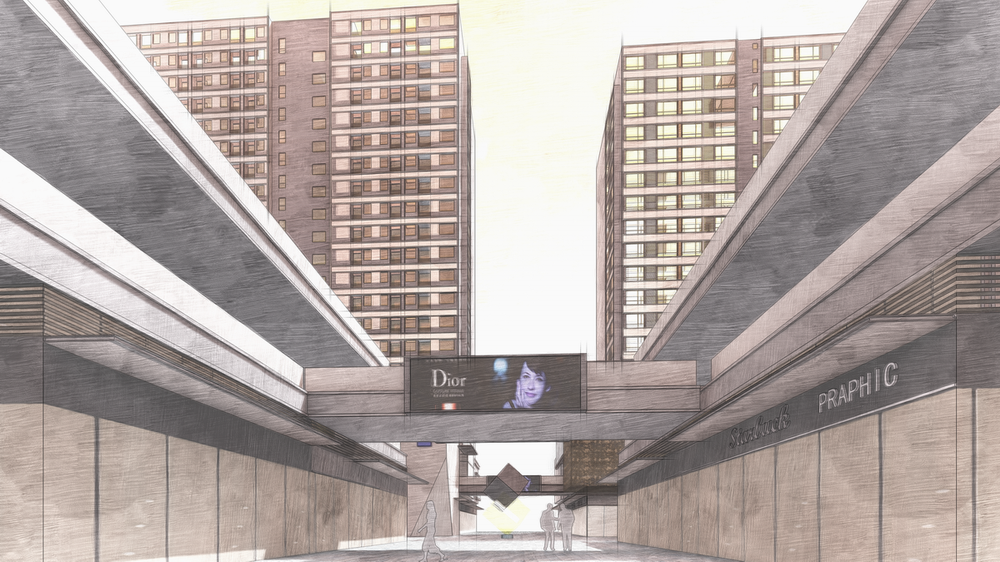
▲ Bridge Connection
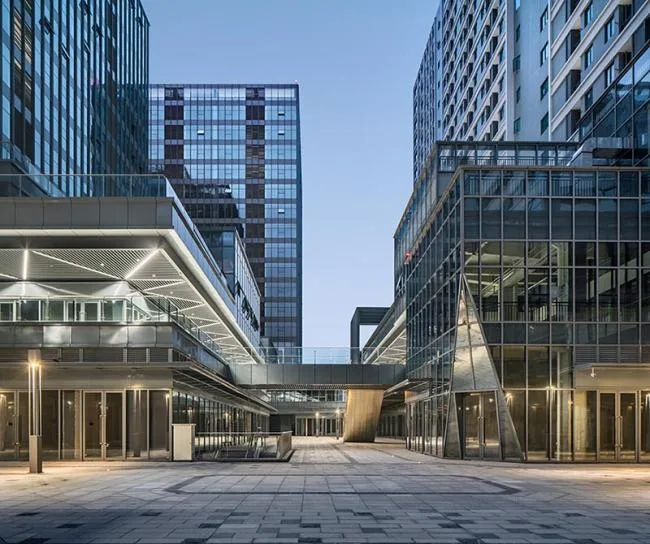
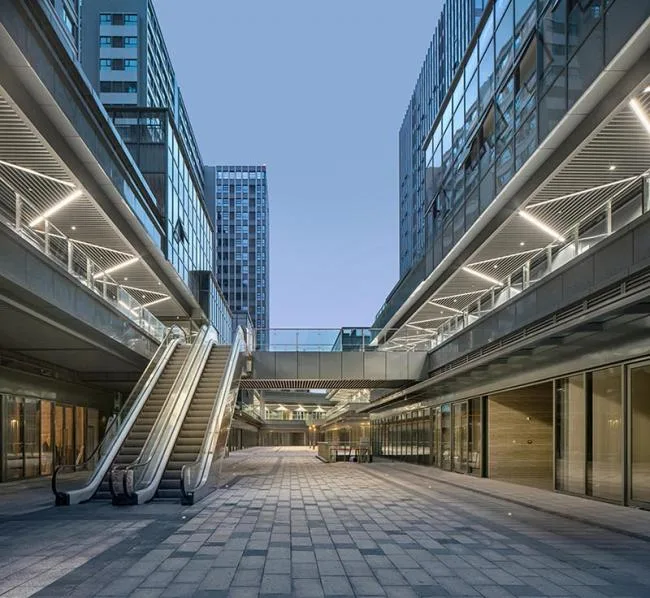
The humanoid pedestrian walkway bridge connecting the building volumes creates a unique and engaging communication space, enhancing accessibility. The walkway is designed to be non-linear, layered, and spatially juxtaposed, allowing movement in various directions without a fixed path. This three-dimensional circulation connects multiple spatial nodes, forming a network of public spaces that promotes fluid movement throughout the complex.
By linking east-west flow lines across the site, the design intentionally encourages pedestrian circulation within the block. The drop-off area (building entrance) and the surrounding environment embody the concept of an “open business center.” This transitional space between urban and interior building environments acts as a buffer, facilitating interaction between the two spatial systems. Thoughtful external space design guides pedestrian flow and spatial experience, enhancing the interaction between inside and outside, and enriching the overall spatial enjoyment.
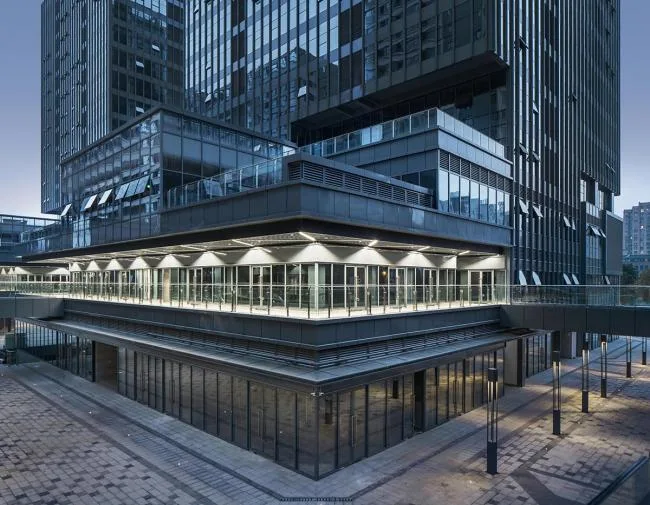
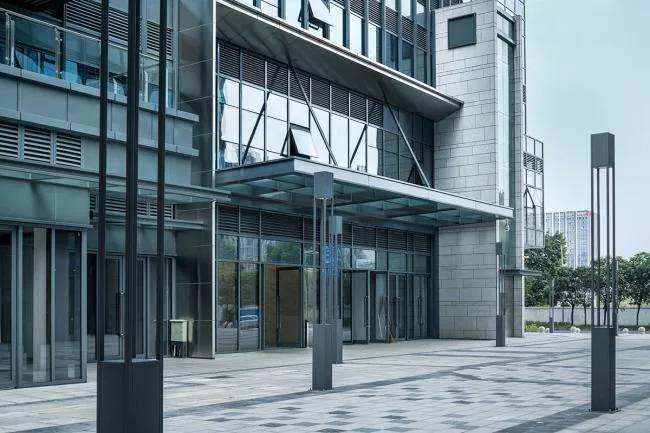
▲ Customer Drop-Off Area (Building Entrance)
Shaping Building Blocks to Define Architectural Texture
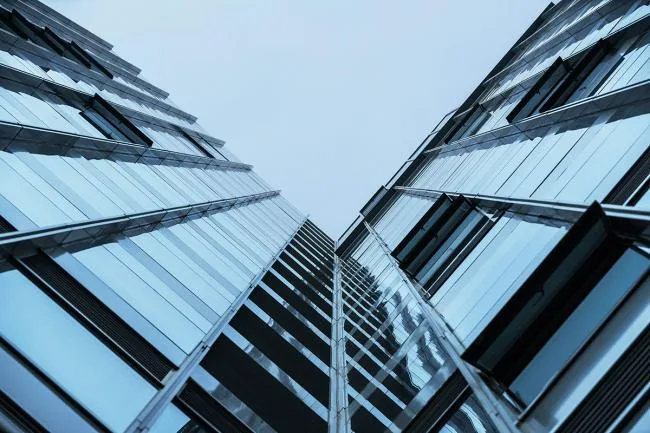
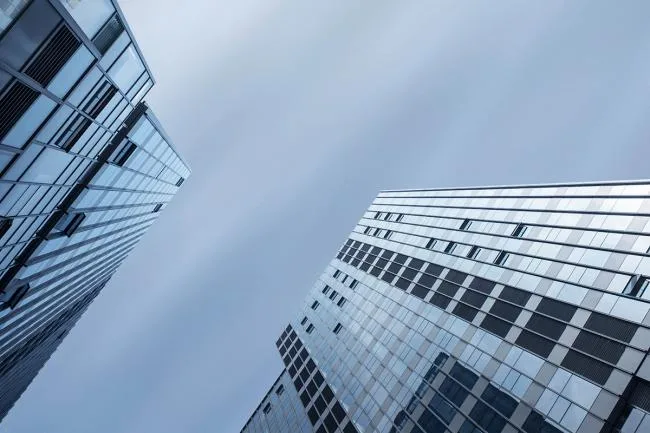
To reduce the overwhelming scale of large building blocks, design strategies such as addition and subtraction are employed to create staggered heights and orderly densities. This varied architectural language diminishes the perceived massiveness, fostering closer sensory interaction between people and the environment. The façade and spatial forms harmonize to express the continuity and unity of the building, reflecting the characteristics of a singular architectural entity within the BIM framework.
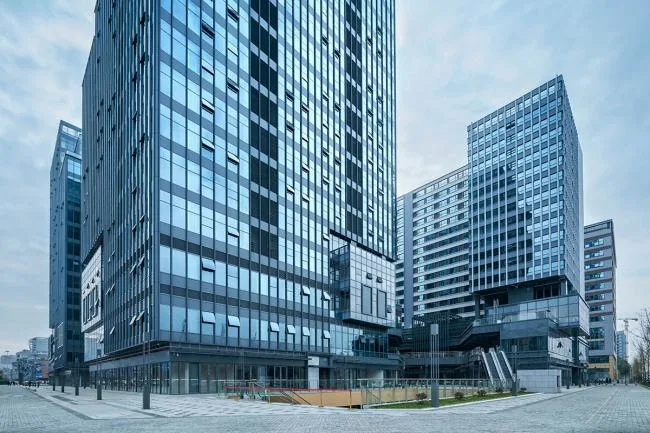
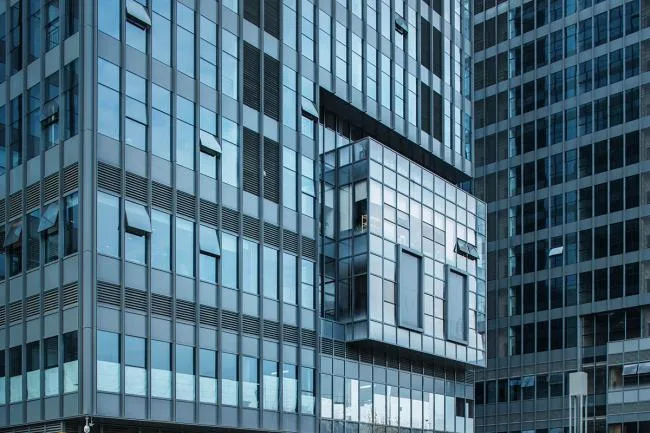
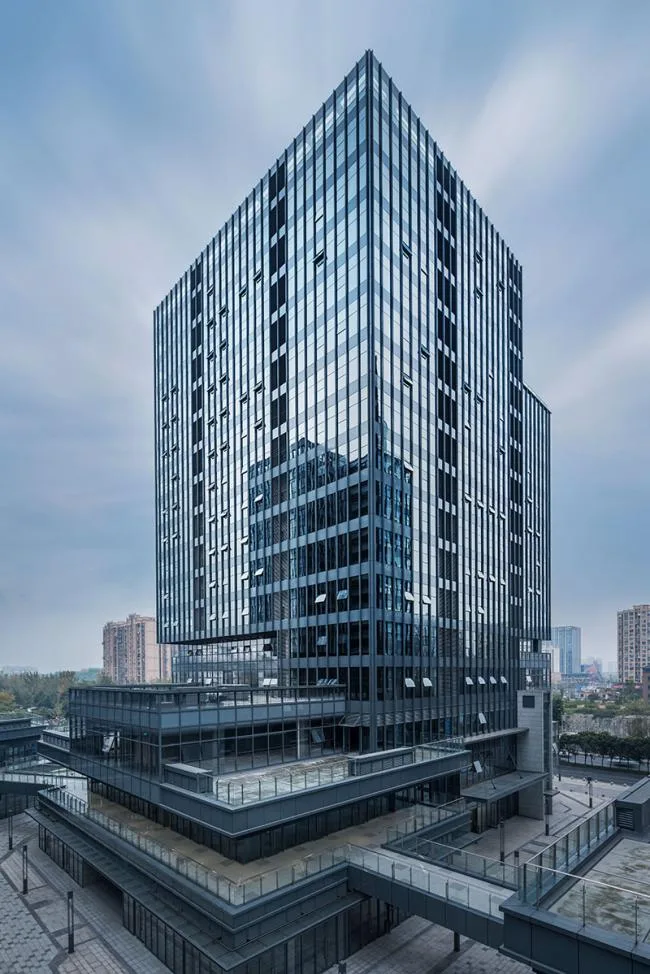
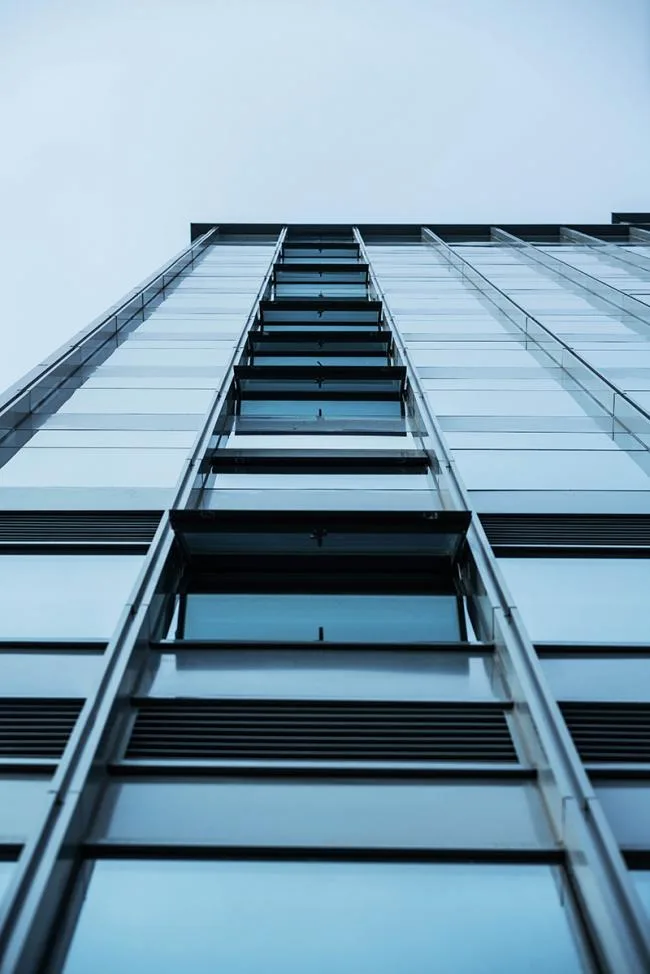
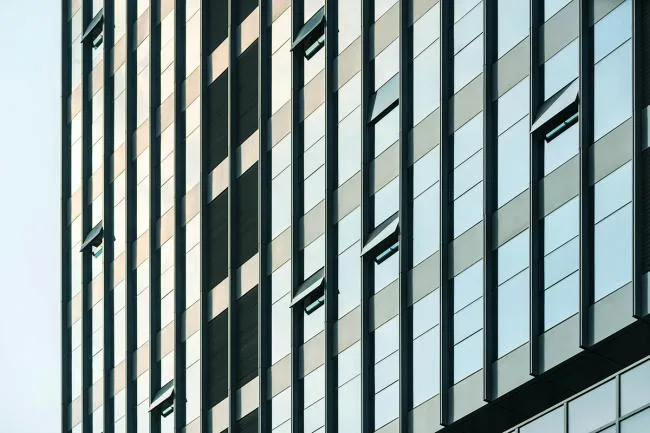
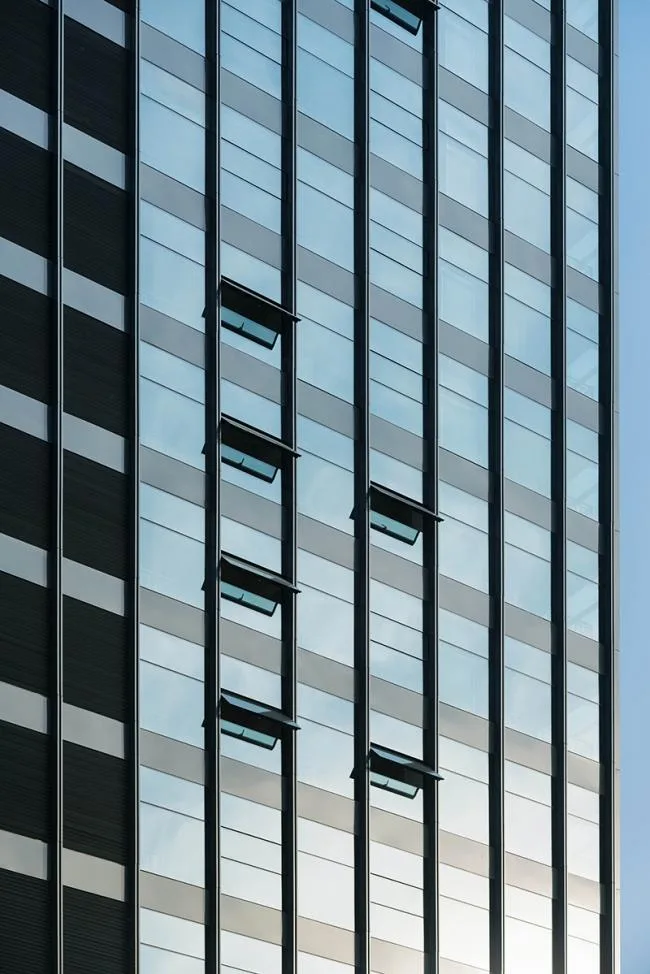
The façade incorporates glass and aluminum panels as primary materials. Through the interweaving and cutting of volumes, a small organic form emerges, bringing the building closer to people. Varied textures appear as blocks protrude from the scattered volumes. The design of each large terrace breaks away from traditional uniformity while maintaining a cohesive visual effect.
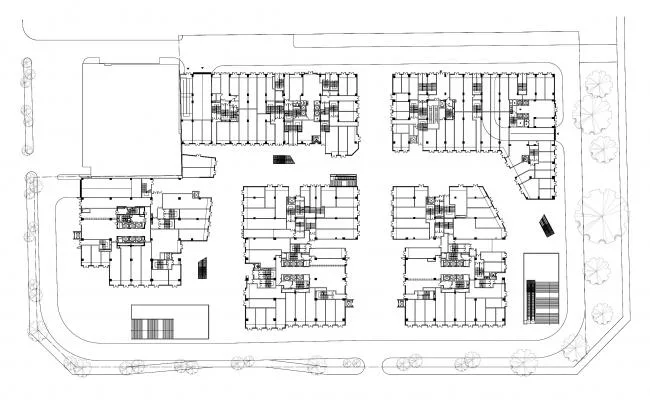
▲ First Floor Plan
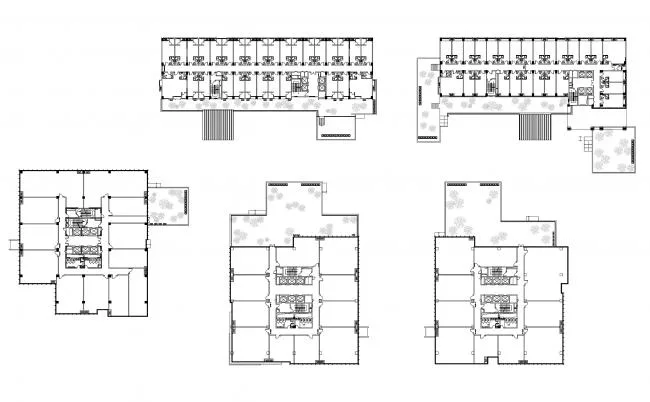
▲ Fourth Floor Plan
In response to the demands of rapid urbanization, urban complexes offer an efficient and economical approach to city building. By effectively guiding the catalytic role of these complexes, urban development and construction can be more proactively shaped. The mobile spatial system has influenced contemporary urban construction, with open business centers playing a vital role as fundamental components of the city fabric.
Project Information:
Project Name: Chengdu Changxin Qingyang Wanhe Center
Location: Qingyang District, Chengdu City
Land Area: 25,549.85 square meters
Building Area: 127,749.25 square meters
Project Owner: Chengdu Changxin Real Estate Co., Ltd.
Architectural Design: Shanghai Chengzhi Architectural Design Co., Ltd.
Chief Architect: Li Jie
Design Directors: Zeng Qinghua, Liu Wei
Design Team: Wang Xiaochen, Yu Songxia Miao
Construction Drawing Design: China Southwest Architectural Design and Research Institute Co., Ltd.
Interior Design: Sichuan Free Space Design Management Co., Ltd.
Landscape Design: Chongqing Huazhu Architectural Design Co., Ltd.
Construction Unit: Chengdu Construction First Construction Engineering Co., Ltd.
Design Period: 2016
Completion Date: 2018
Photography Team: Prism Architecture Space Photography
Special thanks to the early conceptual design team: Yan Fang, Jiang Chao, Chi Wenjun, Song Sen















Must log in before commenting!
Sign Up