
1. Preface
With national policies increasingly supporting building industrialization and continuous advancements in prefabricated concrete structure technology, the trend toward residential industrialization is gaining momentum. Rising energy-saving and environmental standards in construction, combined with significant labor cost increases, have accelerated the shift toward factory-based component prefabrication and on-site assembly in the construction industry.
In recent years, prefabricated concrete (PC) component factories have rapidly emerged across the country, with over 30 domestic construction industrialization bases established. Industrialized construction in cities like Shenyang, Anhui, Shenzhen, and Shanghai has reached a considerable scale. This modern construction sector is steadily capturing market share and becoming a cornerstone of construction industrialization.
However, industrialization bases require long construction periods and substantial upfront investment. In regions where residential industrialization development lags, there is often no effective solution to avoid overcapacity once these bases are built. Consequently, the production model of PC components in industrial bases is heavily limited in northwest regions. To address these challenges and reduce component transportation costs, the company has adopted a nomadic production model for prefabricated components. Guided by the concept of a reconfigurable production system, this approach aims to complete prefabricated component production with minimal system adjustment time, optimal economic benefits, and the lowest equipment cost.
2. Construction of Nomadic Component Factories
2.1 Construction Conditions
Nomadic PC component factories are especially suitable for industrial projects located far from established industrial bases or existing component factories, with urgent project timelines. However, establishing nomadic factory sites requires meeting the following essential conditions:
1) The construction unit or general contractor must have a strong interest in industrialization, serving as the primary motivation to set up component factories.
2) Temporary sites must be available near or on the project location, with sufficient size and service life to meet production demands—this is a fundamental prerequisite.
3) The general contractor should have a team responsible for detailed component splitting design or collaborate with design partners to ensure component refinement meets construction requirements.
4) A dedicated team of professionals and fixed operators for prefabricated component production management must be in place to ensure smooth factory operations.
5) The general contractor should possess installation technology and coordination capabilities for prefabricated components, enabling seamless integration between production and on-site construction. This ensures the project’s quality, schedule, and cost meet the construction unit’s expectations.
2.2 Factory Construction and Component Production Process
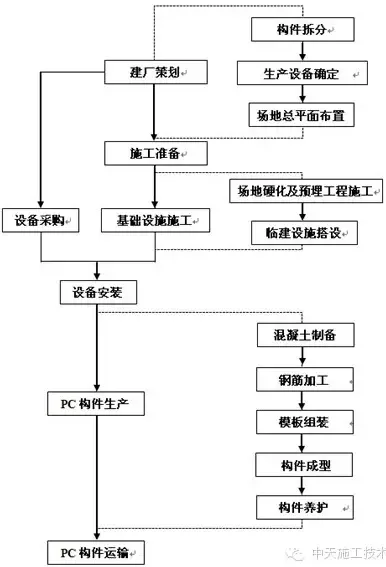
Figure 2.1: Construction and Production Process of a Nomadic Component Factory
The establishment of a nomadic PC component factory involves several key steps: factory planning → construction preparation → basic equipment construction and procurement → equipment installation → component production → transportation of components (see Figure 2.1). Among these, thorough factory planning is especially critical.
2.2.1 Factory Construction Planning
Planning the factory involves:
1) Component design splitting: Define component dimensions, reinforcement details, weight, and installation nodes. When splitting components, consider not only the original design load but also conditions during lifting, construction sequences, and lifting equipment capacity on-site.
2) Production equipment selection: Decide on the types and quantities of table molds or movable templates based on component types, quantities, key milestones, and production cycles. Additionally, select suitable auxiliary equipment, such as template forms and node connection methods, considering project workflows and site conditions.
3) Site layout: Common layout methods include flat mold unit flow, flat mold conveyor flow, fixed pedestal, and long line pedestal methods. For small to medium production lines like nomadic factories, the flat mold conveyor flow method is typically preferred. Here, operators and equipment remain fixed at workstations while components move sequentially, pushed forward by a conveyor system until curing, demolding, and finally transported by crane.
The factory area is usually divided into component processing, maintenance, and stacking zones, arranged based on production flow and influenced by lifting equipment types and site shape.
For strip-shaped factories, gantry cranes often handle component transportation, with areas arranged sequentially following the production process. In square or regular-shaped sites, tower cranes facilitate construction, and areas can be arranged clockwise or counterclockwise for flexibility (see Figure 2.2).
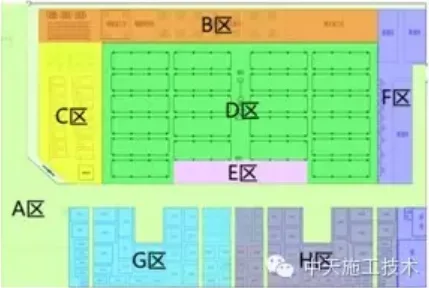
Figure 2.2: Layout Plan of Vanke City Nomadic Component Factory Area
Legend: Area A – On-site road; Area B – Steel processing; Area C – Storage for irregular components; Area D – Production of laminated, air conditioning, and balcony panels; Area E – Staircase production; Areas G and H – Laminated panel storage; Area F – Storage for trusses and air conditioning panels.
2.2.2 Equipment Procurement
Nomadic PC component factories typically require two categories of equipment: main production machinery and molds for component fabrication. For instance, the Vanke City 8# project’s equipment is detailed in Table 2.1 and illustrated in Figure 2.3.
Table 2.1: Main Equipment Configuration for Vanke City 8# Ground Component Factory
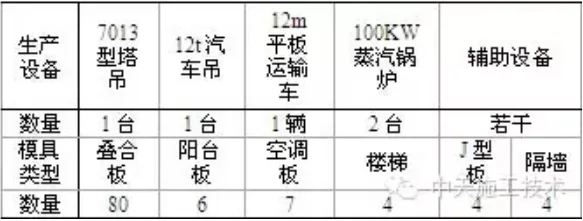
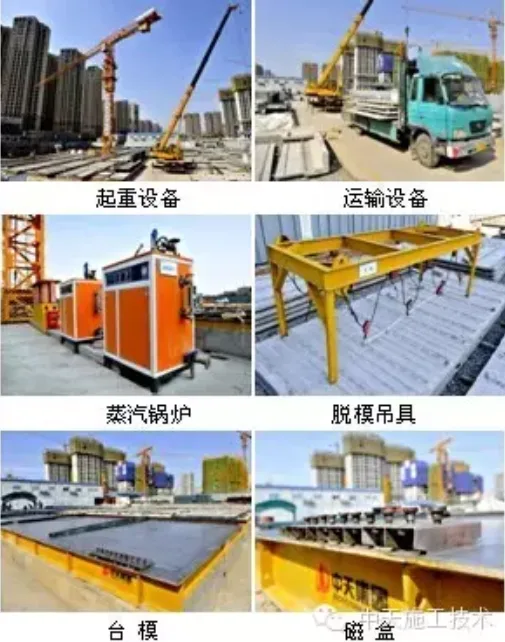
Figure 2.3: On-site Equipment in a Nomadic Component Factory
2.2.3 Important Considerations
2.2.3.1 Factory Planning
1) Conduct a thorough early inspection of the proposed site, clarifying the duration for which the nomadic component yard will be used.
2) Calculate mold numbers, production site size, and stacking space based on component types and main structure progress. Consider transportation channels and strive for a compact, orderly layout to reduce costs.
3) Component splitting must consider lifting weights and reinforcement methods. Optimizing connection nodes can ease installation difficulties. When reserving and installing embedded parts for external wall components (e.g., balconies, air conditioning panels), insulation thickness should also be factored in.
4) Personnel and production management should coordinate with permanent industrial bases or involve recruiting fixed professional operators.
2.2.3.2 Equipment Procurement
1) Due to substantial adsorption forces during component demolding, and balancing equipment performance with cost, gantry cranes are recommended for lifting.
2) The ordering cycle for large steel platform molds is about three months, while other molds require roughly half a month. Construction of component yards takes about one month, followed by a half-month trial production phase. Close coordination with industrial project timelines is essential.
2.2.4 Additional Processes
Other related procedures follow standard construction and production protocols and will not be detailed here.
3. Key Technologies for Component Production and Construction
3.1 Component Optimization
3.1.1 Prefabricated Staircase Optimization
1) For ease of construction, segmented staircases are optimized into integrated running beam staircases (see Figure 3.1).
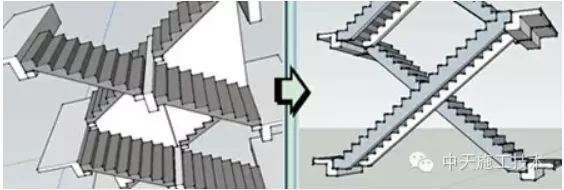
Figure 3.1: Stair Flight Optimization
2) To comply with tower crane lifting capacity, stair treads are evacuated and weight-reduced (see Figure 3.2).
3) Embedded sleeves at lifting points are replaced with hanging nails to enhance installation efficiency and reduce costs.
4) Stair support is optimized by adopting lower sliding supports and fixed upper supports.
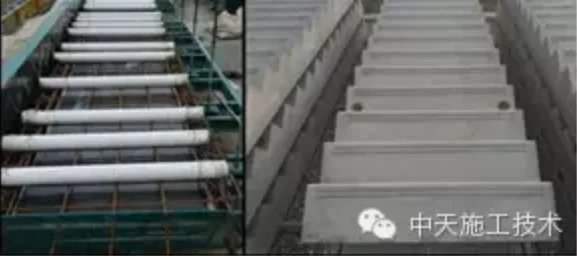
Figure 3.2: Stair Tread Evacuation and Weight Reduction Treatment
3.1.2 Prefabricated Balcony Optimization
1) To reduce balcony weight and meet lifting constraints, fully prefabricated balconies are redesigned as stacked balconies.
2) Hanging beams beneath balcony panels are removed and replaced with upward-flipping balcony beams to simplify production.
3) Railing cup holes and drip lines are pre-reserved during production, forming the balcony as shown in Figure 3.3.
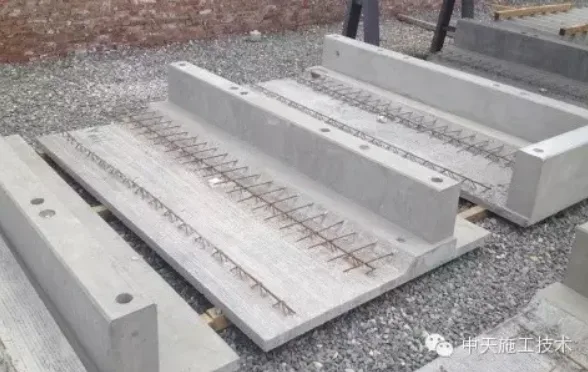
Figure 3.3: Finished Stacked Balcony
3.1.3 Prefabricated Bay Window Optimization
1) Add an outer waterproof groove, 20mm deep on each side, with width based on the window frame dimensions.
2) Reserve slots for window sill stone installation at the bottom of the vertical plates on both sides, measuring 5mm deep and 35mm high.
3) Determine connection hole positions and sizes between the window sides and aluminum templates, reinforcing screw holes accordingly.
3.1.4 Prefabricated Air Conditioning Panel Optimization
1) Anchor steel bars are optimized: since air conditioning panels are cantilevered, the lower anchoring bars are non-stressed and shortened to facilitate installation.
2) Reserved openings are optimized considering external wall insulation thickness, louver size, and air conditioning placement to accommodate integrated rainwater floor drains and condensate pipes.
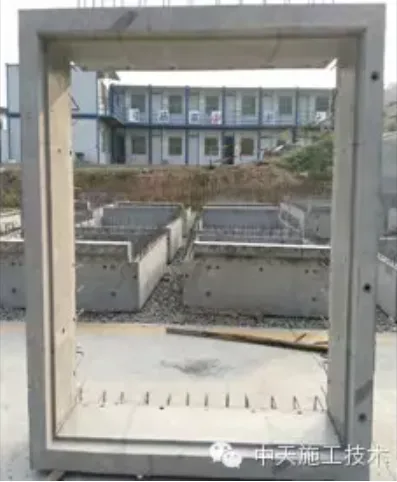
Figure 3.4: Finished Bay Window
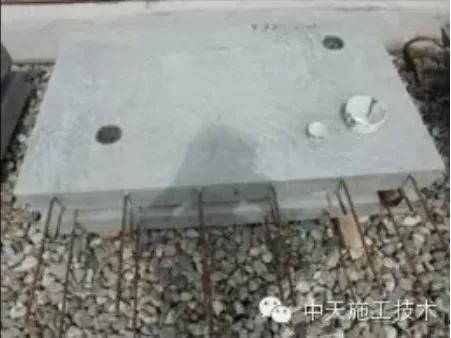
Figure 3.5: Finished Air Conditioning Panel
3.2 Template System Optimization
1) Implement a steel-aluminum composite formwork system: aluminum formwork is used for beams, large steel formwork for shear walls, and composite panels for top slabs. Beams and shear walls are cast simultaneously. Concrete elevation control strips are reserved at the upper formwork opening. After formwork removal, composite panels are installed (see Figure 3.6).
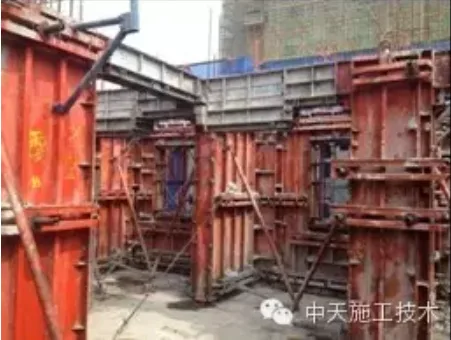
Figure 3.6: Steel-Aluminum Composite Formwork System
2) Door piers, lintels, structural columns, and pressure grooves are optimized collectively. After installing prefabricated components, walls, beams, and slabs are cast in one operation (see Figure 3.7).
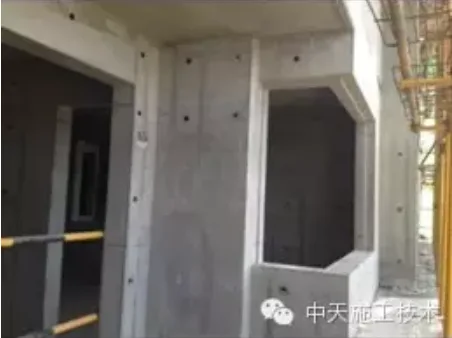
Figure 3.7: Optimized Cast Structural Entity
4. Advantages and Challenges of Nomadic Component Factories
4.1 Advantages
In regions where residential industrialization development lags, nomadic component factories offer clear benefits compared to conventional prefabrication factories, including:
1) Flexible and diverse layouts, strong practicality, low investment, and short construction periods make them well-suited for promoting construction industrialization in small to medium cities or special projects, effectively avoiding overcapacity issues.
2) Reduced transportation distances and smaller transportation equipment lower transportation losses and overall costs. Compared with large manufacturers, nomadic factories have advantages in transportation distance and pricing.
3) Support for large-scale and diverse component sizes, while avoiding common quality issues like cracking through optimized node design.
4) Close coordination with construction sites allows for timely problem identification and resolution during construction.
5) Fixed industrial workers facilitate organization and management by general contractors, minimizing impact from third-party factors and avoiding additional tax burdens.
4.2 Challenges
Despite their advantages, nomadic component factories also face certain challenges:
1) Structural performance testing costs for prefabricated components are relatively high, requiring negotiation with construction and supervision units on sampling frequency.
2) Although national standards for prefabricated concrete structures are emerging, regional differences in understanding exist, necessitating communication with local regulatory agencies during acceptance.
3) Policies on construction industrialization vary significantly by region, especially regarding financial subsidies. General contractors should actively seek support from relevant authorities.
5. Application Examples
The Vanke City 8# project includes buildings 3# and 4# plus an underground garage, with a total construction area of 71,600 m². It features one underground floor and 34 above-ground floors, with a standard floor area of 775 m². The main structure above ±0.000 uses vertical concrete cast-in-place and horizontal concrete prefabrication, achieving a prefabrication rate of 15%. A nomadic component factory was established nearby (see Figure 5.1) to produce prefabricated components. Covering 3,750 m² and equipped with 22 mold platforms, construction began in January 2015, with production starting in April. The factory produces six types of components, including laminated floor slabs, stairs, balconies, air conditioning panels, partition panels, and J-shaped vertical panels, with a service life of one year and a total volume of 3,200 m³. Current production capacity meets the schedule requirement of four days per floor for buildings 3 and 4.
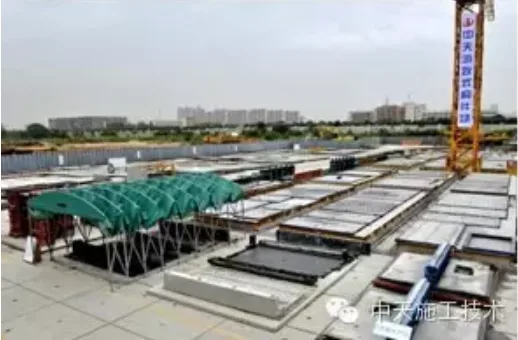
Figure 5.1: Panoramic View of Vanke City 8# Nomadic Component Factory
The Vanke Oriental Legend Phase I project comprises buildings 9#, 10#, 11#, and 12#, plus an underground garage, totaling 78,318 m². The main structures have one underground floor and 14 to 34 floors above ground. This fast construction and installation project requires meeting fine decoration delivery standards within 365 days after reaching ±0.000. Prefabricated components such as bay windows and stairs are produced by an on-site nomadic component factory (see Figure 5.2). The factory spans 2,700 m² and mainly manufactures bay windows, stairs, air conditioning panels, and fireproof partition walls, with a total prefabricated concrete volume of approximately 1,500 m³. Construction started in mid-April 2015, lasting 45 days. After three months of operation, the product qualification rate reached 100%, and production speeds fully meet the construction schedule requirements for the four buildings.
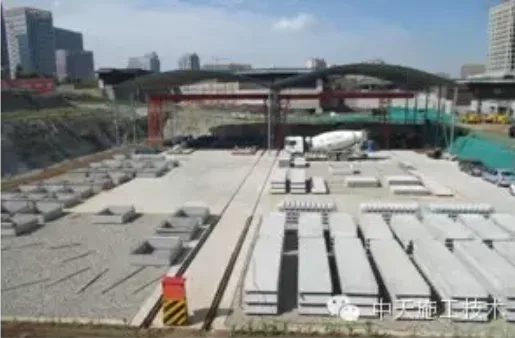
Figure 5.2: Panoramic View of Vanke Oriental Legend Nomadic Component Factory
6. Conclusion
Zhongtian Fifth Construction has made notable progress in nomadic component factory construction with the Vanke City 8# and Vanke Oriental Legend projects. Key takeaways include:
1) The nomadic component factory production model is feasible for meeting prefabricated component demands in industrial projects, particularly large-scale, phased developments.
2) This production model offers high comprehensive benefits with limited cost increases for systems combining vertical cast-in-place and horizontal component prefabrication, making it a pivotal approach for promoting large-scale construction industrialization.
While nomadic component factories have certain limitations, their core objectives—resource integration, technological innovation, and cost reduction—align well with the group’s commitment to technological progress, standardization, and integrated design and construction. Moreover, this model addresses challenges in early-stage construction industrialization for regions where residential industrialization is underdeveloped. As such, it represents a valuable experimental approach worth adopting in suitable projects.
References
Huang Xiaokun, Research on Prefabricated Concrete Structures, Tian Chunyu, Residential Industry, September 2010, pp. 28-32;
Gao Yu, Trends and Development Measures of Building Industrialization, Industry and Technology Forum, 2010 (05);
Gong Zhihong, Construction Technology of Prefabricated Components in Prefabricated Residential Buildings, Technical Information, 2010 (22);
Shi Jialin, Tang Jing, Zhang Kai, Research and Countermeasures on the Development of Prefabricated Buildings in Shanghai, Residential Technology, 2014 (11);
Tao, Quality Risk Analysis and Control of Prefabricated Concrete Structures, Anhui Construction, 2014 (05);
Gu Taichang, Current Development Status of Prefabricated Buildings at Home and Abroad, Standardization of Engineering Construction, 2014 (08).














Must log in before commenting!
Sign Up