
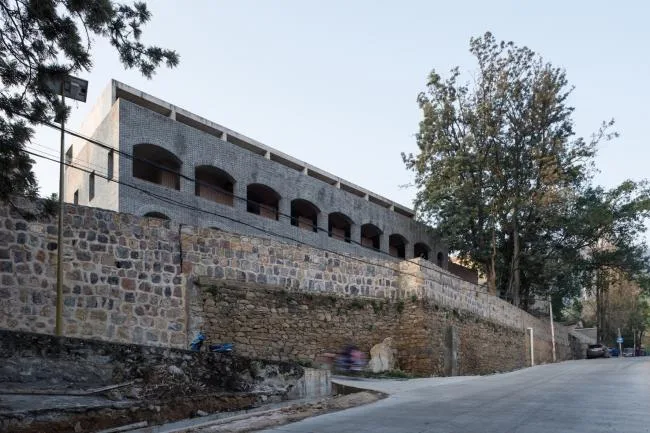
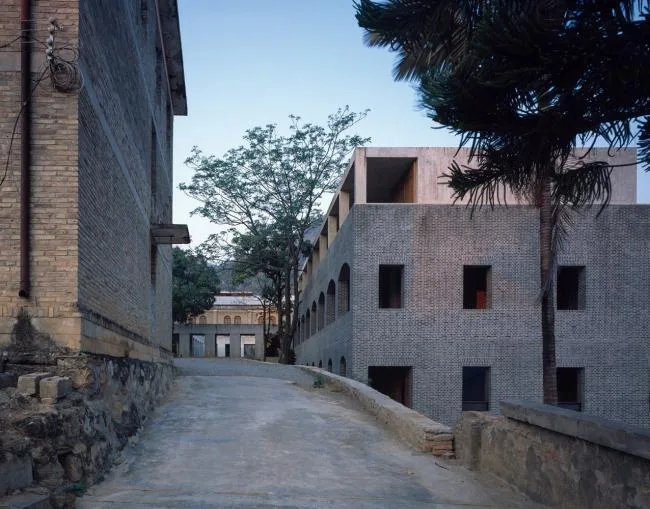
Xinzhai Coffee Plantation is located in Lujiangba, Baoshan, Yunnan, a region renowned worldwide for its small grain coffee production. The site is positioned on a terrace in the heart of Bawan Village, at the foot of Gaoligong Mountain, offering sweeping views of Lujiangba and the Nujiang Canyon to the north.
The owner’s vision is to transform this location through a combination of renovation and new construction. The plan includes integrating facilities such as coffee storage, processing, tasting rooms, retail spaces, hotel accommodations, a coffee museum, and an auditorium. This combination aims to create a tourism and vacation destination that perfectly blends premium coffee experiences with the charm of the natural environment.
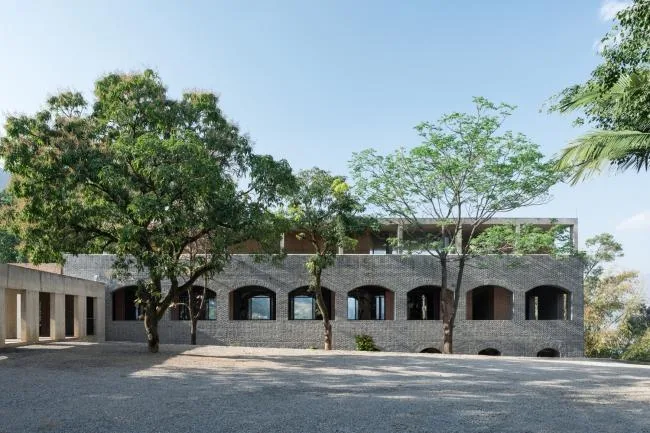
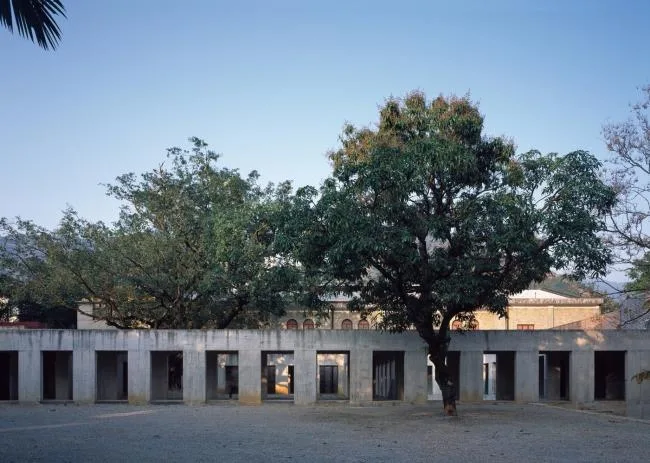
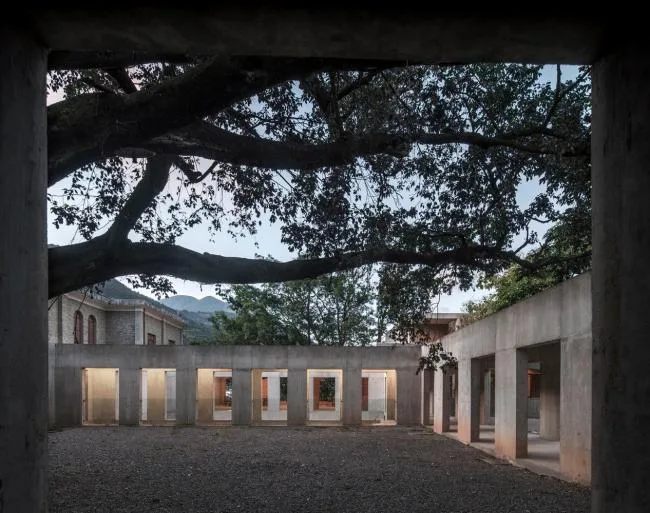
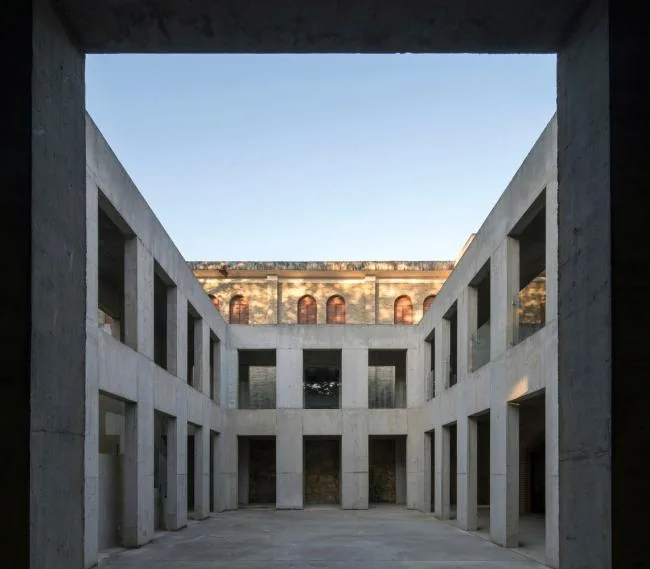
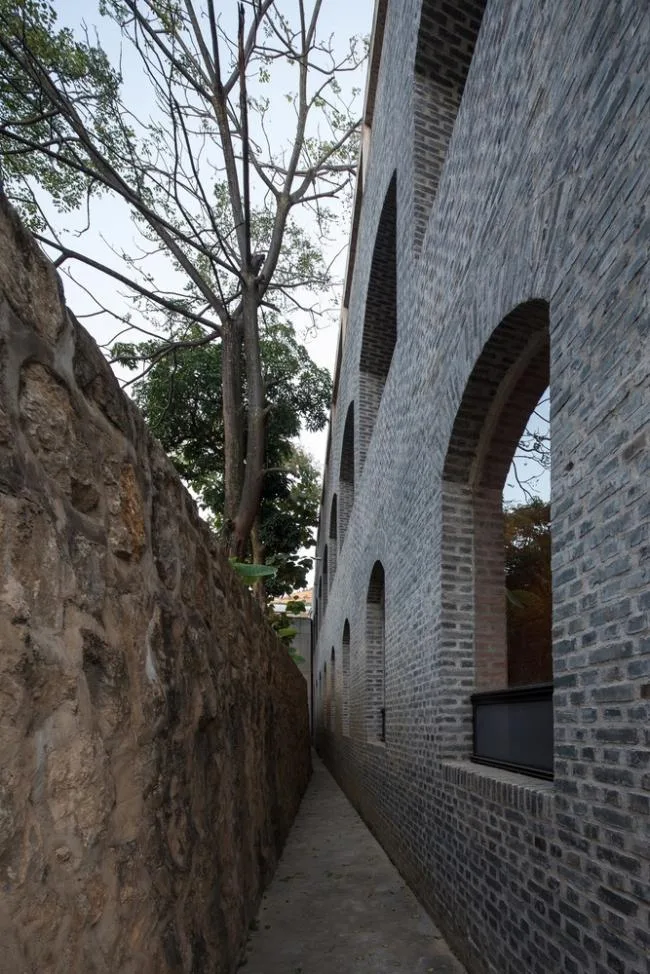
The site comprises two courtyards surrounded by lush trees and features an abandoned cinema built in the 1980s, constructed from gray bricks. Most structures within the site, village, and surrounding areas are brick-built. Nearby, an active brick kiln continues to produce gray bricks.
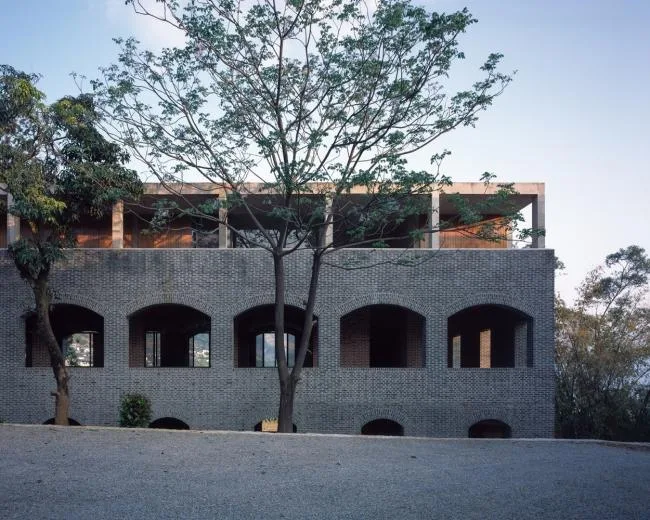
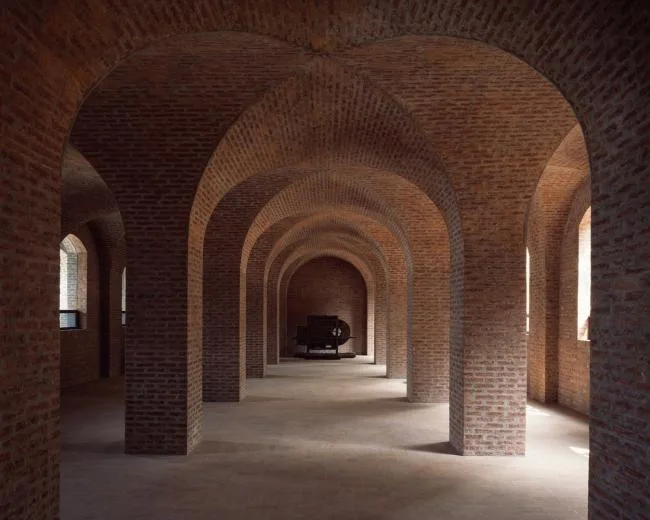
This strong local brick tradition inspired the design’s primary use of brick masonry, a method still prevalent in the area and lending authenticity to the architecture. The brickwork also inspired various architectural expressions of arch structures throughout the project.
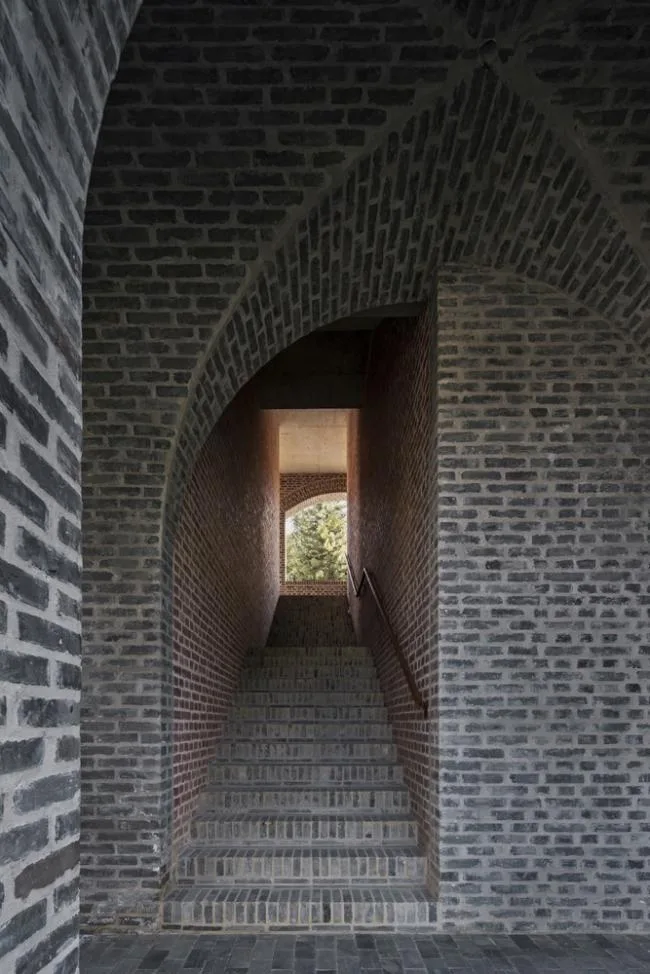
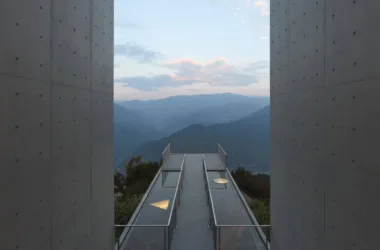
Access to the site is a winding journey along an entrance road that twists and climbs before reaching the estate at the end of the main street. Upon entering the estate, visitors experience a narrative progression—from the enclosed intimacy of the courtyards to the dramatic unveiling of distant views upon entering the main building—creating a dynamic sense of anticipation and release.
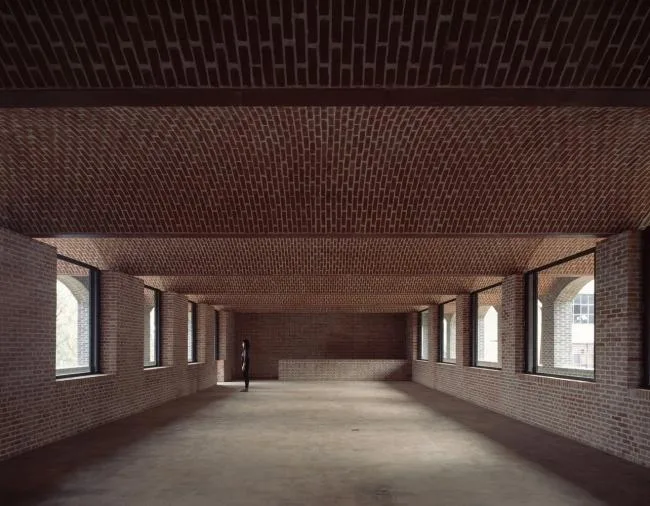
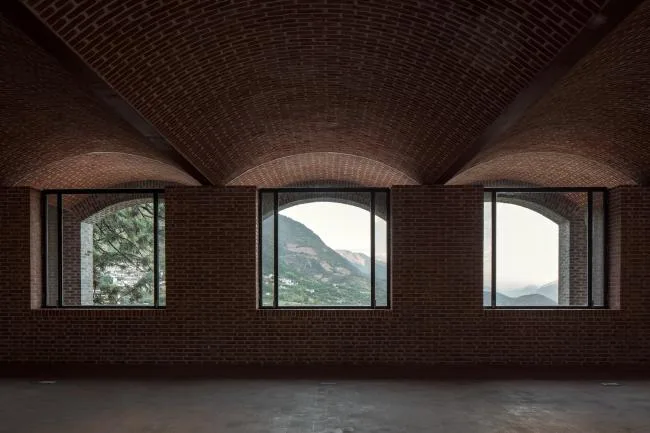
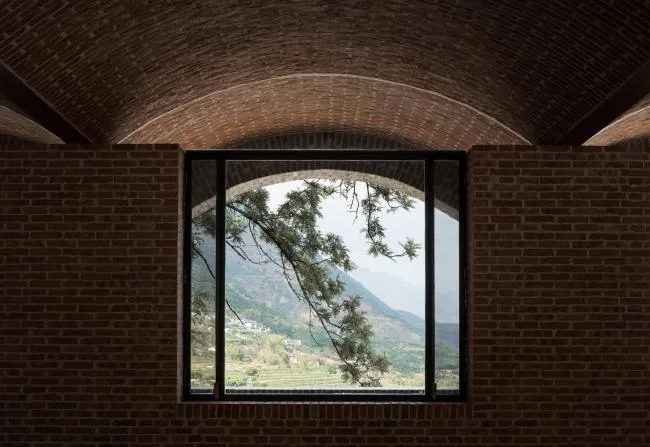
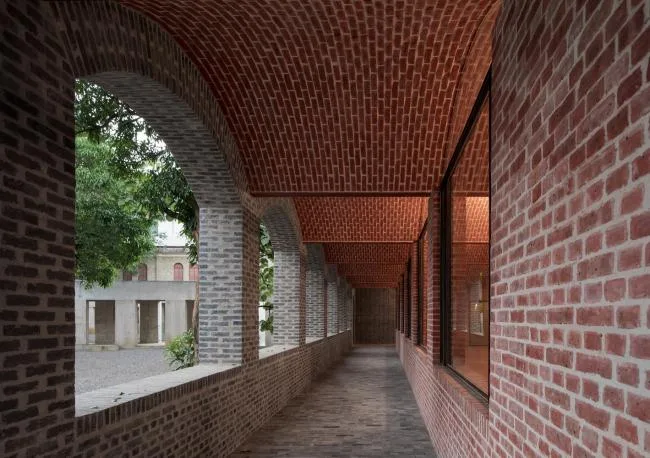
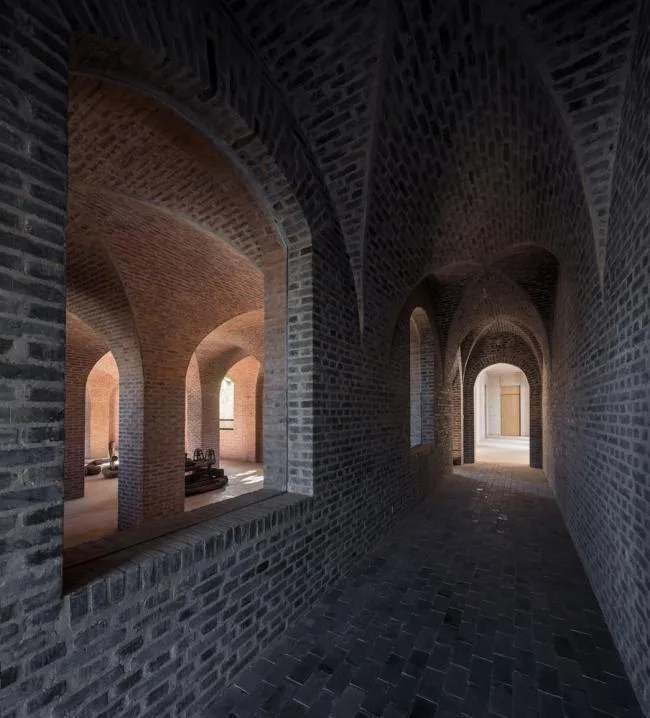
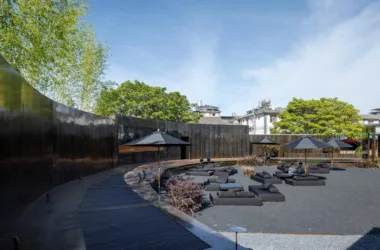
The new building connects to the old cinema through a series of corridors, forming three distinct courtyards: the central courtyard, the large tree courtyard, and a sunken courtyard.
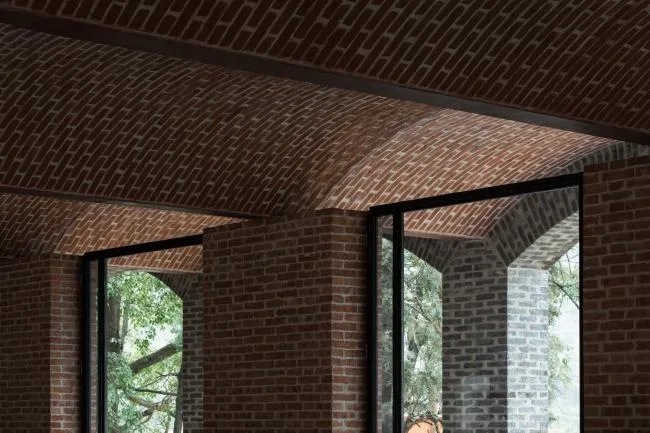
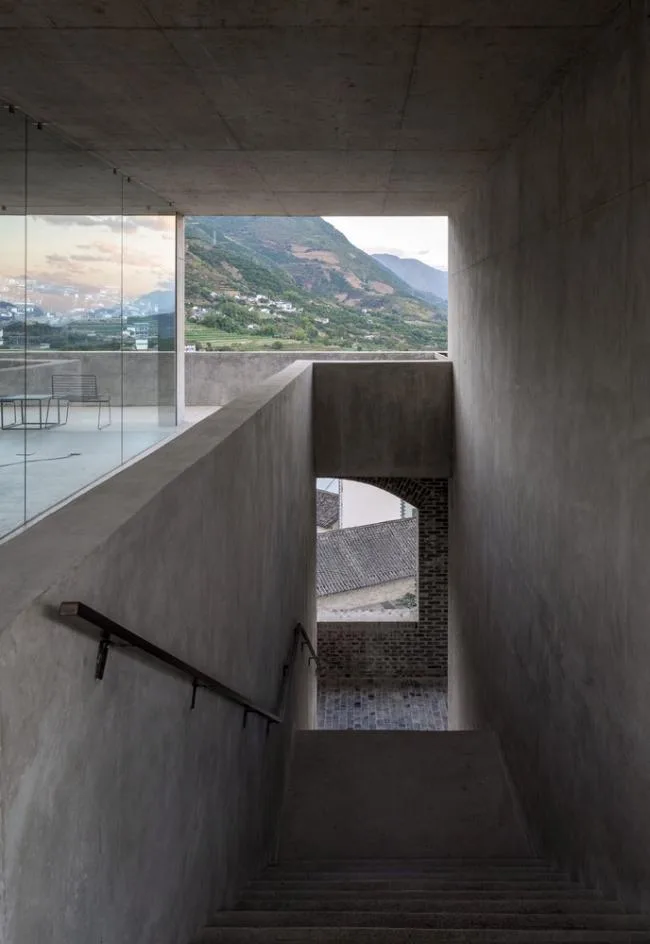
From the central courtyard, visitors can access various functional areas through the interconnected corridors. The original trees provide natural shading, while the combination of new and old buildings, linked by these corridors, creates a series of interconnected courtyards.
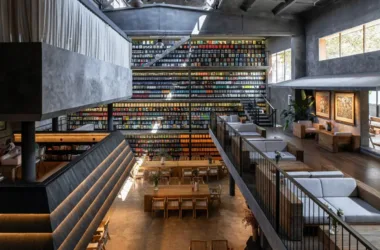
The overall layout resembles a monastery, with the largest former cinema converted into a museum, serving as a spiritual center akin to a church.
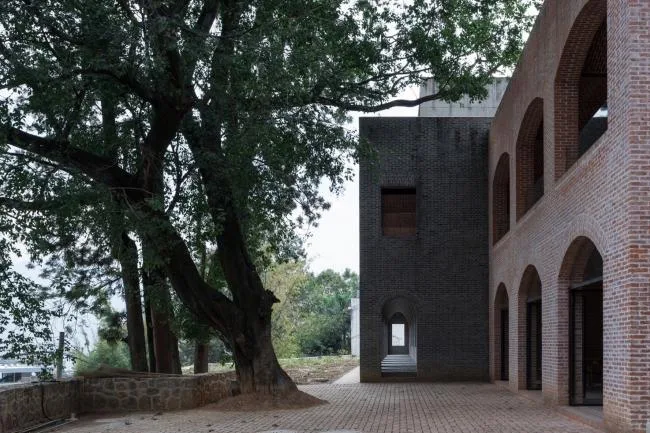
The main building facing the central courtyard is situated on the north side of the terrace, positioned one floor higher than the courtyard.
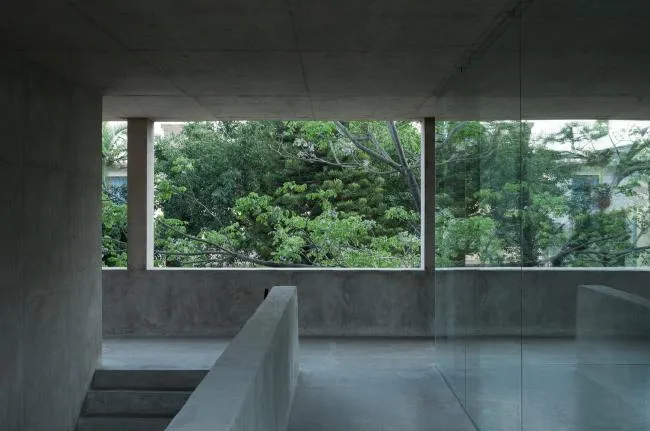
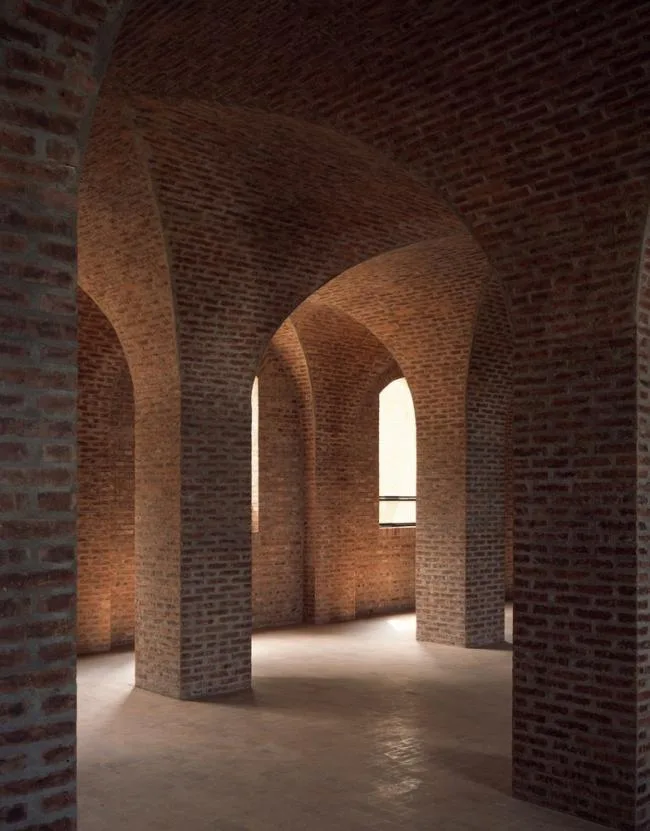
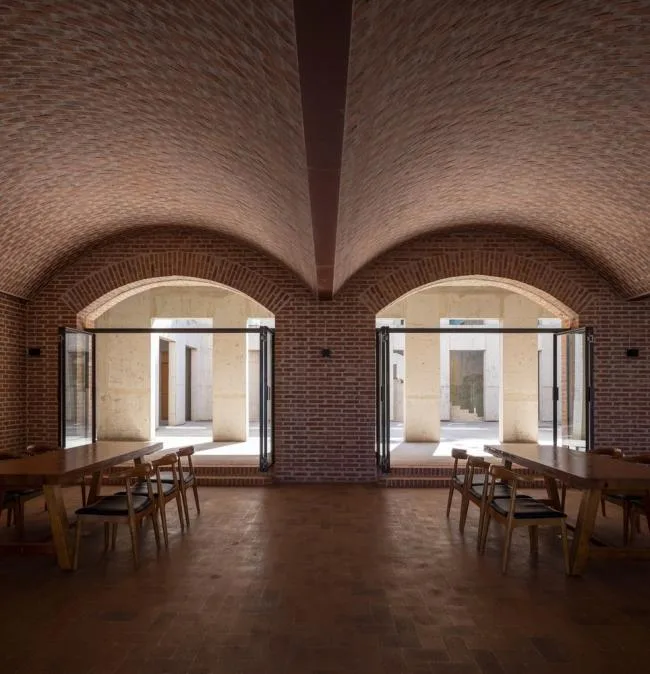
The ground floor houses the coffee bean storage area, designed as a heavy, enveloping dark space reminiscent of a cellar, featuring cross brick arches. This robust volume also helps maintain the constant temperature and humidity required for proper coffee storage.
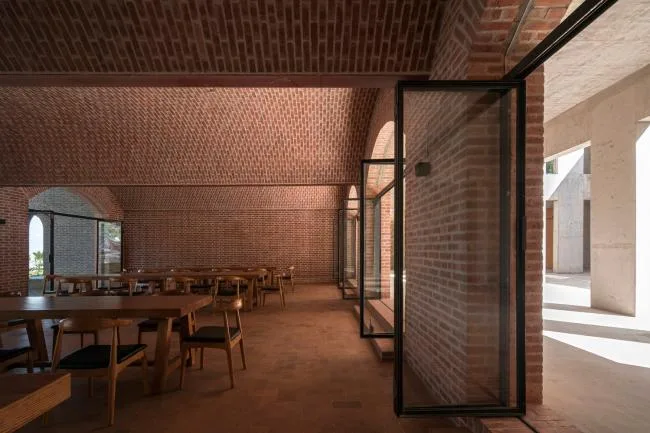
The middle level is dedicated to coffee processing, including roasting and packaging. It requires a spacious environment, achieved through a combination of large-span steel beams and one-way brick arches that create an open, continuous space. This design also allows natural views of the courtyard and canyon to be incorporated into the interior.
The surrounding corridors are accessible to visitors, enhancing the interactive experience of the facility.
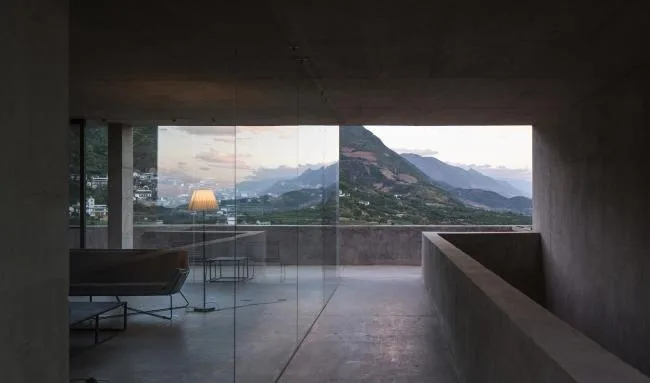
At the top floor, the structure transitions from brick masonry to a concrete frame, maximizing transparency. This level accommodates multiple guest rooms with panoramic views of the canyon, completing a spatial progression from heavy to light as the building rises.
This vertical transition reflects the diverse functions of the building, moving from storage and production at the base to leisure and viewing at the top.
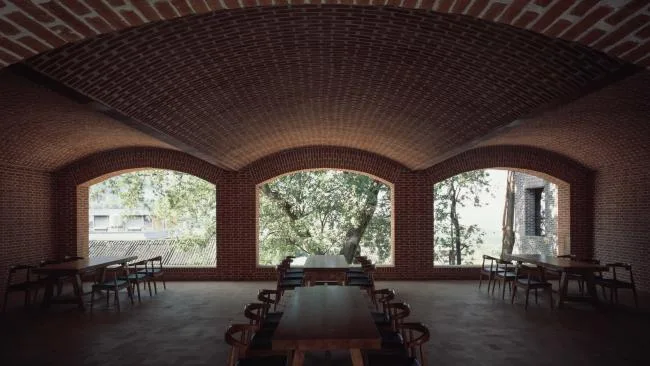
The building’s material palette—brick and concrete—reflects its environmental context and functional requirements. The design balances the solidity and weight of masonry with the lightness and openness of concrete structures.
This spatial form is a natural outcome of carefully considering materials, structural systems, and functions. The design process began by engaging with the site and materials, with the core goal of creating a place that feels grounded yet opens towards distant horizons.
Drawings
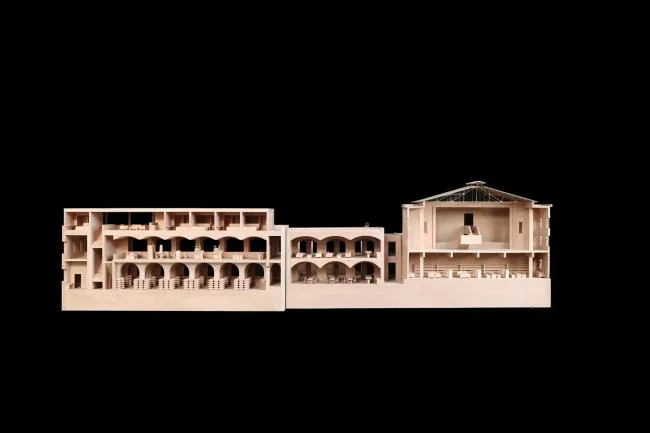
1:25 Section model
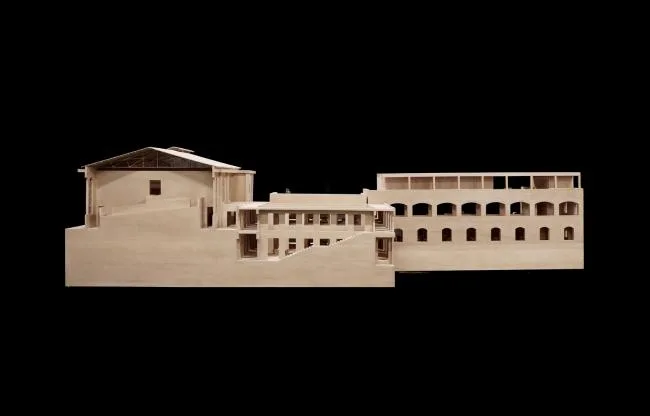
1:25 Section model
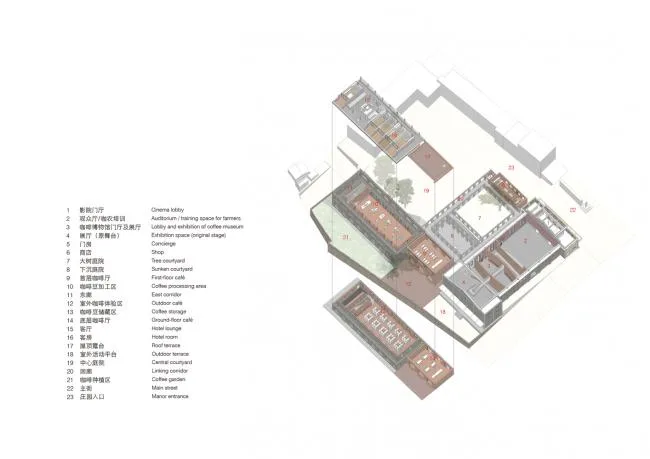
1:25 Section model
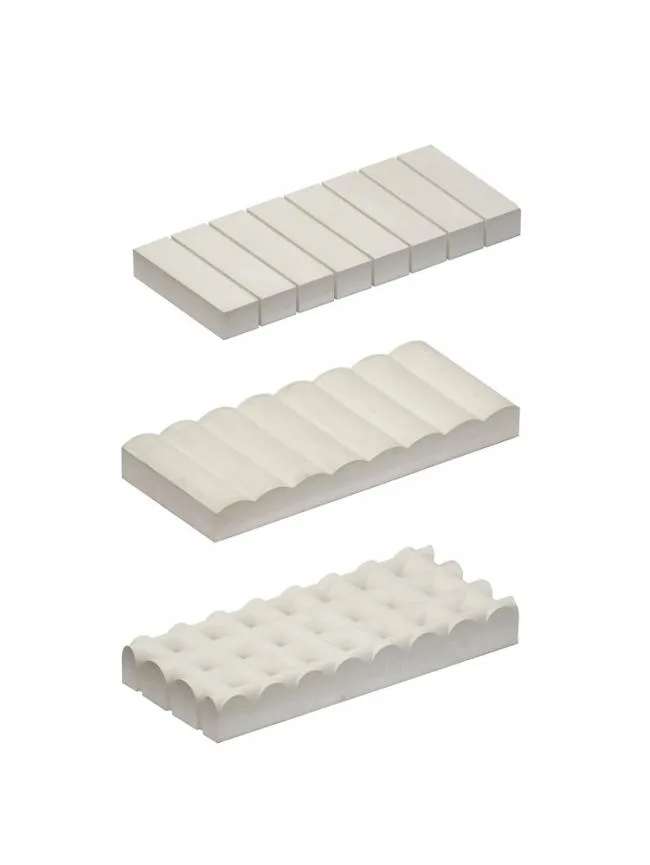
Negative space model
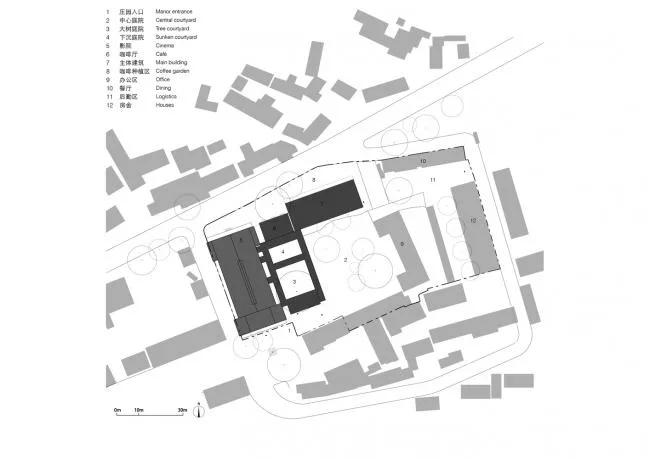
Master Plan
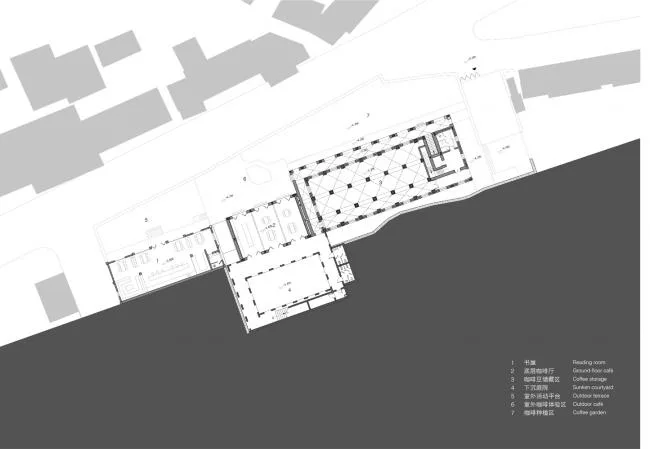
Ground Floor Plan
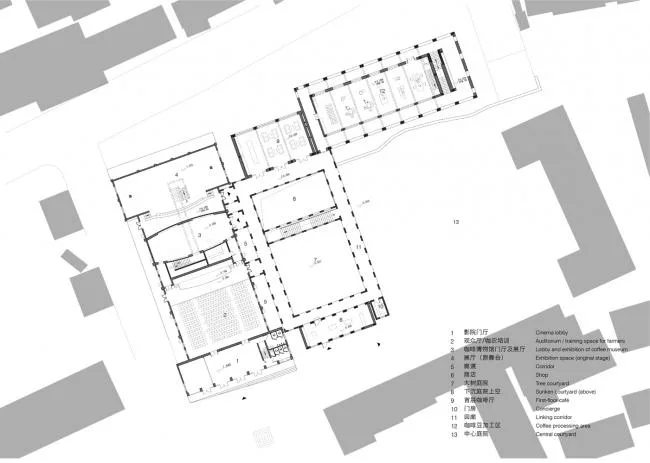
Ground Floor Plan
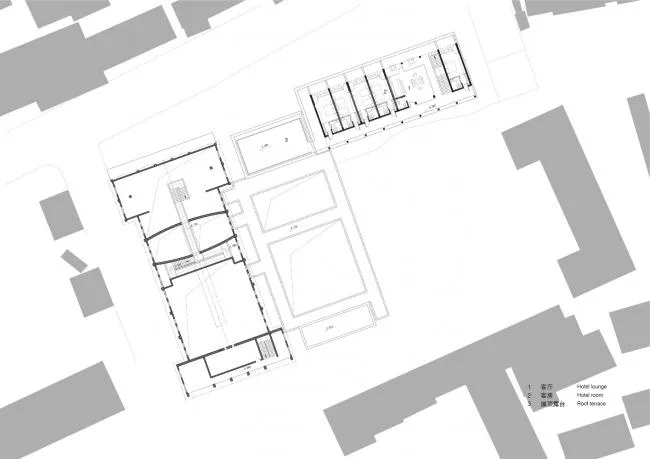
Second Floor Plan
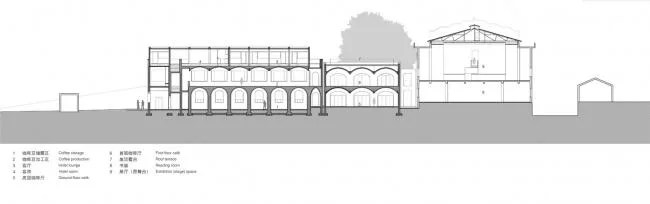
Section of New Building and Current Cinema
Project Information
Architectural Firm: TAO
Location: Bawan Village, Lujiang, Baoshan City, Yunnan Province, China
Category: Cultural Architecture
Lead Architect: Hua Li
Project Architect and Resident: Bai Ting
Photography: Chen Hao and Su Shengliang
Structural Engineer: Ma Zhigang
Mechanical and Electrical Engineer: Lv Jianjun
Owner: Baoshan Xinzhai Coffee Co., Ltd.
Construction Team: Yunnan Baoshan Xiacun Construction Engineering Co., Ltd.
Interior Decoration, Steel Doors and Windows Design and Installation, Landscape Architecture
Steel Doors and Windows Design Team: Shu Tan, Liu Suyang, Liao Peng
On-site Construction Team Leaders: Shu Tan, Yang Zhiqiang, Yang Jing












Must log in before commenting!
Sign Up