
Since the 12th Five Year Plan, China has steadily increased its efforts to promote prefabricated buildings. Over 30 provincial and municipal governments have issued relevant guidelines and pioneered innovative policies in areas such as land use, finance, taxation, and planning. This led to a surge of interest from traditional architectural design institutes and construction units. However, the development of prefabricated building design and construction technology is a gradual process. Without the accumulation of extensive practical project experience, relying solely on designers to rigidly follow industry standards, specifications, and drawings often results in extended design cycles, significant cost increases, and challenges in component production and construction.
Designing prefabricated buildings requires not only specialized knowledge but also a comprehensive understanding of all project phases and close collaboration among various departments and disciplines. Prefabricated building design must be led by the design unit and integrated throughout the entire design process—from conceptual design to detailed component design. It cannot be treated as an additional step or be designed entirely as cast-in-place before being handed over to process designers or precast component manufacturers. Such an approach inevitably causes major technical issues and leads to considerable economic losses for the entire project.
This article briefly introduces eight key technical considerations in the prefabricated building design process: organizational structure, design process, design depth, component disassembly, connection node design, detailed drawing design, drawing review, and cost control. The goal is to provide designers with a foundational understanding of the overall framework and principles of prefabricated building design.
1. Organizational Structure
Design firms in China face fierce market competition. Architectural design is a highly variable industry influenced heavily by regional systems, policies, and cultural differences. Prefabricated buildings are still in their early development stages in China, and the diverse demands of construction authorities and various clients place greater emphasis on innovation in architectural design and technical services.
The design process involves collaboration among multiple departments and specialties, including architects, structural engineers, plumbing and electrical designers, interior designers, process designers, factory technicians, and construction workers. The design department’s organizational structure should ensure effective horizontal communication within a linear functional framework. Additionally, traditional organizational structures should be optimized to foster overall project thinking, knowledge sharing, tolerance for differences, and collaborative development among design team members. Flexible management and appropriate authorization are essential to motivate designers to engage in project decision-making and grow professionally. A well-structured organization clarifies for every designer: “Who do I approach when I have a problem?” and “Who am I responsible for?”
The typical organizational structure of a prefabricated architectural design firm is illustrated in Figure 1. For daily management, a linear functional framework efficiently conveys policies, work instructions, and regulations. For specific projects, appointed project leaders and professional leaders facilitate cross-disciplinary collaboration throughout different project stages. Each design institute forms multiple project teams, with team members selected by the director based on project workload.
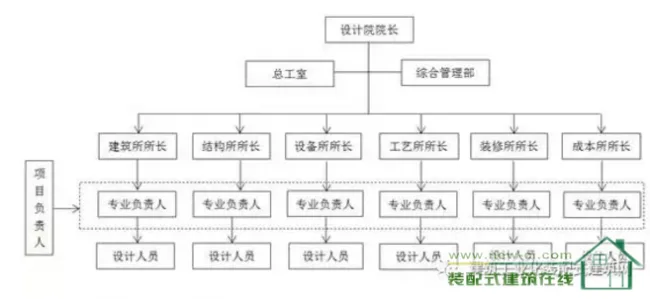
Figure 1 Typical organizational structure of a design institute
2. Design Process
Delivering high-quality prefabricated building designs tailored to client needs is a complex challenge. Prefabricated construction remains in its infancy in China, and many design and management personnel lack a fundamental understanding of its significance, often presenting difficult requirements. Furthermore, traditional design firms lack extensive experience in prefabricated projects and tend to design projects as if they were cast-in-place, subsequently handing them off to process designers and construction teams. This leads to significant obstacles and high costs during process design and component production.
To enable efficient teamwork and clarify departmental responsibilities, a scientifically sound and standardized design process is essential. Figure 2 outlines a typical project progression, highlighting key tasks at each stage.
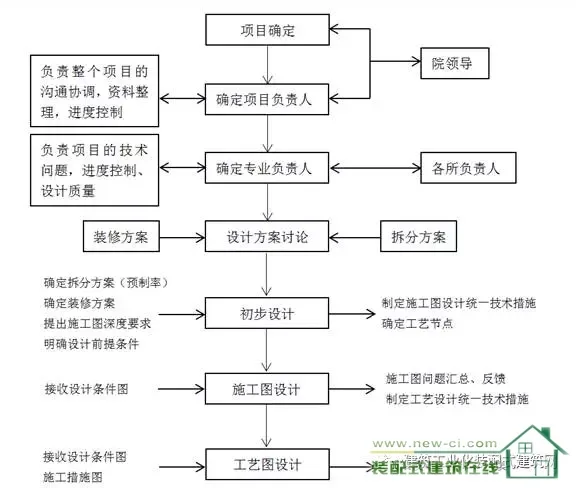
Figure 2 Prefabricated Building Design Process
3. Depth of Construction Drawing Design
Currently, two approaches exist in prefabricated building design: (1) traditional design institutes produce all drawings from concept to construction stages as if for cast-in-place structures, then submit them for process design and component manufacturing; (2) a single design unit completes all design tasks independently. The first approach often results in numerous drawing issues, communication difficulties, costly design changes, and challenges in mold design and component production. Construction processes also become more complex.
To address these concerns, in 2016, the Ministry of Housing and Urban-Rural Development issued two notices clearly defining the required design depth at each stage and key review points for construction drawings (see Figure 3). On November 17, 2016, document AI-BT-SC_0_247 introduced the “Regulations on the Depth of Compilation of Construction Engineering Design Documents (2016 Edition),” effective January 1, 2017, superseding the 2008 edition. On December 15, 2016, the Ministry issued Construction Quality Letter AI-B_SC_1_287, detailing technical review points for prefabricated concrete structure projects.
4. Component Disassembly Design
Scientific disassembly of components is central to standardized prefabricated building design. It profoundly affects building functions, facades, structural stress, load-bearing capacity of components, and overall costs. During design, component size and disassembly positions should be optimized according to the principle of “module coordination.” Minimizing component types enhances universality and interchangeability, enabling the building to achieve the best balance of functionality, quality, technology, and economy during construction. Figure 4 illustrates five critical design factors for component disassembly.

Figure 4 Five design factors for component disassembly
5. Connection Node Design
The design of connection nodes between prefabricated components is a critical and challenging aspect of prefabricated building design. It also tends to be the source of quality issues after construction completion. The design must ensure structural safety, clear and reasonable force transmission, and consistency between calculation analysis and actual force conditions. Functional requirements such as waterproofing, fire protection, and insulation at node locations must also be considered.
The foundational principle for prefabricated concrete structures is equivalence to cast-in-place structures. This is achieved through reliable connection methods and appropriate structural and construction measures. Connection methods are fundamental to ensuring equivalent performance. However, beyond reliability, designs must be adapted to specific project conditions and comply with relevant specifications to guarantee structural safety. Standards such as the “Technical Standard for Prefabricated Concrete Buildings” (GB/T51231-2016), “Technical Specification for Prefabricated Concrete Structures” (JGJ1-2014), and the national prefabricated building standard atlas provide detailed regulations on connection node forms and calculation requirements. Designers should refer to these when developing specific node designs.
6. Detailed Design of Components
Unlike traditional cast-in-place concrete structures, prefabricated buildings require both construction drawing design and detailed production drawings for components. These production drawings form the basis for factory fabrication of prefabricated components. All main structural and non-structural components must be designed with detailed production drawings.
Main tasks in creating PC (precast concrete) production drawings include:
- Collecting all requirements for PC components from various disciplines and project stages into detailed production drawings.
- Verifying component bearing capacity and deformation under loads during production, transportation, stacking, and installation.
- Designing lifting points, stacking supports, and embedded parts necessary for component handling.
To facilitate production, designers typically consolidate all component information (dimensions, reinforcement, embedded parts, openings, etc.) into one or several detailed drawings using simplified “line style” representations across building, structural, plumbing, heating, and electrical plans. This results in a substantial design workload, as shown in Figures 5 and 6.
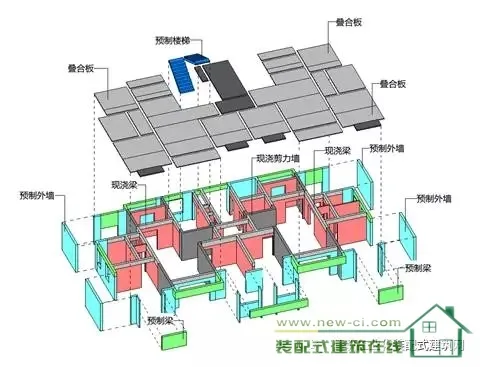
Figure 5 Prefabricated Building BIM Model
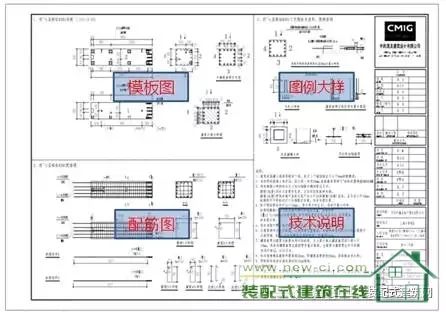
Figure 6 Sample drawing of PC component detail
Project data shows that a typical floor of a prefabricated building contains between 80 and 200 prefabricated components, depending on the prefabrication rate. This results in approximately 120 to 240 drawings per floor, and 300 to 1000 detailed component drawings for an entire building. Additionally, collision and interference between components must be checked with millimeter-level precision, posing a significant challenge for process designers.
BIM (Building Information Modeling) technology revolutionizes this traditional approach. In BIM-based design, the 3D model is the core, and drawings are generated automatically from the model. With intelligent drawing functions and auto-updating capabilities, BIM software produces detailed design drawings based on selected models, and any model changes automatically update all linked drawings. This minimizes manual errors and greatly improves design efficiency and quality. Choosing suitable BIM software is therefore crucial for enhancing process design.
7. Drawing Review
All design outcomes must be submitted as drawings, making drawing review a vital quality control measure. Given the large volume and complexity of construction and process drawings for prefabricated buildings, we recommend several review strategies:
- Create 3D models using BIM software to automatically detect collisions;
- Compile common drawing issues into an error-prone checklist to systematically verify each item during review, as shown in Figure 7.


Figure 7 Drawing Proofreading Checklist (Partial)
8. Cost Control
Structural form, technological systems, prefabrication rate, management model, project scale, and building height all significantly influence the overall cost of prefabricated buildings (see Figure 8). Currently, costs for prefabricated buildings are generally 200-500 RMB/m² higher than traditional cast-in-place methods, with the prefabrication rate being a key factor.
During project development, it is crucial to control prefabrication costs during the design phase and strive to minimize overall unit price. Otherwise, prefabricated buildings will lack a cost advantage over traditional construction.
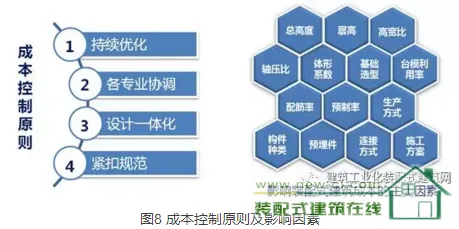
Figure 8 Cost Control Principles and Influencing Factors
The key topics discussed here—organizational structure, design process, design depth, component disassembly, connection node design, detailed drawing design, drawing review, and cost control—greatly impact design quality, efficiency, and project cost. These factors are essential to the successful execution of prefabricated building design work. We hope this article serves as a useful reference for designers engaged in prefabricated construction.
Article source: Prefabricated Building Online














Must log in before commenting!
Sign Up