
1. Introduction to the Construction System of Runtai Prefabricated Concrete Exterior Wall Panels
The Runtai prefabricated concrete exterior wall panel system is an innovative construction technology developed by integrating Japanese and Taiwanese expertise. It encompasses comprehensive production and assembly techniques for wet, dry, and semi-wet exterior wall panels, aligning with national strategies focused on energy conservation and emission reduction. This system achieves simultaneous building energy efficiency and industrialization.
Its key advantages include high quality, rapid construction, factory-controlled production, standardized operations, and a stable manufacturing environment. Additionally, it is less affected by weather conditions, reduces the need for construction formwork, maintains a clean and safe site, and minimizes waste, dust, and noise pollution. This system is suitable for office buildings, residential buildings, and other structures.
In Taiwan, this technology has been applied to construct over 500,000 square meters of exterior wall panels for commercial and residential buildings. Recently, the technology was transferred to Shanghai Urban Construction Group, facilitating the first precast concrete exterior wall panel project for the Pujiang affordable housing development.
The Runtai precast concrete exterior wall panel system is a non-load-bearing wall system, meaning it does not bear external structural forces. Instead, it relies on pre-embedded iron components or steel bars to act as load-bearing elements, which are then suspended from the building structure. When designing the joint system between the precast panels and the structure, factors such as seismic resistance, integrated decoration capability, and inter-story displacement absorption must be considered. Special attention is required to ensure waterproofing between panels to achieve effective seismic resistance, waterproofing, and aesthetic appeal.
2. Basic Design Concepts:
2.1. Planning According to Architectural Design Principles
1. Plan and Facade Segmentation:
When using precast concrete exterior wall panels (PC panels) for building exteriors, the building’s plan and facade are first divided into individual panels, considering transportation and lifting constraints.
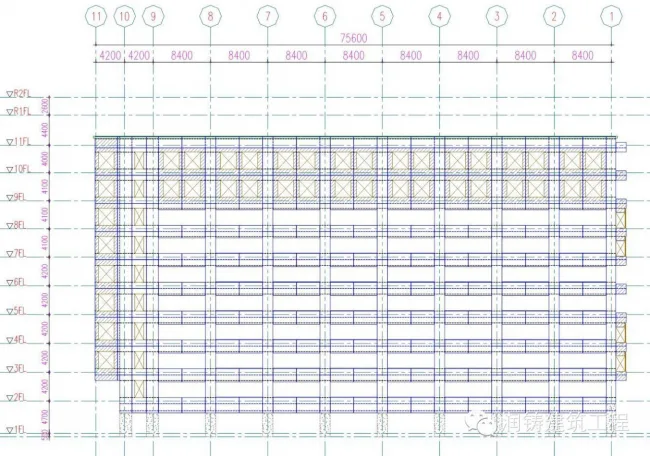
Figure 1: Facade segmentation of PC exterior panels at the teaching building of National Taiwan University of Science and Technology
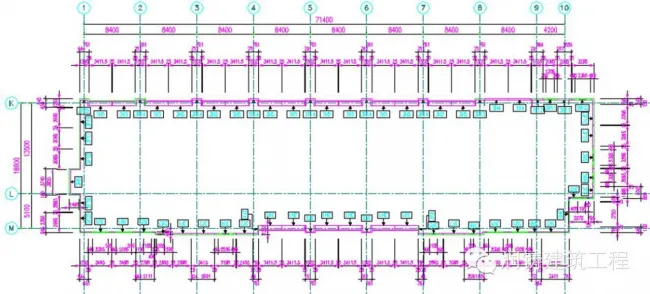
Figure 2: Plan segmentation of the 3rd to 7th-floor exterior wall panels, teaching building, National Taiwan University of Science and Technology
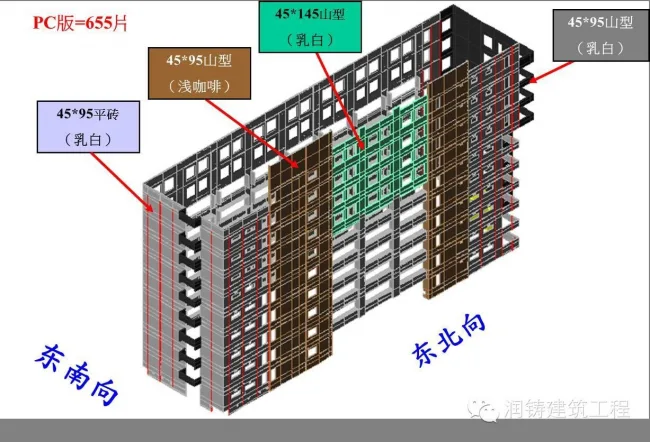
Figure 3: Perspective view of PC exterior wall panel segmentation at the teaching building of National Taiwan University of Science and Technology
2. Modulus and Standardization:
When dividing PC exterior wall panels, it is advisable to maximize the use of standard modules to minimize the variety of panel types and reduce the number of steel molds required, thereby optimizing economic efficiency.
3. Architectural Design for Shape and Color Coordination:
The exterior finish of the same PC panel can be customized in various ways, such as smooth surfaces, pre-embedded tiles or stones, or decorative molds, to perfectly match the architectural vision. Since the PC panels are factory-produced, the overall quality of exterior finishes surpasses that of traditional cast-in-place methods.
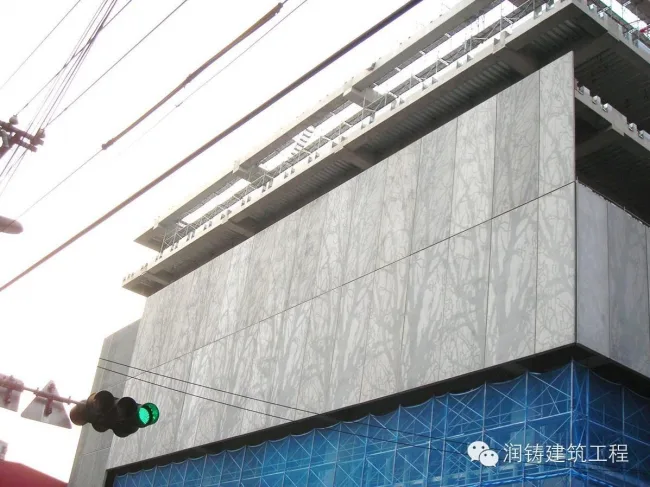
Figure 4: Taiwan Zhonghe Land Administration Building – Tree Shadow Shaped Clear Water PC Exterior Wall Panel
4. Interface Design for Panels with Different Properties:
When building exteriors consist of panels with varying properties, such as PC panels combined with cast-in-place structures, metal curtain walls, or dry-hanging stone, the interface design must ensure independent seismic and waterproof systems for each type. Different panel systems should not be directly attached to one another.
5. Integration with Mechanical and Electrical Systems:
Design of PC exterior wall panels must accommodate mechanical and electrical requirements, including reserved openings for air conditioning pipes, water supply and drainage, pre-cut electrical switch boxes, and embedded lighting fixtures or lamp boxes.
2.2. Mechanical Modes
To address inter-story displacement during seismic events, joint designs for PC exterior wall panels are generally categorized into three types: sliding, rocking, and fixed. These are described below:
1. Sliding:
Wide panels typically use horizontal sliding joints, with the following selection criteria:
- a. Width-to-height ratio (W/H) ≥ 0.5 with interlayer displacement ≤ 25mm
- b. Shear resistance of the horizontal joint filler must be verified when using sliding joints
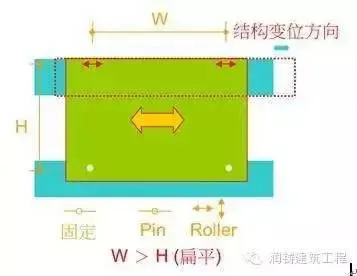
Figure 5: Movement mode of horizontal sliding panel
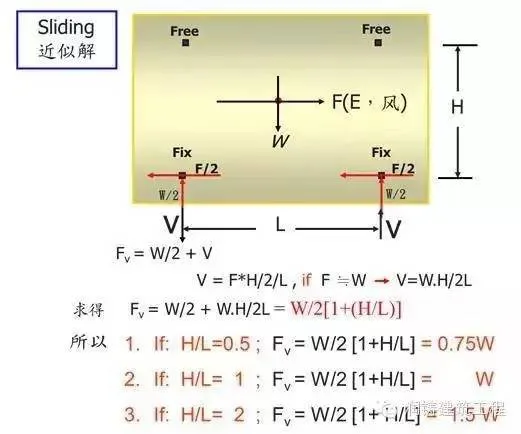
Figure 6: Approximate mechanical analysis model for horizontal sliding joints
2. Rocking:
Tall and narrow panels typically use rocking joints, with the criterion:
- c. Width-to-height ratio (W/H) < 0.5
Shear resistance of the vertical joint filler should be checked when using rocking joints.
3. Fixed Type:
Panels that move integrally with the main structure, such as balcony panels (which do not contact upper or lower panels) and small corner panels wrapping columns, are suitable for fixed joints (see Figure 9).
Summary of the three types:
- a. Regardless of type, movement of panels in the indoor/outdoor direction is prohibited and must be firmly restrained to resist both positive and negative wind pressures.
- b. Sliding holes for joint iron parts should accommodate earthquake and wind-induced displacements, manufacturing tolerances, and site construction errors.
- c. Wet wall panel systems are generally designed as sliding types, with one side cast together with the floor slab and the other three sides released to allow movement during seismic or wind events. Panels with a bottom dimension larger than their height are more efficient for this system.
2.3. Waterproofing Principles
The waterproofing approach for PC exterior walls follows two main principles: “Guiding water away is better than blocking,” and “Drainage is better than waterproofing.”
The mechanics of water intrusion are illustrated in Figure 10. When designing waterproofing for PC panels, priority should be given to shaping panels to guide and drain water effectively, supplemented by waterproof barriers as secondary measures to meet performance requirements.
Figure 10: Applicable forms of fixed-type beam and column cladding plates
Runtai’s waterproof design adopts a primarily closed-profile system enhanced by zoning and layered water barriers. Figure 11 illustrates the waterproof profiles and materials used for each section.
3. Precautions for Constructing Precast Concrete Exterior Wall Panels
3.1. Pre-Construction Planning
1. Review Construction Drawings for Productivity and Constructability:
Once the initial PC wall panel draft is complete, conduct a detailed review based on factory production capabilities, providing feedback to optimize design aspects such as demolding feasibility and appropriate lifting point placement. Review should also consider site lifting constraints, such as interference from iron components, lifting points not aligned with the center of gravity, or misaligned iron connections.
2. Dimension Verification:
Carefully verify all dimensions to identify any discrepancies in drawings. Key focus areas include:
- a. Segment dimensions and overall dimensional closure
- b. Wall segmentation and elevation alignment
- c. Consistency between sectional and detailed drawings
- d. Verification of iron fittings and ceiling elevations
- e. Precast type transition points
- f. Integration of design changes
- g. Interface dimensions at transfer and roof layers
- h. Space allowances for error absorption
- i. Verification of composite interface drawings
- j. Checking compartmentalization systems
3. Surveying and Control Point Verification:
- a. Establish base control points and transfer them to each floor, confirming wire closure accuracy to meet standards.
- b. After grouting floor slabs, promptly raise control points and layout wall slab inlet/outlet lines, iron centerlines, and slab division lines.
- c. Validate layout line accuracy before wall panel installation.
- d. For high-rise buildings, recalibrate floor control points every 5-6 floors to prevent cumulative errors.
3.2. Dry PC Exterior Wall Panel Construction Process
1. Standard Construction Workflow
2. Breakdown of Each Step:
- Measurement and pattern segmentation layout
- Vertical plane control line establishment
- Pre-embedded fixation of iron components
- Measurement of iron part deviations before lifting
- Adjustment or correction plans if deviations are excessive
- Incoming inspection of PC exterior wall panels, including panel dimensions, iron part positions, reserved water and electrical holes, embedded window locations, and waterproof adhesive strip placement
- Installation of connection irons, welding, and magnetic particle testing (MT)
- Installation and temporary fixation of corner plates
- Installation of additional PC exterior wall panels
- Adjustment of panels face by face and floor by floor
- Fixation of iron parts via welding or bolting
- Application of anti-rust paint on iron components
- Indoor polyurethane waterproofing application
- Repair of exterior wall panel decorative materials
- Application of weather-resistant waterproof adhesive on exterior surfaces
- Final closure and finishing work
3.3. Wet Prefabricated Exterior Wall Panel Construction Process
The following steps complement the dry panel process and are specific to wet panel construction:
- Wet PC exterior wall layout and sample line inspection
- Installation and adjustment of combined iron locking and load-bearing irons
- Installation and adjustment of slant supports
- Waterproofing using leak-proof slurry
- Connection and fixation of upper steel bars
3.4. Comparison Between Dry and Wet Wall Panels
3.5. Definition of Semi-Wet Prefabricated Exterior Wall Panel System
- 1. Utilizes a dry iron system with upper and lower parts.
- 2. Designed solely as a sliding system, similar to wet panels, combined with the iron system.
- 3. Does not use slant supports for panel adjustment.
- 4. Connects upper steel bars to the floor slab, like wet panels, avoiding interlayer plug construction.
- 5. Adjustment procedures are the same as for dry systems.
- 6. Combines the advantages of dry skip-layer construction and wet panel methods without interlayer plugs.
Generally, the semi-wet system is applied in steel-reinforced residential buildings, enabling skip-layer construction aligned with the characteristics of steel structures without requiring floor grouting for wall panels.
4. Conclusion
Effective quality control of prefabricated concrete exterior wall panels requires coordinated efforts across design, production, and construction to deliver superior building products. Looking ahead, Runtai aims to advance its PC exterior panels with the following goals:
- 1. Lightweight design – Reducing panel weight using hollow cores to enhance insulation, energy efficiency, and soundproofing.
- 2. Environmentally friendly materials – Employing recyclable or non-polluting materials to minimize environmental impact.
- 3. High-tech features – Utilizing surface materials that resist dirt, incorporate nanotechnology, and reduce light reflection.
- 4. Pre-embedded solar panels – Moving toward green, self-sustaining buildings.














Must log in before commenting!
Sign Up