
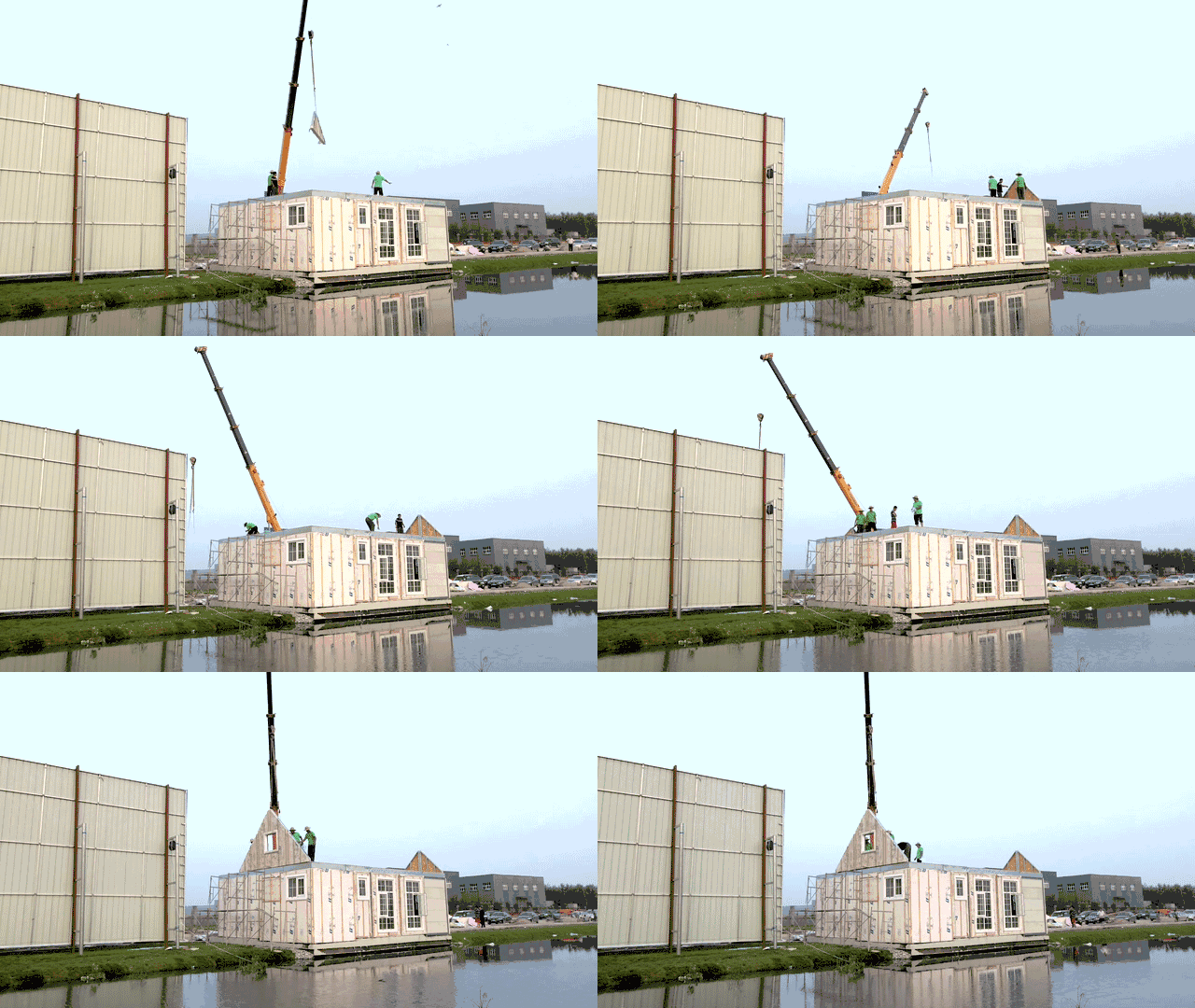
Prefabricated building development is still in its early stages in China, but construction companies and contractors are already showing great enthusiasm for it.
However, for structural engineers, the reality of the assembly process presents significant challenges:
1. The Structural Design Process Is More Complex
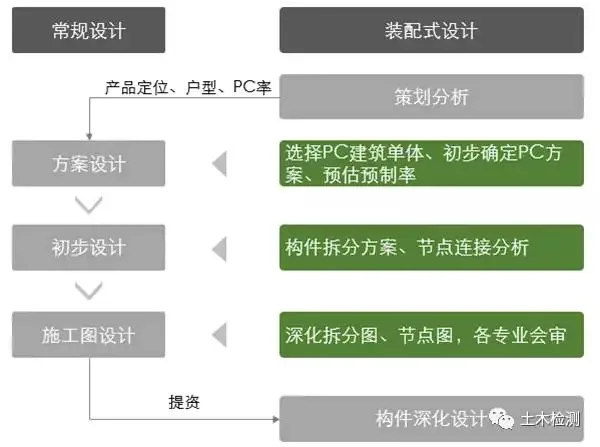
▲ Comparison between Prefabricated Building Structural Design and Conventional Structural Design Processes
Designing prefabricated buildings requires more than just addressing functional needs. It also demands careful consideration of how design decisions affect production and assembly.
These buildings impose strict requirements from component manufacturing to transportation and on-site assembly. Therefore, the design must encompass the entire process.
From the initial design stage, components must be planned and segmented to ensure seamless integration between design, production, and construction. The feasibility of these plans must be clearly demonstrated in the drawings. Additionally, each component’s design should be refined to simplify manufacturing, control costs, reduce on-site construction difficulties, and guarantee stability.
2. Structural Design Faces More Diverse Requirements
The design of prefabricated buildings must meet several key requirements:
2.1 Synchronization and Integration of Design Processes
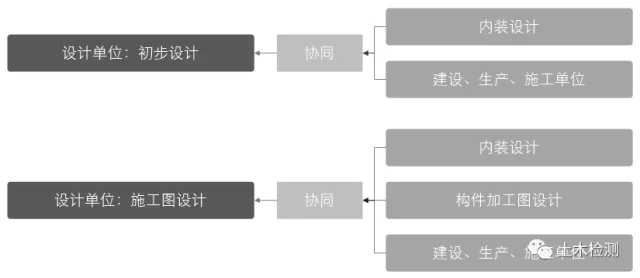
▲ Collaborative design process for prefabricated building structures
It is crucial to coordinate architectural, structural, interior, and secondary component designs simultaneously. Each design phase must consider downstream production, transportation, and construction constraints. Simulating construction scenarios and preparing contingency plans are essential to address potential issues.
2.2 Design Rationality Is Limited by Production and Construction
A deep understanding of manufacturing processes, construction techniques, and equipment capabilities is necessary. Component designs should aim to simplify production and reduce costs while complying with node design standards and ensuring the seismic performance of the structural system.
2.3 Enhanced Completeness and Control of Design Drawings
Before finalizing the design, all components and parts must be fully developed together. This includes conducting comparative analyses of different samples and preparing detailed cost estimates.
Compared to traditional cast-in-place buildings, prefabricated structures are subject to a broader range of technical standards and regulations, making the structural design process significantly more complex.
3. Higher Design Costs for Structural Engineers

▲ Work scope of structural design in prefabricated buildings
It’s important to emphasize that this increased complexity primarily affects structural engineers.
Compared to traditional cast-in-place construction, the structural design phase for prefabricated buildings is far more involved. Yet, structural engineers are rarely granted additional time to accommodate this complexity.
Owners expect prefabricated projects to be completed faster, so structural engineers must invest more effort in detailed calculations, such as component segmentation and specification design. Furthermore, they must maintain constant communication with multiple component manufacturers, as prefabricated parts are seldom produced by a single supplier.
This effectively doubles the workload of structural engineers, who previously only needed occasional meetings with clients and other professionals to resolve issues.
More calculations and collaboration mean longer hours and increased pressure on structural engineers.

4. Lower Design Compensation for Structural Engineers

In most design firms, structural engineers’ salaries consist of a base pay plus project commissions. These commissions are calculated as a percentage of the project’s design fees, which typically correspond to the project’s area and total cost.
While project area varies by project and is not discussed here, total project cost plays a significant role. Prefabricated buildings benefit from lower component production costs, higher mechanization in on-site assembly, reduced material and equipment expenses, improved construction efficiency, and shorter schedules. As a result, their overall costs are lower than traditional cast-in-place buildings.
Because construction cost reductions directly affect the total project cost, owners are less willing to pay higher design fees.
Therefore, for prefabricated buildings of the same size, structural design costs are lower, and consequently, structural engineers receive reduced compensation.
With the rise of prefabricated and modular construction, structural designers face heavier workloads and greater complexity, yet they often see diminished financial rewards—at least in terms of design fees.
While promotional articles about prefabricated construction flood your social feeds, structural engineers should consider that this trend might actually make their jobs more challenging and less rewarding.














Must log in before commenting!
Sign Up