
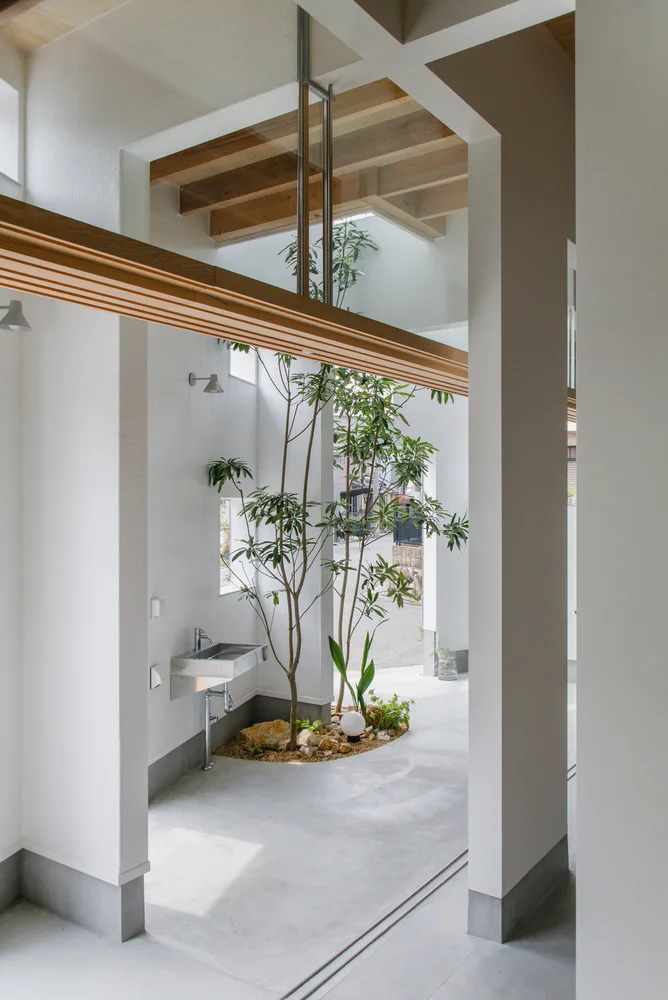
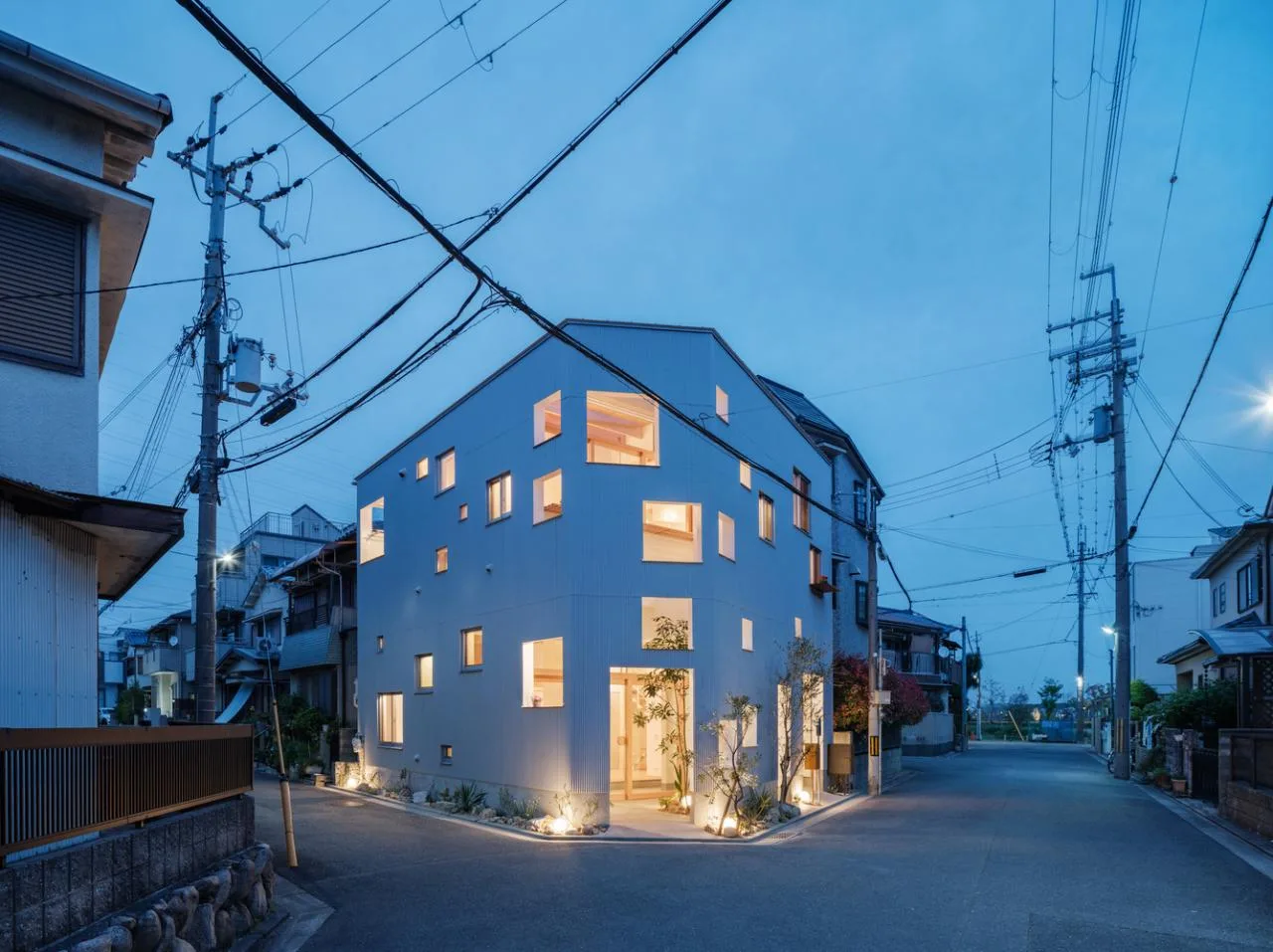
This small villa design strategically uses openings to create a sense of distance, both indoors and outdoors. The site is bordered by Japanese and private railways to the north and south, with a vast ruins park and a main road to the east and west. Nestled in a residential corner separated by urban infrastructure, the area features neatly arranged small houses. The streetscape here is unremarkable, resembling many typical neighborhoods.
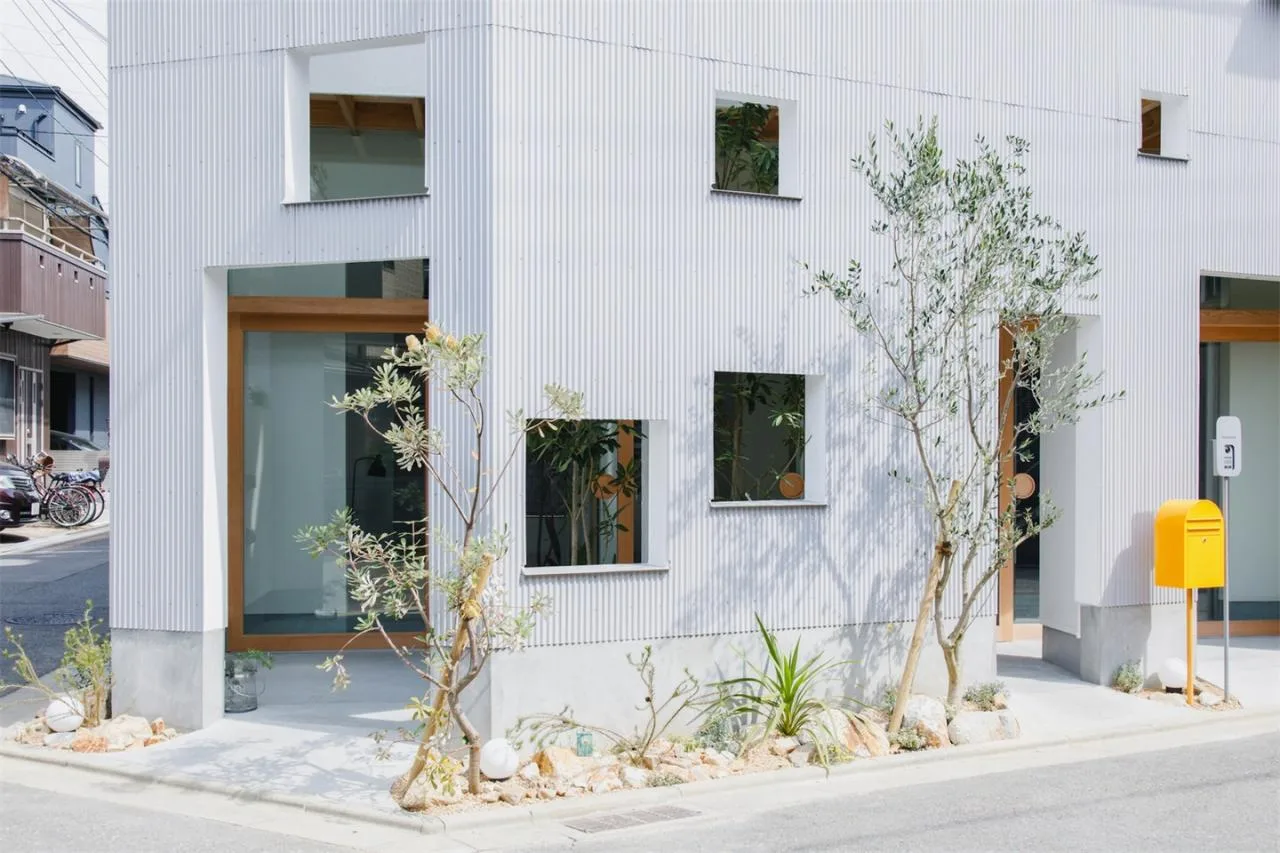
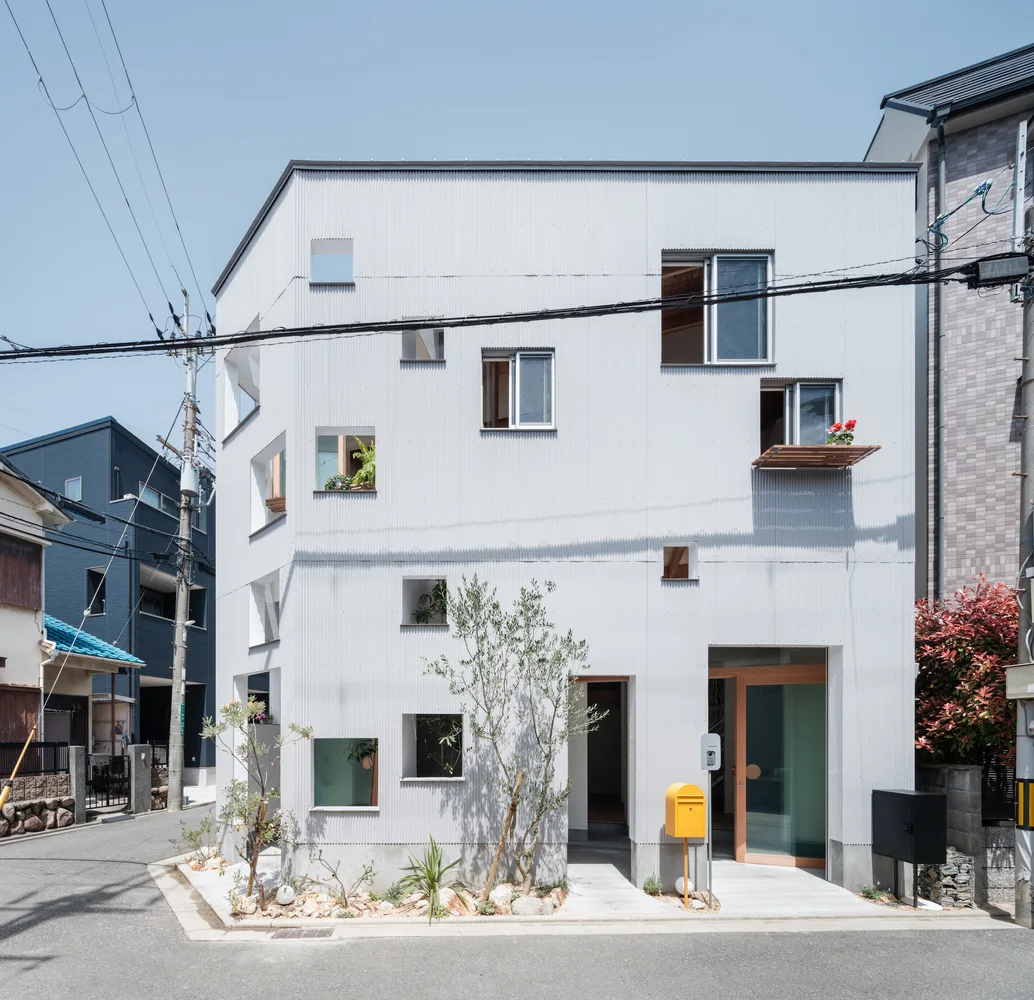
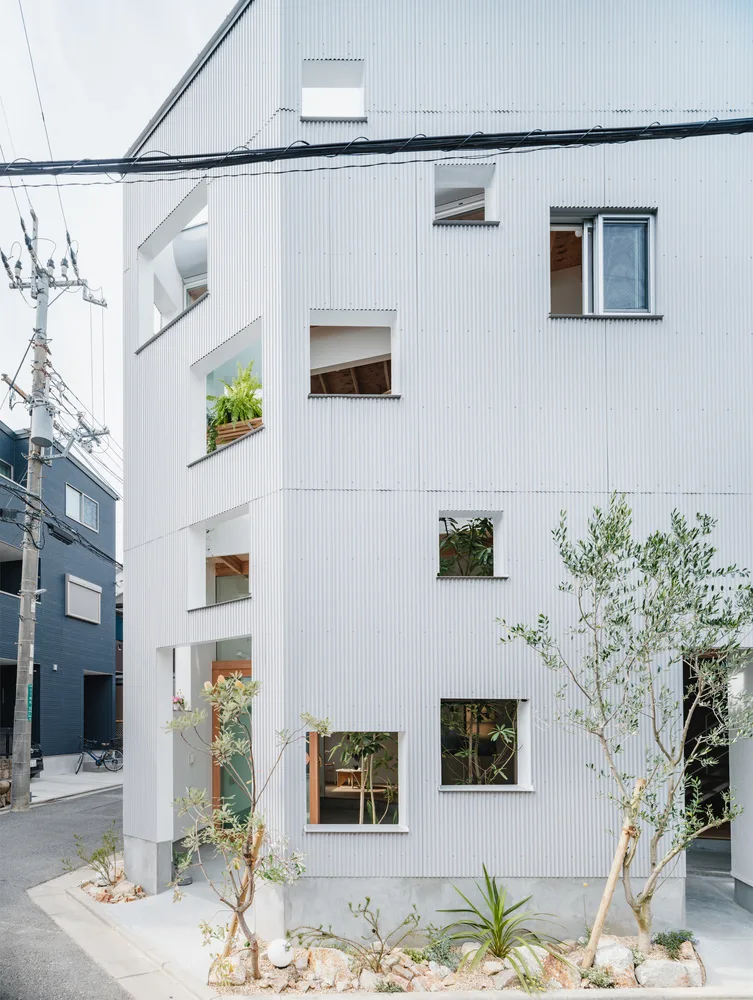
Thanks to its favorable location, the area is undergoing a generational transition through reconstruction. The landscape is shifting from two-story houses without garages to three-story homes that include garages. This transformation means that the front yard on the first floor disappears when a garage is added, while the building’s height increases with the addition of a third floor.
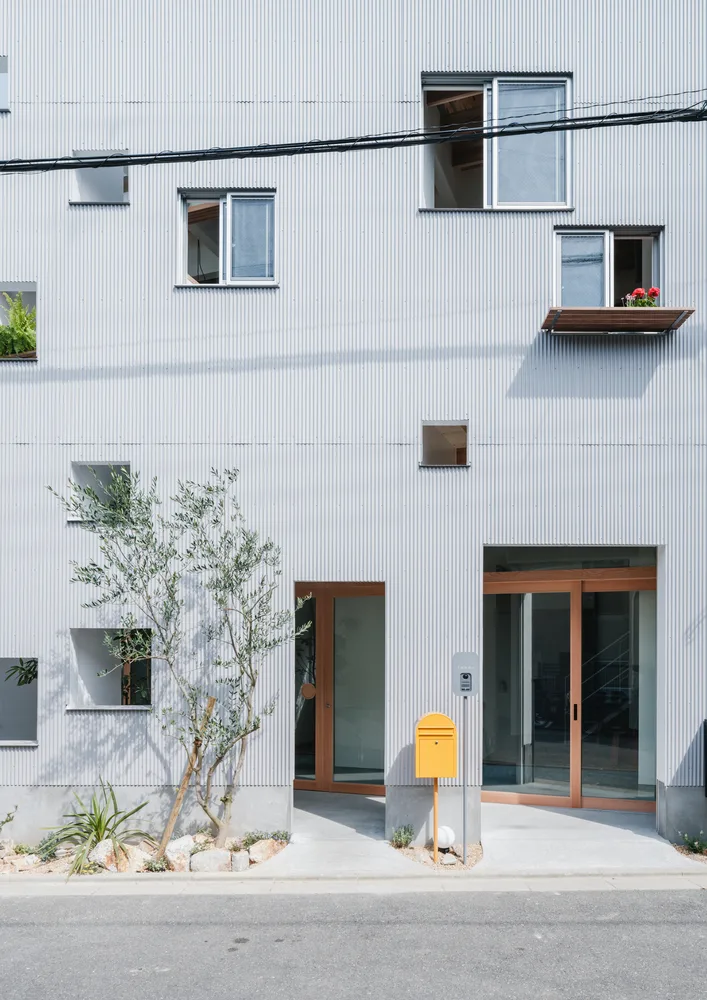
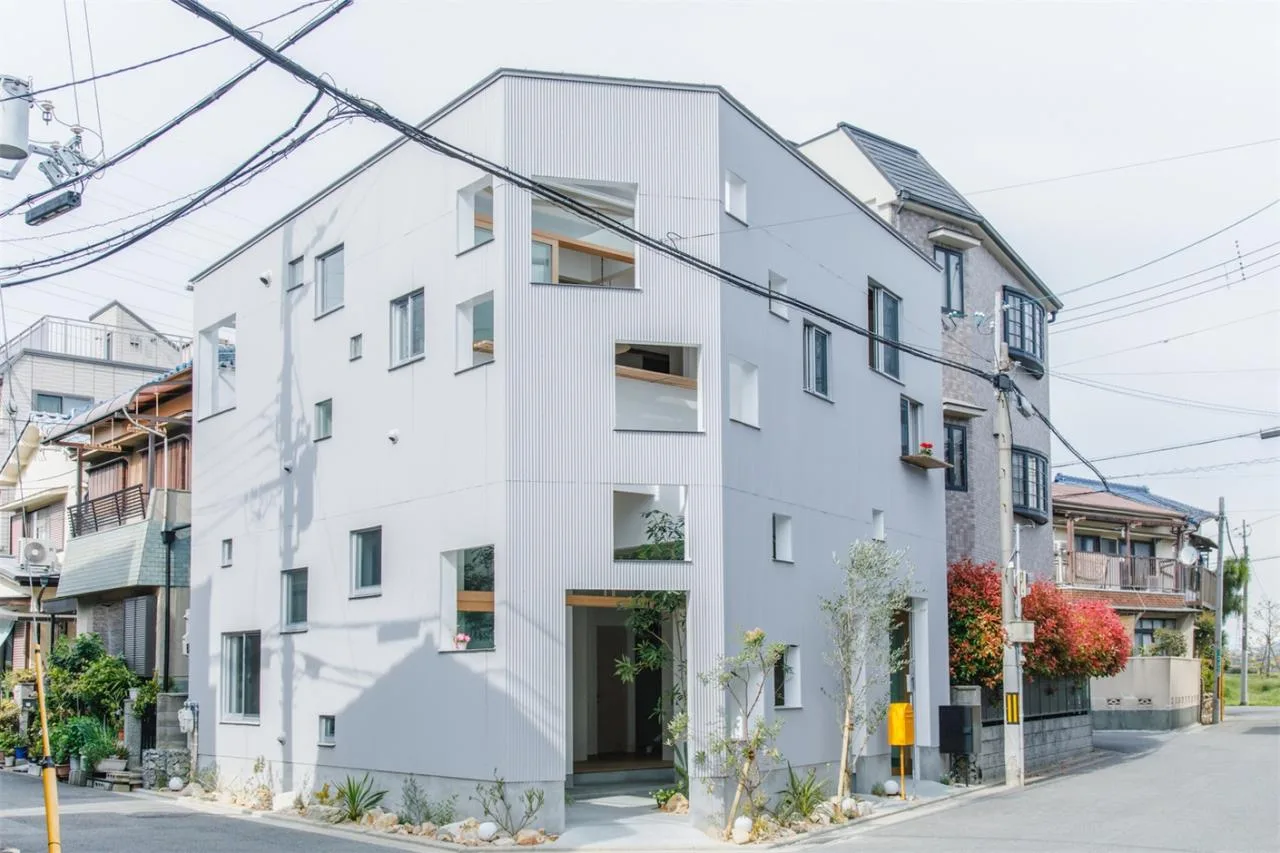
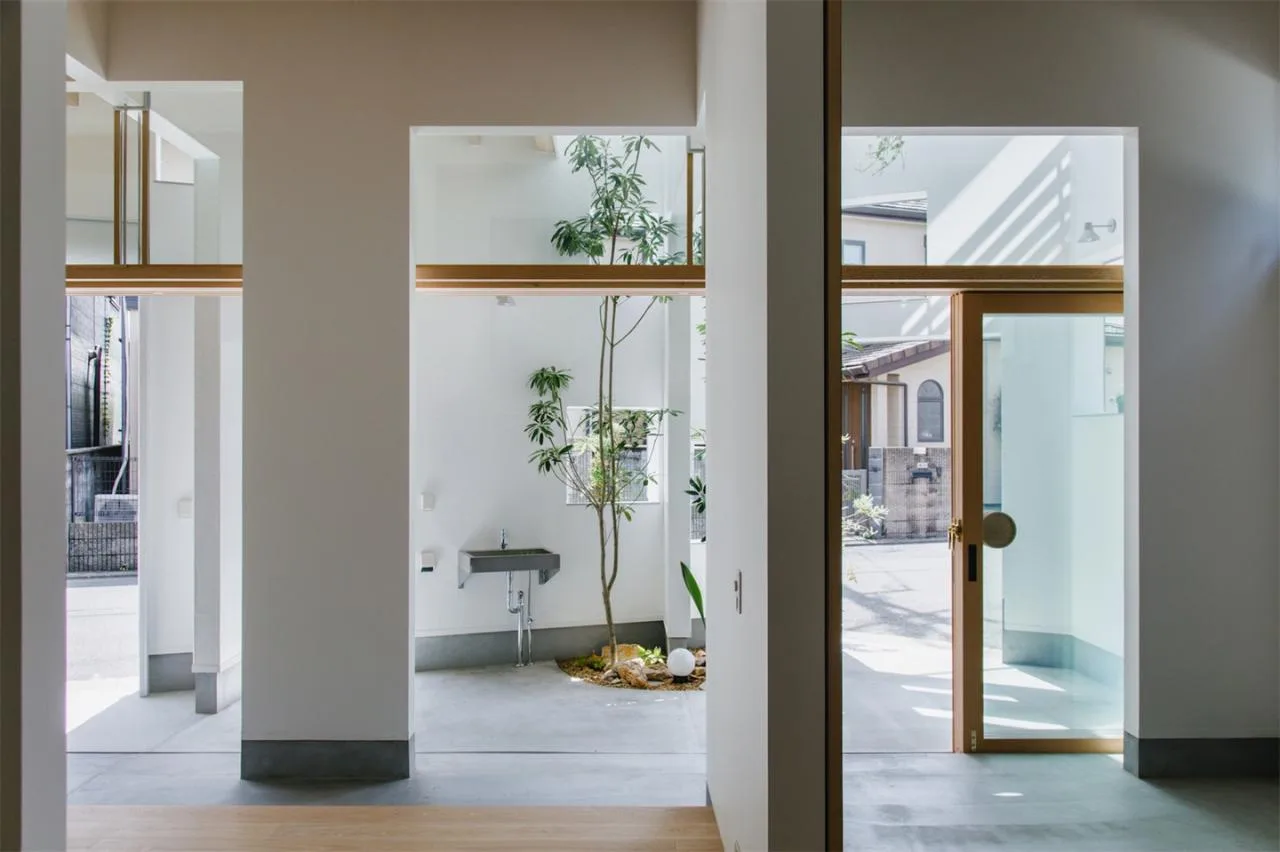
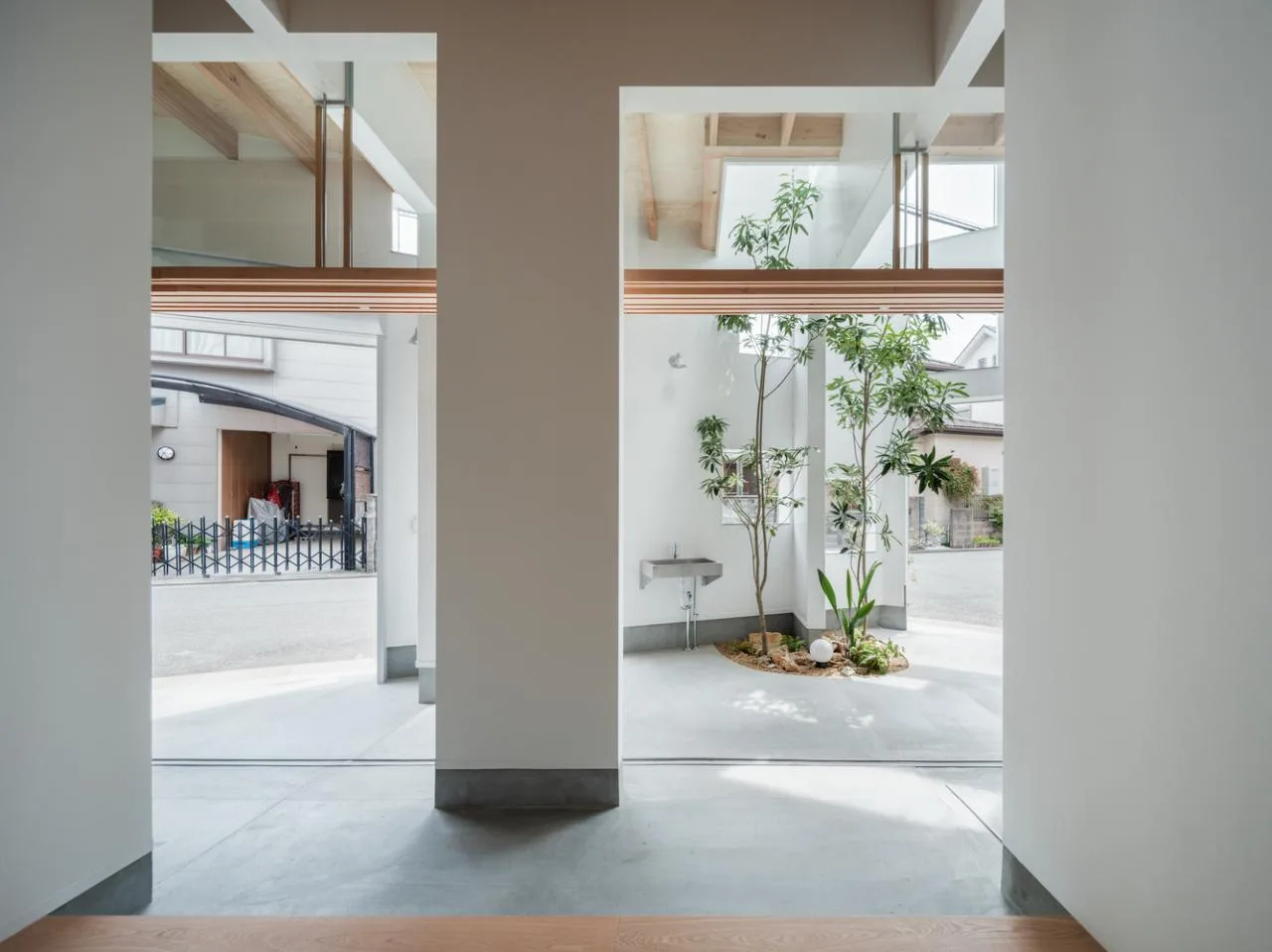
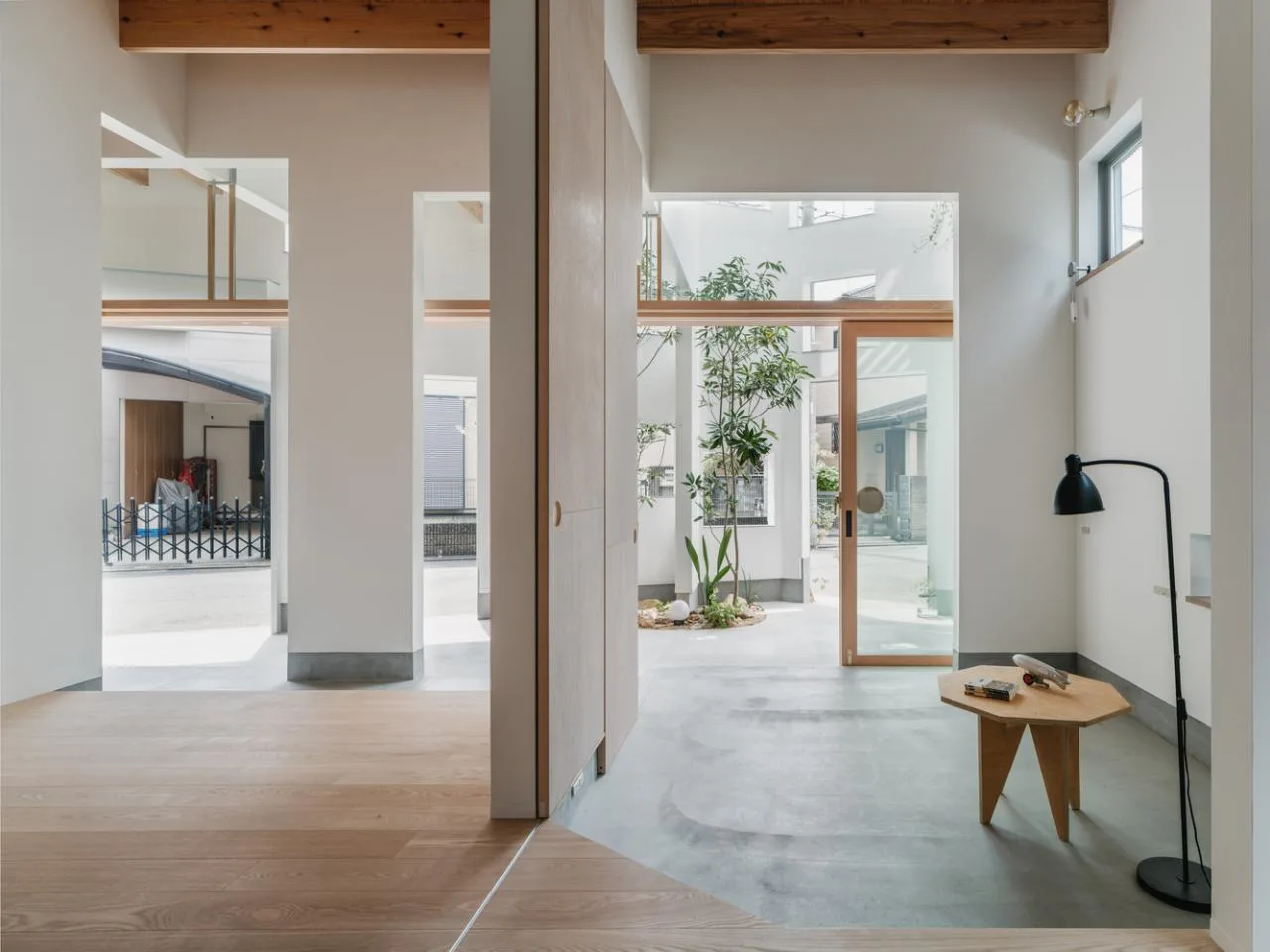
Here, a two-story new building without a garage is planned. Due to the site’s unique shape—an irregular pentagon with two open corners—orientation is challenging. To address this, a line slightly smaller than the site boundary was drawn and divided into nine squares. This nine-grid division allows the building to extend equally along all five sides.
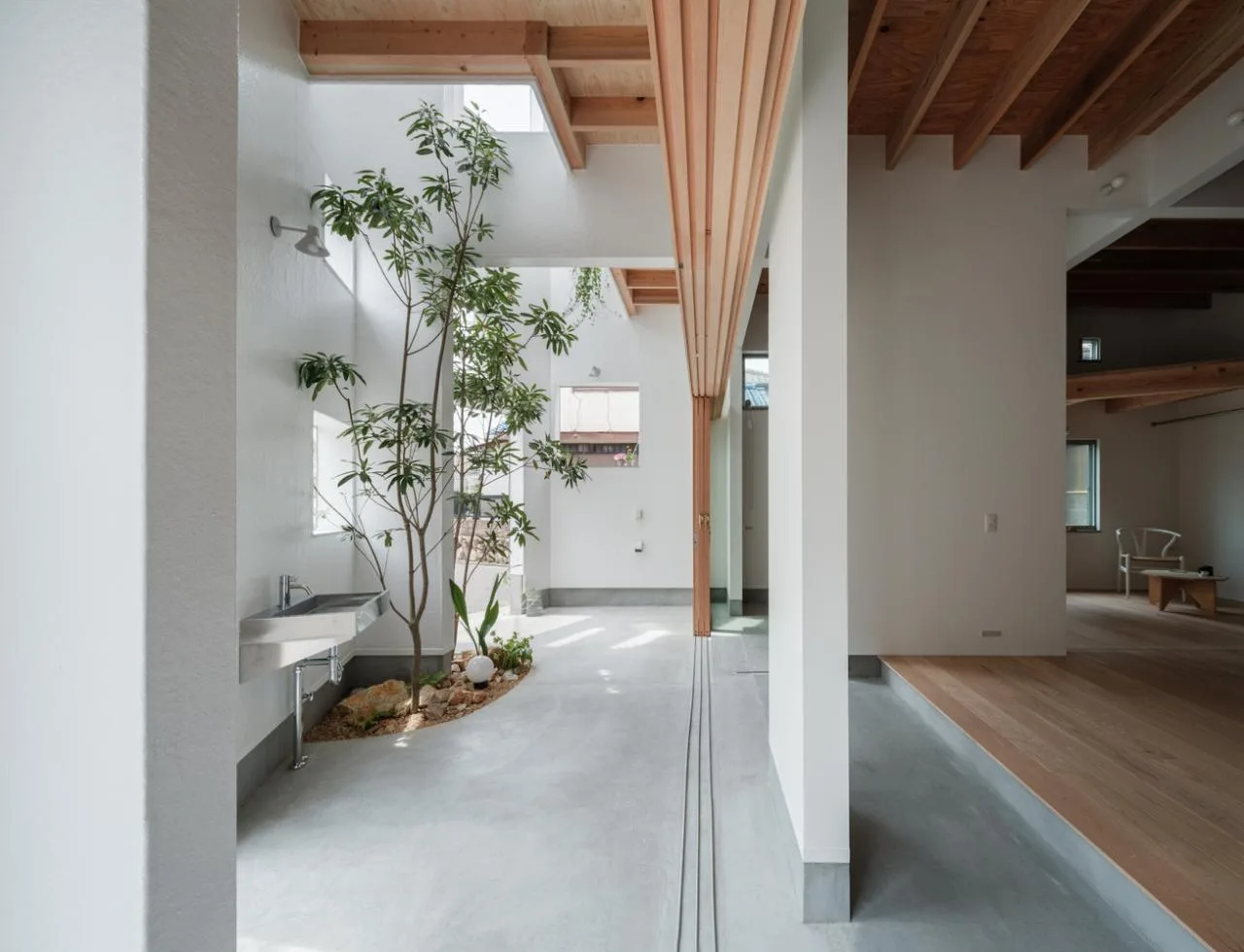
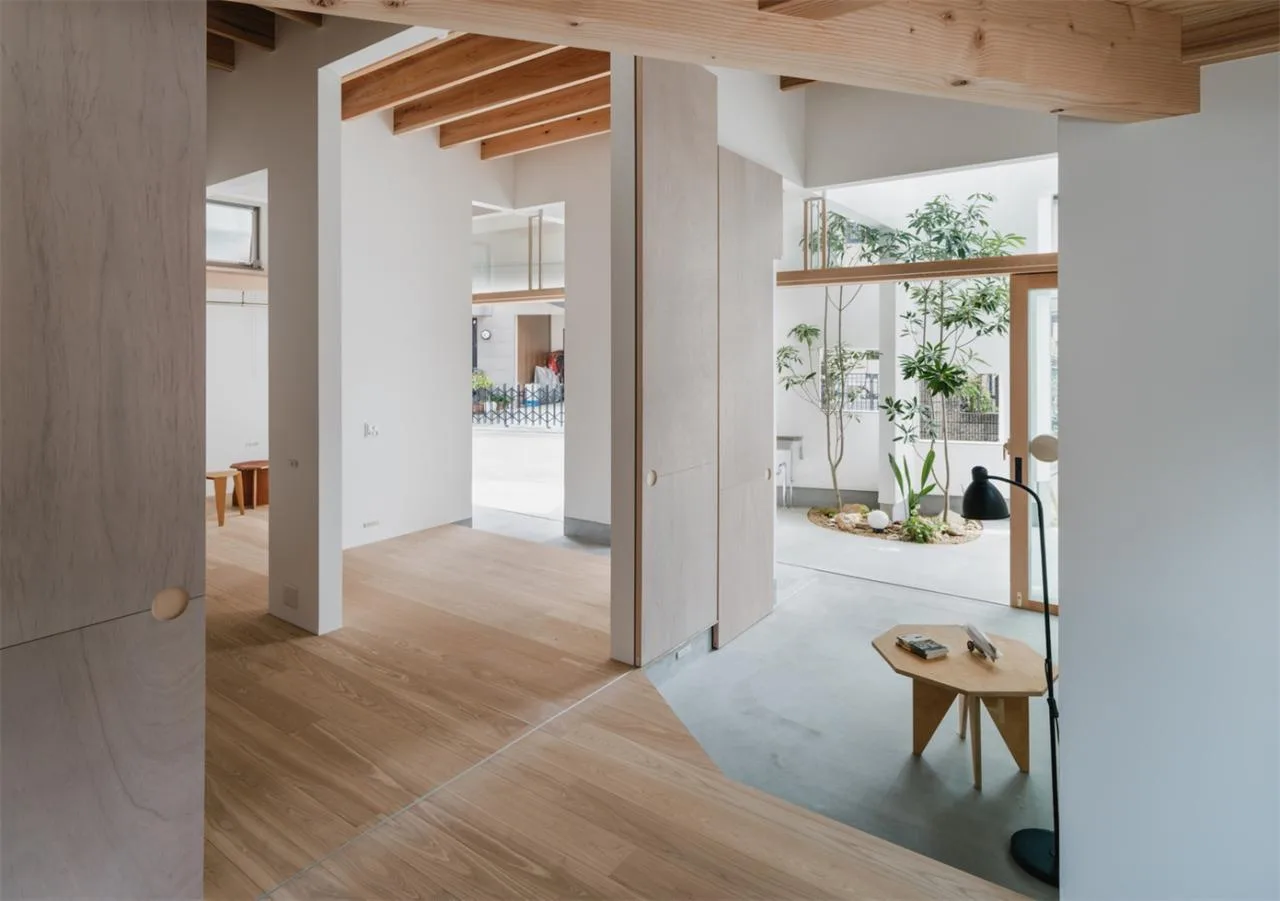
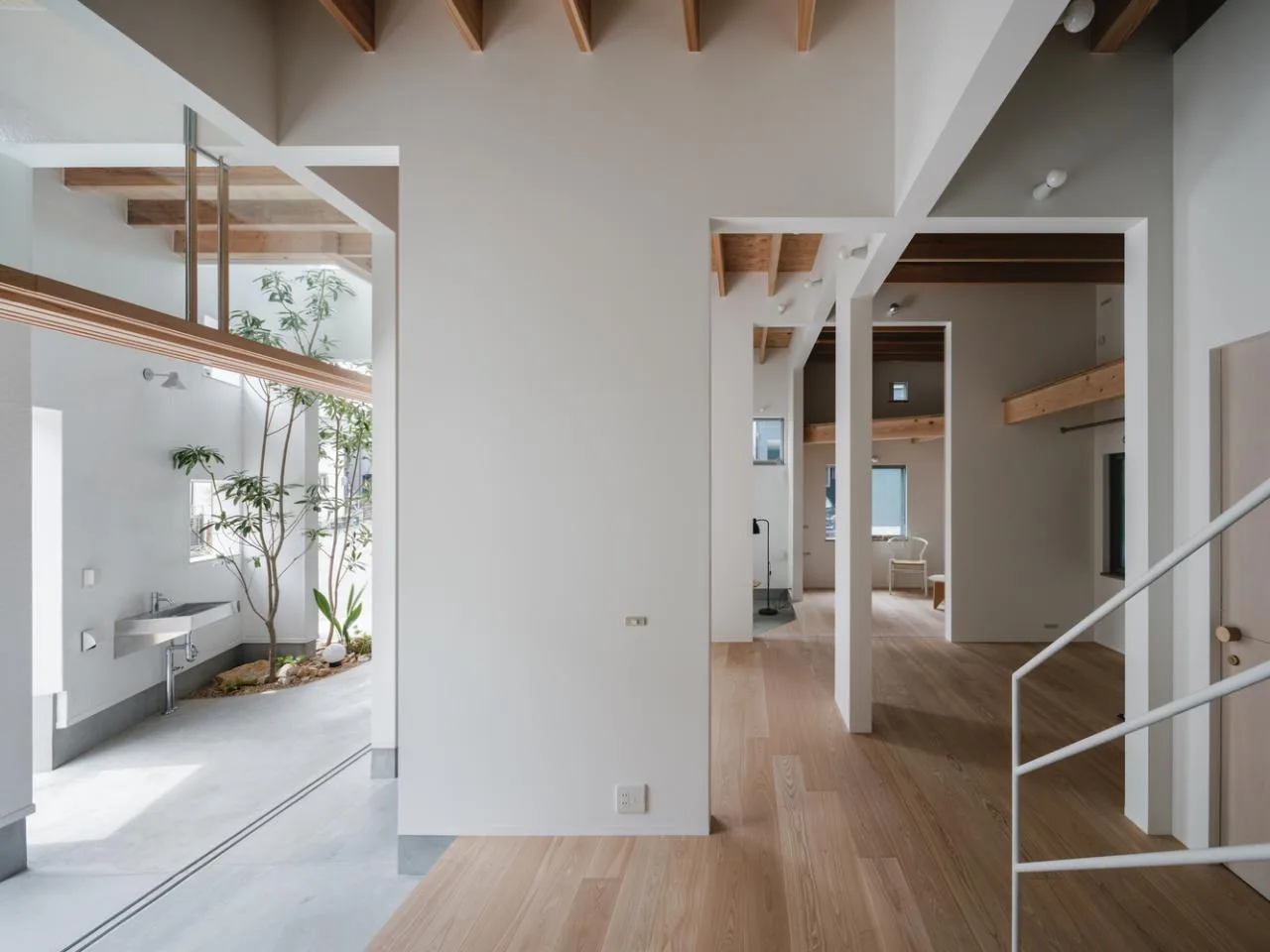
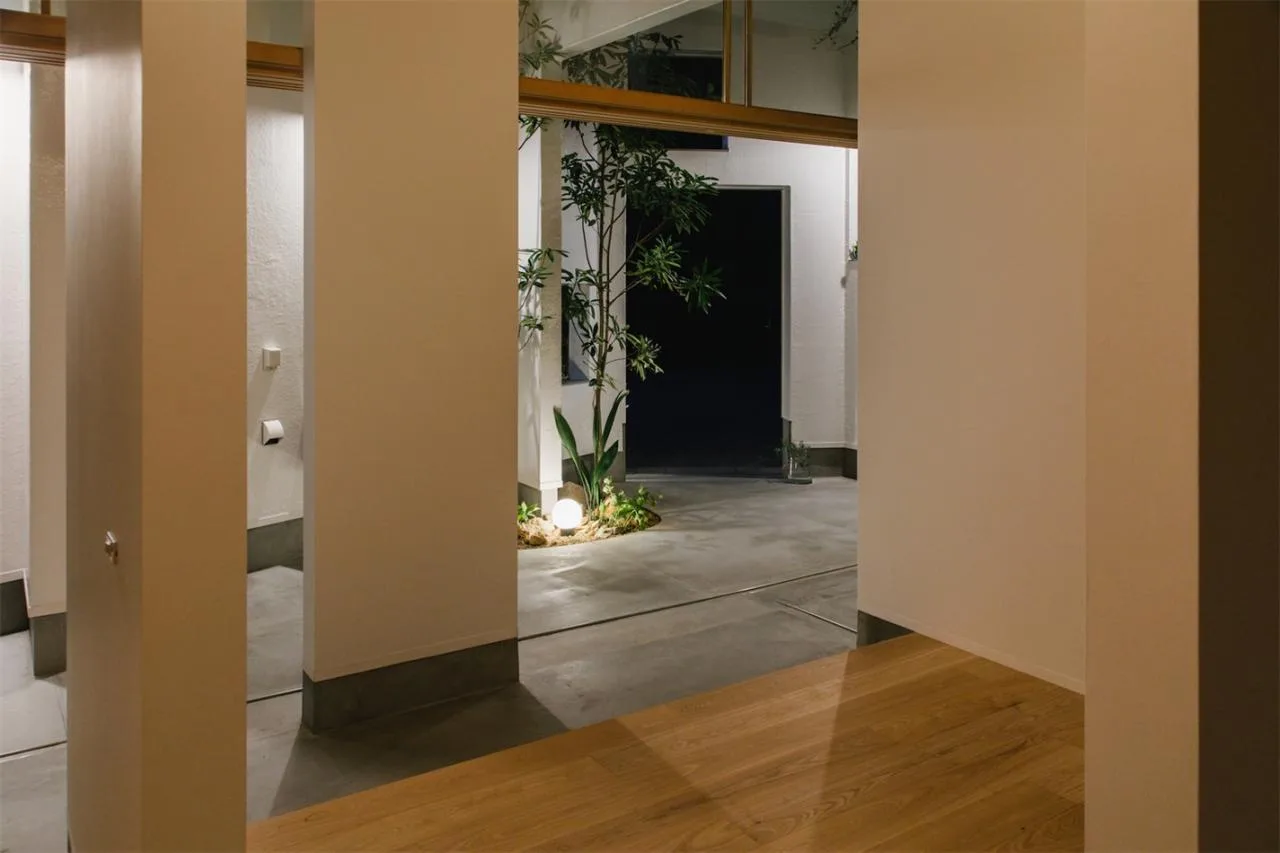
At the intersections of the nine squares, openings were created, while non-intersecting lines were closed off. This design introduces gaps between adjacent squares, enabling diagonal sightlines that create a resonant spatial relationship. In total, nine squares and four intersecting areas emerge from this layout.
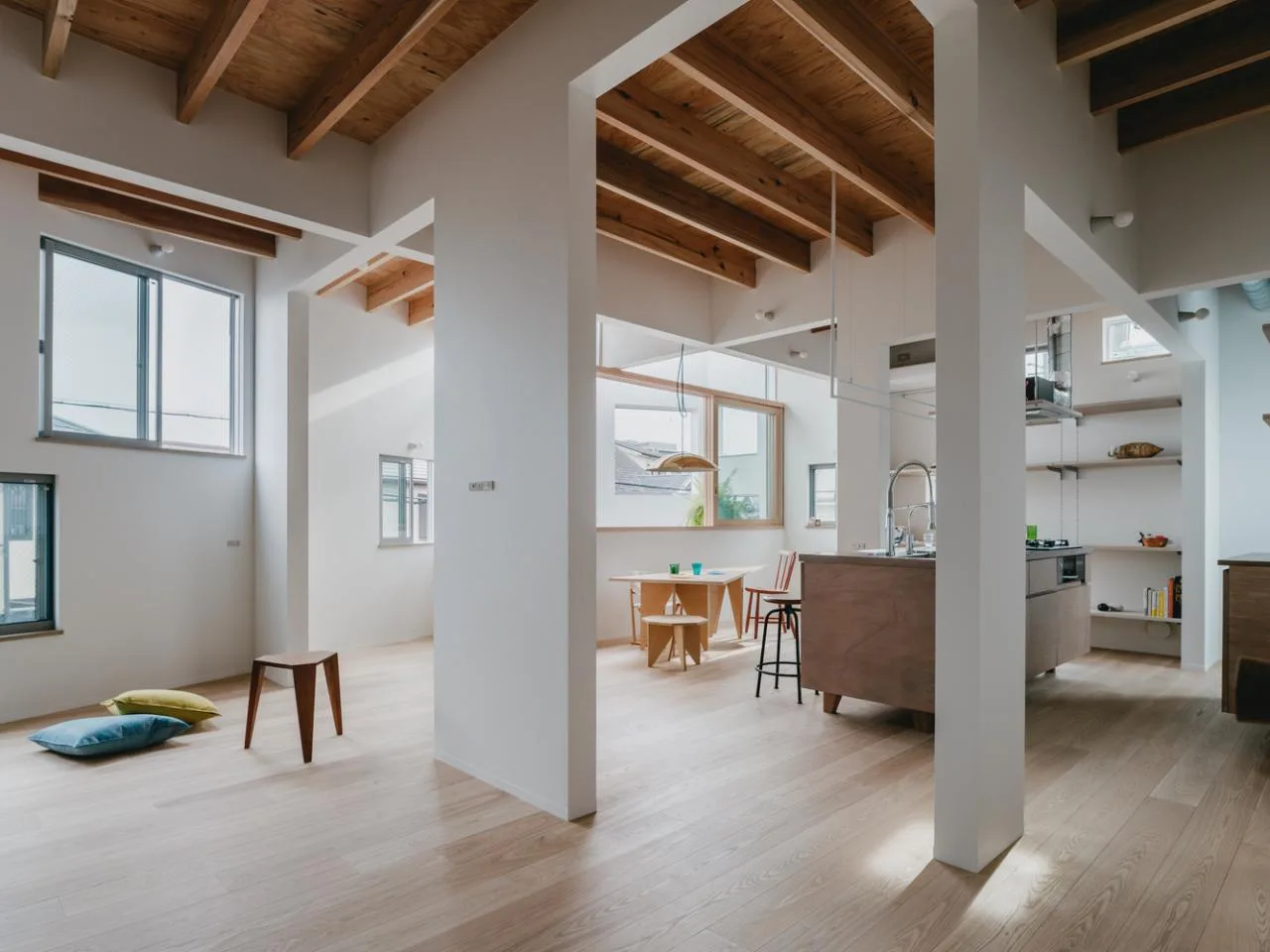
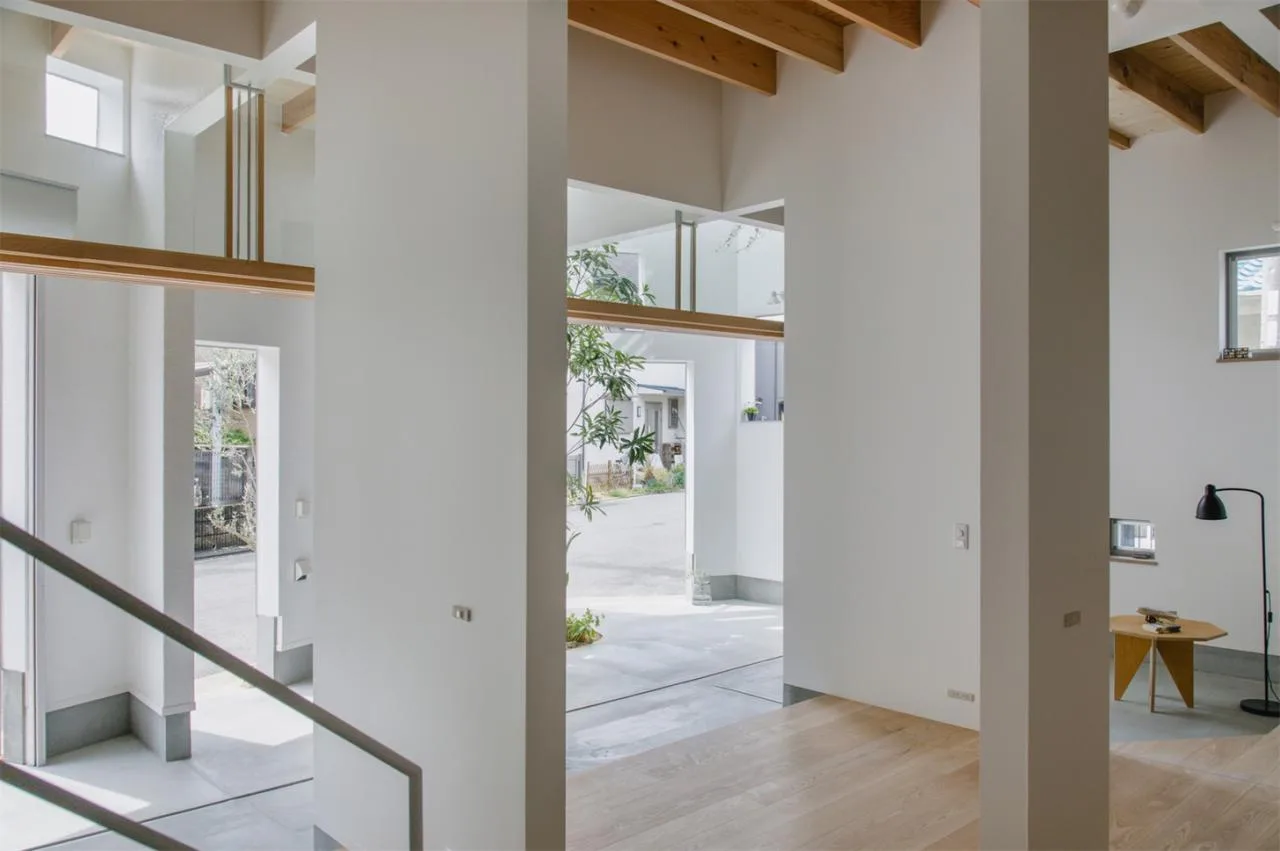
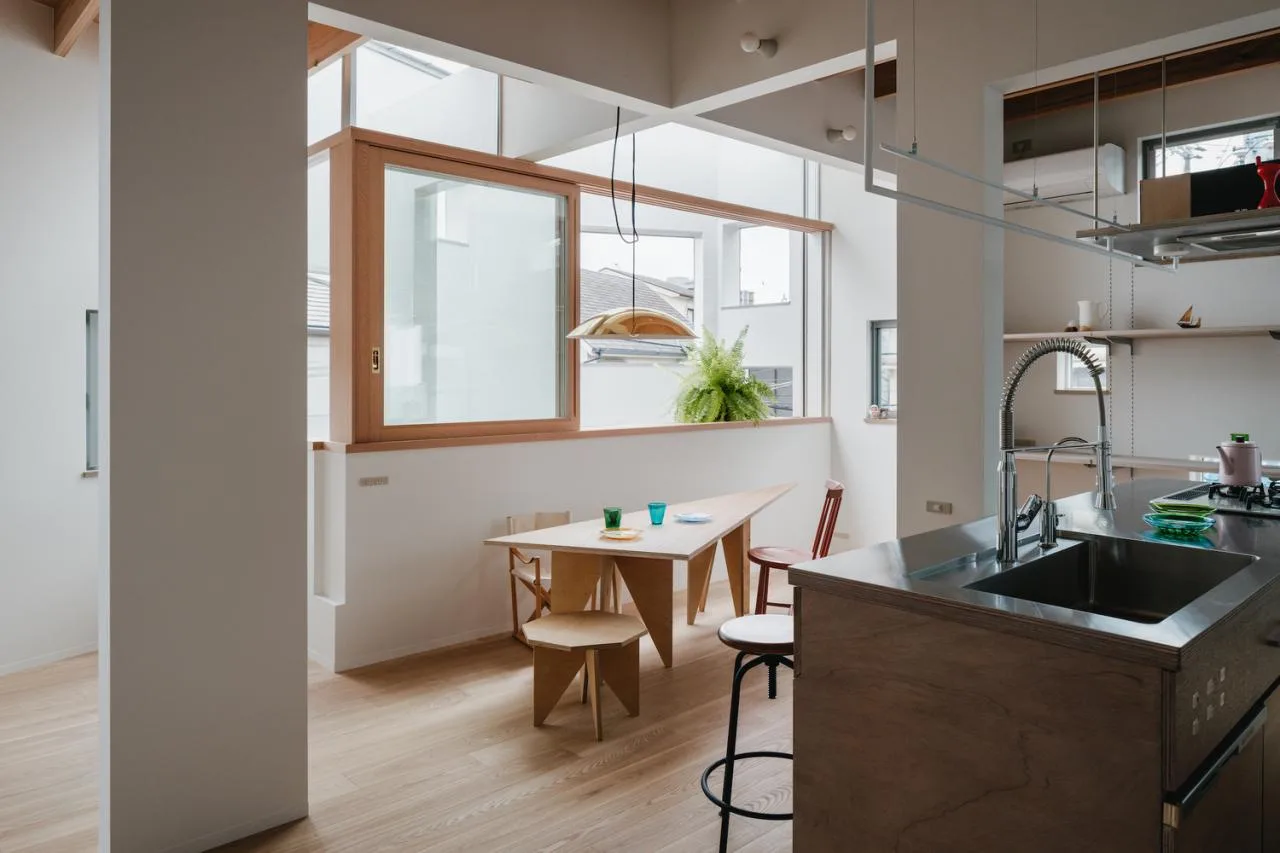
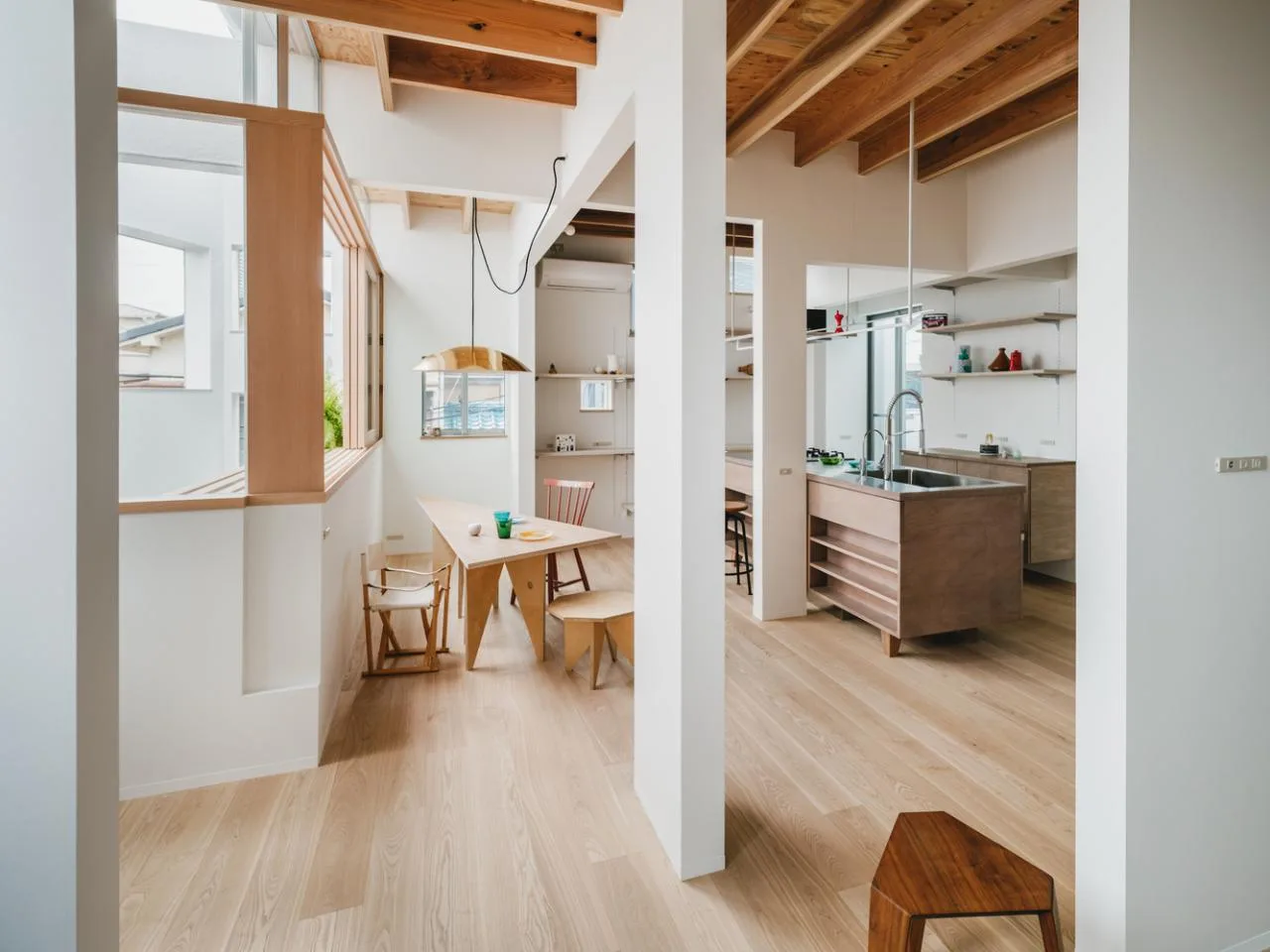
By adjusting the height of the intersecting hanging walls at each junction, the spatial quality changes dramatically. Some areas, like spaces 6 and 8 on the first floor and space 15 on the second floor, are enclosed by walls. Other spaces are gradually enclosed by hanging walls at the intersections, such as the transition area from space 5 to space 9 on the first floor (entrance at the top of the stairs), as well as the kitchen and dining area on the second floor, creating a cohesive living space.
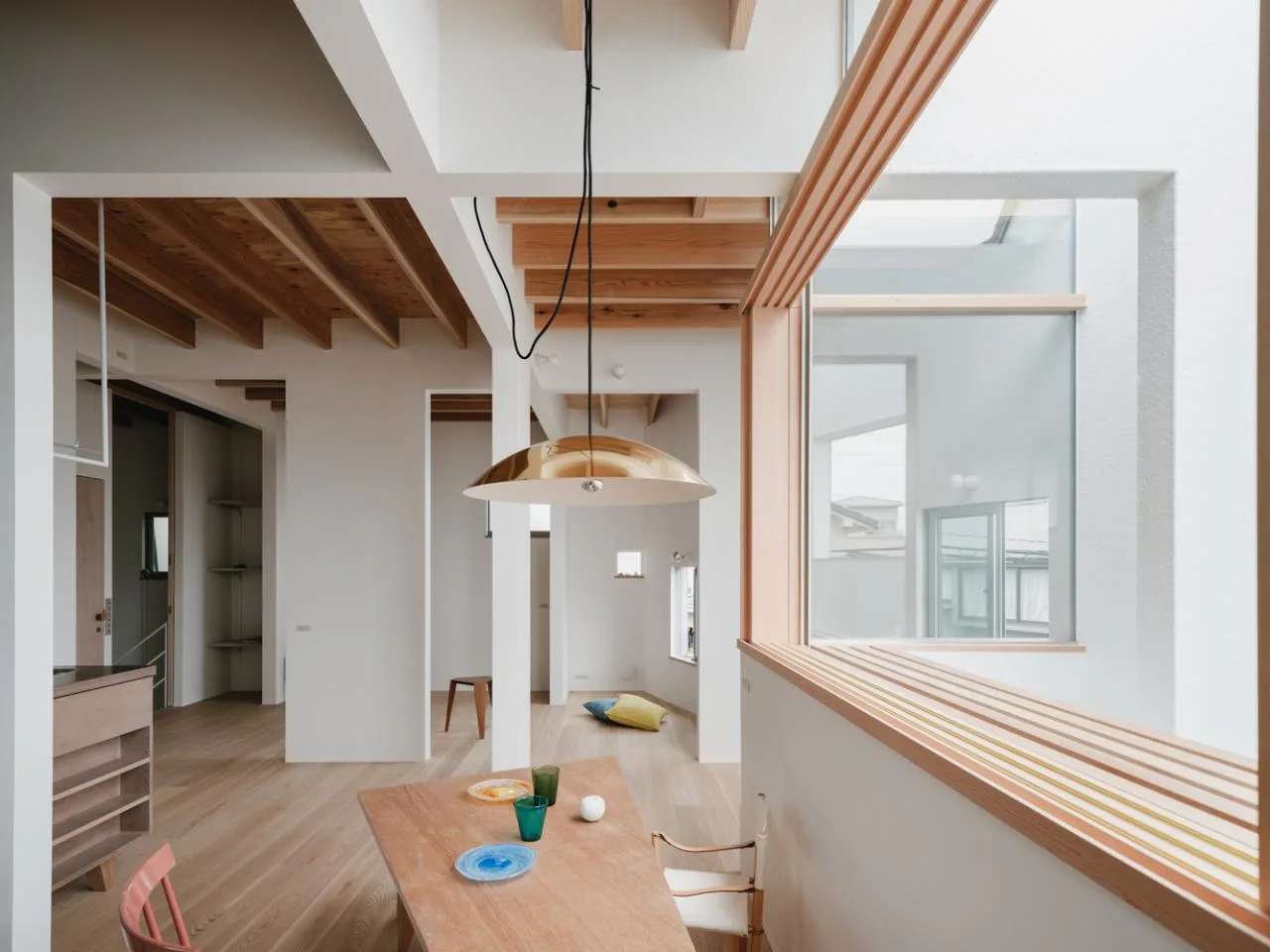
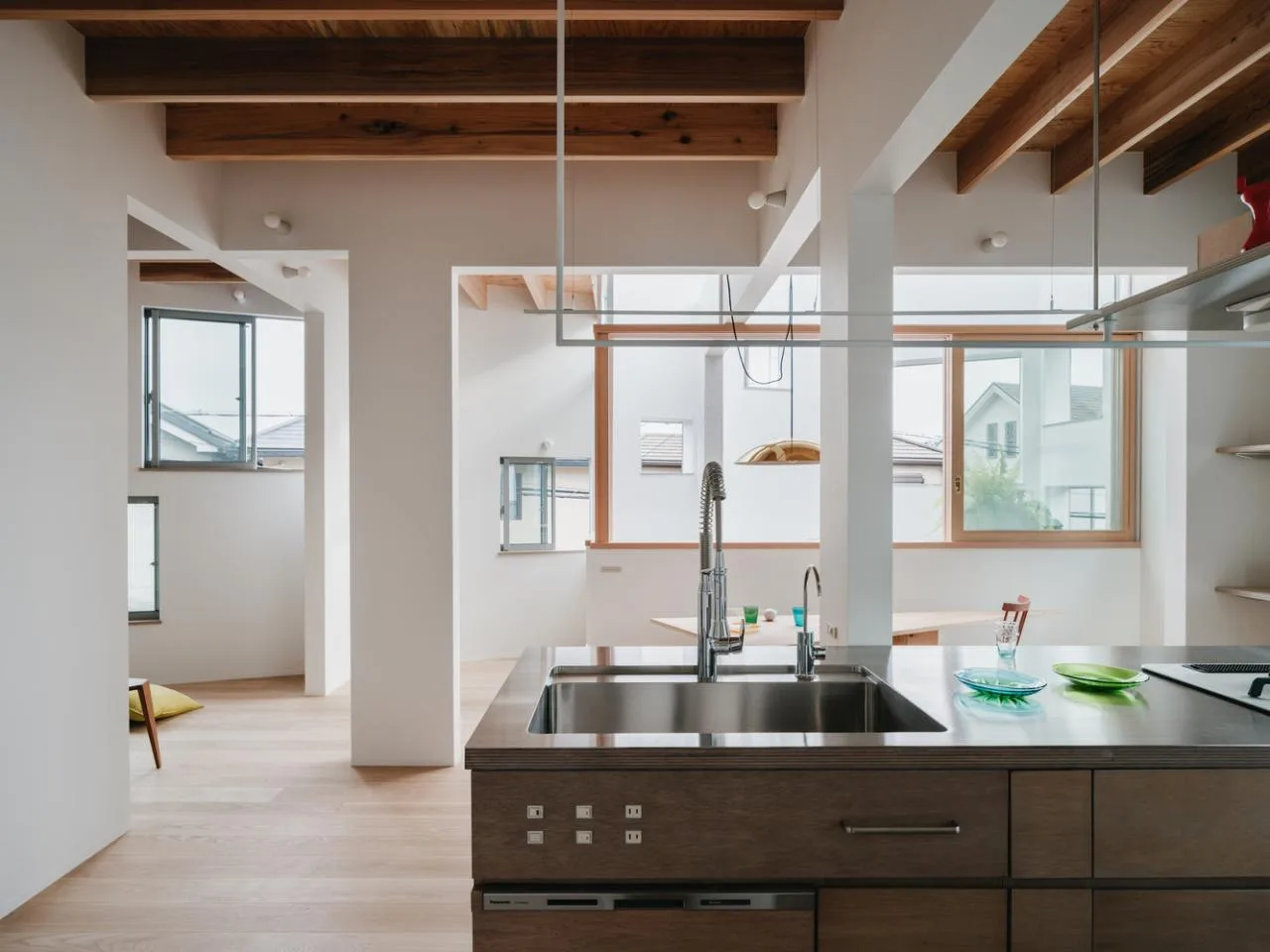
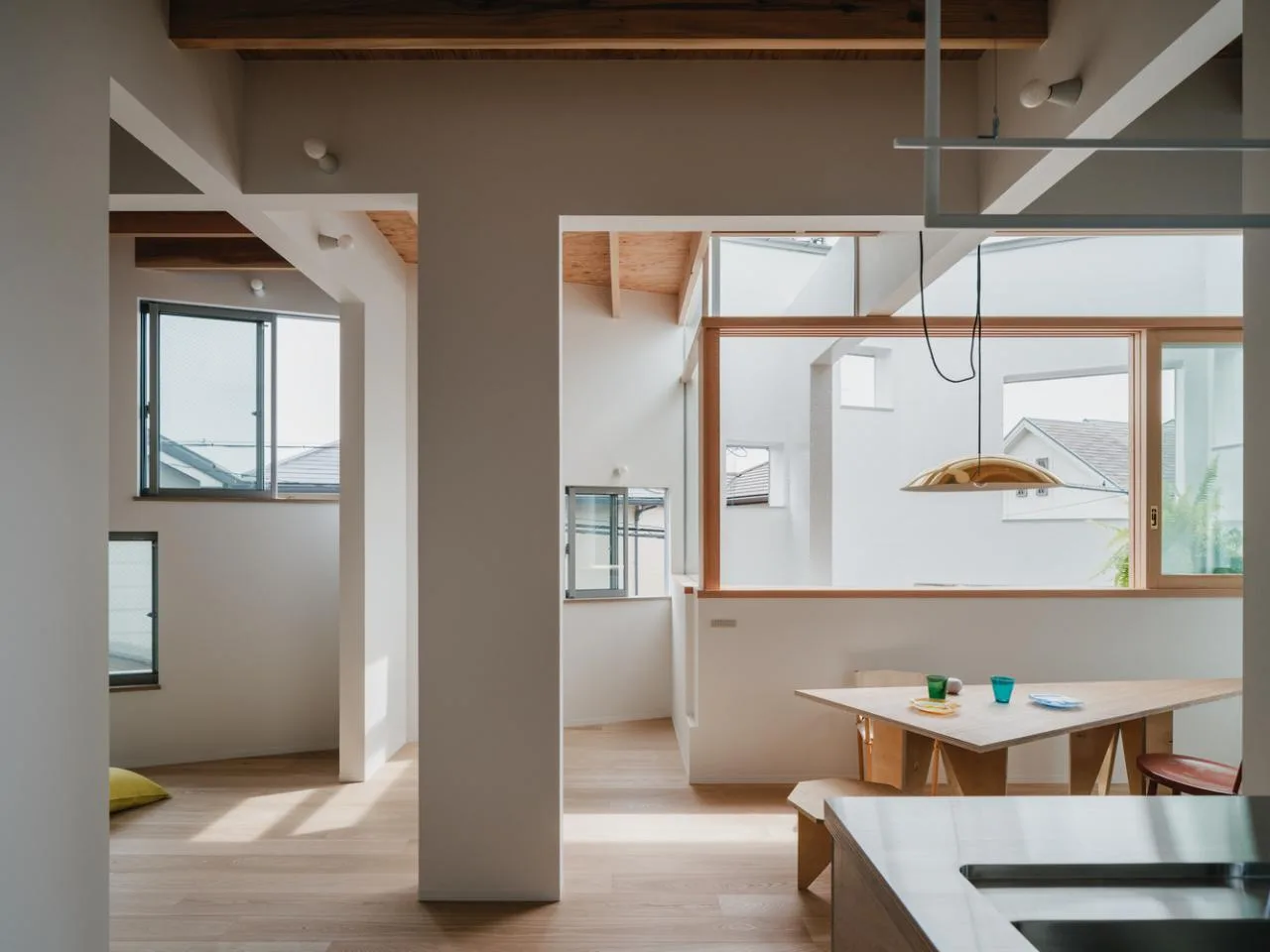
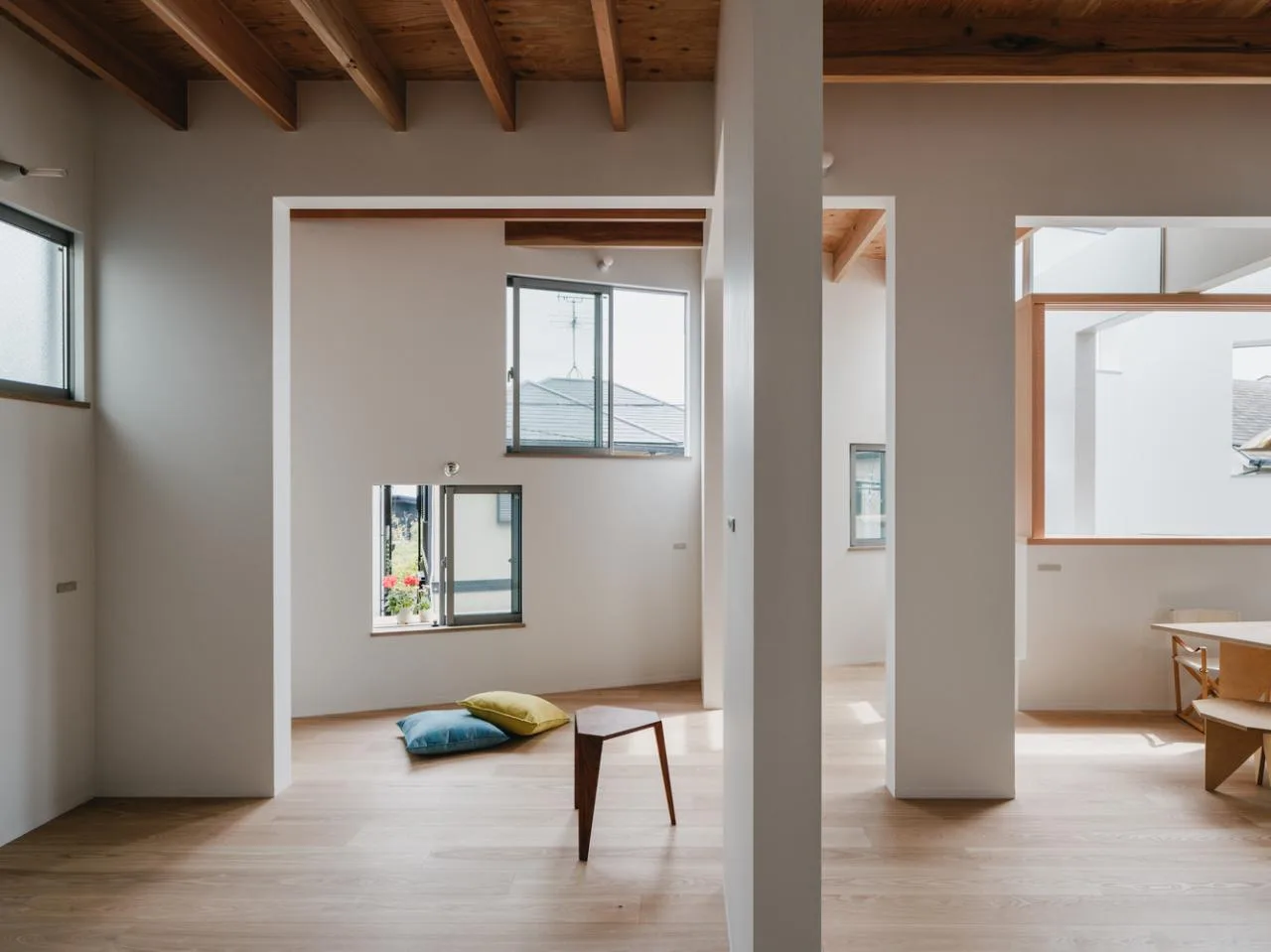
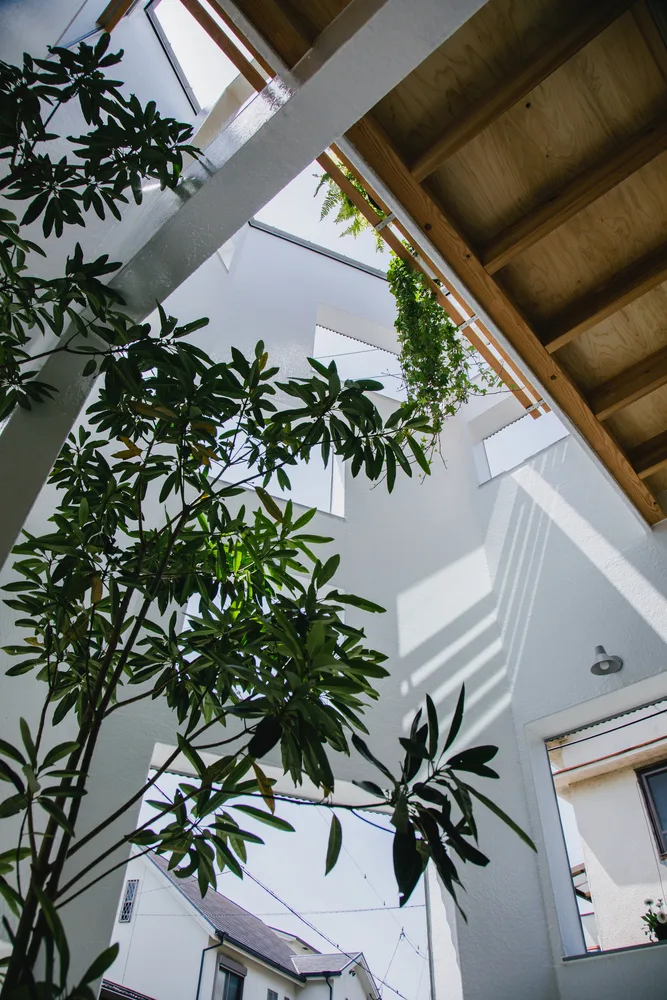
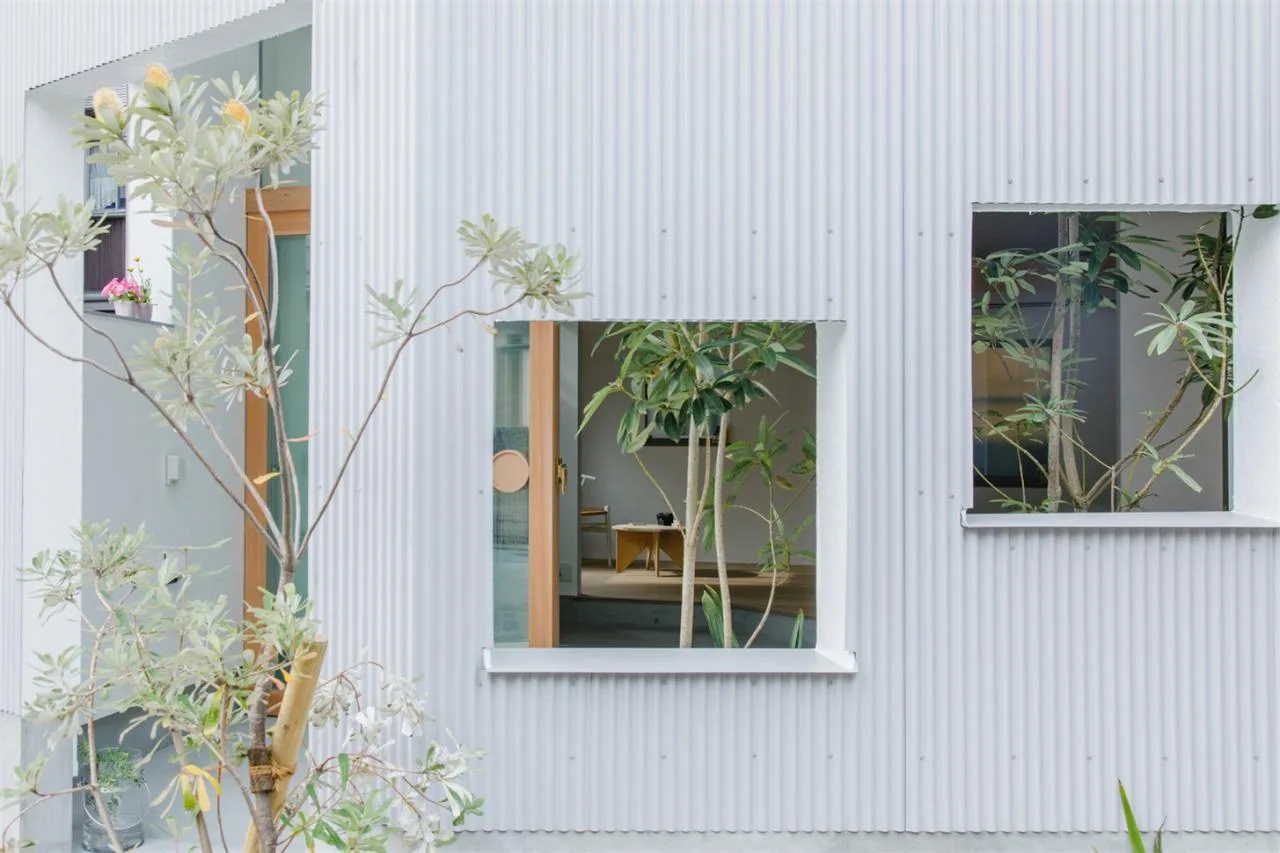
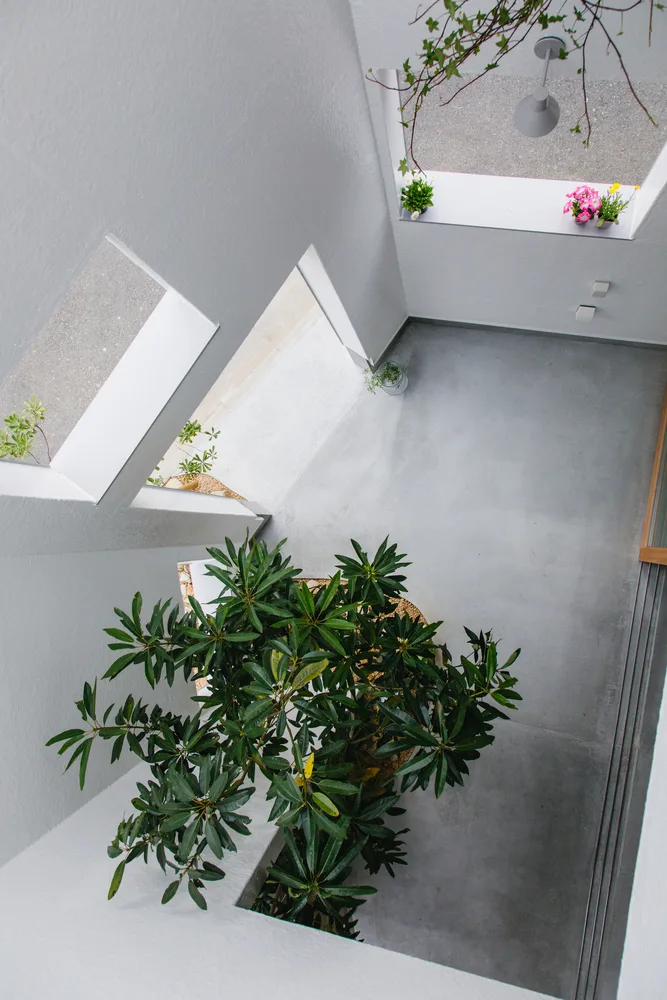
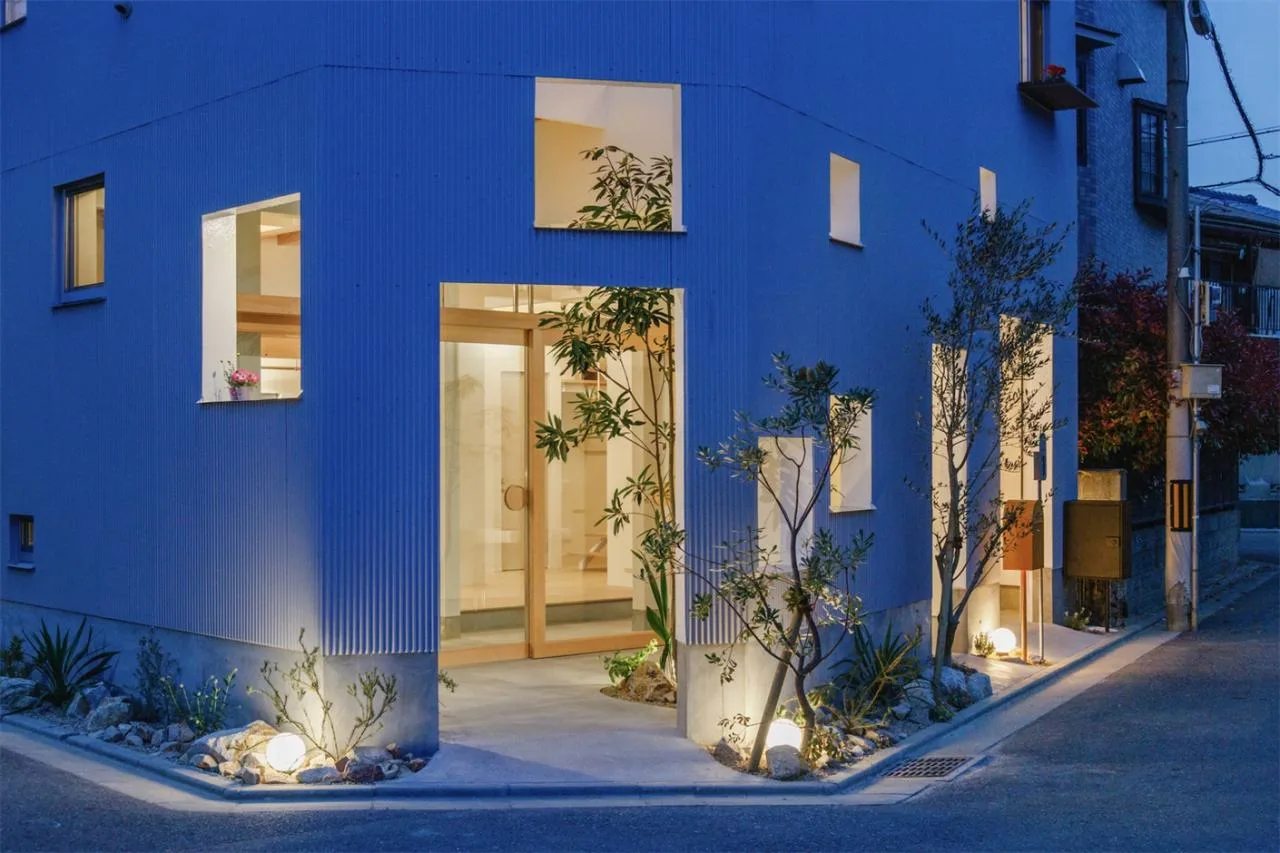
As daily life unfolds, the view shifts, and so does the perception of space—it alternates between connected and disconnected. To integrate the building with the neighborhood, greenery is introduced into the squares. The front garden is placed indoors, set within the grid, and an additional floor is added. The ceiling height has been increased, resulting in a building approximately 2.5 stories tall.
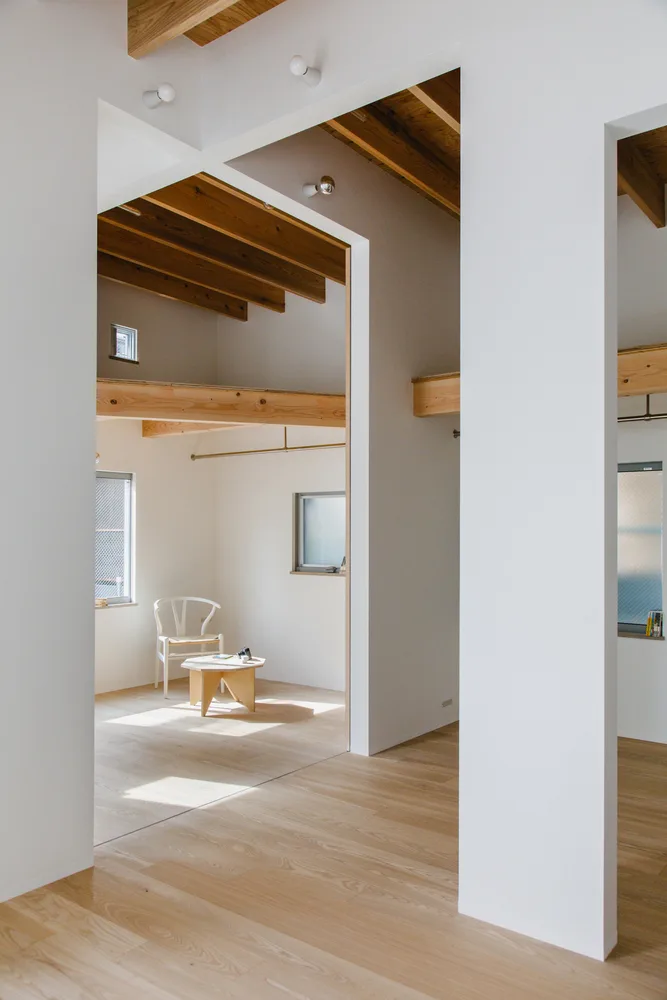
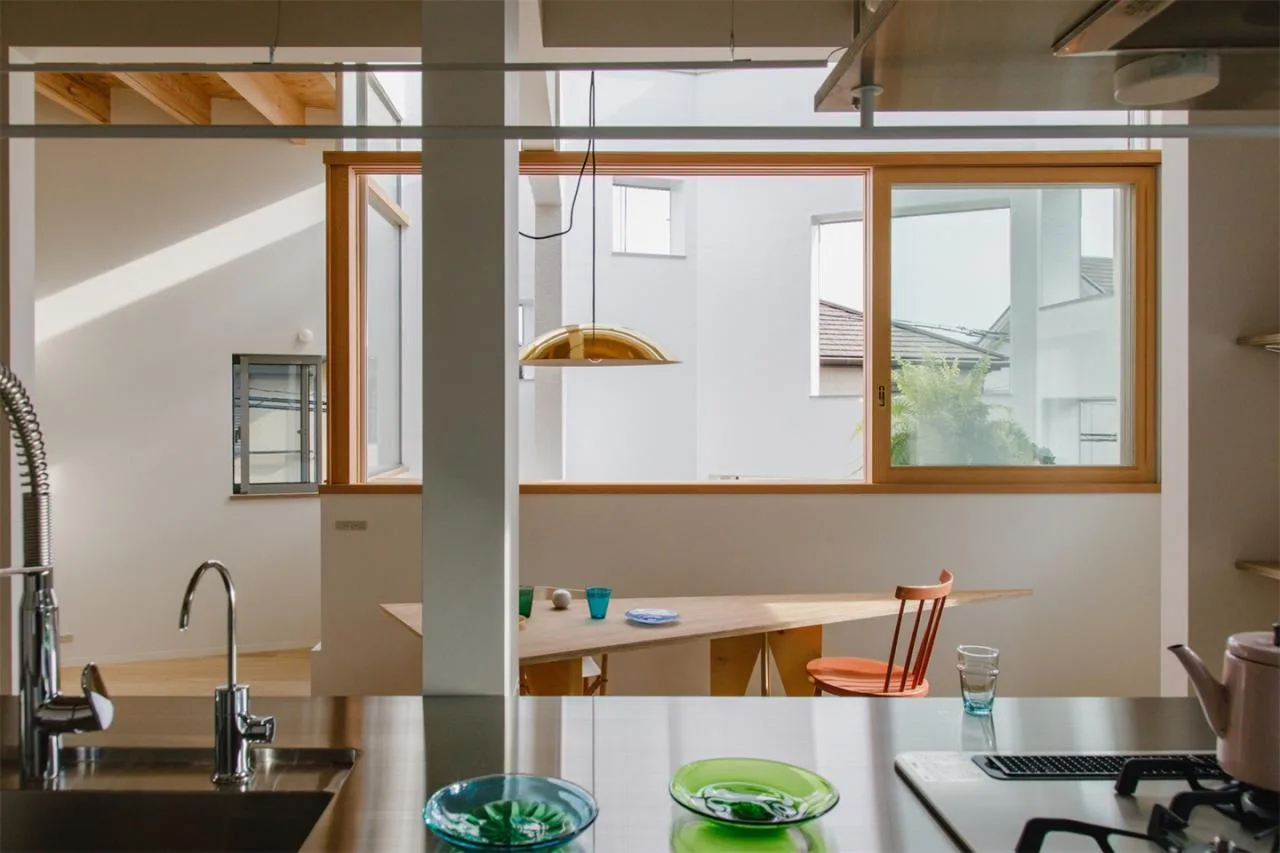
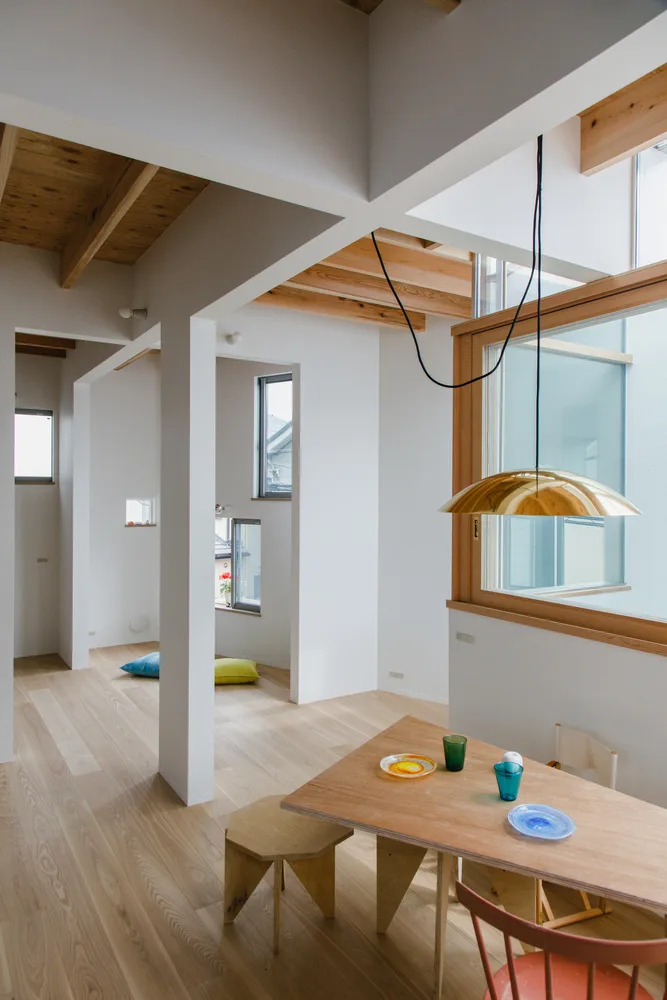
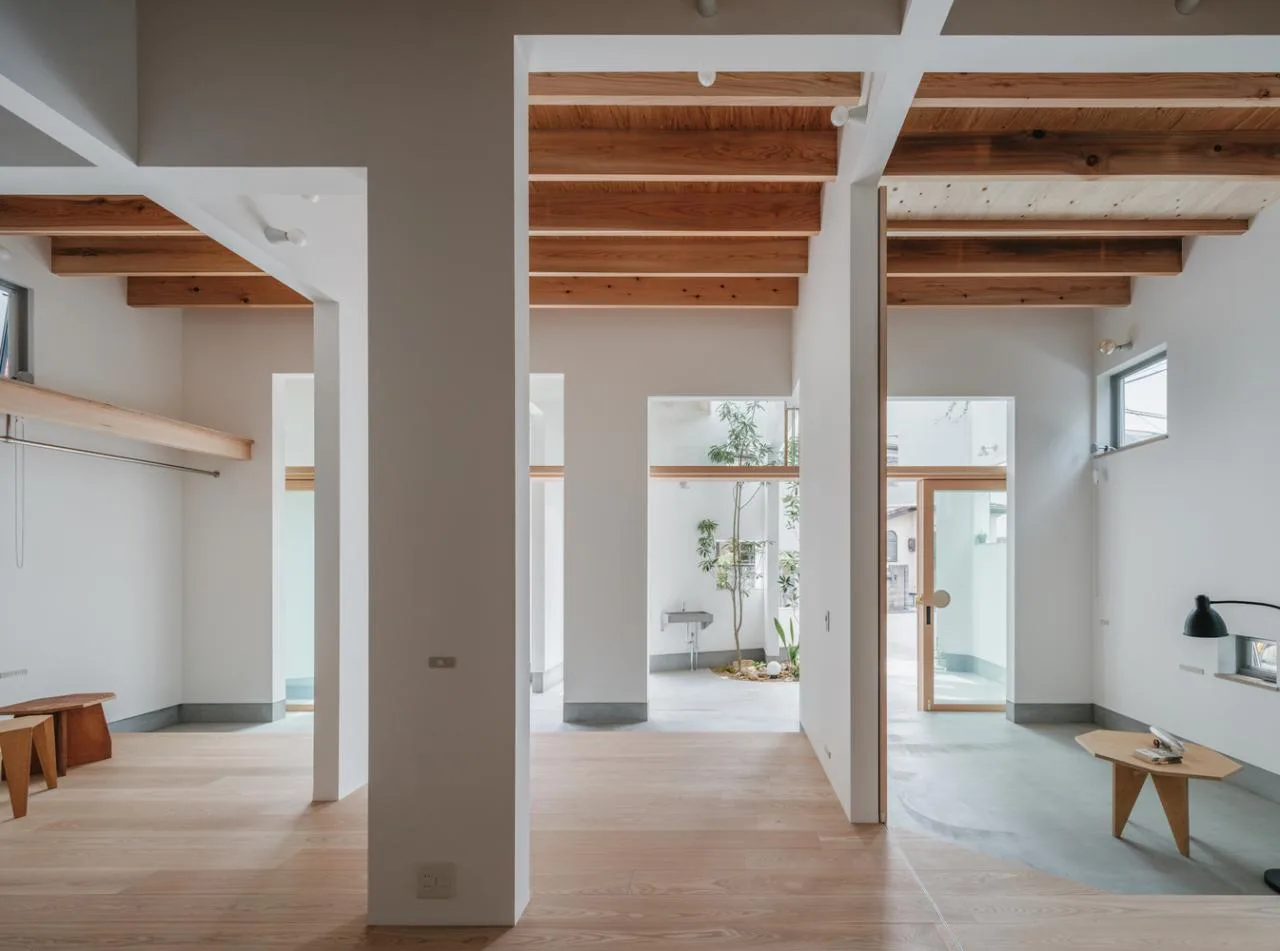
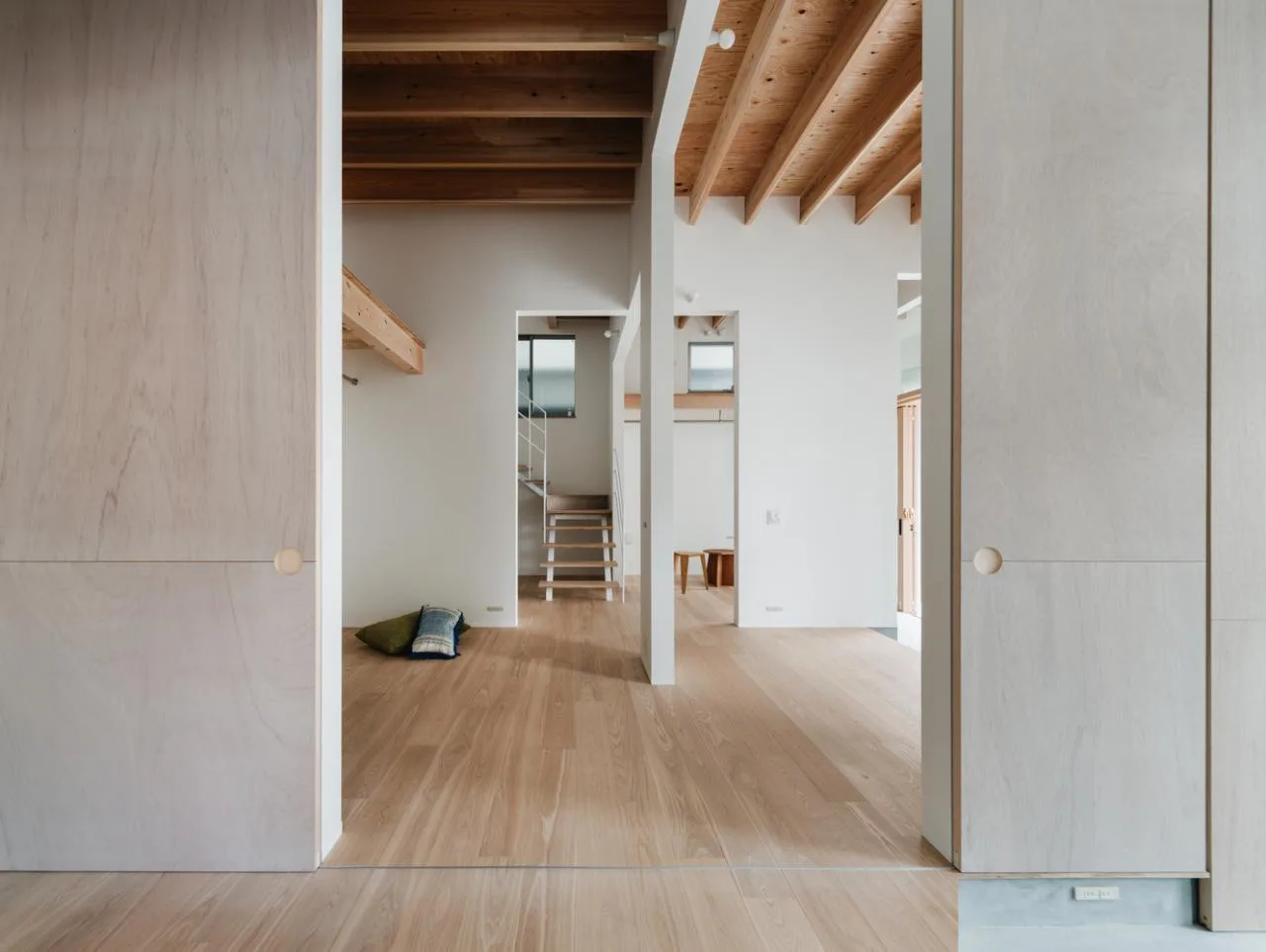
Windows are scattered in all directions, carefully considering the subtle characteristics of the surroundings to determine their position and size. This approach removes any explicit indication of floor levels or orientation from the exterior. Instead, the windows help blend the new building seamlessly with the surrounding two- and three-story homes, whether they have garages or front yards.












Must log in before commenting!
Sign Up